From Cotton Fields to Your Wardrobe How T Shirts Are Made
Ever wondered how your favorite T-shirt goes from a cotton plant to a stylish, comfortable garment? The journey is a fascinating mix of nature’s fiber, advanced machinery, and expert craftsmanship.
This detailed guide covers every step of T-shirt manufacturing so you can understand the process and select the best manufacturer for your needs.
Step 1 Raw Material Preparation from Cotton to Fabric
T-shirt production begins with cotton harvesting, where the cotton fibers—actually the seed’s outer layer—are mechanically picked.
The cotton ginning process separates seeds from fibers and cleans them for quality.
Next, fibers are spun, sorted, carded, and combed transforming cotton into raw grey fabric — the starting point for production.
It takes approximately half a pound of cotton to make a T-shirt, emphasizing the importance of quality fiber handling.
Step 2 Fabric Wet Processing Preparation Color and Finish
Gray fabric undergoes three stages: preparation, bleaching/coloration, and finishing. Proper finishing ensures the softness and durability that consumers expect in a comfortable T-shirt.
Step 3 Printing Patterns and Designs on Fabric
Cotton fabrics are printed using either pigment printing or reactive printing to add vibrant colors and patterns.
- Pigment Printing: Applied layer-by-layer like painting. Might fade over time.
- Reactive Printing: Uses dye, water, heat to bind colors permanently providing brighter, longer-lasting prints.
Finally, intricate designs are added via screen printing for commercial-quality finishes with high-volume efficiency.
Step 4 Cutting and Sewing The Fabric Into Garments
Fabric is cut with precision machines into component pieces—front, back, sleeves, and neckbands.
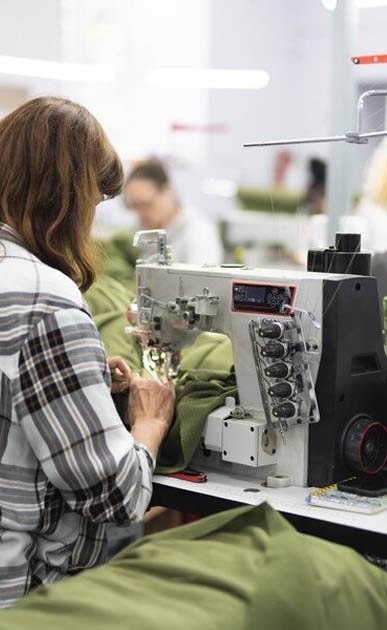
These pieces are then sewn together using over-edge and reinforced seams to create durable, flexible garments.
Specialty sewing techniques ensure neat hems, stretchy neckbands, and well-positioned pockets.
Step 5 Quality Control and Finishing Touches
The quality team inspects every garment for stitching reliability, print accuracy, and overall craftsmanship. Labels are sewn, garments are pressed, and packed to factory standards.
Finding The Right Manufacturer for Your T-shirt Business
Reliable manufacturing is key to bringing your T-shirt vision to life. Choose a partner experienced in working with high-quality fabrics, skilled workers, and modern technology.
For hassle-free, eco-conscious, and customizable T-shirt production, explore Ludyway, a sustainable clothing manufacturer delivering superior craftsmanship worldwide.
Frequently Asked Questions About T-shirt Manufacturing
How much cotton is needed to make one T-shirt?
Approximately 0.5 pounds (8 ounces) of cotton is required for one standard T-shirt.
What is the difference between pigment printing and reactive printing?
Pigment printing uses layers of pigment which may fade; reactive printing uses chemical dyes that bond permanently to fibers for vibrant, long-lasting colors.
How are T-shirts sewn together?
Fabric sections are stitched using over-edge and reinforced seams for flexibility and durability. Sleeves, neckbands, and hems receive particular finishing techniques for quality.
Why choose Ludyway for manufacturing my T-shirts?
Ludyway combines eco-friendly materials, flexible customization, and expert craftsmanship ensuring timely and consistent high-quality T-shirt production.
What quality control measures are in place during manufacturing?
Every garment passes inspection for stitching accuracy, color fidelity, fabric damage, and overall craftsmanship before packaging.