Buttons have been integral to human clothing for ages, evolving from exclusive ornaments for the wealthy—fashioned from materials like wood, metal, and seashells—to indispensable fasteners. The Industrial Revolution revolutionized their production, making mass-produced buttons widely available and utilized across all segments of society.
Considering the vast variety of buttons available today, selecting the best ones for a specific garment can be a complex decision. They come in countless sizes, shapes, and materials, serving both practical functions as secure fasteners and aesthetic purposes as beautiful ornaments.
Defining the Modern Button: More Than Just a Fastener
📌 What is a Button? A button is a small, functional, or decorative item, typically circular, used to secure two pieces of fabric together. They are available in a variety of sizes, hues, and forms, and can be made from virtually any material, transforming a basic garment into an embellished fashion statement.
Understanding the Diverse Types of Shirt and Garment Buttons
Buttons are categorized based on their design, composition, and fastening method. For clothing, the most important factors when selecting the ideal button are size, followed closely by style and the material composition. Below, we explore the distinct types of buttons based on their unique style and structure.
Antler Buttons 🦌
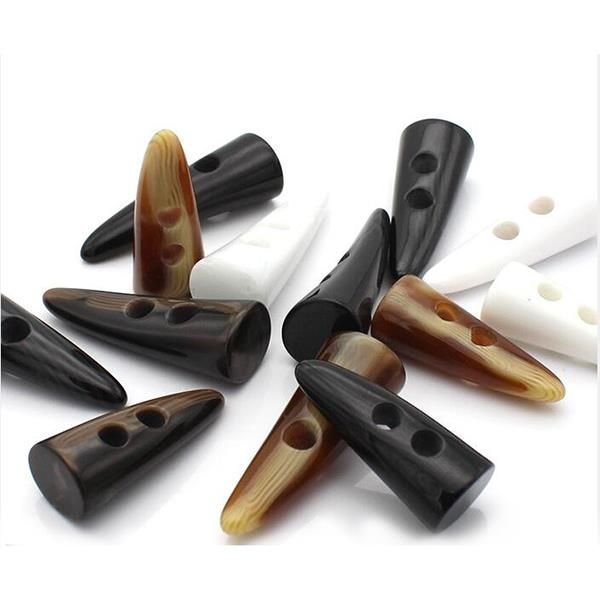
Genuine antler buttons are crafted from deer antlers and often mimic the shape and texture of a horn. They provide a rustic, natural aesthetic. Modern versions are sometimes replicated using wood or plastic to achieve a similar finish at a lower cost.
Abalone Buttons ✨
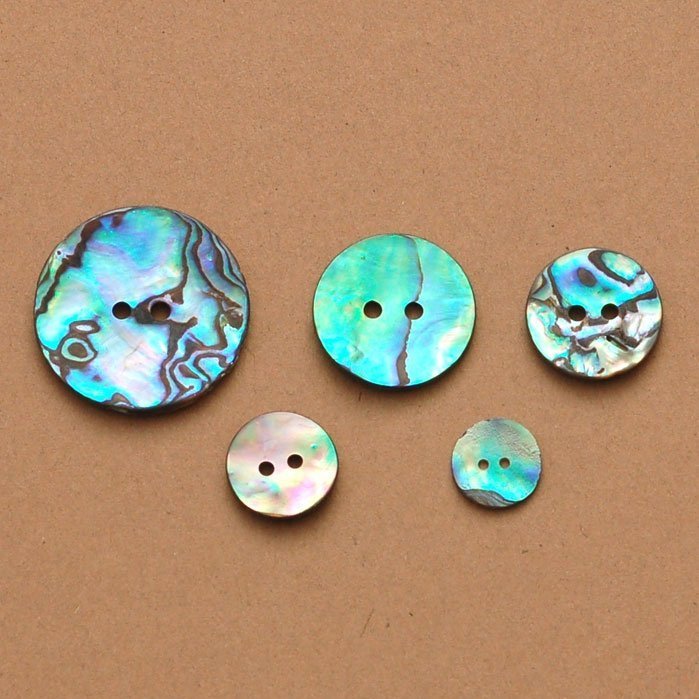
Derived from the shell of the sea ear mollusk, abalone buttons exhibit a distinctive pearl finish with shifting iridescent colors. They are flat with holes for sewing and are ideal for providing elegant accents on blouses, shirts, and casual dresses.
Beaded Buttons 💎

These buttons are purely ornamental, embellished with small beads or rhinestones. They are primarily used for decorative purposes to add sparkle and texture. DIY enthusiasts can create them by stringing plastic beads onto flat shank buttons.
Covered Buttons 🧵
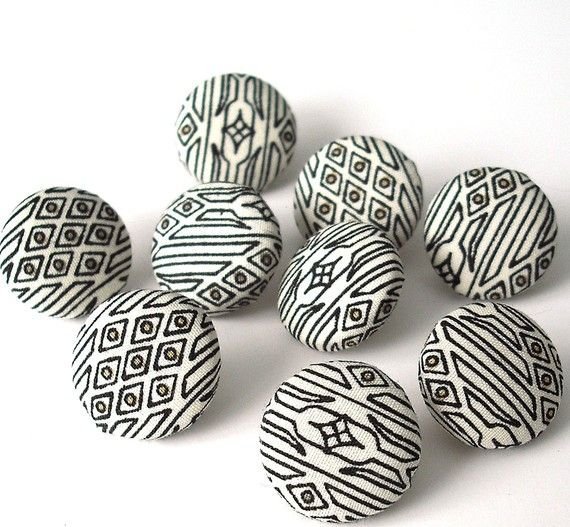
Covered buttons are small, often spherical, and feature a piece of fabric (like linen, felt, or leather) stitched or glued over a button mold. This provides both ornamentation and added strength. They are commonly used in upholstery and high-end clothing.
Decorative (Novelty) Buttons 🎭

Also known as novelty buttons, these come in endless sizes, shapes (like fish or butterflies), and materials. They are highly ornamental, often used as lapel pins or cuff links, and their irregular shapes sometimes make them challenging to pass through standard buttonholes, limiting them to decorative accents, especially near necklines.
Flat Buttons (Sew-Through) ⏺️
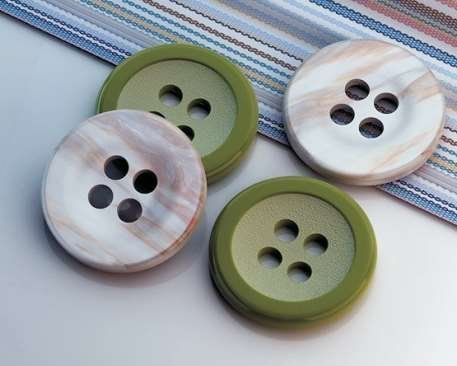
The most typical and versatile button type, flat buttons are characterized by their extreme flatness and generally feature two or four holes in the middle for sewing. They are easy to attach by hand or machine and are used on nearly all garments, including shirts, dresses, and pants. While usually flat, some versions include decorative ridges or edges, combining utility with style.
Horn Buttons 🐂
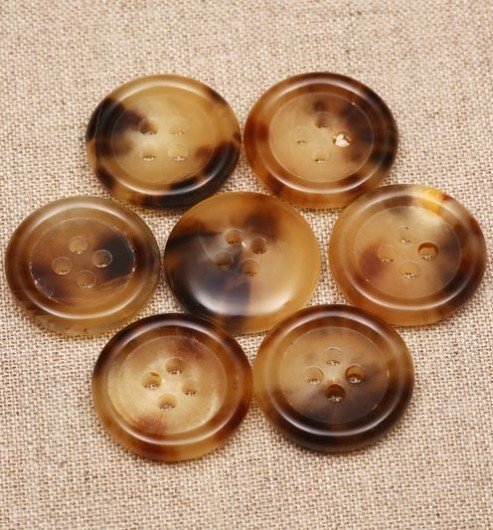
Traditionally crafted from animal horn, which is boiled and poured into molds, horn buttons are classic and can be dyed to any desired color. They are often associated with high-quality tailoring, especially on blazers and coats.
Hook Buttons (Hook-and-Eye) 🪝

Though technically a fastener, hook-and-eye fasteners are often classified alongside buttons due to their function. They consist of two sewn-on parts: a small hook and an eye-like fixture. They are easy to use, highly affordable, and suitable for all garment types, from headbands to heavy coats.
Jeans Buttons 👖

These are the heavy-duty, non-sew buttons typically found on the closures of denim jeans, shorts, and jackets. Unlike traditional buttons, they require specialized tools (like a hammer and awl) for attachment. Alternatives include pin-on or screw-on faux jeans buttons.
Knot Buttons (Chinese Knot) 🪢
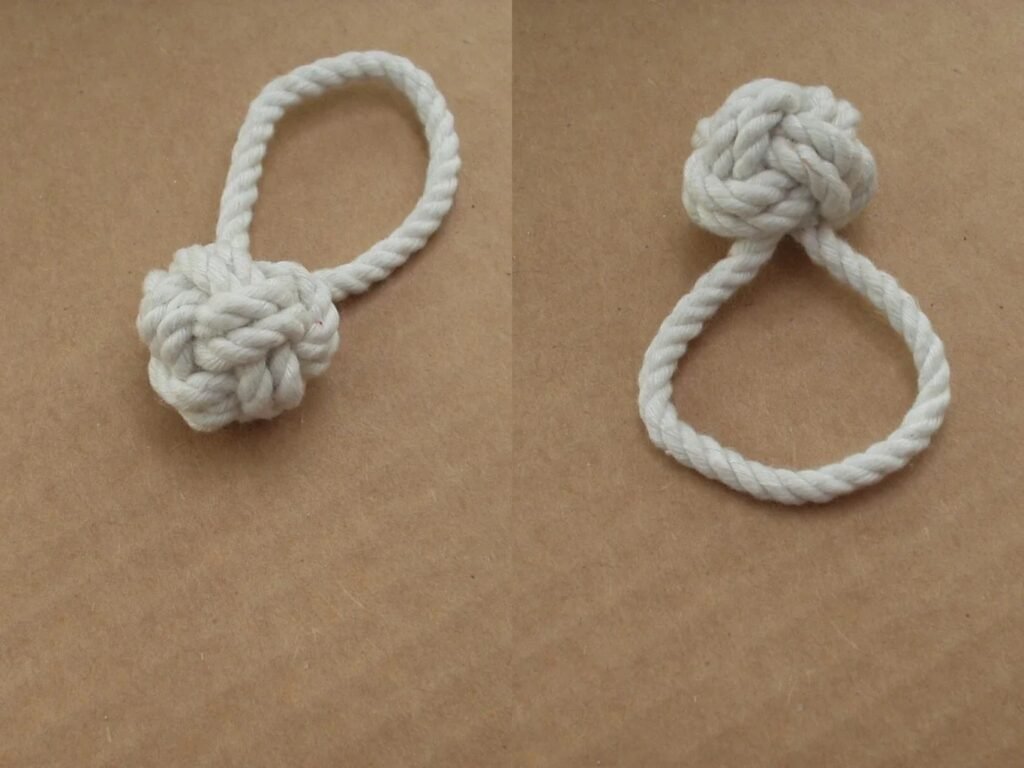
Inspired by Chinese macrame, these knot buttons (or toggles) are handmade, often using paracord. They are primarily used as decorative accents but can also function as closures, adding an exotic and handcrafted touch.
Lapel Buttons (Pins) 🎖️
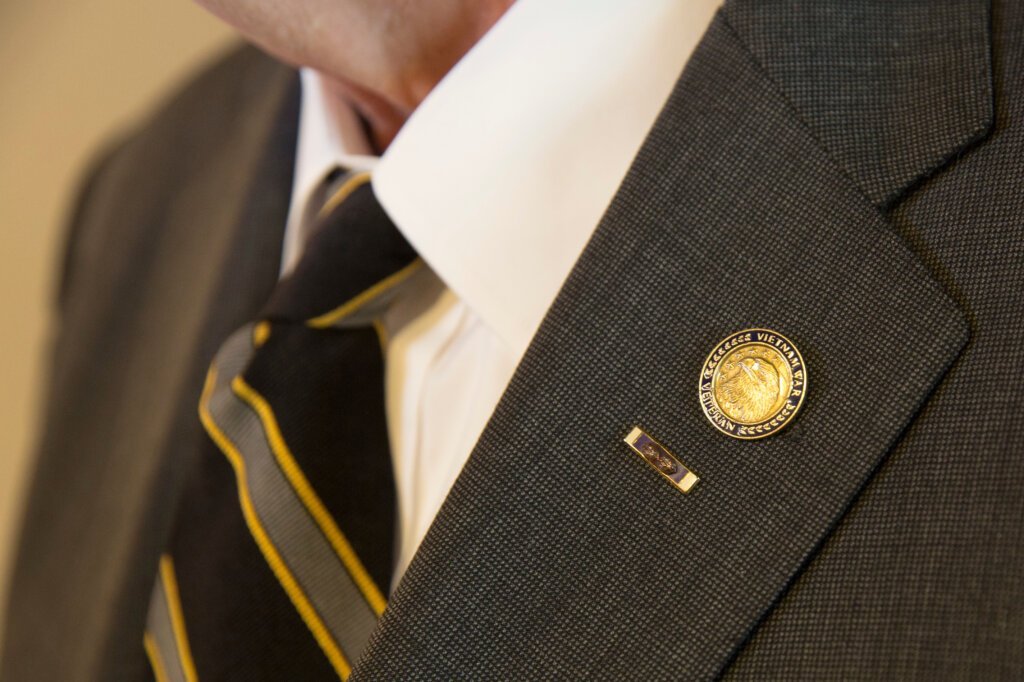
These are small, often metal, highly individualized buttons or pins featuring logos, political slogans, or marketing materials. They attach with a pin or a backing snap, are generally round, and are typically ordered in bulk due to their affordability.
Press Buttons 👆
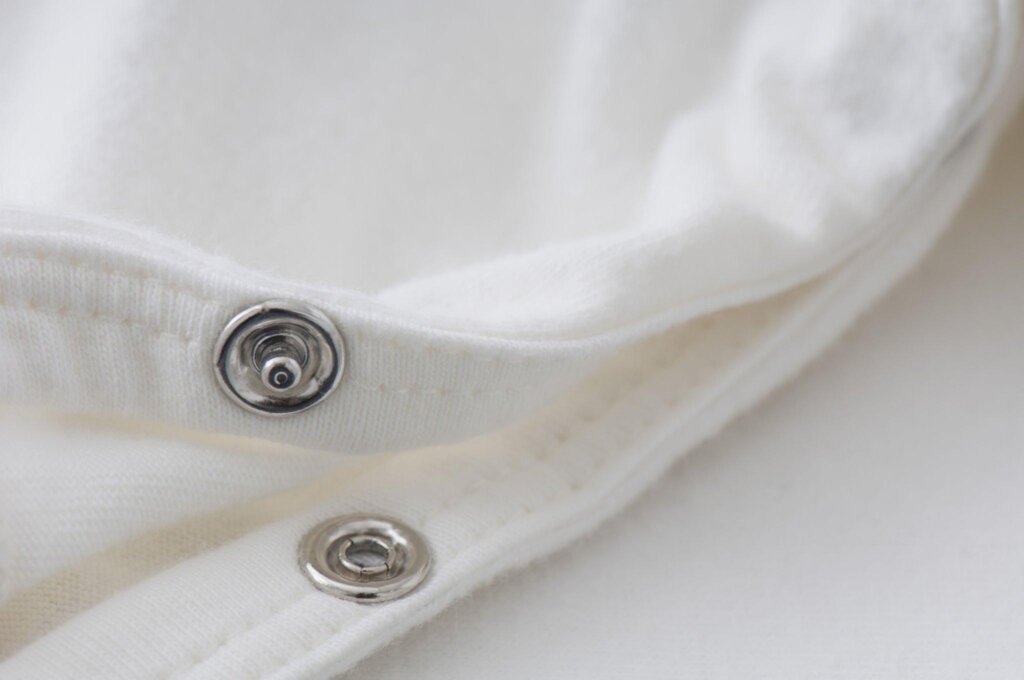
This term often refers to snap fasteners (see “Snaps” below) or simple, often functional, buttons found on adaptable clothing. They are designed for easy use—simple to put on and take off—and can be made of metal or plastic.
Rivets 🔨
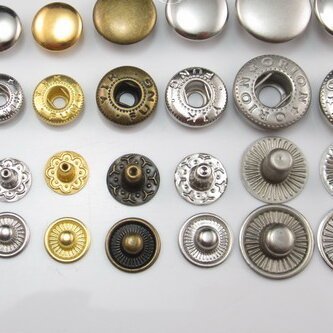
Rivets are decorative and reinforcing metal pieces, not true fasteners. They consist of a metal front and a back piece. The back is pushed through a hole in the fabric and then the front is attached. While often functional in an engineering sense, in clothing, they are primarily used on heavy-duty garments for reinforcement and aesthetics.
Screw-on Buttons 🔩
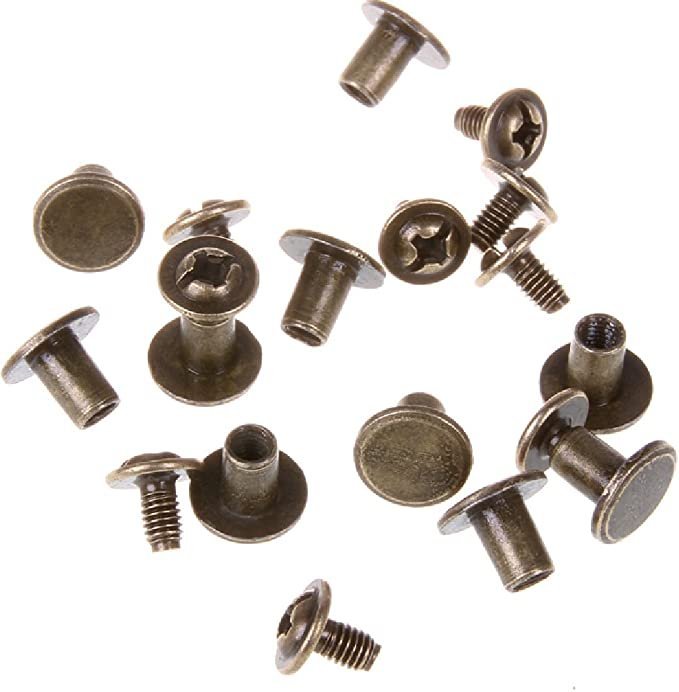
A two-part button where the top and bottom pieces are screwed together through the fabric, securing the button without traditional sewing. They are often used as alternatives for jeans buttons or in places where high durability is needed.
Shank Buttons ⬆️
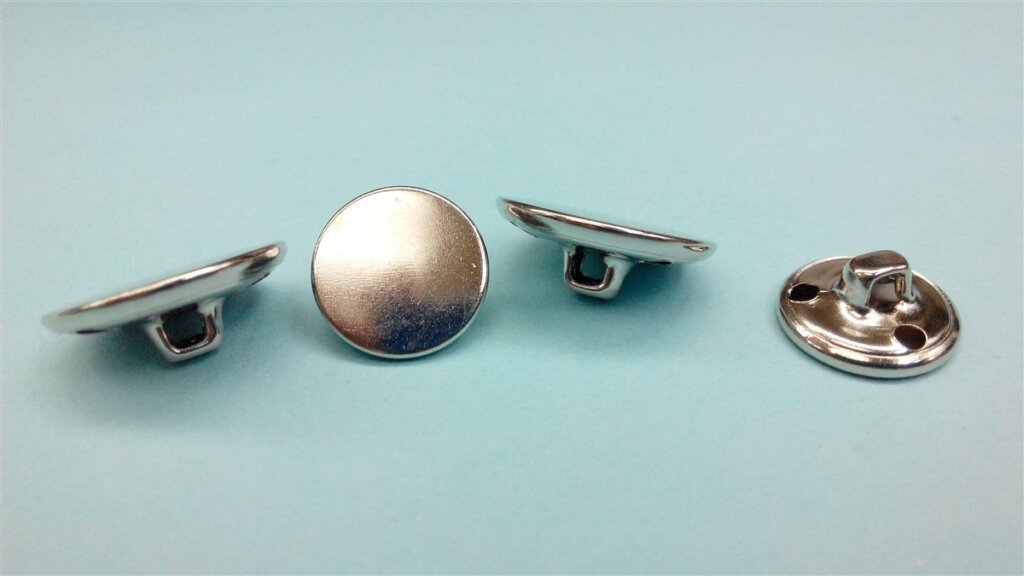
Instead of holes through the center, a shank button has a small loop or elevated stem (the “shank”) on the back for threading. This design causes the button to stand slightly raised from the fabric, giving garments a sophisticated, elevated appearance. They are often made of robust and durable materials.
Snaps (Poppers) 🎯
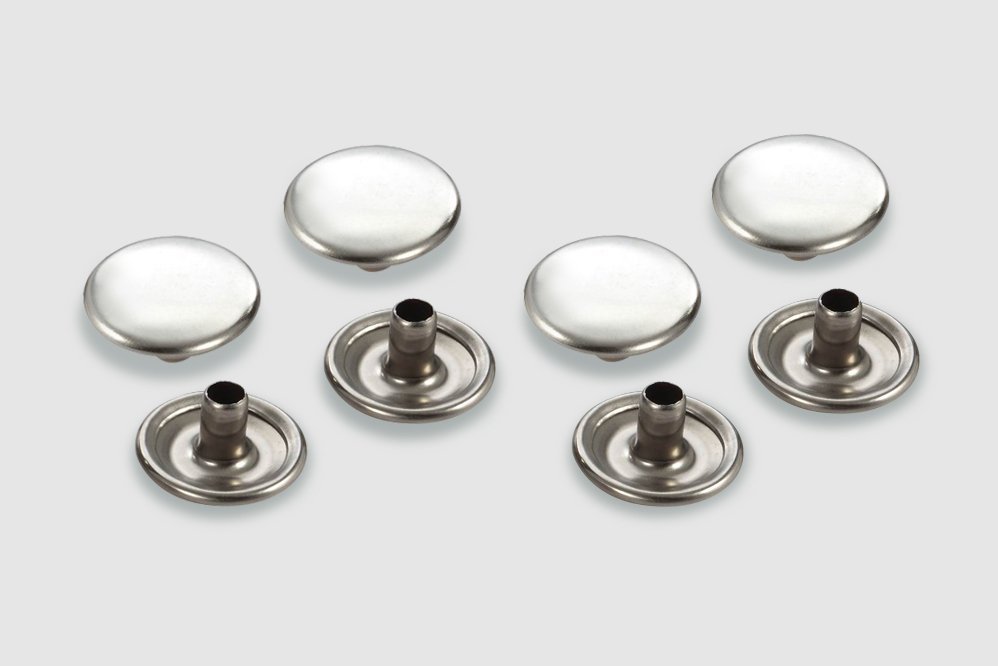
Snaps, or poppers, are two-part fasteners (male and female components) that adhere to each other when pressed, similar to hook-and-eye, but generally round. They are simple to use and available in both durable metal and plastic, with the latter offering a wide array of colors for enhanced aesthetics.
Studs 🟠
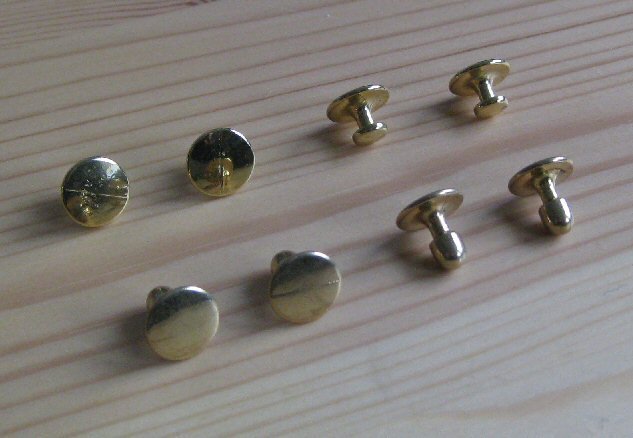
Often associated with denim, stud buttons are typically forced together using a special pressing tool once inserted into the buttonhole, making them nearly impossible to remove, thus offering extreme durability. They are highly ornamental, used on pockets, jackets, and bags, and come in various colors like silver and gold.
Toggles 🪵
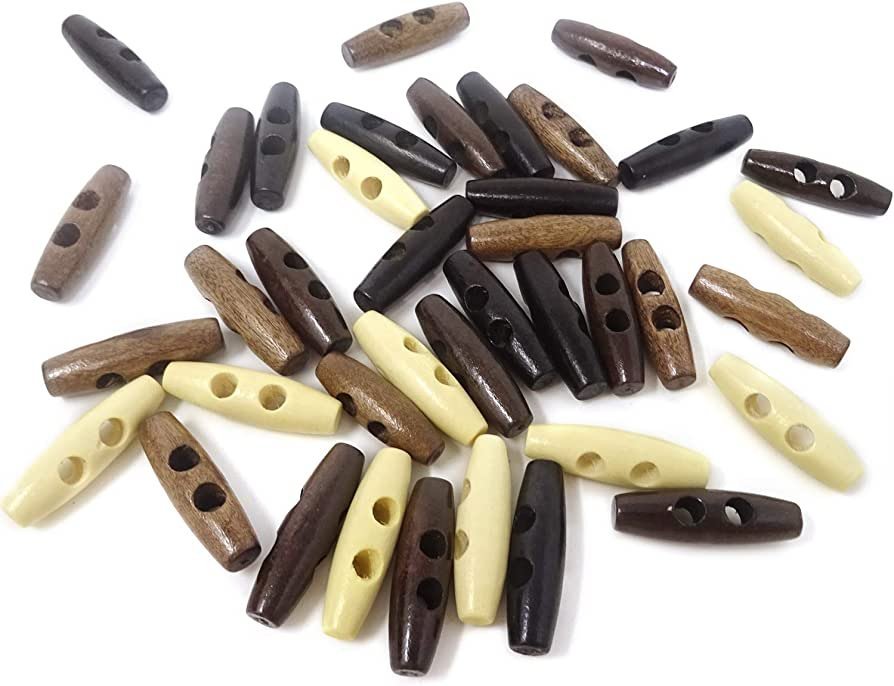
Toggles are long, slim, and typically cylindrical or oval buttons used primarily with loop fastenings (like those found on duffle coats). Their length provides a secure closure, and they are often utilized as distinctive statement pieces, commonly made from wood or plastic.
Composition: Button Materials and Their Unique Properties
The material composition profoundly impacts a button’s aesthetics, durability, and suitable application. Buttons can be broadly categorized into natural compositions (wood, shell, horn) and synthetic compositions (plastic, polyester, metal).
Coconut Buttons 🥥
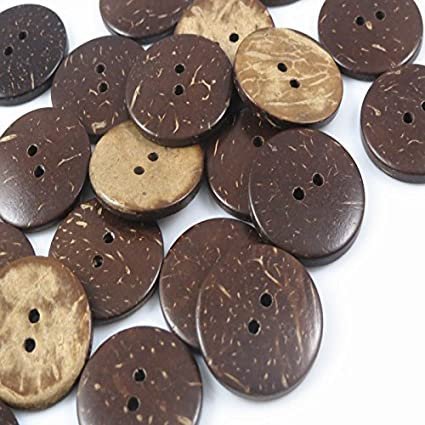
Crafted from coconut shells, these buttons offer a unique, rustic, and organic texture. They are typically circular and commonly used to fasten natural-fiber clothing like shirts, skirts, and blouses, and are popular in sustainable fashion.
Ceramic Buttons 🏺
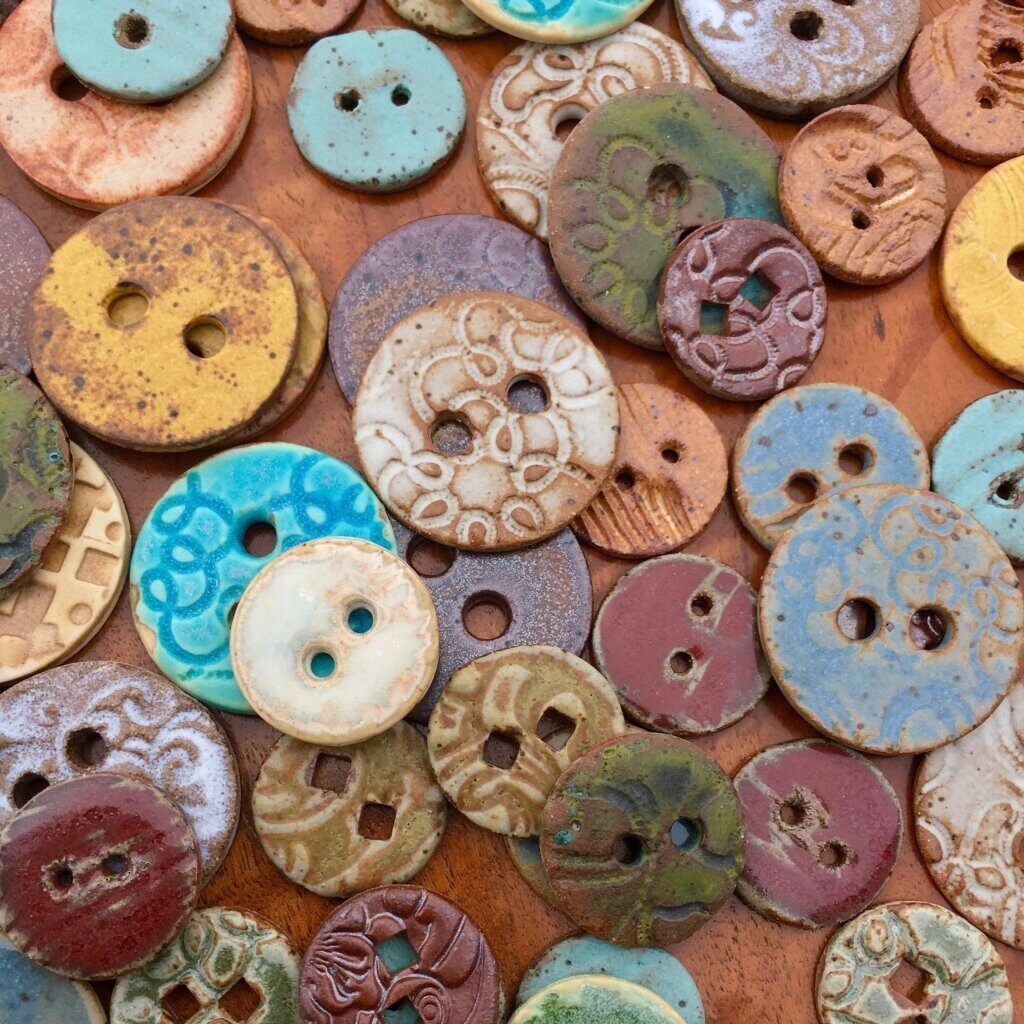
Made from ceramic clay, these buttons are often hand-woven, coming in highly artistic shapes (star, leaf, fish) and designs. They are used to add an elegant and lightweight decorative touch, especially on delicate dresses.
Enamel Buttons 🎨
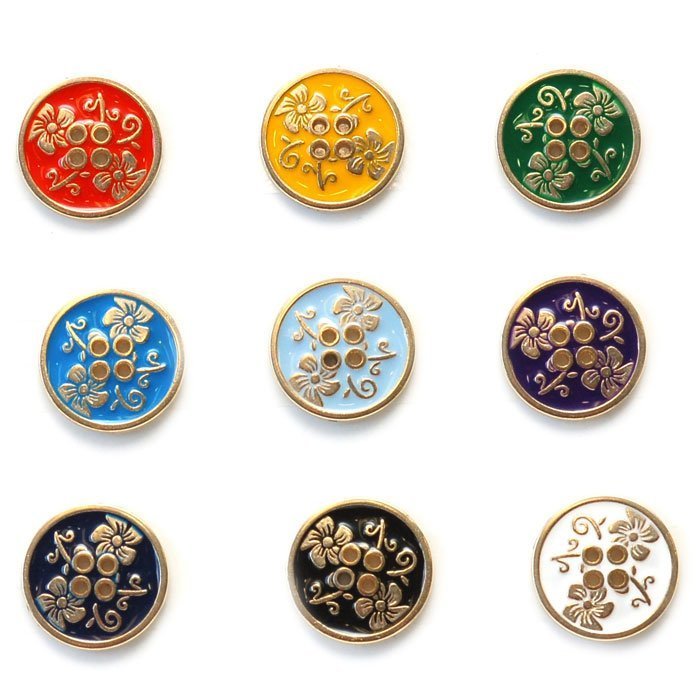
These feature an enamel coating over a metal base, resulting in a glossy, vibrant appearance. They are perfect for adding a splash of color and a polished look to any outfit.
Fabric Buttons (Sewn) 🪡
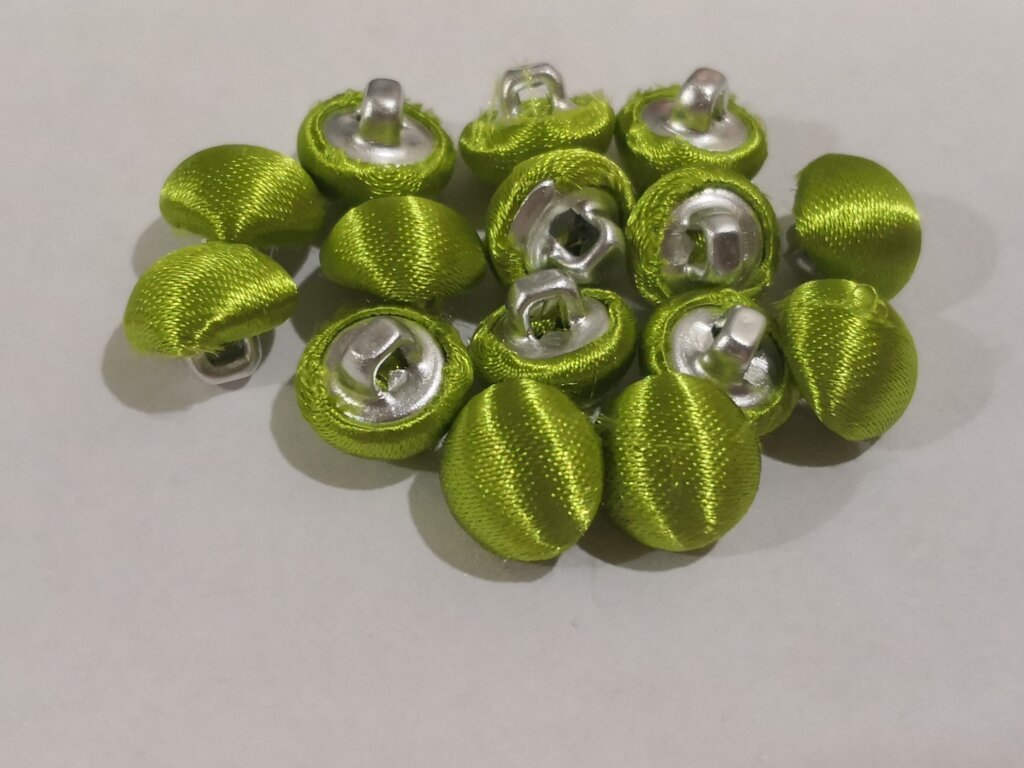
Made from a single piece of fabric, the most popular type is the flat-backed button. They lie flat and are frequently used on clothing to ensure the button blends seamlessly with the garment’s texture.
Glass Buttons 🥂

Glass buttons are stylish, eye-catching, and can be made from strong, scratch-resistant glass, making them a safe and exquisite option for adding a refined quality to consumer items.
Leather Buttons 🧥
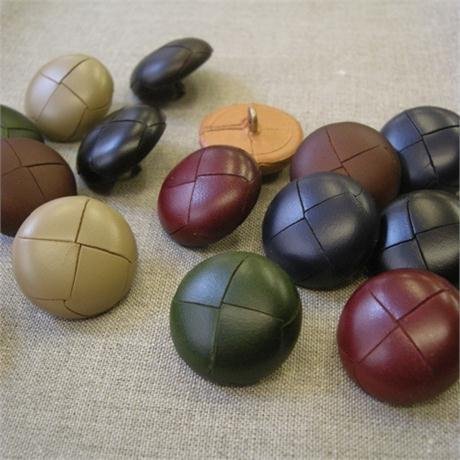
Known for their utilitarian durability and ease of maintenance, leather buttons add a touch of luxury and beauty. They are frequently used on heavy outerwear, such as coats and jackets.
Metal Buttons 🛡️
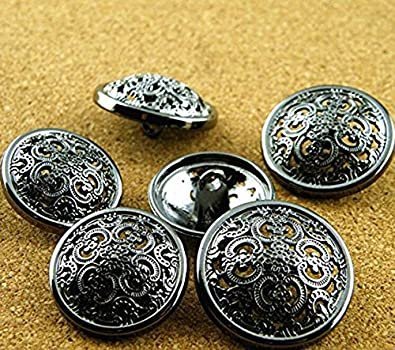
Composed of metals like copper, aluminum, or zinc alloy, metal buttons are robust and frequently preferred for denim products (jeans, trousers) and leather clothing. They are available as both flat and shank buttons.
Nylon Buttons (Synthetic Plastic) 🔗
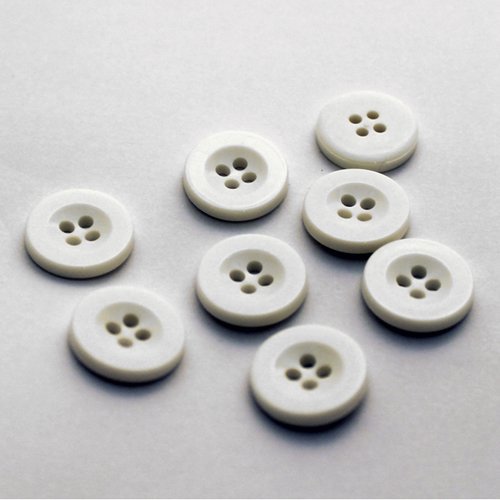
A type of synthetic plastic button, nylon buttons are known for being robust, long-lasting, and highly resistant to heat and water, making them perfect for heavy-duty clothing like utility coats and jackets.
Pearl Buttons (Mother-of-Pearl) ⚪

Typically small and circular, mother-of-pearl buttons are highly valued as decorative accents, particularly in formal attire like suits and dress shirts, adding a classic, luminous sheen.
Plastic Buttons (General) 🟥
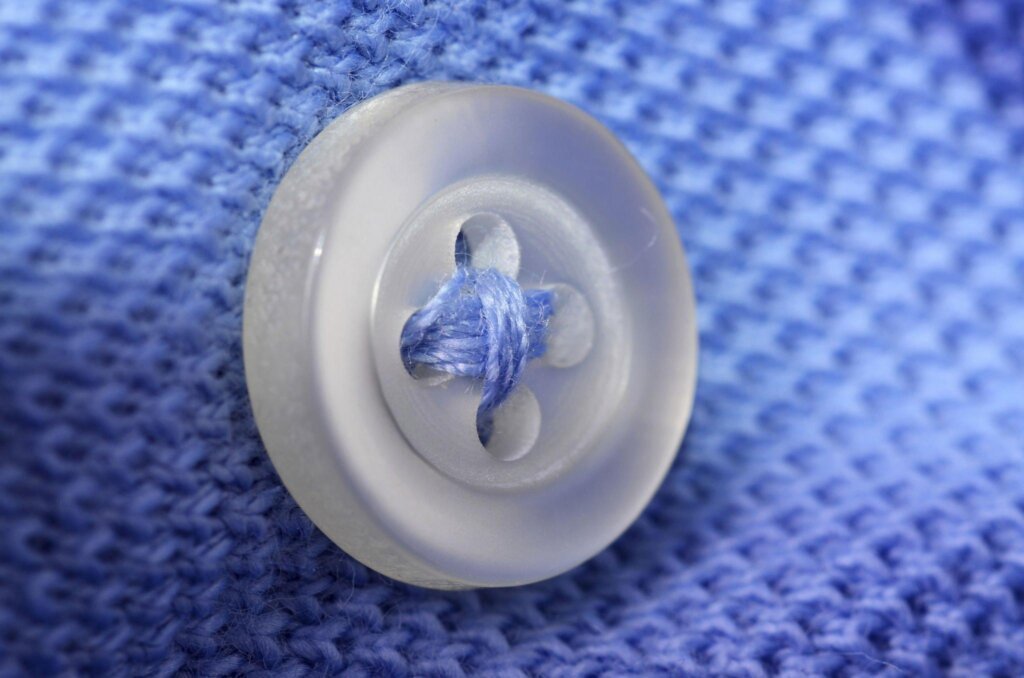
The most widely used and least expensive button type. Plastic buttons come in an enormous range of hues, dimensions, and shapes, offering maximum versatility and ease of use, as they can be stitched or glued onto fabric.
Polyester Button 💡

Polyester buttons are strong and long-lasting. If a less dazzling, more matte effect is desired, they can often be treated with a matte coating.
Resin Button 🪨
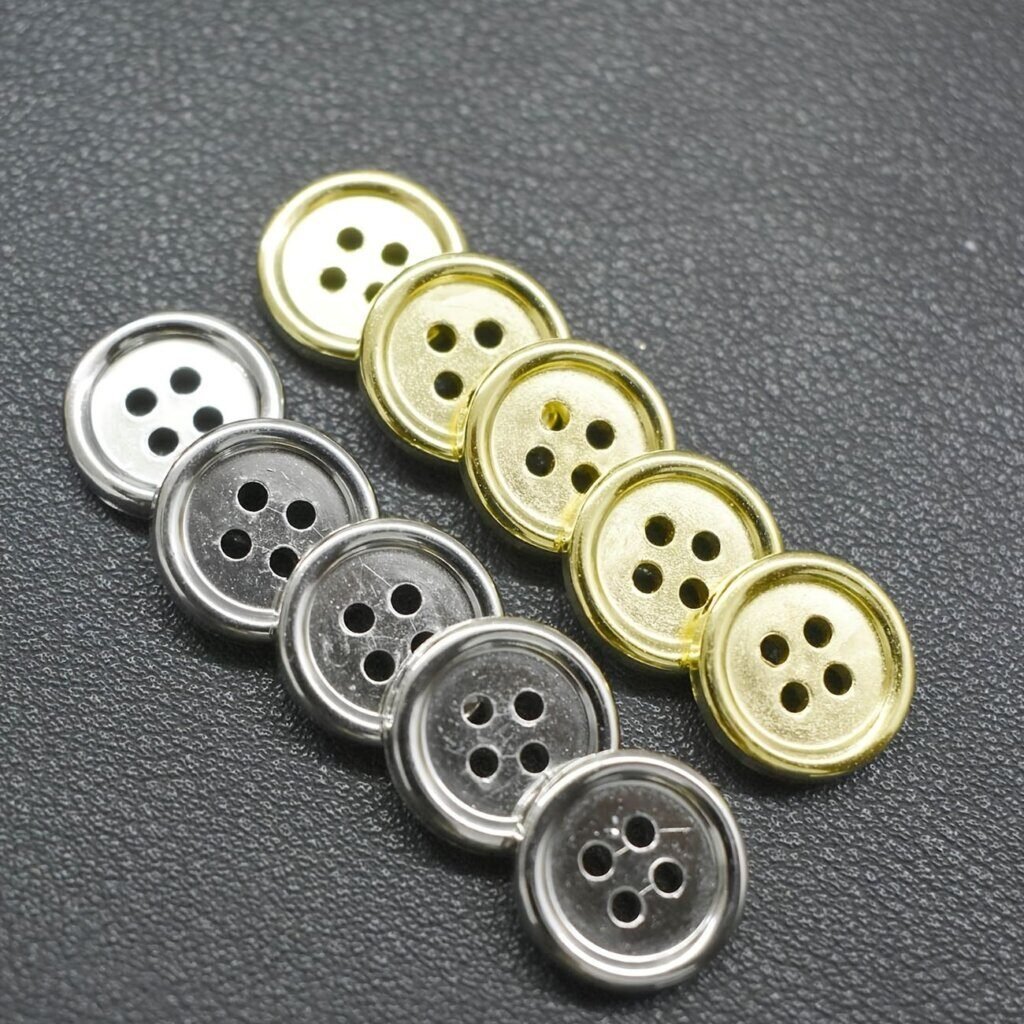
Resin buttons are created from synthetic resin and can mimic the look of various materials like wood, metal, or even plastic. They offer a stylish and novel way to add a unique dash of style to a garment.
Rubber Button 🌧️
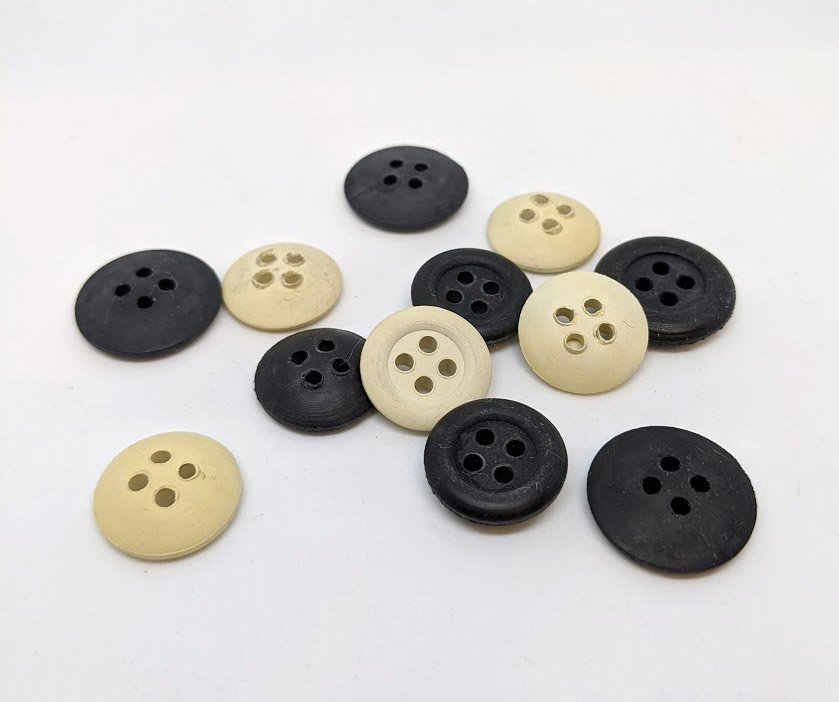
Highly effective in inclement weather, rubber buttons are less likely to come undone compared to other types. They are frequently used on heavy outerwear such as raincoats and certain shoe styles.
Shell Buttons 🐚
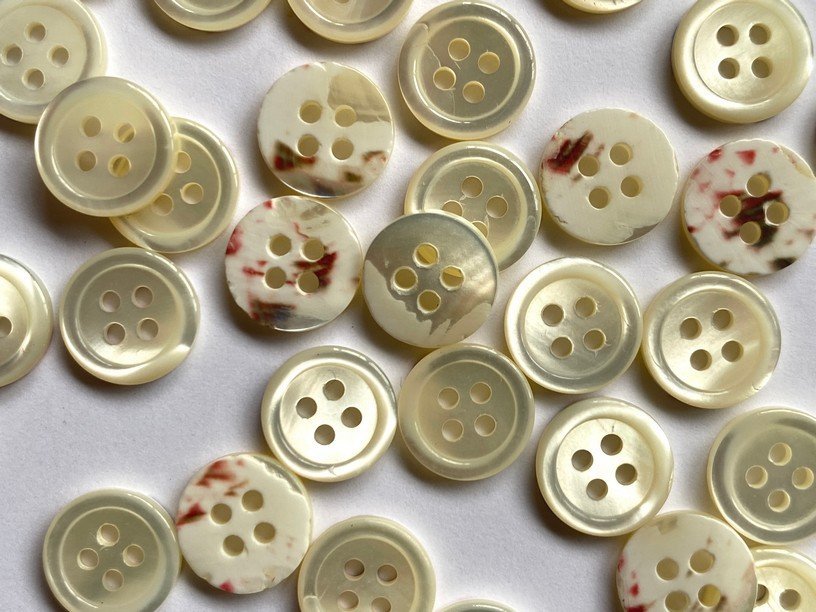
Made from mollusk shells (e.g., clams or oysters), shell buttons are sought after for their distinctive natural appearance and are available in a range of natural colors and sizes.
Wooden Buttons 🌳
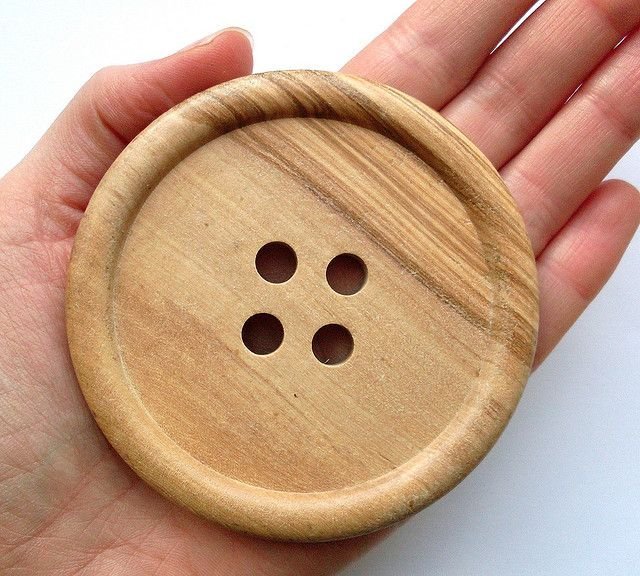
Crafted from woods like maple, oak, or walnut, wooden buttons offer a beautiful, unique, and natural touch. They are highly robust and can be painted or intricately carved to add a bespoke element to any garment.
Market Popularity and Final Considerations
The most common type of button is currently plastic, primarily due to its cost-effectiveness and mass-production capability. While wood buttons offer a more unique aesthetic, they are less prevalent than metal or plastic options. Glass buttons, though elegant, are less resilient and can be harder to source.
Final Words: Buttons are small but critical components of our clothing, essential for both maintaining the integrity of an outfit and enhancing its style. Choosing the appropriate type—whether it’s the less expensive plastic, the durable metal, or the unique wooden option—is crucial to your overall sense of style and the longevity of the garment.
FAQs: Common Questions About Buttons
Q1: What is the etymology of the word “Button”?
A: The word “button” originates from the Old French word *boton*, meaning “a bud.” This, in turn, comes from the common Romanic word *bouter* (to thrust or push), suggesting a button’s initial description was something that thrusts up or out, much like a bud or a knob.
Q2: How are buttons measured, and what are standard sizes?
A: Button diameter is measured in lignes (L), where one ligne equals $0.635\text{ mm}$ (or $0.025\text{ inches}$). Standard shirt buttons are usually $16\text{L}$ or higher, sleeve buttons are often $15\text{L}$, and collar buttons are about $12\text{L}$. Pant buttons are generally larger, around $24\text{L}$.
Q3: What are 2-hole and 4-hole buttons called?
A: Buttons with two or four holes are collectively called sew-through buttons. This distinguishes them from buttons that do not have holes in the face and are attached using a loop or stem on the back, which are called shank buttons.
Q4: Are metal snaps or plastic snaps more reliable?
A: Metal snaps (or poppers) are generally considered more durable and reliable than plastic ones, especially for garments that require frequent fastening or endure heavy use, like denim or outerwear.