Pattern grading is a well-known term in the clothing industry. It refers to the process of increasing or decreasing a size pattern part proportionally from one size to the next while keeping everything else the same.
It’s the process of using a size specification sheet or grading increments to turn base size or sample pattern size into other sizes.
This can be done by hand or with pattern-cutting software on a computer.
These changes are called pattern grading rules for clothes. There are different rules for each clothing market area and level.
The grading network for a block pattern is also the basic network for the components that have been made from the block pattern.
What Are Standard Pattern Grading Rules?
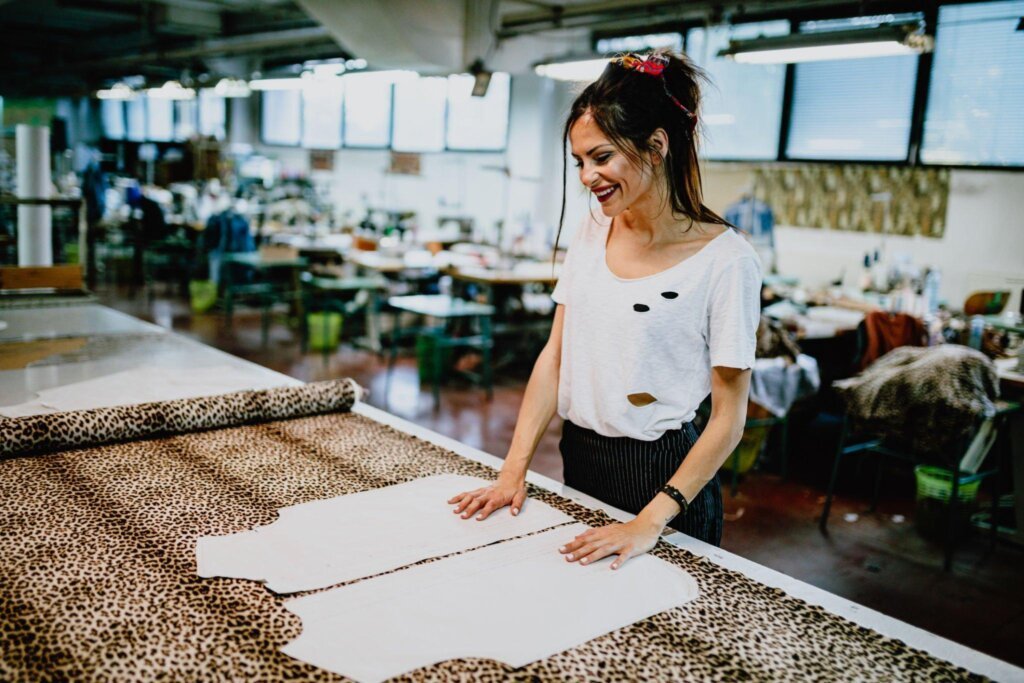
Well-designed measurements of the body are used to come up with standard grading rules. This can be done online or in books that show how to grade patterns. When making a clothing line, you’ll need a grading system so that you can reach a specific market.
Grading clothes is a step that needs to be done before you go to sample makers or factories because they need card sets of your patterns and the order of the clothes to be made.
It tells you how each size of your clothes will fit.
Having different pattern sizes for each of your garments is a cost-effective way to fill out your minimum garment order. Grading in fashion won’t make a new shape; it will only make the original shape bigger or smaller.
How To Grade A Pattern Between Sizes
The garment grading rules describe how much the sizes change at each garment measurement point.
For example, for most of the misses size range, the bust, waist, and hips “grade” by 1″ between sizes.
To make a size 10 dress from a size 8 dress, you would make the bust, waist, and hips all 1″ bigger. You would mostly make the change at the side seam and spread the 1″ difference in size out evenly at each seam.
Types Of Grading Patterns

There are three following basic ways to grading pattern.
This is the easiest way, and the other two ways are built on top of it. To use this method, you must cut the pattern and spread the pieces a certain amount to grade up or overlap the pieces to grade down. You will only need a pencil, tape, ruler, and scissors for this method.
It’s the process of making a pattern bigger by moving it around at the same distance. To get the same results as cut-and-spread, you have to outline again after you move it.
The most recent improvement in grading technology is the use of computerized pattern-making to give grading sheets. It’s also the quickest way.
But it’s expensive, so usually only big companies can buy it. It takes the steps of the first two methods and makes them digital.
Although, there isn’t a better way to do it; all of them can produce the right garment grade.
What Are Techniques For Pattern Grading?

There are many ways to grade a pattern for a garment, but they all have one thing in common: the basic grade. Grading systems can be broken down into two main categories:
1. The Track Shift System or Two-Dimensional Grading.
2. The Draft Grade System or Grading in Three Dimensions.
This term is used when grade increments are added to individual pattern pieces by moving the base pattern pieces along the tracks that have already been set.
Two-dimensional grading systems only grade a pattern for circumference and height, so they can only be used for loose or semi-drape clothes because the stock size suppression stays the same throughout the size range.
This system is better for clothes that fit loosely, like shirts or blouses, and have a small range, like 10–12–14. A two-dimensional system can be used to safely grade clothes like these. But it is hard to change it to work in three dimensions.
This term is used when the pattern is returned to its original block form or when the increment is added to the actual pattern draft.
Not only does this system make a pattern bigger, but it also makes or breaks suppression in the following areas:
- Shoulder to bust
- From Hip to Waist
- From elbow to hand
A draft grade can have two dimensions or three dimensions. People think that the three-dimensional draft grade is the best way to use grade increments and it should be used as much as possible.
This is especially true when grading tight-fitting or skin-tight clothes, or clothes that go from size 10 to size 22.
The bust-to-shoulder suppression number is the most important part of a dress. To use a three-dimensional grading system, you need to know how to cut patterns well.
Pattern Grading Requirements According To Clothes

There are two main types of clothes:
- Close or skin-tight fitting garments
- Loose or semi-drape garments
The closer a garment fits, the more important it is to choose a sophisticated garment grading system that adjusts the garment with garment suppression.
If the fit of the garment is loose, adjusting the garment suppression is less useful and a two-dimensional system is better.
Sizes may have little to do with how tight or lose a garment fits, but it mostly has to do with the number of companies or firms.
Kind Of Fabric Used For Pattern Grading
Fabrics can be divided into two categories for grading purposes.
- Stretchable
- Non-elastic
Stretch fabrics are more flexible and will easily conform to the shape or contours of the body, so they can be used.
A fabric that doesn’t stretch has the opposite effect and must be kept under control and in balance across all sizes.
Steps For Manual Grading
Tools Required For Grading
- Parallel pattern grading rulers
- Awl
- Carpenters pencil
- Proportional divider
- French curve
- Armhole curve
- Tailors square
- Notch maker
- Grade ruler
- Measuring tape
- Color sketch pen or pencils
How To Grade A Pattern Between Sizes
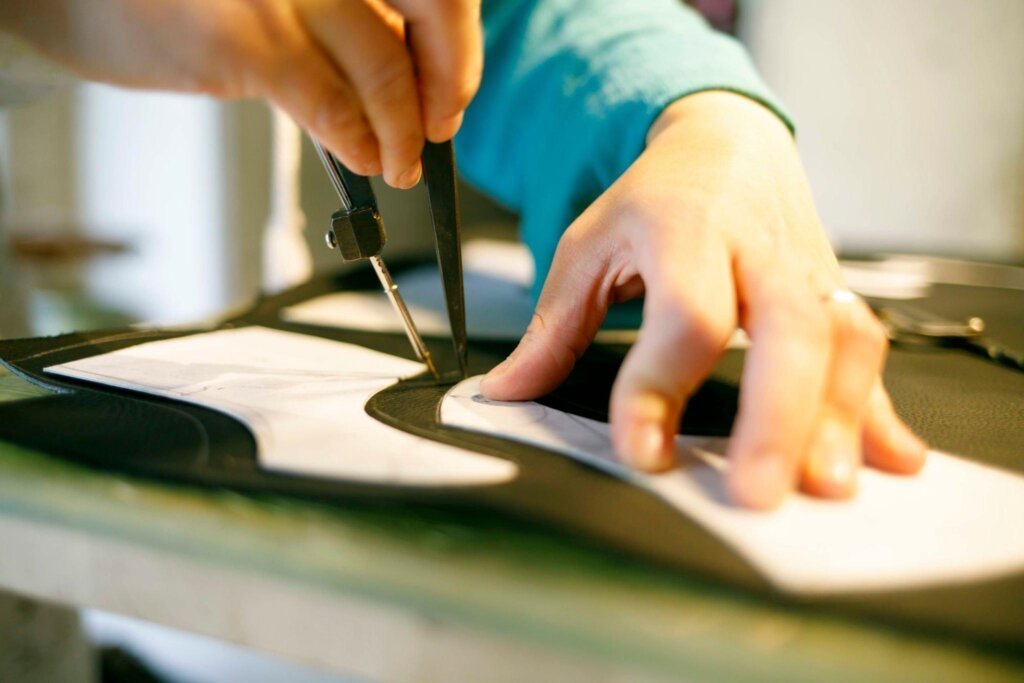
A sizing system is a set number of sizes between which there is a big difference in circumference. If the size difference is on the order of plus or minus 2 cm, then the size interval would make sense to be 4 cm. In real life, size ranges smaller than 4 cm are used more often.
Grading in sewing patterns for women is made for a certain size, usually an 8 or 10. That’s the sample size, and the fit is perfected on that sample.
Once the fit is approved for that size, the pattern is “graded” for a full range of sizes, usually from size 4 to size 18 for misses sizes.
Size Charts
There are the following kinds of size charts.
- Body Measurements
This type of chart gives the measurements of the human body for each size. These measurements are used to make a pattern with the right amount of ease.
- Garment Measurements
This chart shows the finished measurements and specifications for each size. It is used to grade patterns. A size is a set of measurements, and each set of measurements is represented by a symbol that both the clothing maker and the customer can understand.
The “X” And “Y” Axes grading

The “x” axis for body grades and the “y” axis for body and skirt grades would be a line on or parallel to the center back or center front. This is always true if the straight y-axis is on or parallel to a major girth line like the bust, waist, or hip.
Final Words
There are still different ways to grade, such as
Grading by hand, by machine, or by computer
The main goal of garment grading is to make patterns quickly that is accurate in terms of size.
To do this, you must always follow a few simple rules.
There is no hard and fast rule about how to make the sets of graded patterns, and each person’s choice of how to work depends on how accurate and easy it is for them.