
Ever wonder how your favorite T-shirt comes to life? From a simple cotton plant to a comfy piece of clothing that expresses your personality, the journey of a T-shirt is a fascinating tale of technology, craftsmanship, and fashion.
In this post, we will give you a detailed process of how T-shirts are made. We’ll look at every step it takes, from cotton to customer so that you know the ins and outs of T-shirt making and how to choose a reliable T-shirt manufacturer.
Steps for Manufacturing T-Shirts
Let’s look at the detailed steps of making T-shirts.
Getting the Raw Material Ready
T-shirt production begins with cotton farming. Cotton is harvested using a mechanical picker. Contrary to popular belief, the cotton ball is not the flower, but the outer layer of the plant’s seeds.
The harvested cotton is then processed through a Gin machine, which separates the seed from the cotton fiber. Modern Gin machines also clean and sort the cotton, leading to a higher quality product.
After ginning, the cotton is baled and sent for spinning. The fibers are spun, sorted, carded, and combed in preparation for weaving. This process transforms the cotton into a gray fabric, which is the raw material for T-shirt production.
Raw Cotton Material to Useable Cloth
How much cotton does it take to make a shirt or T-shirt, you might ask, and the answer is lots. Specifically, it takes 0.5 lbs. (8 oz.) to make a T-shirt and a little more, 0.6 lbs. (10 oz.), to make a man’s shirt.
Because so much cotton is needed to make a T-shirt, it’s a valuable product that manufacturers must handle carefully. At this point, the wet processing happens, taking the gray raw material through heat and chemical processing to take on the look of the fabric we all know and love.
Fabric wet processing goes through three stages before making it into a T-shirt or shirt—preparation, coloration (often this is bleaching), and finishing. Proper finishing is vital because this part of the process gives us the softness we expect from a T-shirt.
Printing the Shirts
Consumers also want patterns and prints on their T-shirts, and as cotton is a natural fiber, it requires either pigment printing or reactive printing to embed the color and design.
The pigment printing process takes a large printer moving back and forth across the cloth, depositing pigment as it goes. The pigment is applied in layers that build up to your desired color. Think of it like painting; you add color upon color until you’re happy with the overall effect, depth, and shade.
Reactive printing is an entirely different process that uses dye, water, pressure, and heat to create the finished effect. Reactive printing is used because the colors produced are vibrant and bold.
The steps involved with reactive printing are as follows:
Each process has its pros and cons, but reactive printed cloth will remain vibrant for longer, and pigment-processed material will suffer from fading over time. If you want your garment to fade, the pigment printing process might be for you.
Once the base color is in, screen printing of your design can then happen. Screen printing is an art unto itself, and while it might be fun to do it at home, a commercial screen printing facility offers customers a professional process, resulting in a commercial finish.
If you’re interested in how patterned shirts are made and T-shirts are printed, here’s a step-by-step guide:
The automatic press can print up to 900 T-shirts an hour.
Cut and Sew
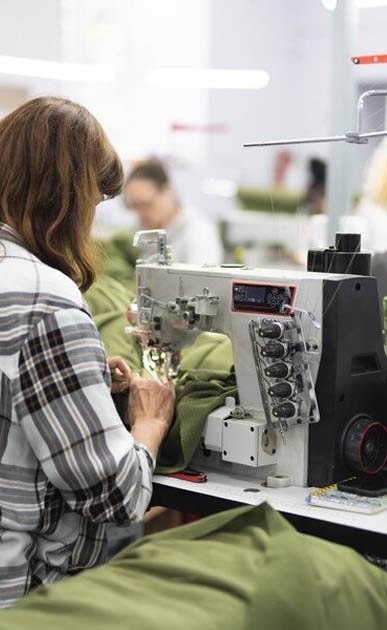
Once the fabric is dry, a special precision cutting machine produces the garments; the device is either electric or hand-operated. The T-shirt or shirt is now ready for sewing.
Back and Front Assembly
The back and front sections (not tubed) are machine-stitched along the sides using an over-edge stitch, then linked along the seam to create a thin, straight, overlaid, or lap seam.
Sleeves and Pockets
The sleeves are finished before fitting into the garment since it is easier to hem flat cloth. The sleeves are usually delivered to the sewing head by an automated system. Applying a band, folding to make a hem, and stitching the edge completes the sleeve. The band could be sewn at the border or bound across it, depending on the style you hope to achieve.
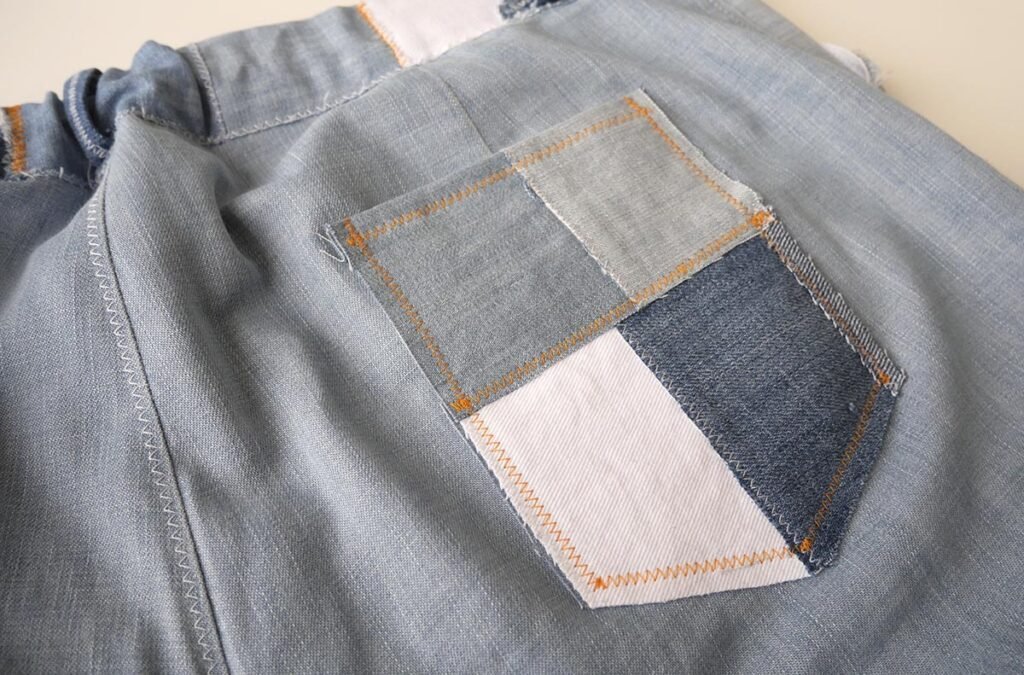
Pockets (you can never have too many pockets) are sewn onto casual T-shirts, while top-of-the-range tees have lined pockets to prevent bagging. The automated system may attach the pockets to the T-shirts or shirts; before that happens, an operative will place the pocket in the correct position before the machine takes over.
Neckbands and Labels
In crew neck T-shirts, the neck edge should be smaller in circumference than the outside edge of the garment. The neckband needs to be sufficiently stretched to prevent bulging; this is no easy task, as stretching material can result in a baggy, unpleasant appearance. At this point, brand labels are sewn into the inner neckline.
Shoulder Seams and Hems
Usually, a simple overlay seam is required for T-shirt or shirt shoulder seams. Better quality T-shirt manufacturers will reinforce seams with tape or elastic. The finishing of the shirt’s shoulder seams might happen before or after the neckband is fastened, depending on the style of the garment.
Hems are hems, or maybe not! The last phase of the T-shirt production can make or break a look. An overedge stitch is typically used to create a flexible trim at the garment’s hem. The stitch must be loose enough to stretch the garment without tearing the cloth.
Now you know how a T-shirt is made and how a tee goes from plant to hanger, but if T-shirts are your business, how do you know which manufacturer is best?
Experience Hassle-Free T-shirt Production with Ludyway!
We are Ludyway, a custom and sustainable clothing manufacturer that can perfectly satisfy your T-shirt manufacturing needs; we are pleased to offer our line of custom apparel to several businesses and industries. With Ludyway, you can have creative control over every aspect of your T-shirt making, from the choice of materials to the little details, and we’ll work hard to make your ideas a reality.
Our commitment to becoming a sustainable clothing producer is furthered by using biodegradable materials and textiles, which consistently guarantee eco-friendly and high-quality products. Work with us to benefit from our decades of experience in the garment industry.