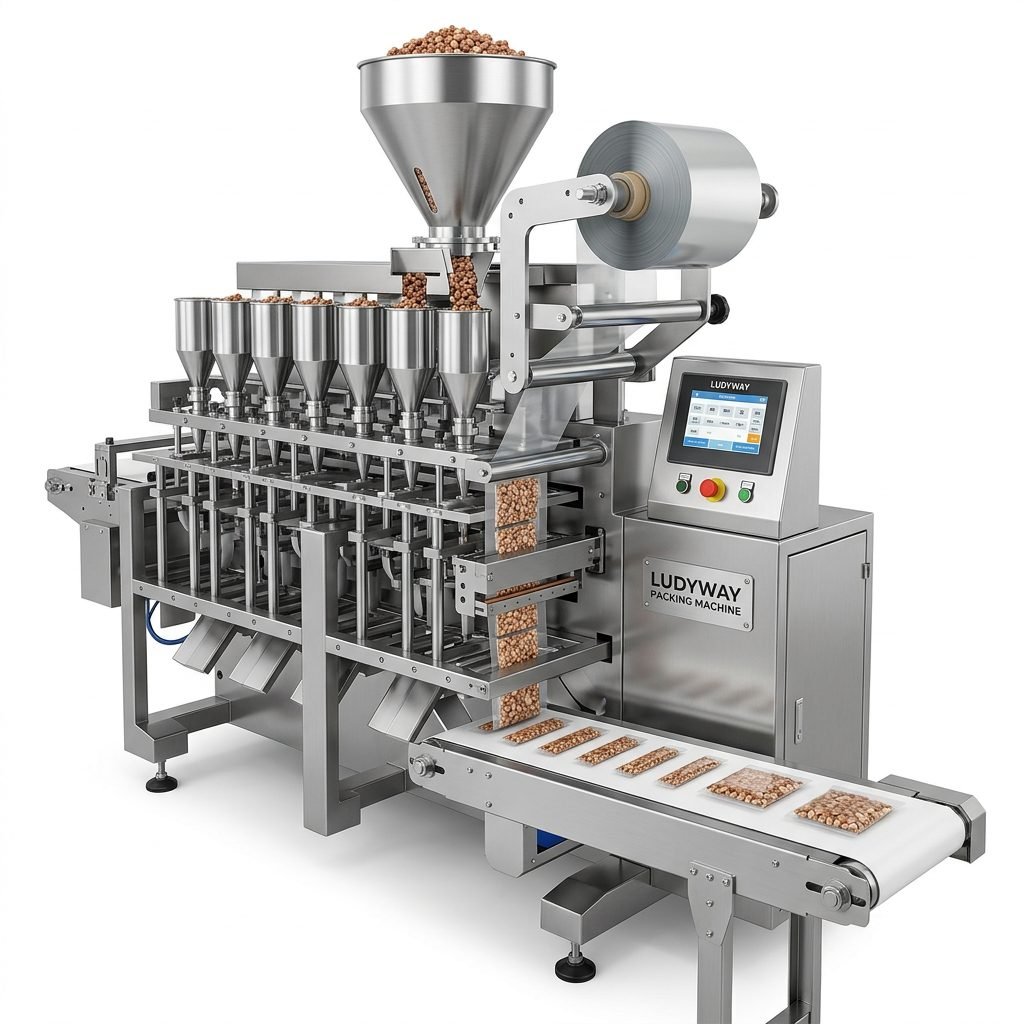
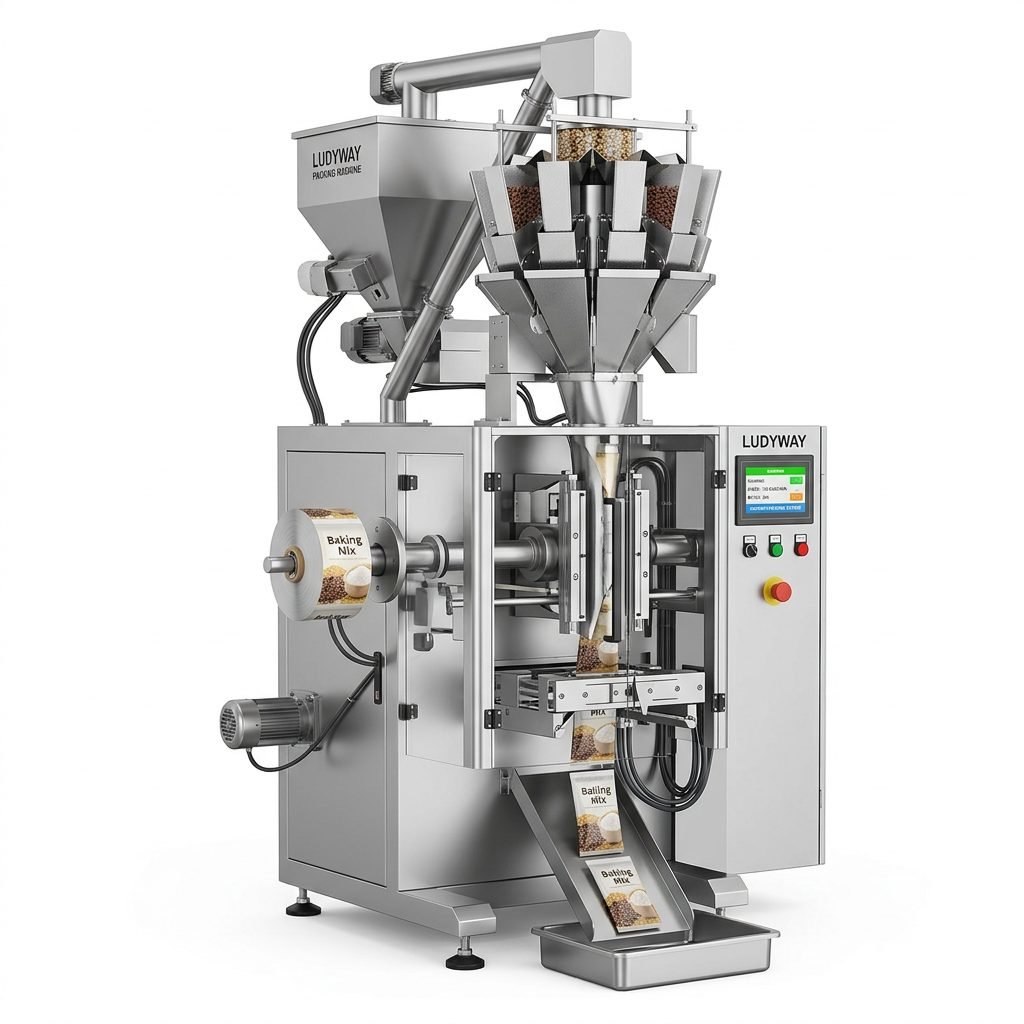
Choosing the right sachet packaging material is one of the most important decisions for product protection, shelf life, branding, and production efficiency. Whether you pack powders, granules, liquids, gels, or pastes, the material you choose affects barrier performance, sealing quality, transport durability, consumer convenience, and total packaging cost.
In this guide, you will learn how to compare the best materials for sachet packaging, what factors matter most, and how to match material structure with your product and machine requirements.
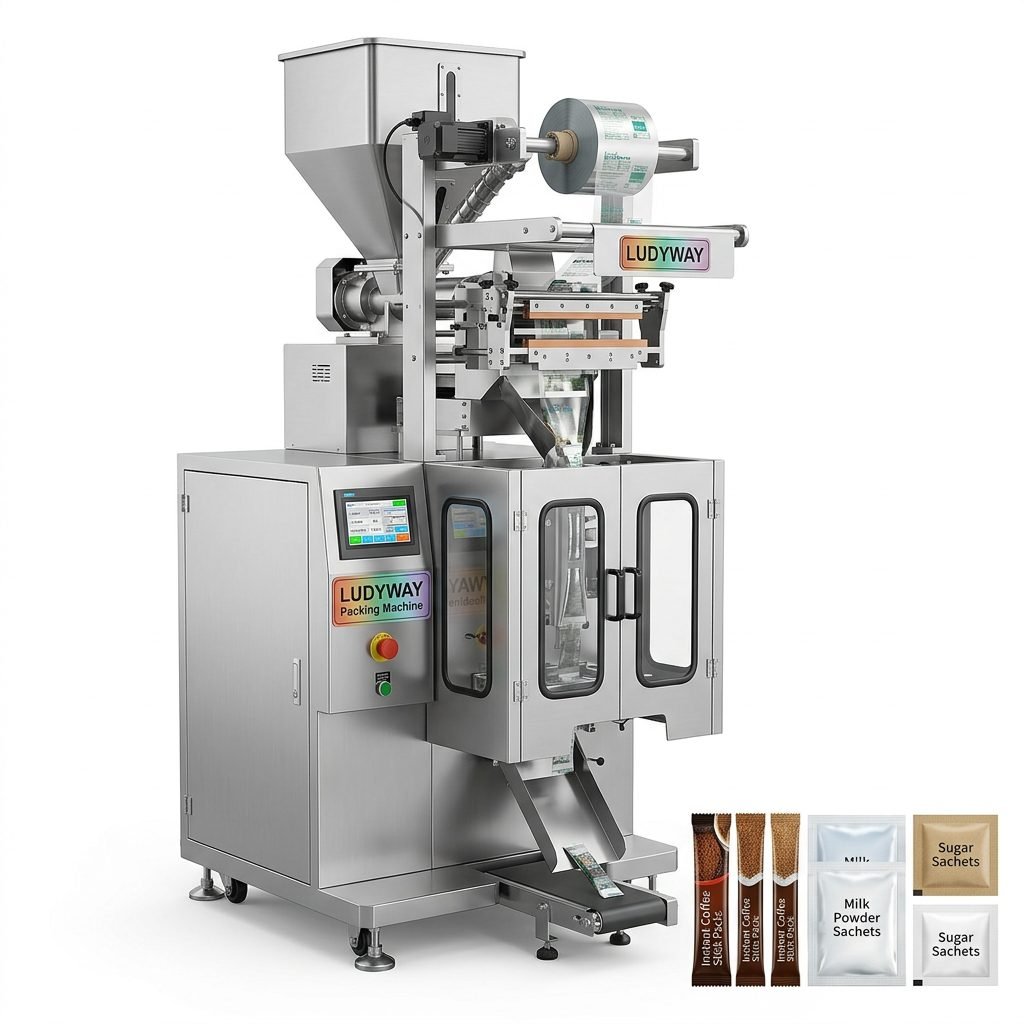
Why Sachet Packaging Material Matters
Sachets are designed for single-use or small-dose packaging, so the material must do a lot in a very small format. A poor material choice can lead to moisture ingress, oxygen exposure, leakage, delamination, poor print quality, or sealing failures. A good material choice helps brands achieve:
- Longer shelf life
- Better product freshness and stability
- Reliable heat sealing performance
- Improved puncture and tear resistance
- More attractive shelf appearance
- Compatibility with high-speed packaging equipment
- Compliance with food, pharmaceutical, or cosmetic regulations
The Main Types of Sachet Packaging Materials
Most sachet materials are made from laminated flexible packaging films. Each layer performs a different function, such as sealing, printing, stiffness, barrier protection, or puncture resistance.
| Material Type | Typical Use | Key Advantage | Possible Limitation |
|---|---|---|---|
| PET/PE | Powders, granules, basic liquids | Good balance of strength and sealability | Moderate barrier only |
| BOPP/CPP | Dry foods, snacks, seasoning sachets | Clear appearance and good machinability | Less suitable for high-barrier needs |
| PET/AL/PE | Coffee, pharma, sensitive powders | Excellent moisture, oxygen, and light barrier | Higher cost, less recyclable in many markets |
| PET/VMPET/PE | Drink mixes, supplements, sauces | Good barrier at lower cost than foil | Barrier lower than full aluminum foil |
| Paper/PE or Paper/AL/PE | Natural-looking or premium products | Strong visual appeal and tactile feel | May reduce speed or sealing consistency |
| Mono-material PE or PP structures | Sustainability-focused applications | Improved recyclability potential | Barrier performance may require optimization |
Best Sachet Packaging Materials by Product Type
1. Powders
Powder products such as coffee, milk powder, protein, spices, pharmaceutical powders, and supplements often need strong moisture protection. Many also require oxygen barrier properties to prevent oxidation, caking, aroma loss, or potency reduction.
Recommended materials: PET/PE, PET/VMPET/PE, PET/AL/PE
- PET/PE works well for general dry powders with moderate shelf-life needs.
- PET/VMPET/PE is a practical choice when you need better barrier without the full cost of foil.
- PET/AL/PE is ideal for highly sensitive products such as instant coffee, probiotics, or pharmaceutical powders.
2. Granules
Granular products like sugar, salt, seasoning, oral rehydration salts, seeds, and drink mixes need durable film that runs smoothly on packing machines and resists puncture from irregular particle edges.
Recommended materials: BOPP/CPP, PET/PE, PET/VMPET/PE
- BOPP/CPP is often used for dry free-flowing granules with lower barrier requirements.
- PET/PE offers stronger structure and better seal reliability.
- PET/VMPET/PE suits sensitive granules that require extra shelf-life protection.
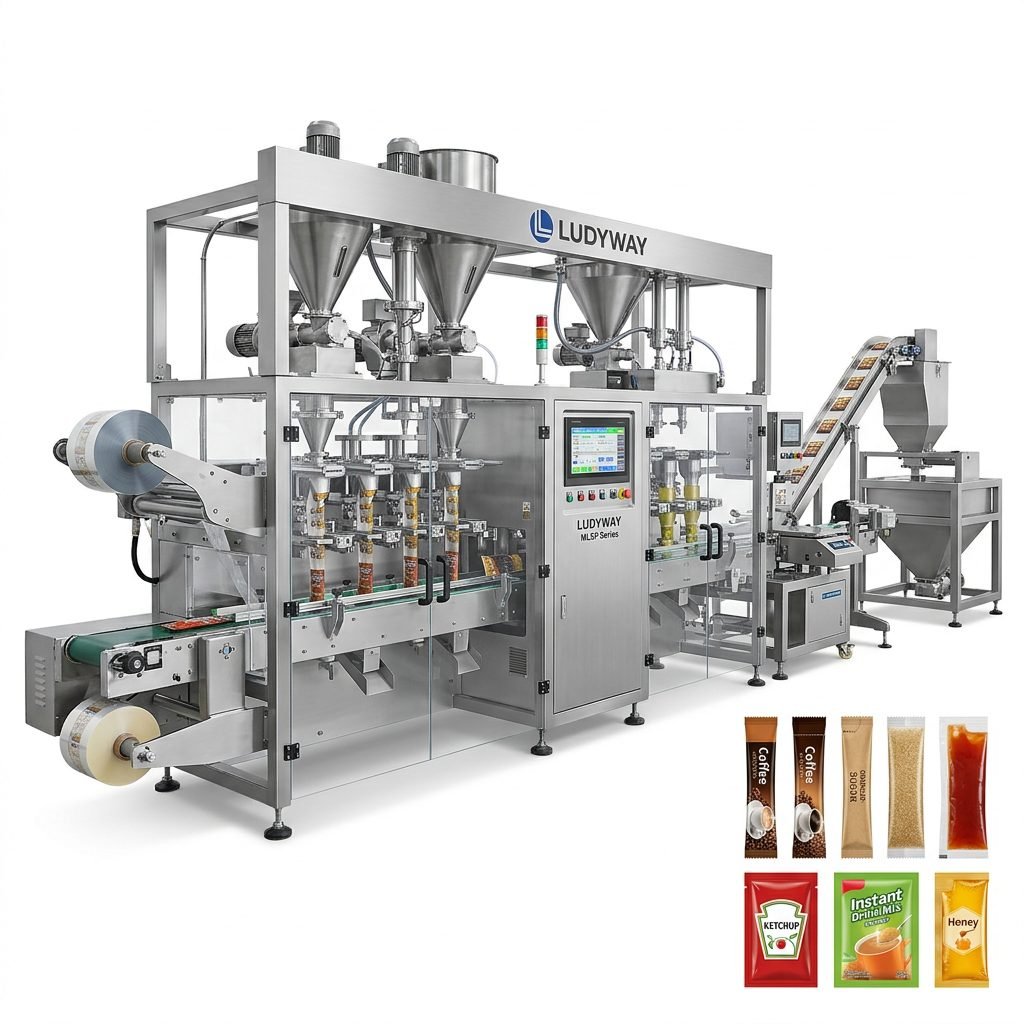
3. Liquids and Gels
Liquids such as sauces, shampoos, oils, lotions, and syrups need sachet materials with excellent sealing performance and strong leak resistance. Some formulations also need chemical resistance or light barrier.
Recommended materials: PET/PE, PET/AL/PE, PET/VMPET/PE
- For everyday liquid products, PET/PE is widely used because it seals well and provides good mechanical strength.
- For oxygen- or light-sensitive liquids, foil laminates offer stronger protection.
- For cosmetics or pharmaceutical gels, material compatibility testing is essential before mass production.
4. Pharmaceutical and Medical Products
Sachets used for pharmaceutical powders, oral liquids, medical granules, and diagnostic applications usually require higher barrier properties, tighter quality control, and compliance with strict industry standards.
Recommended materials: PET/AL/PE and other high-barrier laminates
Foil structures are commonly preferred because they offer superior protection against moisture, oxygen, UV light, and contamination risks.
5. Eco-Conscious Consumer Products
Sustainability is becoming a stronger buying factor across many industries. Brands increasingly look for recyclable, downgauged, or mono-material sachet structures that reduce environmental impact without sacrificing machine performance.
Recommended materials: Mono-PE, mono-PP, lightweight recyclable laminates
These options can support environmental goals, but they must be tested carefully for barrier, seal strength, and line efficiency.
How to Choose the Right Sachet Material
Material selection should not be based on cost alone. A lower-cost film may lead to higher waste, returns, or shelf-life problems. The best choice balances product protection, production speed, branding, and logistics.
| Selection Factor | What to Evaluate | Why It Matters |
|---|---|---|
| Barrier needs | Moisture, oxygen, light, aroma protection | Determines shelf life and product stability |
| Product form | Powder, liquid, granule, gel, paste | Affects sealability and puncture resistance |
| Machine compatibility | Film thickness, sealing window, friction | Impacts line speed and sealing consistency |
| Visual presentation | Gloss, matte, transparency, print quality | Supports brand image and shelf appeal |
| Storage and transport | Compression strength, puncture resistance | Helps reduce leakage and damage |
| Regulatory compliance | Food contact, pharma, cosmetic standards | Ensures market access and product safety |
| Sustainability target | Recyclability, downgauging, material reduction | Supports ESG and customer expectations |
Common Sachet Material Structures Explained
PET/PE
This is one of the most common sachet laminates. PET adds strength, printability, and temperature resistance, while PE provides the sealant layer. It is a versatile structure for many food, chemical, and personal care applications.
BOPP/CPP
BOPP offers clarity and good print surface, while CPP supports sealing and flexibility. This combination is popular for dry products with simpler barrier requirements and attractive presentation needs.
PET/AL/PE
Aluminum foil gives a very high barrier against moisture, oxygen, and light. This structure is widely used for products that are highly sensitive or require long shelf life in demanding climates.
PET/VMPET/PE
Metallized PET provides improved barrier at a more economical price point than foil. It is often selected for drink powders, snack seasonings, and health supplement sachets.
Paper-Based Laminates
Paper laminates are chosen mainly for premium branding, natural product positioning, and tactile shelf appeal. However, they must be matched carefully with sealing parameters and barrier expectations.
What Thickness Should a Sachet Film Be?
Sachet film thickness depends on the product, the pack size, and the packaging process. In many applications, total laminate thickness may range from roughly 50 to 120 microns, but there is no one-size-fits-all answer.
- Light powders and small doses may use thinner films.
- Liquids and abrasive granules often need stronger structures.
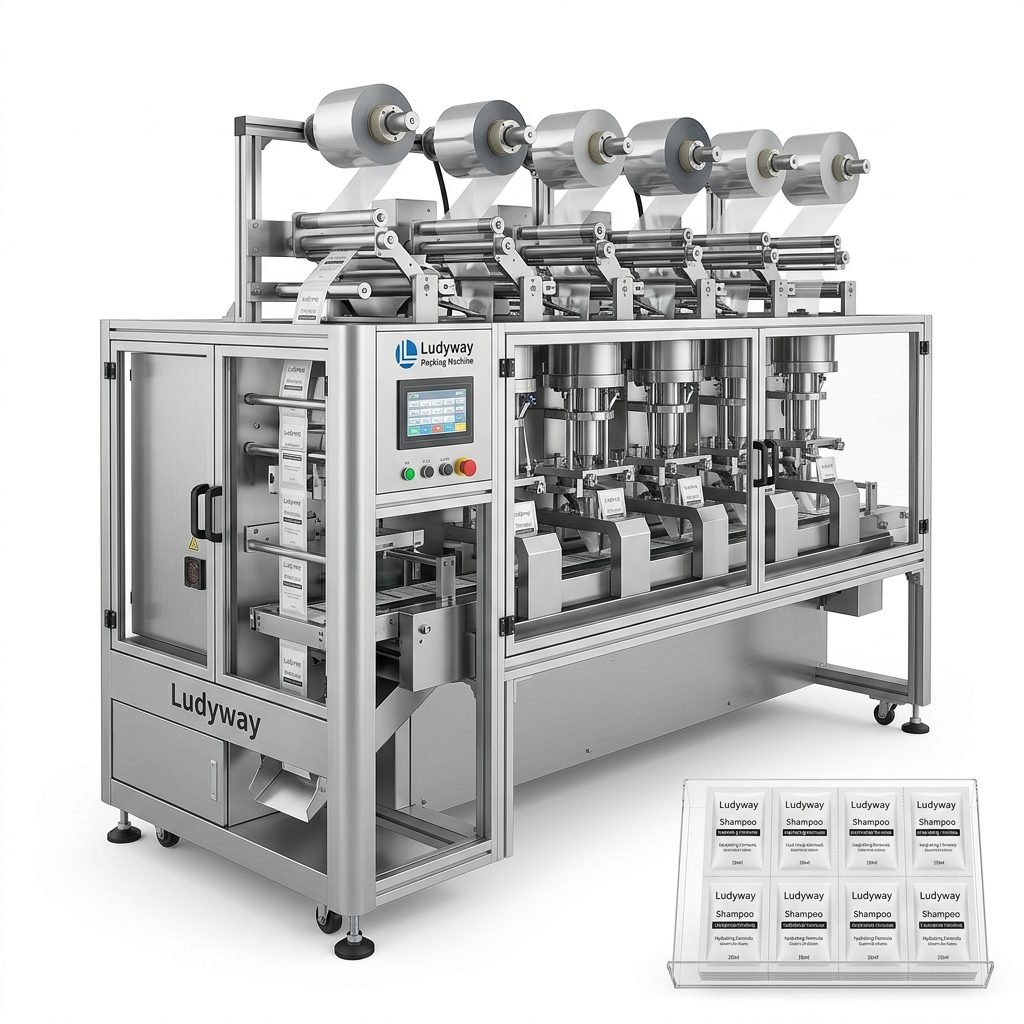
- High-speed multi-lane machines may need optimized thickness for stable tracking and sealing.
Key Performance Tests Before Finalizing Material
Before approving a sachet film for production, brands should test both the material and the packed product under real conditions.
- Seal strength test
- Leak test
- Drop and compression test
- Moisture vapor transmission analysis
- Oxygen transmission analysis
- Migration and compatibility testing
- Machine running trial at actual production speed
- Shelf-life simulation under expected storage conditions
Material Choice and Packaging Machine Compatibility
Even the best film will not perform well if it is not compatible with the packaging machine. Film stiffness, friction coefficient, heat sealing range, and roll consistency all influence output quality. This is especially important for high-speed sachet machines and multi-lane systems.
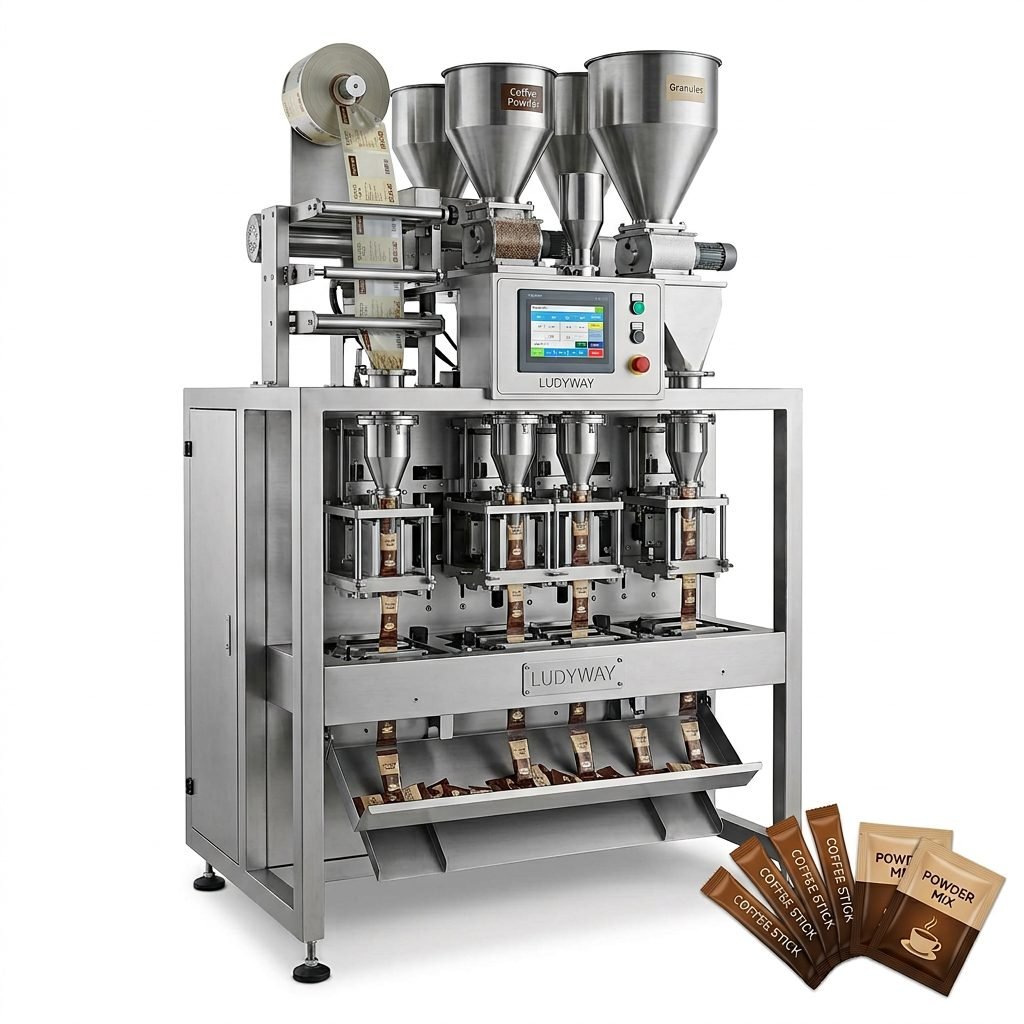
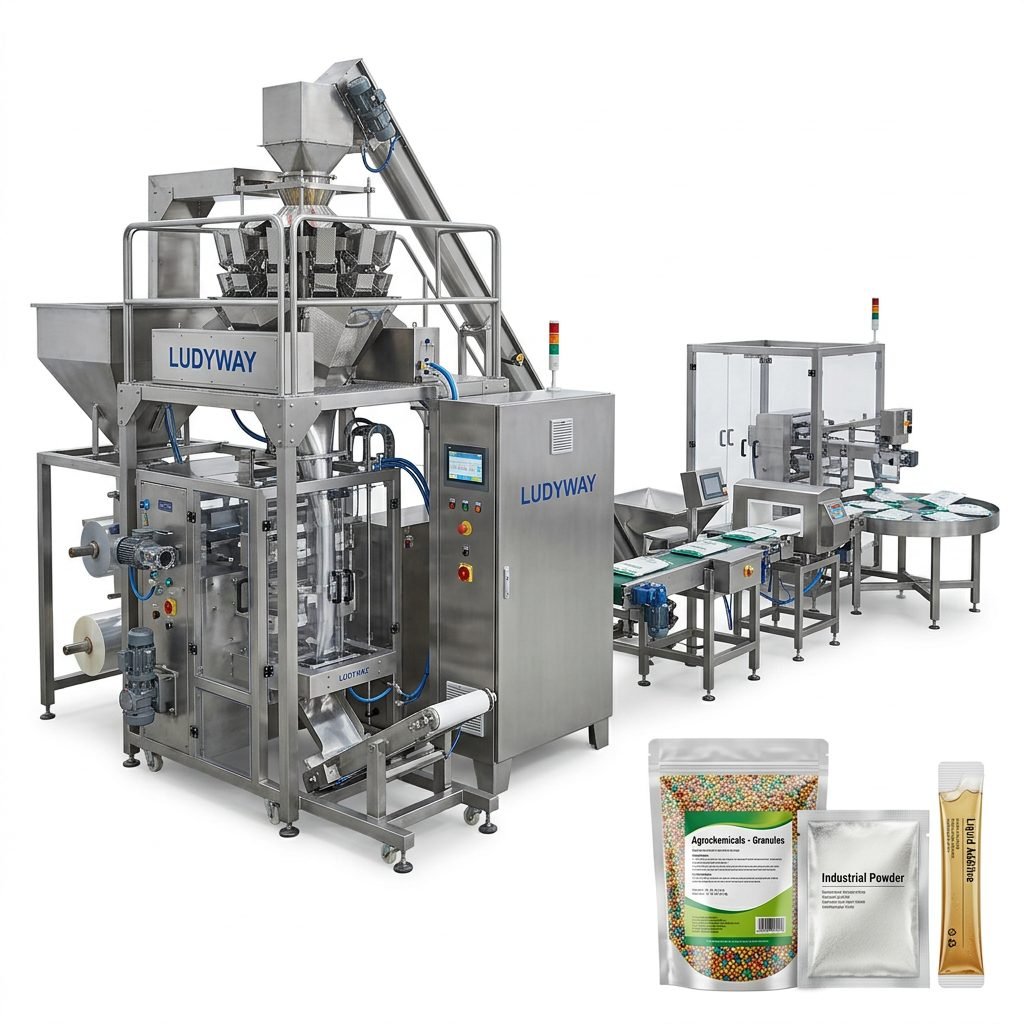
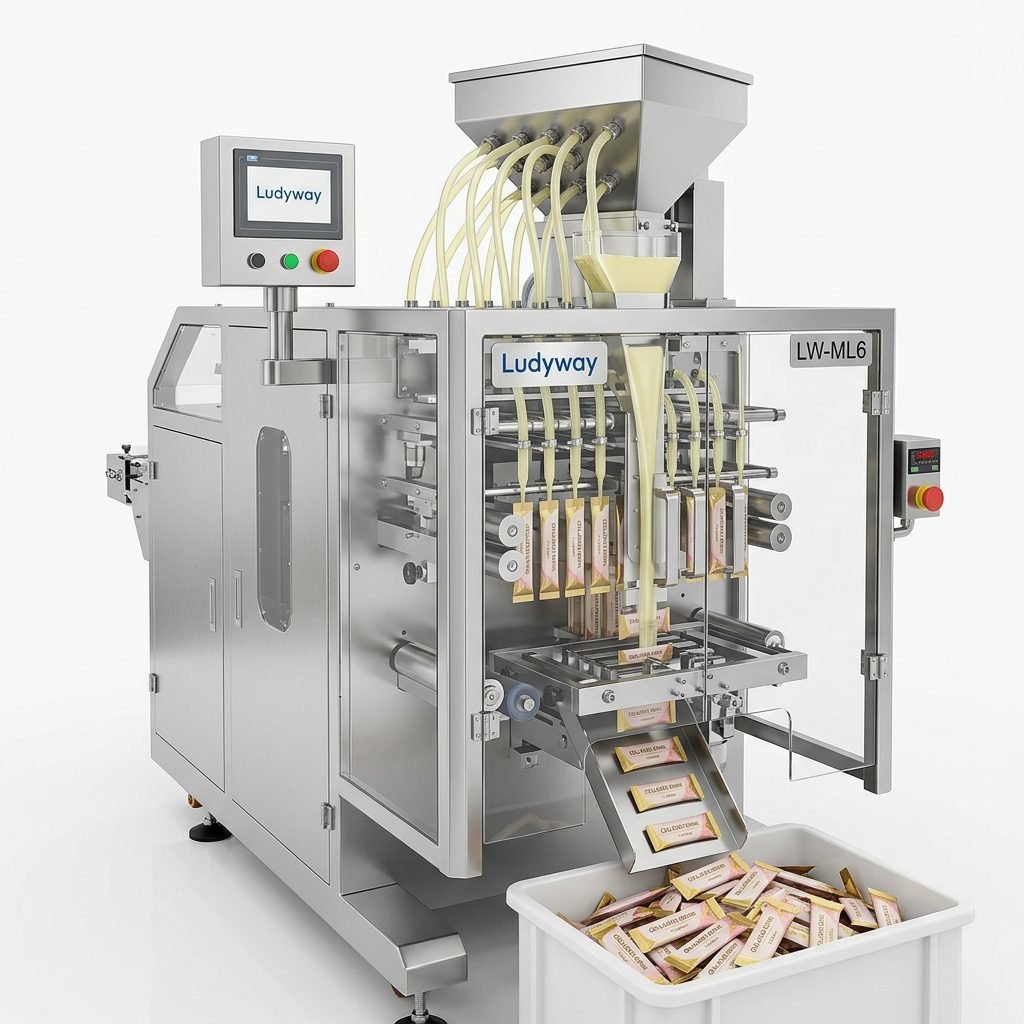
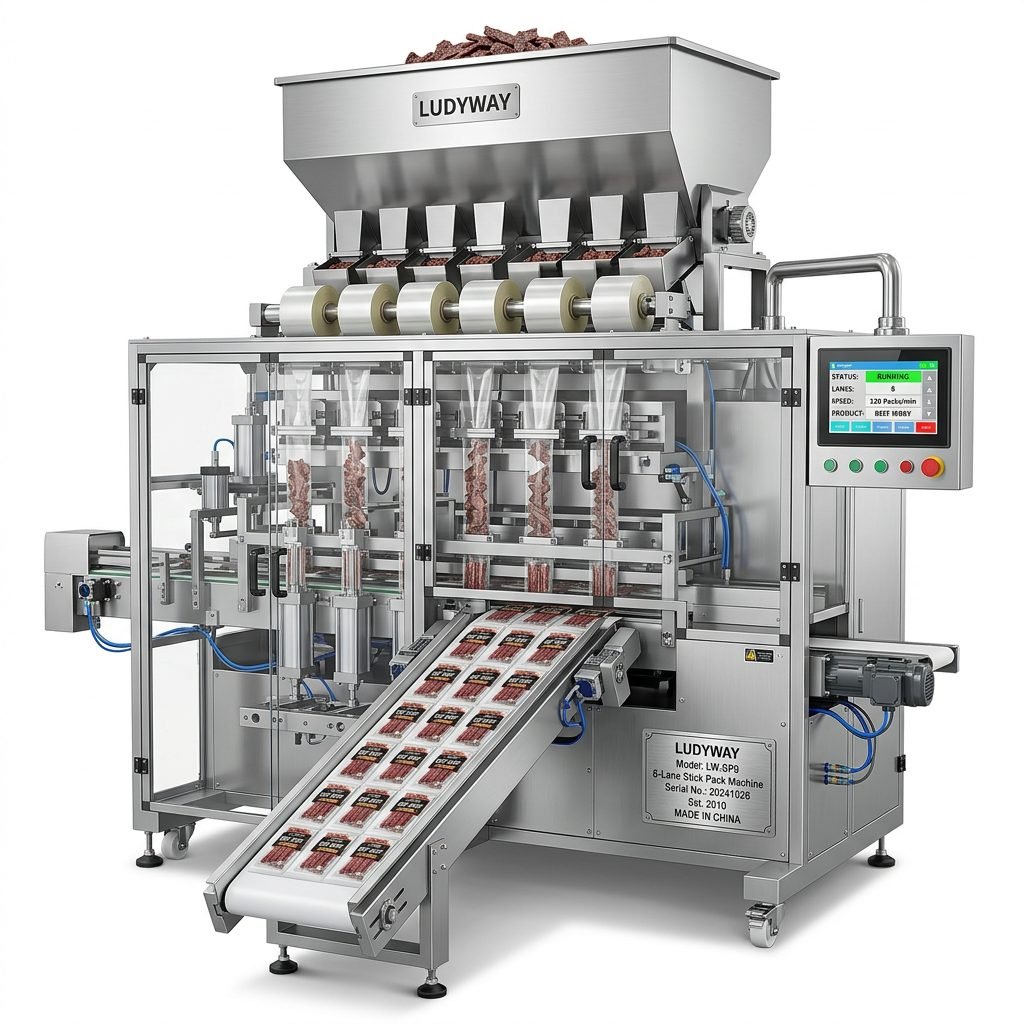
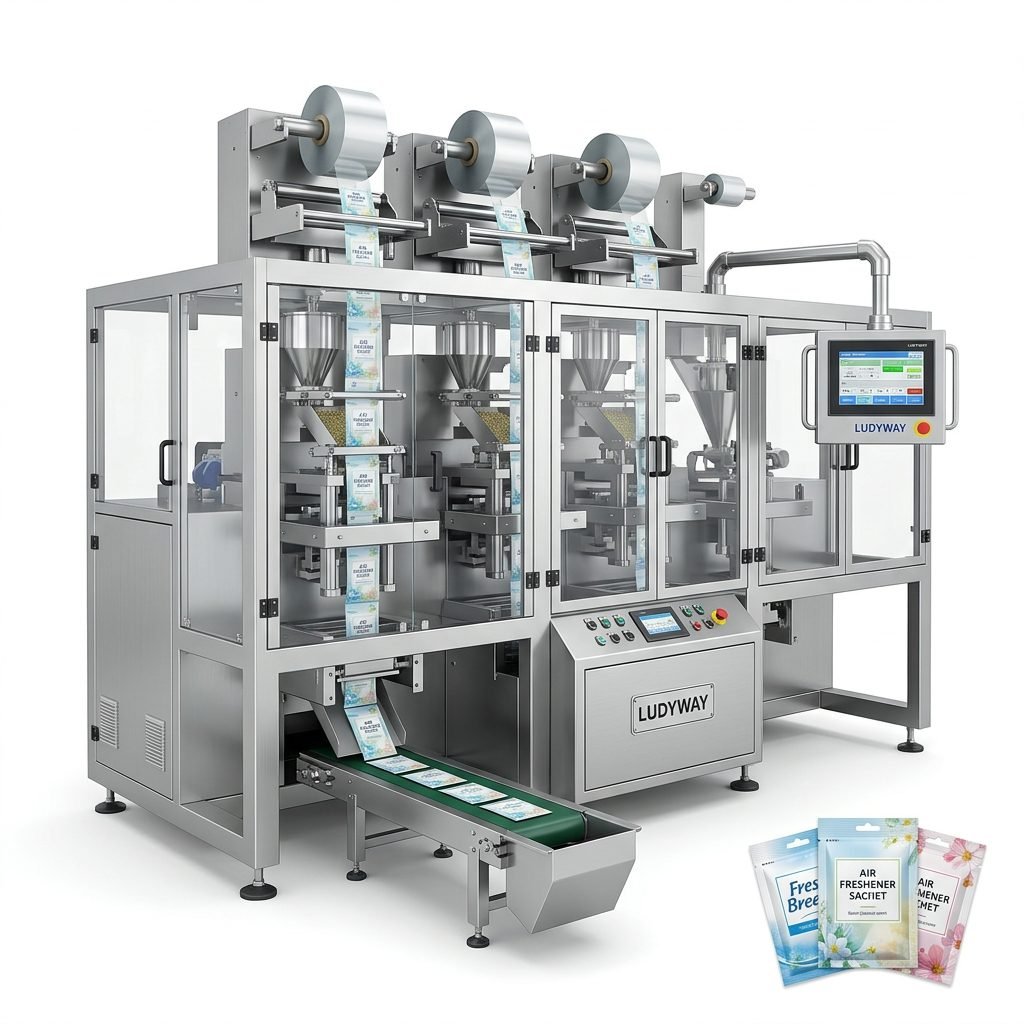
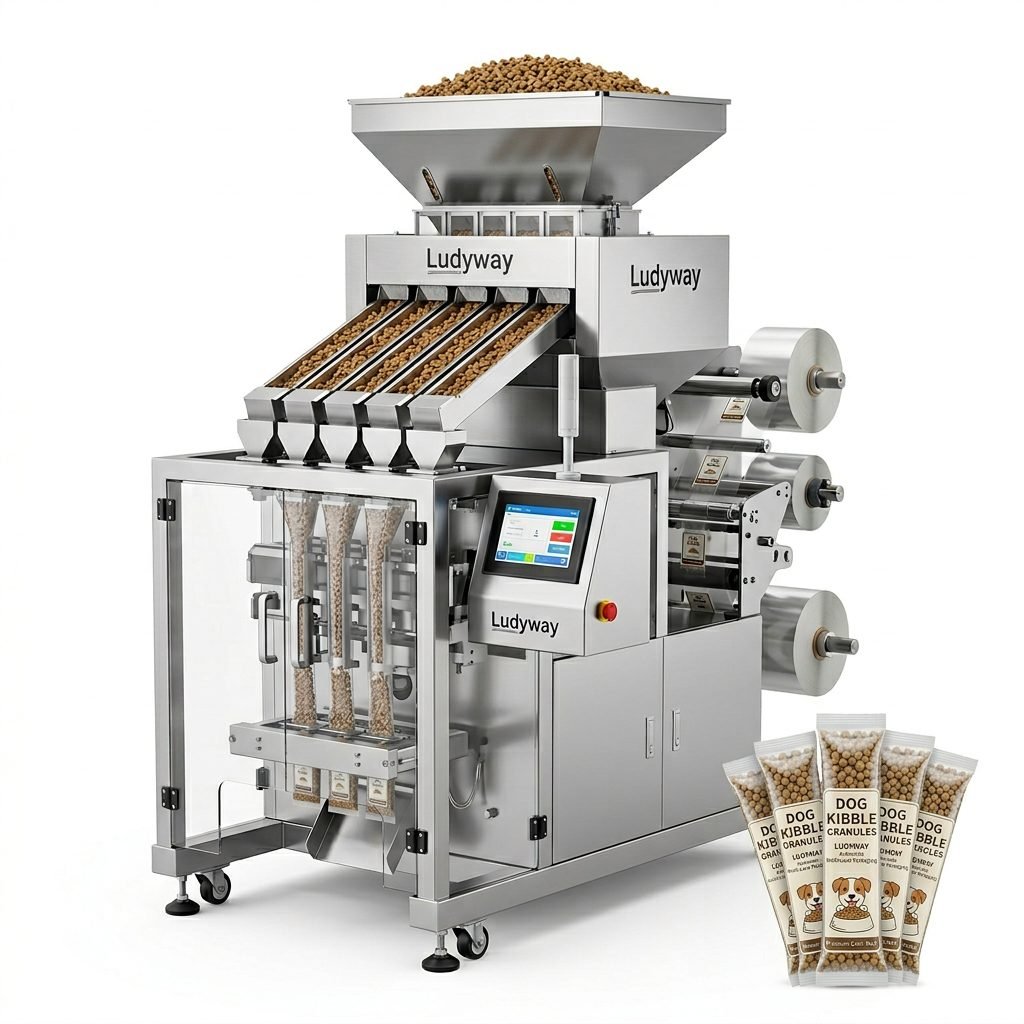
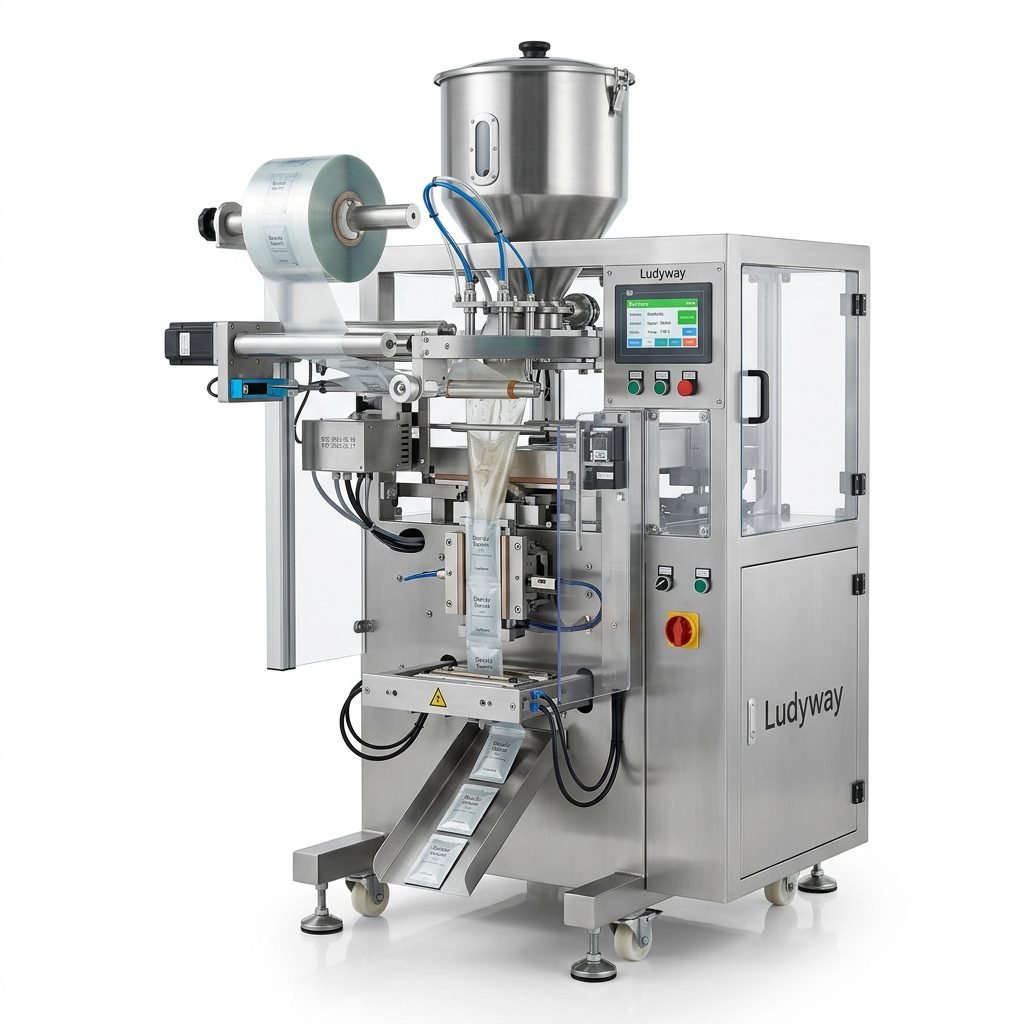
If you are planning a new line, it is smart to evaluate the film together with your equipment supplier. Experienced manufacturers such as Ludyway sachet packaging machine solutions can help align material selection with sealing method, filling system, speed target, and finished pack performance.
Best Material Recommendations by Industry
- Food: PET/PE, BOPP/CPP, PET/VMPET/PE, PET/AL/PE
- Pharmaceutical: PET/AL/PE and other high-barrier laminates
- Cosmetics: PET/PE, PET/VMPET/PE, specialty laminated films
- Chemicals: Chemical-resistant multilayer structures with strong seals
- Nutraceuticals: PET/VMPET/PE or PET/AL/PE for moisture-sensitive formulas
Mistakes to Avoid When Choosing Sachet Packaging Material
- Choosing film only by price
- Ignoring product sensitivity to oxygen or moisture
- Skipping machine compatibility trials
- Overengineering the structure and increasing unnecessary cost
- Undervaluing seal strength for liquids and gels
- Using attractive materials that perform poorly in transit
- Failing to consider local regulatory requirements
Final Buying Checklist
Before placing a material order, confirm the following:
- Product type: powder, liquid, granule, gel, or paste
- Required shelf life: short, medium, or long term
- Barrier needs: moisture, oxygen, light, aroma
- Pack format: 3-side seal, 4-side seal, center seal, stick pack
- Line speed: standard or high-speed multi-lane
- Brand appearance: transparent, metallic, matte, paper look
- Compliance: food-grade, pharma-grade, cosmetic-grade
- Sustainability goal: recyclable or reduced-material structure
The best sachet packaging material is the one that protects your product, runs efficiently on your equipment, supports your brand image, and fits your commercial goals. For many businesses, the most effective path is to test several laminate options before scaling production.