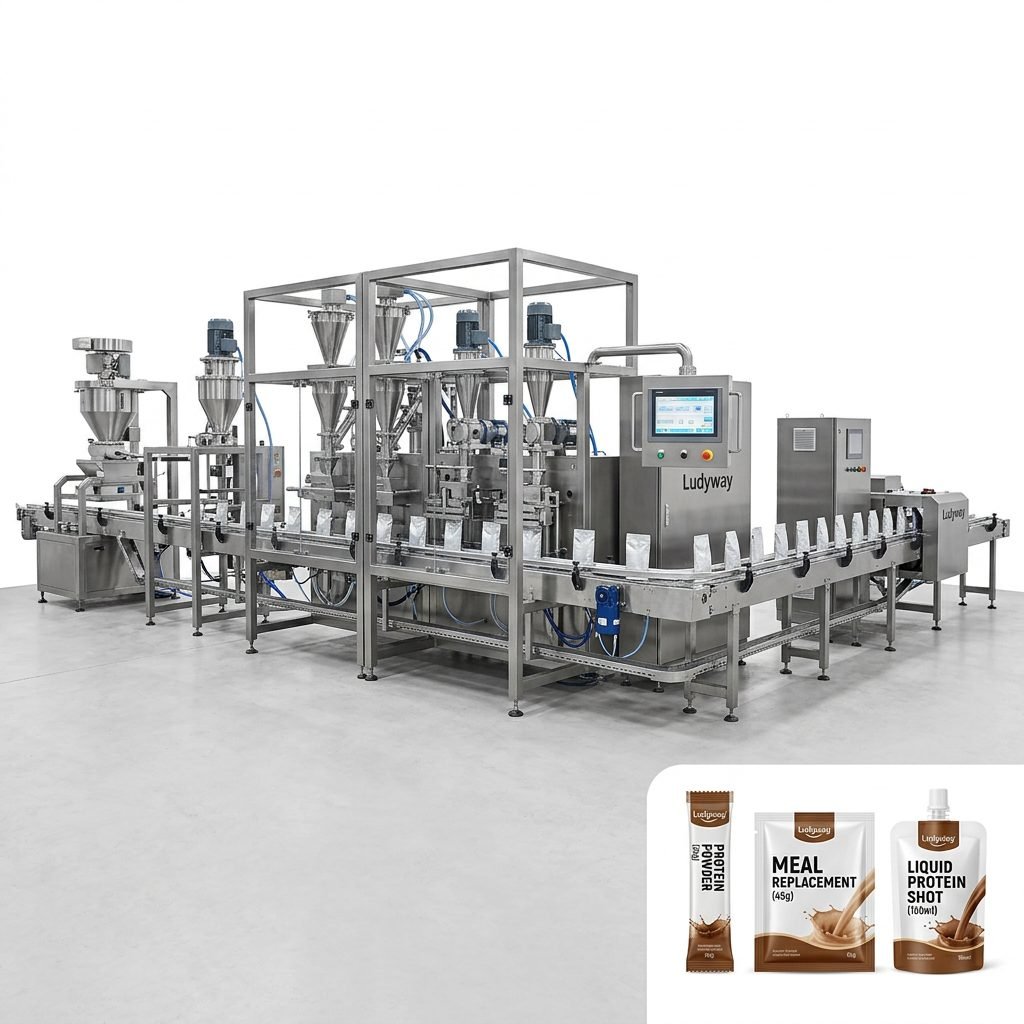
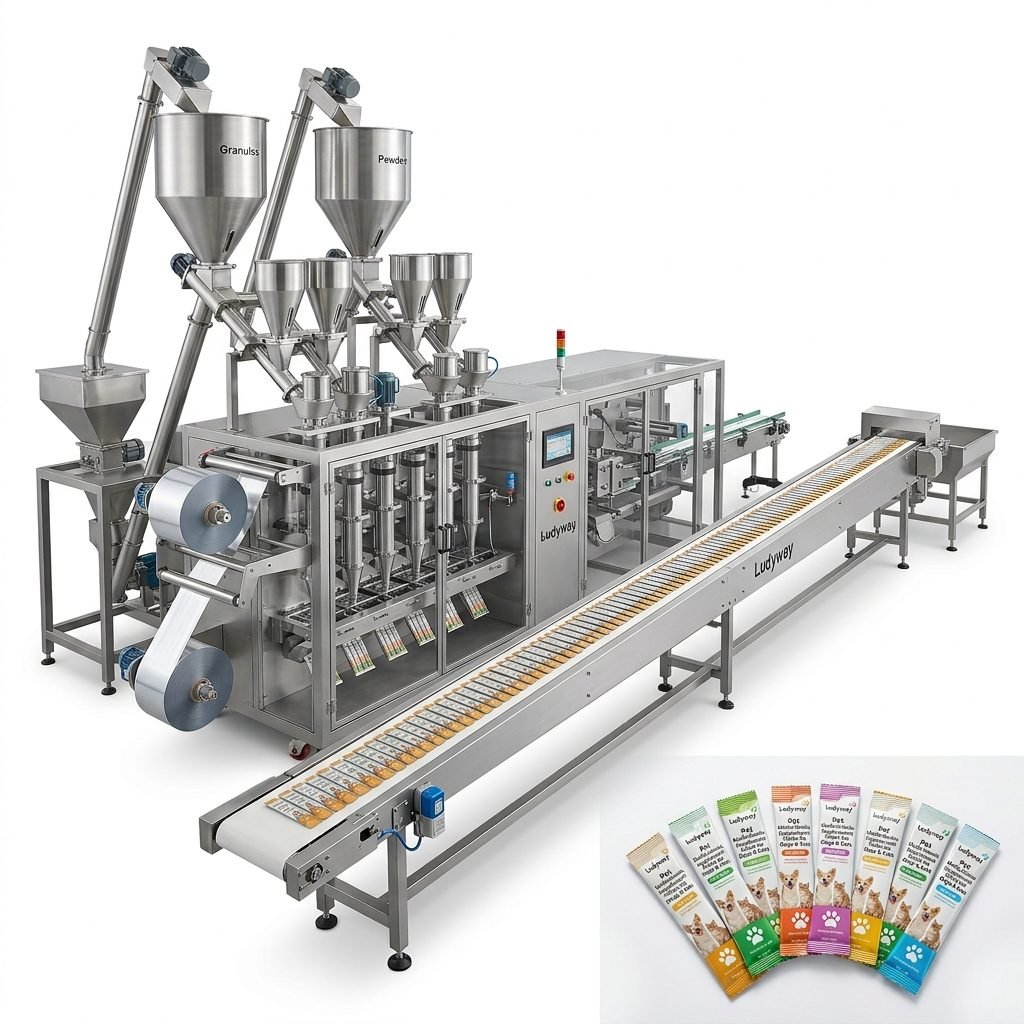
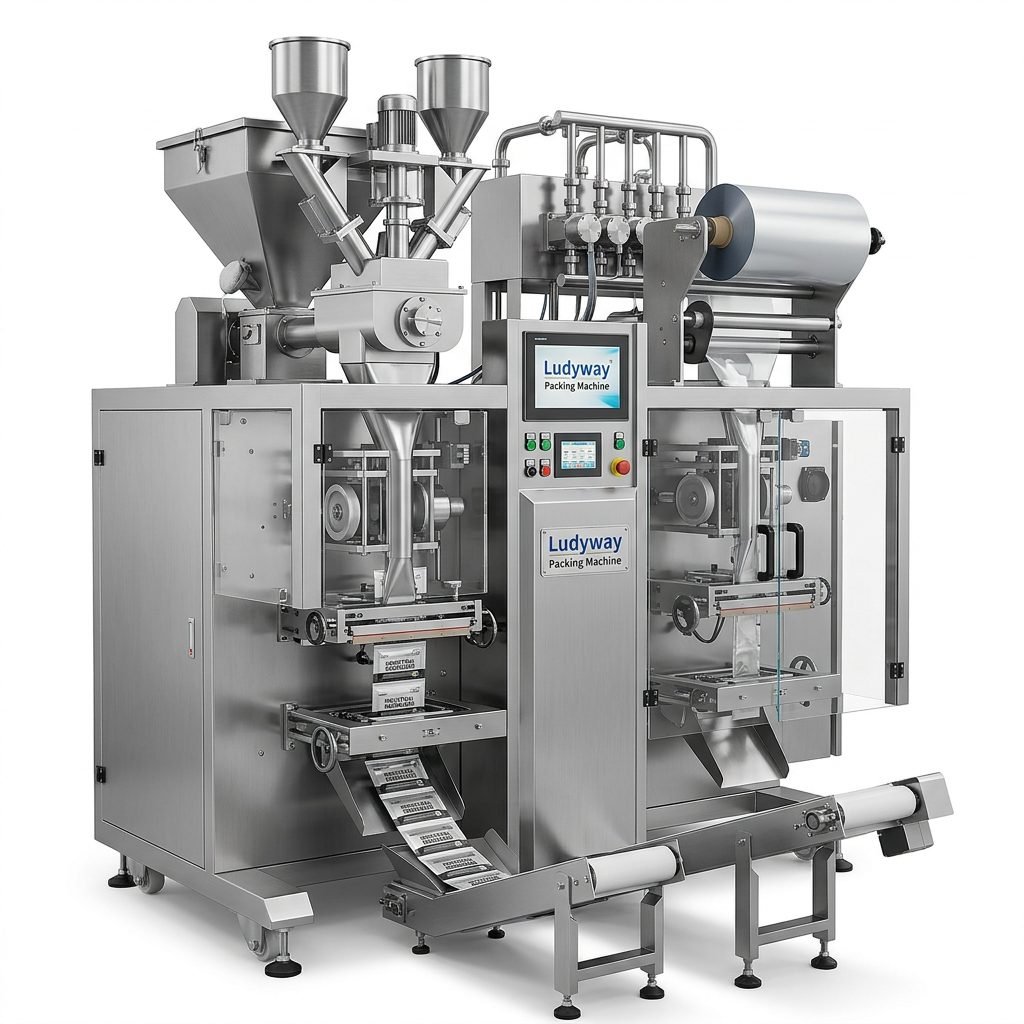
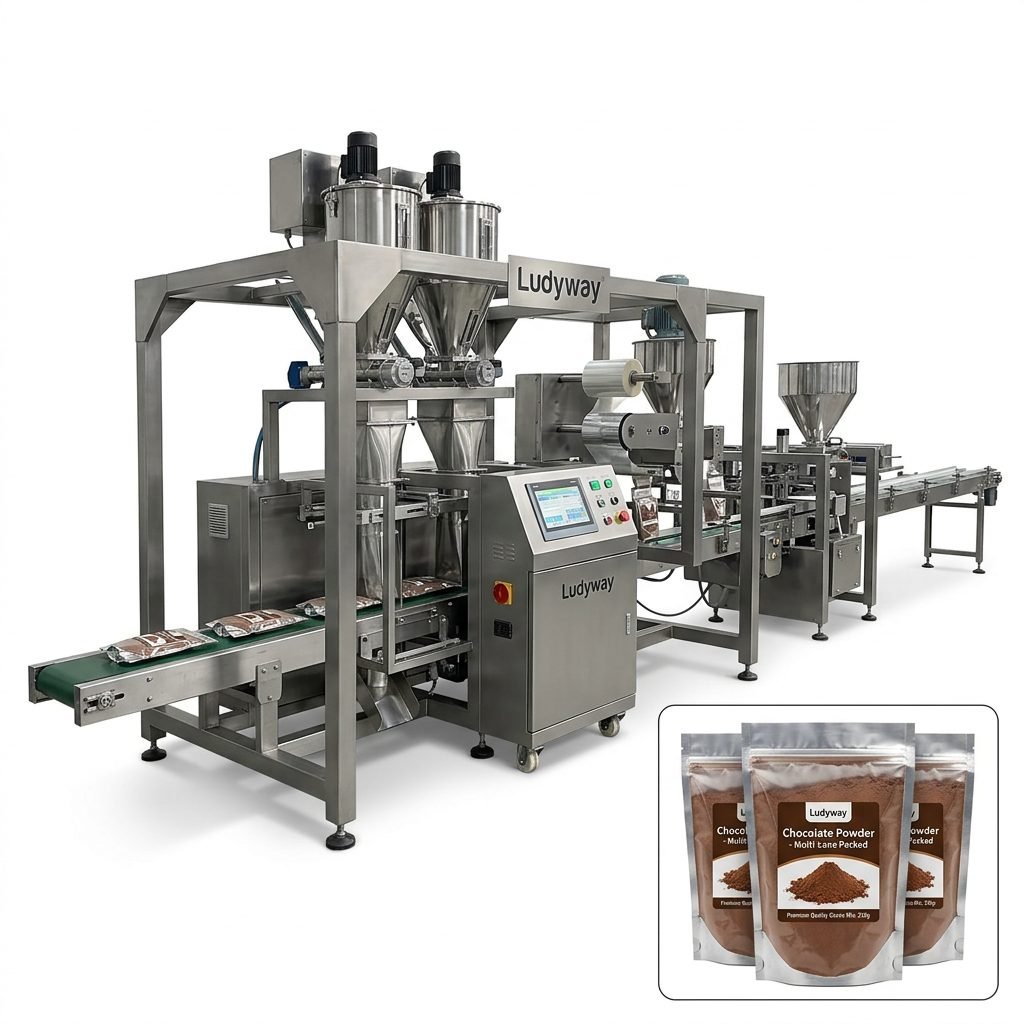
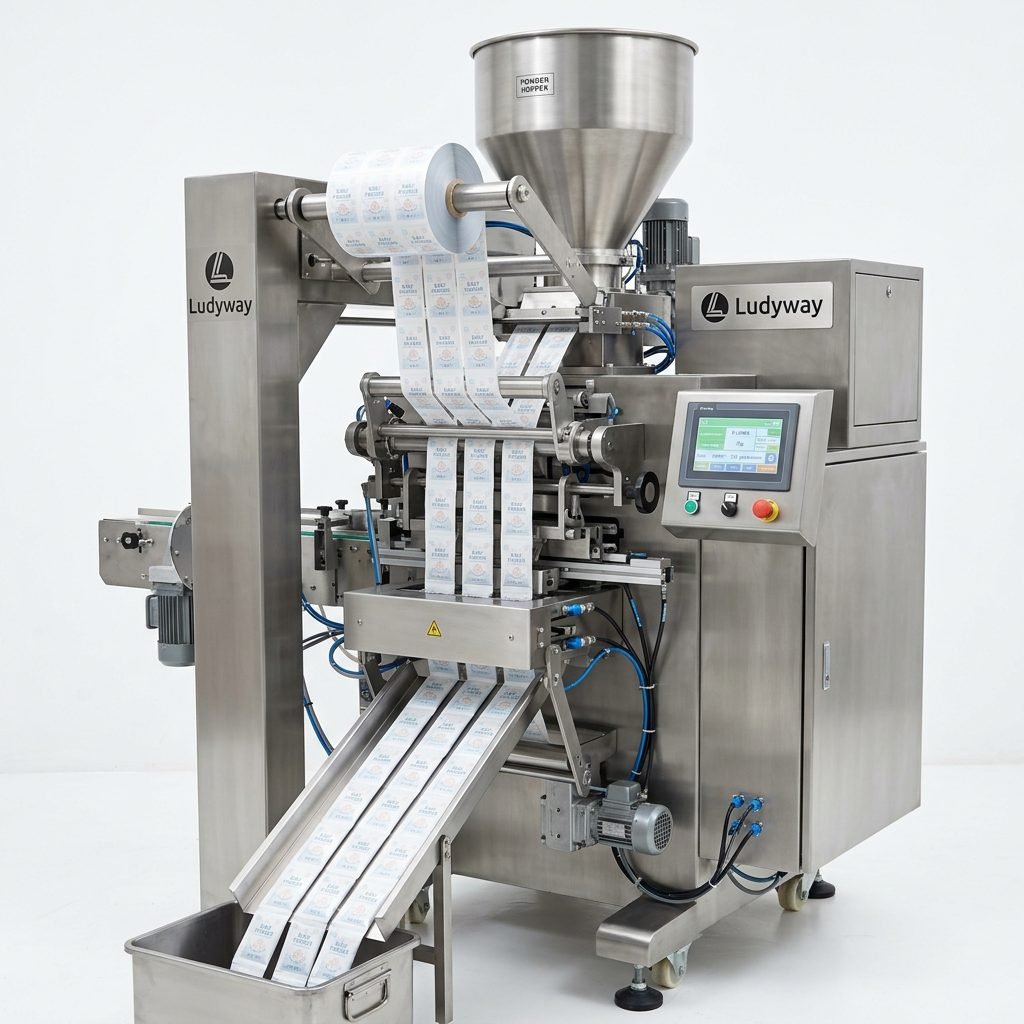
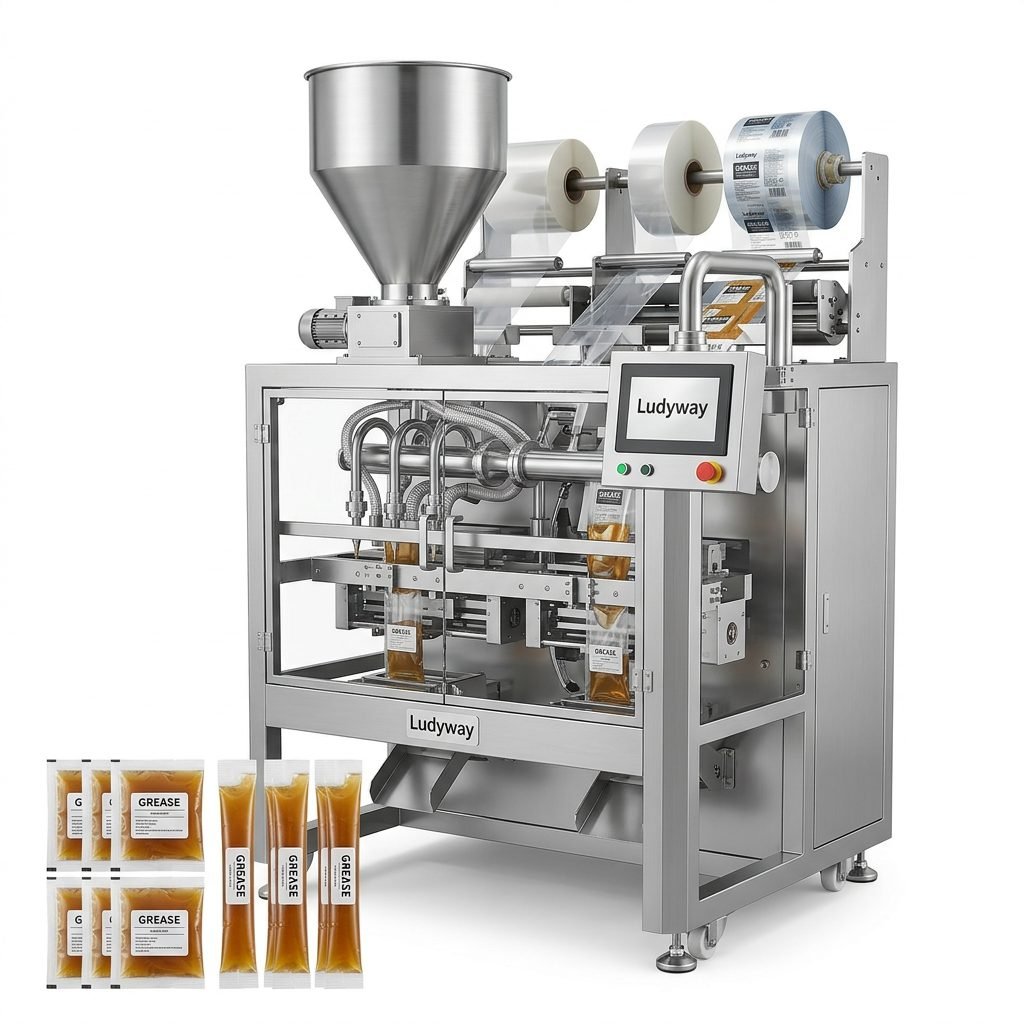
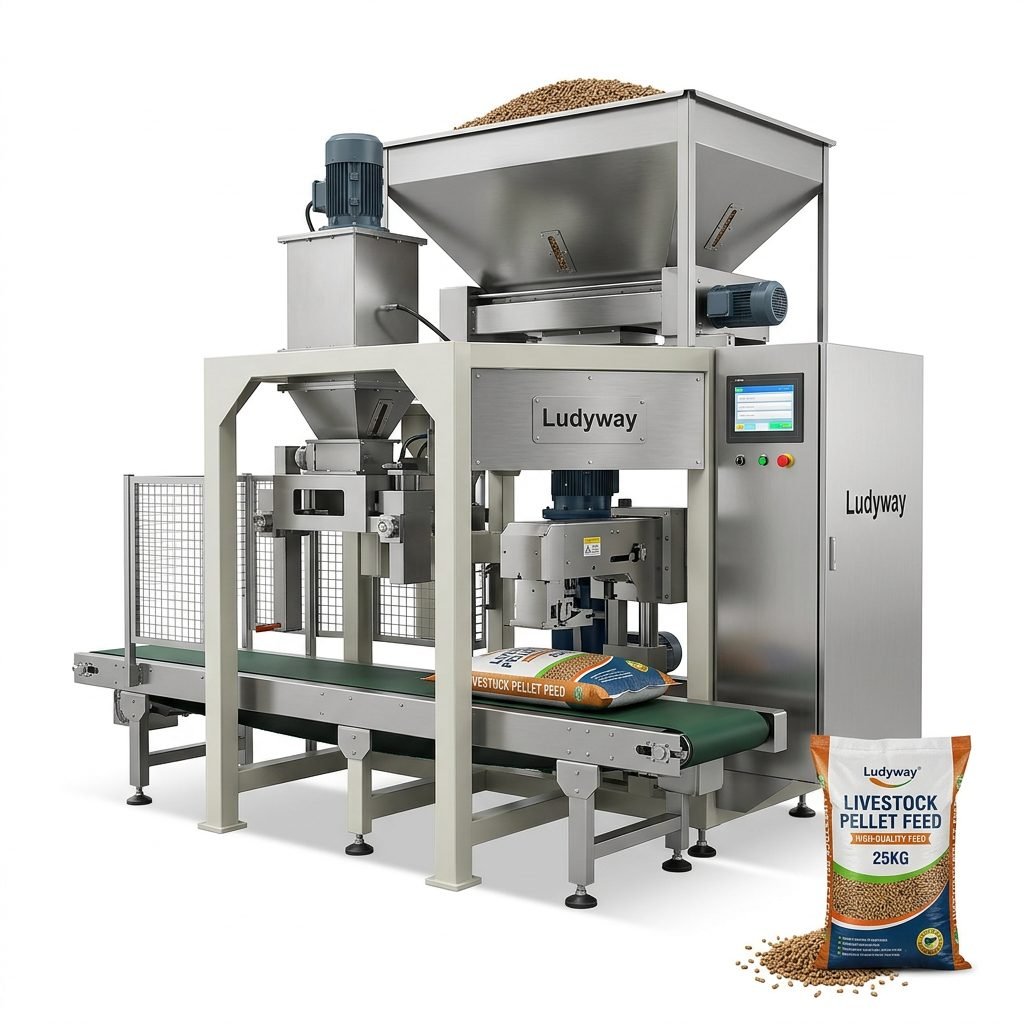
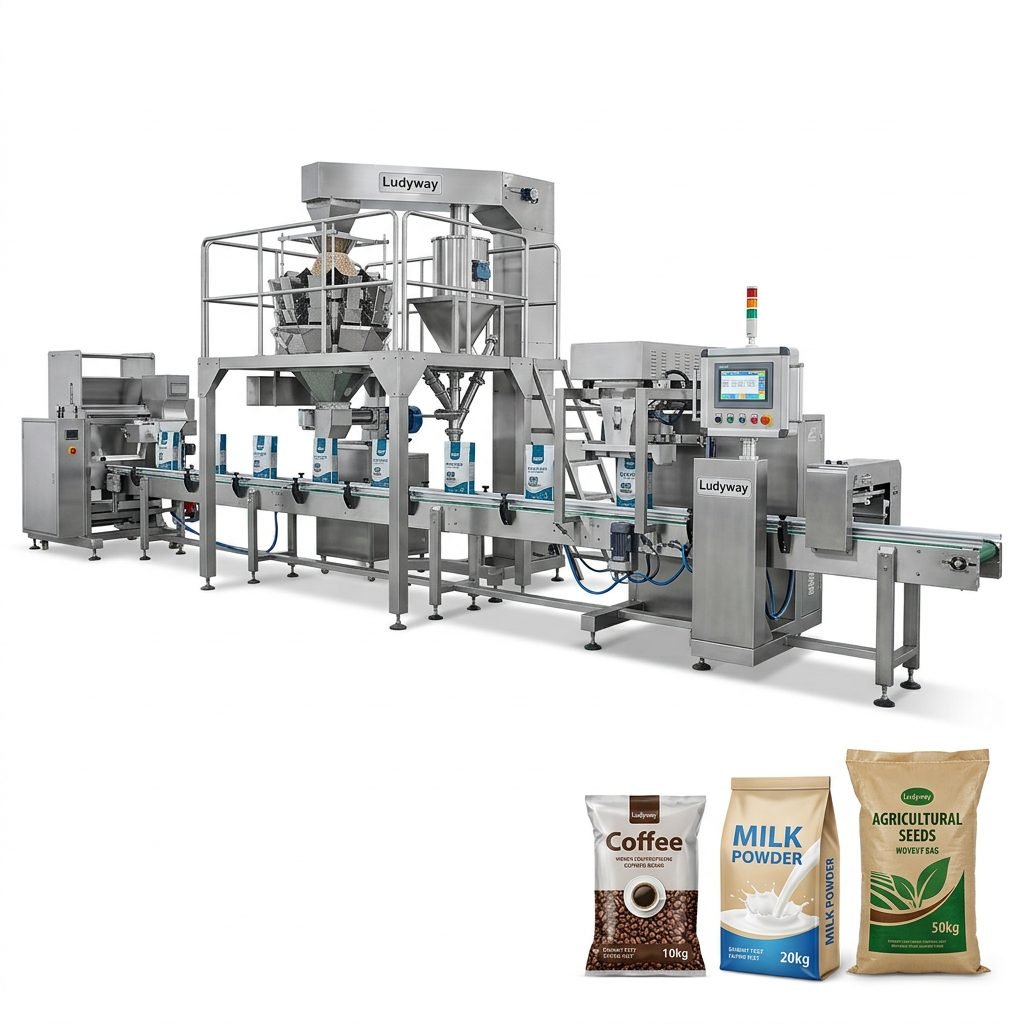
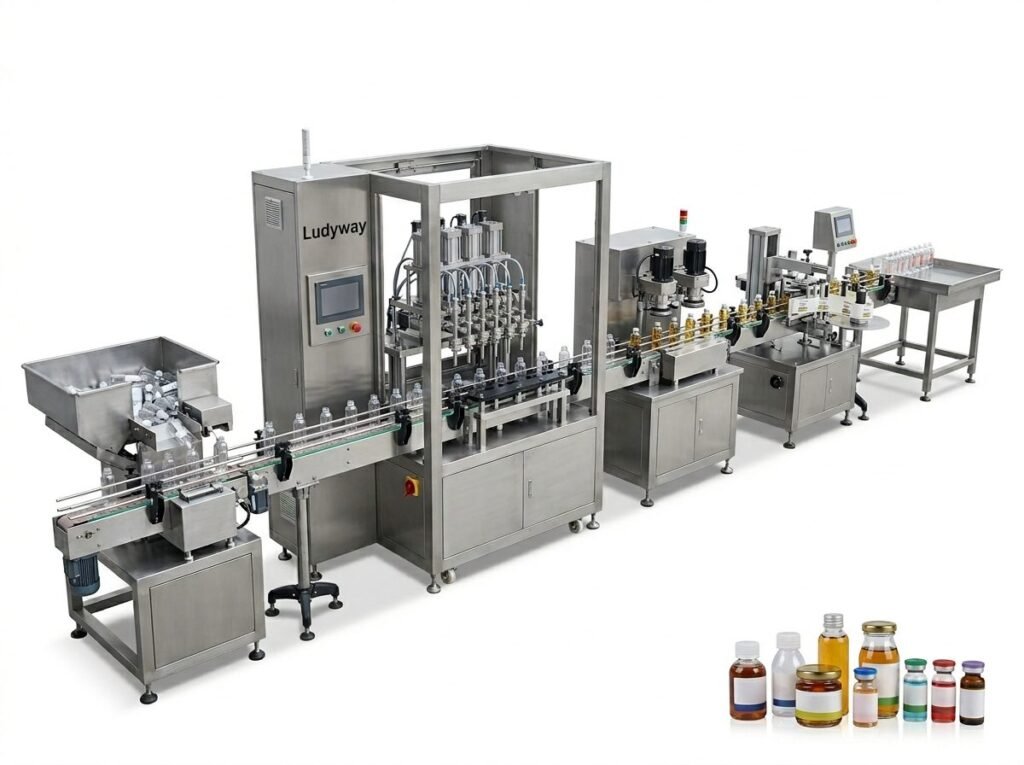
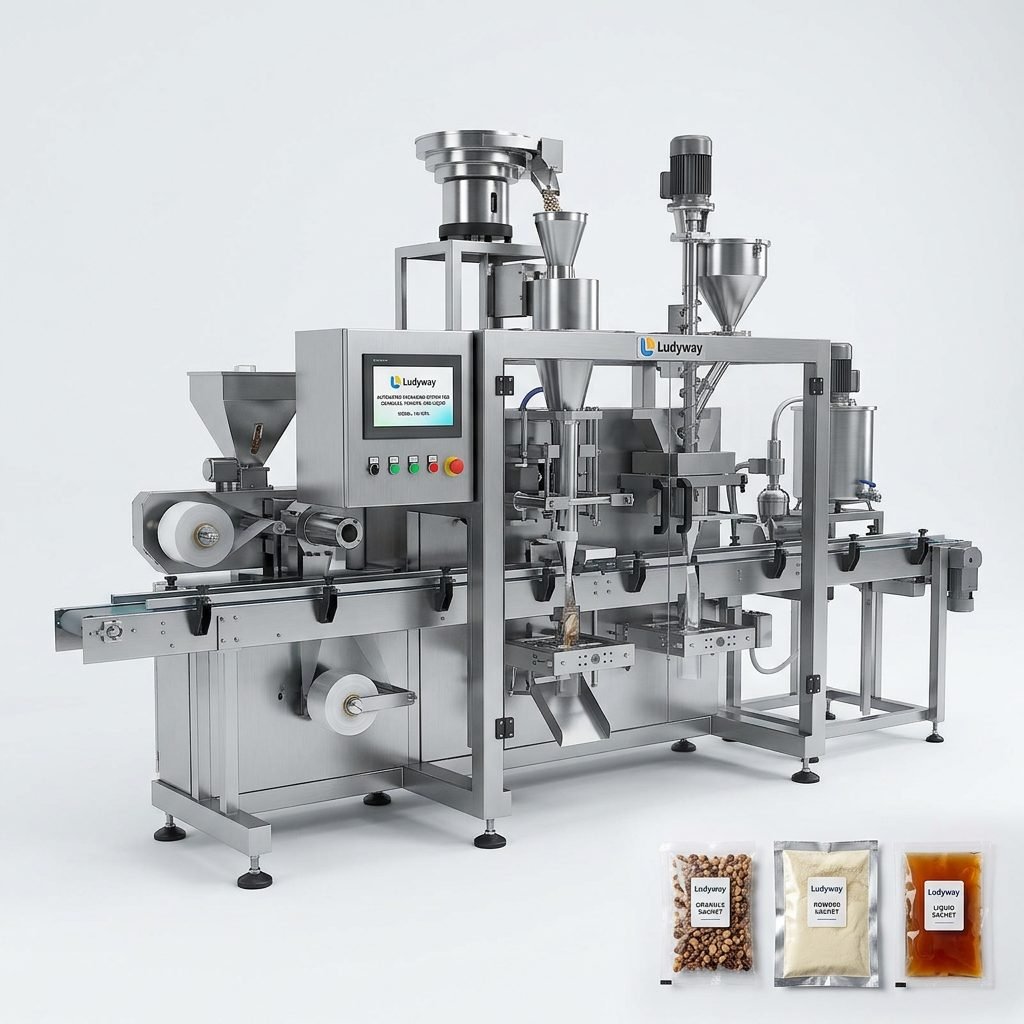
Vertical Form Fill Seal packaging, often called VFFS packaging, is one of the most widely used automated packaging methods in modern manufacturing. It is designed to form a bag from roll film, fill it with product, and seal it in one continuous vertical process. If you package powders, granules, snacks, liquids, or small solid products, VFFS technology can be a highly efficient solution.
This guide explains how VFFS packaging works, where it is used, its main benefits, common machine components, and what buyers should consider before investing in a system.
What Does VFFS Mean in Packaging?
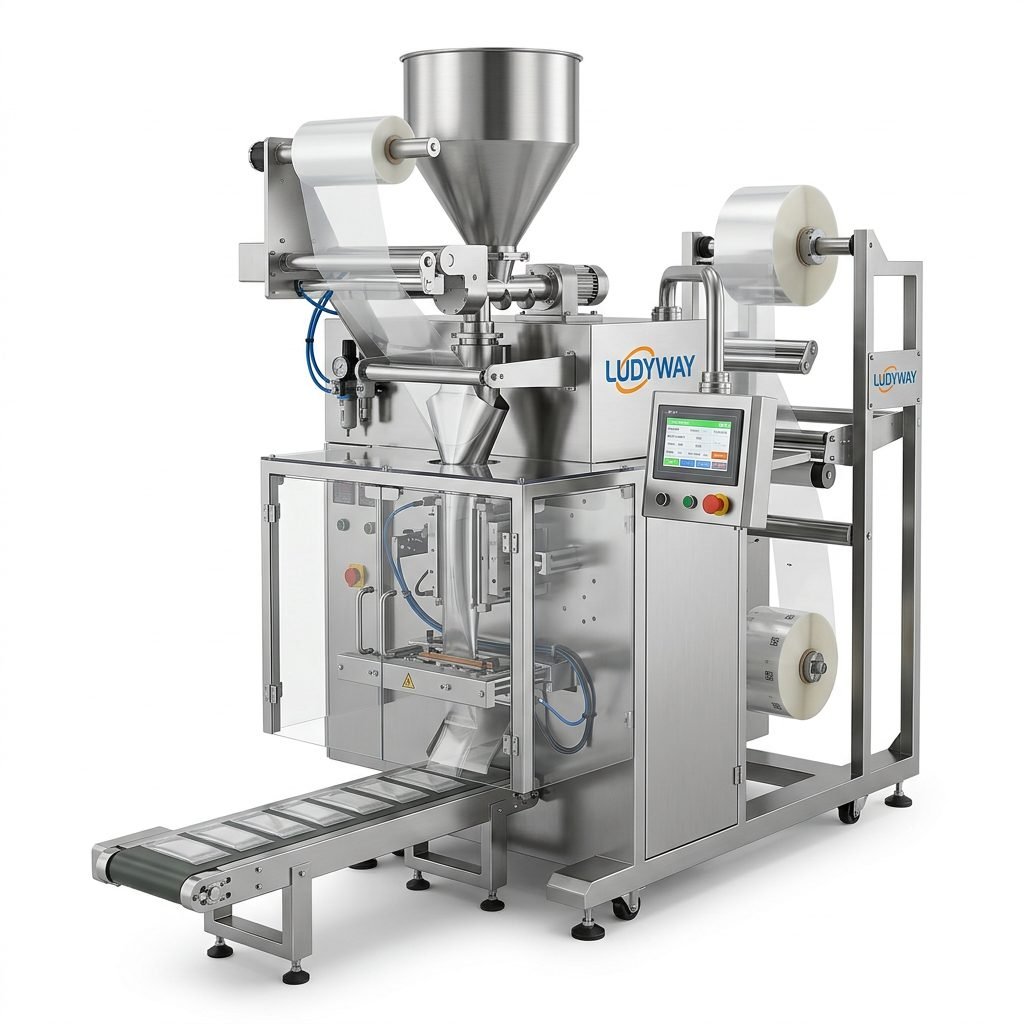
VFFS stands for Vertical Form Fill Seal. It describes a packaging process where flat packaging film is pulled downward, shaped into a tube, sealed vertically, filled with product, and then sealed horizontally to create individual packages.
The machine works in a vertical direction, which makes it especially suitable for free-flowing products such as:
- Powders
- Granules
- Rice, sugar, salt, coffee, seeds, and beans
- Liquids and sauces with the right dosing system
- Pharmaceutical and health supplement products
How Does a Vertical Form Fill Seal Machine Work?
A VFFS machine combines several packaging steps into one automated sequence. This improves consistency and reduces manual handling.
- Film unwinding: A roll of packaging film is fed into the machine.
- Bag forming: The film is wrapped around a forming tube to create a bag shape.
- Vertical sealing: The film edges are sealed together to form the bag body.
- Product filling: The measured product is dropped or pumped into the bag.
- Horizontal sealing and cutting: The machine seals the top and bottom of the bag and cuts it into separate packs.
- Discharge: The finished package exits for downstream handling, inspection, cartoning, or case packing.
Simple Operating Principle
In short, the machine forms the package first, fills it accurately, and seals it immediately. This integrated process is why VFFS packaging is popular in high-speed production lines.
Main Components of a VFFS Packaging Machine
Although configurations vary by product and industry, most vertical form fill seal systems include the following parts:
| Component | Function |
|---|---|
| Film roll holder | Holds and feeds packaging film into the machine |
| Forming collar and tube | Shapes flat film into a tube or pouch structure |
| Vertical sealing system | Creates the longitudinal back seal |
| Filler or dosing device | Delivers the correct amount of product |
| Horizontal sealing jaws | Seal the top and bottom of each package |
| Cutting unit | Separates individual packs |
| Control system | Manages speed, temperature, bag length, and process synchronization |
What Products Can Be Packed with VFFS Technology?
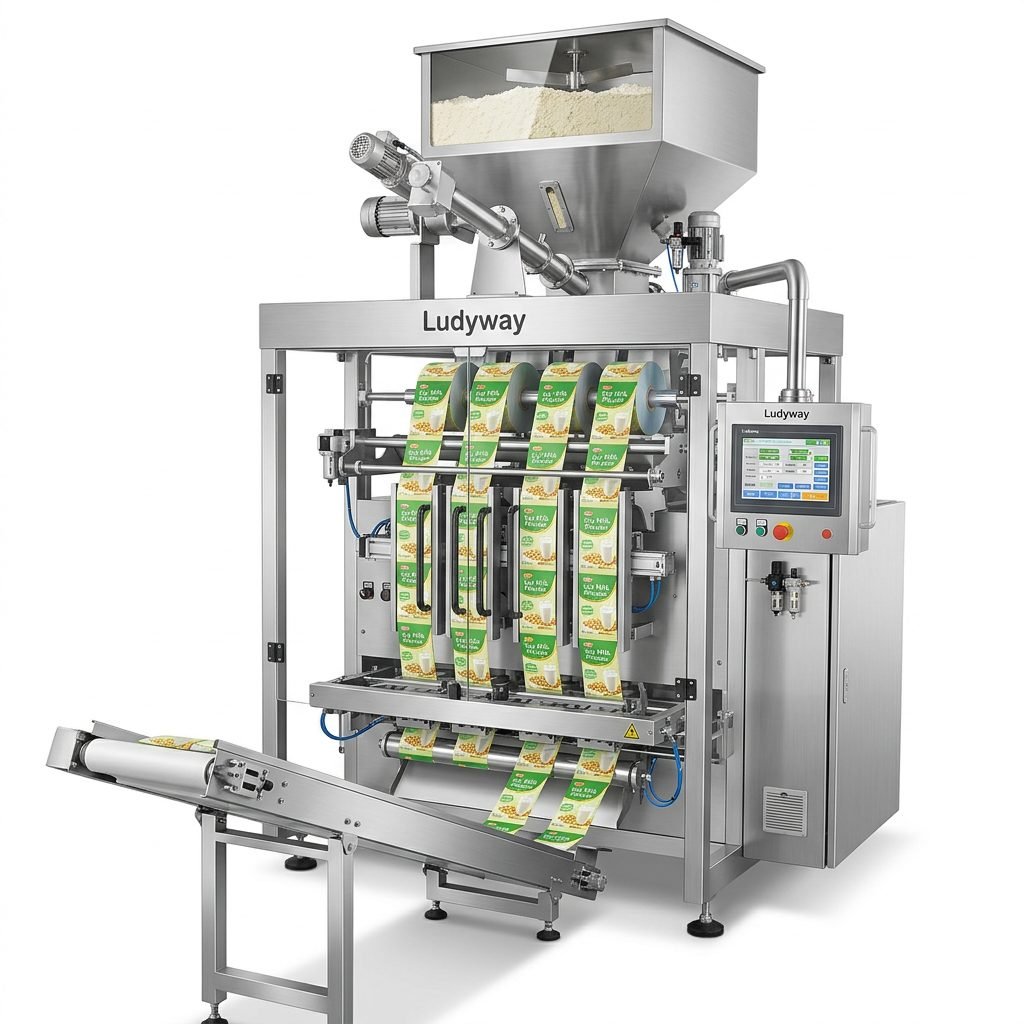
VFFS systems are versatile and can be adapted to many product categories. The exact filling method depends on whether the product is a powder, granule, liquid, paste, or piece item.
Common applications include:
- Snack foods and dry foods
- Coffee, sugar, salt, flour, spices, and seasoning powder
- Protein powder and nutritional supplements
- Seeds, grains, rice, and beans
- Detergent powder and chemical products
- Pharmaceutical granules and medical powders
- Sauces, gels, creams, and liquid products with suitable sealing design
Common Bag Types Produced by VFFS Machines
One major advantage of VFFS equipment is the ability to produce multiple package formats. Depending on machine design and accessories, manufacturers can create:
- Pillow bags
- Gusseted bags
- Quad seal bags
- Sachet packs
- Stick packs in certain configurations
- Hole-punch or easy-tear retail packs
This flexibility helps brands adjust packaging style for shelf appeal, transportation efficiency, and product protection.
Benefits of VFFS Packaging Technology
Companies choose VFFS packaging because it offers a strong balance between automation, speed, and packaging quality.
| Benefit | Why It Matters |
|---|---|
| High efficiency | Reduces manual labor and supports continuous production |
| Consistent pack quality | Improves seal uniformity, appearance, and filling accuracy |
| Material efficiency | Uses roll film efficiently and can help lower packaging cost |
| Versatile product handling | Suitable for powders, granules, liquids, and more |
| Compact footprint | Vertical design saves floor space in factories |
| Easy integration | Can connect with conveyors, checkweighers, coders, cartoners, and case packers |
VFFS vs HFFS: What’s the Difference?
Buyers often compare vertical form fill seal machines with horizontal form fill seal systems. The main difference is the direction in which the packaging process happens.
- VFFS: Film moves vertically downward; ideal for many free-flowing products.
- HFFS: Film or pouches move horizontally; often used for products requiring careful placement or special pack shapes.
For powders, granules, and many standard pouch styles, VFFS is often the more practical and cost-effective choice.
Industries That Commonly Use VFFS Packaging
Vertical packaging technology is widely used in:
- Food manufacturing
- Pharmaceutical production
- Nutraceutical and health supplement packaging
- Cosmetic and personal care packaging
- Chemical and household product packaging
- Agricultural and feed product packaging
Because of this broad application range, many manufacturers prefer working with experienced suppliers that can provide both standalone machines and complete integrated lines. For example, Ludyway VFFS packaging solutions are used across food, pharmaceutical, health supplement, and related industries where stable automation and flexible machine configuration are important.
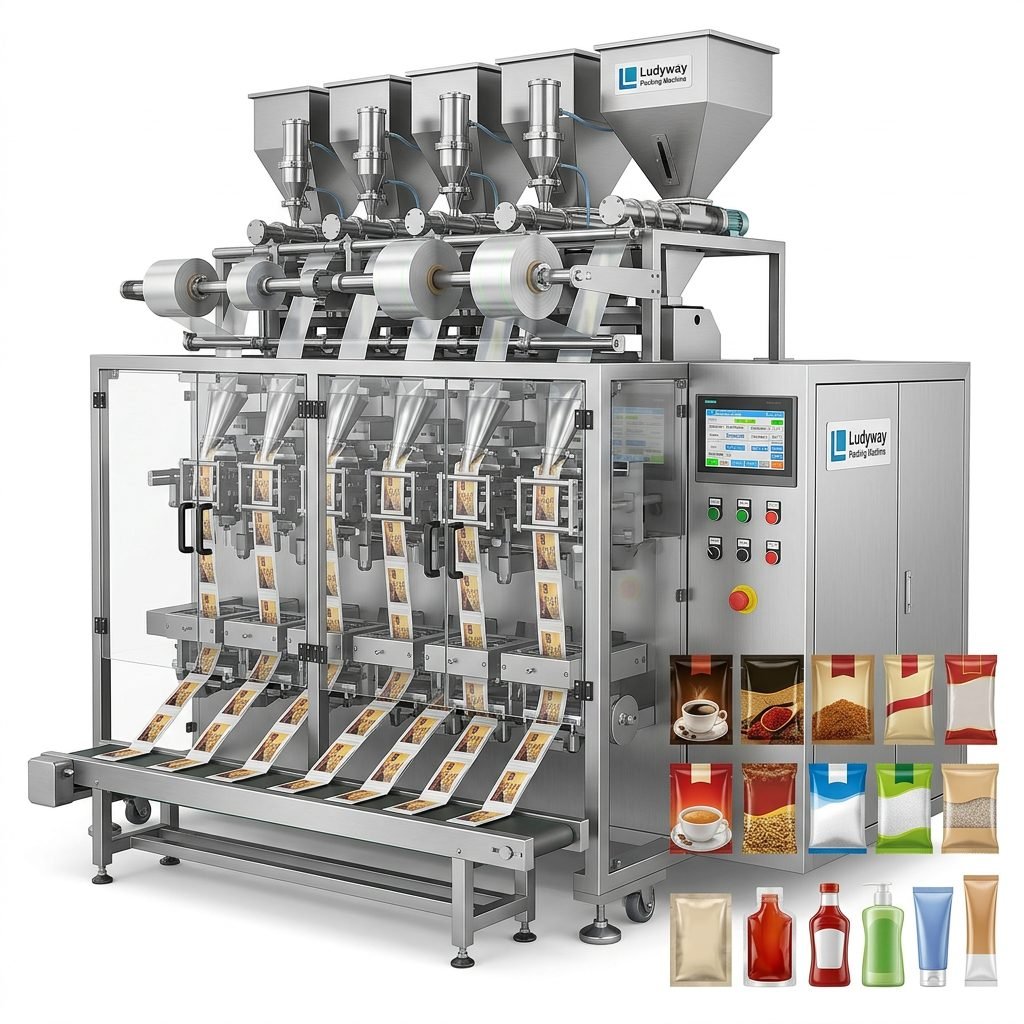
Key Factors to Consider Before Buying a VFFS Machine
Not every VFFS machine is the same. Choosing the right system depends on your product, target speed, packaging material, and future expansion plans.
1. Product type
Powders need auger fillers, granules may use weighers or cup fillers, and liquids need pump or piston filling systems. The machine must match product flow behavior.
2. Bag style and size
Different pack shapes require different sealing structures and forming sets. Make sure the machine supports your required dimensions and film type.
3. Production speed
Estimate your hourly or daily output goals. A machine that is too small may create bottlenecks, while overspecifying may raise unnecessary investment costs.
4. Packaging material compatibility
Heat-sealable laminated films, recyclable structures, or specialty barrier materials may need different temperature controls and sealing settings.
5. Accuracy and sealing quality
In food, pharma, and supplement packaging, precise filling and reliable seals are essential for compliance, shelf life, and consumer satisfaction.
6. Integration with other equipment
Many factories need more than one machine. A VFFS unit may need to connect with feeders, elevators, metal detectors, coding printers, cartoners, or palletizing systems.
Is VFFS Packaging Suitable for Small and Large Businesses?
Yes. VFFS technology is used by both growing companies and large-scale manufacturers. Smaller businesses may start with a semi-automatic or compact automatic setup, while larger operations often install high-speed multi-lane or fully integrated packaging lines.
The main advantage is scalability. You can begin with a machine that fits current demand and expand into a broader automated line as production grows.
Common Challenges in VFFS Packaging
Like any packaging system, VFFS equipment performs best when correctly matched to the product and properly maintained. Common issues include:
- Inconsistent sealing due to film mismatch or poor temperature control
- Filling errors caused by product flow variations
- Downtime from incorrect machine setup
- Dust or residue buildup in powder applications
- Film tracking problems that affect bag appearance
These problems can usually be reduced through correct machine design, operator training, routine maintenance, and application-specific customization.
Why VFFS Packaging Remains Popular
VFFS remains a leading packaging method because it combines speed, repeatability, flexibility, and cost control. It supports mass production without sacrificing packaging consistency, and it adapts well to changing product formats.
For manufacturers looking to automate packaging of powders, granules, liquids, or sachet-style products, VFFS is often one of the most practical technologies available.
Frequently Asked Questions
Can VFFS machines package liquids?
Yes. With the right liquid filling system and sealing design, VFFS machines can package products such as sauces, gels, detergents, oils, and similar liquids.
What is the difference between a sachet machine and a VFFS machine?
A sachet machine may use vertical packaging principles, but the term “VFFS” refers more specifically to the form-fill-seal process from roll film. Many sachet solutions are based on VFFS technology.
Is VFFS good for powder packaging?
Absolutely. It is one of the most common solutions for powders, especially when combined with an auger filling system for accurate dosing.
Can VFFS machines be customized?
Yes. Machine builders often customize bag size, filling type, sealing structure, speed, control system, and downstream integration based on the product and factory requirements.
Final Thoughts
VFFS packaging technology is a smart choice for businesses that need reliable, automated, and efficient bagging. By forming, filling, and sealing packages in one streamlined process, it helps improve production speed, reduce labor dependence, and maintain consistent package quality.
If you are evaluating packaging automation for powders, granules, liquids, or sachet products, understanding how vertical form fill seal packaging works is the first step toward choosing the right solution.