
Small Vacuum Packaging Machine for Food Packaging
Empower your food business with industrial-grade micro-atmosphere evacuation technology. Designed for commercial kitchens, artisan processors, meat purveyors, and boutique production lines seeking maximum product freshness, zero cross-contamination, and extended shelf life with high-speed cycle reliability.
Industrial Food Preservation in a Compact, Benchtop Footprint
Discover how modern vacuum deaeration and precision thermal sealing protect moisture content, arrest aerobic decomposition, and elevate culinary packaging throughput.
A small vacuum packaging machine (commonly categorized as a tabletop or commercial chamber vacuum sealer) is an indispensable asset for food production laboratories, commercial central kitchens, butchery stores, seafood processors, and culinary manufacturing facilities. Unlike conventional external suction sealers that rely on channel bags and struggle with moisture, a chamber vacuum sealer eliminates ambient air from the entire enclosed cabinet, generating a balanced pressure equilibrium that easily accommodates dry goods, powders, marinating proteins, and liquid-heavy sauces without boiling or liquid spillage.
By dropping the oxygen content inside the vacuum pouch to below 0.1%, aerobic bacteria, mold spores, and enzymatic oxidation processes are virtually halted. Fresh meats preserve their natural myoglobin colors, cheeses avoid premature surface mold, freeze-dried fruit retains crisp hygroscopic stability, and processed items experience zero freezer burn or cellular crystallization.
Technical Insight: Ludyway’s small vacuum packaging machinery line integrates oil-lubricated rotary vane vacuum pumps engineered to pull down to deep vacuum levels in just 15 to 30 seconds, paired with impulse dual-seal heating elements to guarantee 100% airtight closure across multilayer PE, PA/PE, aluminum foil, and biodegradable barrier pouches.
Whether you operate a boutique specialty food manufacturing business, expand a farm-to-table sous-vide packaging station, or require flexible offline pilot-batch testing in an industrial facility, our compact vacuum packaging solutions deliver high commercial reliability with intuitive digital microcomputer interfaces.
Architected for Heavy Duty Cycle Demands
Each component inside our compact vacuum packaging machinery is calibrated for thermal balance, continuous duty endurance, and strict sanitary food safety protocols.
Intelligent Digital Programmability
Multi-memory programmable logic controls vacuum evacuation time (0-99s), seal temperature, gas injection pressure, and cooling interval with microsecond precision for different food densities.
Deep-Drawn Seamless Chamber
Formed from a single solid sheet of SUS304 food-grade stainless steel with smooth radius corners, eliminating internal weld seams where fats, juices, or bacterial residues might harbor.
High-Efficiency Rotary Pumps
Equipped with commercial-grade oil-flooded rotary vacuum pumps operating with low vibrational noise (<65 dB), high thermal stability, and integrated exhaust oil mist collectors.
Dual Sealing & MAP Gas Flushing
Optional modified atmosphere packaging (MAP) gas flush modules inject food-grade Nitrogen (N2) or Carbon Dioxide (CO2) mixtures to preserve fragile chips, berries, and prevent meat darkening.
Heavy-Duty Acrylic Dome Lid
Transparent, aerospace-grade shatterproof acrylic lid delivers 360-degree cycle visibility, allowing operators to monitor boiling points and vacuum packaging status in real time.
HACCP & CE Compliance
Built to satisfy international health, hygiene, and electrical standards. Quick-release seal bars and smooth chamber interiors allow comprehensive sanitization washdown in minutes.
Targeted Food Application Categories
From moisture-dense prime meats to fragile freeze-dried snacks, Ludyway small vacuum packaging systems prevent moisture loss, rancidity, aroma vaporization, and aerobic spoilage.
Fresh Meats, Poultry & Charcuterie
Prevents drip loss and oxidation. Extends beef and poultry refrigeration periods from 3-4 days up to 18-25 days without losing natural juice retention or tenderness.
Seafood & Marine Fillets
Arrests the volatile trimethylamine breakdown in delicate fish fillets, shrimp, and shellfish, eliminating off-odors and extending deep-freeze quality to 18+ months.
Artisan Cheeses & Dairy Blocks
Stops aerobic molds from forming on block cheddar, gouda, and fresh mozzarella while conserving surface moisture levels and native rind characteristics.
Granules, Powders & Freeze-Dried Goods
Protects hygroscopic spices, coffee beans, tea leaves, and freeze-dried fruits from atmospheric moisture absorption, retaining active aromatics and crunchy texture.
Food Shelf-Life Extension Comparison Matrix
Empirical shelf-life analysis demonstrates how deoxygenation with a Ludyway vacuum chamber sealer increases storage longevity across various food storage temperatures.
| Food Category | Storage Condition | Standard Packaging Life | Ludyway Vacuum Sealed Life | Key Preservation Benefit |
|---|---|---|---|---|
| Fresh Prime Beef & Steaks | Chilled (4°C / 39°F) | 3 to 5 Days | 20 to 30 Days | Eliminates lipid oxidation, retains moisture & natural color |
| Fresh Fish & Shellfish | Chilled (2°C / 35°F) | 2 to 3 Days | 10 to 14 Days | Prevents oxidation breakdown & volatile off-odors |
| Hard Cheeses (Parmesan/Cheddar) | Refrigerated (4°C) | 15 to 20 Days | 120 to 180 Days | Stops mold spore propagation completely |
| Roasted Specialty Coffee Beans | Room Temp (20°C) | 14 to 20 Days | 365+ Days | Preserves delicate essential oils and roast aromatics |
| Freeze-Dried Fruits & Berries | Dry Ambient Storage | 1 to 2 Months | 24 to 36 Months | Zero moisture absorption; maintains ultra-crisp crunch |
| Marinated Poultry / Sous-Vide Prep | Chilled (3°C) | 2 to 4 Days | 15 to 21 Days | Accelerates marinade uptake into protein fibers |
Featured Vacuum & High-Performance Packaging Models
Select from our premier portfolio of industrial vacuum sealers and automated food packaging equipment engineered for high operational uptime.
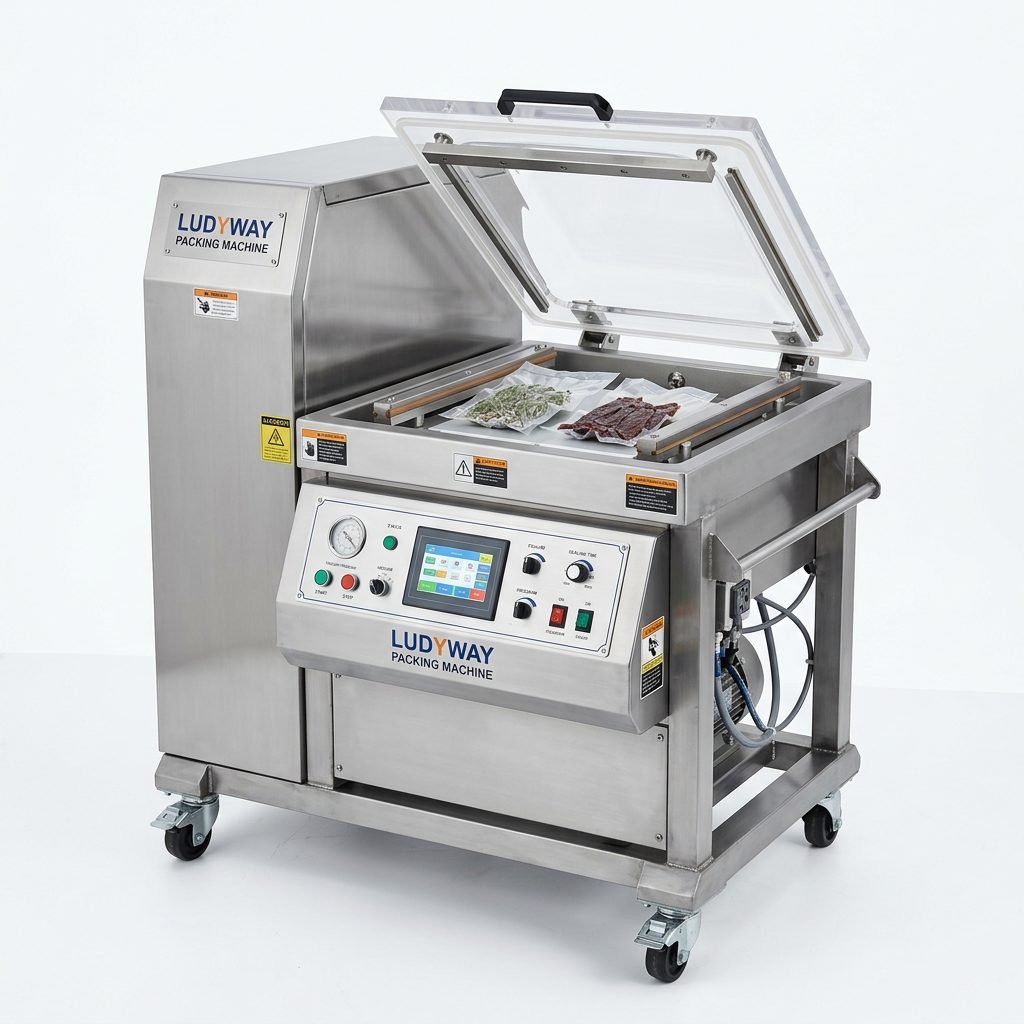
Industrial Vacuum Packaging Machine for Food & Pharmaceutical Products
View Specifications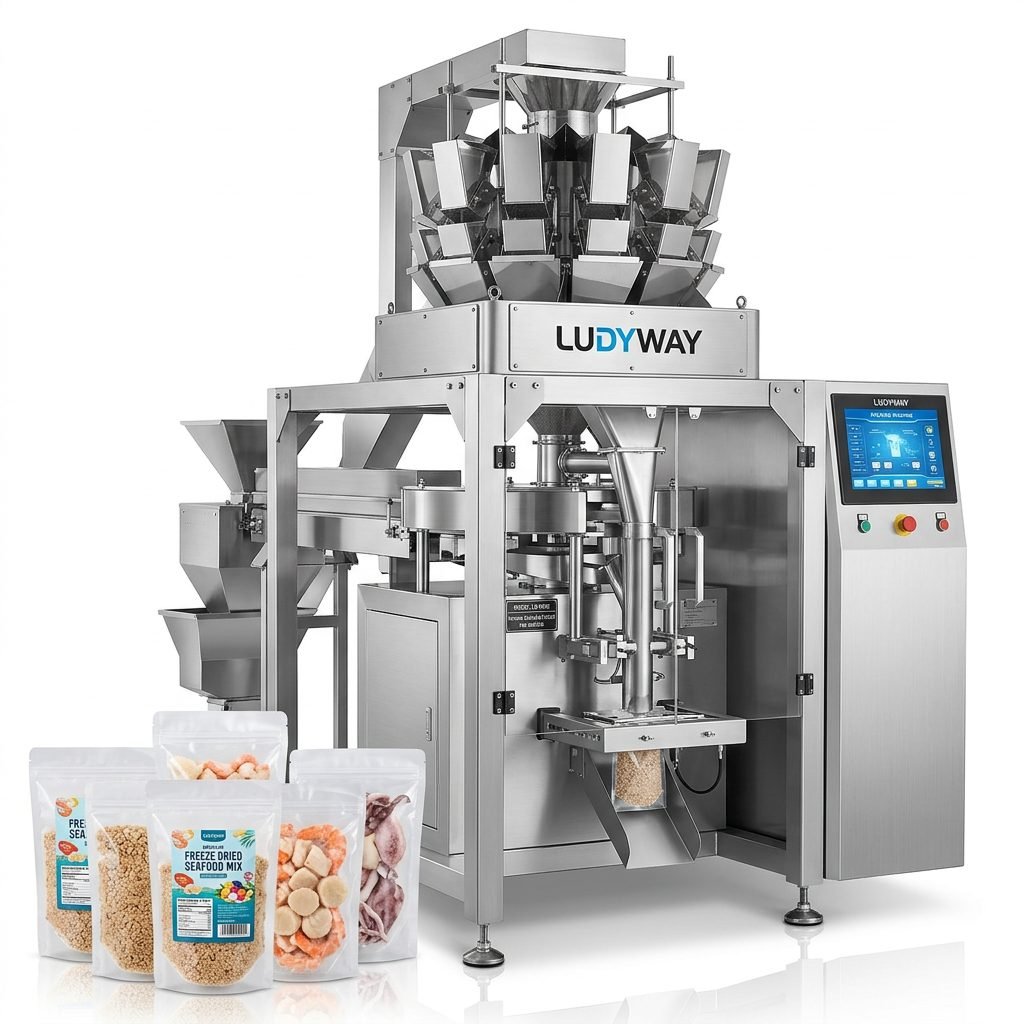
Freeze Dried Seafood Vacuum Sealing Machine for Granule Packaging
View Specifications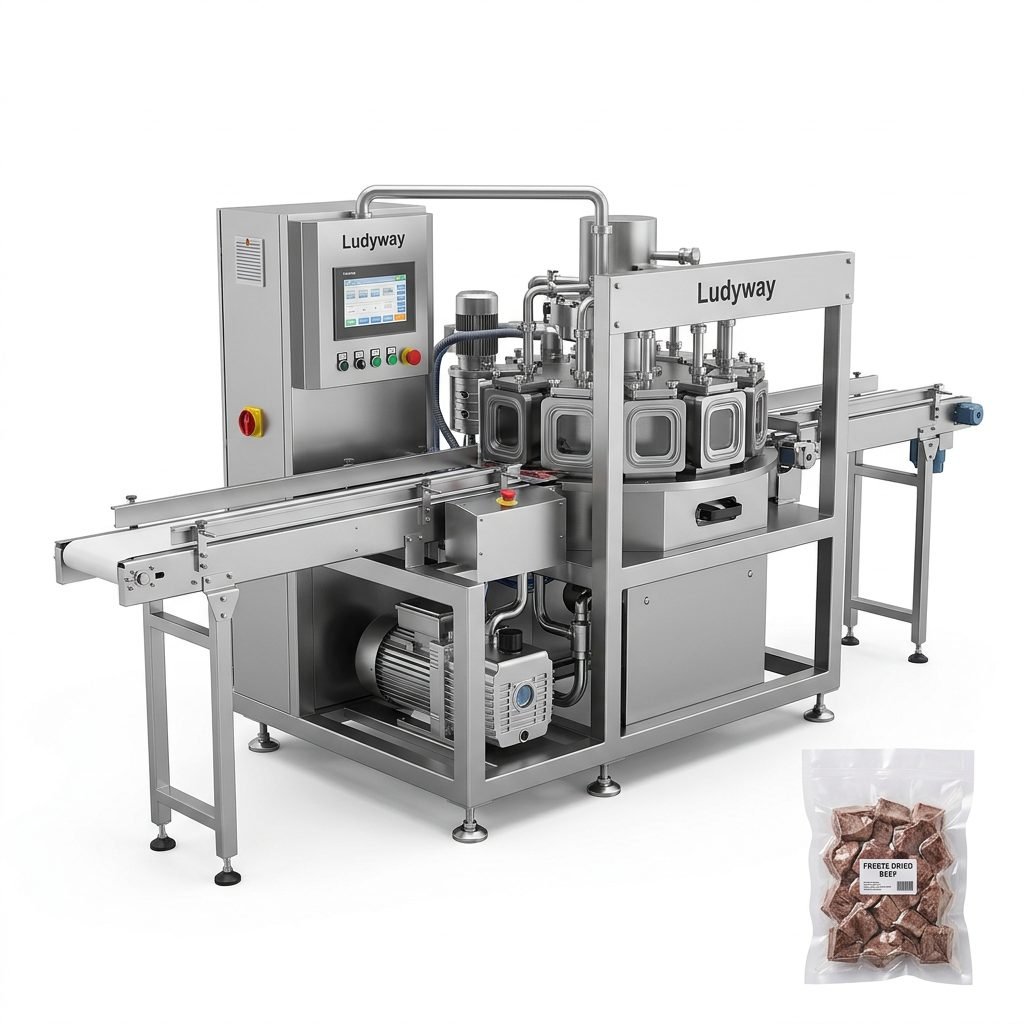
Freeze Dried Beef Vacuum Packaging System for Industrial Production
View Specifications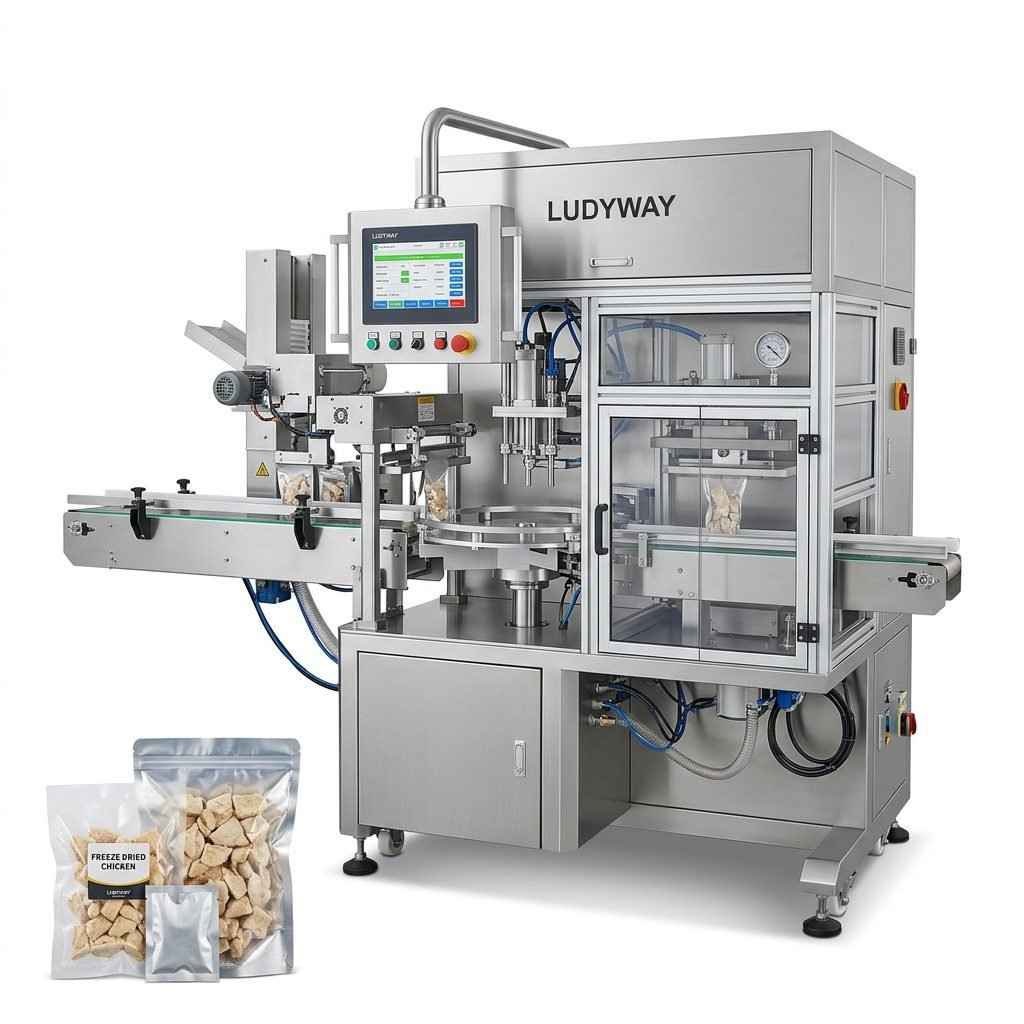
Freeze Dried Chicken Vacuum Packaging Machine for Pouches & Sachets
View Specifications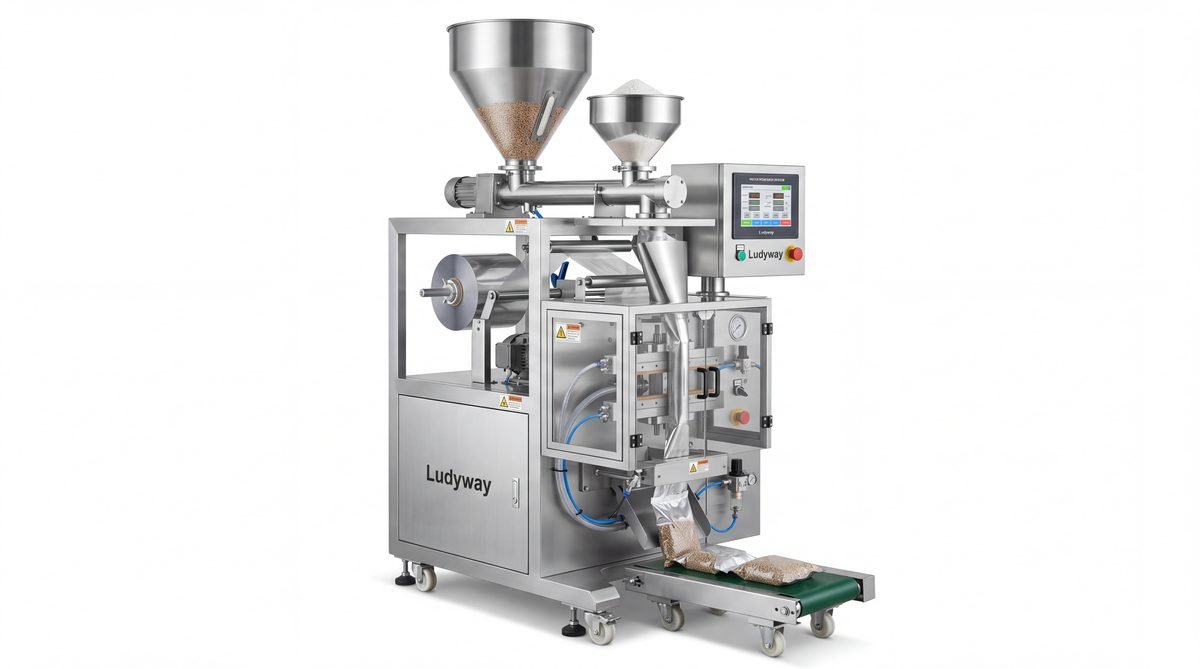
Industrial Vacuum Packaging Machine for Food & Pharmaceutical Granule Powder
View Specifications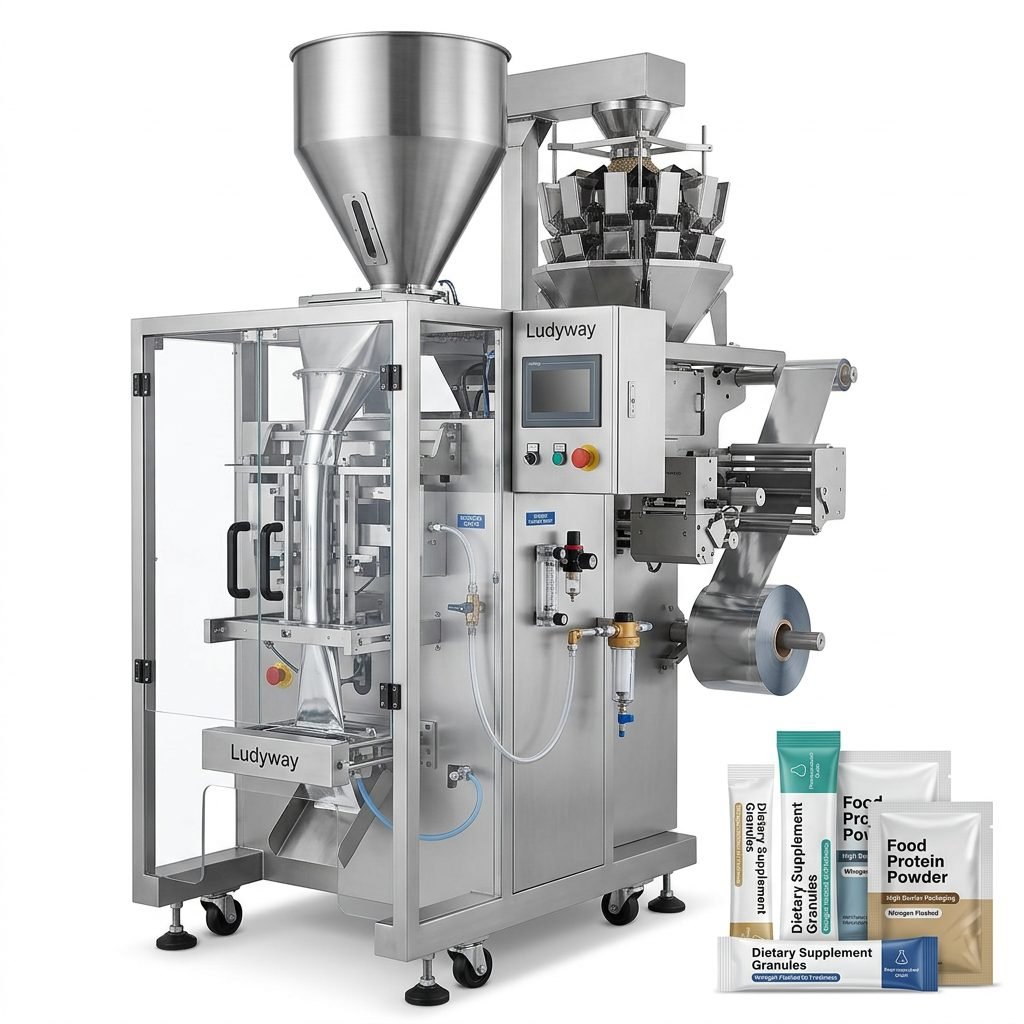
Nitrogen Flushing Packaging System for Food and Pharmaceutical Granule Powder
View Specifications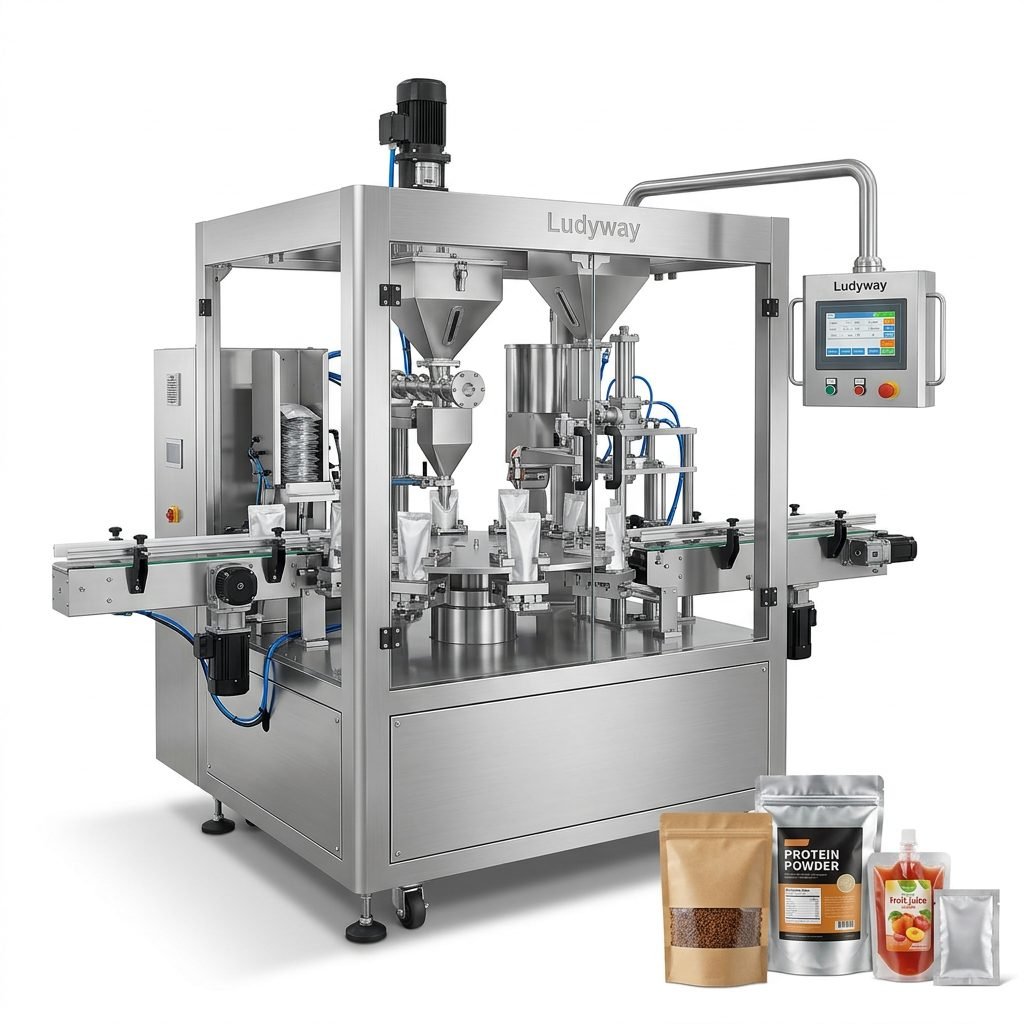
Premade Pouch Packaging Machine for Granules Powder Liquids Automated System
View Specifications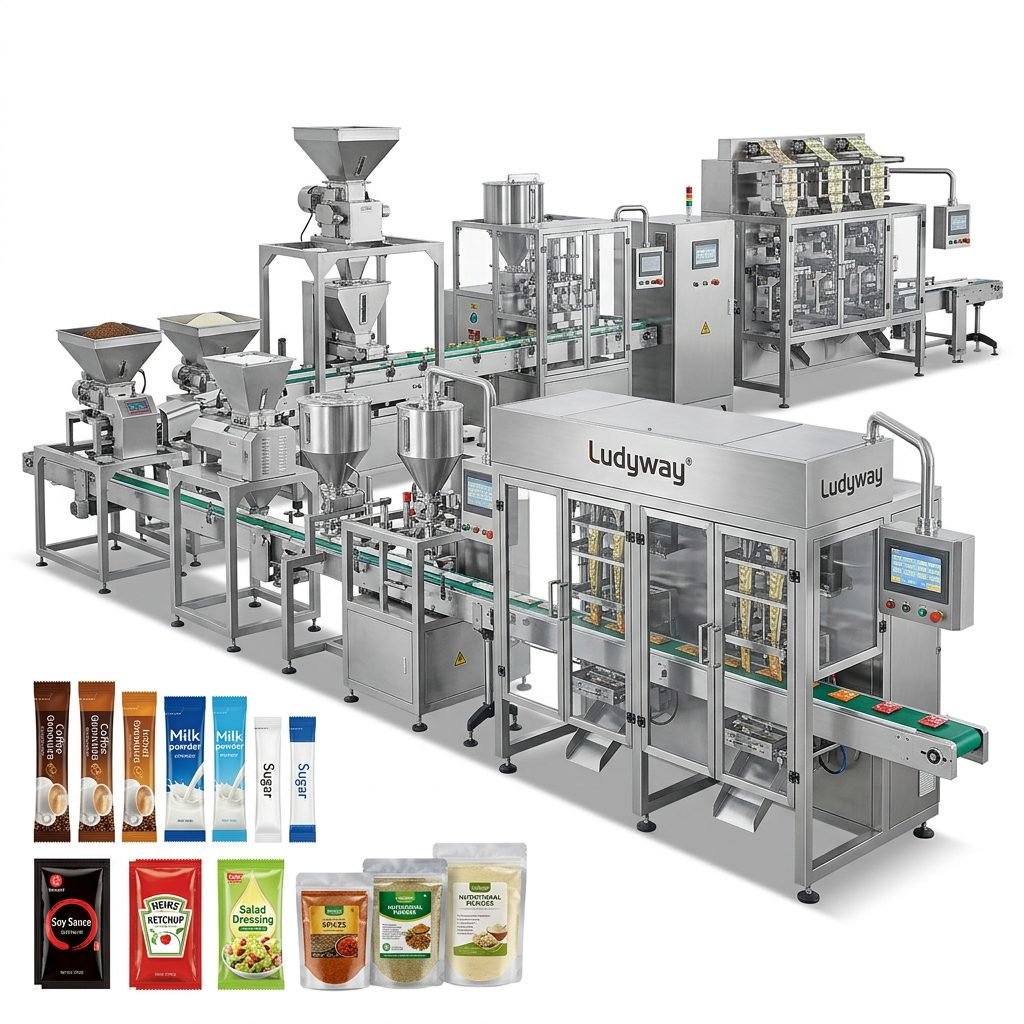
High-Speed Automated Food Packaging Lines for Granules, Powder, Liquid Products
View SpecificationsWhy Choose Ludyway For Your Packaging Facilities
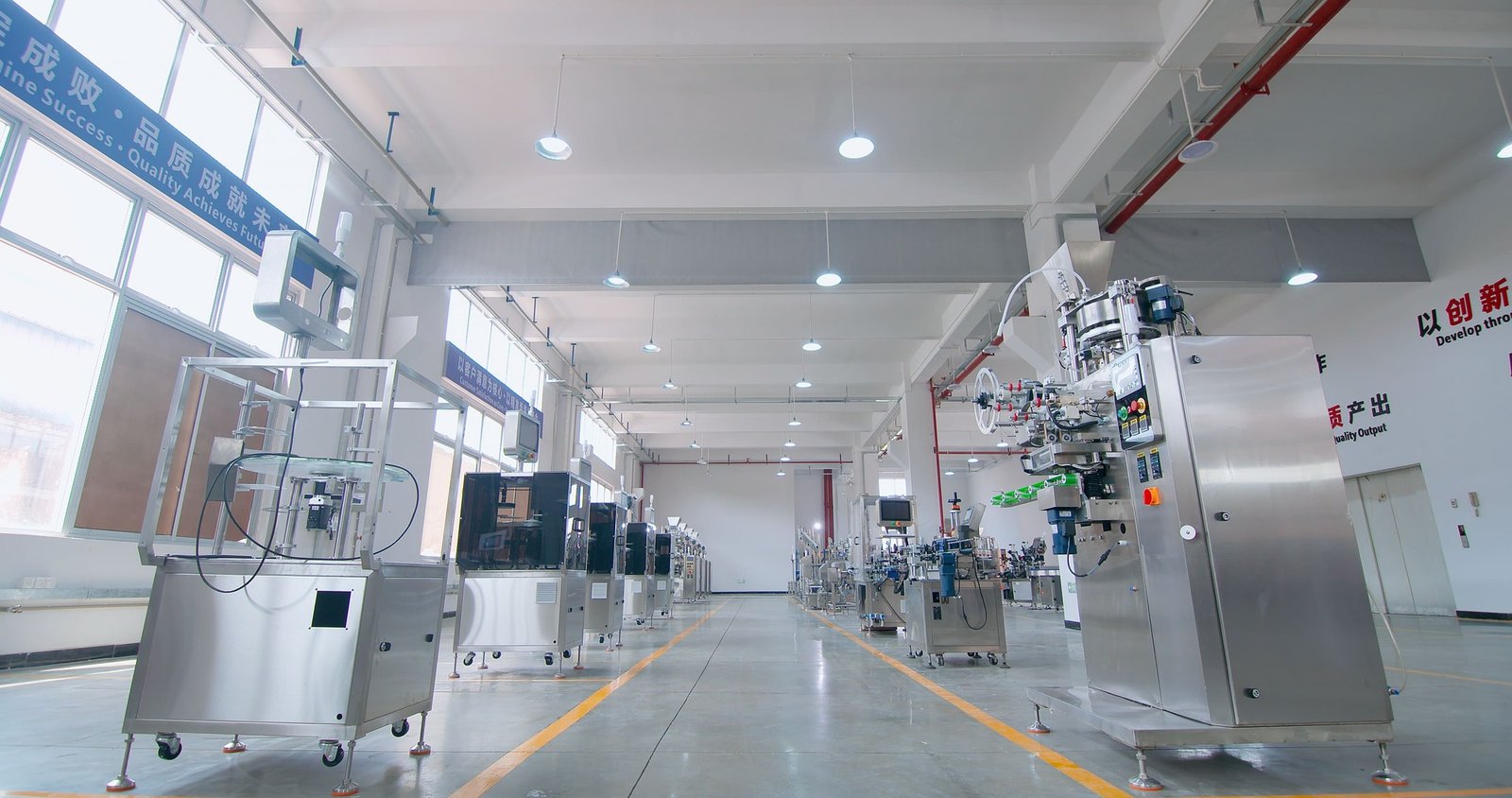
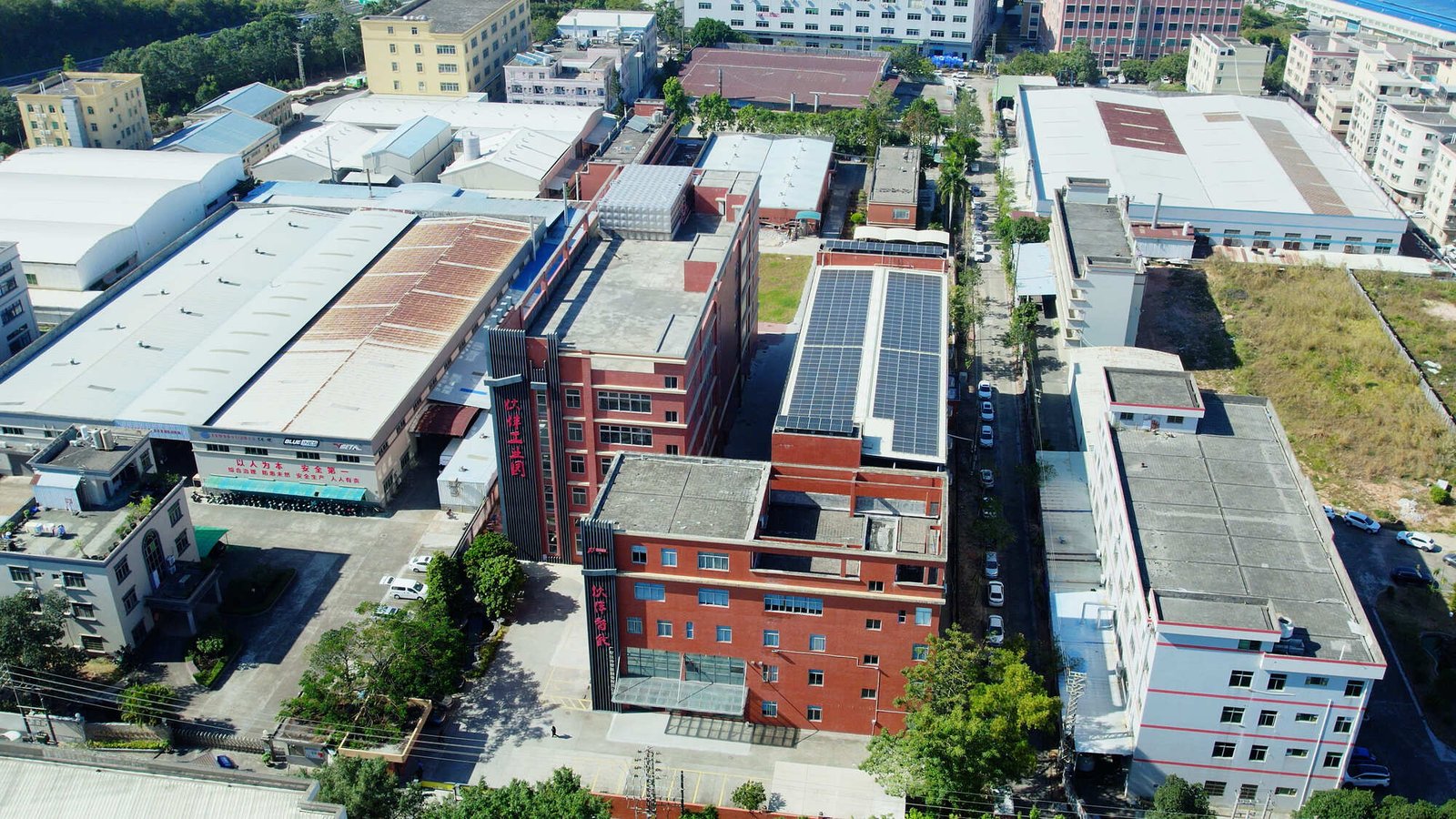
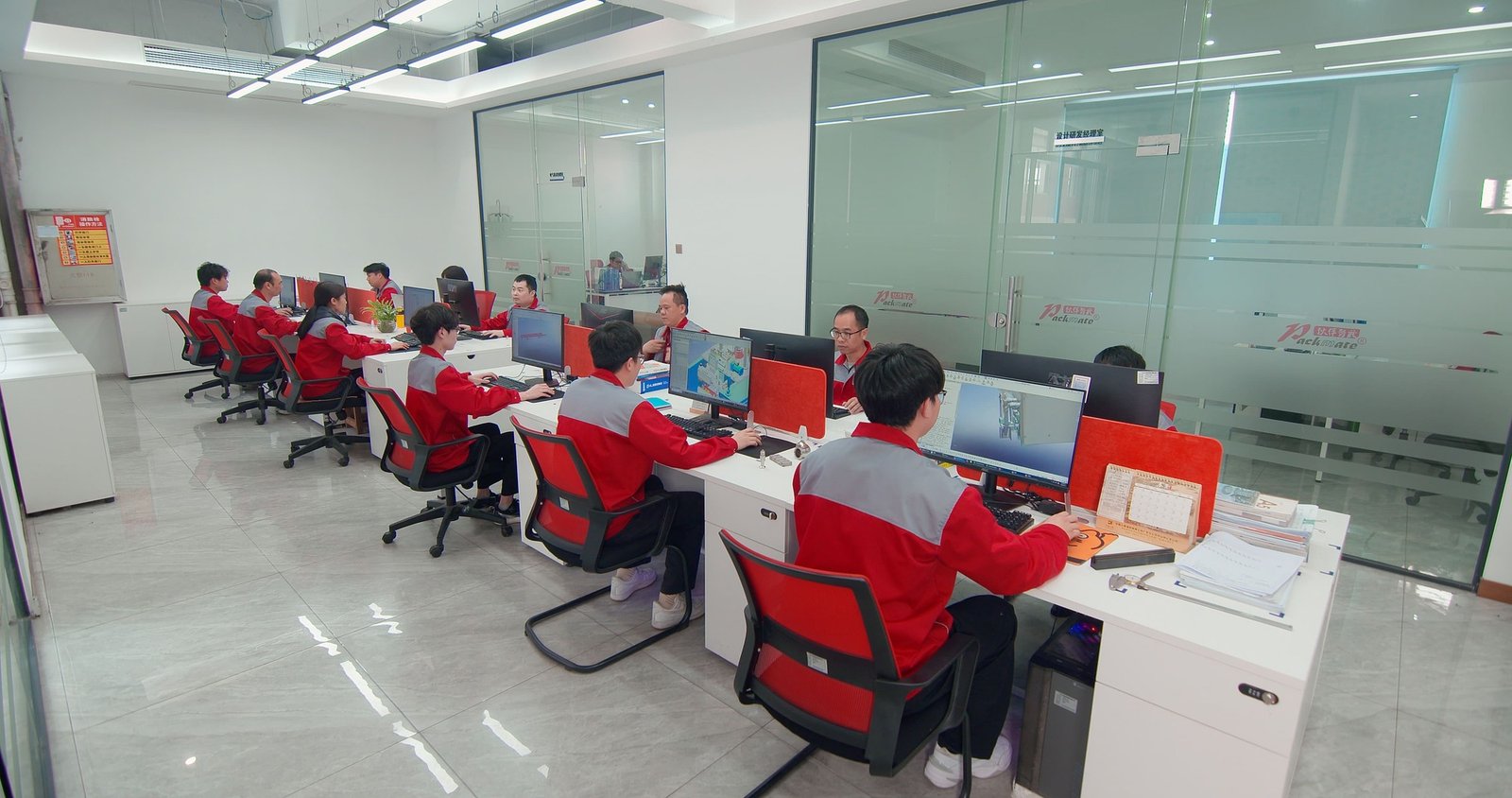
Founded on engineering rigor and manufacturing excellence, Ludyway is one of China’s premier automated packaging equipment builders. Backed by over 30 years of industrial expertise and a cutting-edge 20,000㎡ modern manufacturing campus, we design, build, and deliver turn-key packaging systems trusted by clients across 100+ countries worldwide.
Every small vacuum packaging unit undergoes rigorous 72-hour pressure drop leak testing, thermal imaging seal inspection, and food-grade safety verification before dispatch.
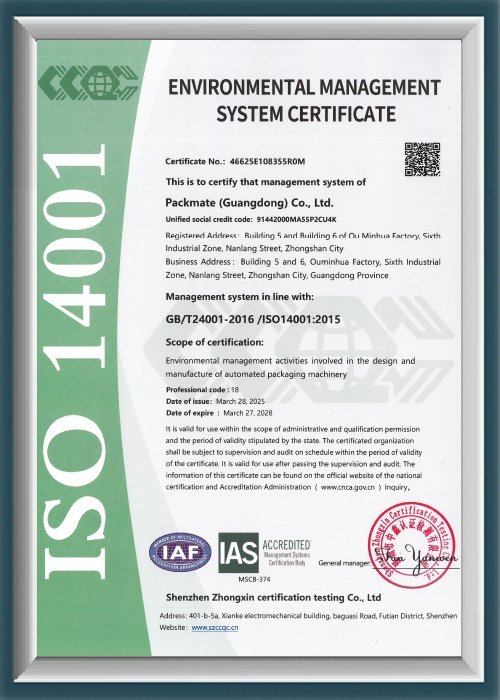
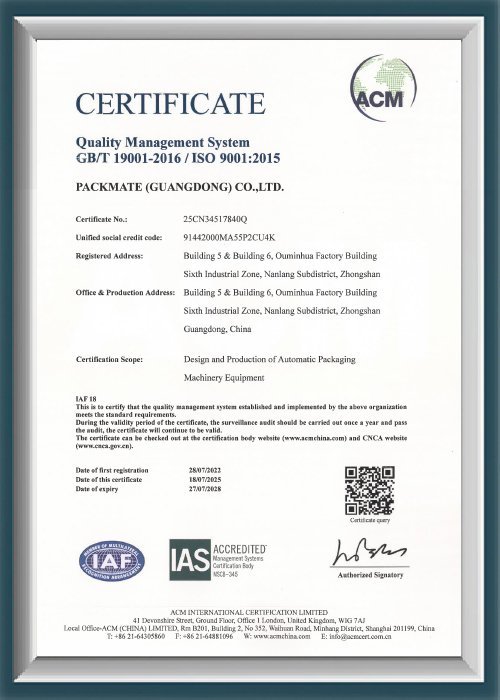
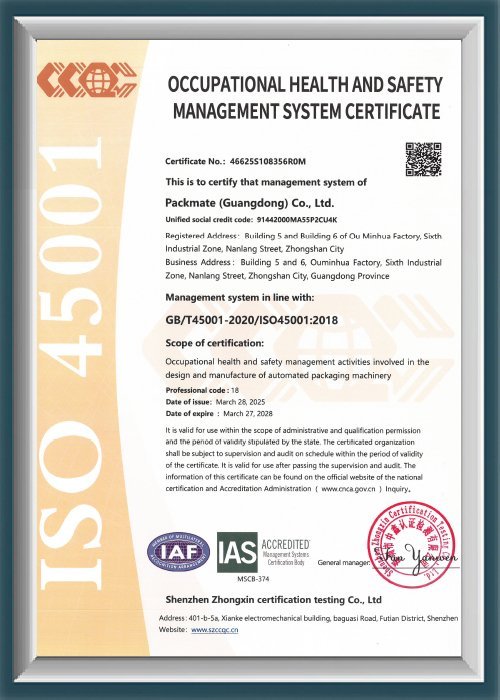
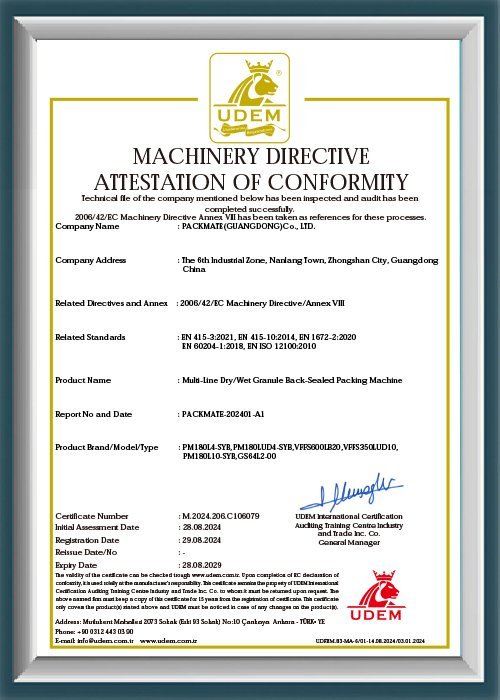
International Quality & Safety Certifications
Our food packaging and vacuum equipment comply with stringent CE directives, ISO9001 quality management benchmarks, and worldwide sanitary food processing regulations.
Trusted by Leading Global Food Enterprises
Our vacuum packaging and pouch filling systems are installed across North America, Europe, Southeast Asia, the Middle East, and Latin America.








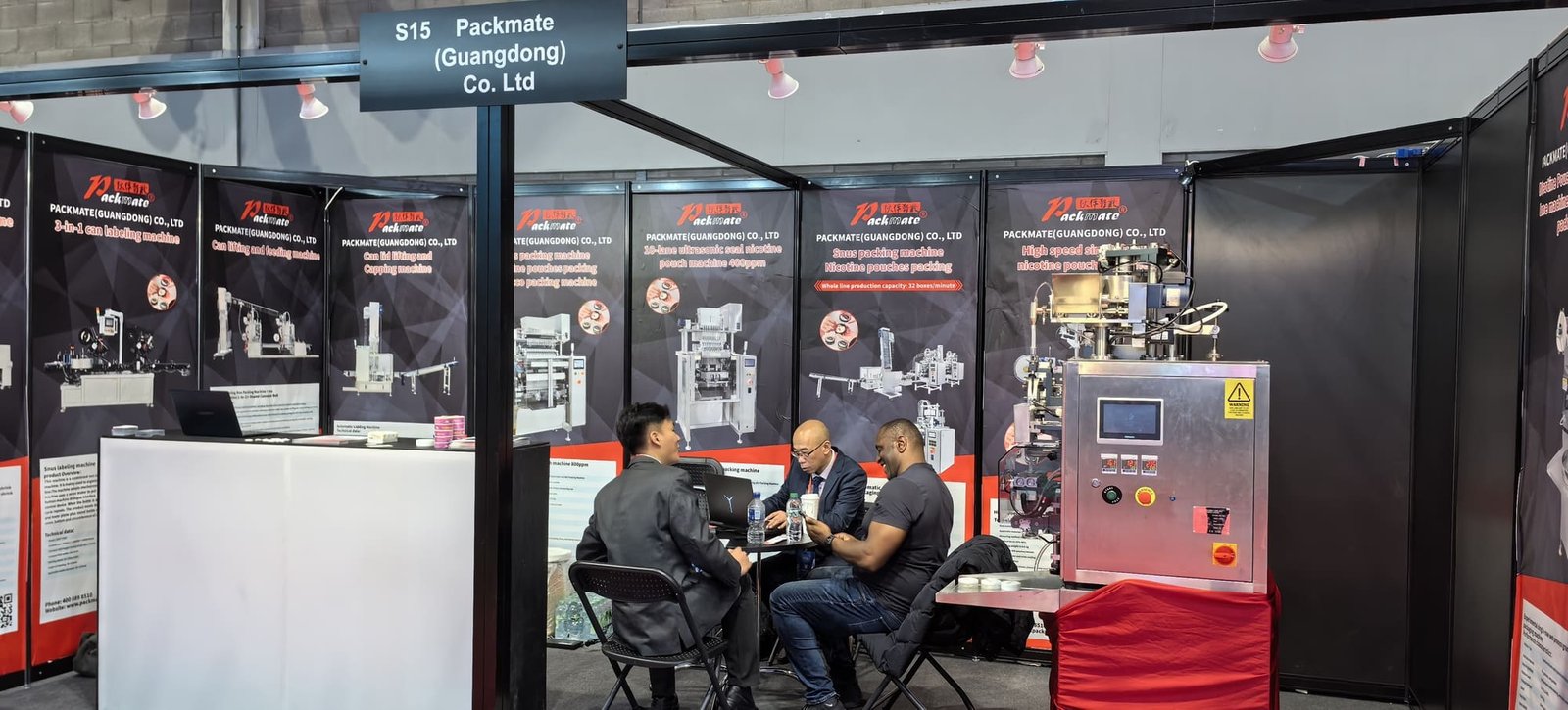
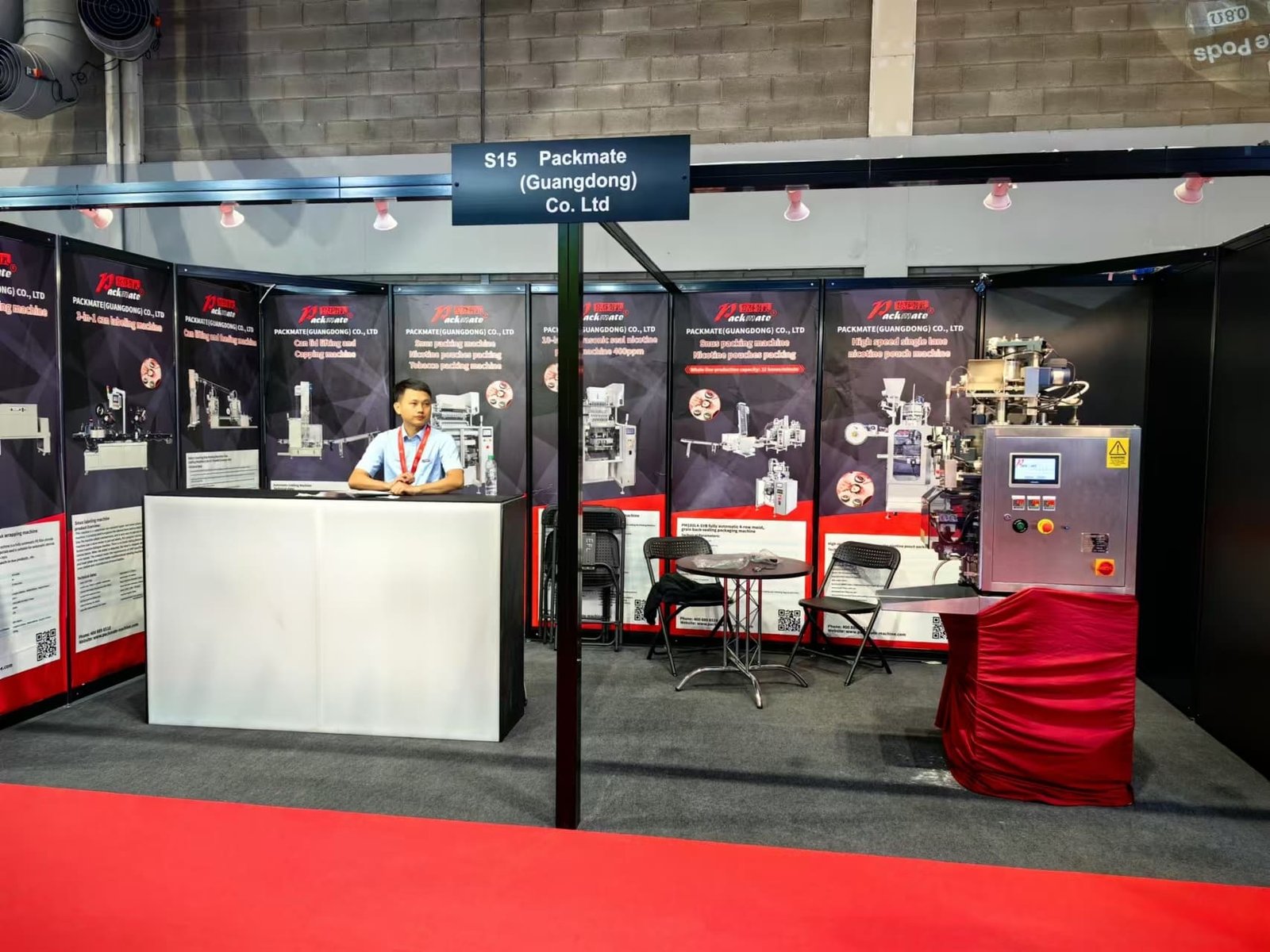
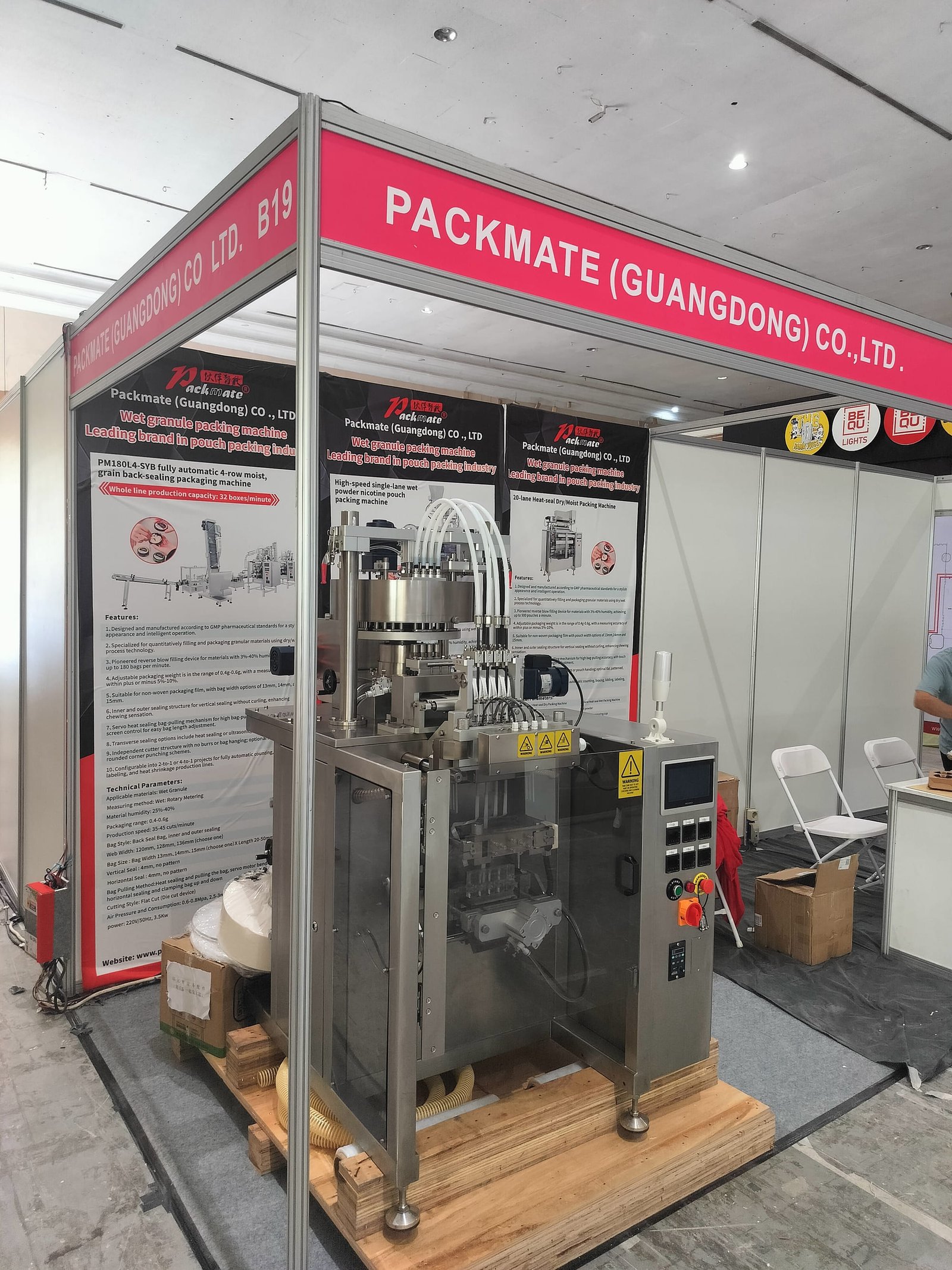
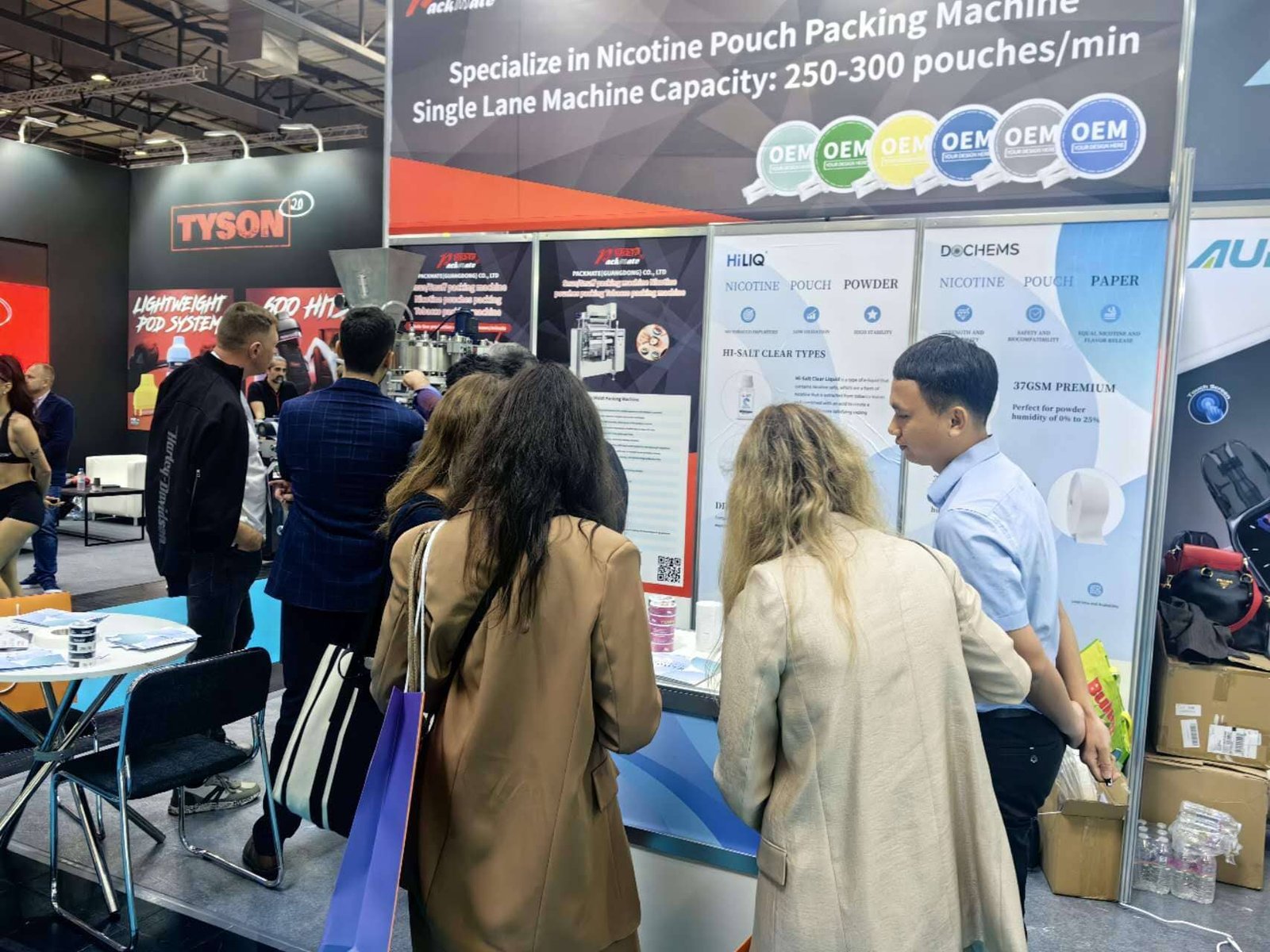
International Packaging Machinery Expos
Meet our engineering consultants annually at leading packaging expos worldwide.
Frequently Asked Questions
Find authoritative answers to common commercial food packaging and technical operation questions.
What is the primary difference between a chamber vacuum packaging machine and an external suction sealer?
A chamber vacuum machine evacuates air from the entire enclosed cabinet, meaning pressure decreases equally both inside and outside the pouch. This allows operators to vacuum pack liquids, marinades, sauces, and fine powders without sucking liquids into the seal bar. External suction sealers only extract air directly from the bag throat, which pulls liquids into the pump and limits packaging materials to expensive textured/channel bags. Chamber units use economical flat commercial barrier pouches (PA/PE).
How does Modified Atmosphere Packaging (MAP) gas flushing work on small vacuum machines?
After the chamber reaches its targeted vacuum level (e.g., 99.8%), the integrated gas injection module introduces a customized inert gas blend—commonly Nitrogen (N2) to prevent crushing delicate items like potato chips, or Carbon Dioxide (CO2) to inhibit anaerobic microbial growth and maintain fresh meat red color. Once gas dosing reaches preset pressure, the impulse sealing bar seals the pouch immediately.
What types of packaging films are compatible with Ludyway vacuum sealers?
Our sealing systems utilize adjustable impulse heat controls and dual-wire resistance bands capable of hermetically sealing standard PA/PE (nylon/polyethylene) co-extruded barrier pouches, high-barrier EVOH films, aluminum foil laminated bags, boilable retort pouches (up to 121°C), and emerging compostable/biodegradable vacuum films ranging from 50 to 180 microns in thickness.
How frequently does the vacuum pump oil require changing?
For commercial operations running 6-8 hours daily, we recommend inspecting the pump oil level and clarity weekly through the optical inspection window. Standard food packaging environments require an oil change every 250 to 400 operational hours or whenever the oil becomes cloudy due to water vapor contamination. Ludyway vacuum chambers feature an automated “Oil Condition & De-humidification Deaeration Cycle” program to easily purge condensation.
Can small vacuum packaging machines handle hot or freshly cooked foods?
It is strongly advised to chill warm or hot foods below 10°C (50°F) before vacuum packaging. In a deep vacuum environment, the boiling point of liquids decreases dramatically (e.g., water boils at room temperature under 0.1 kPa vacuum). Chilling food prior to vacuum cycle prevents boiling over, preserves moisture, and prevents bacterial incubation during packaging.
