
Can Packaging Machines Enable Unmanned Production?
Discover how modern smart packaging machinery, multi-axis robotic integration, IIoT telemetry, and automated feedback loops are transforming industrial packaging halls into fully autonomous, lights-out manufacturing operations.
The Paradigm Shift: From Automated Packaging to Unmanned Operations
Can industrial packaging truly run without human intervention? The short answer is yes—with modern closed-loop machinery, robotics, and intelligent process control.
Historically, packaging has been one of the most labor-intensive segments of industrial production. Secondary packing, quality visual checks, raw material replenishments, film roll splicing, and cartoning traditionally demanded continuous manual oversight. However, the rise of Industry 4.0 automation, precision multi-axis servo mechanics, and artificial intelligence has pushed packaging technology beyond simple mechanization into genuine “lights-out” unmanned manufacturing.
Unmanned packaging production does not simply mean removing operators from the machinery hall. It signifies the implementation of an interconnected, self-regulating ecosystem where automated infeed, primary dosing, multi-lane stick or sachet packaging, real-time machine vision inspection, robotic cartoning, and autonomous palletizing work seamlessly in synchronization.
Defining “Lights-Out” in Modern Packaging
A packaging line operates autonomously when raw product intake, primary forming/filling/sealing, quality assurance, case packing, and palletizing execute continuously without direct operator touchpoints during standard run cycles.
For global manufacturers in food processing, pharmaceuticals, nutraceuticals, chemical specialties, and cosmetics, transitioning toward unmanned packaging addresses critical commercial pain points: soaring labor costs, human contamination risks in cleanrooms, product giveaway from inconsistent manual dosing, and erratic operational uptime.
Leading manufacturing leaders such as Ludyway Machinery have spearheaded this transformation by developing turnkey systems that unify multi-lane vertical form-fill-seal (VFFS) systems, high-speed automated checkweighers, delta pick-and-place robotics, and end-of-line case sealing units into a cohesive digital workflow.
By removing human variables from repeatable, high-speed cycles, factories achieve unprecedented overall equipment effectiveness (OEE), zero-microbial contact assurance, and millimeter-level packaging accuracy across 24/7 non-stop operational schedules.
5 Core Pillars Enabling Unmanned Packaging Production
True lights-out packaging requires eliminating every manual intervention bottleneck. Here is the engineering matrix that makes total automation achievable.
1. Multi-Axis Servo & Closed-Loop Dosing
Unmanned operations demand consistent dosing without material jams or drift. Modern servo-driven augers, peristaltic liquid pumps, and volumetric piston systems dynamically compensate for powder bulk density fluctuations and liquid viscosity changes automatically.
2. Inline AI Machine Vision & Inspection
High-resolution CMOS sensors, dynamic checkweighers, and X-ray systems inspect 100% of packets at line speeds exceeding 600 units/min. Defective sachets, misprinted batch codes, or micro-leaks are rejected with zero operator intervention.
3. Auto-Splicing & Continuous Material Feeding
Dual-spindle unwind stations equipped with ultrasonic web sensors detect roll exhaustion and perform flying auto-splices under full production speed, avoiding downtime typically required for manual reel changeovers.
4. IIoT Telemetry & Predictive Maintenance
Sensors track motor vibration, thermal signatures, pneumatic pressure drops, and seal heater decay. Edge computing nodes trigger self-lubrication sequences and dispatch predictive alerts before equipment failure occurs.
5. Robotic Pick-and-Place & Palletizing
High-speed Delta and Articulated robots interface directly with multi-lane discharge tracks, counting, collating, carton erecting, and boxing stick packs or sachets before routing to automated stretch wrappers and AGV pickup bays.
6. Automatic Clean-in-Place (CIP/SIP)
For pharmaceutical and dairy powder operations, automated sanitization routines flush dosing tracks, sterilize liquid nozzles, and clean product contact hoppers without requiring technician disassembly or washdown labor.
Unmanned Packaging Across Different Material Mediums
Autonomous packaging demands specialized mechanical engineering tailored to the rheological and physical behavior of granules, fine powders, and viscous liquids.
Granular Products (Coffee Beans, Seeds, Chemicals, Pellets)
Granular products require high velocity combined with zero fragment breakage. Autonomous lines utilize multi-head combination weighers with optical load-cell feedback, anti-bridging hoppers, and vacuum infeed conveyors. Integrated reject diverters purge underfilled bags while the system adjusts feeder vibration amplitude in real time.
Fine Powders (Infant Milk, Pharma API, Matcha, Protein)
Fine powders present serious challenges: airborne dust, aeration changes, and seal contamination. Unmanned powder lines feature hermetic dust extraction hoods, nitrogen flushing chambers (residual oxygen <0.5%), and servo auger shafts with dynamic weight-compensation algorithms that auto-tune screw rotation according to ambient moisture and density.
Liquids, Pastes & Gels (Beverages, Cosmetics, Condiments, Oils)
Unmanned liquid packaging eliminates human contamination and drips via precision anti-drip cut-off nozzles, rotary positive-displacement piston filling, and automated CIP cycle switches. Inline laser inspection validates seal integrity and print clarity on flexible pouches and stick packs at speeds exceeding 500 strokes/min.
Conventional Automated Lines vs. Unmanned Autonomous Systems
Evaluate the technical and operational disparities between standard semi-automated packaging setups and state-of-the-art unmanned installations.
| Operational Dimension | Conventional Automated Packaging | Ludyway Turnkey Unmanned Packaging |
|---|---|---|
| Operator Touchpoints | 3 to 6 operators per packaging line | Zero active operators (1 roving supervisor per 6 lines) |
| Film Reel Changeover | Manual line stoppage (8–15 min downtime) | Continuous flying auto-splice at production speed (0 downtime) |
| Quality Inspection | Spot-check sampling by floor inspectors | 100% Inline 3D Machine Vision, X-ray & Dynamic Checkweighing |
| Dosing Accuracy Tuning | Manual calibration adjustments by mechanics | Closed-loop gravimetric PID auto-correction algorithm |
| Secondary Packaging | Manual boxing, carton tape-loading, manual palletizing | Robotic pick-and-place, auto-erectors, and automated robotic palletizers |
| Cleanroom Contamination | Elevated risk due to constant human proximity | Zero human contact, full laminar flow & automated CIP/SIP capability |
| Overall Equipment Effectiveness (OEE) | Typical range: 65% – 78% | Industry standard: 88% – 96.5% sustained OEE |
Ludyway Smart Machinery Powering Unmanned Packaging Lines
Engineered for high-volume, multi-shift autonomous production across food, pharmaceutical, health, and chemical sectors.
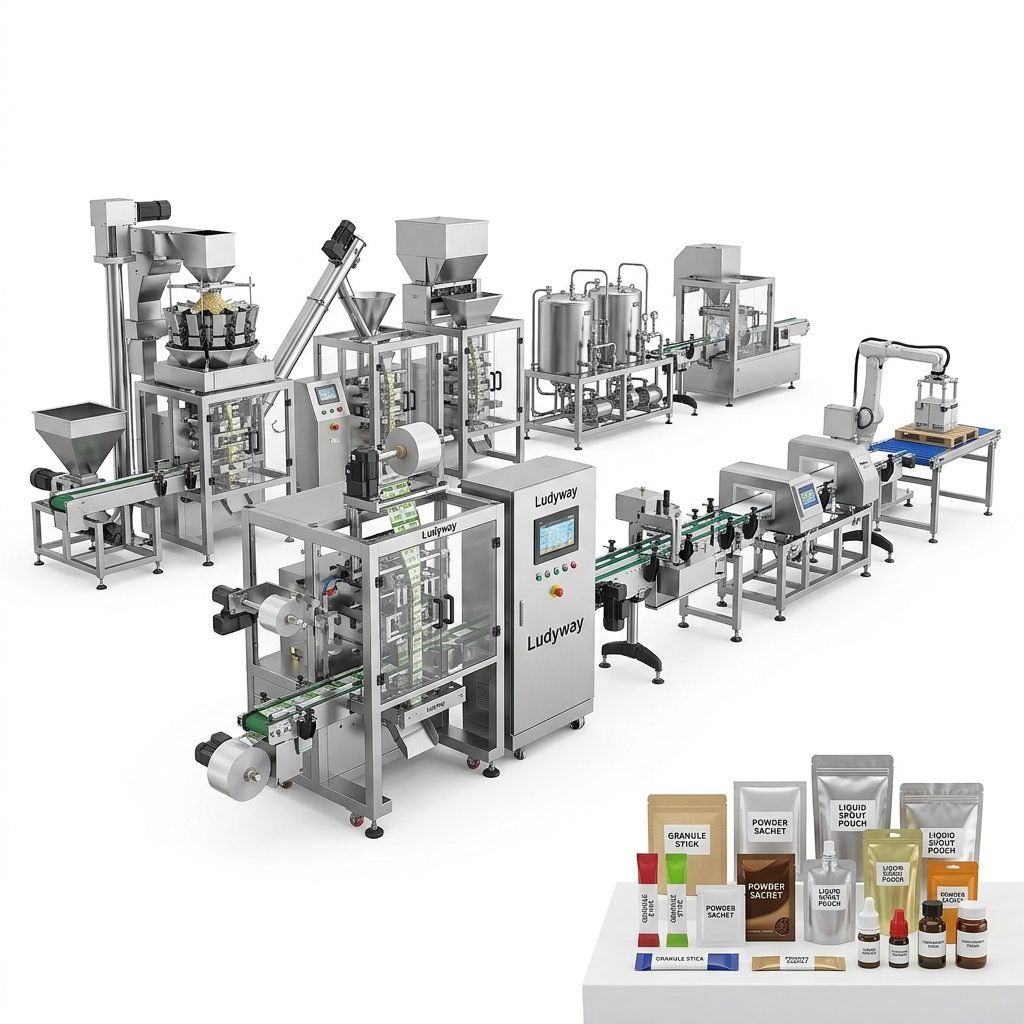
Automated Smart Factory Packaging Lines
End-to-end intelligent packaging network engineered for seamless material handling, dosing, and remote telemetry.
View Specifications →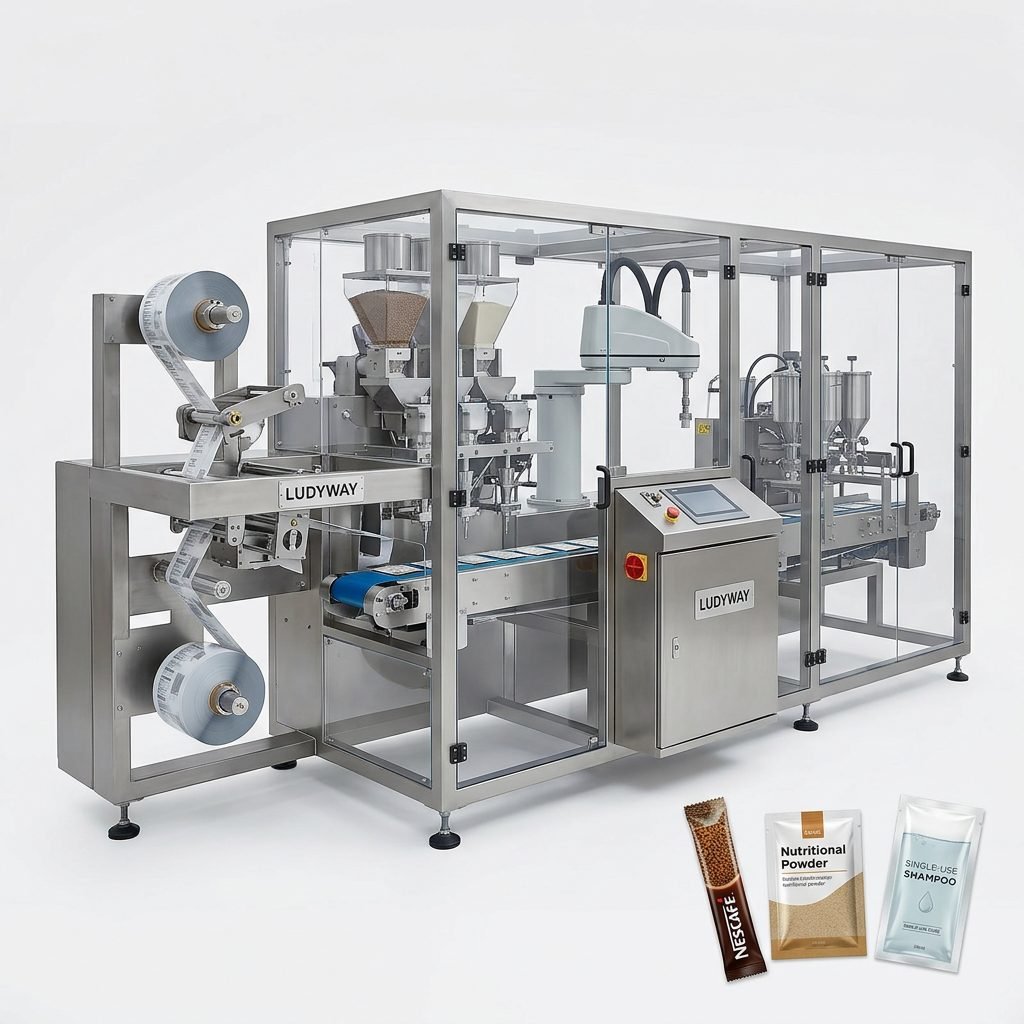
Robotic Automated Packaging System
High-precision multi-axis robotic pick-and-place lines for flexible pouches, sachets, and liquid containers.
View Specifications →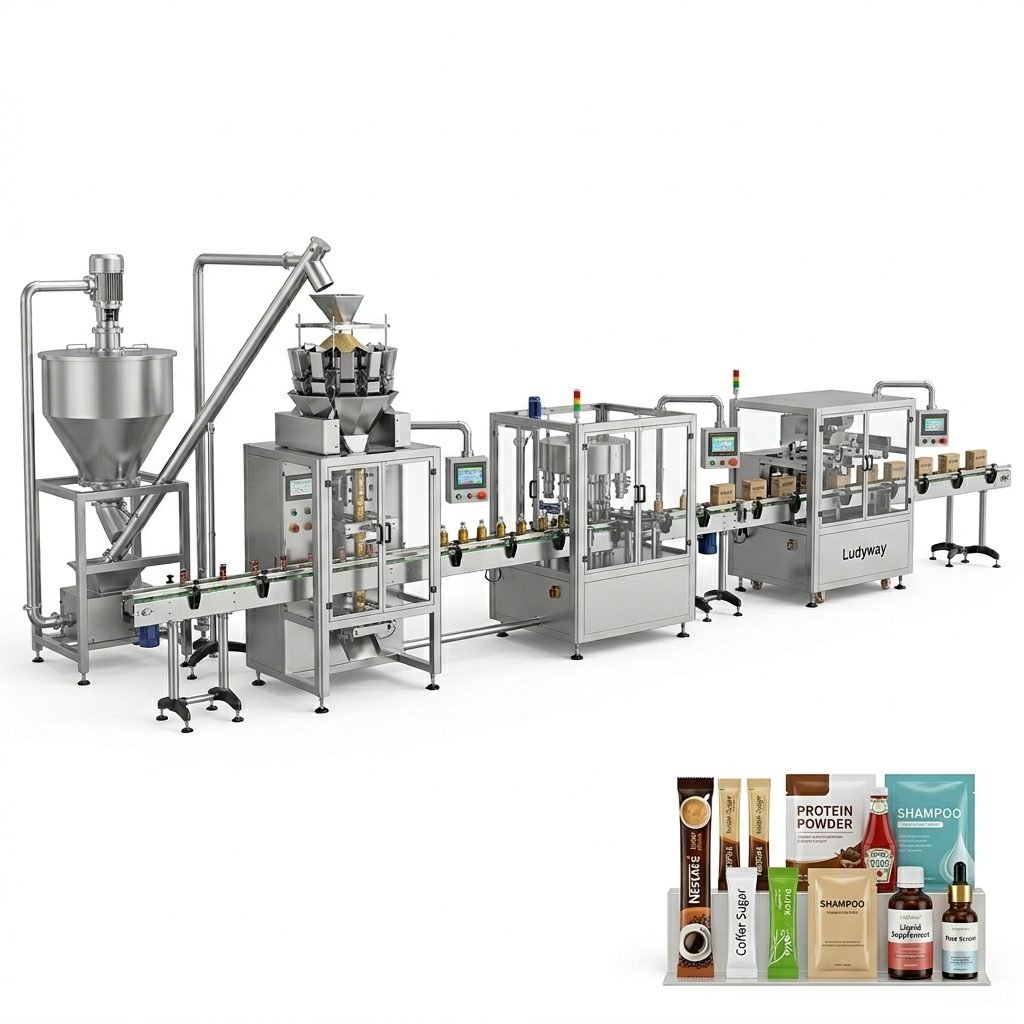
Turnkey Packaging Line Solutions
Holistic production architecture connecting raw feed hoppers, primary form-fill-seal, and case packing.
View Specifications →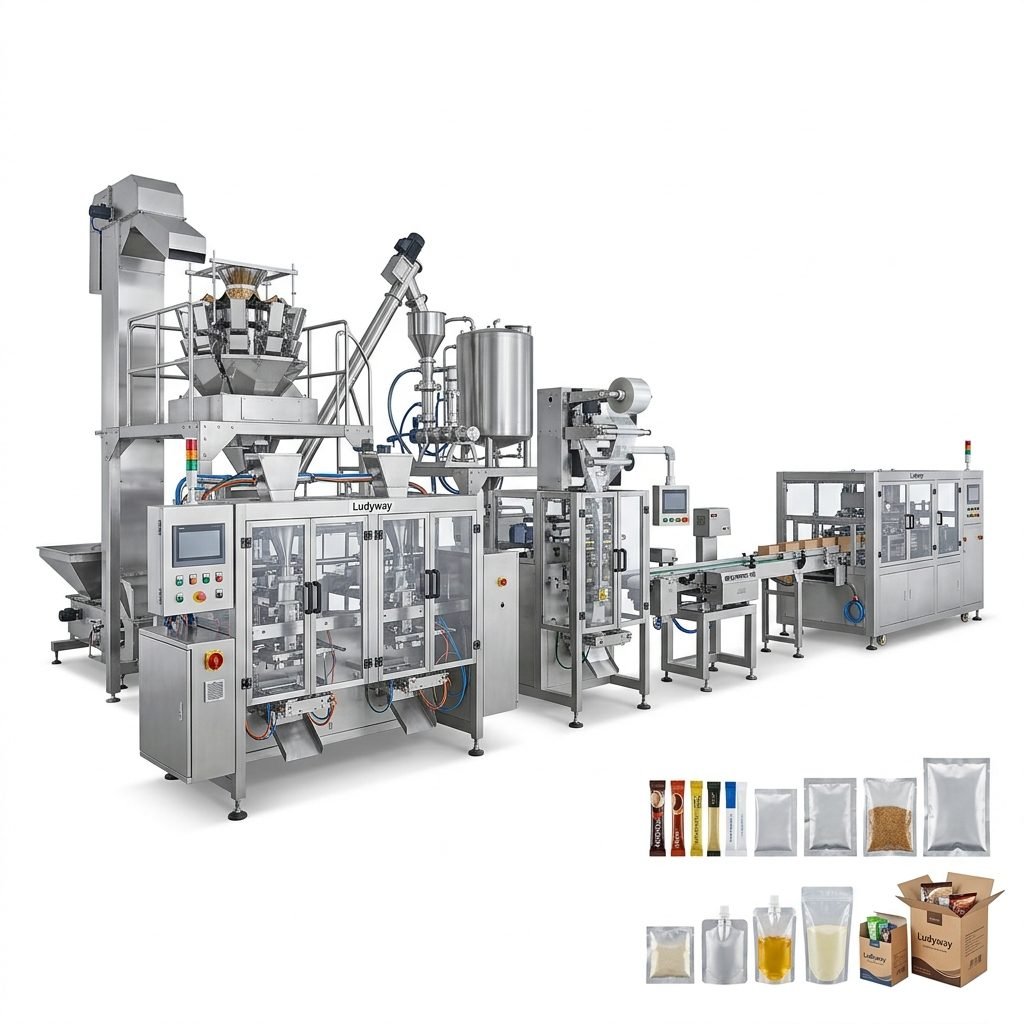
Fully Automatic Integrated Packaging Lines
Multi-lane vertical form-fill-seal lines with synchronous multi-axis servo drives and automatic web tensioning.
View Specifications →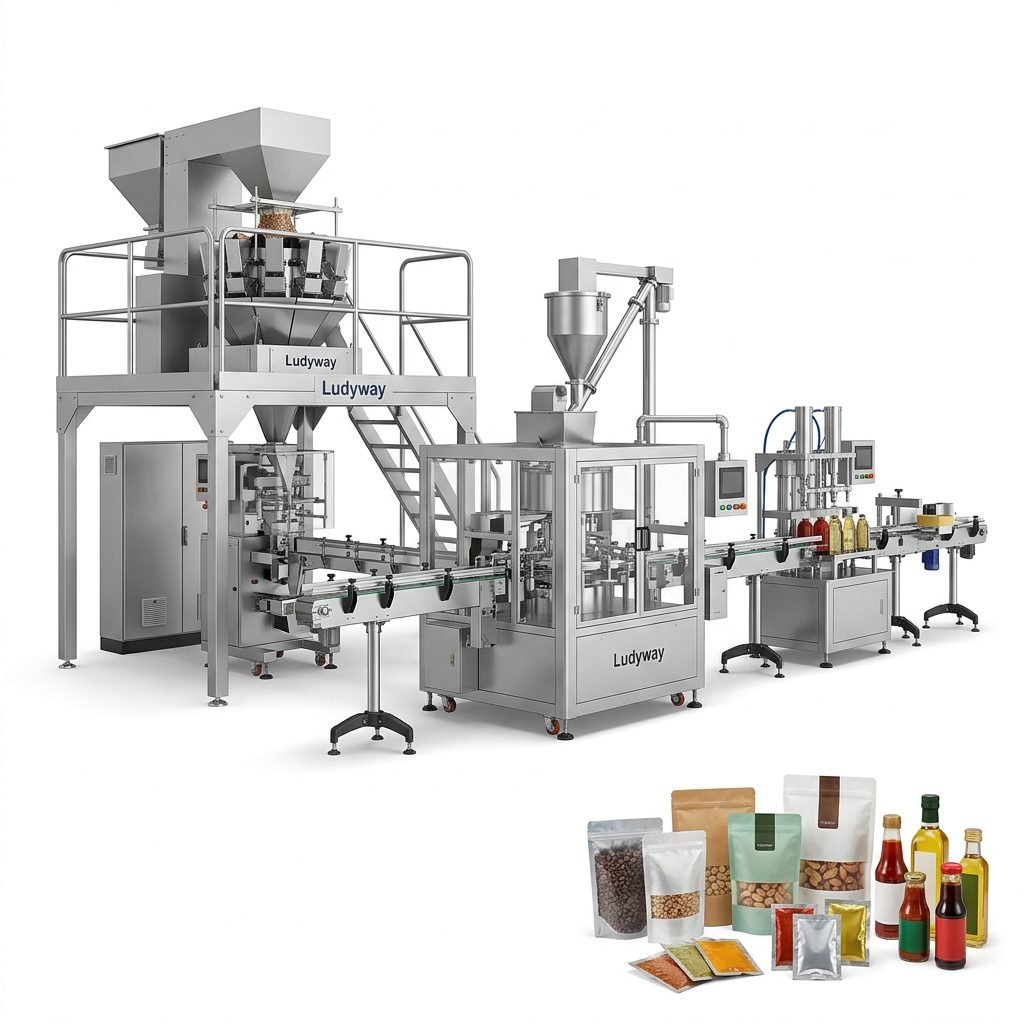
Packaging Line Integration System
SCADA-ready central line controllers harmonizing upstream dosing units with downstream packaging machines.
View Specifications →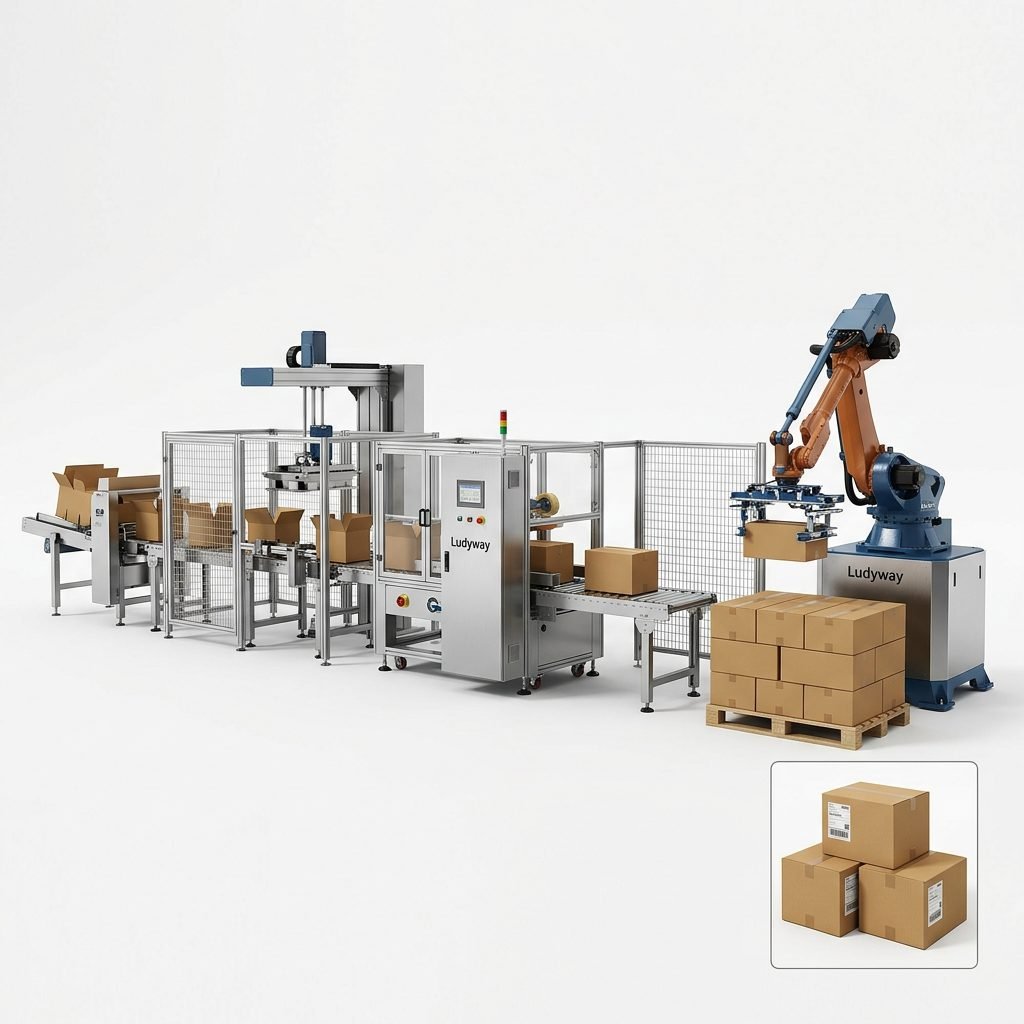
Automated Boxing & Palletizing Lines
End-of-line secondary packaging cell with automated carton erecting, precision loading, and stretch wrapping.
View Specifications →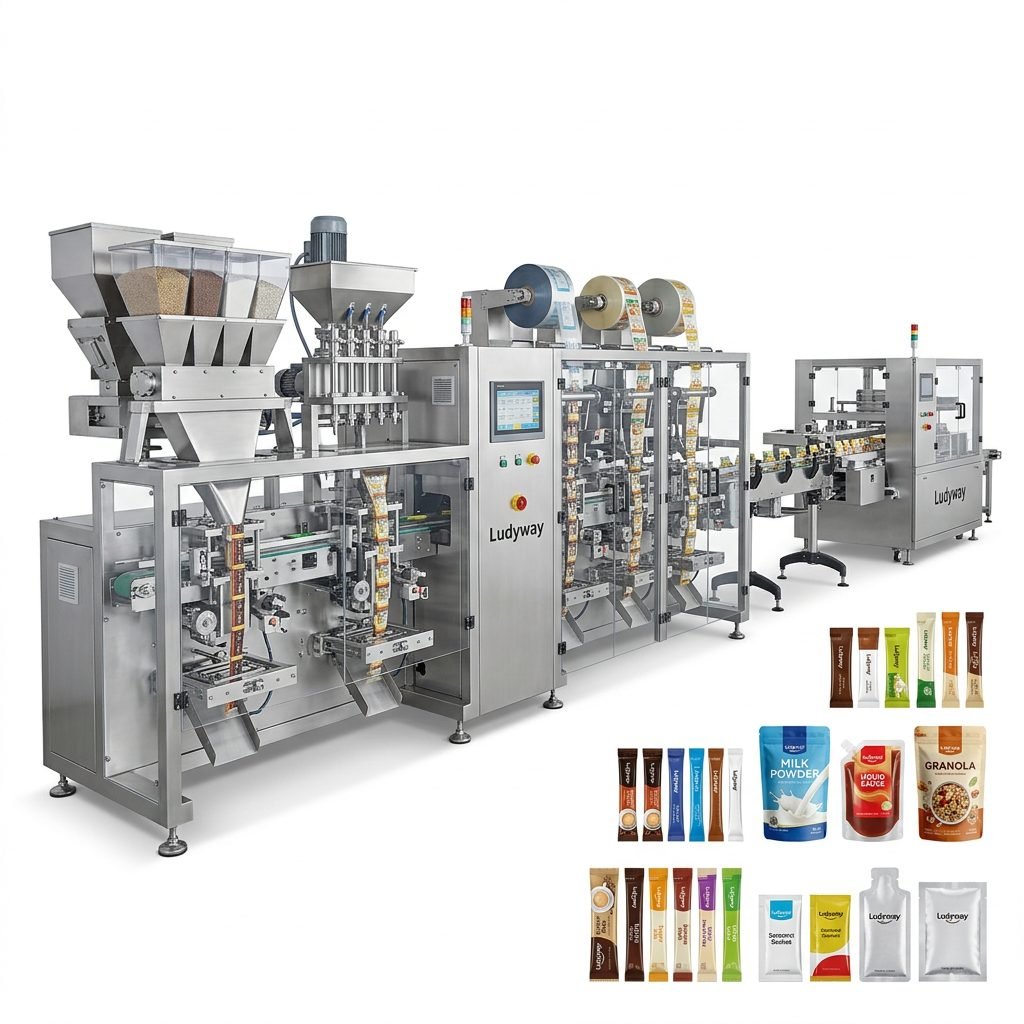
Turnkey Multi-Lane Sachet Lines
High-throughput multi-track stick pack and sachet systems built for 24/7 continuous lights-out cycles.
View Specifications →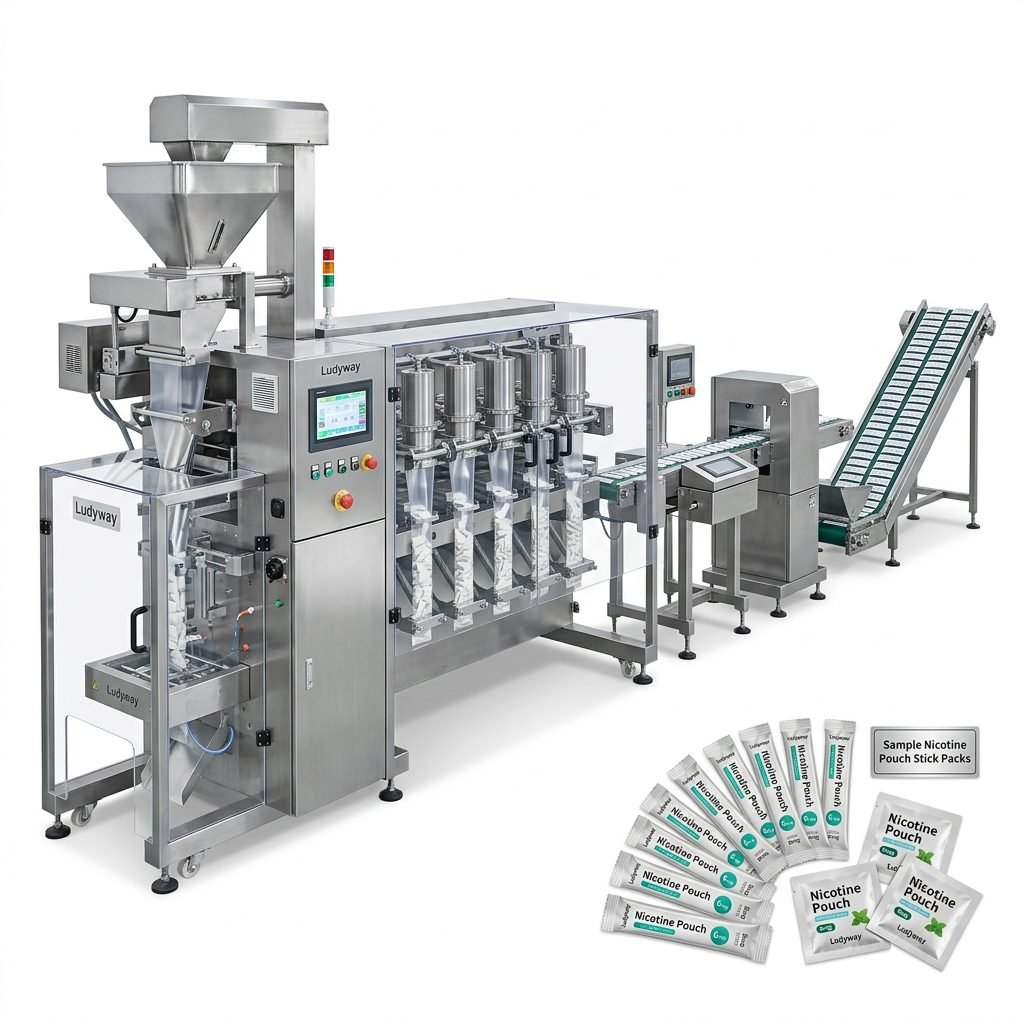
Multi-Lane Pouch & Stick Pack Lines
Ultra-fast precision pouch forming, filling, and sealing machinery for pharma and oral portion products.
View Specifications →Engineering Autonomous Solutions for Global Industry
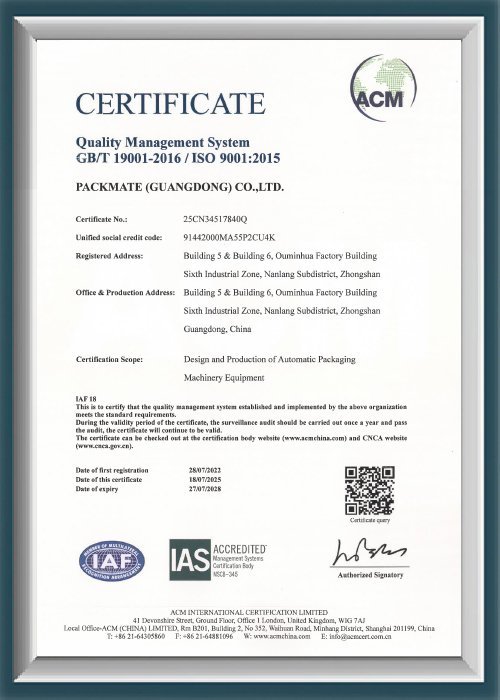
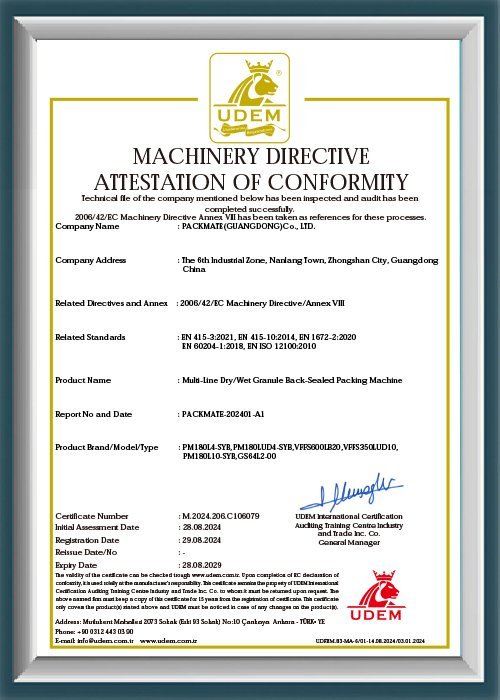
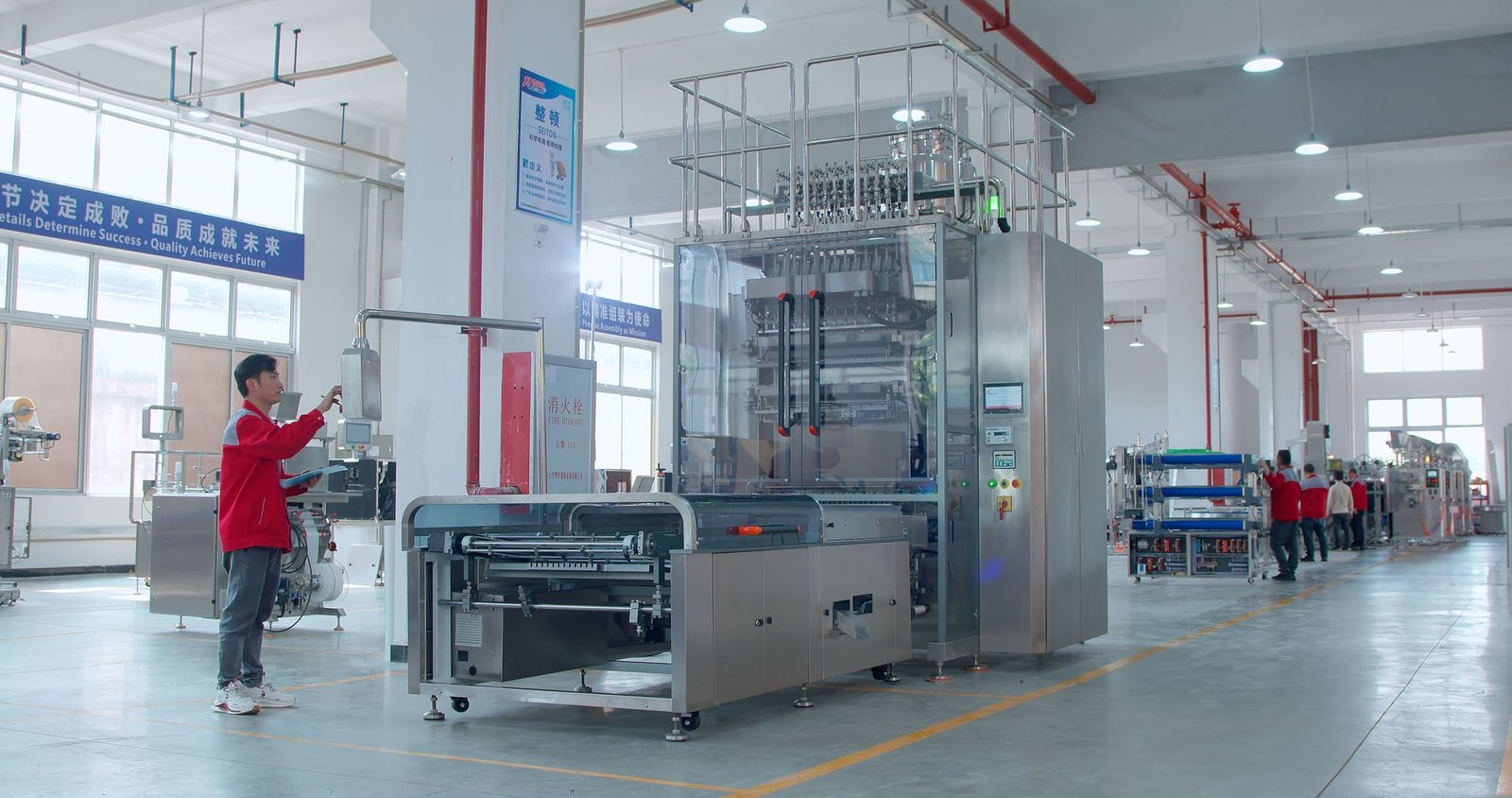
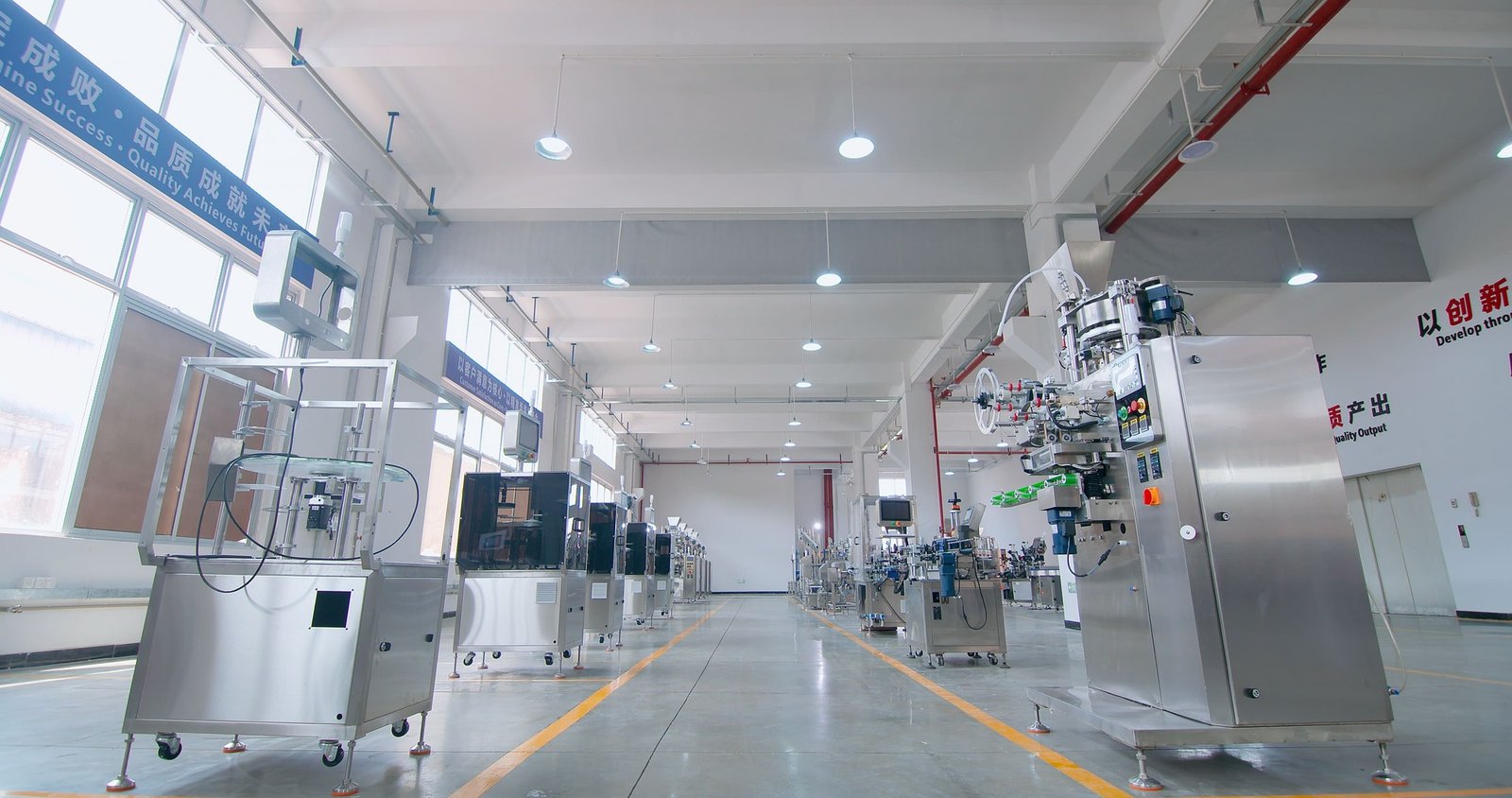
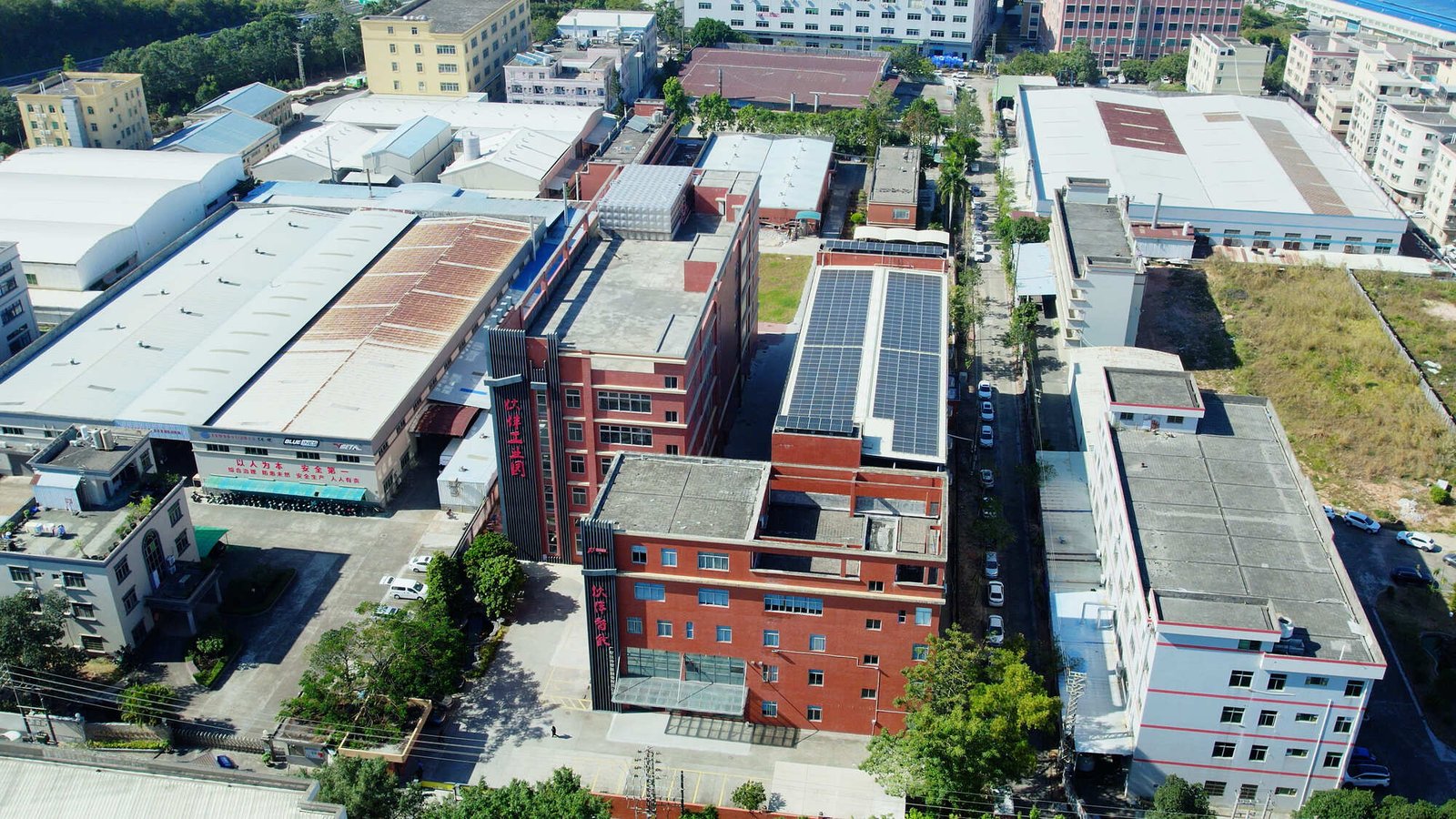
Founded in 2010 and built upon over 30 years of deep industry expertise, Ludyway is recognized as one of China’s premier packaging machine manufacturers. Operating from a modern 20,000㎡ manufacturing facility equipped with over 200 precision manufacturing units and 130+ packaging engineers, we specialize in high-speed, intelligent packaging systems.
Ludyway offers more than 50 intelligent packaging machine models, including multi-lane stick pack, sachet, and fully automated turnkey packaging systems for granule, powder, and liquid applications. Serving clients across 100+ countries and regions, we provide complete engineering delivery from initial CAD facility simulation to final robotic commissioning.


Roadmap to Transitioning Your Plant to Unmanned Packaging
A systematic four-phase engineering framework to convert traditional manual packaging lines into automated, high-yield lights-out operations.
Feasibility & Rheology Audit
Comprehensive evaluation of product flow characteristics, bulk density, packaging substrate tensile properties, and line throughput targets.
Turnkey Line Integration
Custom 3D layout engineering unifying multi-lane VFFS units, inline checkweighing, robotic carton erectors, and palletizing cells.
Digital SCADA/MES Interconnect
Connecting line PLCs to plant ERP and SCADA dashboards for autonomous recipe downloading, batch tracking, and predictive alarms.
Validation & Lights-Out Trial
Continuous 72-hour validation runs verifying auto-splice reliability, zero-contact CIP cycles, and sub-0.1% reject margin targets.
Unmanned Packaging Production: Engineering FAQs
Key technical and operational questions answered for manufacturing directors evaluating autonomous packaging investments.
What happens when a roll of packaging film runs out in an unmanned setup?
Modern unmanned packaging machines employ dual-spindle unwind stations with continuous flying auto-splicers. Sensors detect end-of-reel conditions and thermally splice the new reel at operating speed without halting the line.
Can unmanned machines handle variable viscosity or fluctuating powder densities?
Yes. Closed-loop gravimetric feedback systems integrate dynamic checkweighers with servo dosing augers and pumps, automatically adjusting volumetric strokes in fractions of a second to maintain exact net weight.
How is secondary packaging (cartoning and boxing) automated?
Delta and SCARA pick-and-place robots equipped with custom vacuum grippers collate sachets and stick packs, loading them directly into automatically erected cartons which are then taped, labeled, and routed to palletizers.
What is the typical ROI period for a fully automated turnkey packaging line?
Depending on local labor rates, shift counts (e.g., 2-shift or 3-shift operations), and product giveaway reductions, most enterprise manufacturers realize full capital payback within 11 to 18 months.
Ready to Build Your Autonomous Packaging Facility?
Partner with Ludyway to design, engineer, and deploy turnkey unmanned packaging lines tailored specifically to your product formulations, cleanroom standards, and throughput requirements.
