
Are Packaging Machines Energy Efficient? The Engineering & ROI Reality
As industrial power tariffs surge and carbon neutrality mandates tighten across international markets, factory managers face a crucial question: Are modern packaging machines truly energy efficient? Explore this technical deep-dive into multi-axis servo architectures, intelligent thermal sealing, regenerative power sharing, and total cost of ownership (TCO) benchmarks.
The Shift from Pneumatic Overhead to Digital Motion Control
Traditional mechanical packaging lines relied heavily on continuous pneumatic circuits, induction motors running at peak loads, and crude resistance heaters. Today, the fundamental answer to whether packaging machines are energy efficient is yes—when engineered with multi-axis synchronous servo architecture and dynamic energy management.
Legacy Packaging Machinery (Pre-2015)
Legacy systems waste between 35% to 55% of their total electrical input as parasitic losses. The majority of this waste originates from centralized pneumatic compression (pneumatic cylinders operating at 6-8 Bar with inherent air leaks), constant-speed AC induction motors that draw full power during idle standby, and uninsulated heating jaws dissipating uncontrolled thermal energy into factory ambient air.
Furthermore, mechanical cam indexing causes excessive frictional wear and mechanical inertia, generating severe peak-current surges during acceleration phases.
Next-Gen Smart Packaging Machines
Modern high-speed packaging machinery from industry leaders like Ludyway utilizes direct-drive permanent magnet synchronous servo motors (PMSM). By replacing high-pressure pneumatic stroke actuators with closed-loop digital servos, overall power efficiency improves by over 40% to 65% per finished pack.
Advanced digital control incorporates shared DC bus regenerative braking, pulse-width modulated (PWM) ceramic heaters with PID micro-tuning, and intelligent sleep modes during hopper refills or line bottlenecks.
| Performance Metric | Conventional Pneumatic / Mechanical | Next-Gen Multi-Axis Servo System | Net Efficiency Impact |
|---|---|---|---|
| Primary Drive Mechanism | Central AC Motor + Mechanical Cam & Pneumatics | Independent Synchronous Servo Motors (Multi-Axis) | -45% Power Draw |
| Compressed Air Consumption | High Continuous Flow (0.6 – 1.2 m³/min) | Zero or Minimal Auxiliary (0.05 – 0.1 m³/min) | -80% Pneumatic Cost |
| Sealing & Thermal Dosing | Constant-on Resistance Cartridges | PID Fast-Response Ceramic / Ultrasonic Sealing | -35% Thermal Loss |
| Standby Idle Consumption | 60% – 75% of Peak Operating Load | < 8% via Deep Sleep Standby Profiles | -85% Idle Waste |
| Kinetic Energy Recovery | Dissipated as Heat via Resistors | Shared DC-Bus Regenerative Power Loop | +18% Energy Recycling |
5 Core Technologies Making Modern Packaging Machines Energy Efficient
Energy optimization is not achieved through a single component; it requires an integrated engineering architecture encompassing motion dynamics, thermal physics, power conversion, and smart operational algorithms.
1. Direct-Drive Synchronous Servos
By eliminating gearboxes, transmission belts, and mechanical linkages, direct-drive PMSM servo systems cut mechanical transmission losses by up to 92%. Torque is applied directly to sealing jaws and film pull-down rollers with near-zero back electromotive losses.
2. Shared DC-Bus Power Regeneration
When high-speed film feed carriages and indexing servos decelerate, their kinetic energy is converted into electrical energy. Instead of burning this power across dump resistors, shared DC-bus architecture routes recovered wattage directly to accelerating axes.
3. Adaptive PID Thermal Precision
Advanced thermocouple sensors coupled with intelligent PID algorithms maintain sealing jaw temperatures within ±0.5°C tolerances. This prevents energy overshooting, protects delicate bio-polymer films, and slashes continuous heating consumption by 30%.
4. Pneumatic-to-Electric Elimination
Generating compressed air is exceptionally inefficient; roughly 80-90% of electrical energy into a compressor is lost as waste heat. Replacing pneumatic cylinders with all-electric linear thrusters delivers an instant 5x to 8x boost in net energy efficiency per mechanical stroke.
5. AIoT Load Sensing & Standby Logic
Equipped with intelligent PLC telemetry, machines automatically transition through staged idle modes (Sleep, Deep-Standby, Eco-Ramp) when upstream feed hoppers run low. Sealing jaws drop to holding temperatures, and servo holding current throttles down instantly.
Ultrasonic Cold Sealing Upgrades
For heat-sensitive items in the food and pharmaceutical sectors, ultrasonic sealing utilizes high-frequency acoustic vibrations only during microseconds of contact, eliminating preheating times and continuous radiative losses.
Energy Efficiency Across Machine Types: Powders, Granules & Liquids
Different product viscosities, powder bulk densities, and pack formats demand distinct filling physics. See how modern design balances throughput speed against kilowatt consumption across primary industrial formats.
Multi-Lane Stick Pack & Sachet
Multi-lane machinery achieves maximum electrical efficiency by distributing the motion overhead of 4 to 12 lanes across shared servo backbones, multiplying output per kWh.
Auger Powder Packaging
Brushless servo augers provide micro-dosing precision for pharmaceutical and nutraceutical powders, applying torque only during exact dosing revolutions.
Liquid & Paste Piston Filling
Valveless ceramic rotary pumps and servo-driven positive displacement systems eliminate hydraulic power packs, preventing severe fluid heating and fluid churn waste.
Secondary Cartoning & Bundling
Continuous rotary carton erection and intelligent servo collation replace reciprocating arms, keeping linear momentum high and motor thermal stress low.
High-Efficiency Packaging Machinery Lineup
Explore Ludyway’s premium packaging platforms built with low-inertia servo drivetrains, intelligent temperature zoning, and ultra-low air consumption standards.
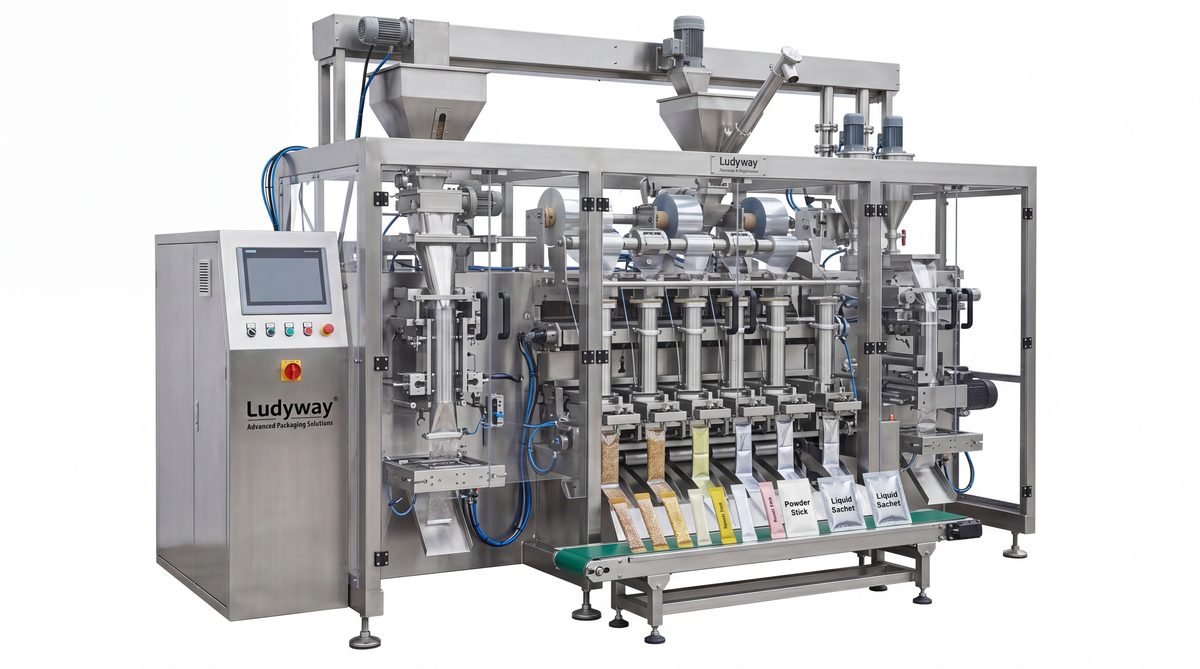
Multi-Lane Stick Pack & Sachet Packaging Machine for Granule, Powder, Liquid
View Machine Spec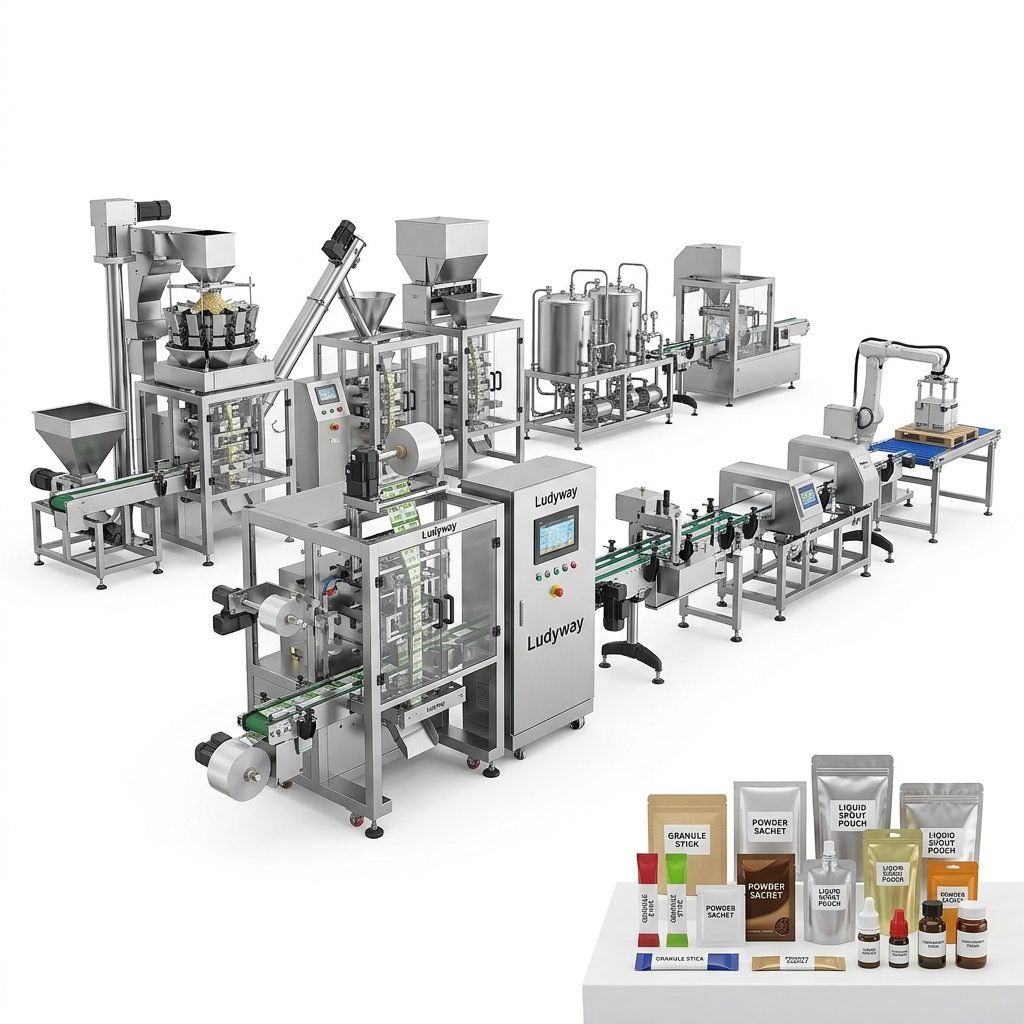
Automated Smart Factory Packaging Lines for Granules, Powder, Liquids & Pouches
View Machine Spec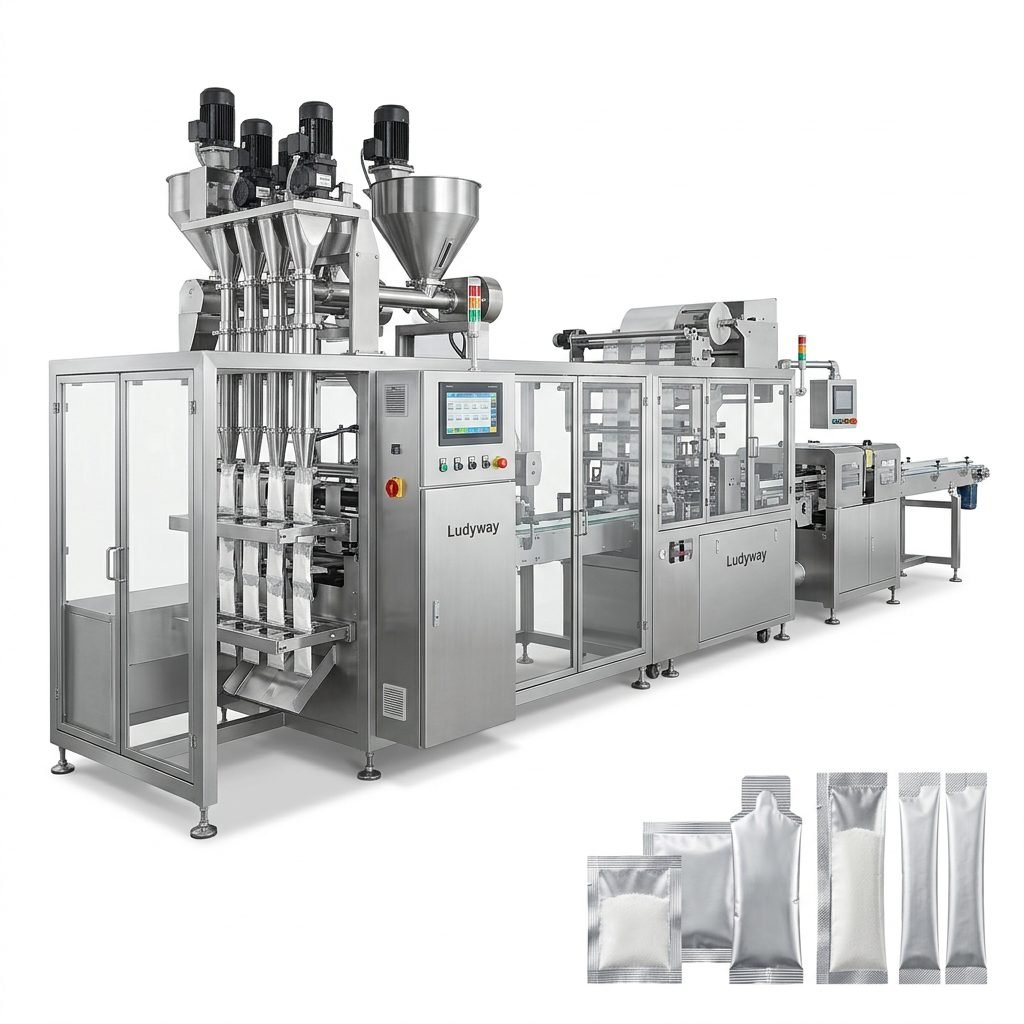
Fully Automatic Powder Packaging Lines for Food & Pharma, High-Speed Multi-Lane Systems
View Machine Spec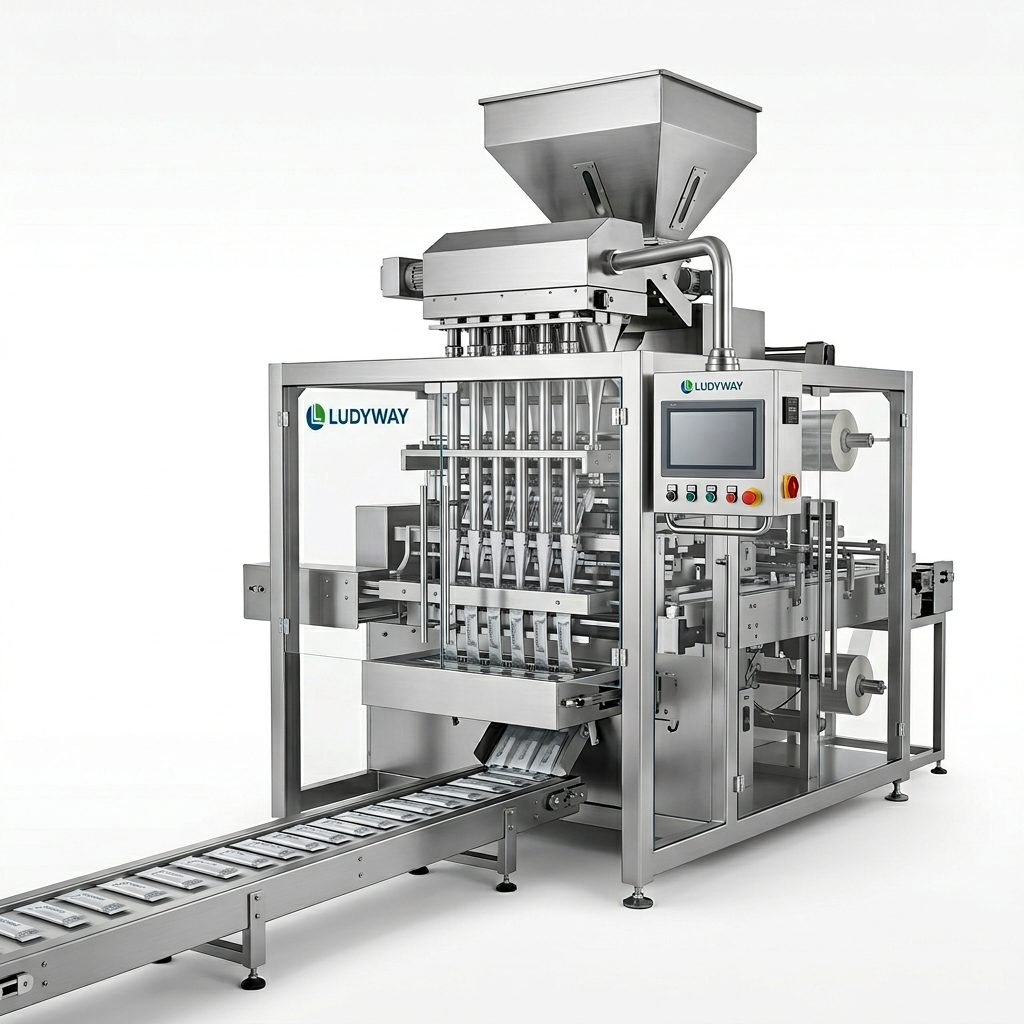
High-Speed Multi-Lane Powder Packaging System for Food and Pharma
View Machine Spec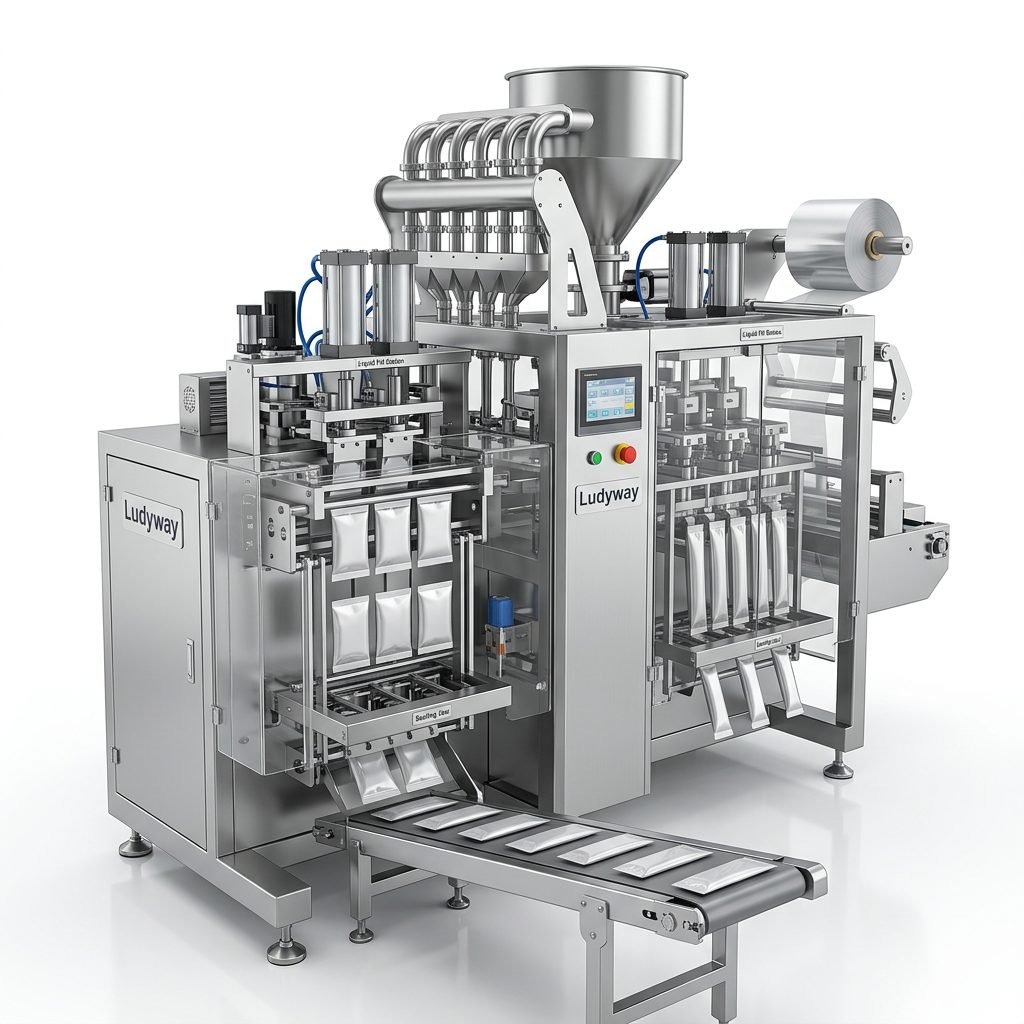
Liquid Packaging Machine for Food & Pharma with Multi-Lane Sachet & Stick Pack Systems
View Machine Spec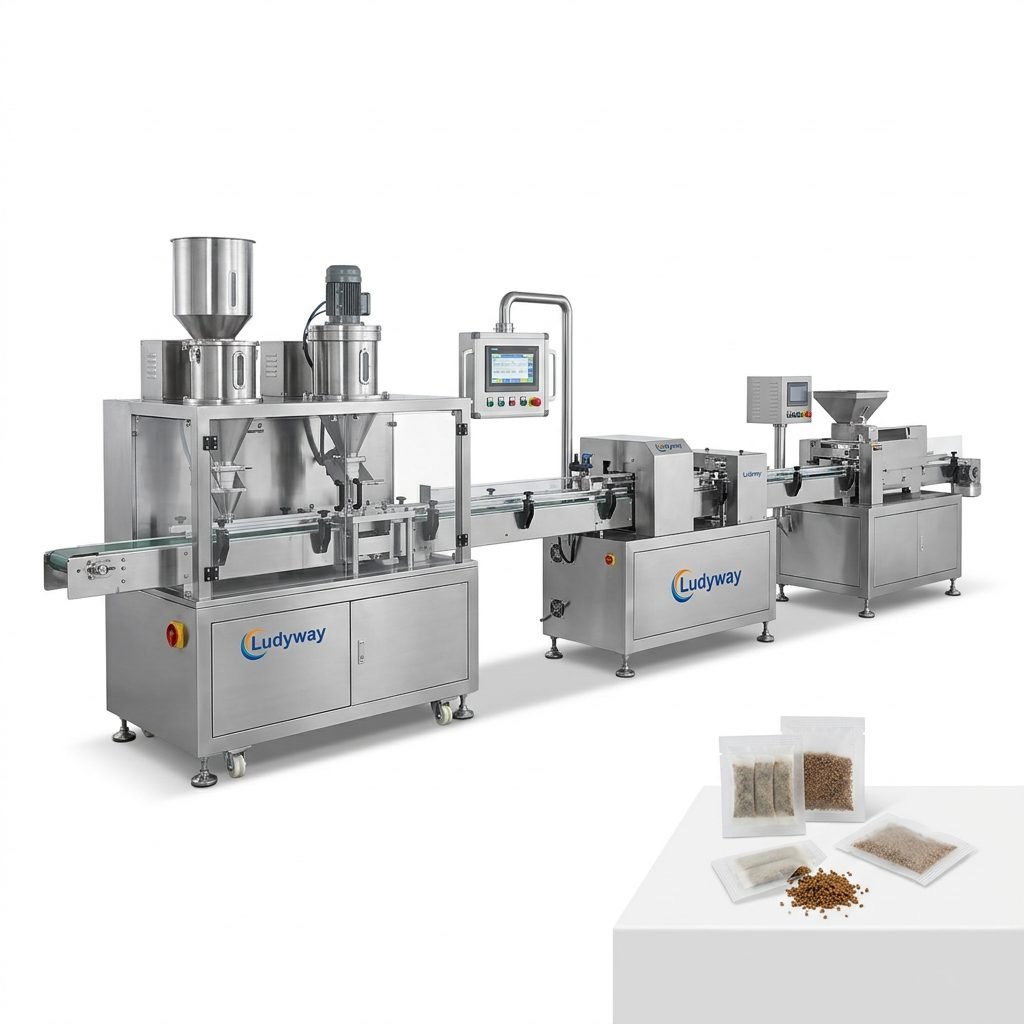
Turnkey Nicotine Packaging Lines for Pouches, Granules & Powders
View Machine Spec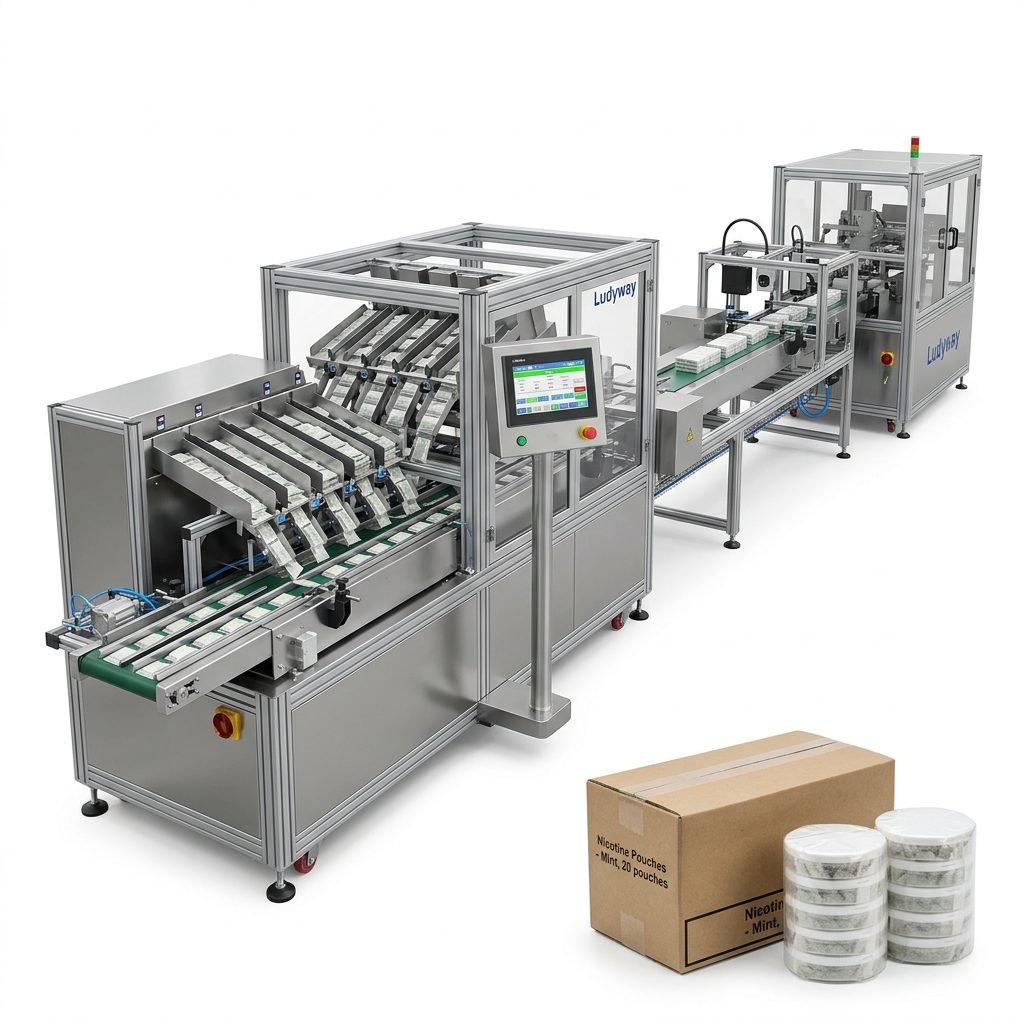
Automated Multi-Lane Nicotine Pouch Counting & Packaging Line for High-Speed Production
View Machine Spec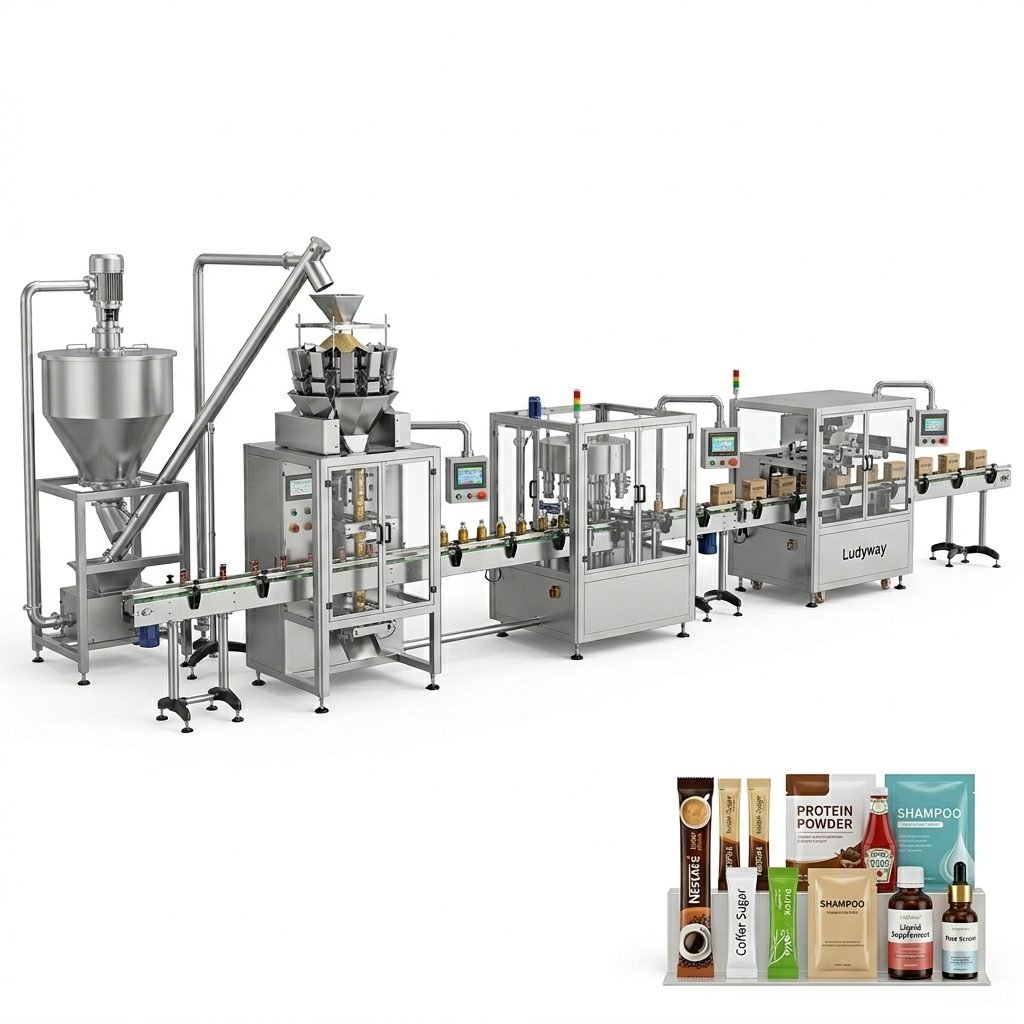
Complete Turnkey Packaging Solutions for Granule, Powder, and Liquid Products
View Machine SpecThe True Cost of Energy: ROI and Carbon Amortization
When calculating total equipment cost of ownership (TCO) over a 10-year lifespan, electricity and compressed air generation account for roughly 38% of total operating expenses—often exceeding the initial capital investment of the machine itself.
Industrial Case Example: 3-Shift High-Volume Sachet Line
Consider an operational food packaging plant running 6,000 hours per year with an electrical utility rate of $0.16 per kWh. Transitioning from an aging pneumatic mechanical sachet line (continuous 18 kW draw + 7.5 kW compressor allocation) to a Ludyway 6-Lane Synchronous Servo System (average continuous 9.2 kW draw):
Annual Energy Reduction
97,800 kWh
Direct Utility Savings
$15,648 / yr
CO2 Emission Offset
69.4 Tons
Engineered by Ludyway Packaging Machinery
As one of China’s preeminent packaging machine manufacturers, Ludyway specializes in advanced automated packaging equipment and turnkey production line solutions. Backed by over 30 years of industry experience, we develop intelligent packaging machines configured to meet the rigorous energy efficiency and hygiene standards of global food, pharmaceutical, and health industries.
With more than 50 specialized models spanning multi-lane stick pack, sachet filling, and integrated smart-factory lines, Ludyway delivers robust hardware designed to minimize kilowatt consumption per packaged unit across 100+ countries.
Manufacturing Plant & Quality Systems
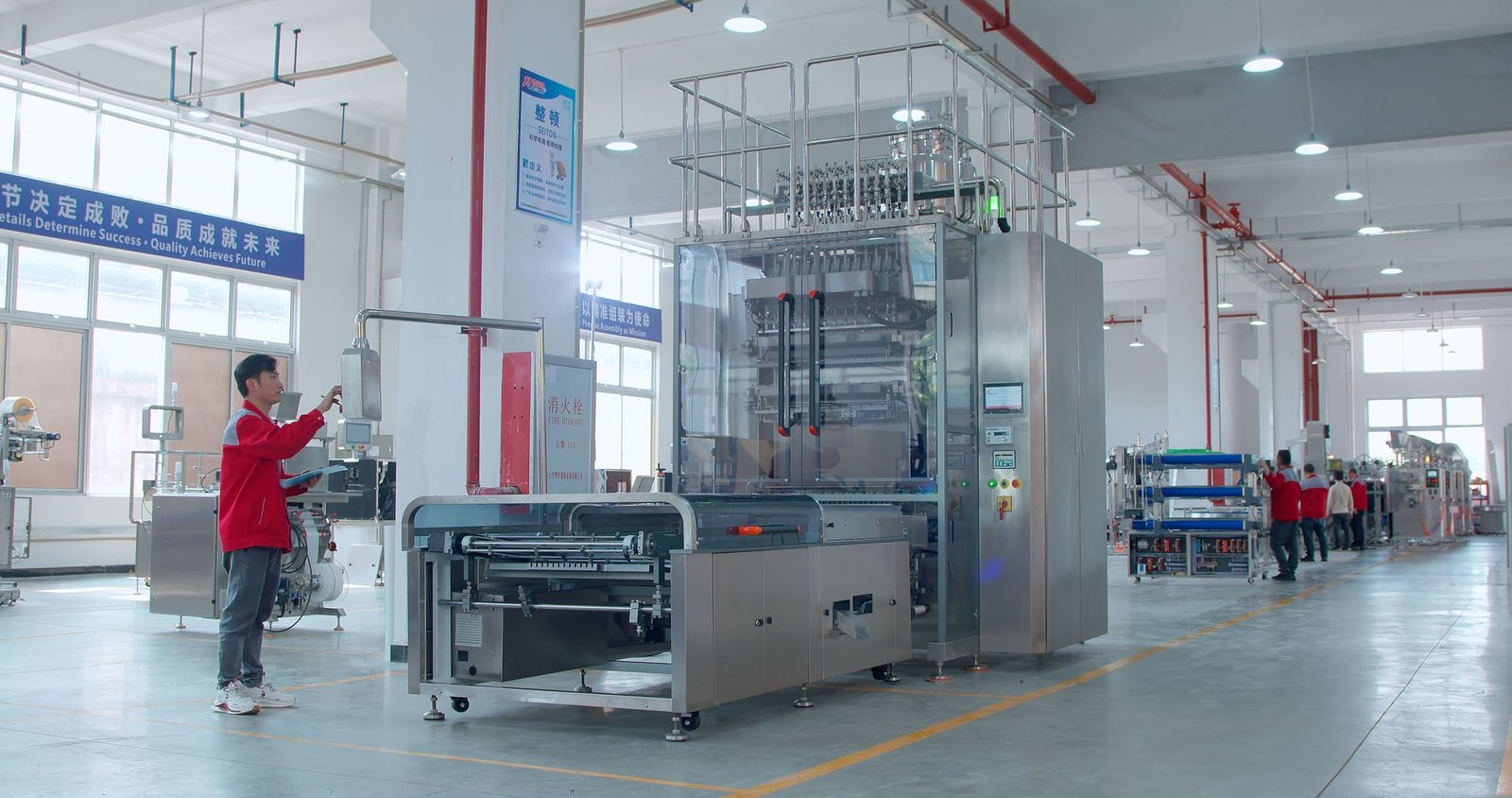
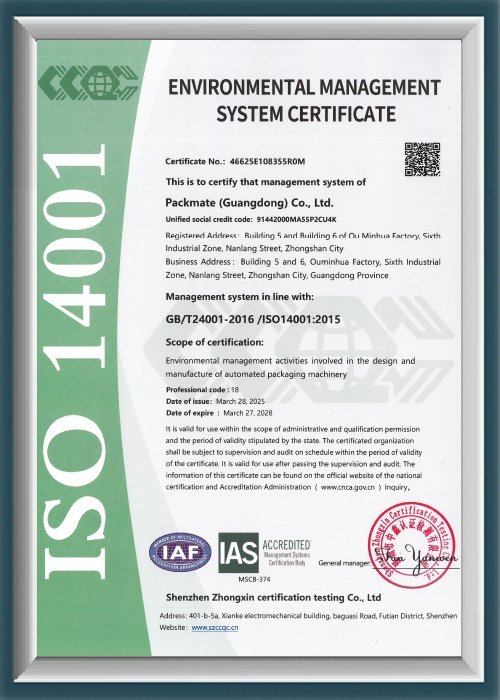
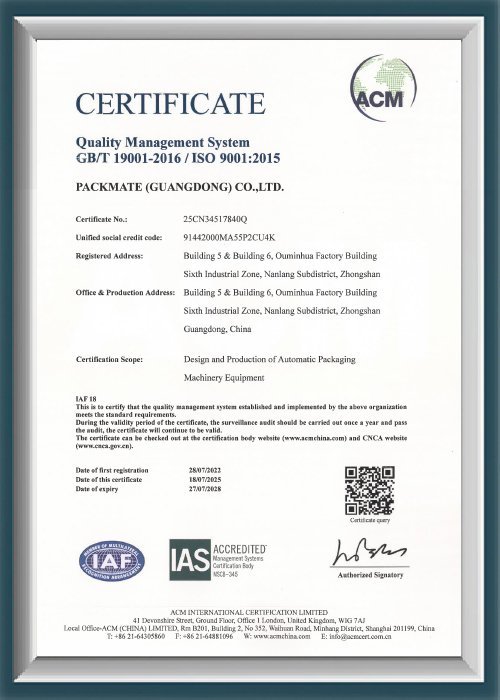
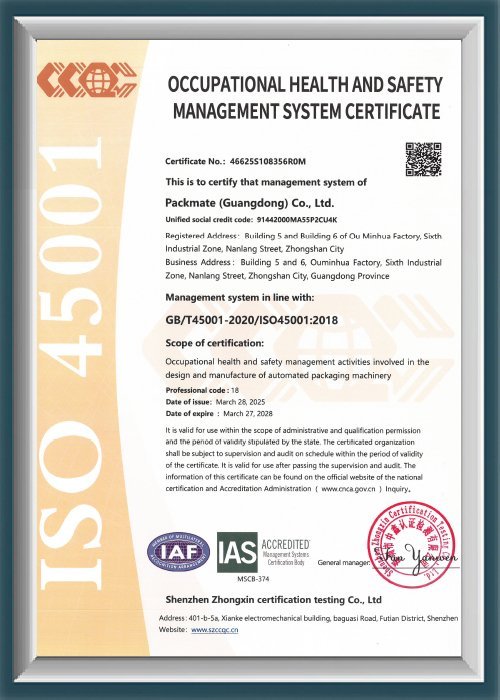
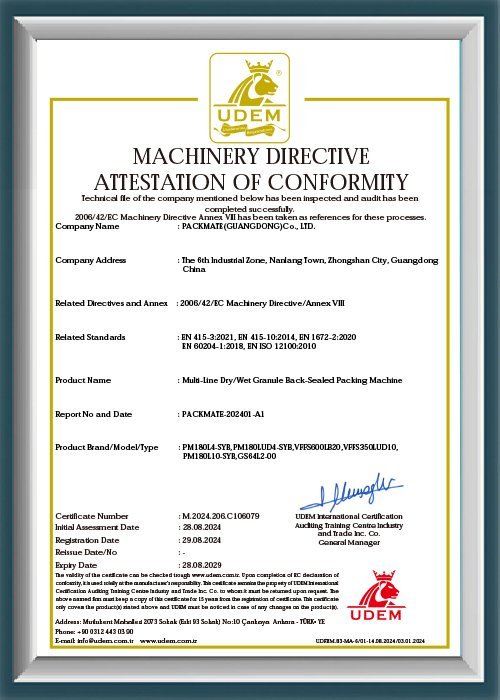
Our facility operates over 200 high-precision CNC units, automated component testing rigs, and full electrical load simulation benches ensuring every unit fulfills international CE, ISO, and energy performance benchmarks.
Certifications & International Standards
Trusted by Industry Leaders Worldwide




Technical Energy FAQs for Plant Engineers
Find answers to common engineering, regulatory, and electrical questions regarding packaging machinery energy optimization.
How much electricity does a typical automated packaging machine consume?
Power consumption varies by machine type, speed, and sealing mechanics. A standard single-lane VFFS machine typically consumes between 2.5 kW and 5.0 kW. In contrast, a high-speed 10-lane servo stick pack machine consumes between 8 kW and 14 kW while packaging 500+ units per minute. In multi-lane configurations, energy consumption per individual package is drastically reduced to fractions of a watt-hour.
Why is pneumatic elimination the biggest factor in packaging energy reduction?
Air compressors are thermodynamically inefficient converters of electricity, with typical conversion efficiency hovering around 10-15% after heat losses. Replacing pneumatic pistons with direct electric servo actuators eliminates cyclic pressure drops, pneumatic tubing leaks, and compressor cycling, cutting the system’s true electrical footprint by up to 80%.
Can older packaging lines be retrofitted for higher energy efficiency?
Yes. Plant operators can retrofit Variable Frequency Drives (VFDs) on continuous motors, replace analog thermostats with digital PID solid-state controllers, install regenerative braking modules on servo drivers, and insulate heating jaws. However, complete mechanical architecture replacement often yields a 2x higher efficiency gain and faster payback.
How does Ludyway ensure energy compliance for international export markets?
All Ludyway packaging machines are engineered in accordance with international CE directives, IE3/IE4 premium efficiency motor standards, and strict Low Voltage & Electromagnetic Compatibility (EMC) regulations. Detailed electrical schematics and kilowatt consumption ratings are provided with all FAT documentation.
Upgrade to High-Efficiency, Low-KWh Packaging Automation
Reduce your factory electricity overhead, eliminate pneumatic waste, and scale output with Ludyway’s next-generation multi-lane packaging machinery. Consult with our senior engineering team today for a custom power calculation and production line proposal.
