
Understanding Modern Biscuit Packaging System Architecture
Setting up a biscuit packaging line requires balancing extreme handling delicacy with high-speed automated throughput. Unlike resilient rigid goods or free-flowing granular substances, baked biscuits, cookies, crackers, and sandwich wafers are inherently fragile, abrasive, and sensitive to moisture, mechanical friction, and physical vibration.
An industrial biscuit packaging facility does not consist of a single standalone machine. Rather, it is a fully integrated, multi-stage cyber-physical production ecosystem that interfaces directly with oven discharge conveyors and seamlessly leads to the final palletizing station.
Crucial Metric for Line Designers: Biscuit packaging efficiency directly dictates bakery plant profitability. A minor 1.5% reduction in biscuit breakage (waste scrap) and a 4% increase in line synchronization can save mid-to-large bakeries hundreds of thousands of dollars annually in lost material, rework labor, and packaging film waste.
1. Primary Packaging Configuration
Primary packaging provides direct barrier protection against humidity, oxygen, and contamination. Depending on retail specifications, biscuits are packaged as slug packs (on-edge stacked biscuits), pile/stack packs (flat stacked groups in trays or directly wrapped), or individual portion flow packs. The central machine here is a high-speed Horizontal Form-Fill-Seal (HFFS) flow wrapper equipped with multi-axis servo synchronization.
2. Secondary & End-of-Line Systems
Once wrapped, flow packs are grouped into secondary multipacks or inserted into paperboard cartons via automated top-load or end-load continuous cartoning machines. The outer units are inspected, coded, collated into corrugated shipping cases via drop-packers or pick-and-place gantry loaders, sealed with hot-melt glue or pressure tape, and securely stacked by automated robotic palletizers.
5 Critical Steps to Building Your Biscuit Packaging Line
Executing a seamless line installation requires rigorous engineering preparation, clear mechanical sizing, and precise software protocol harmonization. Follow this proven 5-stage blueprint:
Audit Product Geometry, Fragility & Moisture Profiles
Before procuring any machinery, calculate your exact product tolerances. Measure biscuit diameter, thickness variation (stacking height variance), surface oil levels, and thermal parameters coming off the cooling tunnel. For example, biscuits entering the flow wrapper above 35°C can create interior condensation that degrades crispness and compromises seal integrity. Settle your target throughput: e.g., 600 pieces/minute or 120 flow packs/minute.
Design Factory Floor Layout & Infeed Conveyor Integration
Plan the physical spatial flow: Linear, U-shaped, or L-shaped configurations. Ensure adequate buffer accumulation between the cooling tunnel exit and the packaging feeder. An automatic vibratory accumulation channel or intelligent multi-lane conveyor allows the oven to continue running seamlessly during momentary packaging roll changeovers without causing upstream backlogs or product clumping.
Select Feeders, Smart Indexers & Primary Flow Wrapper
Choose the right feeding mechanism based on product shape: vibratory feeder channels for round and rectangular biscuits, star-wheel stackers for vertical on-edge slug packs, or delta-robot pick-and-place arms for delicate sandwich cookies. Pair these with an advanced servo-driven Horizontal Flow Wrapper (High-Speed Automatic Biscuit Packaging System) capable of rotary or box-motion hermetic end-sealing.
Integrate In-Line Quality Inspection & Rejection Gates
Food safety regulations require multi-tiered inspection. Place high-sensitivity multi-frequency metal detectors immediately after flow wrapping to detect any ferrous or non-ferrous contaminants. Implement a dynamic checkweigher to verify piece count and detect missing units, alongside high-resolution machine vision cameras to reject packages with flawed bar codes, crushed seals, or incomplete print stamps.
Execute Line Synchronization, Commissioning & FAT/SAT
Synchronize all machine PLCs using industrial Ethernet protocols (EtherCAT or Profinet). Conduct Factory Acceptance Testing (FAT) with actual production biscuits at full design speeds for at least 4-8 continuous hours. Once installed on-site, complete the Site Acceptance Testing (SAT), validate Emergency Stop (E-Stop) zones, calibrate temperature control loops, and train operators in recipe changeover management.
Packaging Line Automation Level Comparison
Review the operational metrics across different automation tiers to select the optimal setup for your factory’s production volume and capital expenditure budget:
| Automation Level | Primary Speed (Packs/Min) | Operators Required | Breakage Rate (%) | Changeover Time | Target ROI Period |
|---|---|---|---|---|---|
| Manual Feeding + Flow Wrapper | 40 – 70 ppm | 6 – 10 Operators | 2.5% – 4.0% | 45 – 60 mins | 18 – 24 Months |
| Semi-Automated Infeed Line | 80 – 160 ppm | 3 – 5 Operators | 1.0% – 1.8% | 25 – 40 mins | 12 – 18 Months |
| Fully Automated Servo Line (Ludyway) | 180 – 450+ ppm | 1 – 2 Operators | < 0.3% | 10 – 15 mins (Toolless) | 8 – 14 Months |
| Robotic Turnkey Multi-Format Line | 300 – 800+ ppm | 1 Supervisory Tech | < 0.15% | < 8 mins (Smart HMI) | 10 – 16 Months |
Core Machinery for Industrial Biscuit Lines
Select from our specialized line components designed for high-speed primary wrapping, smart cartoning, quality control, and end-of-line robotic stacking:
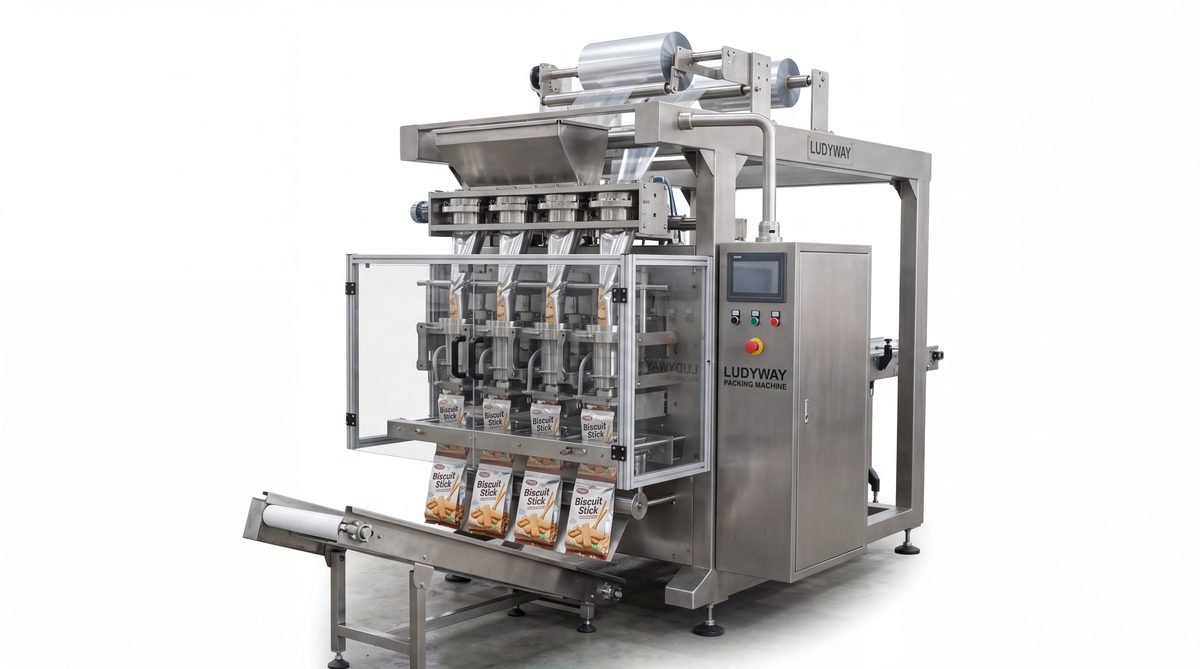
High-Speed Automatic Biscuit Packaging Machine
View Equipment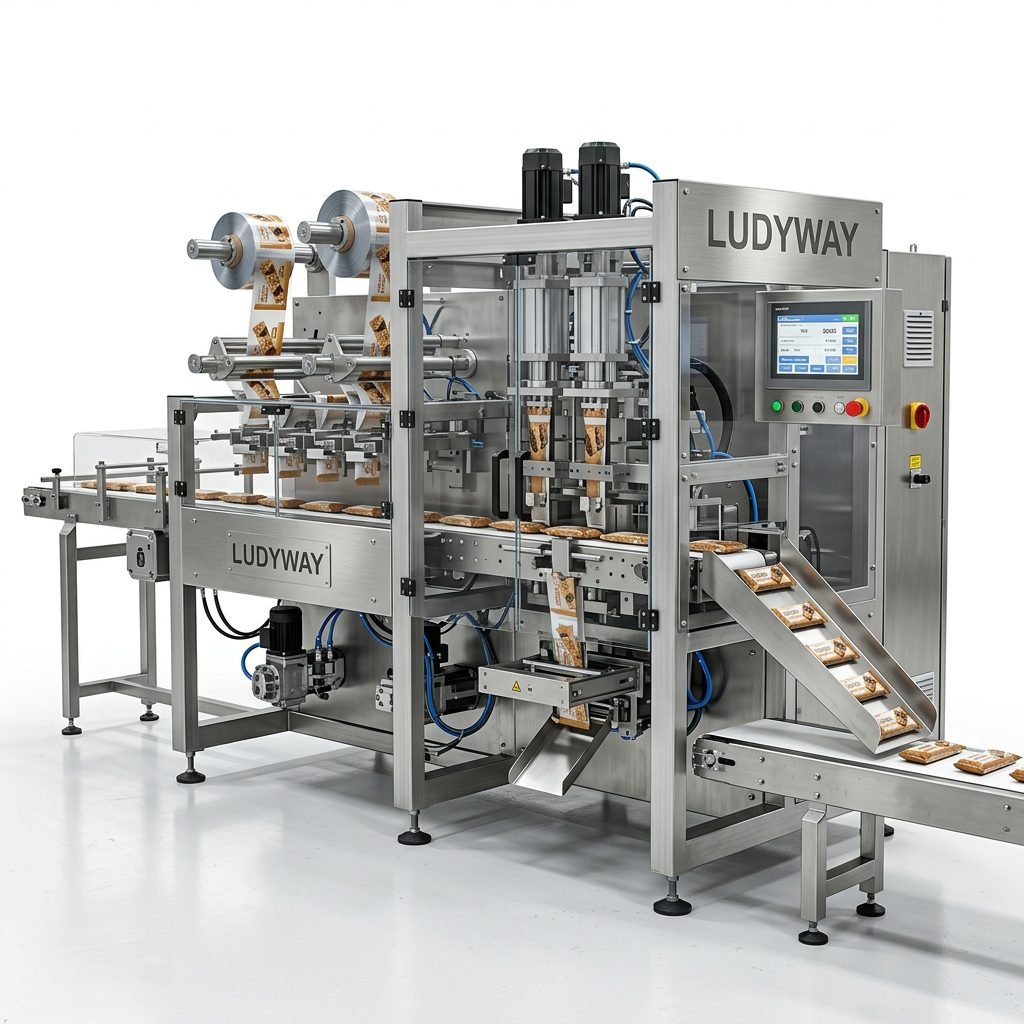
Multi-Lane Bakery Bar Packaging Machine
View Equipment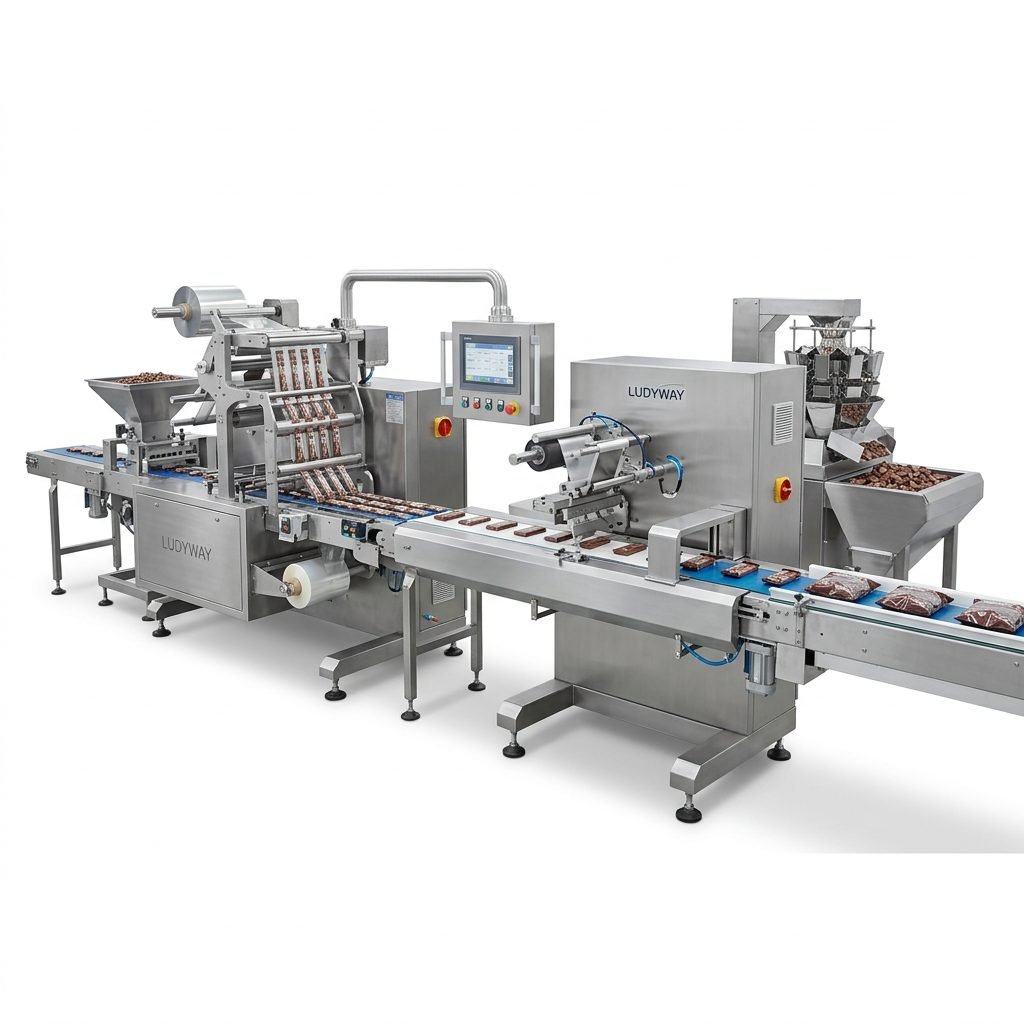
Automatic Wafer & Cookie Packaging Equipment
View Equipment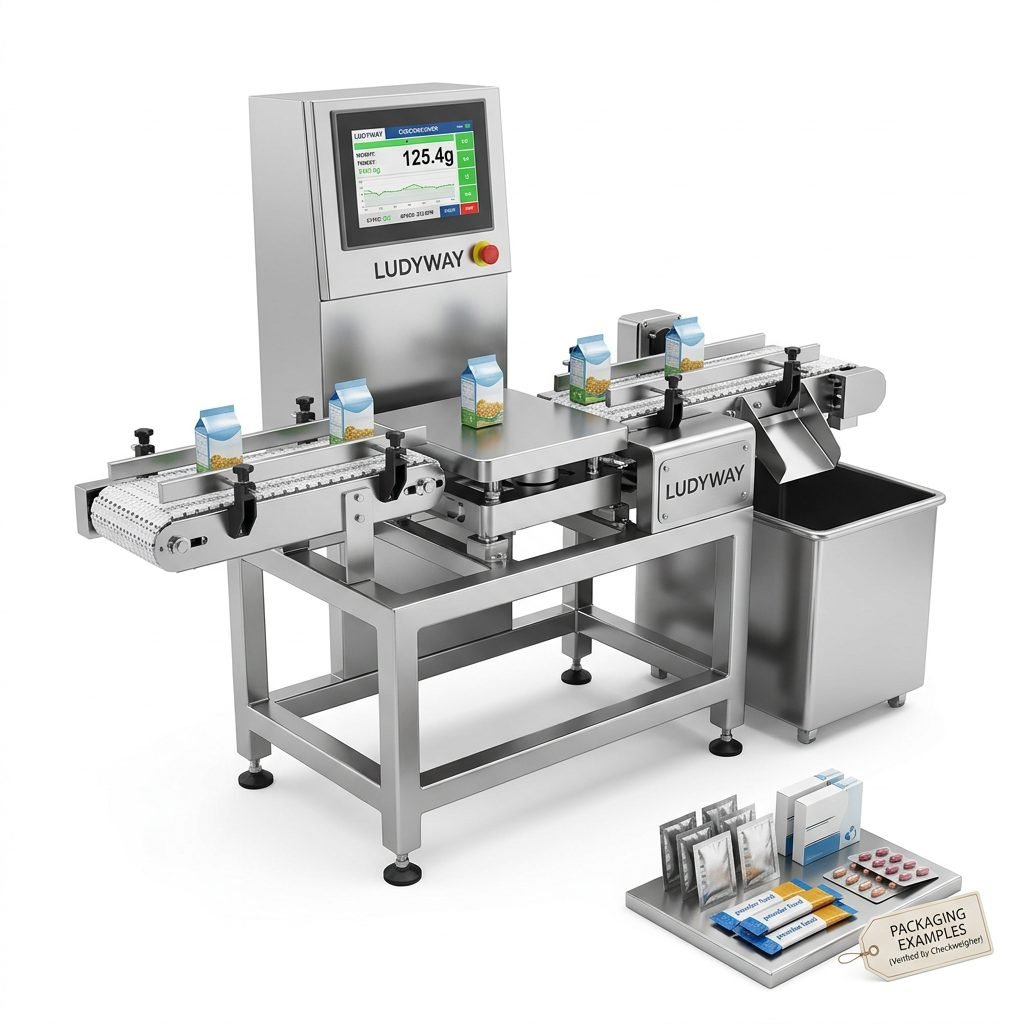
High-Precision In-Line Checkweigher System
View Equipment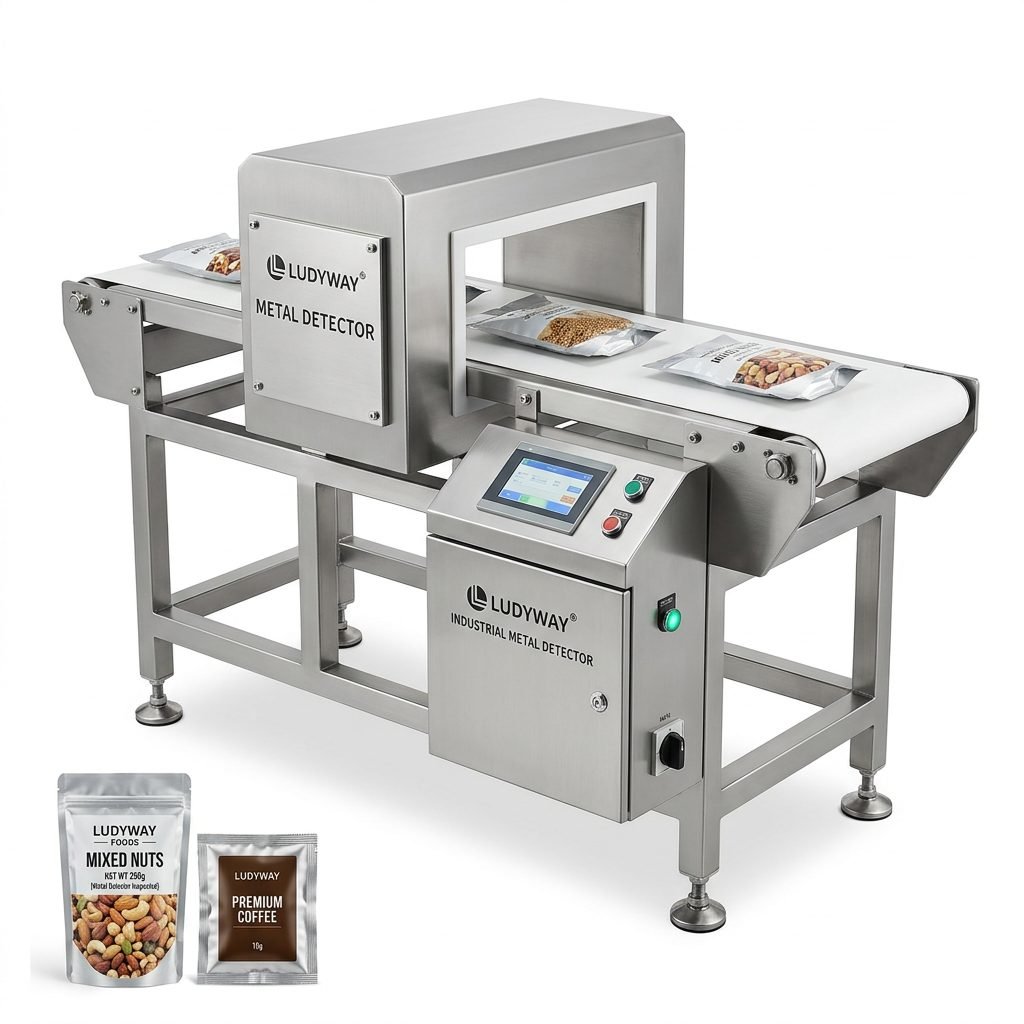
Industrial Food Processing Metal Detector
View Equipment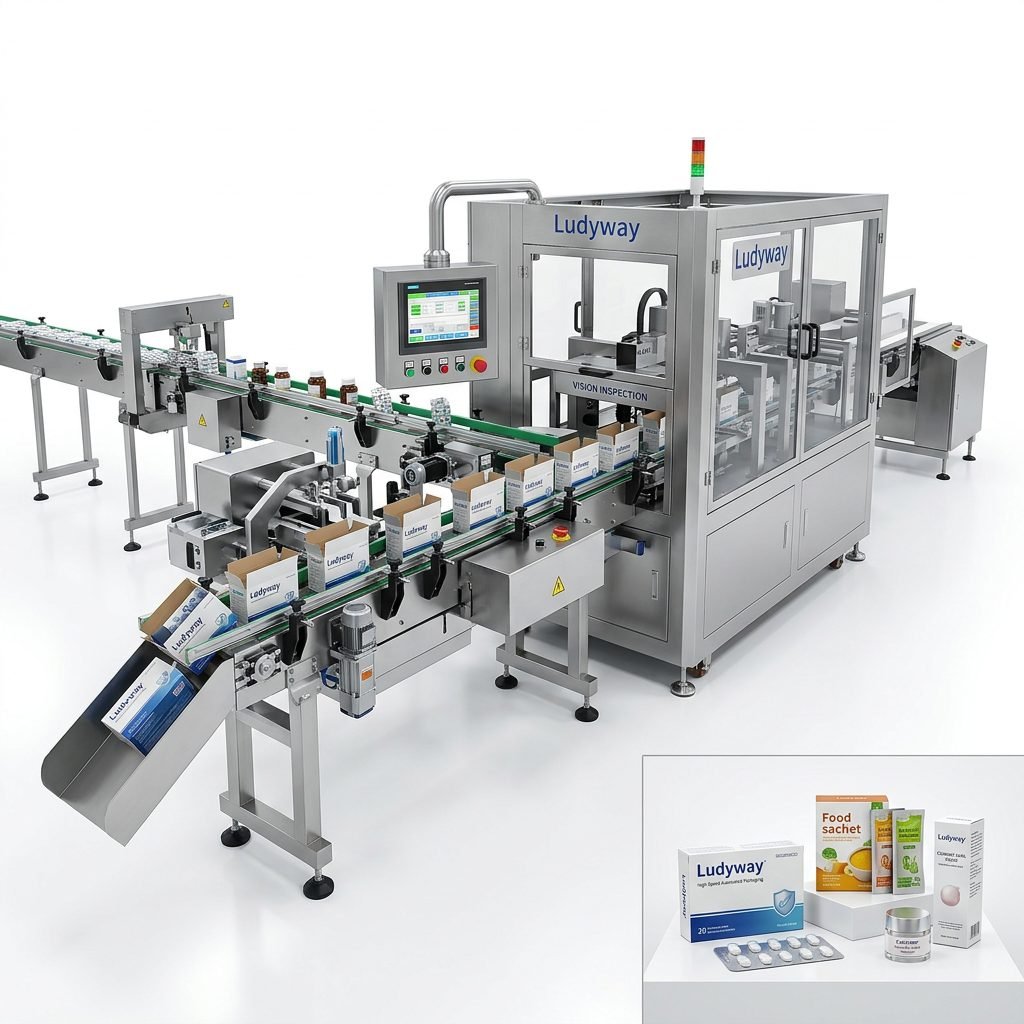
High-Speed Automated Biscuit Cartoning Line
View Equipment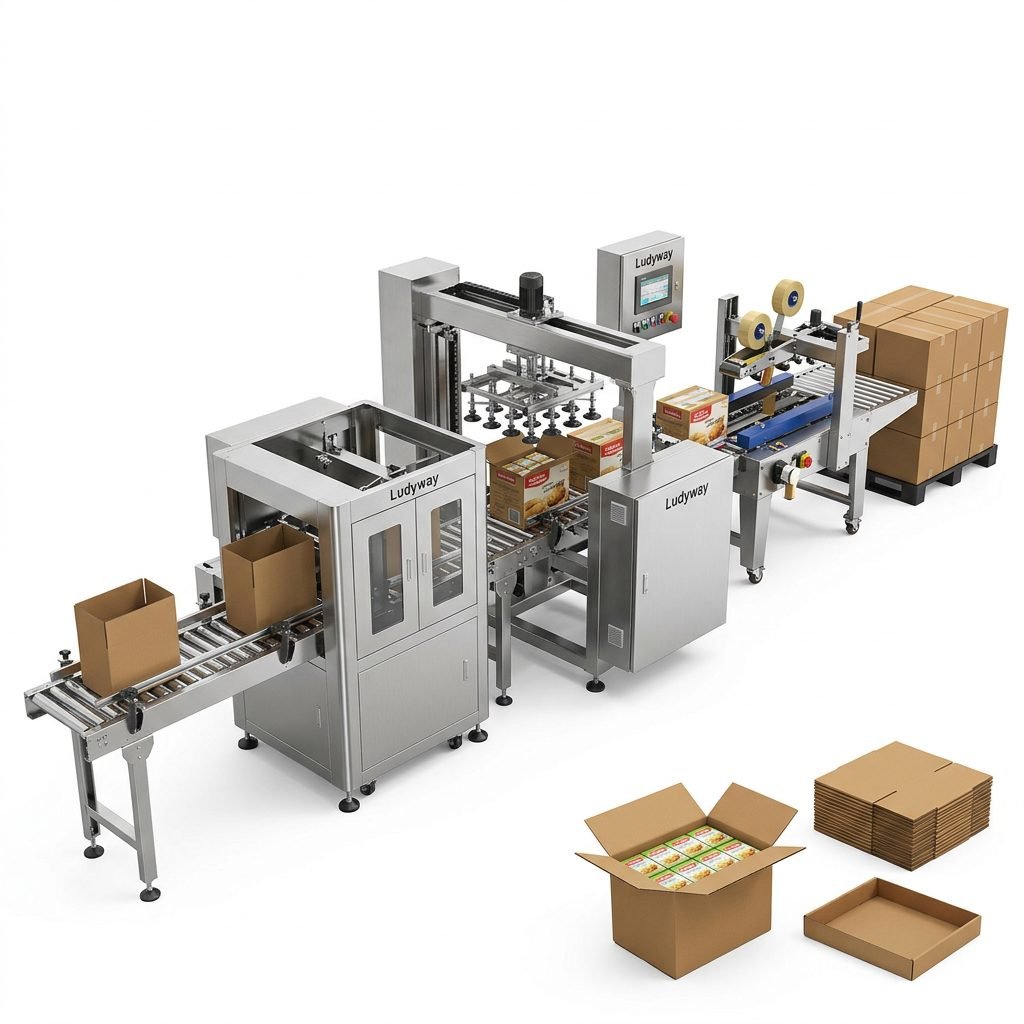
Automated Case Packing & Sealing System
View Equipment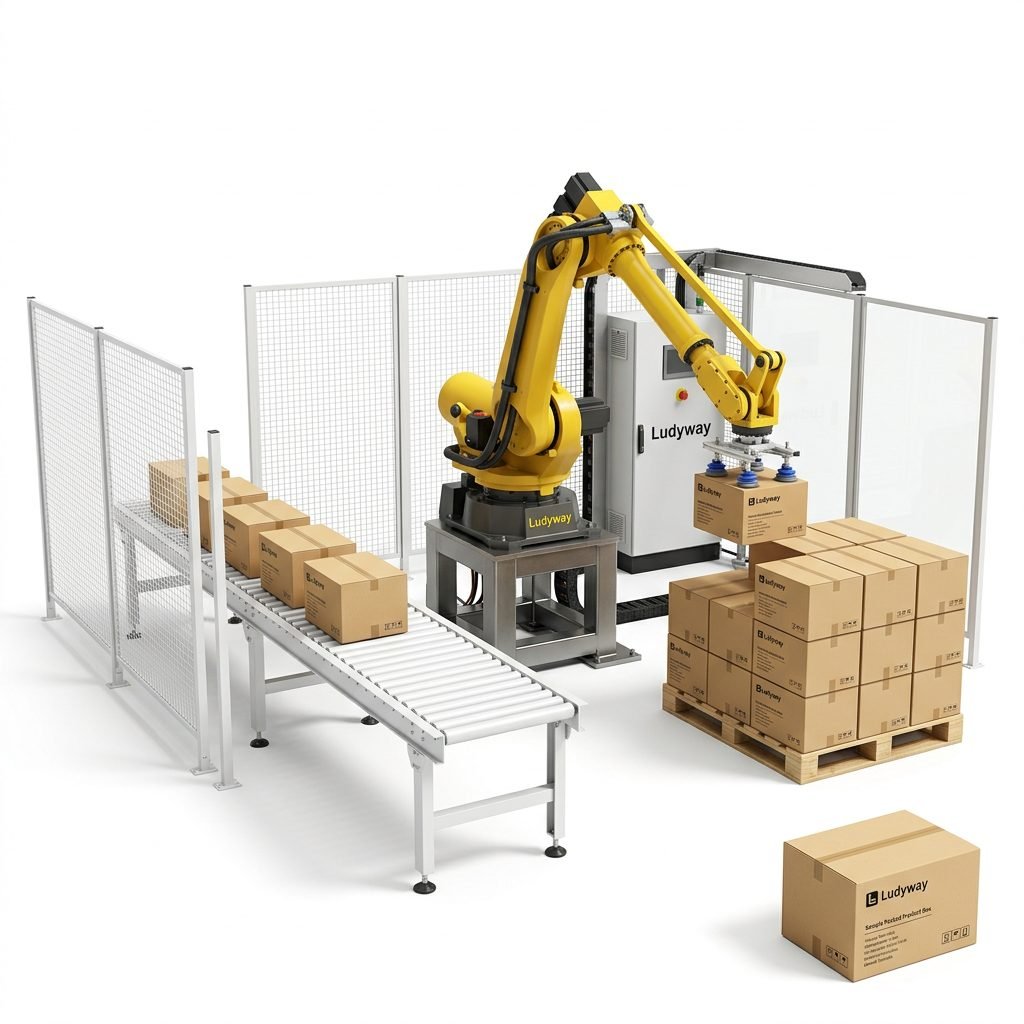
Robotic Palletizing System for End-of-Line
View EquipmentKey Engineering Factors to Maximize Biscuit Line OEE
High throughput is meaningless if your line suffers from frequent film jams, poor seal integrity, or high product breakage. Implement these industry-proven engineering standards:
1. Modified Atmosphere Packaging (MAP)
To maintain biscuit crispness and prevent oxidative rancidity of fats in butter biscuits, integrate a gas-flushing system. Replacing residual pouch oxygen with food-grade Nitrogen (N2) can extend commercial shelf life by 300% without chemical preservatives.
2. Servo-Driven Motion Profiling
Mechanical chain pushers create sudden impact forces that fracture delicate cookies. Modern systems utilize electronic servo drives with customized S-curve acceleration profiles that gently contact the biscuit stack, accelerating it smoothly into the forming box.
3. Rapid Toolless Changeover
Modern bakeries produce multiple SKUs daily. Ensure your folding boxes, guide rails, and magazine stackers feature quick-release levers and digital position readouts, enabling format changeovers in under 15 minutes without technician intervention.
Engineered by Ludyway Machinery
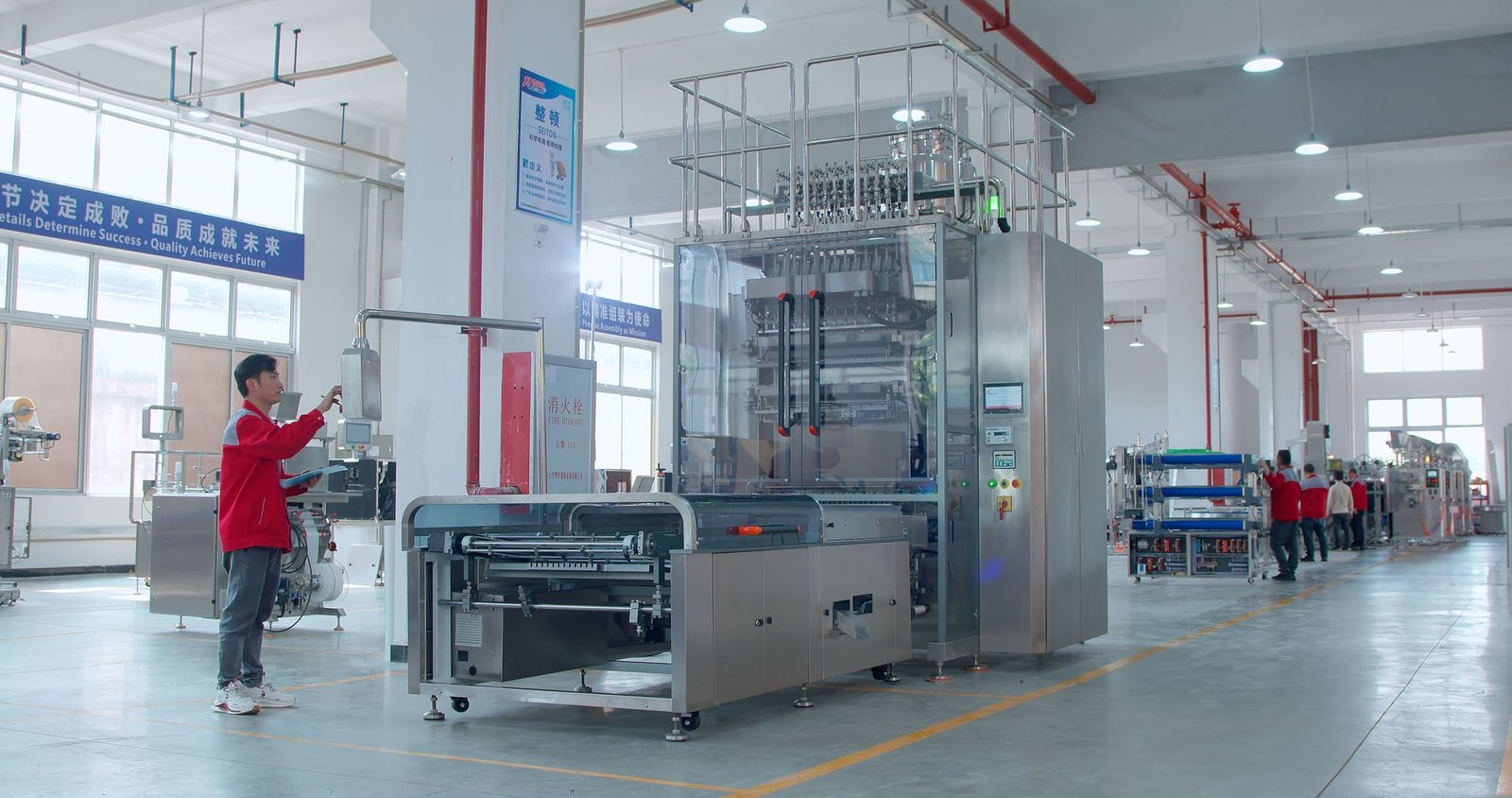
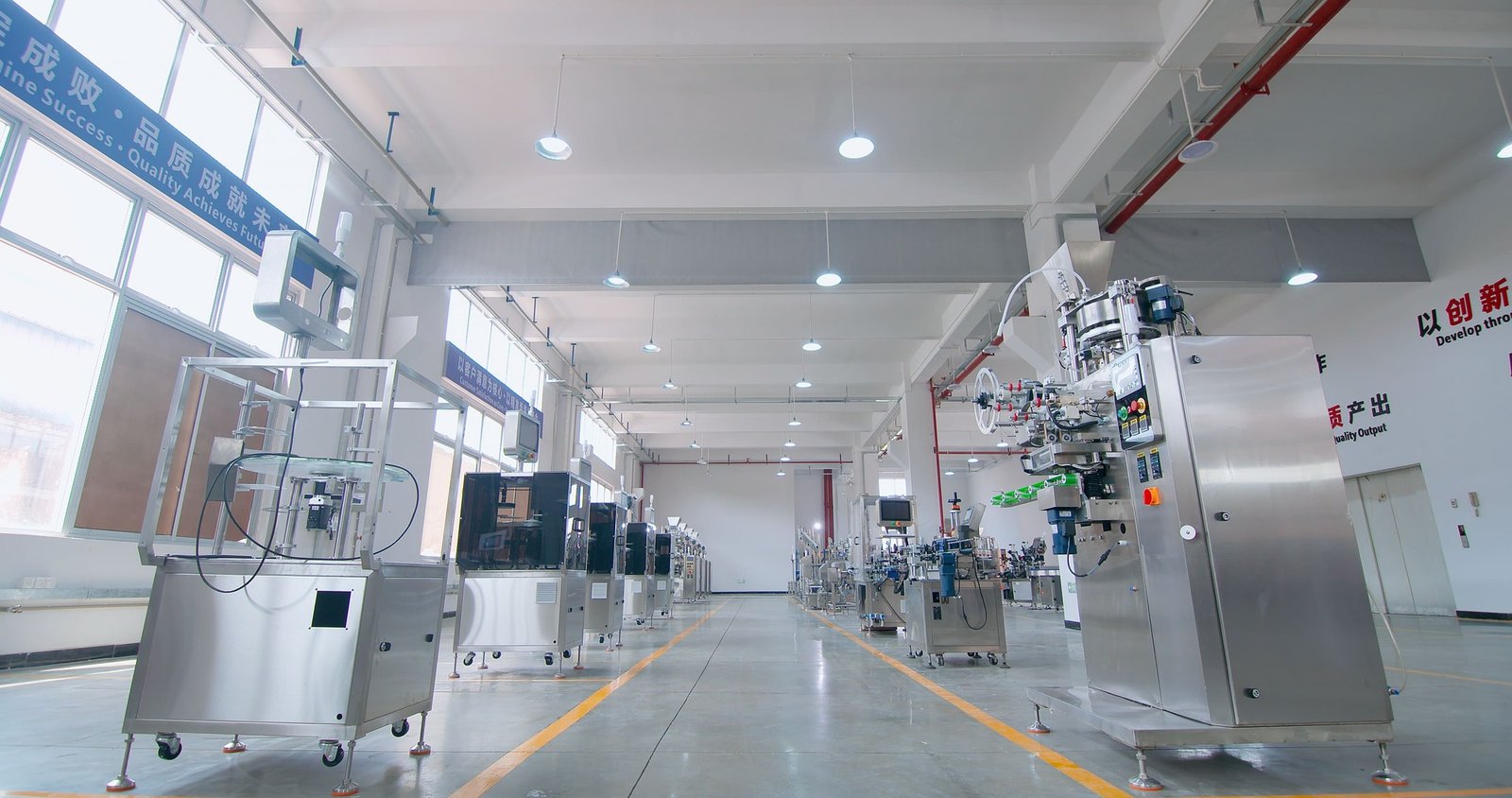
Ludyway is a premier packaging machinery manufacturer specializing in advanced automation equipment and turnkey production solutions for the food, pharmaceutical, and consumer goods industries. With over 30 years of manufacturing experience, our modern 20,000㎡ production facility houses over 200 precision manufacturing units and more than 130 packaging automation experts.
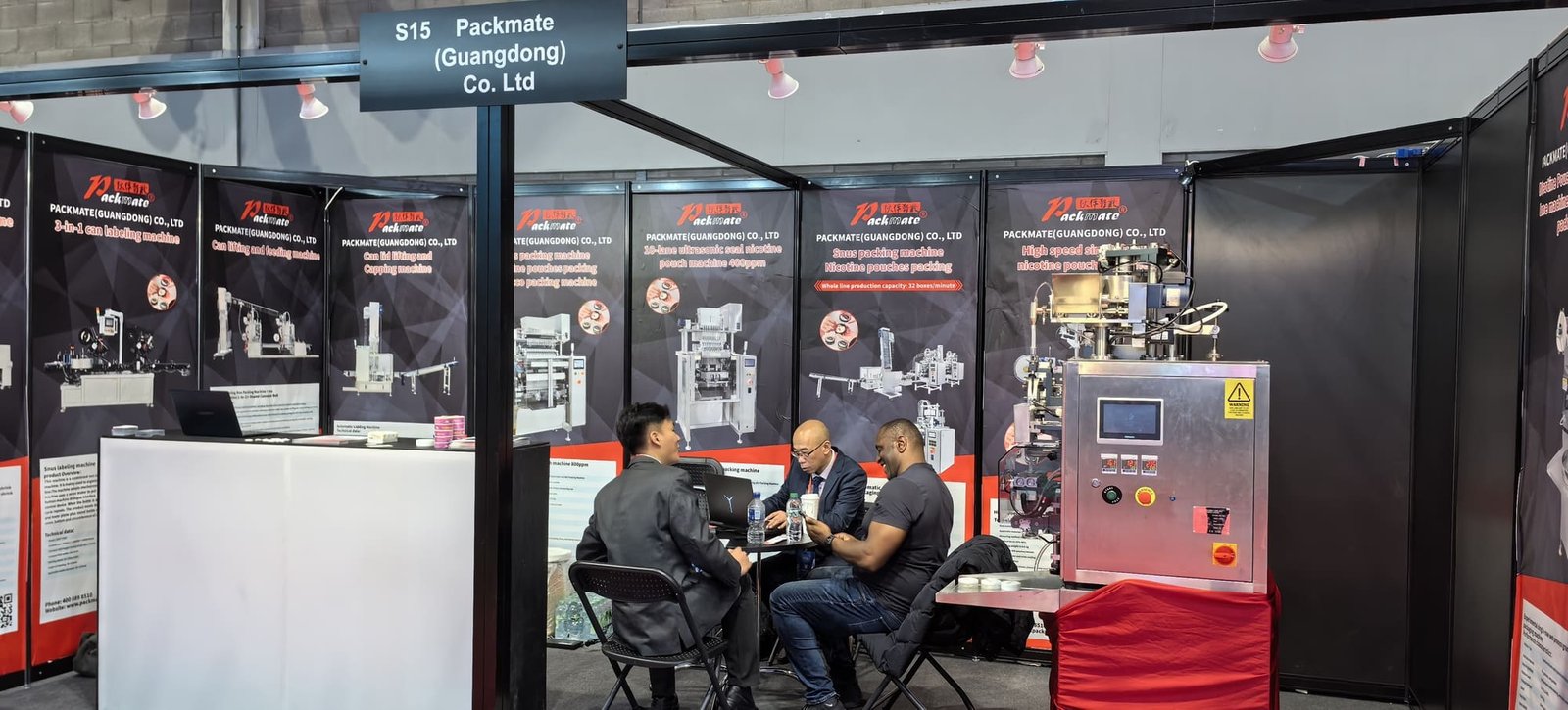
Serving industrial manufacturers across more than 100 countries, we deliver over 50 intelligent packaging models, turnkey line engineering, PLC synchronization, and global on-site commissioning services.
State-of-the-Art Factory & Workshop

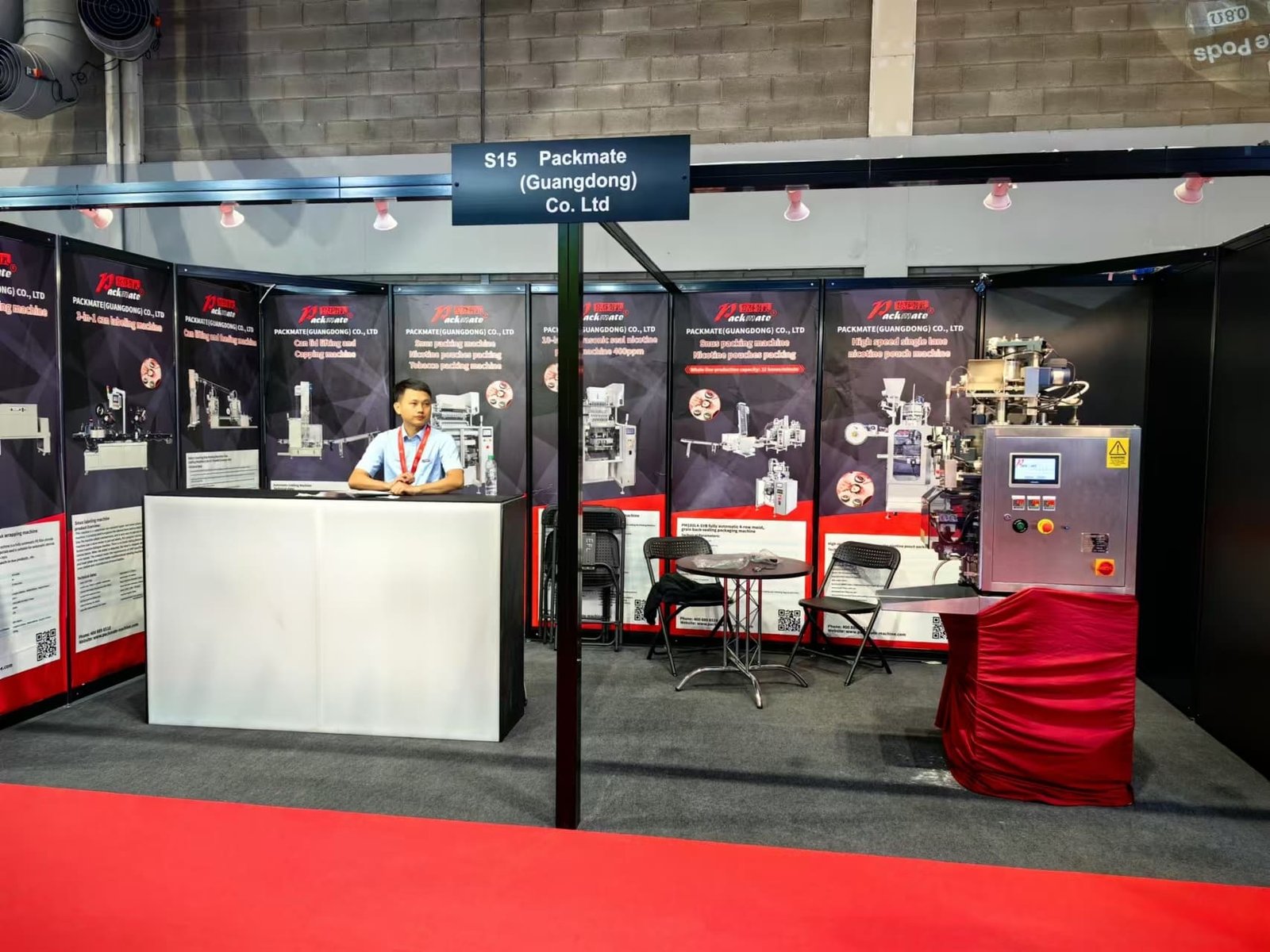
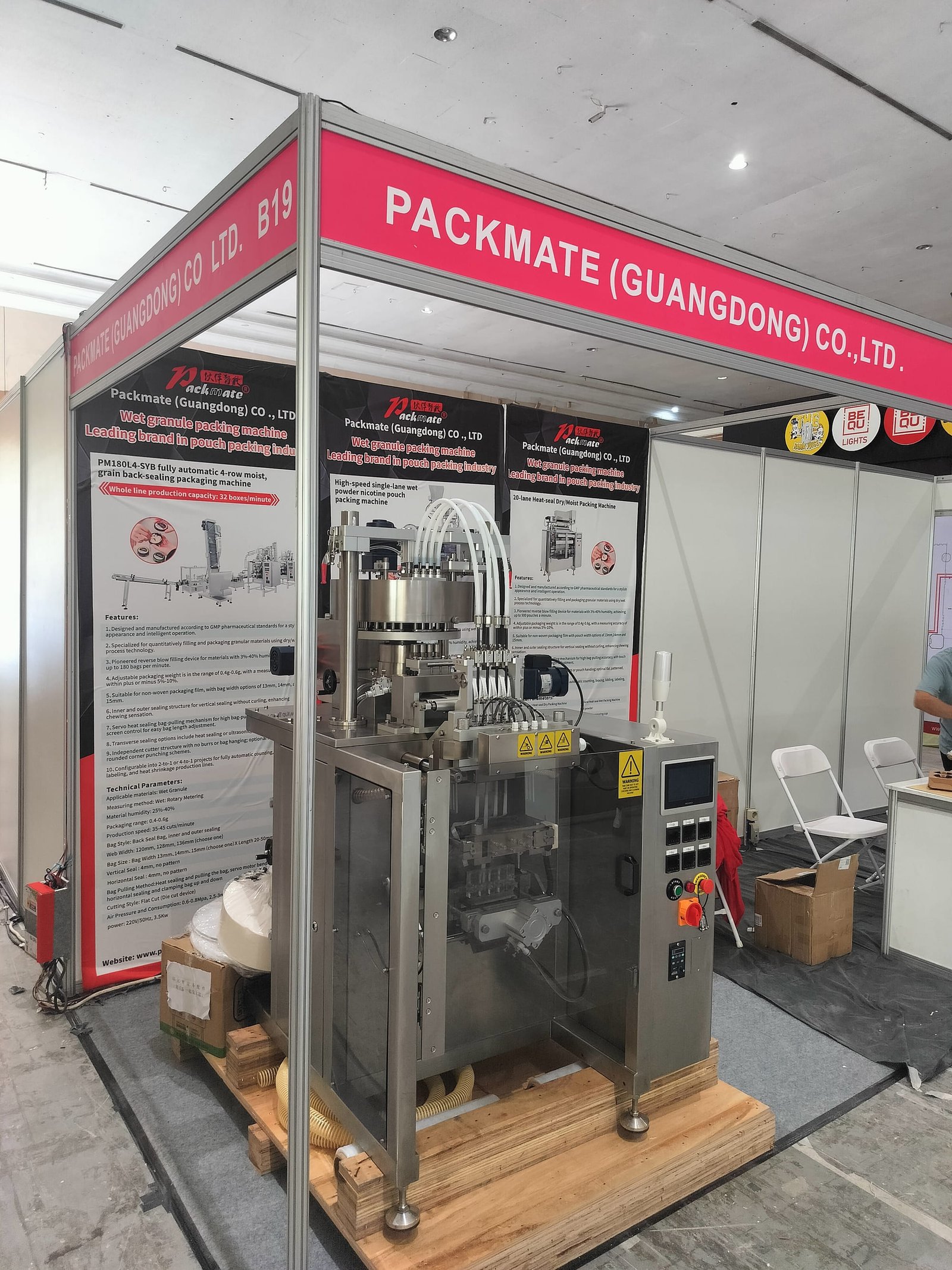
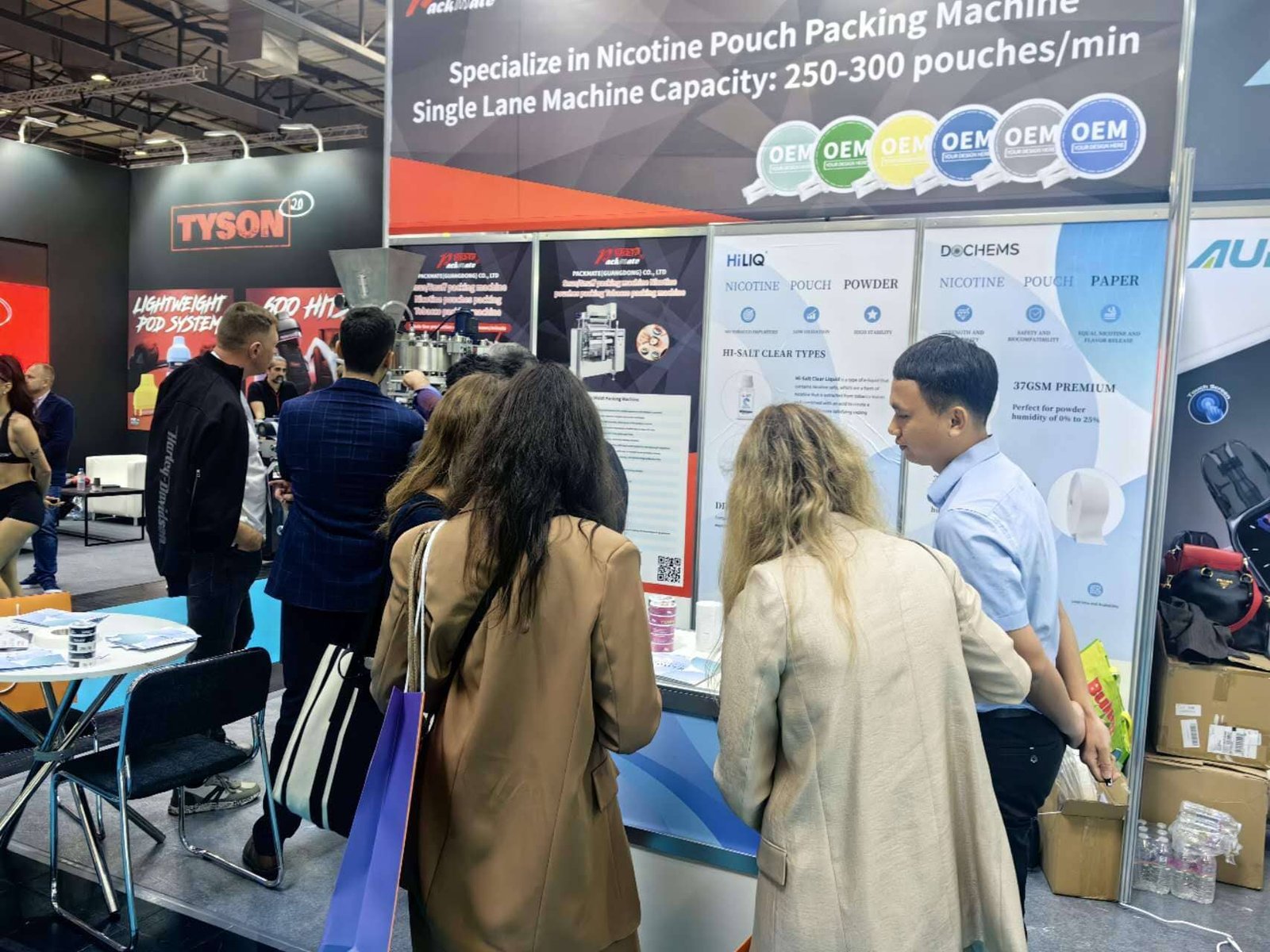
Global Exhibitions & Worldwide Presence
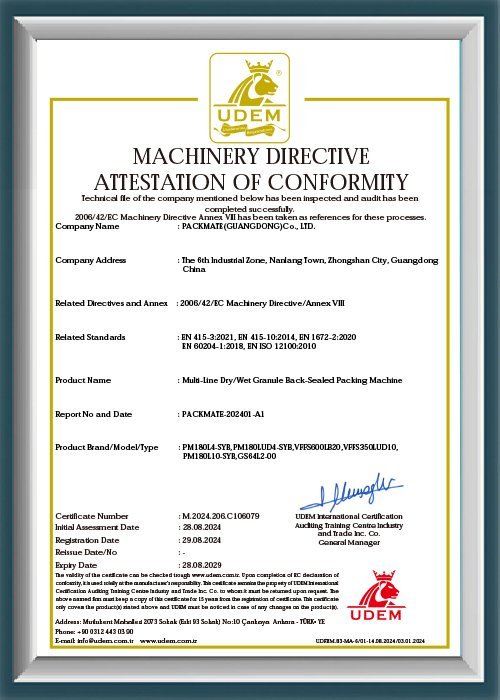
International Quality Certifications



Frequently Asked Questions: Biscuit Line Setup
Get quick, engineering-backed answers to the most common queries regarding biscuit packaging automation:
We utilize food-grade vibratory conveyor tracks lined with ultra-high molecular weight (UHMW) polymers, accompanied by overhead optical counting gates and servo-driven rotary stackers. The servo motor slows down millisecond-by-millisecond during the pusher engagement phase to ensure zero impact shocks on the biscuit edges.
On-edge (slug) packing stands 20 to 50 biscuits vertically side-by-side in a tight, cylindrical or rectangular wrap (ideal for tea biscuits and crackers). Pile packing stacks 2 to 6 biscuits flat on top of each other (common for cream sandwiches, cookies, and chocolate-coated biscuits). Each format requires a different feeding magazine and forming collar setup.
Biaxially Oriented Polypropylene (BOPP), metalized BOPP (BOPP/VMCPP), and heat-sealable laminated barrier films (PET/AL/PE) are standard. For sustainable initiatives, modern Ludyway flow wrappers are engineered to process mono-material recyclable films and bio-based PLA laminates with precise digital temperature controls.
A standard linear configuration (Infeed Chute + Flow Wrapper + Checkweigher/Metal Detector + Cartoner) requires approximately 18 to 28 meters in length and 2.5 to 3.5 meters in width. For factories with limited floor space, U-shaped or parallel modular configurations can be custom-engineered to match your room layout.
Ready to Automate Your Biscuit Packaging Line?
Partner with Ludyway Machinery to engineer a turnkey packaging solution tailored to your exact biscuit dimensions, speed requirements, and factory layout. Get your comprehensive engineering proposal and 3D line drawing within 24 hours.
