
How to Set Up a Flour Packaging Line | Complete Guide
A comprehensive engineering blueprint detailing mechanical integration, dust suppression, precision auger dosing, automated sealing, and secondary packaging solutions for industrial flour milling operations.
Understanding Flour Powder Rheology & Packaging Engineering
Flour is a non-free-flowing, compressible powder characterized by fine particle size, hygroscopic tendencies, and high dust suspension rates. Designing a reliable flour packaging line requires addressing critical physical behaviors before equipment selection.
Aeration & Bulk Density Shift
Freshly milled flour retains substantial entrained air, creating significant volumetric variability. Without de-aeration spirals or settling vibration cycles, packaging lines face unstable seal integrity and inaccurate fill weights across continuous high-speed runs.
Explosion Risk & ATEX Compliance
Suspended airborne grain starch creates combustible dust clouds classified under ATEX/NFPA zones. Production lines must implement antistatic transport mechanisms, enclosed transfer funnels, and explosion-proof servo motors to eliminate ignition risks.
Seal Contamination Prevention
Fine flour dust settling on horizontal heat-sealing jaws prevents composite film cross-linking, causing micro-leaks. Integrated vacuum cut-off nozzles, localized dust extraction hoods, and ultrasonic sealing options guarantee hermetic package closure.
Need turnkey engineering guidance? Review our specialized machinery range designed for both retail portion packs and high-capacity industrial bags at our Food Packaging Machines division.
Download System CatalogThe 5 Core Stages of an Automated Flour Packaging Line
A high-efficiency flour packing line links material handling, volumetric or gravimetric auger dosing, automated bag formation, inspection checking, and downstream case packing into an uninterrupted automation loop.
Raw Flour Infeed & Pneumatic / Screw Conveying
Stage: Bulk InfeedFlour stored in silos or bulk tipping stations is transferred to machine buffer hoppers using enclosed vacuum feeders or heavy-duty industrial screw conveyors. Fluidized air pads or vibratory bin activators prevent bridging and rat-holing inside the intermediate bulk containers (IBCs).
Servo Auger Dosing & De-aeration Filling
Stage: High-Precision DosingHigh-precision servo-driven augers rotate at calculated RPMs to meter flour directly into package tubes. A central degassing lance or vacuum extraction probe pulls out excess air during the downward stroke, allowing higher pack density and crisp seal margins without blowback.
VFFS Forming, Gusseting & Thermal Sealing
Stage: Primary PackagingRoll-fed laminated film or kraft paper stock passes through former collars into pillow, flat-bottom, or quad-seal block bags. Bottom gusset tuckers create stable brick-style bags, while dual heated sealing jaws with PID temperature synchronization create air-tight transverse seals.
In-Line Checkweighing & X-Ray / Metal Detection
Stage: Quality AssuranceFilled bags transition across dynamic checkweighers with feedback integration to auto-adjust upstream auger revolutions. Multi-frequency tunnel metal detectors and industrial X-ray systems scan for ferrous, non-ferrous, and stainless steel mill fragments before rejection gates.
Case Packing, Bundling & Robotic Palletizing
Stage: End-of-Line SecondaryFinished flour packs are aligned, grouped, and loaded into corrugated master cartons via top-load pick-and-place robots or shrink-wrapped into poly-film bundles. High-speed Cartesian or articulated robotic palletizers stack cartons onto shipping pallets for automatic stretch film wrapping.
Flour Packaging Machinery Configurations & Specifications
Selecting the correct line architecture depends on package size (retail sachet vs. commercial bulk), target speeds, packaging material properties, and plant floor layout.
| Line Configuration | Package Size Range | Speed (BPM / LPM) | Dosing Mechanism | Dust Extraction Method | Recommended Application |
|---|---|---|---|---|---|
| Multi-Lane Sachet / Stick | 5g – 100g | 120 – 600 packs/min | Multi-Auger Servo Gantry | Integrated Enclosed Manifold | Instant baking mix, single-serve yeast flour |
| Continuous VFFS (Block Bottom) | 500g – 5kg | 40 – 90 bags/min | Single Servo Auger + Degasser | Vacuum Collar Ring + Scavenger | Retail retail wheat flour, corn starch, pastry flour |
| Rotary Premade Pouch Filler | 250g – 3kg | 25 – 60 pouches/min | Auger Dosing + Leveler | Top Spout Suction Nozzle | Stand-up zipper pouches, organic specialty flours |
| Open-Mouth Kraft Bag Line | 10kg – 25kg | 10 – 25 bags/min | Gross / Net Weigh Screw Feeder | Inflatable Bag Clamp + Dust Hood | Commercial bakery supply, wholesale milling bags |
| Valve Bag Filling System | 20kg – 50kg | 8 – 18 bags/min | Impeller or Pneumatic Packer | Internal Venting Sleeve | Industrial bulk flour, export shipping sacks |
Specialized Flour & Fine Powder Packaging Systems
Explore Ludyway’s field-tested packaging units built specifically for high-dust, non-free-flowing powders, starches, and baking mixes.
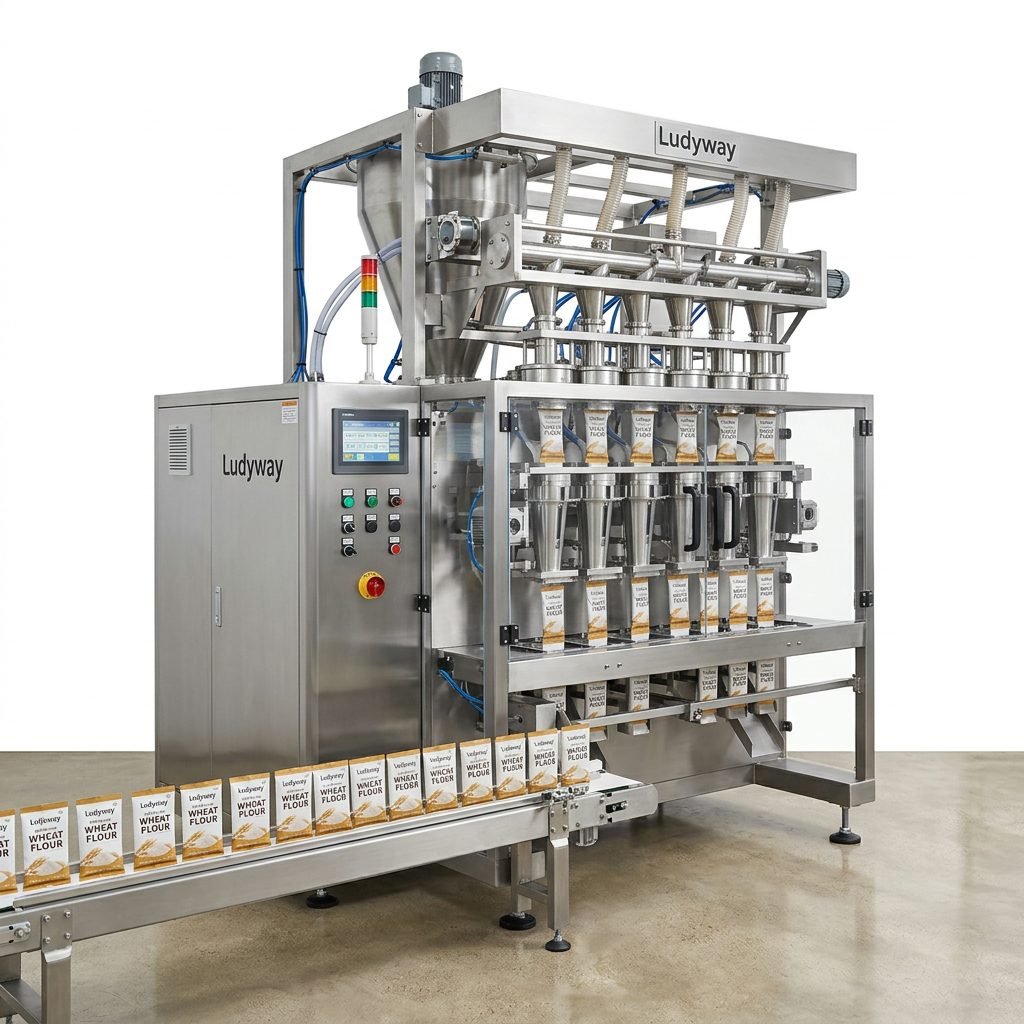
Wheat Flour Packaging Machine for Sachet & Stick Pack
View Specifications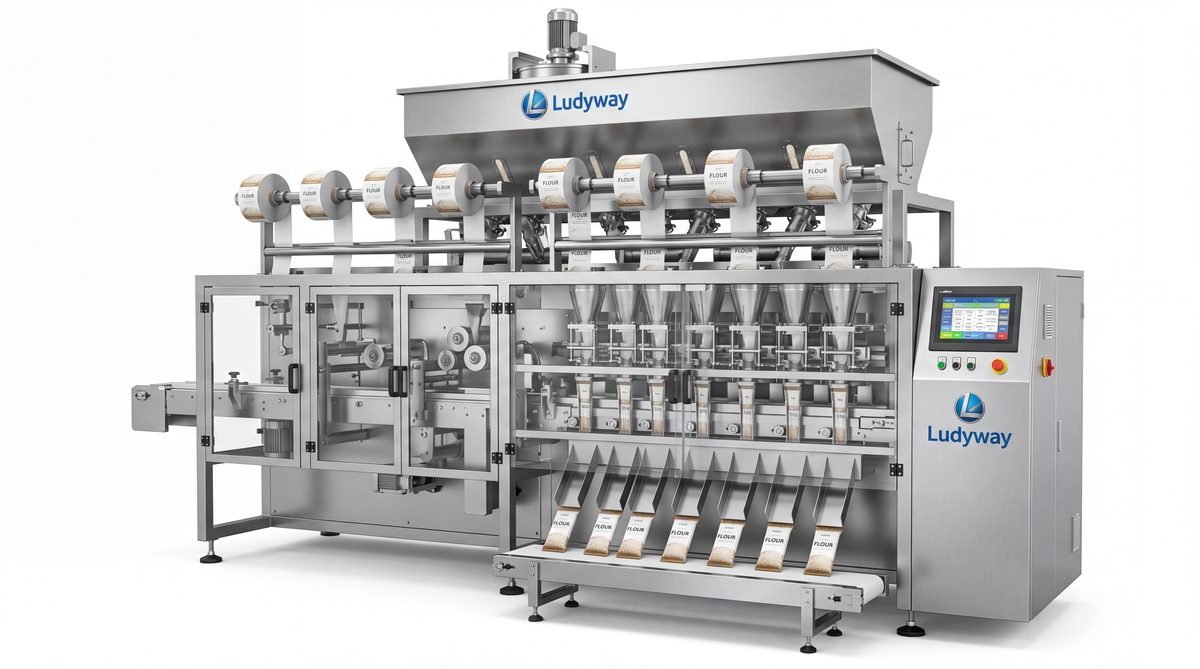
High-Speed Multi-Lane Flour Packaging Machine
View Specifications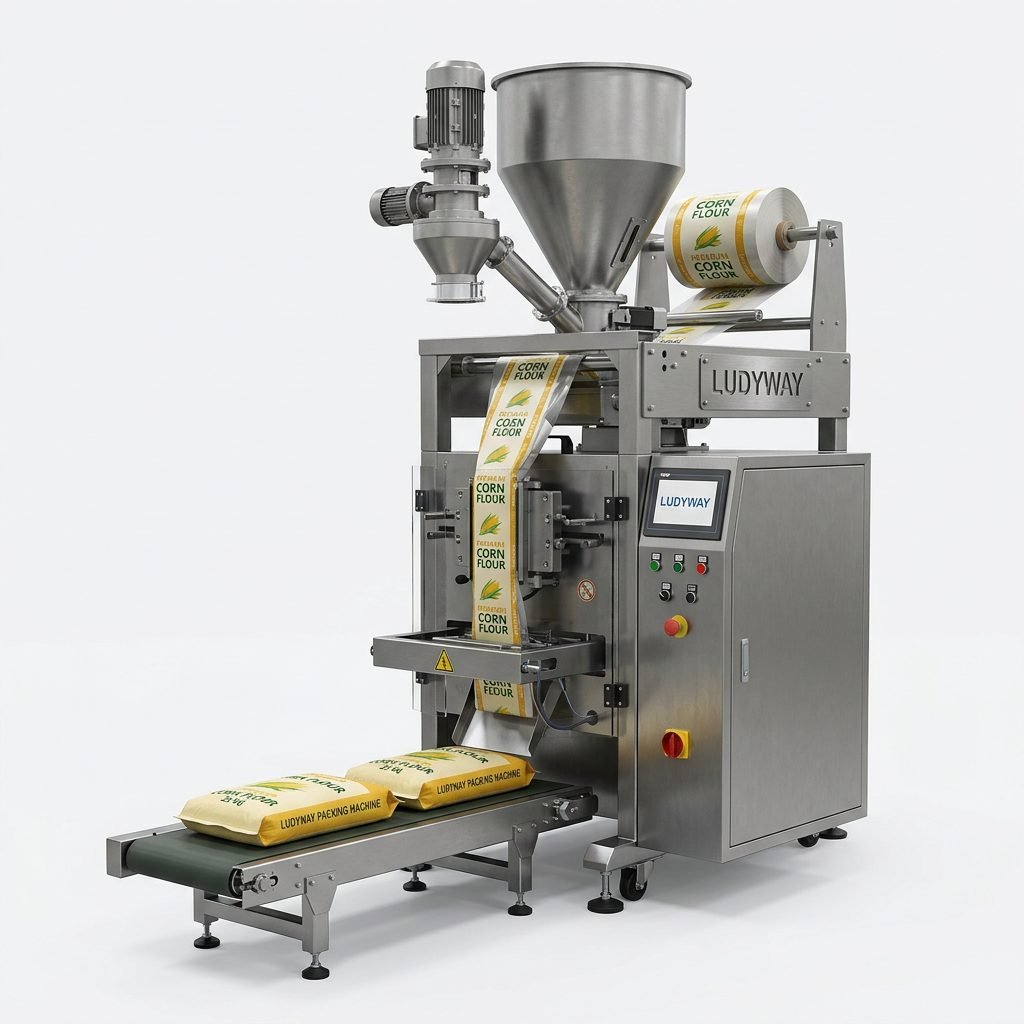
High-Speed Corn Flour Packaging Machine for Bulk Processing
View Specifications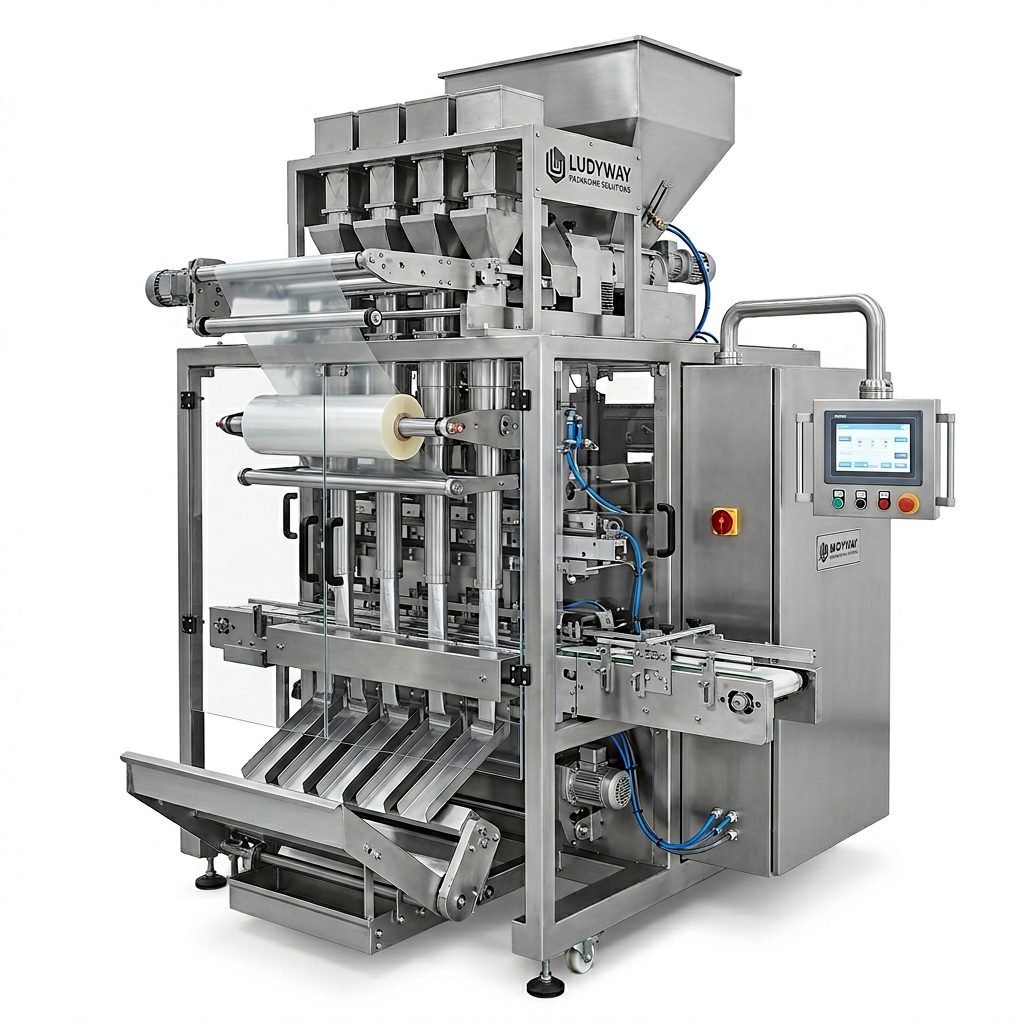
Multi-Lane Rice Flour Sachet Packaging Machine
View Specifications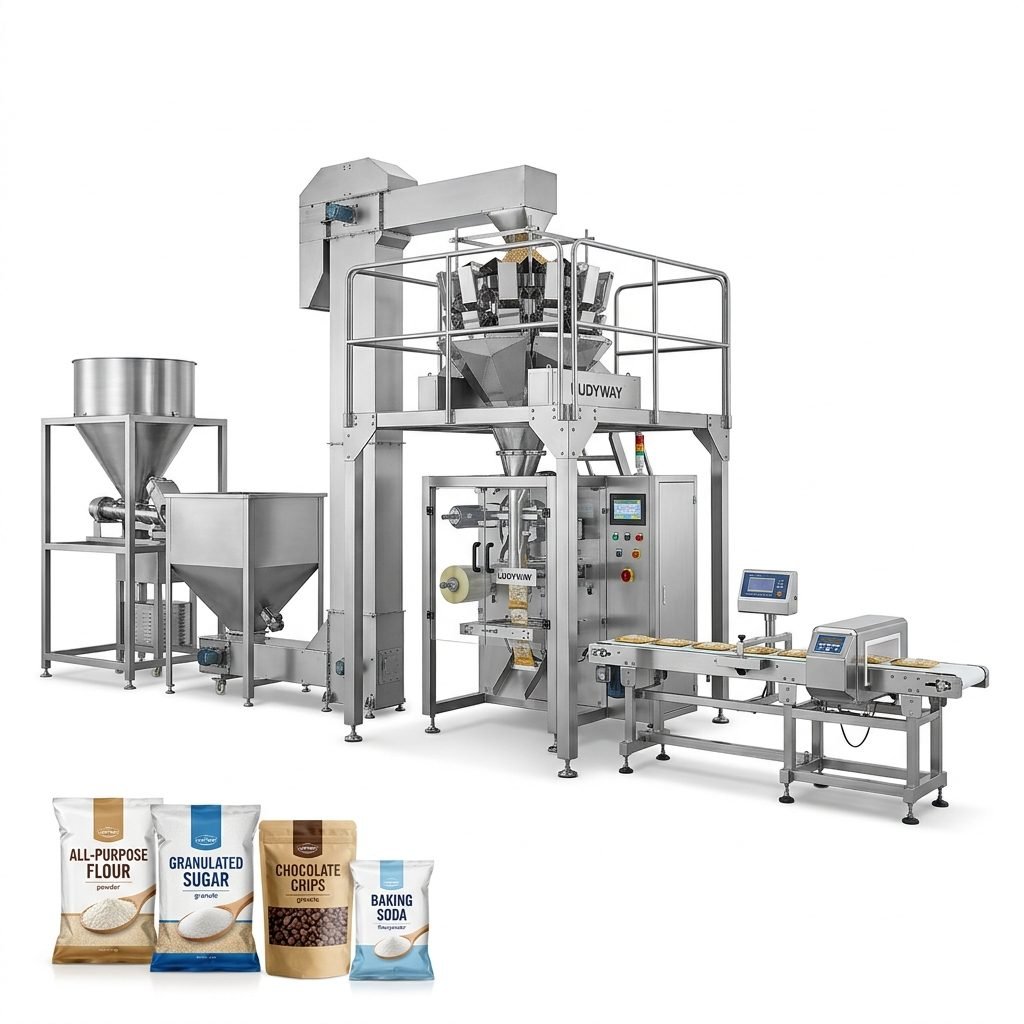
Automated Packaging Line for Baking Ingredients
View Specifications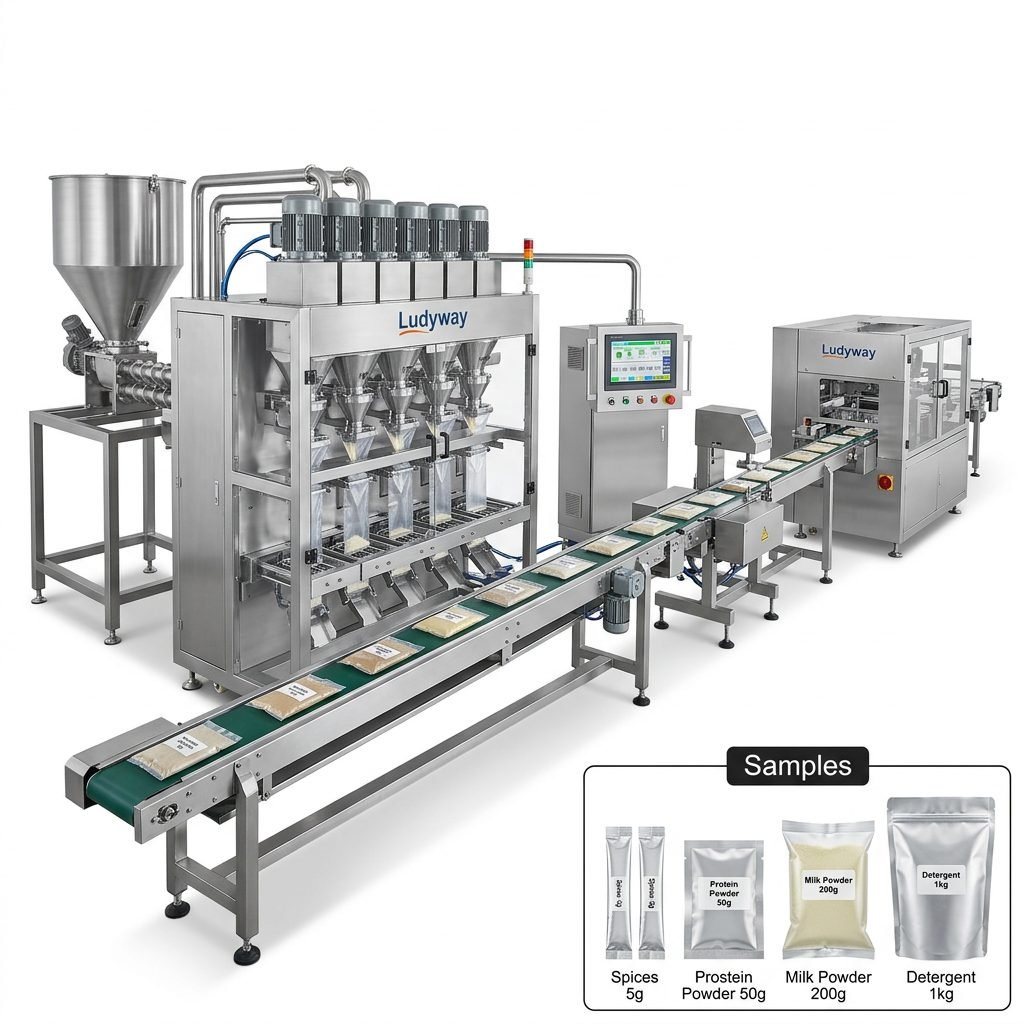
High-Efficiency Powder Packaging Lines with Multi-Lane System
View Specifications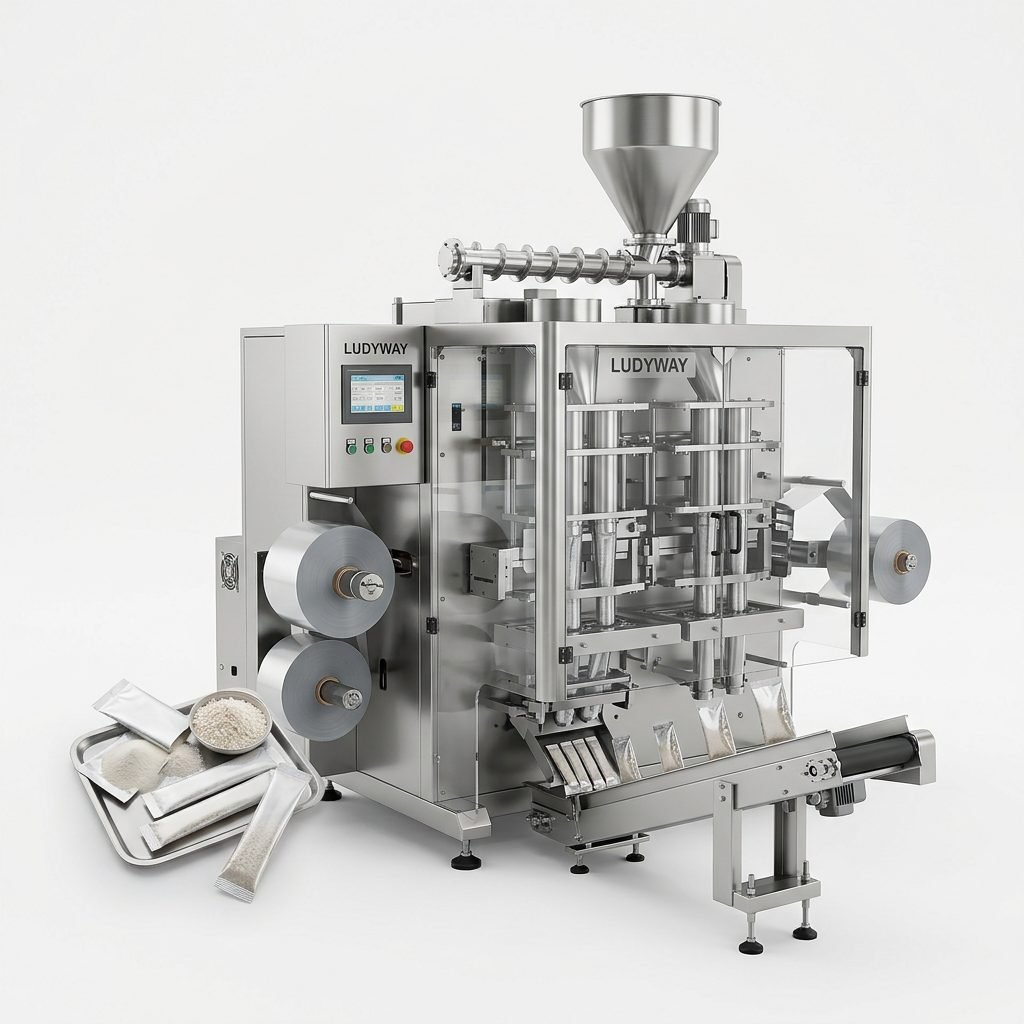
Tapioca Starch Sachet & Stick Pack Packaging System
View Specifications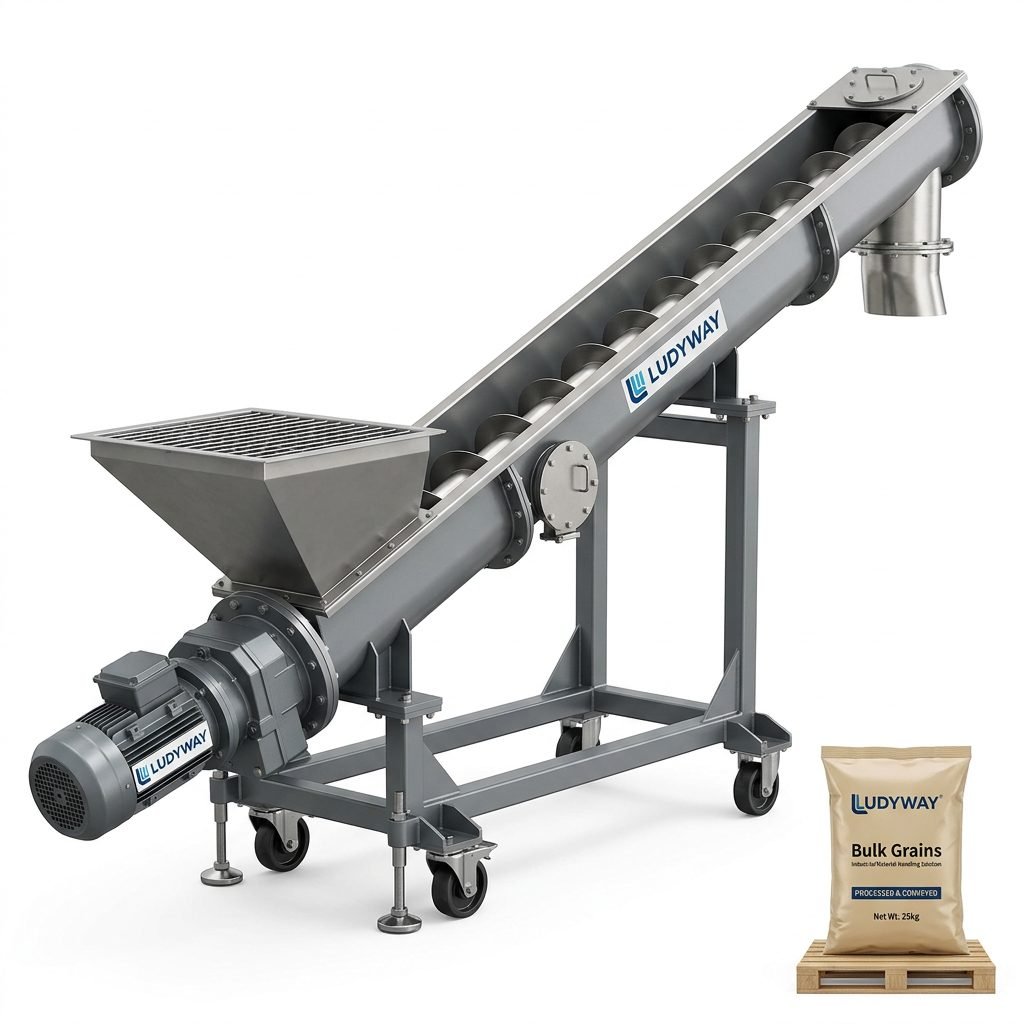
Heavy-Duty Industrial Screw Conveyor for Bulk Infeed
View SpecificationsEngineering Checklist: How to Set Up a Flour Packaging Line
A step-by-step industrial deployment protocol from facility layout planning to Factory Acceptance Testing (FAT) and line synchronization.
Phase 1: Facility Infrastructure & Layout
Establishing a continuous packaging flow requires careful consideration of ceiling clearance for vertical augers, pneumatic supply lines, and dedicated dust extraction ducting.
- Ceiling Height Requirements: Ensure at least 4.5m to 6.0m vertical clearance for top-mounted auger hoppers and infeed elevators.
- Pneumatic & Electrical Sizing: Provide clean, dry compressed air (0.6 – 0.8 MPa, ISO 8573-1 Class 1.4.1) and 380V/480V 3-phase power with surge suppression.
- Central Dust Extraction: Route localized ducting capable of sustaining 20 – 25 m/s air velocity at each filling and transition point.
- Hygienic Zoning: Separate raw grain intake and milling rooms from finished primary packaging to prevent biological cross-contamination.
Phase 2: Equipment Integration & FAT/SAT
Seamless handoff between machine stages relies on PLC network architecture (EtherCAT/Profinet) and closed-loop feedback algorithms.
- Auger Tuning & Calibration: Perform multi-point test weighing across different hopper fill levels to establish consistent bulk density compensation curves.
- PID Heat Seal Optimization: Calibrate jaw dwell time, contact pressure, and heat curves for selected barrier film gauges.
- Dynamic Checkweigher Feedback: Configure proportional closed-loop communication between checkweigher and auger servo for automated tare adjustments.
- Site Acceptance Testing (SAT): Run uninterrupted 8-hour continuous production batches to verify overall equipment effectiveness (OEE > 88%).
30+ Years of Turnkey Packaging Machine Innovation
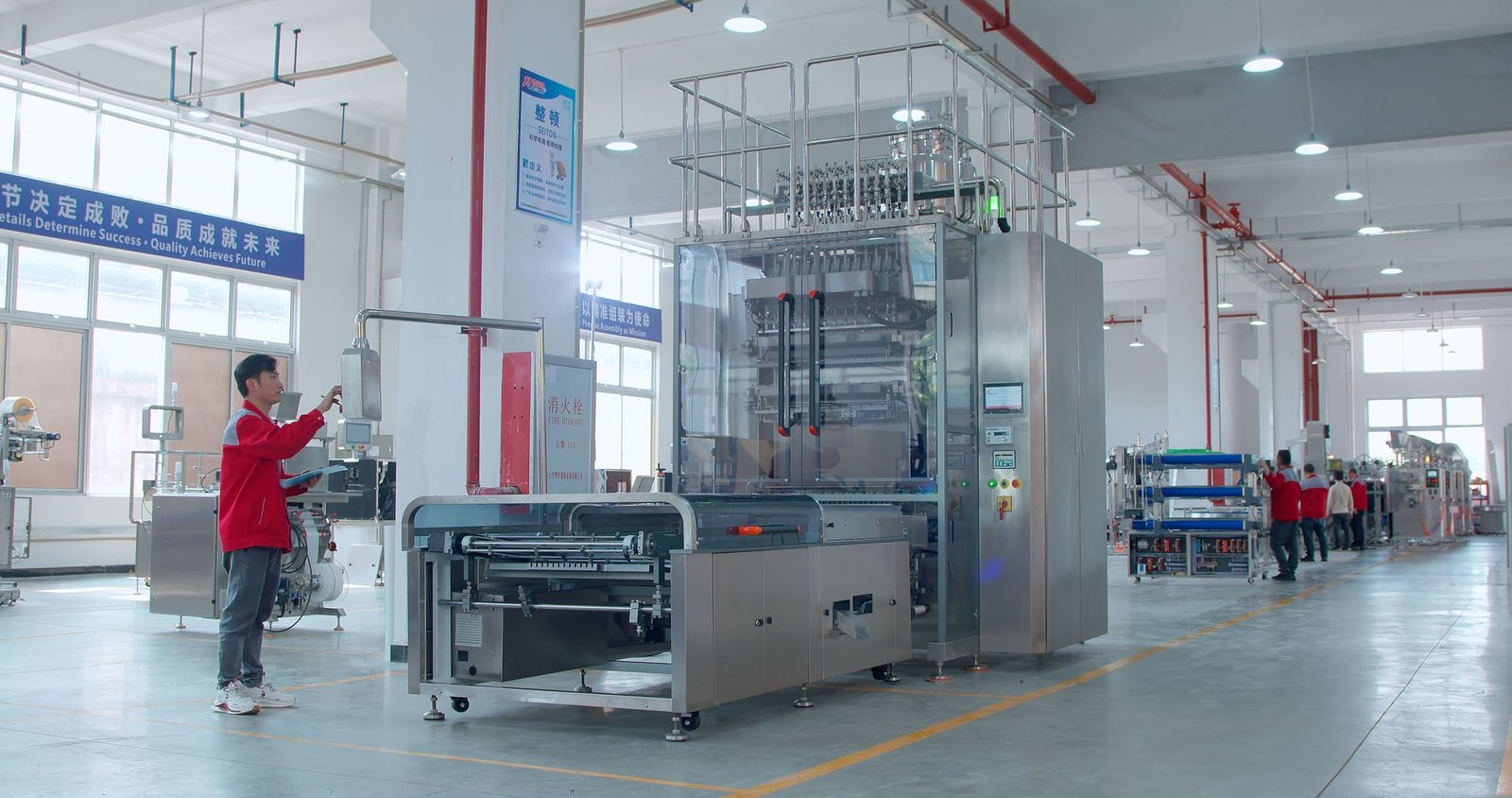
Ludyway is a premier packaging machinery manufacturer operating a modern 20,000㎡ production facility equipped with over 200 precision CNC fabrication units. Backed by an engineering team of 130+ technical specialists, we engineer and supply customized automated packaging solutions across more than 100 countries.
From high-speed multi-lane stick pack and sachet machines to high-payload industrial bagging and secondary cartoning lines, Ludyway delivers robust, sanitary, and high-efficiency systems compliant with global food hygiene and electrical safety regulations.
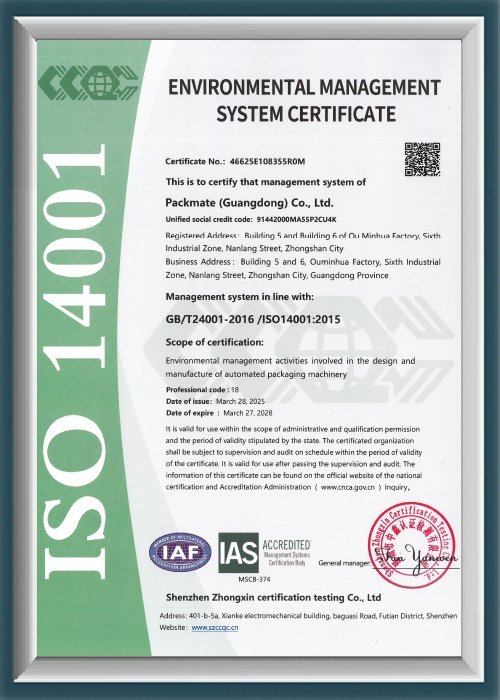
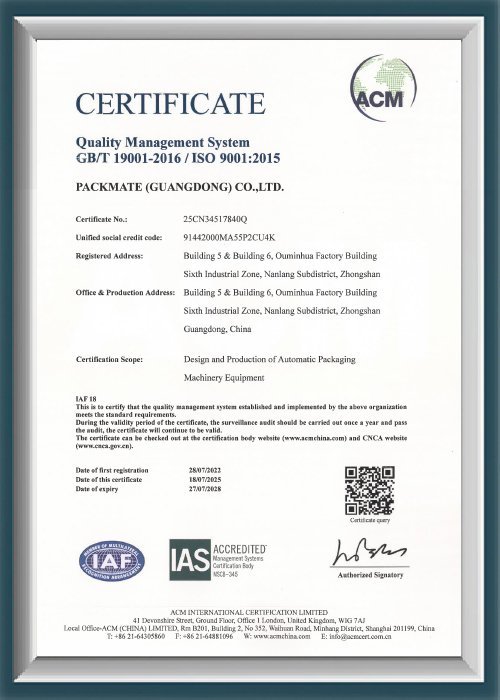
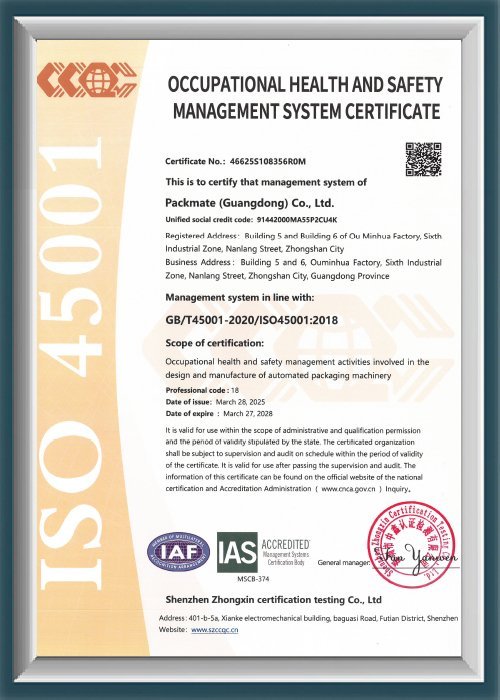
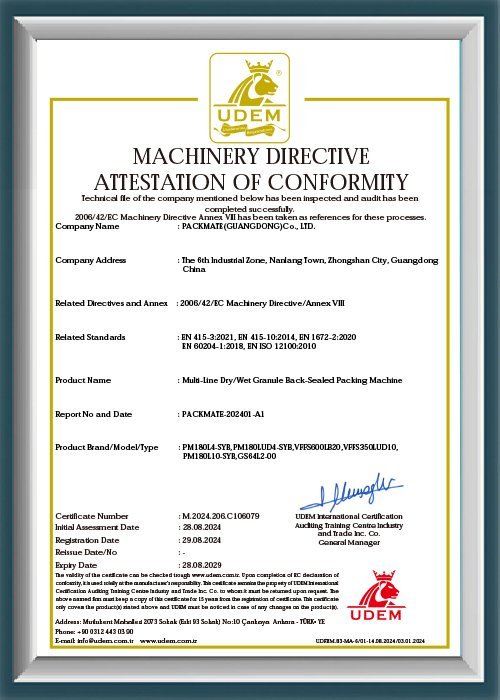
Global Certifications & Quality Compliance
All Ludyway packaging lines meet rigorous international safety, hygiene, and conformity standards.
Flour Packaging Line Design & Operation FAQ
Answers to common engineering questions regarding speed, accuracy, dust management, and machine selection.
How do you prevent flour dust from contaminating the heat seal zone?
Flour dust contamination is mitigated using three coordinated systems: (1) high-speed pneumatic cut-off valves on the auger nozzle that stop product dribble instantly; (2) localized vacuum extraction rings directly surrounding the forming collar; and (3) vacuum de-aeration funnels that extract airborne fines before horizontal sealing jaws engage.
What is the difference between volumetric and gravimetric auger dosing for flour?
Volumetric auger dosing meters flour based on precise screw shaft rotations. It operates at very high speeds (up to 90-120 cycles/min) and is ideal when flour bulk density is stable. Gravimetric (loss-in-weight or net-weighing) dosing constantly weighs the product in real time, delivering superior precision (±0.2%) regardless of density fluctuations, making it ideal for higher-value specialty flours and bulk bags.
Can a single flour packaging line handle multiple bag sizes (e.g., 1kg, 2kg, 5kg)?
Yes. Modern vertical form-fill-seal (VFFS) systems utilize quick-change forming collar assemblies and swappable auger screws. Changeover between 1kg and 5kg sizes typically takes 15 to 30 minutes with tool-less adjustment features, recipe presets on the HMI touchscreen, and adjustable conveyor heights.
What packaging materials are best suited for automated flour packaging lines?
For retail pillow or stand-up packs, laminated barrier films such as BOPP/PE, PET/PE, or paper/poly composite structures are commonly used to provide moisture barrier protection. For traditional kraft flour bags, pre-formed breathable kraft paper with micro-perforations or heat-sealable inner PE linings ensures package durability and shelf appeal.
How does Ludyway support turnkey packaging line installation and commissioning?
Ludyway offers comprehensive engineering lifecycle support including facility layout CAD design, equipment manufacturing, Factory Acceptance Testing (FAT) with client materials, on-site mechanical/electrical commissioning, PLC integration, and comprehensive operator training. Visit our Case Studies and Support FAQs for more details.
Ready to Design & Build Your Custom Flour Packaging Line?
Consult with our engineering team to assess your plant layout, target packaging speeds, bag formats, and dust containment parameters. We provide full layout CAD drawings, custom machinery builds, and complete commissioning support.
