
How to Set Up a Seasoning Packaging Line: Step-by-Step Guide
Architecting an industrial spice, salt, MSG, and dry blend packaging facility demands absolute precision in material rheology management, dust mitigation, seal integrity, and high-speed multi-lane packaging automation. Discover the end-to-end blueprint for engineering a world-class seasoning packaging line.
Understanding Seasoning Powder & Granule Material Characteristics
Setting up a seasoning packaging line is substantially more complex than standard dry-product packaging. Seasonings—ranging from hygroscopic bouillons, ultrafine spice blends (chili, cumin, turmeric, cinnamon), crystalline salts, and mono-sodium glutamate (MSG) to oil-infused dry rubs—possess highly erratic bulk densities, volatile essential oils, static charge tendencies, and abrasive or corrosive properties.
To configure a high-efficiency packaging system that prevents product giveaway, avoids seal contamination, and prevents costly machine downtime, engineers must categorize seasoning recipes by three core physical variables: flowability (Carr Index), hygroscopicity, and particulate abrasiveness.
Hygroscopic & Moisture-Sensitive Mixes
Seasonings containing yeast extracts, hydrolyzed vegetable proteins (HVP), sugars, and chicken broth bases rapidly absorb ambient atmospheric moisture, leading to clumping in hoppers and forming bridges inside feed chutes. These lines require dry air purge units, enclosed dehumidified feeder ducts, and dynamic vibratory assist cones.
Ultrafine, Dusty & Static-Prone Spices
Micronized powders such as paprika, black pepper, and garlic dust stay airborne easily, settling onto horizontal heat-seal surfaces. This causes package micro-leaks and structural seal delamination. Integration of vacuum dust extraction collars, static eliminator ion bars, and servo-driven anti-drip cut-off nozzles is critical.
Free-Flowing Granules & Corrosive Salts
Rock salt, sea salt flakes, and coarse MSG crystals flow effortlessly under gravity but create aggressive mechanical wear and galvanic corrosion on packaging surfaces. Seasoning packaging lines for high-salinity recipes mandate food-grade SUS316 stainless steel contact parts, hard chrome plating, and IP66 washdown protection.
Step-by-Step Setup Guide for a High-Output Seasoning Packaging Line
Follow this comprehensive, field-tested engineering roadmap to design, procure, integrate, and commission an automated seasoning packaging facility.
Material Rheology Testing & Dosing System Selection
The dosing apparatus is the heart of your seasoning packaging line. Non-free-flowing seasoning powders (onion powder, curry blends, starch-heavy mixes) require precision servo-driven auger fillers with customized tooling, variable-speed agitators, and horizontal cross-feed screws. In contrast, free-flowing crystalline items (table salt, granulated bouillon) are best metered via high-speed volumetric measuring cups or multi-head combination weighers for irregular pieces.
Determining the Target Packaging Format & Multi-Lane Architecture
Select your container geometry based on your B2B culinary or retail distribution channels. Small-dose convenience formats like instant noodle spice packets and instant soup seasoning pouches utilize multi-lane sachet or stick pack machines (4 to 12 lanes) to generate up to 600+ sachets per minute. Family-sized or institutional catering seasoning demands rotary premade pouch packaging machines (Doypack, stand-up zipper pouches) or rigid container bottle-filling lines with capping and induction sealing.
Primary Packaging Machinery Integration (VFFS & Form-Fill-Seal)
Integrate industrial Vertical Form Fill Seal (VFFS) systems that feature continuous servo film-drawing belts, twin-pull optic registration, and PID microprocessor temperature controllers. The web-tracking system must handle laminate barrier films (PET/AL/PE, Kraft/Foil/PE, mono-recyclable barrier polymers). Ensure cutting knives have titanium carbide coatings to cleanly slice film without generating fine plastic frayed whiskers.
Implementing Atmosphere Control: Nitrogen Flushing (MAP)
Lipids and essential oils present in dried garlic, paprika, and mixed herb spices oxidize quickly when exposed to oxygen, resulting in color fading, rancidity, and flavor degradation. Integrate a high-purity Nitrogen Flushing System (Modified Atmosphere Packaging – MAP) directly into the filling tube, purging residual oxygen levels down below 2.0% to lock in shelf aroma for 18 to 36 months.
Secondary Packaging: Sachet Collation, Cartoning & Case Packing
Downstream automation is essential to eliminate production bottlenecks. Finished sachets exiting the multi-lane machine flow along high-speed conveyors to automated counting and collating systems. Sachets can be grouped into 10s, 25s, or 50s and transferred into vertical cartoning units or fed directly into automated flow-wrappers and corrugated case packers.
In-Line Inspection, Foreign Body Detection & Quality Control
Protect brand reputation and comply with HACCP, BRC, and FDA guidelines by deploying inline quality assurance gates: dynamic high-precision checkweighers that reject off-spec sachets, dual-frequency metal detectors to catch ferrous/non-ferrous/stainless steel fragments, and high-definition X-Ray inspection systems capable of spotting dense stones or glass foreign bodies in raw spice blends.
Dust Extraction, ATEX Compliance & Clean-In-Place (CIP) Protocols
Combustible dust explosions and allergen cross-contamination pose severe operational hazards in seasoning packaging plants. Equip the packaging line with dedicated negative-pressure central dust extraction manifolds at all transfer points. Ensure all electrical cabinets adhere to IP65/ATEX dust-ignition proof standards, and implement tool-less quick-disconnect hoppers for fast allergen changeovers.
Seasoning Packaging Line Machinery Architecture Matrix
Evaluate the fundamental specifications, output rates, and optimal seasoning applications across our primary industrial packaging configurations.
| Line Type | Speed Range | Dosing Mechanism | Primary Package Format | Accuracy | Ideal Seasoning Formulation |
|---|---|---|---|---|---|
| Multi-Lane Sachet Line (4–12 Lanes) | 160 – 600+ bpm | Multi-Spindle Servo Auger / Volumetric Cup | 3-Side / 4-Side Flat Sachet (2g – 30g) | ± 1.0% | Instant noodle seasoning, soup base, bouillon powder, fine chili blends |
| Multi-Lane Stick Pack Line | 120 – 500 bpm | Multi-Lane Micro-Auger / Gravity Slide | Narrow Stick Pack (1g – 15g) | ± 0.8% | Single-serve dietary salt, sugar substitutes, powdered seasoning rubs |
| Rotary Premade Pouch Packaging Line | 30 – 85 bpm | Dual Head Auger + Multi-Head Weigher | Stand-Up Doypack, Zipper Pouch (50g – 1kg) | ± 0.5% | Coarse BBQ dry rubs, marinades, dried herbs, gourmet sea salt flakes |
| Rigid Bottle / Shaker Jar Line | 40 – 120 bpm | Rotary Multi-Station Auger Filler | Glass / PET Seasoning Bottles with Grinder Cap | ± 0.5% | Ground black pepper, whole peppercorns, mixed Italian herb seasonings |
| Multi-Lane Liquid Seasoning Line | 100 – 400 bpm | Rotary Valve Servo Piston Pumps | Sachet / Stick Pack (5ml – 50ml) | ± 0.5% | Soy sauce, hot pot dipping oil, liquid bouillon concentrates, chili paste |
Specialized Seasoning & Spice Packaging Equipment
Explore Ludyway’s proven line of automated machinery designed specifically for challenging powder and granule seasoning applications.
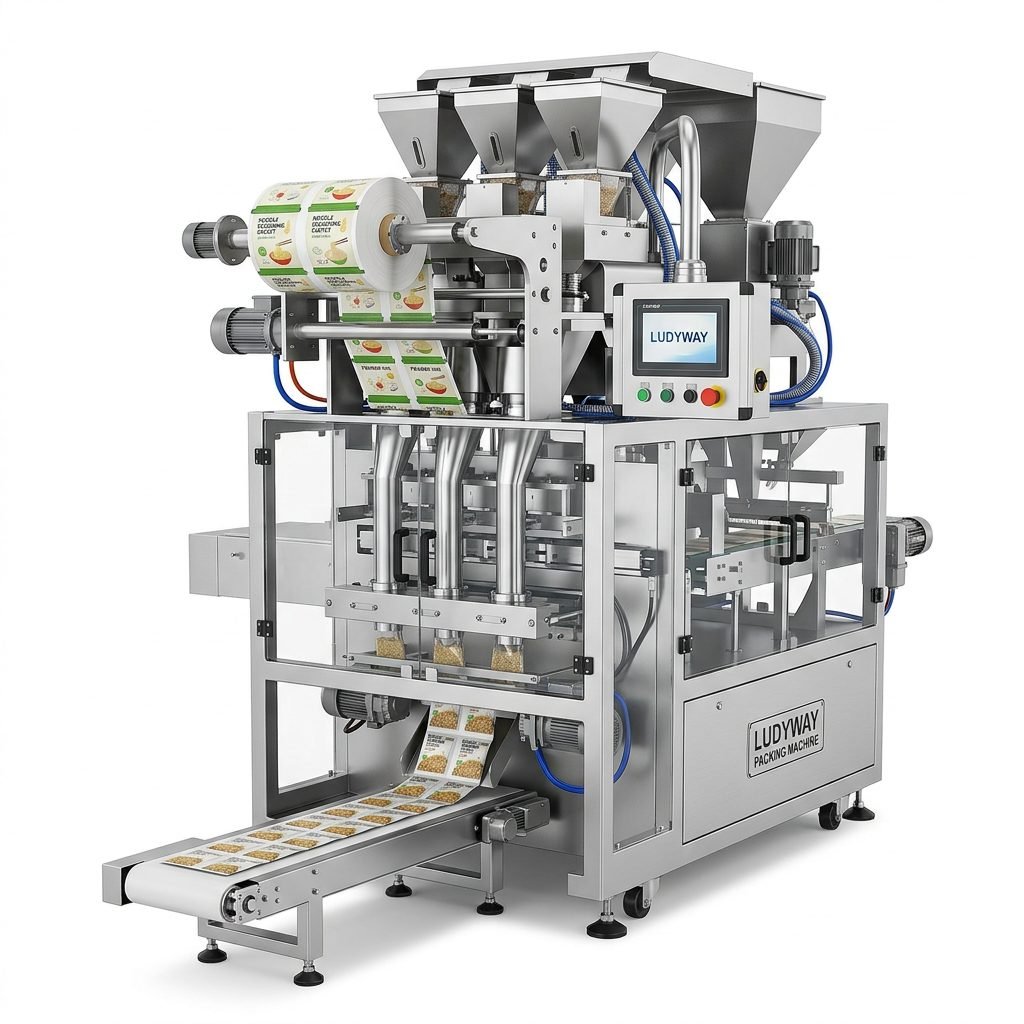
Instant Noodle Seasoning Sachet Packaging Machine
View Specifications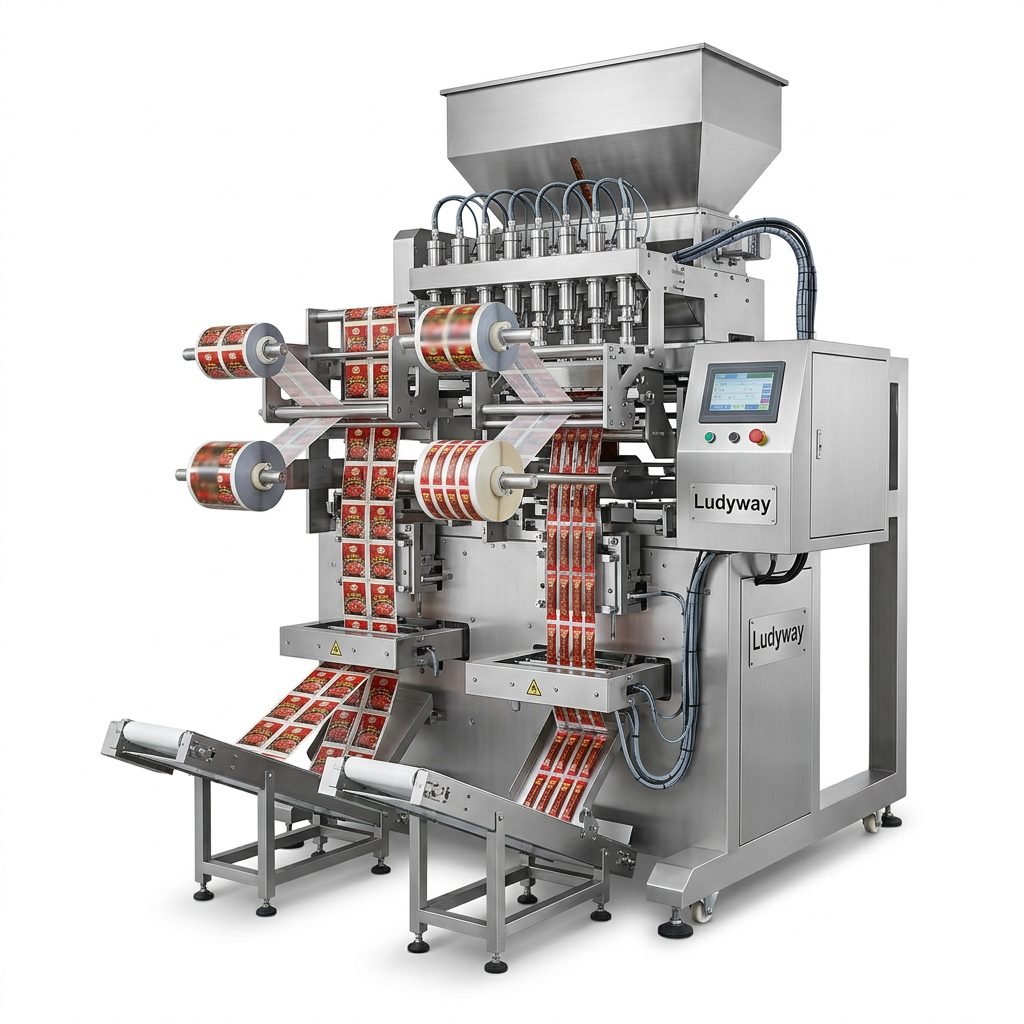
Multi-Lane Hot Pot Seasoning Sachet & Stick Pack System
View Specifications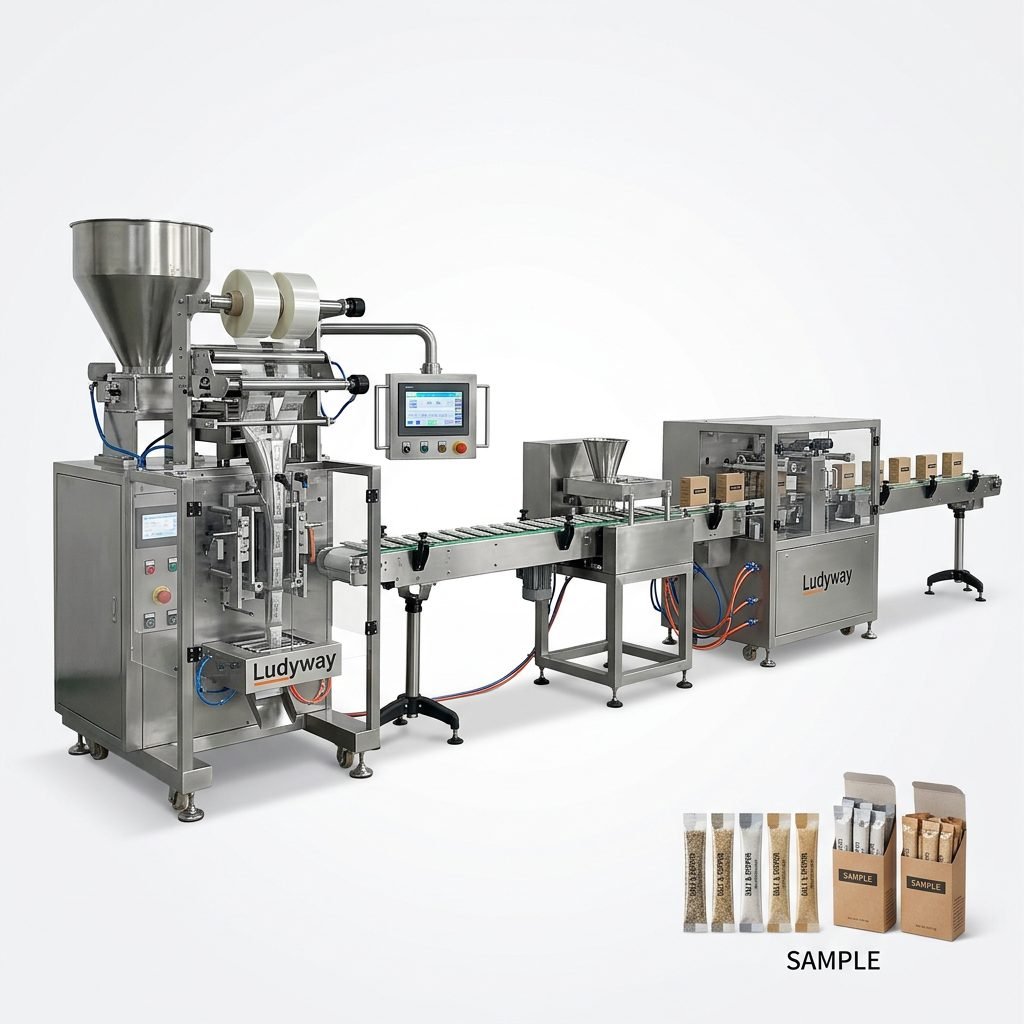
Seasoning Granule Multi-Lane Stick Pack Packaging Line
View Specifications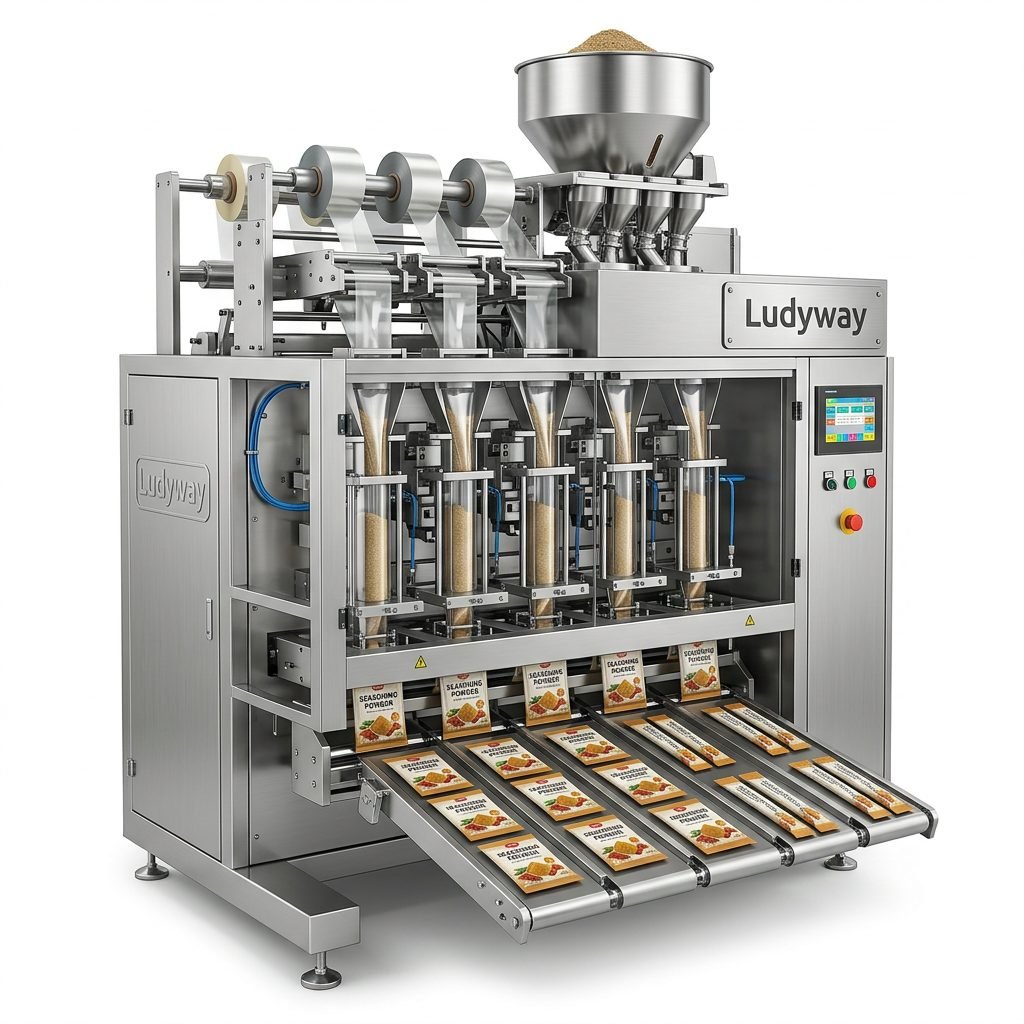
Automatic Multi-Lane Seasoning Powder Packaging System
View Specifications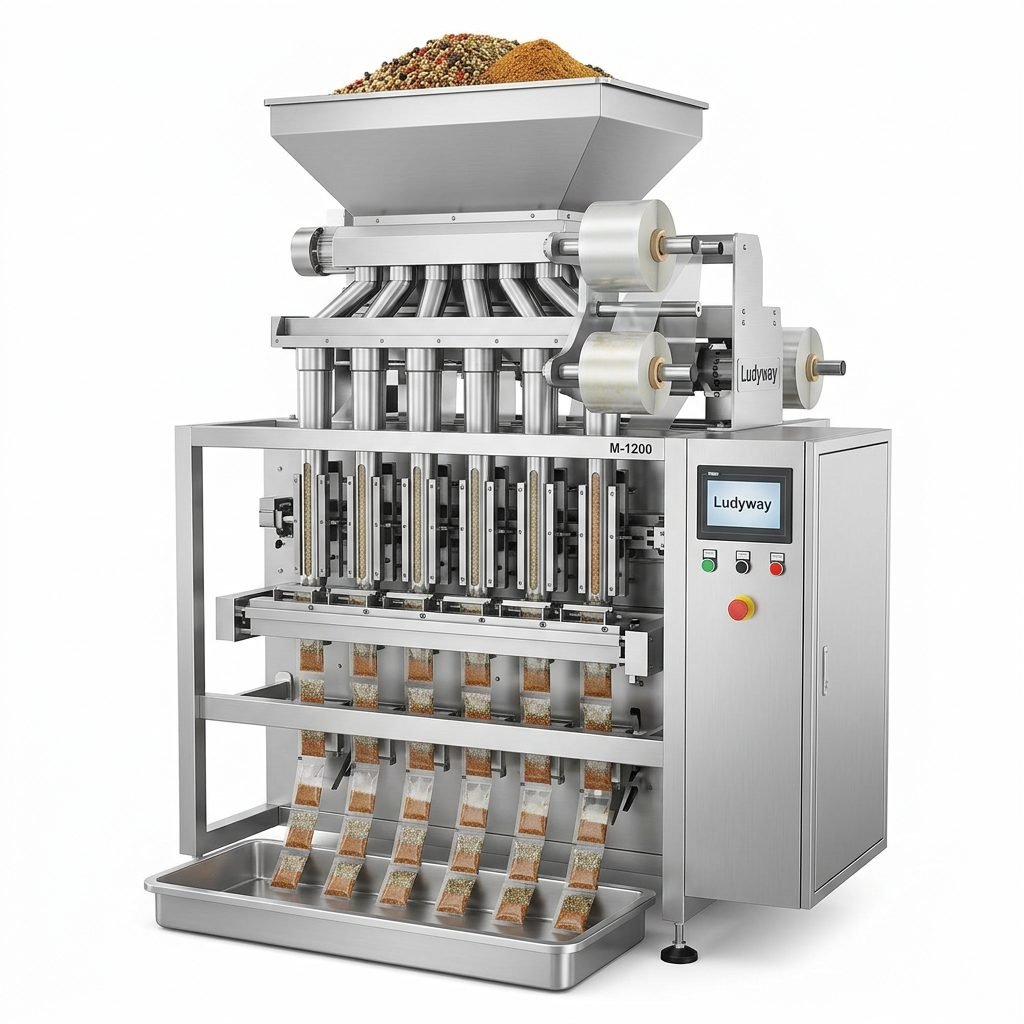
Multi-Lane Sachet Spice Powder & Granule Packaging Machine
View Specifications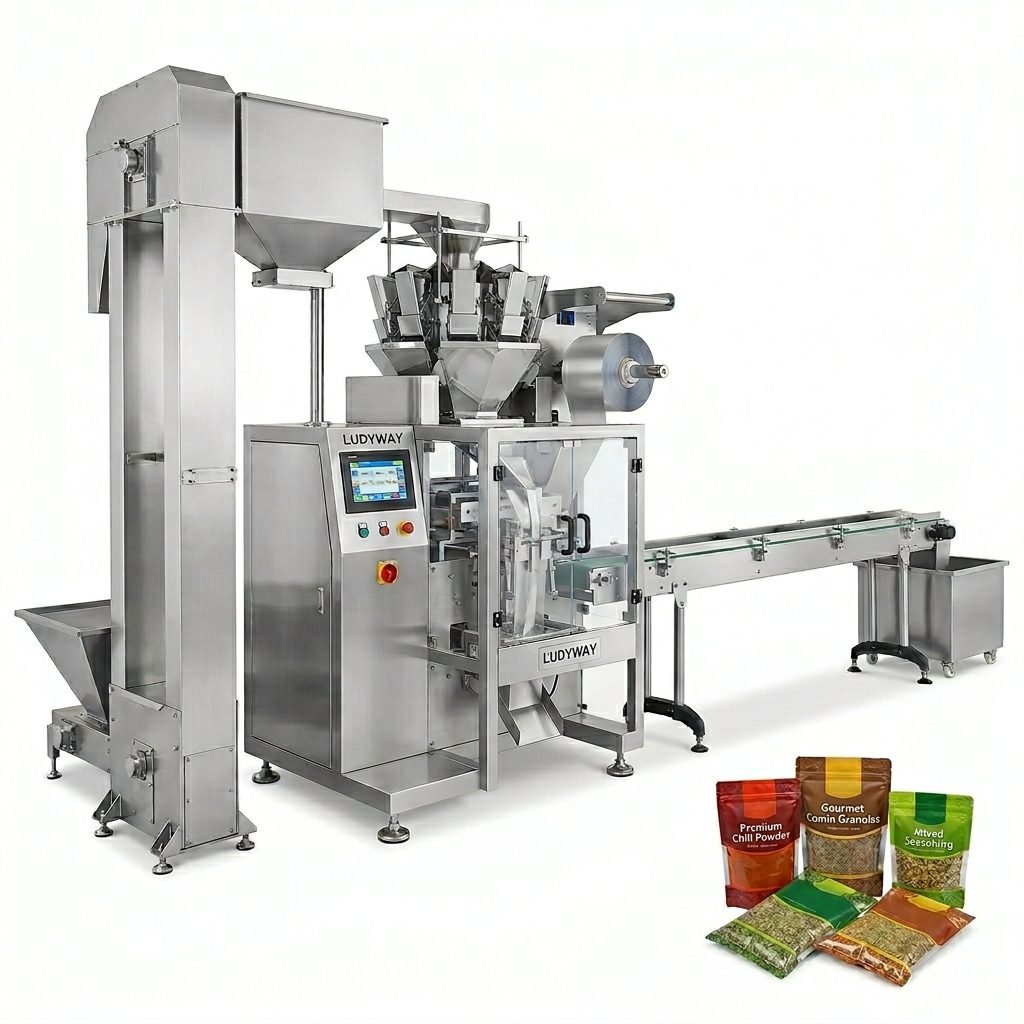
Turnkey Automated Spice Seasoning Packaging Production Line
View Specifications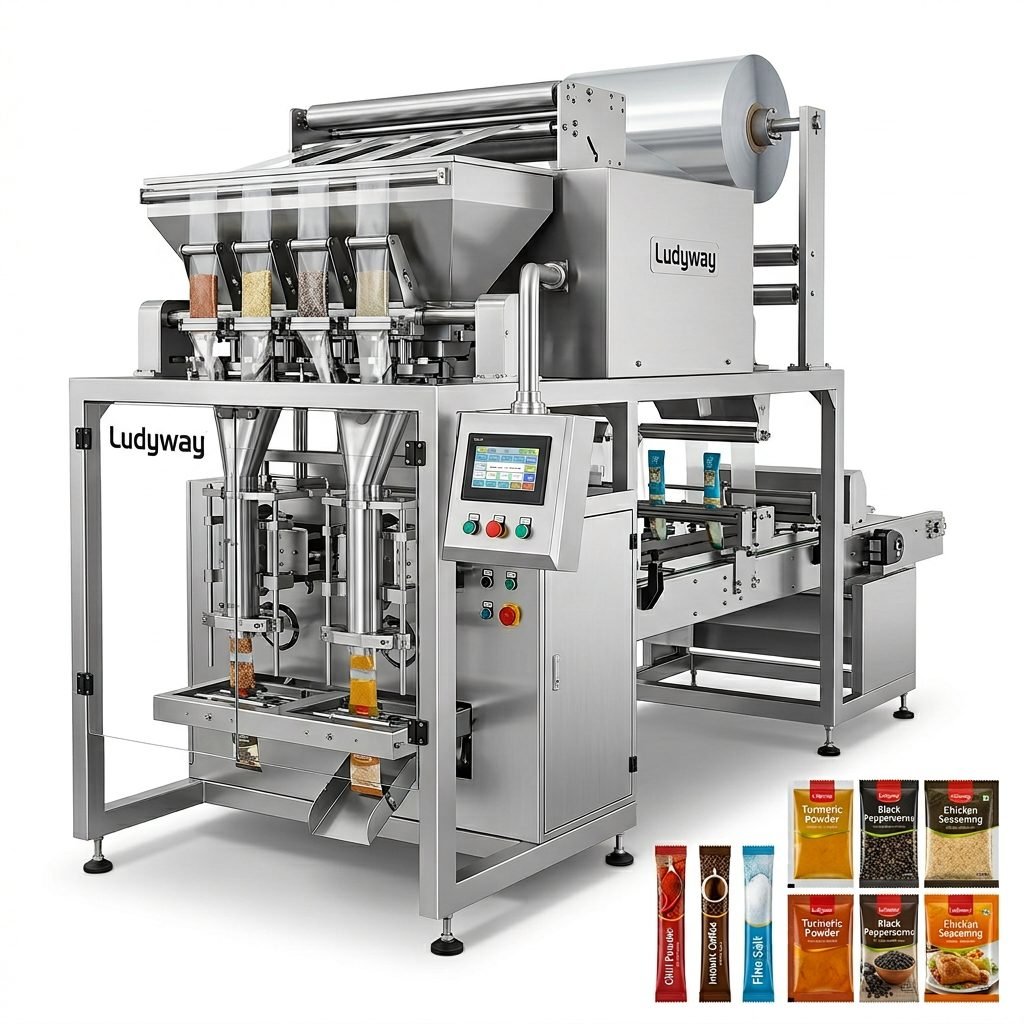
High-Speed Multi-Lane Spice Powder Stick Pack Machine
View Specifications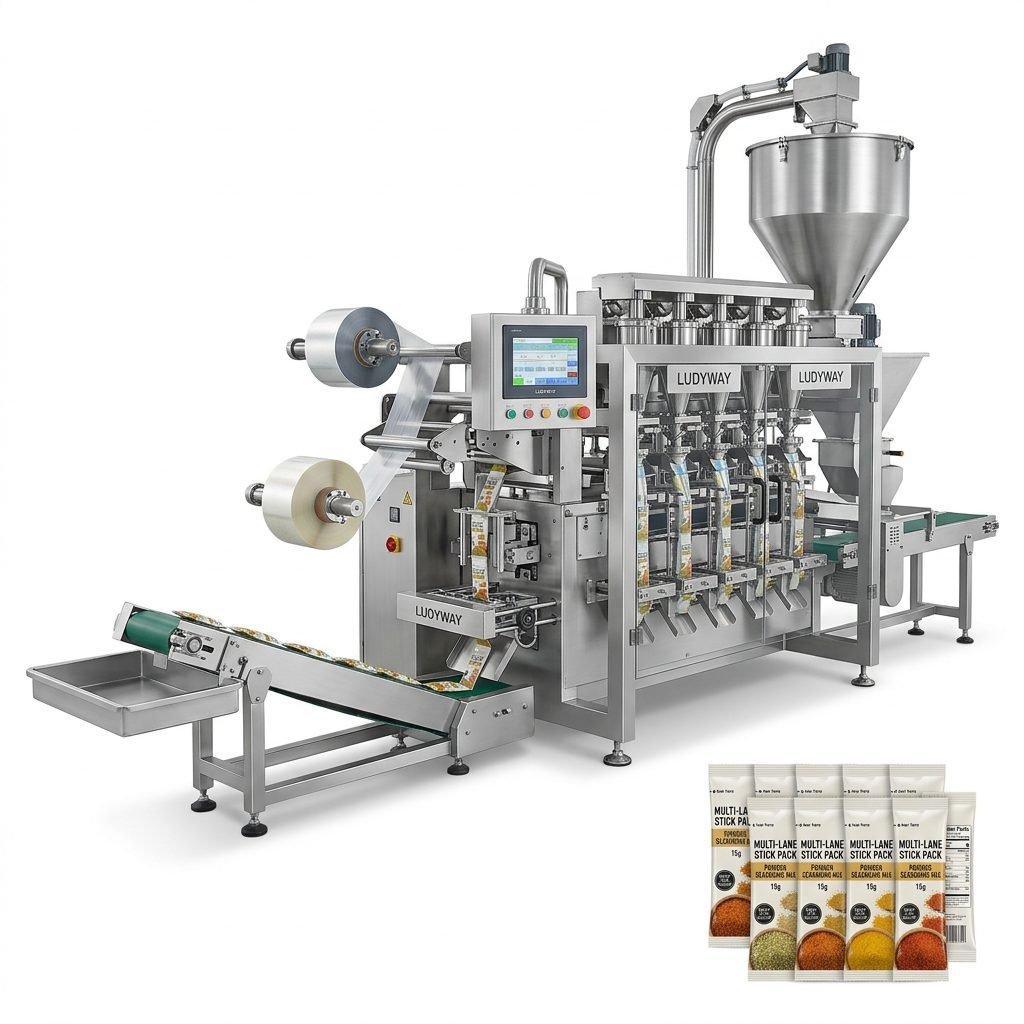
High-Speed Multi-Lane Powder Seasoning Packaging Line
View SpecificationsCompliance, Allergen Management & Clean-in-Place Engineering
Operating in modern food packaging means stringent alignment with global food safety standards including FDA 21 CFR Part 110, cGMP, BRCGS, and ISO 22000. Seasoning facilities present distinct risks associated with potent allergens (mustard flour, celery salt, sesame powder, gluten additives, peanut extracts, dairy solids).
Allergen Segregation & Rapid Changeover
Prevent cross-contact through dedicated modular dosing funnels and color-coded rapid-release auger screws. By minimizing line changeover time from 90 minutes to under 20 minutes with tool-free disassembly, plants maintain stellar Overall Equipment Effectiveness (OEE) while satisfying stringent allergen separation audits.
Sanitary Welding & Polished Food Contact Surfaces
All direct product contact zones are fabricated from SUS304 or SUS316 stainless steel with an interior mirror-polish roughness average of Ra < 0.4 µm. Crevice-free orbital TIG welding eliminates harbor points for bacterial contamination (Salmonella, Bacillus cereus) that thrive in warm, dry spice environments.
Hermetic Seal Verification & Ultrasonic Sealing
For micro-dusty spice powders, standard thermal conduction jaws can trap dust particles inside the seal margin. Advanced ultrasonic sealing technology vibrates particulate out of the bond zone before energizing molecular fusion, producing 100% airtight hermetic seals that withstand altitude expansion and rigorous transport drops.
Comprehensive Electrical & Washdown Protection
Wet sanitation shifts require IP65/IP66 enclosure ratings for servo motors, HMI touchscreens, and pneumatic valve terminals. Integrated cable conduits and sloped stainless steel frames shed water immediately, preventing pooling and eliminating corrosion in humid seasoning packaging environments.
Engineering Excellence & Turnkey Integration by Ludyway
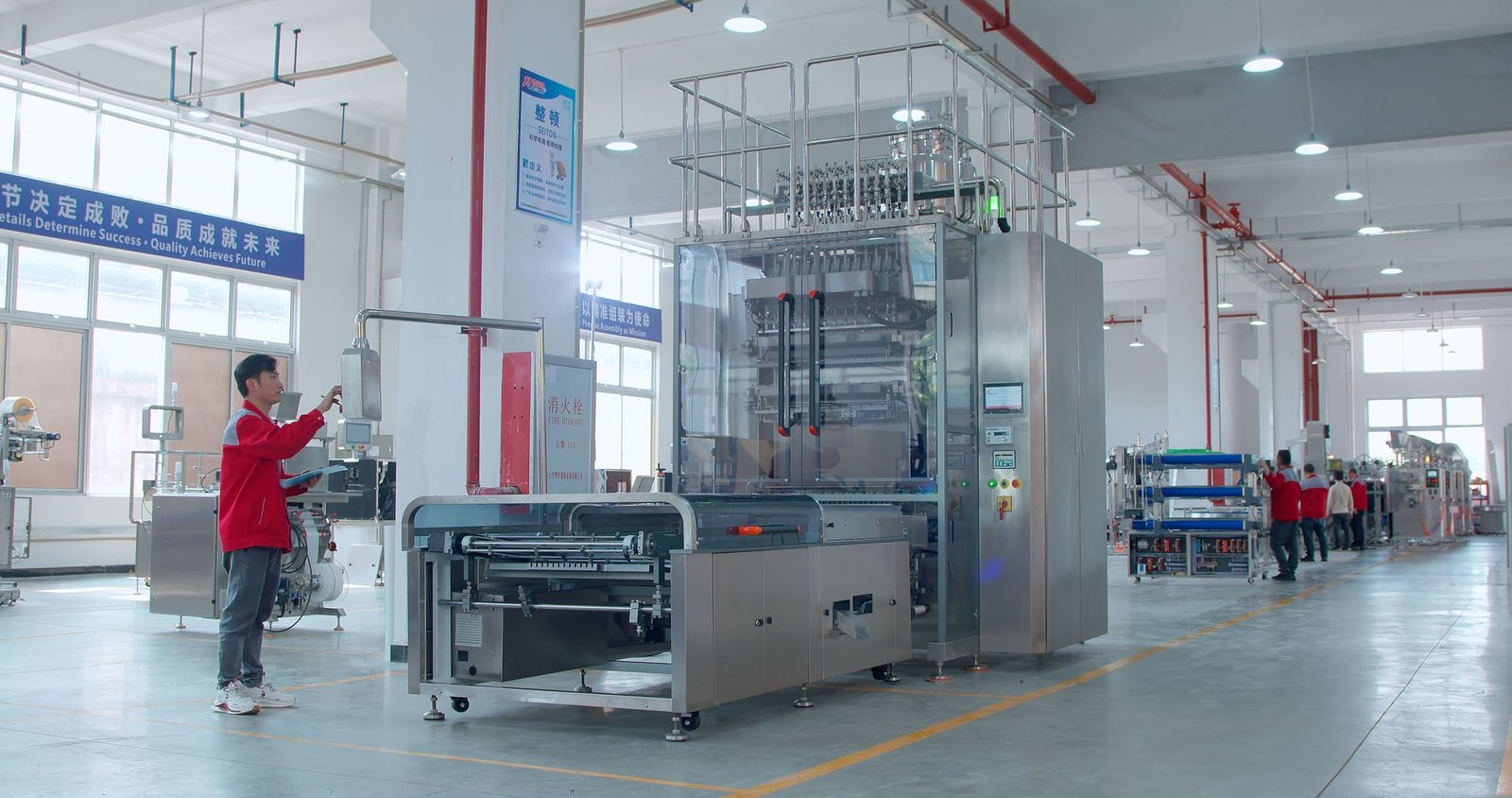
Ludyway is recognized as one of China’s premier high-speed packaging machinery manufacturers, specializing in advanced automated packaging equipment and turnkey processing systems for the global food, pharmaceutical, and dietary supplement industries.
Backed by more than 30 years of engineering expertise, a 20,000㎡ modern manufacturing plant, and 130+ technical research specialists, Ludyway engineers over 50 intelligent machinery models including multi-lane stick pack, 4-side sachet, VFFS, and robotic case-packing integrations. Serving over 100 countries and regions worldwide, we empower seasoning manufacturers to maximize throughput, eliminate giveaway, and achieve unparalleled seal reliability.








Engineering & Operational Seasoning Line FAQs
Explore direct technical answers regarding seasoning packaging line capacity, dust control, dosing precision, and factory automation.
How do I prevent seasoning powder from getting trapped in the sachet seal?
Trapped powder in seal zones is resolved by using servo-timed bottom-up filling nozzles, active vacuum dust extractors mounted at the forming tube shoulder, static-elimination bars on the film feed web, and ultrasonic sealing jaws that vibrate loose dust particulates away from the seal perimeter.
What is the typical output speed of a multi-lane seasoning sachet machine?
Line speeds depend on the number of lanes and dosing weight. A standard 6-lane sachet line running 5g – 10g seasoning powder runs comfortably between 240 to 360 sachets per minute, while high-speed 10-lane or 12-lane configurations exceed 500 to 650 sachets per minute continuously.
Can one packaging line handle both fine spice powders and coarse salt flakes?
Yes. Ludyway packaging lines can be designed with interchangeable quick-swap dosing modules. An auger filling station can be uncoupled and replaced with a volumetric measuring cup assembly or linear weigher in under 30 minutes to transition from fine paprika powder to coarse crystal salt.
How is Nitrogen Flushing (MAP) calibrated on high-speed multi-lane machines?
Nitrogen gas is manifold-distributed directly through internal conduits in each forming tube. Calibrated digital flow meters regulate gas pressure, creating a continuous positive-pressure inert curtain inside each sachet immediately prior to the horizontal sealing jaws firing.
Ready to Engineer Your Seasoning Packaging Production Line?
Consult with Ludyway’s senior packaging automation engineers for factory layout design, material rheology testing, OEE optimization, and complete turnkey production quotations.
