
Understanding Spice Physical Properties & Packaging Dynamics
Setting up a high-efficiency spice packaging line requires addressing fundamental material handling challenges. Spices are biologically diverse, hygroscopic, abrasive, and frequently laden with volatile essential oils. From fine non-free-flowing ground turmeric and curry blends to whole black peppercorns and granulated dehydrated garlic, machinery must maintain exact dosing tolerances while preventing dust explosion risks, aroma degradation, and mechanical cross-contamination.
Powders vs. Granules
Non-free-flowing powders (e.g., ground cinnamon, chili powder) require specialized servo-driven vertical auger fillers with dust-tight shrouds, whereas free-flowing particulates (e.g., mustard seeds, coarse sea salts) achieve higher speeds using multi-head combinational weighers or volumetric rotary cups.
Essential Oil Volatility
Aromatic compounds evaporate rapidly under heat friction. Auger tooling must be engineered with polished contact surfaces and controlled rotation profiles to prevent thermal transfer during heavy-duty dosing shifts, preserving flavor potency.
Sanitation & Allergen Control
Cross-contamination of allergens (such as mustard or celery seed derivatives) requires tool-less quick-disconnect hoppers, food-grade 304/316L stainless steel, and integrated Clean-in-Place (CIP) or Washdown capabilities across all line stages.
Step-by-Step Architecture for Spice Packaging Line Setup
A reliable line integrates raw material infeed, precise portion dosing, high-integrity container sealing, inspection validation, and automated secondary boxing. Here is the operational workflow engineered for high yield.
Bulk Feeding & Infeed Conveyance
Automating product elevation without causing powder segregation or environmental dust emissions is critical. Utilize industrial Heavy-Duty Industrial Screw Conveyors or pneumatic vacuum feeders featuring closed-loop dust extraction. Constant-level sensors ensure buffer hoppers retain uniform hydrostatic pressure above the filler, preventing volumetric weight drift.
- Closed-loop dust containment hoods
- Level control integration via PLC sensors
- Gentle screw flights to prevent particle degradation
Precision Dosing & Form-Fill-Seal Automation
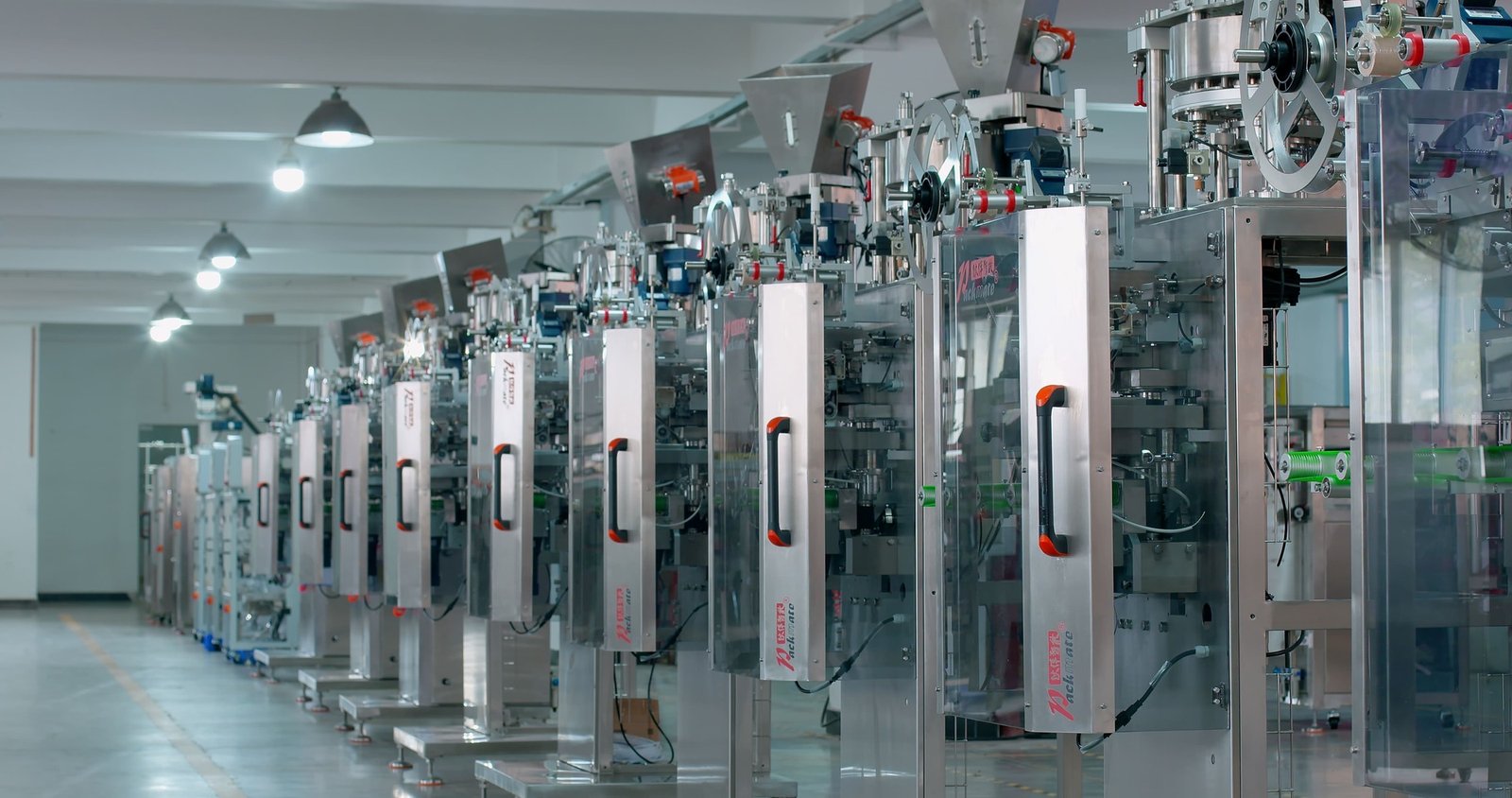
Depending on consumer packaging demands, integrate either multi-lane sachet packaging or vertical stick pack lines. The Multi-Lane Spice Packaging Machine for Granules & Powders allows multi-track simultaneous sealing, delivering high-speed output with independent lane weight adjustments.
- Servo auger drives delivering ±0.5-1% dosing accuracy
- Multi-lane flexible pouch configurations (stick packs, 4-side seal sachets)
- Nitrogen purge gas injection for shelf-life extension
Inline Quality Control & Rejection Systems
Defend your brand against under-filled units or metallic contamination. Every high-efficiency line must deploy dynamic checkweighers coupled to high-speed air-jet reject systems, paired with food-grade industrial metal detectors capable of detecting ferrous, non-ferrous, and stainless-steel fragments down to sub-millimeter scales.
- Dynamic inline checkweighing at 120+ packs per minute
- Automated reject confirmation sensors
- X-Ray inspection for glass, stone, and bone fragments in whole spices
Secondary Packaging, Cartoning & Palletizing
Bottlenecks often occur after primary packaging. Implement multi-lane sachet collation with automated cartoning systems and case sealers. The end-of-line configuration links directly to centralized palletizing units, cutting manual labor by over 70% and ensuring steady warehouse intake.
- High-speed robotic collating arms and carton erectors
- Automated case packing and tape sealing
- Modular pallet wrapping integration
Essential Packaging Machinery for Modern Spice Lines
Select purpose-engineered machinery matched to your exact product format, speed targets, and pouch geometries:
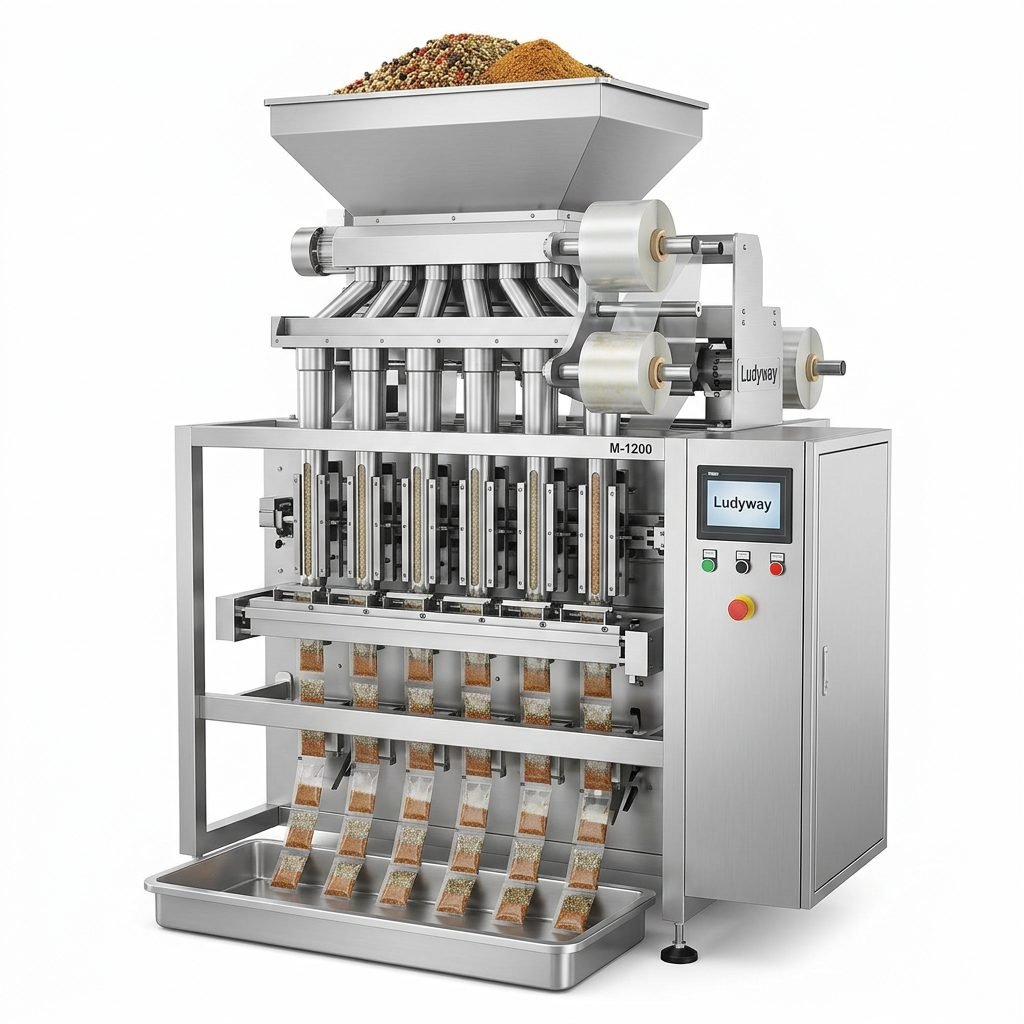
Spice Packaging Machine for Granules & Powder
Multi-lane sachet packaging system engineered for precise dosing of seasoning blends and single-ingredient spices.
View Details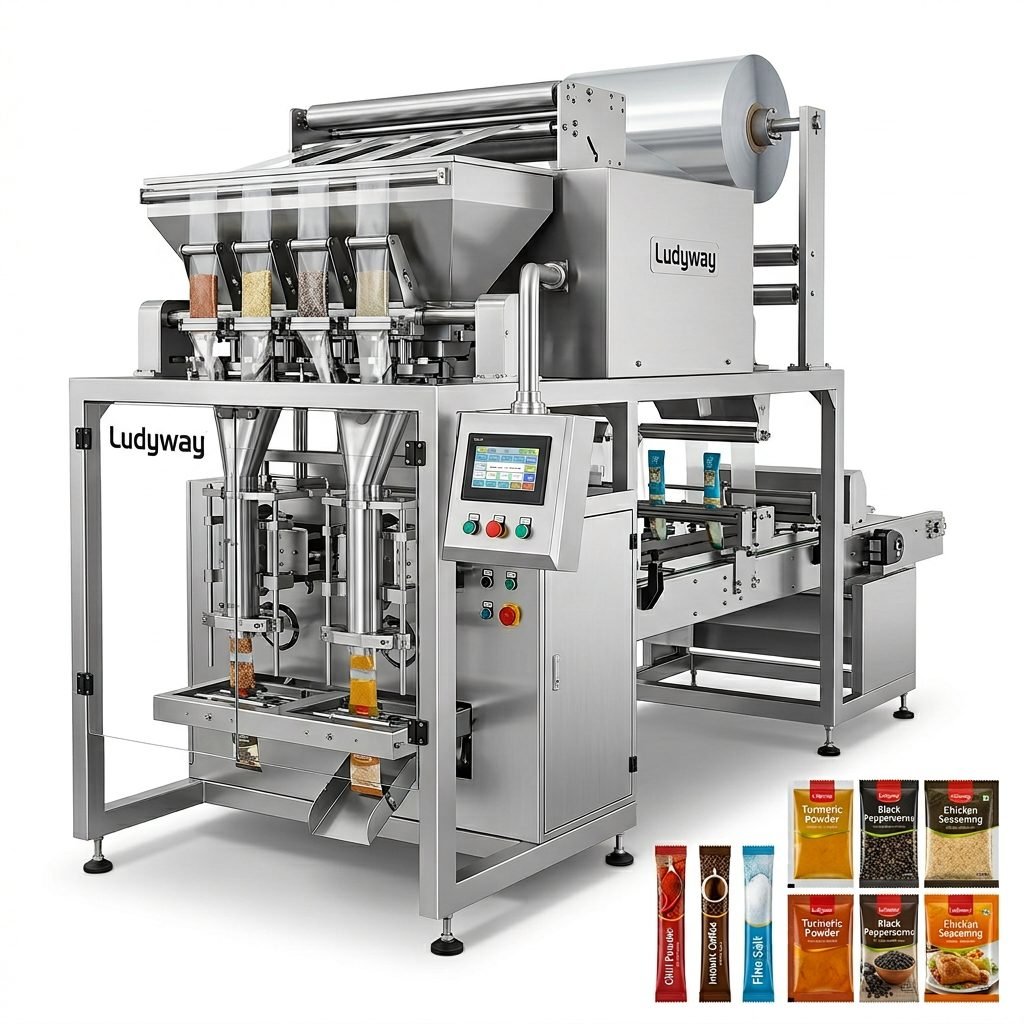
Multi-Lane Spice High-Speed System
High-speed sachet and stick pack solution providing high volume output with tight weight tolerance controls.
View Details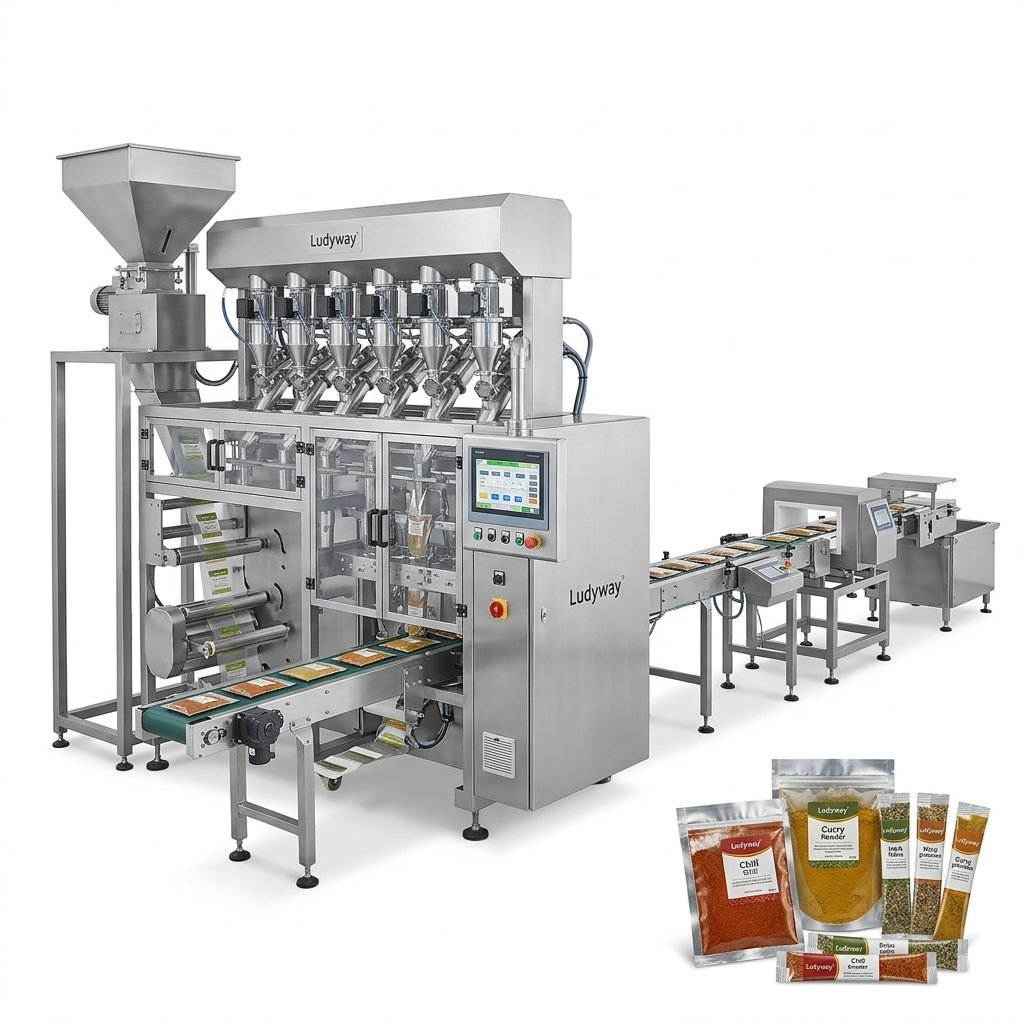
Automated Multi-Lane Spice Packaging Line
Complete turnkey powder and granule line equipped with centralized PLC controls and dust extraction manifolds.
View Details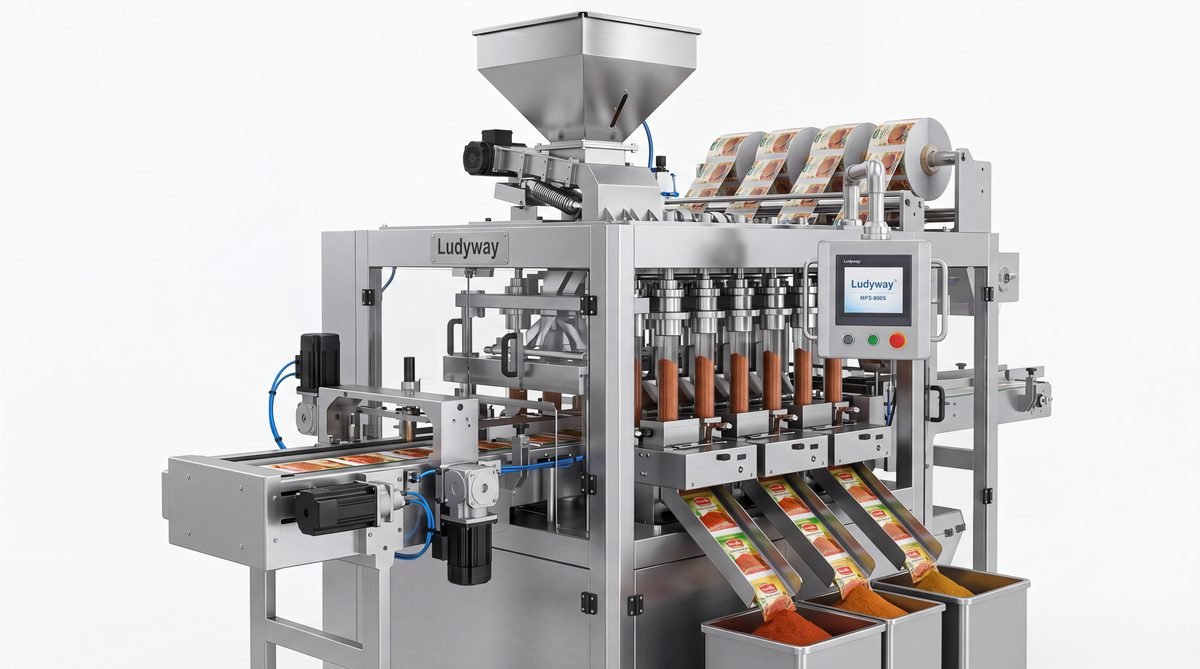
Automatic Powder Sachet Machine for Spices
Equipped with precision multi-auger tooling designed for fine spice powders including paprika and curry blends.
View Details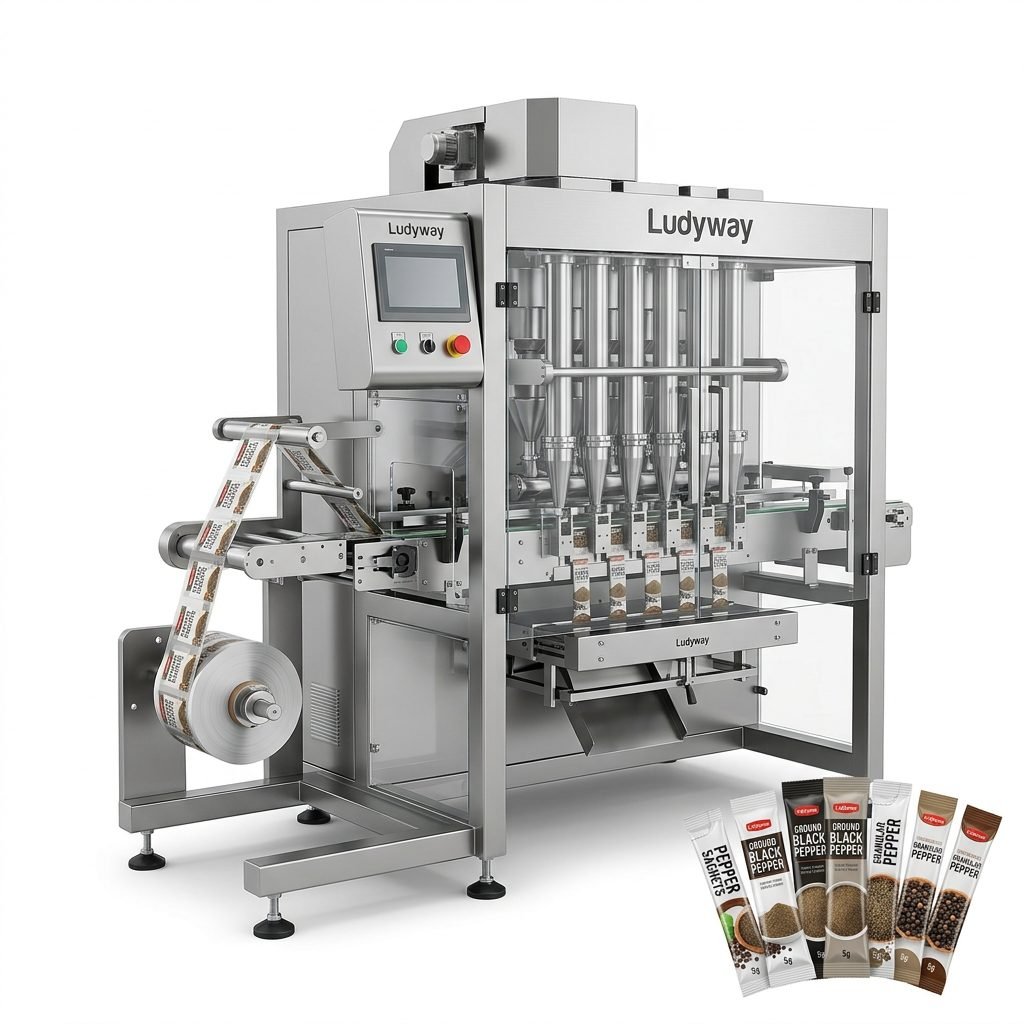
Pepper Sachet Multi-Lane Packaging Machine
Engineered specifically for cracked pepper, black pepper powders, and granular seasoning formulations.
View Details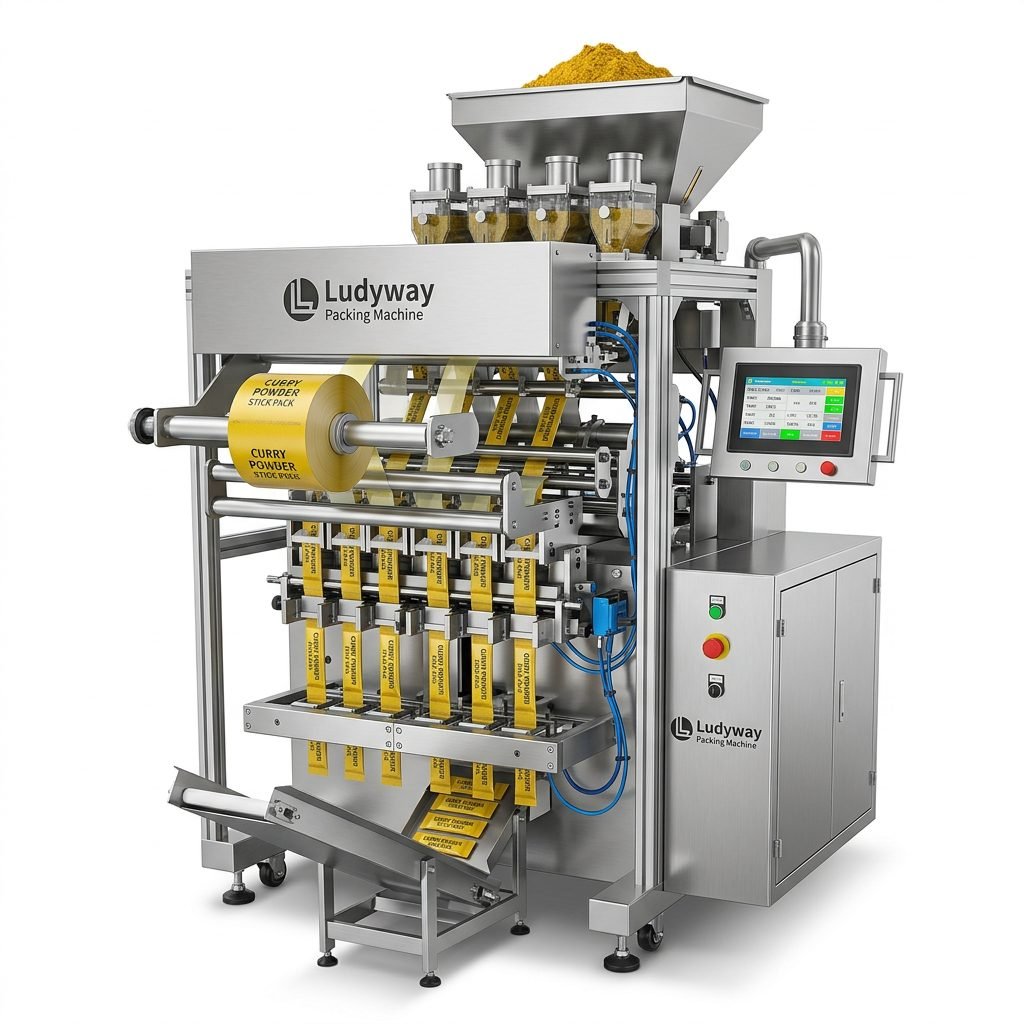
Curry Powder Multi-Lane Stick & Sachet Packer
Built with hermetic seal jaws and anti-static discharge channels for sticky, oily curry formulations.
View Details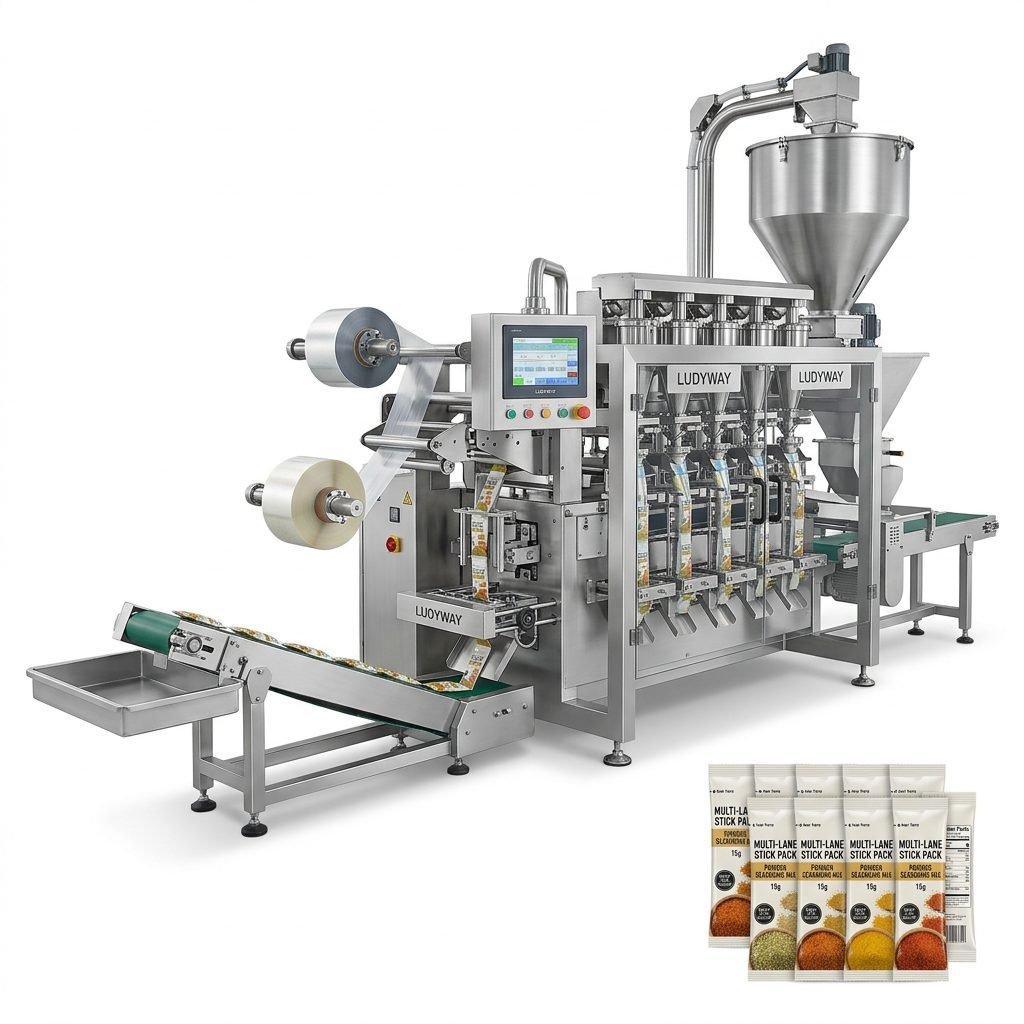
High-Speed Powder Seasoning Stick Pack Line
Multi-track stick pack packaging configuration delivering high operational speeds for single-serve spice portions.
View Details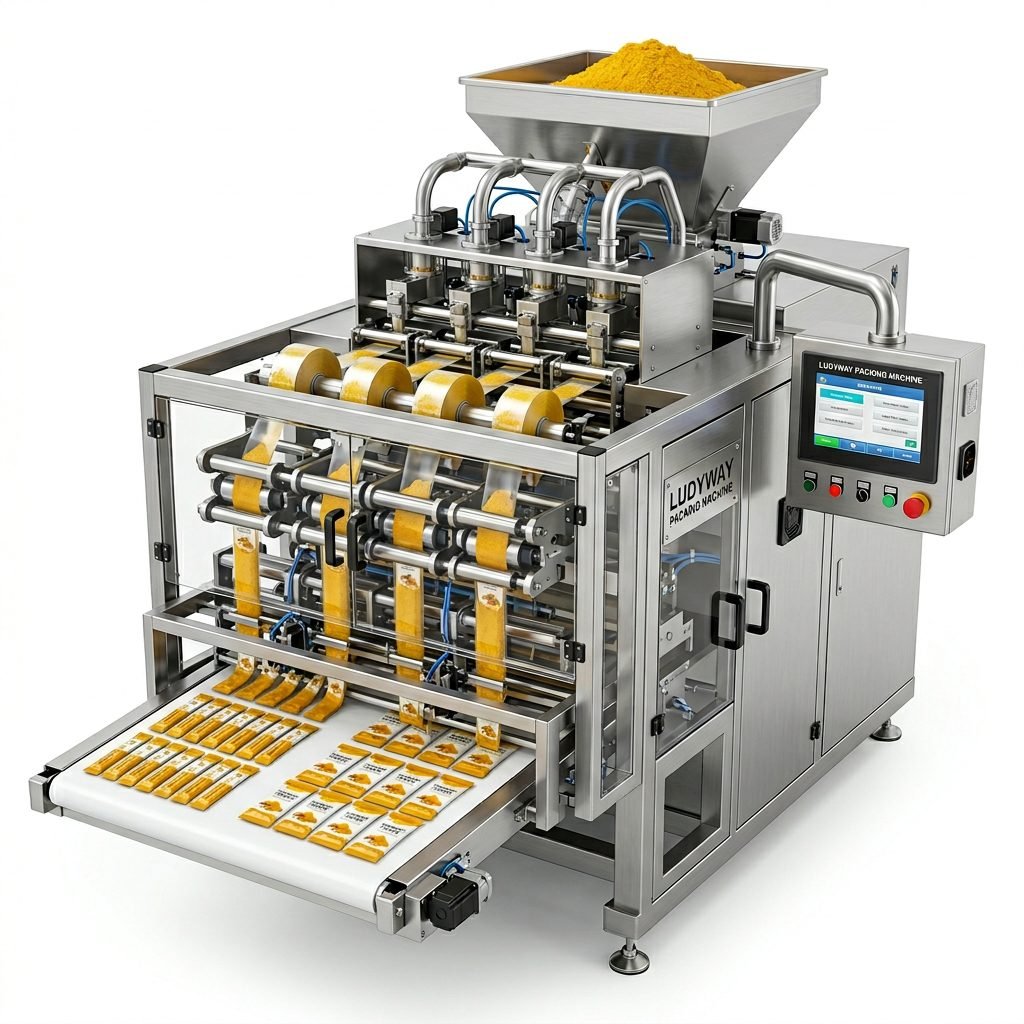
Turmeric Powder Multi-Lane Packaging Machine
Features dust-proof sealing chambers and easy-clean auger screw sets to prevent yellow pigment staining.
View DetailsFilling Technology vs. Spice Characteristics
Selecting the wrong dosing methodology is the leading cause of production downtime in spice plants. Evaluate your core product characteristics against this engineering matrix:
| Dosing Mechanism | Ideal Spice Typologies | Speed Range (BPM) | Accuracy Range | Key Advantage |
|---|---|---|---|---|
| Servo Vertical Auger | Turmeric, Chili Powder, Ground Cinnamon, Fine Seasoning | 40 – 120 per lane | ±0.5% – 1.0% | Dust containment, anti-drip cut-off valves, handles non-free-flowing powders |
| Multi-Head Combinational Weigher | Whole Peppercorns, Cardamom Pods, Star Anise, Cloves | 60 – 200 total | ±0.2g – 0.5g | Zero product crushing, dynamic weight optimization for uneven particle shapes |
| Volumetric Rotary Cup Filler | Mustard Seeds, Coarse Sea Salt, Granulated Onion/Garlic | 50 – 150 per lane | ±1.0% – 1.5% | Cost-effective, robust mechanical uptime, rapid product cleanout cycles |
| Linear Vibratory Weigher | Crushed Red Pepper Flakes, Mixed Herb Blends, Oregano Leaves | 30 – 80 total | ±0.5% – 1.0% | Gentle product handling preserves leaf morphology and aesthetic appeal |
Mitigating Critical Risk Factors in Spice Operations
To sustain Overall Equipment Effectiveness (OEE) above 85%, packaging lines must incorporate engineering solutions specifically addressing dust generation, residual oxygen content, and mechanical wear.
Dust Control & Explosion Prevention
Fine organic spice clouds (e.g., starch-rich seasoning mixtures) create combustible dust hazards. Setup should integrate local extraction collars at sealing jaws and hoppers, connecting to an Industrial Dust Collection System with ATEX-certified grounding to eliminate static ignition.
Modified Atmosphere Packaging (MAP)
Lipid oxidation quickly turns ground spices rancid and alters color vibrancy. Incorporating a multi-stage Nitrogen Flushing Packaging System reduces residual oxygen levels to under 1.5%, extending commercial retail shelf stability without synthetic preservatives.
Rapid Tool-less Changeover
Spice contract manufacturers regularly run 10 to 20 different SKU recipes per week. Machine frameworks must include quick-release forming tubes, split hopper designs, and swappable auger screws that enable sanitary washdowns and complete recipe changeovers in under 20 minutes.
Smart PLC Integration & IoT Telemetry
Modern packaging lines utilize synchronized PLC architectures with touch-screen HMIs. Production recipes, seal temperature PID loops, line speeds, and reject tracking data can be pushed directly to central SCADA and MES factory systems for real-time traceability.
Engineered by Ludyway Machinery
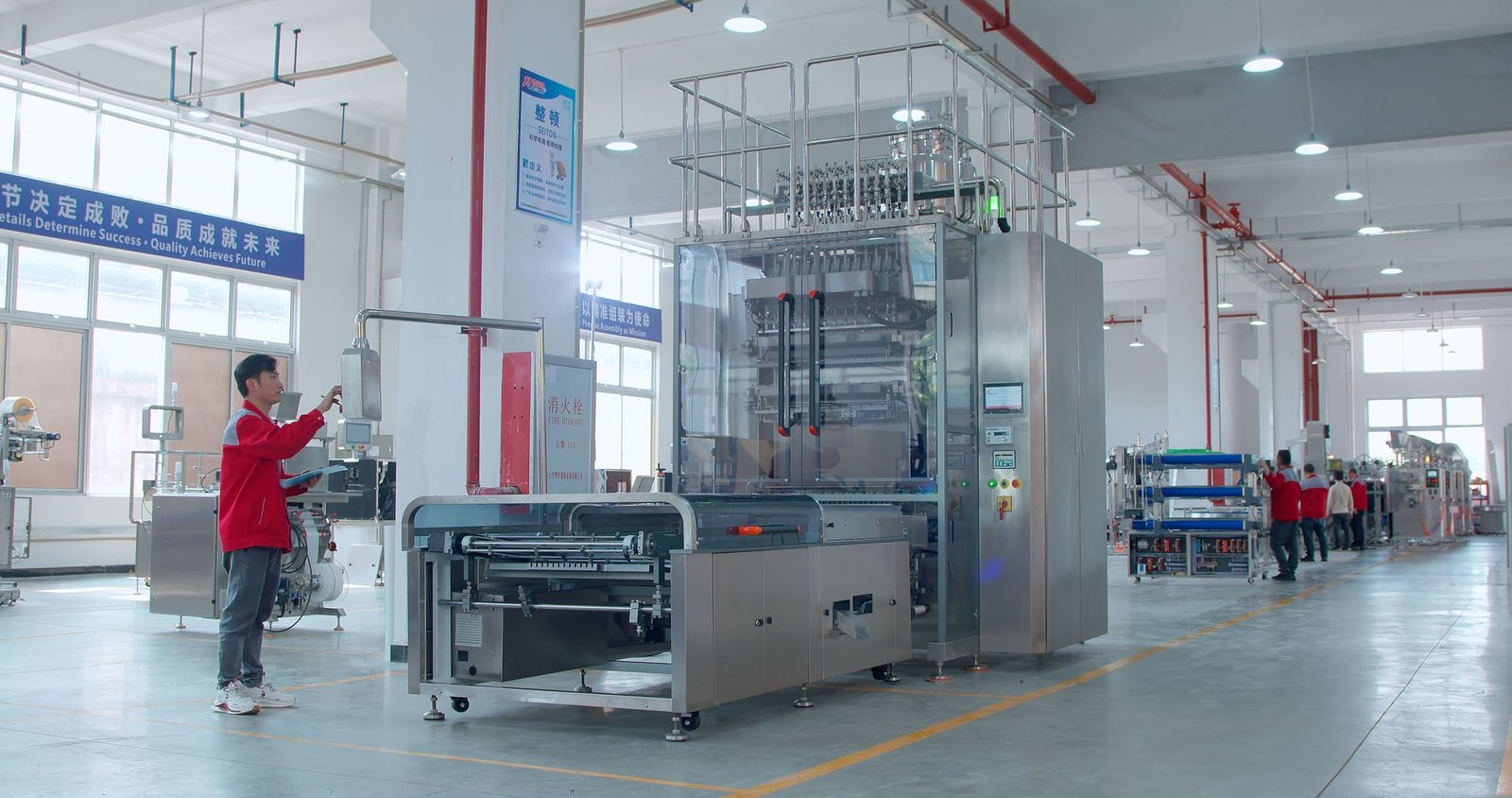
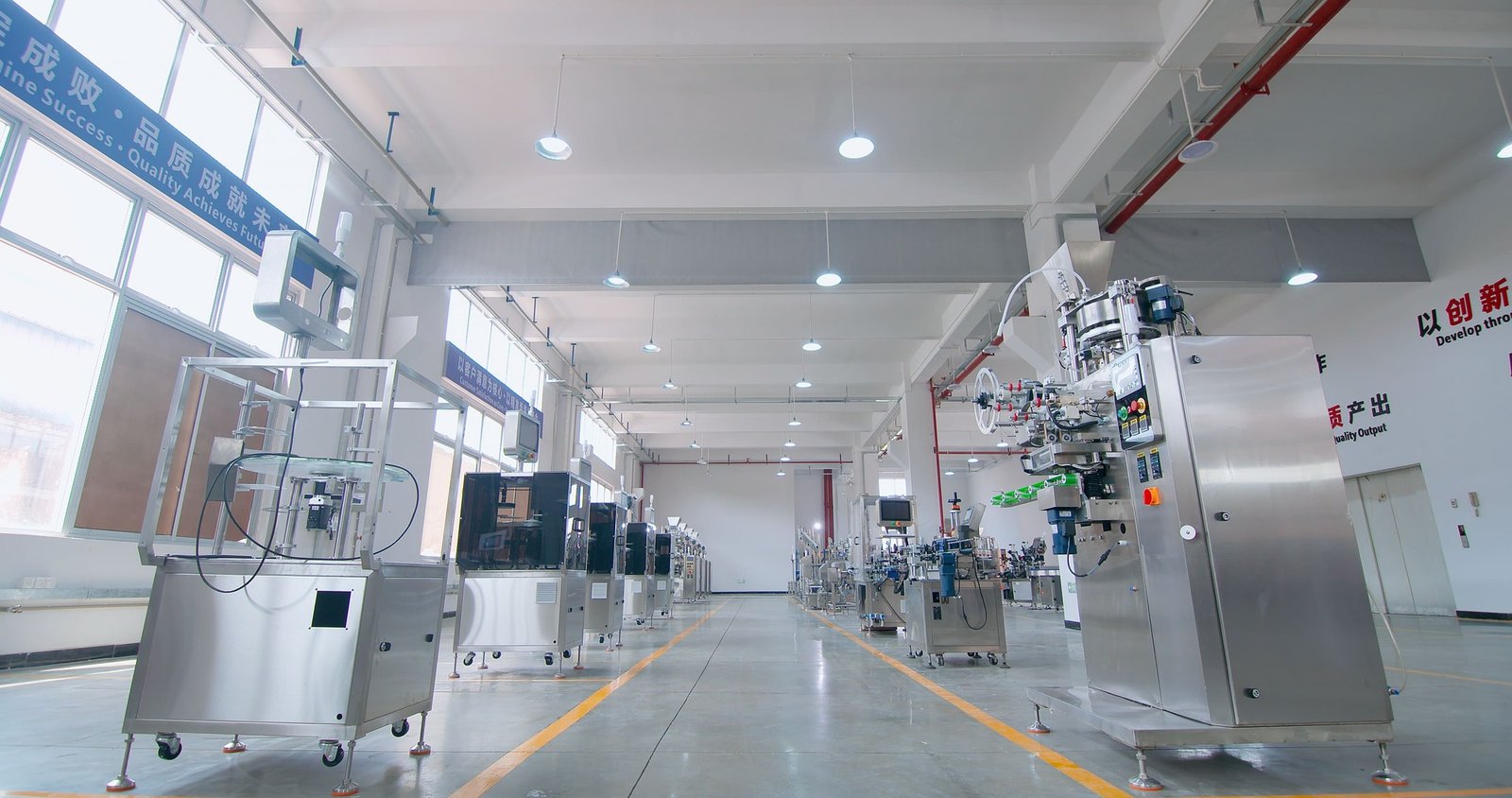
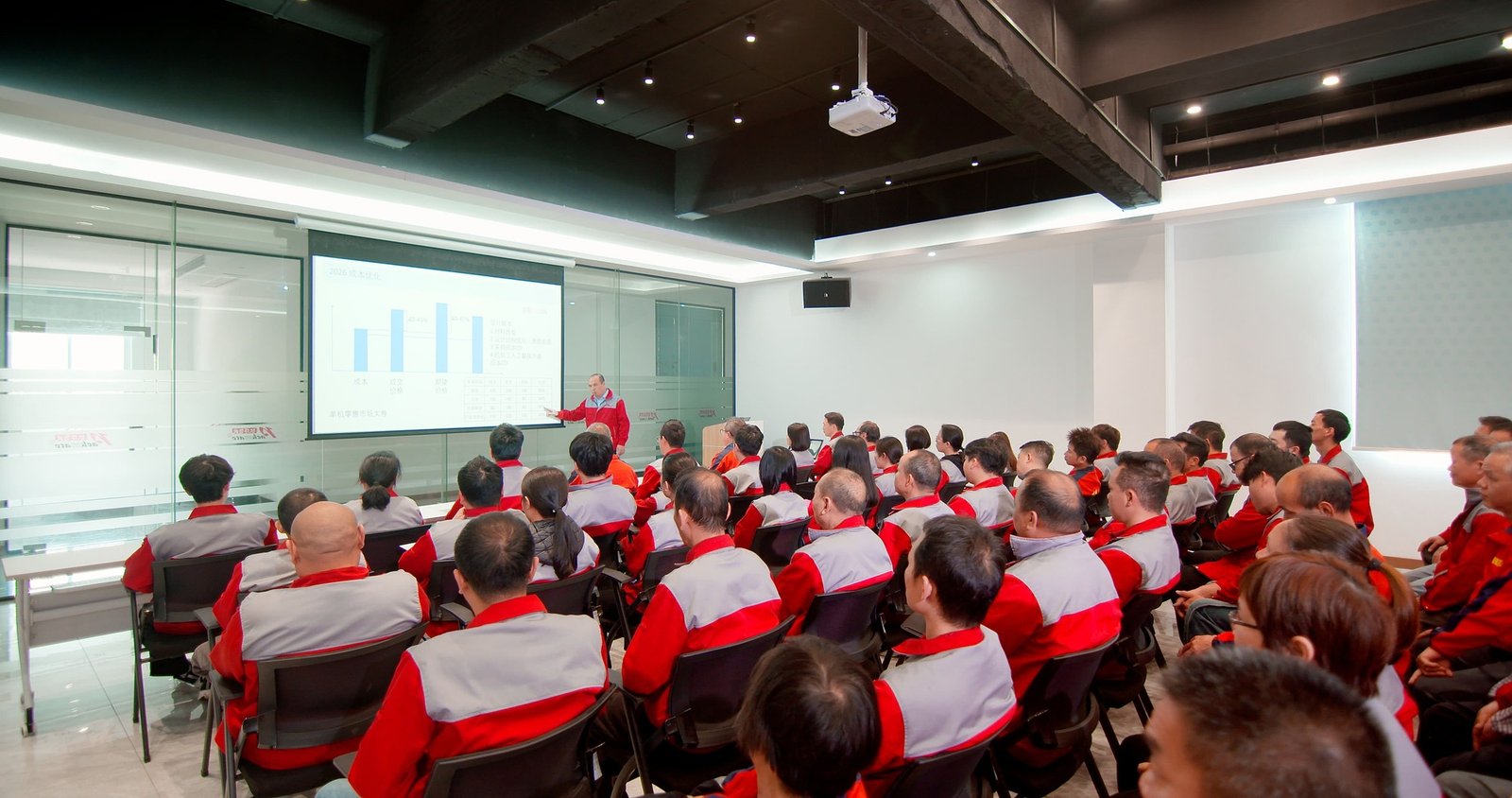
With over 30 years of manufacturing heritage, Ludyway is a global leader in designing robust, automated packaging systems for food seasonings, granules, and powders. We engineer turnkey packaging solutions serving manufacturers across 100+ countries.
Global Manufacturing Scale & Custom Engineering
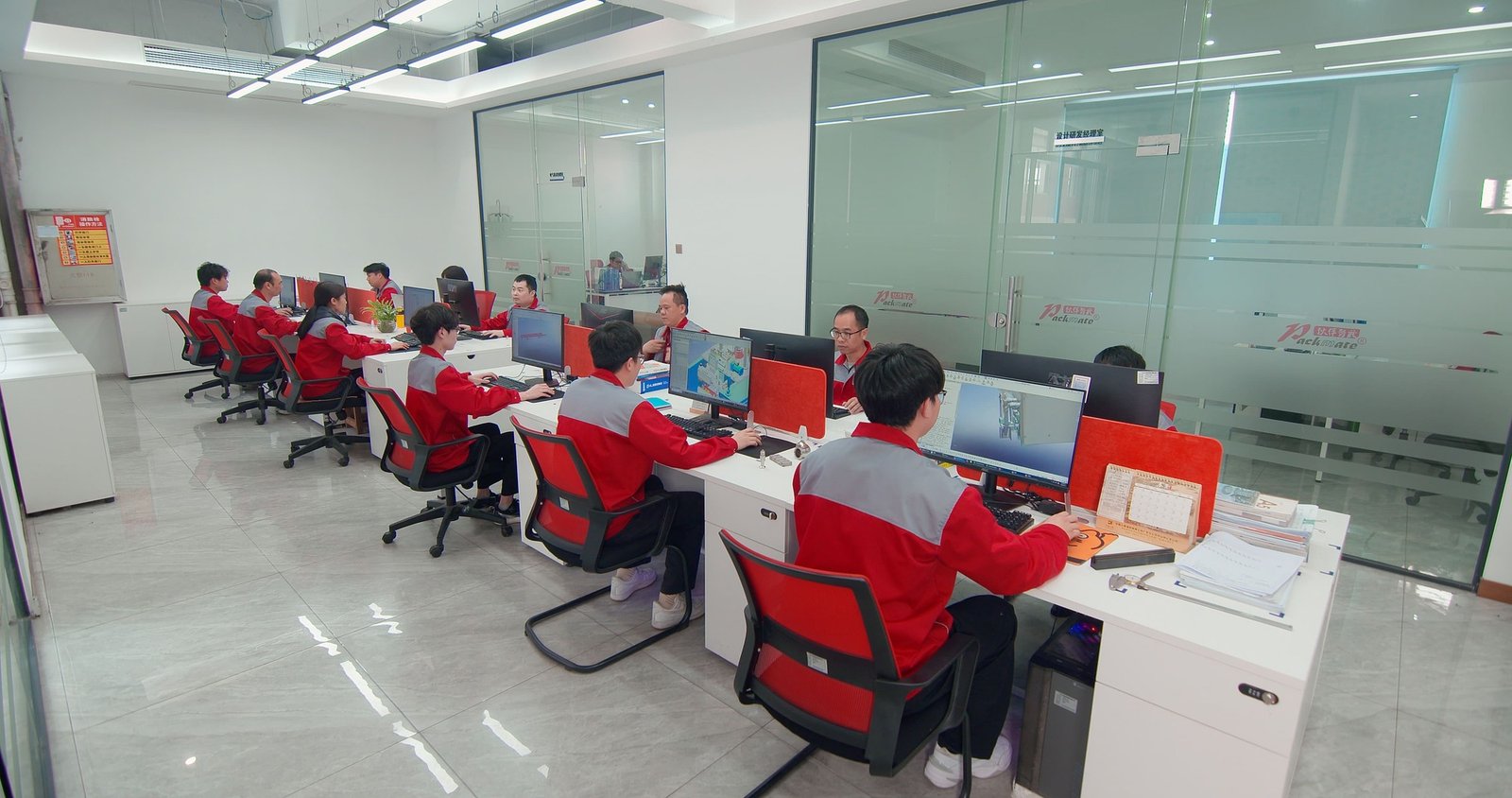
Operating from a state-of-the-art 20,000㎡ production facility equipped with over 200 precision manufacturing units, Ludyway offers more than 50 standard packaging machine models along with completely bespoke automation lines. Our engineers tailor infeed layouts, multi-lane dosing heads, nitrogen flush configurations, and end-of-line case packing systems directly to your factory space constraints and production targets.
Learn more about our equipment standards on our Company Profile or review our international compliance on the Our Certificate page.

Frequently Asked Questions: Spice Packaging Line Setup
Clear answers to common engineering questions regarding equipment selection, material flow, and regulatory compliance.
How do I prevent fine spice powders from clinging to forming tubes and heat seal jaws?
Fine spice powders generate static charges and airborne dust. Installing anti-static ionizer bars along the film feed, utilizing polished Teflon-coated forming collars, and positioning localized vacuum dust-extraction shrouds directly above the horizontal seal jaws prevents particle entrapment across pouch hermetic seals.
What is the advantage of multi-lane stick pack machines over single-lane rotary machines?
Multi-lane stick pack machines operate multiple forming and filling channels (from 4 to 12+ lanes) simultaneously within a compact footprint. This allows producers to achieve production outputs exceeding 300 to 600 pouches per minute while reducing floor footprint and utility overhead compared to operating multiple single-lane machines.
Can a single packaging line handle both fine spice powders and coarse whole seeds?
Yes, via modular line integration. By selecting a universal base vertical form-fill-seal chassis with quick-swap mounting brackets, operators can interchange a servo-driven auger filler (for ground cumin or chili powder) with a multi-head combinational weigher or volumetric cup filler (for whole peppercorns or coriander seeds) in under 30 minutes.
How does nitrogen flushing maintain aroma and pungency in packaged spices?
Volatile organic compounds like capsaicin, piperine, and essential aroma oils oxidize quickly when exposed to atmospheric air. Nitrogen gas displaces ambient oxygen inside the pouch before final heat sealing, lowering residual oxygen levels to <1.5% and halting both oxidation and moisture-induced clumping.
Ready to Engineer an Efficient Spice Packaging Line?
Whether you are upgrading an existing facility or establishing a new automated spice processing line, our senior engineering team provides complete turnkey line design, custom dosing integration, and comprehensive after-sales commissioning worldwide.
