
How to Set Up a Milk Powder Packaging Line
A comprehensive technical manual on engineering, integrating, and validating a high-speed automated dairy powder packaging line. Discover precision auger dosing, modified atmosphere packaging (MAP), secondary cartoning, and strict ISO/GMP hygienic compliance.
Understanding Dairy Powder Characteristics & Quality Challenges
Unlike free-flowing granular products, milk powder (including whole milk, skimmed milk, whey protein, and infant nutrition formulas) exhibits physical and chemical sensitivities. A successful packaging setup must overcome hygiene vulnerabilities, hygroscopic clumping, fat oxidation, and dust combustion risks.
Cleanroom & Bio-Barrier Zoning
Milk powder packaging requires separation into controlled hygiene zones (e.g., ISO Class 7 or Class 8 cleanrooms). Positive pressure filtration (HEPA H14) prevents cross-contamination from airborne microorganisms, yeast, and dust spores, meeting strict FDA 21 CFR and European EHEDG dairy protocols.
Modified Atmosphere (MAP)
Milk powder containing milk fat is highly prone to rancidity through lipid oxidation. Setting up a high-precision nitrogen flushing or vacuum-nitrogen gassing line is crucial to reduce residual oxygen levels below 0.5% – 1.0%, preserving shelf-life and sensory flavor for up to 24 months.
Hygroscopic & Flow Dynamics
Dairy powders quickly absorb atmospheric humidity, altering bulk density and causing clumping inside filling funnels. Packaging lines require strict RH control (<40% RH at 20-22°C) combined with specialized horizontal auger feeding screws with independent agitation blades to ensure repeatable dosing precision.
Step-by-Step Architecture of a Milk Powder Packaging Line
A fully automated turnkey dairy powder packaging line is a synchronized ecosystem composed of raw material conveying, ultra-precise dosing, hermetic sealing, modified atmosphere gassing, inline inspection, and end-of-line secondary packaging.
Dust-Free Powder Feeding & Vacuum Conveying
Milk powder is transferred from storage silos or bulk big-bag dump stations into intermediate buffer hoppers. Utilizing closed-loop pneumatic vacuum conveying prevents milk powder dust from dispersing into the room, reducing dust explosion hazards (ATEX compliance) while preventing external airborne contaminants from entering the milk powder stream.
Key Equipment: Automated Vacuum Feeder & Cyclone Hopper SystemPrecision Servo Auger Dosing & Multi-Lane Filling
The heart of the packaging process. High-speed multi-lane servo motors rotate engineered stainless steel auger screws to dose exact micro-weights (e.g., 1g to 50g for stick packs/sachets, or 400g to 900g for metal tin cans and pre-made pouches). Advanced agitation blades ensure uniform bulk density throughout continuous production runs.
Dosing Accuracy: Standard Deviation ≤ ±0.3% – 0.5% with Real-Time FeedbackNitrogen Purging & Hermetic Sealing (MAP)
Simultaneous with the filling cycle, high-purity food-grade nitrogen (N2 > 99.99%) is injected into the container or sachet. For rigid cans, automated vacuum chambers extract residual air before nitrogen back-flushing and double seaming. For flexible pouches and sachets, continuous nitrogen gas shrouds protect sealing jaws from oxygen entrapment.
Target Performance: Residual O2 < 1% to Prevent Fat RancidityDynamic Checkweighing & Multi-Frequency Metal Detection
100% of finished packs pass through a high-speed dynamic checkweigher equipped with dual-axis load cells. Out-of-spec packages are instantly diverted into locked rejection bins. Downstream metal detectors and high-resolution industrial X-ray inspection machines identify ferrous, non-ferrous, and stainless steel particles down to 0.8mm.
Quality Control: Automated Feedback Loop to Adjust Upstream Auger RevolutionsEnd-of-Line Automation: Cartoning, Case Packing & Palletizing
Individual sachets or sticks are counted, grouped, and fed into an automatic cartoner for box erection and tuck-in sealing. Cans and cartons are collated into corrugated shipping cases via drop packers or pick-and-place robotic arms, followed by automated case taping, laser date/batch marking, and robotic palletizing.
Secondary Packaging: Fully Integrated SCADA Line MonitoringSelecting the Ideal Packaging Format for Milk Powder
The choice of packaging format dictates machine speed, barrier protection levels, tooling cost, and primary market positioning. Review our engineering comparison below:
| Packaging Format | Target Product Range | Typical Speed Range | Residual O2 Level | Barrier & Shelf Life | Best Machine Technology |
|---|---|---|---|---|---|
| Multi-Lane Stick Pack | Single-serve infant formula, adult milk powder, milk tea mix (10g – 35g) | 200 – 600 sticks/min (4 to 10 lanes) | < 2.0% with gas injection | High barrier metallized film (12 – 18 months) | Multi-Lane Stick Pack Machines |
| Multi-Lane 4-Side Sachet | Single-dose pediatric formula, sample sachets, premium dairy powders (5g – 50g) | 160 – 480 sachets/min | < 1.5% with nitrogen shroud | Superior hermetic seals (18 months) | Multi-Lane Sachet Powder Fillers |
| Rigid Metal Tin / Can | Infant stage 1-3 formula, medical nutrition (400g – 900g) | 30 – 120 cans/min | < 0.5% (Vacuum Seaming) | Maximum hermetic barrier (24 – 36 months) | Rotary Auger Filler + Vacuum Nitrogen Seamer |
| Pre-Made Zipper Doypack | Family whole milk powder, goat milk powder, organic dairy (250g – 1kg) | 25 – 60 pouches/min | < 1.5% with N2 flushing | Resealable zipper laminated foil (12 – 24 months) | Rotary Premade Pouch Packaging Systems |
| Bulk Pillow Bag (VFFS) | Commercial catering, bakery whole milk powder (500g – 5kg) | 20 – 50 bags/min | < 3.0% standard gas flush | Standard co-extruded barrier (9 – 12 months) | Vertical Form Fill Seal (VFFS) Large Auger Unit |
Recommended Packaging Machinery for Milk Powder Lines
Explore Ludyway’s specialized packaging machinery engineered for sanitary dairy powder processing, micro-dose stick packing, high-speed multi-lane filling, and automated nitrogen packaging.
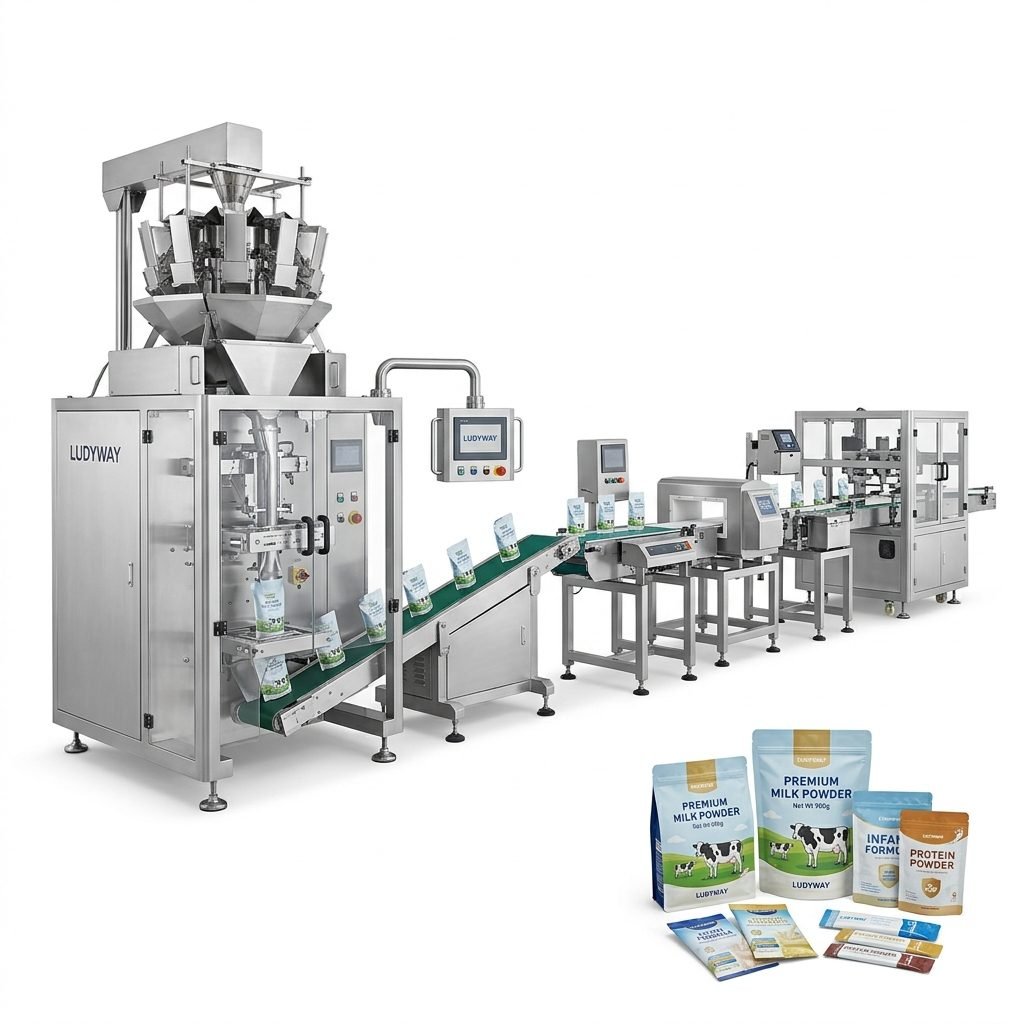
Automated Powder Packaging Line for Milk Products
View Line Details →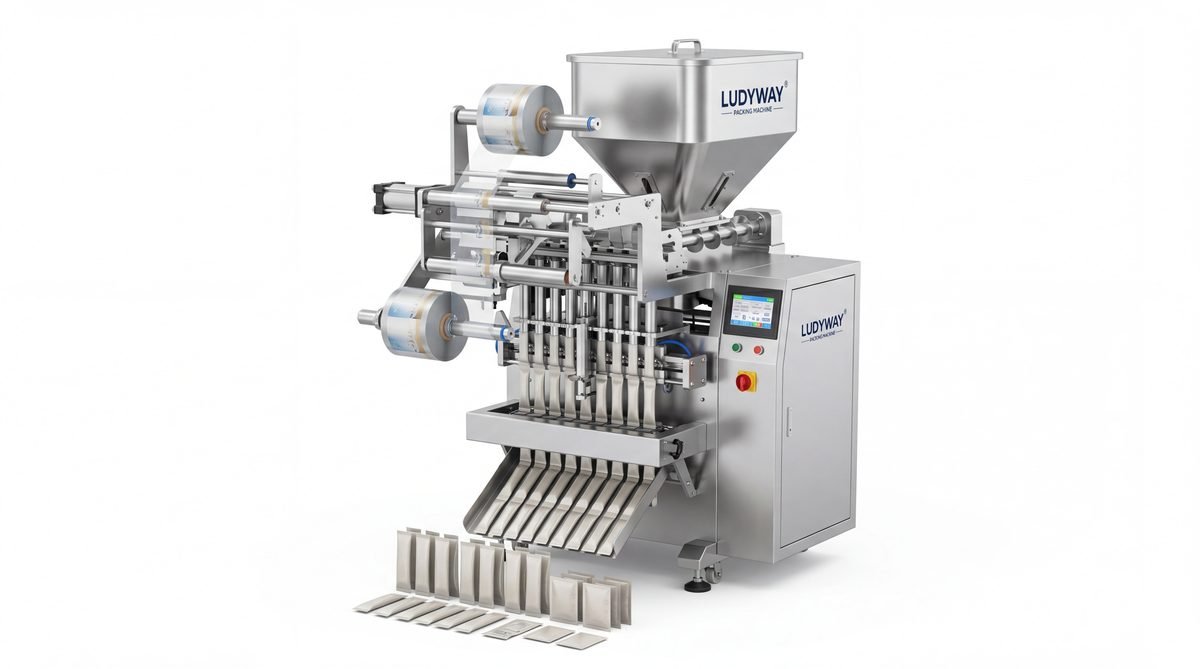
Milk Powder Sachet & Stick Pack Filling Machine
View Line Details →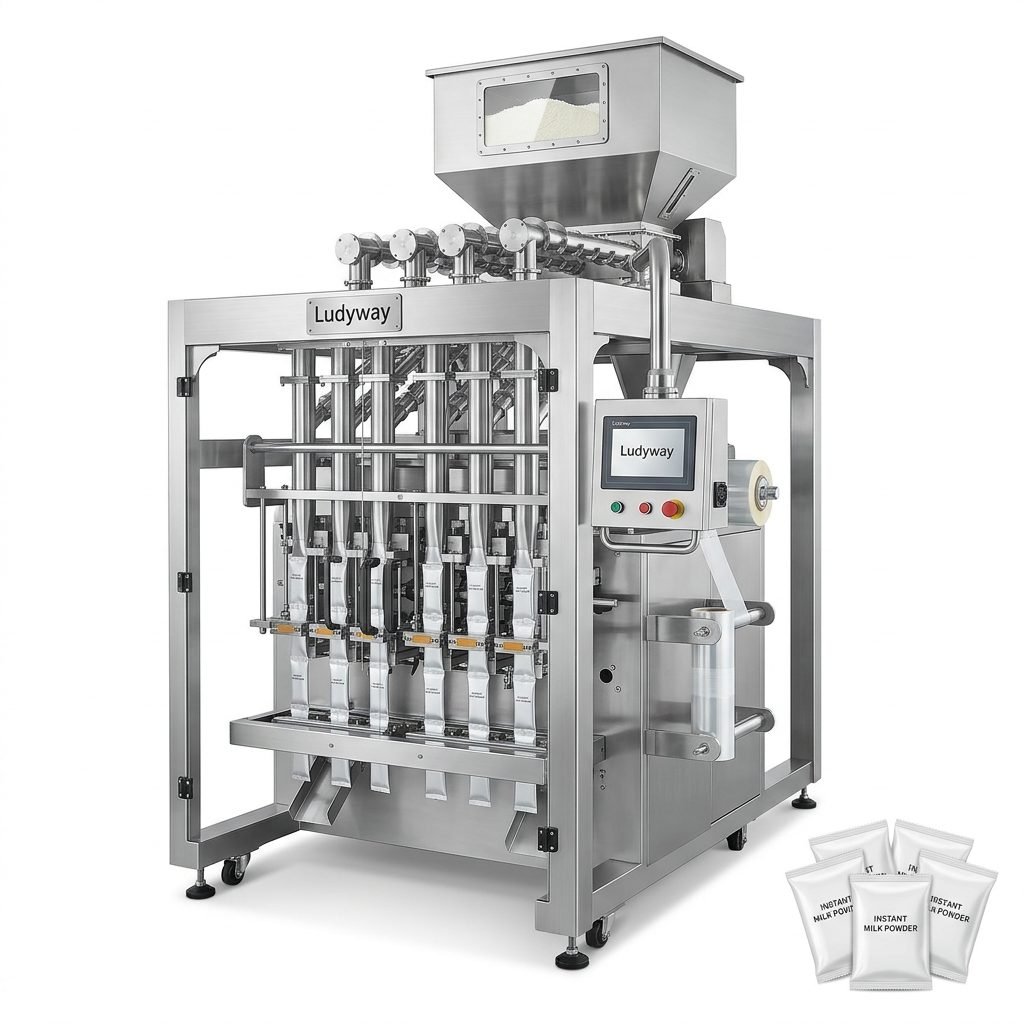
Instant Sachet Multi-Lane Milk Powder Packaging Line
View Line Details →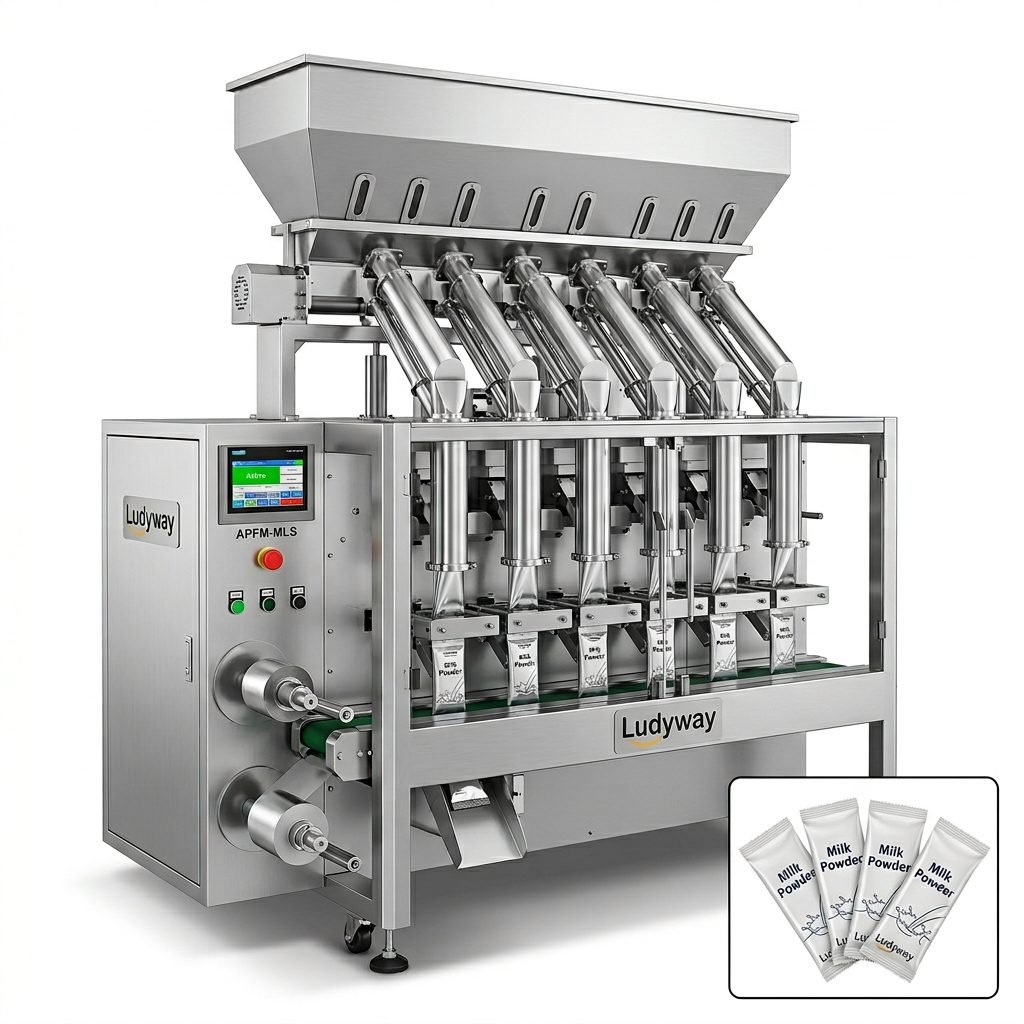
Multi-Lane Sachet System for Milk Powder Packaging
View Line Details →
Nitrogen Flushing System for Powder Preservation
View Line Details →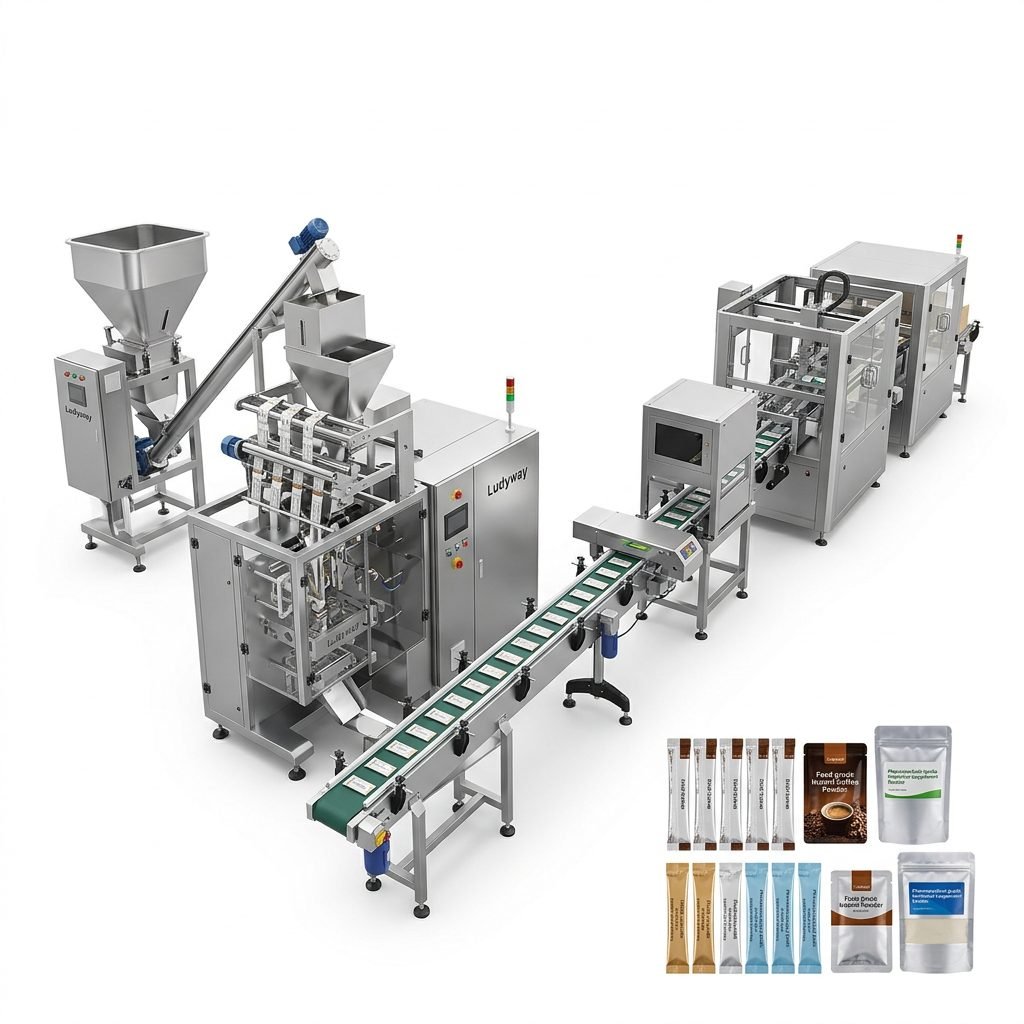
High-Speed Multi-Lane Powder Packaging Lines
View Line Details →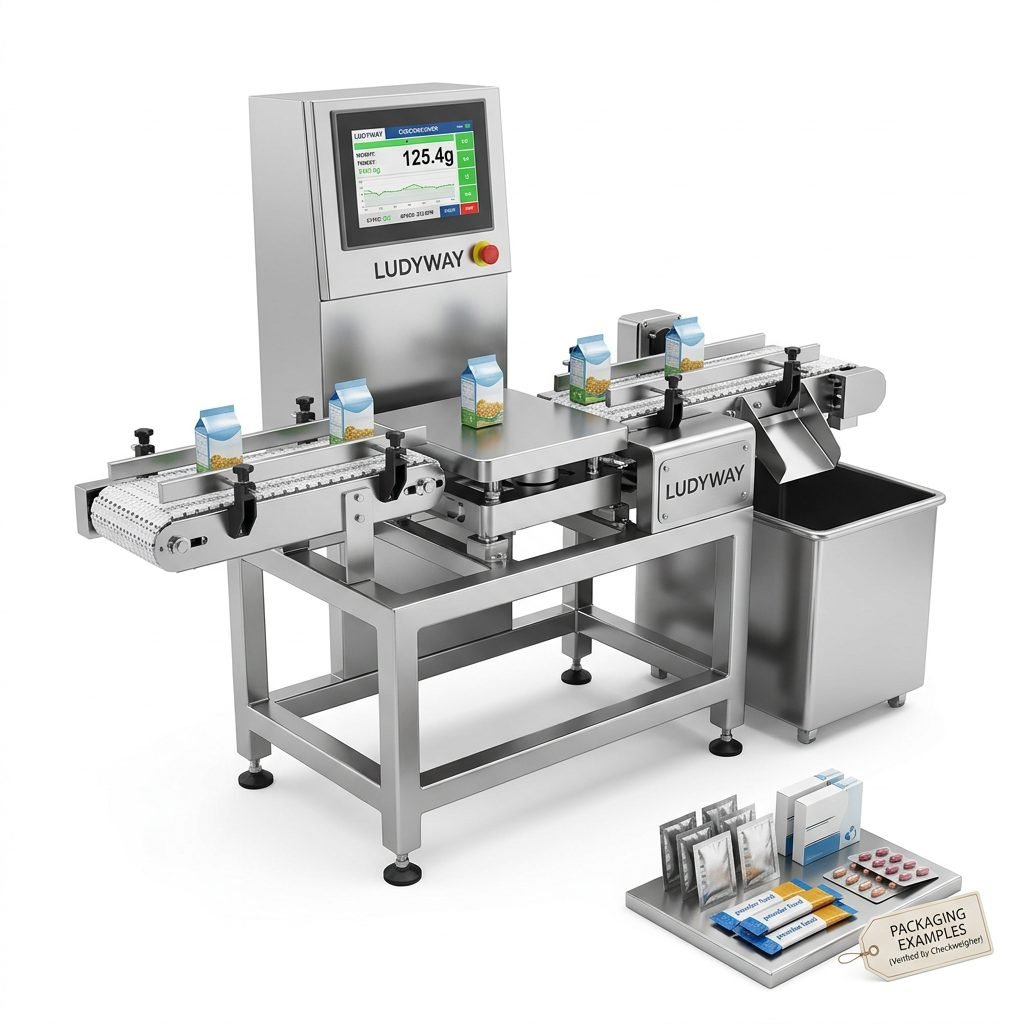
High-Precision Dynamic Inline Checkweigher
View Line Details →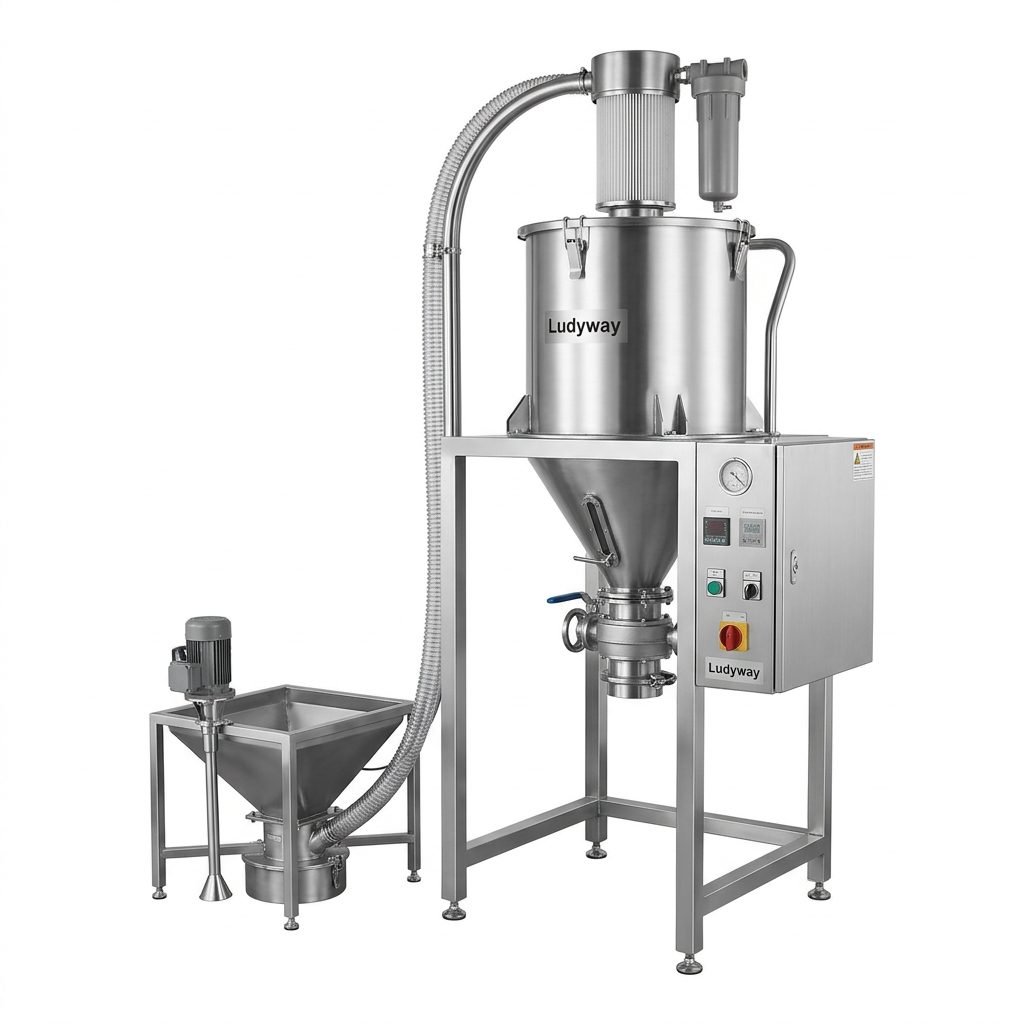
Closed-Loop Automatic Vacuum Feeder Conveyor
View Line Details →Key Critical Factors in Setting Up a Dairy Packaging Plant
Integrating a modern milk powder production line requires strict adherence to sanitary design, material selection, clean-in-place (CIP) protocols, and predictive digital line automation.
1. Sanitary Construction (SS316L Contact Parts)
All direct product contact components—including the hopper, auger screw, funnel, and cut-off valves—must be fabricated from AISI 316L stainless steel with an electro-polished surface finish (Ra < 0.4 μm).
- Zero Blind Angles: Seamless sanitary welding prevents milk residue accumulation and bacterial harbor points (Salmonella, Cronobacter sakazakii).
- Tool-Less Quick Disassembly: Split hoppers and quick-clamp connections allow swift line cleaning and dry sanitation cycles.
- IP65 / IP69K Waterproof Ingress: Machine frame sealed to withstand routine wet or dry washdowns.
2. Precision Dosing & Anti-Drip Valves
Milk powder behaves unpredictably due to aeration during bulk transfer. Servo-driven auger screws must be paired with dynamic cut-off nozzles to prevent post-dosing dripping onto sealing areas.
- Servo Closed Loop: Independent digital servo motors on each lane ensure micro-stepping accuracy under varying hopper fill heights.
- Gas Permeable Cut-Off: Specialized pneumatic cut-off flaps or mesh screens halt fine powder tailing instantly.
- Sealing Zone Cleanliness: Clean sealing jaws guarantee airtight, leak-free pouch seams under high temperature and pressure.
3. Atmospheric Control & Nitrogen Purity
Extending milk powder freshness without chemical preservatives necessitates a continuous modified atmosphere packaging (MAP) subsystem.
- PSA Nitrogen Generators: On-site nitrogen generation delivering ≥99.99% purity directly to filling tunnels.
- Oxygen Gas Analyzers: Inline laser oxygen sensors continuously monitor headspace O2 inside cans or pouches.
- Auto-Rejection on O2 Fault: Packages exceeding predetermined oxygen thresholds (e.g. >1.5%) are auto-diverted before downstream cartoning.
4. Industry 4.0 PLC & SCADA Integration
Modern dairy manufacturing plants demand centralized telemetry, comprehensive OEE tracking, and lot-level traceability.
- Centralized HMI Touchscreen: Multi-lingual touch panels with formula recipe memory for rapid pouch format changeovers.
- OPC-UA / Ethernet Industrial Protocols: Direct connection to plant-wide MES / ERP systems for real-time batch recording.
- Preventive Maintenance Alerts: Automated diagnostics detecting heater wear, servo temperature variations, and seal wear.
Certified Manufacturing & Global Factory Infrastructure
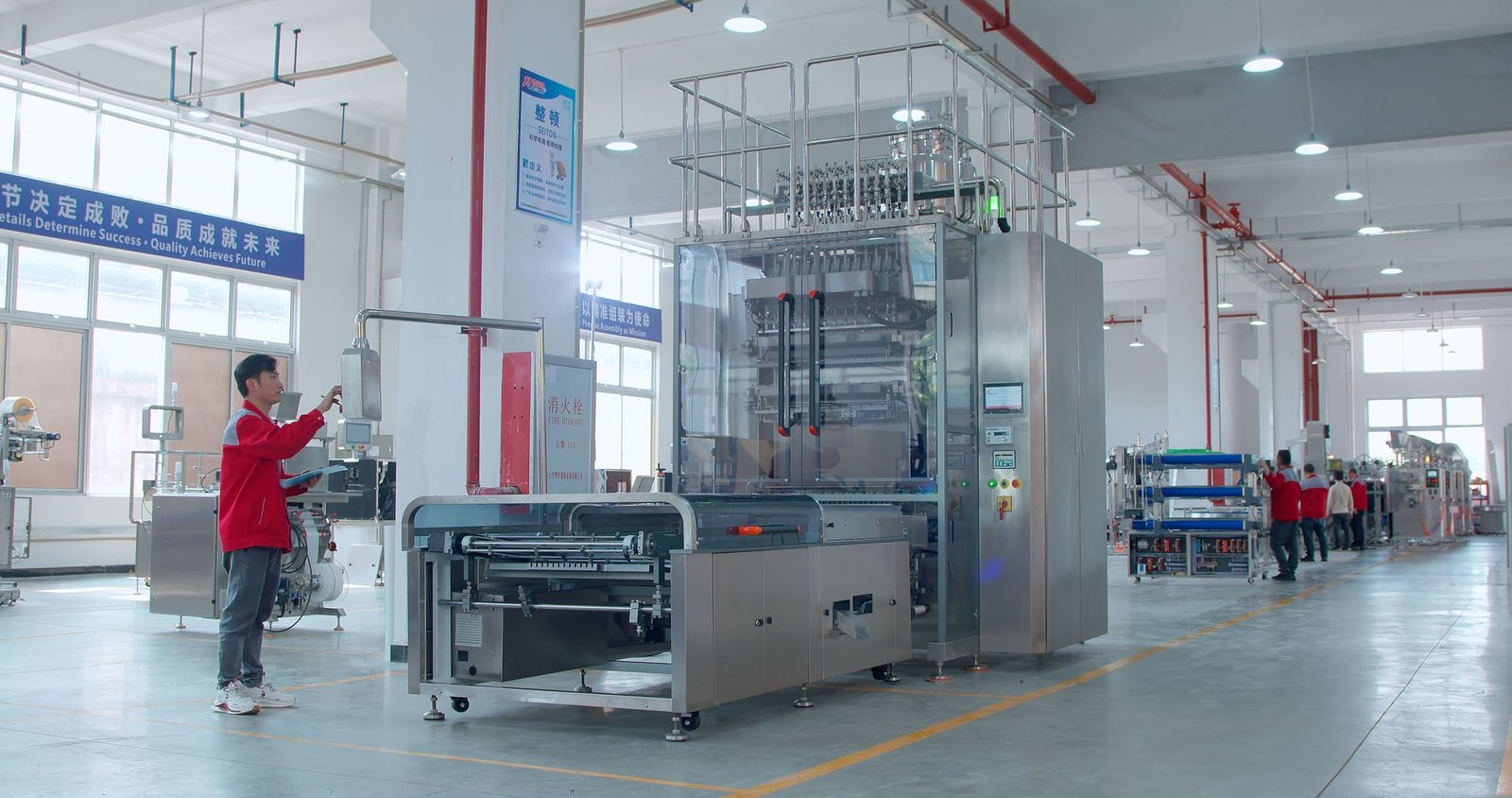
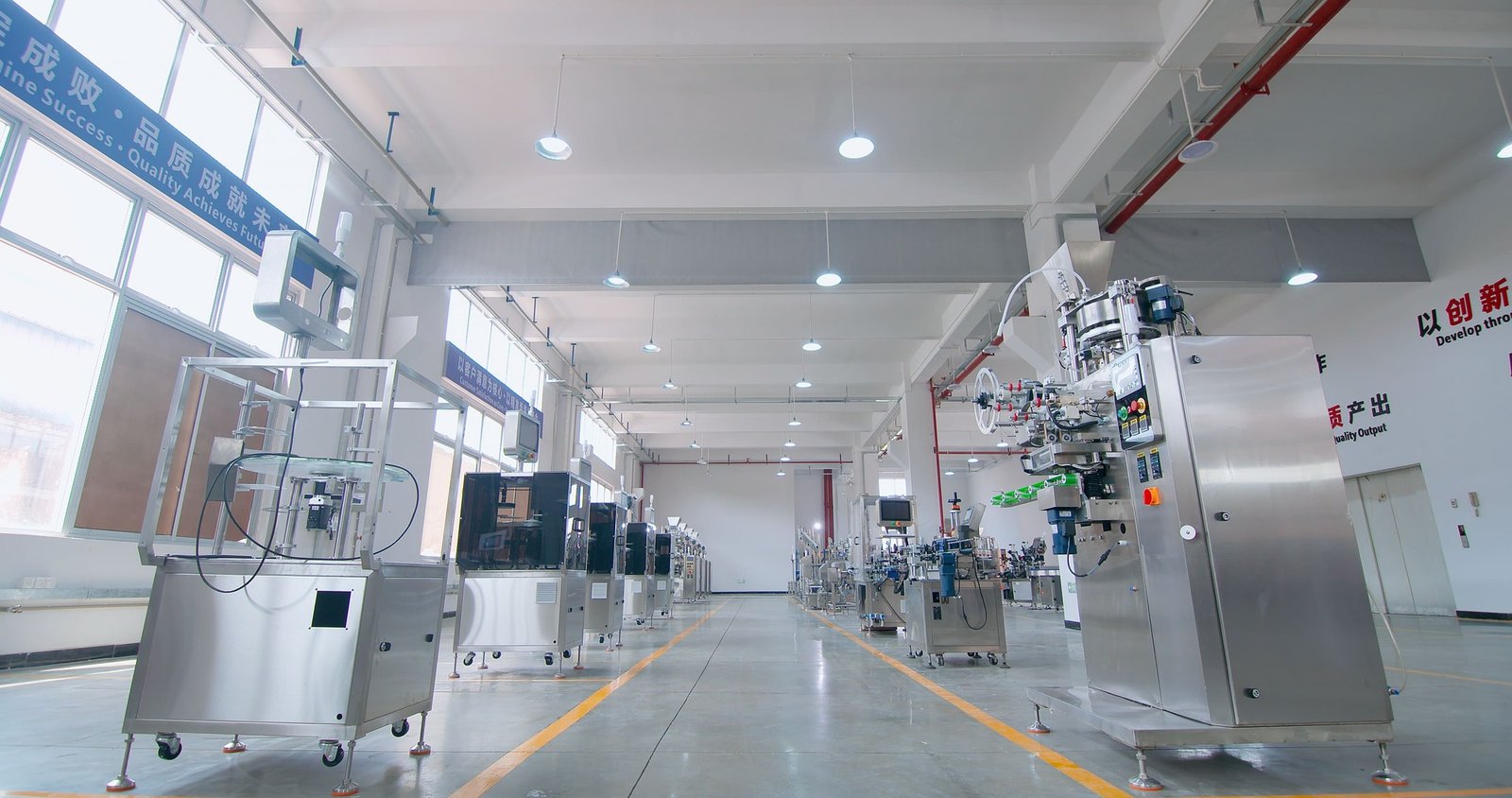
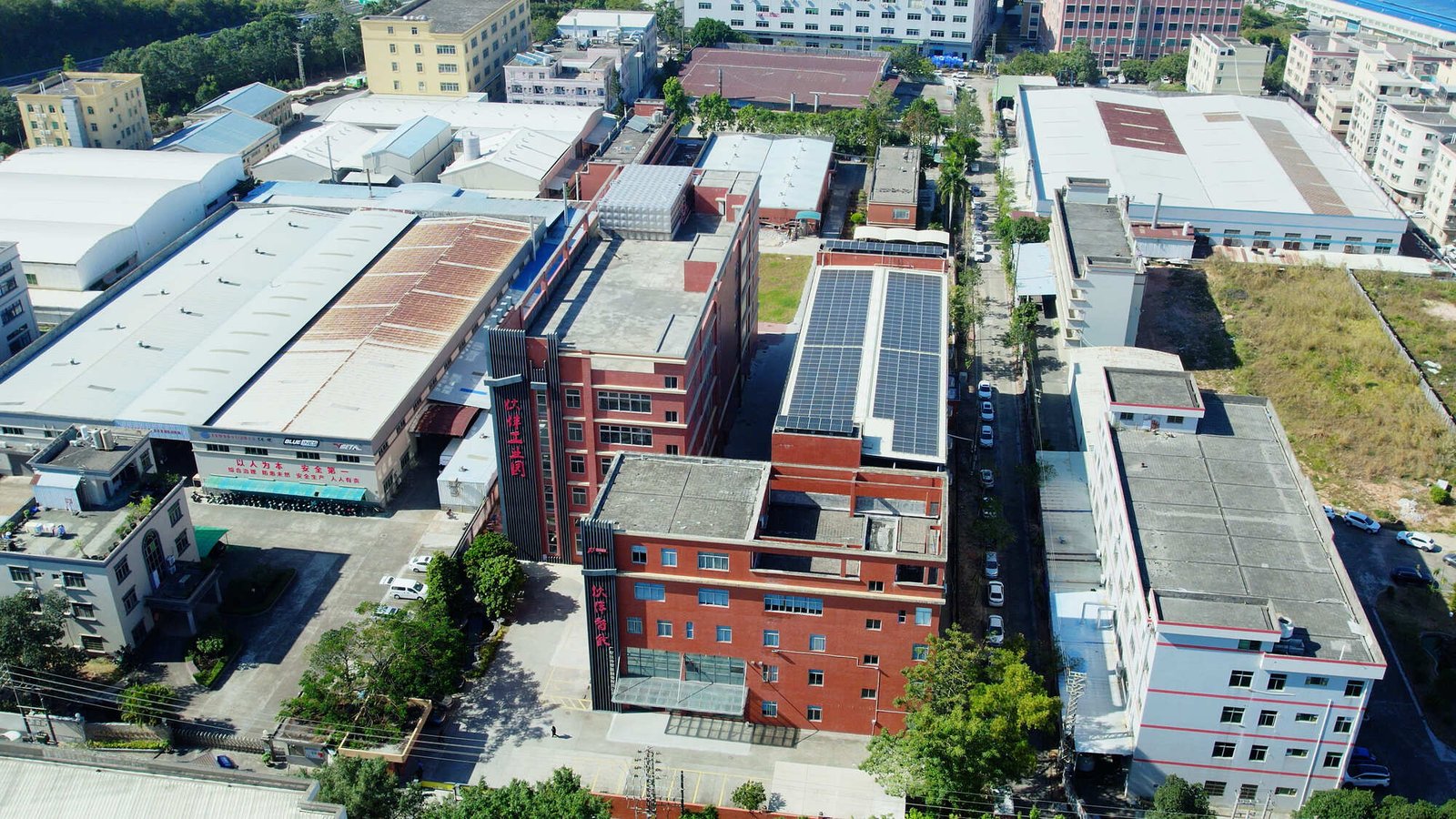
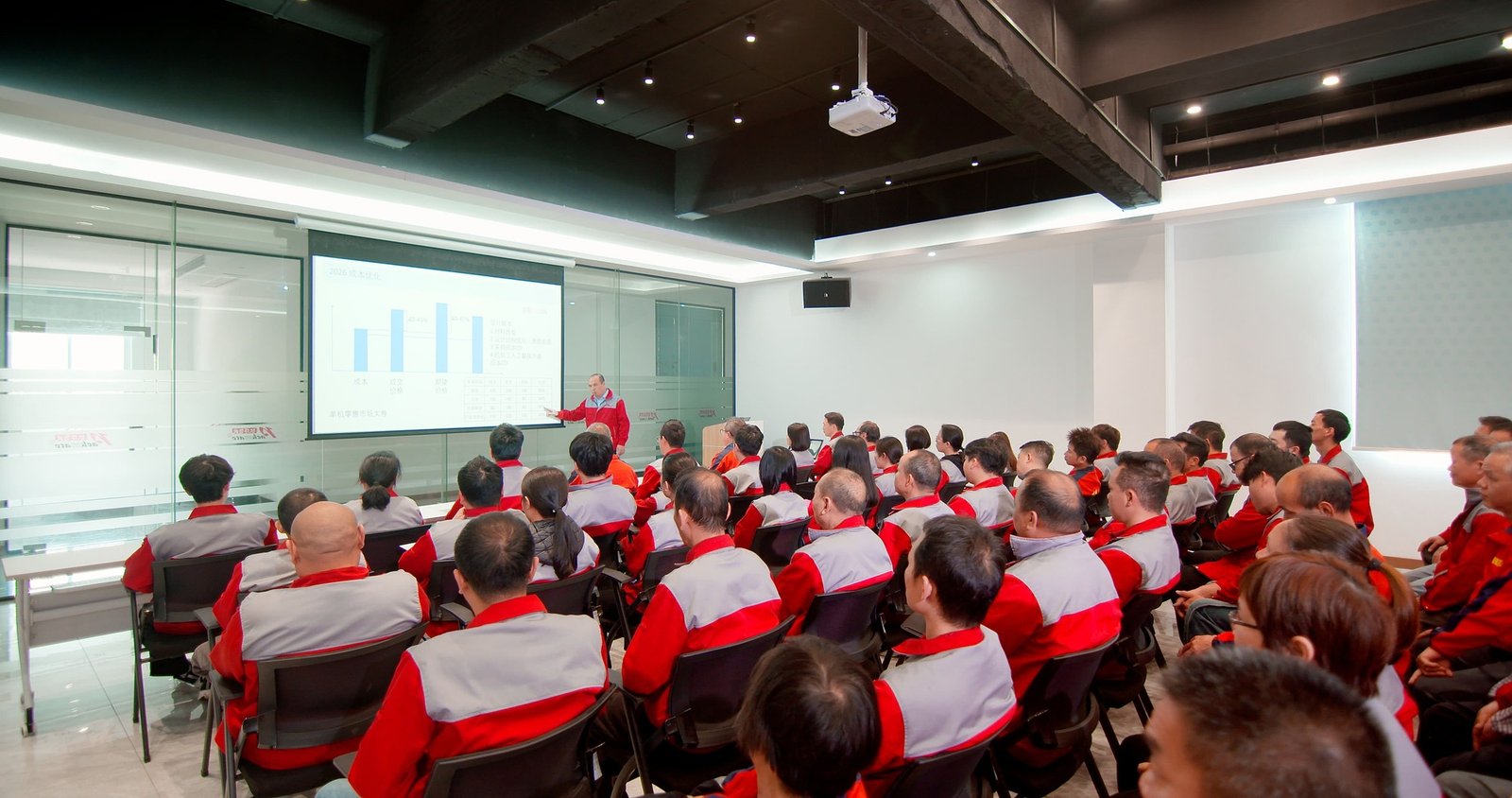
Backed by over 30 years of specialized packaging machinery manufacturing, Ludyway operates a modern 20,000㎡ smart facility. Our dairy powder packaging systems adhere to CE, ISO9001, and international food machinery standards, serving top-tier food and dairy processors across 100+ countries.
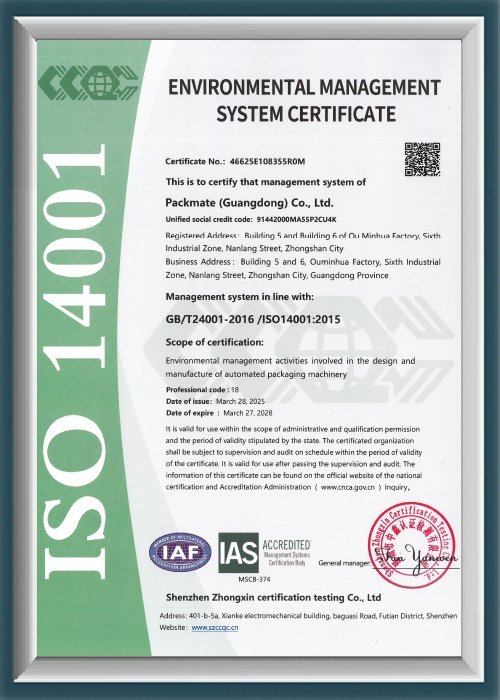
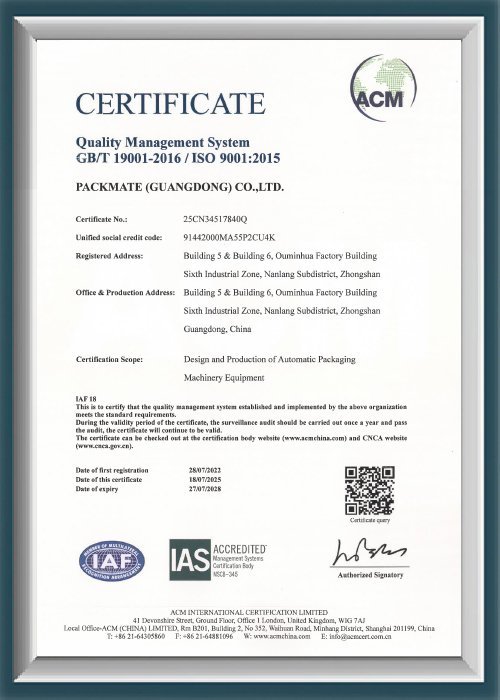
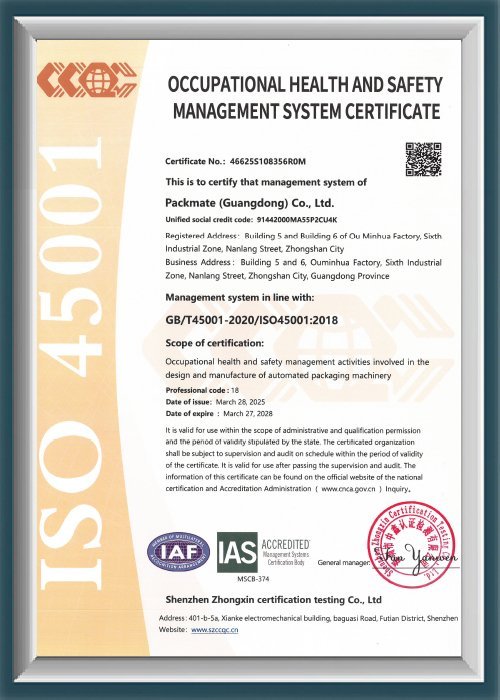
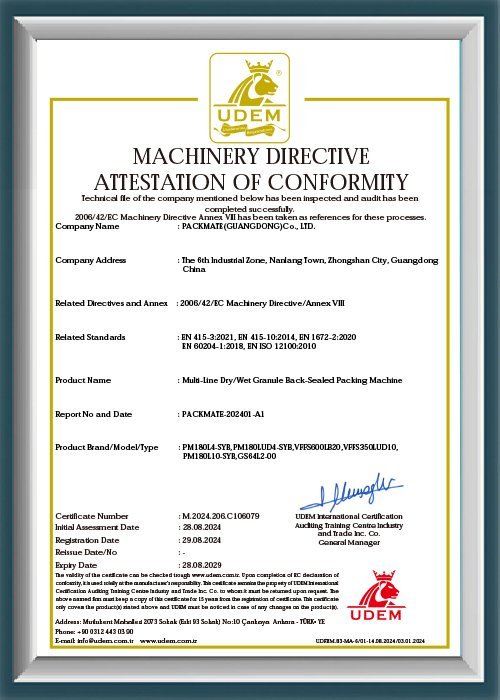
Modern 20,000㎡ Manufacturing Facility & Assembly Workshops







Engineering & Operational FAQs
Key technical questions answered by our chief packaging automation engineers to help you plan your milk powder line investment.
How is high dosing accuracy maintained across changing milk powder batches?
Milk powder bulk density can fluctuate between 0.45 g/cm³ and 0.65 g/cm³ depending on fat content and processing conditions. Our lines utilize dual-level sensors inside the feeding hopper, constant-speed slow-rotation horizontal stirrers to eliminate bridging, and real-time checkweigher feedback that dynamically recalculates and adjusts servo-auger revolution angles.
How do we prevent fine milk powder dust from contaminating the heat seals?
We integrate specialized dust extraction collars directly around the discharge funnel, combined with rapid pneumatic bottom-close cut-off nozzles. This prevents powder particulates from lingering in the air gap while the vertical and horizontal sealing jaws clamp the film, ensuring 100% airtight hermetic seals.
What is the typical nitrogen consumption for a high-speed multi-lane line?
For a 6-lane stick pack machine running at 300 sticks/minute, nitrogen flow typically averages between 15 to 35 m³/h at 0.4 – 0.6 MPa, depending on pouch volume and target residual oxygen thresholds (<1.0%). We recommend pairing the line with a dedicated PSA nitrogen generator and buffer tank.
What cleanroom classification is recommended for infant formula packaging?
For infant nutritional formula, the primary filling and sealing zone must adhere to ISO Class 7 (Class 10,000) cleanroom standards with positive pressure HEPA filtration, strict personnel airlock entry, and continuous temperature/humidity monitoring (<40% RH, 20°C ± 2°C). Secondary cartoning and palletizing can be situated in standard ISO Class 8 or controlled grey zones.
Can one packaging machine handle multiple dairy recipes with quick changeovers?
Yes. Ludyway packaging machines feature modular quick-release tooling. Replacing the auger screws, funnels, and forming tubes takes less than 20 minutes without tools. Recipe memory on the PLC stores up to 100 parameter profiles, allowing rapid adjustment of sealing temperatures, dosing parameters, and line speeds.
Ready to Design Your Turnkey Milk Powder Packaging Line?
Partner with Ludyway’s specialized packaging engineers to customize your automated dairy packaging line. From initial cleanroom layout engineering and auger dosing tests to factory acceptance testing (FAT) and worldwide on-site commissioning.
