
How to Set Up a Pet Food Packaging Line: Complete Engineering & Operational Blueprint
A comprehensive technical guide for food processing engineers and plant managers on architecting high-efficiency, contamination-free, and flexible automated packaging systems for dry kibble, freeze-dried treats, pet powders, and wet food formulas.
Transforming Raw Pet Food Processing into Automated Packaging Lines
The global pet care market has experienced a transformative shift. Modern pet parents demand food items that meet human-grade food hygiene standards, ranging from ultra-premium freeze-dried raw bites and veterinary nutraceutical supplements to organic dry kibble and single-serve retort wet purees. Setting up a dedicated, high-performance pet food packaging line requires a meticulous harmony between material handling, precision dosing, modified atmosphere control, barrier sealing, and end-of-line verification.
An optimized packaging line delivers four vital operational pillars: Preservation of Nutritional Integrity through zero-oxygen MAP sealing, High Operational Equipment Effectiveness (OEE > 85%), Strict Cross-Contamination Prevention via IP65 washdown engineering, and Format Versatility to support emerging stand-up pouches, multi-lane sachets, and stick packs.
Aromatics & Lipid Oxidation Defense
Pet kibble and treats are rich in unsaturated fats, essential fatty acids, and aromatic palatants that degrade rapidly when exposed to atmospheric oxygen. Integrating automated Nitrogen Flushing Systems reduces residual oxygen below 1.0%, extending shelf life without synthetic additives.
Multi-Format Packaging Flexibility
Modern manufacturers produce varied product portfolios—from large 15kg bulk bags to single-dose multi-lane probiotic sticks. Plant engineers must evaluate modular pet food packaging machinery with tool-less changeover capabilities to handle diverse pack styles.
6-Stage Framework: How to Set Up a Pet Food Packaging Line
A factory-scale deployment follows a rigorous engineering progression, starting from raw physical formulation analysis to end-of-line secondary carton palletization. Follow this structured industrial path:
Bulk Formulation Characterization & Bulk Density Profiling
Every pet food texture behaves distinctly inside hoppers, feeding chutes, and packaging pouches. Dry extruded kibbles possess varying oil coatings and bulk densities (typically 350 to 480 g/L), while freeze-dried meats are fragile and prone to crushing. Veterinary powders (such as probiotics and electrolytes) require dust-containment systems, whereas wet paté recipes demand hygienic positive-displacement pumps.
- Extruded Kibble & Pellets: Requires dimpled multi-head weighers to prevent grease adhesion.
- Freeze-Dried Meat & Snacks: Demands gentle-infeed Z-type bucket elevators to prevent particulate breakage.
- Pet Supplements & Vitamin Powders: Requires servo auger dosing with integrated vacuum dust extraction.
Primary Packaging Machine Selection & Format Engineering
Selecting the core packaging mechanism dictates the overall footprint, power demands, and throughput speed of your packaging hall. Factory managers generally pick between two modern architectures:
- Rotary Premade Pouch Packaging Machines: Ideal for stand-up Doypack pouches with press-to-close zippers, slider zippers, and carry handles. Delivers superior shelf presentation for retail brands.
- Multi-Lane Stick Pack & Sachet Systems: Crucial for single-serve functional pet powders, bone broths, and nutritional liquid toppings with continuous high output up to 300+ packs per minute. Explore high-speed multi-lane pet food lines.
- Vertical Form Fill Seal (VFFS) Machines: High-speed solutions for pillow packs, quad-seal bags, and gusseted bulk sacks utilizing roll stock films.
Automated Bulk Conveying & Precision Dosing Integration
Connecting bulk processing hoppers to primary packaging units demands automated material transport that maintains hygiene and stops segregation. Using packaging auxiliary equipment like stainless steel vibratory feeders and heavy-duty bucket elevators eliminates manual batch loading.
- Combination Multi-Head Weighers: 10 to 24-head computerized weighers achieving target weight precision within ±0.2g to ±0.5g.
- Sanitary Incline Conveyors: Food-grade PU/modular plastic belts equipped with quick-release washdown mechanisms.
Modified Atmosphere Packaging (MAP) & Hermetic Sealing
Achieving commercial shelf-life without chemical preservatives requires inline Nitrogen Purging. Gas flushing injectors displace atmospheric air right before the thermal or ultrasonic seal jaws engage. Precise PLC-managed sealing temperature and pressure control ensures leak-proof seams on multi-laminate barrier films (PET/ALU/PE, MOPP/Kraft/PE, or recyclable mono-PE).
Inline Quality Assurance & Non-Destructive Inspection
Safety protocols in pet nutrition require multi-stage inspection before secondary packaging. Plant setups should integrate synchronized quality checkpoints:
- Dynamic Checkweighers: High-speed strain-gauge systems sorting and rejecting off-spec packages downstream.
- Industrial Metal Detectors & X-Ray Scanners: Detecting ferrous, non-ferrous, stainless steel contaminants, bone fragments, and glass splinters.
- Vision Seal Inspection: AI-based optical cameras validating zipper closure, lot code readability, and seal contamination.
Secondary Packaging: Cartoning, Case Packing & Palletizing
Transform individual pouches or stick packs into retail-ready shippers. Automated carton erectors, pick-and-place gantry packers, and robotic palletizing cells minimize labor costs, protect freight during logistics, and allow high warehouse density.
Engineering Parameters Across Pet Food Formats
Match your production chemistry and packaging format to the recommended machine architectures and dosing technologies:
| Product Category | Recommended Machine Type | Dosing & Weighing Core | Speed Range | Primary Barrier Film | Key Quality Gate |
|---|---|---|---|---|---|
| Dry Kibble / Extruded Bites | Rotary Premade Pouch / VFFS | 14-Head Combination Weigher | 30 – 70 Bags/min | PET/PE, Matt BOPP/PE | Checkweigher & Metal Detector |
| Freeze-Dried Meats & Treats | Pouch Machine with MAP Flush | Dimpled Gentle-Drop Weigher | 25 – 50 Bags/min | High-Barrier ALU Laminated | Residual O2 Analyzer (<1%) |
| Pet Probiotics & Vitamins | Multi-Lane Stick Pack Machine | Multi-Spindle Servo Auger | 120 – 360 Sticks/min | PET/ALU/PE Barrier Film | Vision Code & Seal Inspector |
| Wet Retort & Cat Pastes | Multi-Lane Sachet / Rotary Retort | Pneumatic Piston / Rotary Pump | 40 – 150 Sachets/min | Retort-Grade RCPP Laminates | X-Ray Foreign Body Detector |
| Bulk Commercial Animal Feed | Heavy-Duty Open-Mouth Bagging | Gross / Net Loadcell Weigher | 10 – 25 Bags/min (20kg+) | Woven PP / Multi-wall Paper | Continuous Bag Sealer & Stitcher |
Featured Automated Pet Food Packaging Systems
Engineered by Ludyway Machinery with sanitary stainless steel designs, advanced PLC automation, and flexible dosing tooling:
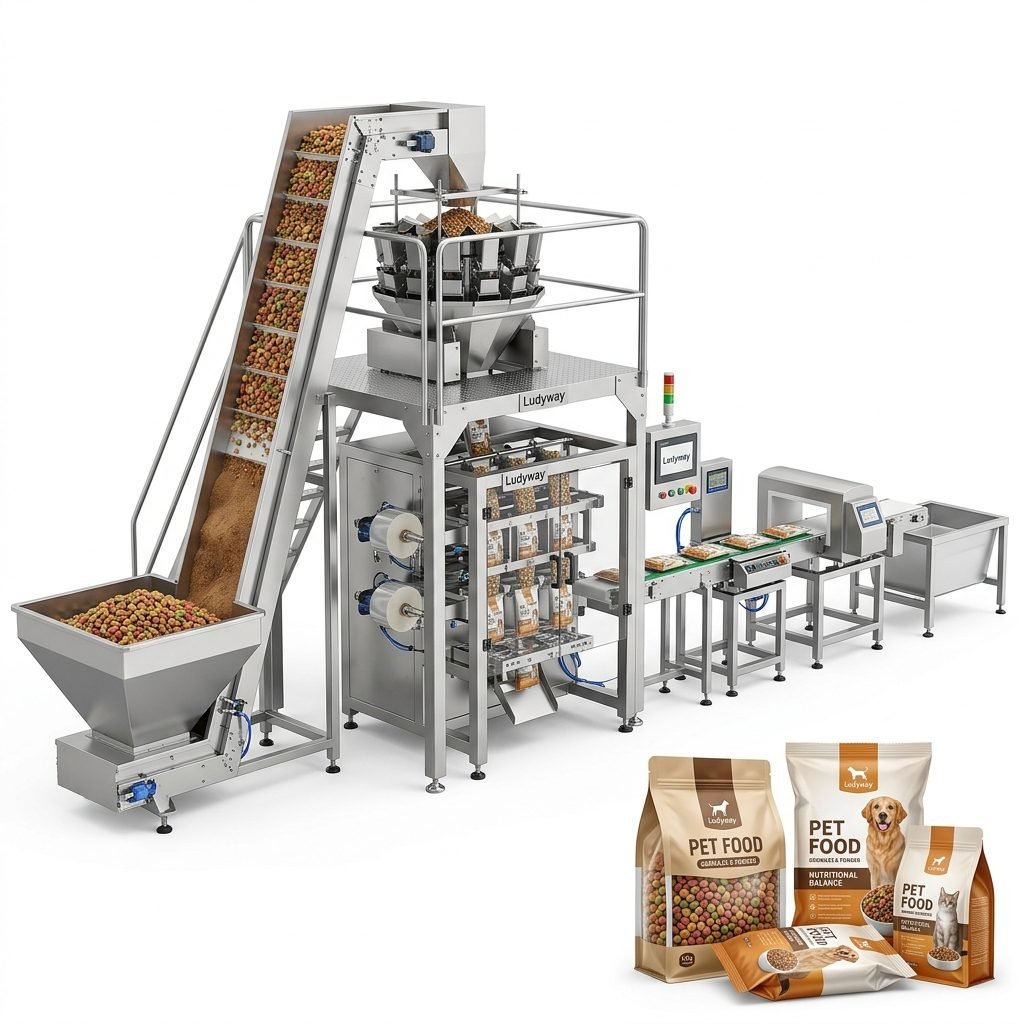
Auto Granule & Powder Pet Food Packaging Multi-Lane Lines
Explore Specifications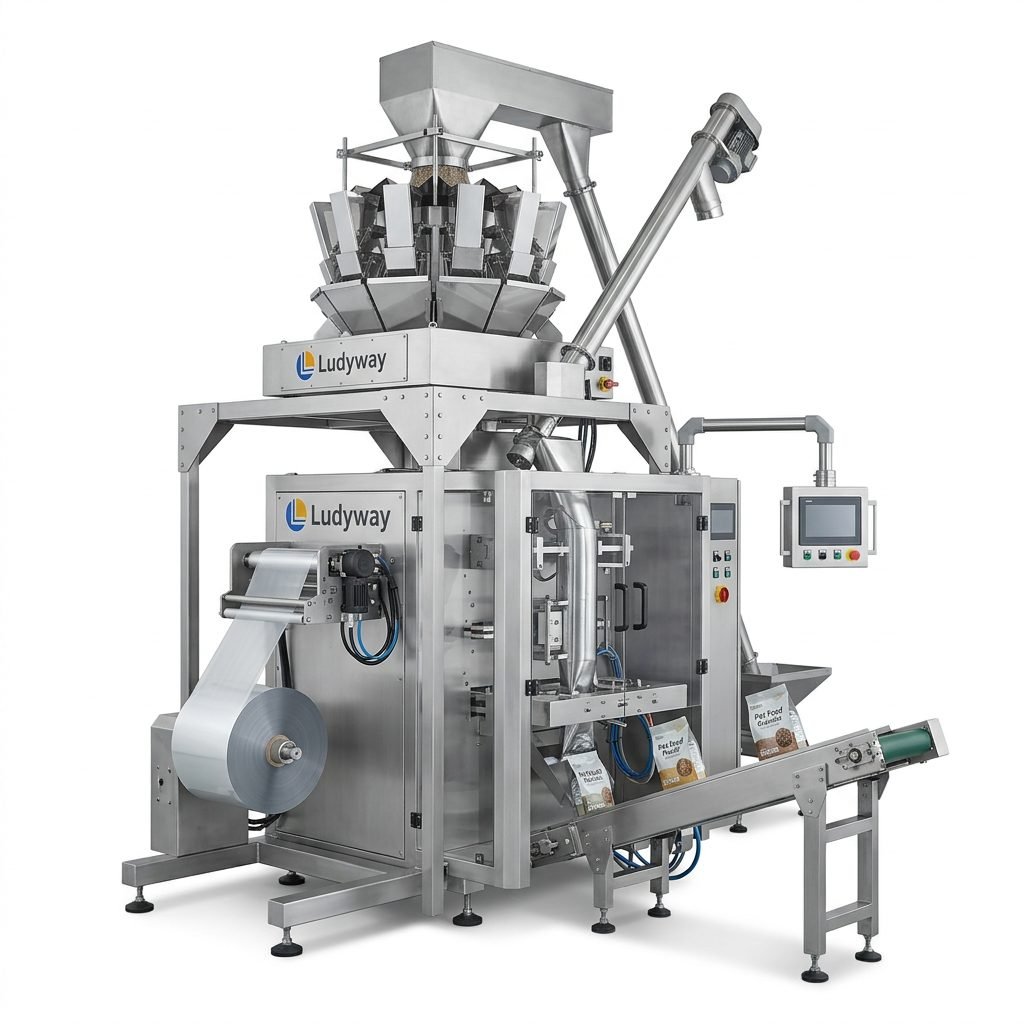
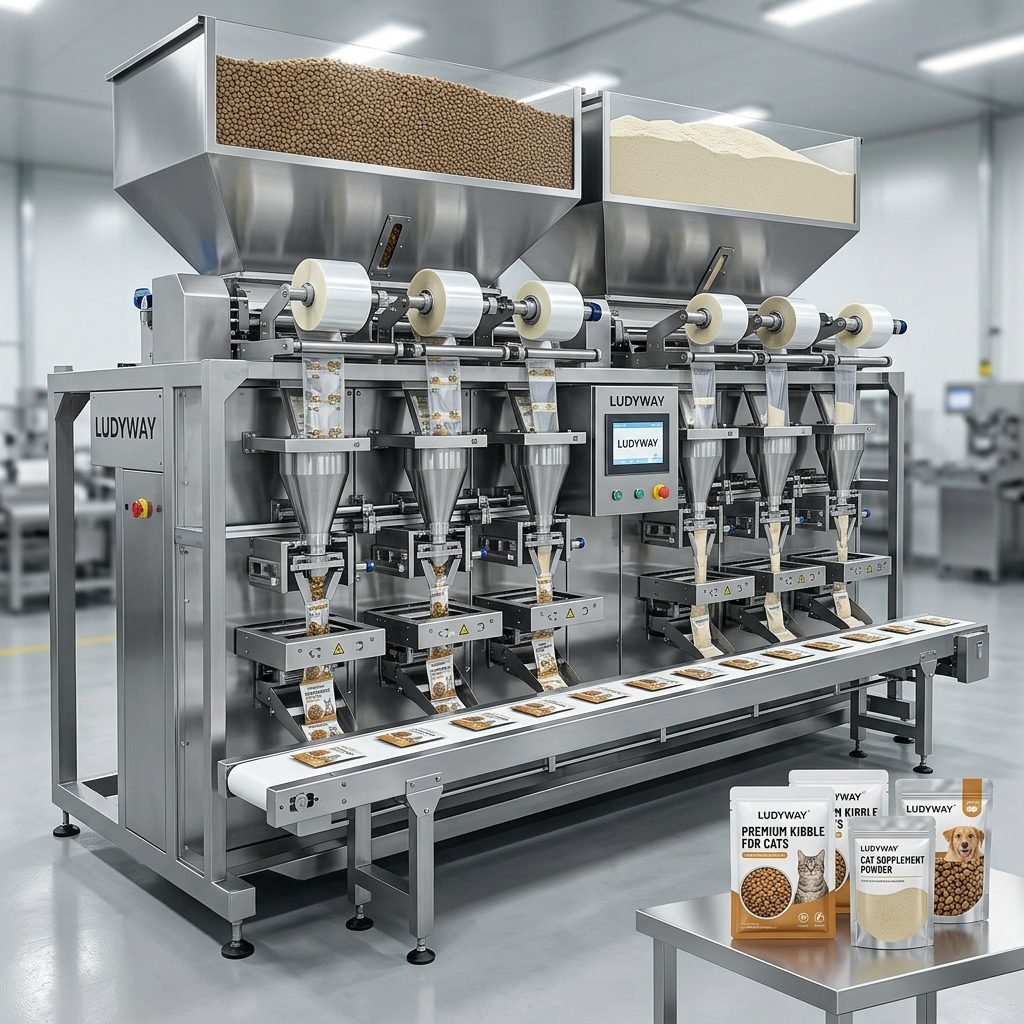
Automated Pet Food Packaging Line for Granules & Powder, Multi-Lane Sachet System
Explore Specifications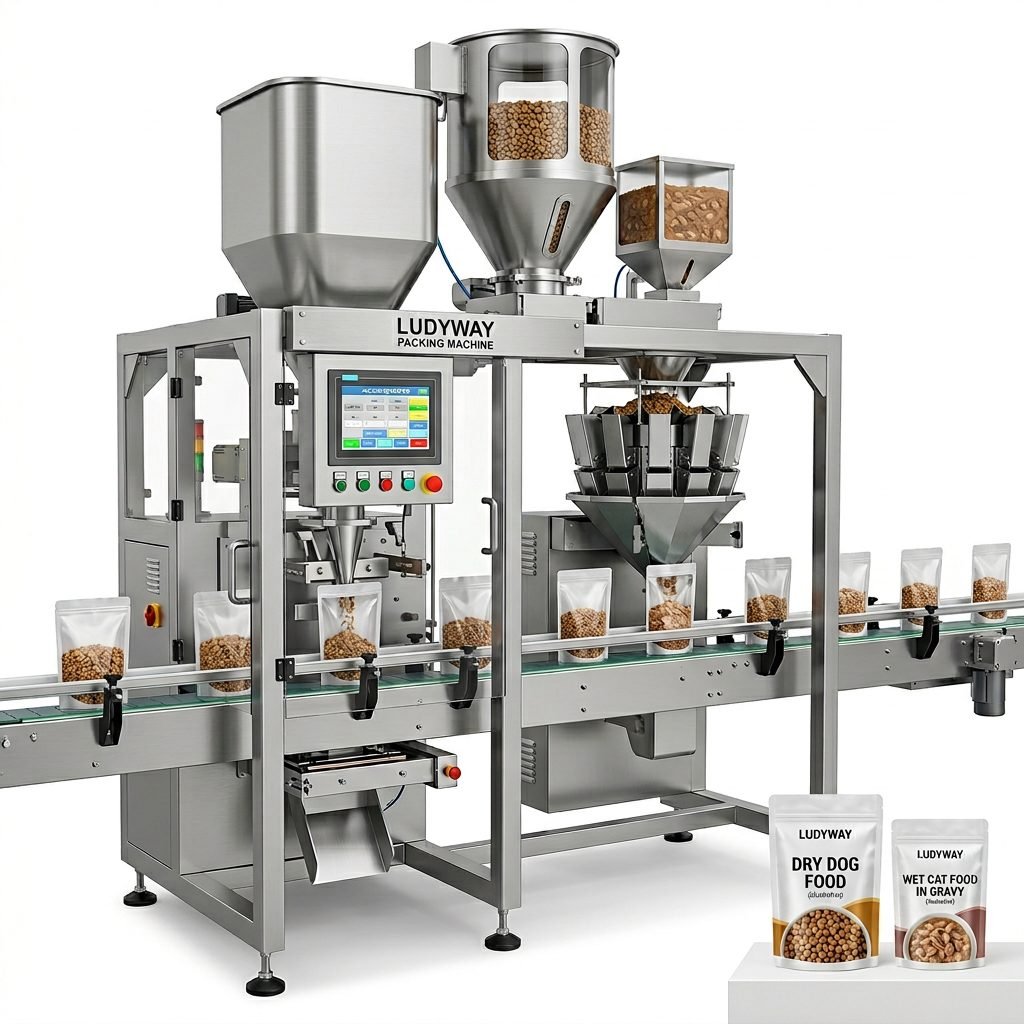
Automatic Pet Food Pouch Filling and Sealing Machine for Wet or Dry Kibble
Explore Specifications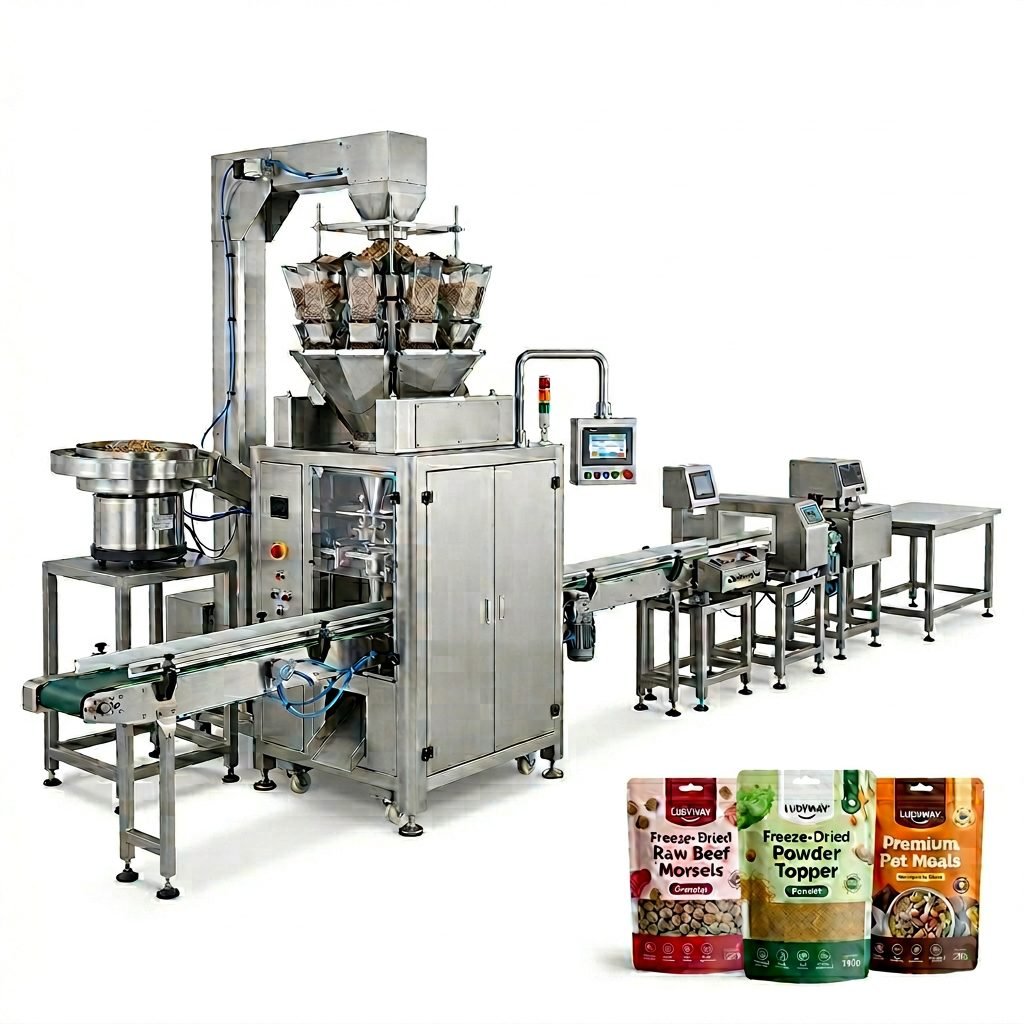
Automated Freeze-Dried Pet Food Packaging Line for Granules & Powder
Explore Specifications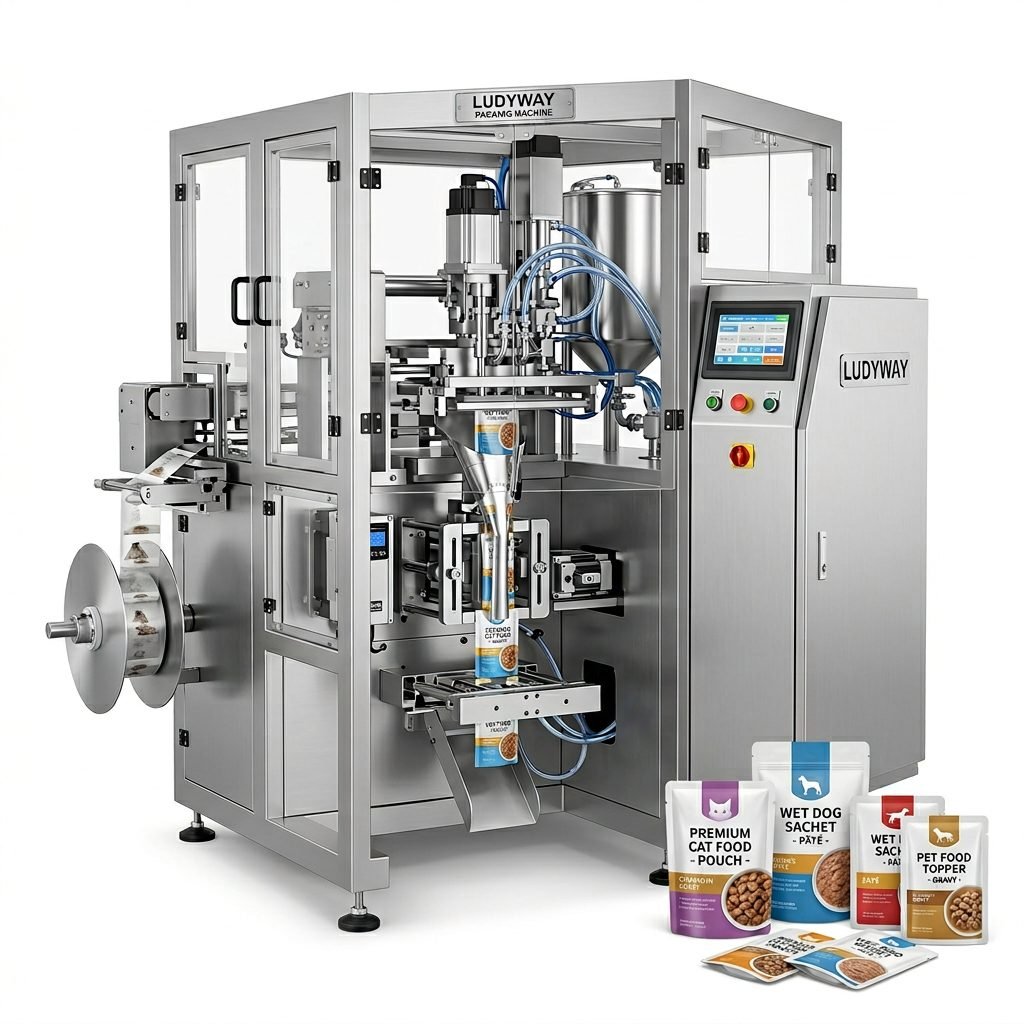
Automated Wet Pet Food Packaging Machine for Sachets & Pouches
Explore Specifications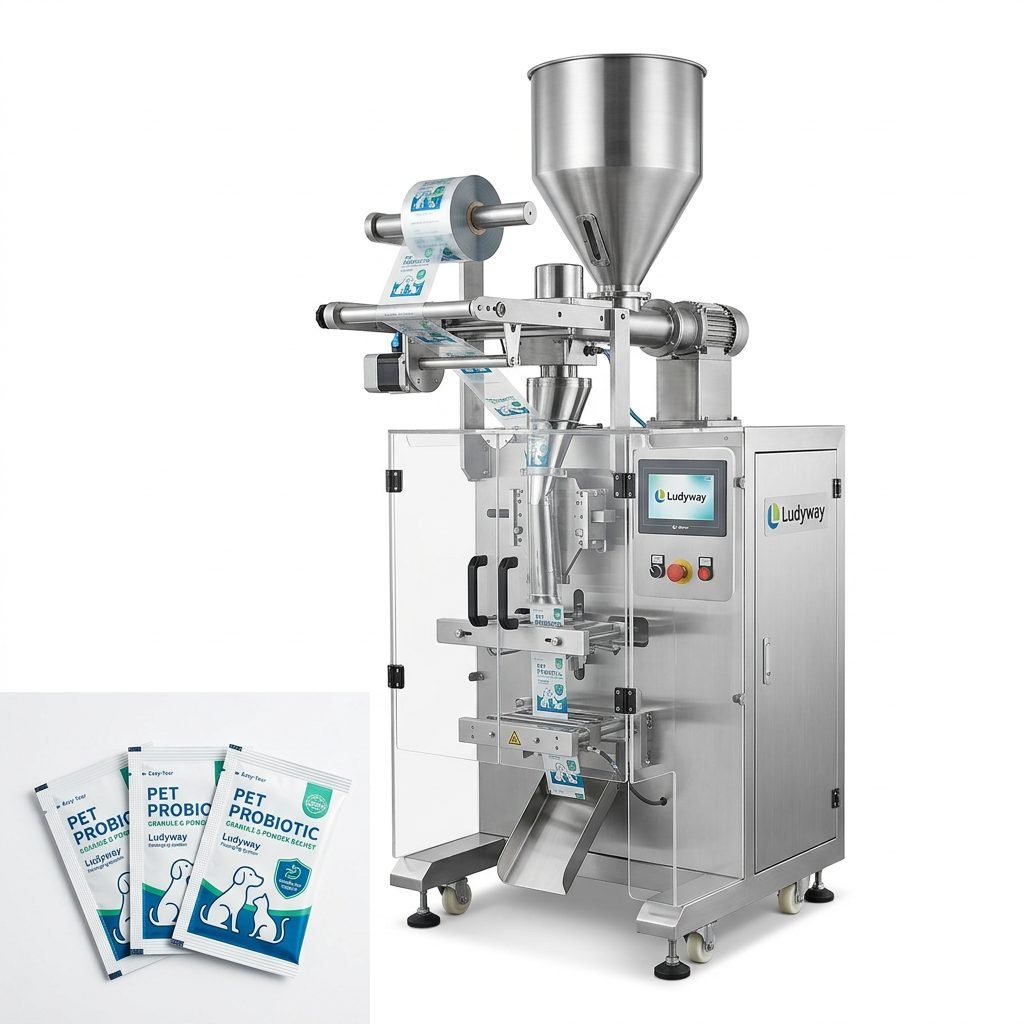
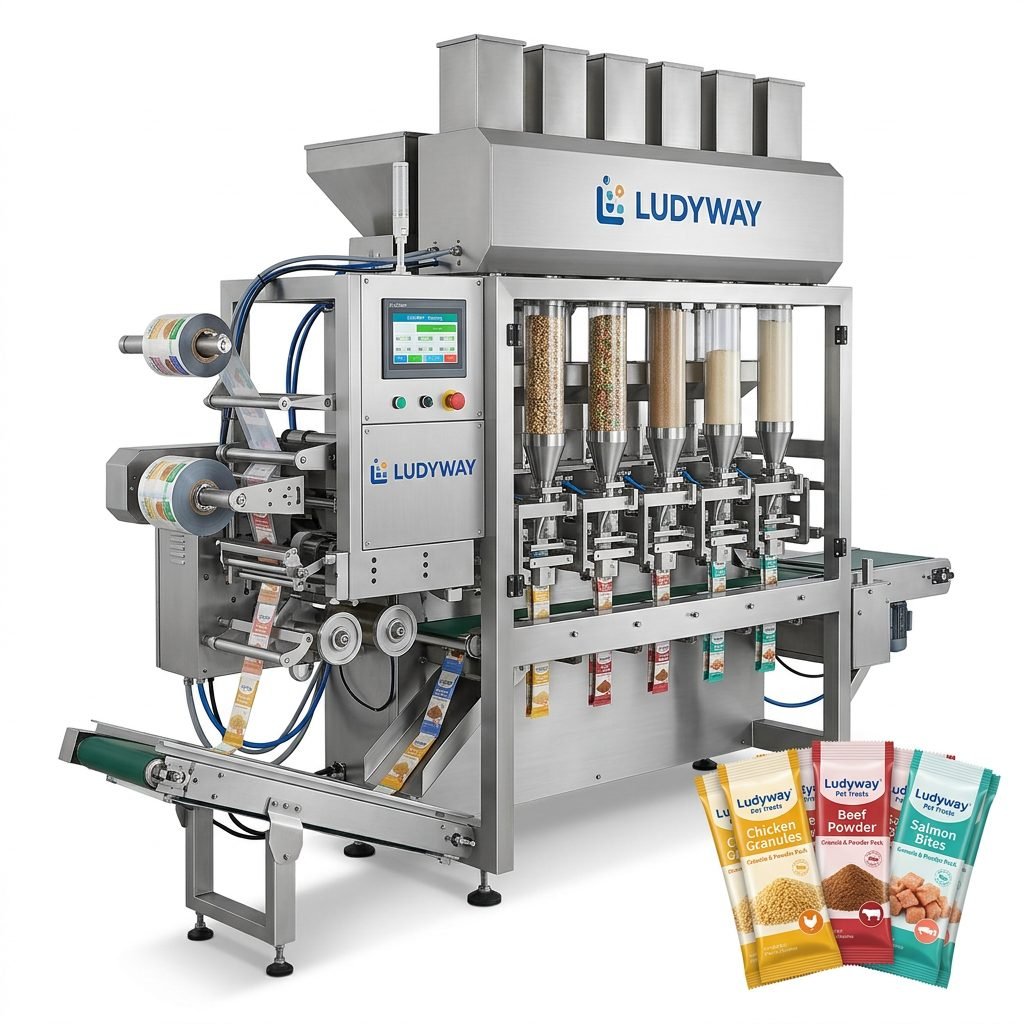
Automatic Multi-Lane Pet Snack Packaging Machine for Granules and Powder
Explore SpecificationsFacility Layout & Sanitary Engineering Standards
Designing a pet food packaging hall requires stringent hygienic zoning to comply with FSMA, FDA Pet Food Regulations, and HACCP standards. Plant engineers must implement three critical physical plant design principles:
1. Positive Pressure Zoning
Maintain positive HEPA-filtered air pressure in primary filling rooms to prevent cross-contamination from raw extrusion, milling, or rendering departments downstream into sterile packing zones.
2. Washdown & IP65 Sanitation
Equipment contact zones must utilize AISI 304 or 316 stainless steel with electropolished surfaces, sloped horizontal structural members, and IP65 washdown electrical cabinets for thorough sanitization between batches.
3. Ergonomic Linear Footprint
Organize equipment in a straight inline or U-shaped continuous layout. This ensures seamless line visibility, optimized forklift access for film rolls, and accessible maintenance passages around multi-head gantries.
Leading Industrial Packaging Line Manufacturer
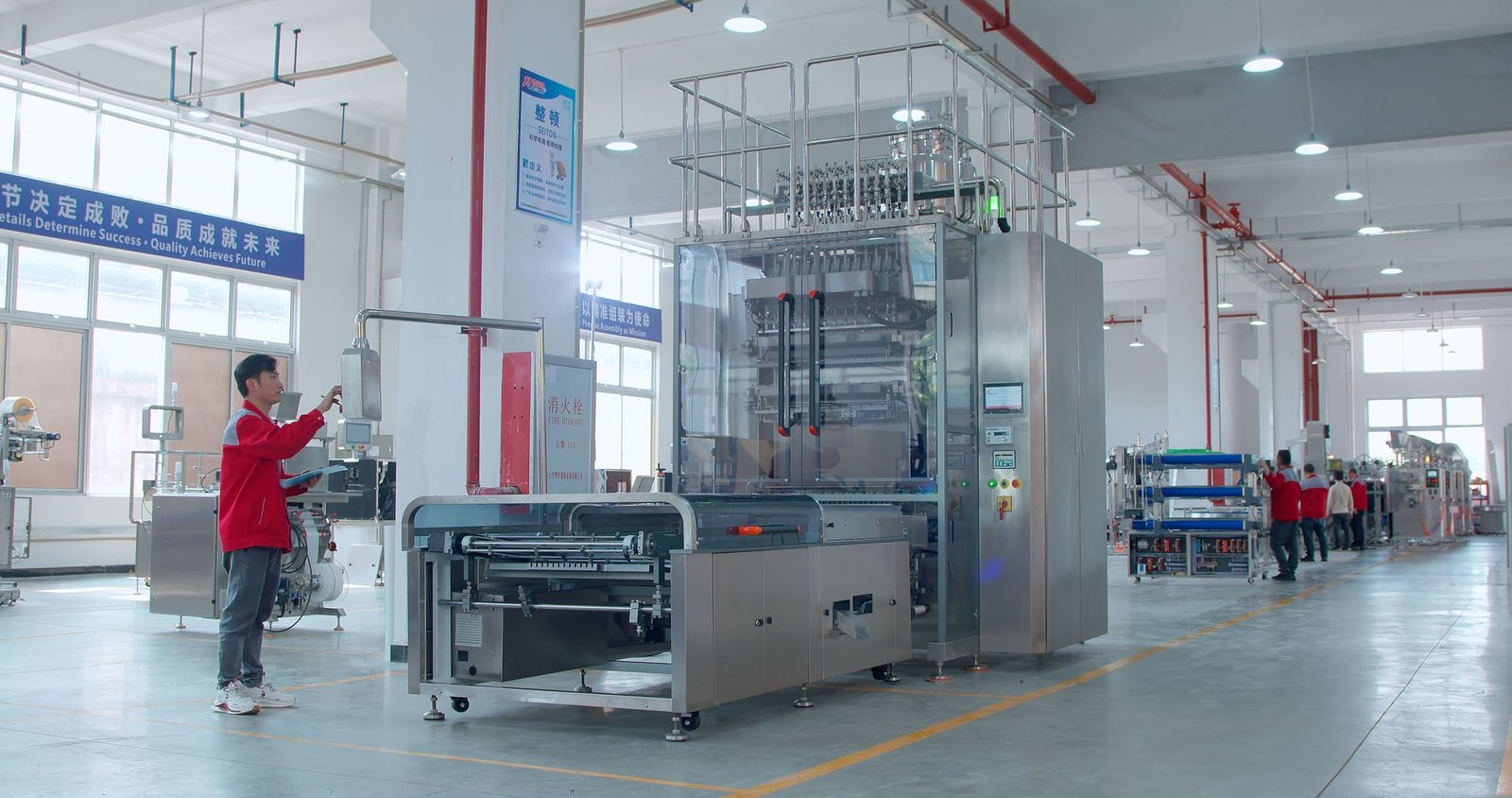
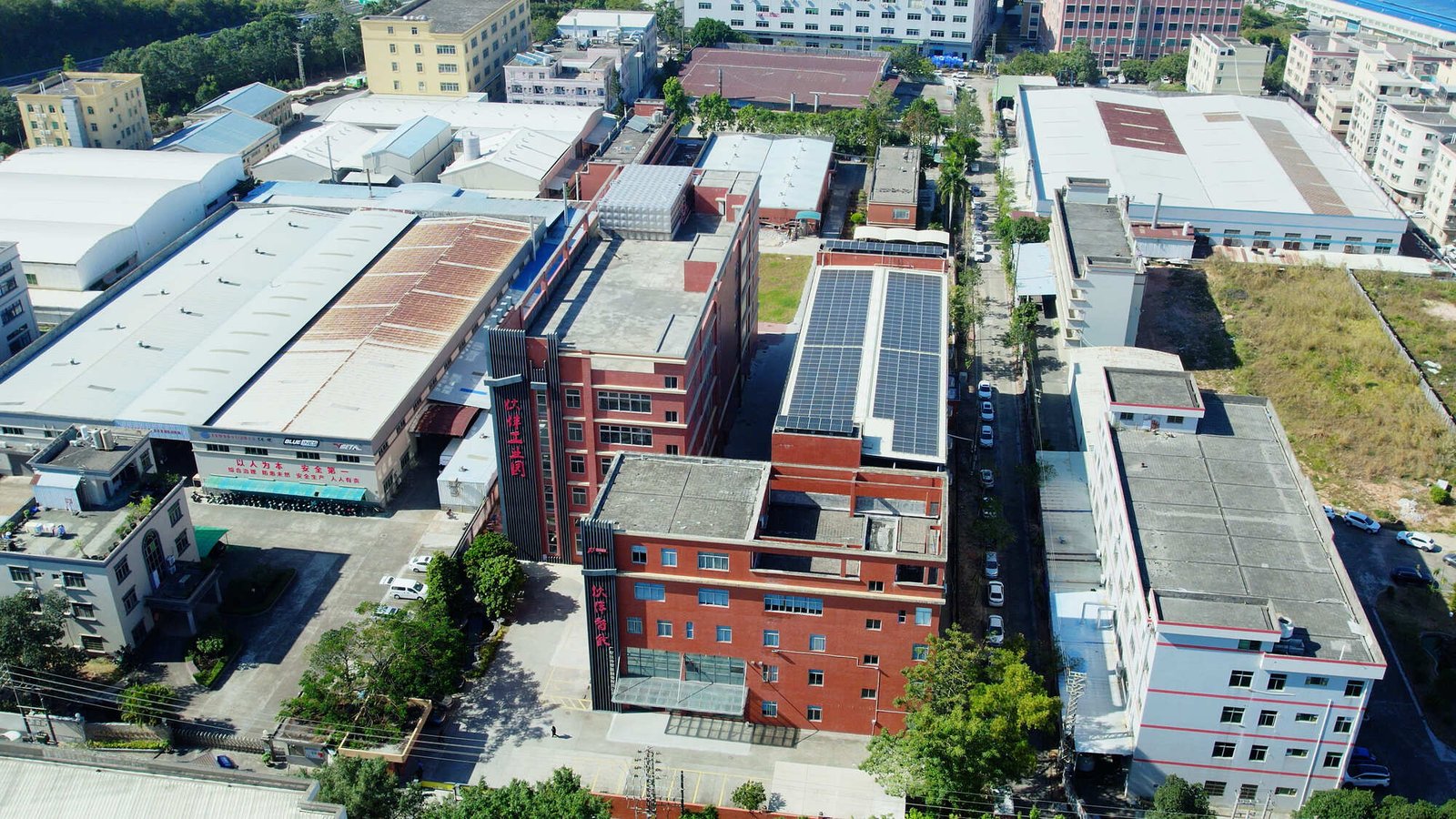
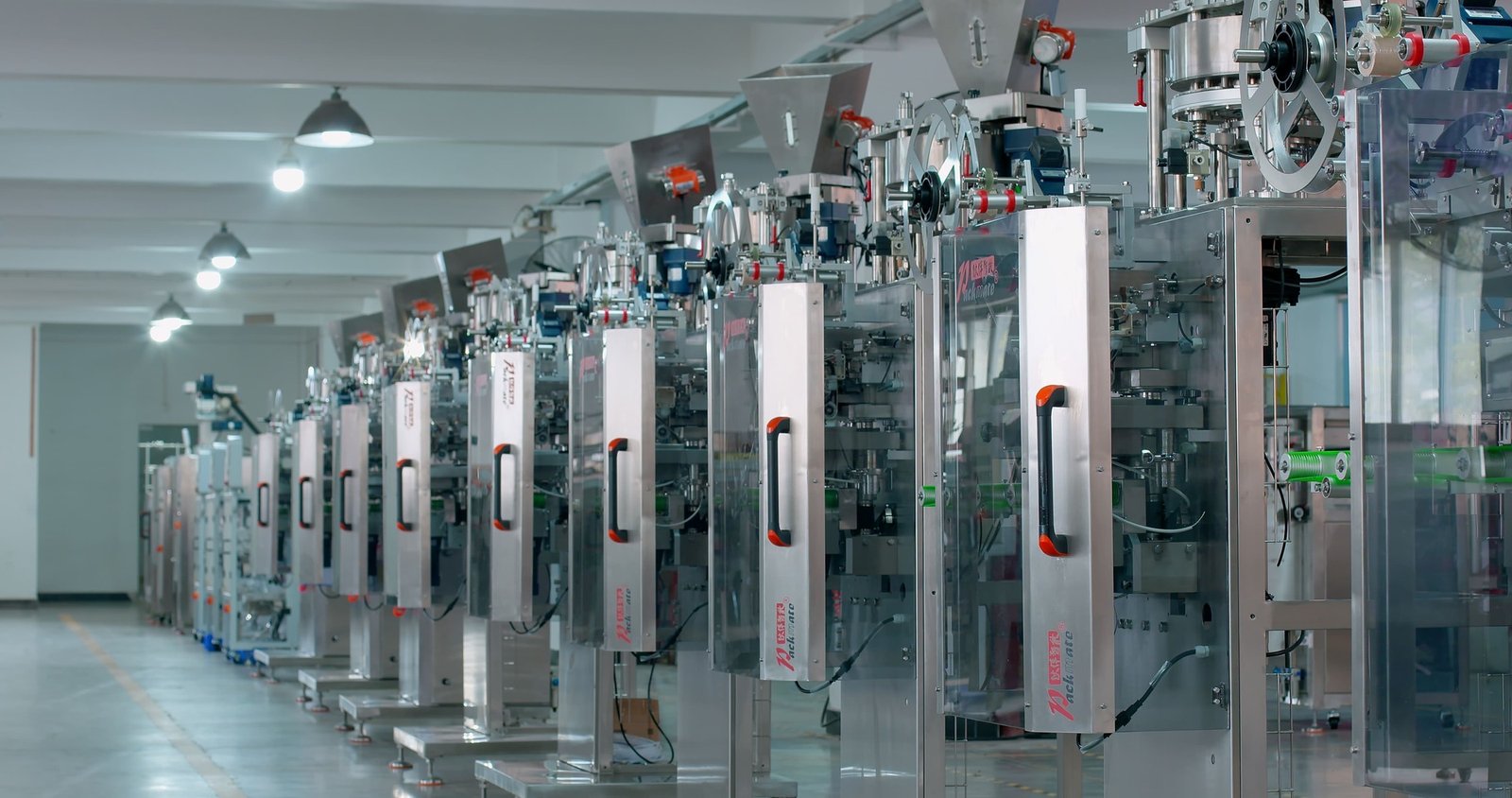
Ludyway is a premier packaging machinery manufacturer operating a modern 20,000㎡ manufacturing facility backed by over 30 years of engineering expertise. We provide turnkey automated packaging machinery across food, pet care, chemical, and pharmaceutical industries.
Equipped with over 200 high-precision CNC manufacturing centers and a dedicated team of 130+ packaging engineers, Ludyway delivers over 50 intelligent machine models. Serving brand owners in over 100 countries, we engineer tailored production lines that maximize uptime and maintain stringent quality controls.

Frequently Asked Questions: Pet Food Line Setup
What is the best packaging machine type for freeze-dried raw pet treats?
How does nitrogen flushing extend pet food shelf life?
What are the primary electrical and sanitary washdown standards needed?
Can one line handle both dry kibbles and powdered veterinary supplements?
What is the typical Return on Investment (ROI) for an automated packaging line?
Certified Engineering & Global Compliance
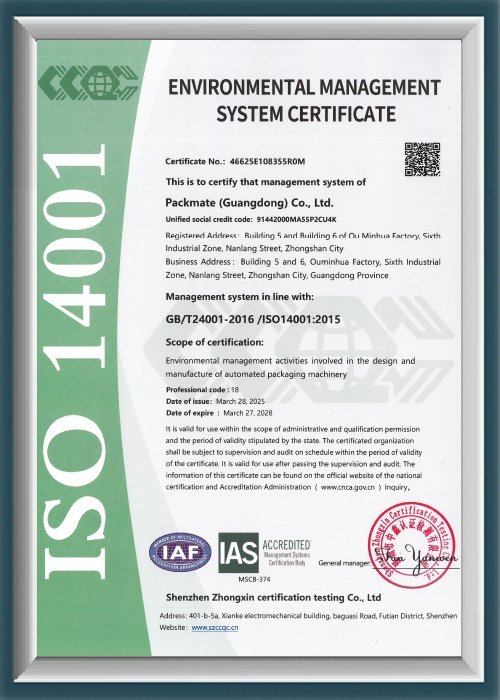
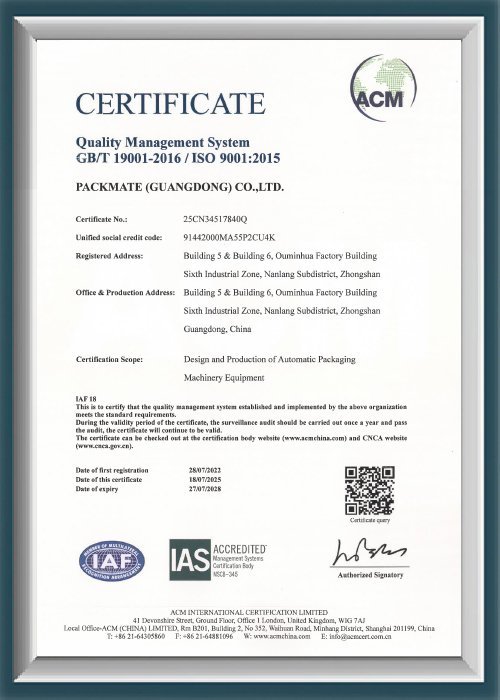
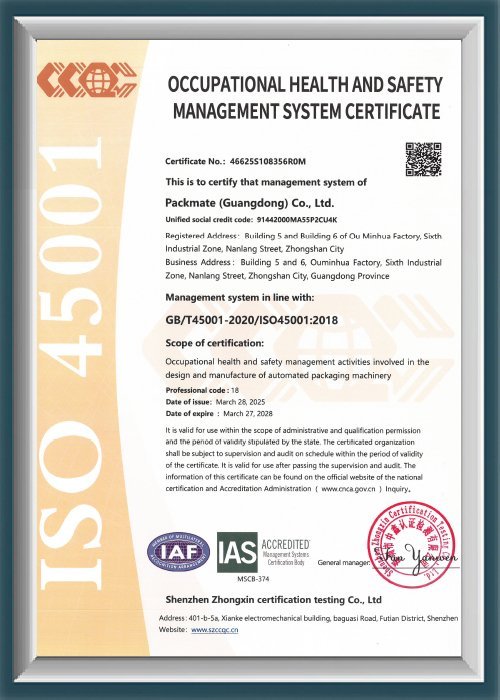
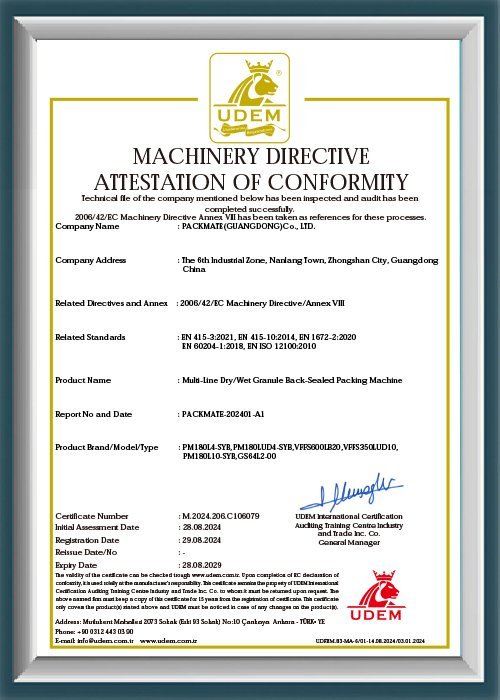
Every Ludyway packaging system undergoes strict quality audits, conforming to ISO9001 and European CE sanitary standards for automated food processing machinery.
Ready to Design Your Turnkey Pet Food Packaging Line?
Contact Ludyway’s engineering team today for custom line layouts, pneumatic CAD integration, sample pouch testing, and quotation estimates.
