
Understanding Modern Granule Packaging Automation
Implementing a turnkey granule packaging line demands precise synchronization between bulk delivery, ultra-accurate weighing, high-speed container forming, and end-of-line verification systems.
1. Bulk Feed & Elevation
Continuous, non-degrading product delivery from storage silos or ground hoppers using high-efficiency bucket elevators and vibratory feeders designed to maintain granular integrity.
2. Precision Dosing Systems
Multi-head electronic weighers, volumetric cup dosers, and auger-assisted systems providing high-speed gravimetric distribution with accuracy tolerances as low as ±0.1g per discharge cycle.
3. Primary Form, Fill & Seal
Advanced vertical form-fill-seal (VFFS) systems, multi-lane sachet packaging units, and rotary premade pouch equipment equipped with continuous servo-driven sealing jaws.
Step-by-Step Methodology to Set Up a Granule Packaging Line
From raw material rheology analysis to industrial IIoT factory integration, follow this structured roadmap to execute an error-free line deployment.
Product Characterization & Bulk Density Assessment
Evaluate the flowability, moisture absorption rate, granulometry, friability, and angle of repose of your granular media (e.g., coffee crystals, pharmaceutical granules, animal feed, agrochemicals). Non-free-flowing powders require augers or vibratory assists, whereas delicate freeze-dried items require dimpled contact surfaces and low-drop transfer chutes to eliminate product breakage.
Selecting Packaging Format & Barrier Film Structure
Determine whether the application demands multi-lane stick packs, 4-side seal sachets, pillow pouches, quad-seal bags, or rigid containers. Specify proper barrier film laminates (PET/AL/PE, BOPP/VM-PET/PE, or recyclable mono-materials) and ensure web width, sealing temperature ranges, and friction coefficients match your primary machine tension controls.
Dosing & Feeding Configuration
Incorporate appropriate automated feeding hardware such as a Z-type bucket elevator paired with multi-head combination scales or volumetric slide gates. Ensure closed-loop optical feedback sensors signal the bulk hopper for uninterrupted product leveling above the discharge funnels.
Primary Machine Synchronization & Modified Atmosphere (MAP)
Configure the primary packaging machine with precise servo motor indexing. For sensitive foodstuffs, nutraceuticals, or specialty chemicals, integrate a nitrogen flushing packaging system into the forming tube assembly to maintain residual oxygen levels below 1.0%, preventing lipid oxidation and extending shelf life.
Secondary Inspection, Cartoning & End-of-Line Palletizing
Integrate real-time inline inspection equipment including dynamic checkweighers, industrial metal detectors, and high-resolution X-ray units to reject out-of-spec packages automatically. Connect downstream discharge conveyors to automated cartoning units and robotic palletizing cells for true end-to-end operational efficiency.
Granule Packaging Line Sizing & Operational Matrix
Compare core configurations across multi-lane, single-lane VFFS, and rotary pouch architectures to match target capacity and footprint constraints.
| Line Configuration | Primary Machine Type | Dosing System | Speed Range | Accuracy Rating | Optimal Granule Applications |
|---|---|---|---|---|---|
| High-Speed Multi-Lane | Multi-Lane Stick/Sachet (4-12 Lanes) | Sliding Volumetric / Servo Auger | 200 – 800 ppm | ±0.5% to ±1.0% | Instant coffee, sugar, drink mixes, pharma granules |
| Continuous VFFS Bulk | Vertical Form-Fill-Seal (Single Tube) | 10/14-Head Multi-Head Weigher | 40 – 120 ppm | ±0.1g – ±0.5g | Nuts, seeds, pet kibble, fertilizer pellets, snacks |
| Rotary Premade Pouch | 8-10 Station Rotary Pouch Packer | Multi-Head Combination Weigher | 30 – 65 ppm | ±0.2g – ±0.5g | Stand-up zipper pouches, dried fruit, premium treats |
| Industrial Big Bag Line | Open Mouth / Valve Bag Filler | Gross / Net Load Cell Weighing | 5 – 15 bpm | ±10g – ±25g | 25kg – 50kg chemical resins, bulk grain, animal feed |
Featured Packaging Equipment for Granule Production Lines
Explore our precision-engineered machinery deployed in turnkey packaging installations worldwide.
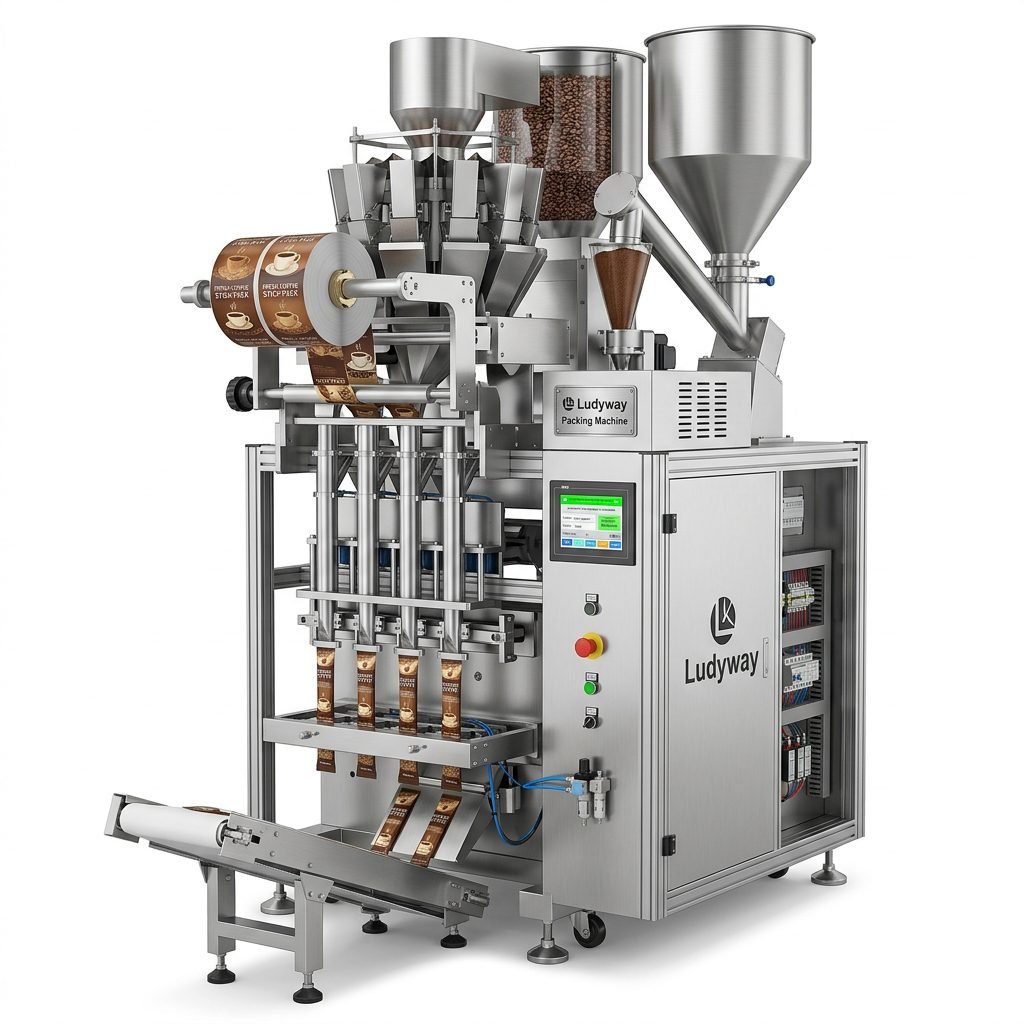
Automatic Multi-Lane Coffee Bean Packaging Machine
View Equipment Details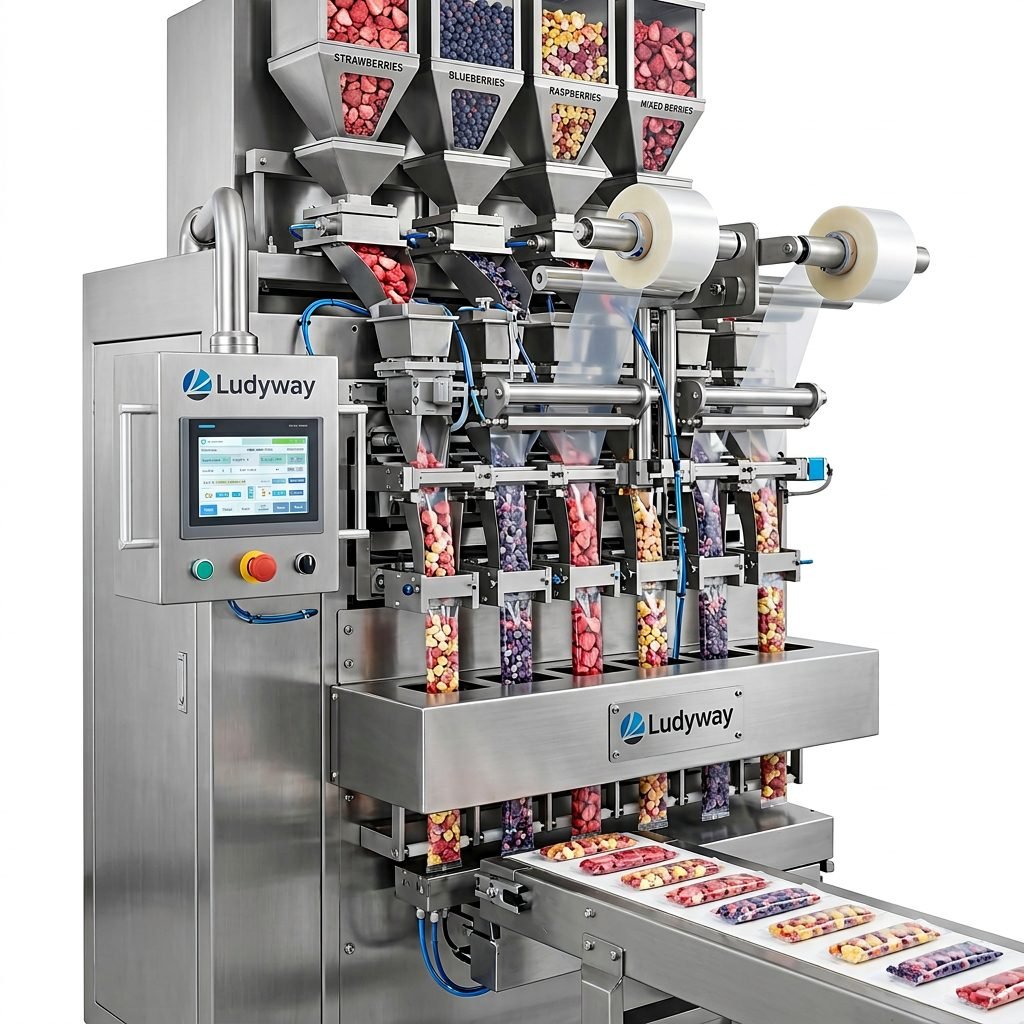
Freeze-Dried Fruit Stick Pack Machine for Granules
View Equipment Details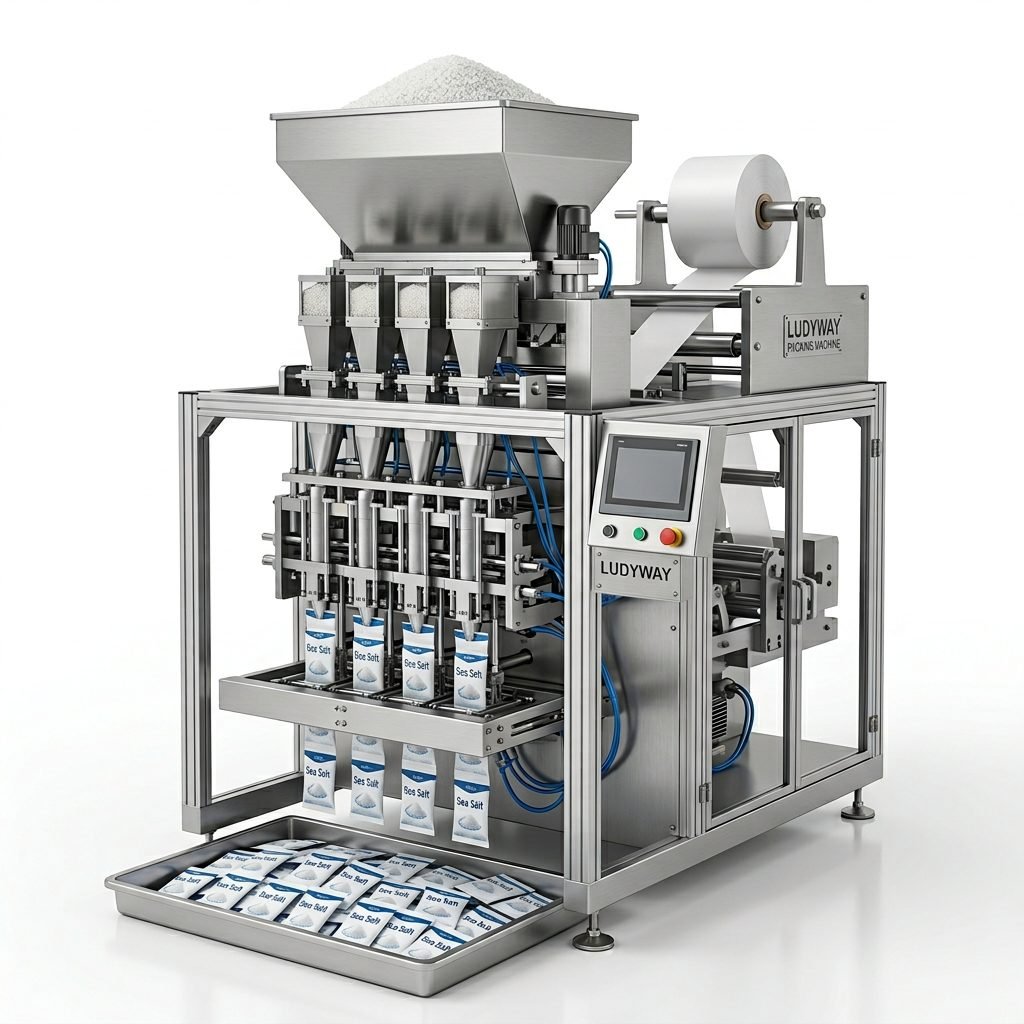
Sea Salt Granule Packaging Machine with Sachet System
View Equipment Details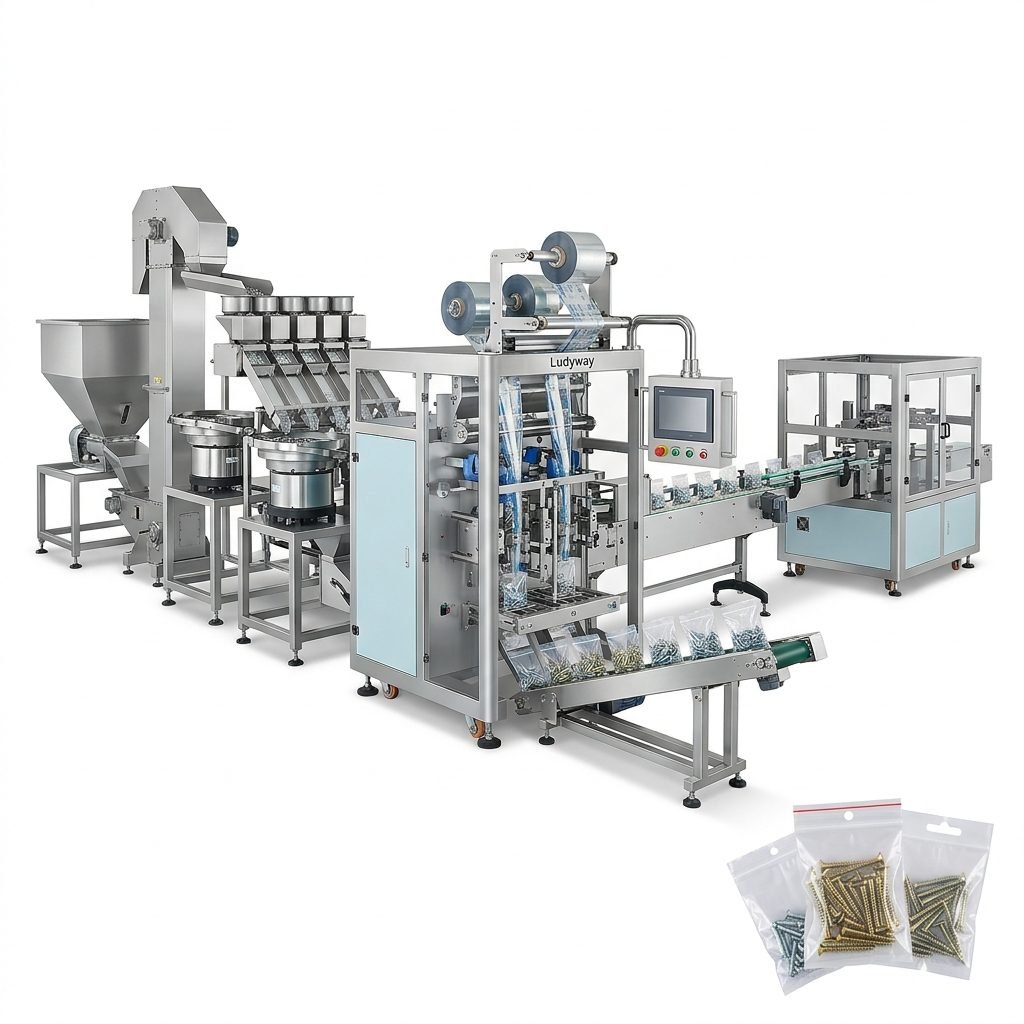
Automated Multi-Lane Hardware Packaging Line
View Equipment Details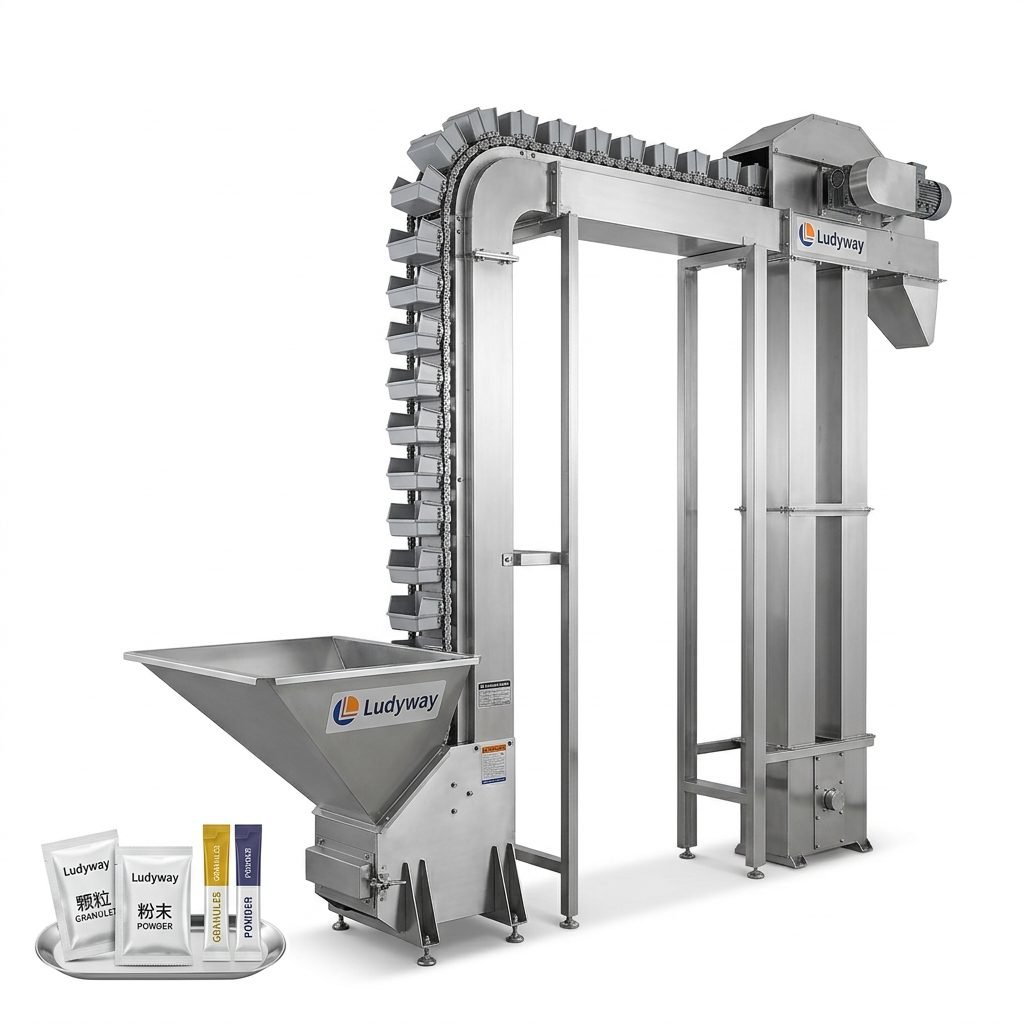
Z-Type Bucket Elevator for Granule Systems
View Equipment Details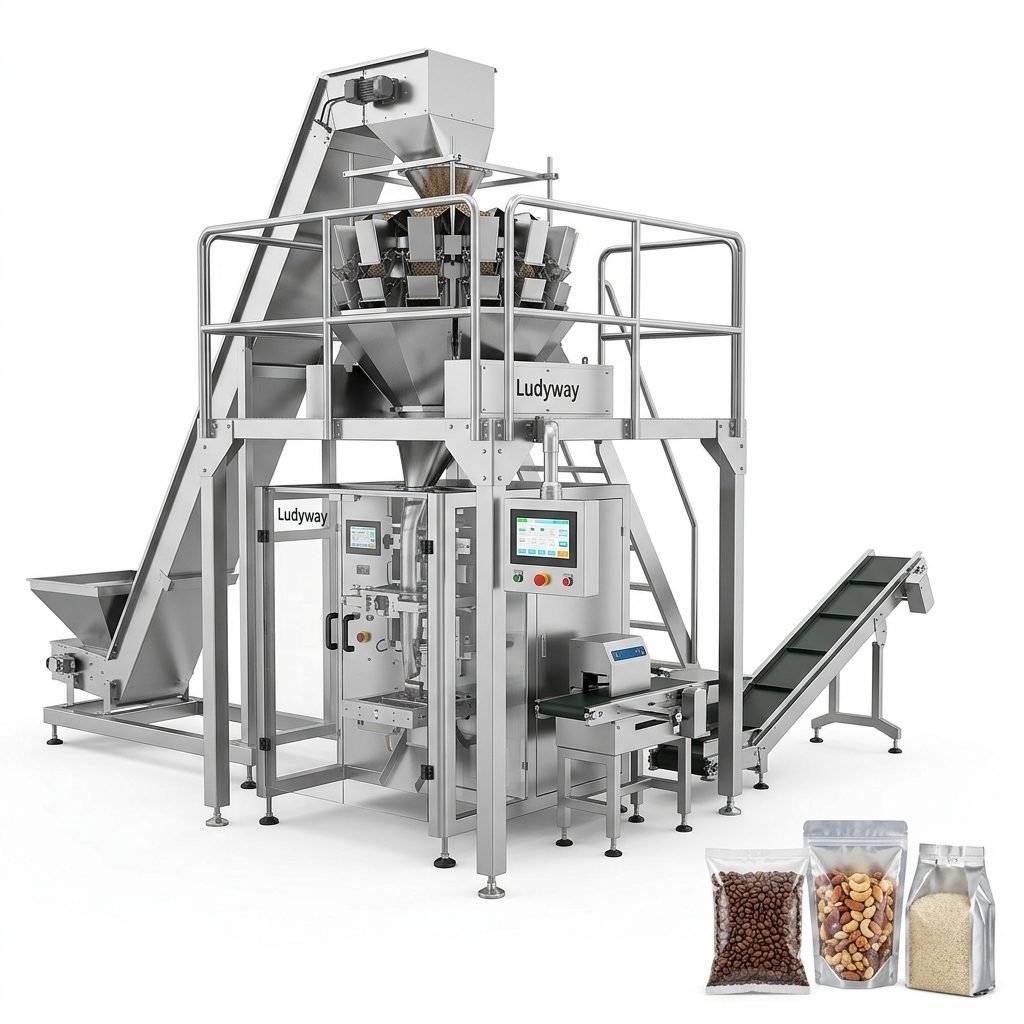
High-Speed Food Granule Weighing System
View Equipment Details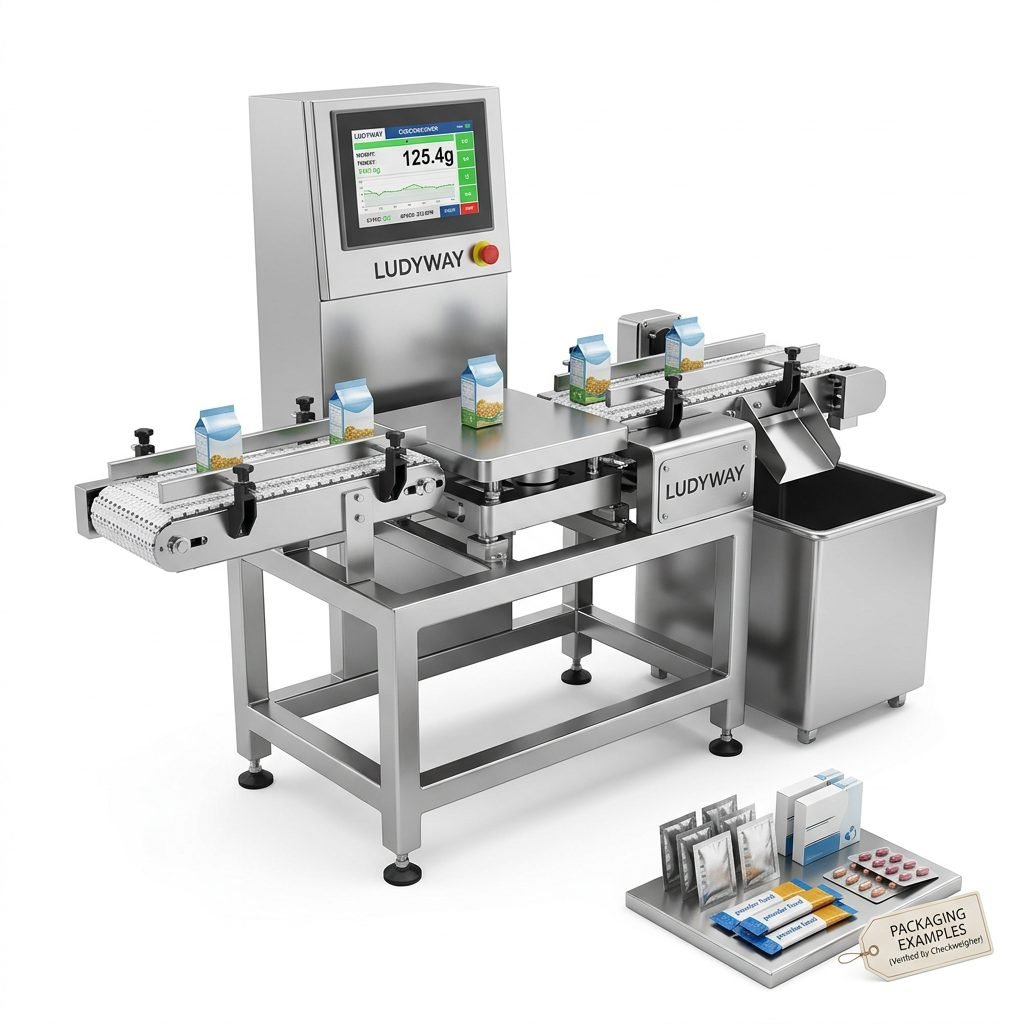
Dynamic Inline Checkweigher Inspection Unit
View Equipment Details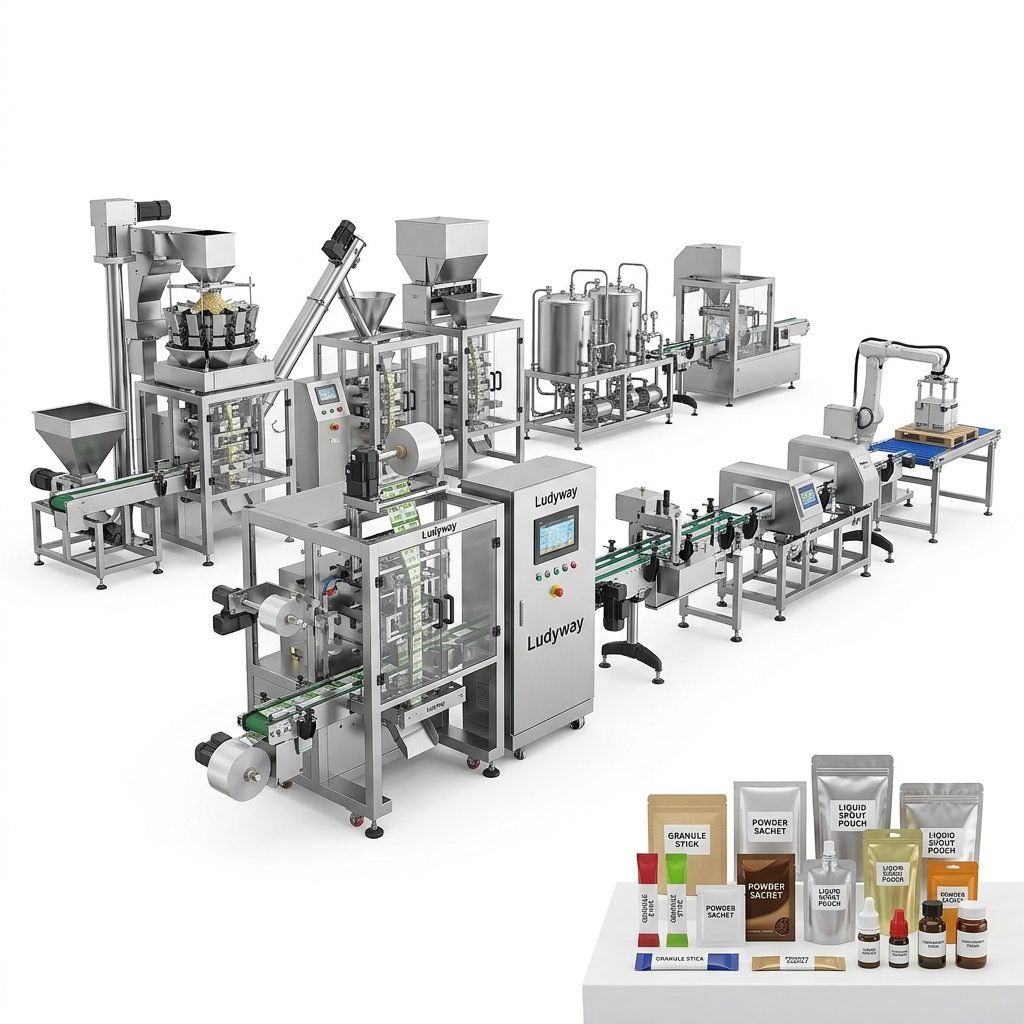
Automated Turnkey Smart Packaging System
View Equipment DetailsCritical Factors for Granule Packaging Line Optimization
Maximizing line uptime and minimizing product giveaway requires deep consideration of environmental parameters, changeover mechanics, and automated sanitary clean-in-place (CIP) protocols.
1. Preventing Electrostatic Charge & Granule Dust Accumulation
Fine granules and crystalline compounds (such as salts, sugars, citric acid, and pharmaceutical binders) generate significant triboelectric static friction during high-speed vertical transfer. This causes particles to cling to the inner packaging film web, leading to contaminated heat seals and subsequent pouch leaks.
- Ionizing Air Blowers: Neutralize static charges on the packaging film web prior to forming.
- Enclosed Vacuum Extraction: Incorporate positive-pressure dust extraction hoods above transition funnels.
- Teflon-Coated Jaws: Utilize non-stick sealing bar coatings to eliminate particulate buildup during thermal welding.
2. Quick Tool-Less Changeovers for Multi-SKU Flexibility
Modern manufacturing facilities often switch between different pouch widths, fill weights, and granulate recipes multiple times per shift. Reducing downtime between production runs is paramount to maintaining Overall Equipment Effectiveness (OEE).
- Modular Former Sets: Quick-release forming tubes that do not require hand tools for size conversions.
- Recipe Storage on HMI: Save hundreds of operational parameters (temperatures, servo stroke lengths, timing delays) in the centralized touch screen interface.
- Pivoting Weigher Components: Removable weigher buckets and chutes for expedited washdown and allergen segregation.
Turnkey Packaging Excellence by Ludyway Machinery
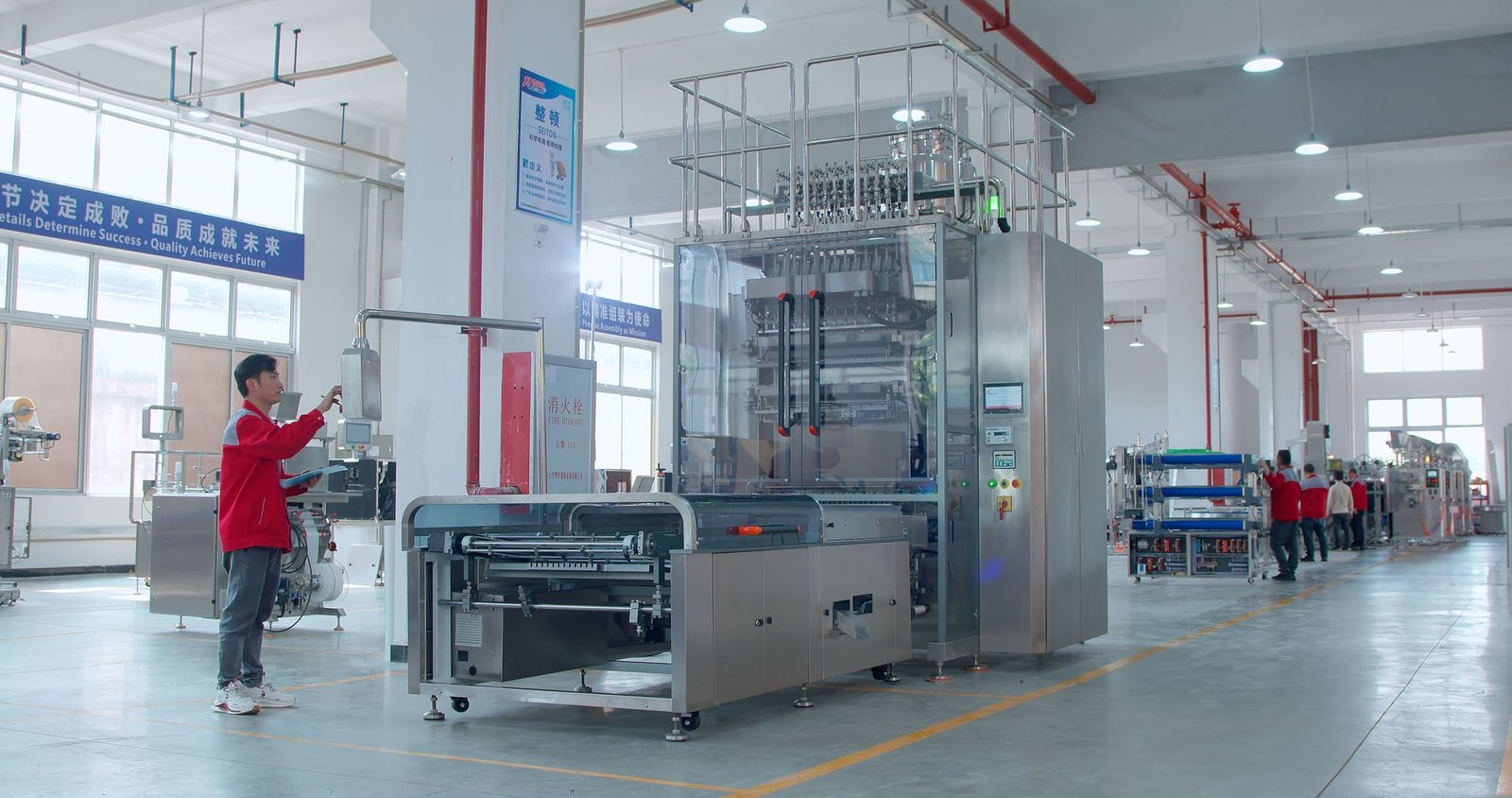
With over 30 years of manufacturing experience, Ludyway is a leading global supplier of intelligent packaging machinery and turnkey production line solutions. Supporting clients across food, pharmaceutical, daily chemical, and pet nutrition sectors in more than 100 countries, we design and manufacture over 50 automated packaging machine models.
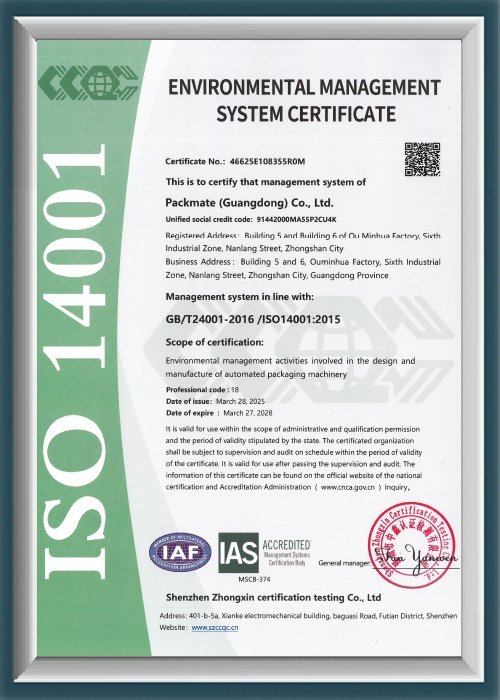
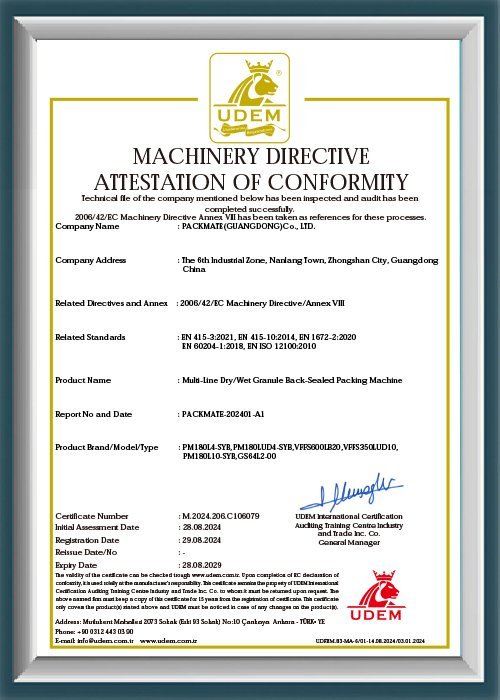
Our modern 20,000㎡ industrial facility integrates state-of-the-art CNC machining, robotic welding, and stringent ISO9001/CE quality validation testing to ensure your granule packaging line operates with unwavering reliability.
Certified Engineering Quality
All Ludyway packaging machines conform to stringent international safety, sanitary, and electrical standards.


Engineering & Setup FAQs for Granule Packaging Lines
Common questions regarding line footprint, weigher accuracy, changeovers, and project delivery timelines.
How much plant floor space is required for a complete automated granule packaging line?
A standard vertical form-fill-seal (VFFS) or multi-lane sachet line with an infeed bucket elevator, primary packaging machine, and discharge conveyor requires approximately 6m (length) x 3m (width) x 4.5m (height). Fully integrated turnkey lines incorporating automated cartoning and robotic palletizers typically require 15m to 25m in linear length, or a customizable U-shaped layout.
What is the difference between volumetric cup dosing and multi-head weighers for granules?
Volumetric cup dosers measure product by volume and are highly economical, robust, and fast for uniform, free-flowing granules with stable bulk densities (e.g., refined white sugar or table salt). Multi-head combination weighers measure actual mass gravimetrically, making them essential for non-uniform, high-value, or fragile granular products (e.g., freeze-dried fruits, nuts, and pharmaceutical granules) where giveaway must be minimized.
How does nitrogen flushing protect granule shelf life?
Nitrogen flushing displaces ambient atmospheric air containing oxygen inside the pouch just before hermetic heat sealing. By reducing oxygen concentration below 1%, it prevents rancidity in oil-containing granules (like roasted coffee beans or nuts), stops microbial reproduction, and preserves flavor and aroma over extended distribution cycles.
What utilities and industrial connections are required before line commissioning?
A standard granule packaging system requires clean, dry compressed air (0.6 – 0.8 MPa, with adequate CFM flow rate), a stable three-phase electrical supply (220V/380V/480V depending on local grid codes), and adequate industrial grounding. If high-hygiene food or pharma products are packaged, dedicated dust extraction ducting and cleanroom air handling should be pre-installed.
Ready to Design & Build Your Granule Packaging Line?
Partner with Ludyway’s engineering team to configure a turnkey packaging solution tailored to your product specifications, target speeds, and plant layout.
