
1. Fundamental Architecture of an Automated Weighing Packaging Line
Synchronizing material bulk handling, precision load cell metering, and high-speed primary packaging
Setting up an efficient automatic weighing packaging line requires more than simply coupling a multihead weigher with a form-fill-seal unit. Modern automated packaging operations in high-throughput industries—ranging from dry foods and pharmaceuticals to industrial chemicals and nutraceutical powders—demand an end-to-end synchronized ecosystem. When deploying a turnkey production architecture, each upstream and downstream node must communicate seamlessly via industrial Ethernet protocols (e.g., EtherCAT, PROFINET, Ethernet/IP) to maintain continuous mass flow and eliminate cyclic bottlenecks.
The core mechanism of automated dosing relies on high-speed dynamic load cells, modular vibratory dispersion feeders, and real-time combination calculation algorithms. Understanding the mechanical, electronic, and software handshakes among these components ensures your production floor achieves maximum Overall Equipment Effectiveness (OEE) while keeping target weight standard deviation (σ) under 0.15%.
Infeed & Bulk Handling
Automated material transfer using Z-bucket elevators, vacuum pneumatic conveyors, or heavy-duty screw feeders with level sensing to keep intermediate balance hoppers constantly replenished without product breakage.
Combination Weighing & Dosing
Digital signal processing (DSP) enabled multihead weighers, auger fillers, or linear scales that compute optimal weight combinations across 10 to 24 pool and weigh buckets within 15 milliseconds.
Primary & Secondary Packaging
Direct mechanical interface with vertical form-fill-seal (VFFS), multi-lane stick pack, or rotary premade pouch machinery, followed by inline checkweighing, metal detection, cartoning, and palletizing.
2. Step-by-Step Methodology: Planning to Commissioning
Engineering protocols to eliminate configuration errors and achieve rapid operational readiness
Material Rheology & Bulk Density Characterization
Before selecting machinery, measure your product’s angle of repose, particle size distribution, moisture absorption profile, and friability index. Free-flowing granules (e.g., white sugar, seeds, plastic resin) utilize vibratory chutes, whereas hygroscopic fine powders require enclosed servo-driven augers or nitrogen-purged feeder zones.
Target Output Matching & Line Balancing
Calculate theoretical line capacity (BPM: Bags Per Minute) versus effective continuous output. Ensure the primary weighing system is rated at least 15-20% higher than the maximum packaging machine speed to create an upstream buffer that prevents starvation during bag film roll changeovers.
Structural Anti-Vibration Layout Integration
High-precision strain gauge and digital load cells are sensitive to plant floor harmonics generated by air compressors, vacuum pumps, and heavy motorized conveyors. Mount weighing gantries on independent, mechanically isolated mezzanines with heavy structural dampening feet.
PLC Handshake & Downstream Inspection Synchronization
Program rigid cycle interlocks between the weigher discharge gate and the packaging machine bag clamping jaws. Integrate continuous feedback from a dynamic checkweigher to auto-tune weigher feeder vibration amplitudes in real-time.
Dosing Technology Selection Matrix by Material Type
| Product Category | Physical Behavior | Recommended Weighing Technology | Typical Accuracy | Packaging Machine Compatibility |
|---|---|---|---|---|
| Granules / Grains / Pellets | Free-flowing, non-dusting, high rigidity | 10-14 Head Multihead Combination Weigher | ± 0.2 – 0.5g | VFFS, Multi-Lane Stick Pack, Rotary Pouch |
| Fine Powders / Starches | Non-free flowing, dusting, aerated | Servo Auger Filler with Load Cell Feedback | ± 0.3 – 1.0% | Multi-Lane Sachet, Stick Pack, Big Bag Filler |
| Fragile / Irregular Snacks | High friability, uneven shapes, oily | Gentle-Slope Multihead Weigher with Dimple Surface | ± 0.5 – 1.0g | Premade Pouch, Continuous Motion VFFS |
| Bulk Seeds / Heavy Feeds | High density, abrasive, large volumes (10-50kg) | Gross / Net Linear Bagging Scale | ± 0.1 – 0.2% | Open Mouth Bagging Line, Valve Bag Packer |
3. Recommended Automatic Weighing & Packaging Equipment
Industry-proven machinery engineered for ultra-fast dosing, high-accuracy weighing, and rugged duty cycles
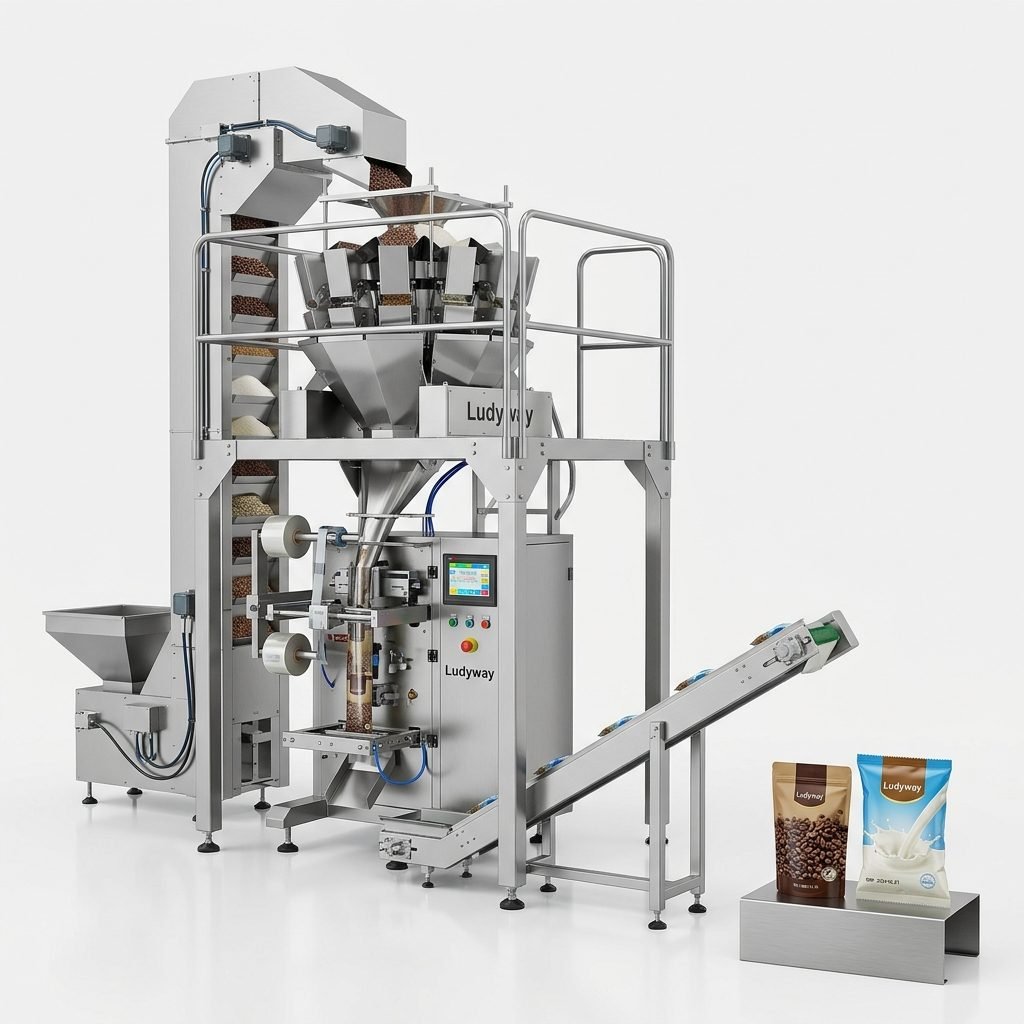
Automatic Weighing, Filling, and Sealing Packaging Line
View Specifications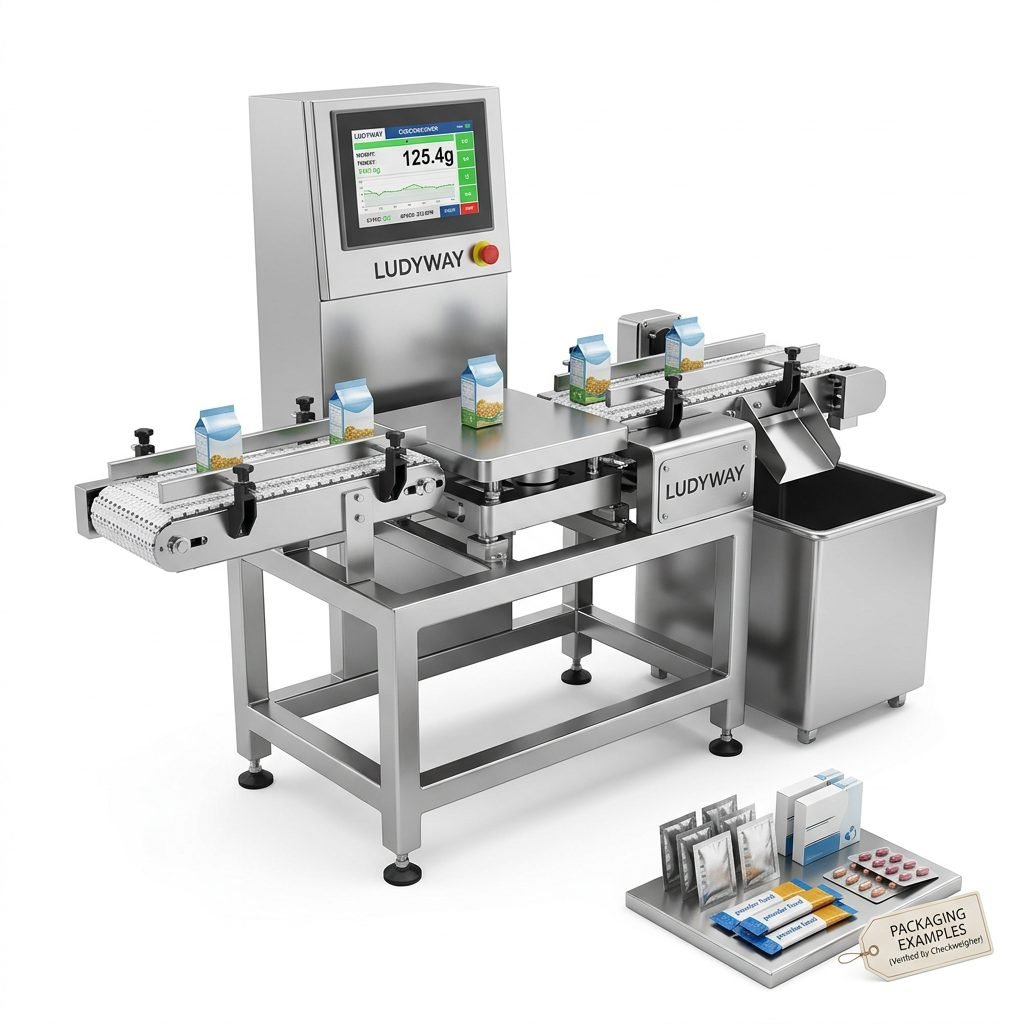
High-Precision Checkweigher for Food & Pharma
View Specifications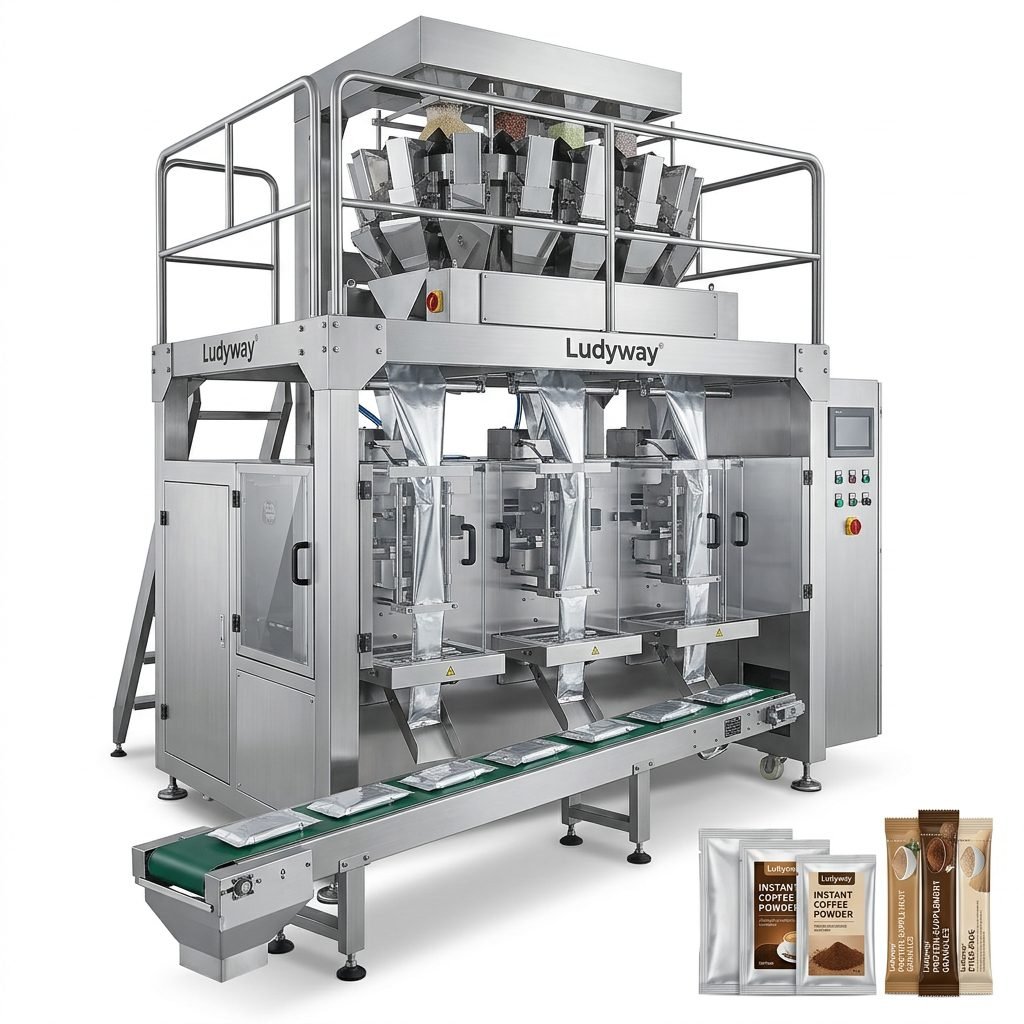
Multi-Lane Weighing Filling & Sealing Systems
View Specifications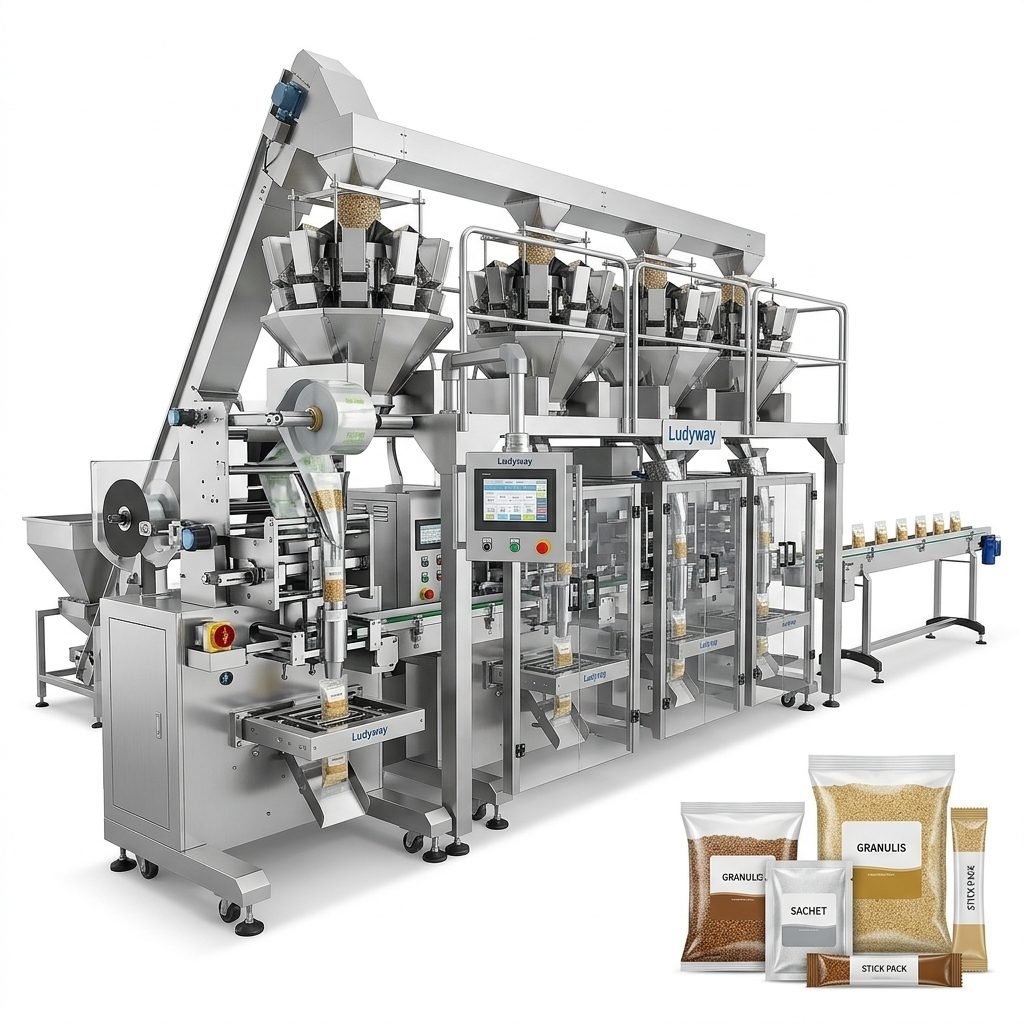
Multi-Lane Pouch Weighing Lines for Granules
View Specifications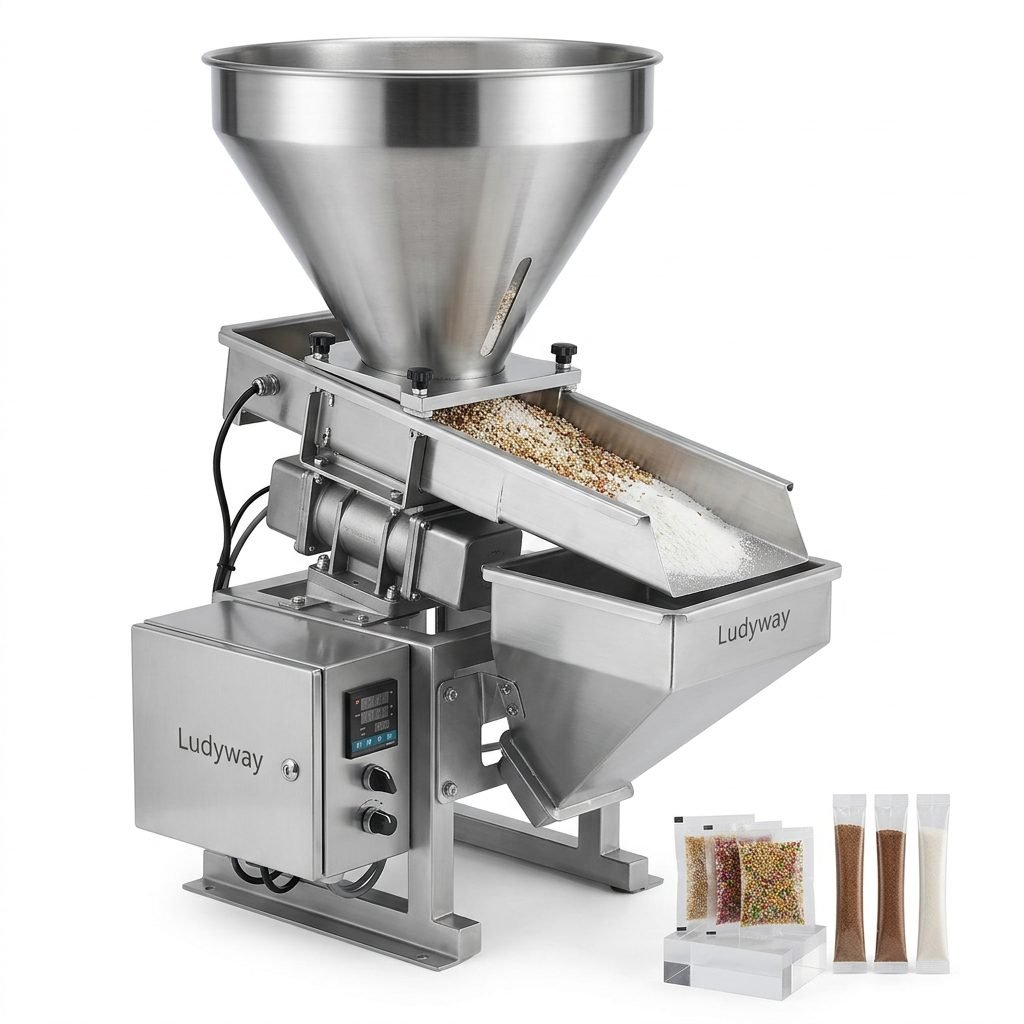
High-Precision Vibratory Feeder for Packaging
View Specifications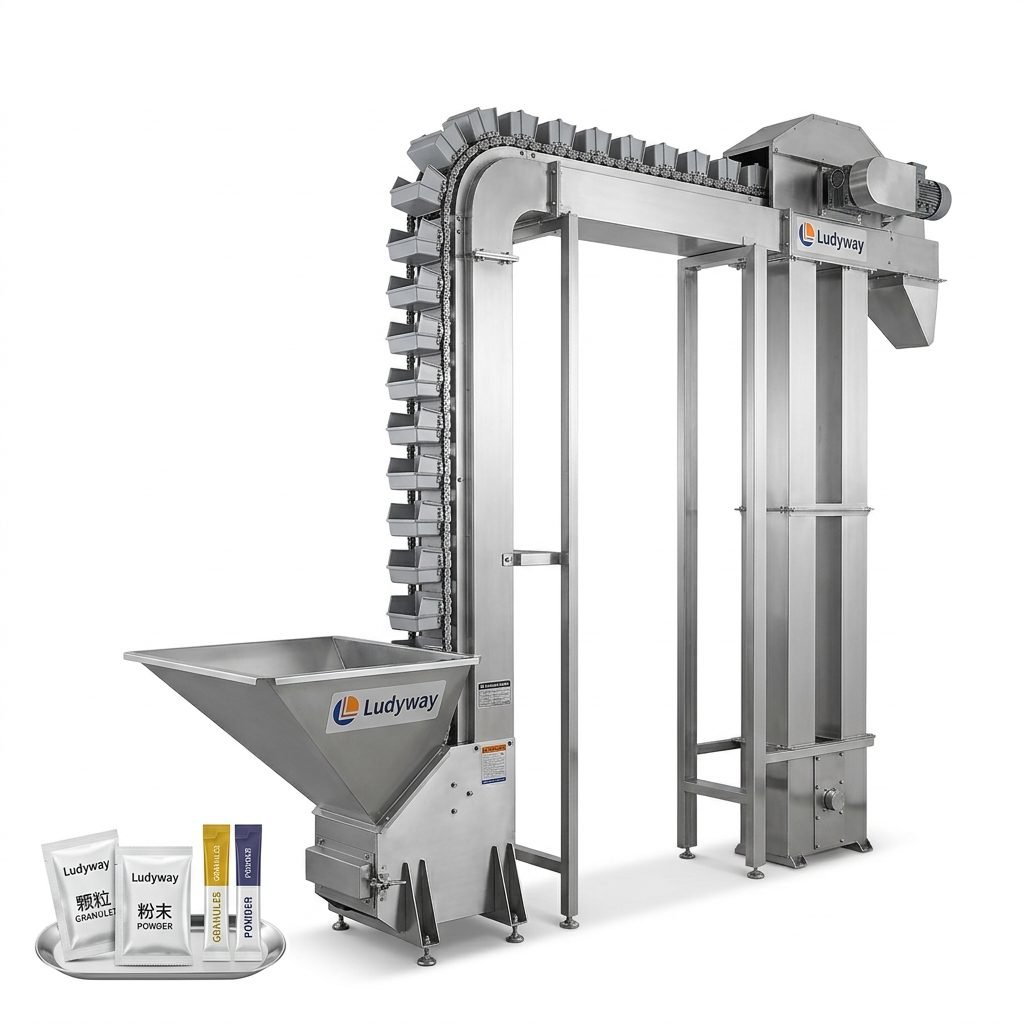
Z-Type Bucket Elevator for Granules & Powders
View Specifications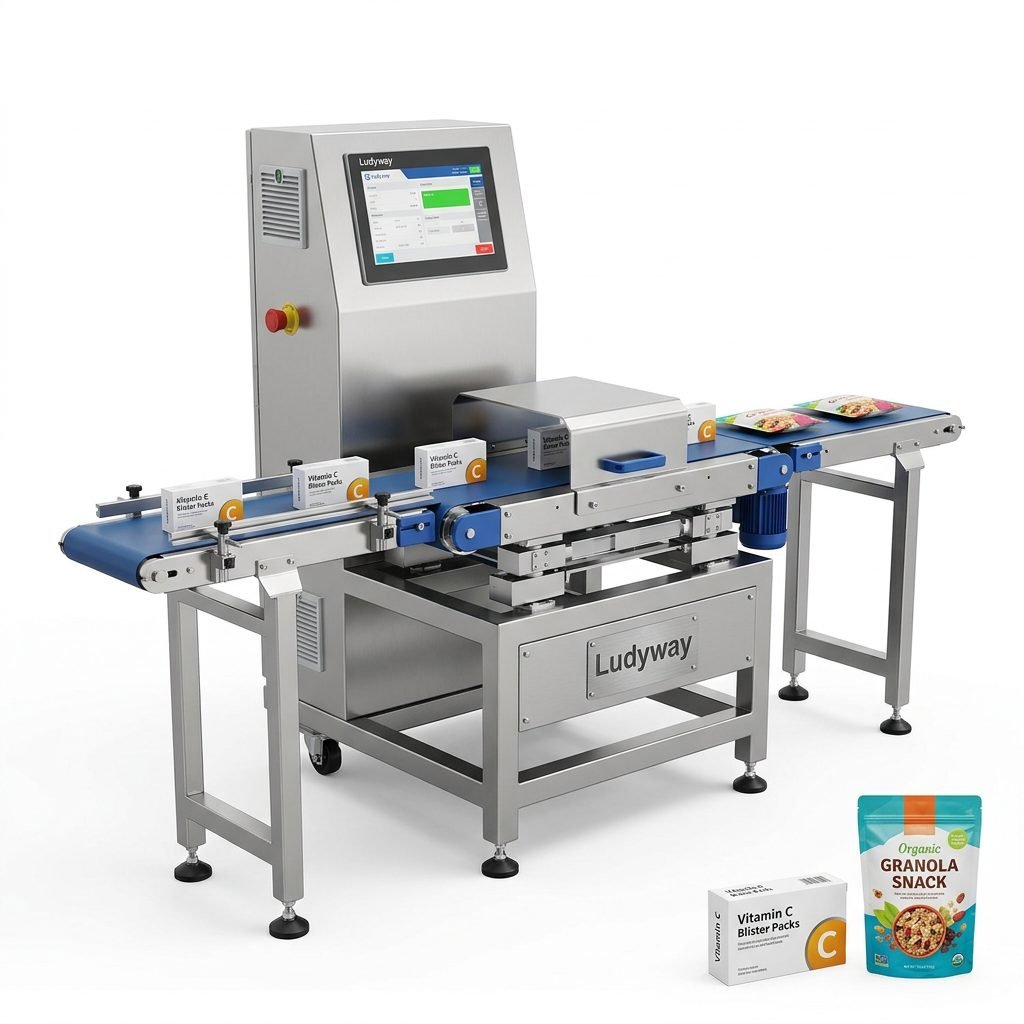
High-Speed Dynamic In-Line Checkweigher
View Specifications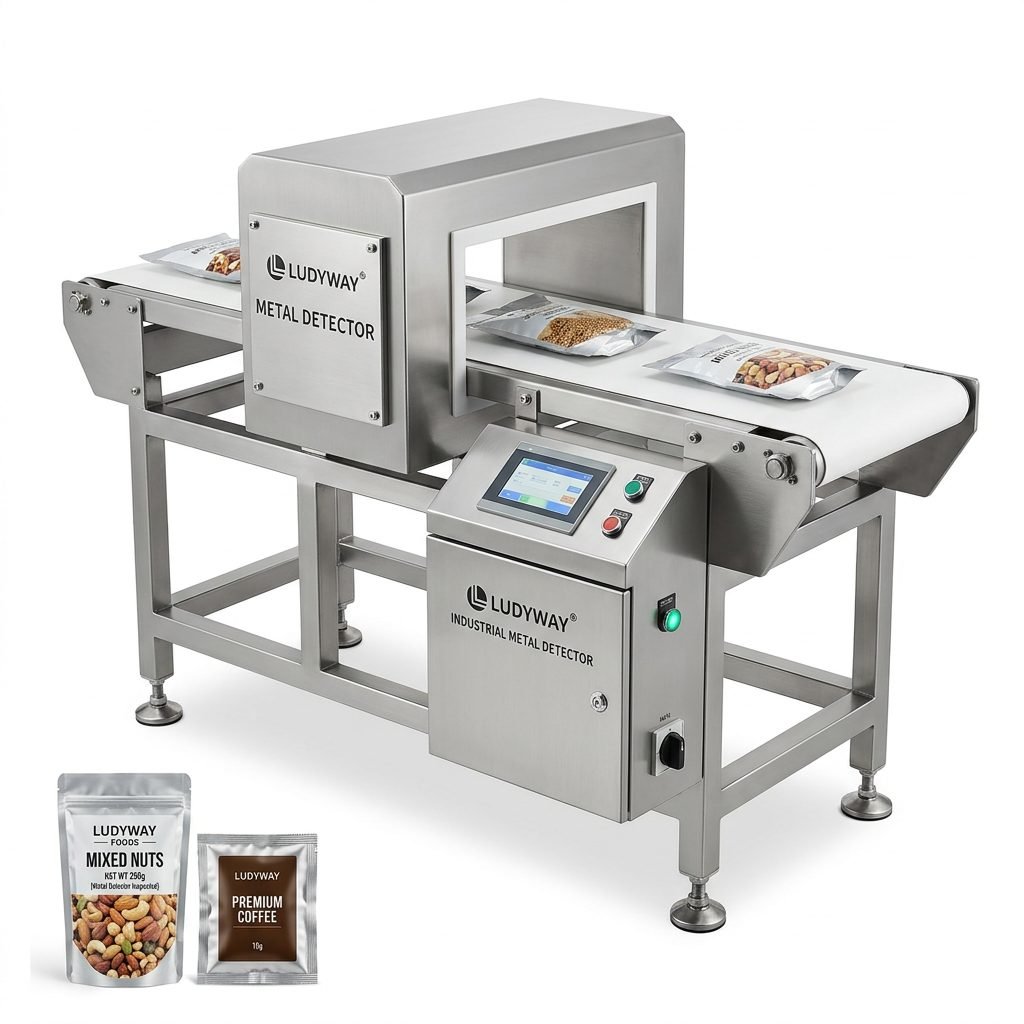
Industrial Conveyor-Type Metal Detector
View Specifications4. Core Calibration & Optimization Protocols
Fine-tuning dynamic response filters, load cell sampling rates, and closed-loop feedback routines
Dynamic Digital Filtering (Anti-Jitter & Noise Cancellation)
Dynamic weighers operate in mechanically noisy plant environments. Mechanical conveyors, servo rotations, and air cylinder exhaust cycles produce mechanical vibration frequencies typically ranging from 5 Hz to 35 Hz. If unaddressed, these frequencies induce signal jitter in analog load cells, registering false weights and resulting in over-filling or unnecessary pack rejections.
Modern multihead weighers utilize automatic zero-point drift tracking. During micro-intervals between dump discharges, the controller recalibrates bucket tares to eliminate measurement skew caused by residual product adhesion.
Closed-Loop Feedback Integration (Checkweigher to Multihead Auto-Tune)
An isolated weigher setup drifts over hours of continuous running due to variations in product moisture, hopper ambient temperature, and upstream raw material bulk density shifts. Setting up an efficient line requires closing the automation loop between downstream checkweighing units and upstream dosing heads.
When the downstream dynamic checkweigher calculates a consecutive moving average shift (e.g., +0.4g above setpoint across 30 bags), it transmits an instantaneous industrial fieldbus offset command. The multihead or auger dosing PLC immediately decrements primary feed vibration duration by milliseconds or reduces servo screw revolutions by micro-increments, arresting product giveaway before it impacts profitability.
Preventing Film Jamming & Seal Contamination at Drop-Zone Handshake
A primary source of line downtime is the physical drop-zone transition. When weighed portions drop from hoppers into the packaging forming tube, airborne dusting or satellite particle splatter can foul horizontal sealing jaws, creating pinholes, leakers, or incomplete hermetic seals.
To eliminate this: 1) Deploy timing collating hoppers that gather product into a compact, coherent slug before triggering the release gate; 2) Integrate dust-extraction shrouds and anti-static de-ionizing bars right at the forming collar; 3) For gas-flushed packaging lines (e.g., roasted coffee, snacks, powdered infant nutrition), install specialized gas-injection lances directly inside the drop chute to guarantee residual oxygen levels below 0.5% without disrupting dynamic weight accuracy.
5. Compliance, Clean-In-Place (CIP) & Industry Standards
Engineering sanitary, compliant, and flexible packaging infrastructure for global regulatory requirements
Food & Nutraceutical Hygiene (FDA & EHEDG)
For food processing applications, all contact surfaces must feature food-grade AISI 304 or AISI 316 stainless steel construction with electropolished finishes (Ra < 0.8 µm). Tool-less quick-disconnect hoppers and radial feeders facilitate full washdown (IP65/IP66 ratings) to eliminate allergen cross-contamination between batch changeovers.
Pharmaceutical Validation (GMP & 21 CFR Part 11)
Pharmaceutical dosing setups require strict batch traceability, multi-level password security, audit trails, and data acquisition integration into SCADA/MES networks. In addition, weighing inspection data must be logged on non-volatile, encrypted flash drives or exported via OPC-UA protocols for validation.
Explosion-Proof & Hazardous Materials (ATEX)
When handling explosive or combustible powders (such as sulfur, starch, metallic powders, or chemical fertilizers), the entire weighing packaging line must be configured with ATEX-certified antistatic enclosures, intrinsically safe load cell barriers, explosion vents, and inert gas purging loops.
Secondary Automation (Cartoning & Palletizing)
Efficiency extends beyond the primary bagging station. Complete your line setup by integrating automated collating pick-and-place robots, end-of-line robotic carton loaders, case tapers, dynamic checkweighers with reject flippers, and automatic stretch-wrapping palletizers for seamless warehouse transit.
Global Turnkey Packaging Manufacturing Excellence
Engineering intelligent, reliable packaging systems for international manufacturers since 2010
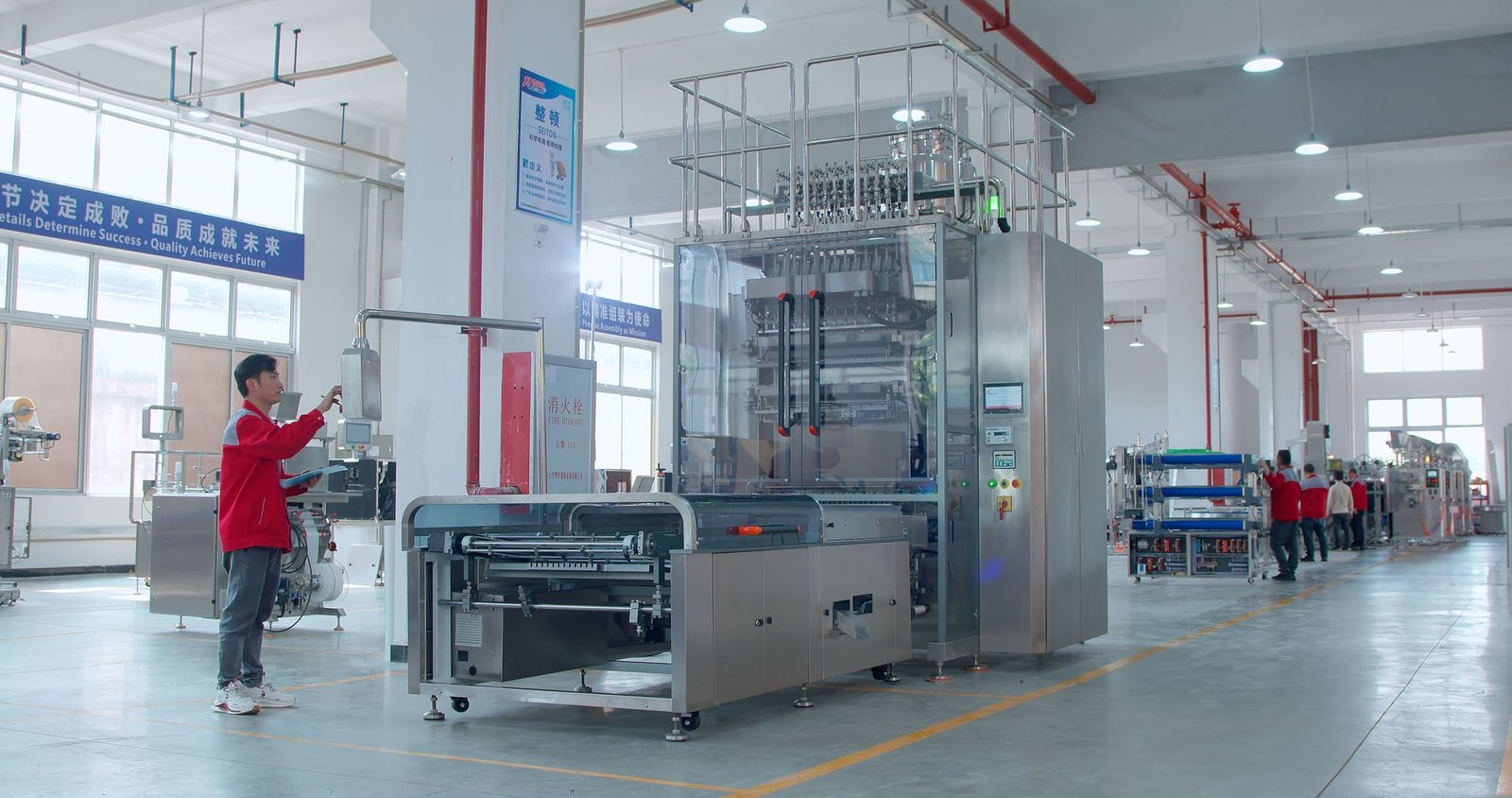
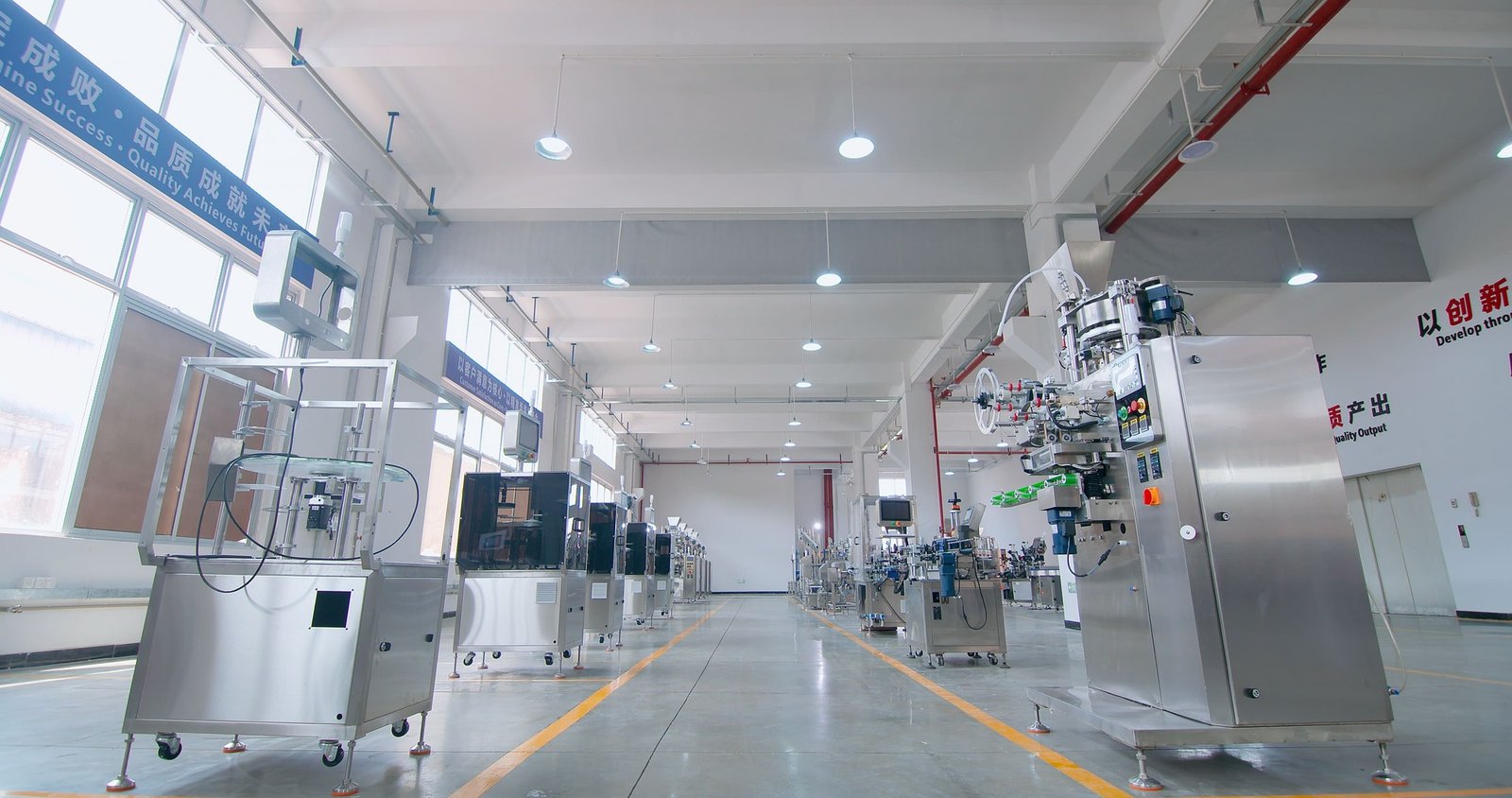
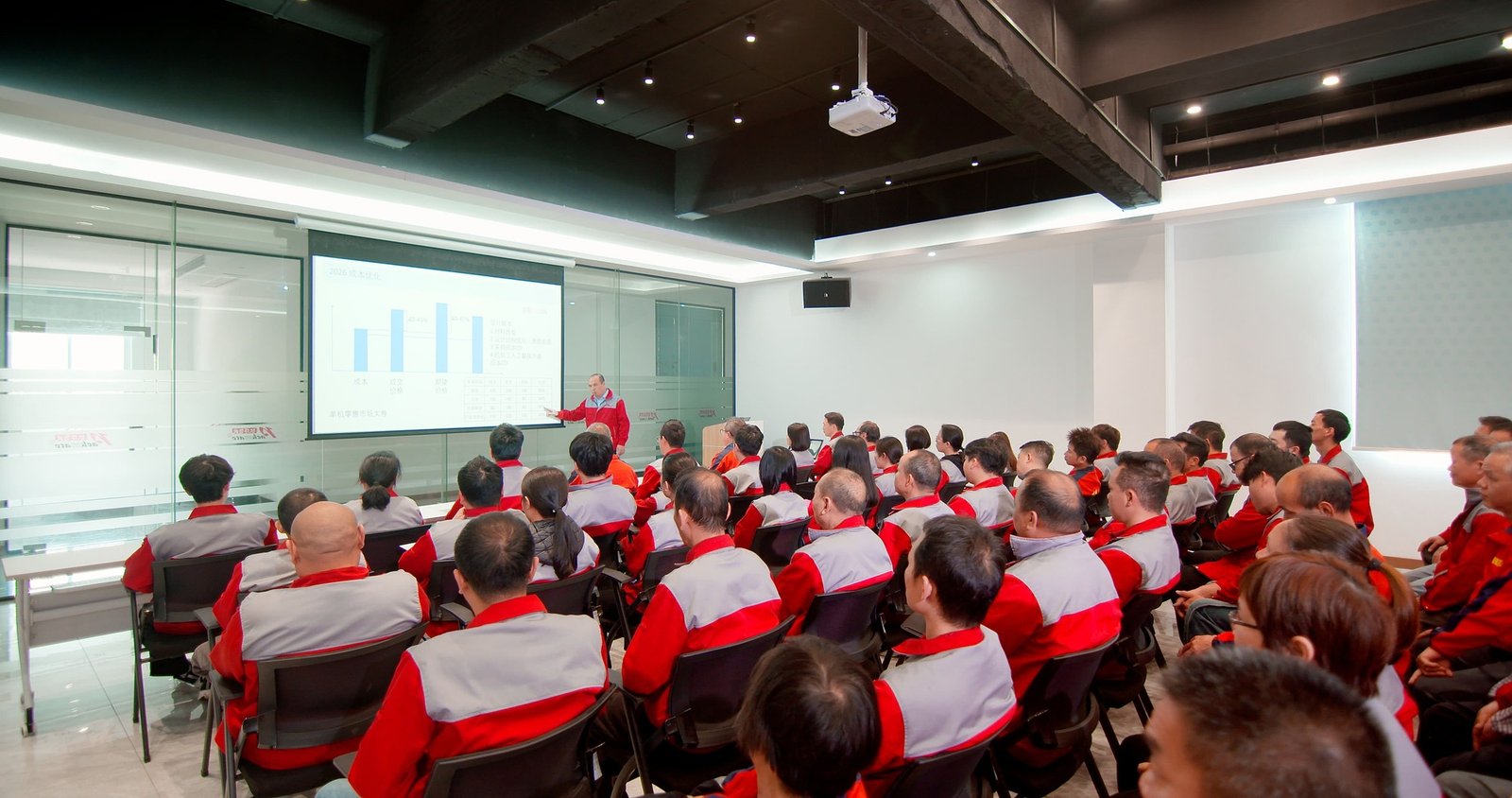
Ludyway is one of the premier automated packaging machine manufacturers, specializing in advanced high-speed packaging machinery and turnkey production line solutions. With over 30 years of aggregated industry expertise, we design and integrate tailored multi-lane stick pack, sachet, pouch, and automated weighing systems for clients across more than 100 countries.
Operating out of a modern 20,000㎡ manufacturing facility equipped with over 200 high-precision CNC machining centers, our 130+ packaging engineers offer more than 50 intelligent machine models. From single-lane benchtop dosers to fully synchronized smart factory lines, Ludyway delivers uncompromised accuracy, maximum reliability, and full international safety certification.

Frequently Asked Questions: Weighing Line Setup
Practical technical solutions for common integration, throughput, and calibration challenges
How do I select between a 10-head, 14-head, and 20-head combination weigher?
The choice depends on your target packaging speed (BPM) and target weight accuracy. A 10-head multihead weigher typically delivers 40-70 BPM with solid accuracy on single-dump products. A 14-head weigher handles 80-130 BPM by evaluating thousands more mathematical weight combinations per cycle. A 20-head to 24-head system is designed for ultra-high speeds (up to 200+ BPM), twin-discharge multi-lane stick packaging machines, or multi-component mix formulations (e.g., trail mix with exact ratios of nuts and dried fruits).
What is the most effective way to eliminate product giveaway on high-value products?
Product giveaway is eliminated through a multi-tier strategy: 1) Utilizing DSP load cells with 0.01g resolution; 2) Installing memory hoppers underneath weigh buckets to double available combination choices without increasing weigher footprint; 3) Enabling closed-loop communication between an inline dynamic checkweigher and the dosing PLC to automatically counteract bulk density fluctuations.
How should I manage sticky or fragile products during automated weighing?
For sticky materials (e.g., dried fruit, gummies, fresh poultry), equip chutes and buckets with dimpled (embossed) stainless steel plates, non-stick Teflon/ceramic coatings, and steep discharge angles. For highly fragile items (e.g., biscuits, freeze-dried crisps), install shallow-slope dispersion cones, low-drop timing hoppers, and food-grade rubber or polyurethane cushioning linings to reduce impact velocity.
