
Powder Packaging Solutions
Milk Powder Packaging Machinefor Dairy & Nutritional Brands
Automatic Powder Filling & Sealing Solutions for Stick Packs, Sachets, Pouches and Bulk Bags
50+ intelligent packaging machine models · 30+ years of powder-handling engineering · Installed in 100+ countries and regions
A milk powder packaging machine for dairy and nutritional brands has to do three things at once: dose a fine, hygroscopic powder to within ±1% of target weight, seal it in a low-oxygen barrier pack, and keep every food-contact surface cleanable. This page is written for dairy processors, infant formula brands, sports nutrition companies and contract packers evaluating automatic powder filling and sealing equipment from 1 g stick packs to 25 kg open-mouth bags. You will find format comparisons, auger dosing specifications, hygienic design and compliance checkpoints, turnkey line layouts, and a clear sourcing path covering samples, FAT, MOQ, lead time and quotation.
Key takeaways
- Multi-lane stick pack and sachet machines run 2–12 lanes and reach up to 600 single-serve packs per minute with servo auger dosing accurate to ±1% on 2–50 g fills.
- Nitrogen flushing keeps residual oxygen at or below 2%, extending milk powder shelf life to 18–24 months in aluminium-laminate packaging.
- Food-contact parts are built in 304 or 316L stainless steel to meet FDA 21 CFR 177 and EU 1935/2004 requirements for dairy and infant nutrition.
- Typical lead time is 45–75 days after deposit, MOQ is 1 machine, and every unit passes a factory acceptance test with the customer’s own powder before shipment.
- A complete turnkey line—from bulk intake and sieving to cartoning and palletizing—can replace 6–10 manual packing operators per shift.
Milk Powder Packaging Machines by Pack Format
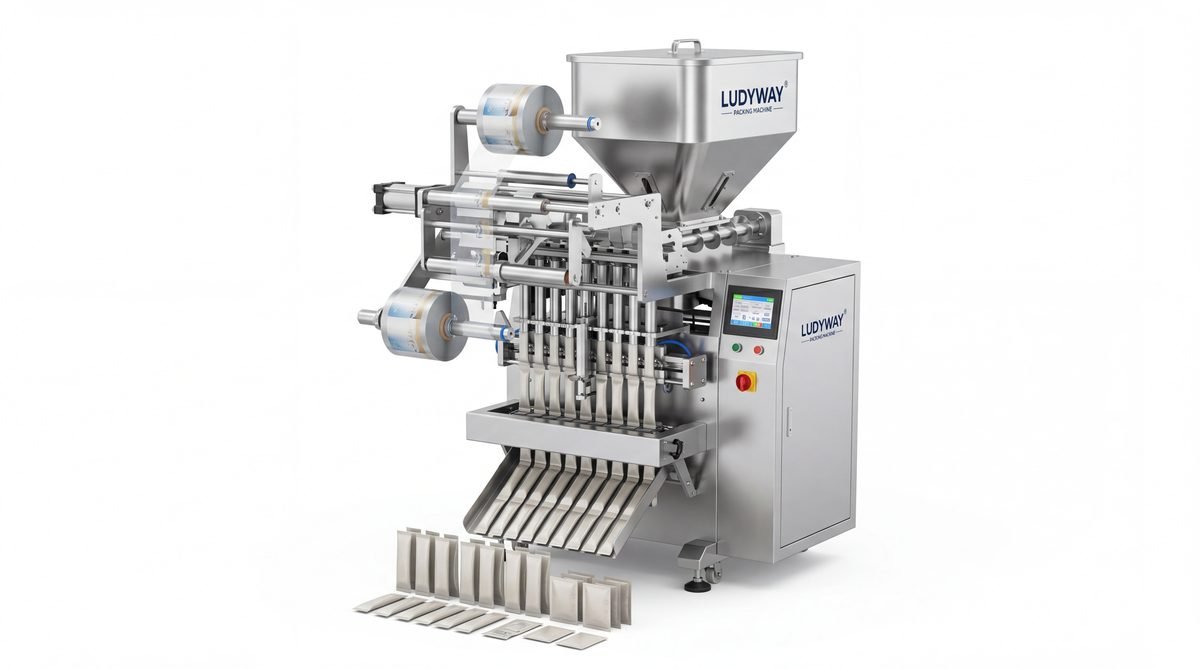
Milk Powder Stick Pack Machine
Multi-Lane VFFS, Stick Pack & Sachet
Request a Quote →
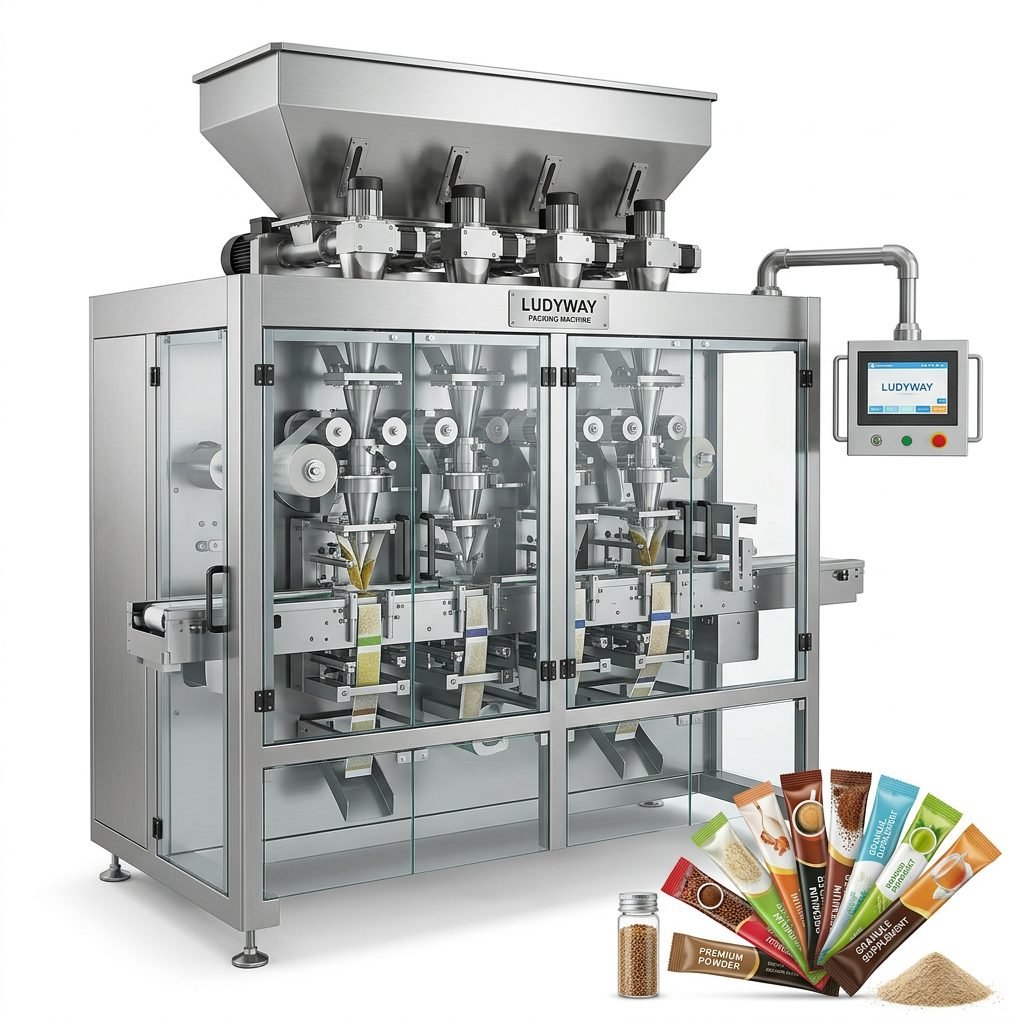
Precision Powder Dosing System
Servo Auger Filler, Dairy & Nutrition Powders
Request a Quote →
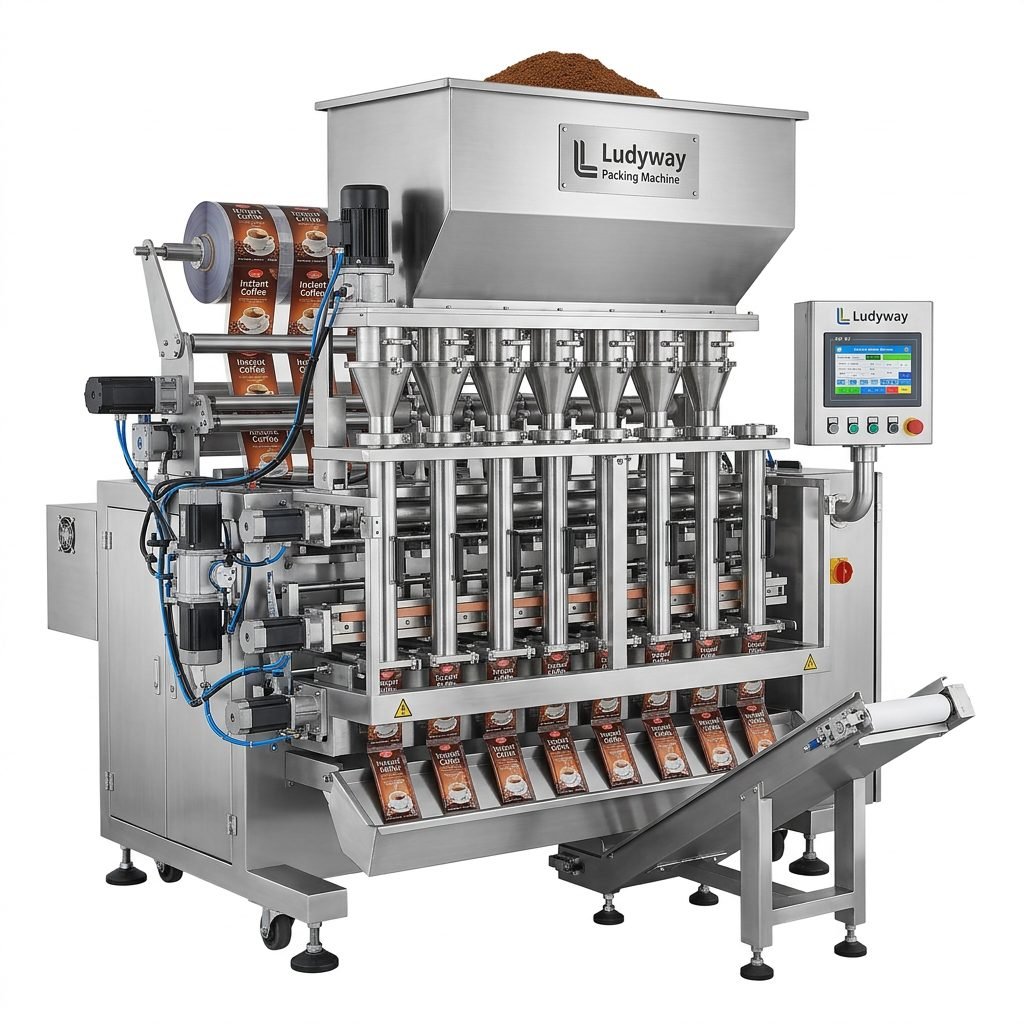
Instant Beverage Sachet Machine
Multi-Lane Sachet, Milk Tea & Creamer
Request a Quote →
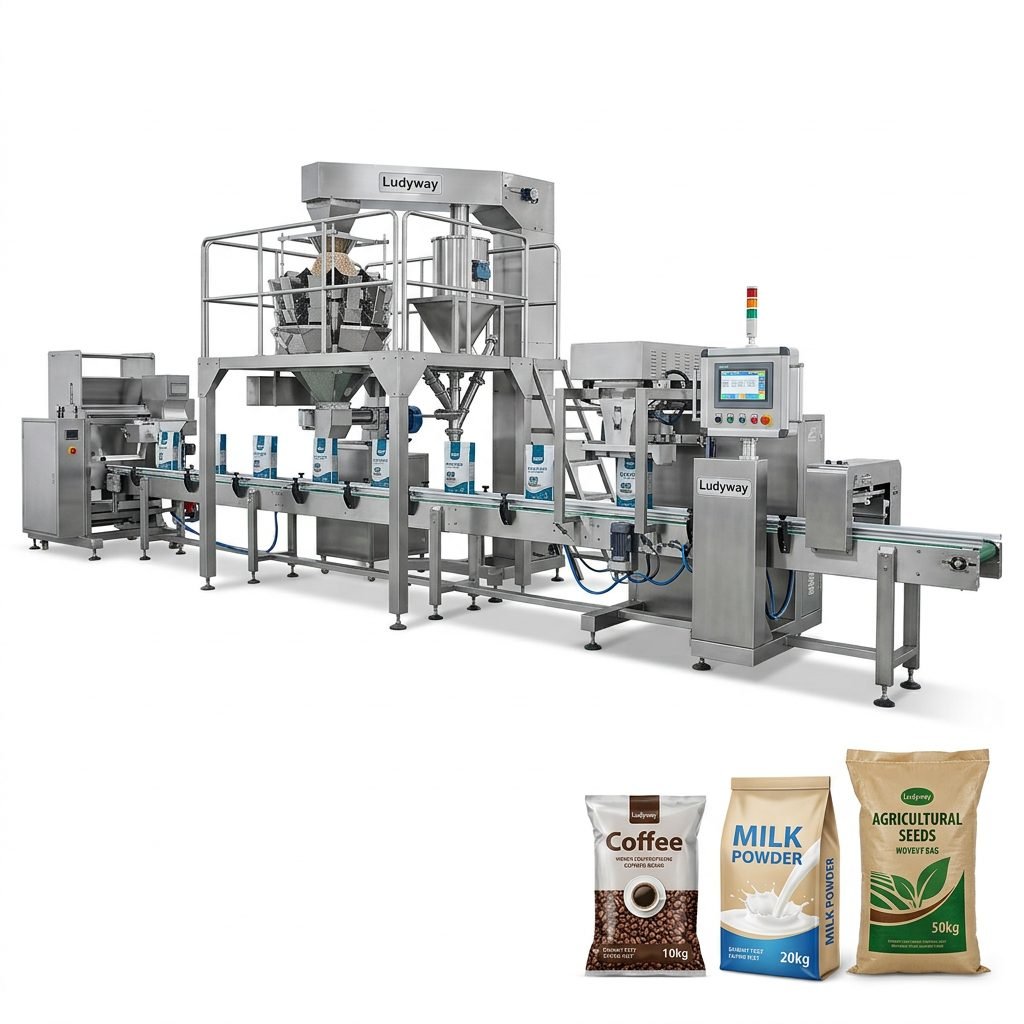
Open Mouth Bag Line
Bulk Bagging, 10–25 kg Ingredient Powder
Request a Quote →
View all powder packaging machines →
Which Milk Powder Pack Format Fits Your Brand?
The right milk powder packaging machine depends less on the powder itself than on the pack your market buys. A whole milk powder processor selling 400 g gusset bags in Southeast Asia, a European infant formula brand sampling 8 g stick packs, and a whey ingredient supplier shipping 25 kg bags all need different filling heads, film structures and sealing systems. The table below maps the five mainstream formats to realistic fill ranges and outputs.
| Pack Format | Typical Fill Weight | Output | Best Suited For | Machine Type |
|---|---|---|---|---|
| Stick pack | 1–30 g | Up to 600/min (12 lanes) | Single-serve formula, creamer, protein samplers | Multi-lane VFFS stick pack |
| 3- or 4-side seal sachet | 5–200 g | Up to 400/min (8 lanes) | Daily-dose nutrition powder, trial packs, hotel portions | Multi-lane VFFS sachet |
| Pillow / gusset pouch | 200 g–2 kg | 30–60 bags/min | Retail whole and skim milk powder, milk tea powder | Single-lane VFFS with auger |
| Premade zipper pouch | 300 g–1 kg | 25–50 pouches/min | Premium stand-up brands, goat milk, adult nutrition | Rotary premade pouch filler |
| Open-mouth bag | 10–25 kg | 300–600 bags/hour | Ingredient milk powder, whey, lactose, milk replacer | Bagging line with net weigher |
Brands that sell more than one format usually standardise on a multi-lane platform first, because the same instant sachet packaging machine for milk powder can switch between stick and 4-side-seal formats with a forming-tube change and recipe recall, protecting the capital investment as the product range grows.
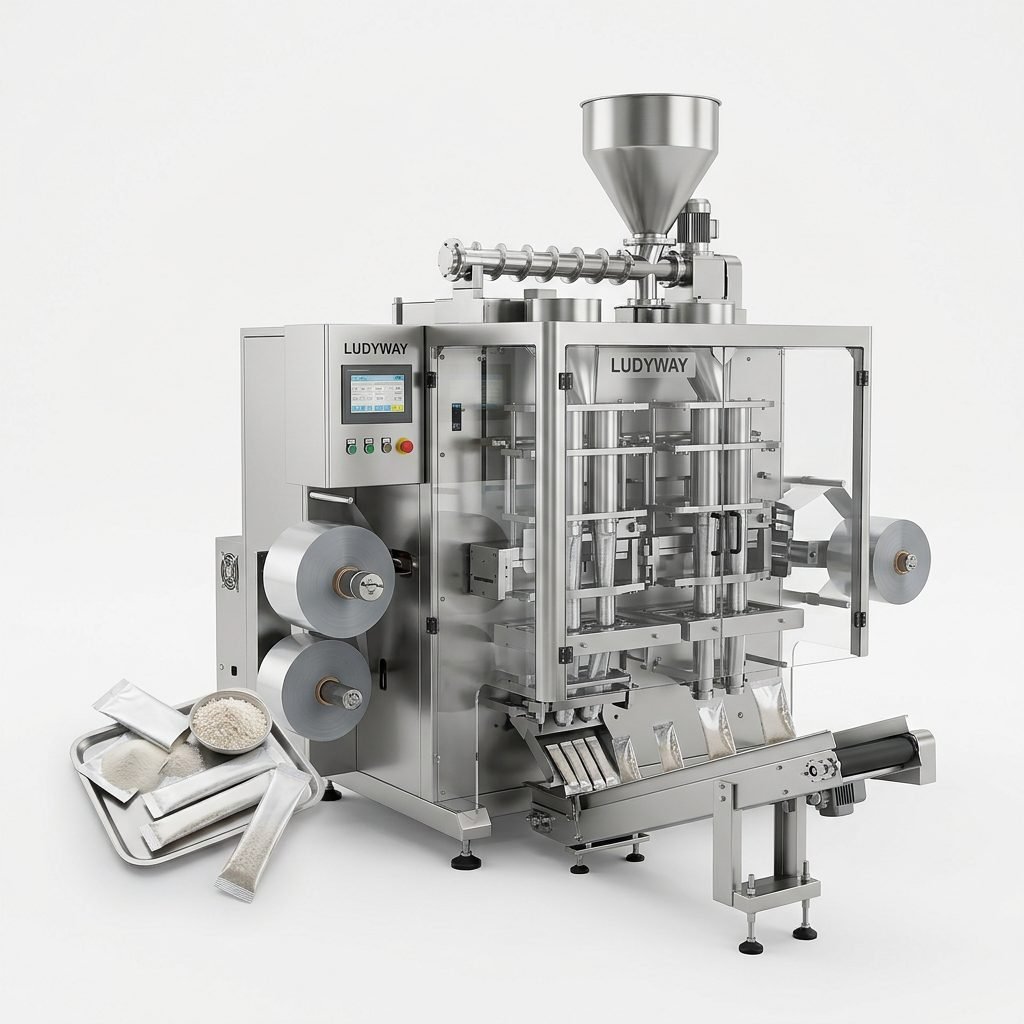
Multi-lane vertical powder packaging machine with servo-driven auger dosing heads.
Auger Dosing Engineering for Dairy Powders
Spray-dried milk powder is cohesive, hygroscopic and bridges easily, so volumetric cup fillers are rarely accurate enough. Automatic powder filling machines for dairy use a servo auger filler: a vertical screw inside a sealed hopper rotates a programmed number of turns per dose, while an agitator keeps bulk density consistent.
Auger geometry and fill accuracy
A 2–10 g infant formula stick typically uses a 14–18 mm auger with a close-pitch screw and a 304 stainless funnel to achieve ±1% accuracy; 400 g–1 kg retail bags use 40–55 mm augers reaching ±0.5% with checkweigher feedback that automatically trims the next dose.
Dust control and clean sealing
Airborne fines are the leading cause of weak seals in milk powder packaging. Dust-suction rings at the funnel outlet, 0.5–1 second settling delay before sealing, and heat-seal jaws with 2–3 bar pressure keep the seal area powder-free and seal strength above 25 N/15 mm on PET/AL/PE laminates.
Closed-loop weight correction
Each lane feeds data to an inline high-precision checkweigher, which rejects out-of-tolerance packs and recalibrates auger revolutions every 20–50 doses, cutting product giveaway to under 0.5%.
Hygienic Design and Compliance Checkpoints
Dairy and infant nutrition packaging sits under the strictest food-safety scrutiny of any dry-powder category. Before comparing speeds, confirm that a milk powder packaging machine meets these four requirements; they are what auditors from major retailers and formula brand owners actually check during qualification.
1. Food-contact materials
Hopper, auger, funnel and forming tube in 304 or 316L stainless steel; seals and scrapers in FDA-grade silicone or PTFE. Materials should align with the FDA food contact substances framework and EU Regulation 1935/2004, with material certificates supplied on request.
2. Hygienic, washdown-ready construction
Tool-free removal of auger and hopper in under 10 minutes, sloped surfaces with no horizontal powder traps, continuous welds with Ra ≤0.8 µm polish on product-contact zones, and IP65-rated electrical enclosures for wet cleaning.
3. Low-oxygen packaging
An integrated nitrogen flushing system displaces air inside the forming tube to hold residual oxygen at ≤2% (≤3% is the common infant formula ceiling), protecting milk fat from oxidation over an 18–24 month shelf life.
4. Traceability and documentation
Thermal transfer or inkjet coding of batch and best-before dates on every pack, checkweigher data export per batch, CE declaration, electrical schematics and IQ/OQ support documents. Reference packaging terminology and standards via ISO packaging standards (ICS 55).
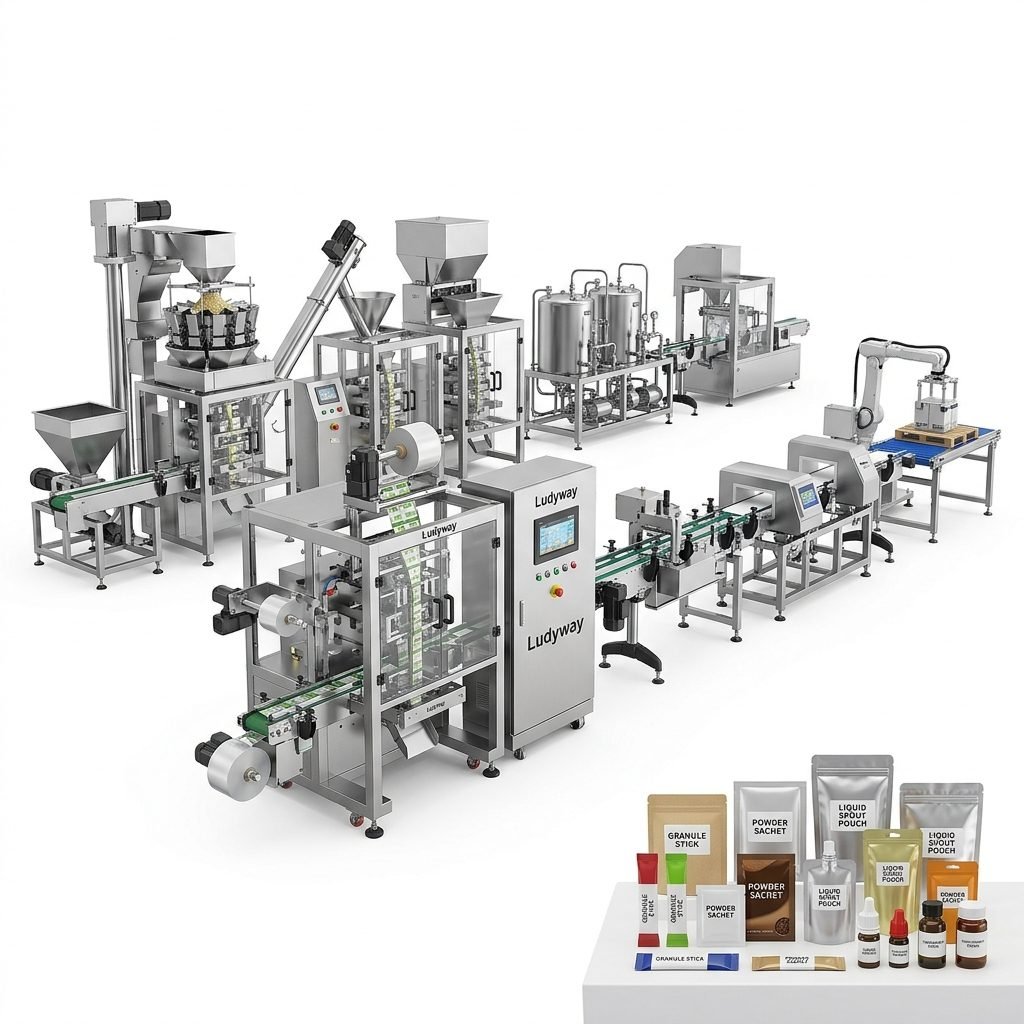
Integrated powder packaging line from bulk feeding to carton sealing and palletizing.
From Bulk Powder to Pallet: Turnkey Line Layout
Most dairy and nutrition brands do not buy a filler in isolation. A high-speed automated powder packaging line for milk products links seven stations so that powder is touched by no operator between the silo and the shipping pallet.
Vacuum conveying from tote or silo into a 50–100 L buffer hopper with level sensors to prevent dust and bridging.
Sieving and magnet trap at 20–30 mesh to remove lumps and ferrous contamination before dosing.
Multi-lane or single-lane VFFS filling with nitrogen flush and servo auger dosing.
Checkweigher and metal detector with automatic reject at up to 300 packs/min.
Counting and cartoning, e.g. 10, 20 or 30 sticks per retail carton with leaflet insertion.
Case packing and sealing with batch coding on the shipping case.
Robotic palletizing and stretch wrapping for export-ready pallets.
Infant Formula vs. Adult Nutritional Powders: What Changes on the Machine
“The powder looks the same on a spec sheet. On the packaging floor, infant formula is a pharmaceutical-grade project with a food-grade budget—so the machine has to be specified like a pharma line from day one.”
— Ludyway application engineering team, dairy & nutrition projects
Infant & follow-on formula
- Residual oxygen ≤3% mandatory; nitrogen flush plus optional vacuum-assisted sealing.
- 316L stainless on all contact surfaces; full material traceability for audits.
- Fill accuracy ±1% on 4–10 g sticks because scoop-equivalent dosing is a safety claim.
- Clean-room-compatible enclosure, HEPA-filtered dust extraction, CIP-friendly hopper.
- Batch records exported per shift; vision inspection of seal and print.
Adult & sports nutrition powders
- Residual oxygen ≤5% acceptable for most whey, meal-replacement and collagen blends.
- 304 stainless is standard; 316L optional for high-salt electrolyte formulations.
- Larger 20–50 g stick and 30–100 g sachet fills; auger up to 30 mm.
- Fast changeover between flavours: recipe memory for 50+ products, 15–20 min film and auger swap.
- Frequent format changes favour the automatic powder filling machine for milk packaging with multi-lane sachet system.
Technical Specifications at a Glance
Specifications below are representative of standard configurations; lanes, auger sizes, film widths and voltage are tailored to each project after sample testing.
| Parameter | Multi-Lane Stick / Sachet | Single-Lane Pouch VFFS | Open-Mouth Bagging Line |
|---|---|---|---|
| Lanes | 2 / 4 / 6 / 8 / 10 / 12 | 1 | 1–2 spouts |
| Fill range | 1–200 g | 100 g–2 kg | 10–25 kg (50 kg optional) |
| Speed | 40–60 cycles/min per lane | 30–60 bags/min | 300–600 bags/hour |
| Accuracy | ±1% (≤10 g: ±0.1 g) | ±0.5–1% | ±0.1–0.2% net weight |
| Packaging material | PET/AL/PE, PET/VMPET/PE, paper/PE roll film | Laminated roll film, 60–120 µm | Multi-wall paper or PE/PP woven bag |
| Power | 380 V 50/60 Hz 3-phase, 6–12 kW | 380 V 3-phase, 4–6 kW | 380 V 3-phase, 8–15 kW |
| Compressed air | 0.6 MPa, 0.4–0.8 m³/min | 0.6 MPa, 0.3 m³/min | 0.6 MPa, 0.5 m³/min |
| Contact material | 304 standard / 316L optional | 304 standard / 316L optional | 304 stainless |
Secondary Packaging and End-of-Line Automation
Once sticks or sachets leave the filler, the cost centre shifts to counting, cartoning and case packing. A 12-lane stick machine produces 36,000 packs an hour—far more than manual collation can absorb without errors.
Automatic cartoning lines count packs by lane, stack them in 10- or 30-count groups, insert a leaflet and tuck or glue the carton at 60–120 cartons per minute. Downstream, a case packer and robotic palletizer finish the pallet with no manual handling, which also eliminates the last point where allergen cross-contact or foreign bodies can enter.
For market data on automation adoption in food and dairy packaging, the PMMI – The Association for Packaging and Processing Technologies publishes annual State of the Industry reports used by most line-planning teams.
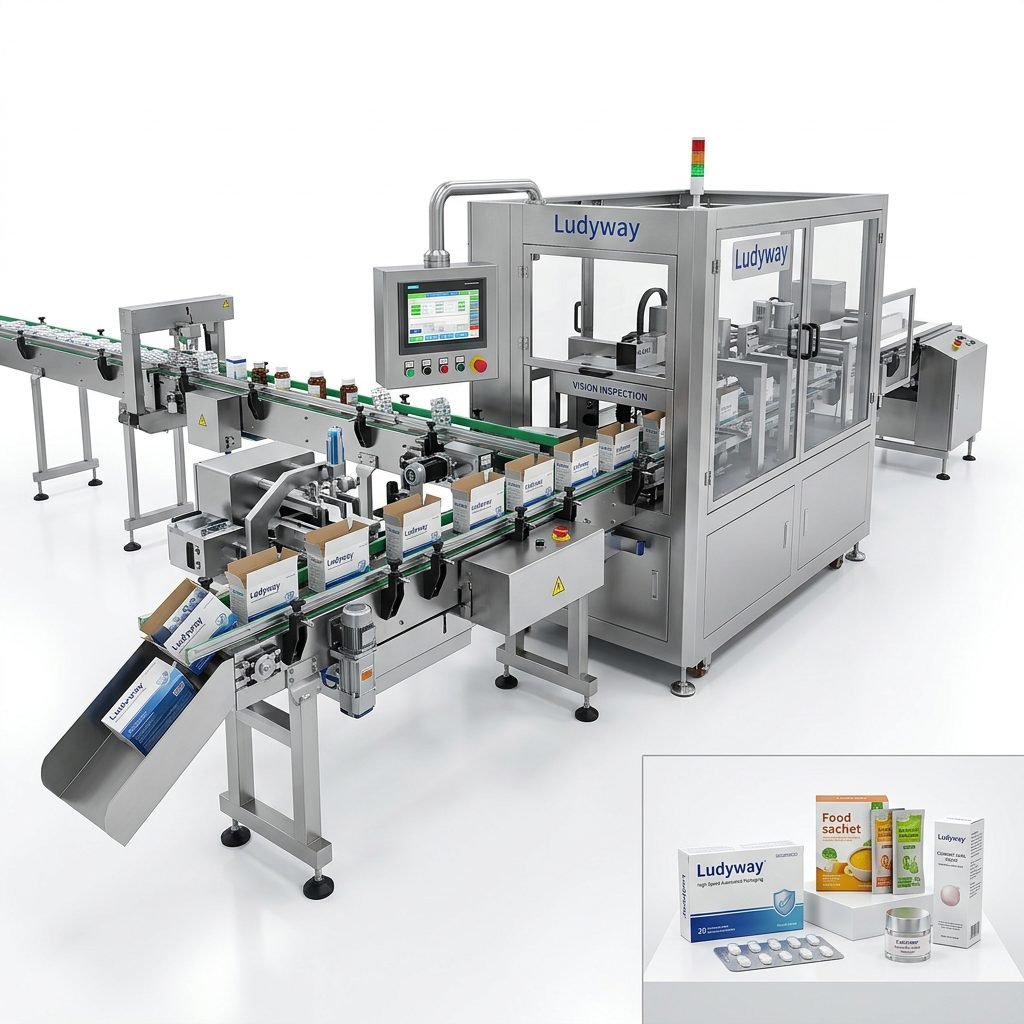
Automated cartoning line collating stick packs into retail cartons.
How to Specify and Source a Milk Powder Packaging Machine
Procurement teams get accurate quotes fastest when the enquiry includes the five data points engineers need: powder type and bulk density, target fill weight(s), pack format and dimensions, required output per hour, and plant utilities. From there the project follows a predictable path.
STEP 1
Send 1–2 kg powder sample
Flowability, bulk density and dusting are tested on an actual auger head; a dosing report with weight deviation data is returned in 5–7 working days.
STEP 2
Confirm format and layout
You receive a technical proposal with lane count, auger sizes, film specification, line drawing in DWG/PDF and utility list, plus a quotation in USD on FOB or CIF terms.
STEP 3
Build and factory acceptance test
Lead time is 45–75 days after deposit. FAT runs your powder and film for a minimum of 2 hours with live video or on-site witnessing before release.
STEP 4
Ship, install, commission
Seaworthy plywood crating, engineer dispatch or remote commissioning, operator training, 12-month warranty and a recommended 2-year spare parts kit.
| Commercial Term | Standard Condition | Notes for Buyers |
|---|---|---|
| Minimum order | 1 machine | Single units, multi-machine orders and full turnkey lines all accepted |
| Lead time | 45–75 days | Standard models at the lower end; 316L or clean-room builds at the upper end |
| Payment | T/T 30% deposit, 70% before shipment | L/C at sight available for line projects |
| Quotation basis | USD, FOB Shenzhen or CIF destination port | Includes tooling for one format; extra formats quoted separately |
| Warranty & support | 12 months, lifetime technical support | 24-hour response via WhatsApp and email; wear parts stocked for 10 years |
Why Dairy and Nutrition Brands Source from Ludyway
Ludyway is one of the largest packaging machine manufacturers in China, founded in 1993 and based in Nanlang Town, Zhongshan, Guangdong. From a 20,000 m² production facility the company supplies more than 50 intelligent packaging machine models—multi-lane stick pack, sachet, VFFS pouch and fully automated turnkey lines—to food, pharmaceutical and health-product manufacturers in over 100 countries, with export growth documented in this industry report on Ludyway’s global growth trend.
30+
Years of packaging machinery engineering
130+
Professional packaging experts and engineers
200+
Manufacturing equipment units in-house
100+
Countries and regions with installed machines
Frequently Asked Questions
What fill accuracy can a milk powder packaging machine achieve on small stick packs?
With a servo auger and agitated hopper, 2–10 g milk powder sticks hold ±0.1 g, which is about ±1% on a 10 g fill. Accuracy depends on consistent bulk density, so a powder sample test is always run before the auger size is confirmed.
Is nitrogen flushing necessary for whole milk powder and infant formula?
For any powder with milk fat, yes. Nitrogen flushing to ≤2–3% residual oxygen prevents rancidity and is a standard requirement for infant formula and most premium whole milk powder brands targeting 18–24 months of shelf life. Skim milk powder with short shelf life may skip it.
Can one machine run both stick packs and 4-side-seal sachets?
Yes. Multi-lane platforms switch between stick and sachet formats by changing the forming tubes and sealing jaws and recalling the stored recipe; changeover typically takes 30–60 minutes for a trained operator.
What is the lead time and minimum order for a milk powder sachet machine?
Minimum order is one machine. Standard configurations ship 45–60 days after deposit; 316L, clean-room or full turnkey line builds take 60–75 days, including factory acceptance testing with your own powder and film.
Do you also supply bulk bagging for 25 kg ingredient milk powder and milk replacer?
Yes. Open-mouth bagging lines with net weighers handle 10–25 kg bags at 300–600 bags per hour, and a dedicated milk replacement powder packaging line is available for calf and pet milk replacer in sachet and bag formats.
Get a Quotation, Sample Test or Full Catalogue
Send your powder specification, target fill weight and required output, and our engineering team will return a dosing test report, line layout and USD quotation within 3 working days. Free powder sample testing is available for dairy, infant formula and sports nutrition projects.
