
Seasoning Packaging Equipment
Spice Powder Packaging Machine for Seasoning Manufacturers:Automatic Filling & Sealing Solutions
50+ packaging machine models · 2–12 lane multi-lane sachet and stick pack systems · Exported to 100+ countries and regions
A spice powder packaging machine for seasoning manufacturers has to dose fine, dusty and often oily powders such as chili, curry, garlic or paprika into sachets, stick packs or bags at ±1% accuracy without clogging, leaking or losing aroma. This page is written for production and procurement teams comparing multi-lane sachet, stick pack and VFFS systems: typical fill ranges (0.5–100 g per pouch, 10–25 kg for bulk bags), speeds of 30–60 cycles per minute per lane, food-contact film requirements, line integration options, and how to request a quotation, factory acceptance test and delivery schedule.
Key takeaways
- Multi-lane sachet and stick pack machines run 2–12 lanes at 30–60 cycles per lane per minute, delivering roughly 120–700 spice sachets per minute from a single footprint.
- Servo-driven auger fillers handle 0.5–100 g doses of chili, curry, garlic, onion or mixed seasoning powder with typical accuracy of ±1% above 10 g and about ±0.05 g on small doses.
- Product-contact parts in SUS304 or 316L stainless steel, tool-free changeover in under 30 minutes and integrated dust extraction are baseline requirements for food-grade seasoning lines.
- Standard machines usually ship 35–60 days after deposit; turnkey lines with conveying, inspection, cartoning and palletizing typically need 90–120 days.
- Quotations are prepared per project: send bulk density, target weight, pouch size and film structure to receive a configured proposal, datasheet and FAT plan.
Spice & Seasoning Powder Packaging Machines
Multi-lane sachet, stick pack and complete line configurations most frequently specified by seasoning producers.
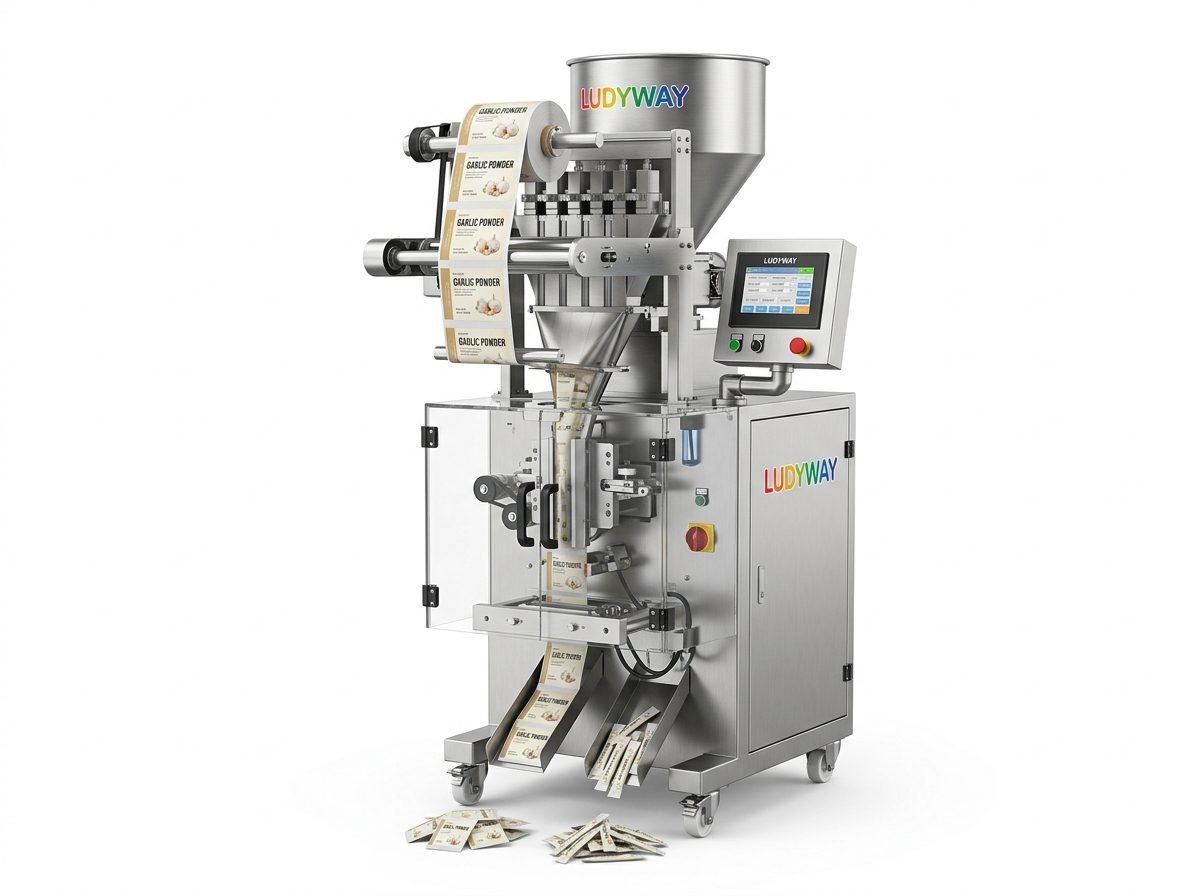
Garlic Powder Sachet Machine
Multi-Lane Sachet & Stick Pack, Powder Type
Request a Quote
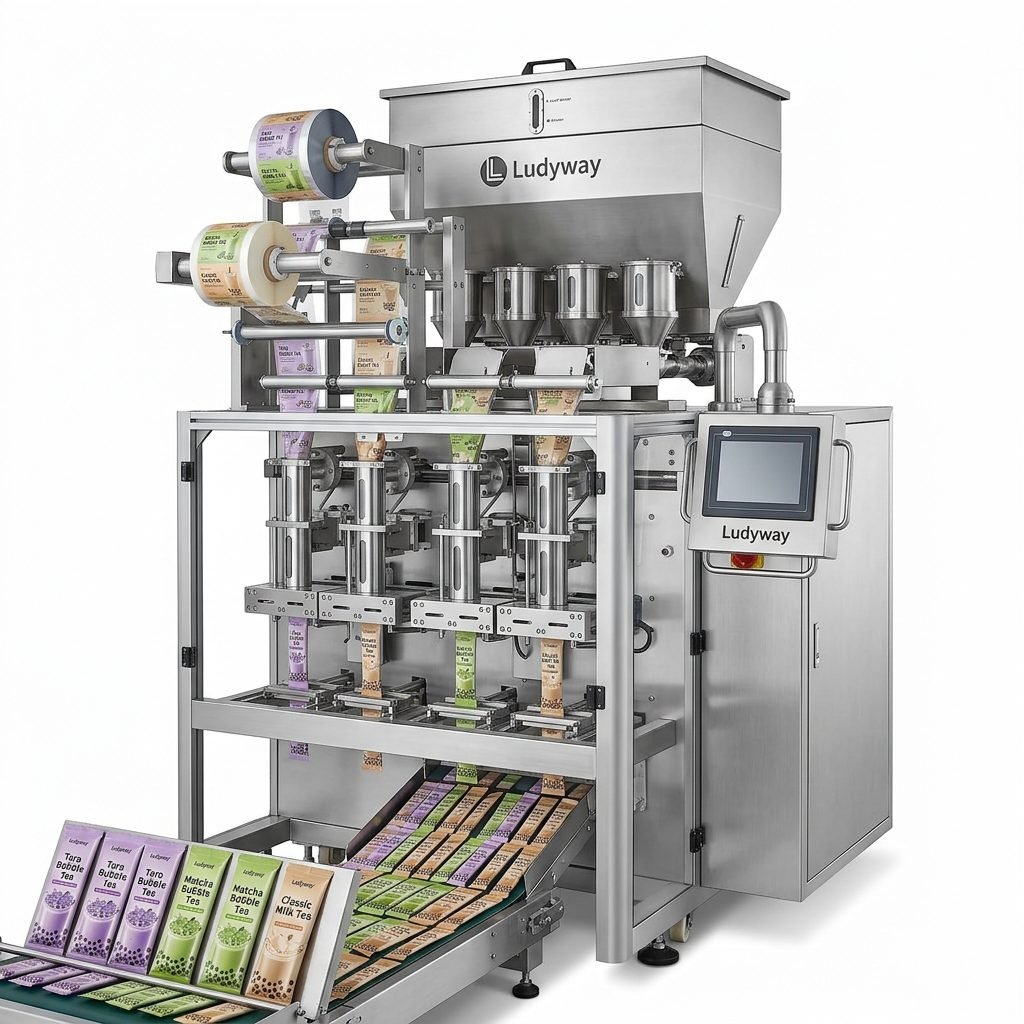
Multi-Lane Spice Packaging Machine
High-Speed Sachet & Stick Pack, Granule & Powder
Request a Quote
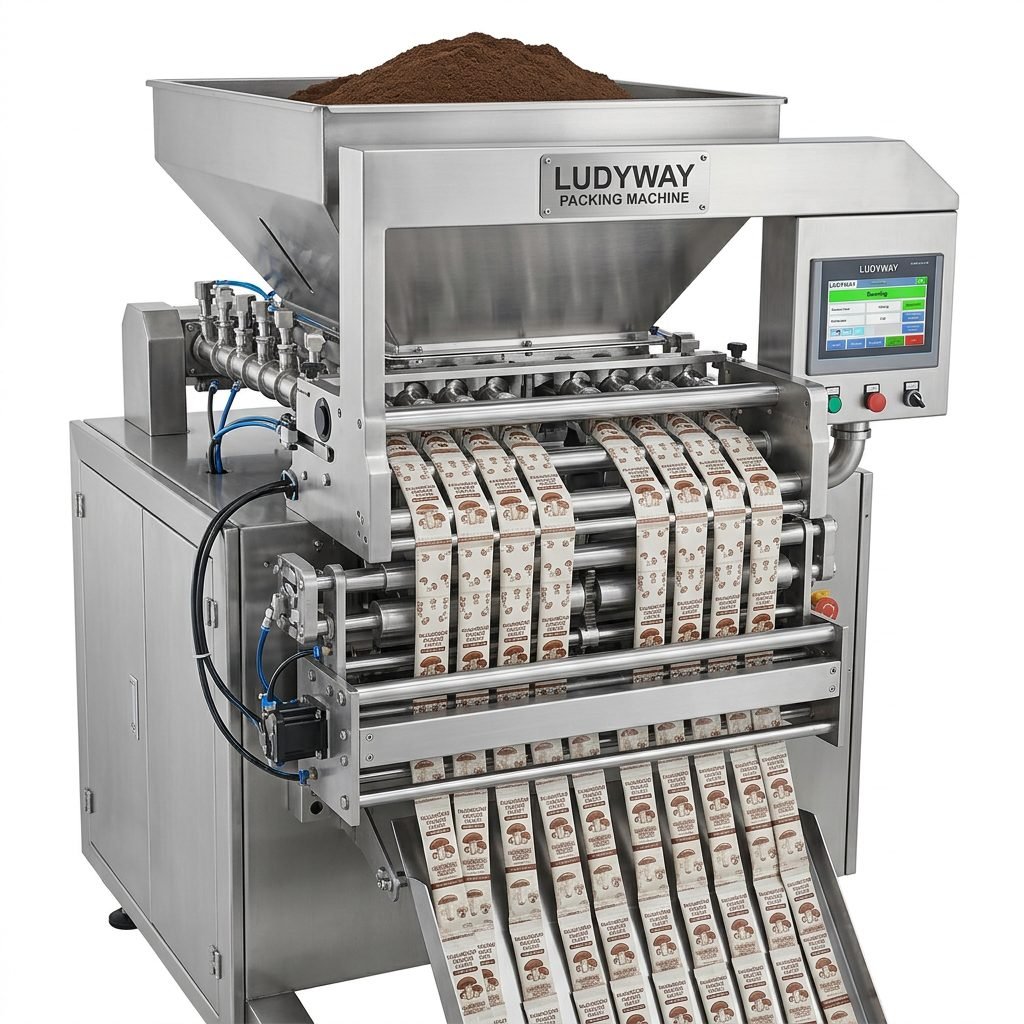
Seasoning Powder Stick Pack Machine
Automatic Multi-Lane Sachet & Stick Pack
Request a Quote
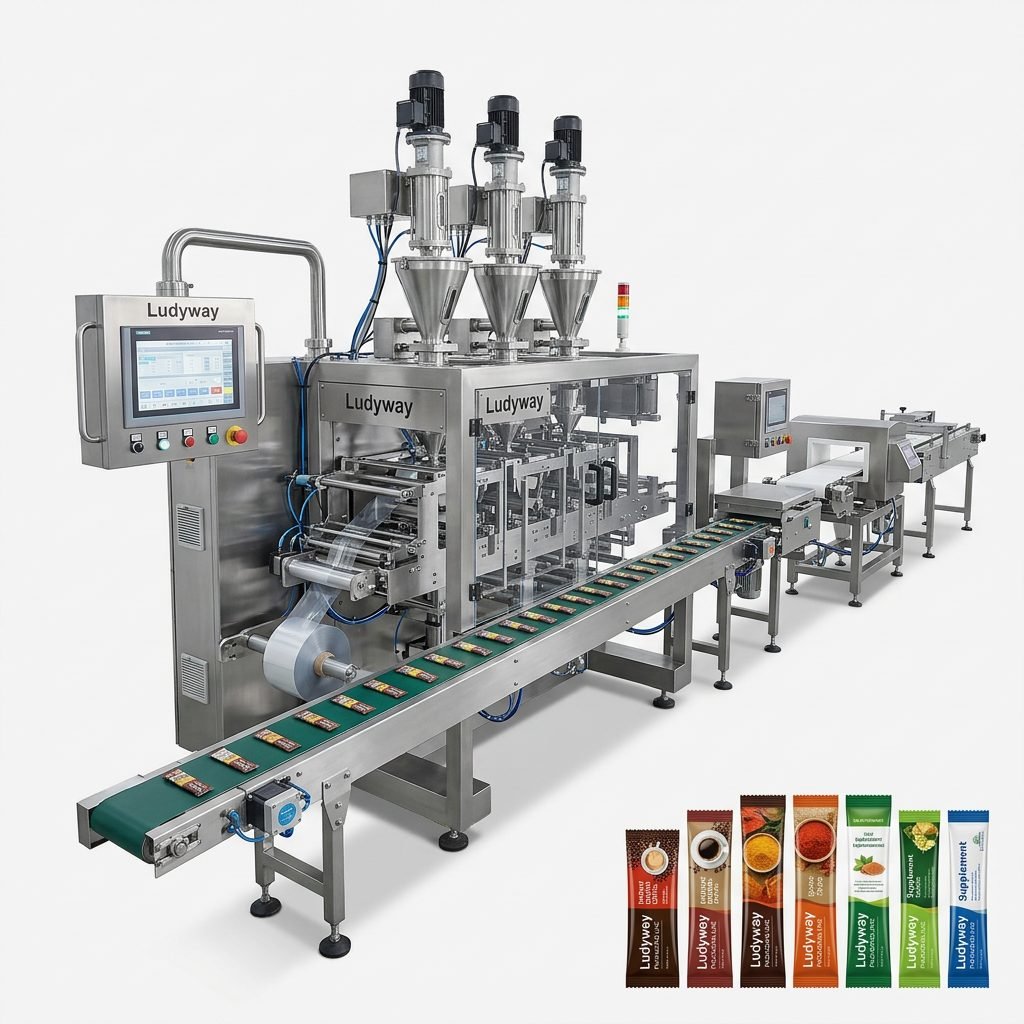
Automated Spice Packaging Line
Turnkey Line, Powder & Granules, Multi-Lane Filling
Request a Quote
View all powder packaging machines →
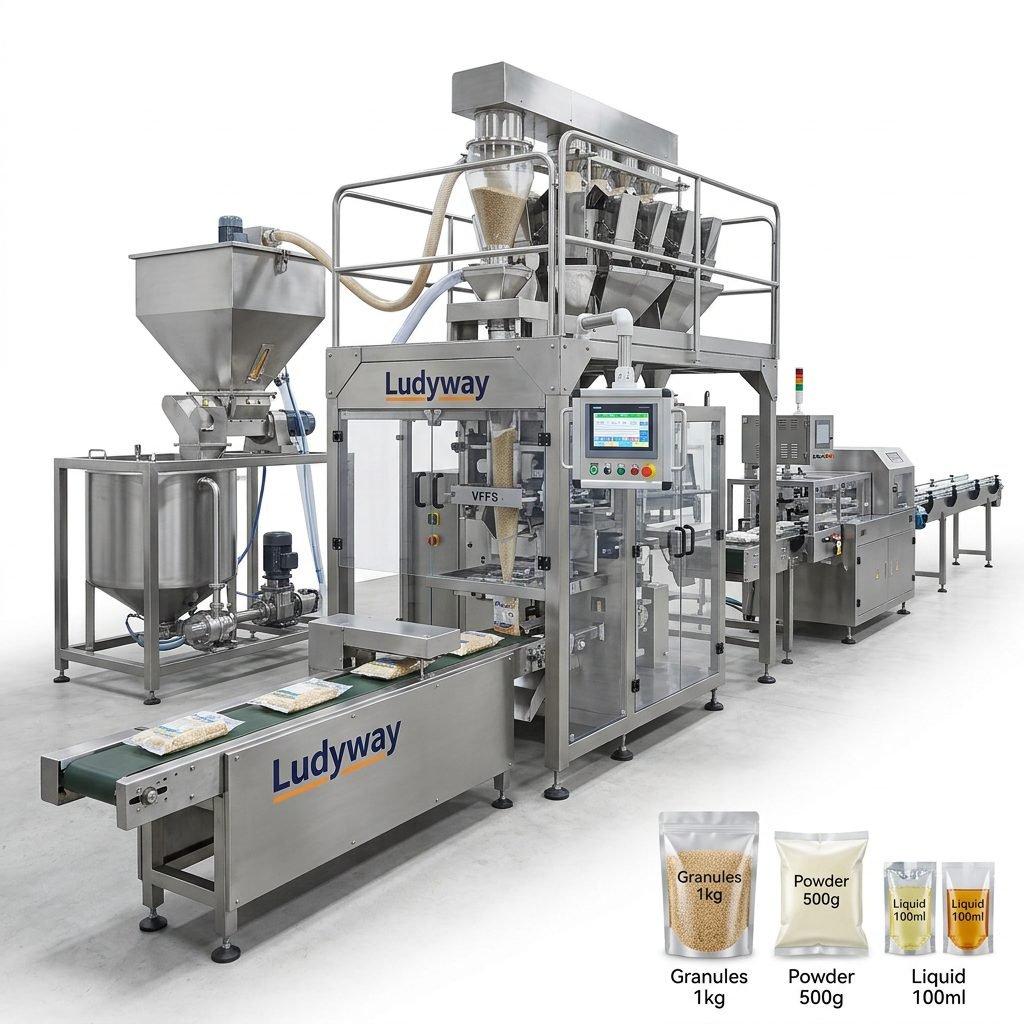
Automatic powder filling and sealing line configured for fine seasoning powders.
Why Spice Powders Need a Dedicated Filling & Sealing System
Seasoning powders behave very differently from sugar or salt granules. Chili, paprika and curry blends carry volatile oils that smear on auger flights and seal jaws; garlic and onion powders are hygroscopic and bridge in the hopper within minutes; turmeric and cumin stain contact surfaces and demand fast, complete washdown. A general-purpose granule packer rarely sustains ±1% accuracy on these products for a full shift.
A purpose-built spice powder packaging machine solves this with servo auger dosing, agitated hoppers, anti-static film handling and sealed dust extraction. For seasoning manufacturers the payback shows up in three numbers: giveaway held under 1% of fill weight, SKU changeover cut to 20–30 minutes, and seal-related rejects kept below 0.5% of output.
Dust and cross-contamination
Airborne chili or pepper dust settles in seal zones and on neighbouring lines. Suction at each fill point and an enclosed forming area protect seal integrity and allergen control.
Flowability and bridging
Bulk density of blended seasonings can vary 10–20% between batches. Hopper agitators and level-controlled feeding keep the auger inlet consistently loaded so dose weight stays stable.
Oil content and caking
Oily blends build up on augers and funnels. Polished 316L contact parts, quick-release funnels and reverse-turn anti-drip programs reduce build-up and cleaning time.
Aroma loss and oxidation
High-barrier PET/AL/PE film plus an optional nitrogen flushing system keeps residual oxygen low and extends shelf life of ground spices to 18–24 months.
Which Packaging Format Fits Your Seasoning Line?
The right format depends on dose size, sales channel and the retail price point the brand targets. The table summarises the five formats most seasoning manufacturers evaluate; one multi-lane platform usually covers both stick pack and 4-side-seal sachet by swapping forming collars and sealing jaws.
| Format | Typical dose | Output | Best for | Watch-outs |
|---|---|---|---|---|
| Multi-lane stick pack (3-side seal) | 0.5–30 g | 200–700/min (4–12 lanes) | Single-serve seasoning, instant noodle and meal-kit sachets | Narrow stick limits auger diameter; ultra-fine powder needs anti-drip tip |
| Multi-lane 4-side-seal sachet | 1–50 g | 120–480/min (2–8 lanes) | Retail spice sachets, food-service portion packs | Longitudinal seals must stay dust-free; film stretch affects registration |
| VFFS pillow / gusset bag | 50 g–5 kg | 30–80 bags/min | Refill packs, HORECA 1–5 kg bags | Longer drop compacts powder; needs larger auger and settling time |
| Premade pouch / doypack | 50 g–2 kg | 30–60 pouches/min | Premium branded spices with zipper | Higher pouch cost; dust-tight filling nozzle required |
| Open-mouth / valve bag | 10–25 kg | 4–8 bags/min | Industrial seasoning blends, B2B supply | Operator dust exposure; combustible dust assessment |
Stick pack or sachet: a practical rule
Choose stick packs for single-serve doses up to about 10 g where shelf space and film cost dominate; choose 4-side-seal sachets for 10–50 g where print area and pouring convenience matter. A 4-lane machine at 50 cycles per minute produces 200 sachets per minute, roughly 12,000 per hour, which covers most mid-sized seasoning brands with one operator. For high-volume hot products such as a dedicated chili powder stick pack machine, 8–12 lanes keep one line ahead of a 20–30 t/month blending capacity.
Dosing, Sealing and Dust Control: Where Accuracy Is Won or Lost
Servo auger filler
Each lane carries an independent servo auger sized to the powder: 10–14 mm augers for 0.5–3 g pepper or MSG doses, 20–30 mm for 10–50 g curry and BBQ rubs. The servo lets operators store 50+ recipes with auger revolutions, speed profile and reverse-turn anti-drip, so SKU change becomes a recipe selection rather than a mechanical adjustment.
Sealing jaws and film path
PID-controlled heat-seal jaws hold temperature within ±1 °C on every lane. Vertical seals are formed before filling so powder never reaches the sealing zone, photo-eye registration keeps printed sachets within ±1 mm, and an inline coder prints batch and best-before data on each pouch.
Dust extraction and hygiene
Suction hoods at each filling point connected to a central dust collector keep airborne particles away from seal areas and operators. Product-contact parts in 304 or 316L stainless steel with tool-free removal allow a complete washdown in under an hour when switching from chili to a light-coloured blend.
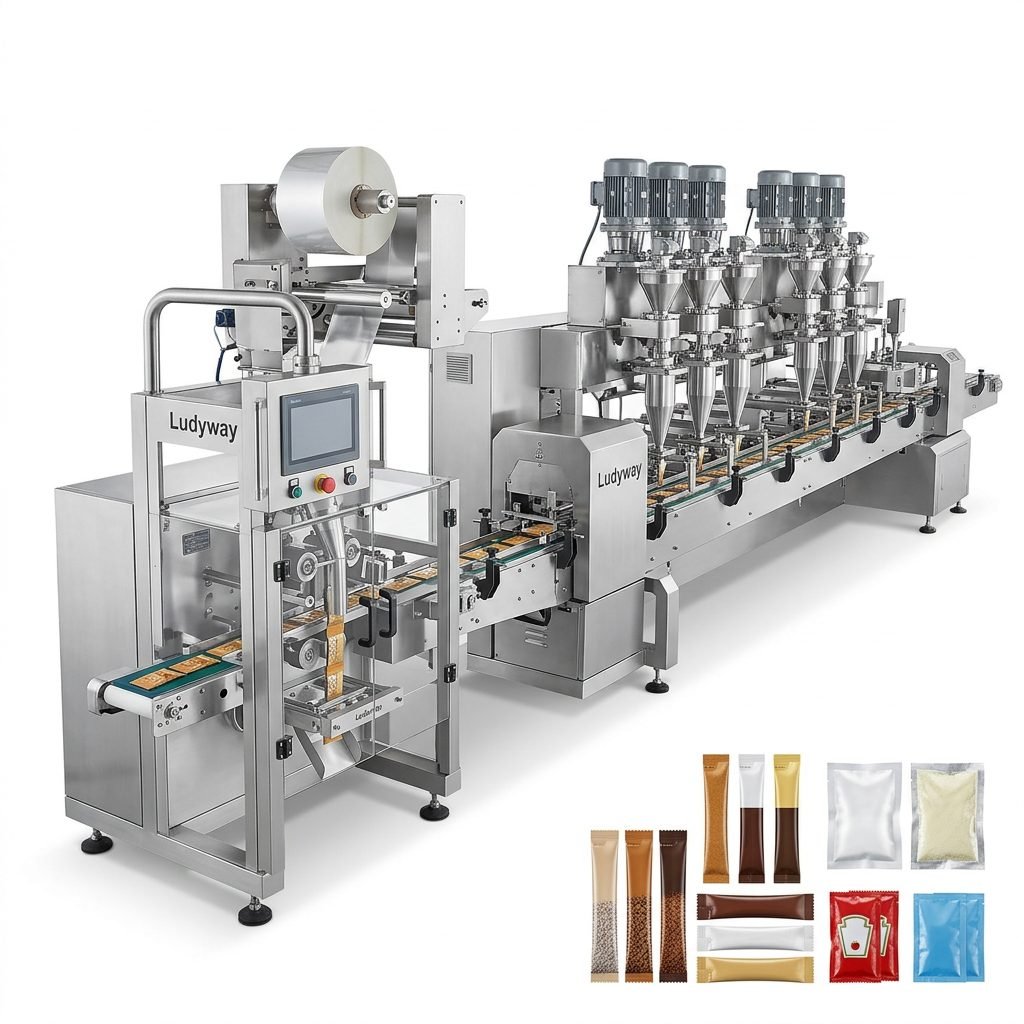
Multi-lane powder packaging line with independent servo auger fillers on each lane.
Typical Specifications for a Multi-Lane Spice Powder Sachet Machine
Use these ranges to pre-qualify equipment before requesting a project datasheet. Every parameter interacts: lane count fixes film width, auger diameter fixes achievable dose and speed, and pouch length fixes cycle rate.
| Parameter | Typical range (configured to order) | Why it matters for seasoning |
|---|---|---|
| Number of lanes | 2, 4, 6, 8, 10, 12 | Output scales with lanes; 4–6 lanes suits 10–30 t/month plants |
| Speed per lane | 30–60 cycles/min | Fine powders usually run 35–45 cpm to keep dust out of seals |
| Fill weight | 0.5–100 g (auger); 50 g–5 kg (VFFS) | Covers retail sachet, food-service and refill SKUs |
| Dosing accuracy | ±1% at ≥10 g; about ±0.05 g below 2 g | Controls giveaway and net-weight labelling compliance |
| Pouch size | W 15–120 mm × L 50–200 mm | Determines film width, lane count and carton layout |
| Film structure | PET/AL/PE, PET/VMPET/PE, paper/PE, 50–120 µm | Barrier against moisture, light and aroma loss |
| Product-contact material | SUS304 standard, 316L optional | Corrosion resistance against salt and acidic blends |
| Power / compressed air | 380 V 3-phase 50/60 Hz, 6–15 kW; 0.6 MPa, 0.3–0.8 m³/min | Plan utilities and floor space before installation |
| Control system | PLC with 10–15 inch HMI, servo drives, recipe memory | Fast changeover, operator permissions and batch traceability |
Values are typical ranges for multi-lane sachet and stick pack platforms. Each machine is configured to the customer’s powder, pouch and output target, so always request a project-specific datasheet and layout drawing.
Food-Contact Compliance, Film Structures and Hygienic Design
Film and food-contact materials
Laminates used on the machine must comply with FDA food-contact substance rules for the United States and Regulation (EC) No 1935/2004 for the European Union. Buyers shipping into Europe should also follow the EU packaging and packaging waste rules, which are pushing seasoning brands toward mono-material PE and paper-based sachets.
Ask film converters for migration test reports and confirm the seal window on the actual machine during FAT, because paper/PE and mono-PE films seal at different temperatures than PET/AL/PE.
Machine construction and documentation
Specify a CE declaration of conformity, electrical schematics, material certificates for all product-contact parts and a written cleaning procedure. Sloped surfaces, open frame design and tool-free removal of augers, funnels and forming tubes shorten washdown and reduce allergen risk between SKUs.
Industry research from PMMI’s 2026 State of the Industry report tracks continued food-sector investment in flexible, automated packaging machinery; use that benchmark to require recipe storage, tool-less change parts and remote diagnostics in your specification.
From Hopper to Pallet: Integrating a Complete Seasoning Packaging Line
Most seasoning manufacturers start with one multi-lane machine and add upstream and downstream modules as volume grows. Planning the full line at the quotation stage avoids height, pitch and control mismatches later.
01
Feeding
A screw conveyor or vacuum feeder lifts blended powder from the mixer to the machine hopper; level sensors prevent overfilling and keep head pressure on the auger constant.
02
Dosing and forming
The multi-lane machine forms, fills, seals and cuts sachets or stick packs, with date coding and optional nitrogen flushing inside the forming zone.
03
Inspection
A high-precision checkweigher rejects out-of-tolerance sachets and feeds weight data back to the fillers; a metal detector protects against tramp metal from grinders.
04
Counting and cartoning
Sachets are counted into display boxes or bundled in 10, 20 or 50 pieces for food-service, with vision checks for count and print quality.
05
Case packing
An automatic case packer collates cartons or bundles into shipping cases, which are sealed, labelled and barcoded for distribution.
06
Palletizing and wrapping
A robotic or conventional palletizer stacks cases to the customer’s pallet pattern, followed by stretch wrapping and pallet labelling.
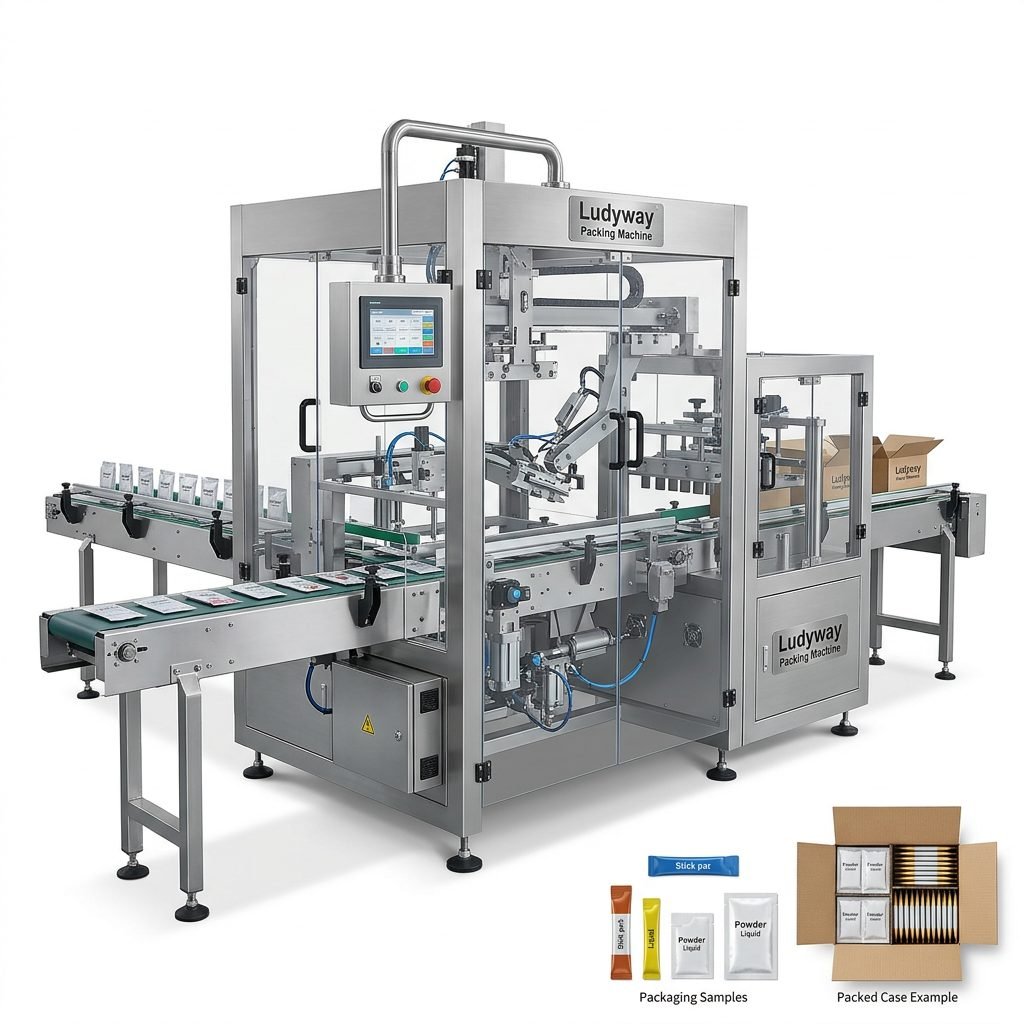
Automatic case packer collating seasoning sachets and stick packs into shipping cases.
Procurement Guide: MOQ, Lead Time, FAT and Quotation
Minimum order quantity
1 unit for standalone sachet, stick pack or VFFS machines; turnkey lines are quoted as integrated projects with one point of responsibility.
Lead time
Typically 35–60 days after deposit for standard machines and 90–120 days for complete lines, depending on lane count and customisation.
Factory acceptance test
Send 20–50 kg of your seasoning powder and two rolls of production film; the machine is run at rated speed with weight and seal results recorded, witnessed on site or by live video.
Trade terms and support
Quotations are issued in USD on EXW, FOB or CIF terms from Guangdong ports; installation guidance, operator training and a 12-month warranty with remote diagnostics are typically included.
What to include in a quotation request
- Product name, bulk density (g/ml) and particle size, plus oil or moisture content if known
- Target fill weights per SKU and acceptable tolerance
- Pouch format and dimensions, or samples of existing packs
- Required output in sachets per minute or tonnes per month
- Film structure, thickness and whether printed film with eye-marks is used
- Plant voltage, frequency and available compressed air
- Certification needs for the destination market (CE, FDA-compliant contact parts, EU documentation)
- Downstream equipment to integrate: checkweigher, metal detector, cartoner, case packer, palletizer
With these eight inputs a configured proposal, layout drawing and datasheet can usually be returned within 3–5 working days.
Why Seasoning Brands Work with Ludyway
Ludyway is one of the largest packaging machine manufacturers in China, specialising in advanced packaging equipment and turnkey production solutions for the food, pharmaceutical and health industries. Founded in 1993 and based in Nanlang Town, Zhongshan, Guangdong, the company operates a 20,000 m² facility with more than 200 manufacturing equipment units and a 130-strong team of packaging experts, offering over 50 intelligent machine models including multi-lane stick pack, sachet and fully automated packaging systems. Serving customers in more than 100 countries and regions, Ludyway surpassed RMB 500 million in annual revenue by 2025 and is targeting RMB 1 billion in export revenue in 2026.
30+
Years of industry experience
20,000 m²
Modern production facility
130+
Professional packaging experts
100+
Countries and regions served
Frequently Asked Questions
What accuracy can a spice powder packaging machine hold on a 2 g pepper sachet?
With a servo auger sized at 10–12 mm and a stable hopper level, small doses typically hold about ±0.05 g, which is within 2.5% of a 2 g target. Above 10 g, ±1% is the normal specification, and inline checkweigher feedback can tighten long-run average giveaway further.
Can one machine run both stick packs and 4-side-seal sachets?
Yes. Multi-lane platforms switch formats by changing forming collars, sealing jaws and cutting knives. A trained operator completes the change in roughly 30–60 minutes, and stored recipes restore auger settings, seal temperatures and film tension automatically.
How is chili or curry dust kept out of the seals?
Vertical seals are formed before the dose drops, the auger performs a short reverse turn to stop dribble, and suction nozzles at each lane draw airborne dust away from the horizontal jaws. Slightly longer pouch length also leaves a clean seal margin above the powder level.
What are the lead time and acceptance procedure?
Standard multi-lane machines usually ship 35–60 days after deposit. A factory acceptance test with your own powder and film is run before shipment, and site acceptance follows installation and operator training at your plant.
Which film is recommended for ground spices and seasoning blends?
PET/AL/PE at 70–90 µm gives the highest barrier for oily or light-sensitive spices such as paprika; PET/VMPET/PE is a cost-effective option for short-shelf-life blends; paper/PE or mono-PE structures support recyclability targets but need seal parameters verified on the machine.
Request a Quotation, Sample Test or Equipment Catalog
Share your seasoning powder details, target weights and pouch format and receive a configured proposal with datasheet, layout drawing and lead time. Sample powder can be test-filled and filmed before you commit to a purchase order.
Factory visits in Zhongshan, Guangdong and meetings at international packaging exhibitions can be arranged on request.