
Grain & Agri Packaging
Automatic Grain Packaging Machine for Agricultural ProductsHigh-Speed Weighing, Filling & Bagging Solutions
Bag formats from 1 g stick packs to 50 kg sacks | Combination weighing accuracy to ±0.1 g | Machines installed in 100+ countries
An automatic grain packaging machine for agricultural products combines weighing, filling and bag sealing into one continuous line so that rice, wheat, corn, oats, pulses, seeds and feed pellets can be packed at 60–120 bags per minute in retail formats or 300–600 bags per hour in 10–50 kg sacks. This page is written for grain processors, millers, seed companies, cooperatives and equipment distributors who need to compare weighing systems, bag formats, line capacity, certifications and lead times before requesting a quotation for a single machine or a complete turnkey bagging line.
Key takeaways
- Multi-head combination weighers reach ±0.1–1 g accuracy at 60–120 weighments per minute for retail packs of 50 g to 5 kg.
- Multi-lane stick pack and sachet machines run 4–12 lanes at 40–80 cycles per minute, producing up to 960 single-serve grain or seed portions per minute.
- Open-mouth bagging lines fill 10, 20, 25 and 50 kg sacks at 300–600 bags per hour with net-weigh accuracy of ±0.1–0.2% of target weight.
- Standard machines ship in 30–45 days after deposit; integrated weighing, bagging, checkweighing and palletizing lines typically require 60–90 days plus factory acceptance testing.
- All product-contact parts are built in 304 stainless steel (316L optional), with CE marking and ISO 9001 production control as standard for export orders.
Grain & Agricultural Packaging Machines
Four configurations most often specified for cereals, pulses, oilseeds and farm inputs. Click any image for full technical data and configuration options.
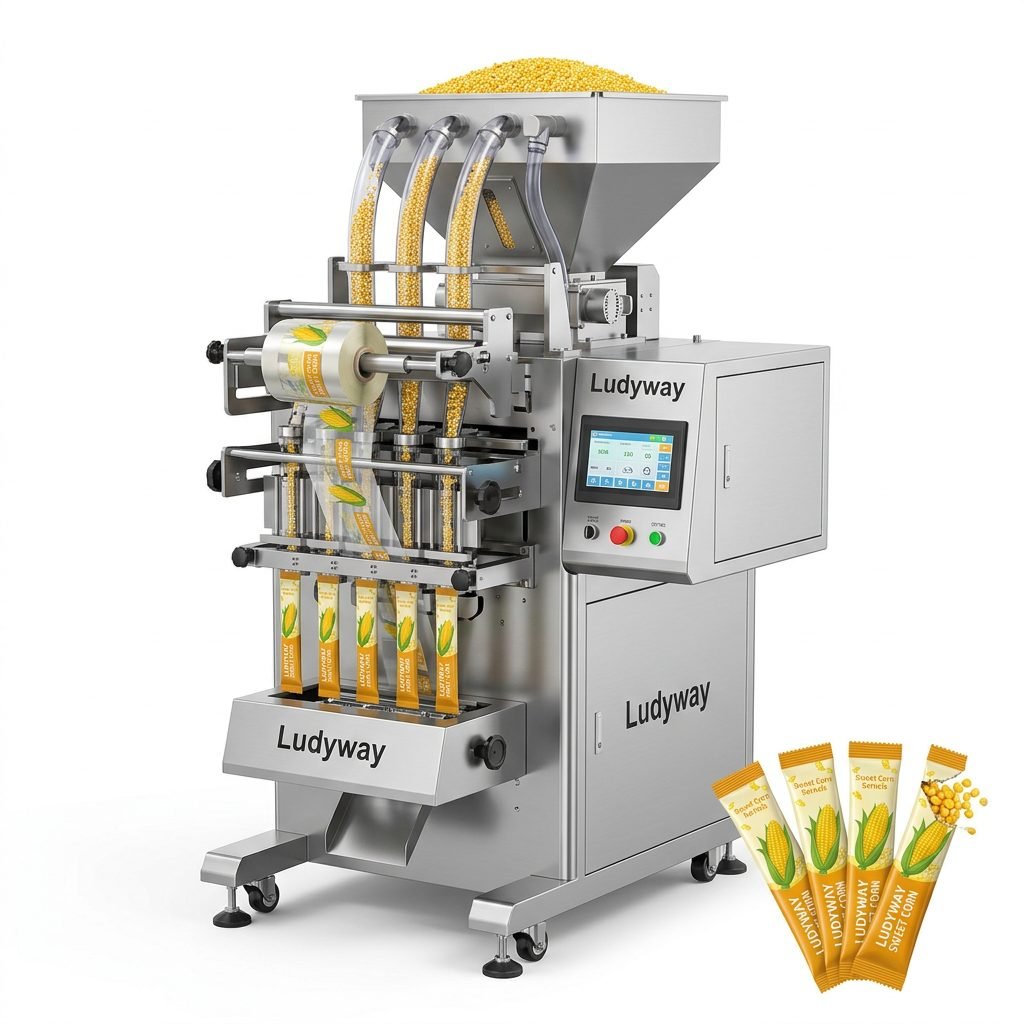
Corn Granule Stick Pack Machine
Multi-Lane Stick Pack, 4–12 Lanes
Quote on request
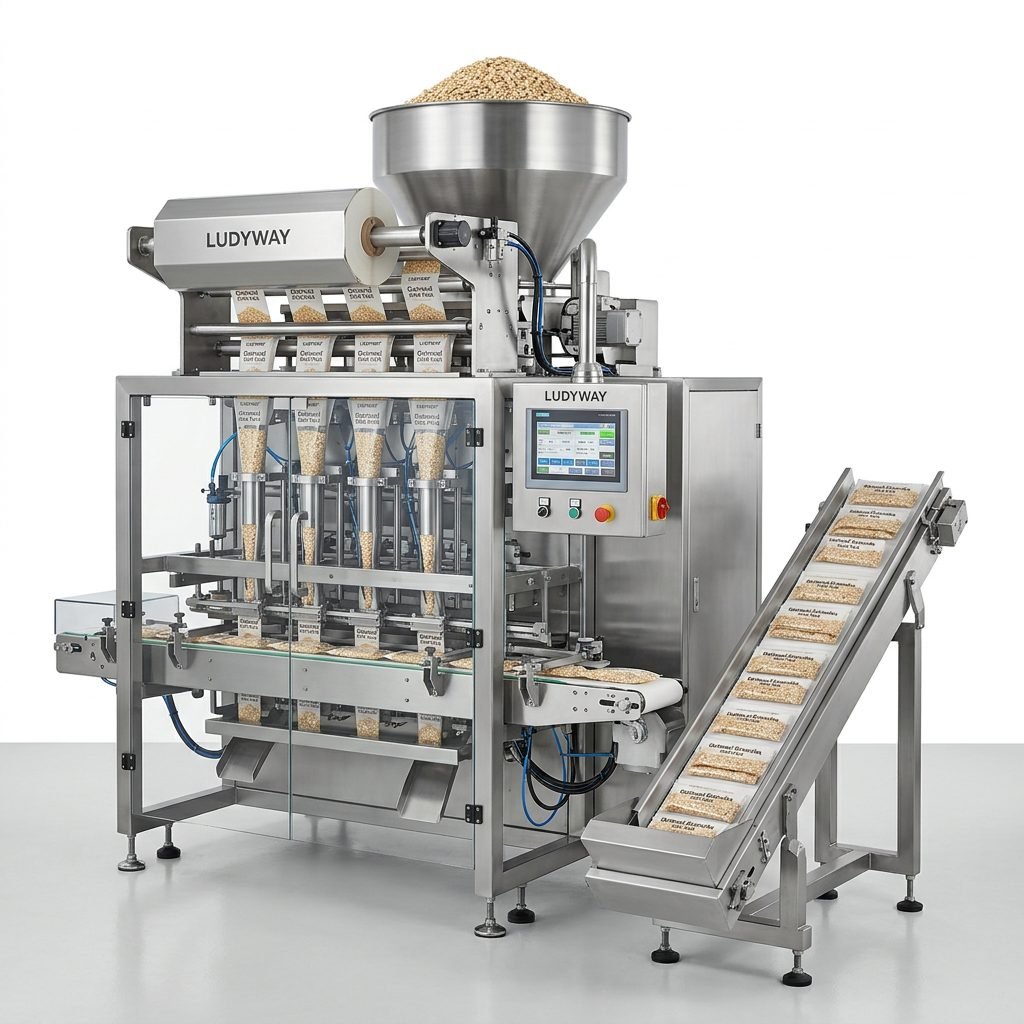
Oat Grain Stick Pack Machine
Multi-Lane Sachet & Stick Pack, Rolled & Instant Oats
Quote on request
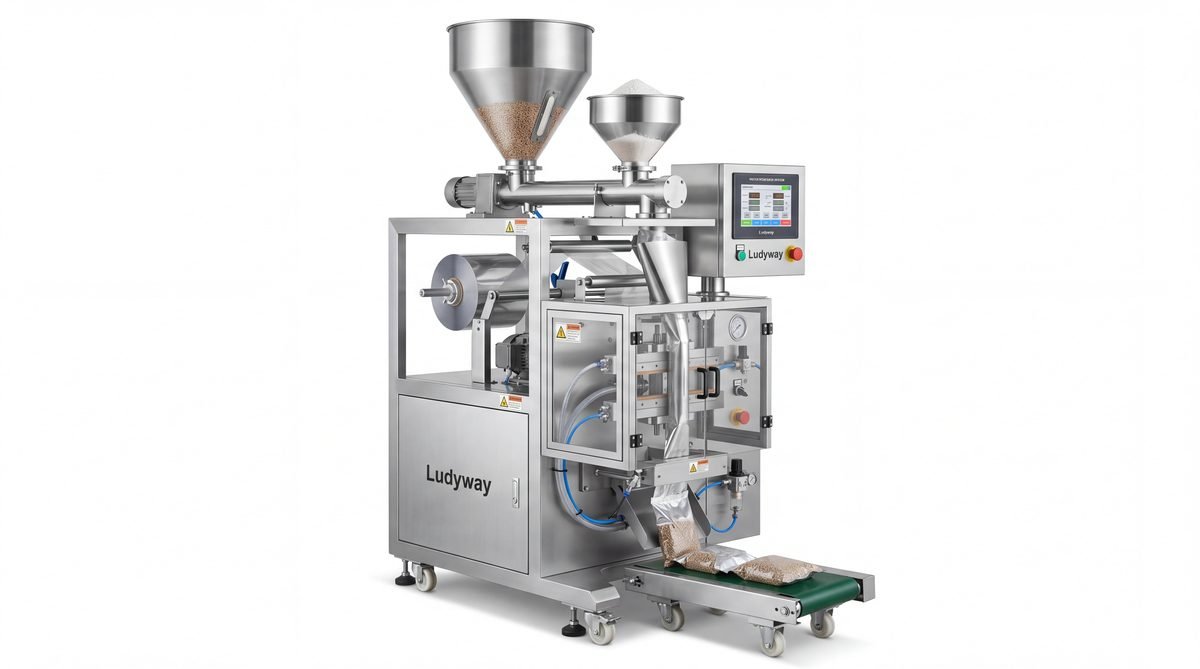
Grain Vacuum Packaging Machine
Vacuum Brick Packs, Rice & Pulses 0.5–5 kg
Quote on request
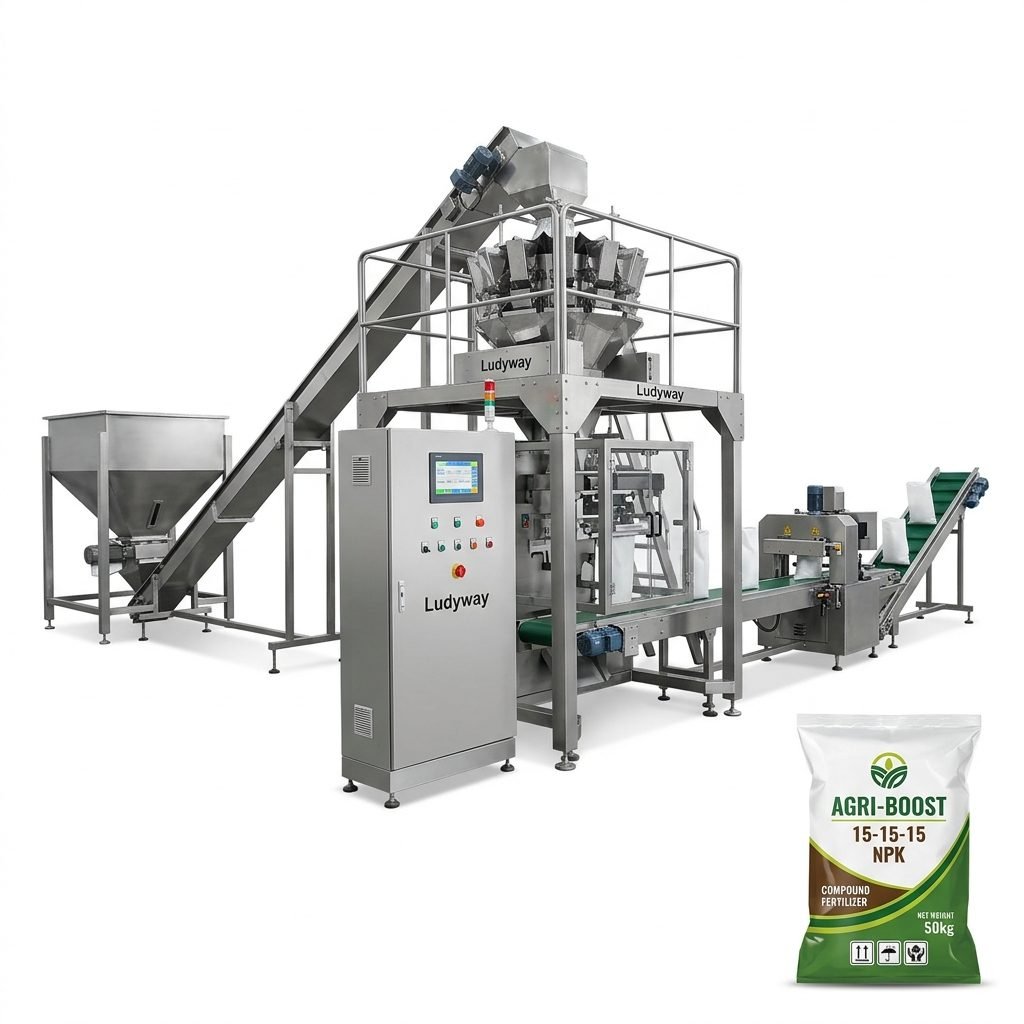
Automated Weighing & Bagging Line
Open-Mouth Bags, 10–50 kg Farm Inputs
Quote on request
View all grain & granule packaging machines →
How an Automatic Grain Packaging Machine Works
Whether the output is a 20 g seed sachet or a 50 kg rice sack, every automatic grain packaging machine follows the same four-stage sequence. Understanding each stage makes it easier to match equipment to your throughput target and to identify where accuracy or speed is being lost on an existing line.
01
Feeding & conditioning
Bucket elevators or vibratory feeders lift grain from the silo or hopper to the weigher head. Level sensors keep the buffer at 60–80% so the scale is never starved, and a pre-sieve removes stalks, stones and dust before weighing.
02
Weighing & dosing
A multi-head combination weigher, linear net weigher, volumetric cup or auger doses the exact target weight. Coarse and fine feed stages bring 25 kg sacks within ±25–50 g and 500 g retail packs within ±0.5–1 g.
03
Bag forming & filling
Vertical form-fill-seal units form pillow, gusseted or quad-seal bags from roll film; premade pouch units open and fill zipper bags; open-mouth baggers clamp woven PP or paper sacks under the fill spout.
04
Sealing, coding & inspection
Heat, ultrasonic or sewing closure is followed by date and lot coding, a dynamic checkweigher and metal detection. Out-of-tolerance bags are rejected automatically before case packing or palletizing.
Choosing the Right Weighing System for Grain
Weighing technology is the single largest driver of both accuracy and cost in grain packaging. Free-flowing kernels such as rice, beans and popcorn suit combination weighers; dense granular products in large sacks are better served by linear net weighers; and milled products such as flour or corn meal require auger dosing. The table below summarises the typical performance envelope of each option.
| Weighing system | Best suited to | Target weight | Accuracy | Speed |
|---|---|---|---|---|
| Multi-head combination weigher (10/14 heads) | Rice, beans, lentils, chickpeas, popcorn, seeds, kibble | 50 g – 5 kg | ±0.1–1 g | 60–120 wpm |
| Linear net weigher (2–4 scales) | Wheat, corn, paddy, feed pellets, fertilizer granules in sacks | 5 – 50 kg | ±0.1–0.2% | 300–900 bags/h |
| Volumetric cup filler | Uniform grains at fixed volume, low-cost single portions | 5 g – 1 kg | ±1–2% | 40–80 cpm per lane |
| Auger / screw dosing | Flour, corn meal, rice flour, milled cereal blends | 1 g – 5 kg | ±0.5–1% | 30–60 cpm per lane |
| Gross-weight bulk bag scale | Jumbo / FIBC bags filled on a load-cell platform | 500 – 2,000 kg | ±0.1% | 20–40 bags/h |
For processors packing mixed pulses or bean blends into 1–5 kg retail bags, a 14-head weigher mounted over a VFFS bagger is the most common configuration; see the high-speed bean and grain packing machine with multi-head weighing for a reference layout and footprint.
Bag Formats for Grain and Agricultural Products
Agricultural products move through two very different packaging channels: single-serve and retail portions destined for supermarkets and food service, and bulk sacks destined for distributors, farms and export containers. Most processors eventually need both, so it is worth specifying machines whose conveyors, controls and inspection equipment can be shared.
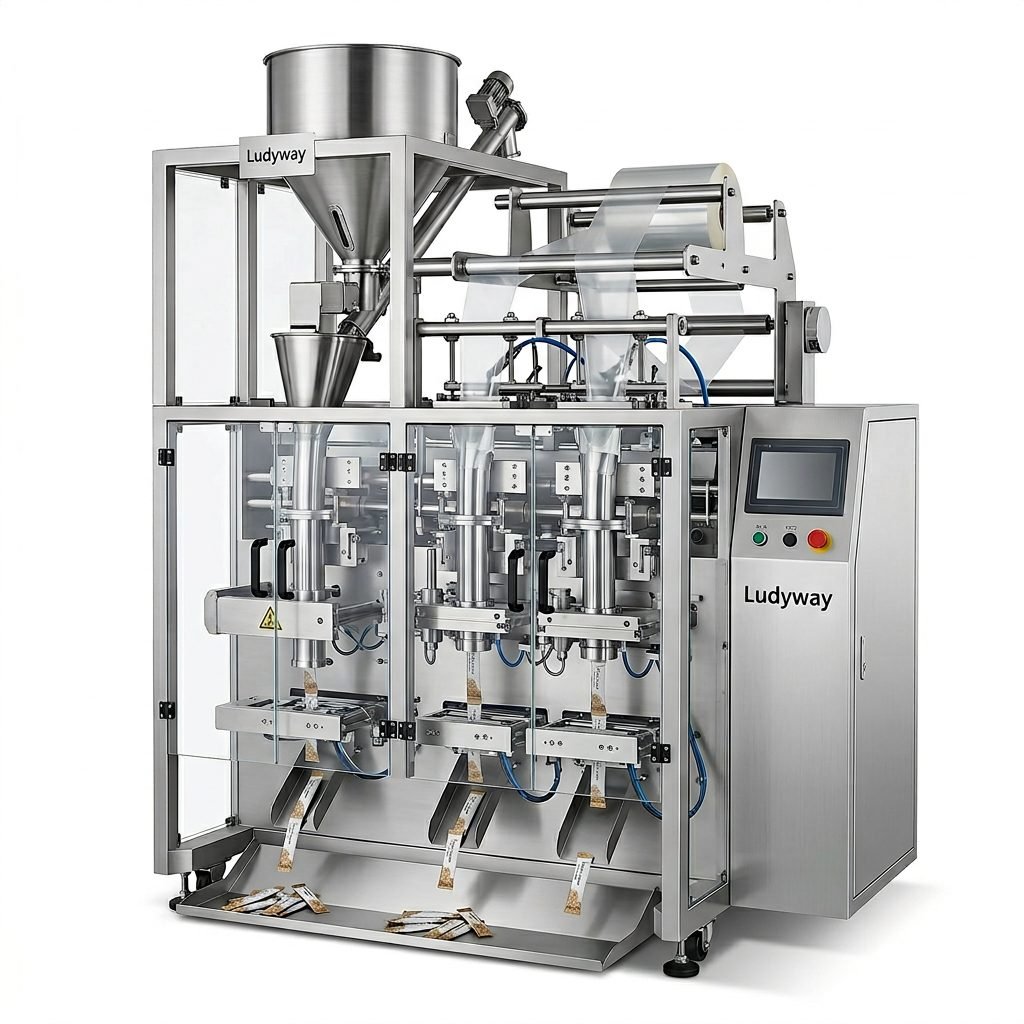
Multi-lane sachet and stick pack machine configured for sesame and milled grain portions.
Retail Portions: Stick Packs, Sachets and Pillow Bags
Single-serve oatmeal, quinoa, chia, sesame, rice and seed portions from 1 g to 100 g are produced on multi-lane stick pack and four-side-seal sachet machines. A 10-lane unit at 60 cycles per minute delivers 600 finished sticks per minute from a single operator, with film widths of 300–1,000 mm and seal types that include tear notches, round corners and easy-open serrations.
For 250 g to 5 kg family packs, a vertical form-fill-seal bagger with a combination weigher forms pillow, gusseted or quad-seal bags at 40–120 bags per minute. Vacuum brick packing extends rice and pulse shelf life to 12–24 months by compressing the product into a rigid block that resists insect infestation and oxidation during export shipping.
Processors who start with sachets and later add larger retail bags typically keep the same film supplier and coding equipment; the granule rice packaging machine for sachet and stick pack filling shows how lane count and cut-off length are specified.
Bulk Bagging: 10–50 kg Open-Mouth, Valve and Jumbo Bags
Bulk sacks are the backbone of agricultural trade. An open-mouth bagging line consists of a net weigher, a bag placer or manual clamp station, a fill spout with dust extraction and a closure station using heat sealing for PE liners, sewing for woven polypropylene or paper, or a combined sew-and-crepe tape head. Line speeds of 300–600 bags per hour for 25 kg sacks and 200–400 bags per hour for 50 kg sacks are standard with a two-scale weigher.
Valve bag fillers suit powdered products such as flour and milled feed where dust control matters, while jumbo bag stations fill 500–2,000 kg FIBCs for commodity shipments. Bag handling after closure is usually by flattening conveyor, 90-degree turn and robotic or layer palletizer at 400–800 bags per hour.
Standard configurations for cereal and feed producers are documented on the 25 kg bag packaging lines for granules and powder page, including utility requirements and operator count.
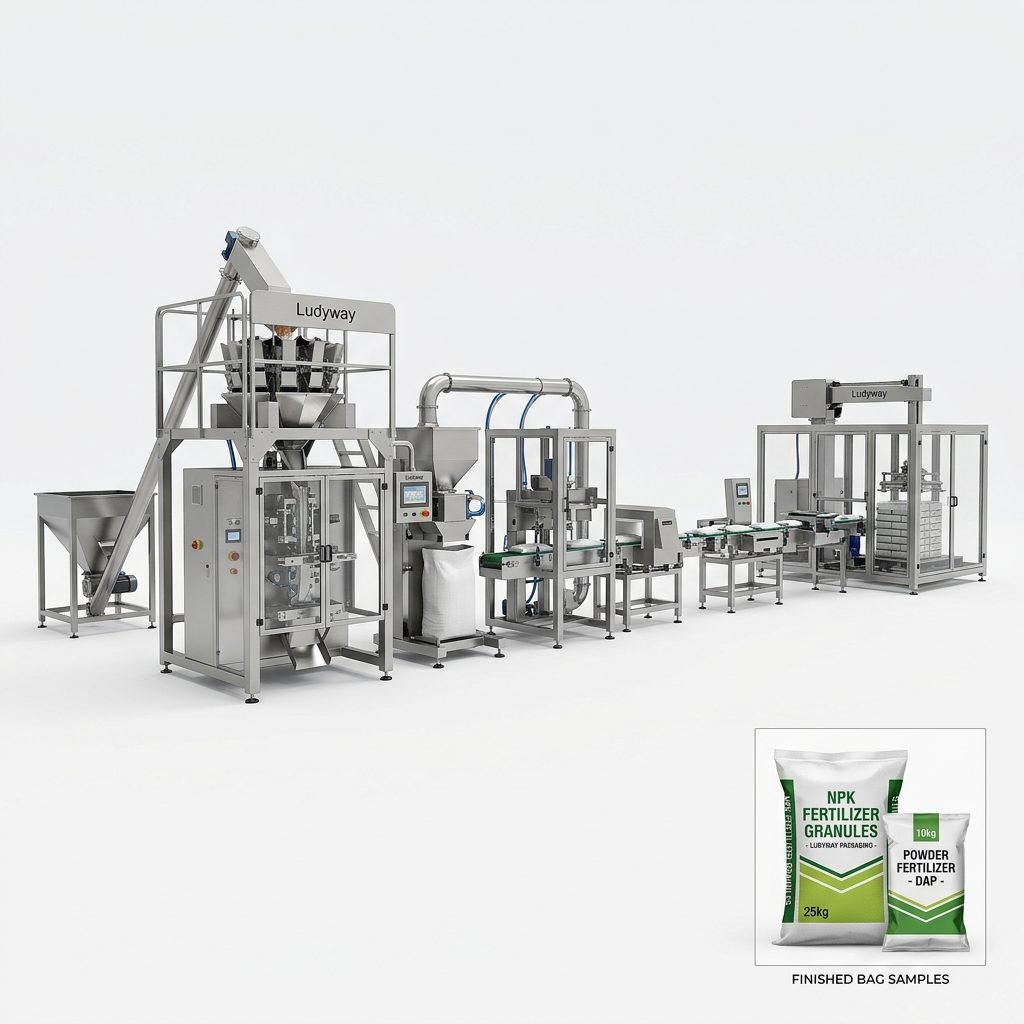
Modular bagging line with net weigher, bag placer and closure station for granular farm inputs.
Technical Specifications at a Glance
The three machine families below cover more than 90% of grain and agricultural packaging projects we quote. Values are typical ranges; final specifications depend on grain bulk density, moisture content, bag material and the utilities available at your site.
| Parameter | Multi-lane stick / sachet | VFFS with combination weigher | Open-mouth bagging line |
|---|---|---|---|
| Pack weight range | 1 – 100 g | 50 g – 5 kg | 5 – 50 kg |
| Output | 4–12 lanes × 40–80 cpm | 40–120 bags/min | 300–900 bags/h |
| Weighing accuracy | ±1–2% (cup) / ±0.5% (auger) | ±0.1–1 g | ±0.1–0.2% of target |
| Bag / film material | PET/PE, PET/AL/PE, paper/PE laminates | BOPP/PE, PET/PE, PE mono-material | Woven PP, kraft paper, PE, BOPP-laminated PP |
| Power / air | 380 V, 6–12 kW, 0.6 MPa | 380 V, 5–8 kW, 0.6 MPa | 380 V, 8–20 kW, 0.6 MPa |
| Contact material | SUS304 (316L optional) | SUS304 (316L optional) | SUS304 contact, carbon steel frame |
| Controls | PLC + 10 in. touch screen, servo film pull | PLC + 10 in. touch screen, 100 recipe memory | PLC + weighing controller, remote diagnostics |
Hygiene, Dust Control and Shelf Life
Grain packaging generates fine dust that abrades seals, clogs sensors and creates a combustible atmosphere if left unmanaged. Every filling point on a well-designed line therefore carries an extraction hood connected to a central dust collector, and weigh hoppers are polished to Ra 0.8 μm or better so kernels and bran do not accumulate. Tool-free removal of hoppers, chutes and forming tubes allows a full wash-down or dry clean in under 30 minutes between crop varieties, which is essential for allergen control when the same line runs wheat, oats and gluten-free grains.
Food-contact components and packaging films should comply with the relevant regulations in your destination market. In the United States the governing framework is the FDA’s rules on packaging and food contact substances; in Europe, Regulation (EC) 1935/2004 and the Packaging and Packaging Waste Regulation shape both material choice and recyclability. Machine design itself is covered by the ISO family of packaging and distribution standards, which buyers in regulated markets increasingly request in supplier documentation.
Rice and pulses packed with nitrogen flushing to below 2% residual oxygen retain colour and flavour for 18–24 months, compared with 6–9 months in air-packed bags. For export shipments through humid tropical ports, modified-atmosphere packaging is often the difference between a premium and a discounted consignment.
Gas flushing is available as a factory option on VFFS baggers and multi-lane machines; refer to the nitrogen flushing packaging system for granule and powder products for gas consumption figures and residual oxygen monitoring.
Applications by Crop and Product Type
Bulk density, particle size, flowability and dust level vary widely across agricultural products, which is why we configure feeders, weighers and sealing jaws crop by crop rather than selling a single universal unit.
Rice
1–5 kg vacuum bricks and pillow bags at 40–60 bpm; 25–50 kg woven PP sacks at 400–600 bags/h. Broken-rice percentage affects weigher head selection.
Wheat & Flour
Whole wheat in 10–50 kg open-mouth sacks via net weigher; flour and semolina in 1–25 kg bags via auger or valve bag filler with dust extraction.
Corn & Maize
Kernels, popcorn and corn grits in 100 g–2 kg retail bags; corn seed in 1–20 kg bags with lot coding and treatment-dye compatibility.
Pulses & Beans
Lentils, chickpeas, kidney and soya beans in 500 g–5 kg packs on 10/14-head weighers; mixed-bean blends dosed by multi-product weighing recipes.
Oats & Cereals
Instant oatmeal and granola in 25–60 g stick packs and sachets at 400–800 portions/min; rolled oats in 500 g–1 kg gusseted bags.
Seeds
Vegetable, grass and crop seeds from 1 g to 25 kg with count or weight dosing, anti-static film handling and variety-change times under 15 minutes.
Oilseeds
Sesame, sunflower, flax, chia and pumpkin seeds in 10–500 g sachets and pouches; oil-rich seeds require PTFE-coated jaws and easy-clean hoppers.
Feed & Fertilizer
Pellets, premix and granular fertilizer in 10–50 kg sacks and 500–1,000 kg FIBCs, with corrosion-resistant weigher surfaces and heavy-duty sewing heads.
From Standalone Machine to Complete Bagging Line
A single automatic grain packaging machine is rarely the whole project. Upstream, storage silos, screw or belt conveyors and bucket elevators must deliver product at a steady rate; downstream, each bag needs coding, inspection, case packing or palletizing and stretch wrapping before it leaves the plant. Specifying these elements together avoids the most common failure in grain plants: a fast bagger throttled by slow manual palletizing.
A typical mid-size cereal line comprises an in-feed elevator, a 14-head weigher over a VFFS bagger, an inkjet or thermal-transfer coder, a high-precision checkweigher with reject arm, a metal detector, an automatic case packer and a robotic palletizer. At 60 bags per minute this line runs with two operators and one forklift driver, compared with eight to ten workers on a semi-automatic setup.
Line controls are unified on a single HMI with recipe storage, OEE reporting and remote diagnostics, so that changeover between a 1 kg and 5 kg SKU takes 15–20 minutes including film reel change and weigher recalibration.
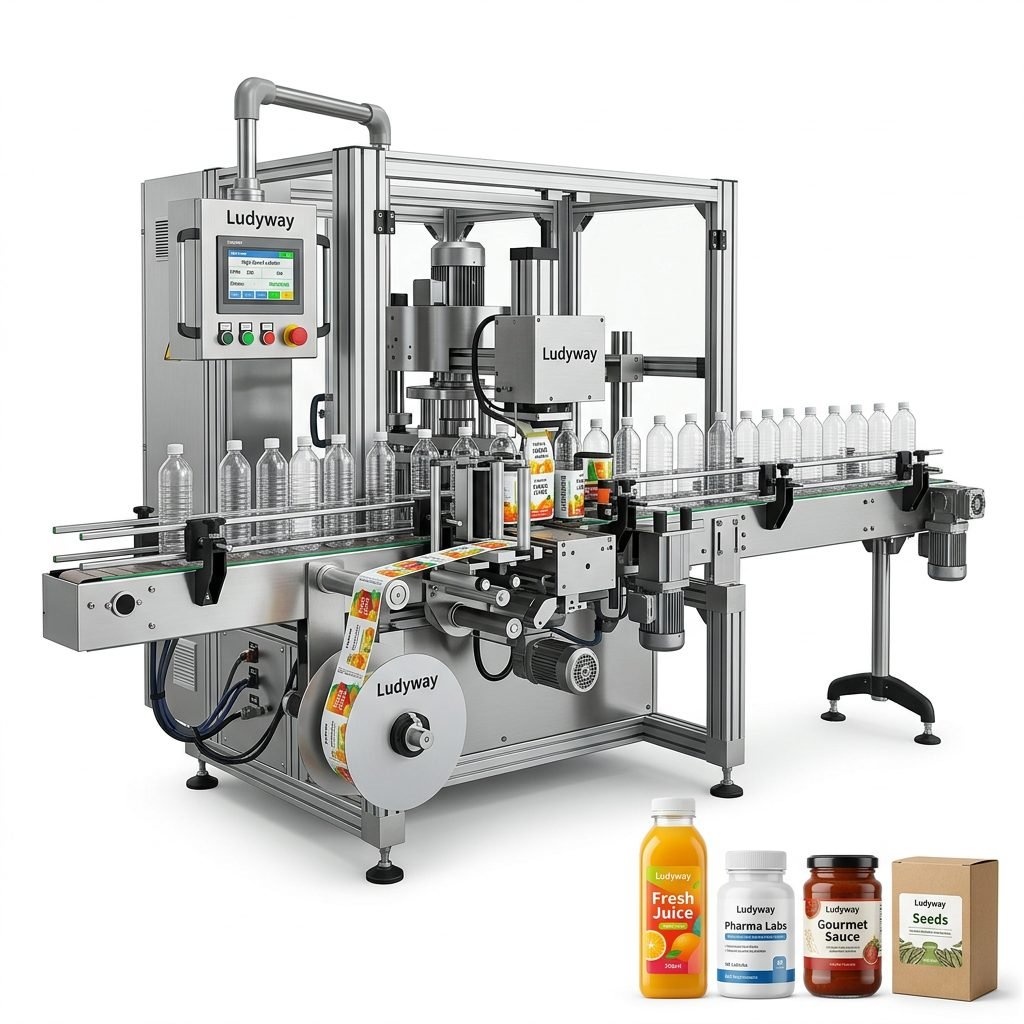
End-of-line labeling and coding station integrated after the checkweigher and metal detector.
Certifications, Supply Capacity and How to Get a Quote
Buyers evaluating an automatic grain packaging machine for agricultural products usually need the same four items before a purchase order can be raised: proof of compliance, a realistic delivery schedule, clarity on minimum order and payment terms, and a quotation that is detailed enough to compare like with like. The cards below summarise the standard commercial framework; everything can be adapted to tender or EPC project requirements.
Certifications & standards
- CE marking with Declaration of Conformity (Machinery Directive, LVD, EMC)
- ISO 9001 quality management on all manufacturing
- SUS304 / 316L food-contact parts with material certificates
- Siemens, Schneider, Omron or Delta electrics on request; UL-listed panels available for North America
- Factory acceptance test with your own grain sample and bag material before shipment
MOQ, lead time & terms
- Minimum order: 1 machine; distributor programs available from 3 units per year
- Standard multi-lane or VFFS machine: 30–45 days after deposit
- Integrated weighing, bagging and palletizing line: 60–90 days plus FAT
- Payment: 30% deposit, 70% before shipment by T/T or L/C at sight
- Shipping FOB Shenzhen / Guangzhou or CIF to destination port; 12-month warranty with on-site commissioning
What to include in your RFQ
- Product name, bulk density (kg/L) and moisture content
- Target pack weights and the required output per hour or shift
- Bag type: roll film, premade pouch, woven PP, paper or FIBC, with sample dimensions
- Site voltage and frequency, compressed air availability and floor space
- Downstream needs: coding, checkweighing, case packing, palletizing
For benchmarking equipment specifications against wider industry practice, the PMMI Association for Packaging and Processing Technologies publishes annual state-of-the-industry data on packaging machinery adoption, automation levels and OEE expectations that many procurement teams use when writing tender documents.
Why Source Grain Packaging Equipment from Ludyway
Ludyway Machinery, founded in 1993 in Nanlang Town, Zhongshan, Guangdong, is one of the largest packaging machine manufacturers in China, with a 20,000 m² production facility, more than 200 manufacturing equipment units and a team of 130+ packaging engineers and technicians. The company offers over 50 intelligent packaging machine models spanning multi-lane stick pack, sachet, VFFS and fully automated bagging systems for granule, powder, liquid and pouch applications, and has supplied customers in more than 100 countries and regions. Annual revenue passed RMB 500 million in 2025, and the company’s international growth trajectory is covered in this independent industry report on Ludyway’s export expansion.
30+
Years building packaging machinery
20,000 m²
Modern manufacturing facility
50+
Machine models for granule, powder & liquid
100+
Countries and regions served
Grain and seed projects are handled by a dedicated engineering group that tests customer samples on in-house weighers before quoting, so throughput and accuracy figures in the proposal reflect your actual product rather than catalogue values. Complete turnkey scopes are described on the automated weighing packaging lines for granules, powders and liquids page.
Frequently Asked Questions
What output can I expect from an automatic grain packaging machine for 1 kg rice bags?
A VFFS bagger with a 10-head combination weigher typically packs 1 kg rice at 45–60 bags per minute with ±1–2 g accuracy. Adding a 14-head weigher or a twin-tube bagger raises output to 80–120 bags per minute. Vacuum brick packing for the same weight runs at 20–40 bags per minute because of the evacuation cycle.
Can one line handle both retail bags and 25 kg sacks?
The weighing and bagging heads are different, but they can share the in-feed elevator, dust collection, checkweigher, metal detector and palletizer. Many processors install a VFFS retail line and an open-mouth bagging station side by side, switching the elevator discharge between them with a diverter gate.
How long does installation and commissioning take?
A standalone machine is usually running within 3–5 working days of arrival on site. A full weighing, bagging and palletizing line takes 2–3 weeks including mechanical installation, electrical hook-up, product trials and operator training. Remote commissioning support via video is available where travel is restricted.
Which spare parts should be stocked for grain packaging equipment?
Sealing jaws, heating elements, thermocouples, cutting blades, film-pull belts, sewing needles and thread, load cells and proximity sensors cover more than 90% of unplanned stoppages. A one-year consumables kit is included in every export quotation, and critical parts ship from Guangdong within 3–7 days.
Do you support single-serve wheat and oat portions on the same multi-lane machine?
Yes. Volumetric cup and auger dosers are interchangeable on multi-lane stick pack machines, so whole-grain wheat, rolled oats and instant oat powder can run on one frame with a doser swap of 20–30 minutes. See the multi-lane wheat grain stick pack machine for lane and cut-off options.
Request a Quotation, Sample Test or Equipment Catalogue
Send us your grain type, target pack weights and required output and our engineering team will return a detailed proposal with layout drawing, utility list and delivery schedule within 2–3 working days. You can also ship 5–10 kg of product for a free weighing and sealing trial, or request the full catalogue of grain, seed and feed packaging machines and turnkey lines.