
Can Packaging Machines Be Used for Powder Products?
Explore how modern high-precision packaging automation tackles fine particulate dosing, seal integrity, and cross-contamination challenges across food, pharmaceutical, health, and chemical production lines.
The Definitive Answer: Yes, With Dedicated Engineering
Packaging machines can definitely be used for powder products. However, unlike regular granules or free-flowing solid pellets, dry powders possess dynamic physical characteristics like aeration, varying bulk densities, and airborne dust creation that demand specialized engineering integrations.
Servo Auger Precision
High-precision servo-driven auger tooling meters non-free-flowing powders such as flour, starch, and collagen with micron-level consistency, avoiding weight deviation caused by bulk density fluctuation.
Dust Recovery & Containment
Integrated closed-loop vacuum dust extraction and anti-leak seals isolate fine airborne particles from entering sealing jaws, preventing seal failure, pinhole leaks, and packaging waste.
Hermetic Integrity & Modified Gas
Integrated nitrogen flushing guarantees residual oxygen drops below 1%, protecting moisture-sensitive infant formula, probiotic formulas, and active pharmaceutical ingredients from oxidation.
Granule vs. Powder Packaging Machinery Systems
Understanding material flow kinetics is essential when configuring packaging lines. The table below illustrates the critical component differences between granular solids and specialized powder handling equipment.
| Functional Module | Standard Granule Packaging | Engineered Powder Packaging Lines | Operational Value & Benefit |
|---|---|---|---|
| Dosing Mechanism | Volumetric cups or multi-head weighers | Servo-driven vertical auger screws & agitating funnels | Eliminates voids and compresses aerated fine powder |
| Dust Mitigation | Standard gravity discharge chute | Integrated vacuum dust collection & sealed drop pipes | Ensures clean seal boundaries with zero powder burn |
| Sealing Jaws | Standard heat-sealing bars | Ultrasonic / constant heat with anti-static purge | Penetrates residual film residue for hermetic seams |
| Material Feeding | Vibratory feeders / Z-type bucket elevators | Dust-tight vacuum feeders & screw conveyors | Maintains consistent hopper headspace and zero dust escape |
| Atmospheric Control | Optional ambient sealing | Nitrogen gas flushing (Residual O2 < 1%) | Extends active chemical, food, and medicine shelf life |
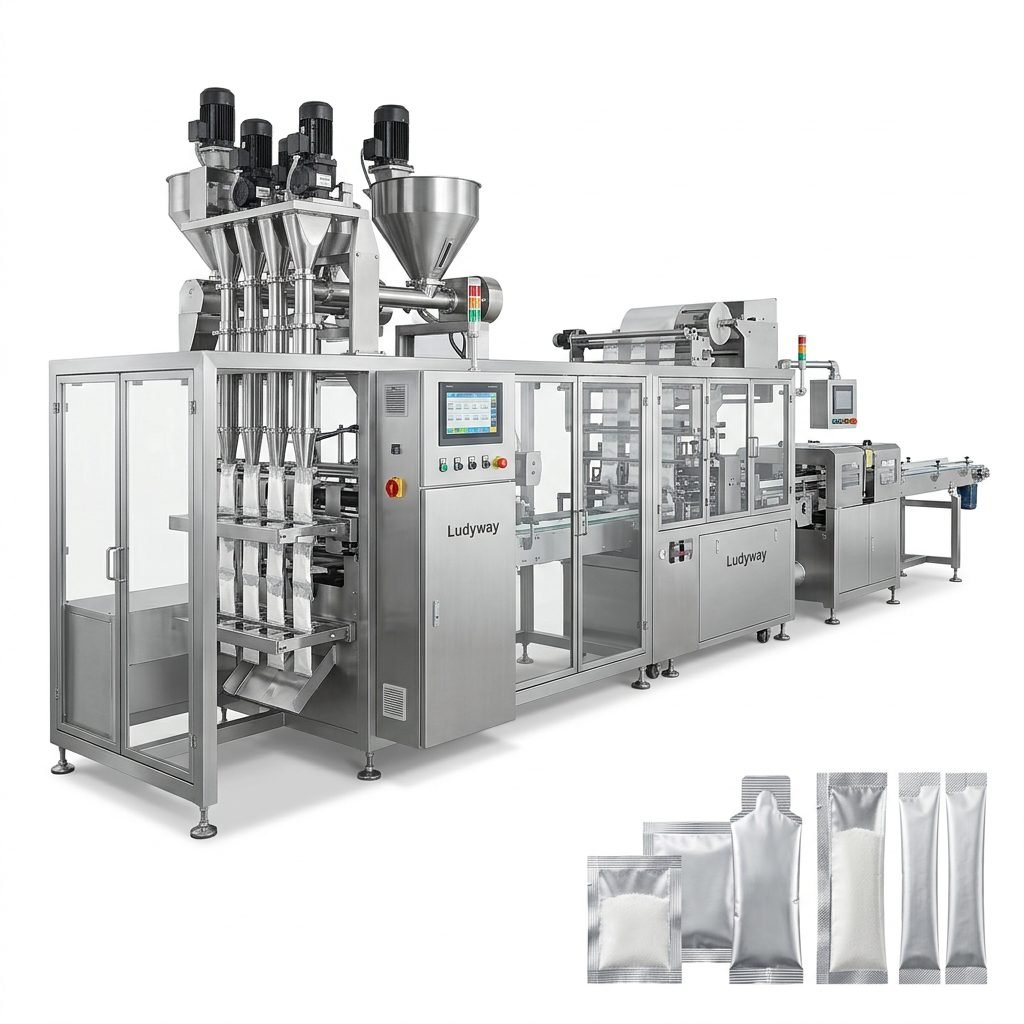
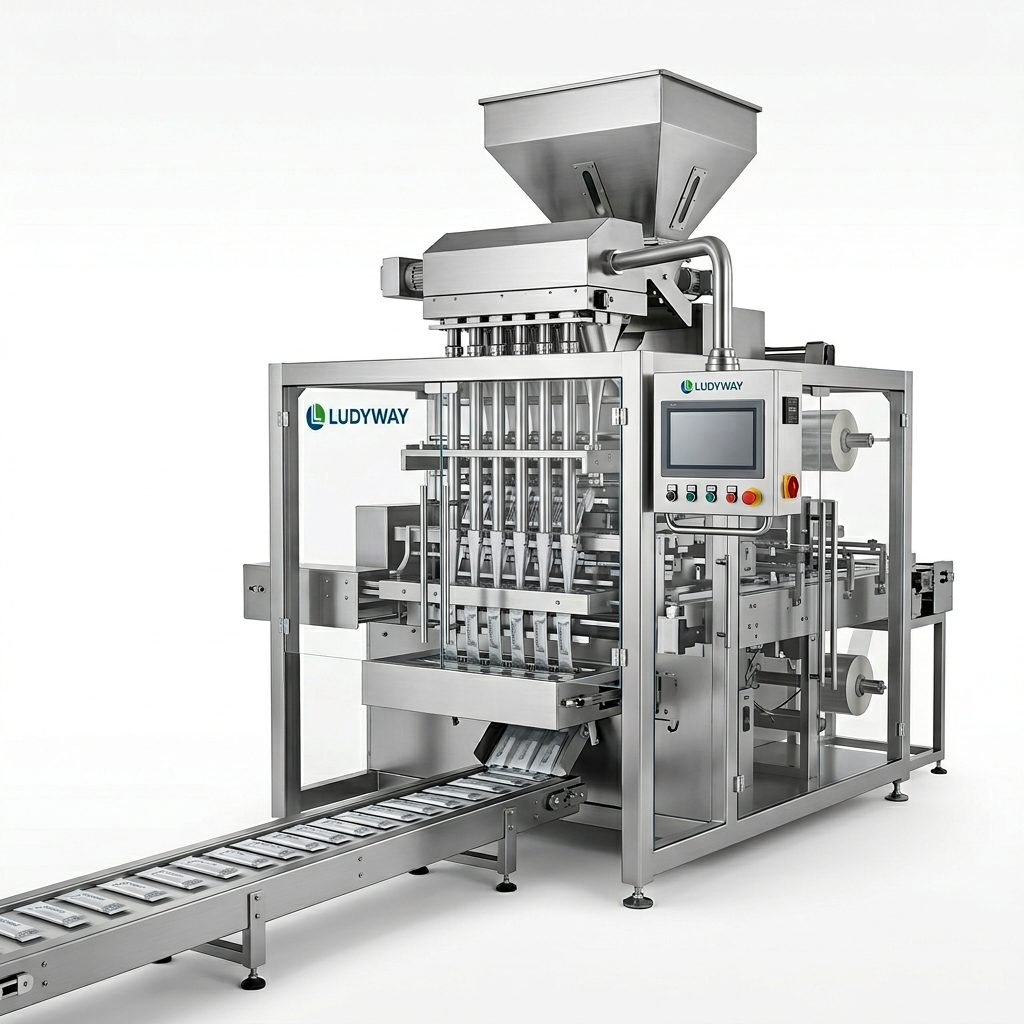
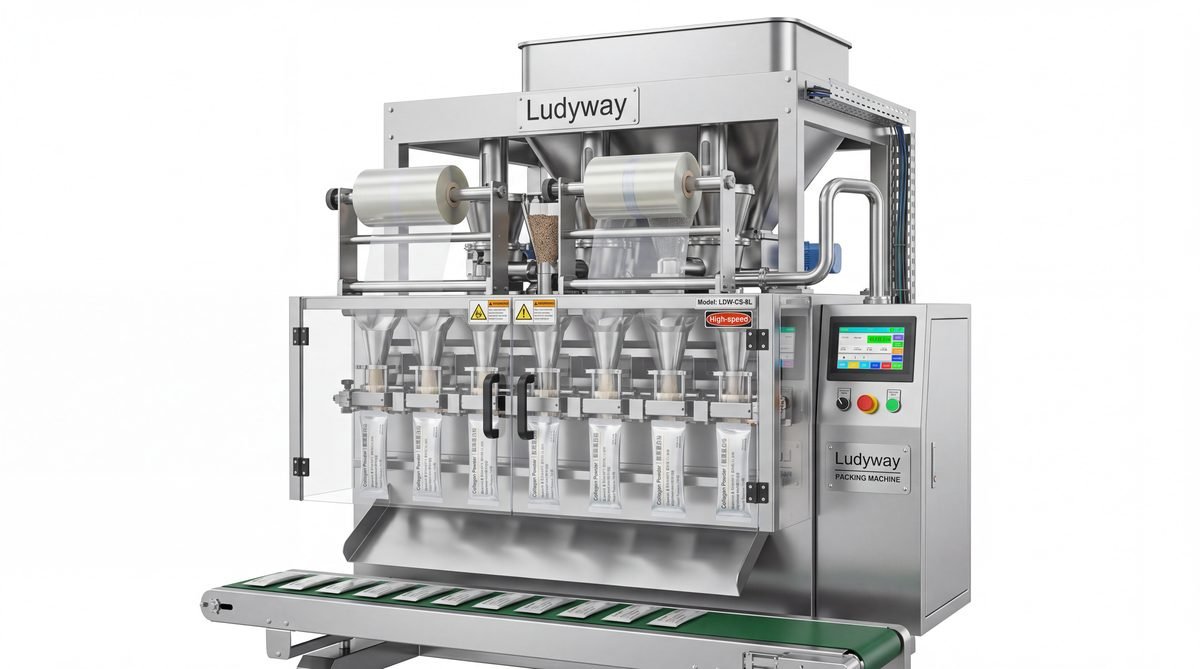
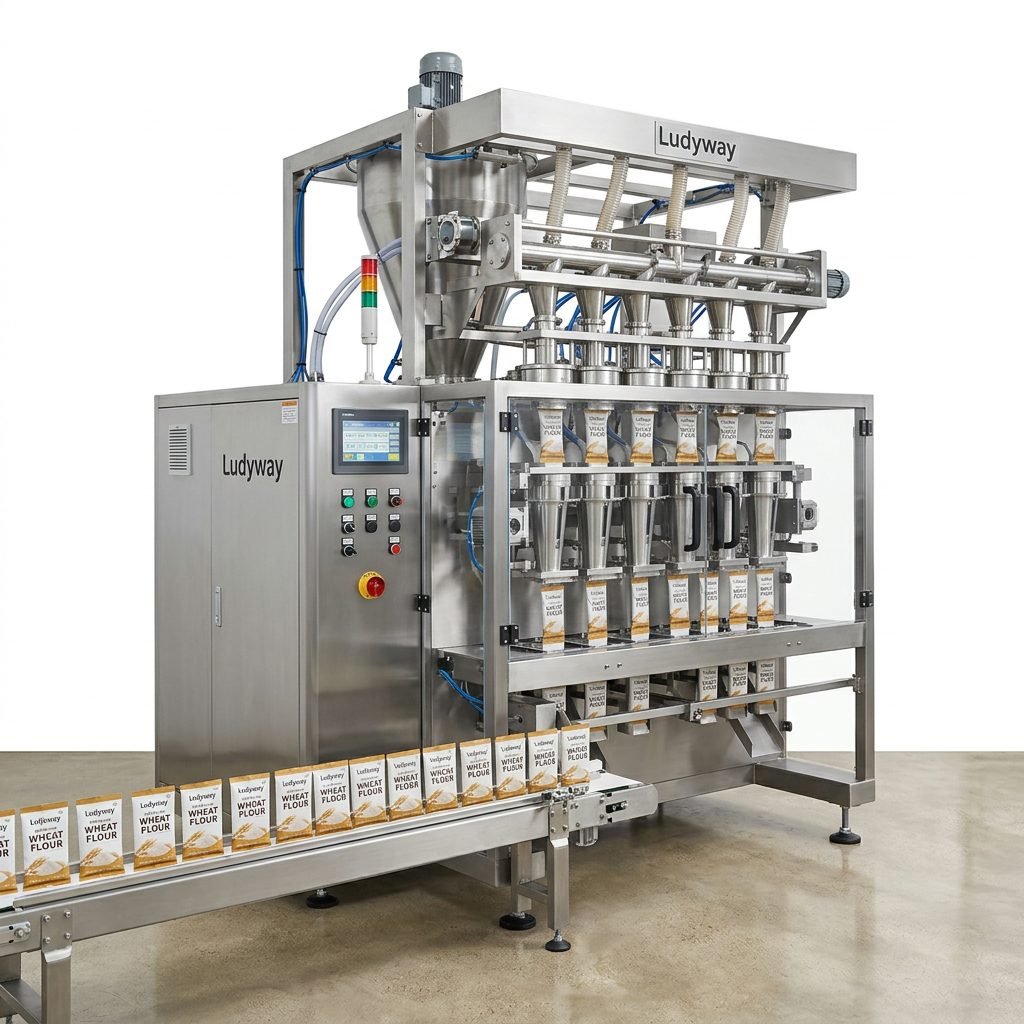
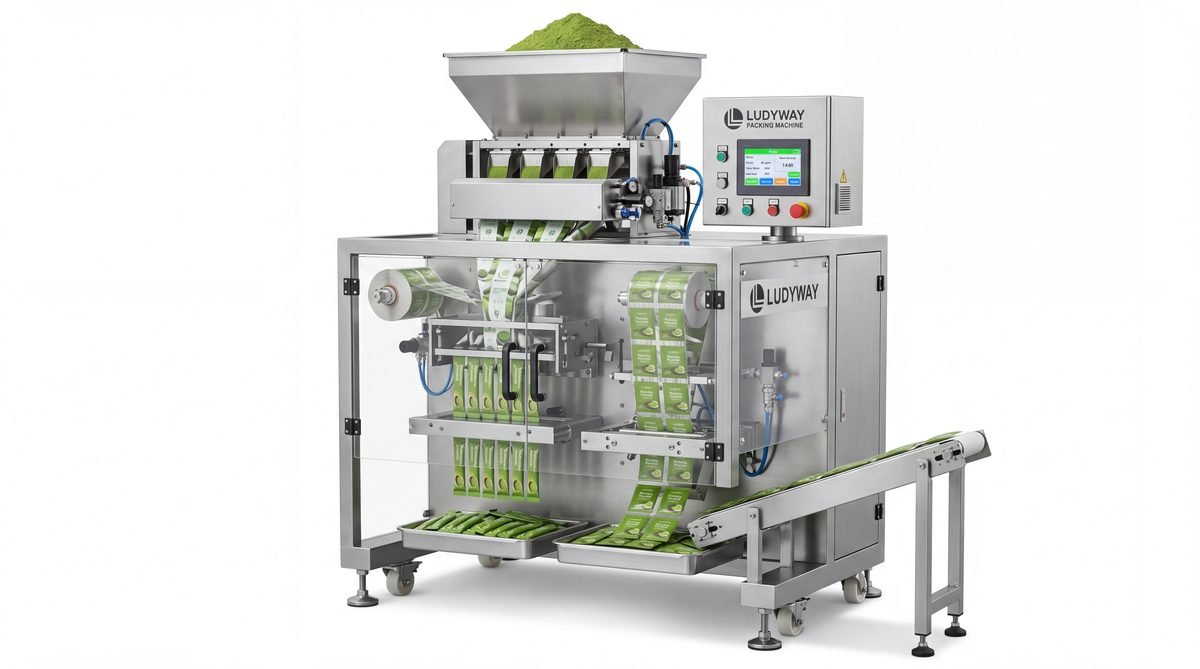
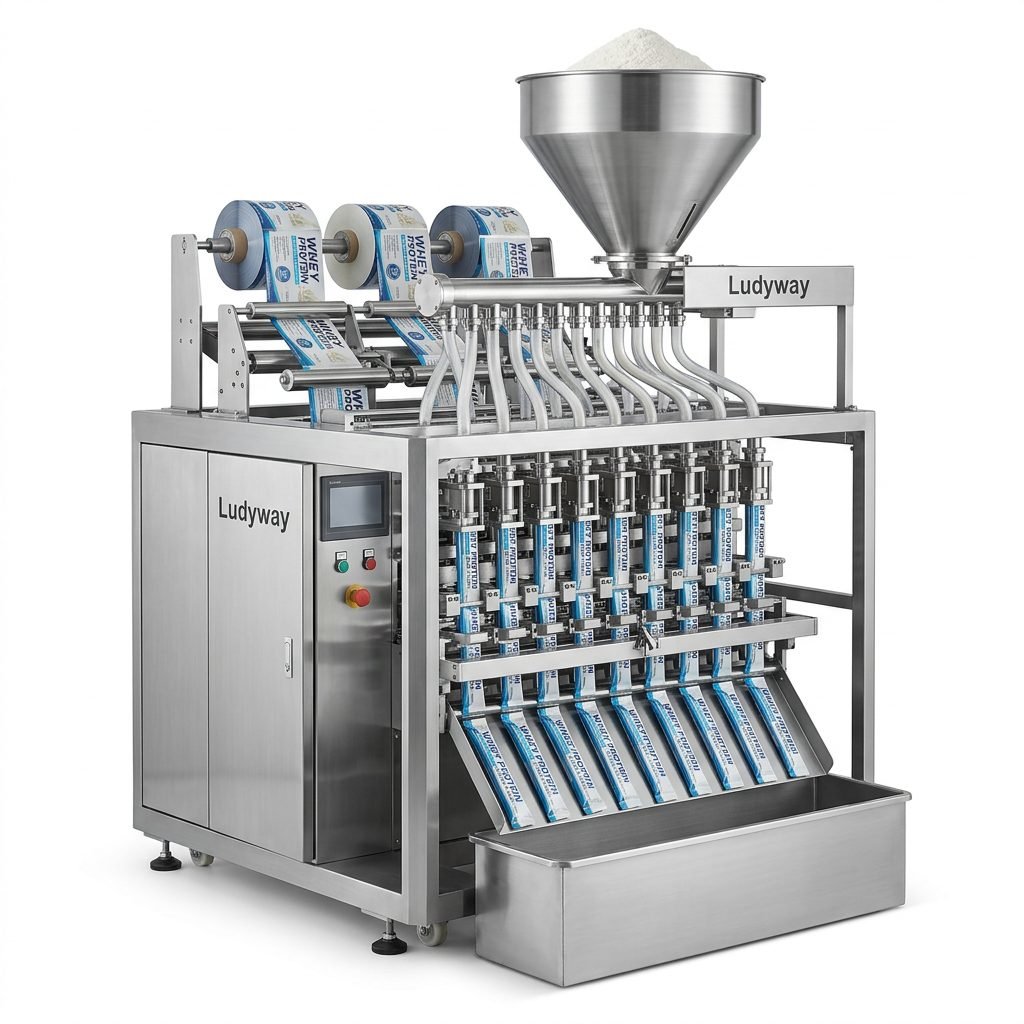
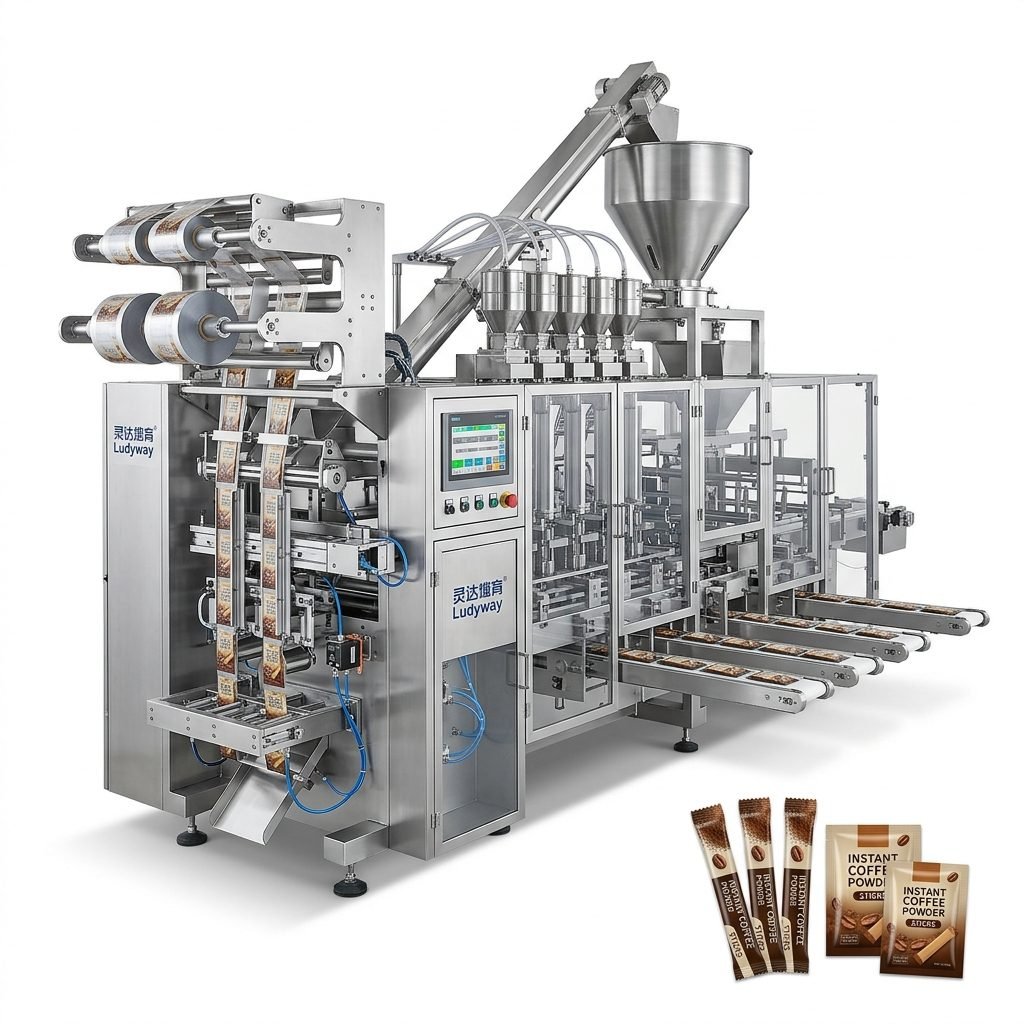
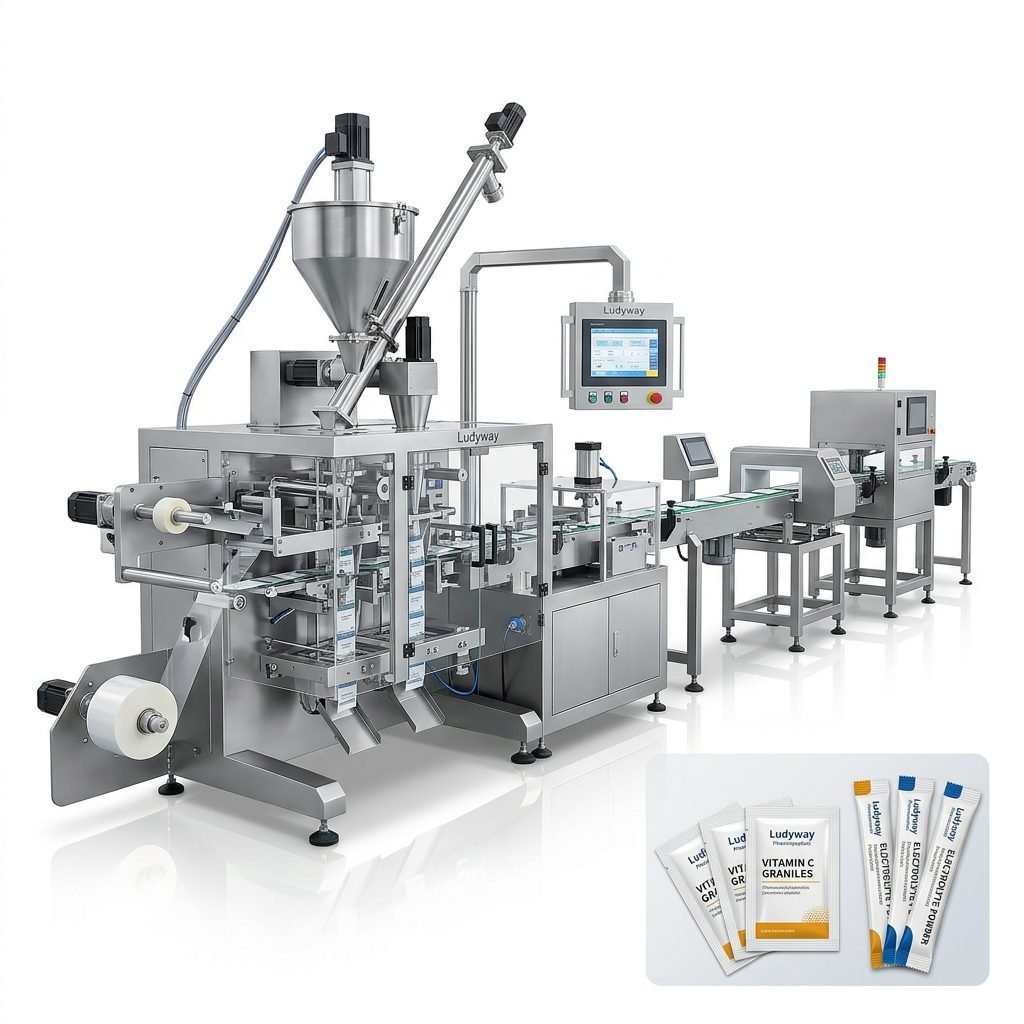
Recommended Automated Powder Packaging Systems
Engineered by Ludyway Machinery with servo auger precision, multi-lane scalability, and strict dust protection to meet pharmaceutical and food-grade hygiene standards.
1. Understanding Powder Behavior in Automated Packaging Machinery
When engineering packaging automation for powder products, the primary operational challenge is not simply dispensing weight, but controlling fluid mechanics. Unlike coarse pellets or free-flowing granulates, powders exhibit diverse behavioral characteristics ranging from aerated fluidization to high cohesive stickiness.
In automated packaging, powders are generally categorized into two fundamental classes:
- Free-Flowing Powders: Materials such as refined granulated table sugar, instant chemical salts, and crystalline beverage mixes. These particulate solids slip past one another easily when gravity-fed, behaving similar to fine granulates.
- Non-Free-Flowing (Cohesive) Powders: Materials such as infant formula, whey protein isolate, matcha green tea powder, ground spices, and pharmaceutical APIs. These powders contain natural oils, moisture, or electrostatic charges that cause them to bridge, clump, and cling to hopper surfaces.
2. Key Equipment Modules Required for Powder Packaging
To prevent product giveaway, dusting explosions, and compromised pouch seals, modern powder packaging machines employ advanced electromechanical components:
Auger Dosing Feeder with Independent Agitator Drives
An auger screw conveyor housed inside a vertical dosing funnel provides positive displacement. The auger rotation is driven by high-resolution servo motors that calculate rotation degrees to meter exact gram weights. A secondary, counter-rotating agitator blade breaks down bridging within the hopper, guaranteeing that powder enters each screw flight under consistent bulk density.
For fine powders that easily fluidize, standard open nozzles will drip after cycle completion, scattering powder across sealing films. Modern Ludyway augers integrate pneumatic shut-off nozzles or mesh cut-offs that seal instantly at the end of the rotation stroke.
Dust Extraction & Sealed Sealing Enclosures
Air displacement during the powder drop phase forces dust upwards. Specialized packaging machines incorporate vacuum aspiration rings directly around the filling nozzle. This creates negative pressure at the pouch opening, pulling airborne fines into an external dust collector before they can contaminate the film sealant layer.
Ultrasonic & Precision Heat Sealing Systems
Powder dust settling on the heat-seal zone can prevent typical thermal conduction films from fusing, causing micro-channels that allow oxygen and moisture ingress. By implementing ultrasonic sealing horns or multi-stage zoned thermal crimpers, packaging machinery creates molecular bonds even through dust contamination.
3. Industry Applications & Compliance Standards
Different manufacturing sectors require specific regulatory considerations when packaging powdered goods:
- Food & Beverage: High-speed stick packs and 4-side seal sachets for instant coffee, electrolyte drinks, spices, and baking mixes. Requires 304/316 food-grade stainless steel with tool-free washdown hoppers.
- Pharmaceuticals & Health Supplements: Formulations for antibiotics, oral rehydration salts (ORS), and vitamins require full cGMP compliance, IQ/OQ validation documents, HEPA laminar flow hoods, and integrated checkweighers with auto-rejection.
- Chemical & Agricultural Industries: Pesticides, pool sanitizers, and detergents demand anti-corrosive coatings, explosion-proof ATEX ratings, and heavy-duty dust collection to maintain factory occupational safety.
4. Maximizing OEE (Overall Equipment Effectiveness) in Powder Lines
Achieving high uptime on powder packaging lines requires deliberate maintenance protocols. Selecting machines equipped with quick-release auger screws allows rapid cleaning between flavor or chemical changeovers. Furthermore, pairing the primary form-fill-seal system with upstream vacuum conveyors and downstream cartooning creates a synchronized turnkey packaging workflow.
Ludyway Machinery: 30+ Years of Automated Packaging Excellence
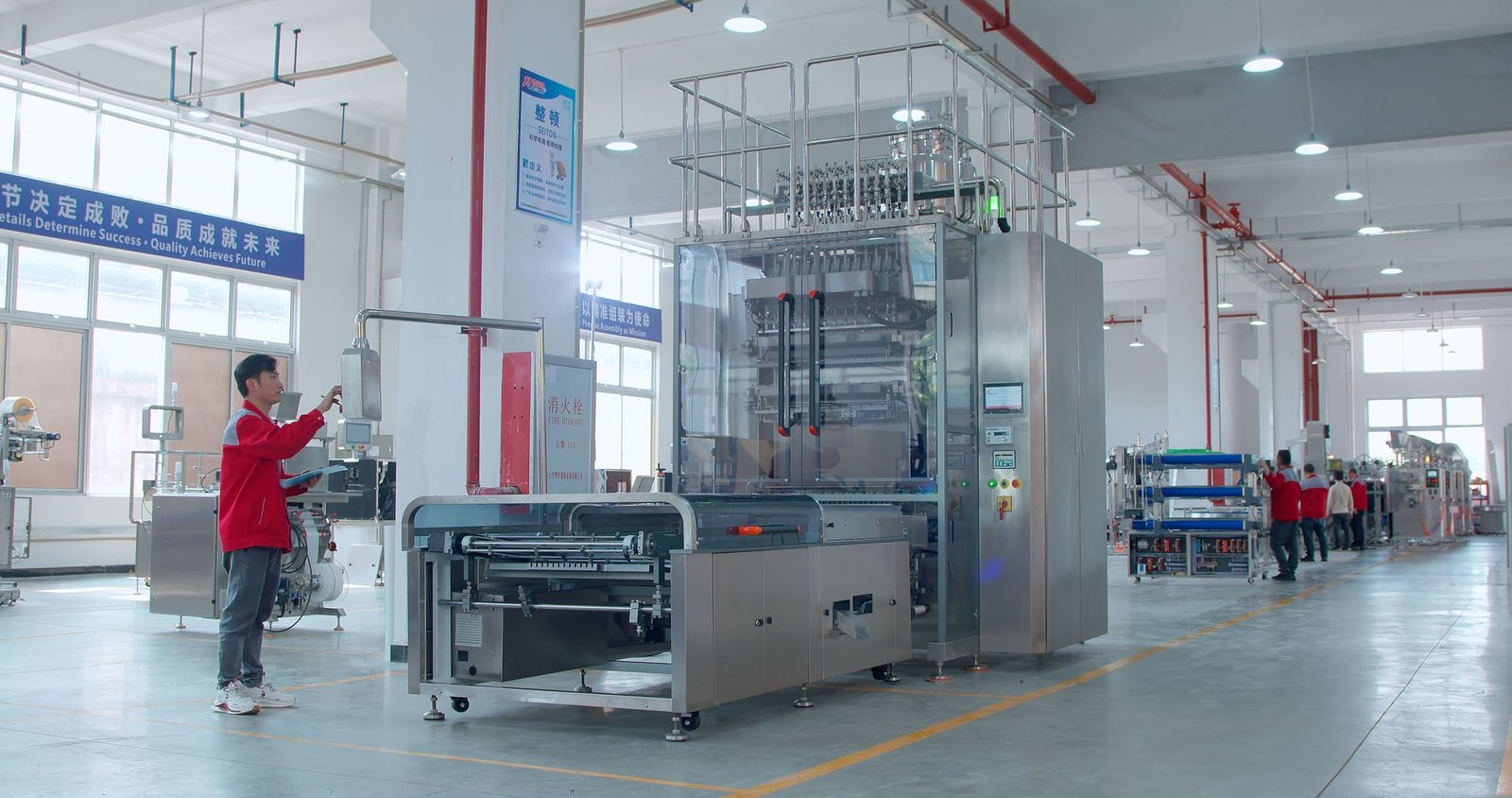
As one of the premier packaging machine manufacturers in China, Ludyway specializes in high-precision packaging automation for powder, granule, and liquid products. Supported by a modern 20,000㎡ manufacturing hub and over 130 technical specialists, we provide turnkey solutions tailored for the global food, health, and pharmaceutical sectors.
Powder Packaging Automation Inquiries
Find direct technical answers to common questions regarding powder machine compatibility, dosing precision, and operational efficiency.
Can one machine handle both granular and fine powder products?
Yes. Hybrid packaging machines can switch between volumetric cup/weighing systems (for granules) and servo auger screws (for fine powders). Quick-clamp tooling designs allow switching dosing units within 30–45 minutes.
How do packaging machines prevent powder dust from ruining pouch seals?
Machines utilize closed-loop vacuum dust collection shrouds near the pouch opening, anti-drip cut-off nozzles at the auger tip, and continuous dust blow-off bars before the thermal sealing jaws engage.
What is the dosing accuracy standard for multi-lane powder machines?
Ludyway servo auger multi-lane lines achieve accuracy within ±0.5% to ±1.5% depending on powder consistency, bulk density consistency, and ambient humidity control.
Can nitrogen flushing be integrated for sensitive food or pharma powders?
Yes. High-efficiency gas injection manifolds flush the pouch cavity during the forming and filling stroke, reducing residual oxygen levels down to <1% to prevent ingredient degradation.
Ready to Automate Your Powder Packaging Line?
Contact our engineering team today for technical consultations, customized machine layout CAD drawings, and factory turnkey pricing.
