
Can Packaging Machines Use Different Sizes of Packaging Bags?
Discover how modern automated packaging machinery accommodates diverse bag dimensions, formats, and film roll materials. Learn about mechanical changeovers, programmable servo adjustments, and how high-efficiency multi-format tooling maximizes packaging line versatility.
Yes, Modern Packaging Machines Can Run Multiple Bag Sizes
In modern automated production lines, packaging machine adaptability is not merely an optional feature—it is a critical necessity for maintaining operational agility, cost efficiency, and maximum manufacturing ROI.
Direct Technical Verdict: The definitive answer is YES. The majority of contemporary packaging machines—ranging from Vertical Form Fill Seal (VFFS) systems and Horizontal Form Fill Seal (HFFS) flow wrappers to Rotary Premade Pouch Machines and multi-lane sachet equipment—are engineered to process multiple bag sizes. However, the exact methodology for transitioning between dimensions fundamentally depends on whether the change involves bag length (electronic servo adjustment) or bag width (mechanical change parts and tooling replacement).
Length Variations: Seamless Software & Servo Control
Varying the vertical length of a pillow bag, sachet, or stick pack is remarkably frictionless on modern machinery. By utilizing synchronized servomotors and intelligent Human-Machine Interface (HMI) touchscreens, machine operators simply select a new recipe parameter or adjust the film-pull cycle length. The machine automatically modifies the stroke distance of the pulling belts without needing physical component replacements.
Width Alterations: Modular Tooling & Former Assemblies
Altering the width or gusset depth of a package requires physical tooling modification. On roll-stock form-fill-seal machines, this involves swapping the forming tube (forming collar/shoulder) and adapting the web roll width. On premade pouch packaging machines, changing width is accomplished by mechanical spindle adjustments or automatic motorized gripper positioning to clamp different pouch openings.
How Different Packaging Machine Archetypes Handle Bag Sizes
Every packaging machinery archetype possesses distinct engineering boundaries regarding dimensional adjustments. Understanding these mechanics ensures optimal line investment.
Vertical Form Fill Seal (VFFS)
VFFS machines wrap flat film from a master roll around a cylindrical forming tube. Width changes require changing the forming set (collar and tube), while bag length changes are executed instantaneously via the digital HMI touchscreen.
Range: 50mm – 400mm+ Width
Rotary Premade Pouch Fillers
These systems take ready-made stand-up pouches, zipper bags, or doy-packs. Robotic gripper arms adjust simultaneously via a centralized motorized knob or digital servo control, enabling broad width and height adjustments with zero forming tooling.
Range: 80mm – 320mm Pouch Width
Horizontal Form Fill Seal (HFFS)
Horizontal flow wrappers and sachet formers feed film horizontally. Adjustable folding boxes or motorized guide rails accommodate varying product dimensions, making them ideal for solid items, bakery goods, and 3-side/4-side seal flat sachets.
Range: Variable height/length limits
Multi-Lane Stick & Sachet Lines
Multi-lane packaging machines split a wide film roll across multiple lanes (e.g., 4 to 12 lanes). Changing sachet length is effortless via digital controls; changing stick width typically requires custom slitters, divided forming shoulders, and multi-lane sealing jaws.
Range: Micro-dosing to standard sticks
Technical Comparison: Bag Size Adjustability by Machine Class
Review how packaging machine classifications compare across length flexibility, width adjustment mechanisms, tooling requirements, and estimated conversion downtime.
| Machinery Category | Width Adjustment Method | Length Adjustment Method | Average Changeover Duration | Additional Tooling Cost | Flexibility Index |
|---|---|---|---|---|---|
| Single-Lane VFFS System | Forming collar and tube replacement | Digital HMI servo length settings | 10 – 20 Minutes | Moderate (Extra forming tubes) | High (Length) / Moderate (Width) |
| Rotary Premade Pouch Machine | Automatic motorized gripper rail spacing | Gripper clamp depth adjustment | 2 – 5 Minutes | None (Universal gripper system) | Exceptional (Full Range) |
| Horizontal Flow Wrapper (HFFS) | Adjustable former or fixed folding box | Rotary knife speed / Touchscreen servo | 15 – 30 Minutes | Low to Moderate | High (Continuous flow) |
| Multi-Lane Stick Pack Machine | Divided multi-shoulder & slitter replacement | Encoder-based servo stroke tuning | 30 – 60 Minutes | High (Complete multi-lane sets) | Moderate (Ideal for uniform sizes) |
| Continuous Motion VFFS | High-speed custom forming collar set | Continuous rotary sealing jaw profiling | 15 – 25 Minutes | Moderate | High (High-speed lines) |
Critical Factors That Influence Packaging Bag Size Flexibility
While machines offer extensive dimensional adaptability, engineers must balance mechanical, thermal, and pneumatic parameters during size changeovers.
1. Film Roll Web Width & Tension Equilibrium
On roll-stock machinery, packaging bag width is directly bound to film roll width by the formula: Web Width = (2 × Bag Width) + Sealing Overlap/Fin Clearance. When switching to a wider or narrower bag, a corresponding roll of film with matching print registration marks must be loaded onto the pneumatic unwind shaft. Changing web width requires recalibrating the web guide alignment system, dancing arm tensioners, and optical eye-mark tracking sensors to prevent film wandering, wrinkling, or misaligned vertical seals.
2. Product Free-Fall Drop Height, Headspace & Internal Volume
When reducing bag dimensions while maintaining dosage weight, product bulk density becomes a vital consideration. Adequate package headspace is critical to prevent product entrapment within the horizontal sealing jaws. If powder or liquid contaminates the seal interface during high-speed cycle runs, seal integrity is compromised, leading to leaks, micro-perforations, or air loss. Conversely, expanding bag size increases the product drop distance, requiring precise timing adjustments on dosing augers, multi-head weighers, or liquid piston pumps.
- Powder Packaging: Requires anti-dust extraction collars and nitrogen flush nozzles scaled to the internal bag volume to prevent puffing.
- Granular Products: Requires multi-stage timing hoppers so solid pieces fall cleanly past the sealing zone before the jaws close.
- Liquid & Viscous Pastes: Requires positive shut-off diving nozzles adjusted for pouch bottom-up filling to avoid splashback on sealing lips.
3. Thermal Sealing Dynamics, Dwell Time & Jaw Profile
Varying bag size often involves changes in packaging substrate (e.g., transitioning from a standard 3-layer laminate foil to recyclable mono-PE or thicker barrier film). Thicker bags or wider seal widths demand optimized PID temperature controls, adjustable sealing pressure, and revised jaw dwell cycles. Servo-driven sealing jaws allow independent programming of sealing force, contact time, and cutting timing, ensuring hermetic seal strength across both miniature sachets and high-capacity bulk pouches.
How to Execute Rapid Bag Size Changeovers (SMED Protocol)
Implementing Single-Minute Exchange of Die (SMED) methodologies allows plant managers to slash downtime from hours to minutes when switching bag dimensions.
Pre-Staged Tooling Preparation
Have dedicated forming collar carts, correct web width film rolls, and calibrated sealing jaws pre-assembled near the packaging station before ending the previous batch run.
Quick-Release Tool-Less Swaps
Utilize quick-disconnect pneumatic fittings, magnetic clamp latches, and tool-less quick-clamp forming shoulder mounts to swap the primary mechanical assembly in under 5 minutes.
HMI Recipe Recall & Auto-Calibration
Select the pre-saved SKU profile on the PLC touchscreen. Servos automatically align film pull strokes, eye-mark offsets, nitrogen dosing volumes, and seal temperatures instantly.
Featured Packaging Machines with Multi-Size Capabilities
Explore our flagship automated packaging solutions engineered with modular changeover kits, broad dimensional ranges, and high-speed servo flexibility.
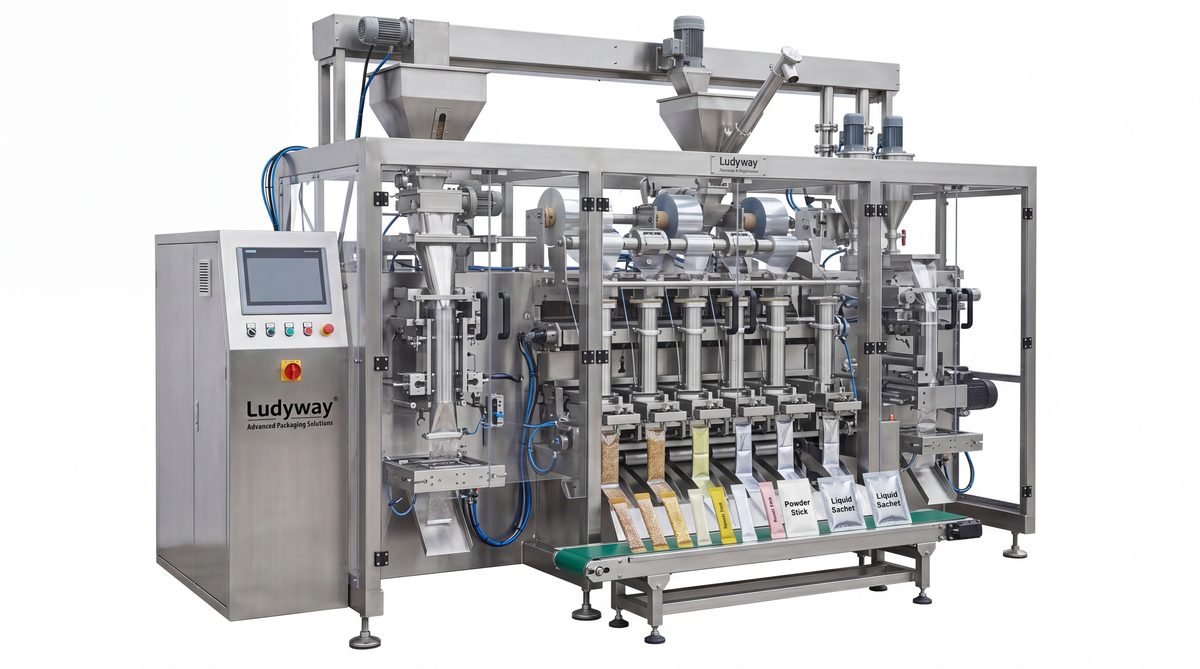
Multi-Lane Stick Pack & Sachet Packaging Machine
View Specifications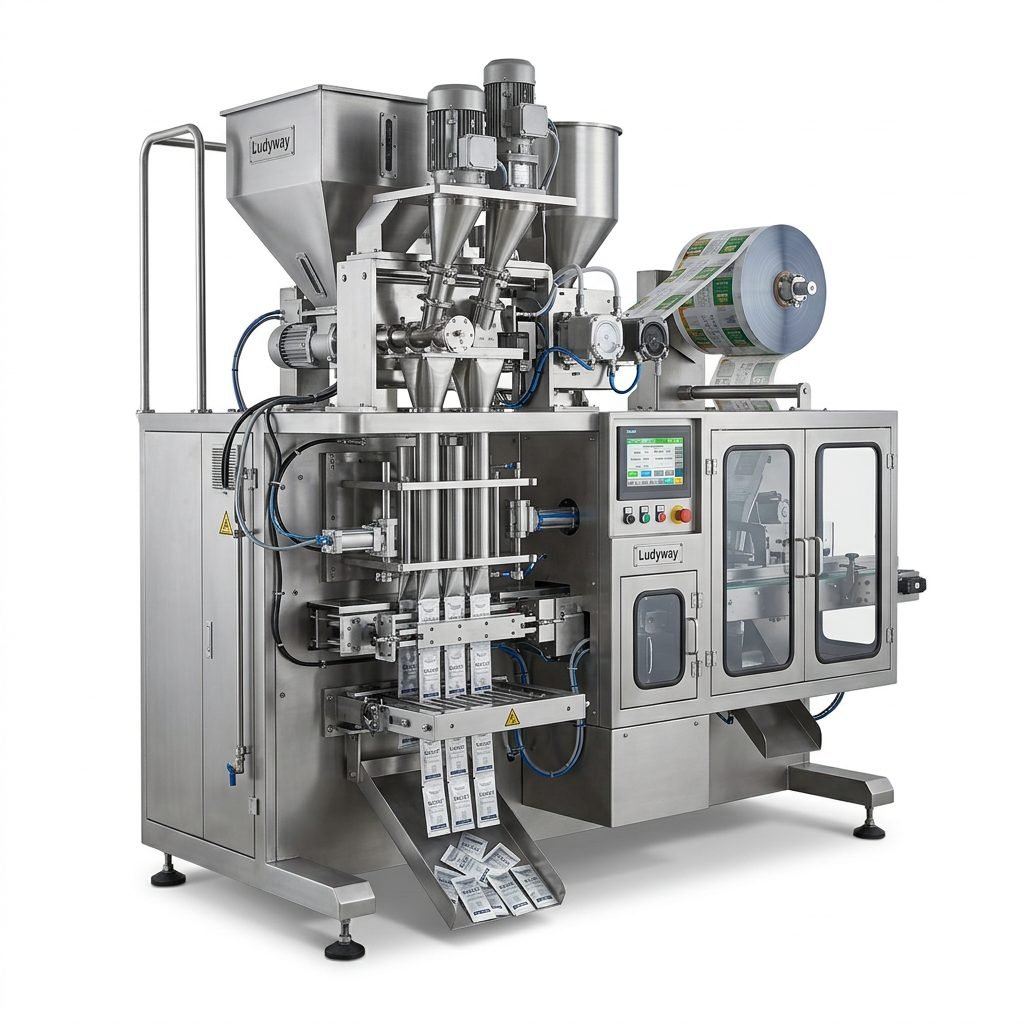
Multi-Lane Sachet Packaging Machine for Powder & Liquid
View Specifications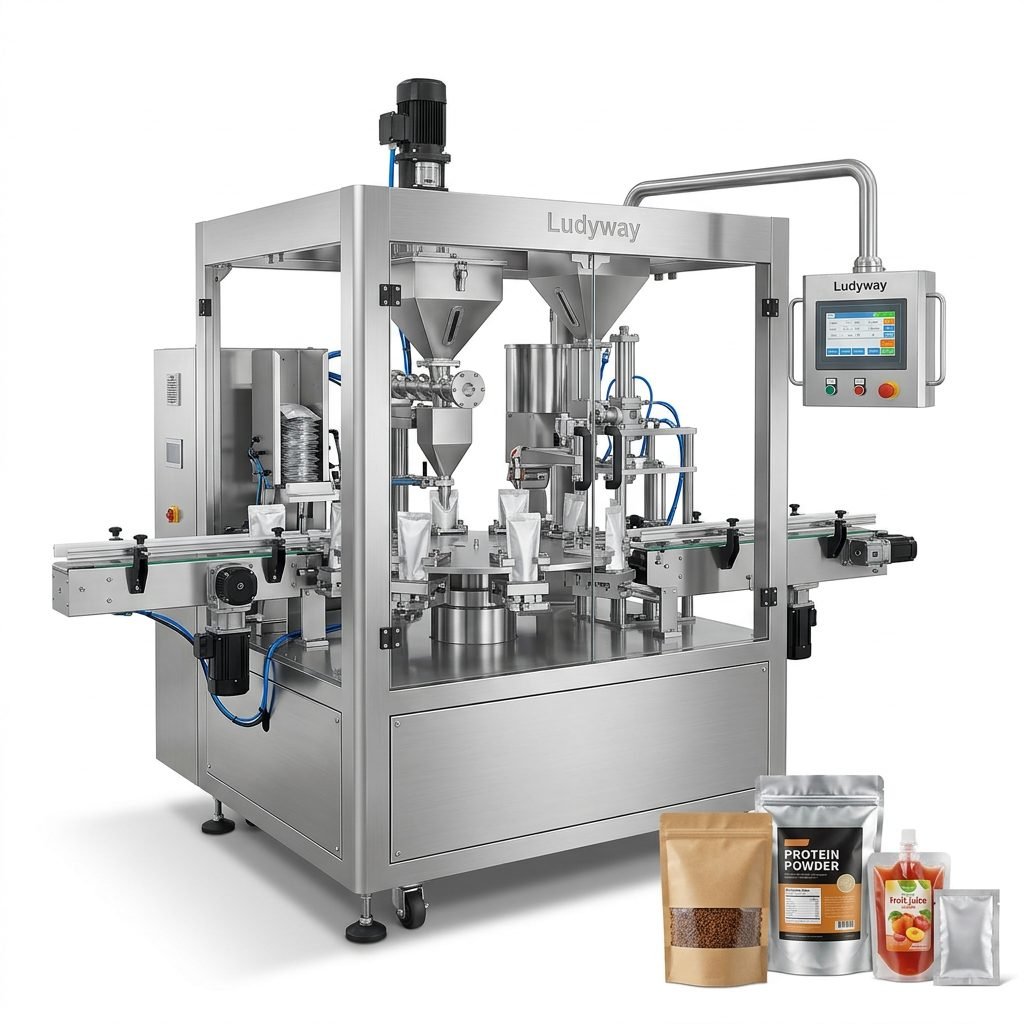
Premade Pouch Packaging Machine for Multi-Size Formats
View Specifications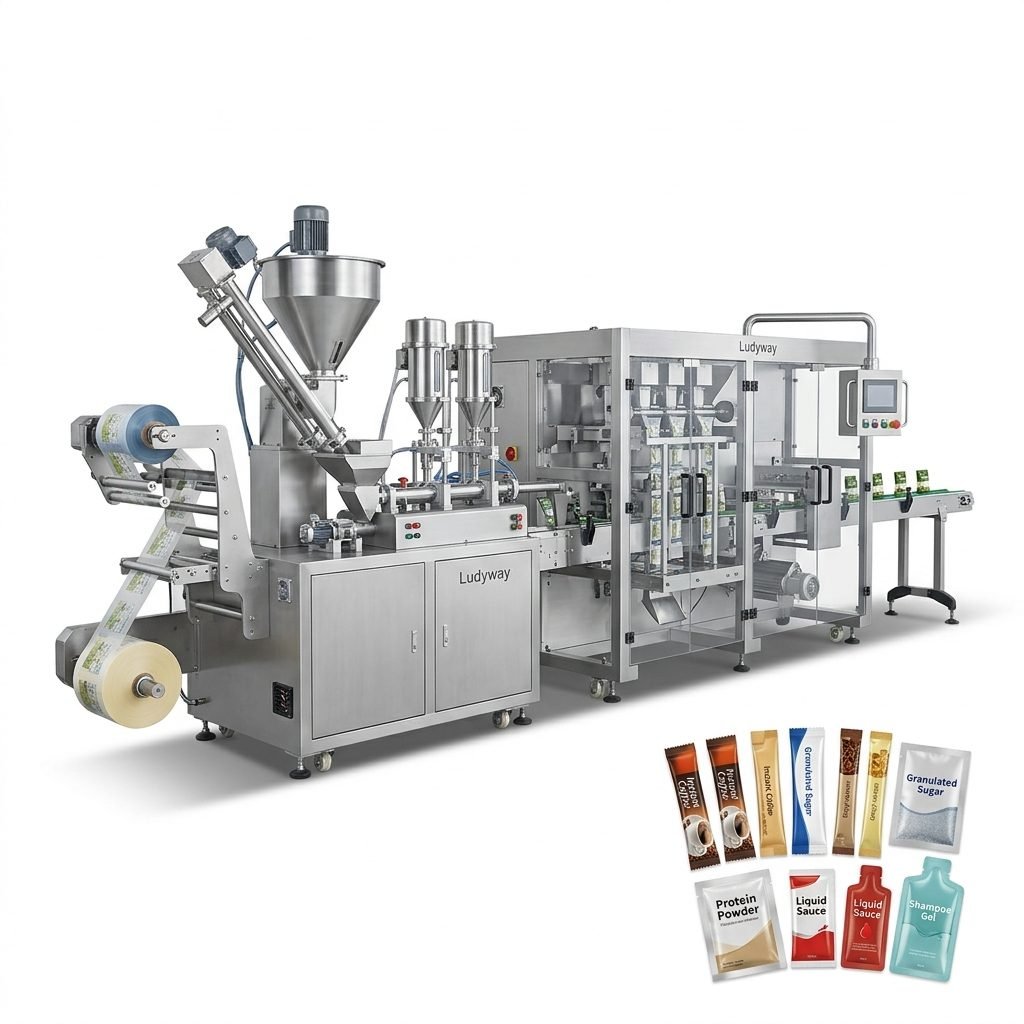
Customizable Flexible Packaging Lines for Granules & Powders
View Specifications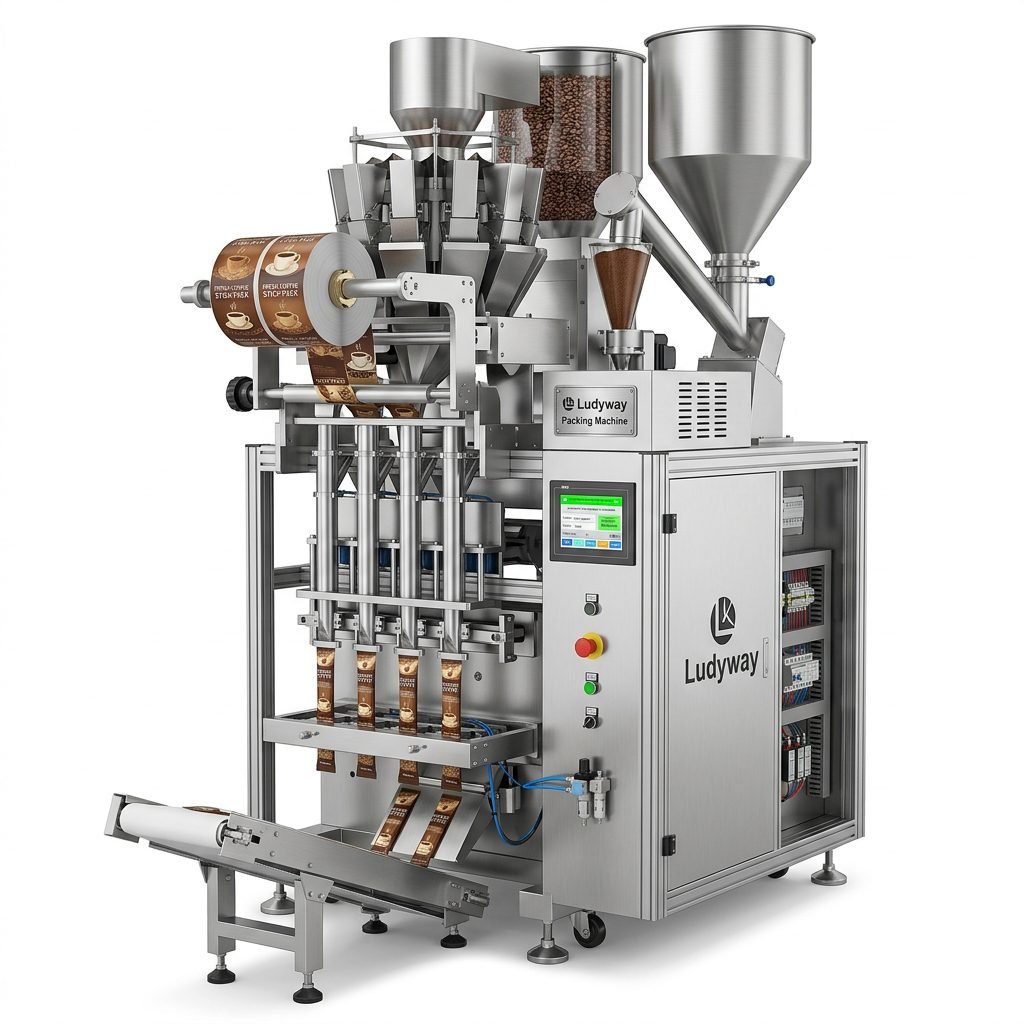
Automatic Multi-Lane Coffee Bean & Powder Packaging Machine
View Specifications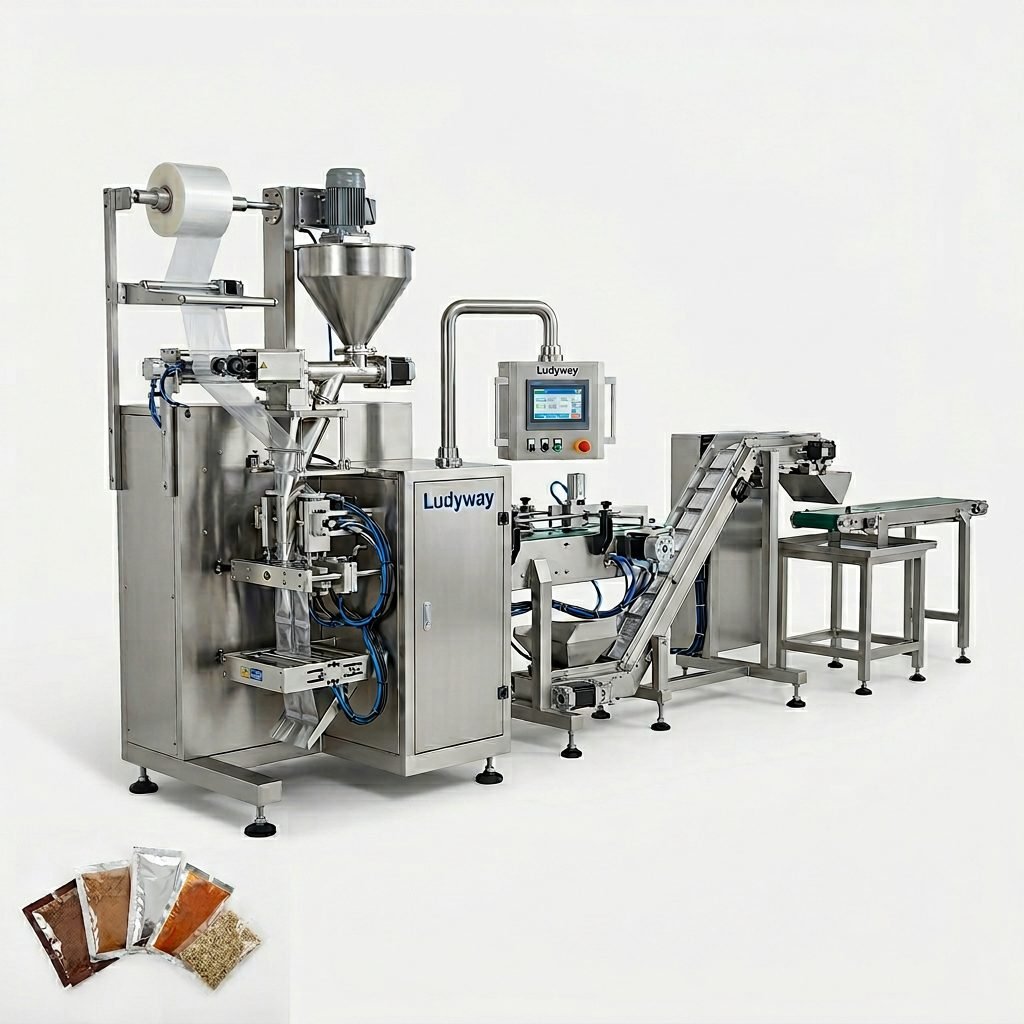
Compact Sachet Packaging Lines for Powder & Granule
View Specifications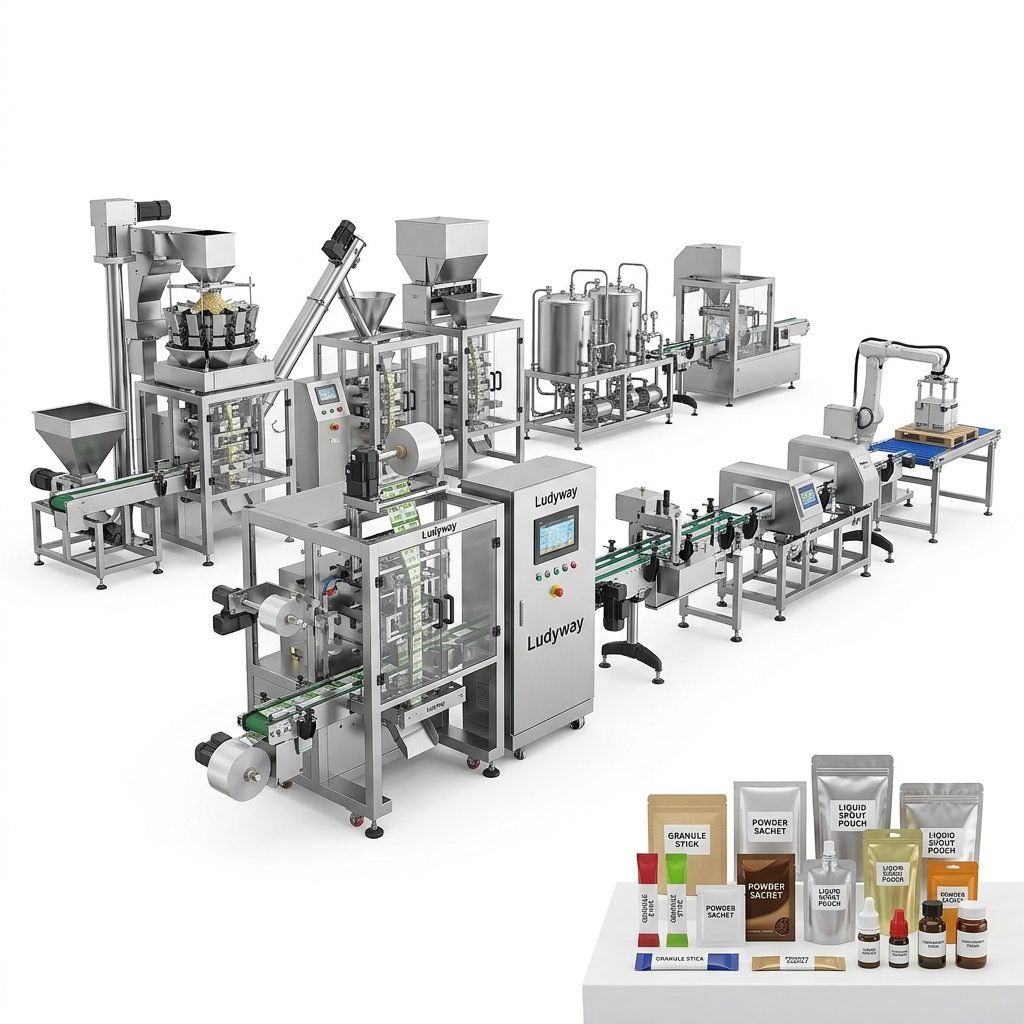
Automated Smart Factory Lines for Granules & Liquids
View Specifications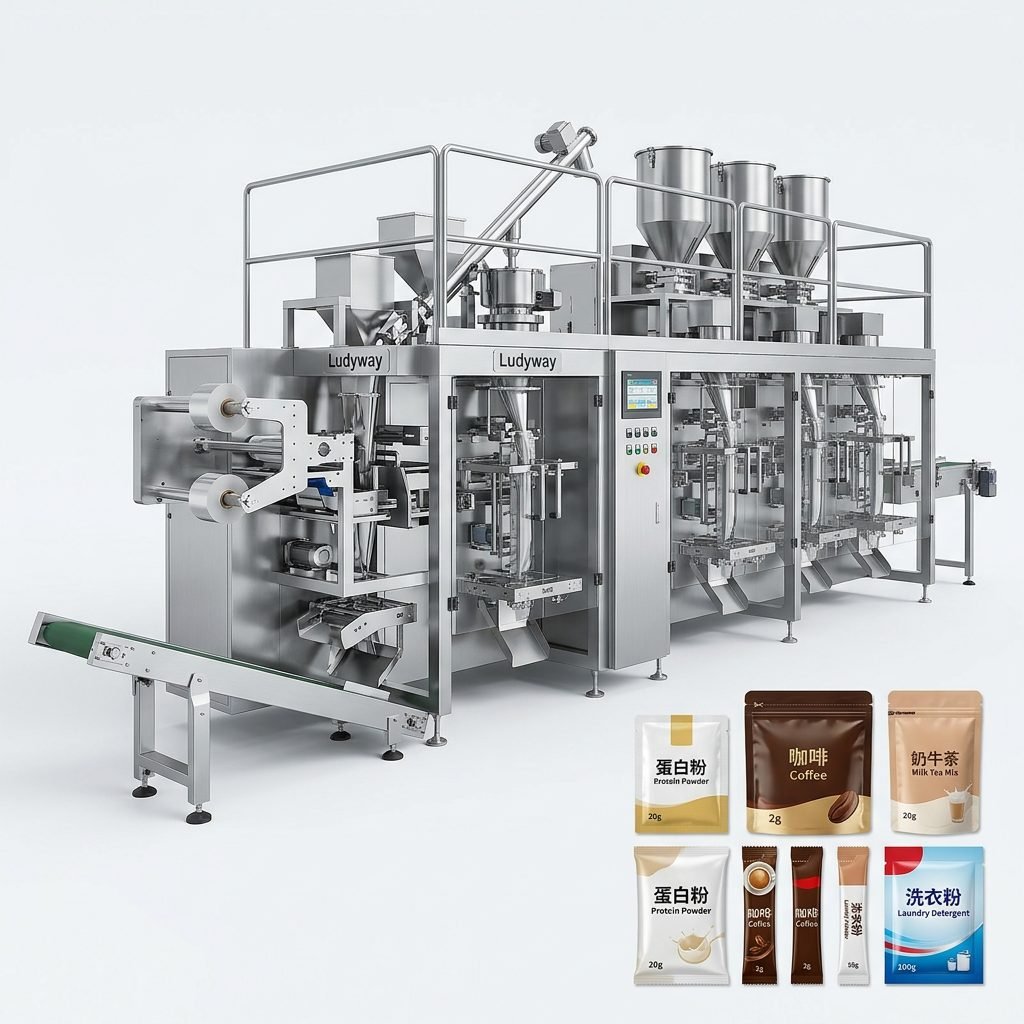
High-Volume Multi-Lane Powder Packaging Systems
View SpecificationsCustom Tooling & Turnkey Engineering by Ludyway
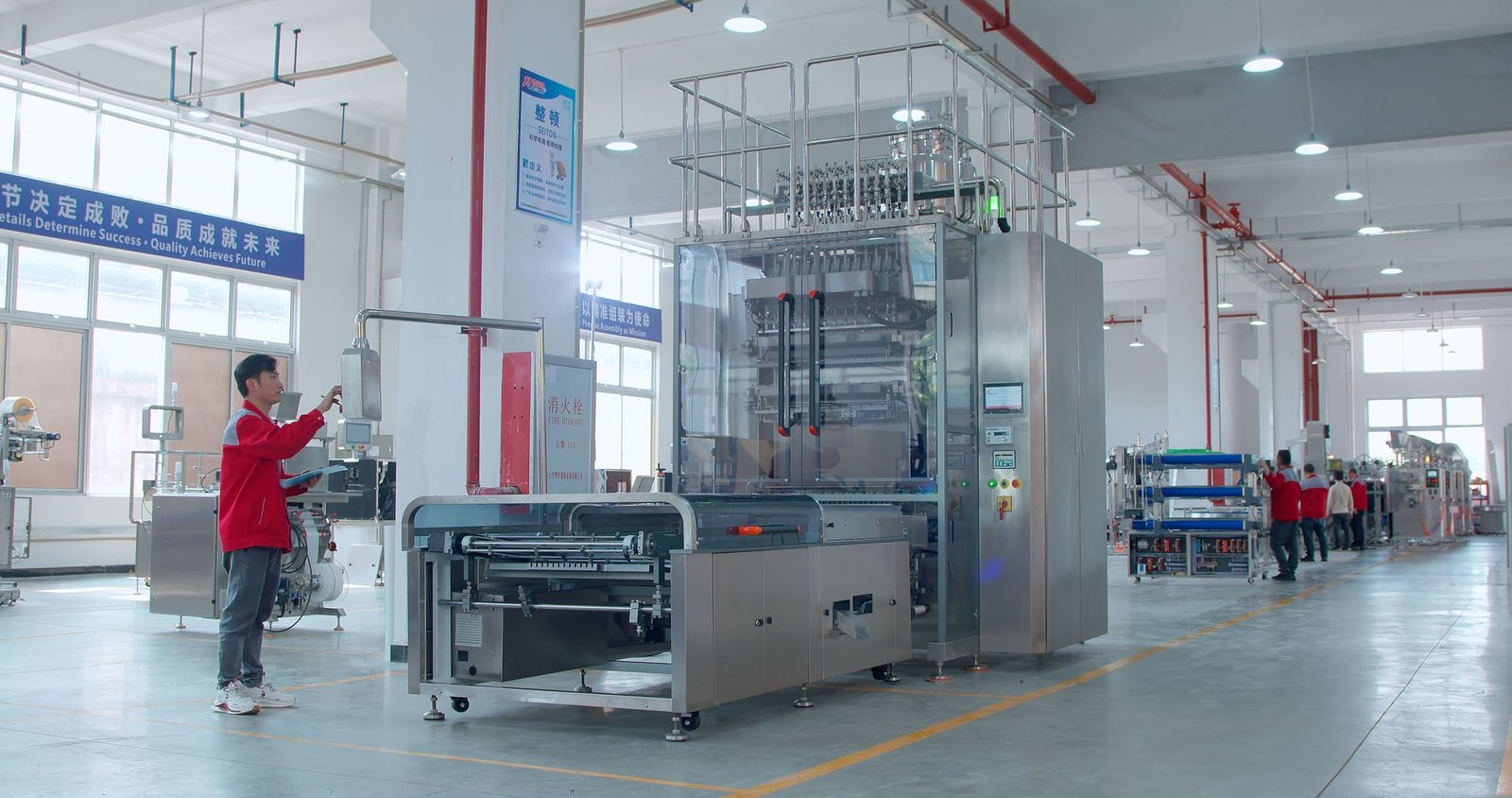
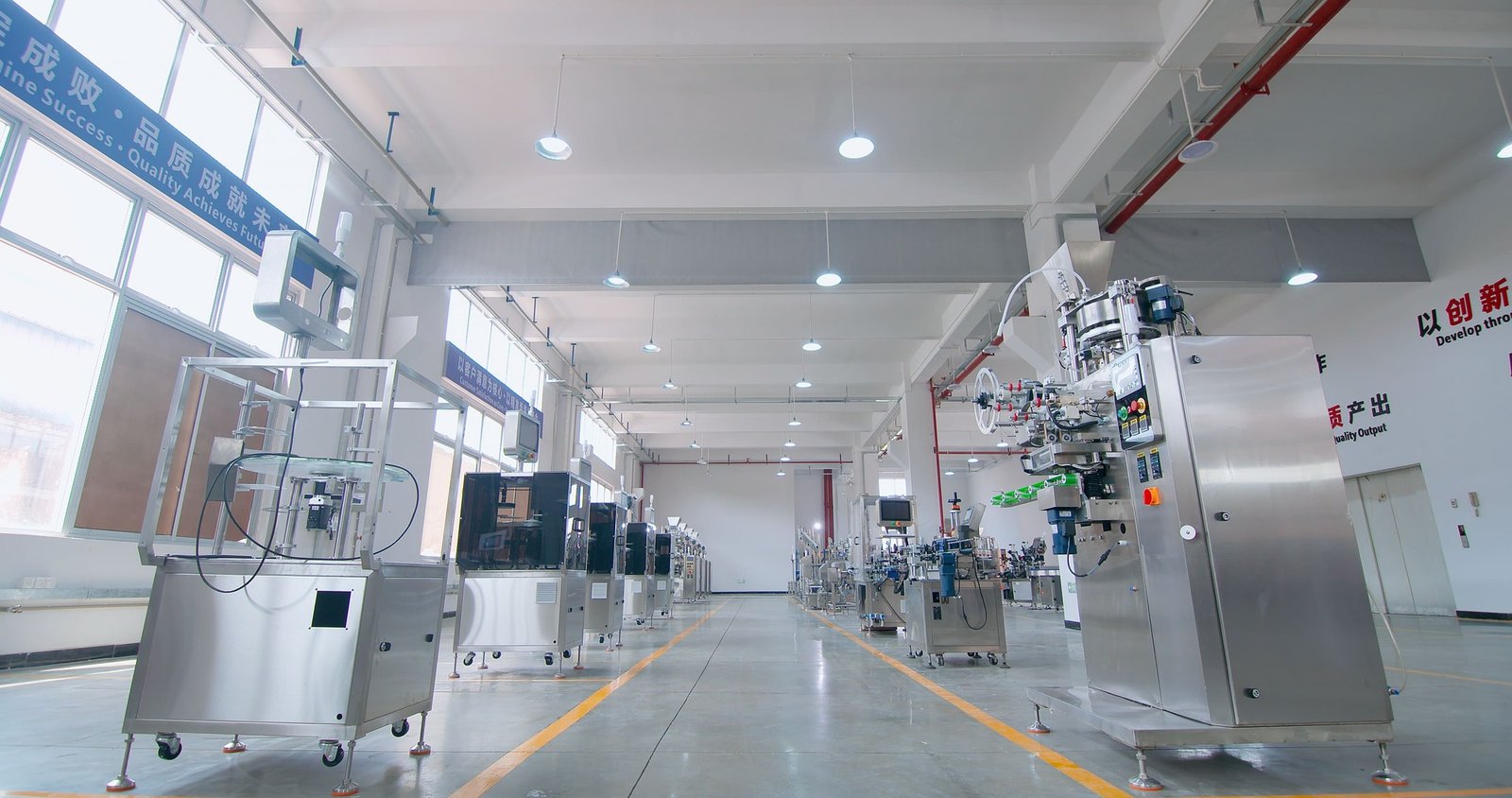
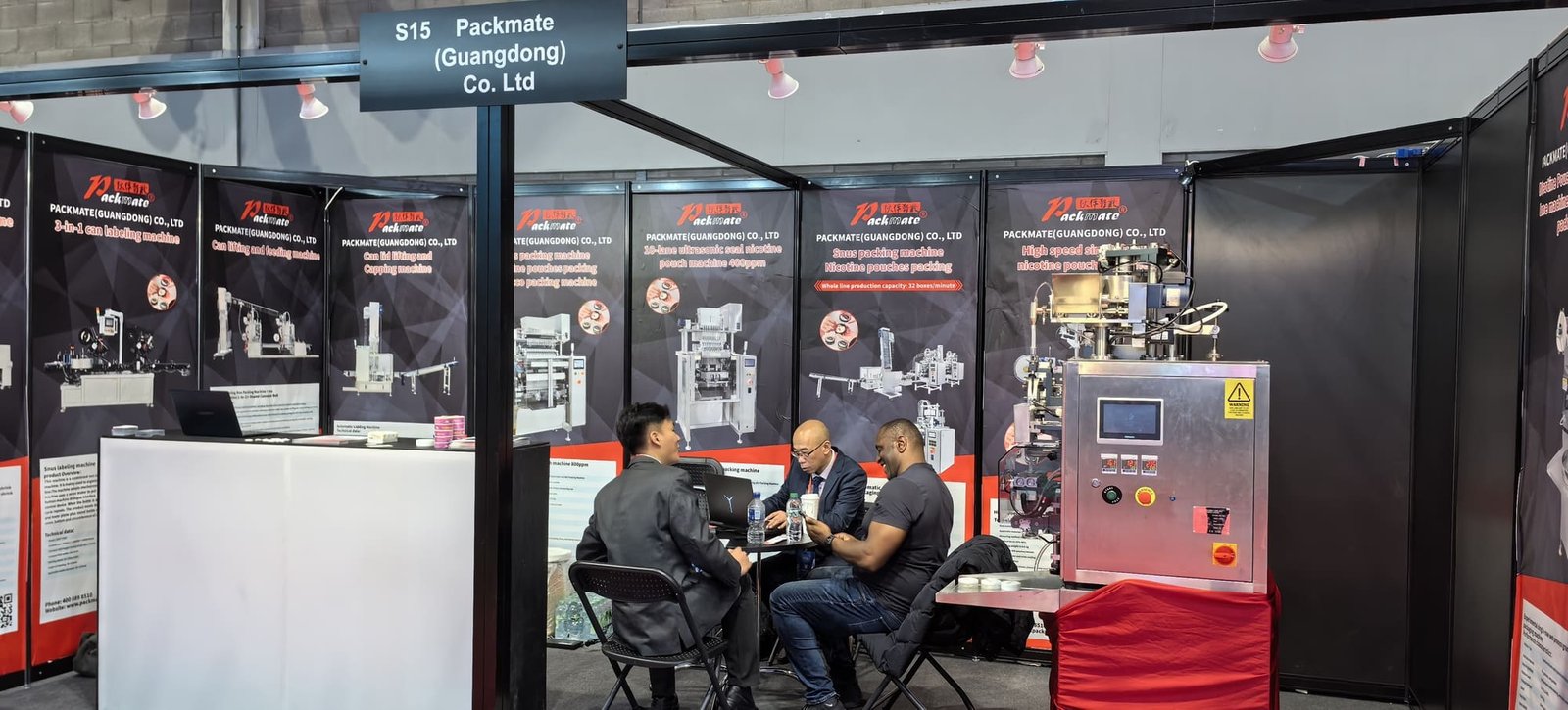
With over 30 years of industrial expertise and a 20,000㎡ modern manufacturing facility, Ludyway delivers custom-engineered multi-size packaging solutions to over 100 countries and regions worldwide.








Technical FAQs: Bag Size Adjustability & Multi-Format Tooling
Answers to the most critical technical questions regarding bag size changeovers, forming shoulder customization, and multi-lane flexibility.
Q1 Can a single VFFS packaging machine handle both small sample sachets and large 1kg retail bags?
Yes, provided the dimensions fall within the mechanical frame limits of the specific machine model. While length is freely adjusted via software servo stroke parameters, transitioning from a small sachet (e.g., 50mm width) to a 1kg bag (e.g., 200mm width) requires swapping to an appropriately sized forming collar set and loading wider film rolls. For extreme size ranges (e.g., 5g single-serve stick packs versus 5kg bulk bags), distinct machinery frames (Food Packaging Systems or Pharma Machinery) are recommended to maintain optimal sealing pressure and filling speed.
Q2 How long does a typical bag size changeover take on a modern packaging line?
On modern Rotary Premade Pouch Fillers, automated servo width adjustments take between 2 to 5 minutes with zero tool changes. On standard VFFS vertical form-fill-seal machines, a complete mechanical changeover (including forming collar swap, new film roll threading, and eye-mark calibration) typically requires 10 to 20 minutes. Multi-lane packaging machines require 30 to 60 minutes due to the multi-lane slitter and divider configurations.
Q3 Is it possible to change the bag length without stopping the production run?
On continuous-motion and intermittent servo-driven VFFS machines, minor bag length adjustments can be fine-tuned dynamically through the digital touchscreen HMI while running test cycles. However, major length shifts typically require pausing the packaging cycle momentarily to verify eye-mark alignment, seal dwell timing, and product discharge clearance.
Q4 What extra parts are needed when ordering a new bag size for an existing machine?
When introducing a new bag width on roll-stock form-fill-seal equipment, you need a custom forming set (forming collar, inner tube, and mounting bracket). If the bag style changes (e.g., from pillow pouch to gusseted stand-up bag or quad-seal), additional gusset-tucking fingers, hole-punch tools, or modified sealing jaw profiles may also be required.
Q5 Does changing the bag size affect the machine’s maximum packaging speed (PPM)?
Yes. Larger bag sizes require longer film pulling strokes, higher volume product dosing, and larger air evacuation volumes, which naturally moderates cycles per minute (PPM). For example, a machine producing 50g sachets at 120 bags/min may operate at 50–70 bags/min when configured for 500g pouches due to product drop physics and seal cooling requirements.
Q6 How does Ludyway Machinery ensure seamless multi-size compatibility for client projects?
Ludyway custom-engineers each packaging machine with modular, tool-less quick-change assemblies, pre-stored multi-recipe PLC programs, and precision laser-etched scale rulers. Our engineering team conducts factory testing with your specific packaging films and product bulk densities to deliver verified, plug-and-play size conversion kits. Learn more by browsing our Customer Project Cases and Custom Turnkey Solutions.
Optimize Your Production Line with Multi-Size Packaging Flexibility
Need a custom packaging machine capable of handling multiple pouch dimensions, granule powders, or liquid formulas? Speak directly with Ludyway senior packaging engineers for tailored machine specifications and changeover tooling quotes.
