
Common Packaging Machine Faults: Causes and Technical Solutions
An authoritative, engineering-grade diagnostic guide for factory managers and operators. Prevent unplanned packaging line downtime, resolve sealing defects, correct dosing fluctuations, and stabilize automated multi-lane pouch throughput.
Decoding Operational Failures in High-Speed Packaging Lines
Modern automated packaging machines—from multi-lane vertical form fill seal (VFFS) platforms to automated rotary pouch sealers—operate in complex, microsecond-synchronized production cycles. Pinpointing anomalies rapidly protects line yield and material investment.
Modern manufacturing environments across the food, pharmaceutical, chemical, and nutraceutical industries rely on rapid, error-free packaging automation. Equipment like stick pack machines, four-side sachet packers, rotary pouch machines, and flow wrappers operate at high cycle rates—often sealing between 100 to over 1,000 units per minute. In these high-performance systems, even minor mechanical wear, thermal drift, sensor misalignment, or powder agglomeration can cascade into severe line stoppages, product loss, and compromised seal integrity.
Understanding common packaging machine faults requires viewing the machine as a synchronized ecosystem comprising four core sub-assemblies: film unwinding & web tensioning, volumetric/auger/piston product dosing, heat/ultrasonic sealing mechanisms, and smart PLC/optical sensor networks. When a defect manifests—such as wrinkled pouches, leaking liquid sachets, uneven powder weights, or eye-mark tracking loss—effective troubleshooting demands a structured, root-cause methodology rather than arbitrary trial-and-error adjustments.
The True Cost of Unplanned Packaging Downtime
According to packaging engineering studies, unexpected packaging machine stoppages cost industrial enterprises between $3,000 to $18,000 per hour depending on line scale. Over 65% of recorded packaging faults originate from poor maintenance of sealing jaws, contaminated optical sensors, improper film tension settings, and neglected pneumatic air pressure variances.
Detailed Mechanical, Thermal & Dosing Diagnostics
Explore the six most pervasive fault categories encountered during automatic sachet, pouch, and stick pack manufacturing, along with precise engineering countermeasures.
1. Poor Sealing & Pouch Leaking
Micro-pinholes, cold leaks, or burned laminated film layers during longitudinal or cross-sealing cycles.
- Causes: PID thermocouple drift, heating cartridge failure, uneven jaw mechanical pressure, or product trapped in seal line.
- Remedy: Re-calibrate PID temperature loops; clean silicone/Teflon bar coatings; realign mechanical mechanical stops.
2. Film Deviation & Eye-Mark Error
Laminates wander off-center along the forming collar, resulting in skewed pouches and cutting across logos.
- Causes: Static charge accumulation, unbalanced unwinding tension, soiled photocell sensor, or inconsistent film reel winding.
- Remedy: Install ion static bars; calibrate optical contrast sensitivity; adjust EPC (Edge Position Control) web guide.
3. Filling Weight Inaccuracy
Unacceptable standard deviation in target weight for granules, active pharma powders, or cosmetic creams.
- Causes: Hopper bridging, inconsistent bulk density, servo auger slip, or liquid check-valve leakage.
- Remedy: Mount ultrasonic bin level monitors; install mechanical agitators or vibratory hoppers; rebuild liquid anti-drip nozzles.
4. Continuous Cutting & Jamming
Rotary or guillotine knives tearing pouch edges, leaving jagged tears, or failing to sever multi-lane stick packs.
- Causes: Blade dulling, knife-block thermal expansion, improper anvil clearance, or timing offset with sealing jaws.
- Remedy: Regrind or replace hardened tool steel blades; shim anvil clearance to 0.02mm; calibrate PLC encoder cut triggers.
5. Inconsistent Actuation & Dropping
Sluggish movement of suction cups, bag opening arms, or transfer grippers causing dropped bags and system interlocks.
- Causes: Air pressure drops under 0.6 MPa, compressed air moisture/oil fouling, or blocked vacuum ejector filters.
- Remedy: Install centralized air desiccant dryers; flush pneumatic solenoid valves; clean vacuum suction filters.
6. Pouch Wrinkling & Creasing
Unwanted diagonal folds and creasing across the face of the stick pack or stand-up pouch.
- Causes: Former collar alignment distortion, worn rubber pull belts, or mismatched pulling belt speed vs. sealing rhythm.
- Remedy: Check former collar angles; calibrate synchronous servo drive pull tension; replace worn vacuum drive belts.
Quick-Diagnostic Machine Troubleshooting Matrix
Use this standardized engineering matrix to accelerate fault resolution on your plant floor.
| Fault Symptom | Probable Root Cause | Standard Operating Correction | Preventive Interval |
|---|---|---|---|
| Longitudinal Seal Weakness | Insufficent sealing pressure or heater rod degradation in vertical seal block. | Verify heater resistance with multimeter; adjust spring tension screw to spec. | Weekly Inspect heaters |
| Pouch Length Fluctuations | Photocell optical threshold shift or slip between rubber pull rollers and film. | Recalibrate background contrast switch; wipe roller oils with alcohol; inspect belts. | Daily Sensor cleaning |
| Powder Clumping in Funnel | High ambient humidity (>65% RH) or hygroscopic material bridging at auger outlet. | Activate pneumatic hopper knocker; apply dry nitrogen flushing; balance room HVAC. | Per Shift Hopper check |
| Liquid Dripping on Cross-Seal | Dosing pump suction check-valve stuck or nozzle shut-off seal worn out. | Disassemble pump check ball; replace PTFE O-rings; increase suction suck-back stroke. | Monthly Valve rebuild |
| Bag Not Opening (Rotary) | Worn vacuum cups, low vacuum generator pressure, or static stick between film plies. | Replace silicone vacuum suckers; boost vacuum switch threshold; install air blower. | Bi-Weekly Cup check |
| Uneven Multi-Lane Cutters | Uneven thermal expansion of knife holder across multi-lane modules (8–12 lanes). | Align individual circular slitter blades when machine reaches thermal equilibrium. | Monthly Alignment |
Transitioning from Reactive Repair to Predictive Maintenance
How intelligent sensor telemetry, automated calibration, and routine engineering protocols eradicate recurring packaging line faults.
Industrial Best Practices for Zero-Defect Operations
Adopting a systematic Total Productive Maintenance (TPM) regimen empowers packaging operators to eliminate 80% of preventable faults before they trigger emergency stops.
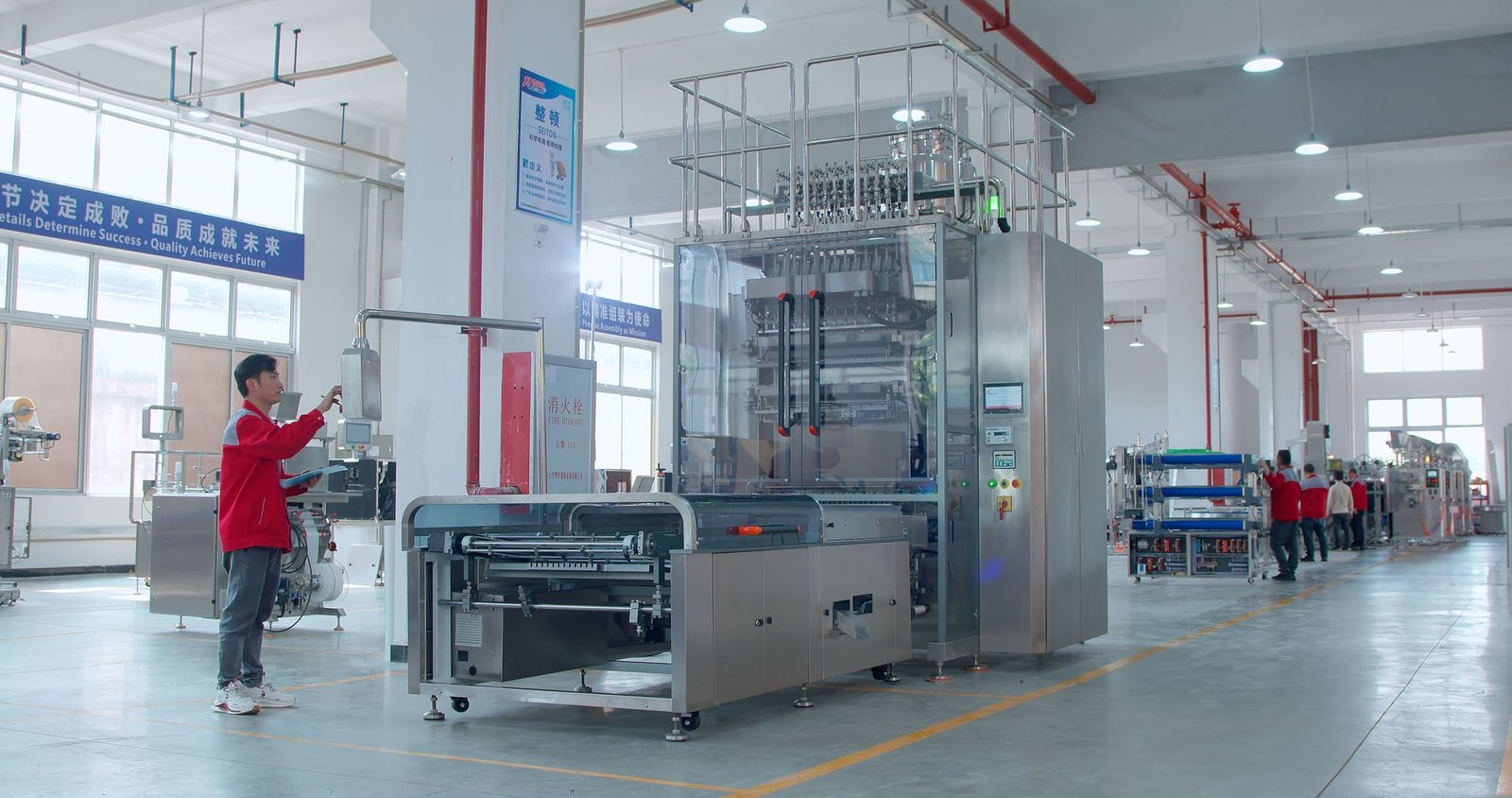
Advanced Packaging Systems Designed for Low Downtime
Precision-crafted multi-lane stick pack, sachet, and turnkey packaging lines featuring intelligent fault diagnostics, anti-jam web tracking, and heavy-duty components.
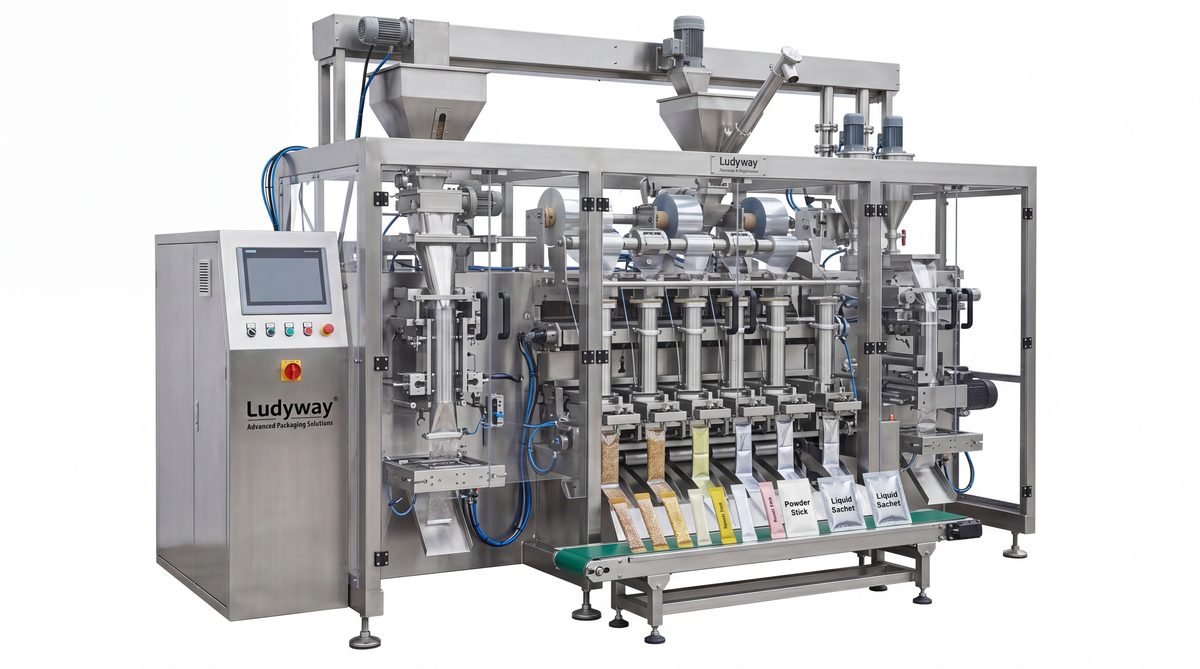
Multi-Lane Stick Pack & Sachet Packaging Machine for Granule, Powder, Liquid
View Specifications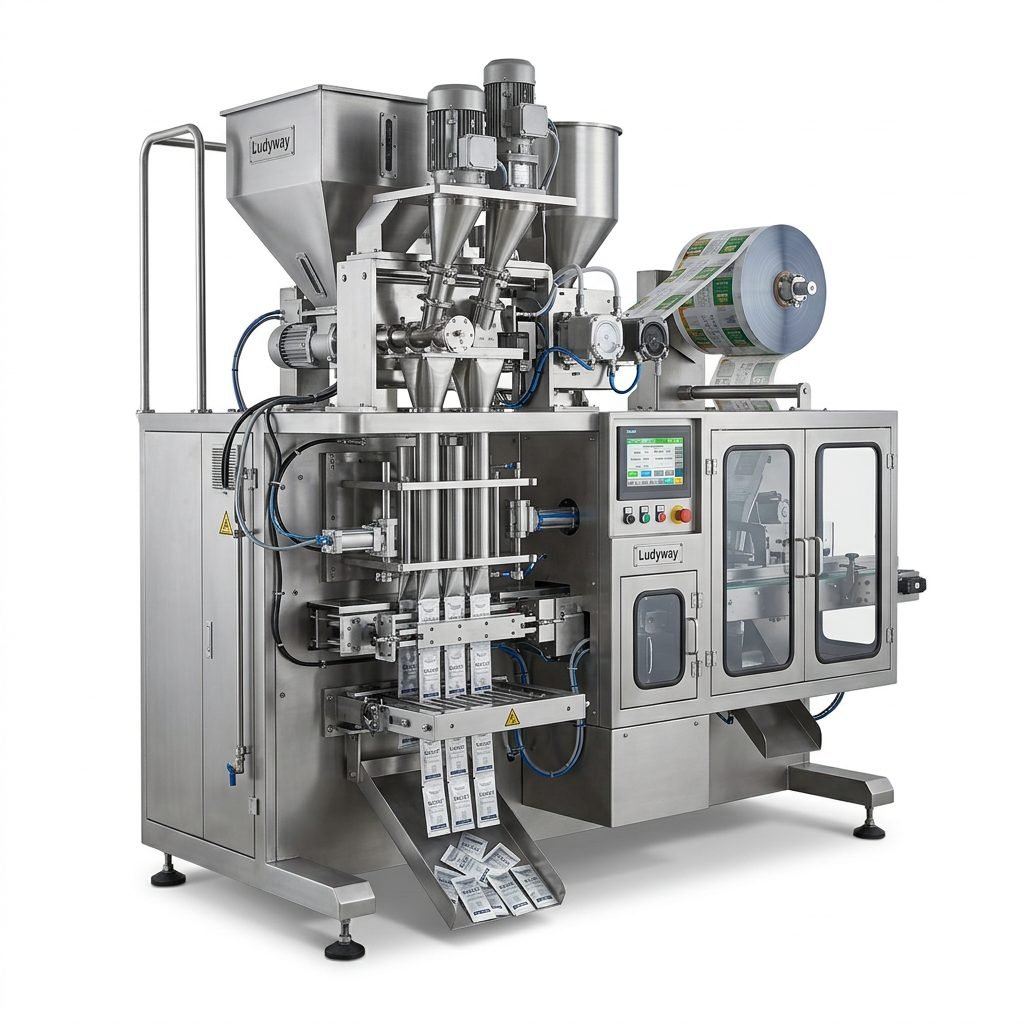
Multi-Lane Sachet Packaging Machine for Powder Granule Liquid Filling
View Specifications
High-Speed Multi-Lane Powder Packaging System for Food and Pharma
View Specifications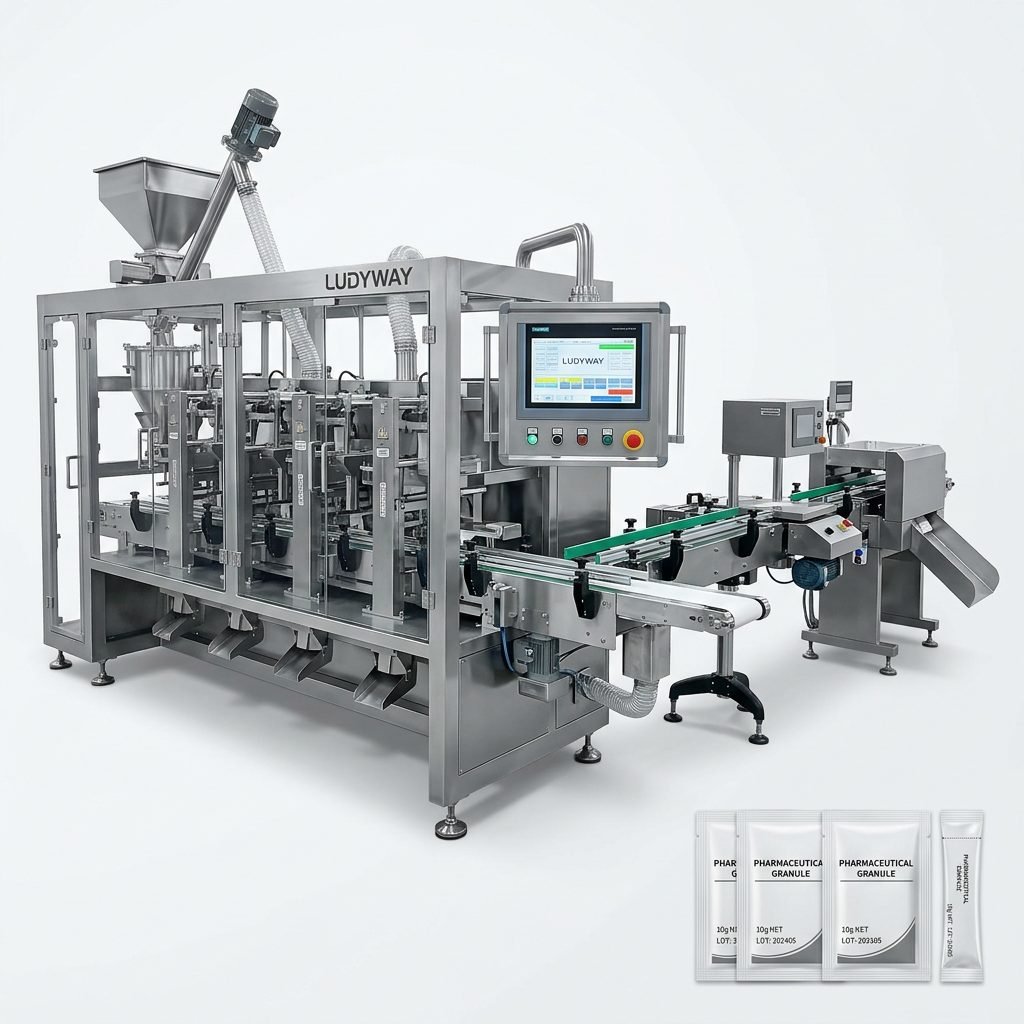
Automated Powder Packaging Lines for Pharmaceutical Granule Sachet Systems
View Specifications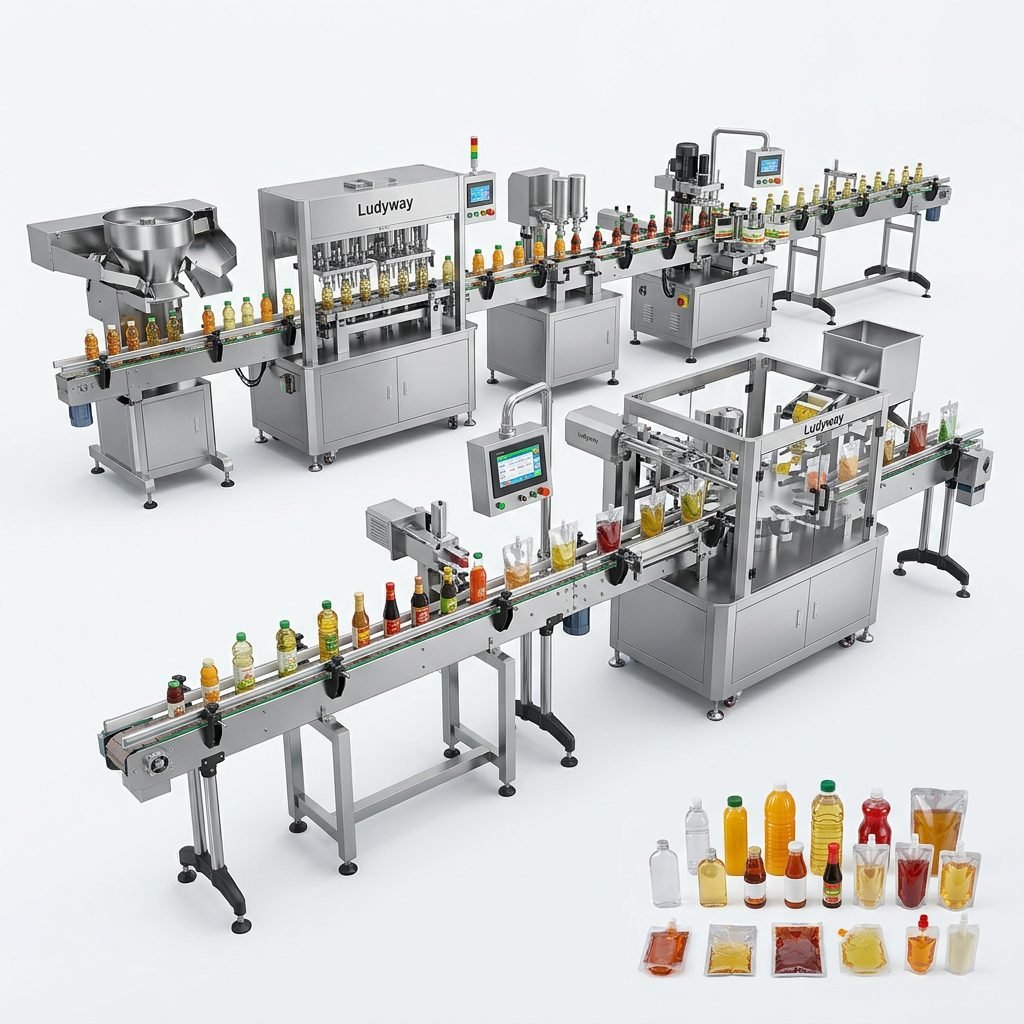
High-Speed Fully Automatic Liquid Packaging Lines for Bottles and Pouches
View Specifications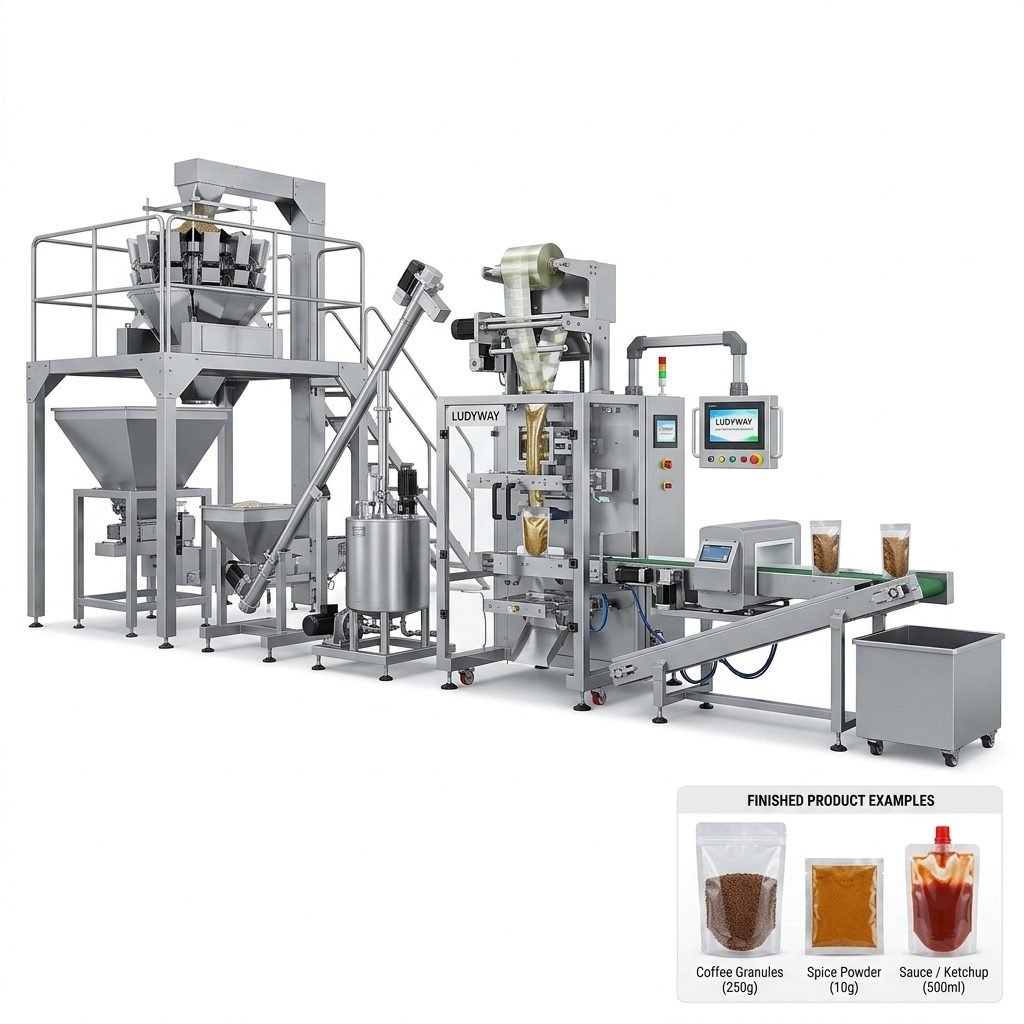
High-Speed Automated Packaging Systems for Granules, Powder, and Liquid Food Products
View Specifications
Automated Smart Factory Packaging Lines for Granules, Powder, Liquids & Pouches
View Specifications
High-Precision Dynamic Checkweigher for Food & Pharmaceutical Packaging Lines
View SpecificationsEngineered by Ludyway: Global Packaging Machine Authority
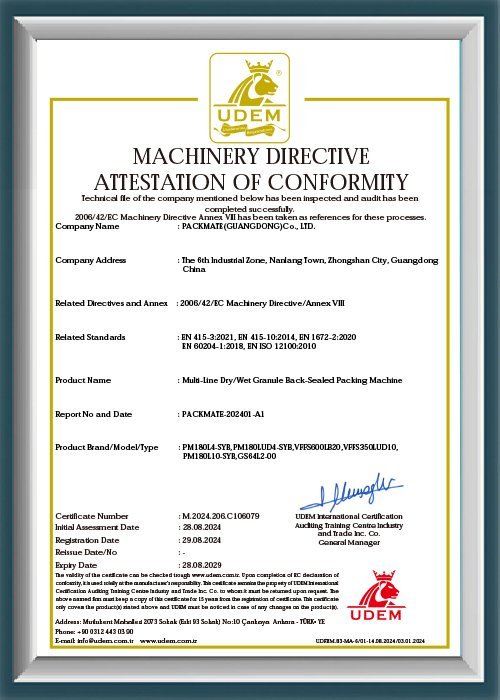
Over 30 years of manufacturing excellence, 20,000㎡ modern production facility, 130+ packaging engineers, and certified CE/ISO quality systems delivering turnkey dependability.











Frequently Asked Questions on Packaging Machine Faults
Clear engineering answers to everyday operational questions from packaging technicians and factory line managers.
Q1: Why does my packaging machine frequently report an optical tracking / eye-mark alarm?
Optical tracking alarms usually stem from three causes: ambient light interference, dusting on the optical lens (common in powder packaging lines), or low color contrast between the eye-mark and background foil. Clean the photocell receiver with lens paper, verify sensitivity thresholds on the sensor dial, and confirm mechanical web tension across the dancer rollers is stable.
Q2: What causes stick packs or sachets to burst during downstream cartoning and shipping?
Bursting is typically caused by micro-channel leaks resulting from product dusting on the sealing seam, inadequate jaw dwell time, or fluctuating sealing temperatures. When powder or liquid contaminates the laminate film during the drop phase, the polymer layers cannot fuse. Installing nitrogen purging, dust extractors, or switching to anti-static seal bars eliminates contamination in the sealing zone.
Q3: How often should packaging machine cutting knives and sealing Teflon strips be replaced?
Under continuous two-shift production (16 hours/day), industrial high-speed cutting blades should be inspected weekly and resharpened or replaced every 3 to 6 months depending on film thickness and abrasive foil characteristics. Teflon tape and silicone cushions on sealing bars should be replaced monthly or immediately upon showing signs of carbonization or grooving.
Q4: Why are powder filling volumes inconsistent across lanes on a multi-lane stick pack machine?
Multi-lane powder dosing discrepancies are primarily caused by uneven bulk density in the main hopper, worn individual auger screws, or variations in servo motor backlash. Ensure continuous product replenishment using vacuum feeders to maintain constant head pressure, and conduct individual lane tare-weight calibration every shift.
Upgrade to High-Reliability Packaging Automation
Eliminate chronic downtime and sealing defects. Consult with Ludyway’s senior packaging engineers for tailored machine upgrades, automated multi-lane configurations, and turnkey plant integration.
