
How Much Human Intervention Is Really Necessary?
In contemporary manufacturing plants, the level of manual operation required for a packaging machine depends directly on the machine’s engineering architecture, automation tier, and peripheral integration. From small tabletop sealers requiring constant human attendance to fully automated industrial multi-lane stick pack and sachet machinery that runs unattended for hours, labor demands vary drastically. Understanding these operational boundaries enables production managers to balance capital expenditure with long-term labor savings.
Manual Packaging Setup
Operators perform every operational sequence manually: product weighing, funnel dosing, bag opening, heat sealing, and case packing. High ergonomic strain, variable package weights, and low throughput rates.
Semi-Automatic Machines
The machine automates specific actions—such as volumetric auger dosing or pneumatic pouch heat sealing—while human personnel manually place containers, feed open pouches, and trigger foot switches.
Fully Automated & Multi-Lane
PLC-controlled roll unwinding, continuous web tracking, servo-driven multi-lane filling, heat sealing, optical inspection, and discharge cartoning occur automatically. Operators only restock consumables and monitor the HMI.
Where Is Manual Labor Still Required on Packaging Lines?
Even on modern automated lines, human intelligence and manual dexterity remain necessary for specific high-value interventions like recipe verification, hygiene validation, and consumable replenishment. Below is an exhaustive breakdown of human touchpoints across standard packaging shift cycles:
| Production Stage | Primary Manual Tasks Required | Frequency / Duration | Automation Level | Human Labor Level |
|---|---|---|---|---|
| 1. Material Infeed & Reel Loading | Hoisting film reels onto pneumatic air shafts, web threading through dancer rollers, and hopper bulk feeding. | Once every 2–4 hours (10–15 mins) | Automated Splicing / Vacuum Feeders | Medium |
| 2. Recipe & HMI Initialization | Selecting product SKU from PLC touchscreen, verifying target fill weight, sealing temperatures, and cut lengths. | At shift start or SKU change (3–5 mins) | Digital Servo Presets | Minimal |
| 3. Real-Time Dosing & Filling | Monitoring hopper product levels and observing multi-lane discharge chute synchronization. | Continuous passive monitoring | Closed-Loop Servo Control | Autonomous |
| 4. Quality Assurance & Sampling | Retrieving test sachets for burst pressure testing, seal integrity dye tests, and weight tolerance checks. | Once per hour (5 mins) | Inline Vision & Dynamic Checkweighers | Periodic |
| 5. Line Changeover & Tooling | Swapping forming collars, adjusting multi-lane slitters, changing auger tooling, and calibrating photo-sensors. | During batch transitions (15–45 mins) | Tool-less Quick Release Hardware | High Skill |
| 6. Sanitation & Daily Washdown | Disassembling contact parts, CIP (Clean-in-Place) cycle activation, wiping sealing jaws, and sanitizing hoppers. | End of shift / weekly deep clean (30–60 mins) | Sanitary Stainless Steel Construction | Labor Focused |
How Engineering Breakthroughs Reduce Manual Workloads
The packaging machinery sector has evolved from mechanical linkages requiring constant operator calibration to multi-axis synchronized servo systems. Key hardware and software enhancements developed by leading manufacturers have turned manual interventions into automated self-correcting sequences.
1. Automated Film Tracking & Optical Splicing
In older packaging systems, reel misalignment required an operator to manually adjust handwheels to keep pouch graphics centered. Modern multi-lane stick pack equipment utilizes dual optical edge sensors paired with high-frequency servo unwind motors. When a film roll nears its end, semi-automatic or fully automatic splicing stations join the new web seamlessly without halting the line.
2. Digital Recipe Storage & Multi-Axis Servo Control
Instead of manual mechanical adjustments for stroke length, seal dwell time, and cut timing, modern pharmaceutical stick pack packaging systems store over 100 programmable product recipes. Switching from a 5g powder dose to a 10g sachet takes only a few taps on an industrial HMI screen, automatically adjusting servo motors with zero hand tool involvement.
3. Automated Rejection & Inline Feedback Loops
Instead of having operators visually inspect every pouch, automated packaging lines integrate dynamic checkweighers and machine vision systems. Overfilled, underfilled, or improperly sealed sachets are automatically blown off the line into a rejection bin, while weight data is fed back to the auger doser to trim fill volume automatically in real time.
Transitioning from manual bagging to an automated 6-to-10 lane stick pack packaging system eliminates up to 8 full-time packaging operators per shift while increasing overall output consistency to over 99.5% accuracy.
4. Automated Bulk Feeding & Infeed Systems
Manual bucket-brigade feeding creates severe ergonomic strain and introduces foreign contamination risks. Implementing automated Z-type bucket elevators or closed-loop vacuum feeders ensures that granules, powders, and liquids are continuously conveyed from bulk storage containers into the packaging hopper based on low-level level-sensor triggers.
5. End-of-Line Secondary Automation
Packing individual sticks or sachets into cartons, master cases, and pallets was historically the most labor-intensive step. Integrating multi-lane stick pack lines with automated cartoning machines, robotic pick-and-place arms, and automatic case sealers completes a hands-free process from raw powder to palletized freight.
How Many Operators Are Needed per Production Shift?
Calculating labor requirements accurately ensures optimal shift scheduling and realistic return-on-investment (ROI) forecasting. For standard industrial facilities operating modern form-fill-seal equipment, headcount allocation is structured as follows:
Standard Staffing Model: Automated Multi-Lane Stick Pack Line (400–600 BPM)
For a multi-lane sachet packaging setup producing 30,000 to 50,000 units per hour, human staffing shifts from direct manual packaging to high-level process supervision and material supply logistics:
Featured Packaging Machines Minimizing Manual Operation
Engineered with multi-axis servo synchronization, automated self-diagnostics, and high-precision dosing systems, these packaging systems maximize throughput while keeping human intervention to an absolute minimum.
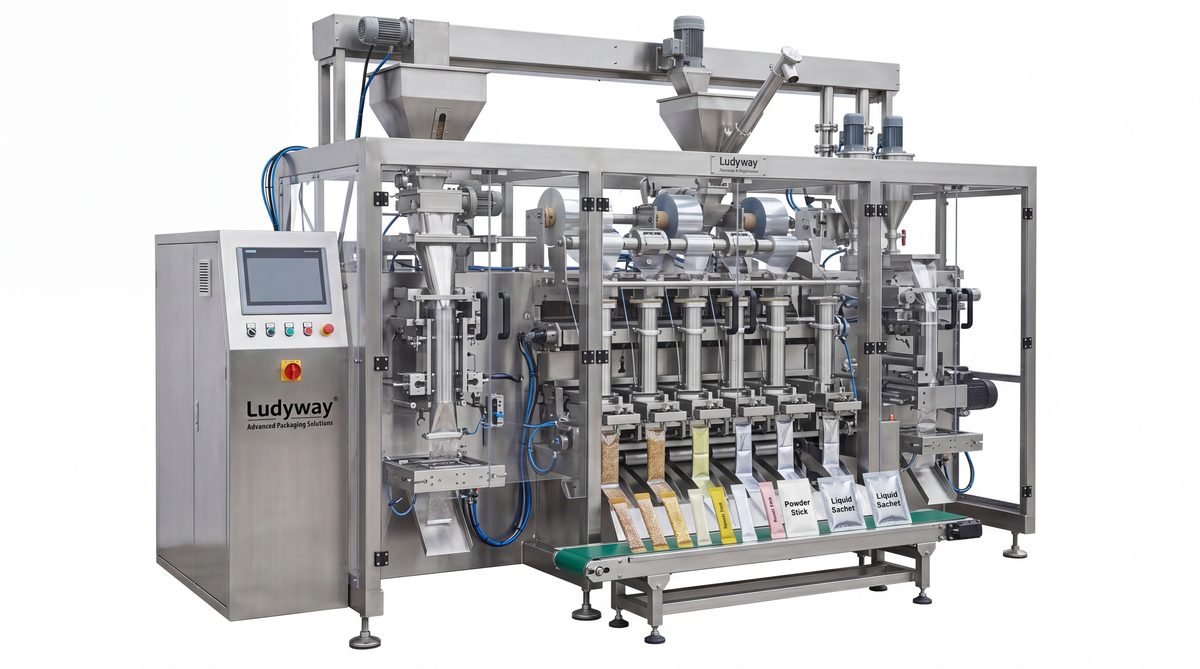
Multi-Lane Stick Pack & Sachet Packaging Machine
View Specifications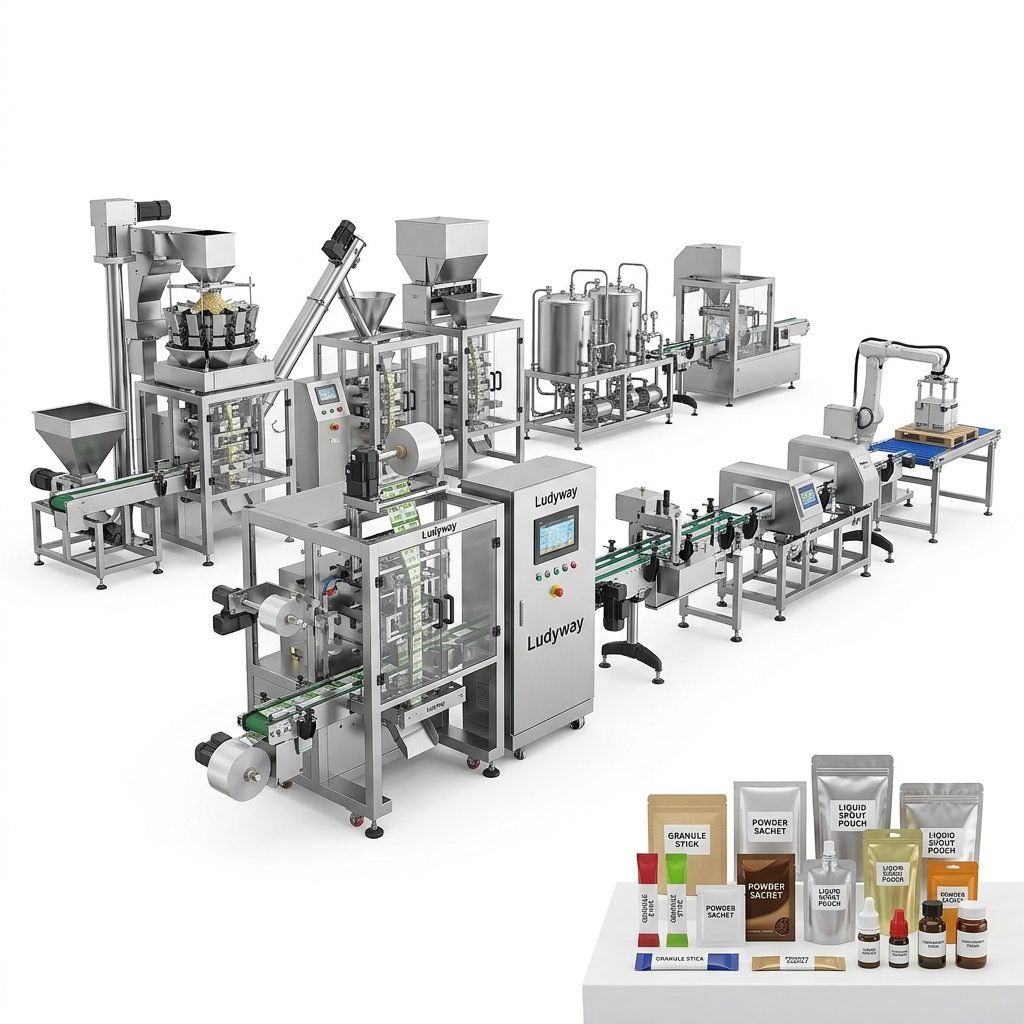
Automated Smart Factory Packaging Lines
View Specifications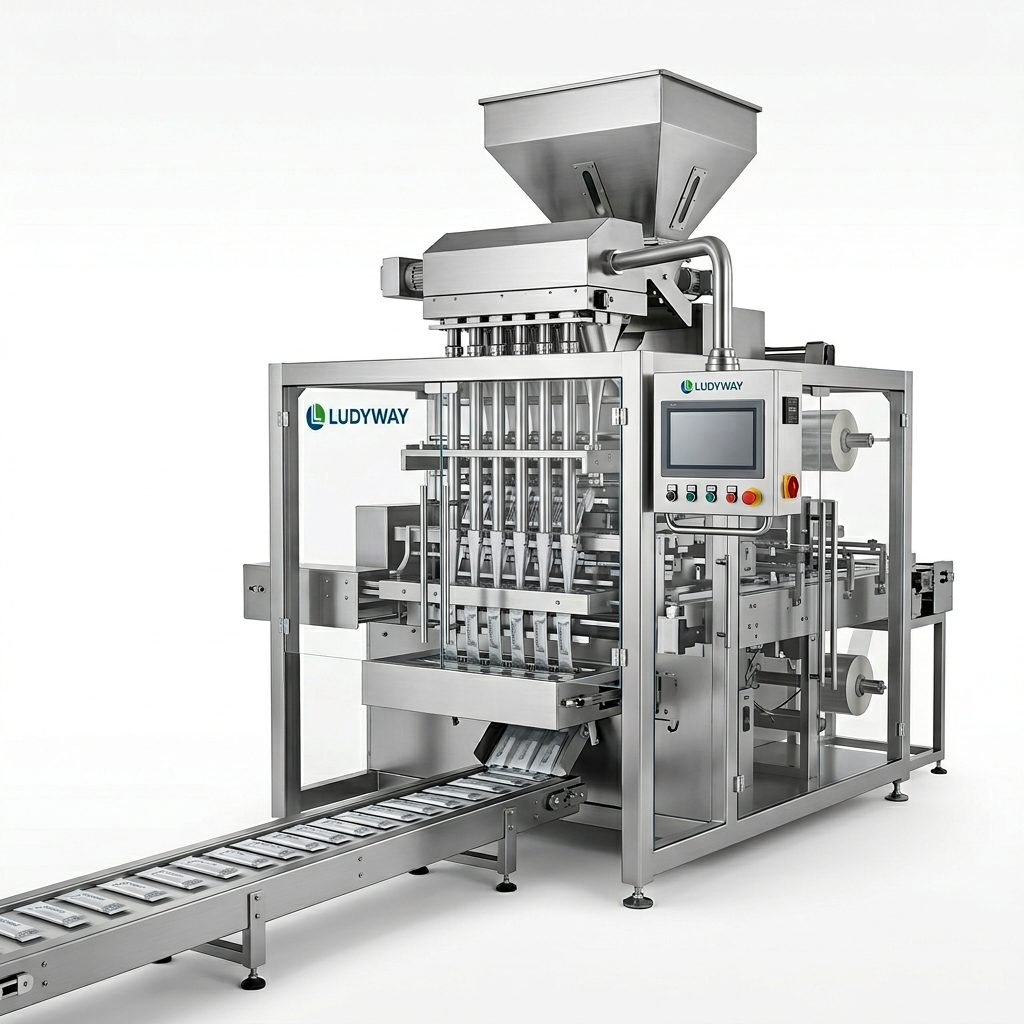
High-Speed Multi-Lane Powder Packaging System
View Specifications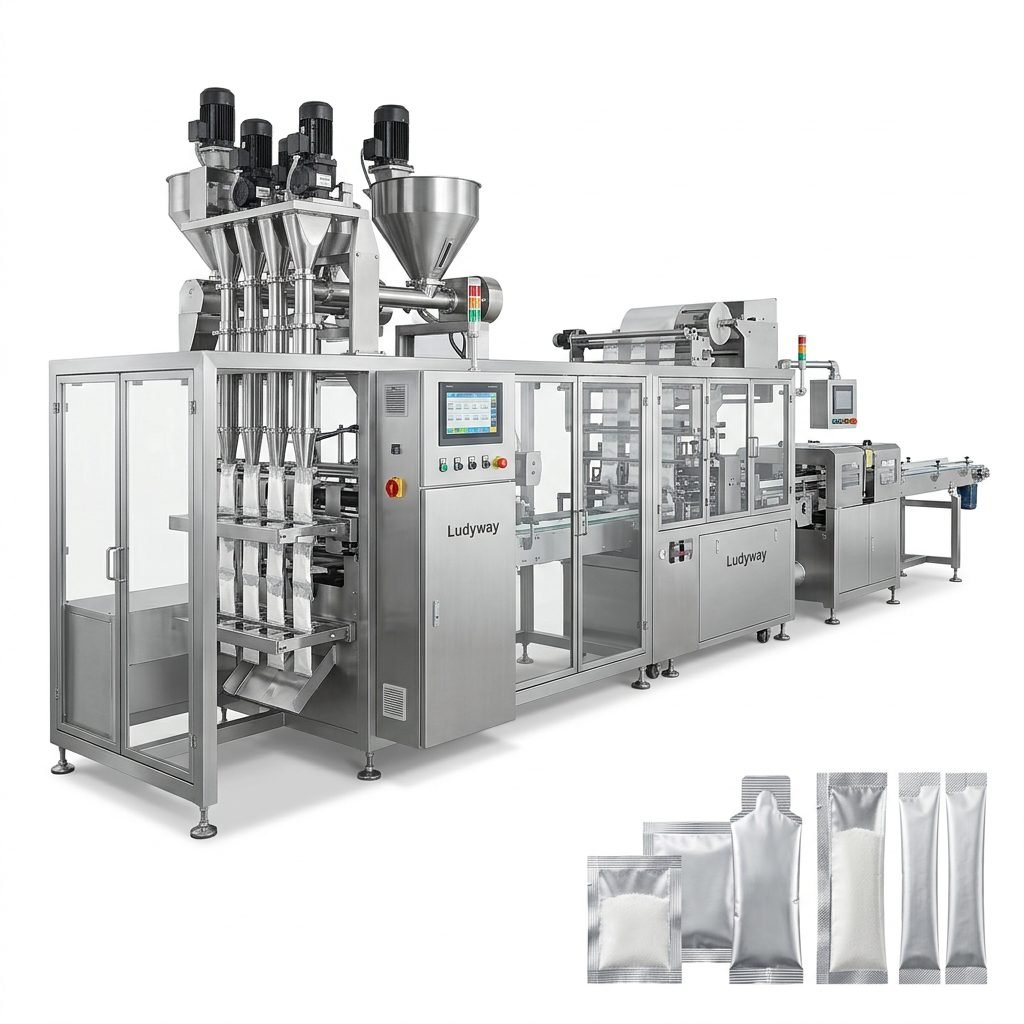
Fully Automatic Powder Packaging Lines
View Specifications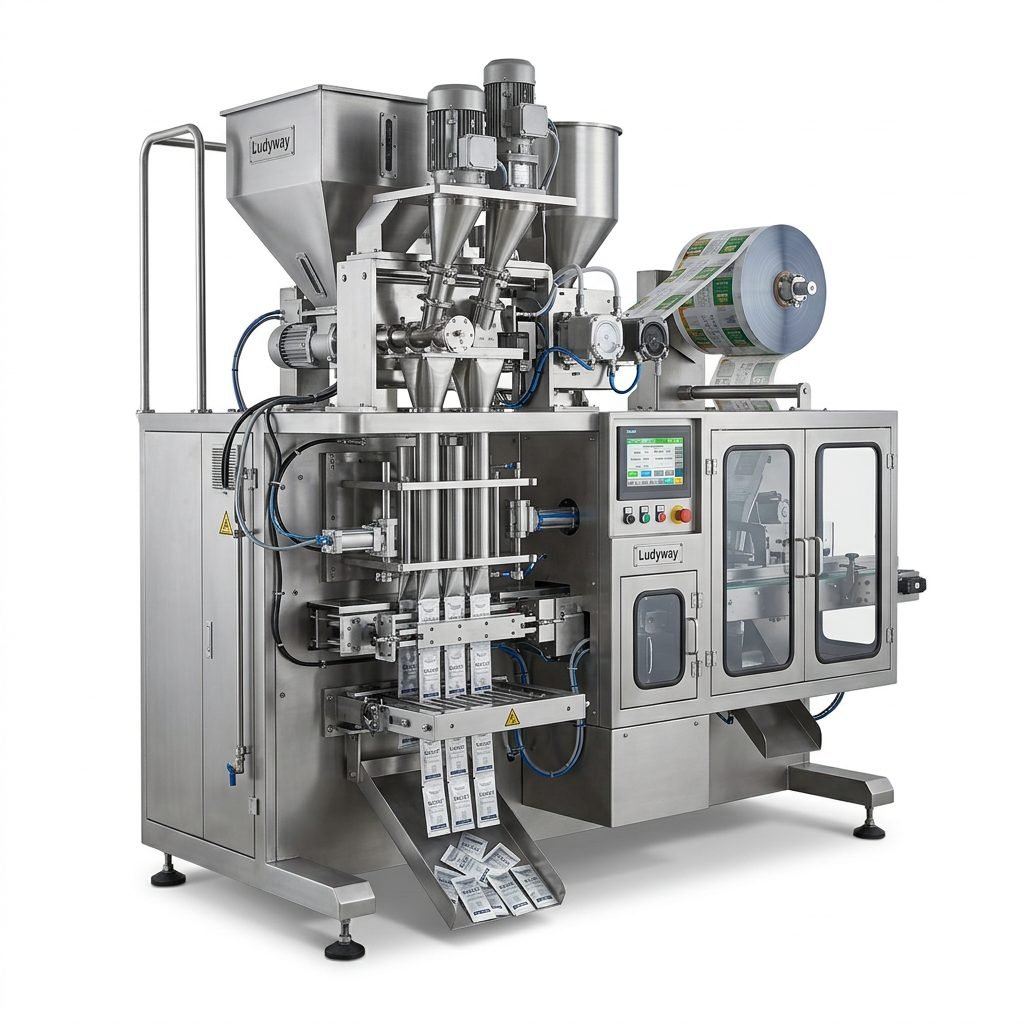
Multi-Lane Sachet Packaging Machine
View Specifications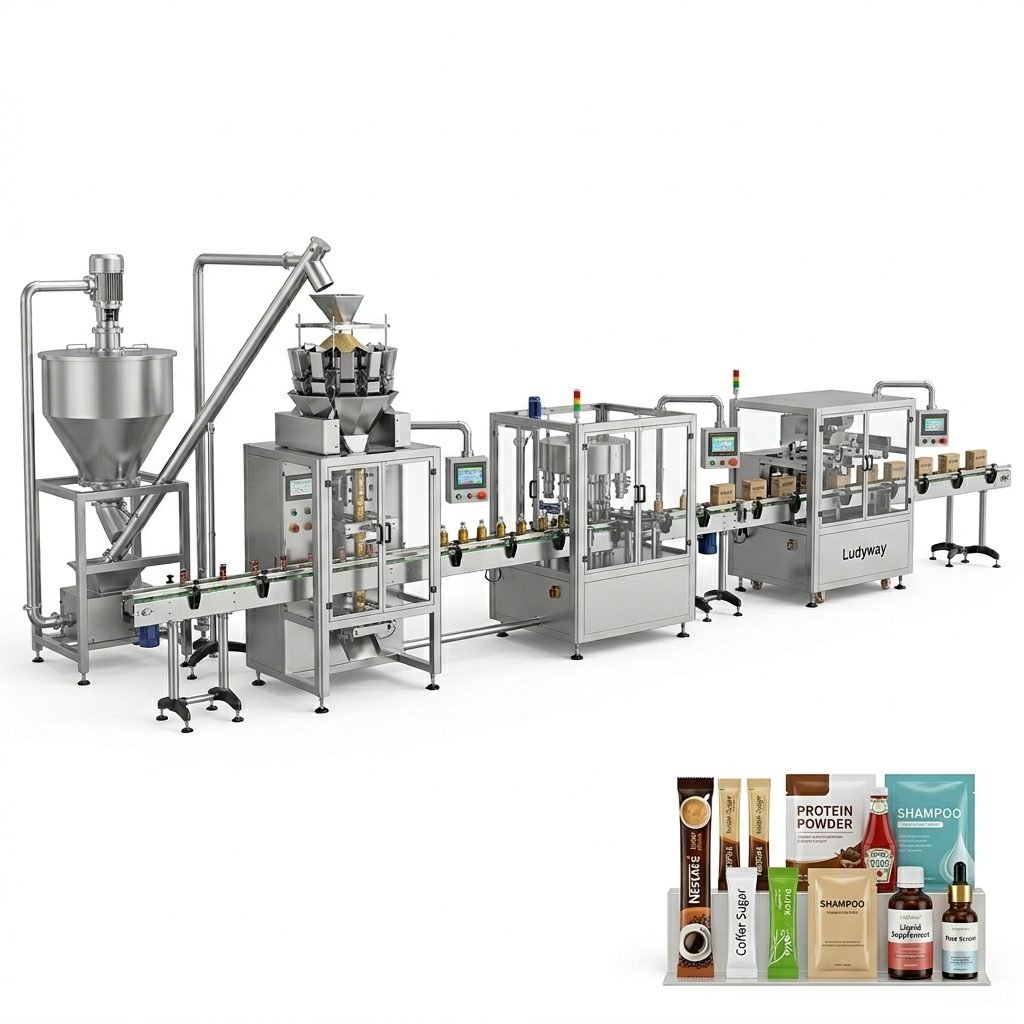
Complete Turnkey Packaging Solutions
View Specifications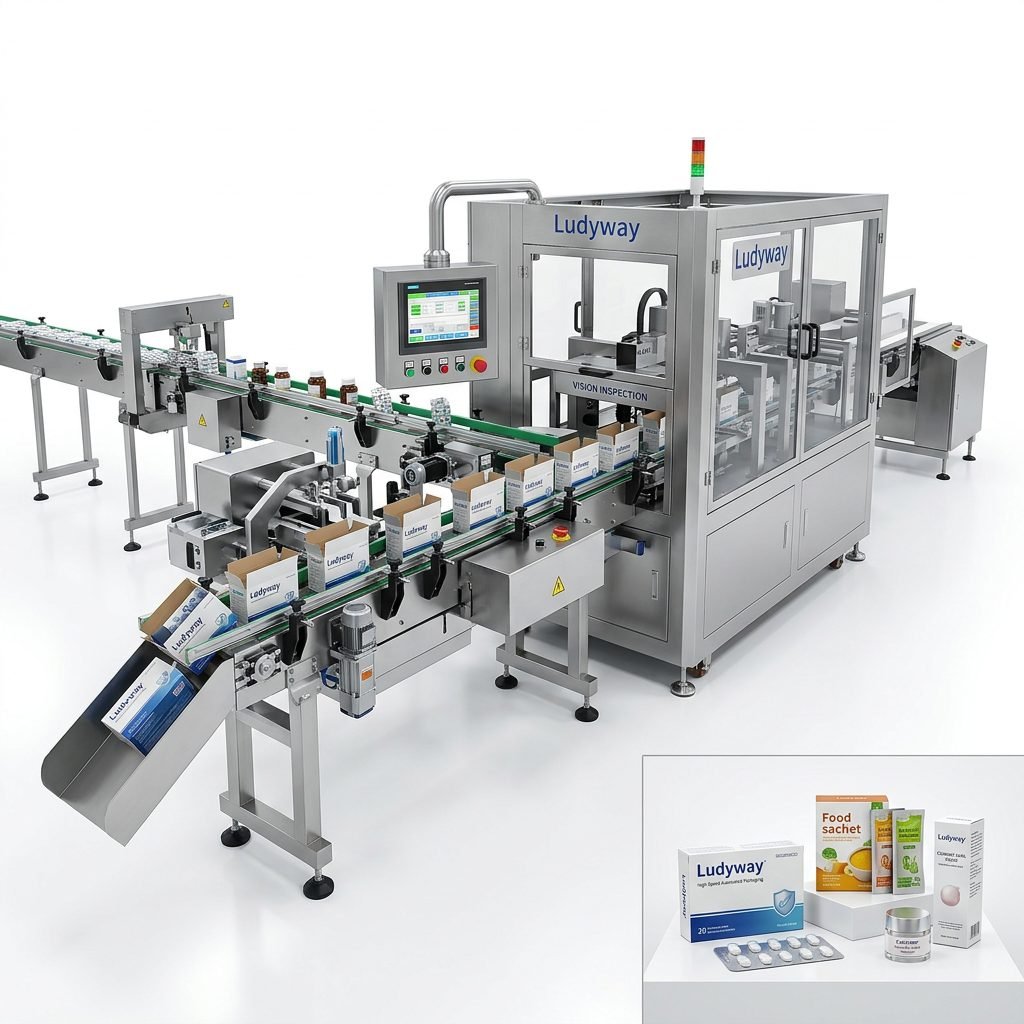
High-Speed Automated Cartoning Lines
View Specifications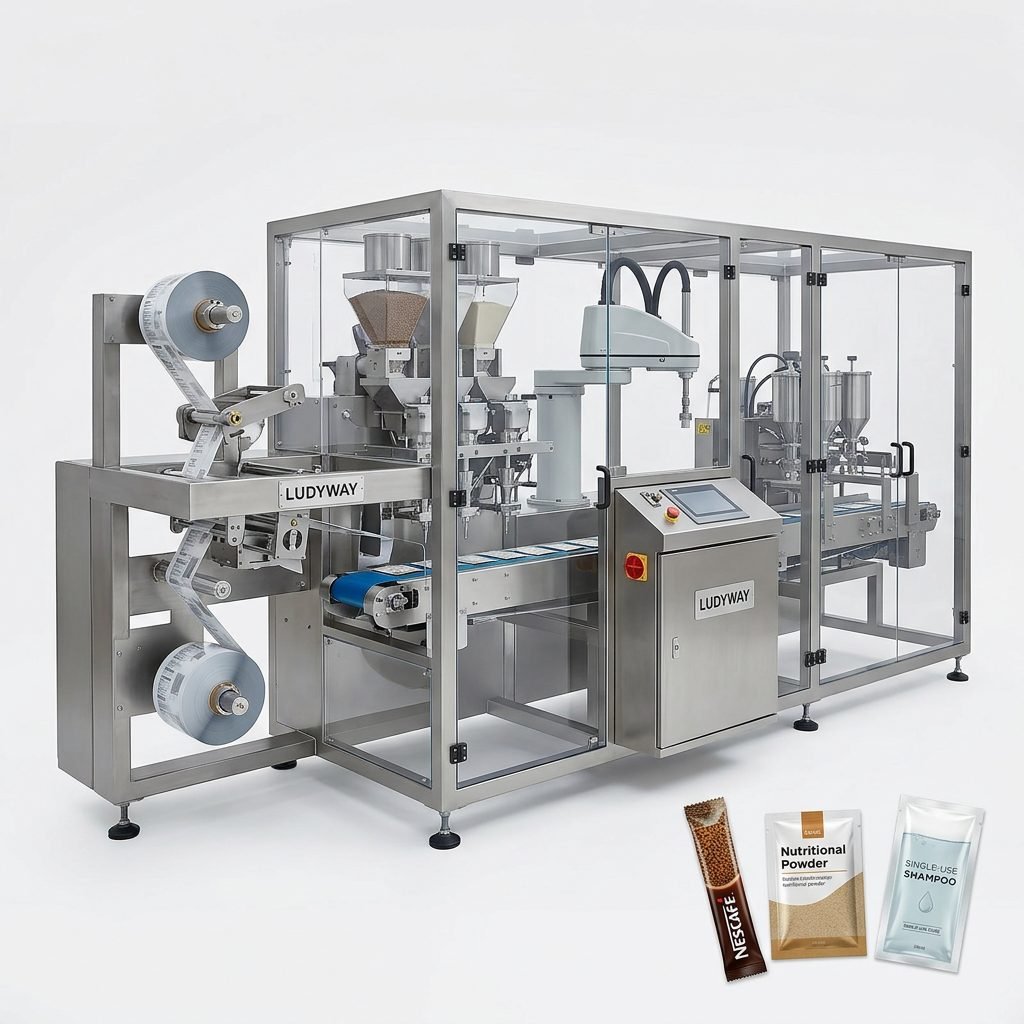
Robotic Automated Packaging System
View SpecificationsLudyway Packaging Machinery
Ludyway is one of China’s largest packaging equipment manufacturers, specializing in turn-key automation for the food, pharmaceutical, and chemical industries. With over 30 years of manufacturing heritage, we engineer multi-lane stick pack, sachet, and pouch packaging solutions designed to drastically decrease manual operations while boosting yield and line reliability.
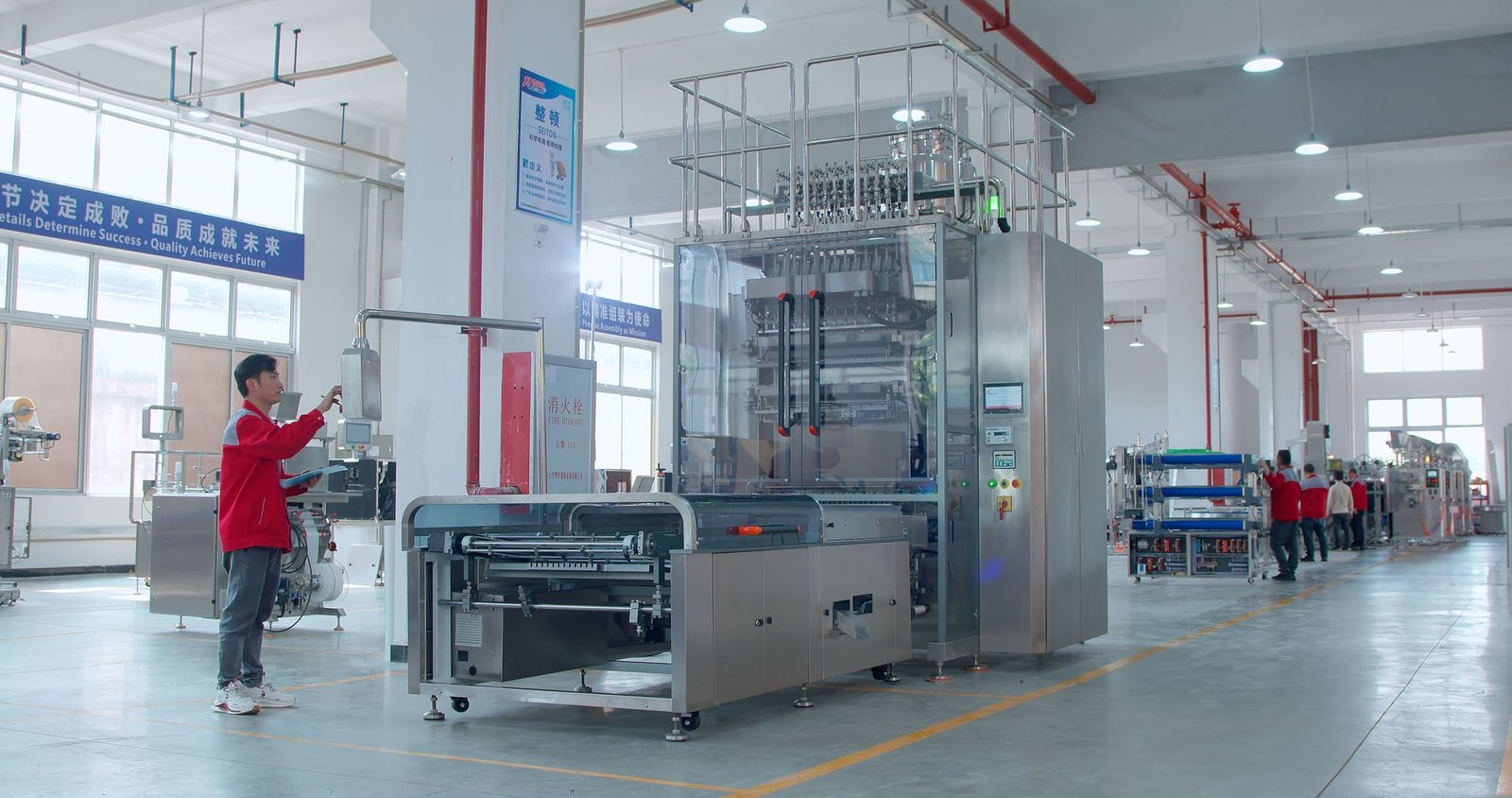
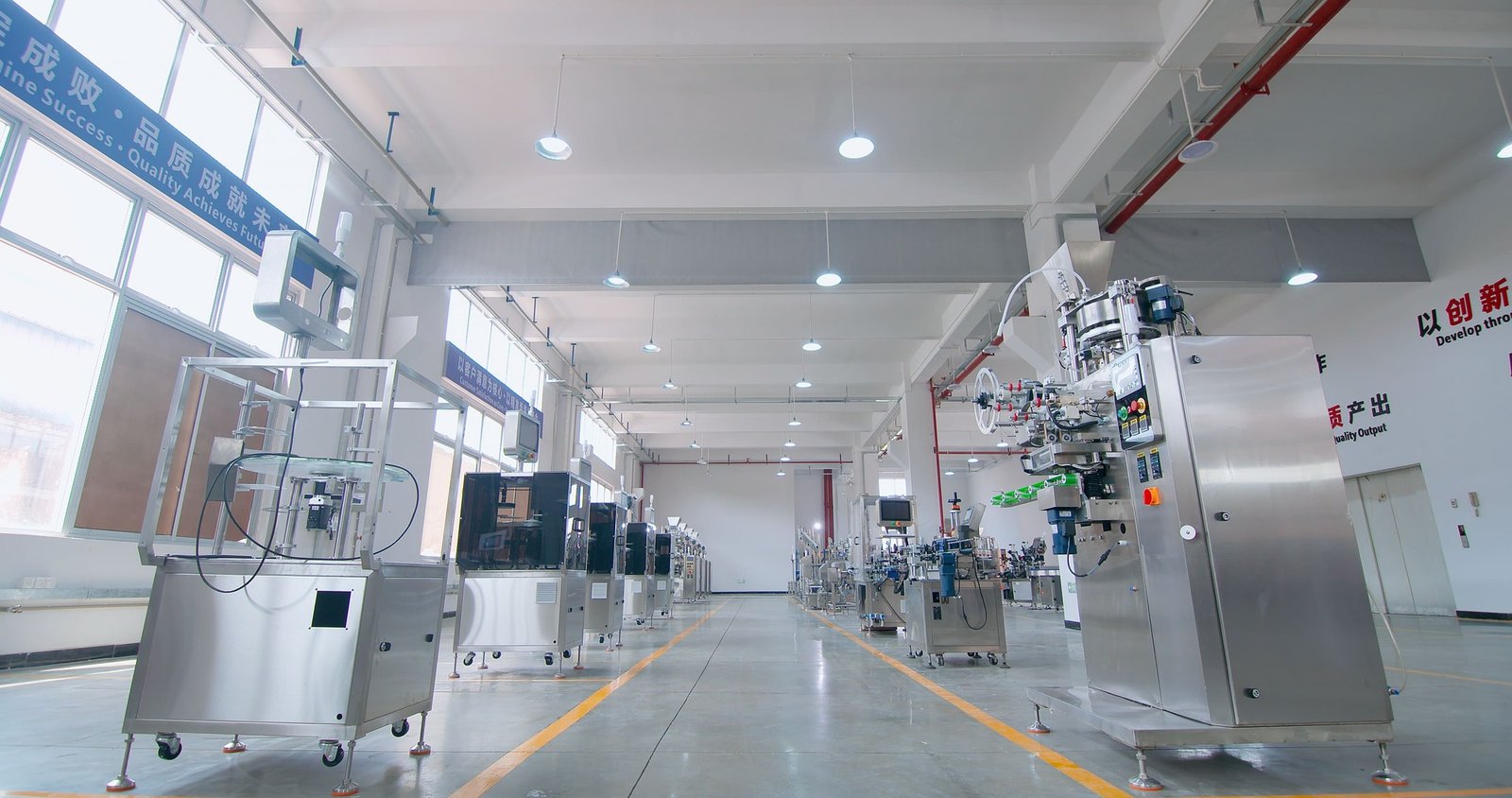
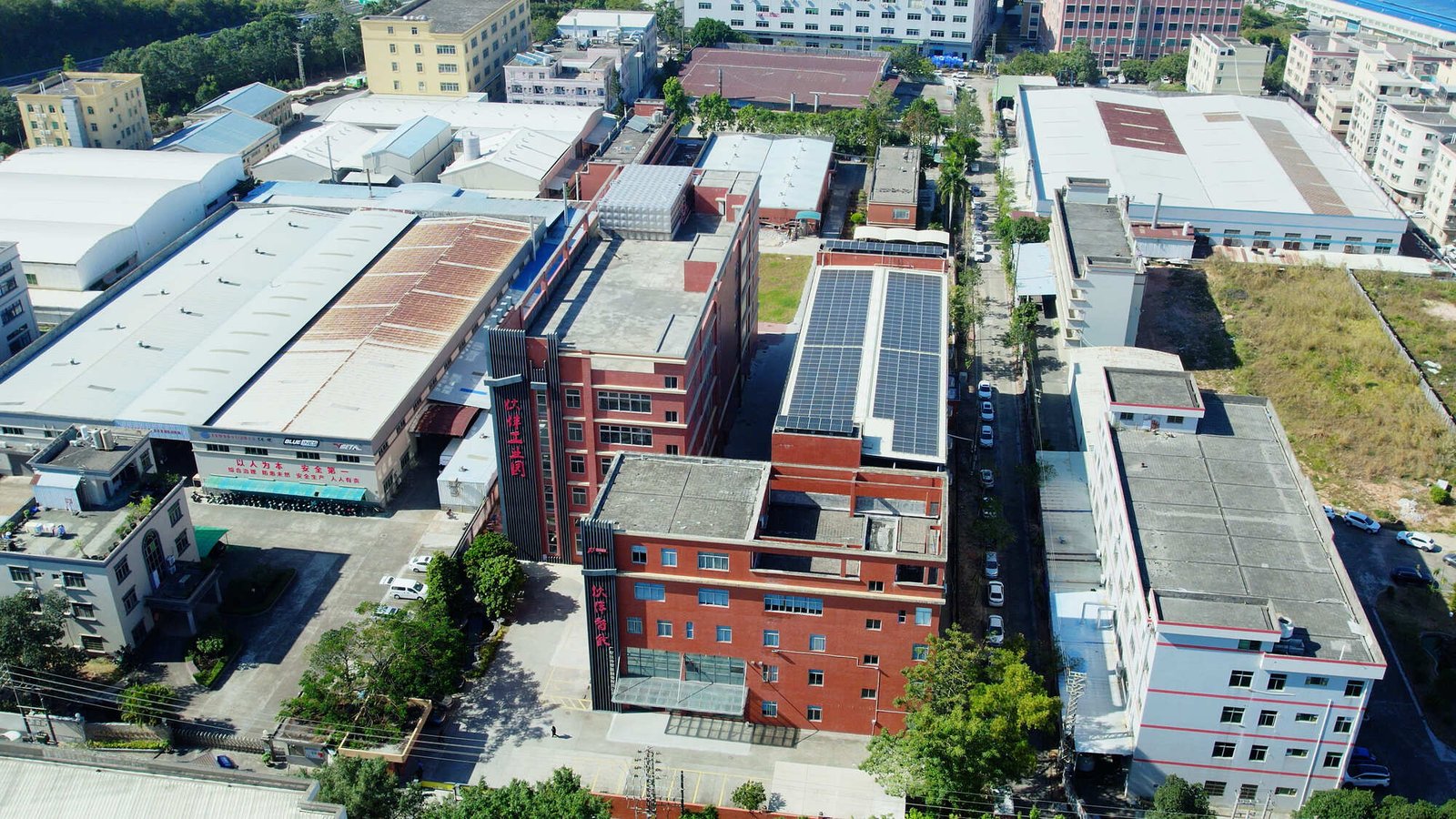
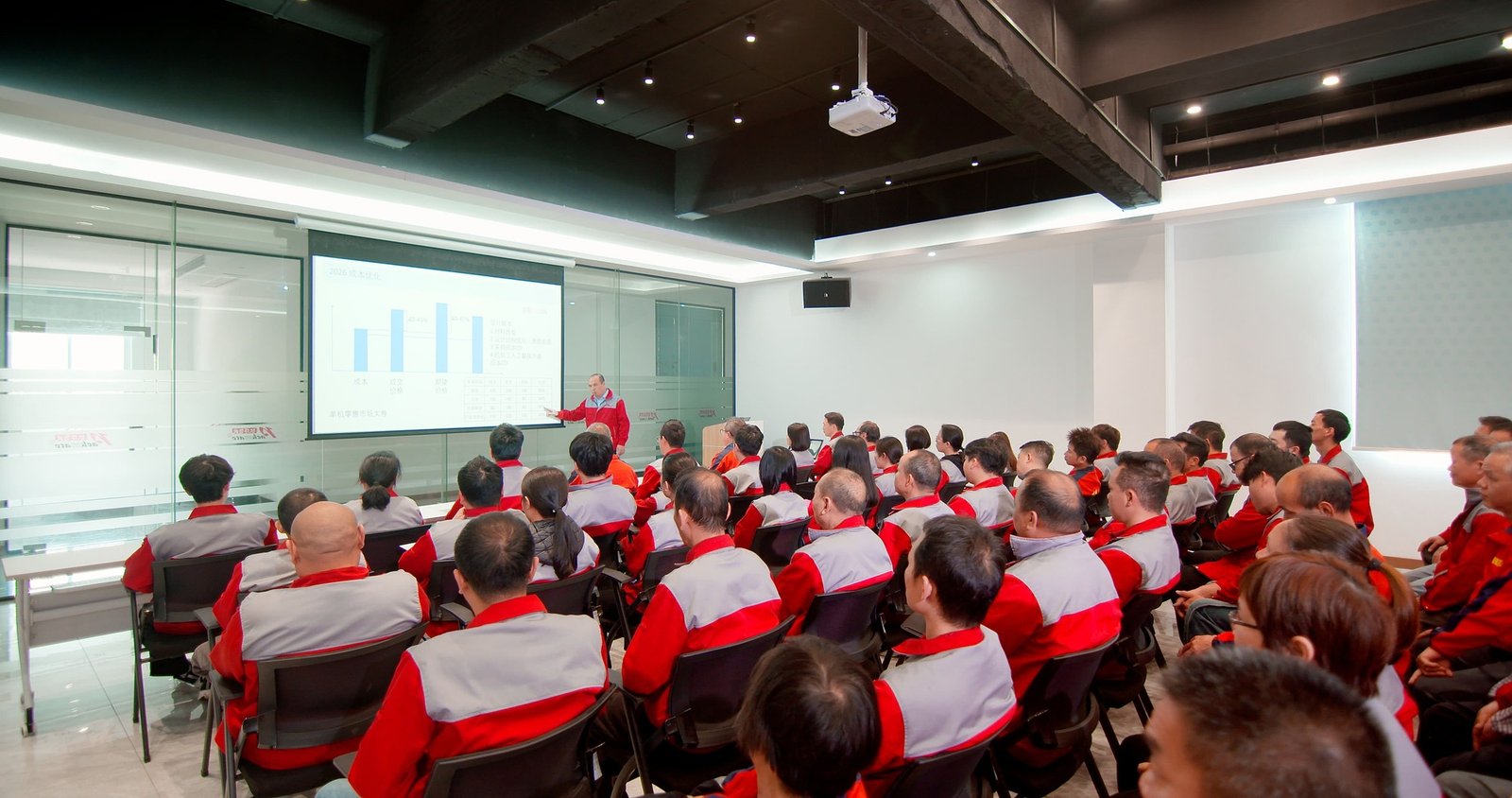
Supported by a modern 20,000㎡ manufacturing facility and over 130 packaging specialists, Ludyway provides over 50 intelligent packaging machine models operating stably across more than 100 countries worldwide.
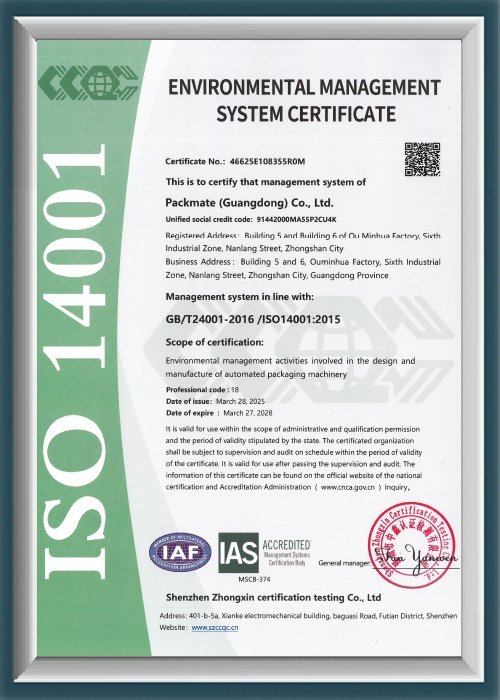
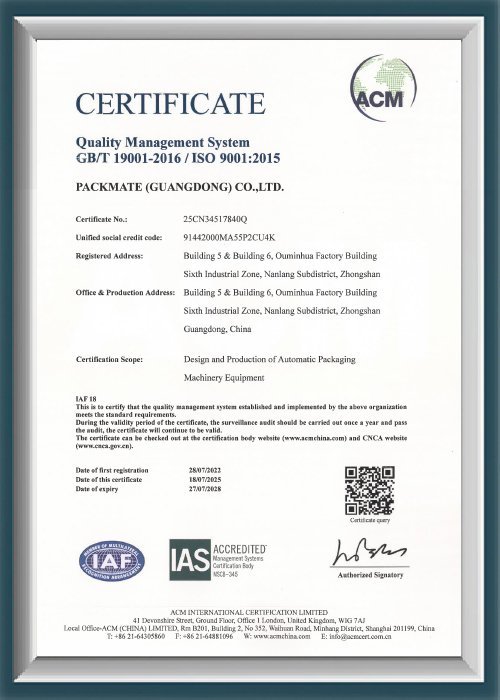
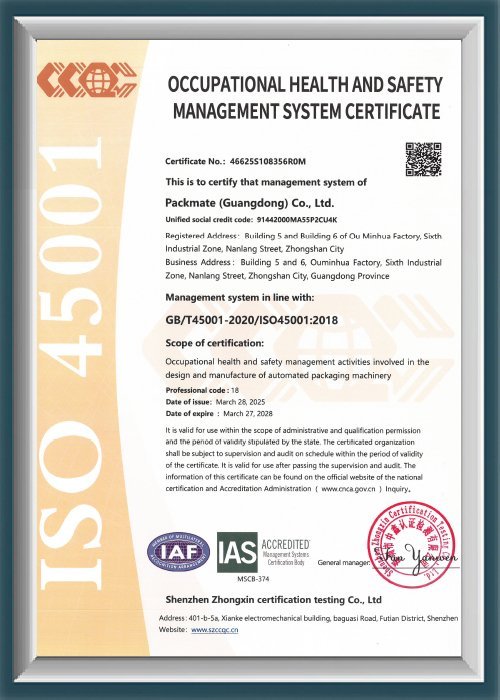
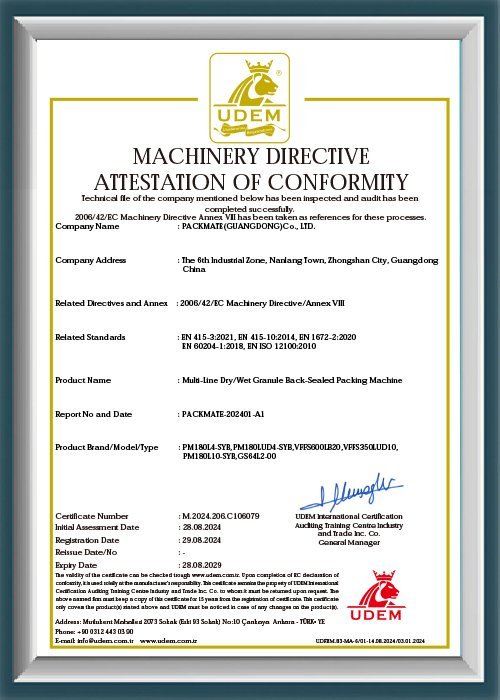
Certified International Quality & Compliance Standards
Every packaging machine from Ludyway complies with stringent international engineering standards, CE directives, and cGMP sanitary regulations.
Operational FAQs About Packaging Machine Labor Demands
Answers to the most frequent inquiries plant engineers, production supervisors, and business owners ask when evaluating packaging machinery automation and human labor planning.
Can a single operator manage multiple automated packaging machines?
Yes. On fully automated multi-lane stick pack or sachet lines equipped with automatic roll splicing, bulk vacuum feeding, and dynamic inline rejection, a single trained operator can comfortably supervise 2 to 3 packaging lines simultaneously. The operator’s main duties are limited to monitoring alarms on the HMI and occasionally restocking outer carton supplies.
How much technical training do machine operators need?
Modern automated machines utilize intuitive touchscreen interfaces with multi-language graphic menus and preset SKU recipe libraries. General operators require only 1 to 2 days of basic training to perform routine startup, film threading, and sanitization. Specialized maintenance technicians usually undergo 3 to 5 days of in-depth training on servo calibration and mechanical preventative protocols.
How long does a manual size changeover take on a multi-lane stick pack machine?
With modern quick-release forming sets and digital servo recipe recall, a routine bag length adjustment takes less than 2 minutes via the HMI. A complete tooling changeover—including changing forming collars, multi-lane cutting dies, and auger dosing funnels—typically takes between 20 to 45 minutes and requires standard hand tools.
What manual safety measures are built into automated packaging lines?
Industrial packaging equipment features comprehensive safety interlocks, including magnetic safety door switches, light curtains at infeed/discharge zones, emergency stop buttons at multiple line positions, and torque-limiting clutches on drive motors. If an operator opens a safety shield during operation, the machine halts instantly in milliseconds.
Which packaging industries require the least manual intervention?
Industries with standardized, high-volume granular and powder products (such as instant coffee stick packaging, sugar sachets, and beverage drink powders) achieve the highest degree of lights-out automation. In contrast, applications requiring frequent short-run recipe modifications or complex sterile handling (such as high-potency pharmaceuticals) retain slightly more manual QC check steps.
