
How to Set Up a Coffee Packaging Line: Modern Engineering, Gas Management & Turnkey Efficiency
A comprehensive technical blueprint for roasters, OEM manufacturers, and commercial packaging facilities. Discover how to transition from manual operations to fully automated, high-precision coffee packaging lines with modified atmosphere technology.
Strategic Assessment: Defining Your Coffee Packaging Workflow
Setting up a high-performance coffee packaging line requires a balanced synergy between mechanical automation, material barrier science, and gas dynamics. Roasters and co-packers must balance bean degassing characteristics against target throughput rates and final pouch geometry.
1. Coffee Morphology & Dosing Needs
Whole beans require multi-head combination weighers that prevent bean breakage while dosing at speeds over 80 ppm. In contrast, ground coffee and micro-ground instant formulations demand closed-loop servo auger fillers with anti-drip dust cut-offs to manage density variations and fine particulate aerification.
2. Packaging Form Factor Matrix
Selecting whether your output relies on vertical form fill seal (VFFS) quad-seal bags, premade zipper pouches, multi-lane single-serve stick packs, drip bags, or rigid capsules determines conveyor layout, machine footprint, footprint safety zoning, and required downstream secondary packaging architecture.
3. Shelf-Life Chemistry & Degassing
Freshly roasted whole beans release between 2 to 10 liters of CO2 per kilogram over several weeks. A successful packaging setup must incorporate continuous thermal/ultrasonic one-way degassing valve applicators and high-purity nitrogen flush gas manifolds to drive residual O2 levels under 0.5%.
How to Set Up a Coffee Packaging Line: 6 Integrated Stages
Building a turnkey coffee line requires synchronizing upstream feeding with midstream modified atmosphere packing and downstream end-of-line verification. Below is the standard automated flow engineered for industrial output.
Upstream Material Handling & In-Feed Systems
Beans or coffee grounds are elevated from post-roast storage hoppers to packaging hoppers using specialized, low-impact vacuum conveyors or enclosed Z-bucket elevators. This prevents particle degradation and isolates roasted beans from ambient room moisture. Integrated magnetic separators remove any rogue ferrous elements prior to dosing.
Precision Dosing: Multi-Head Weighers vs. Servo Auger Systems
For whole bean applications, a 10 to 14 head combination multi-head weigher achieves accuracy within ±0.2g to ±0.5g without crushing roasted beans. For ground coffee and instant fine coffee powders, high-speed closed servo auger fillers utilize dual-speed tooling and nitrogen-purged feed screws to maintain volume consistency regardless of compaction shifts.
Degassing Valve Application & Nitrogen (N2) Gas Purging
Degassing valves are applied directly to the film web before forming, utilizing thermal heat or ultrasonic bonding modules. Immediately upon feeding and sealing, an integrated multi-point nitrogen injection manifold purges oxygen from the bag’s interior, lowering residual oxygen content below 0.5%–1.0% to prevent lipid rancidity and volatile aroma loss.
Primary Packaging: VFFS, Rotary Premade Pouch, or Multi-Lane Sticks
The formed bag (Pillow, Gusseted, Quad-Seal, Flat Bottom, or Stand-Up Doypack) is formed, filled, and hermetically sealed. Advanced servo-driven horizontal and vertical seal jaws ensure leak-proof seals even when minor coffee dust settles on seal margins. Multi-lane stick pack systems can simultaneously package up to 10 lanes of single-serve instant coffee granules at 300+ packets/minute.
Inline Inspection: Checkweighing, Metal Detection & Date Coding
Freshly sealed coffee pouches pass across dynamic inline checkweighers with high-speed air-blast or push-arm rejection systems to eliminate over- or under-filled pouches. Metal detectors and industrial X-ray systems inspect for foreign objects. Simultaneous high-resolution thermal transfer or continuous inkjet printers apply lot codes, best-by dates, and QR traceability codes.
Secondary Packaging: Cartoning, Case Packing & Palletizing
Finished coffee packs are collated and transferred into secondary retail cartons, display trays, or corrugated shipper cases via automated drop packers or delta pick-and-place robots. Filled cases pass through automatic top-and-bottom tape sealers before proceeding to robotic palletizing arms that stack cases in uniform interlocked layers ready for container shipping.
Coffee Packaging Machine Selection Matrix
Compare mechanical configurations across various coffee packaging formats to determine the ideal machinery framework for your target throughput, product physical properties, and retail formats.
| Coffee Format | Primary Machine Type | Dosing Mechanism | Speed Range | Key Preservation Technology | Ideal Applications |
|---|---|---|---|---|---|
| Whole Roasted Beans (250g – 1kg) | Vertical Form Fill Seal (VFFS) / Rotary Premade Pouch | Multi-Head Combination Weigher | 30 – 70 bags/min | Ultrasonic Degassing Valve + N2 Purging (<1% O2) | Specialty retail coffee, wholesale commercial bags |
| Ground Roast Coffee (250g – 500g) | VFFS Quad-Seal / Vacuum Brick Pack Line | Servo Auger Filler with Anti-Dust Snorkel | 25 – 60 bags/min | Heavy Vacuum Chamber or High-Volume N2 Lance | Supermarket ground coffee, retail brick packs |
| Single-Serve Instant Coffee (1g – 15g) | Multi-Lane Stick Pack Machine (4 to 10 Lanes) | Servo Volumetric Auger / Multi-Lane Piston | 160 – 400 sticks/min | Enclosed Inert Gas Enclosure Hood | Instant 3-in-1 coffee, functional mushroom coffee sticks |
| Drip Bag Coffee (8g – 12g) | Ultrasonic Inner/Outer Drip Coffee Bag Machine | Slide-Type Volumetric Cup or Micro Auger | 35 – 55 bags/min | Non-Woven Fabric Sealing + Outer Foil N2 Flush | Single-cup pour-over drip filters |
| Liquid Coffee Concentrate (15ml – 50ml) | Multi-Lane Liquid Sachet / Stick Machine | Rotary Valve Positive Displacement Pump | 80 – 240 sachets/min | De-aerated Liquid Circuit + Barrier Sachet Sealing | Cold brew concentrates, coffee syrups, portable liquid espresso |
Featured Industrial Coffee Packaging Machinery
Explore our specialized, factory-engineered coffee packaging machines designed for high precision, continuous multi-shift production, and hermetic freshness preservation.
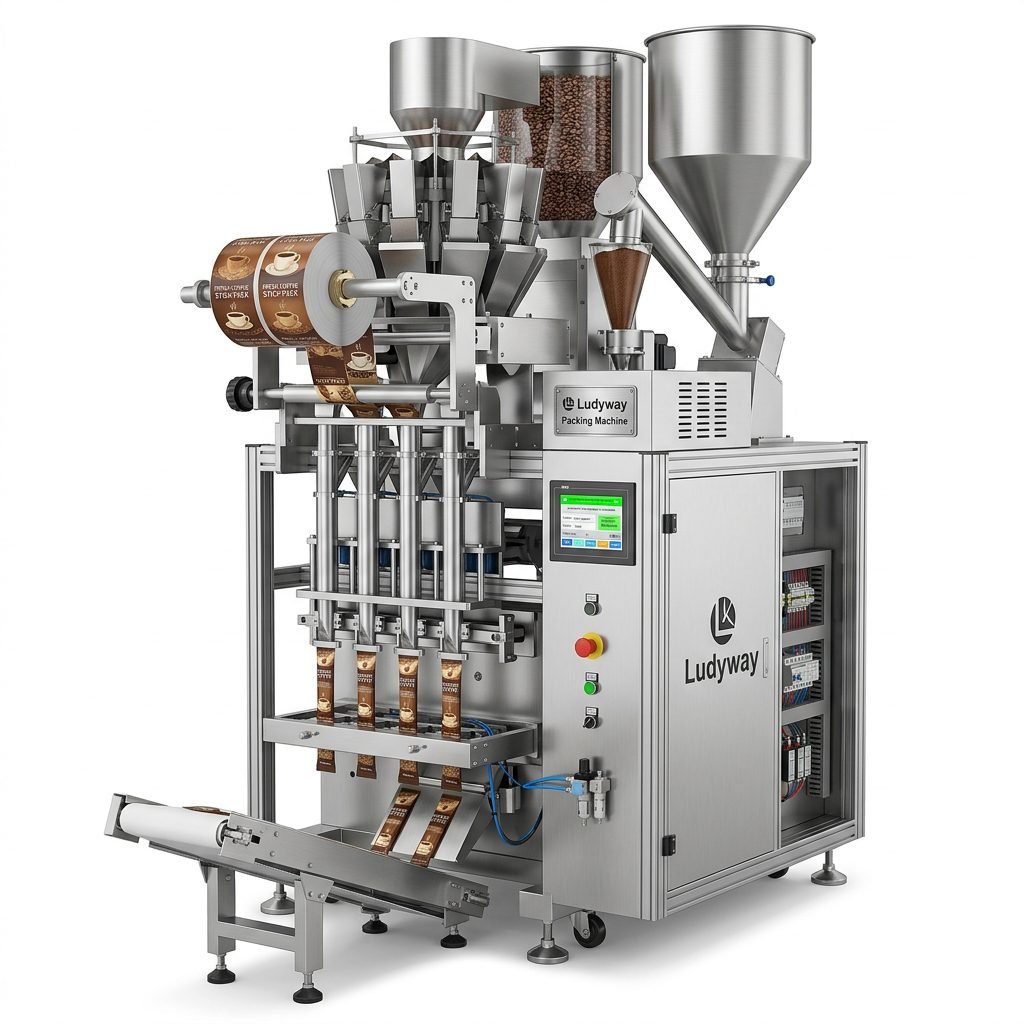
Automatic Multi-Lane Coffee Bean Packaging Machine
High-speed multi-lane granule and powder dosing system with automated temperature control and nitrogen flush integration.
View Equipment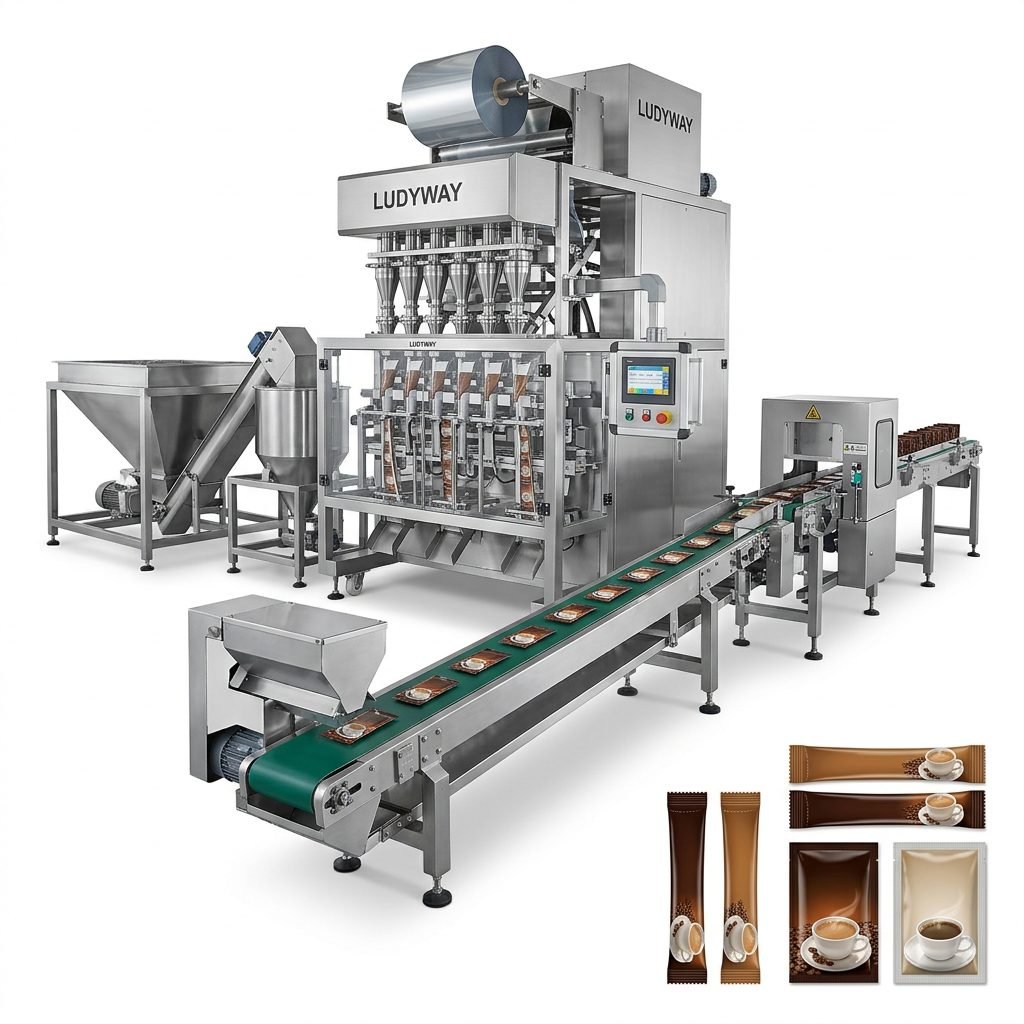
Instant Coffee Packaging Lines for Sachet & Stick Pack
Turnkey multi-lane instant powder stick pack line engineered for high-volume commercial production runs up to 350 packs/min.
View Equipment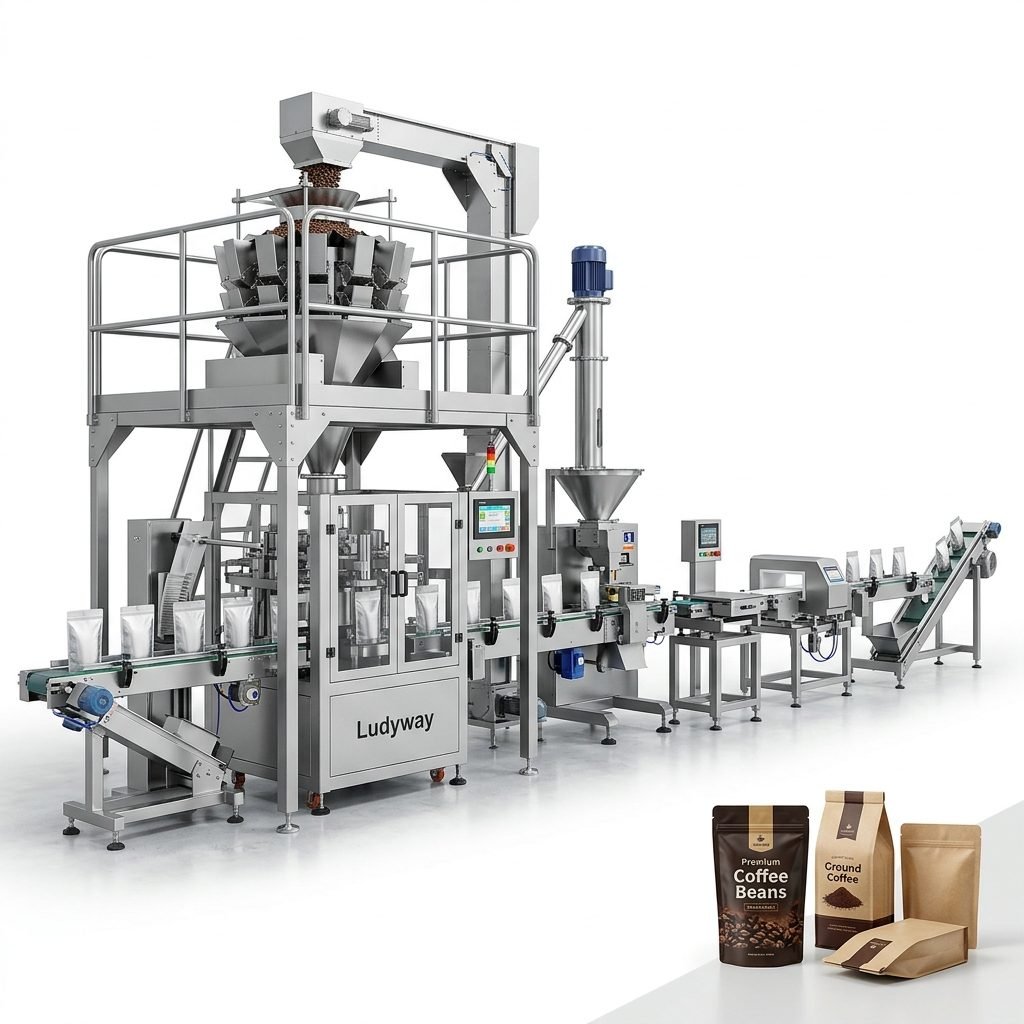
Automated Coffee Bean Packaging Line System
Complete turnkey line featuring Z-elevator feeding, multi-head weighing, degassing valve application, and case packing.
View Equipment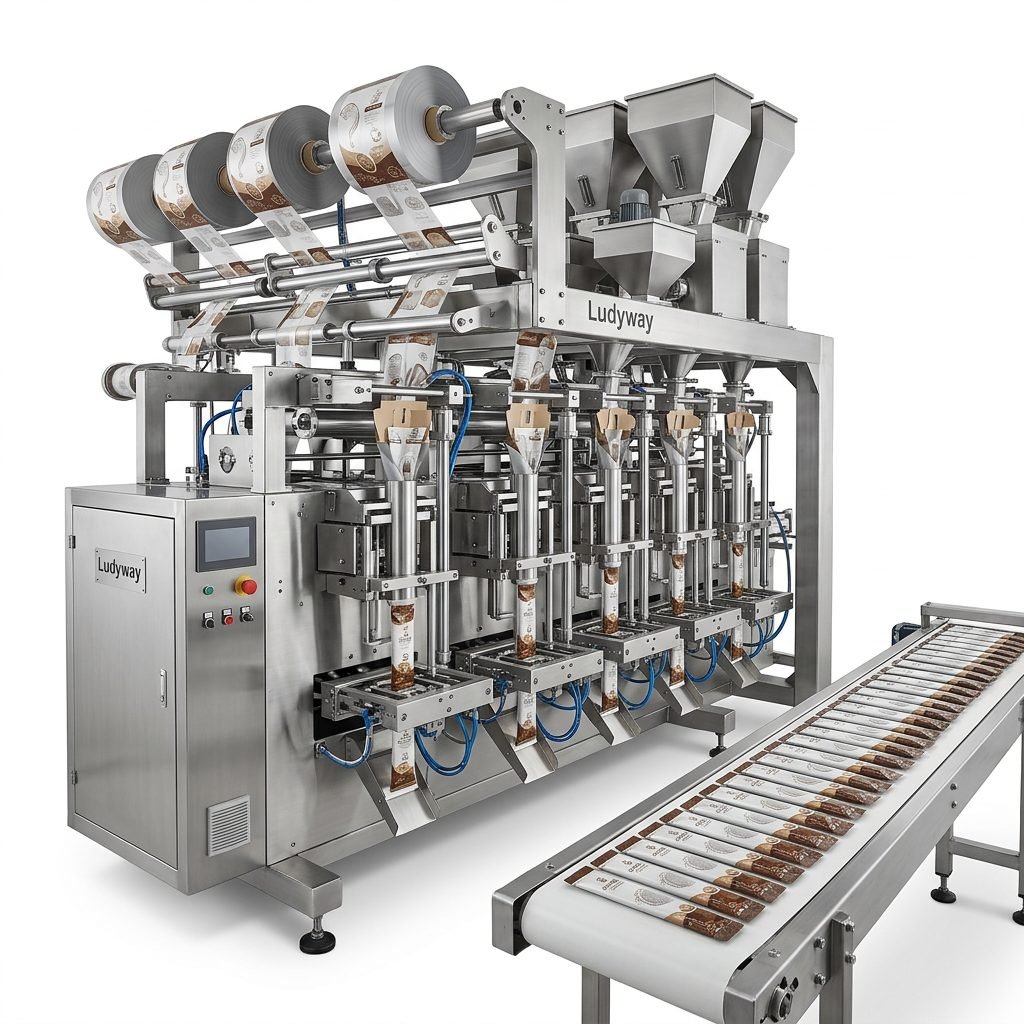
Drip Coffee Stick Pack Machine for Powder & Granules
Precision multi-lane dosing machine configured for ground coffee drip pouch creation with ultrasonic perimeter sealing.
View Equipment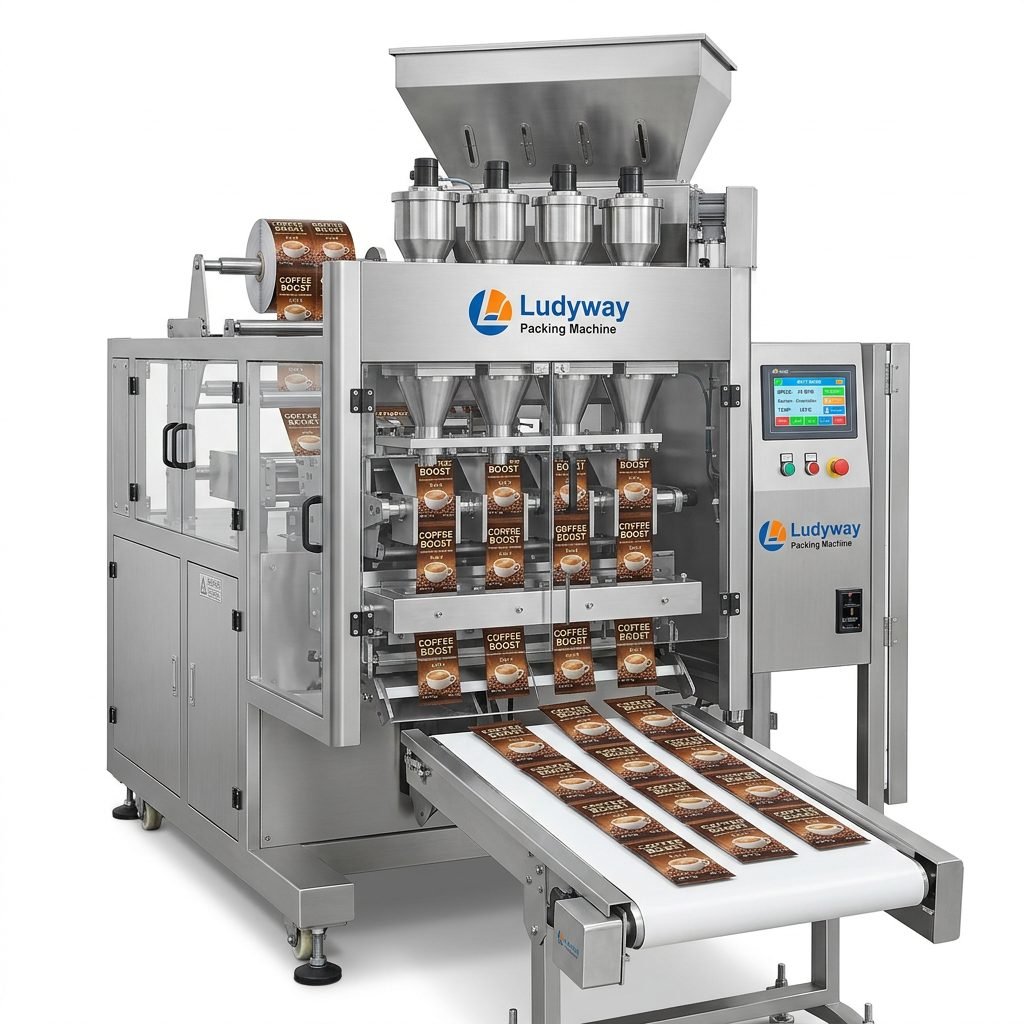
Automatic Multi-Lane Coffee Powder Packaging Machine
Multi-lane sachet packaging machinery with continuous servo-driven augers specifically tuned for non-free-flowing ground coffee.
View Equipment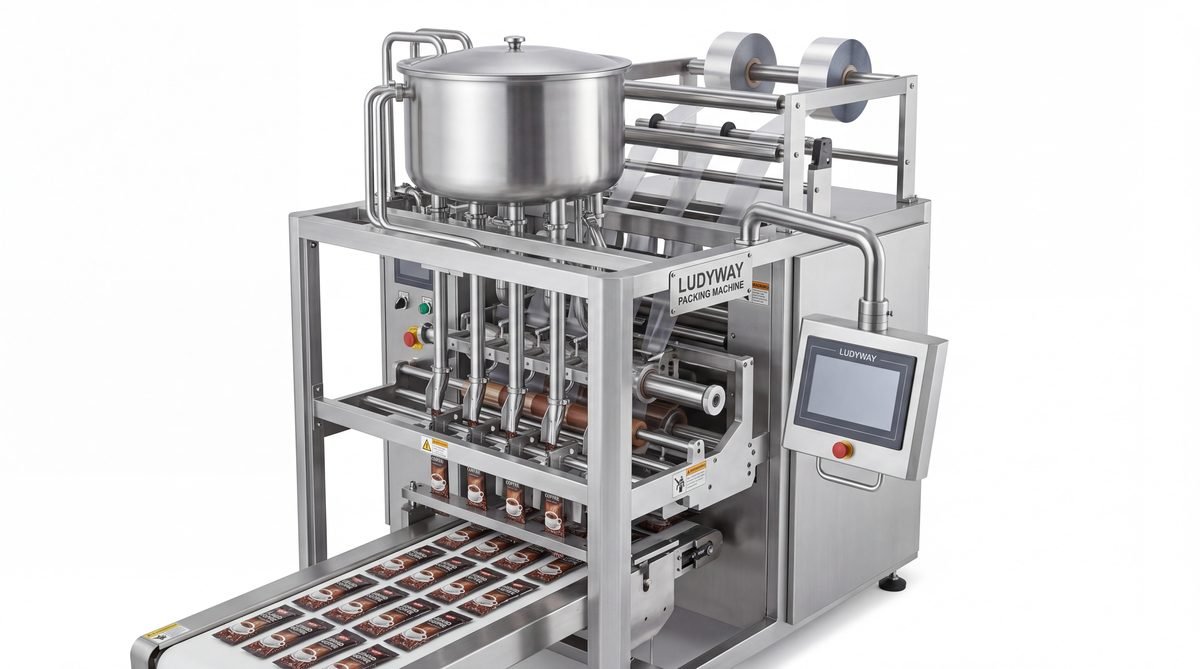
Liquid Coffee Packaging Machine for Sachets
Sanitary liquid filling and sealing machine designed for cold brew concentrates, liquid espresso portions, and flavored syrups.
View Equipment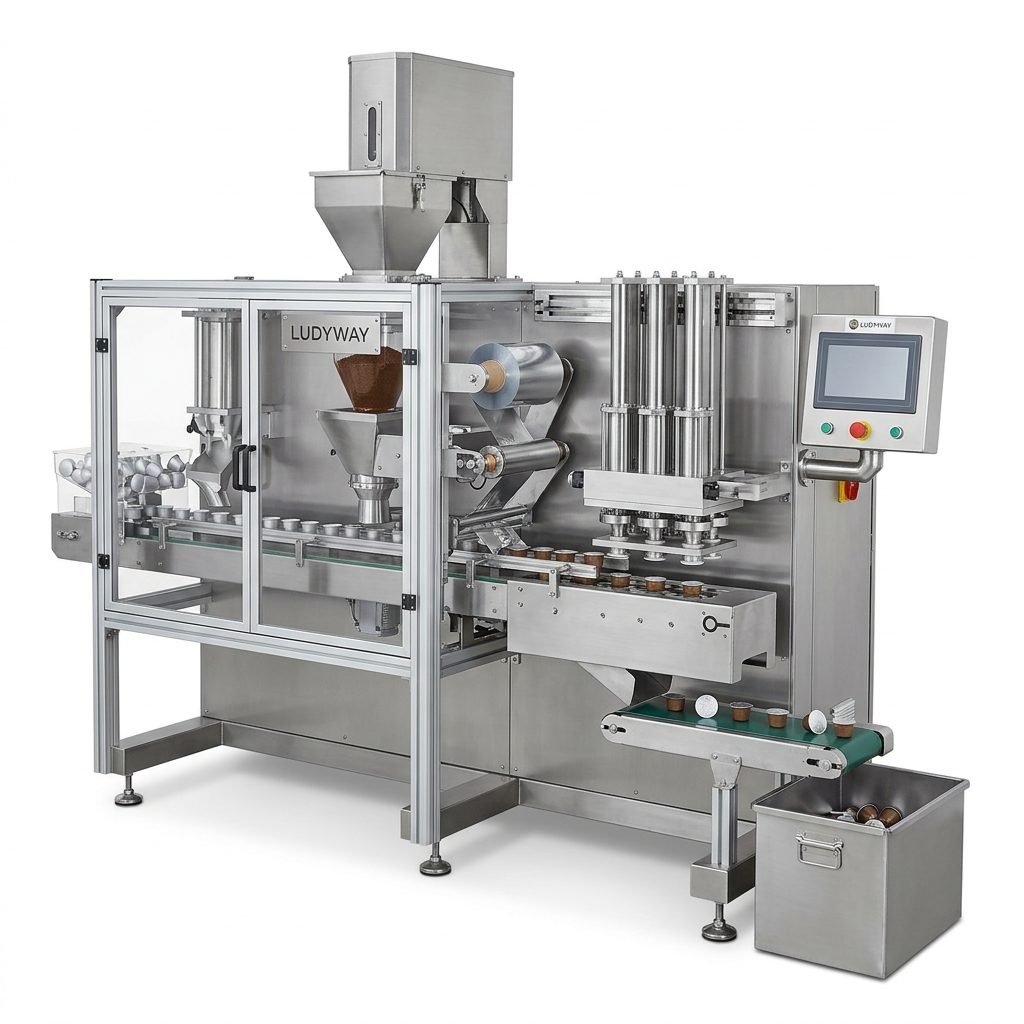
Multi-Lane Coffee Capsule Packaging System
High-speed rotary capsule filling and foil heat-sealing line with integrated nitrogen flushing and in-line tamp compaction.
View Equipment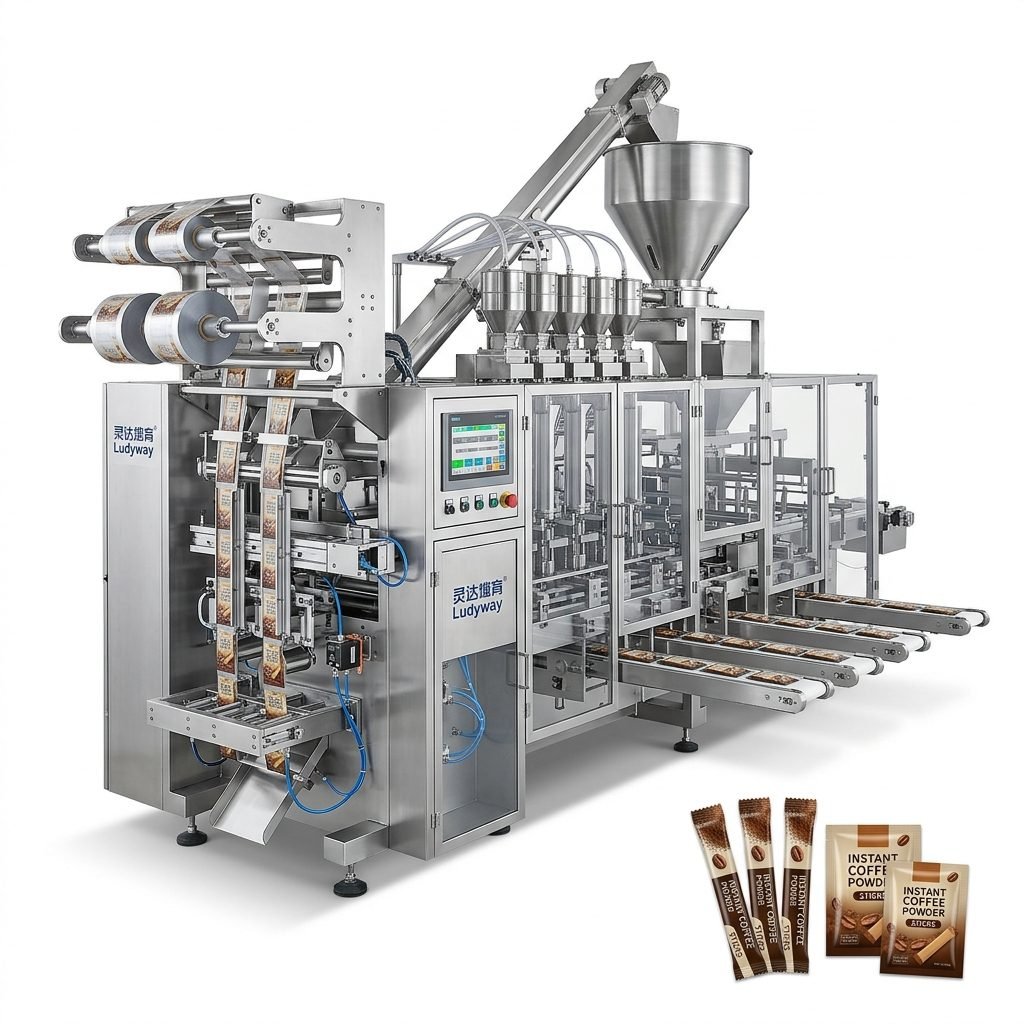
Instant Coffee Powder Sachet & Stick Pack Line
Complete automated production system featuring automated film tracking, date coding, and downstream robotic cartoning integration.
View EquipmentNitrogen Flushing & Degassing Valve Integration
Oxygen is the primary catalyst for coffee lipid oxidation, staling, and volatile aroma destruction. Controlling internal atmosphere is the most critical technical phase when setting up an automated coffee packaging line.
One-Way Degassing Valve Mechanics
Post-roasting, coffee beans emit carbon dioxide (CO2) continuously for days or weeks. If sealed in an airtight barrier pouch without ventilation, internal gas pressure will inflate and burst the bag. One-way valves allow CO2 to escape at a pre-set cracking pressure (approx. 3–5 mbar) while preventing outside oxygen from entering.
- Thermal vs. Ultrasonic Insertion: Ultrasonic applicators provide non-contact seal integrity without burning thin composite laminate films.
- Integrated Web Applicators: Modern form-fill-seal machines punch a tiny aperture and weld the valve on the fly at up to 100 bpm.
- Positioning Precision: The valve must be placed in the upper third of the pouch to ensure clean ventilation without bean interference.
Nitrogen (N2) Gas Purging Dynamics
Injected high-purity nitrogen (99.9%+) displaces oxygen within the forming tube, dosing funnel, and bag headspace immediately prior to sealing. This arrests staling and extends whole bean and ground coffee shelf life from weeks to 12–24 months without chemical preservatives.
- Multi-Point Injection: Gas is introduced in the upper dosing funnel, down the central forming pipe, and across the cross-seal jaw line.
- Residual Oxygen Targets: Specialty whole beans target < 1.0% O2; ground coffee and capsules target < 0.5% O2.
- Gas Generator Integration: Sizing on-site PSA (Pressure Swing Adsorption) nitrogen generators directly matches machine consumption rates.
Plant Layout, Utilities & Dust Management
Proper plant engineering guarantees safe operation, dust explosion mitigation (ATEX compliance), smooth material flow, and seamless compliance with global food safety standards.
1. Dust Extraction & Explosion Safety
Ground coffee handling produces fine combustible airborne dust particles. Packaging lines must feature local point-of-fill dust extraction shrouds, ATEX-certified servo motors, static-dissipating discharge chutes, and grounded pneumatic transport conduits to prevent ignition risks.
2. Pneumatic & Electrical Infrastructure
Automated packaging lines require steady, dry compressed air (6–8 bar at 0.5–1.2 m³/min) for pneumatic actuators and sealing jaws, alongside clean three-phase electrical power (380V/480V 50/60Hz). Integrating inline air dryers prevents pneumatic valve contamination.
3. Linear vs. U-Shaped Footprint Layout
Straight linear layouts fit long production bays where raw coffee enters at one end and stretch-wrapped pallets exit at the other. U-shaped lines allow single-operator monitoring for both primary bag forming and downstream carton packing in tighter facility envelopes.
Turnkey Implementation Roadmap
A structured step-by-step engineering timeline from project kickoff to Factory Acceptance Testing (FAT) and line commercialization.
Requirements & Pouch Engineering
Determine target SKUs, film laminate specifications, degassing valve choice, fill weight tolerance, and planned plant expansion capacity.
CAD Layout & Line Synchronization
Design 3D layout schemes optimizing conveyor transitions, operator clearances, utility drop points, and safety interlock perimeters.
Machinery Manufacturing & Tooling
Precision CNC fabrication of forming collars, multi-head weighers, auger screws, and sealing jaws using SUS304/316 food-grade stainless steel.
Factory Acceptance Testing (FAT)
Dry and wet testing using actual customer coffee beans and film stock. Validation of speed, weight accuracy, seal integrity, and residual O2 rates.
Installation & Commissioning
On-site mechanical anchoring, electrical/pneumatic hookup, PLC synchronization, sensor calibration, and comprehensive system run-in.
Operator Training & SOP Handover
Comprehensive training on HMI recipe setup, quick-changeover tooling, routine cleaning, preventative maintenance, and troubleshooting.
Global Packaging Automation by Ludyway Machinery
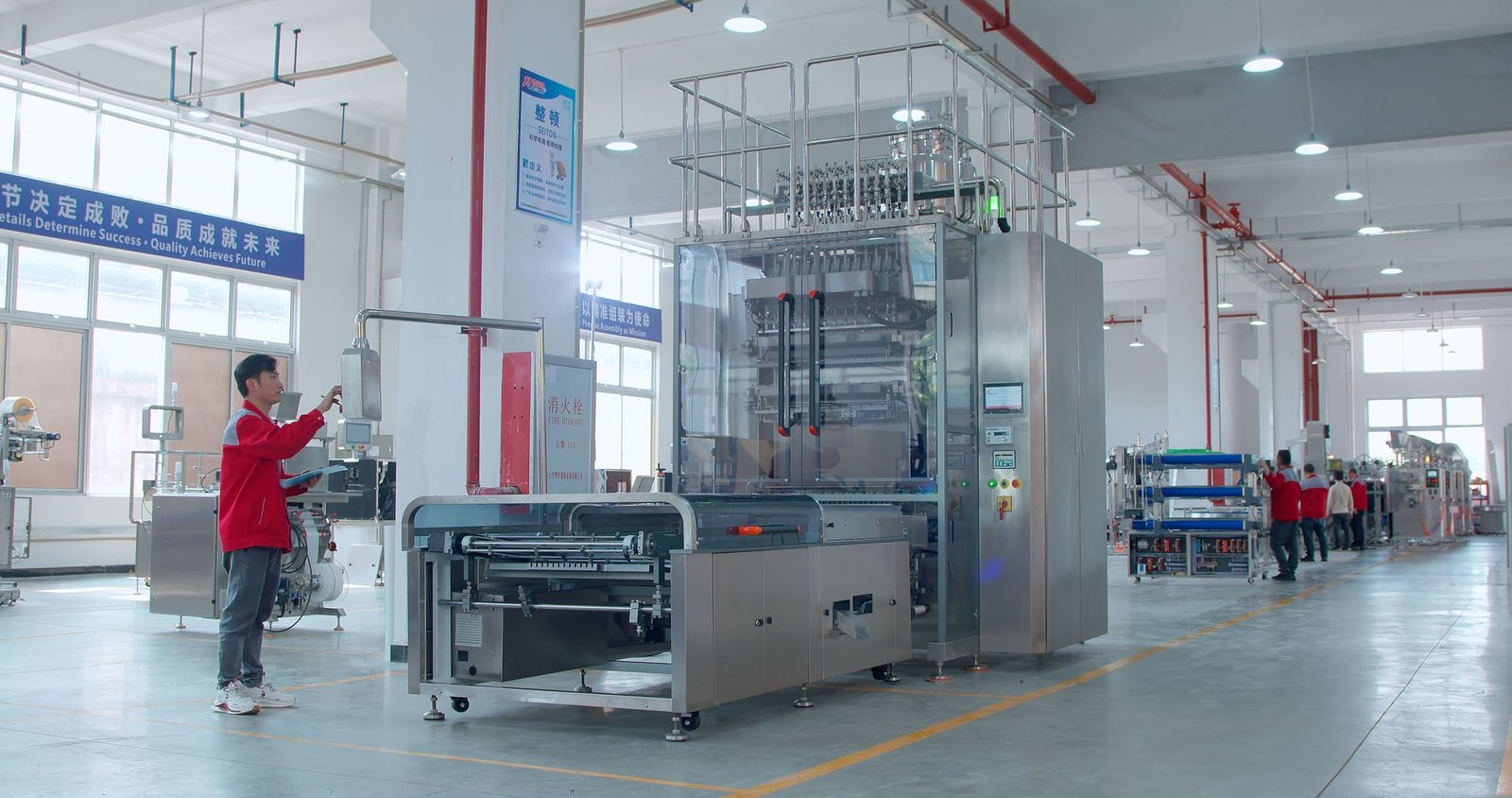
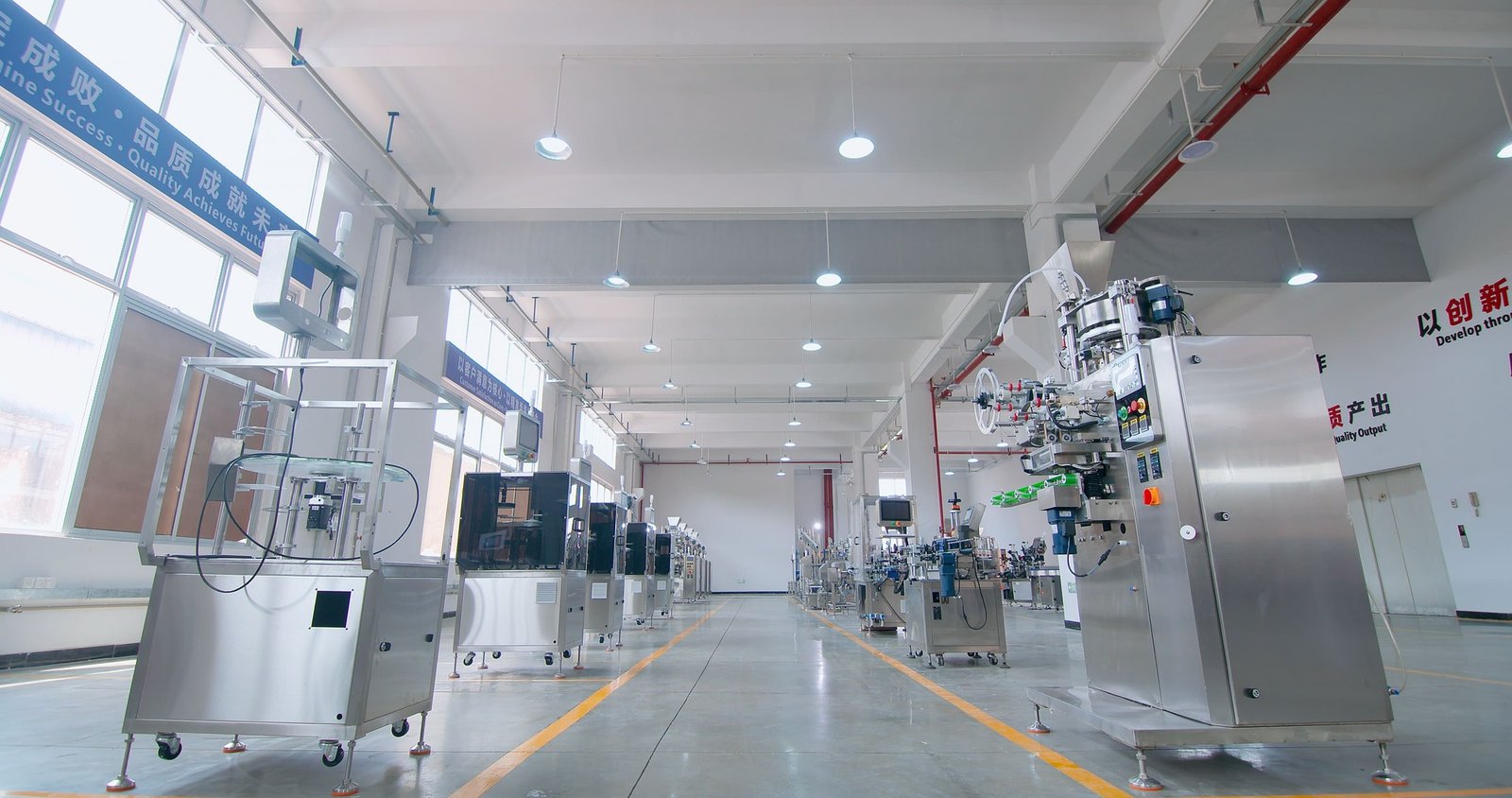
Ludyway is a premier packaging machinery manufacturer specializing in high-speed, intelligent packaging systems and turnkey lines for food, pharmaceutical, and health industries. With over 30 years of engineering pedigree, our 20,000㎡ modern manufacturing facility produces more than 50 standard and custom packaging machine models.
From whole bean multi-head weigher bagging lines to multi-lane instant coffee stick packaging lines, we help coffee manufacturers in over 100 countries streamline packaging throughput, maximize weight accuracy, and guarantee long-lasting product freshness.
Frequently Asked Questions
Find engineering answers to common challenges encountered when planning, installing, and scaling a modern coffee packaging line.
What is the minimum nitrogen purity required for coffee packaging?
A minimum nitrogen purity of 99.5% is recommended for industrial coffee packaging, with 99.9% being optimal for specialty whole beans and soluble coffee powders. This maintains residual headspace oxygen below 0.5%–1.0%, effectively stopping volatile aromatic staling and lipid degradation.
How fast can a multi-lane stick pack machine run coffee powder?
Multi-lane stick pack machines operate between 35 to 45 cycles per minute per lane. A 6-lane configuration produces approximately 210 to 270 stick packs per minute, while a 10-lane system achieves up to 400 packs per minute depending on the flowability of your coffee formulation.
When should I choose premade pouch machines over VFFS roll stock?
Premade pouch machines are ideal for specialty roasters seeking premium shelf aesthetics (flat-bottom box pouches, shaped pouches with tactile zippers) and frequent SKU changeovers. VFFS is preferred for high-speed, cost-efficient bulk operations with fewer size changes.
Can one packaging line handle both whole beans and ground coffee?
Yes, by employing an interchangeable dosing head platform. The line uses a multi-head combination weigher for whole bean production and can swap to a servo auger filler for ground coffee, sharing the same downstream VFFS bagger and conveyor line.
How does an ultrasonic degassing valve applicator compare to heat sealing?
Ultrasonic valve applicators generate localized acoustic friction, bonding the valve in milliseconds without thermal radiant heat. This prevents film wrinkling, ensures 100% seal hermeticity, and consumes significantly less electrical energy than thermal irons.
What auxiliary equipment is needed alongside the main bagger?
A standard automated setup requires an in-feed Z-bucket elevator, an on-site nitrogen generator, inline checkweigher, metal detector, industrial date coder (TTO/CIJ), rotary collection table or automated case packer, and a case sealing machine.
Ready to Design Your Custom Coffee Packaging Line?
Connect directly with Ludyway’s automation engineering team to receive customized 3D plant CAD layouts, throughput calculations, and turnkey equipment recommendations tailored to your coffee products.
