
How to Set Up a Laundry Detergent Packaging Line: Turnkey Engineering Guide
A complete, step-by-step technical manual for chemical plant managers, production engineers, and contract manufacturers. Learn how to configure high-speed, anti-corrosive, leak-proof liquid and powder laundry detergent packaging systems with maximum Overall Equipment Effectiveness (OEE).
Engineering a Modern Laundry Detergent Packaging Facility
Setting up an automated laundry detergent packaging line is a multifaceted engineering task that combines precise chemical handling, high-speed fluid and granular mechanics, strict containment standards, and downstream end-of-line robotics. The global home care market requires diverse packaging formats—ranging from unit-dose single-use liquid sachets and multi-lane powder stick packs to multi-liter HDPE containers and stand-up spout pouches.
Modern high-yield lines must address four severe technical bottlenecks: surfactant foaming during high-speed liquid filling, hygroscopic clumping and dust dispersion in detergent powders, chemical corrosion from aggressive active agents, and package seal contamination that causes micro-leaks during transport.
Whether starting a greenfield plant or upgrading an existing packaging system, successful commissioning requires selecting machinery that delivers precise dosing accuracy (±0.5%), continuous duty cycles, minimal changeover downtime, and full compliance with international safety and environmental regulations.
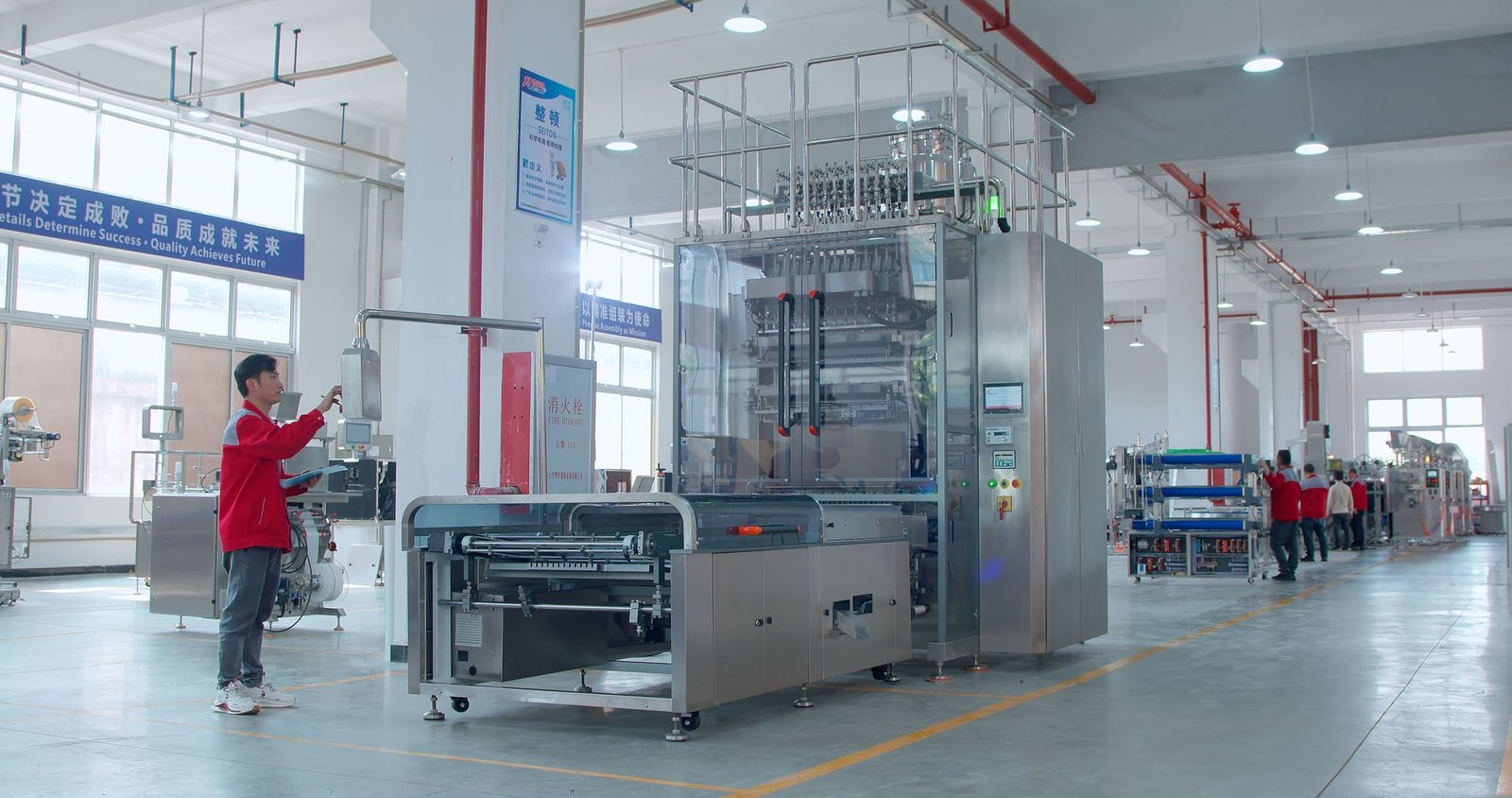
How to Set Up a Laundry Detergent Packaging Line Step-by-Step
A complete roadmap for system design, mechanical selection, material containment, and turnkey integration for both powder and liquid detergent production lines.
Product Characterization & Rheology Profiling
Before sizing tanks or ordering dosing modules, map out the physicochemical characteristics of the detergent formulations. For liquid laundry detergents and fabric softeners, analyze dynamic viscosity (ranging from 100 cP for thin formulations to 2,500 cP for concentrated gels), shear-thinning behavior, foaming tendency under pressure, and chemical corrosiveness. For washing powders and laundry granules, evaluate bulk density, angle of repose, moisture absorption rates, and particle size distribution. These physical metrics dictate whether your line requires servo-driven positive displacement piston pumps, Coriolis mass flow meters, or closed-loop vertical auger screws with vacuum de-aeration systems.
Determining Target Packaging Formats & Barrier Materials
Detergent lines generally specialize in three dominant primary packaging classifications:
- Multi-Lane Flexible Sachets & Stick Packs: Ideal for single-wash economy markets and hotel amenities. Uses laminated multi-layer barrier films (PET/AL/PE or recyclable mono-PE) processed on chemical sachet packaging machines.
- Premade Stand-Up Pouches & Doypacks: Feature child-resistant zippers or corner pour-spouts for liquid refills and laundry powder pods.
- Rigid HDPE/PET Bottles: Designed for retail liquid detergents (500ml to 5L) with specialized dosing caps, handles, and automated induction seal liners.
Evaluate film tensile strength, heat seal thresholds, barrier moisture vapor transmission rates (MVTR), and chemical stress-crack resistance (ESCR) to ensure shelf stability without leakage.
Selecting Primary Dosing & Sealing Machinery
Primary packaging machinery forms the core of the line. For liquid detergents, implement sub-surface diving filling nozzles that rise synchronously with the liquid level to prevent foaming and bubble entrapment. Pair this with anti-drip cut-off valves and servo peristaltic or rotary piston pumps constructed with SUS316L stainless steel and PTFE/Viton seals. For detergent powders, integrate servo-controlled auger dosers equipped with dust-extraction shrouds and vibratory hopper agitators to ensure repeatable volumetric feeding. Multi-lane form-fill-seal (VFFS) systems provide high output (up to 400–800 pouches per minute across 4 to 12 lanes), maximizing footprint efficiency.
Sanitary Design, Dust Collection & Anti-Corrosion Engineering
Detergent active ingredients—including anionic and nonionic surfactants, sodium hypochlorite, enzymes, and optical brighteners—cause rapid degradation in standard mild steel machinery. All contact components must be fabricated from electropolished SUS316L stainless steel or PVDF. The machine frame should use passivated SUS304 with IP65-rated washdown electrical cabinets. For powder facilities, install central negative-pressure industrial dust collection systems directly over the feeding hoppers and heat-sealing jaws. This prevents powder dust from accumulating on open mechanical components and ensures clean seal zones free of particulate contamination.
Integration of Secondary & End-of-Line Automation
An automated line is only as productive as its end-of-line integration. Connect the primary packaging unit to an inline dynamic checkweigher for 100% weight verification and automatic off-spec rejection. Add high-resolution industrial continuous inkjet (CIJ) or laser marking systems for real-time batch coding and 2D Datamatrix serialization. Downstream modules require automatic collating, high-speed case erectors, robotic pick-and-place case packers, top-and-bottom carton tapers, and industrial palletizers wrapped with automatic stretch-film systems for stable transport.
FAT, Commissioning, Validation & OEE Optimization
Execute a comprehensive Factory Acceptance Test (FAT) at the machine builder’s manufacturing facility using production-grade raw materials and packaging substrates. Validate dosing accuracy under varied ambient temperatures, seal burst pressure (ASTM F1140), emergency-stop recovery routines, and recipe changeover durations. During Site Acceptance Testing (SAT), calibrate SCADA and PLC data logging (such as Siemens or Omron architectures) to monitor key OEE parameters: line availability, performance rate, and first-pass quality yield.
Technical Comparison: Liquid vs. Powder Detergent Packaging Architecture
Selecting machinery depends heavily on chemical phase, viscosity, particulate friction, and seal integrity requirements. Review the technical parameters below:
| System Parameter | Liquid Detergent Packaging Line | Powder / Granule Detergent Line |
|---|---|---|
| Core Dosing Mechanism | Servo Piston Pump / Magnetic Flow Meter / Coriolis Mass Flow | Servo Auger Screw / Multi-Head Weigher / Volumetric Cup |
| Primary Critical Challenge | Surfactant foaming, dripping & nozzle stringing | Dust dispersion, seal area fouling & air entrapment |
| Product Contact Metallurgy | SUS316L Stainless Steel / Hastelloy / PTFE Sealing | SUS304 / SUS316L with Mirror Polished Contact Surfaces |
| Nozzle / Feed Architecture | Bottom-up Diving Nozzle with Anti-Drip Suck-Back System | Closed-loop Dust Shroud with Dust Extraction Port |
| Dosing Accuracy Target | ±0.2% to ±0.5% (by weight or volume) | ±0.3% to ±1.0% (gravimetric / volumetric) |
| Typical Packaging Formats | Multi-lane liquid sachets, spout pouches, rigid bottles | Multi-lane stick packs, pillow bags, flat-bottom bags, bulk sacks |
| CIP Clean-in-Place Capability | Full Automated CIP/SIP loop with spray balls | Dry cleanout, tool-less quick-release auger tooling |
| Sealing Technology | Continuous Constant Heat / Ultrasonic Sealing | Pneumatic / Servo Heated Jaws with Dust Blowers |
Core Packaging Machinery for Detergent Production Lines
Explore factory-tested, high-efficiency packaging machinery engineered specifically for laundry powders, liquid surfactants, fabric conditioners, and commercial cleaning products.
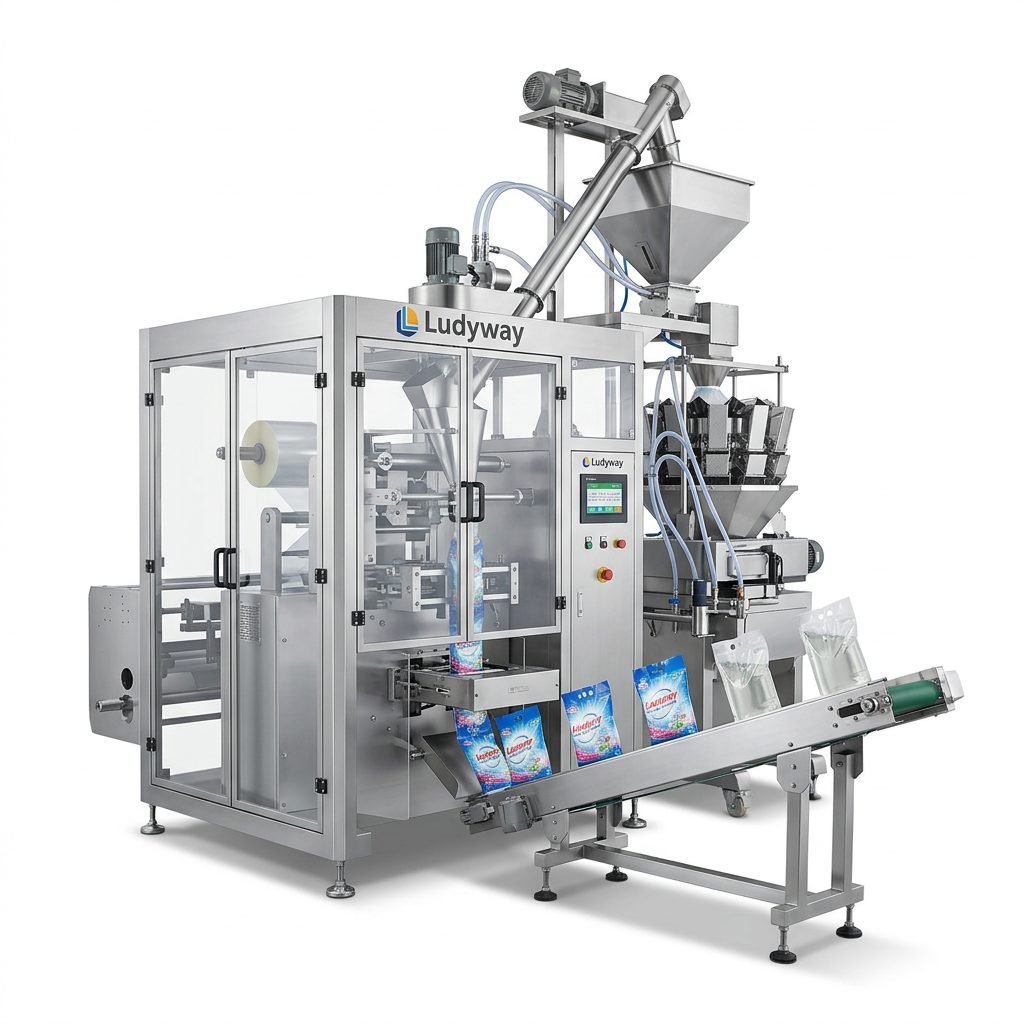
Automatic Laundry Detergent Packaging Machine for Powder & Liquid Filling
Versatile dual-application platform engineered for flexible switching between concentrated liquid and granular detergent sachets.
View Model Details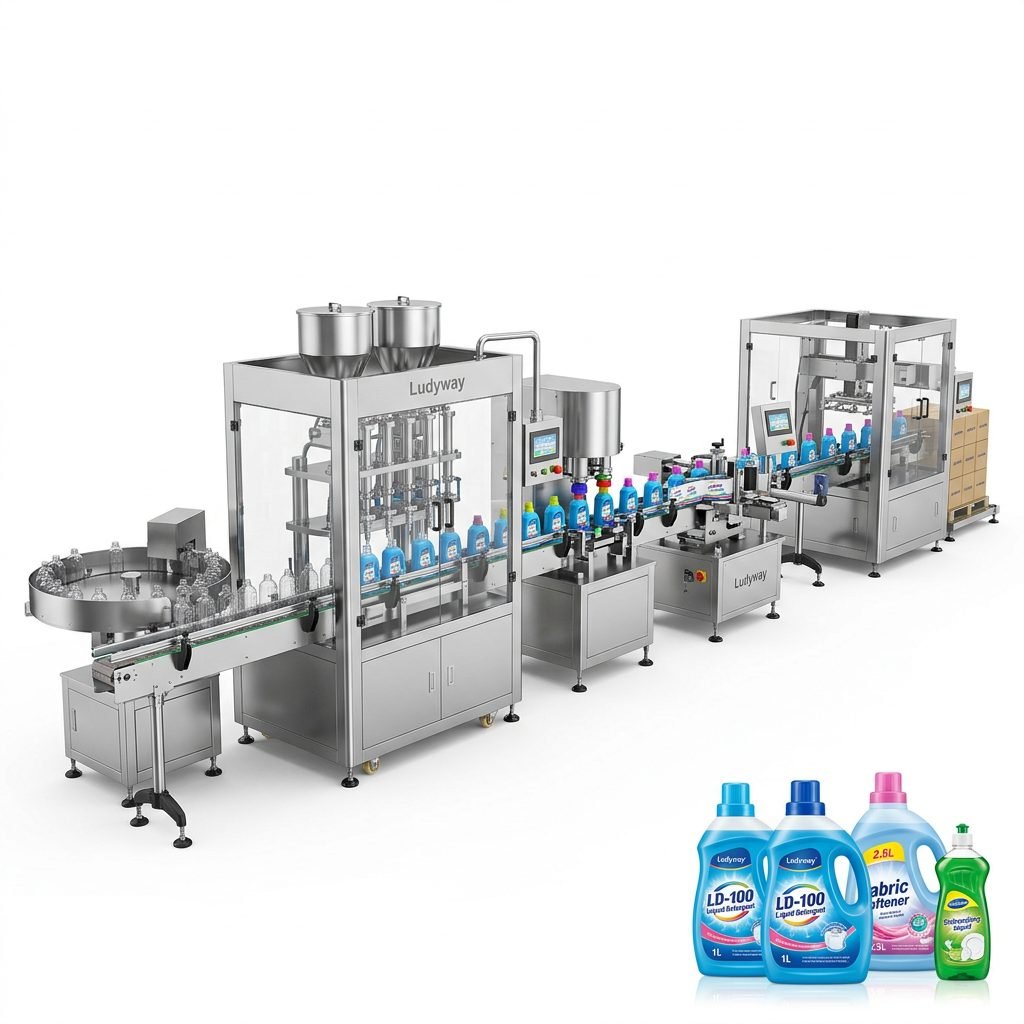
Automated Liquid Detergent Filling Packaging Line for Industrial Production
High-volume industrial turnkey line with multi-head dive nozzles, automated capping, and precision label application.
View Model Details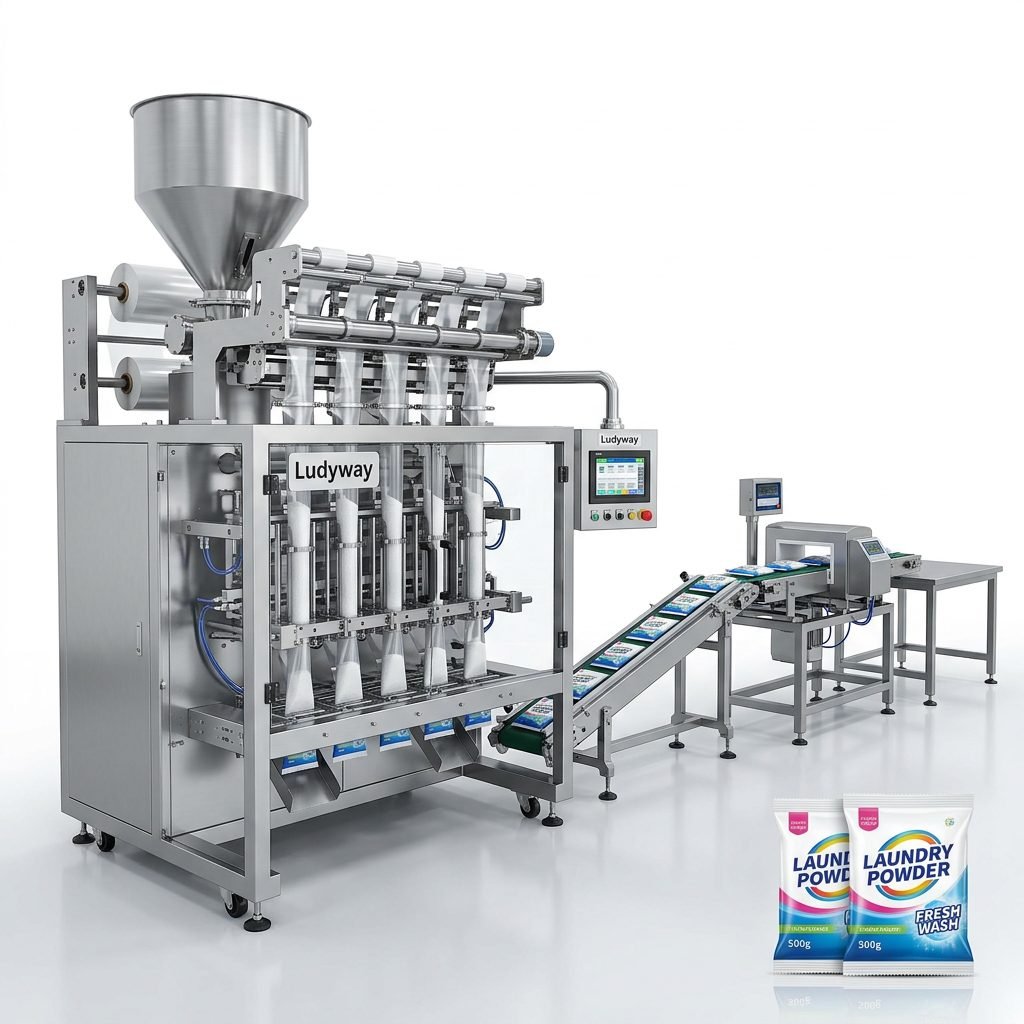
Automatic Laundry Powder Packaging Line for High-Volume Production with Multi-Lane System
Multi-lane vertical form-fill-seal system optimized for high-speed portion-controlled washing powder sachets.
View Model Details
Detergent Powder Fully Automated Multi-Lane Packaging Line Systems
Complete integrated system with bulk elevator, auger dosing, multi-lane sealing, checkweighing, and cartoning.
View Model Details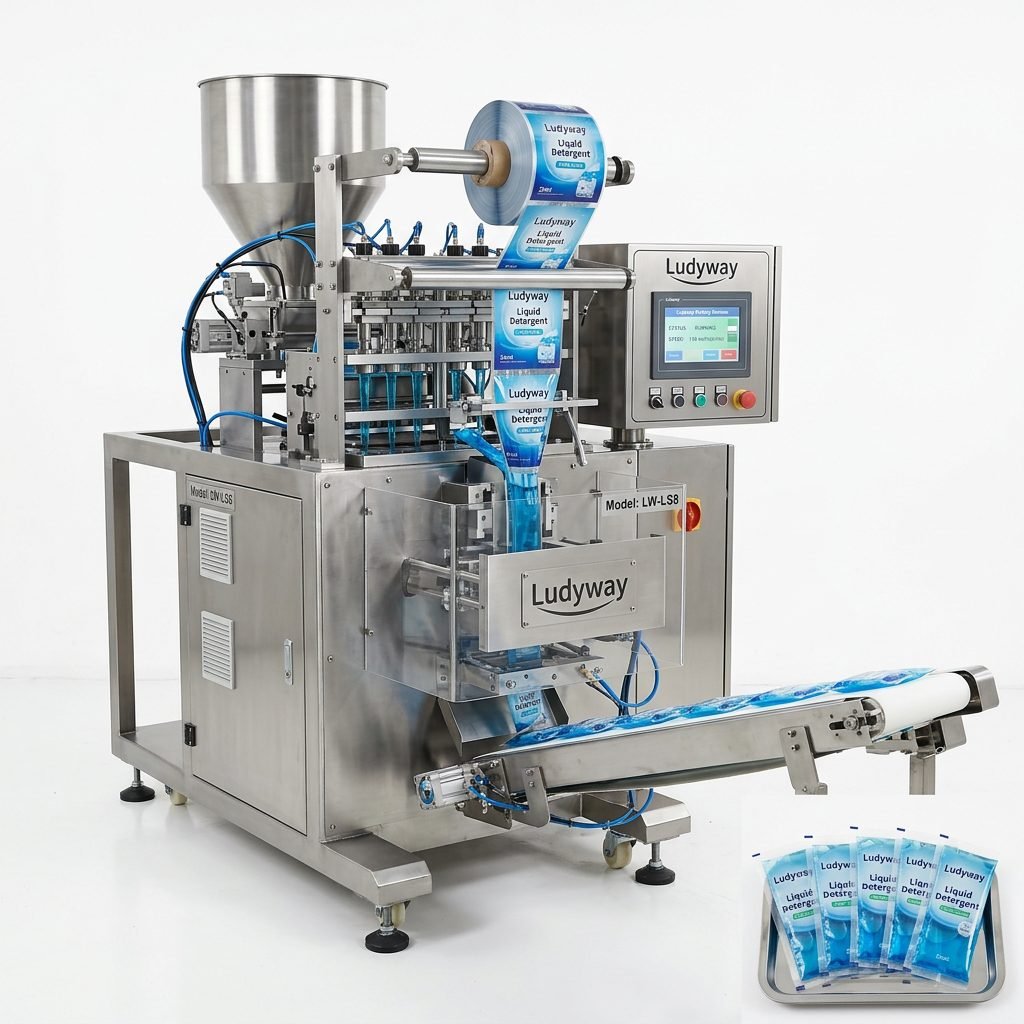
Liquid Detergent Sachet Packaging Machine for High-Speed Filling Lines
High-speed multi-track liquid sachet machine with leak-proof heat-sealing for liquid detergent and softener portions.
View Model Details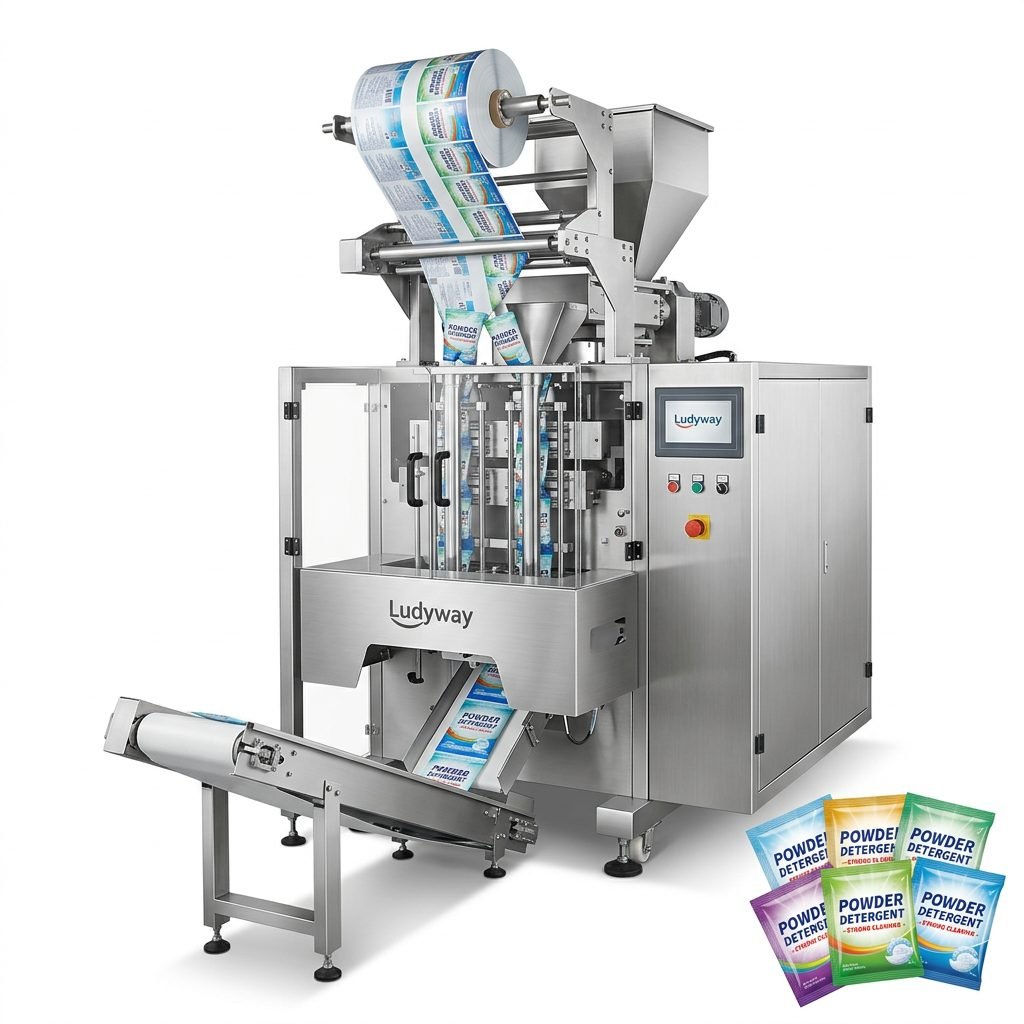
Powder Detergent Sachet Packaging Machine for Multi-Lane High-Speed Filling
Engineered with negative-pressure dust extraction hoods to maintain 100% hermetic seal integrity on sachet perimeters.
View Model Details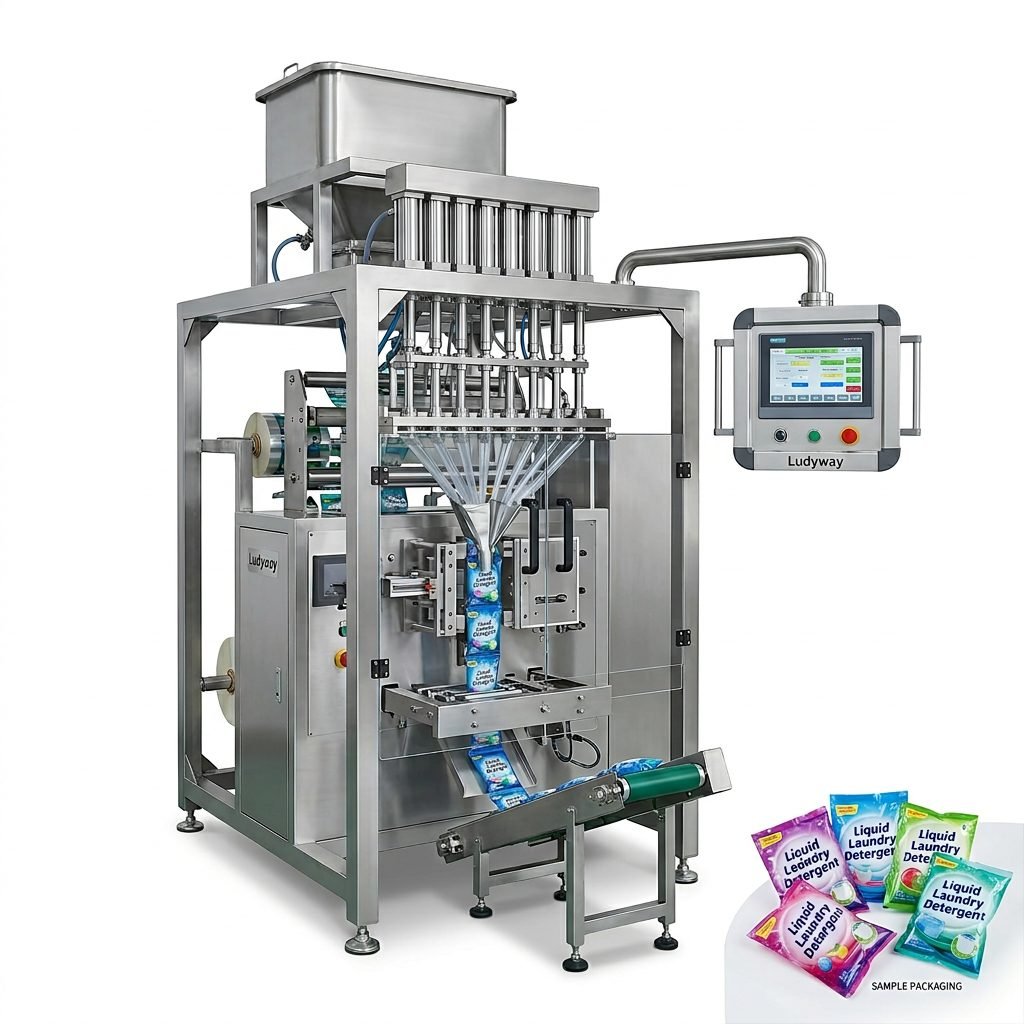
Automated Liquid Filling Machine for Laundry Detergent Sachet Packaging
Servo-driven piston dosing system tailored for highly viscous laundry surfactants, stain removers, and gels.
View Model Details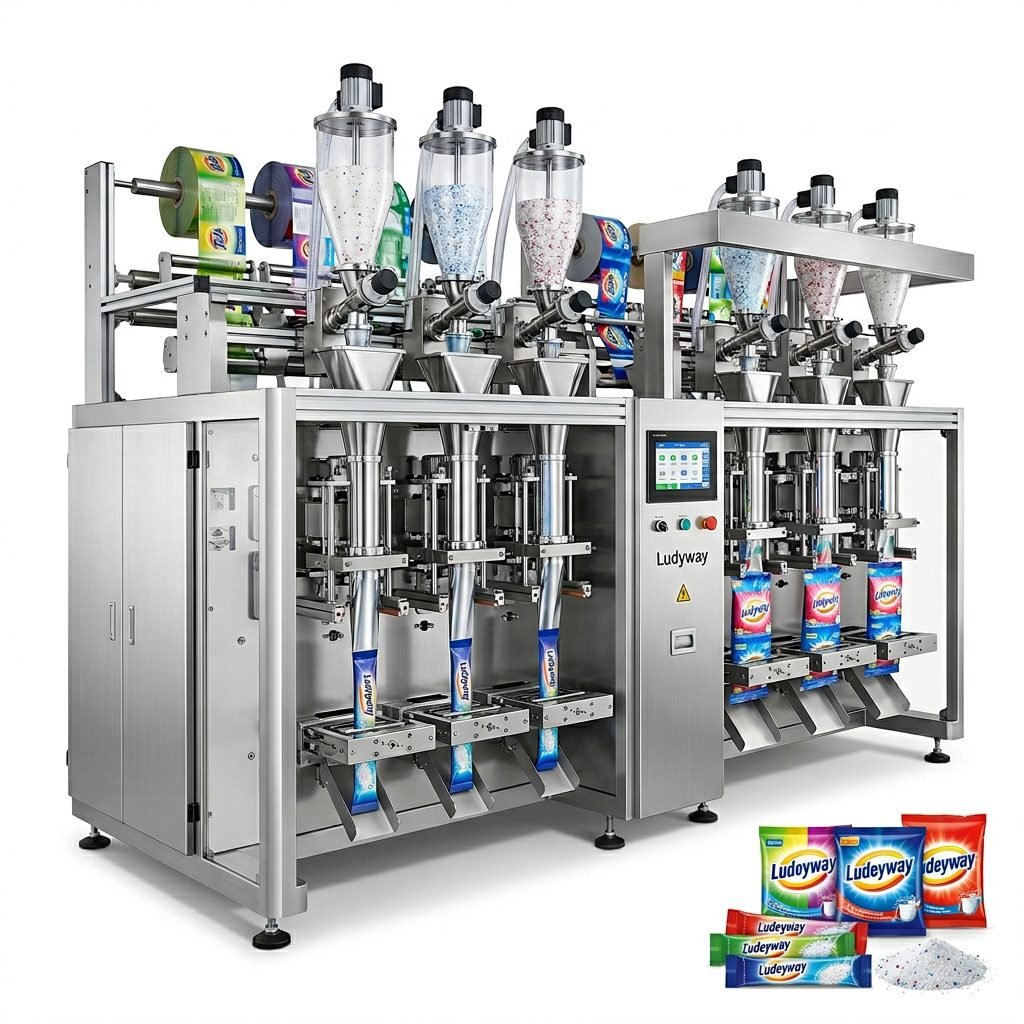
Advanced Detergent Packaging Machine for Granules & Powder
Flexible sachet and stick pack machinery with multi-lane volumetric dosers for specialty laundry bleach and booster granules.
View Model Details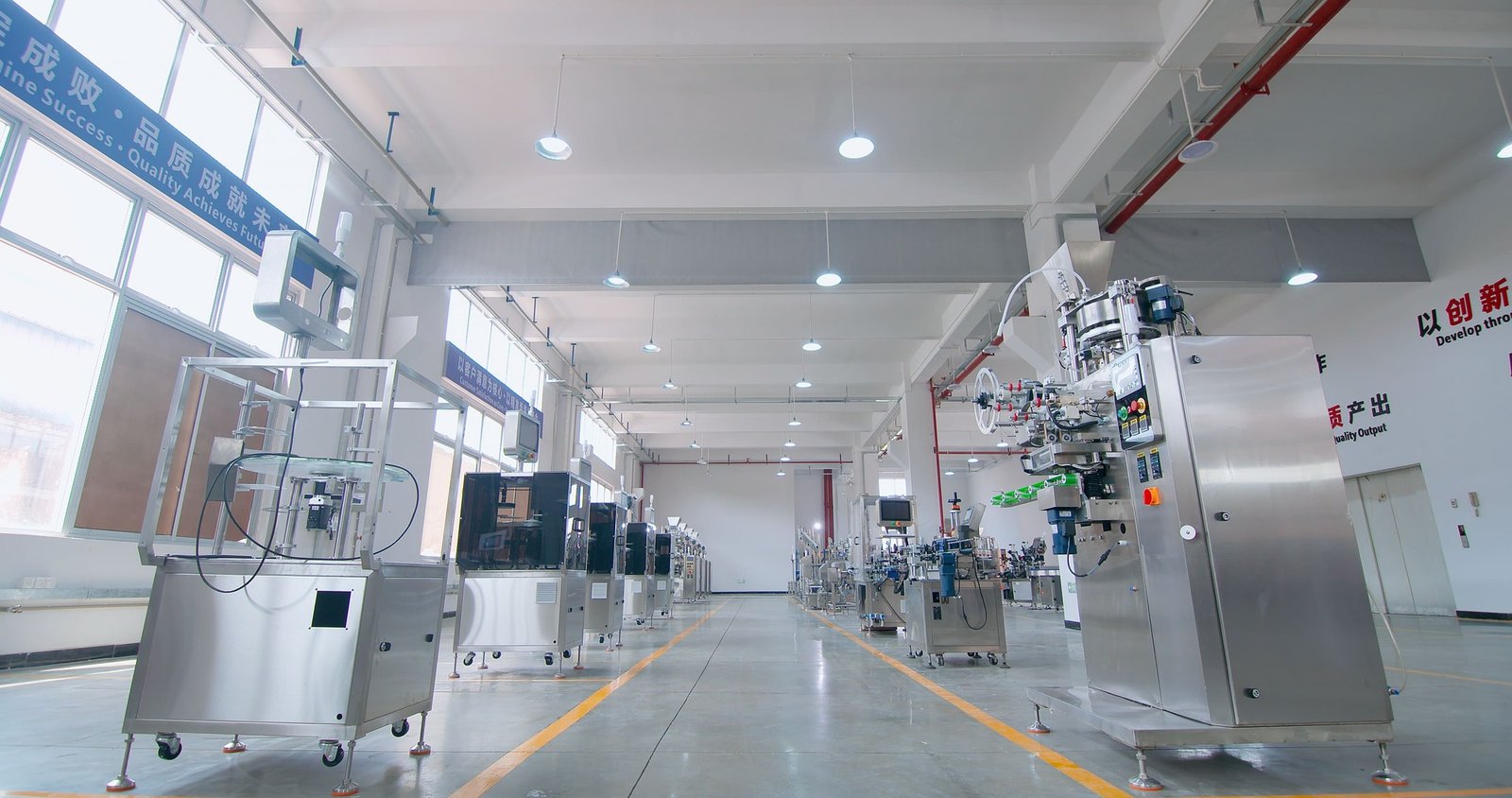
Engineering Safety, ATEX Compliance & Operational Efficiency
Operating a high-speed detergent packaging line requires balanced chemical containment, operator occupational hygiene, and machine durability. Certain laundry powder additives (such as percarbonates and active bleaching agents) generate airborne oxidizer dust requiring ATEX / Class II Division 1 explosive dust prevention standards.
Why Partner with Ludyway Machinery for Turnkey Lines
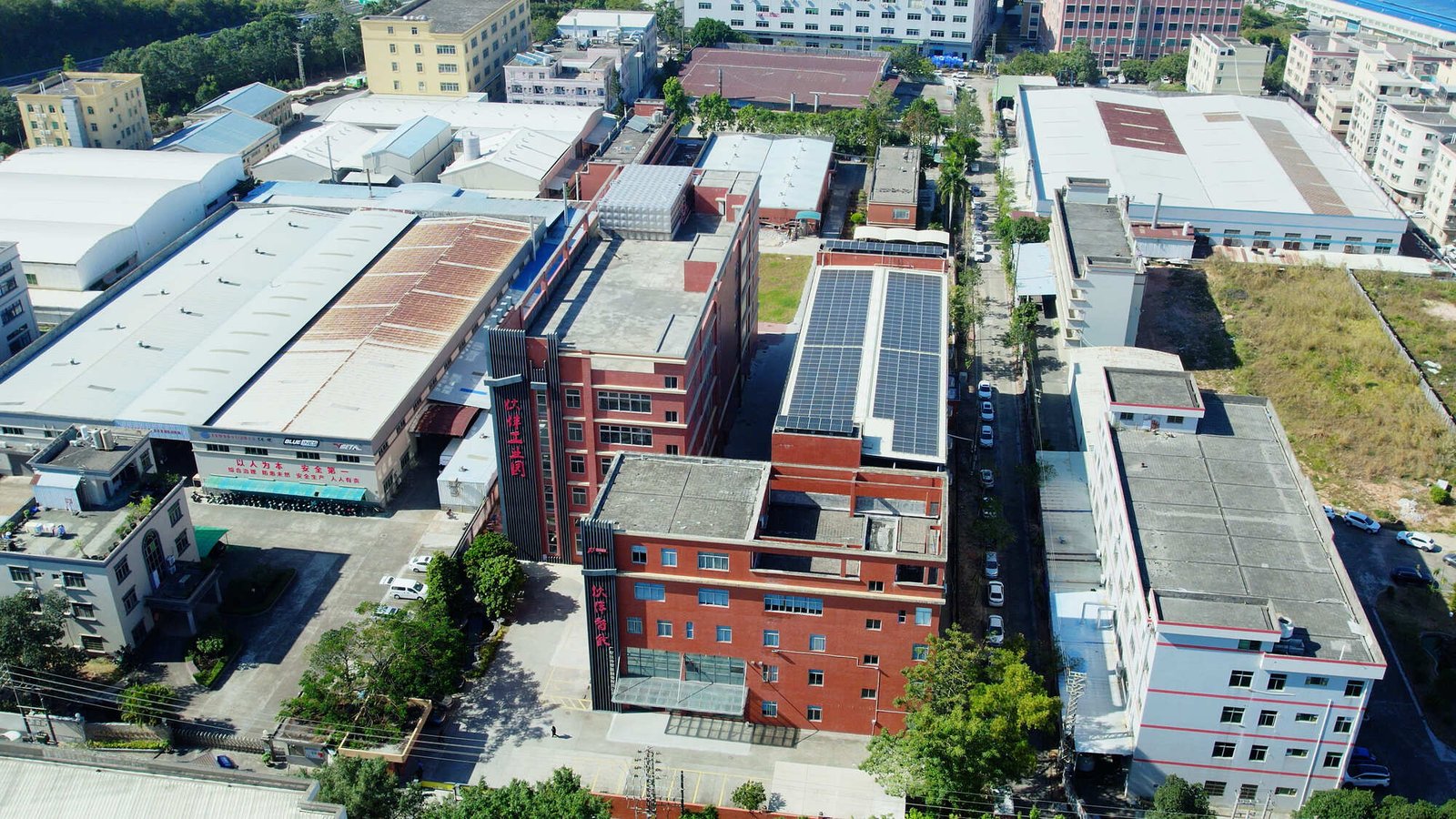
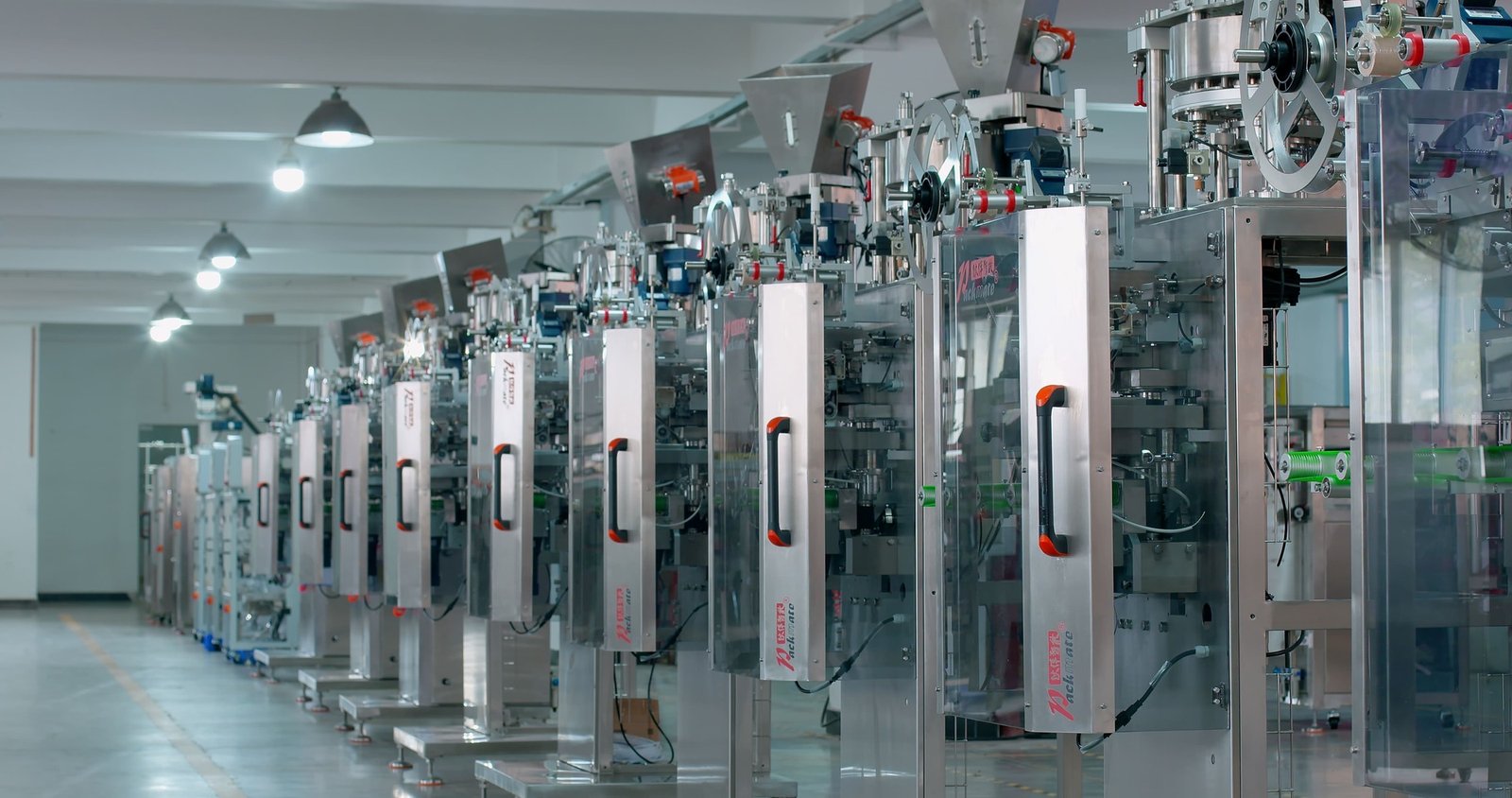
Ludyway is one of China’s premier packaging machine manufacturers, specializing in advanced packaging machinery and turnkey production line integration for daily chemical, cosmetic, food, and pharmaceutical applications. With over 30 years of industry expertise, our engineering department delivers robust packaging solutions for powder, granule, and liquid products.
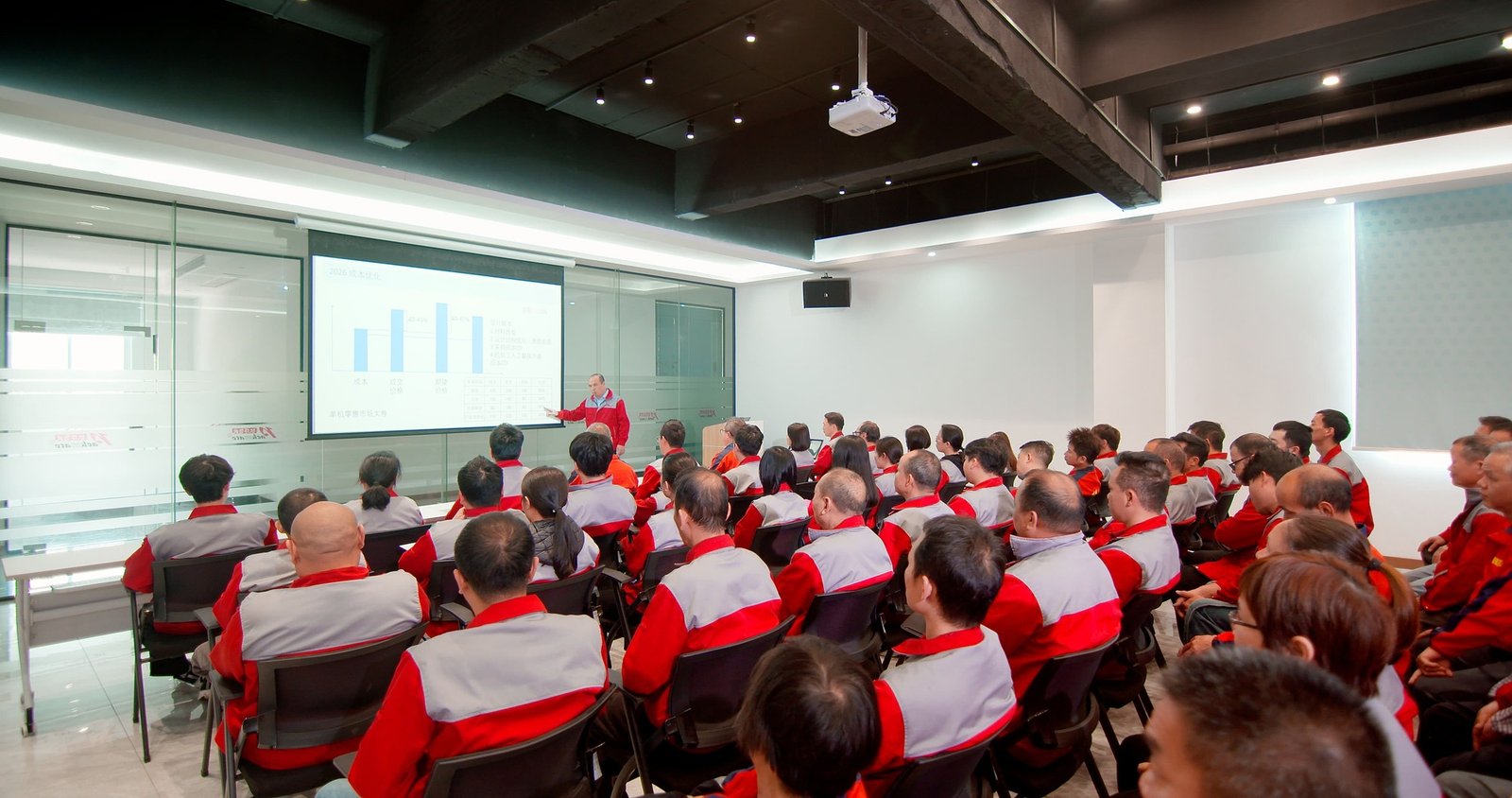
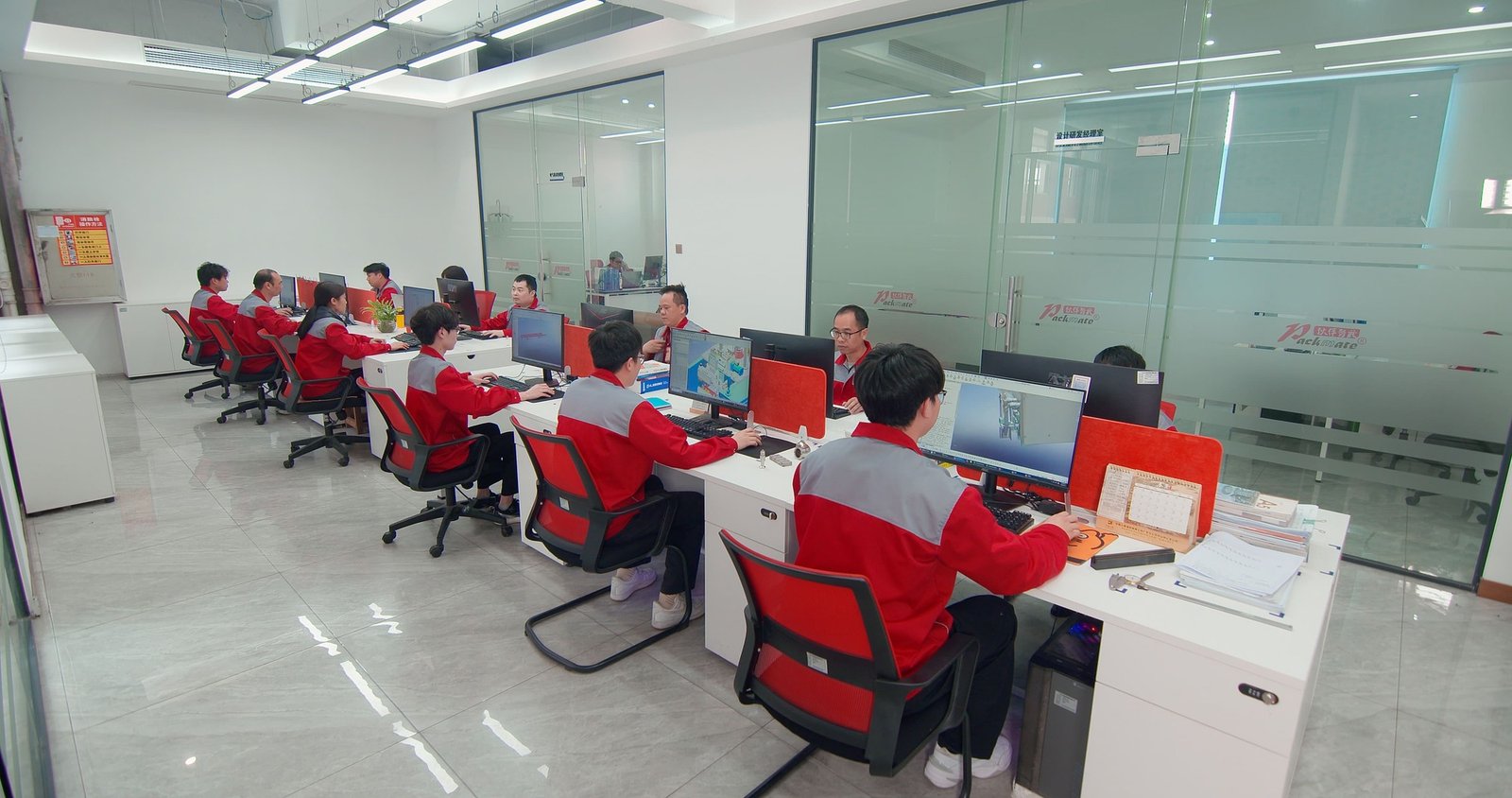
Operating from a modern 20,000㎡ manufacturing center equipped with over 200 precision manufacturing units, Ludyway builds more than 50 standard and customized packaging machine models. Having installed systems in over 100 countries and regions worldwide, we provide complete lifecycle support—from engineering floorplan design and custom PLC logic to on-site commissioning and operator training.
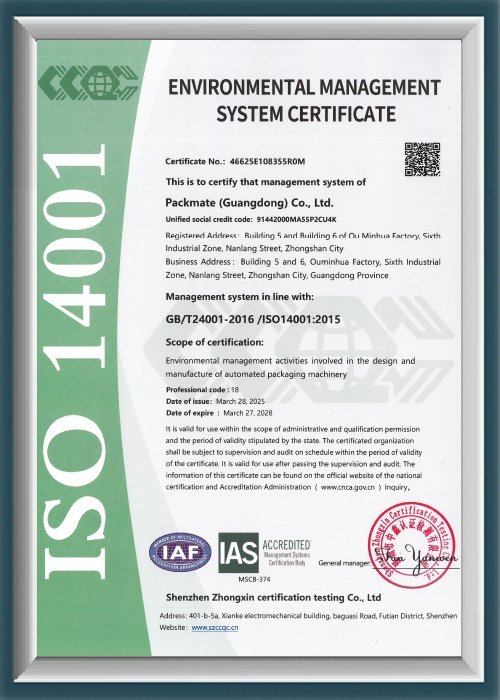
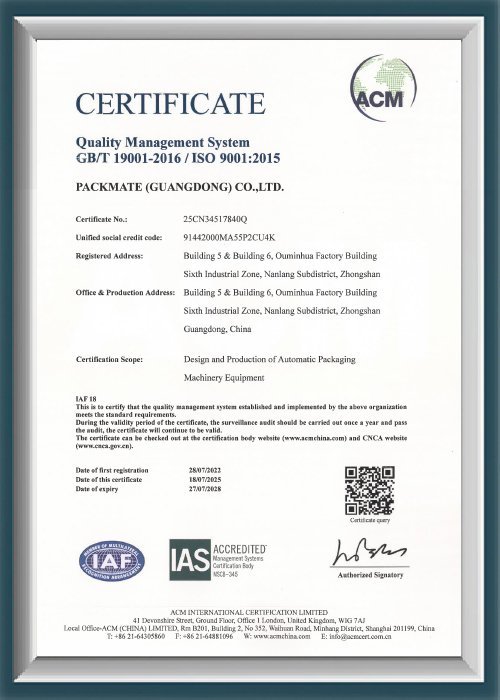
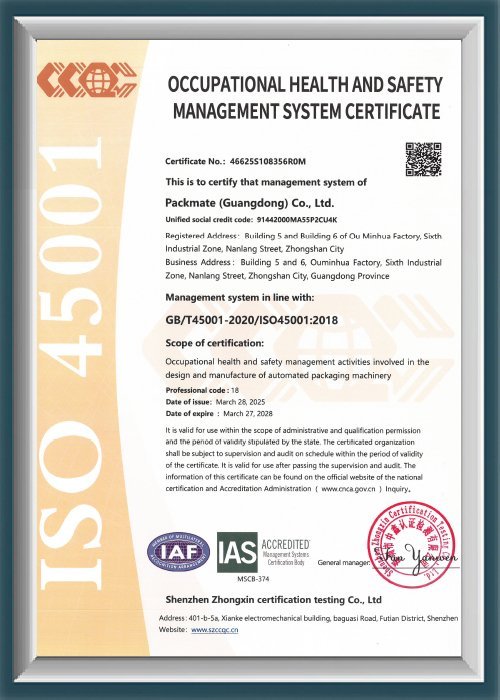
International Quality & Safety Certifications
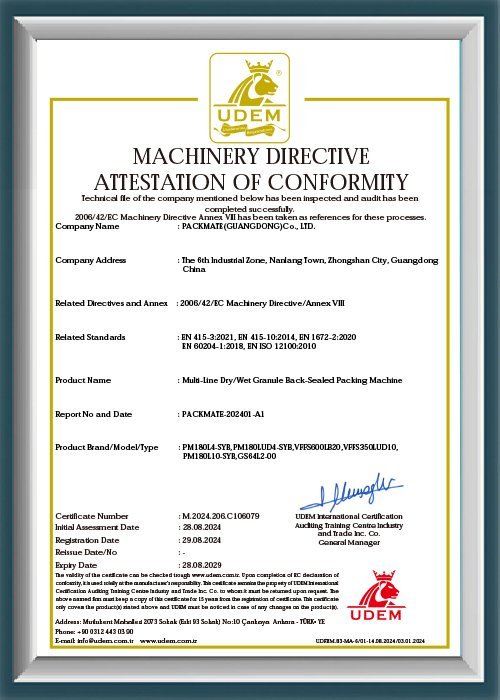
Every Ludyway packaging system meets CE, ISO 9001, and international daily chemical machinery safety standards.
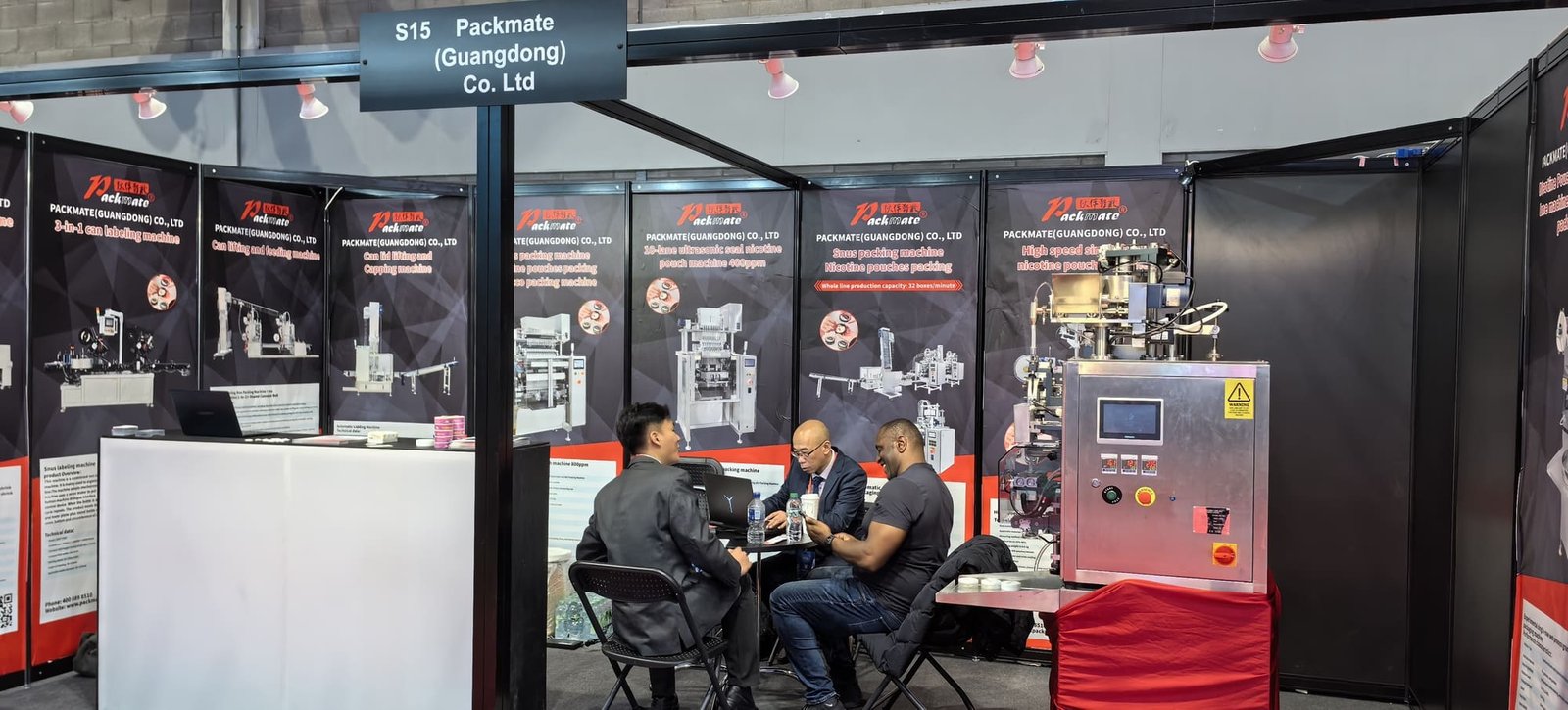
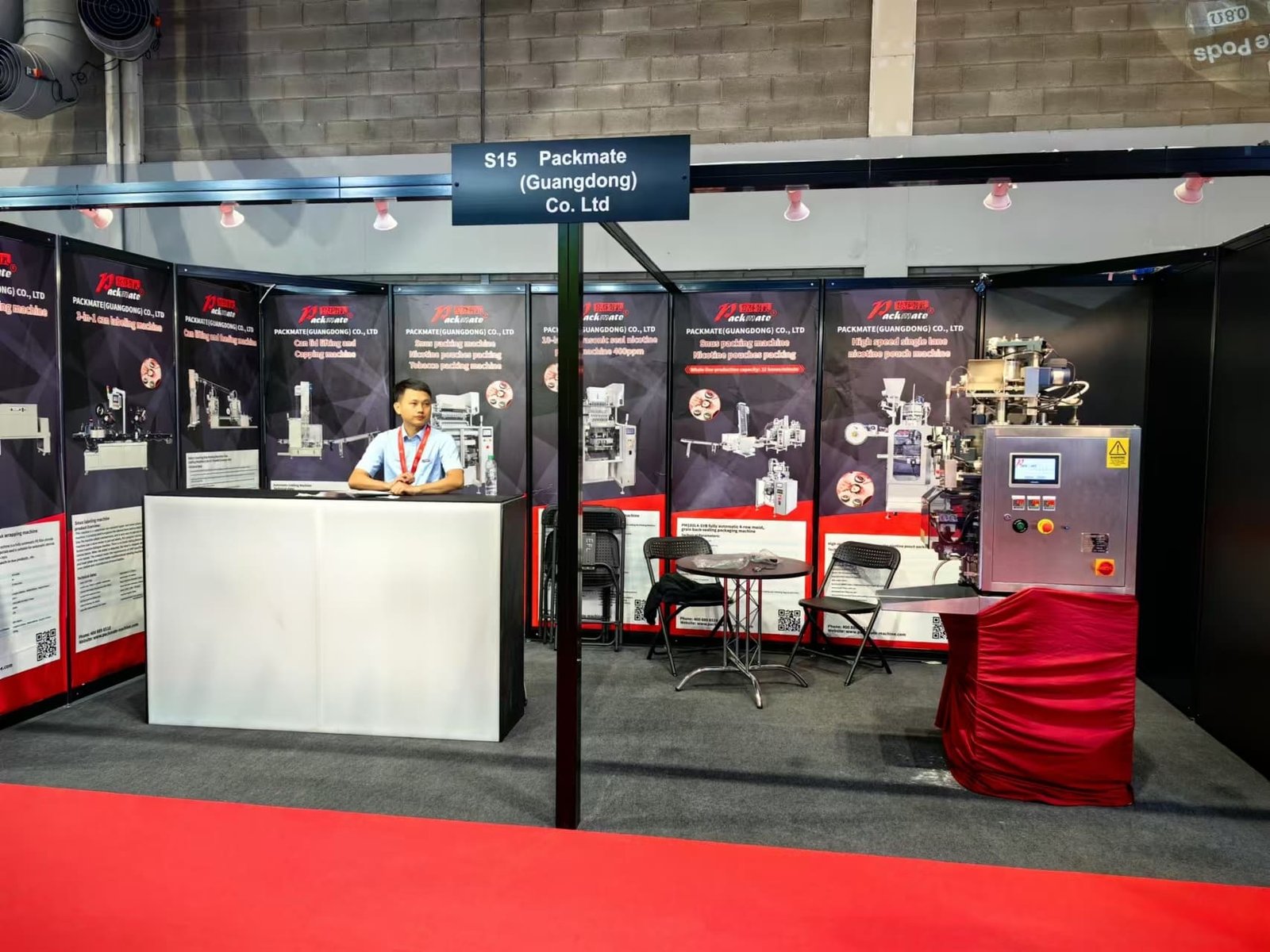
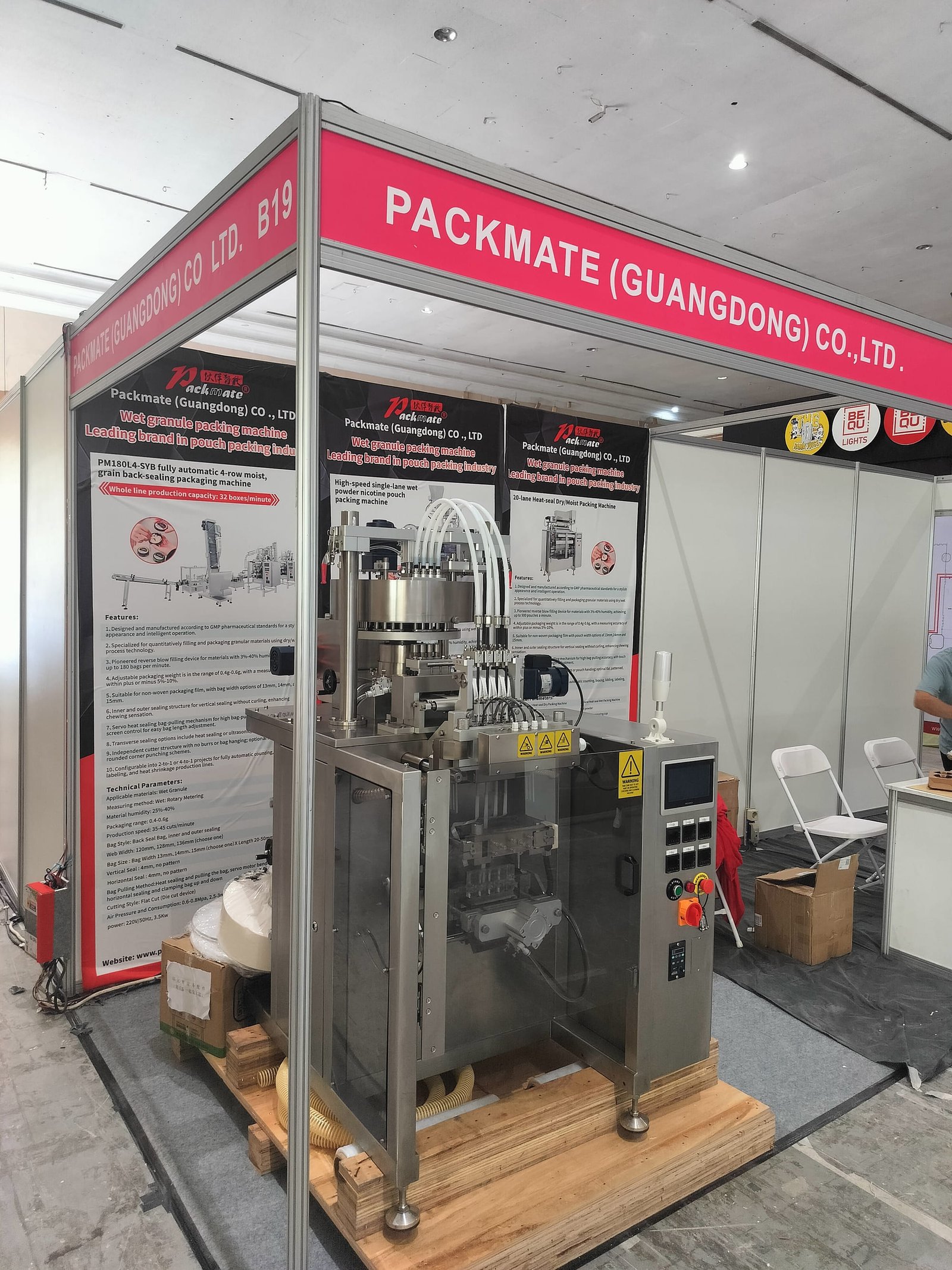
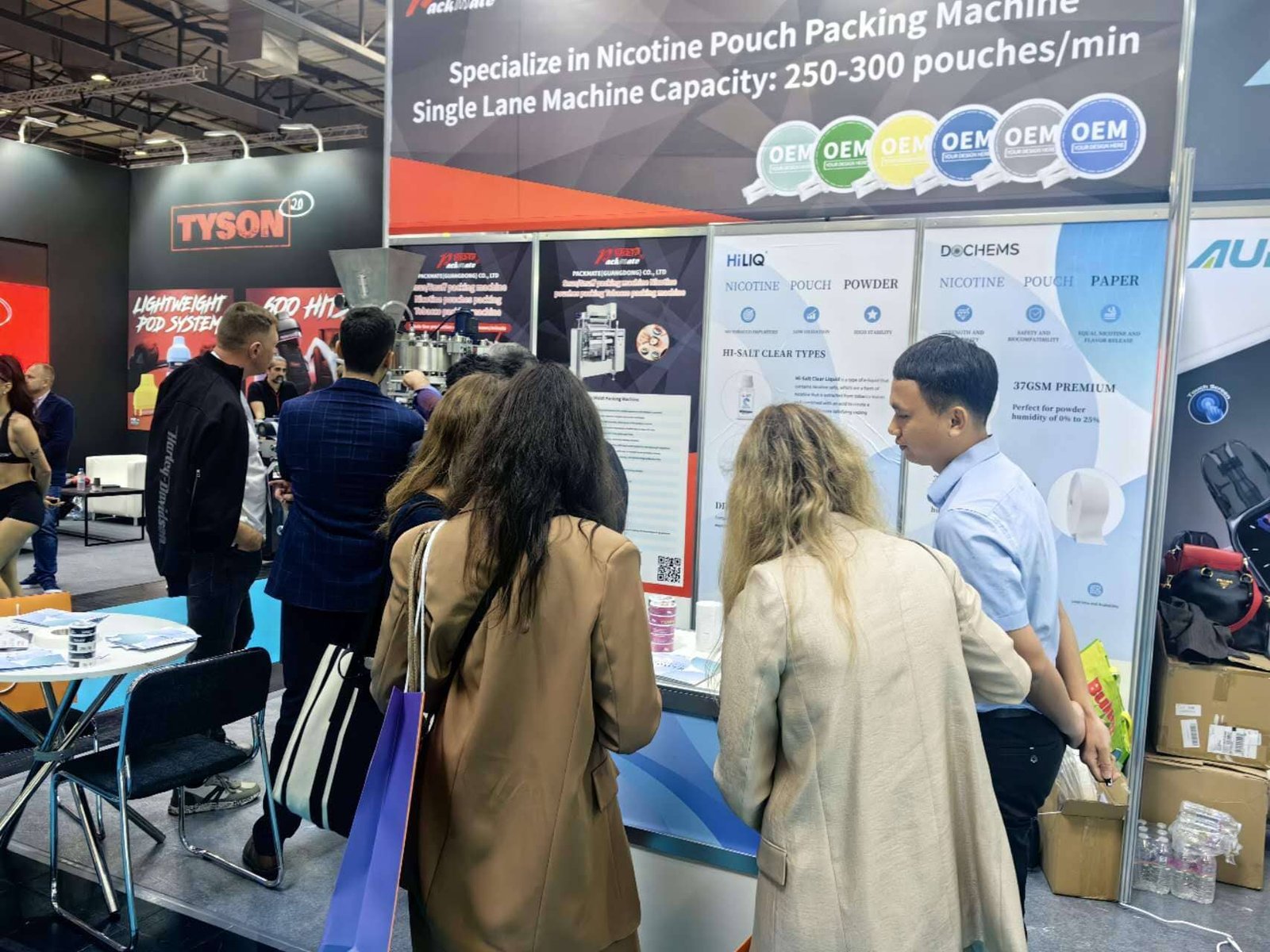
Global Presence & Packaging Trade Exhibitions
Frequently Asked Technical Questions
Common technical queries faced by plant engineers during detergent packaging line procurement and setup.
Foaming is controlled using a three-tier engineering approach: First, configure servo-programmable bottom-up dive nozzles that begin dosing at the base of the container and rise at a speed matched to the liquid meniscus. Second, use variable-velocity filling profiles (e.g., slow start, fast bulk fill, gentle finish). Third, incorporate pneumatic anti-drip cut-off valves with vacuum suck-back at the nozzle tip to capture remaining droplets before the container moves.
Detergent builders and bleaching additives degrade metals over time. We engineer all product-contact parts in SUS316L stainless steel or non-metallic polymers like PVDF and PTFE. In addition, machine frames are treated with corrosion-resistant passivated finishes, electrical enclosures are rated IP65/NEMA 4X with positive internal air pressure, and critical servo motors feature food- and chemical-grade epoxy coatings.
Airborne powder settling on the heat-seal area is the leading cause of channel leaks in detergent sachets. To eliminate this, Ludyway packaging machines employ: (1) integrated dust evacuation manifolds directly above the sealing station, (2) static-eliminating ionizing bars to discharge the film web, and (3) precision-machined, multi-patterned heated sealing jaws with independent digital PID temperature controls.
Production capacity depends directly on the number of lanes and dosing volume. A Ludyway 6-lane multi-lane sachet machine running 30g single-use detergent powder or 25ml liquid portions typically operates at 40 to 60 cycles per minute, resulting in an output of 240 to 360 sachets per minute (14,400 to 21,600 units/hour). Higher output needs are met with 10-lane or 12-lane configurations delivering over 700 units per minute.
Yes, on modular horizontal form-fill-seal (HFFS) or rotary premade pouch machines configured with interchangeable dosing heads. By designing quick-disconnect interfaces, an operator can swap between a servo piston liquid doser and an auger powder filler in under 45 minutes. For multi-lane vertical machines (VFFS), dedicated lines for liquids vs powders are recommended for higher continuous efficiency and easier cleaning protocols.
A standard turnkey detergent line requires: 3-phase 380V/480V electrical supply (50/60 Hz), dry and oil-free compressed air supply at 0.6–0.8 MPa (ISO 8573-1 Class 1:4:1 standard), a dedicated industrial vacuum line for dust extraction, treated process water supply for Clean-in-Place (CIP) rinse cycles, and a reinforced industrial floor with an acid/alkali-resistant epoxy topping.
Have more technical questions about your project?
Explore Complete Machine FAQsPlan Your Custom Laundry Detergent Packaging Line with Ludyway
From product viscosity analysis and floorplan CAD layout to multi-lane machinery fabrication, end-of-line integration, and international on-site commissioning—our team delivers turnkey solutions tailored to your production goals.
