
How to Set Up a Smart Packaging Line | Complete Guide
A comprehensive engineering manual for food, pharmaceutical, health, and chemical manufacturers. Learn how to architect, integrate, and optimize an intelligent, high-speed automated packaging ecosystem from primary filling to robotic palletizing.
Understanding the Anatomy of a Modern Smart Packaging Line
Modern industrial packaging is no longer a collection of isolated mechanical stations. A connected, smart packaging line is an integrated cyber-physical manufacturing cell combining automated dosing, multi-lane wrapping, high-resolution machine vision, Industrial Internet of Things (IIoT) telemetry, and edge-level PLC control.
Transitioning from conventional mechanical lines to an interconnected smart packaging infrastructure allows manufacturers in the food, pharmaceutical, nutritional supplement, and chemical sectors to unlock radical improvements in Overall Equipment Effectiveness (OEE), batch traceability, and material utilization.
When engineering an automated system, every component—from vertical form fill seal (VFFS) systems to high-speed multi-lane stick pack equipment and downstream robotic cell palletizers—communicates synchronously over standardized fieldbus networks (such as EtherNet/IP, PROFINET, or OPC UA). This synchronization prevents upstream bottlenecks, eliminates dry cycles, and dynamically regulates machine speeds based on live line density.
Key Smart Criterion: A truly smart line must feature closed-loop weight feedback, automated scrap rejection, remote diagnostics, and real-time recipe execution without physical recalibration.
| Engineering Attribute | Traditional Automated Line | Smart Packaging Line 4.0 |
|---|---|---|
| Control Topology | Isolated PLCs / Islanded relays | Unified SCADA / OPC UA / Cloud MES |
| Changeover Protocol | Manual mechanical adjustments (2-4 hrs) | Digital single-touch servo recall (<15 mins) |
| Quality Control | Periodic manual spot sampling | 100% In-line X-Ray, Vision & Checkweighing |
| Maintenance Strategy | Reactive upon mechanical breakdown | Predictive vibration & thermal IoT telemetry |
| Dosing Accuracy | Static volumetric drift | Dynamic closed-loop gravimetric trimming |
Step-by-Step Implementation Blueprint for Smart Packaging Lines
A structured, engineering-first roadmap to take your facility from initial material characterization to continuous, high-speed automated output with zero unplanned downtime.
Material Rheology & Bulk Analysis
Every packaging line starts with the physical properties of the product. Accurately defining physical flow traits dictates feeding mechanisms and seal integrity.
- Powders: Bulk density, hygroscopic traits, aeration, and angle of repose.
- Granules: Friability, particle size distribution, and chute wear index.
- Liquids: Viscosity index, shear-thinning properties, and surface tension.
- Film Substrates: Tensile strength, seal initiation temperature (SIT), and barrier permeability.
Primary Dosing & Packaging Integration
Select the core packaging platform configured for high-speed multi-lane efficiency or high-payload flexible bag formation.
- Multi-Lane Stick Pack & Sachet Systems: High-throughput, multi-nozzle servo filling.
- Auger Dosing Modules: Servo-driven feed screws with independent motor feedback.
- Multi-Head Gravimetric Scales: High-speed combination weighing for snacks & granules.
- Hermetic Seal Jaws: Continuous ultrasonic or precise PID thermal heating bars.
Sensory Network & Closed-Loop Feedback
Implement industrial smart sensing across the line to achieve continuous closed-loop self-correction without operator intervention.
- Dynamic Checkweighing: Live packet weight measurement with auto auger speed trimming.
- Photoelectric & Laser Array: Real-time tracking of web position and print mark registration.
- IO-Link Sensors: Continuous diagnostics reporting sensor degradation and dirt buildup.
- Laser Level Detection: Constant monitoring of hopper reserves to drive vacuum feed hoppers.
In-Line Vision & Quality Validation
Safeguard brand reputation and maintain strict GMP/FDA compliance by identifying micro-defects at full production line speeds.
- High-Speed OCR/OCV: Verification of lot codes, expiry dates, and 2D DataMatrix barcodes.
- AI Optical Seal Inspection: Thermal imaging to detect product caught inside heat seals.
- Multi-Spectrum X-Ray Scanners: Detection of ferrous, non-ferrous, glass, and calcified bone.
- High-Speed Air Ejectors: Microsecond reject diversion to prevent line stoppages.
Secondary Automation & Cartoning
Bridge primary packs into retail-ready configurations with continuous-motion cartoners and robotic pick-and-place systems.
- Multi-Lane Stacking & Collating: Grouping stick packs and sachets precisely by count.
- Continuous & Intermittent Cartoners: Automatic box erection, leaflet insertion, and tuck/glue seal.
- Delta Robot Loading: High-speed visual sorting and collating into flexible multipacks.
- Case Packers: Side-load or top-load corrugated shipping carton erector-sealers.
Industrial IoT, SCADA & MES Integration
Connect the machinery to plant-wide supervisory control architectures for automated data harvesting and OEE intelligence.
- Unified PLC Architecture: Rockwell ControlLogix, Siemens S7-1500, or Beckhoff TwinCAT.
- Edge Gateways & MQTT/OPC UA: Secure telemetry push to plant ERP/MES systems.
- Live OEE Telemetry: Real-time quantification of Availability, Performance, and Quality.
- Predictive Maintenance: Vibration spectral analysis on bearings and motor drives.
Featured Smart Packaging Equipment & Systems
Select from our precision-engineered machinery lineup built for end-to-end integration, high throughput, sanitary compliance, and continuous operational intelligence.
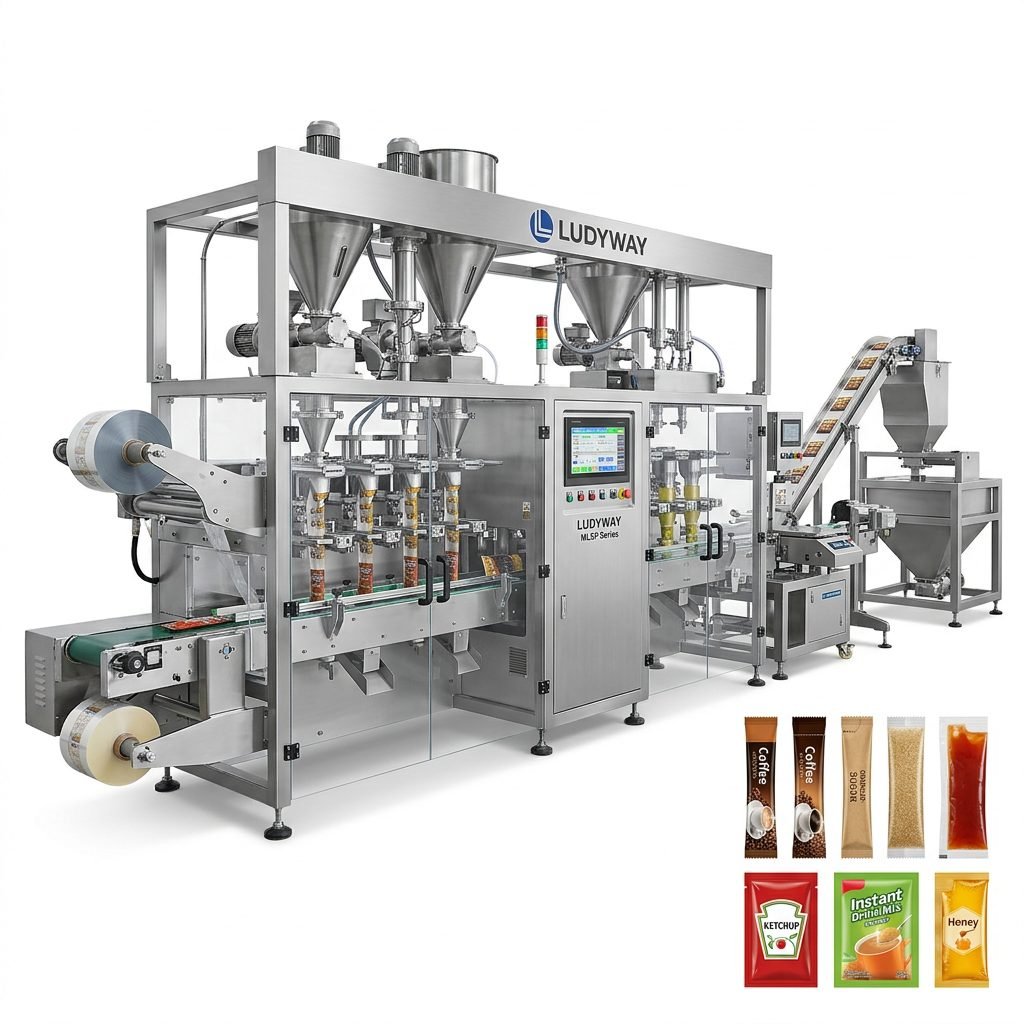
Multi-Lane Stick Pack & Sachet Automation
High-speed multi-lane system equipped with servo-actuated dosing for granules, micro-powders, and viscous liquids.
View Technical Specs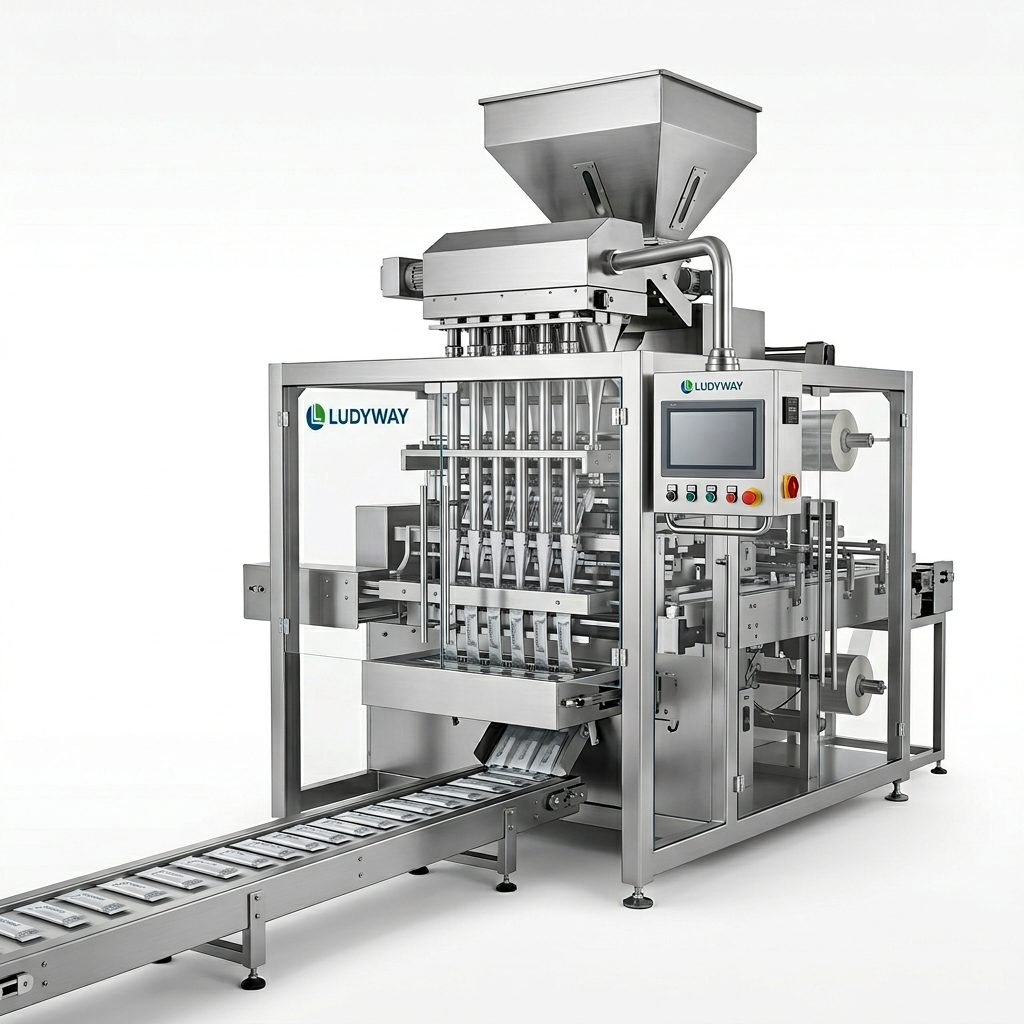
High-Speed Powder Packaging System
Precision auger dosing with independent lane volume adjustment, gas purging, and hygienic stainless construction.
View Technical Specs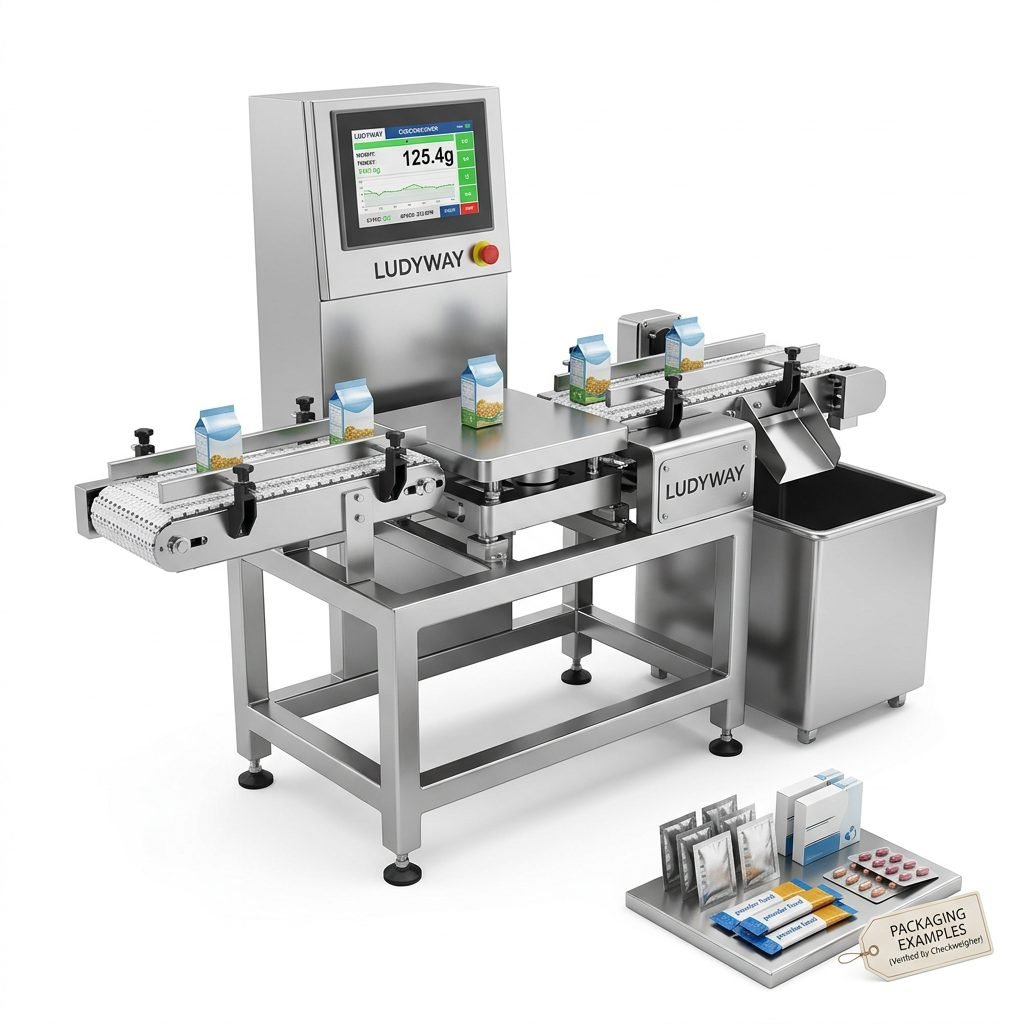
Dynamic In-Line High-Speed Checkweigher
High-frequency strain gauge sensor line inspection with auto-feedback loop to primary dosing systems.
View Technical Specs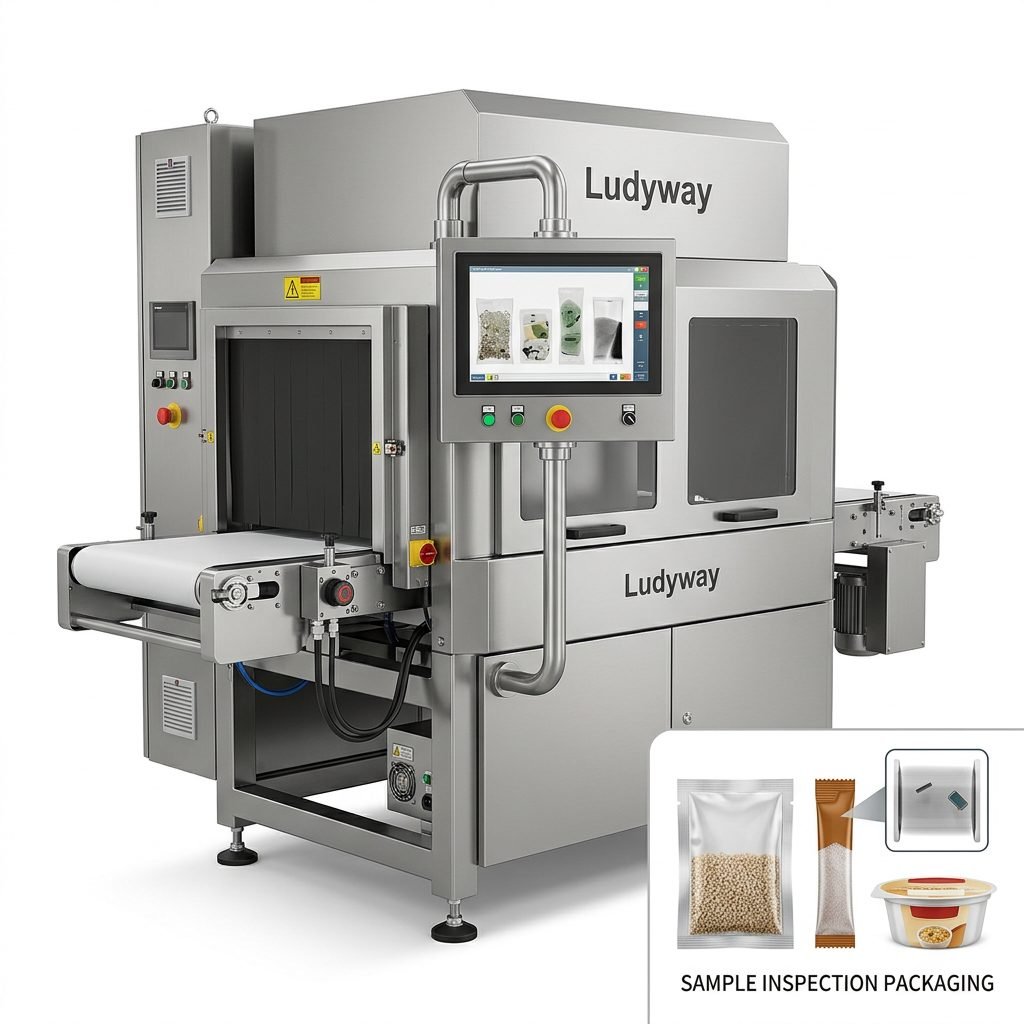
Industrial High-Resolution X-Ray Inspector
AI-assisted contaminant detection identifying metal, glass, bone, and stone fragments through sealed foil pouches.
View Technical Specs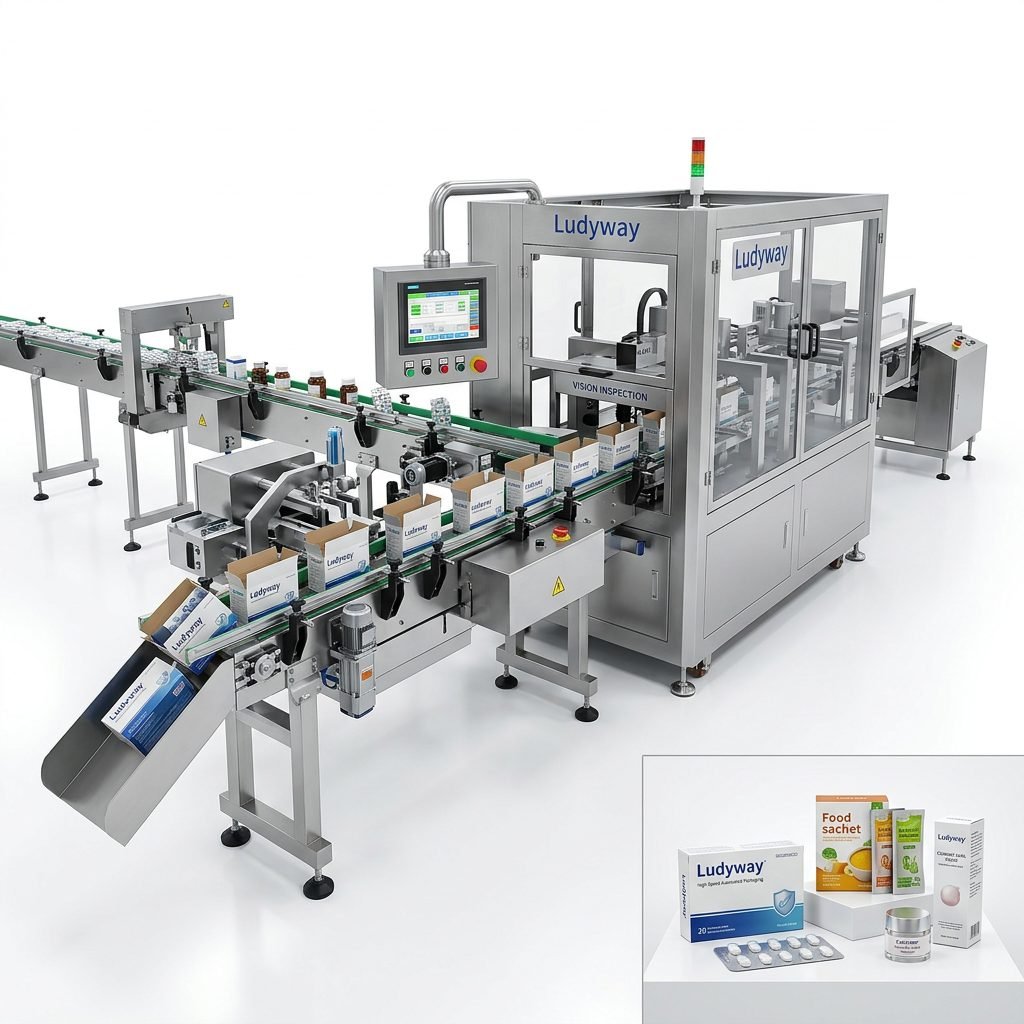
Continuous Automated Cartoning Line
High-speed rotary carton feeder with multi-lane collating, leaflet insertion, and hot-melt glue sealing.
View Technical Specs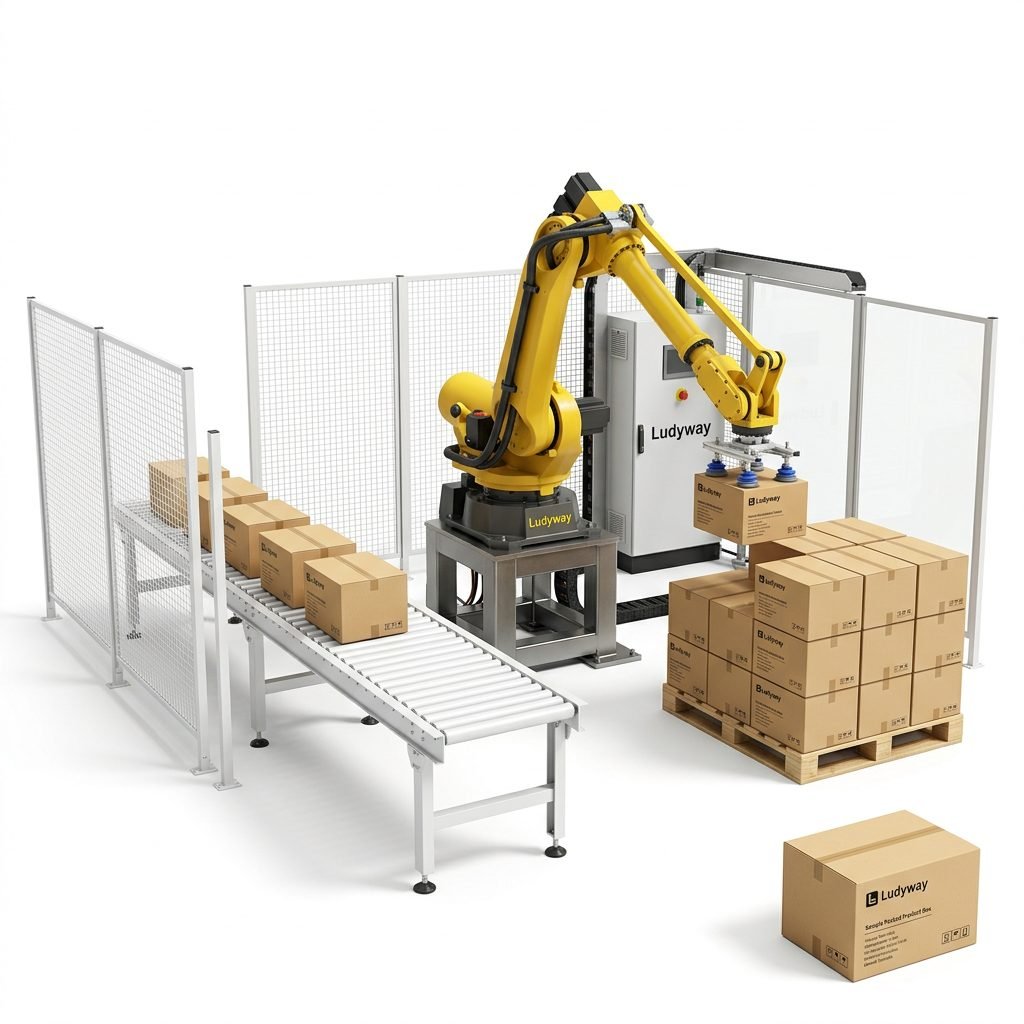
Robotic Articulated Arm Palletizer
Multi-axis robotic cell with vacuum/mechanical grippers, slip sheet placement, and integrated stretch wrapper handling.
View Technical Specs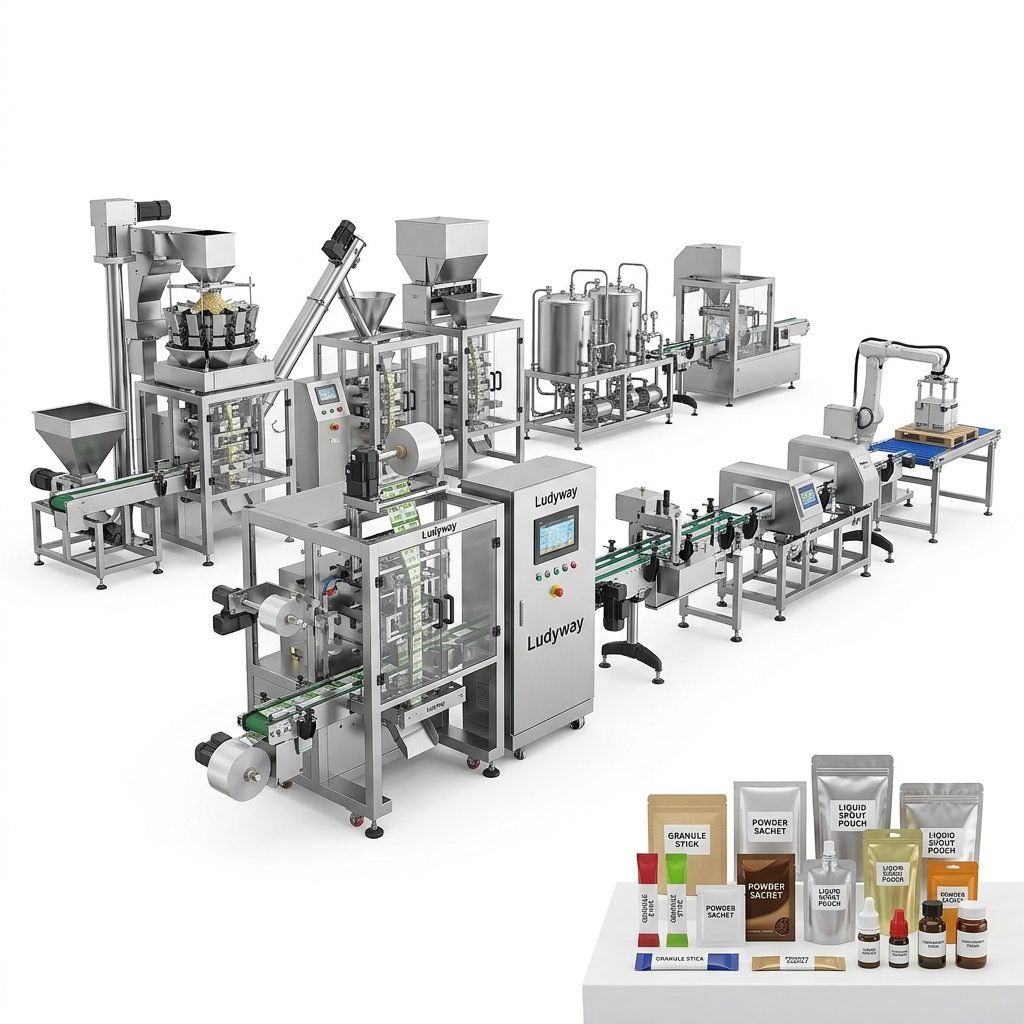
Smart Factory Integrated Turnkey Line
End-to-end synchronized line handling raw material intake to finished palletized loads with centralized SCADA.
View Technical Specs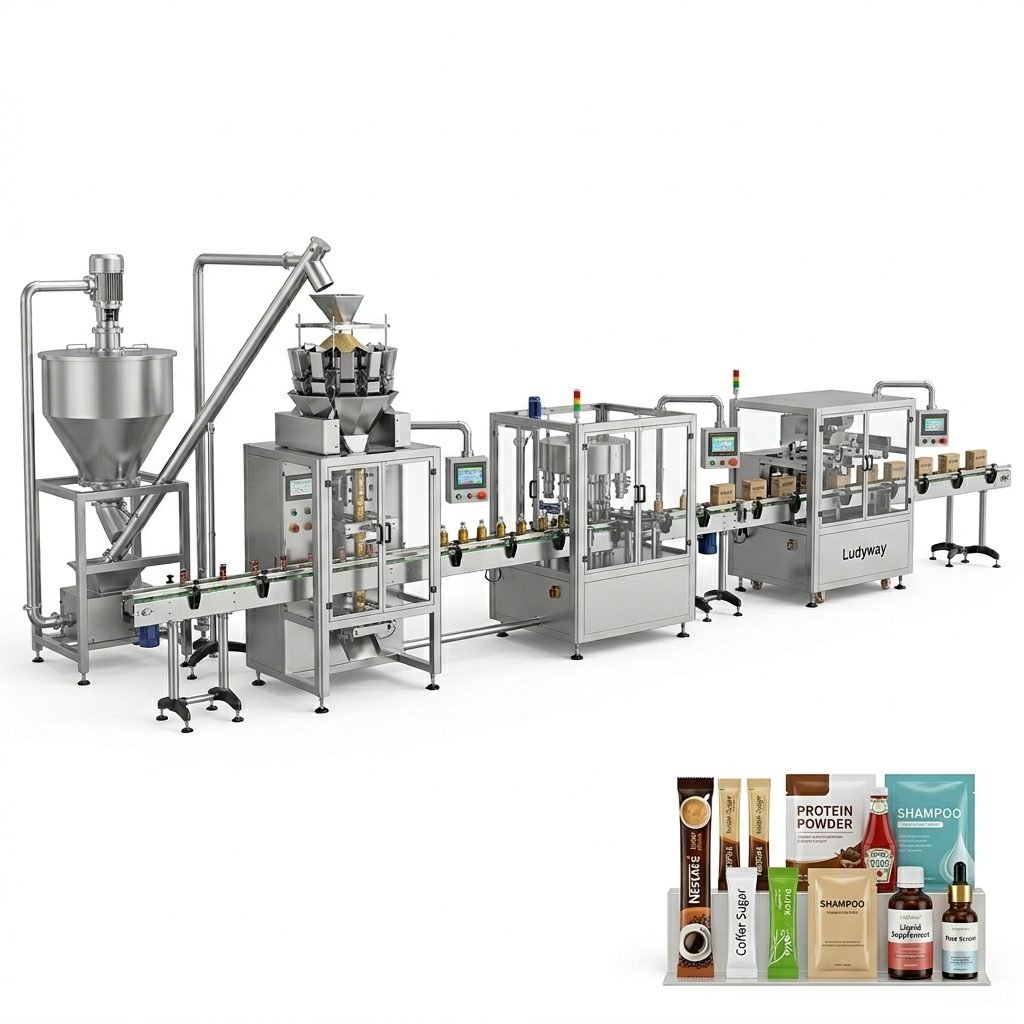
Custom Turnkey Flexible Line Cell
Modular architecture built for rapid changeover between stick packs, four-side sachets, and standing pouches.
View Technical SpecsEngineering Calculations & Throughput Optimization
Achieving peak efficiency requires eliminating line starved/blocked conditions through rigorous accumulator sizing and cycle time matching.
Line Balancing & Takt Time Ratio
To prevent downstream starvation, secondary cartoning capacity must exceed primary packaging output by a planned margin factor (typically 1.10 – 1.15).
For example, if a 10-lane stick pack machine outputs 600 sticks/minute (60 strokes/min × 10 lanes), the downstream cartoner and collation feed must be rated for at least 690 sticks/min (equivalent to 23 cartons/min at 30 sticks/box) to effortlessly absorb micro-surges.
Accumulation Buffer Capacity
Buffer conveyor systems decouple primary forming machines from secondary packaging during minor stops (such as film roll splices or carton replenishment).
If the cartoner tape/film replacement requires a Mean Time to Recover (MTTR) of 3 minutes, a 600 ppm line requires an in-line accumulation buffer of 1,800 units to guarantee continuous 100% duty cycle on the upstream VFFS filler.
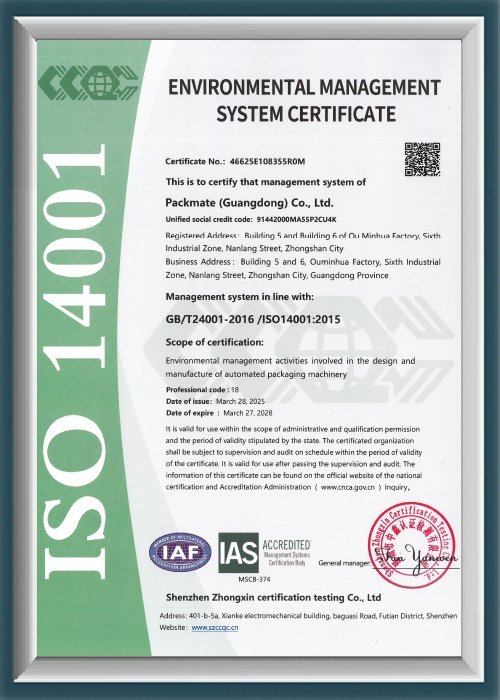
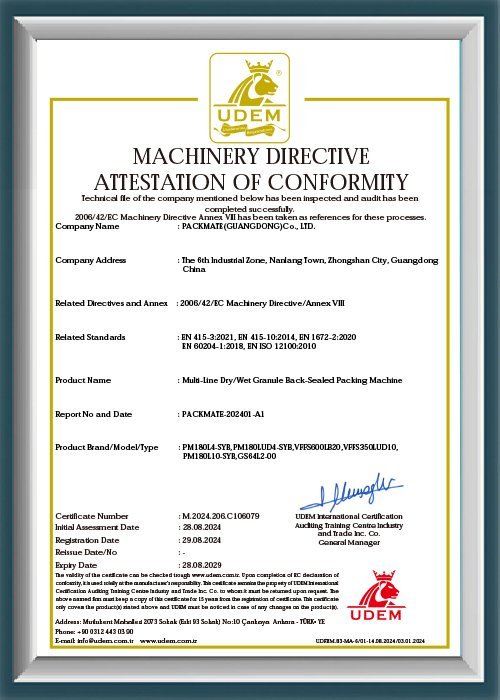
Certified for Stringent Global Markets
Every Ludyway smart packaging machine is engineered according to international safety and hygienic directives, ensuring seamless qualification for FDA, cGMP, CE, and ISO-audited plants.


Trusted by Global Brands & Exhibiting Worldwide
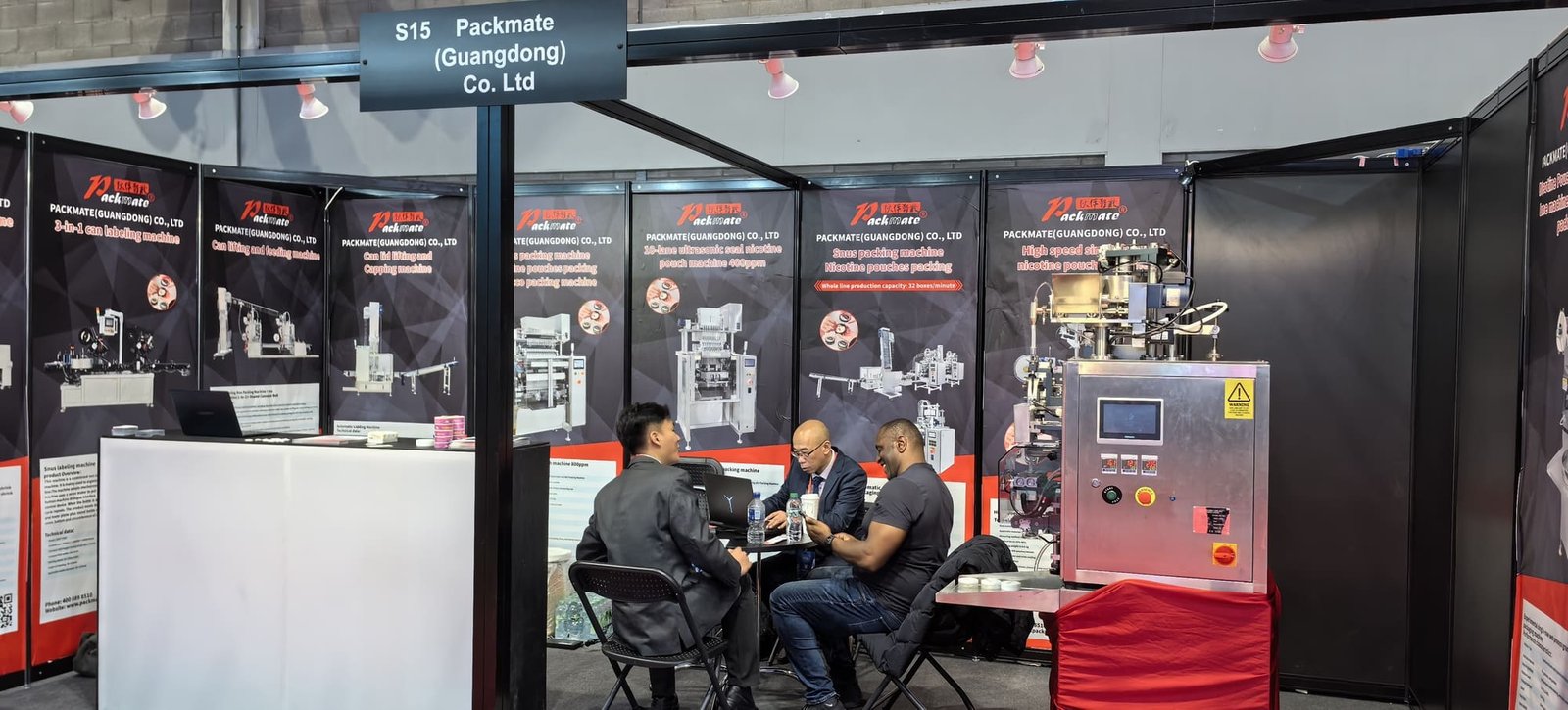
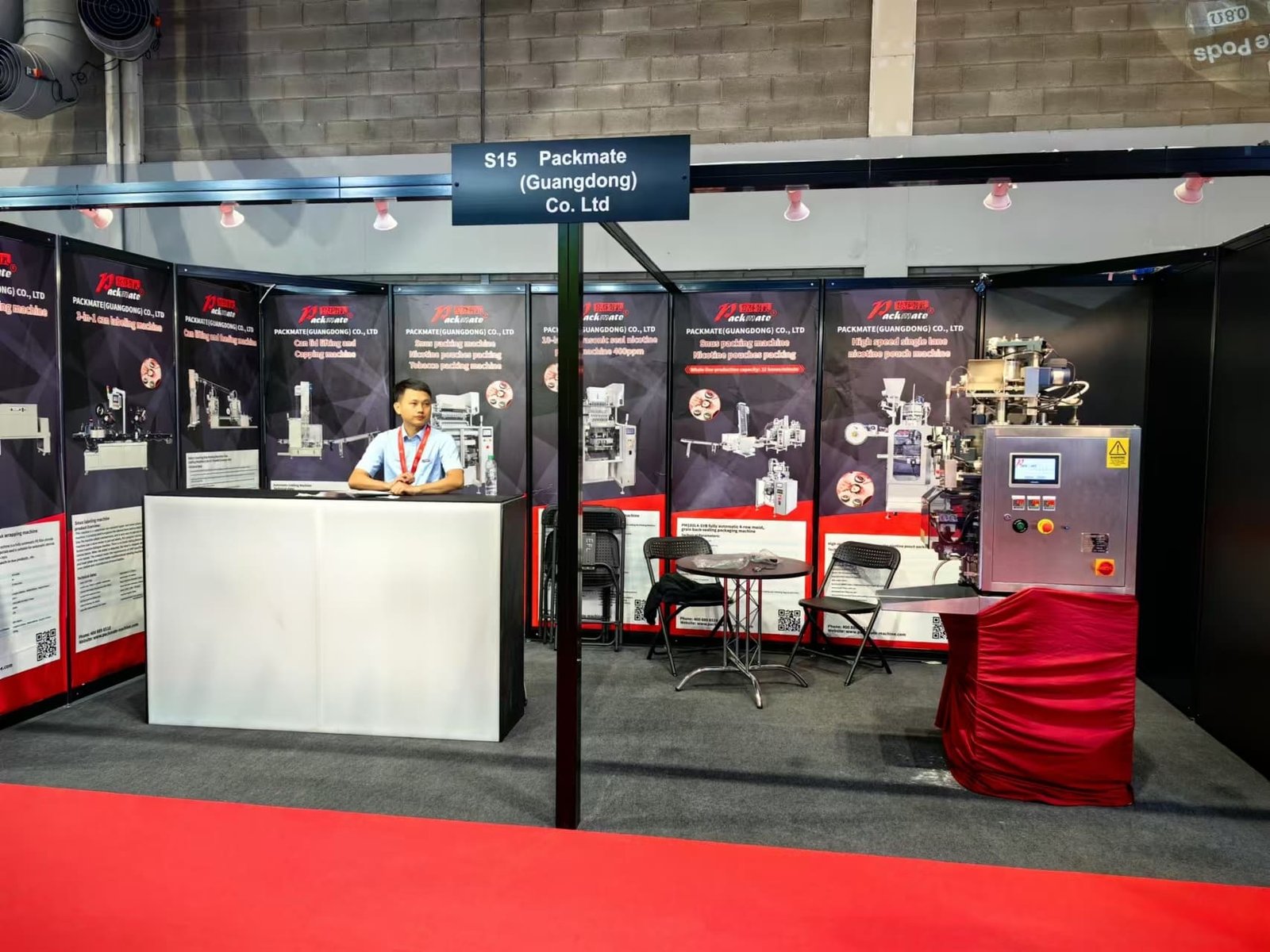
Delivering turnkey automated smart lines across 100+ countries with active support, remote connectivity, and regular exhibitions at top industrial conventions.




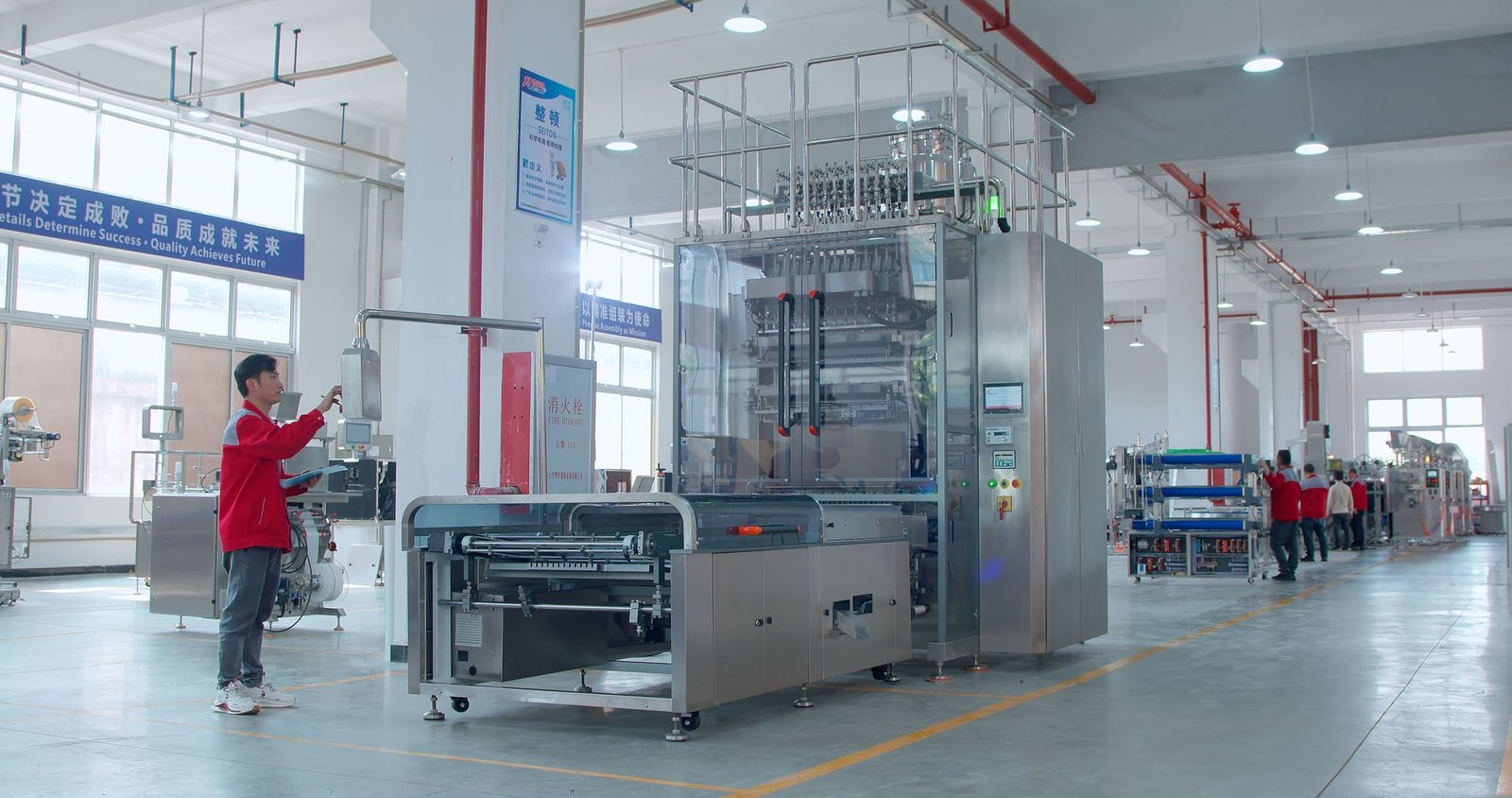
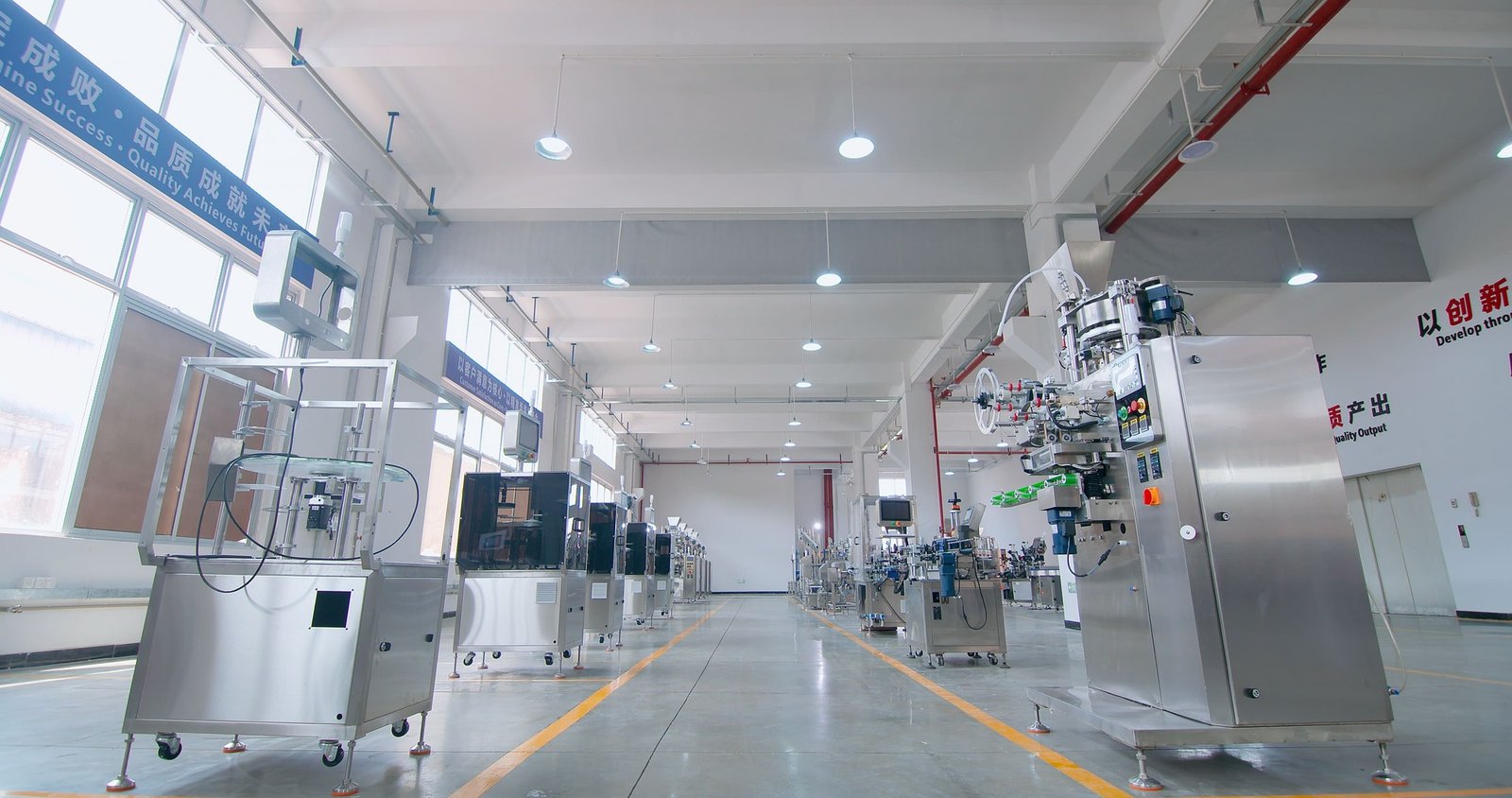
Global Machinery Expos & Factory Floor Showcase
Capital Expenditure & ROI Payback Modeling
Investing in an automated smart packaging line delivers quantifiable bottom-line gains by slashing direct manual labor overhead, eliminating giveaway scrap, and optimizing electricity and film consumption.
When evaluating the financial justification of migrating from semi-manual or disjointed machinery to a fully integrated Ludyway smart packaging line, industrial CFOs and Plant Managers calculate payback periods using tangible manufacturing variables:
Frequently Asked Questions by Packaging Engineers
Expert responses to critical integration, protocol compatibility, and operational queries encountered when deploying automated smart packaging systems.
Q: Can a smart packaging line handle different product formats?
Yes. Ludyway designs modular forming collars, quick-release auger funnels, and recipe-driven servo drives that allow switching between stick pack dimensions, sachet widths, or pouch formats with changeover times under 20 minutes.
Q: Which communication protocols are used for plant-wide SCADA integration?
Our systems support standard industrial networks including EtherNet/IP, PROFINET, Modbus TCP, and native OPC UA. Data is formatted for seamless handoff to plant MES, ERP, and cloud analytics servers.
Q: How is cross-contamination prevented in powder filling lines?
We incorporate tool-free sanitary disassembly, dust extraction manifolds around the filling nozzles, 316L stainless steel contact points, and optional Clean-In-Place (CIP) fluid washdown circuits.
Q: How does closed-loop checkweighing feedback work?
The downstream dynamic checkweigher calculates running weight trends. If minor powder density variations cause weights to drift from target specs, the checkweigher signals the primary PLC to automatically adjust servo auger rotation angles.
Ready to Design Your Custom Smart Packaging Line?
Connect directly with Ludyway’s senior packaging automation engineers. We will analyze your factory floor layout, material rheology, and throughput targets to deliver a complete 3D turnkey project blueprint.
Start Your Line Engineering Inquiry