
Why Setting Up an Edible Oil Packaging Line Requires Specialized Fluid Engineering
Packaging edible culinary oils—such as olive oil, soybean oil, sunflower oil, palm olein, peanut oil, canola, and specialty nut oils—presents a radically different set of fluid dynamics and sanitary challenges than standard water or carbonated beverage bottling. Edible oils are non-conductive viscous fluids susceptible to oxidative rancidity, dripping, foaming, temperature-induced viscosity shifts, and container contamination.
A properly configured automated edible oil packaging line must balance dosing accuracy (minimizing product giveaway), hygienic integrity (food-grade 304/316L stainless steel), anti-drip filling nozzle mechanisms, and inert gas dosing (nitrogen purging) to shield oil from dissolved oxygen and extend retail shelf life.
Unlike water, vegetable oil viscosity varies significantly with ambient seasonal temperatures. For instance, extra virgin olive oil exhibits a viscosity of ~40 cP at 40°C but rises to over 85 cP at 15°C. Palm oil can solidify into a waxy paste below 24°C. Therefore, your packaging infrastructure must incorporate temperature-compensated volumetric metering, jacketed hopper insulation, or servo-driven positive displacement piston cylinders to ensure continuous dosing precision.
High Cost of Giveaway vs. Precision Control
With edible oils representing a high-value commodity, an overfill of just 1.5% on a line producing 6,000 bottles per hour can burn hundreds of thousands of dollars annually in lost bulk yield. Implementing servo-controlled piston fillers or Coriolis mass flow meters maintains fill precision within ±0.2%.
Drip Mitigation & Bottle Exterior Cleanliness
A single drop of oil dripping down the bottle neck damages label adhesion, attracts factory dust, degrades carton strength during case packing, and triggers retail rejection. Advanced dive-in filling nozzles featuring pneumatic cut-off valves and vacuum suck-back systems are mandatory for clean operation.
Anatomy of a High-Speed Edible Oil Packaging Line
A fully integrated turnkey edible oil packaging facility operates as a synchronized series of specialized automated modules. Each station must maintain smooth bottle/sachet transfer, strict hygiene, and seamless data telemetry back to central PLC controls.
Bottle De-scrambler & Air Ionized Rinsing
Bulk PET/glass bottles are automatically oriented onto downstream slats. An ionized air de-duster purges static charges, dislodging any microscopic packaging debris with HEPA-filtered suction before liquid entry.
Servo Multi-Nozzle Precision Oil Filler
Utilizing dive-in bottom-up filling to avoid air entrainment and turbulence. Servo-actuated 316L stainless steel pistons or Coriolis mass flow meters meter edible oil within precise volumetric tolerances.
Liquid Nitrogen Dosing System
A cryogenic injector introduces a metered micro-droplet of liquid nitrogen into the container headspace instantly before capping. The nitrogen expands, displacing residual oxygen to prevent oxidation.
Rotary Capping & Induction Sealing
Applies push-on, snap-top, or screw caps with servo-monitored torque limits. An electromagnetic induction sealer fuses aluminum foil innerliners to container rims to deliver 100% leak-proof hermetic seals.
Rotary Pressure-Sensitive or Sleeve Labeling
Applies self-adhesive front/back labels or full-body shrink sleeves with optical registration. High-speed laser or thermal inkjet coders print batch codes, QR traceability, and expiry dates.
End-of-Line Cartoning, Sealing & Palletizing
Dynamic checkweighers inspect container weights and auto-reject non-conforming units. Automatic case packers erect RSC boxes, pack bottles, tape seals, and robotic arms stack pallets securely for transport.
Step-by-Step Guide to Setting Up Your Edible Oil Packaging Line
Executing a successful packaging line deployment demands structured planning across facility layout, machinery specification, utilities, validation, and workforce training. Follow this 6-phase engineering roadmap:
Define Capacity, Container Variety & Product Properties
Establish required throughput in Bottles Per Minute (BPM) or Bags Per Minute across your SKU matrix (e.g., 250ml glass bottles, 500ml/1L/5L PET bottles, or single-serve 10ml sachets). Classify specific oil rheology—such as virgin olive oil with sediment, highly refined sunflower oil, or coconut oil requiring heating coils to remain liquid.
Design Factory Layout & Cleanroom Zoning
Organize floor space according to Good Manufacturing Practice (GMP) standards. Isolate raw oil bulk holding tanks and filling zones (Class 10,000 / ISO 7 clean zones with positive HEPA air pressure) from secondary packaging and corrugated box warehousing to prevent pest ingress and particulate contamination.
Select Metering & Filling Technology
Select the appropriate dosing engine. Servo-driven volumetric piston fillers provide rugged reliability and handle wide viscosity spectra at lower capital costs. Mass flow meters (Coriolis effect) measure true mass irrespective of fluid density and temperature fluctuations, delivering unmatched precision for premium brands.
Plan Utilities: Pneumatics, Steam, Power & Inert Gas
Edible oil lines require robust pneumatic infrastructure (dry, oil-free compressed air at 0.6–0.8 MPa for cylinder actuation and anti-drip nozzles), stable three-phase electrical supply, cryogenic or gaseous liquid nitrogen plumbing for head-space dosing, and clean steam for Clean-in-Place (CIP) fluid path sanitization.
Synchronize Conveyors & Implement Line Accumulation
Design buffer zones and variable-frequency conveyor drives (VFD) between machines. If the labeler or case packer experiences a brief stoppage, upstream filling must continue without shutting down the entire line. Implement low-friction stainless steel or acetyl tabletop chains with oil-collection drip trays.
Factory Acceptance Testing (FAT) & Commissioning
Validate the entire integrated system using actual production oil and packaging materials during FAT before shipment. Verify CPK values for filling precision, seal burst strength, torque parameters, and line OEE during a continuous 4-to-8-hour stress test before final site installation.
Edible Oil Dosing Systems: Piston vs. Flow Meter vs. Net Weight
Selecting the right filling core depends on container format, production volume, viscosity variation, and changeover flexibility.
| Technology Type | Accuracy | Viscosity Range | Ideal Packaging Formats | Cleaning / CIP Speed | Capital Cost Index |
|---|---|---|---|---|---|
| Servo Piston Dosing | ± 0.25% – ± 0.5% | Low to Ultra-High (10 – 50,000 cP) | Bottles, Jars, Multi-Lane Sachets | Moderate (Requires piston flush) | Cost-Effective ($$) |
| Coriolis Mass Flow Meter | ± 0.15% – ± 0.2% | Low to Medium-High (10 – 5,000 cP) | Rigid Bottles, Jerry Cans, Drum Fills | Rapid (Non-intrusive straight pipe) | Premium ($$$$) |
| Net Weight (Load Cell) | ± 0.1% – ± 0.3% | All Viscosities (Unaffected by aerated oil) | 5L–20L Jerry Cans, 200L Bulk Drums | Rapid (No contact with scale) | Moderate-High ($$$) |
| Multi-Lane Liquid Form-Fill-Seal | ± 0.5% | Low to Medium Viscosity Oils | Single-Serve Oil Sachets, Stick Packs | Standard Automatic CIP Wash | High Efficiency ($$$) |
Engineered Equipment for Edible Oil Packaging Lines
Explore state-of-the-art packaging systems engineered by Ludyway for high-speed liquid edible oils, single-serve oil sachets, and complete end-of-line packaging operations.
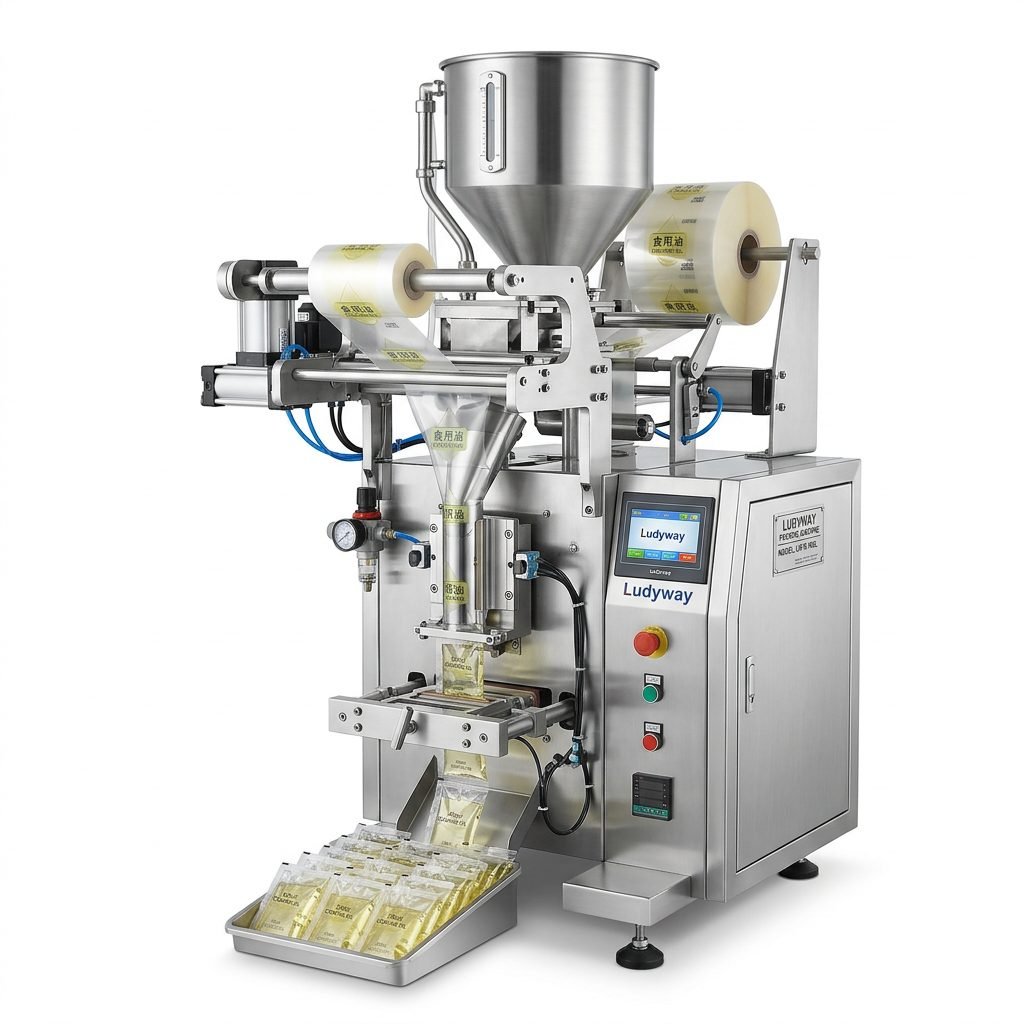
Automatic Cooking Oil Sachet Packing Machine
Specialized multi-lane form-fill-seal system for cooking oil portion pouches with zero-leak thermal hermetic sealing.
View Machine Details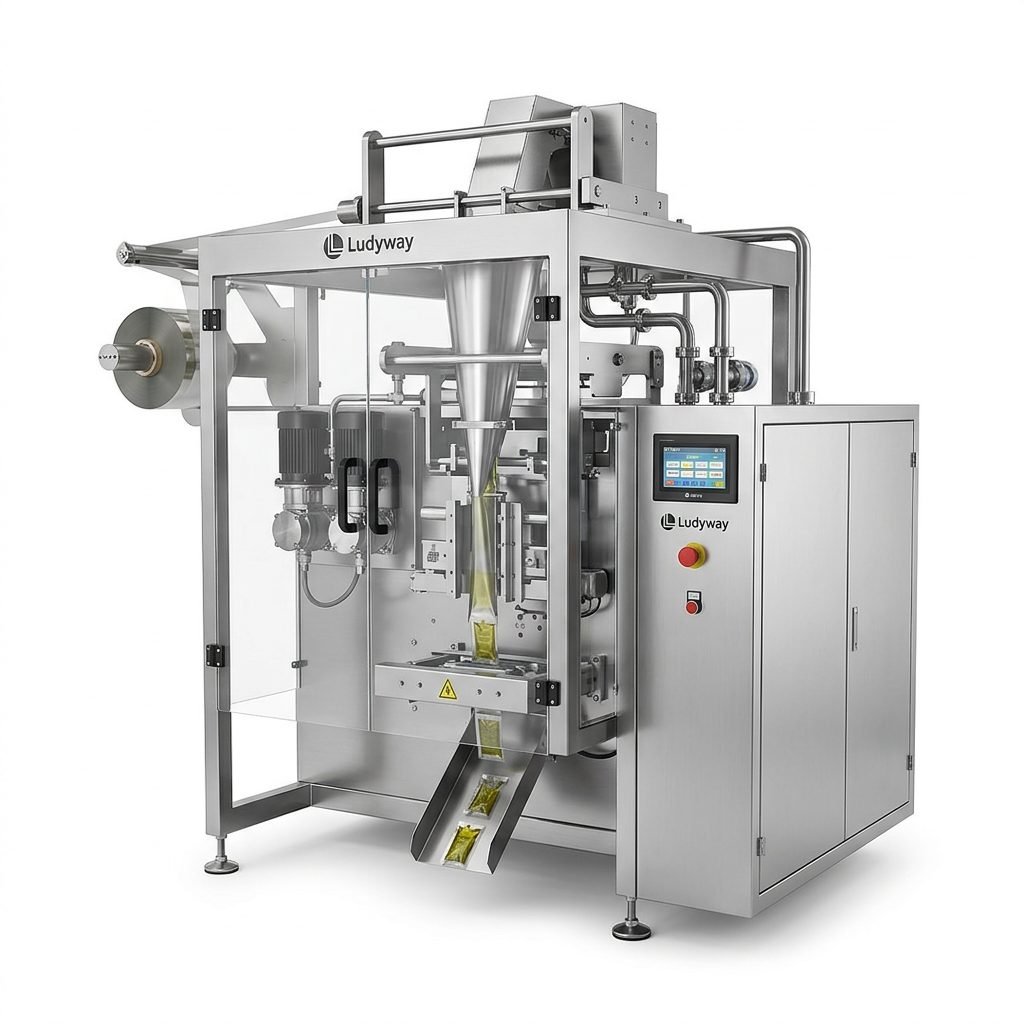
Automatic Olive Oil Sachet Filling Machine
Food-grade extra virgin olive oil sachet machine featuring nitrogen dosing to safeguard polyphenol integrity and flavor profile.
View Machine Details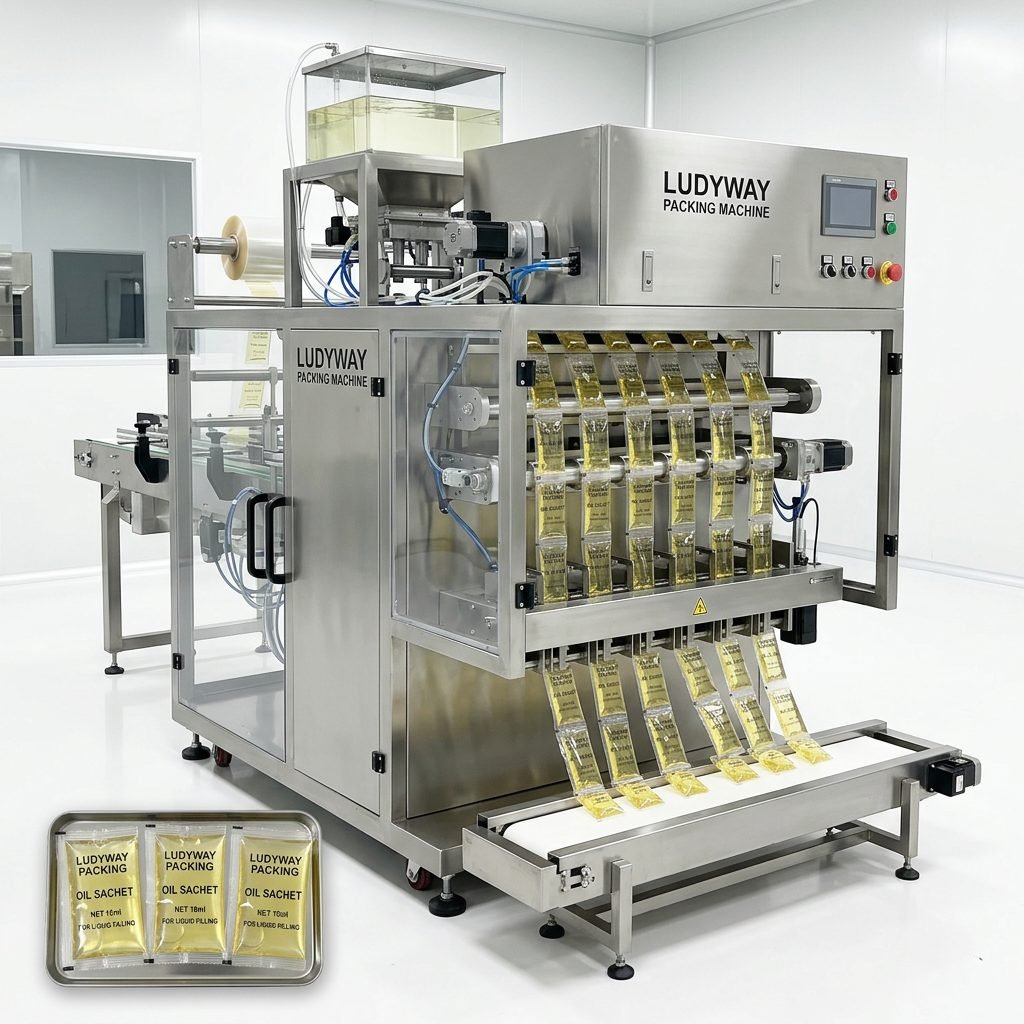
Multi-Lane Oil Sachet Packaging Machine
High-speed continuous motion sachet machine designed for high-output single-use edible oil condiment packaging.
View Machine Details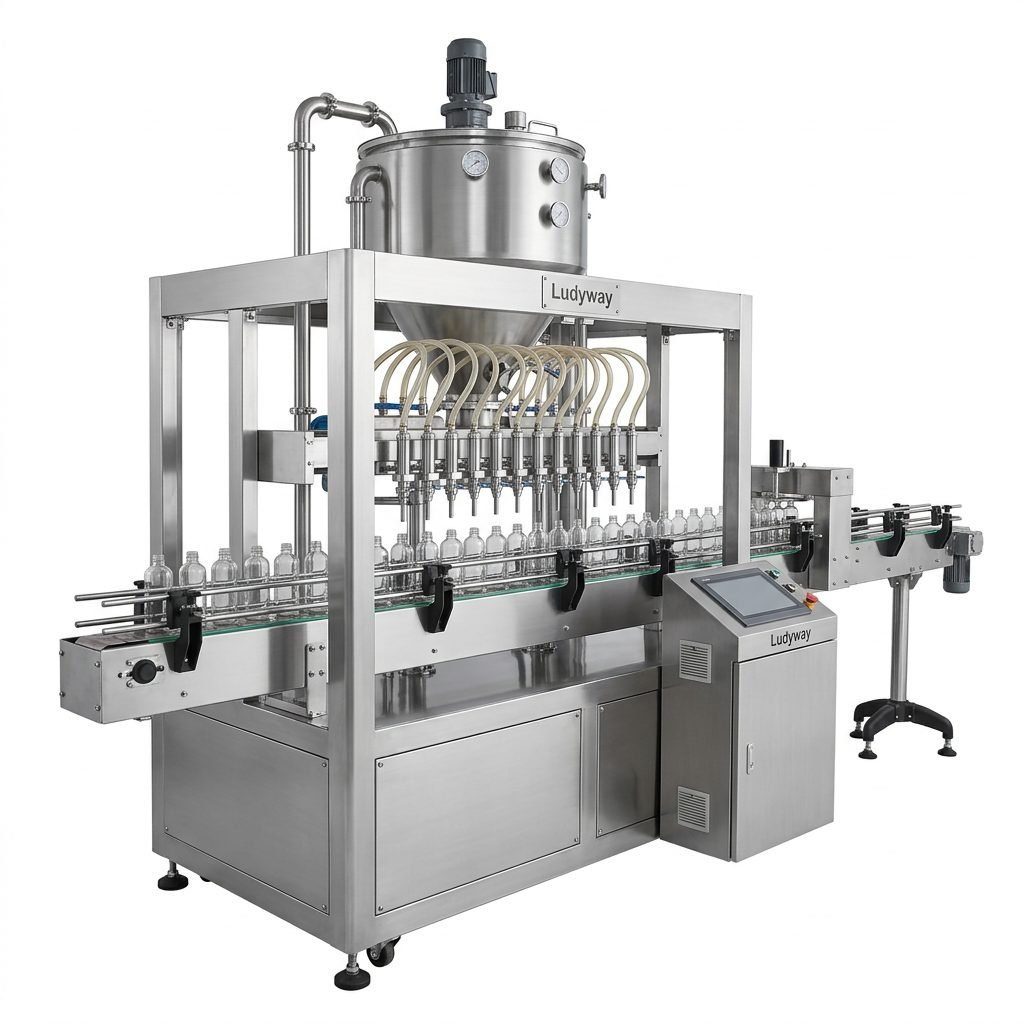
Coconut Oil Liquid Filling Machine
Equipped with integrated thermal hopper jackets and temperature tracing for coconut oils prone to ambient solidification.
View Machine Details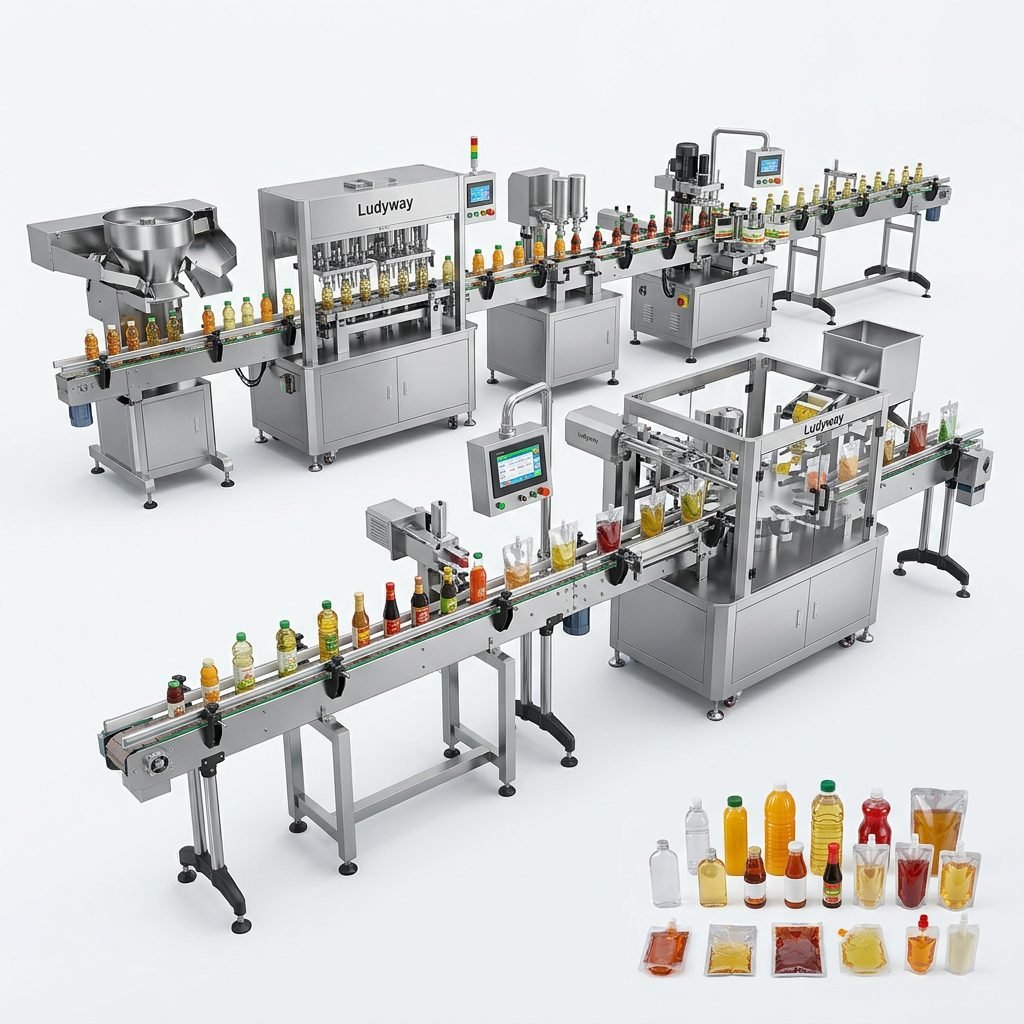
High-Speed Liquid Packaging Lines
Turnkey inline bottling line combining rotary unscrambling, precision multi-head filling, and high-torque capping.
View Machine Details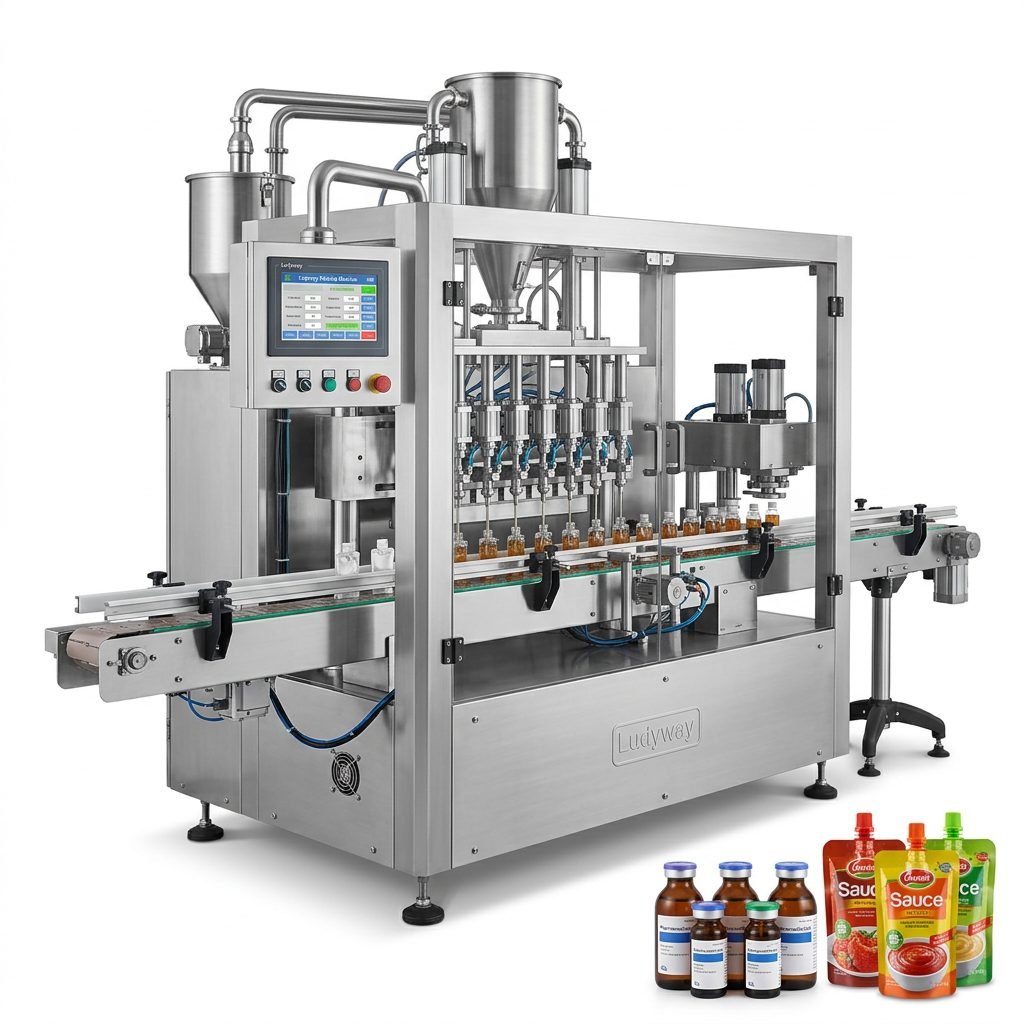
Multi-Nozzle Automated Liquid Filling System
Sanitary 316L stainless steel dosing system with diving nozzles and automated suck-back to eliminate bottle neck dripping.
View Machine Details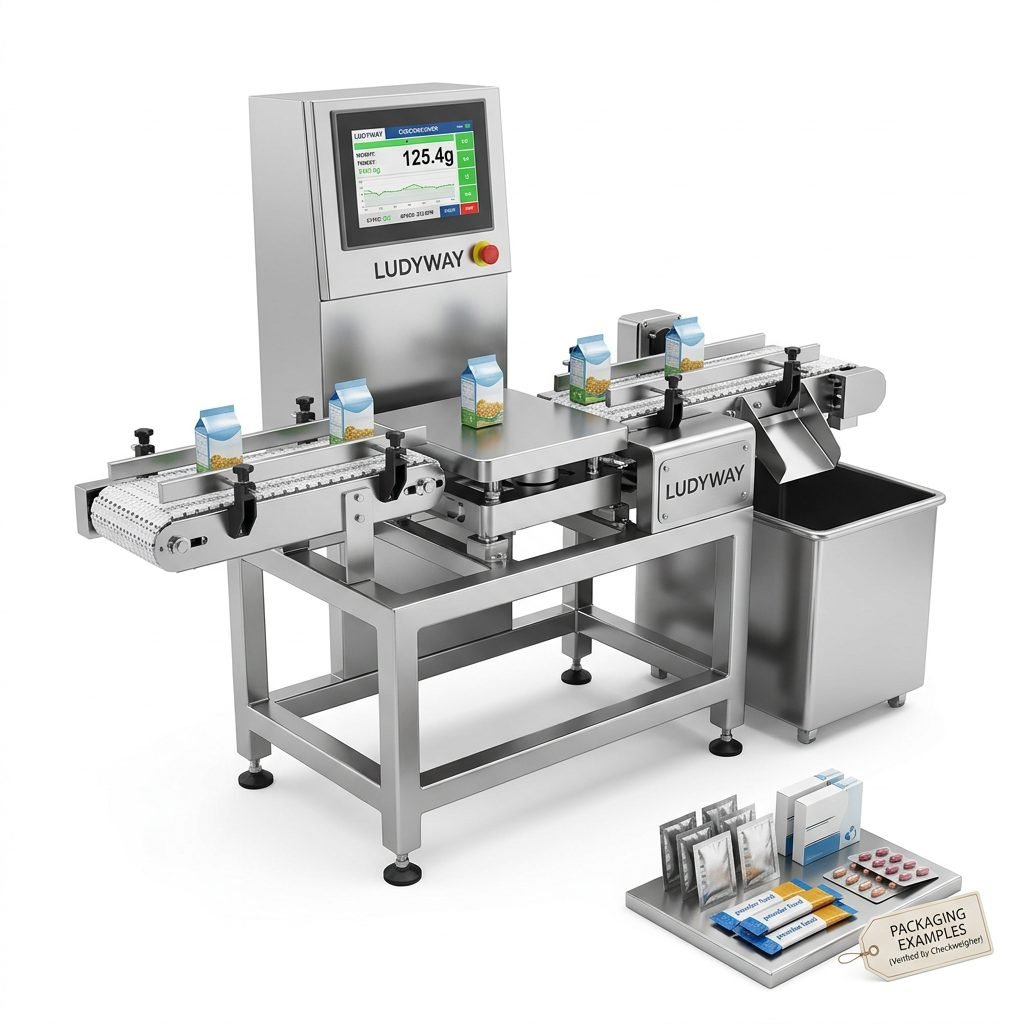
High-Precision Dynamic Checkweigher
Real-time weight inspection system with high-speed pneumatic rejector to guarantee strict container fill compliance.
View Machine Details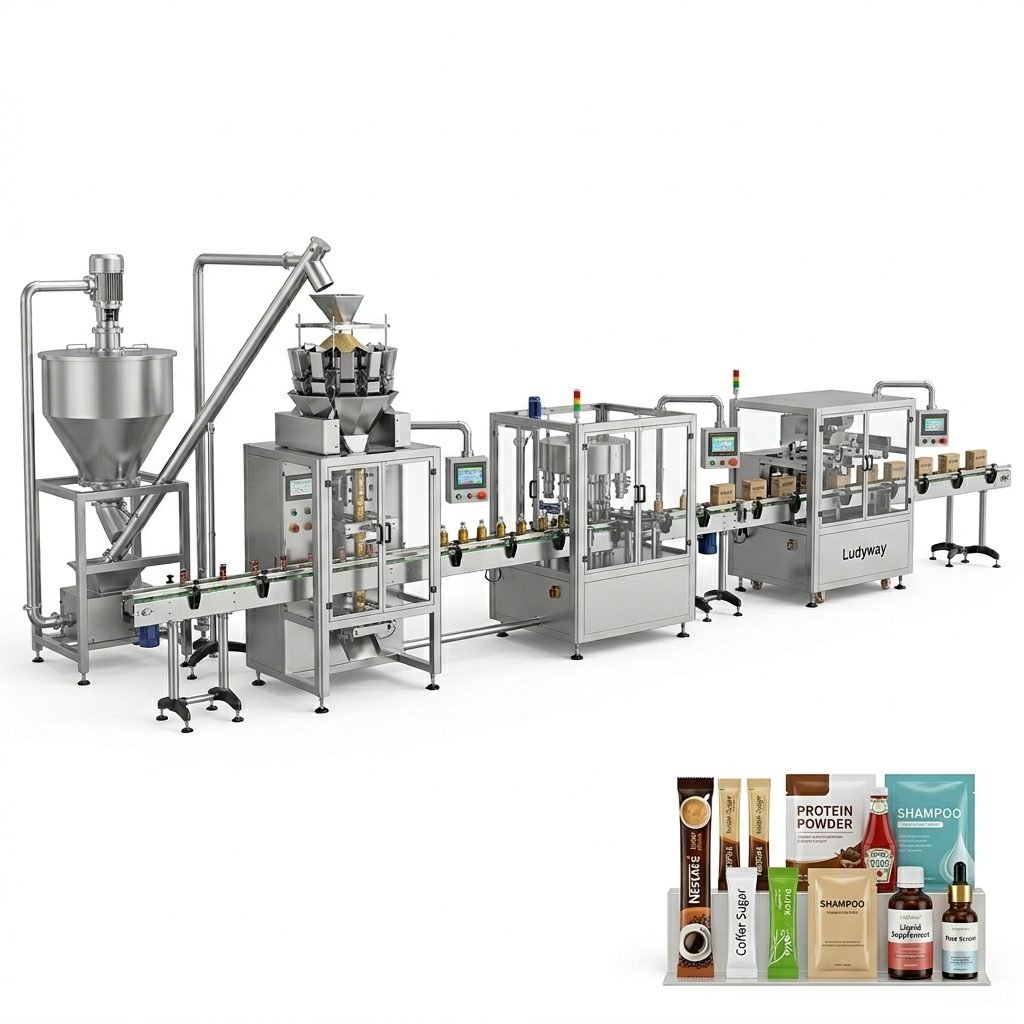
Complete Turnkey Packaging Line Solutions
Fully integrated end-to-end automation incorporating SCADA control, secondary cartoning, and robotic palletizing.
View Machine DetailsLudyway Machinery: 30+ Years of Precision Engineering
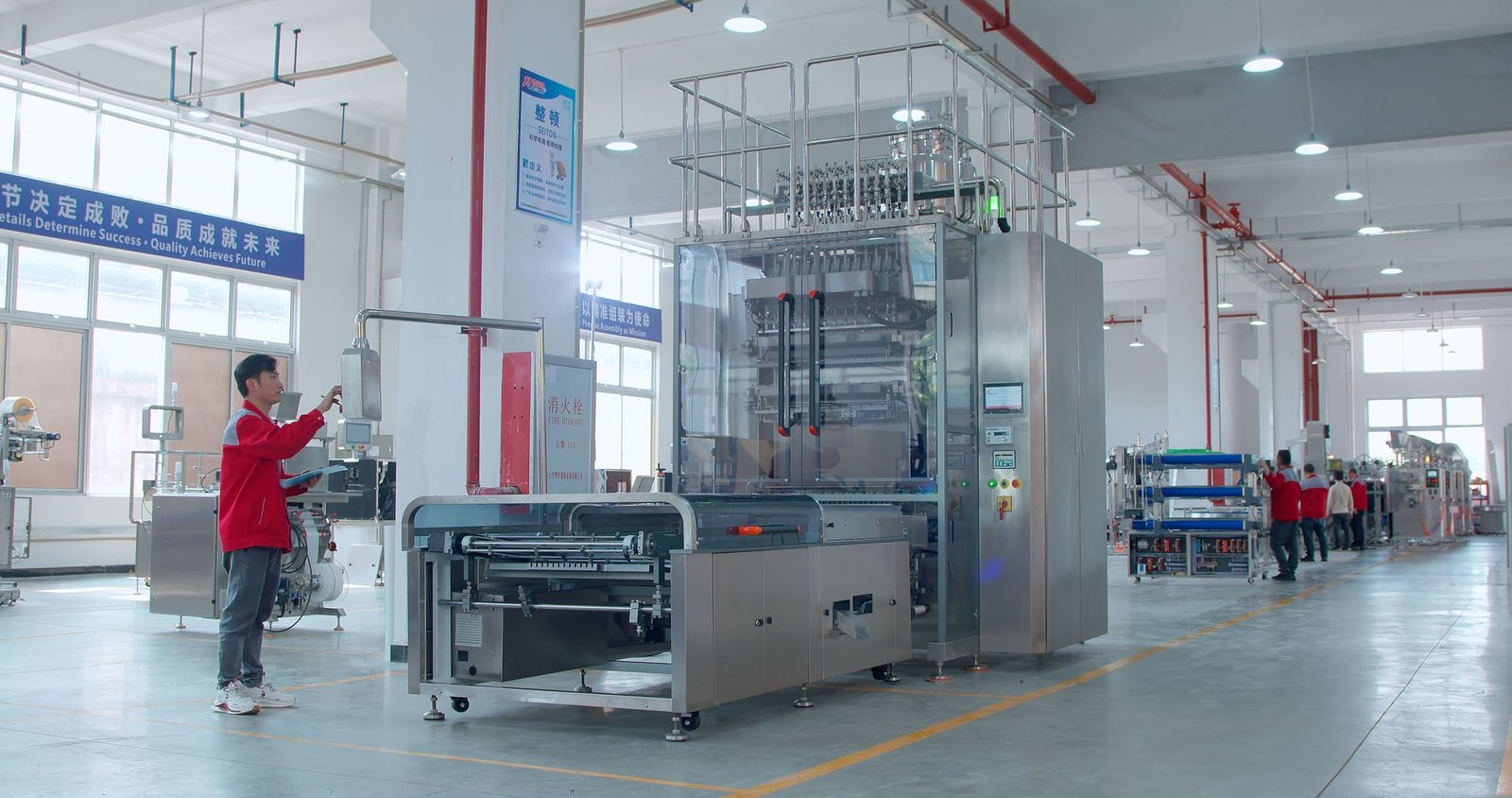
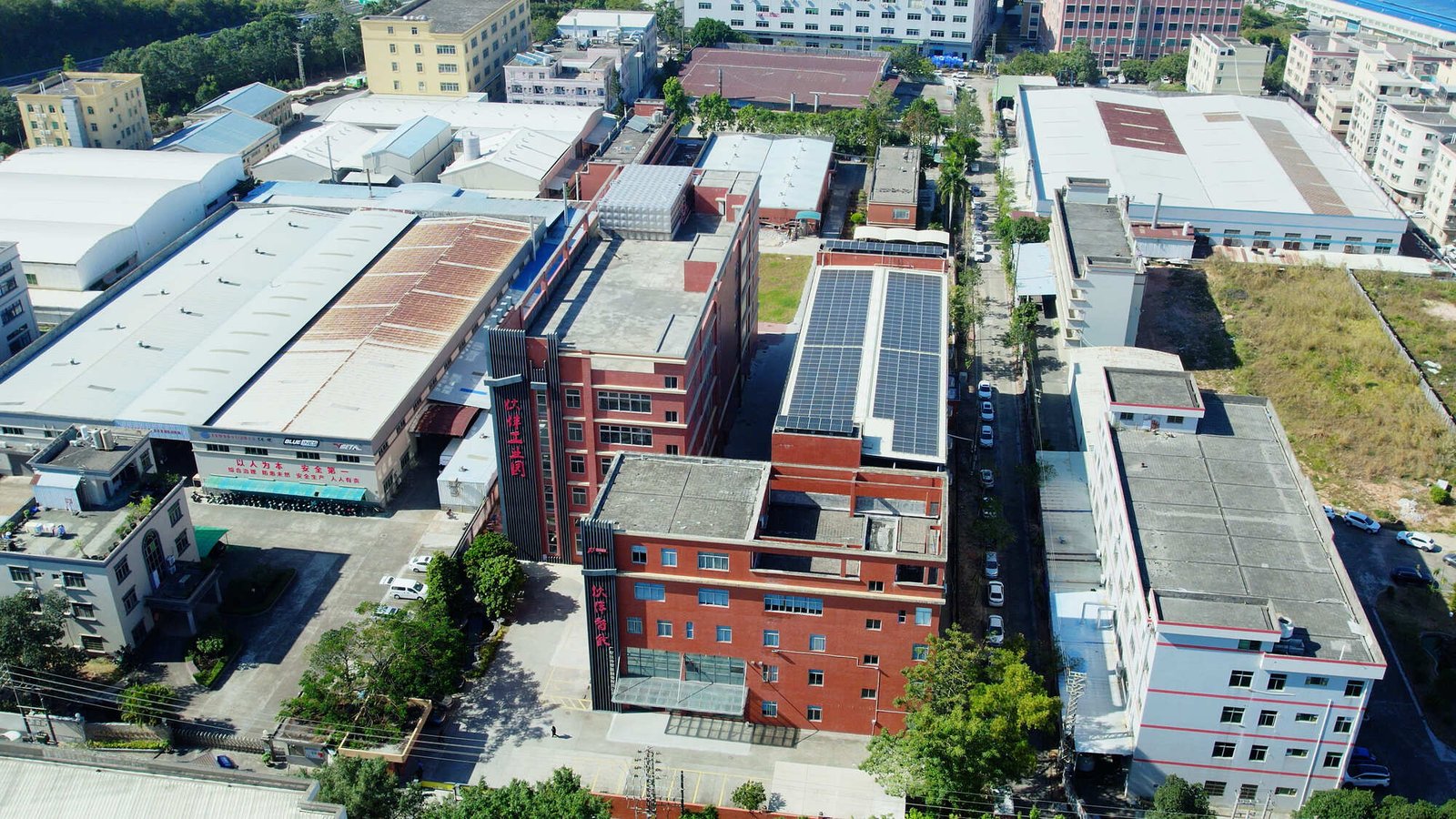
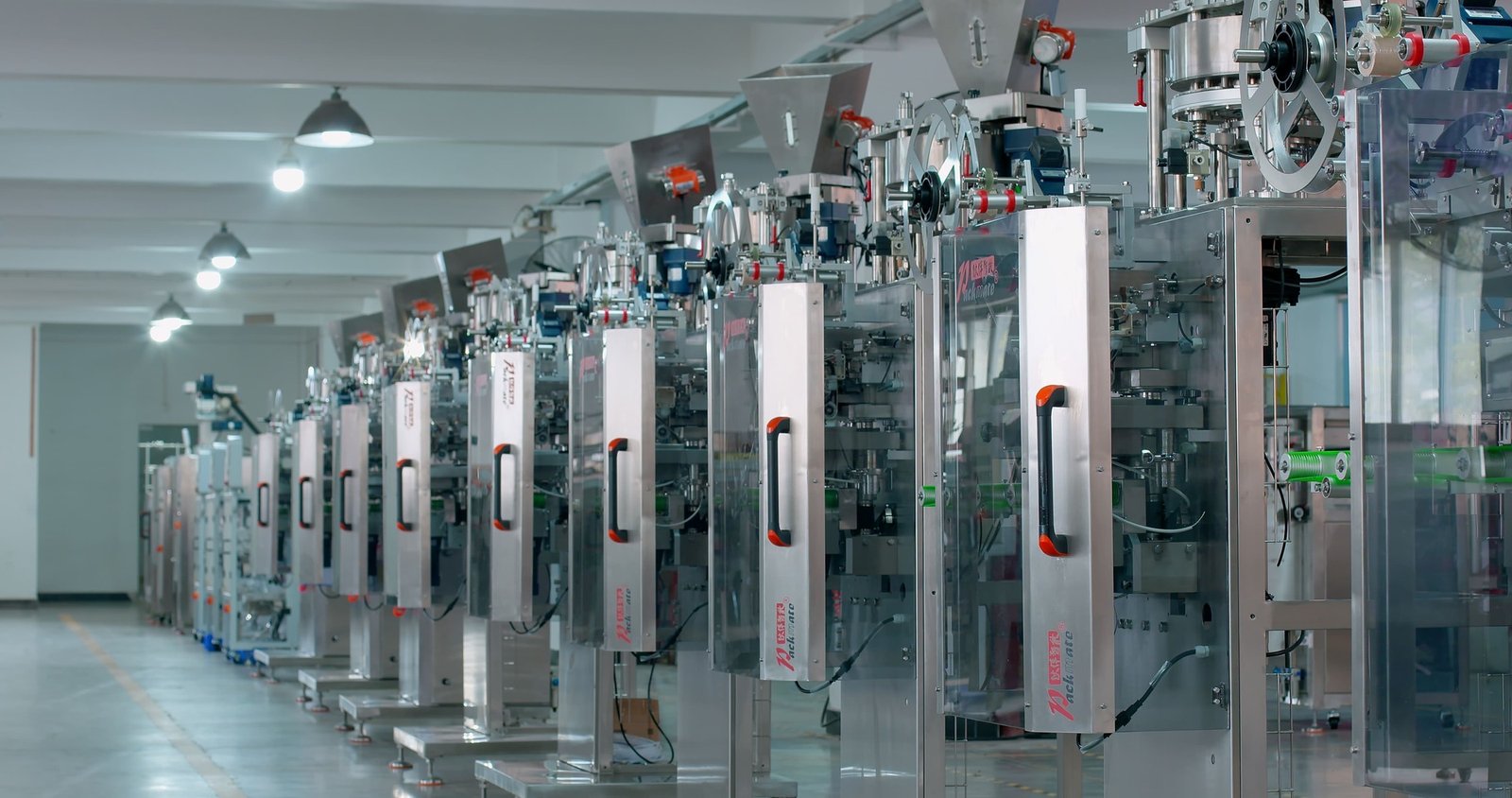
Backed by a modern 20,000 ㎡ manufacturing center and an expert engineering team of over 130 packaging specialists, Ludyway designs, builds, and validates turnkey packaging machinery exported to more than 100 countries and regions worldwide.
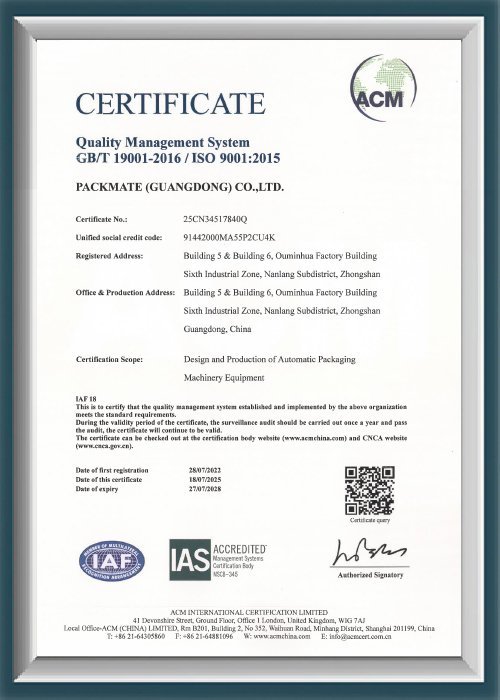
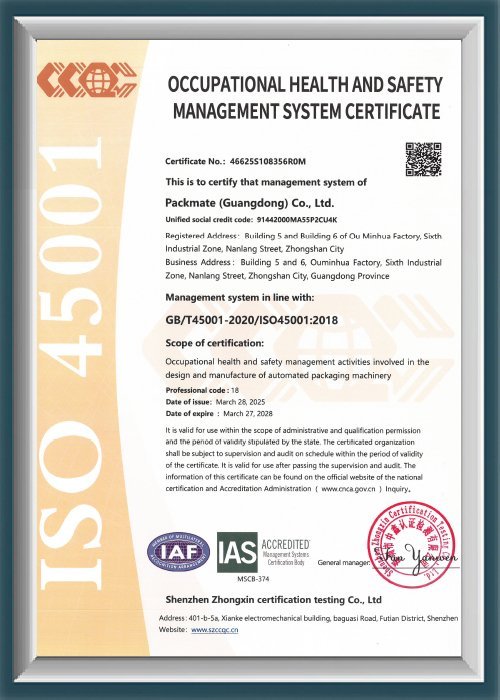
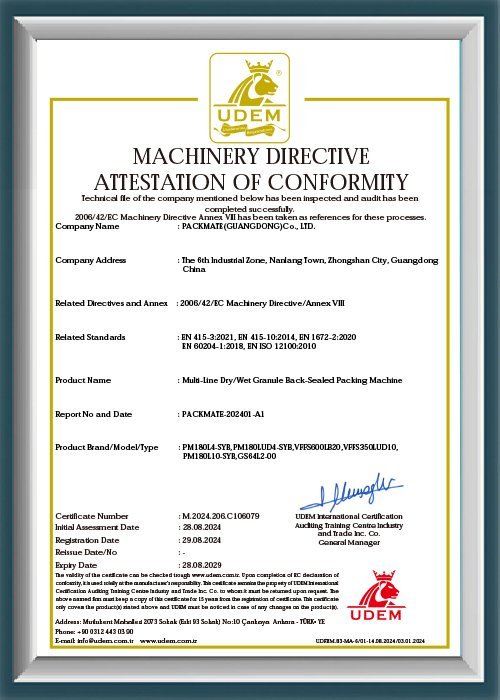
Certified Quality & Compliance Standards
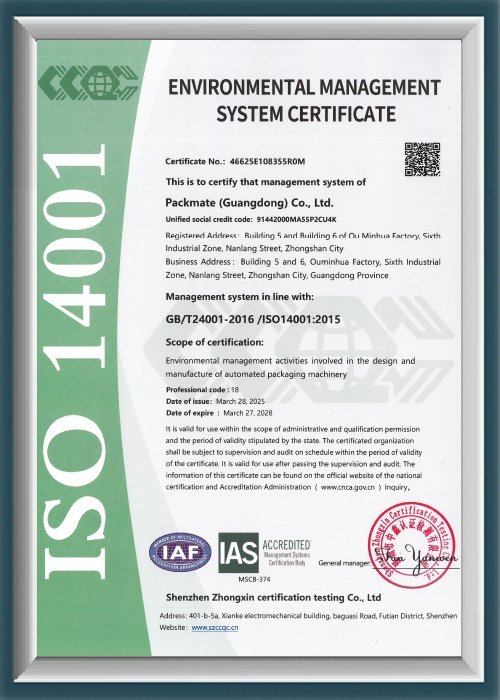
Our machinery complies with international safety, CE machinery directives, ISO 9001 quality management, and strict FDA food contact requirements.
Global Component & Technology Partners
We integrate world-class electrical and pneumatic components (Siemens, Schneider, Omron, Festo, SMC) to ensure 24/7 global parts availability.

Frequently Asked Questions on Edible Oil Packaging Lines
How do you prevent oil dripping from nozzles after the filling cycle?
We integrate mechanical anti-drip diving nozzles with pneumatically actuated bottom shut-off plungers coupled with a servo-controlled reverse suck-back stroke. This pulls the lingering fluid meniscus back into the nozzle orifice upon cycle completion.
Why is liquid nitrogen dosing essential for premium edible oils?
Atmospheric oxygen inside bottle headspaces causes lipid peroxidation, yielding unpleasant off-flavors and degrading nutritional fatty acids. A micro-dose of liquid nitrogen evaporates into inert gas, driving out oxygen to maintain residual O2 levels below 0.5%.
How does the line handle oils that solidify in winter (like coconut or palm oil)?
Our specialized systems incorporate double-walled insulated product holding tanks with electrical or hot water heating jackets, PID temperature sensors, and traced sanitary delivery pipes to keep the fluid above its crystallization point.
Can one packaging line handle both glass bottles and PET containers?
Yes. By utilizing quick-change starwheels, universal scroll feeds, adjustable conveyor side rails, and servo-programmable capping torque heads, our lines facilitate fast SKU changeovers between PET bottles and fragile glass containers.
What maintenance schedules are required for oil packaging machinery?
Daily automated CIP flushing prevents rancid oil build-up. Weekly lubrication of mechanical cam drives and monthly inspection of food-grade PTFE/FKM nozzle seals and piston O-rings ensures uninterrupted 24/7 industrial uptime.
What is the expected ROI when transitioning from manual to automated packaging?
Most edible oil processors achieve complete capital payback within 12 to 18 months due to 70% labor reduction, eradication of product giveaway via ±0.2% dosing, and virtual elimination of leak-related customer chargebacks.
Plan Your Custom Edible Oil Packaging Line with Ludyway Engineers
Whether you need a compact 30 BPM sachet packaging cell or a fully automated 200 BPM high-speed rotary edible oil bottling line, our application engineering team is ready to analyze your viscosity parameters, container formats, and plant layout.
