
Packaging Machine Export Certifications You Need to Know
A complete regulatory roadmap for global importers, plant engineers, and procurement managers. Navigate CE Marking, UL/CSA standards, EAC TR-CU, UKCA, and sanitary food-contact compliance seamlessly to safeguard international capital investments.
Why Machinery Export Certifications Dictate Global Trade Success
Exporting and importing automated packaging machinery is far more complex than simple cargo shipping. Every international border enforces rigid technical regulations covering electrical safety, mechanical risk mitigation, electromagnetic compatibility, and hygiene protocols.
Frictionless Customs Entry
Accredited testing reports and legitimate Declarations of Conformity eliminate severe port detention risks, confiscation, and exorbitant customs storage penalties.
Operator Safety & Liability
Mandatory safety systems like ISO 13849 safety relays, emergency interlocks, and CE-marked guards drastically reduce factory floor liability and industrial accidents.
Electrical & Grid Compliance
Certified equipment adheres to regional voltages, harmonic filters, and EMC shielding (EN 61000-6-2/4), preventing high-frequency interference with industrial networks.
Audit-Ready Plant Status
For food, chemical, and pharmaceutical producers, verified machinery certifications accelerate FDA, cGMP, and BRCGS factory certifications effortlessly.
Essential Export Certifications by Regional Territory
Each target destination imposes statutory requirements that manufacturers of stick pack, sachet, pouch, and automated packaging systems must satisfy before dispatch.
CE Marking & EU Harmonized Directives
The CE mark confirms that industrial packaging machinery conforms to mandatory health, safety, and environmental protection legislation enacted across the 27 EU member states and EFTA nations.
- Machinery Directive 2006/42/EC (Transitioning to Machinery Regulation EU 2023/1230): Strict mechanical hazard assessments, interlocking guard protocols, and functional risk limits.
- Electromagnetic Compatibility (EMC) Directive 2014/30/EU: Verifies zero electromagnetic emission disturbance and strong noise immunity.
- Low Voltage Directive (LVD) 2014/35/EU & EN 60204-1: Industrial electrical cabinet design, protective bonding, insulation resistance, and flash tests.
UL / CSA Standards & NFPA 79 Verification
Unlike self-declared marks, North American jurisdictions mandate OSHA-recognized Nationally Recognized Testing Laboratories (NRTL) certification or Field Evaluation Labeling for industrial installations.
- UL 508A (Industrial Control Panels): Complete validation of motor starters, contactors, circuit breaker short-circuit current ratings (SCCR), and fire suppression.
- NFPA 79 Electrical Standard: Specifies emergency stop circuits, wire color codes, disconnect interlocks, and grounding conductors for plant automation.
- CSA C22.2 No. 286 / SPE-1000 (Canada): Field inspection standards for industrial electrical equipment across Canadian provinces.
EAC Technical Regulations (TR CU)
Machinery exports to Russia, Belarus, Kazakhstan, Armenia, and Kyrgyzstan require EAC Declarations or Certificates of Conformity registered within the unified Customs Union database.
- TR CU 010/2011 “On Safety of Machinery and Equipment”: Requires an exhaustive Safety Justification (Obosnovanie Bezopasnosti) document.
- TR CU 004/2011 (Low Voltage) & TR CU 020/2011 (EMC): Electrical performance verification matching Russian GOST standards.
UKCA, SASO/SABER, and Specialized Approvals
Regional compliance systems require specialized platform registration and pre-shipment third-party inspections to clear international ports seamlessly.
- UKCA (United Kingdom Conformity Assessed): Mandatory conformity mark for industrial machinery sold in Great Britain.
- SASO & SABER (Saudi Arabia): Product and Shipment Certificates of Conformity (PCoC / SCoC) executed via accredited notified testing bodies.
Global Packaging Machinery Compliance Matrix
Compare core compliance frameworks, statutory scopes, key harmonization codes, and essential technical benchmarks across prominent export markets.
| Destination Market | Certification / Mark | Legal Status | Primary Harmonized Standards | Governing Focus |
|---|---|---|---|---|
| European Union (EU/EEA) | CE Marking (DoC) | Mandatory | EN ISO 12100, EN 60204-1, EN ISO 13849-1, EN 415-series | Mechanical safety, Functional Safety (PL level), EMC, Electrical insulation |
| United States | UL Listing / Field Label | Mandatory by AHJ | NFPA 79, UL 508A, ANSI/PMMI B155.1, OSHA 1910 | Arc-flash protection, short circuit rating (SCCR), emergency stop protocols |
| Canada | cUL / CSA / SPE-1000 | Mandatory | CSA C22.2 No. 286, CSA Z432 (Machinery Safeguarding) | Electrical fire safety, Canadian electrical code adherence |
| United Kingdom | UKCA Marking | Mandatory | BS EN ISO 12100, BS EN 60204-1, Supply of Machinery Regs 2008 | Direct transposition of UK safety and electro-technical regulations |
| EAEU (Russia/KZ/BY) | EAC (TR CU 010, 004, 020) | Mandatory | GOST R ISO 12100, GOST MEK 60204-1 | Customs Union safety verification, Safety Justification passport |
| Global Food / Pharma | FDA / 3-A / EHEDG / cGMP | Industry Standard | FDA 21 CFR 177, ISO 14159, EN 1672-2 | Sanitary weld finishes (Ra ≤ 0.8μm), CIP washdown, food-grade contact alloys |
Sanitary & Food Contact Certifications (FDA, 3-A, cGMP)
Beyond mechanical and electrical safety, machinery destined for nutritional, dairy, pharmaceutical, and cosmetic applications must fulfill rigorous hygienic design criteria. Cross-contamination risks must be fully engineered out through certified materials and surface finishes.
Food Contact Materials (FDA 21 CFR / EC 1935/2004)
All dosing funnels, augers, volumetric pistons, and sealing jaws fabricated with SS304/SS316L stainless steel and food-grade PTFE/EPDM seals include full metallurgical test mill certificates.
cGMP Cleanroom Validation & DQ/IQ/OQ/PQ
Pharmaceutical stick pack and sachet packaging machines are supplied with comprehensive Qualification Dossiers, supporting 21 CFR Part 11 compliant audit trails and recipe controls.
Sanitary CIP/SIP Cleaning & IP65/IP69K Ingress
Hygienic washdown construction with sloped surfaces eliminates bacterial harborage points, enabling thorough clean-in-place sanitation cycles.
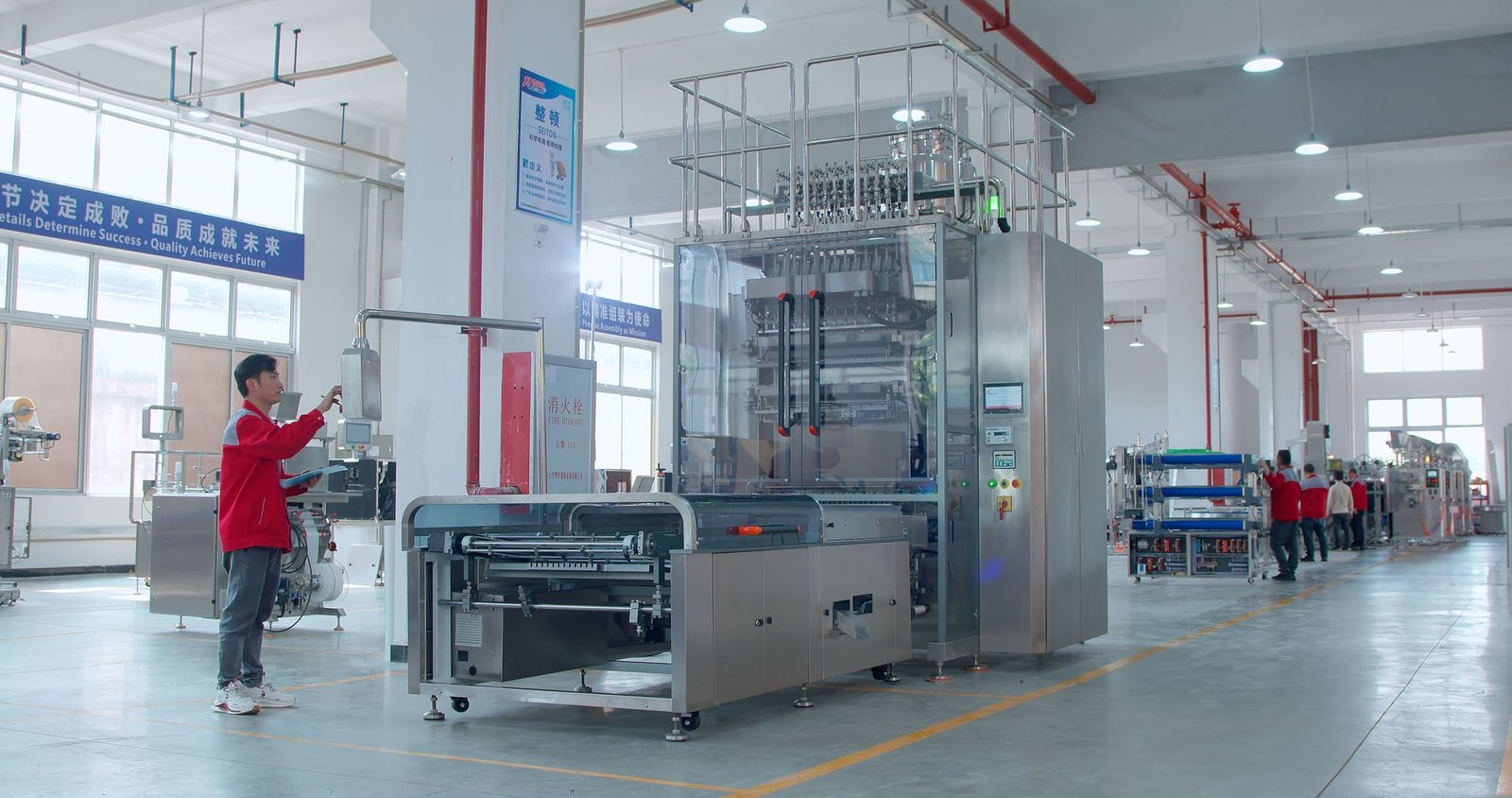
Ludyway Quality Verification & Accreditation Dossier
With over 30 years of engineering expertise and a 20,000㎡ modern manufacturing center, Ludyway packaging machinery holds international CE compliance, ISO9001 quality management certificates, and technical test dossiers verified by global third-party notified bodies.
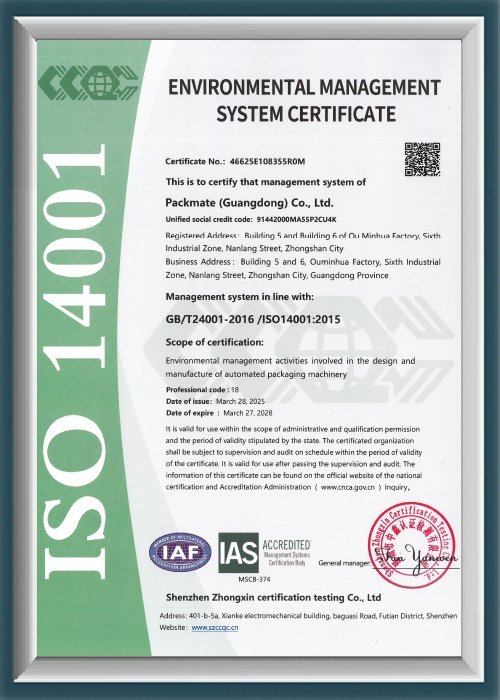
CE Machinery Directive Certificate
Notified Body Tested (2006/42/EC)
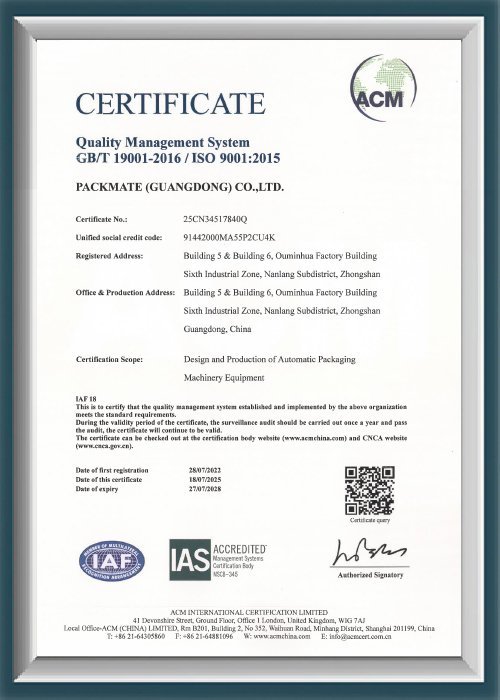
EMC & LVD Electrical Certification
EN 60204-1 & EN 61000 Verified
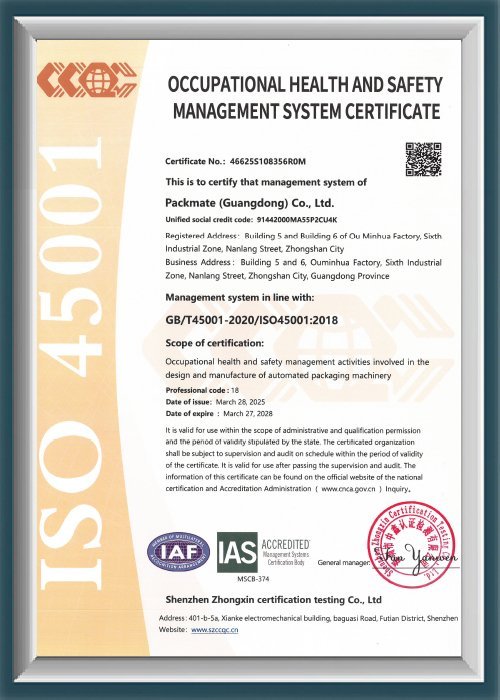
ISO 9001:2015 Management System
Certified Production & Traceability
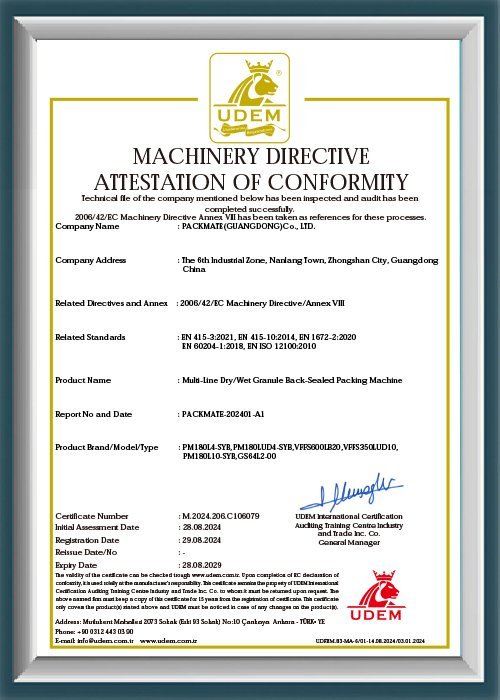
Global Export Inspection Certificate
Cross-Border Customs Accredited
Featured Export-Ready Packaging Equipment
All Ludyway automated multi-lane packaging machinery models are pre-engineered with certified electrical cabinets, stainless steel construction, and global grid adaptability.
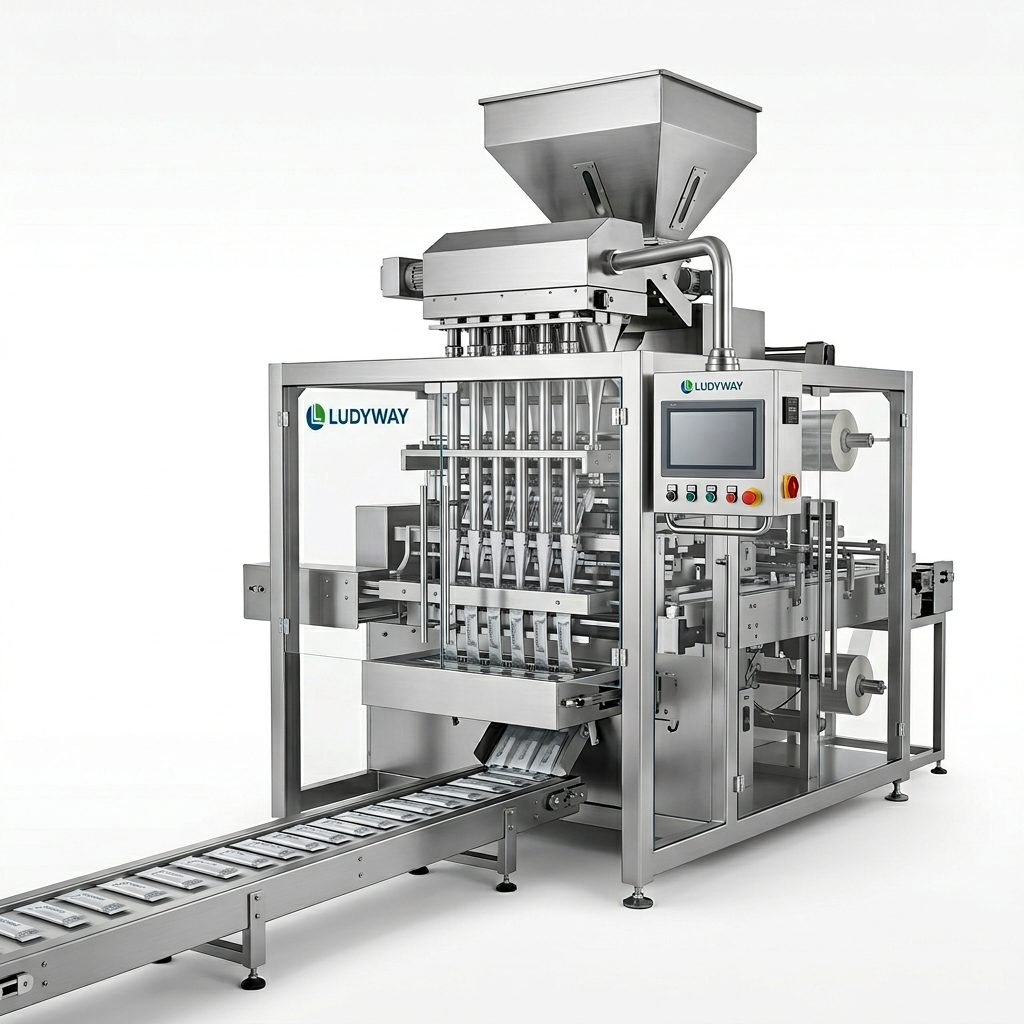
High-Speed Multi-Lane Powder Packaging System for Food and Pharma
Explore Model Specifications →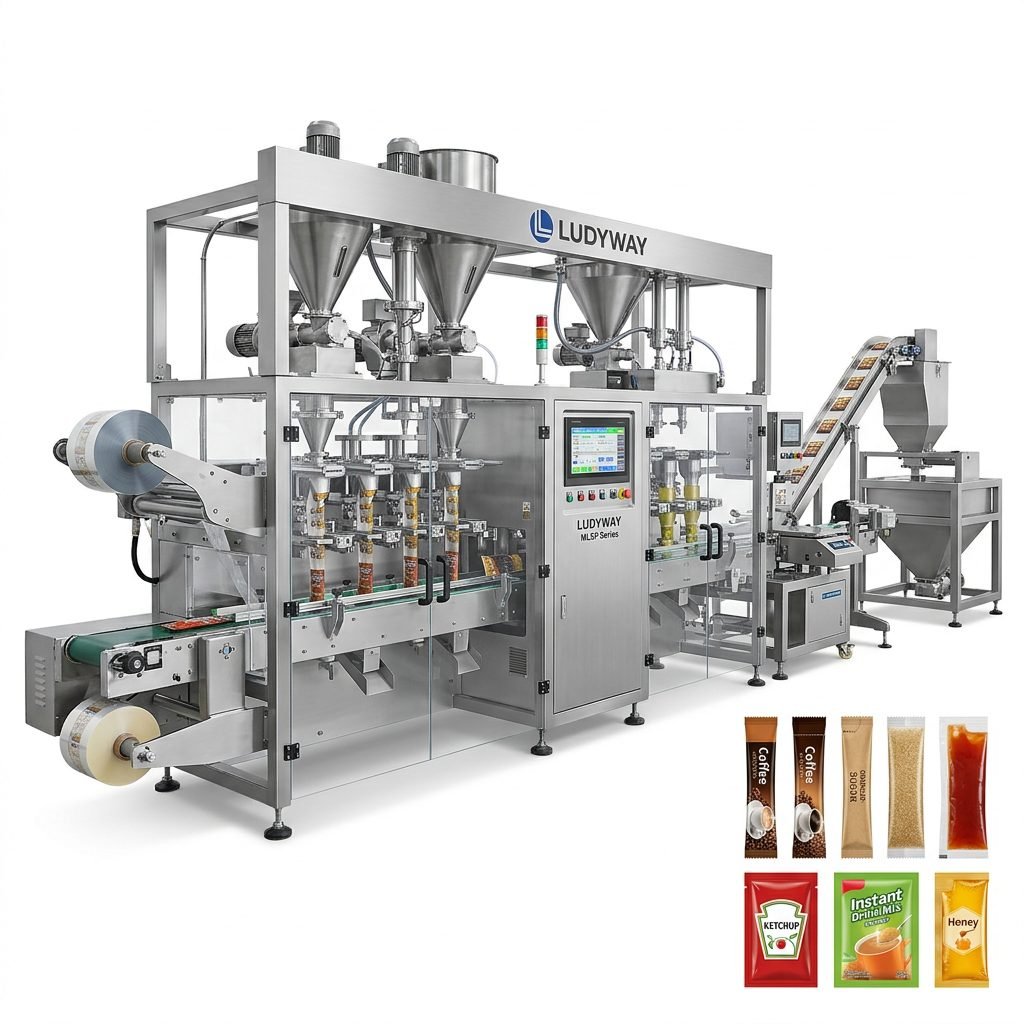
Multi-Lane Packaging Lines for Granule Powder Liquid Sachet Stick Pack Automation
Explore Model Specifications →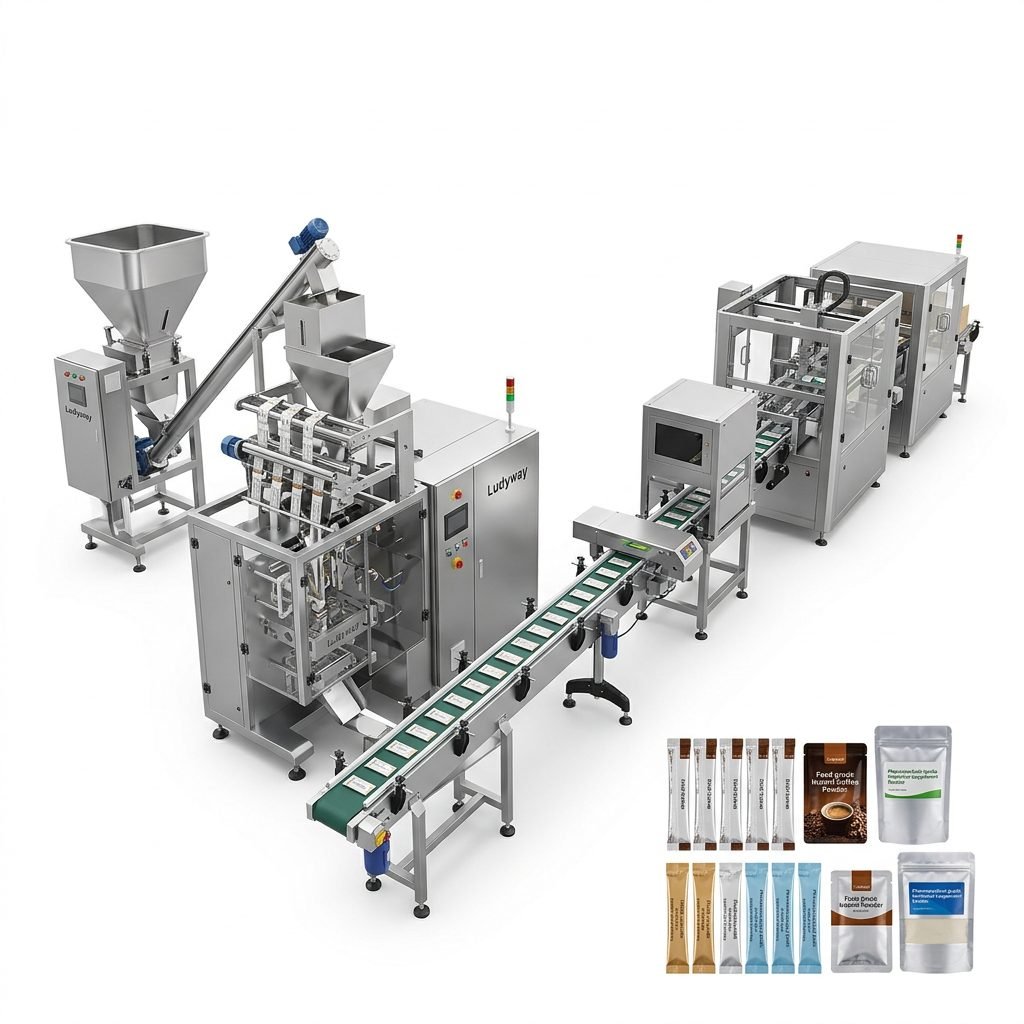
Fully Automatic Powder Packaging Lines for Food & Pharma | High-Speed Multi-Lane Systems
Explore Model Specifications →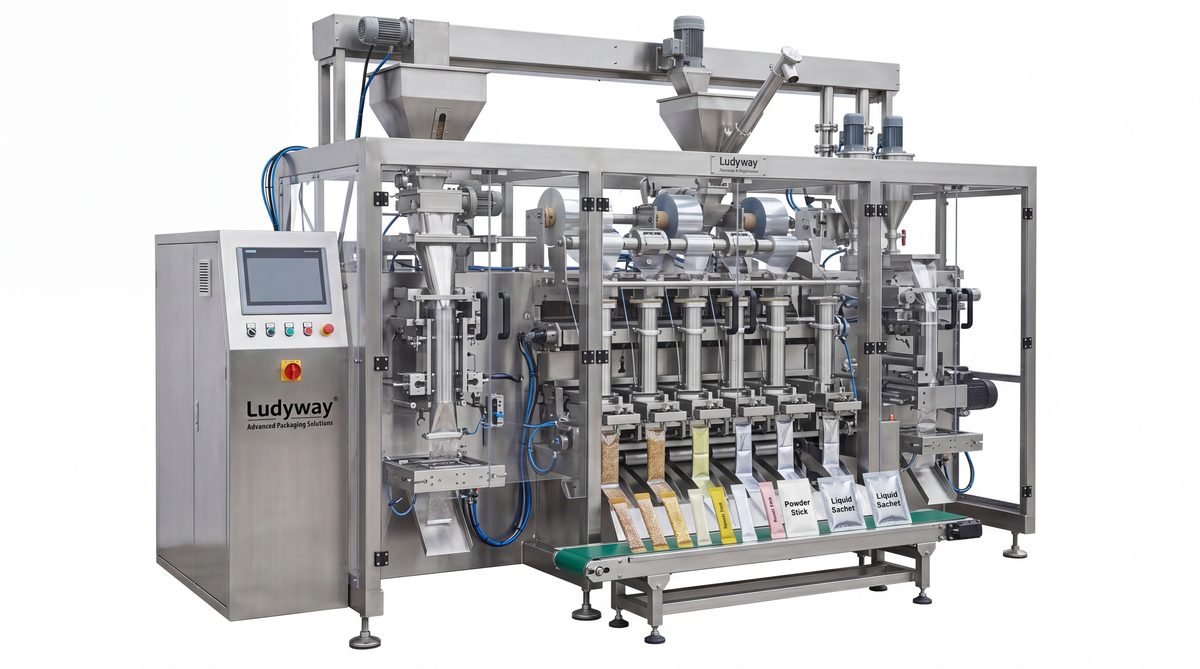
Multi-Lane Stick Pack & Sachet Packaging Machine for Granule, Powder, Liquid
Explore Model Specifications →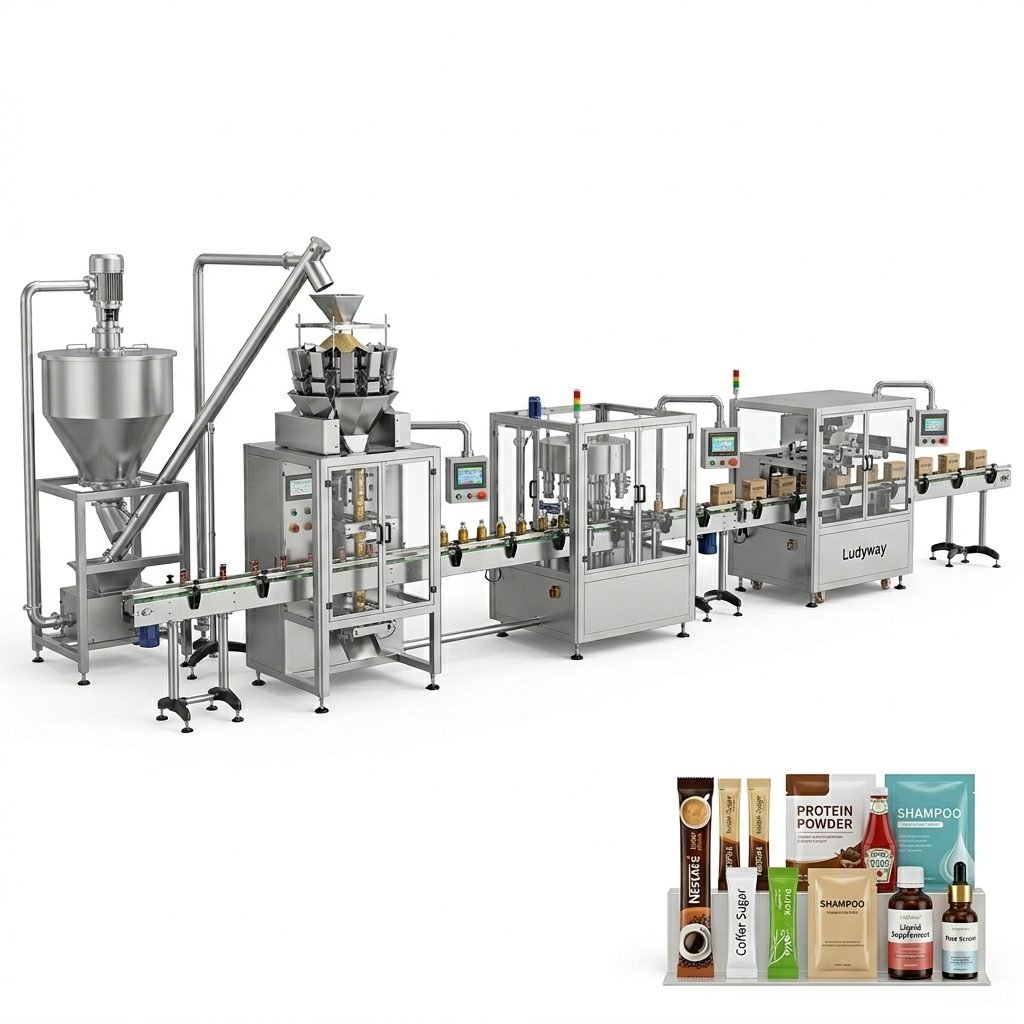
Complete Turnkey Packaging Solutions for Granule, Powder, and Liquid Products
Explore Model Specifications →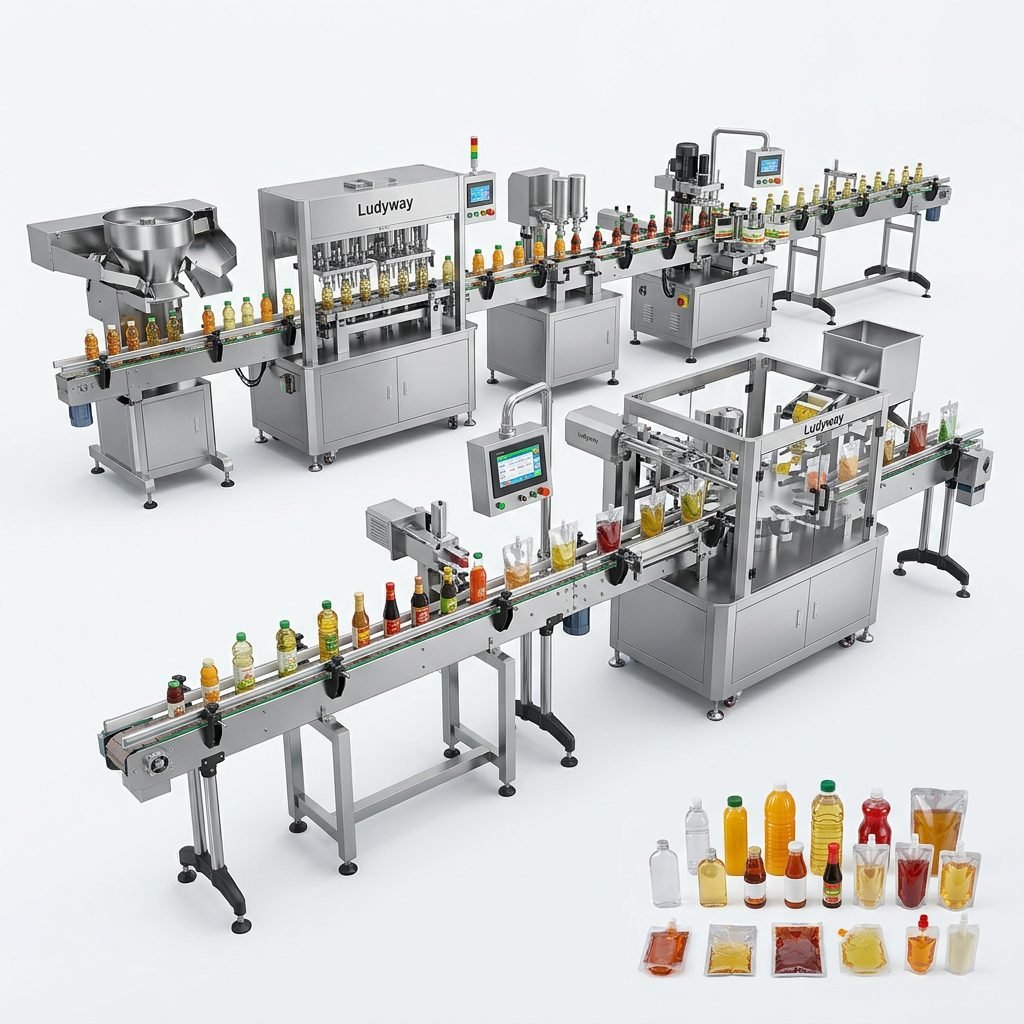
High-Speed Fully Automatic Liquid Packaging Lines for Bottles and Pouches
Explore Model Specifications →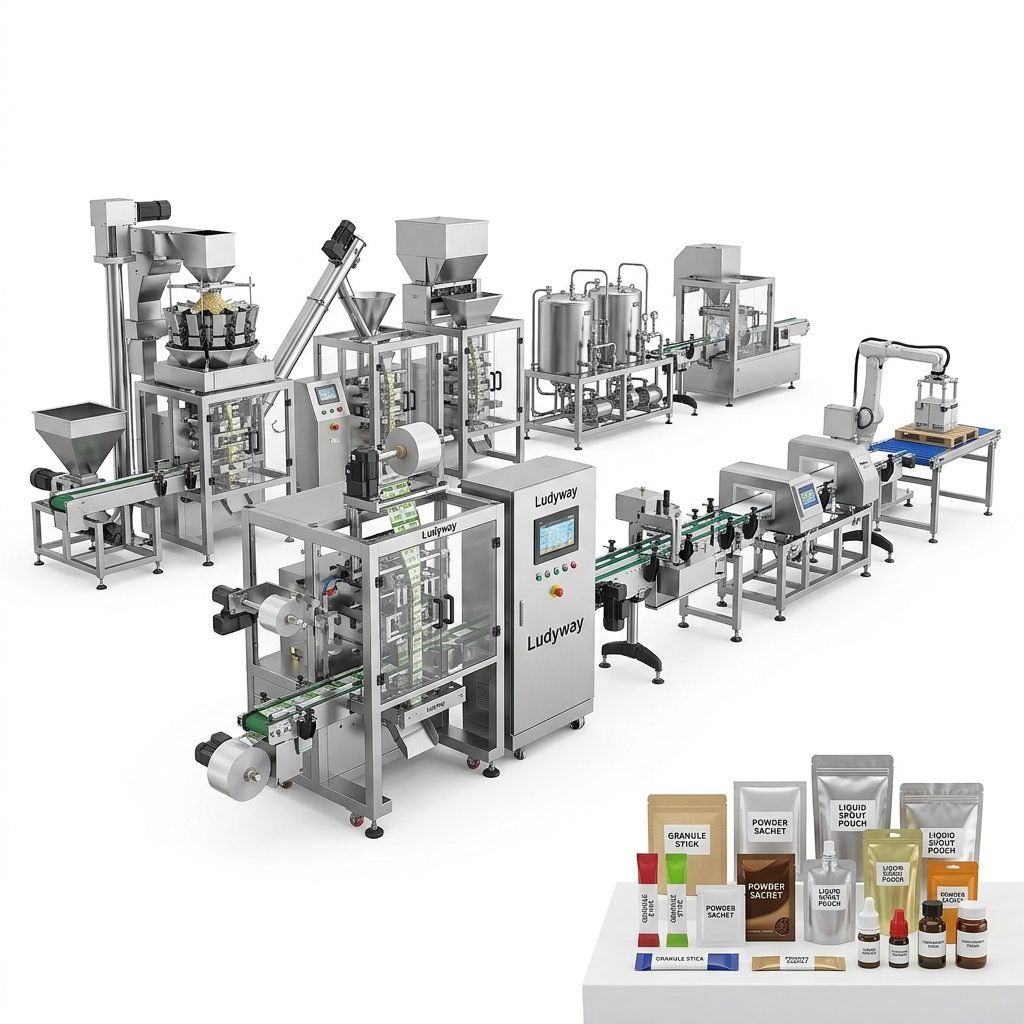
Automated Smart Factory Packaging Lines for Granules, Powder, Liquids & Pouches
Explore Model Specifications →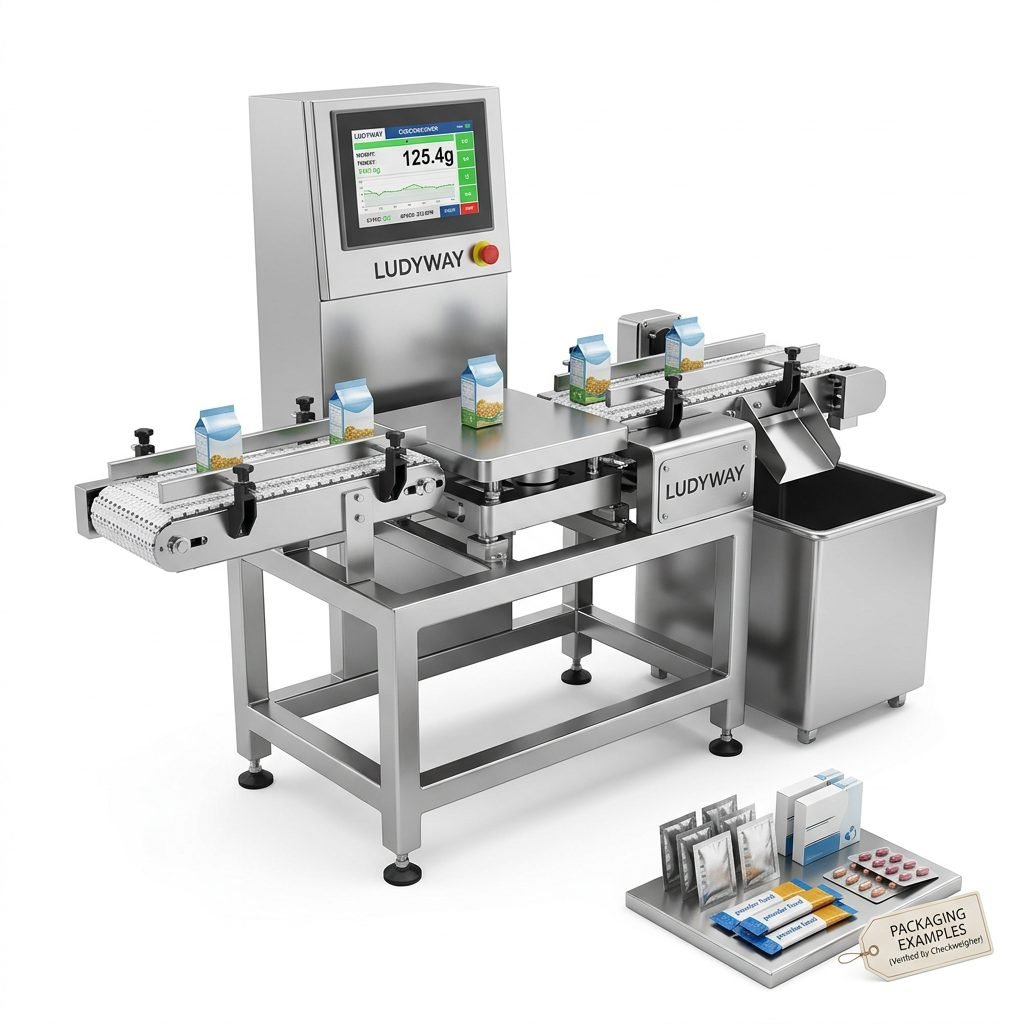
High-Precision Checkweigher for Food & Pharmaceutical Packaging Lines
Explore Model Specifications →Global Partnerships & Worldwide Trade Exhibitions
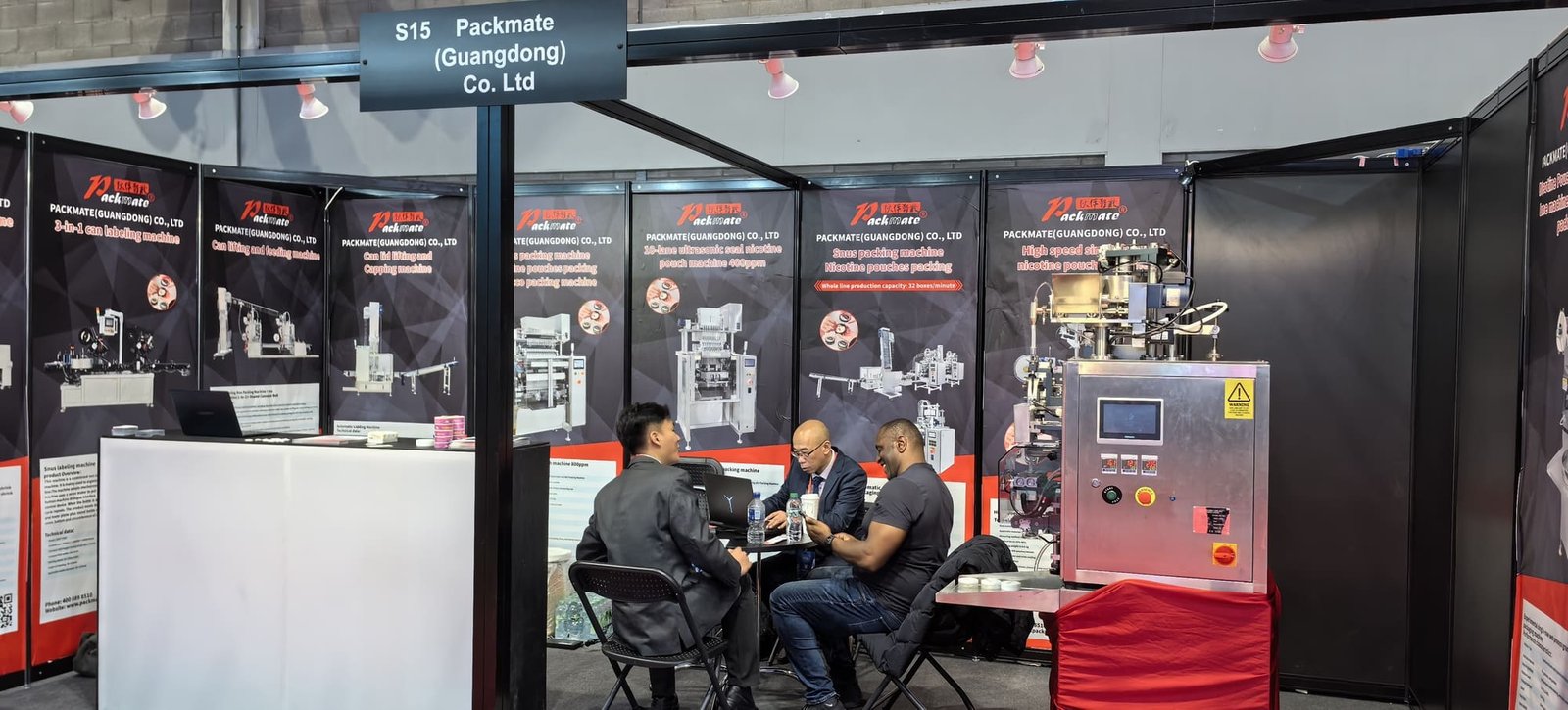
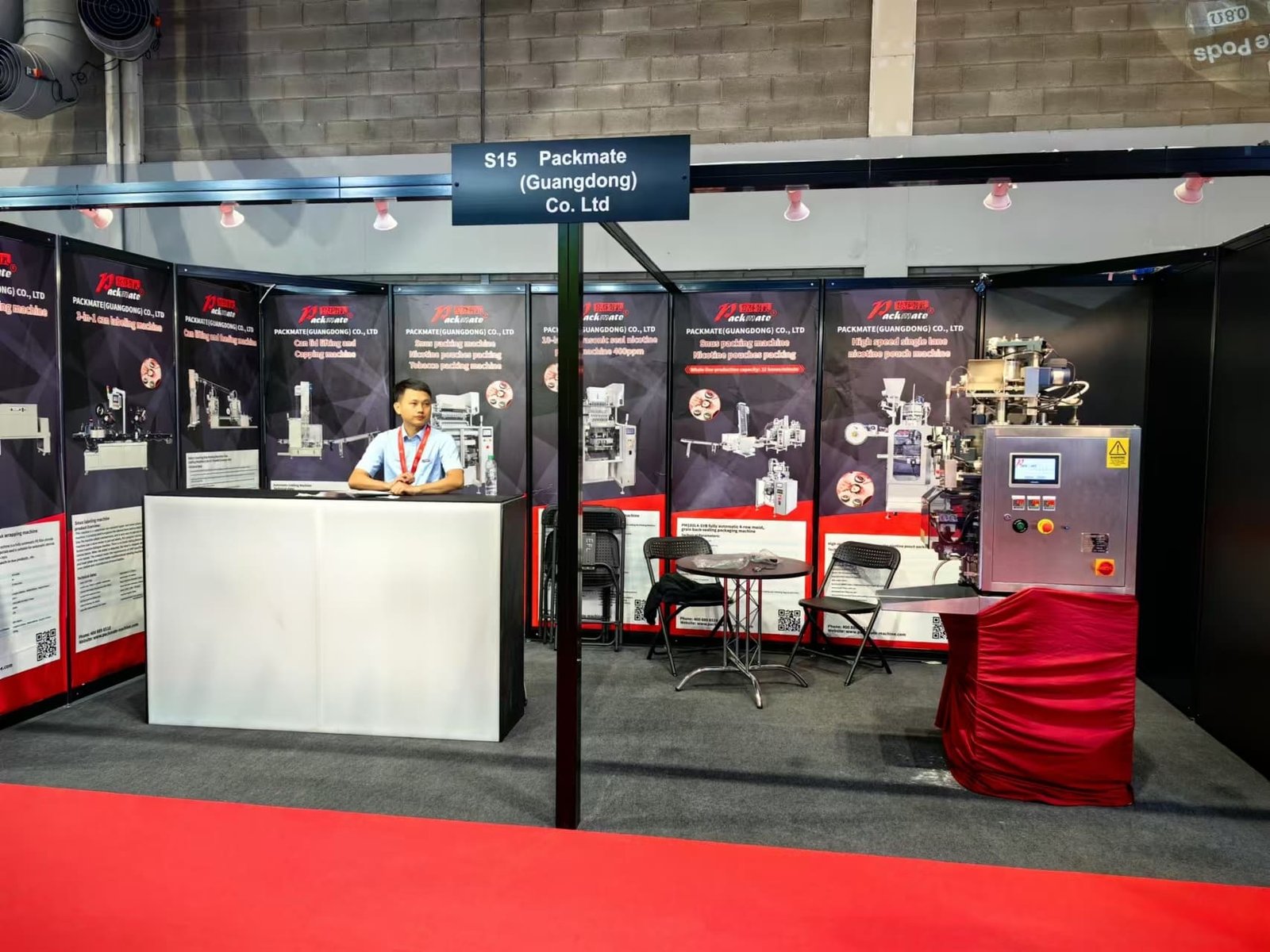
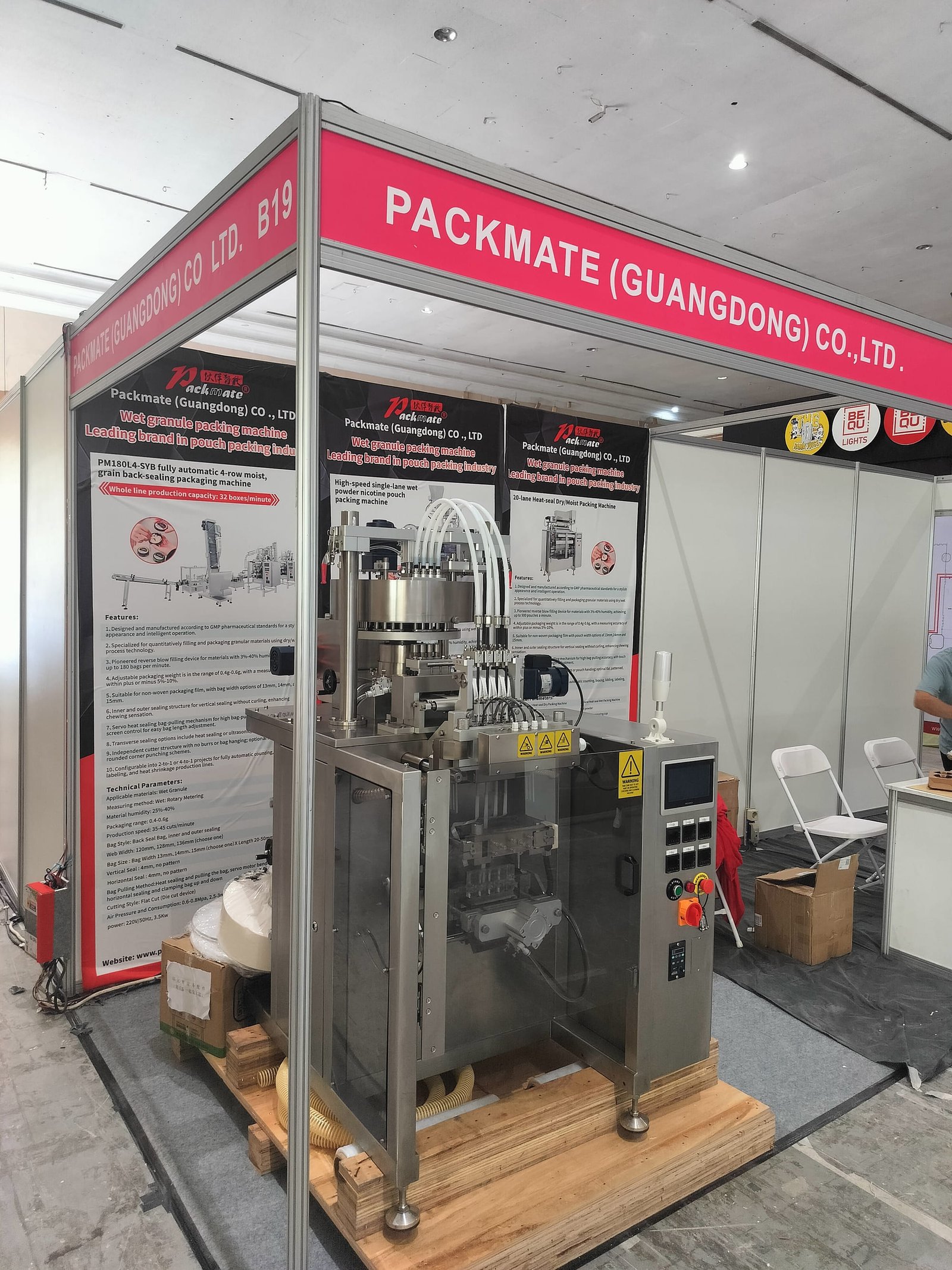
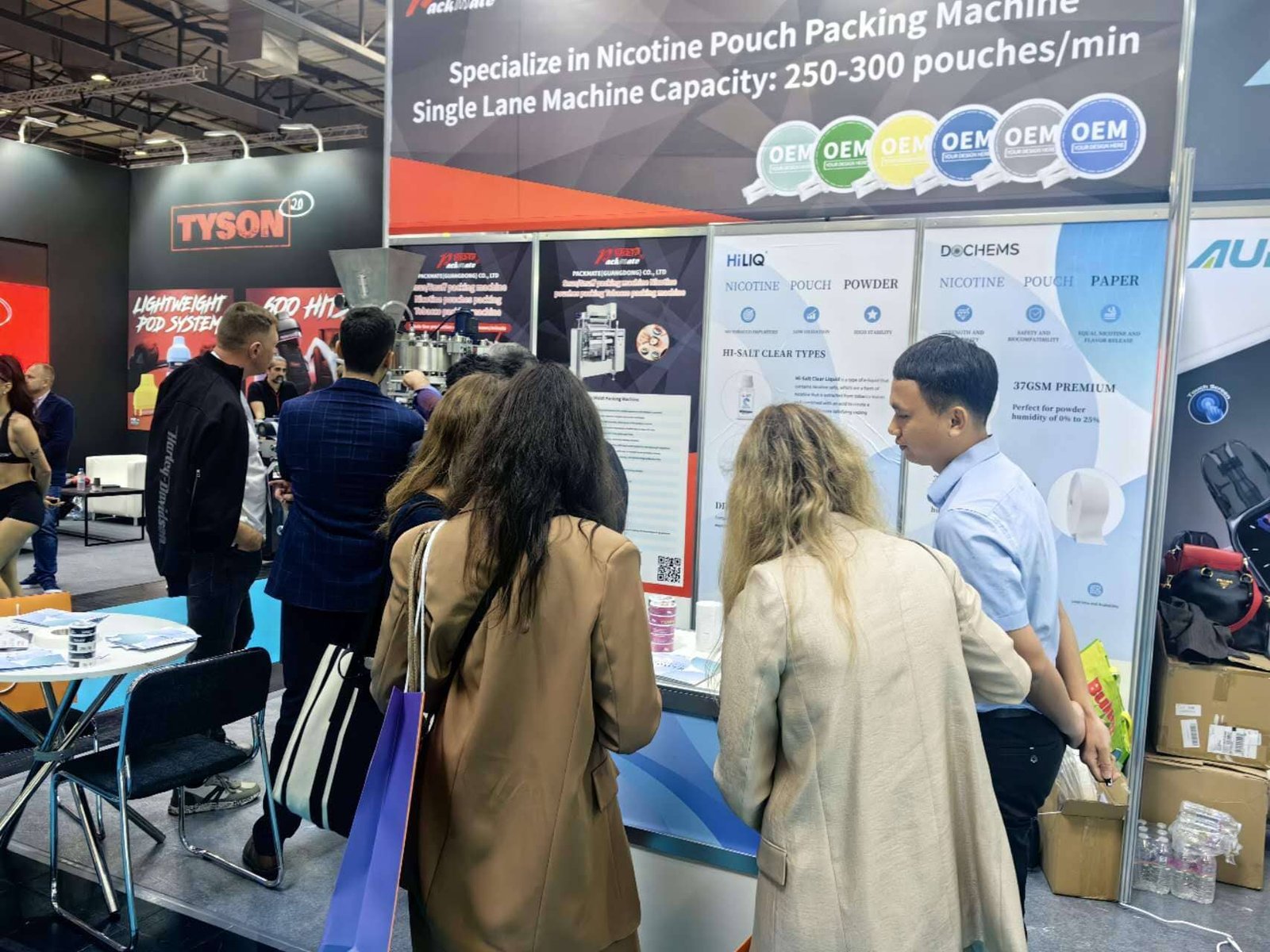
Ludyway packaging systems operate continuously in over 100 countries. We regularly demonstrate our certified packaging lines at premier global trade fairs across Germany, the United States, Dubai, and Asia.








Frequently Asked Questions on Machinery Export Certifications
Direct technical clarifications on customs clearance, voltage adaptations, certification validity, and third-party testing protocols.
1. What is the difference between CE self-declaration and Notified Body certification?
For standard packaging machinery under the Machinery Directive 2006/42/EC Annex I, manufacturers can perform internal production control (self-declaration) if all harmonized Type-C standards are followed. However, complex automated lines often engage accredited third-party notified bodies (such as TÜV, SGS, or ECM) to issue official Certificates of Compliance and verify the comprehensive Technical Construction File (TCF).
2. Can a CE-certified packaging machine be imported into the United States or Canada directly?
No, CE marking is not legally recognized by US OSHA or Canadian provincial inspectors (AHJ). While the mechanical structure may be sound, the electrical cabinet must satisfy NFPA 79 and UL 508A (or CSA C22.2 No. 286). Ludyway configures electrical panels with UL-listed circuit breakers, Siemens/Allen-Bradley PLCs, and completes Field Evaluation Certification prior to shipping to North American clients.
3. What documentation is required in the machine’s Technical Construction File (TCF)?
A complete TCF must contain: overall assembly blueprints, electrical circuit schematics (EN 60204-1), pneumatic/hydraulic diagrams, risk assessment document (EN ISO 12100), material mill test certificates for contact components (SS304/SS316L), calculation sheets, instruction manuals in the official language of the importing nation, and the signed Declaration of Conformity (DoC).
4. How do regional grid voltages impact certification and equipment operation?
Packaging machines operate across various electrical infrastructures worldwide, ranging from 380V-415V 50Hz 3-Phase in Europe/Asia to 208V/240V/480V 60Hz 3-Phase in North America. Ludyway engineers custom transformers, servo drives, and frequency converters tailored to each client’s exact plant voltage, ensuring compliant EMC filtering and overcurrent protection.
5. Are sanitary FDA certificates necessary for cosmetic and chemical packaging equipment?
While FDA CFR 21 is strictly enforced for food and pharmaceuticals, cosmetic and daily chemical manufacturers increasingly demand food-grade contact polymers and non-corrosive SS316L liquid contact manifolds to prevent batch degradation and ensure compliance with ISO 22716 Good Manufacturing Practices (GMP).
Ensure Flawless Compliance for Your Next Packaging Project
Partner with Ludyway to receive high-performance automated multi-lane packaging machinery fully certified to meet your country’s rigorous import regulations and plant safety standards.
