
The Short Answer: Packaging Machinery Speed Range
Depending on the mechanical configuration, motion dynamics, lane count, and physical properties of the product, modern industrial packaging machines produce anywhere from 1,200 pouches per hour on entry-level single-lane vertical form-fill-seal (VFFS) units to over 60,000 packs per hour on high-speed continuous multi-lane stick pack and sachet lines. Real throughput is determined by dosing cycle times, thermal sealing speed, and overall equipment effectiveness (OEE).
Hourly Throughput by Machine Category & Product Type
Comparing theoretical maximum speed versus realistic production capacity across diverse packaging architectures.
| Machinery Category | Lane / Filling Heads | Applicable Material | Nominal Cycles/Min (PPM) | Output Per Hour (PPH) | Typical Efficiency (OEE) |
|---|---|---|---|---|---|
| Single-Lane VFFS Sachet | 1 Lane | Powders / Granules | 30 – 60 PPM | 1,800 – 3,600 PPH | 80% – 88% |
| Multi-Lane Stick Pack (4–6 Lanes) | 4 – 6 Lanes | Instant Coffee, Energy Gel | 160 – 300 PPM | 9,600 – 18,000 PPH | 85% – 92% |
| Multi-Lane Stick Pack (8–12 Lanes) | 8 – 12 Lanes | Sugar, Probiotics, Salts | 400 – 720 PPM | 24,000 – 43,200 PPH | 88% – 95% |
| Rotary Premade Pouch Machine | Single / Dual Station | Pet Treats, Snacks, Detergent | 35 – 80 PPM | 2,100 – 4,800 PPH | 82% – 90% |
| Multi-Lane Sachet Machine (Liquid) | 4 – 8 Lanes | Sauces, Shampoo, Honey | 140 – 320 PPM | 8,400 – 19,200 PPH | 82% – 89% |
| Nicotine Pouch / Snus Line | High-Speed Modular | Oral Nicotine, Herbal Pouches | 300 – 600 PPM | 18,000 – 36,000 PPH | 90% – 94% |
| Turnkey Cartoning & Case Line | Automated End-of-Line | Multipacks, Secondary Boxes | 50 – 120 Cartons/Min | 3,000 – 7,200 CPH | 92% – 96% |
The Mathematics Behind Packaging Machine Speeds (UPH & PPM)
In industrial production planning, calculating how many products a packaging machine can pack per hour begins with distinguishing between theoretical mechanical cycle rate and net operational output. Packaging speeds are universally expressed in PPM (Packs Per Minute) and converted into UPH (Units Per Hour) or PPH (Packs Per Hour).
Actual Net Output (UPH) = Theoretical PPH × Overall Equipment Effectiveness (OEE %)
For example, consider a 10-lane multi-lane stick pack machine running instant beverage powder. If the servo-driven sealing jaws complete 55 strokes per minute, the theoretical calculation is: 55 cycles/min × 10 lanes × 60 min = 33,000 packs per hour. With a standard industrial OEE benchmark of 88% (accounting for roll splicing, print ribbon replacement, and minor material tuning), the expected net output is 29,040 packed units per hour.
Key Engineering Factors Dictating Hourly Output
A packaging machine does not operate in a vacuum. Hourly capacity is governed by the dynamic interaction between mechanical kinematics, dosing chemistry, barrier film characteristics, and downstream packaging automation.
1. Dosing Mechanism & Viscosity
Free-flowing granules (sugar, salt) settle by gravity within 0.15s, while hygroscopic micro-powders (whey, collagen) require high-torque servo auger feed screws. Viscous liquids (honey, paste) require positive displacement piston pumps with anti-drip cut-offs.
2. Sealing Dwell Time & Film Type
Multilayer laminate films (PET/AL/PE) achieve hermetic seals in 0.18–0.25s. Mono-material recyclable films (PP/PE) require precise PID temperature control and extended dwell cycles, slightly modulating maximum line speed.
3. Lane Multipliers & Servo Motion
Multi-lane technology allows parallel production without increasing footprint. Upgrading from a 4-lane to a 10-lane platform delivers a 2.5× capacity multiplier while sharing central unwind, coding, and HMI control systems.
Dosing Speed Bottlenecks: Granule vs. Powder vs. Liquid
Different material physics present specific mechanical resistance to rapid filling:
- Granule Packaging: High volumetric cup accuracy and multi-head weighers can achieve up to 70–80 discharges per minute per lane.
- Powder Filling: Non-free-flowing powders generate airborne dust clouds during high-velocity drops, requiring vacuum extraction manifolds, nitrogen flushing chambers, and specialized anti-static auger funnels.
- Liquid & Gel Packaging: High-viscosity sauces and cosmetic creams require multi-stroke rotary valve pumps to prevent cavitation and ensure zero dripping across sealing jaw surfaces.
Comparing Motion Architectures: Intermittent vs. Continuous Motion
When selecting machinery for specific hourly quotas, understanding motion kinematics is critical:
Intermittent Motion Systems: The packaging film pauses momentarily for volumetric dosing, transverse sealing, and cut-off. These units deliver superior seal integrity for medical and barrier-critical products, operating typically at 35 to 65 strokes per minute.
Continuous Motion Systems: The sealing jaws move in an orbital or reciprocating synchronization with continuous web pulling. Film movement never halts, allowing continuous stick pack lines to exceed 100+ strokes per minute per lane, ideal for extreme volume confectionery and seasoning sachets.
High-Capacity Machinery for Extreme Output Rates
Explore our top-performing multi-lane stick pack, sachet, and automated packaging lines engineered for 24/7 industrial uptime.
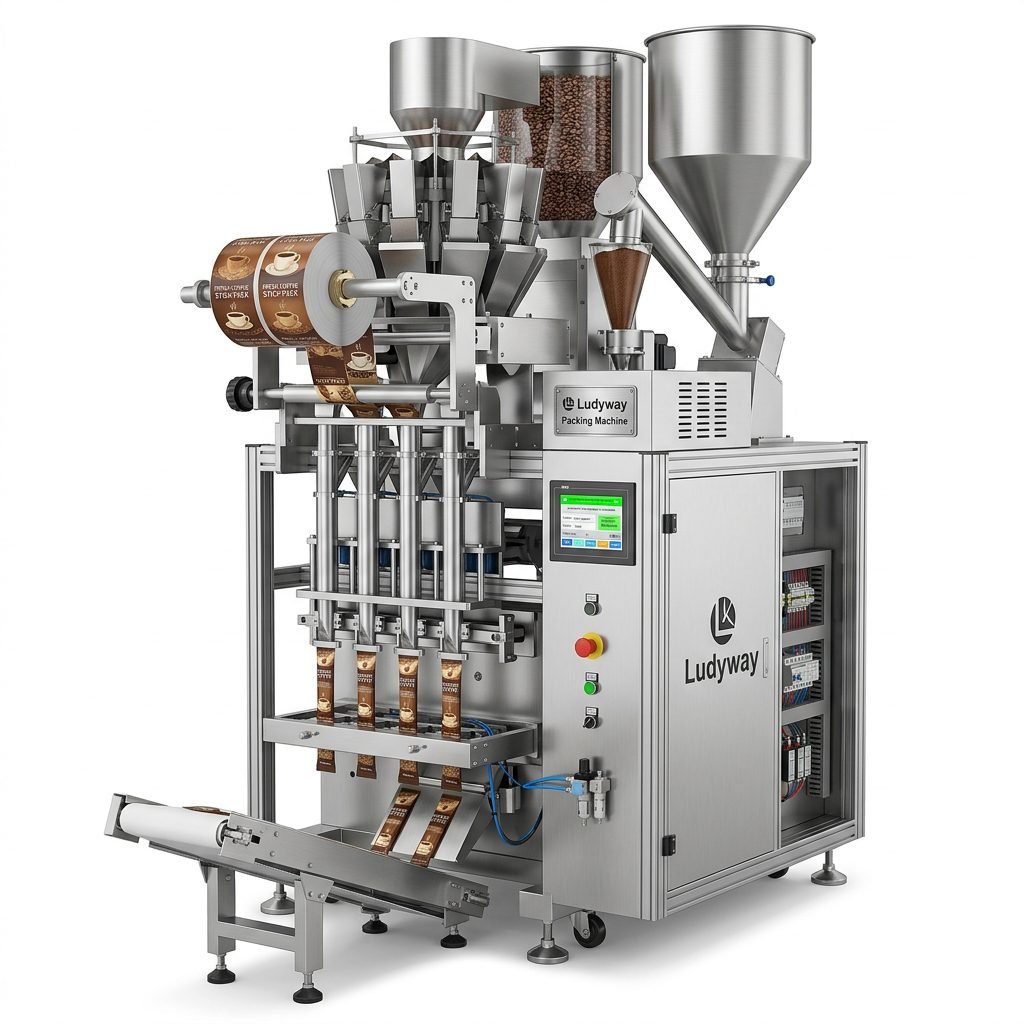
Multi-Lane Coffee Packaging Machine for Granule & Powder
View Machine Specs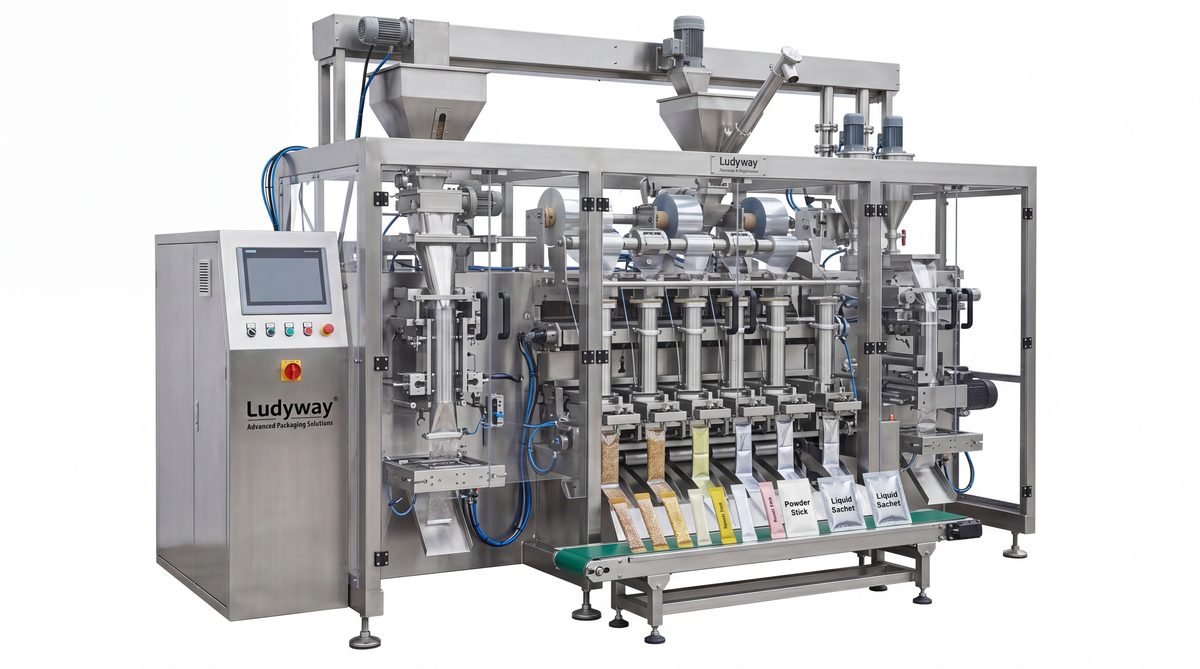
Multi-Lane Stick Pack & Sachet Machine for Granules, Powders, Liquids
View Machine Specs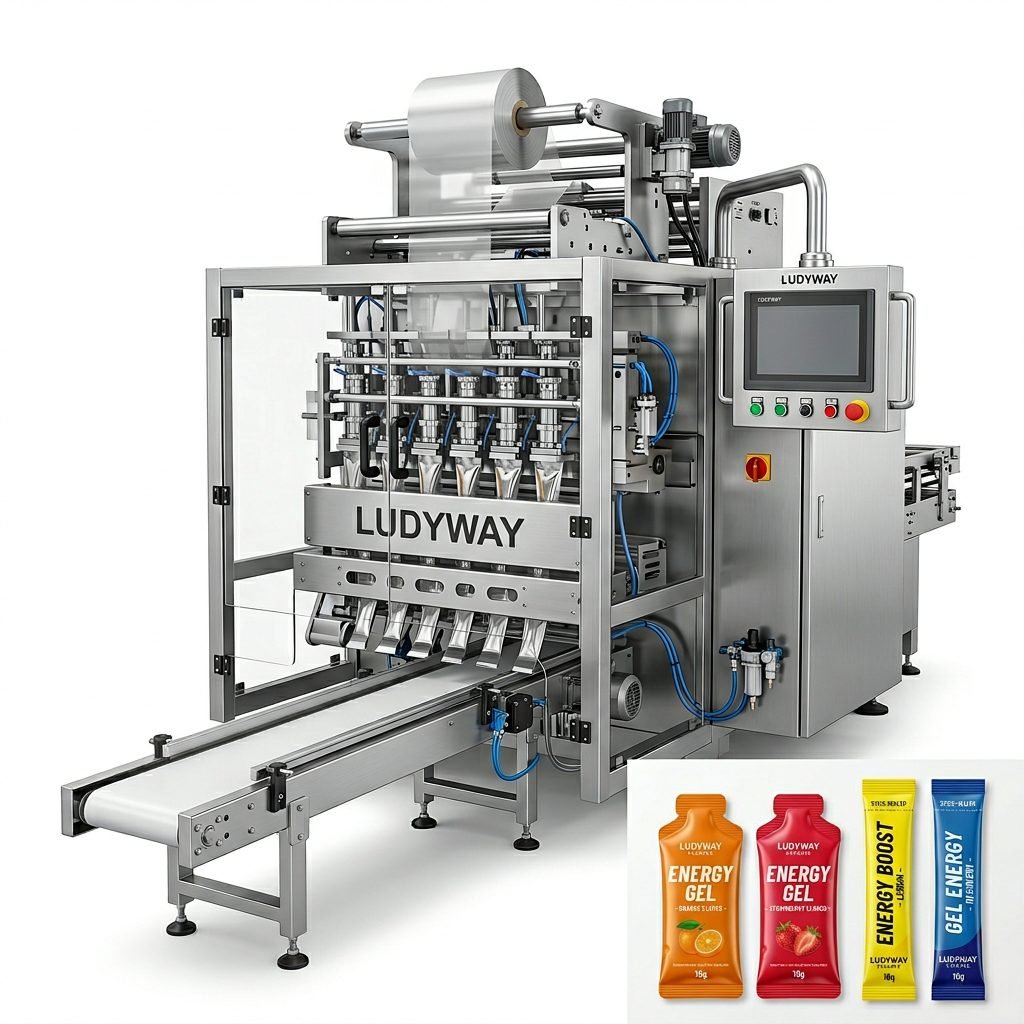
High-Speed Energy Gel Multi-Lane Stick Pack & Sachet Machine
View Machine Specs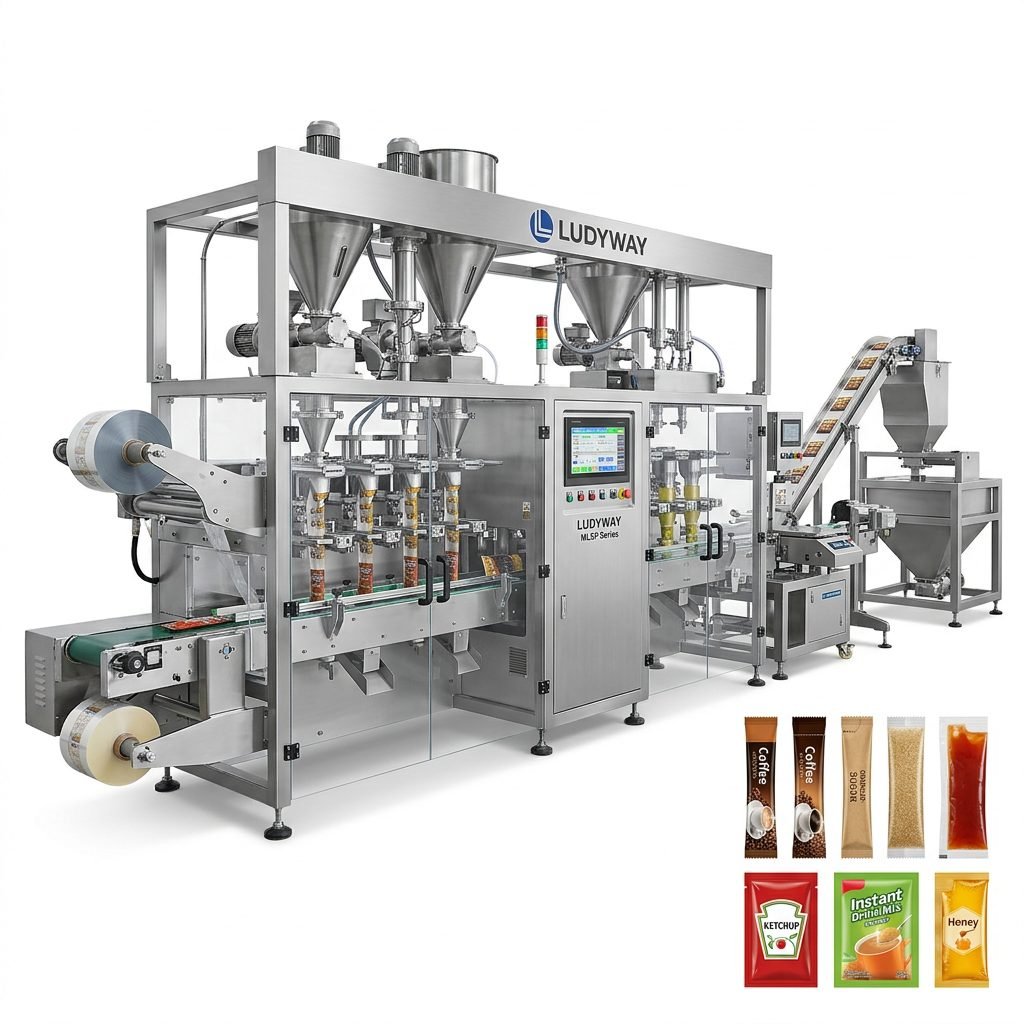
Multi-Lane Packaging Lines for Automated Sachet & Stick Production
View Machine Specs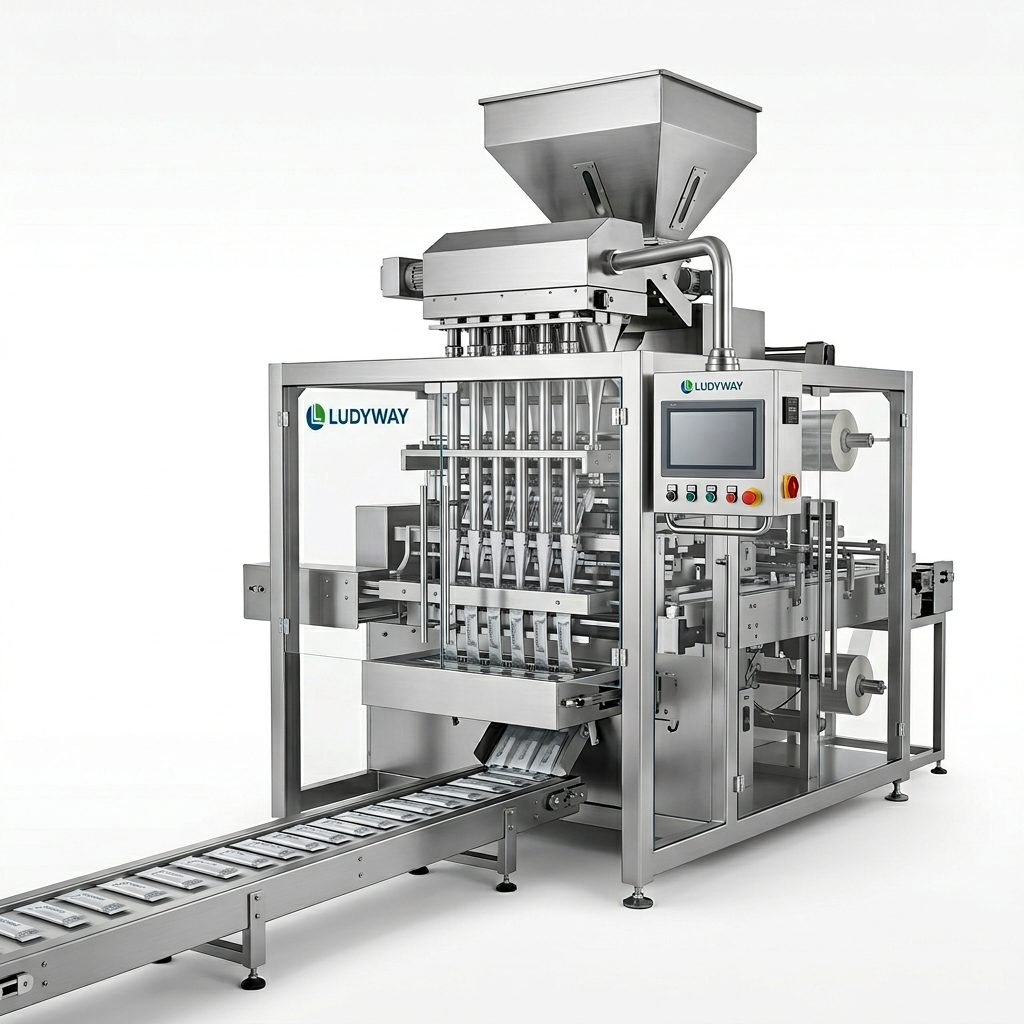
High-Speed Multi-Lane Powder Packaging System for Food & Pharma
View Machine Specs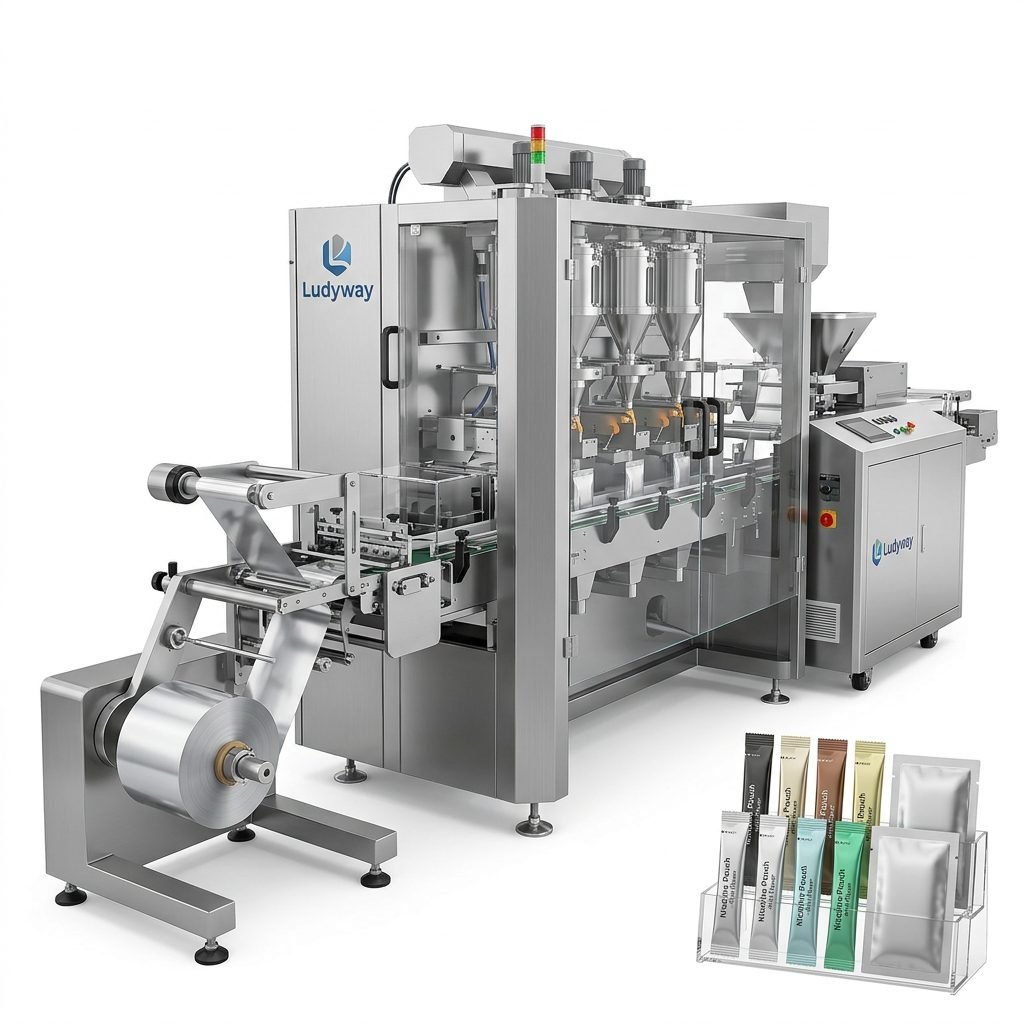
Tobacco-Free Nicotine Pouch Multi-Lane Packaging Lines
View Machine Specs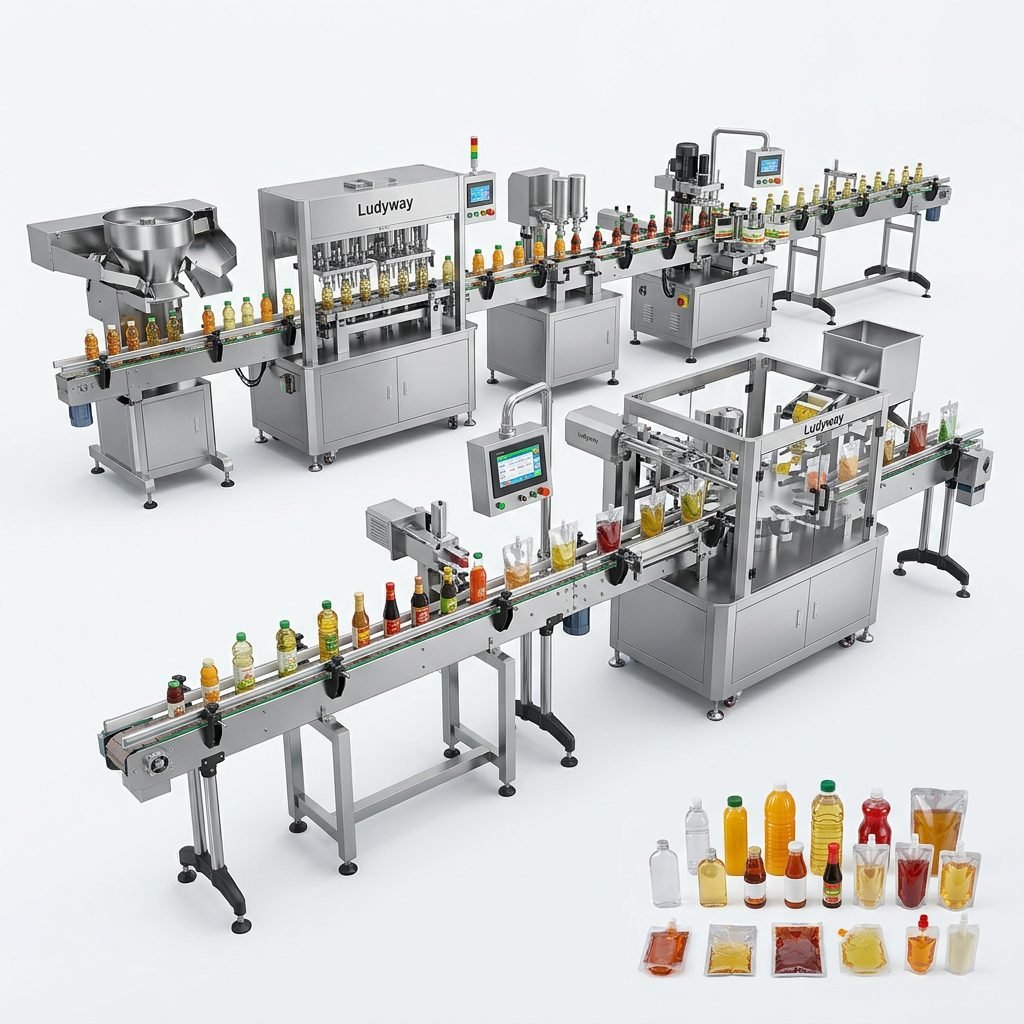
High-Speed Liquid Packaging Line for Bottles & Pouches
View Machine Specs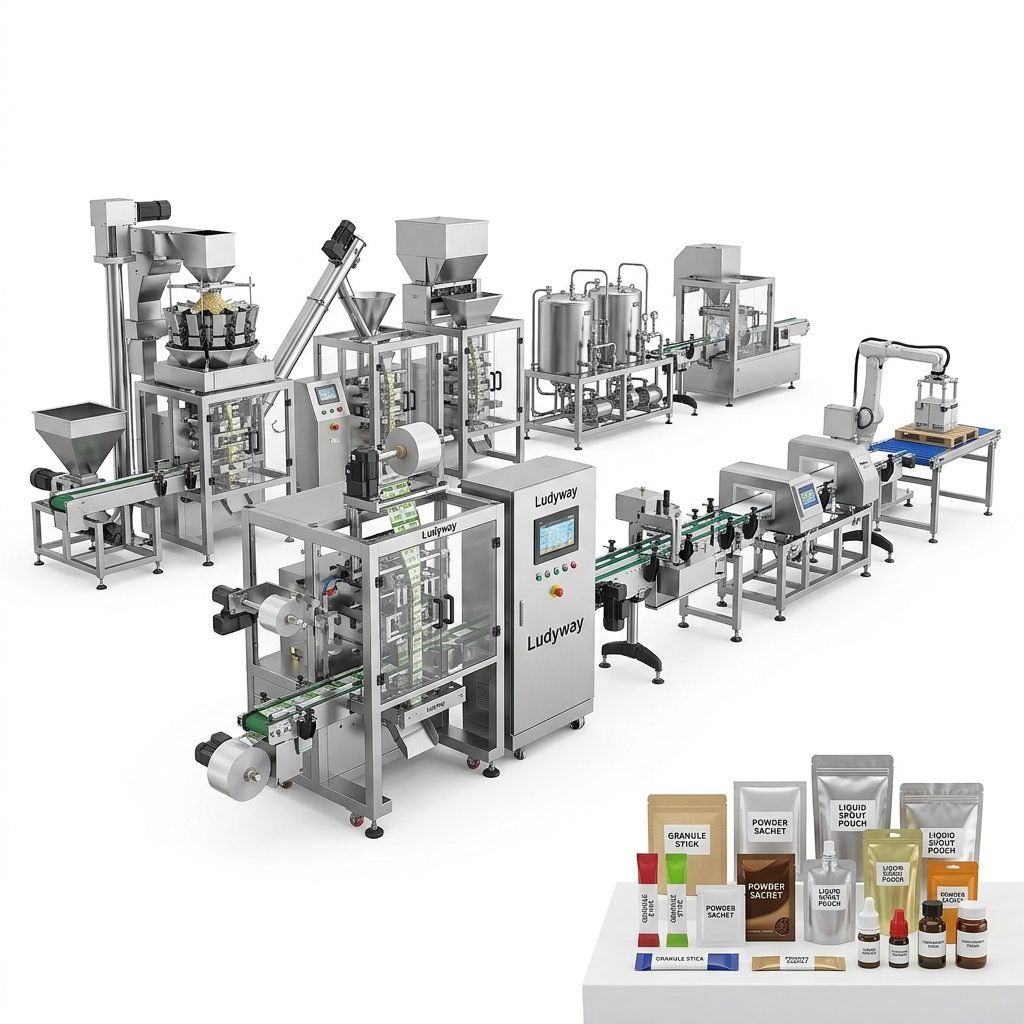
Smart Factory Automated Packaging Lines for Granules & Pouches
View Machine Specs5 Practical Strategies to Maximize Hourly Output
Implement these engineering and operational best practices to push real-world packaging throughput closer to theoretical maximums.
Automatic Film Splicing Units
Manual film reel changes require 5 to 10 minutes of machine downtime every few hours. Integrating a dual-shaft automatic film splicer enables seamless reel transitions at full production speed, instantly gaining 1,500 to 5,000 packs per shift.
Multi-Lane Synchronization & Independent Servos
Advanced packaging equipment utilizes independent servo drives for each lane’s dosing auger or pump. This enables precise per-lane micro-adjustments without stopping the entire production line, maintaining continuous 95%+ line efficiency.
Integrated Upstream Vacuum & Feed Conveyors
Material starving causes dosing voids and rejected underfilled pouches. Deploying automated Packaging Auxiliary Equipment such as vacuum feeders and Z-bucket elevators ensures an uninterrupted supply hopper level.
Automated High-Speed Cartoning Integration
Manual collation of sachets creates an inevitable bottleneck behind high-speed vertical form-fill-seal units. Linking multi-lane outfeed conveyors directly into automated cartoning and case packing machinery keeps the line running at maximum capacity.
Frequently Asked Questions: Packaging Speeds & Capacity
Clear answers to frequent technical inquiries regarding packaging throughput, speed calculations, and line configuration.
How does pouch fill weight impact packages packed per hour?
Larger fill volumes require more physical settling time and longer pump strokes. While a 2g stick pack of instant coffee can run at 60 strokes per minute, a 50g protein sachet on the same frame may be limited to 35 strokes per minute to allow proper powder discharge without seal contamination.
What is the typical difference between PPM and PPH?
PPM (Packs Per Minute) reflects instantaneous cycle speed. PPH (Packs Per Hour) measures cumulative output over 60 minutes. Because real industrial production experiences brief pauses for roll changes or date coder servicing, actual PPH equals PPM × 60 × OEE%.
Can a multi-lane stick pack machine be sped up after installation?
Yes. Output can often be optimized by installing high-efficiency heated sealing jaws with rapid thermal recovery, converting to servo-driven web pulls, fine-tuning auger discharge acceleration curves, and adding nitrogen flushing pre-purge manifolds.
Which packaging type runs the fastest: sachets, stick packs, or premade pouches?
Multi-lane stick packs and 4-side seal sachets achieve the highest overall hourly volumes (up to 40,000–60,000 PPH) due to multi-lane web conversion. Premade pouch machines generally top out around 3,000–4,800 PPH because each pre-formed bag must be mechanically opened, filled, and sealed sequentially.
Engineered for Precision, Speed, and Industrial Durability
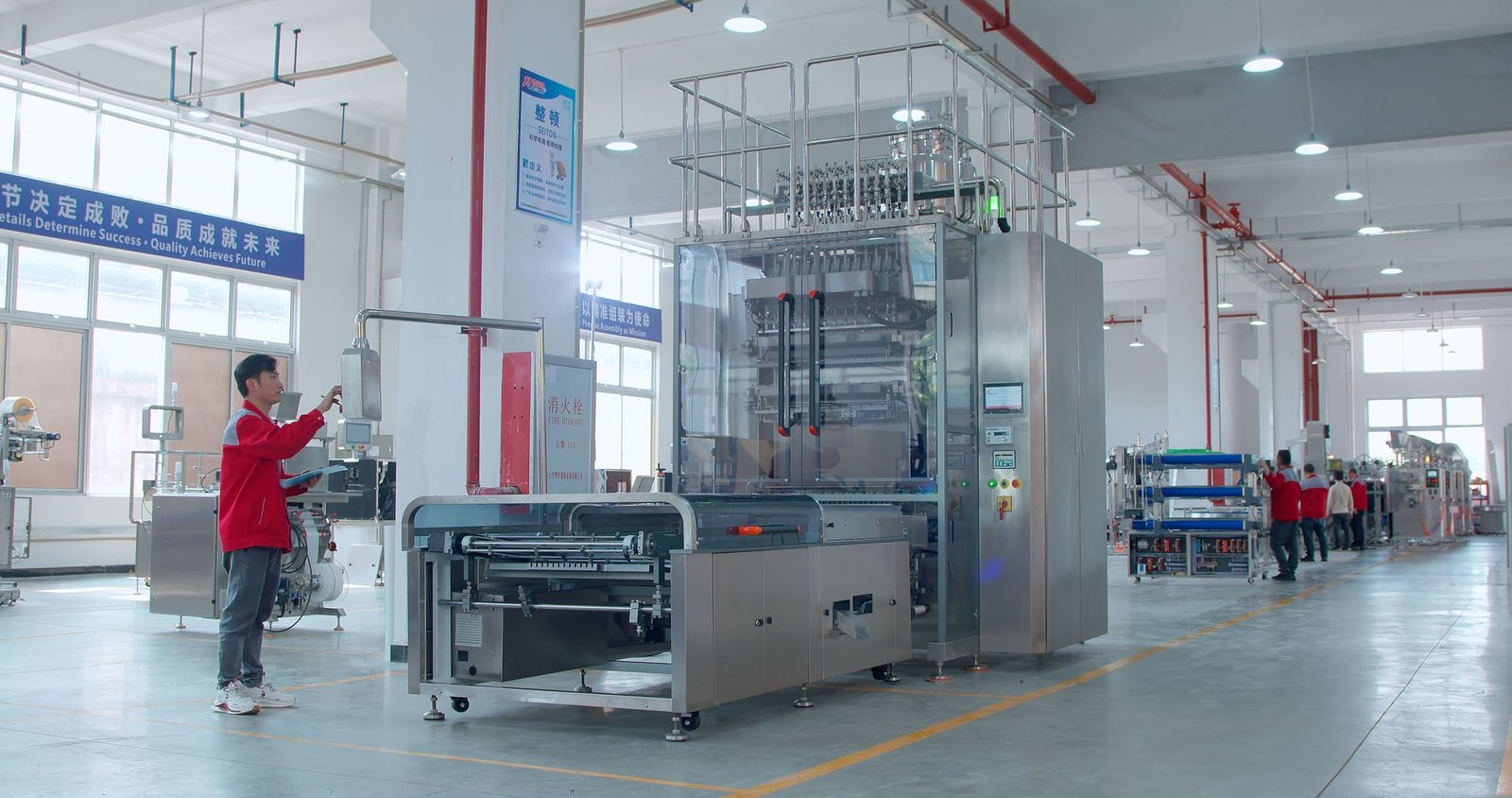
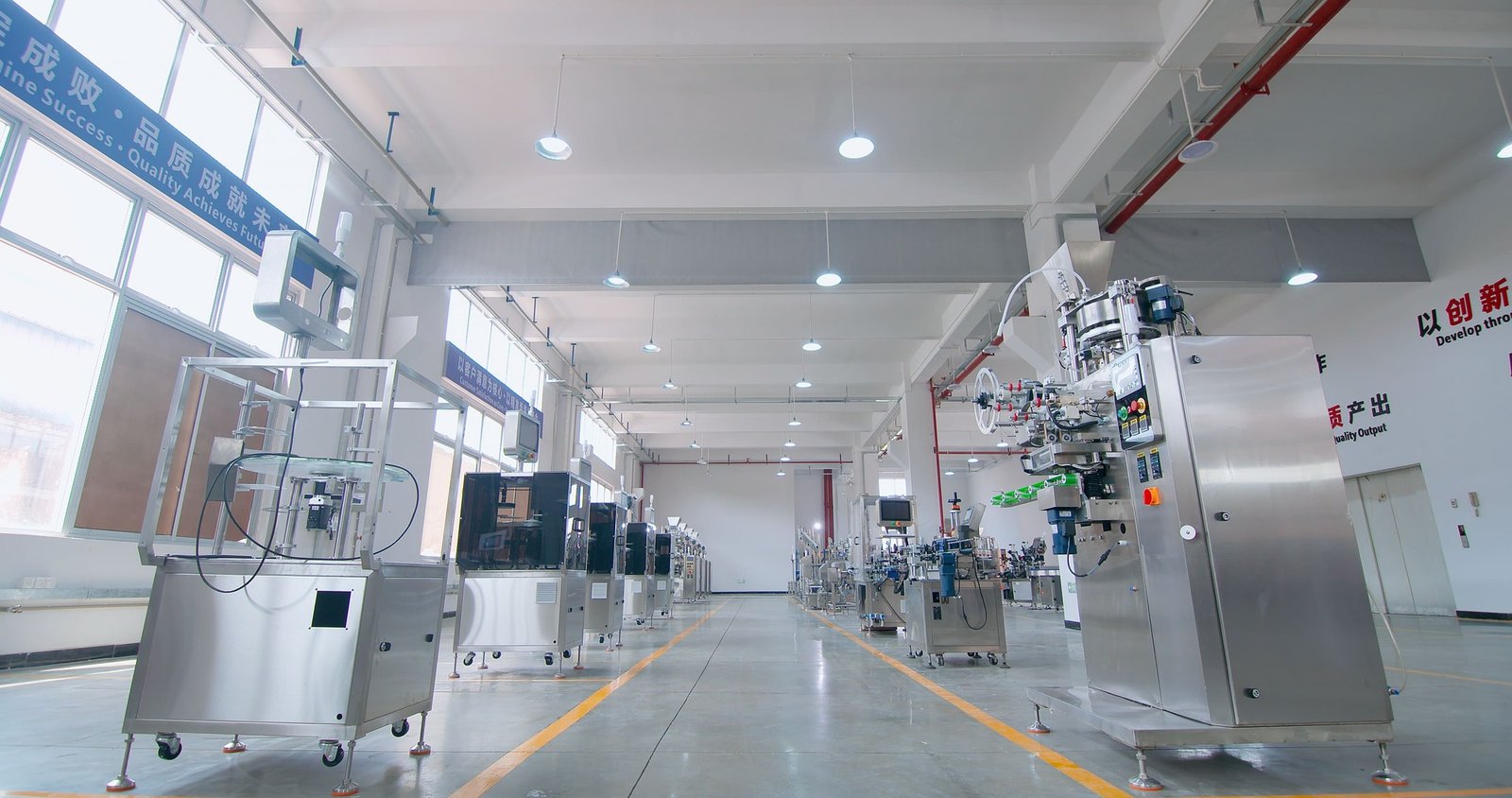
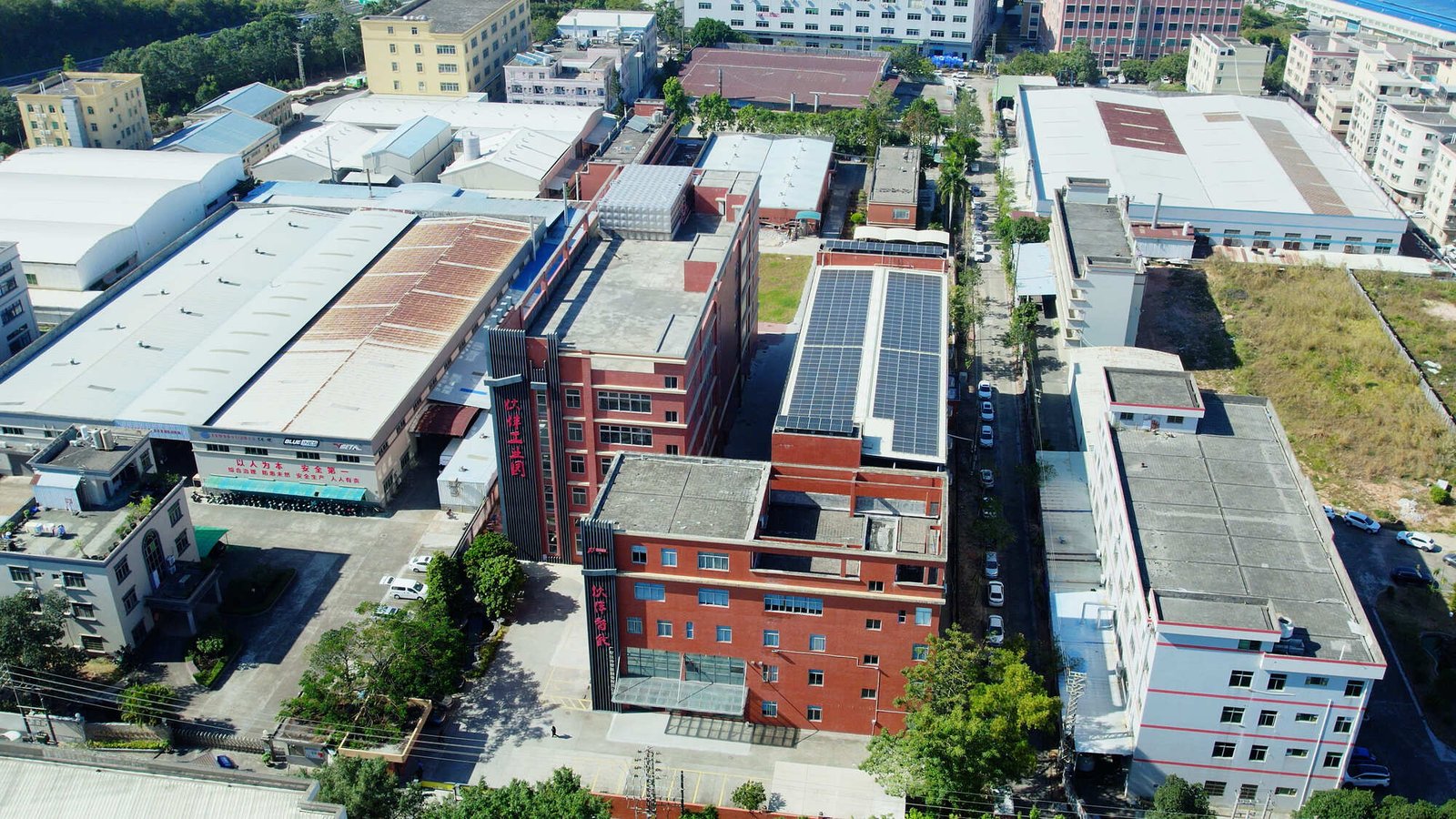
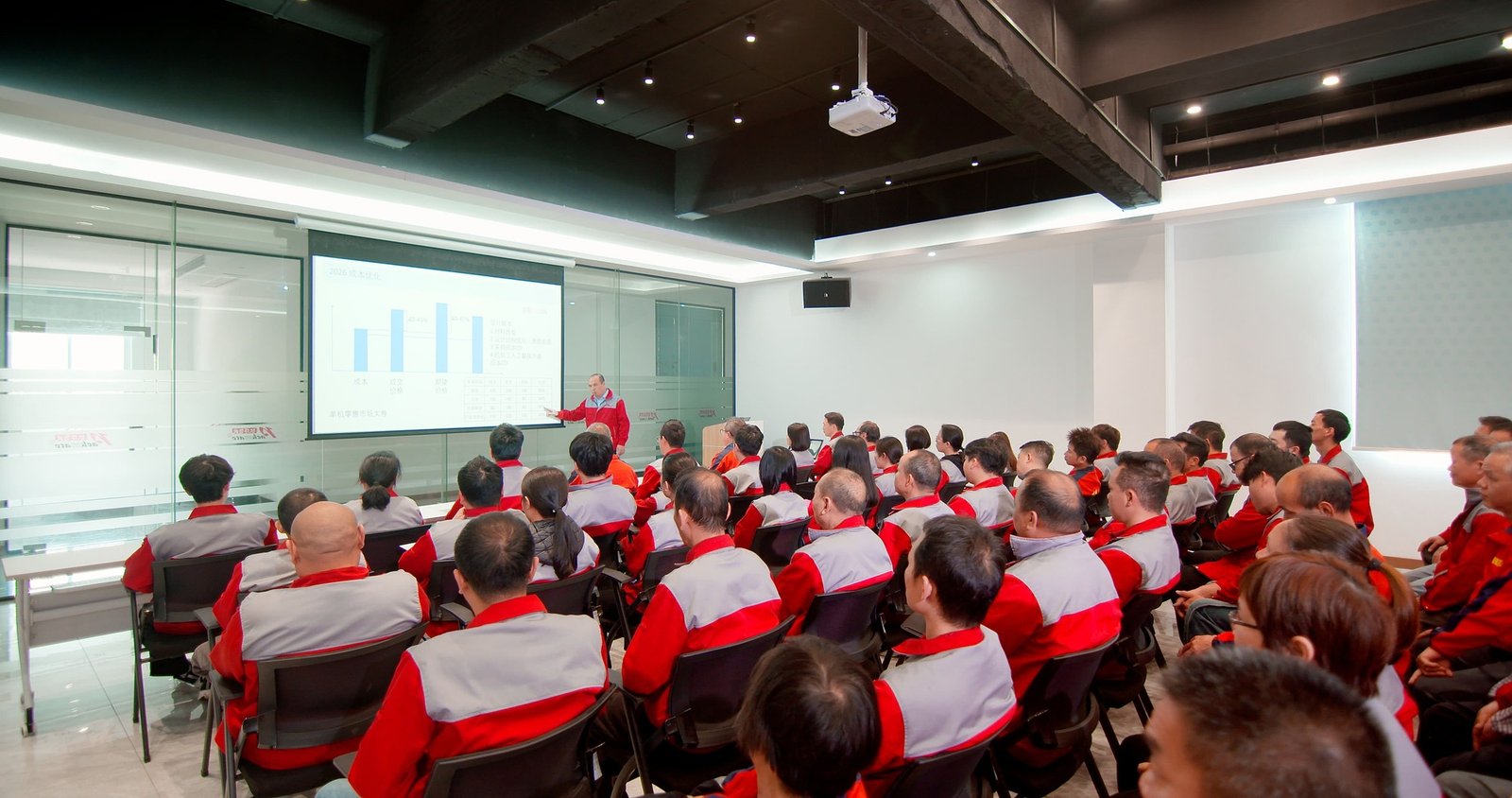
Ludyway is a premier packaging machinery manufacturer specializing in high-speed turnkey packaging systems for food, pharmaceutical, and chemical industries worldwide. Backed by over 30 years of engineering expertise and a modern 20,000㎡ manufacturing facility, we deliver more than 50 standard and customized packaging machine models.
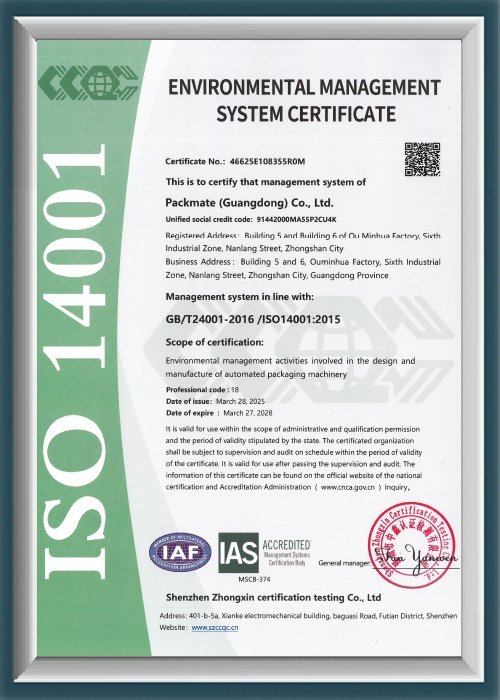
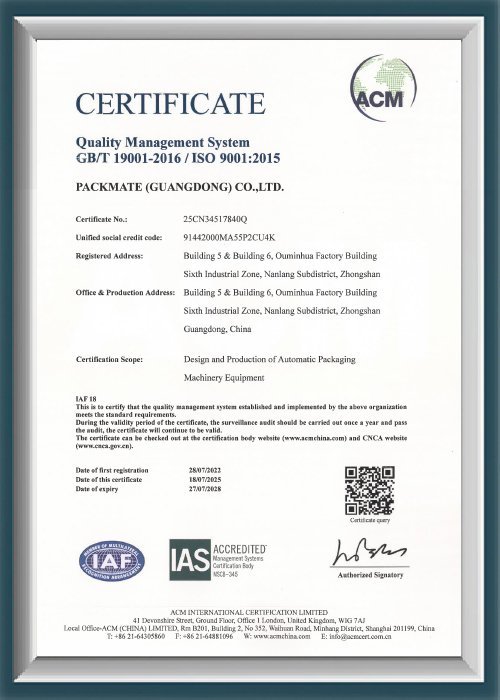
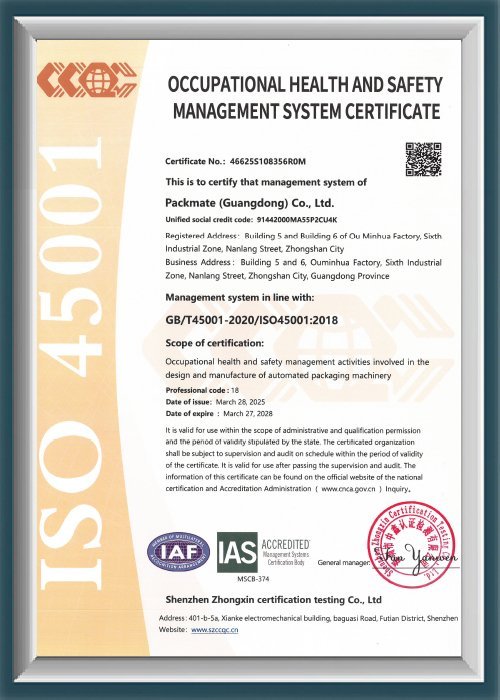
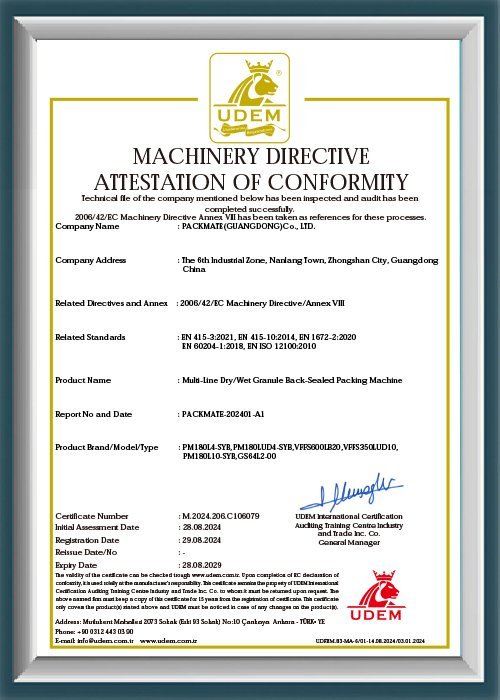
Serving enterprise clients across more than 100 countries, our multi-lane stick pack lines, sachet fillers, and secondary packaging solutions are certified to international quality standards.
Calculate Your Production Line Capacity with Our Engineers
Provide your target product, pouch dimensions, and required daily output. Our technical application team will provide a comprehensive speed validation, line layout, and turnkey machinery recommendation.
