Supplement Packaging Equipment
Protein Powder Packaging Machine for Supplement Manufacturers:Automatic Filling & Sealing Solutions
30+ years building powder packaging machines|50+ machine models for stick packs, sachets, pouches & bulk bags|Installed in 100+ countries
A protein powder packaging machine for supplement manufacturers has to handle one of the most difficult powders in the nutrition industry: whey, casein, pea and soy proteins are light (0.3–0.55 g/ml bulk density), hygroscopic, dusty and static-prone. This page is written for sports-nutrition brands, contract packers and procurement engineers who need to specify automatic filling and sealing equipment for 5–60 g single-serve stick packs and sachets, 500 g–5 kg retail pouches, or 20–25 kg bulk bags, with cGMP-compliant stainless-steel construction, ±1% dosing accuracy and nitrogen flushing options.
Key takeaways
- Multi-lane stick pack and sachet machines run 4–12 lanes at 30–60 cycles per minute per lane, delivering 120–700 single-serve protein packs per minute from one operator.
- Servo-driven auger fillers hold ±1% accuracy on 20–40 g whey protein doses (typically ±0.2–0.4 g), cutting giveaway by 2–4% compared with volumetric cup fillers.
- Nitrogen flushing lowers residual oxygen in sealed pouches to below 2%, extending shelf life of flavoured protein blends from 12 to 24 months in PET/AL/PE laminates.
- Product-contact parts in SUS304 or SUS316L with tool-free disassembly reduce flavour changeover cleaning from 90 minutes to roughly 30–40 minutes.
- Standard machines ship in 35–60 days, turnkey protein packaging lines in 60–90 days; minimum order is 1 unit and quotations are prepared from your sample, fill weight and target speed.
Protein Powder Filling & Sealing Machines
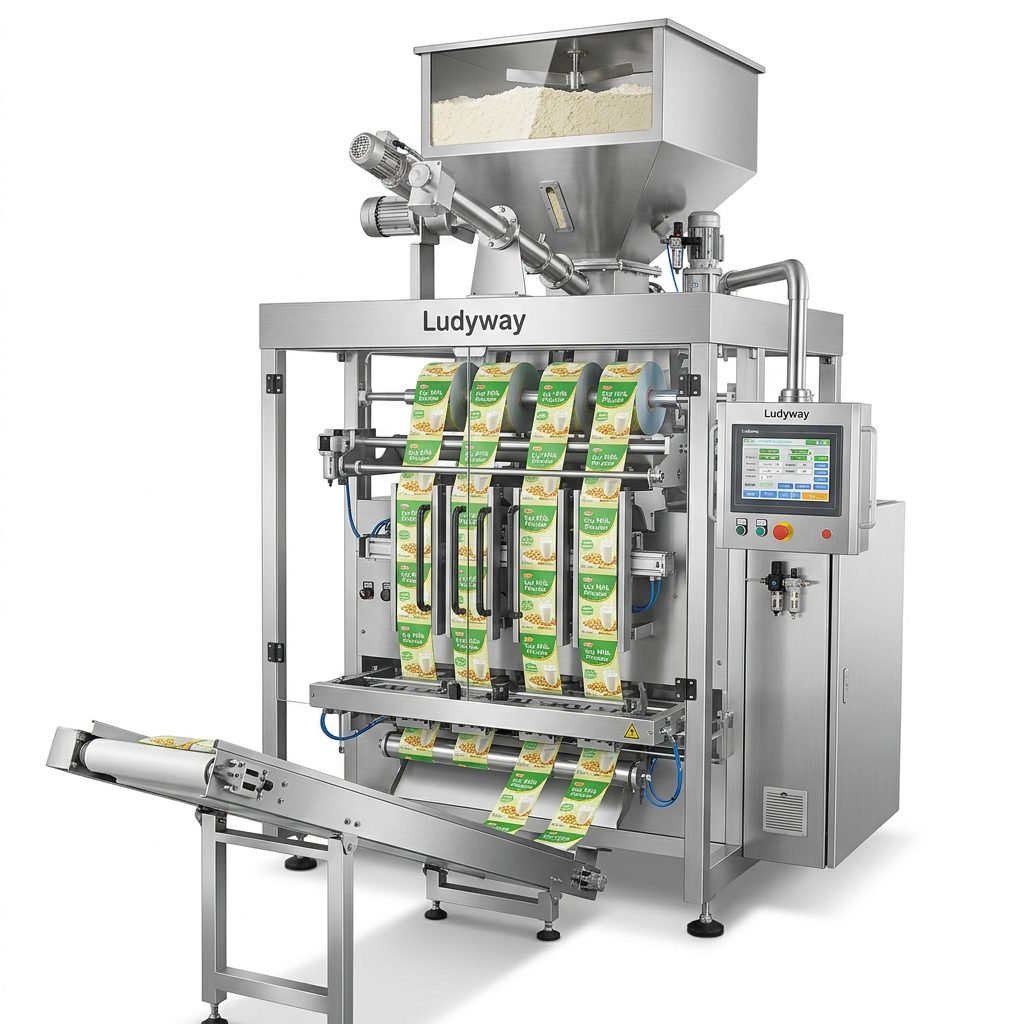
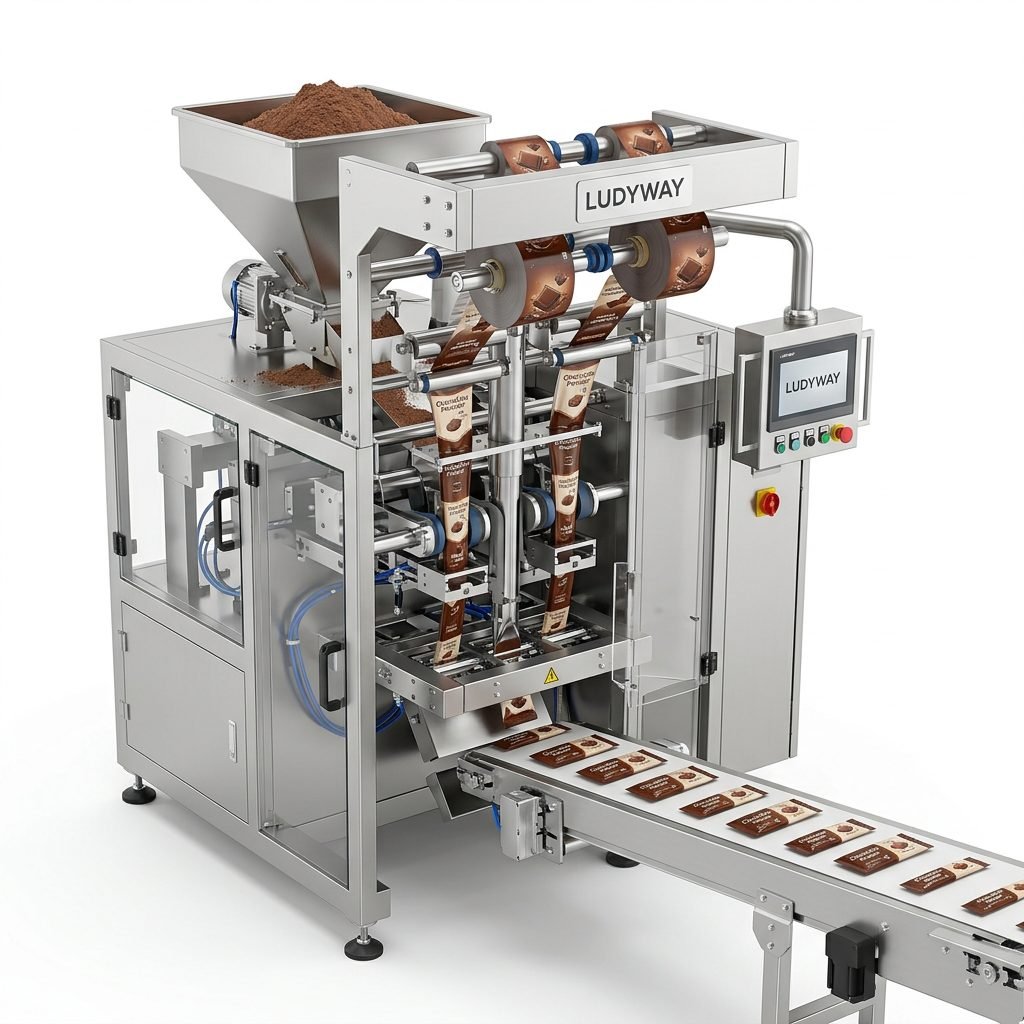
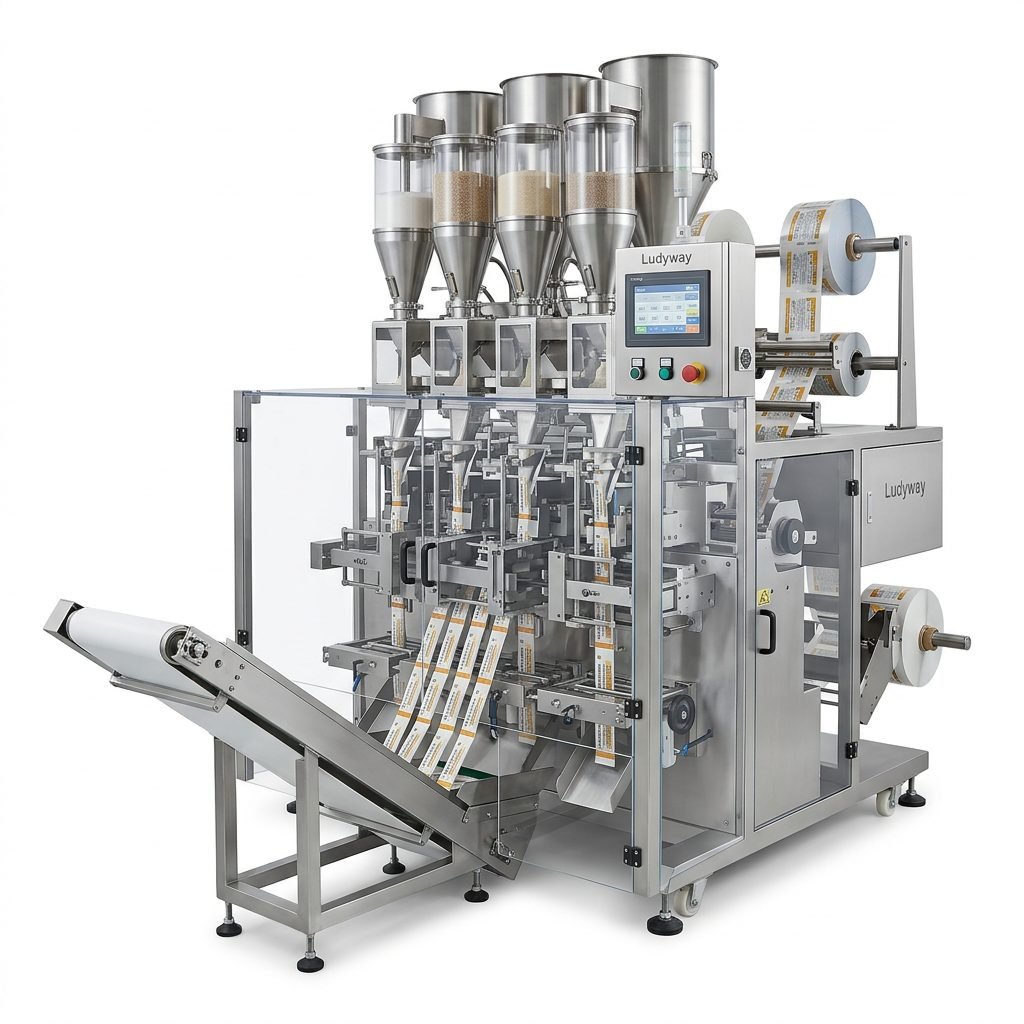
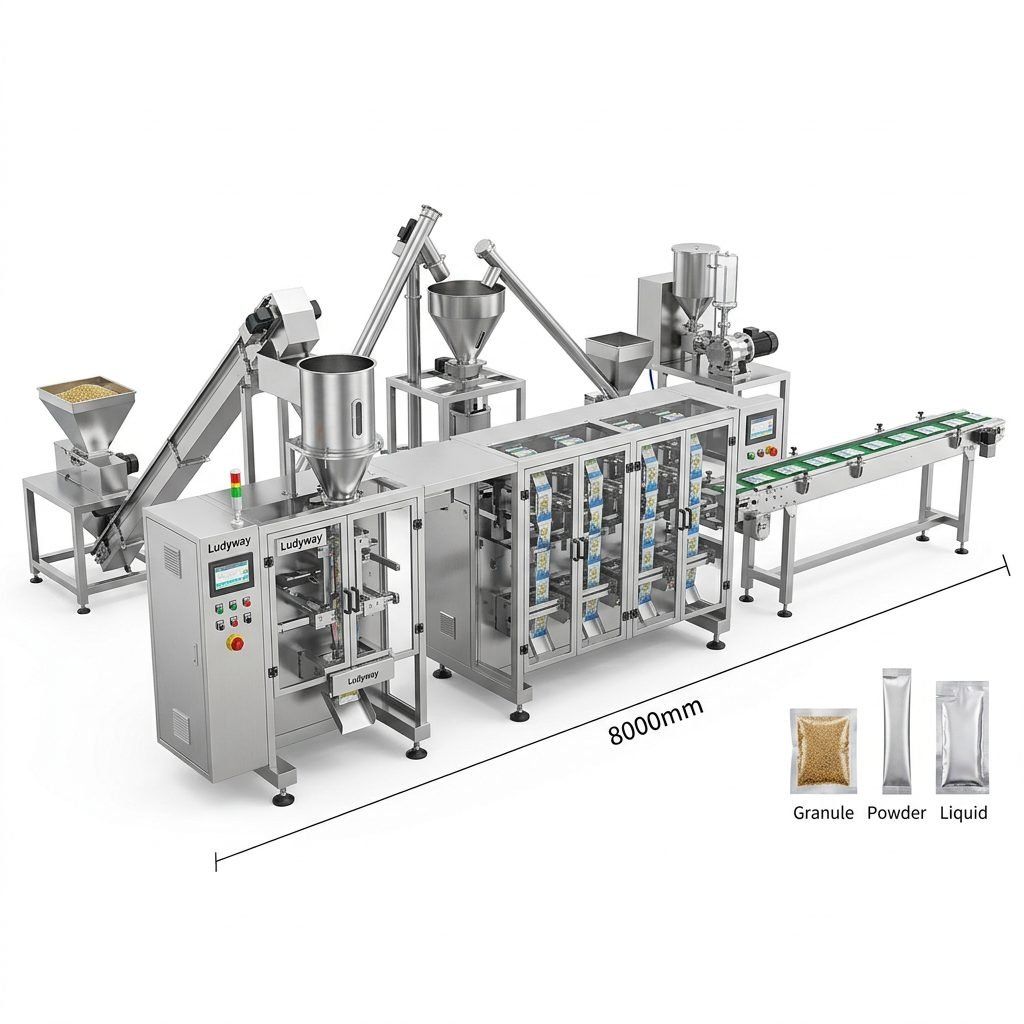
Four core platforms supplement manufacturers specify most often, from single-serve stick packs to complete automated lines.
View all supplement packaging systems →
Why Protein Powder Needs Purpose-Built Filling Equipment
Protein concentrates and isolates behave very differently from sugar, salt or coffee. Whey protein isolate has a bulk density of roughly 0.30–0.40 g/ml, pea and soy protein sit closer to 0.40–0.55 g/ml, and all of them aerate during conveying. A generic volumetric filler will under-fill as the hopper empties and over-fill after a refill, producing fill-weight swings of 3–5% that a brand pays for in giveaway or in failed label-claim checks.
Protein powders are also hygroscopic and sticky when flavour systems, lecithin or creamer fats are added. Powder bridges in hoppers, cakes on auger flights and migrates into seal zones, where a single grain of powder in a 3 mm seal creates a leaker. Static charge makes fine particles cling to film and funnels, so a dust collection system and anti-static film path are not optional extras on a protein line.
The right machine therefore combines a servo auger with a slow-speed agitator, a hopper level sensor that refills in small batches, heated-jaw sealing with powder-blowing before the seal closes, and quick-release contact parts so operators can clean between a chocolate whey and a vanilla vegan blend without a half-day stoppage.
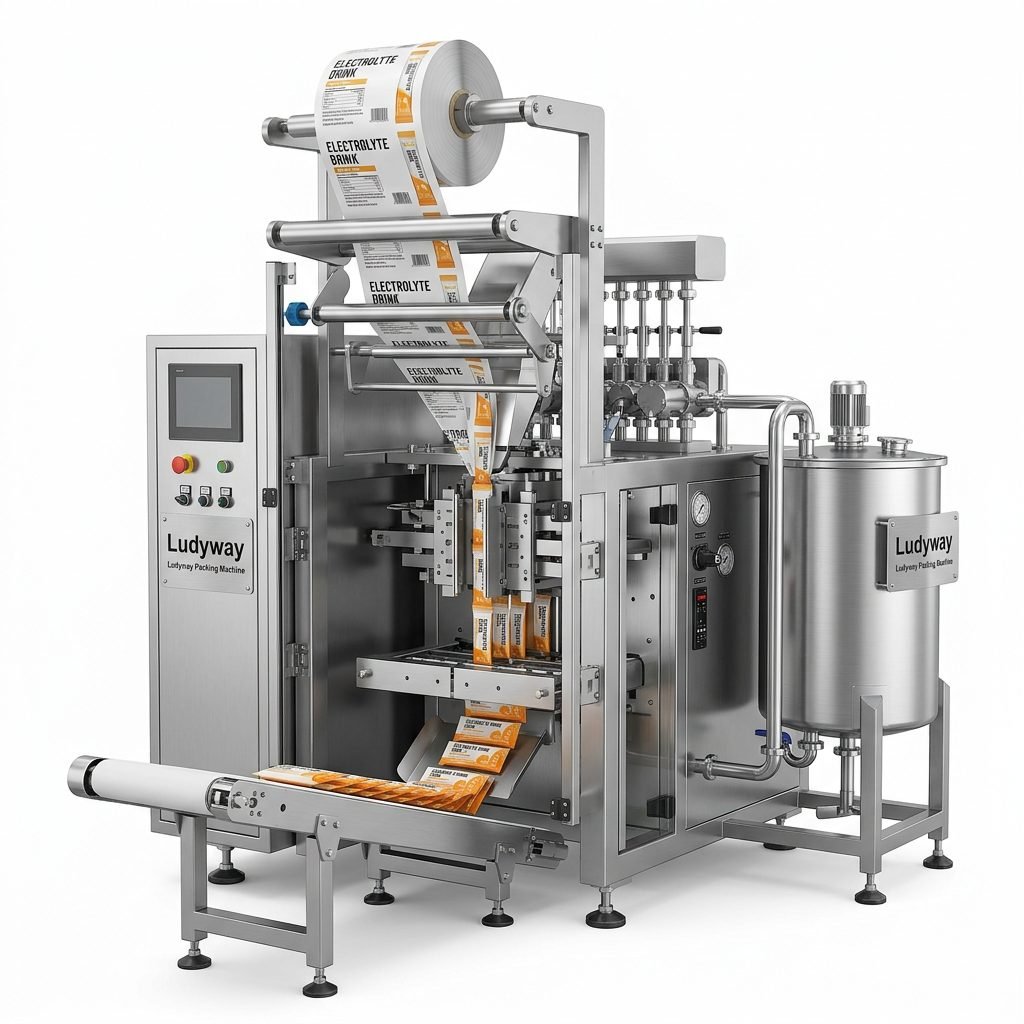
Multi-lane vertical form-fill-seal platform configured for sports nutrition powders.
Protein Powder Packaging Formats and Matching Machines
Most supplement manufacturers run two or three formats in parallel: single-serve sticks for sampling and subscription boxes, 1–2.5 kg retail pouches for the core SKU, and 20–25 kg bags for B2B or private-label customers. The table below summarises the fill ranges, output and machine type for each.
| Format | Typical fill weight | Output | Seal / film | Machine type |
|---|---|---|---|---|
| Stick pack | 5–40 g | 120–700 packs/min (4–12 lanes) | Back seal, PET/AL/PE or PET/PE, 17–35 mm wide | Multi-lane stick pack VFFS |
| Sachet (3/4-side seal) | 10–60 g | 100–500 sachets/min (2–10 lanes) | 3-side or 4-side seal, 50–120 mm wide | Multi-lane sachet machine |
| Retail pouch / doypack | 500 g – 5 kg | 15–60 pouches/min | Zipper doypack or quad-seal, 90–150 µm laminate | Premade pouch or large VFFS with auger |
| Jar / canister | 450 g – 2.5 kg | 20–60 containers/min | Induction seal liner + screw cap | Rotary auger filler + capper |
| Bulk bag | 10–25 kg | 4–8 bags/min | Open-mouth PE-lined kraft or woven PP | Net-weigh bagging line |
Technical Specifications to Check Before You Buy
When comparing a protein powder packaging machine from different suppliers, request these parameters in writing. They determine whether the machine will actually hit label weight at the quoted speed on your formulation, not on a demonstration powder.
Dosing system
Servo auger filler with interchangeable augers (Ø16–Ø60 mm) and agitator; accuracy ±1% or ±0.2–0.4 g on 20–40 g fills; optional in-line load cell feedback that auto-corrects auger revolutions every 10 cycles.
Sealing
PID-controlled heated jaws, ±1 °C, serrated or flat pattern; seal strength ≥ 25 N/15 mm on PET/AL/PE; powder-blowing air knife before vertical and horizontal seals; cold-seal and paper-based film kits available.
Construction & hygiene
SUS304 frame, SUS316L product-contact parts, Ra ≤ 0.8 µm surface finish, tool-free hopper and auger removal, IP65 electrical cabinet, HEPA-filtered dust extraction ports at hopper and fill tube.
Controls & data
10–15″ HMI with 99 recipe memories, Siemens or equivalent PLC and servo drives, user-level password control, batch counters and fill-weight logs exportable for cGMP batch records; OPC-UA or Ethernet/IP connectivity for MES.
Modified atmosphere
Optional nitrogen flushing with residual O₂ below 2%, N₂ consumption roughly 0.5–1.5 L per 1 kg pouch; oxygen analyser sampling port on request.
Utilities
380 V 3-phase 50/60 Hz (220 V single-phase on compact models), 4–12 kW installed power, compressed air 0.6–0.8 MPa at 300–600 L/min, footprint from 2.2 × 1.6 m for a 4-lane stick pack machine.
Compliance, Certifications and Hygienic Design
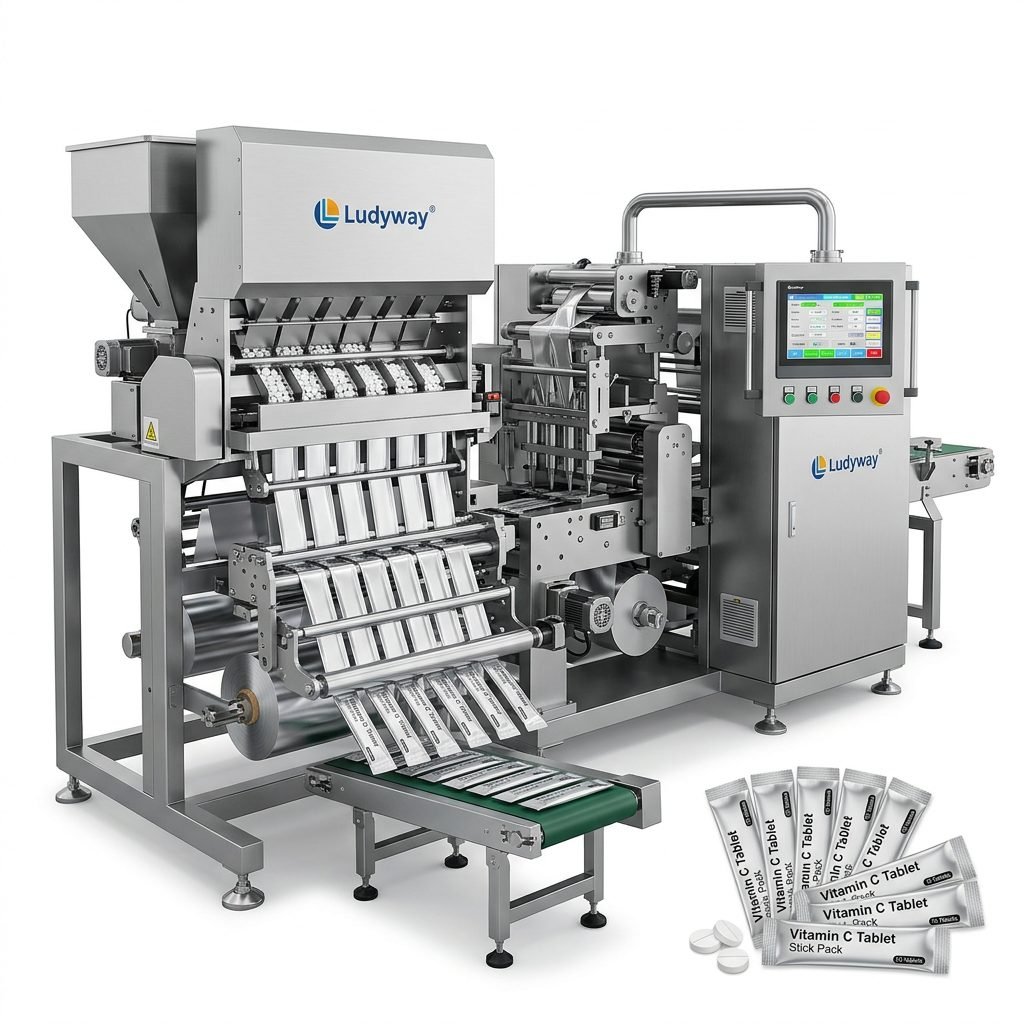
Stainless-steel multi-lane platform with enclosed guarding for nutraceutical production rooms.
Dietary supplements sold in the United States are manufactured under FDA cGMP rules in 21 CFR Part 111, which require equipment to be constructed so that product-contact surfaces are non-reactive, cleanable and do not contaminate the powder. Packaging films and contact materials must comply with the FDA’s food contact substance requirements; in the EU the equivalent is Regulation (EC) 1935/2004 plus the machinery CE Directive.
For the machine itself, ask for a CE declaration of conformity, ISO 9001 certification of the manufacturer, material certificates for SUS316L contact parts, and a Factory Acceptance Test (FAT) protocol covering fill accuracy over at least 200 consecutive packs, seal integrity (dye penetration or vacuum decay) and emergency-stop function. Export markets such as Australia, the GCC and Latin America may also ask for UL/CSA-rated electrical components or SASO conformity.
Hygienic design details that matter day to day include sloped surfaces that shed powder, no exposed threads in the product zone, FDA-grade silicone and PTFE seals, and documented cleaning validation support so your QA team can write SOPs for allergen changeovers between whey, soy and egg-white proteins.
From Stand-Alone Machine to Turnkey Protein Packaging Line
A single stick pack machine solves the filling problem; a turnkey line solves the labour and traceability problem. For a supplement manufacturer producing 500,000 sticks or 20,000 pouches per shift, the surrounding automation typically pays back in 12–24 months by removing 3–5 operators from manual conveying, checking and cartoning.
STEP 1
Vacuum feeding
Closed vacuum conveyor lifts blended protein from mixer or tote to the filler hopper at 300–1,500 kg/h, keeping dust and allergens contained.
STEP 2
Dosing, forming, sealing
Multi-lane auger filler and VFFS unit form, fill and seal sticks or sachets with date/lot coding printed in-line by thermal transfer or inkjet.
STEP 3
Inspection
A dynamic checkweigher and metal detector reject under-weight or contaminated packs automatically, with records stored per batch.
STEP 4
Counting, cartoning, palletizing
Sticks are counted into 10/15/30-count cartons, case packed and robot-palletized; the full line runs with 1–2 operators.
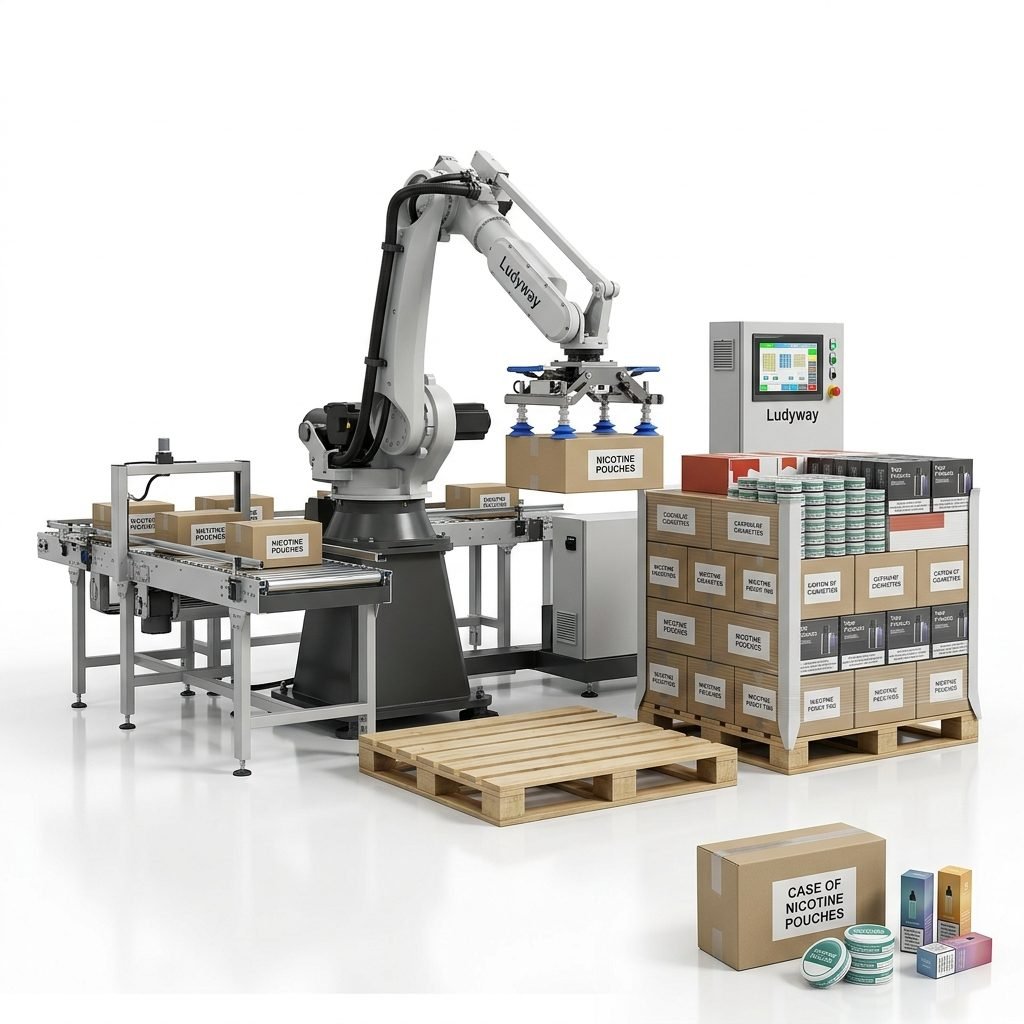
End-of-line case packing and palletizing completes a turnkey protein powder packaging line.
How to Specify the Right Machine for Your Protein Products
Start with the product, not the machine. Different protein sources flow differently, and the same whey concentrate behaves differently once you add cocoa, sucralose or MCT oil powder. Send a 2–5 kg sample of your most difficult SKU for a fill test; a serious supplier will return a fill-accuracy report and recommend auger geometry before quoting.
- Protein type: whey, casein, egg, plant-based vegan blends, collagen peptides or high-carb mass gainers each need a different auger pitch and agitator speed.
- Fill weight and tolerance: state target weight, legal tolerance and your internal giveaway limit; 30 g ± 0.3 g is a realistic servo-auger specification.
- Target output: packs per minute at steady state, plus number of shifts; size lanes for 80% utilisation, not 100%.
- Pack format and film: dimensions, laminate structure, zipper, tear notch, printed registration mark, recyclable mono-PE or paper requirements.
- Changeovers: number of SKUs per day and allergen segregation rules; this decides whether you need duplicate contact-part sets.
Stick pack vs sachet for protein samples
A 30 g stick uses roughly 25–30% less film than a 4-side-seal sachet of the same fill, pours cleanly into a shaker and fits subscription mailers. Sachets give more printable surface area and tolerate coarser blends with inclusions. Many brands run sticks for 20–40 g servings and sachets for 50–60 g meal-replacement doses on the same multi-lane frame with a format-change kit.
Market context
PMMI’s 2026 State of the Industry report identifies nutraceuticals and single-serve flexible formats among the fastest-growing packaging machinery segments, while the Flexible Packaging Association tracks the shift toward recyclable mono-material laminates that protein brands are increasingly required to support.
Procurement Details: Minimum Order, Lead Time and Quotation
1 unit
Minimum order quantity for any stand-alone protein powder packaging machine; multi-machine and full-line projects are priced as a package.
35–60 days
Typical production lead time for standard stick pack, sachet and auger-filling machines after deposit and drawing approval; 60–90 days for turnkey lines.
12 months
Standard warranty on mechanical and electrical parts, with remote diagnostics, video-guided commissioning and on-site installation available worldwide.
Quotations are prepared per project rather than from a price list, because lane count, auger set, film specification, nitrogen flushing and inspection options change the configuration significantly. To receive an accurate quote within 2–3 working days, send: product name and sample availability, fill weight and tolerance, target packs per minute, pack dimensions or a sample pouch, film structure, voltage and plant country, and any cGMP or CE documentation requirements. Payment is normally 30% deposit with balance before shipment, FOB or CIF terms, and FAT video or on-site witness before dispatch.
Spare parts and support: a recommended 2-year spare kit (sealing heaters, thermocouples, PTFE tape, cutter blades, film-feed belts) is quoted with every machine. English-language manuals, electrical drawings and HMI software backups are supplied as standard.
Why Supplement Manufacturers Source Protein Packaging Machines from Ludyway
Ludyway is one of the largest packaging machine manufacturers in China, founded in 1993 and specialising in granule, powder, liquid and pouch packaging for the food, pharmaceutical and health industries. From a 20,000 m² facility in Zhongshan, Guangdong, a team of 130+ packaging specialists and 200+ manufacturing equipment units builds more than 50 intelligent machine models, including the multi-lane stick pack and sachet systems used by sports-nutrition and supplement brands in over 100 countries.
Export revenue surpassed RMB 500 million (about US$69 million) in 2025, with growth documented in this industry report, reflecting a consistent record of on-time delivery and after-sales support for international projects. Buyers are welcome to visit the factory for a live fill test on their own protein blend or to meet the engineering team at PACK EXPO and other global packaging exhibitions.
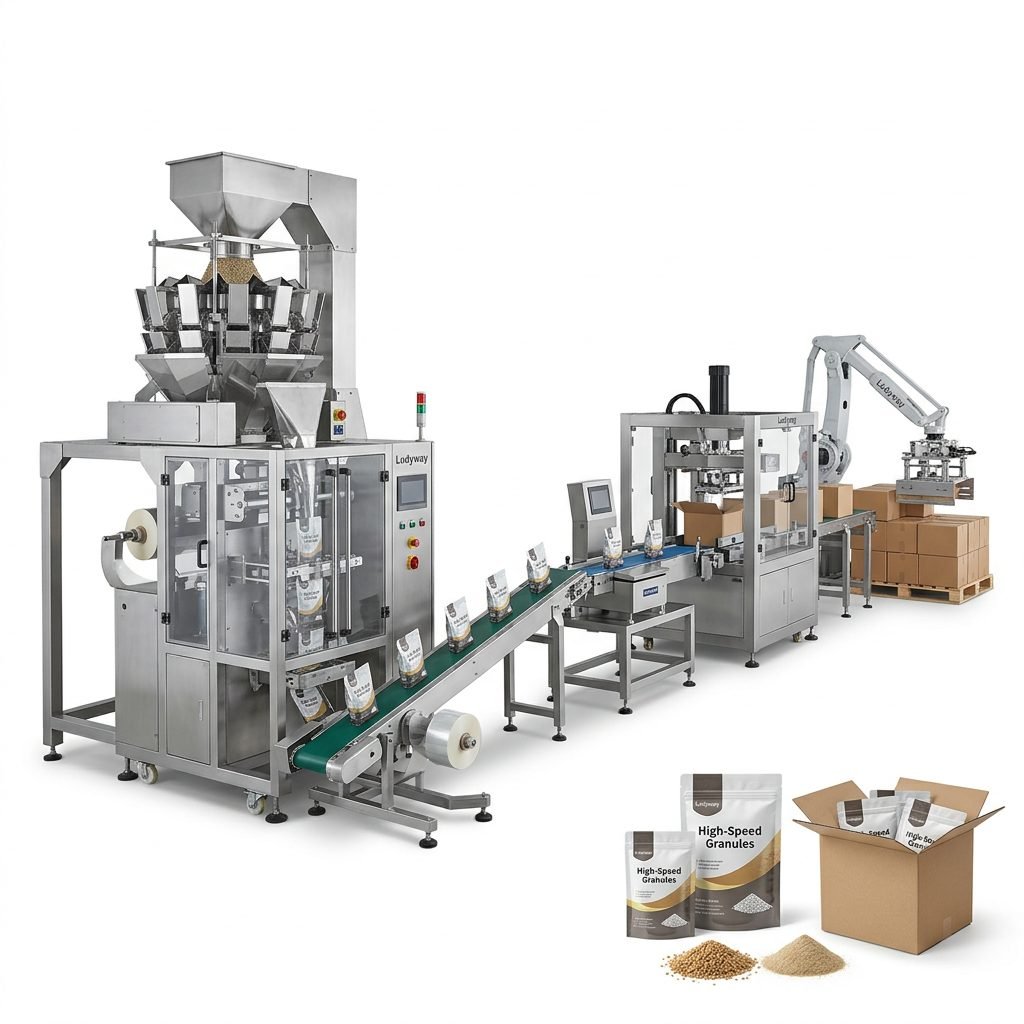
High-speed powder packaging line configured for bulk and retail protein formats.
“A protein line is judged on three numbers: fill accuracy at full speed, minutes lost per flavour changeover, and leakers per thousand packs. Every machine we ship for supplement manufacturers is tested against all three before it leaves the factory.”
— Ludyway Engineering Team
Frequently Asked Questions
What fill accuracy can I expect on 30 g whey protein stick packs?
With a servo auger, agitator and properly sized auger (usually Ø28–Ø35 mm for 30 g), steady-state accuracy is ±1%, or about ±0.3 g. Adding load-cell feedback or a downstream checkweigher with automatic auger correction keeps the average within 0.1–0.2 g of target across a full shift, which is what protects you from both giveaway and under-weight complaints.
Can one machine package whey, vegan and collagen proteins?
Yes. The same multi-lane frame handles different protein sources by swapping auger and agitator sets and loading a stored recipe on the HMI. For allergen control between dairy and plant proteins, most manufacturers order a second set of contact parts so one set can be cleaned and dried while the other is running, reducing changeover downtime to 30–40 minutes.
Is nitrogen flushing necessary for protein powder?
It depends on formulation and shelf life. Plain whey isolate in PET/AL/PE laminate is stable for 18–24 months without it. Blends with added fats (MCT, creamer, flaxseed) or probiotics oxidise faster, and nitrogen flushing to below 2% residual oxygen typically doubles usable shelf life. The option can be added at purchase or retrofitted later.
How long does installation and training take?
A stand-alone stick pack or sachet machine is usually commissioned in 3–5 working days, including operator and maintenance training. A turnkey line with feeding, inspection, cartoning and palletizing takes 2–3 weeks on site. Remote video commissioning is available for customers who prefer to install with their own technicians.
Do you support recyclable mono-material or paper-based films?
Yes. Mono-PE and paper-based barrier films have narrower sealing windows than PET/AL/PE, so machines intended for them are specified with PID temperature control at ±1 °C, adjustable jaw pressure and dwell time. Send film samples with your enquiry so seal parameters can be validated during the FAT.
Get a Quotation or Free Fill Test for Your Protein Powder
Send your fill weight, target speed and pack format, and our engineers will recommend a configuration, confirm lead time and prepare a detailed quotation with machine drawings and a sample-test report within 2–3 working days.