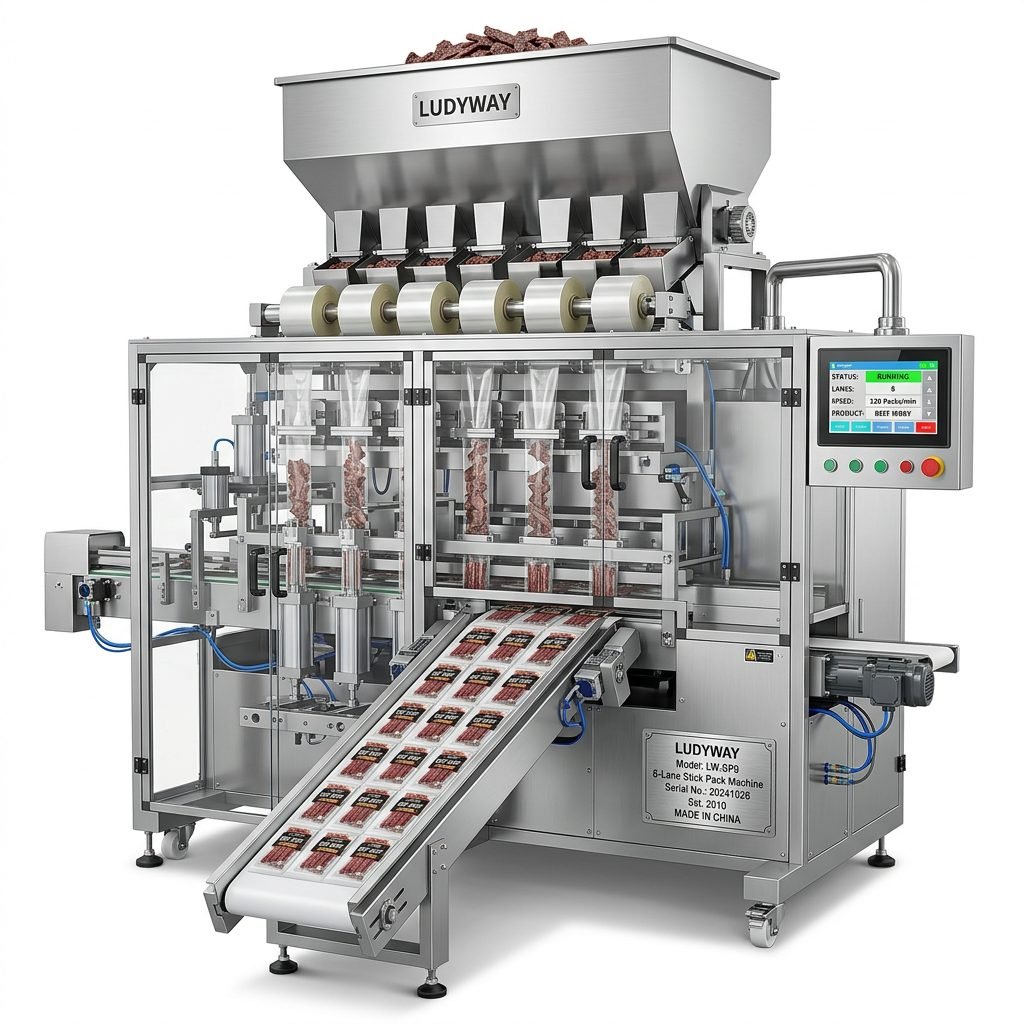
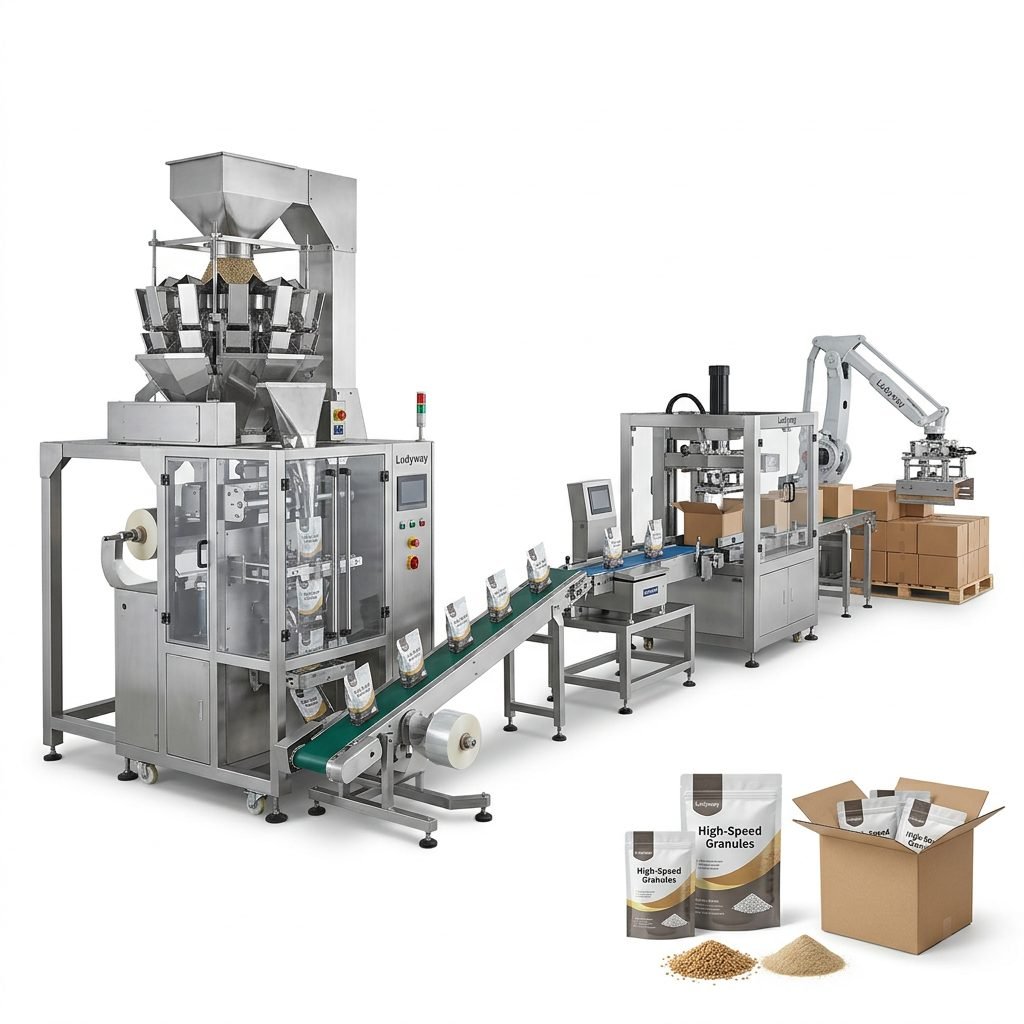
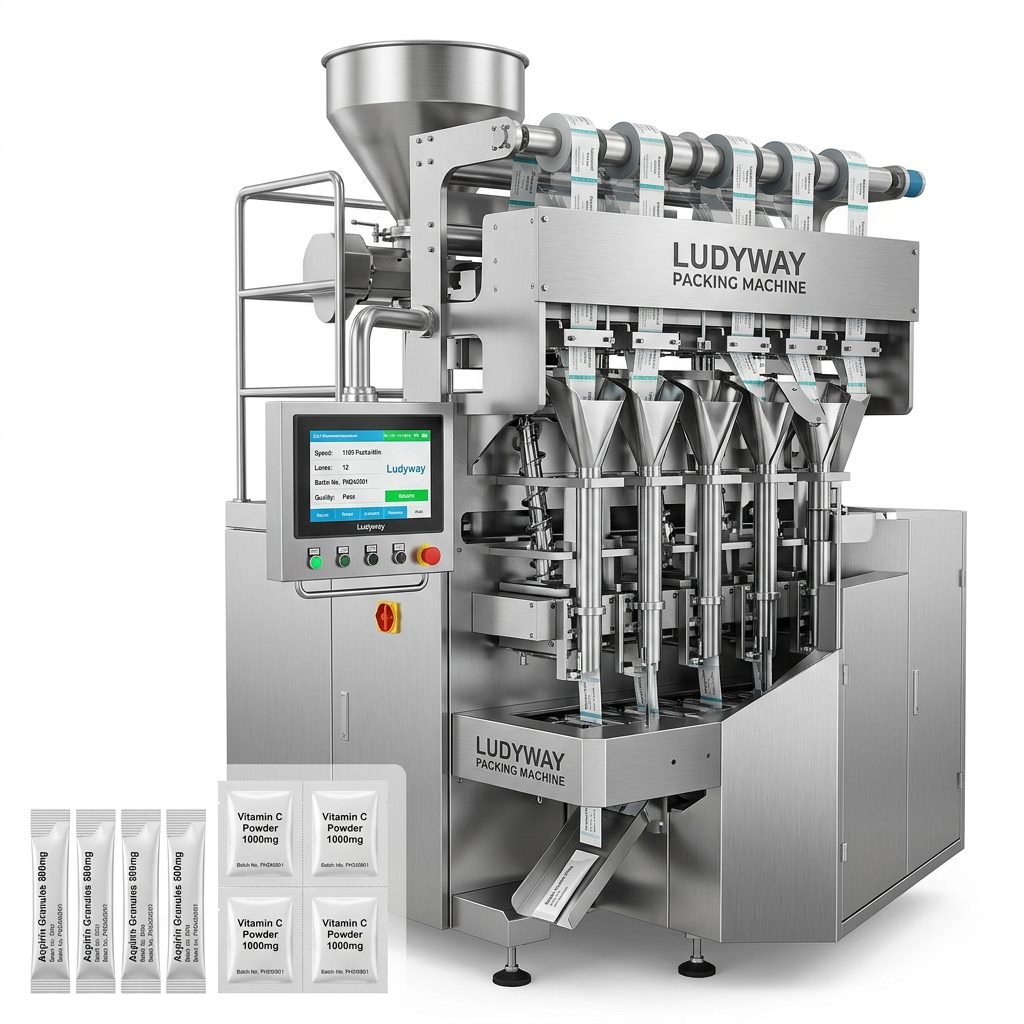
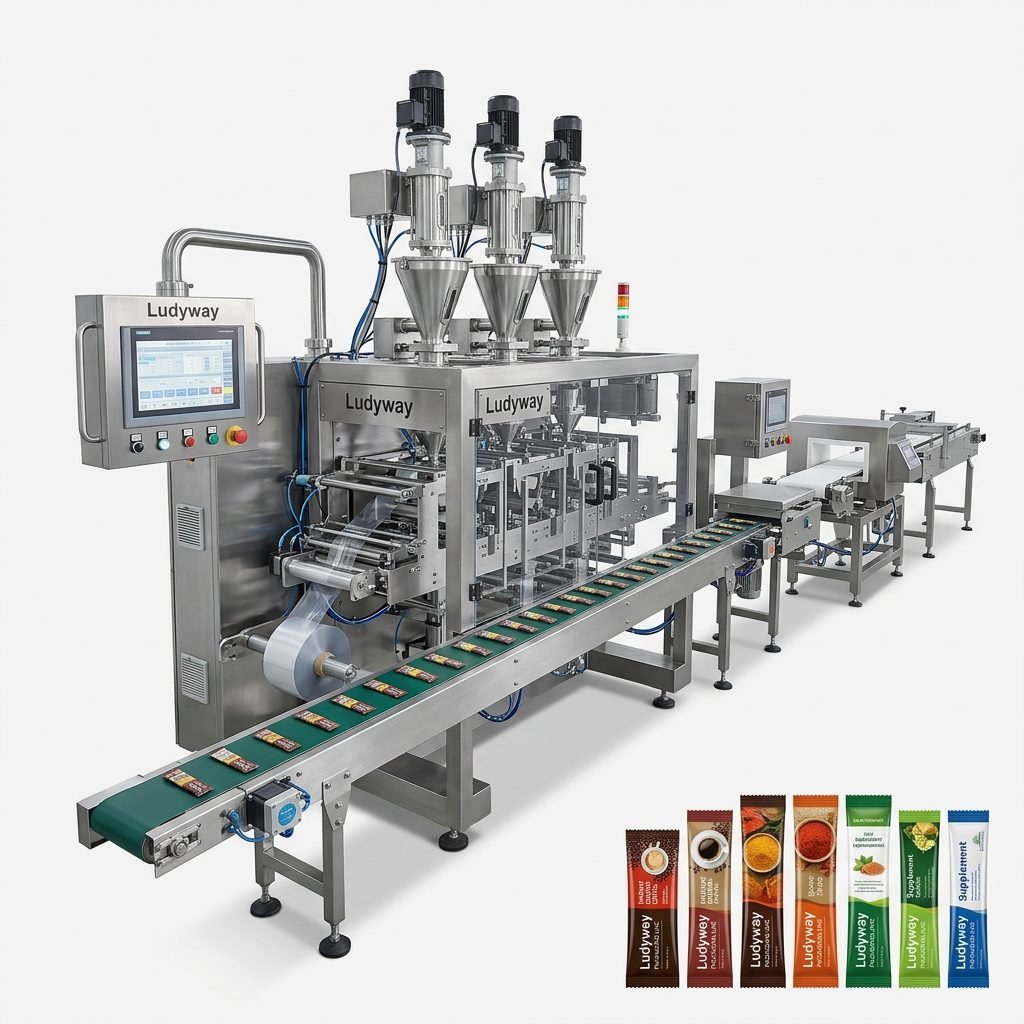
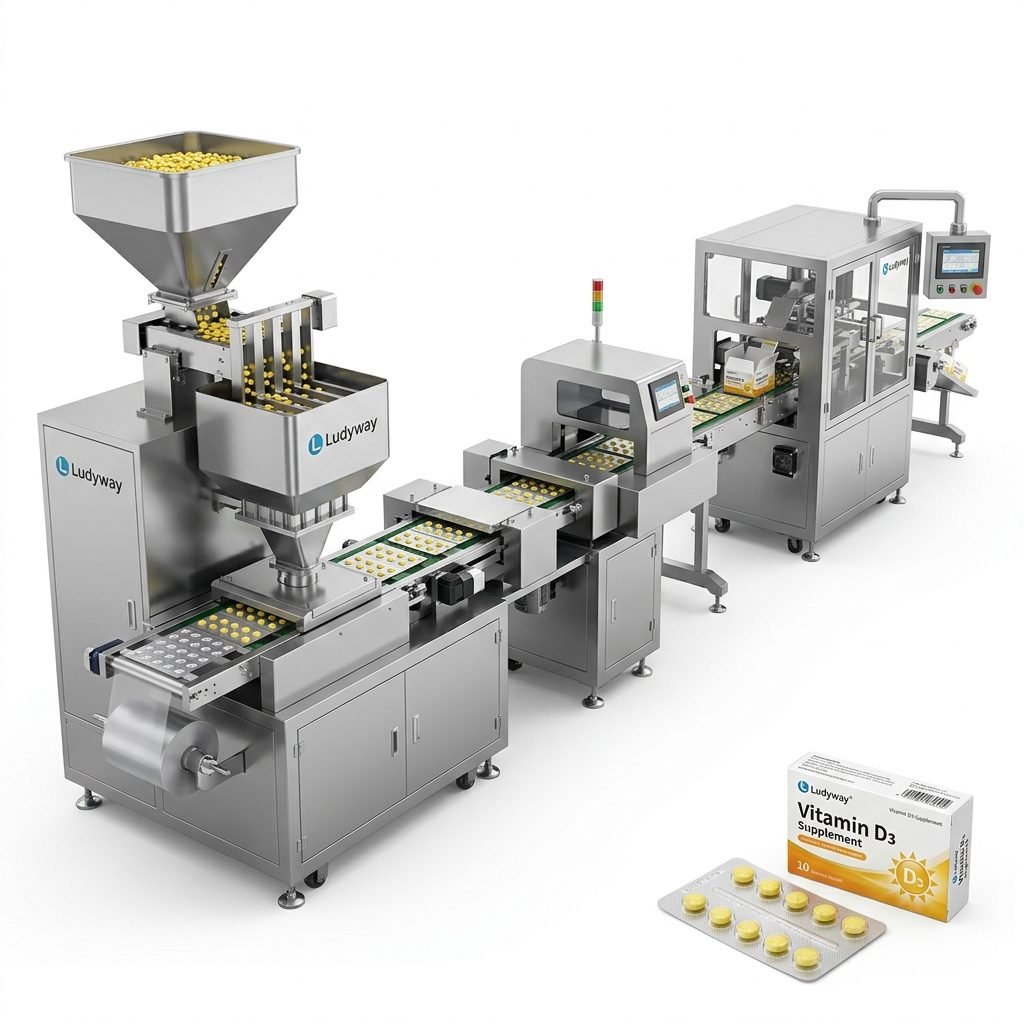
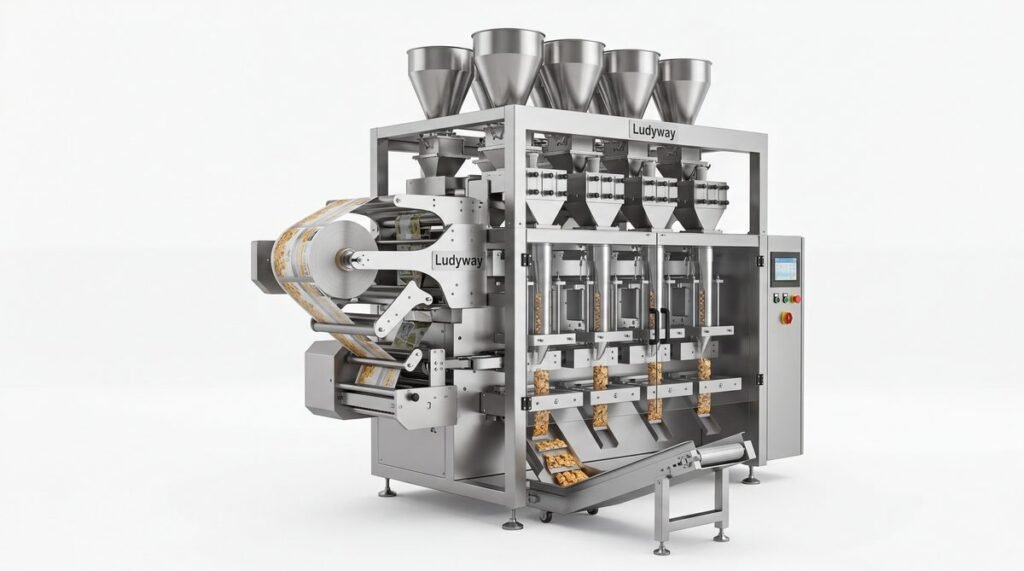
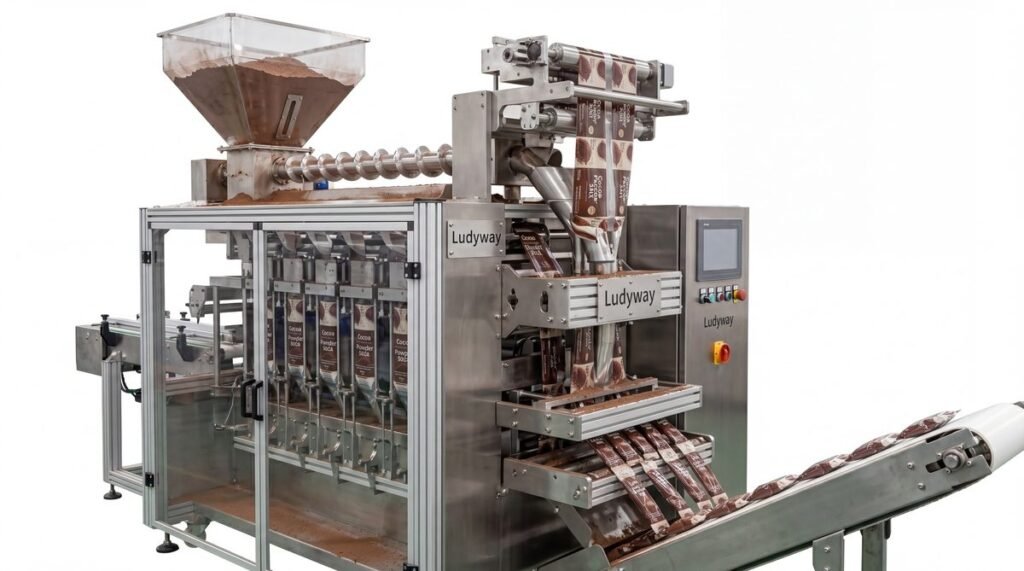
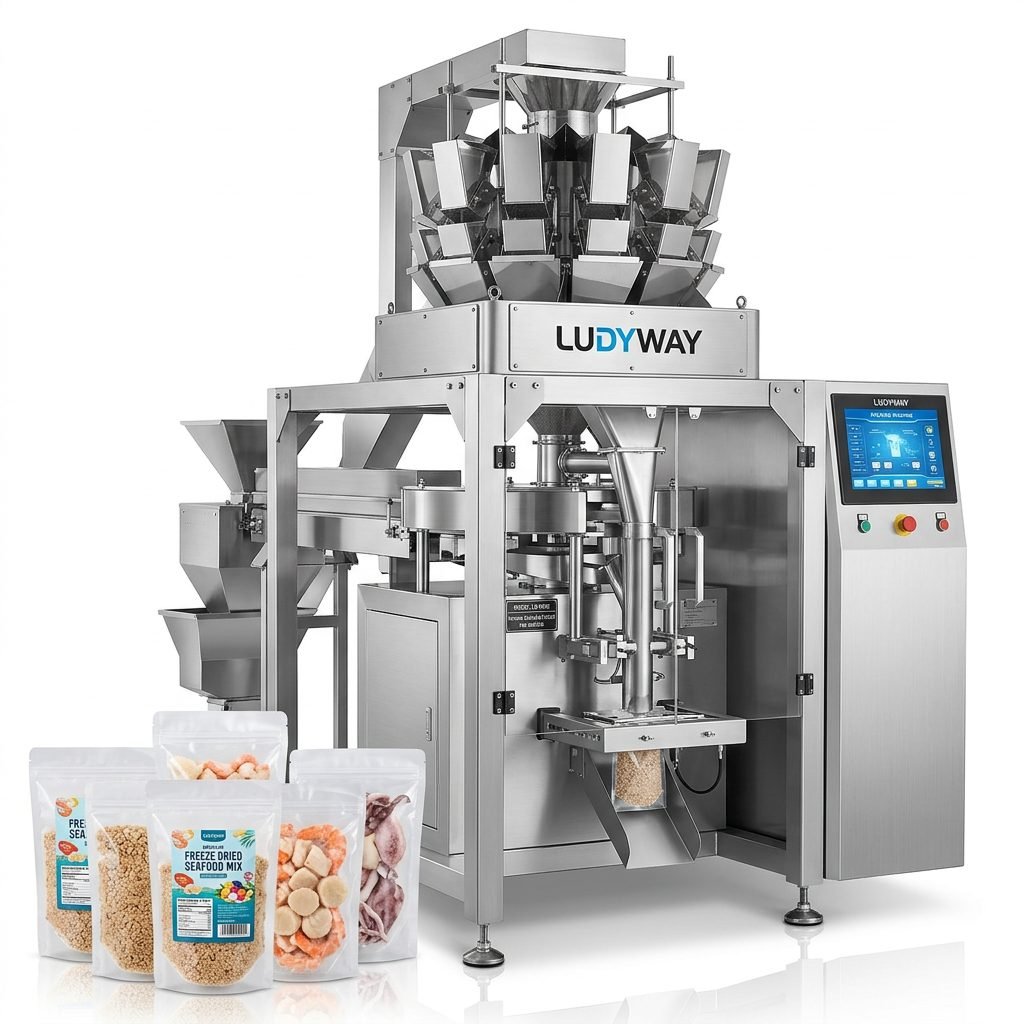
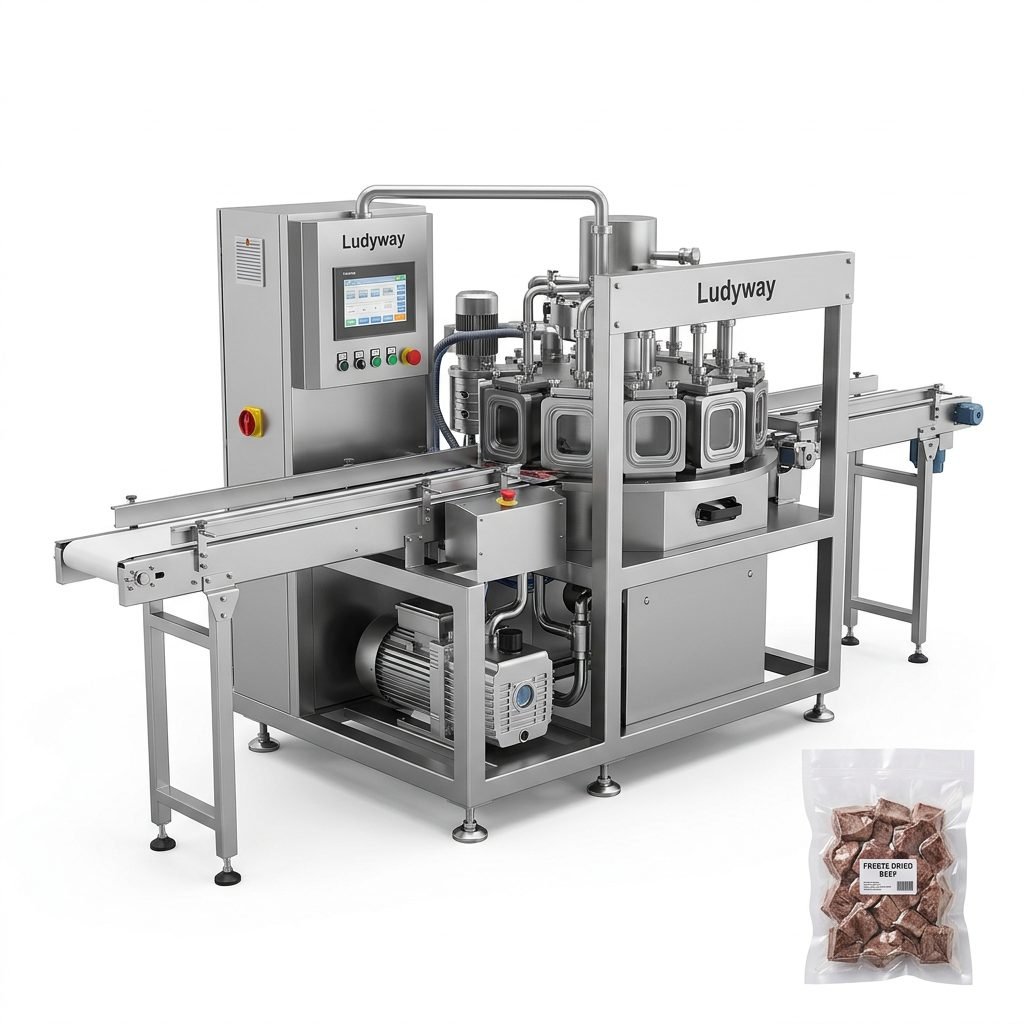
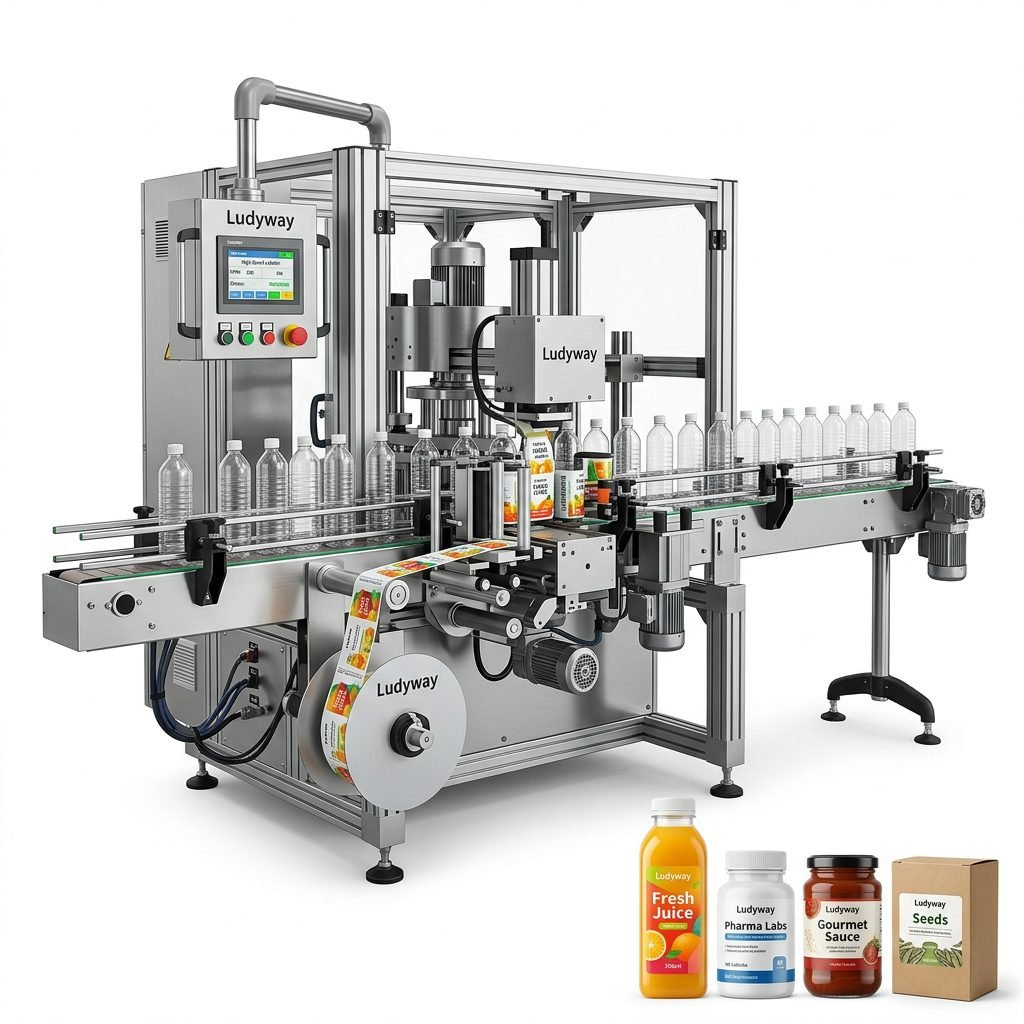
A rollstock packaging machine is an automated system that forms packages from a continuous roll of flexible film, fills them with product, and seals them in one integrated process. It is widely used in food, pharmaceutical, personal care, medical, and industrial packaging because it combines speed, consistency, and cost efficiency.
For manufacturers looking to scale output while keeping packaging quality stable, rollstock systems are often a practical choice for both medium- and high-volume production. They can support a wide range of formats, from sachets and stick packs to pouches and vacuum-sealed packs, depending on machine design and product characteristics.
What Is a Rollstock Packaging Machine?
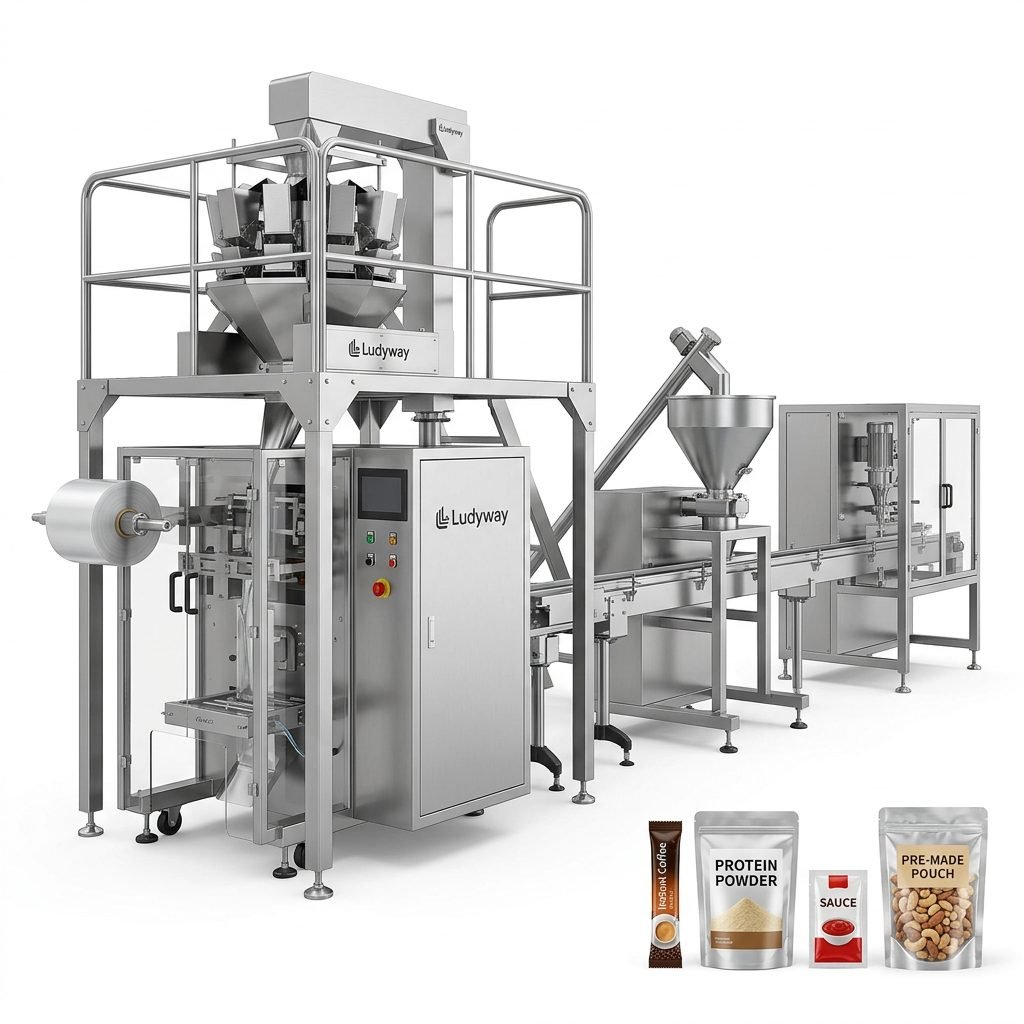
A rollstock packaging machine uses a continuous roll of packaging material instead of pre-made bags or pouches. The machine unwinds the film, shapes it into the required package, fills the product, seals the pack, and then cuts it into finished units.
Depending on the packaging format, the machine may operate as:
- Form-fill-seal systems for sachets, pouches, and stick packs
- Thermoforming rollstock machines for vacuum or modified atmosphere packaging
- Horizontal or vertical configurations based on product flow and packaging style
This packaging method is especially common for products that require high production efficiency and repeatable pack appearance, such as powders, granules, sauces, liquids, tablets, supplements, and single-dose consumer goods.
How a Rollstock Packaging Machine Works
Although exact layouts vary, the operating principle is straightforward. The machine runs through a sequence of automated packaging steps with minimal manual intervention.
1. Film Unwinding
A roll of packaging film is mounted onto the machine. The film is unwound under controlled tension to maintain alignment and prevent wrinkling or sealing defects.
2. Forming the Package
The film is guided through forming components that shape it into the desired structure. In vertical machines, the film is wrapped around a forming tube. In thermoforming systems, the lower web is heated and formed into cavities.
3. Product Filling
The product is dosed into the formed package using a suitable filling device, such as:
- Auger fillers for powders
- Volumetric cup fillers for free-flowing granules
- Multihead weighers for snacks and irregular solids
- Piston fillers or pumps for liquids, gels, and pastes
- Counting systems for tablets, capsules, or small parts
4. Sealing
After filling, the machine seals the package using heat, pressure, or both. Seal integrity is critical because it directly affects shelf life, leak resistance, and product safety.
5. Cutting and Discharge
The sealed web is cut into individual packs, which are then discharged for downstream processes such as coding, inspection, cartoning, checkweighing, case packing, or palletizing.
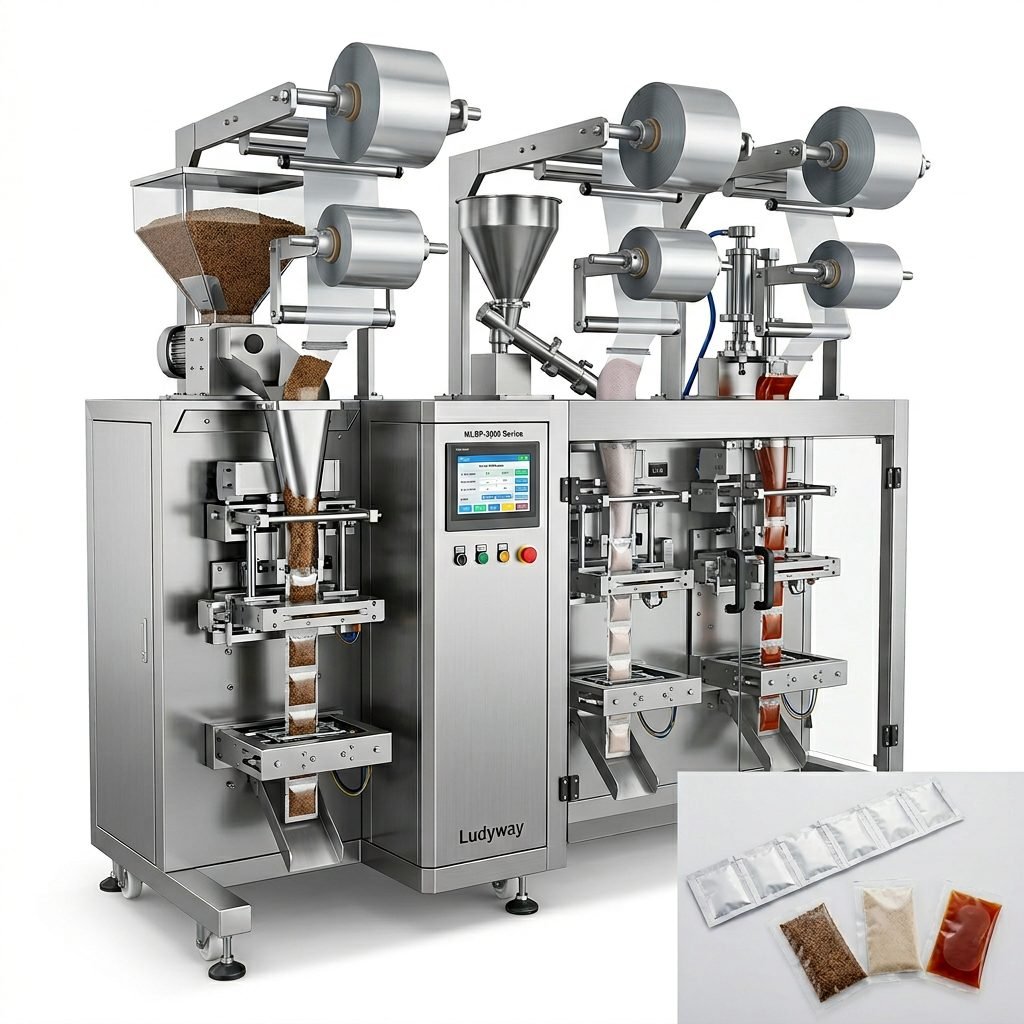
Main Components of a Rollstock Packaging Machine
| Component | Function |
|---|---|
| Film Roll Holder | Supports and feeds packaging film into the machine |
| Tension Control System | Maintains accurate film movement and alignment |
| Forming Unit | Shapes the film into pouches, stick packs, or formed cavities |
| Filling System | Dispenses the correct product volume or weight |
| Sealing Station | Creates airtight and reliable seals |
| Cutting System | Separates finished packs from the film web |
| Control Panel / PLC | Manages parameters, recipes, alarms, and automation functions |
Common Packaging Formats Produced from Rollstock
Rollstock technology is flexible enough to support many packaging styles. The most suitable format depends on your product, production target, and retail or industrial distribution needs.
- Sachets for powders, liquids, gels, and sauces
- Stick packs for single-serve powders, supplements, drink mixes, and granules
- Pouches for food, pet products, and household chemicals
- Vacuum packs for fresh or processed foods
- MAP packs for extended shelf life applications
- Medical and pharma packs for controlled-dose or sterile applications
Industries That Commonly Use Rollstock Packaging Machines
Food Industry
Rollstock machines are heavily used for snacks, coffee, spices, sugar, powdered beverages, sauces, frozen products, seasoning blends, grains, and ready-to-eat foods. Their high speed and sealing consistency help food processors maintain presentation and shelf stability.
Pharmaceutical and Health Products
Powders, granules, oral rehydration salts, supplements, tablets, capsules, and medical consumables often benefit from precise filling and hygienic package formation. Accuracy and traceability are especially important in these sectors.
Cosmetics and Personal Care
Shampoos, lotions, creams, serums, masks, and travel-size products are frequently packed in rollstock-based sachets and stick packs. This is ideal for sample packs, single-use formats, and promotional packaging.
Chemical and Industrial Products
Detergents, cleaners, additives, fertilizers, and other industrial materials can also be packed on rollstock systems, provided the correct film type, sealing configuration, and dosing method are selected.
Key Benefits of a Rollstock Packaging Machine
Higher Production Efficiency
One of the biggest advantages is speed. Because the machine forms, fills, and seals in a continuous operation, it can achieve high throughput with reduced handling steps.
Lower Packaging Material Cost
Using roll film is often more economical than purchasing pre-made pouches. This can significantly reduce per-pack material cost in high-volume production.
Consistent Pack Quality
Automated control helps maintain stable package dimensions, fill accuracy, and seal appearance. That consistency improves branding, transport performance, and customer confidence.
Better Automation Integration
Rollstock systems can be connected to upstream feeding and downstream cartoning, coding, inspection, and palletizing equipment, creating a more efficient production line.
Versatility Across Product Types
With the right dosing unit and machine configuration, one platform can often handle powders, granules, liquids, gels, or mixed applications. This is valuable for manufacturers with multiple SKUs.
Improved Labor Efficiency
Automation reduces dependence on manual packaging operations, helping companies save labor costs and reduce operator-related variability.
| Benefit | Business Impact |
|---|---|
| High speed operation | Increases output and shortens production cycles |
| Roll film usage | Reduces packaging material cost |
| Accurate filling | Helps reduce waste and improve compliance |
| Reliable sealing | Improves product protection and shelf life |
| Line integration capability | Supports full automation and long-term scalability |
Rollstock vs. Premade Pouch Packaging
Many buyers compare rollstock machines with premade pouch machines. The right option depends on your packaging priorities.
| Factor | Rollstock Packaging Machine | Premade Pouch Machine |
|---|---|---|
| Material Source | Uses roll film | Uses finished pouches |
| Material Cost | Usually lower | Usually higher |
| Speed | Often higher in mass production | Good, but depends on pouch handling |
| Package Design Flexibility | Strong for standardized formats | Strong for premium pouch styles |
| Best Use Case | High-volume efficient production | Low-to-medium volume premium packaging |
How to Choose the Right Rollstock Packaging Machine
Before investing, evaluate the machine based on your actual production and packaging needs rather than speed alone.
Consider Your Product Type
Powders, granules, liquids, gels, and fragile solids all require different filling technologies. Product behavior affects machine design, hopper configuration, sealing settings, and film compatibility.
Define Your Required Output
Clarify your expected packs per minute, shift length, and future expansion plans. A machine that fits your current volume but cannot scale may become a bottleneck later.
Check Film and Pack Format Compatibility
Make sure the machine supports your preferred film structures, seal types, and finished pack dimensions. This is especially important when you need barrier films, recyclable materials, or special retail presentation.
Review Hygiene and Compliance Requirements
Food, pharma, and medical applications may require stainless steel structures, dust control, easy-clean design, validation support, and stronger quality assurance features.
Assess Integration Needs
If you plan to connect the machine to conveyors, feeders, checkweighers, metal detectors, coding devices, cartoners, or palletizers, line compatibility should be discussed early in the purchasing process.
Signs a Rollstock Packaging Machine Is a Good Fit for Your Factory
- You package high volumes of consistent products
- You want to reduce packaging material costs
- You need repeatable seal quality and fill accuracy
- You are planning a more automated packaging line
- You run multiple SKUs in sachet, stick pack, or pouch formats
- You want better production efficiency with less manual handling
Why Machine Supplier Experience Matters
The machine itself is only one part of a successful packaging project. Supplier experience matters in application testing, customization, installation support, spare parts planning, and post-sales service. Buyers often benefit most from partners that understand both standalone equipment and complete packaging line integration.
For companies seeking scalable packaging automation, Ludyway rollstock packaging machine solutions are often considered for food, pharmaceutical, health supplement, cosmetic, and chemical applications thanks to broad manufacturing experience, turnkey line capability, and a wide range of machine configurations.
Frequently Asked Questions
Is a rollstock packaging machine suitable for powders and liquids?
Yes. With the proper dosing system, rollstock machines can package powders, granules, liquids, pastes, gels, and even counted products.
What is the difference between rollstock and form-fill-seal?
Form-fill-seal is a packaging process, while rollstock refers to the film supplied in roll form. Many rollstock packaging machines are form-fill-seal machines.
Can rollstock machines support high-speed production?
Yes. They are commonly selected for high-output packaging lines because of their continuous or semi-continuous operation and efficient material use.
Are rollstock systems customizable?
Absolutely. Machine configuration can be adjusted for product type, filling method, lane count, package format, coding, inspection, and downstream automation.
Final Thought
A rollstock packaging machine is a smart solution for manufacturers that need efficient, automated, and cost-effective packaging. By forming packages directly from roll film, these machines help reduce material costs, improve output, and maintain stable package quality across large production runs.
If your operation requires reliable sachet, stick pack, pouch, or thermoformed packaging, choosing the right rollstock system can make a major difference in productivity, product protection, and long-term return on investment.