
Agricultural & Food Packaging Equipment
Seed Packaging Machine for Agricultural & Food Applications:Types, Features & Buying Guide
50+ packaging machine models · Exported to 100+ countries and regions · 20,000㎡ manufacturing facility in Zhongshan, Guangdong
A seed packaging machine for agricultural and food applications meters, fills and seals seed into retail sachets, stick packs, pouches or bulk bags—from 0.5 g vegetable seed envelopes to 50 kg field-crop sacks—at dosing accuracies between ±0.1 g and ±0.5% of target weight. This page is written for seed companies, grain and oilseed processors, agri-input distributors and food brands that are specifying equipment: it compares machine types, dosing and seed-counting systems, compliance requirements for treated versus edible seed, and the exact data a manufacturer needs to return a firm quotation and realistic delivery times.
Key takeaways
- Multi-lane sachet and stick pack machines run 2–12 lanes at 30–70 cycles per minute per lane, covering 0.5–50 g seed portions for retail and trial packs.
- Multi-head combination weighers hold ±0.1–0.5 g on irregular seed such as corn, pumpkin or sunflower; photoelectric seed counters deliver ±1 seed per pack for high-value hybrids sold by count.
- Open-mouth bagging lines for field crop seed handle 10–50 kg bags at 300–1,200 bags per hour with automatic sewing or heat sealing.
- Nitrogen flushing or vacuum packing lowers residual oxygen below 2%, protecting germination of stored planting seed and the shelf life of oil-rich edible seeds.
- Standard machines are typically delivered in 30–45 days and customised turnkey lines in 60–90 days; minimum order quantity is 1 unit, and quotations are issued after a free sample test.
Seed Packaging Machines & Lines for Agriculture and Food
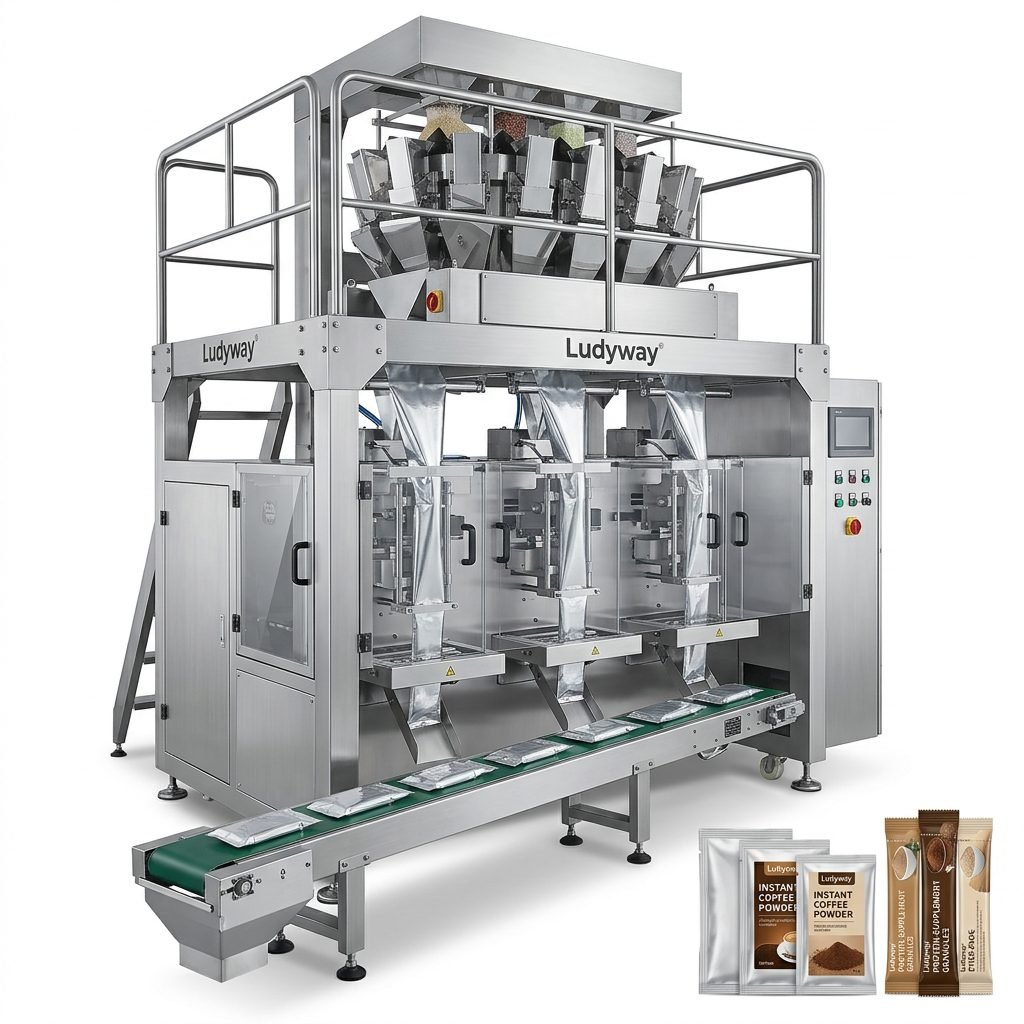
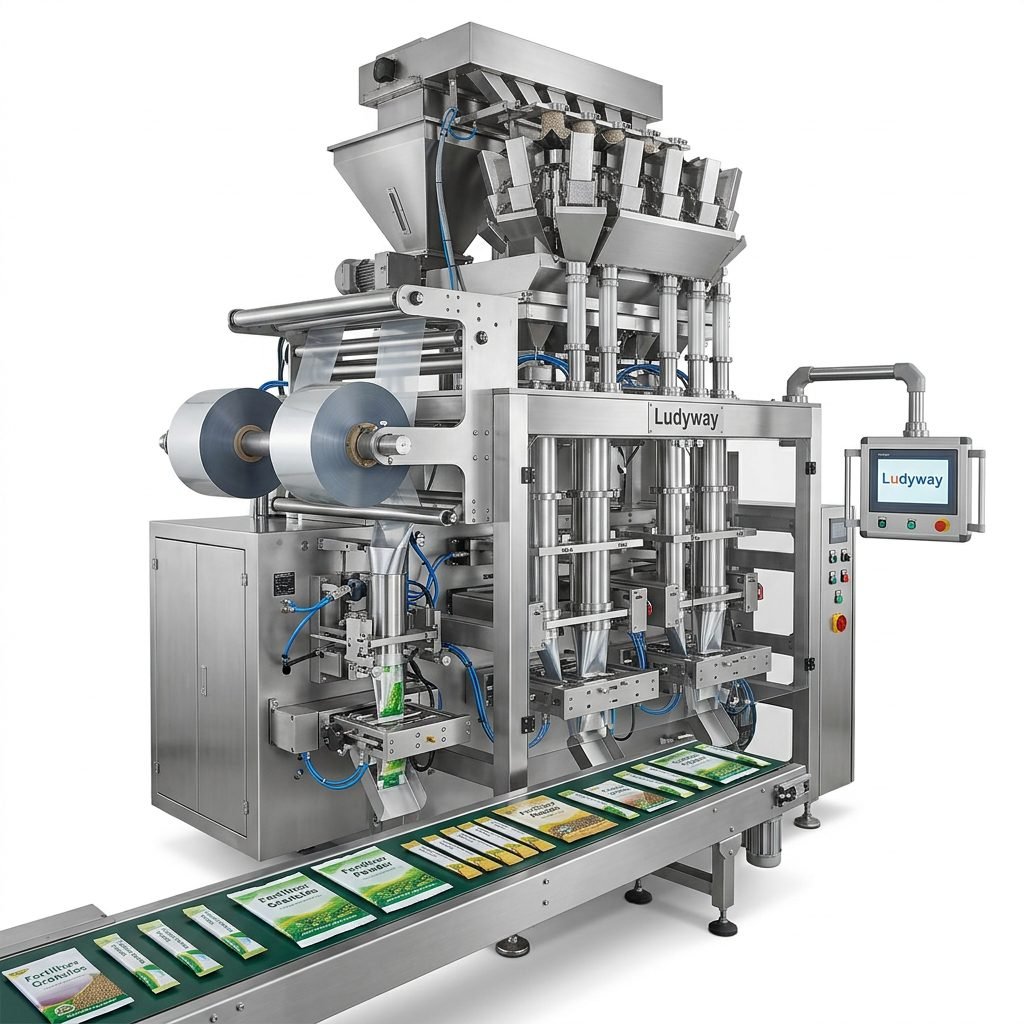
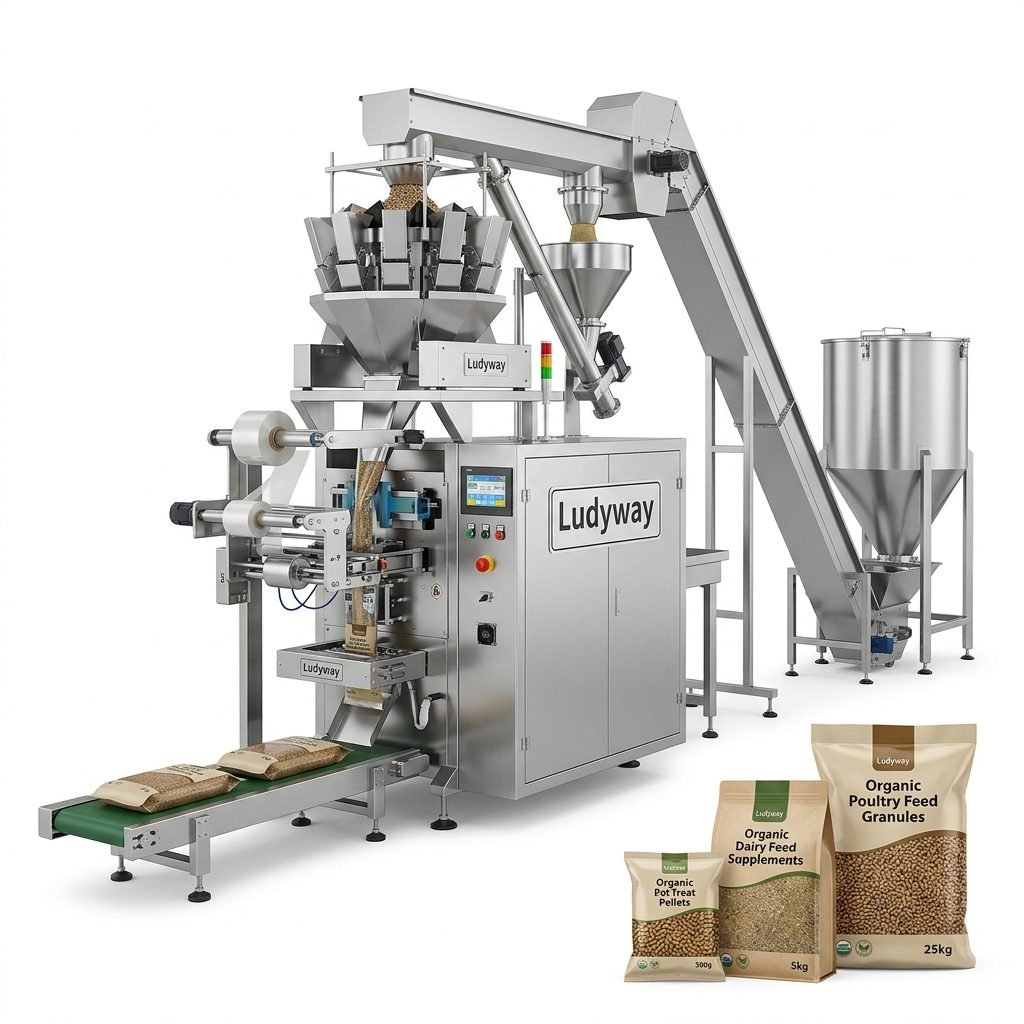
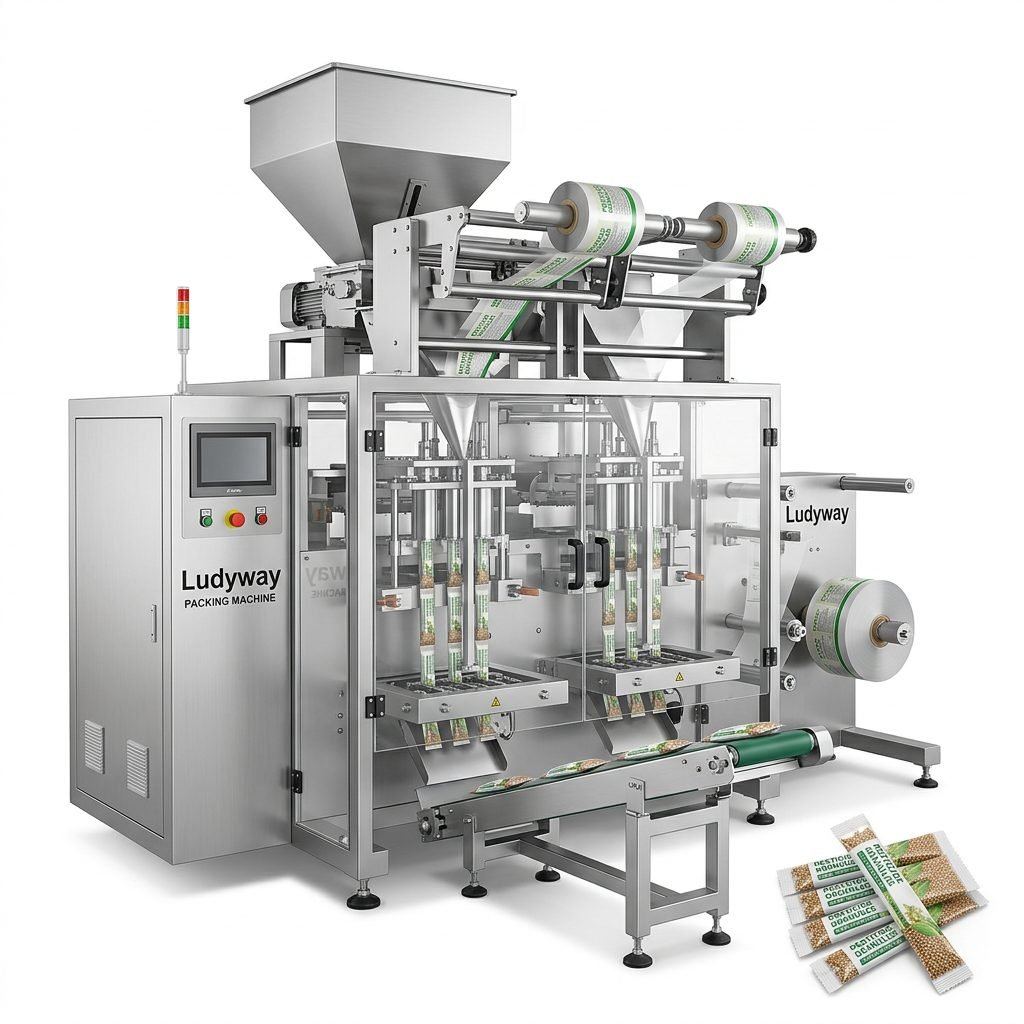
View all seed & granule packaging machines →
Agricultural Seed vs Edible Seed: Two Applications, Two Machine Specifications
Seed is a granule, but it is not an ordinary granule. Planting seed is a living product whose value is measured in germination percentage and genetic purity, so the packaging machine must handle it gently, keep lots separated and print the lot, variety and treatment information required by seed-marketing law. Edible seed—sunflower, pumpkin, chia, flax, sesame, hemp hearts—is a food, so the same mechanical functions must be delivered in a food-contact-compliant, washdown-capable build with inspection equipment for retail compliance.
In practice the two applications share the same machine families (multi-lane sachet machines, vertical form-fill-seal baggers, premade pouch machines and bulk bagging lines) but diverge in contact materials, dust control, inspection and documentation. Settling this split before you request quotes prevents buying an agricultural-spec machine that cannot later be used for a food line, or over-specifying a food-grade line for a treated-seed application that will never run food.
Agricultural (planting) seed
- Gentle product path: low drop heights, vibratory or belt feeders, no high-speed augers on fragile, coated or pelleted seed.
- Treated seed: enclosed dosing hopper with dust-extraction ports, operator-exposure controls and compatibility with colourant and polymer coatings.
- Lot control: batch and lot coding, germination and purity label data, 15–30 minute changeover between varieties with full clean-down.
- Formats: 1–50 g retail envelopes, 1–5 kg pouches, 10–50 kg bags, filled by weight or by seed count.
Edible (food) seed
- Product-contact parts in SUS304 or 316L, belts and seals that meet FDA 21 CFR or EU 1935/2004 food-contact requirements.
- Nitrogen flushing for oil-rich seed (chia, flax, sunflower) to slow oxidation, plus high-barrier films to control moisture uptake.
- In-line metal detection and checkweighing to satisfy HACCP programmes and retailer audits.
- Formats: 5–30 g stick packs, 50–500 g pillow or stand-up pouches, 1–5 kg food-service bags.
Types of Seed Packaging Machines
Four machine families cover the large majority of seed packaging requirements. The right choice depends on pack size, output and whether packs are sold by weight or by count; many seed companies run two formats side by side, for example a multi-lane sachet machine for consumer envelopes and a VFFS bagger for 1 kg trade packs.
| Machine type | Pack size range | Indicative output | Best suited for |
|---|---|---|---|
| Multi-lane stick pack / sachet machine | 0.5–50 g or 10–1,000 seeds | 2–12 lanes × 30–70 cycles/min | Vegetable, flower and herb seed envelopes; edible seed stick packs |
| Single-lane VFFS pillow / gusset bagger | 50 g – 5 kg | 30–100 bags/min | Lawn and bird seed, trade packs, snack seeds |
| Premade pouch (doypack) machine | 100 g – 2 kg | 20–60 pouches/min | Zipper stand-up retail packs, premium edible seed |
| Open-mouth / valve bagging line | 10–50 kg | 300–1,200 bags/h | Commercial corn, soybean, wheat, rice and grass seed |
| Vacuum / nitrogen-flush module | Add-on to any format | Residual O₂ < 2% | Germplasm, export seed, long-storage and oil-rich edible seed |
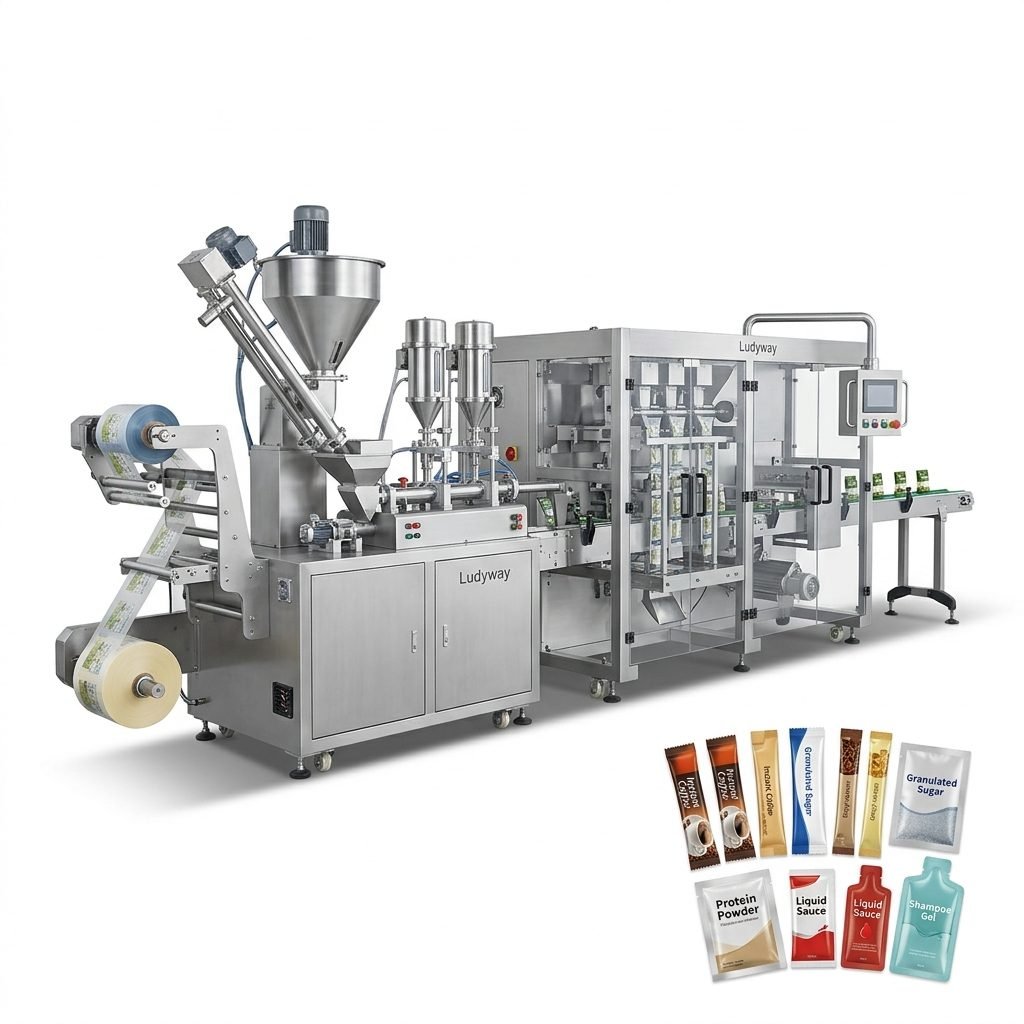
Flexible multi-format line: the same frame can be configured for 3-side, 4-side or back-seal seed packs.
Matching the format to your SKU mix
An 8-lane 4-side-seal sachet machine running at 50 cycles per minute produces 400 sachets per minute with a single operator, which is why it is the default choice for vegetable and flower seed brands with hundreds of SKUs and short run lengths. Lane width, film reel width and jaw length define the envelope; typical formats are 50–120 mm wide and 60–180 mm long, with 3-side seals preferred for paper-faced laminates that need a tear notch and a printed back panel.
Field crop seed moves in volume, not count. A net-weigh scale feeding an open-mouth bag placer, a sewing head or heat sealer and a palletiser is the standard configuration—see the 25 kg bag packaging line for a reference layout. Grass and forage seed sits between the two: light, fluffy and prone to bridging, it is best metered by linear weighers with vibratory trays and anti-static chutes, as on the multi-lane grass seed packaging line.
Dosing and Seed Counting Systems
Dosing by weight or by count?
Seed is priced three ways: by weight (most field crop, grass and edible seed), by count (high-value hybrid vegetable and flower seed, usually 10–1,000 seeds per pack) or by volume (bird and lawn seed blends where legal metrology allows). The dosing head determines accuracy, speed and changeover time, so it is the first component to settle in any specification.
Volumetric cup fillers
Adjustable telescopic cups meter free-flowing, uniform seed—radish, mustard, wheat, rice, pelleted lettuce—at high speed with ±1–2% accuracy. They are the lowest-cost option on multi-lane machines and the simplest to clean between varieties.
Combination (multi-head) weighers
10–14 head weighers select the best hopper combination each cycle and hold ±0.1–0.5 g on irregular seed such as corn, bean, pumpkin or sunflower at up to 120 weighments per minute. Multi-lane sachet machines use mini multi-head or linear weighers per lane to keep the same accuracy at small target weights.
Photoelectric seed counters
Counters drop seed through sensor channels and close the gate at the target number, delivering ±1 seed on 1–3 mm seed (tomato, pepper, cucumber) and essentially zero error on larger seed. Counting speed is 300–1,500 seeds per minute per channel, so multi-channel heads are specified to keep pace with a multi-lane sealer.
Auger fillers for treatment powders
Augers handle seed-treatment powders, inoculants and coating agents rather than seed itself. A dedicated seed treatment packaging machine keeps these powders physically separated from the seed line and its operators.
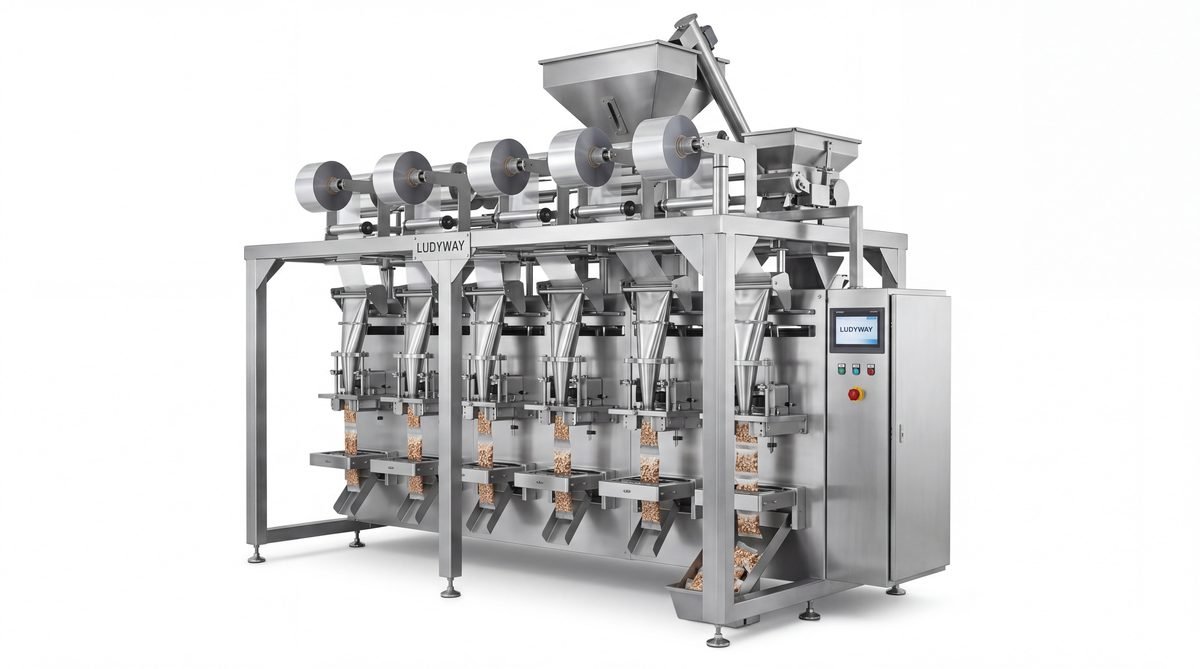
Multi-lane granule machine with per-lane weighing heads, the standard platform for nut and edible seed stick packs.
| Seed category | Examples | Recommended dosing | Typical pack format |
|---|---|---|---|
| Vegetable & flower seed | Tomato, lettuce, pepper, petunia | Volumetric cup or precision counter | 3- or 4-side seal sachet, 0.5–20 g or 10–500 seeds |
| Field crop seed | Corn, soybean, wheat, rice | Multi-head weigher or net-weigh bagging scale | 1–5 kg pouches, 10–50 kg woven or paper bags |
| Grass & forage seed | Ryegrass, fescue, clover, alfalfa | Linear weigher with vibratory feed | 500 g – 25 kg pouches and bags |
| Treated, coated or pelleted seed | Fungicide-treated corn, pelleted lettuce, inoculated soybean | Cup or weigher with enclosed hopper and dust extraction | Sachets, cartons, 10–25 kg bags with treatment labelling |
| Edible seed (food) | Sunflower, chia, flax, pumpkin, sesame | Multi-head weigher or multi-lane cup, food-grade build | 5–30 g stick packs, 50–500 g pillow or stand-up pouches |
Key Features to Specify on a Seed Packaging Machine
The datasheet items below are where comparable machines differ most in real production. Ask every supplier to confirm them in writing, ideally against a test run with your own seed and film.
Film handling and seal integrity
Servo film pull with registration-mark tracking, PID-controlled seal jaws stable to ±1 °C, and options for 3-side, 4-side or back seals, tear notch, euro hole and zipper. Seal strength is what keeps moisture out of a seed envelope for 2–3 seasons on the shelf.
Gentle product path
Low-drop chutes, polished SUS304 contact surfaces, variable-amplitude vibratory feeders and optional anti-static bars for light seed. Mechanical damage above 1–2% directly reduces germination, so drop height and transfer angles should appear on the layout drawing.
Fast, repeatable changeover
Tool-less forming tube and collar swaps in 15–30 minutes, 100+ stored recipes on the HMI, and quick-release dosing parts. Seed businesses with 200–500 SKUs lose more output to changeover than to machine speed.
Dust and cross-contamination control
Enclosed hoppers with extraction ports, sealed electrical cabinets rated IP54 or higher, and clean-down access without tools. Essential for treated seed, and strongly recommended wherever varieties or organic and conventional lots share a line.
Modified-atmosphere options
Gas-flush lances inside the forming tube or a nitrogen flushing packaging system that brings residual oxygen below 2%, plus vacuum chambers for bulk germplasm bags. Specify film OTR and WVTR alongside the gas option.
Coding and traceability
Thermal transfer or inkjet coding of lot number, variety, germination %, test date and treatment statement; PLC batch logs and optional OPC-UA or MES connection. Retail chains increasingly require serialised lot data for recall readiness.
Compliance, Certifications and Standards
Buyers in Europe, North America and other regulated markets should expect three layers of compliance: machine safety, food-contact materials for edible seed and seed-labelling law for planting seed. A credible manufacturer provides documentation for each layer with the quotation, not after shipment.
- Machine safety: CE marking under the EU Machinery Directive 2006/42/EC (with the transition to Regulation (EU) 2023/1230 under way), control panels built to IEC 60204-1, and UL/CSA-listed electrical components for North American sites.
- Quality system: manufacturer ISO 9001 certification and a factory acceptance test (FAT) protocol run with your seed, film and target weights.
- Food contact (edible seed): SUS304/316L product-contact parts, belts and seals supported by declarations referencing the FDA food contact substances framework or EU Regulation 1935/2004.
- Packaging materials: film and bag specifications aligned with ISO packaging standards (ICS 55), with barrier data (OTR/WVTR) on the material datasheet.
- Seed labelling: lot number, variety, germination percentage, test date and treatment statements required by the US Federal Seed Act, EU seed marketing directives and ISTA/AOSA testing rules—printed in-line by the coder so labels never travel separately from the lot.
For capex benchmarking, the PMMI 2026 State of the Industry report tracks packaging machinery demand by segment and remains the most-cited reference when agri and food processors plan automation budgets.
Documents to request with every quotation
- CE declaration of conformity and risk assessment summary
- ISO 9001 certificate of the manufacturing site
- Material certificates for all product-contact parts
- Electrical schematics and component brand list (PLC, servo, HMI)
- FAT/SAT protocol with acceptance criteria for accuracy and seal strength
- Recommended spare parts list for 12 and 24 months
A packaging machine for seed is validated twice: once for weight or count accuracy, and once for germination after packaging. Insist on a germination comparison between hand-packed and machine-packed samples during FAT.
From Standalone Machine to Turnkey Seed Packaging Line
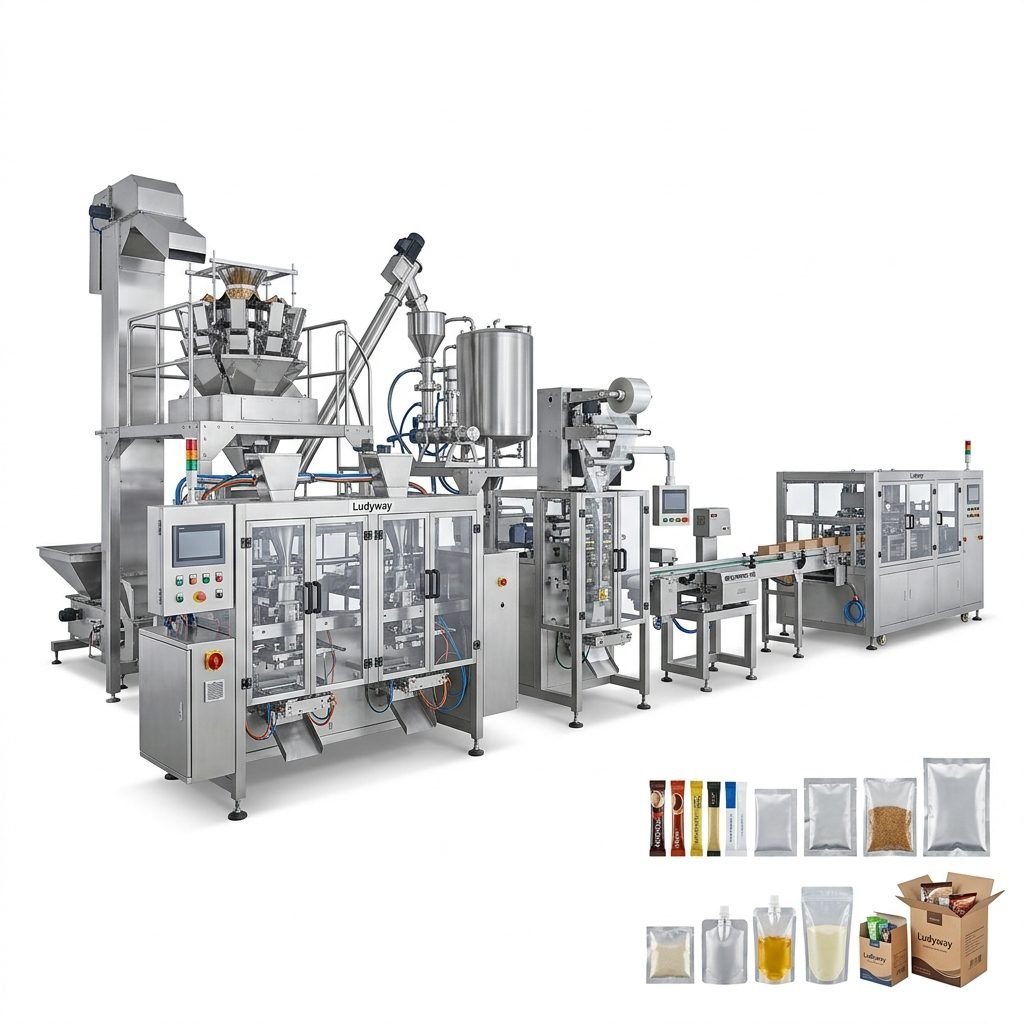
Integrated line layout: elevator feeding, multi-lane filling and sealing, inspection and secondary packaging under one control system.
A standalone seed packaging machine solves filling and sealing. A line solves throughput and labour: upstream storage hoppers and bucket elevators that lift seed without crushing it, the dosing and sealing module, then downstream checkweighing, metal detection for edible seed, sachet counting, cartoning, case packing and palletising. Specifying the line as one project avoids interface problems between conveyors, controls and safety circuits.
Reference configurations
- Vegetable seed retail line: bucket elevator → 8–10 lane counting sachet machine → sachet counter → cartoner → case packer, 400–600 sachets per minute.
- Field crop seed line: silo → net-weigh scale → bag placer → sewing head or heat sealer → robotic palletiser, 600–900 bags per hour at 25 kg.
- Edible seed snack line: Z-type elevator → 14-head weigher → VFFS → high-precision checkweigher → metal detector → case packer, 60–80 bags per minute.
Rice, corn and vegetable seed producers can start from documented line templates—for example the automated rice seed packaging line—and adjust lane count, bag size and inspection scope to local volumes.
Buying Guide: How to Specify, Compare and Order
Seed packaging machines are configured products, so pricing is quoted per specification rather than from a list. The five-step process below is how most equipment projects move from enquiry to running line in 2–4 months.
Send samples and spec
Ship 1–2 kg of each seed type, sample film or bags, and target weights, counts and output.
Test run and layout
Receive a recorded test with accuracy data, a 2D layout and utility list within 5–7 working days.
Quotation
Itemised quote by configuration, Incoterms (EXW, FOB or CIF), lead time, warranty and training scope.
Build and FAT
30–90 day build, then factory acceptance test on video or in person with your seed and film.
Ship, install, SAT
Sea or air freight, remote or on-site commissioning, operator training and spare parts handover.
Data to include in your RFQ
| Parameter | Why it matters | Example |
|---|---|---|
| Seed type, size and bulk density | Determines dosing head, hopper geometry and drop height | Hybrid corn, 8–10 mm, ~0.72 g/ml |
| Target fill weight or seed count | Selects weigher, cup or counter and sets accuracy class | 25 seeds ±1, or 5 g ±0.1 g |
| Pack format and dimensions | Defines lane width, forming tubes, jaw size and film reel | 4-side seal sachet, 70 × 100 mm |
| Required output | Sets lane count, cycle speed and line balance | 400 sachets/min, 2 shifts |
| Film or bag material | Sealing temperature, dwell time and film-pull method | Paper/PE laminate, 80 g/m² |
| Treated or food application | Triggers dust extraction, food-contact build and inspection scope | Fungicide-treated / edible retail |
| Site utilities | Motor and heater sizing, pneumatic components, footprint | 380 V 50 Hz 3-phase, 6 bar air |
Commercial terms to expect
Minimum order quantity for standard machines is 1 unit. Standard multi-lane sachet or VFFS machines are commonly delivered 30–45 days after deposit, while customised lines with counting heads, inspection and end-of-line automation take 60–90 days. Payment is usually structured as a deposit on order and the balance before shipment, with FAT completed before release.
Expect a 12-month warranty on mechanical and electrical parts, a starter spare parts kit, multilingual HMI options and remote diagnostics. Because configuration drives cost—lane count, dosing type, gas flushing, coding and inspection can each change the budget significantly—reputable manufacturers quote only after a sample test rather than publishing list prices.
Why Source Seed Packaging Equipment from Ludyway
30+
Years of industry experience since 1993
20,000㎡
Modern production facility
50+
Intelligent packaging machine models
100+
Countries and regions served
Ludyway Machinery, founded in 1993 in Nanlang Town, Zhongshan, Guangdong, is one of the largest packaging machine manufacturers in China, with 130+ packaging specialists and 200+ manufacturing equipment units in a 20,000㎡ facility. The company’s granule, powder and liquid platforms—multi-lane stick pack and sachet machines, VFFS baggers and fully automated turnkey lines—are the same engineering base used for vegetable, field crop and grass seed packaging on the agricultural side and for sunflower, chia and pumpkin seed stick packs on the food side.
Seed-industry buyers benefit from in-house dosing development (cup, weigher and counting heads), food-grade build options, in-line coding and inspection integration, and project teams that have commissioned lines in more than 100 countries. Sample testing before quotation, documented FAT and remote support after SAT are standard parts of every project.
Frequently Asked Questions
Can a seed packaging machine fill by seed count instead of weight?
Yes. Photoelectric or vision counting heads replace or complement the weigher and deliver ±1 seed per pack on small seed and zero error on larger seed. Counting heads are specified per lane, so an 8-lane sachet machine with counters typically runs 25–40 cycles per minute depending on seeds per pack.
Can one machine run both treated agricultural seed and edible food seed?
It is not recommended. Treated seed carries crop-protection chemicals that must not contact food lines, and most food-safety programmes prohibit shared equipment. Use dedicated machines, or at minimum separate dosing hoppers, contact parts and a validated clean-down procedure if the line will only ever run untreated seed and food seed.
What filling accuracy should I expect?
Volumetric cups: ±1–2% on uniform, free-flowing seed. Linear and multi-head weighers: ±0.1–0.5 g on 5–500 g targets, or ±0.1–0.2% on 10–50 kg bags with net-weigh scales. Accuracy is confirmed on your seed during the sample test and written into the FAT acceptance criteria.
What are the minimum order quantity and lead time?
MOQ is 1 unit. Standard machines typically ship in 30–45 days; customised multi-lane lines with counting, gas flushing, inspection and end-of-line automation take 60–90 days. Sea freight to Europe or North America adds roughly 30–40 days, air freight 5–10 days.
How do I protect germination during packaging?
Keep drop heights low, use vibratory rather than high-speed mechanical feeders, avoid seal-jaw contact with seed, control room humidity, and specify high-barrier film with nitrogen flushing for long storage or export. Compare germination of machine-packed and hand-packed samples during FAT to confirm the setup is seed-safe.
Next Step for Buyers
Request a configured quotation for your seed packaging project
Send your seed type, target weight or count, pack format and required output, and the Ludyway engineering team will return a recorded sample test, 2D layout and itemised quotation. Catalogues for multi-lane sachet machines, VFFS baggers and bulk bagging lines are available on request, and factory visits in Zhongshan can be arranged before order.