
What Is a Packaging Machine? Complete Definition, Types, Working Mechanisms & Industrial Uses
Explore the complete engineering taxonomy of automated packaging machinery. Learn how primary, secondary, and tertiary systems protect product integrity, accelerate throughput, and drive modern production efficiency across global food, pharmaceutical, cosmetic, and chemical manufacturing sectors.
What Is a Packaging Machine? Industrial Definition
Core Definition & Operational Purpose
A packaging machine is an engineered electromechanical system designed to perform single or sequential packaging operations automatically, semi-automatically, or manually. These critical operations incorporate product fabrication, dosing, volumetric or gravimetric filling, hermetic sealing, wrapping, labeling, carton packing, and palletizing.
Primary Engineering Mission: To isolate and protect manufactured goods from environmental contamination, moisture, oxygen, and mechanical damage while delivering accurate portion control, compliance with hygiene standards, and rapid throughput.
From micro-dose stick packs of pharmaceutical powders to large-scale bulk chemical bagging, packaging machinery represents the indispensable link between manufacturing synthesis and global supply-chain distribution. Integrating servomotors, programmable logic controllers (PLCs), and optical sensor feedback, modern units operate at tolerances down to fractions of a milligram.
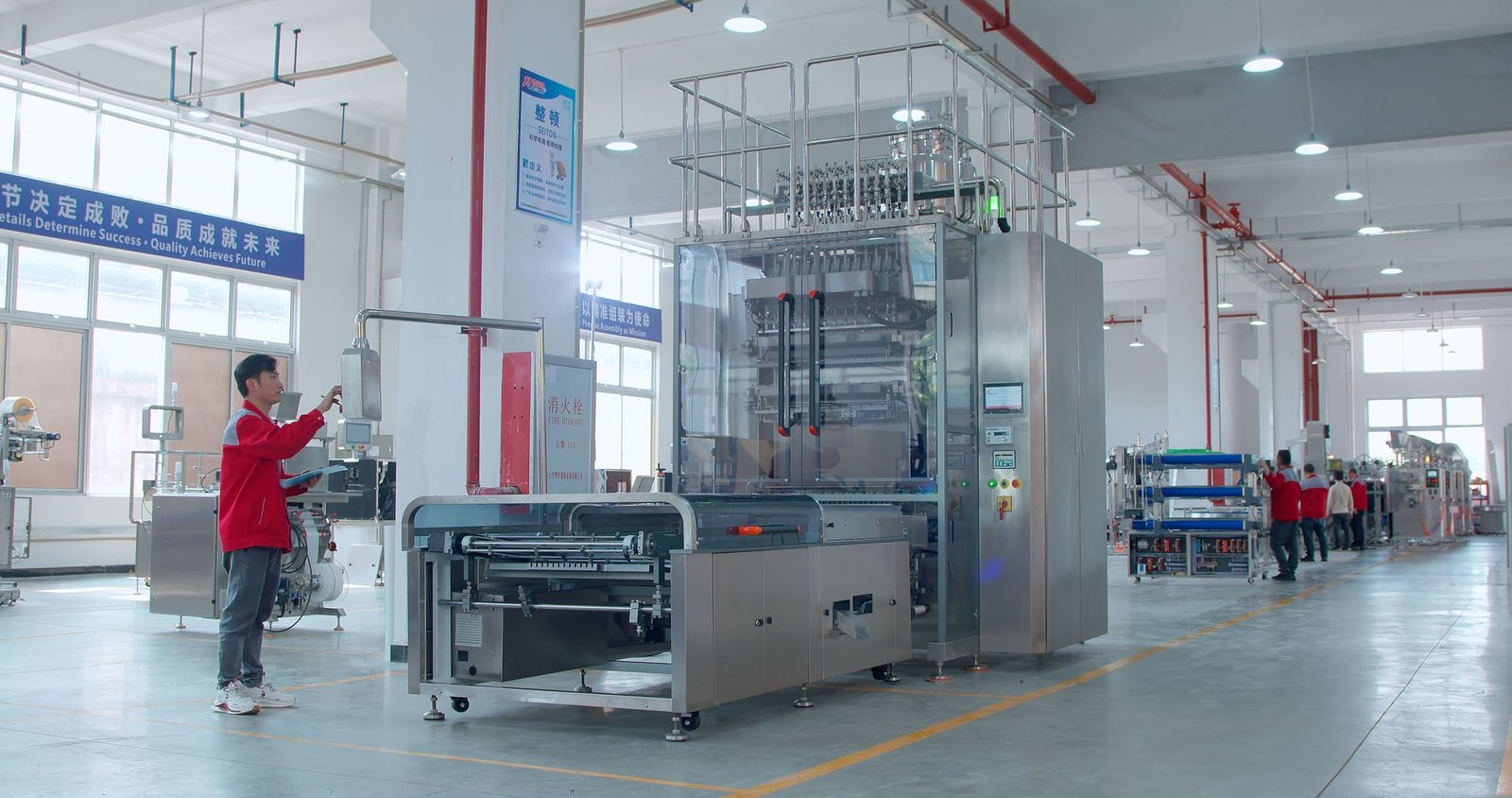
The 3 Structural Levels of Packaging Machinery
Primary Packaging Machines
Direct product-contact equipment. These machines form, fill, and hermetically seal individual unit doses or retail packs directly around powders, granules, solids, or liquids. Examples include VFFS machines, multi-lane stick pack units, blister lines, and rotary pouch fillers.
Secondary Packaging Machines
Group packaging automation. These systems bundle multiple primary packs into intermediate consumer or wholesale groupings. Equipment includes automated cartoners, case packers, shrink bundlers, sleeve wrappers, and overwrapping machines that ensure organized retail distribution.
Tertiary (End-of-Line) Systems
Logistical and transport unitization. Tertiary systems prepare bulk cartons for transport via automatic palletizers (robotic or Cartesian), stretch wrappers, heavy-duty strappers, and automated case sealers that withstand shipping stresses.
Primary Packaging Machine Types & Engineering Specifications
| Machinery Category | Operational Principle | Ideal Material State | Speed Range | Typical Industry Application |
|---|---|---|---|---|
| Multi-Lane Stick Pack Machines | Continuous roll stock slit into multiple lanes, vertical form-fill-seal with auger/piston dosing. | Fine Powders, Granules, Viscous Liquids | 150 – 800 packs/min | Instant Coffee, Collagen Powder, Energy Gel, Probiotics |
| Vertical Form-Fill-Seal (VFFS) | Forms pouch from flat web around vertical collar, fills gravimetrically, heat seals longitudinal & end seams. | Bulk Granules, Pellets, Powders | 40 – 160 bags/min | Snack Foods, Pet Food Kibble, Grains, Sugar, Fertilizer |
| Multi-Lane Sachet Machines | 4-side or 3-side seal flat pouch formation across multiple parallel lanes with synchronized filling. | Powders, Liquids, Pastes, Creams | 120 – 600 sachets/min | Cosmetic Serums, Shampoo Samples, Spices, Medical Swabs |
| Premade Rotary Pouch Fillers | Mechanical grippers pick, open, purge, dose, nitrogen flush, and heat-seal preformed doypacks/zipper bags. | Solids, Chunks, Granules, Liquids | 30 – 90 pouches/min | Freeze-Dried Meat, Pet Treats, Coffee Beans, Confectionery |
| Horizontal Flow Wrappers (HFFS) | Continuous horizontal film tube wrapped around product traveling on conveyor, crimped and end-cut. | Solid Units, Bars, Medical Products | 60 – 400 items/min | Energy Bars, Surgical Masks, Biscuits, Hardware Accessories |
| Automated Liquid Bottling Lines | Rotary or inline multi-nozzle piston/peristaltic filling, automated capping, sleeve labeling, induction sealing. | Low-to-High Viscosity Liquids | 30 – 250 bottles/min | Pharmaceutical Syrups, Body Washes, Lubricant Oils, Sauces |
| Cartoning & Case Packing Lines | Carton blank pick-and-erect, robotic collating of pouches/bottles, horizontal insertion, hot-melt adhesive sealing. | Unit Packaging Enclosures | 30 – 120 cartons/min | Nicotine Pouches, Pharma Blisters, Bottled Cosmetics |
State-of-the-Art Intelligent Packaging Systems
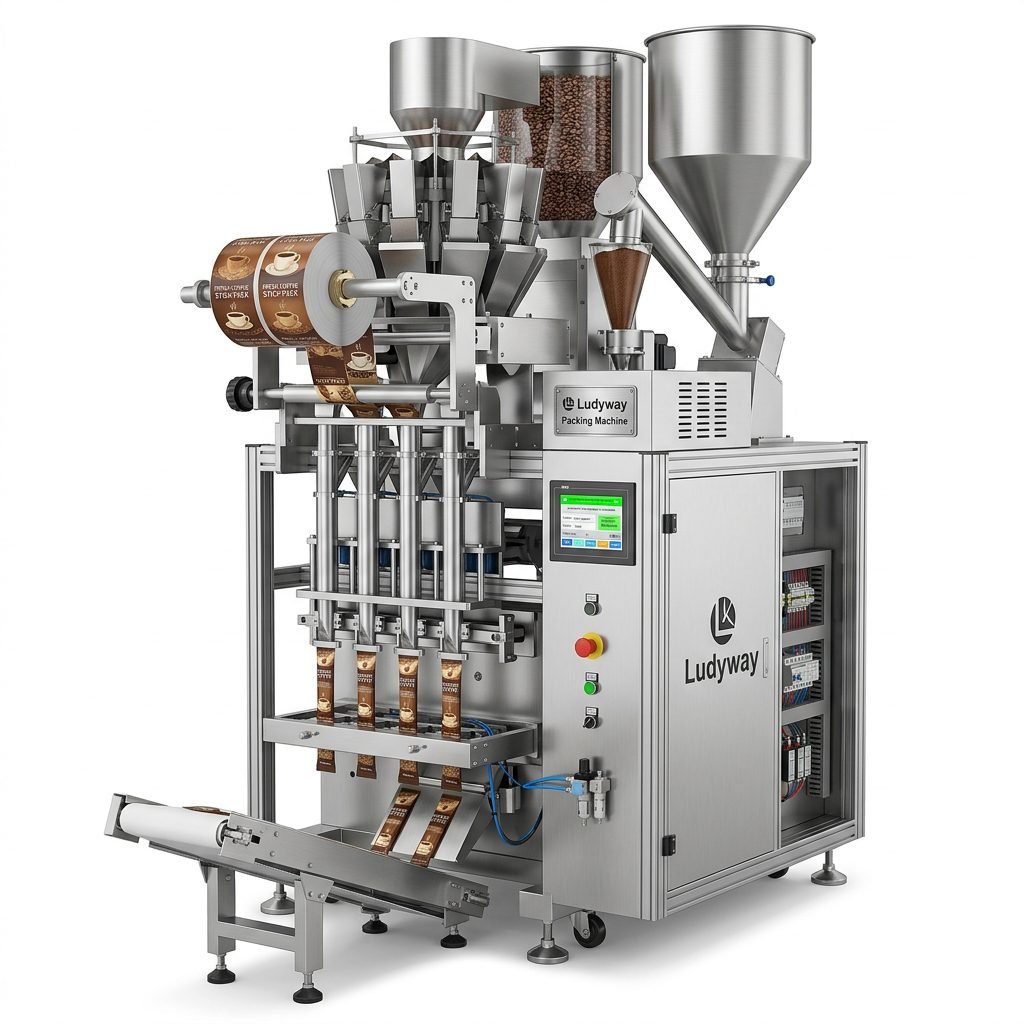
Automatic Multi-Lane Coffee Bean Packaging Machine
View Specifications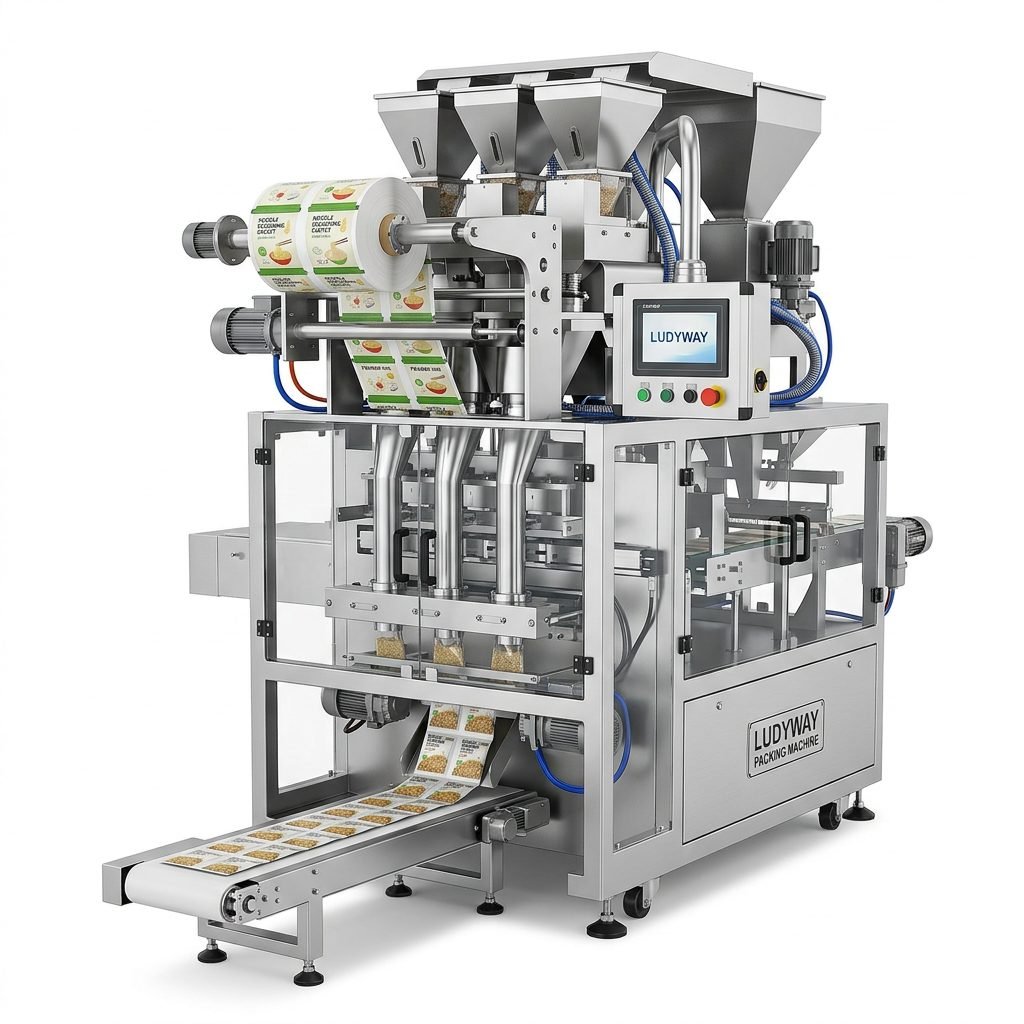
Instant Noodle Seasoning Sachet Packaging Machine
View Specifications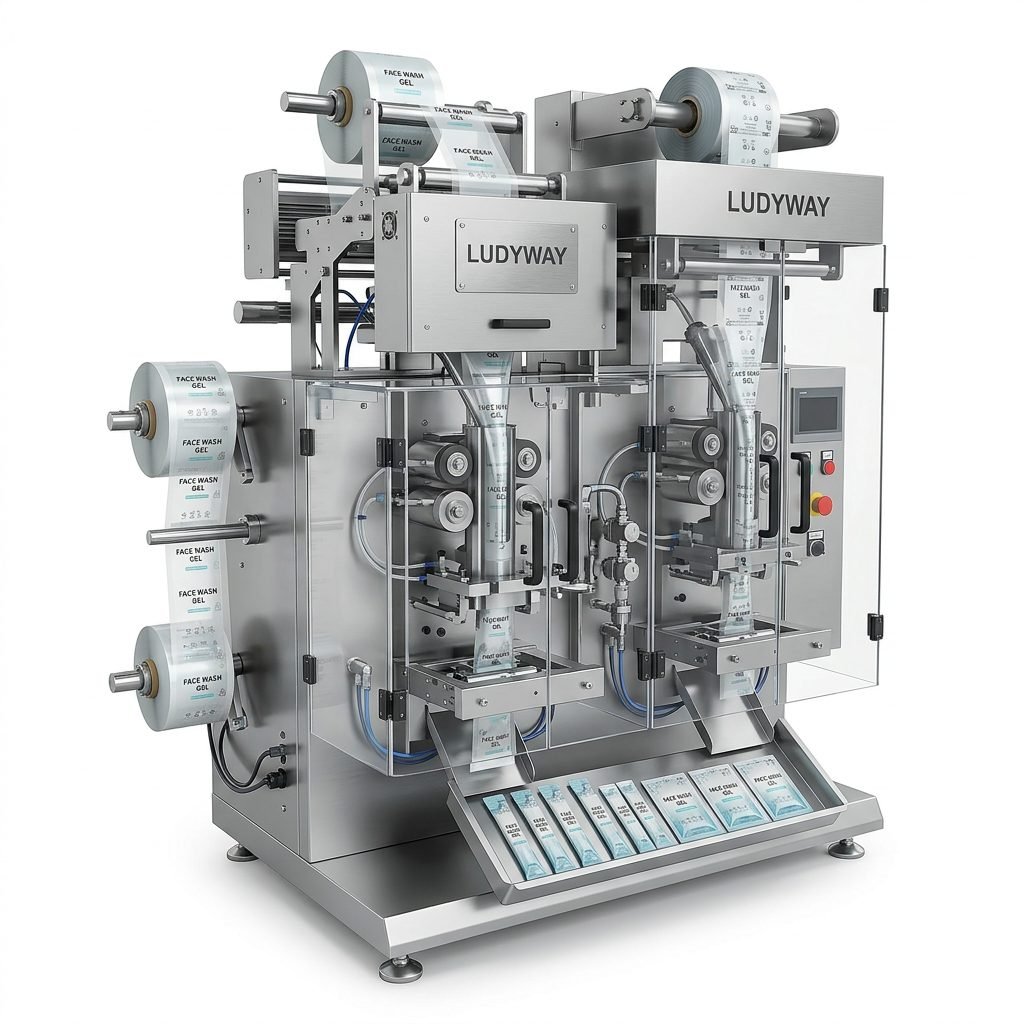
Automatic Face Wash Sachet & Stick Pack Machine
View Specifications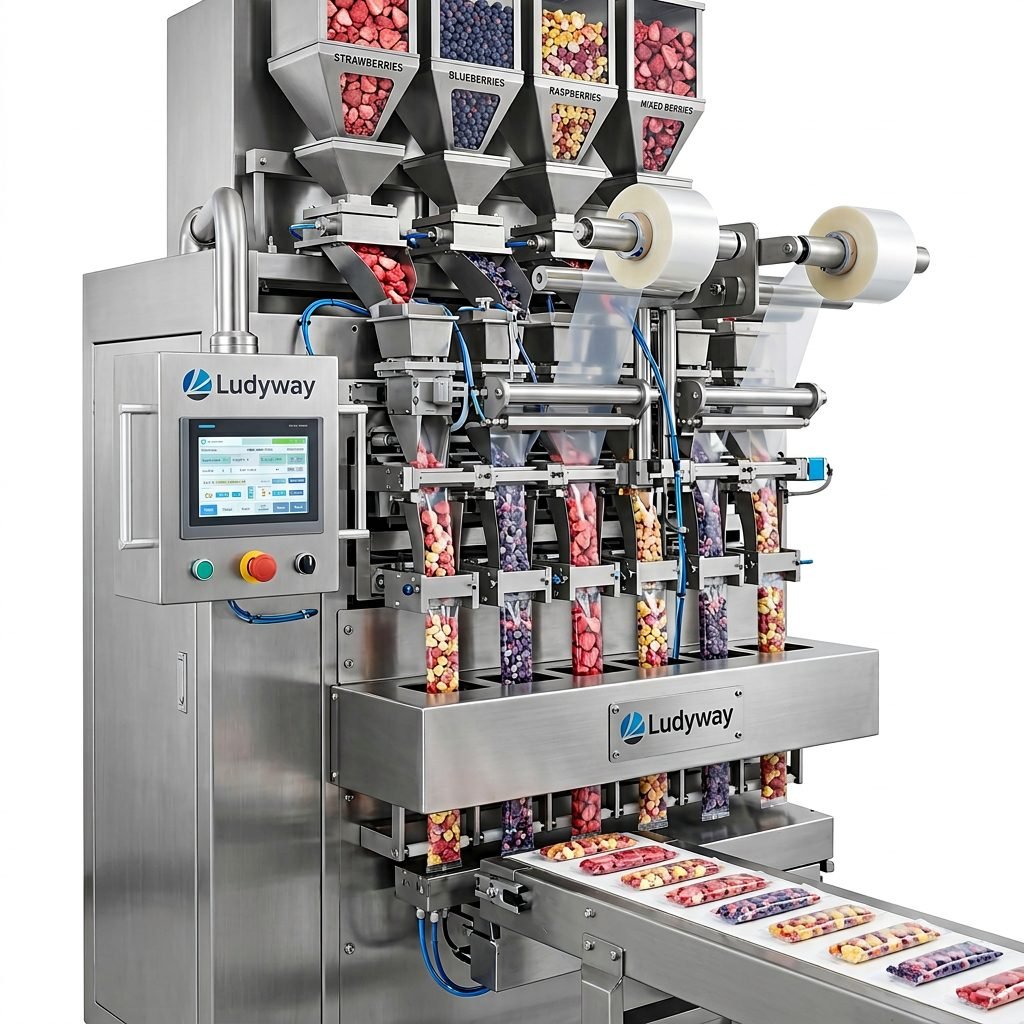
Freeze-Dried Fruit Stick Pack Granule Machine
View Specifications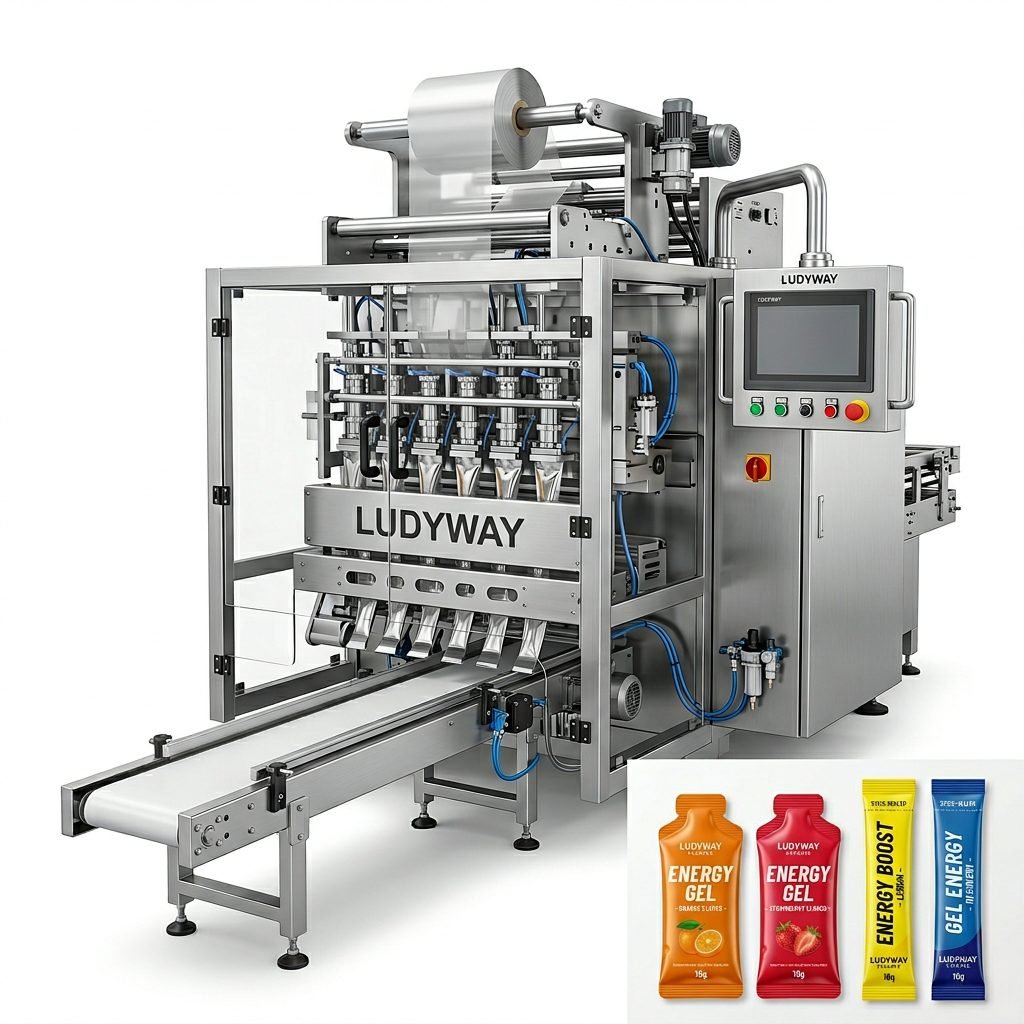
High-Speed Energy Gel Sachet & Stick Pack Line
View Specifications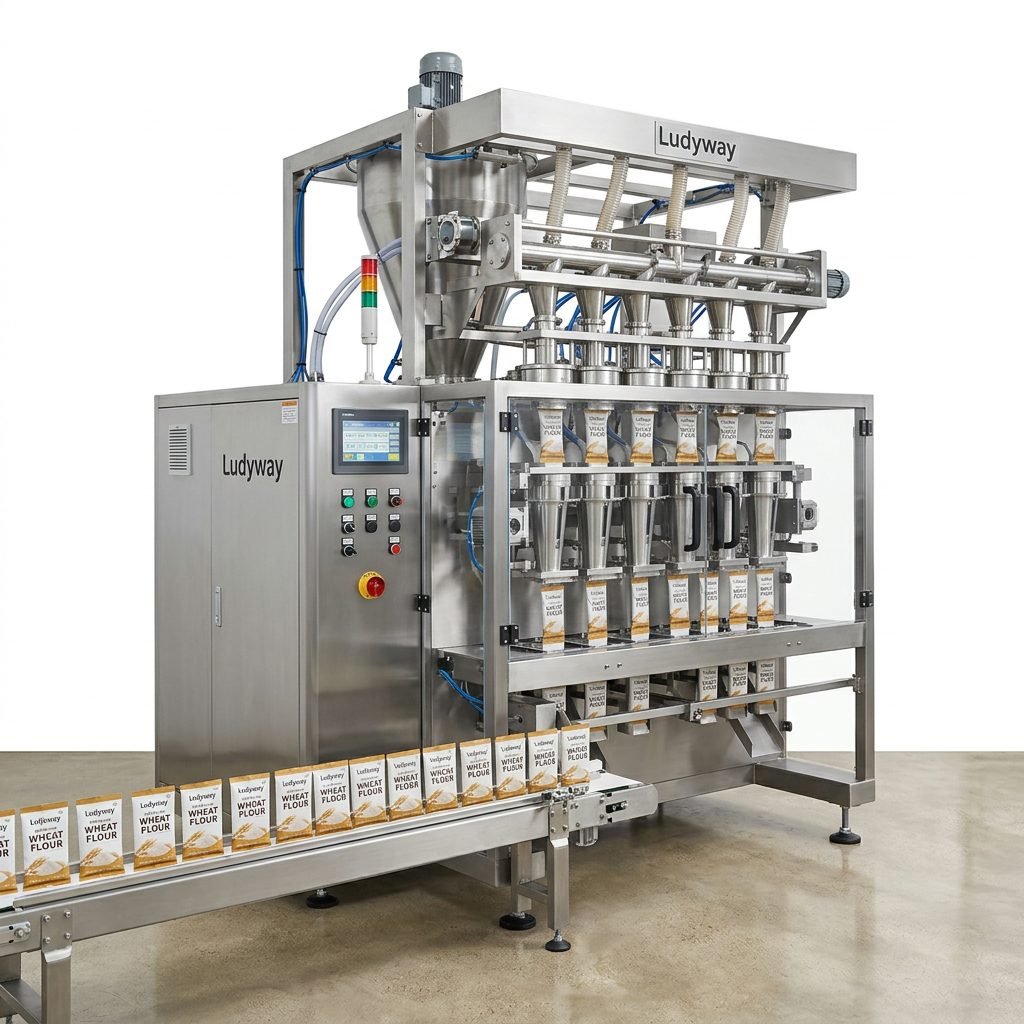
Multi-Lane Wheat Flour Sachet & Stick Pack Line
View Specifications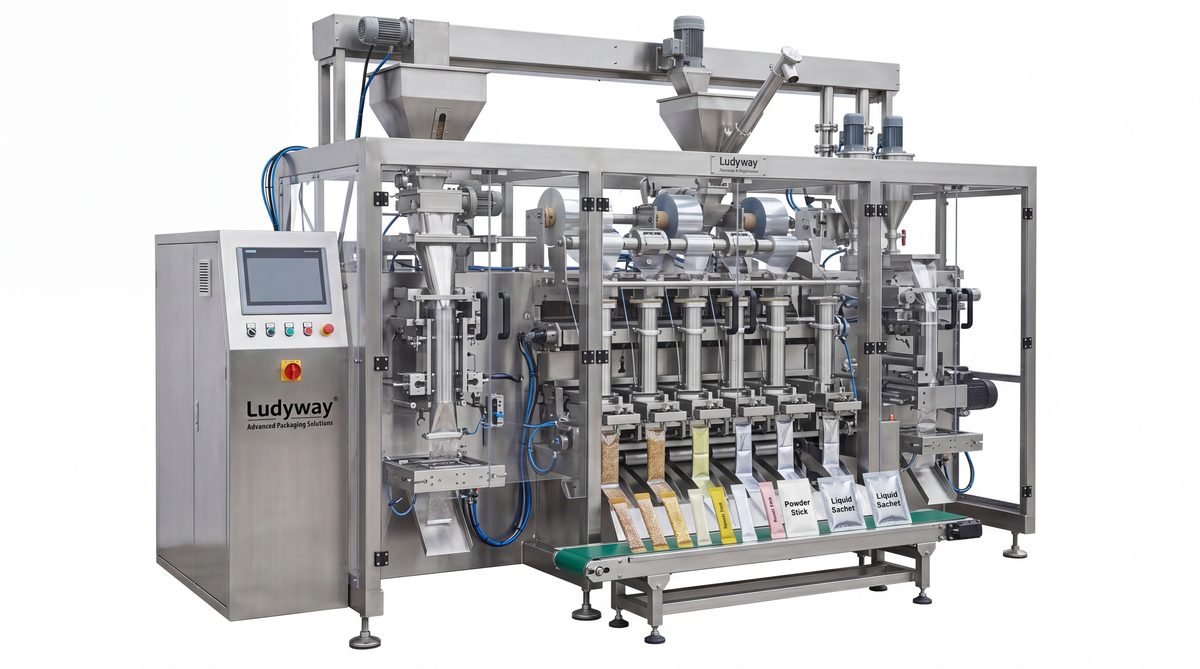
Universal Multi-Lane Stick Pack & Sachet Packer
View Specifications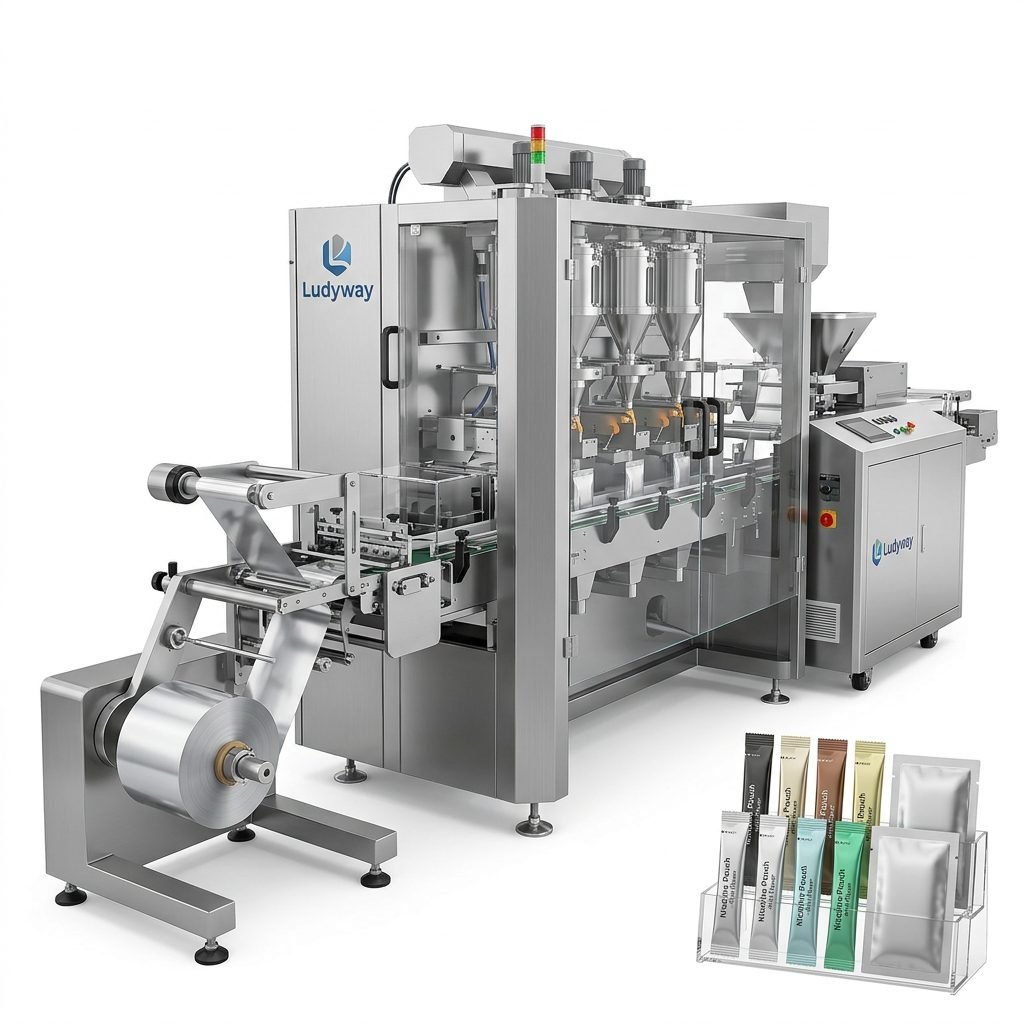
Nicotine Pouch High-Speed Packaging Lines
View SpecificationsHow Does an Automated Packaging Machine Work?
Film Feeding & Alignment
Continuous film roll unwinds under constant servo tension control. Optical registration sensors detect eye-marks to maintain microscopic cut-length alignment across all lanes.
Tube Forming & Sealing
The planar web passes over precision-machined forming shoulders, wrapping into tubular profiles. Thermocouple-controlled sealing jaws fuse the longitudinal seam.
Dosing & Gas Purging
Auger screws, piston pumps, or combination multi-head scales dispense target weights. Optional nitrogen gas flushing reduces residual oxygen below 1% to maximize shelf life.
Cross Sealing, Cut & Eject
Horizontal heated jaws create airtight top/bottom closures. Pneumatic or rotary knives deliver clean cuts (straight, zigzag, or tear-notch) before dynamic checkweighing ejection.
Primary Uses & Target Manufacturing Sectors
Food & Beverage Industry
Aseptic and high-speed packaging of instant coffee, tea bags, seasoning spices, dried snacks, sauces, sugar, and flour under strict sanitary compliance.
Explore Food Systems →Pharmaceutical & Healthcare
cGMP-compliant dosing for oral rehydration salts, fever powders, antibiotics, tablets, syrups, and sterile diagnostic devices with full batch serialization.
Explore Pharma Solutions →Cosmetics & Personal Care
Single-dose sachets and stick packs for anti-aging serums, body wash samples, facial creams, hair masks, shampoos, and travel-size lotions.
Explore Cosmetic Lines →Chemical & Industrial Materials
Corrosion-resistant automated bagging for crop fertilizers, descaling powders, industrial lubricants, sealants, adhesives, and liquid detergents.
Explore Chemical Packaging →Nicotine & Oral Pouches
High-speed, non-woven fleece forming, ultrasonic sealing, precise pouch cutting, and multi-can cartoning for modern tobacco-free nicotine products.
Explore Nicotine Systems →Pet Nutrition & Animal Feed
Automated dosing and packing for freeze-dried pet snacks, pet probiotic supplements, fish feed granules, and bulk livestock feed pellets.
Explore Pet Food Lines →Why Modern Manufacturers Invest in Automation
High Throughput & Speed
Multi-lane architectures operate at up to 800 units per minute, replacing dozens of manual hand-packing stations and maximizing capacity.
Dosing Accuracy
Servo-driven augers and multi-head gravimetric cells eliminate product giveaway, maintaining precision within ±0.1g per portion.
Hermetic Sealing & Hygiene
Eliminates human contact in sterile pharmaceutical and food packaging, preventing bacterial growth and oxidation.
Material Cost Reduction
Automated tensioning and precise cut-off boundaries reduce film scrap and packaging waste by up to 25% over manual wrapping.
Ludyway Machinery — Global Packaging Solutions
Over 30 Years of Engineering Excellence
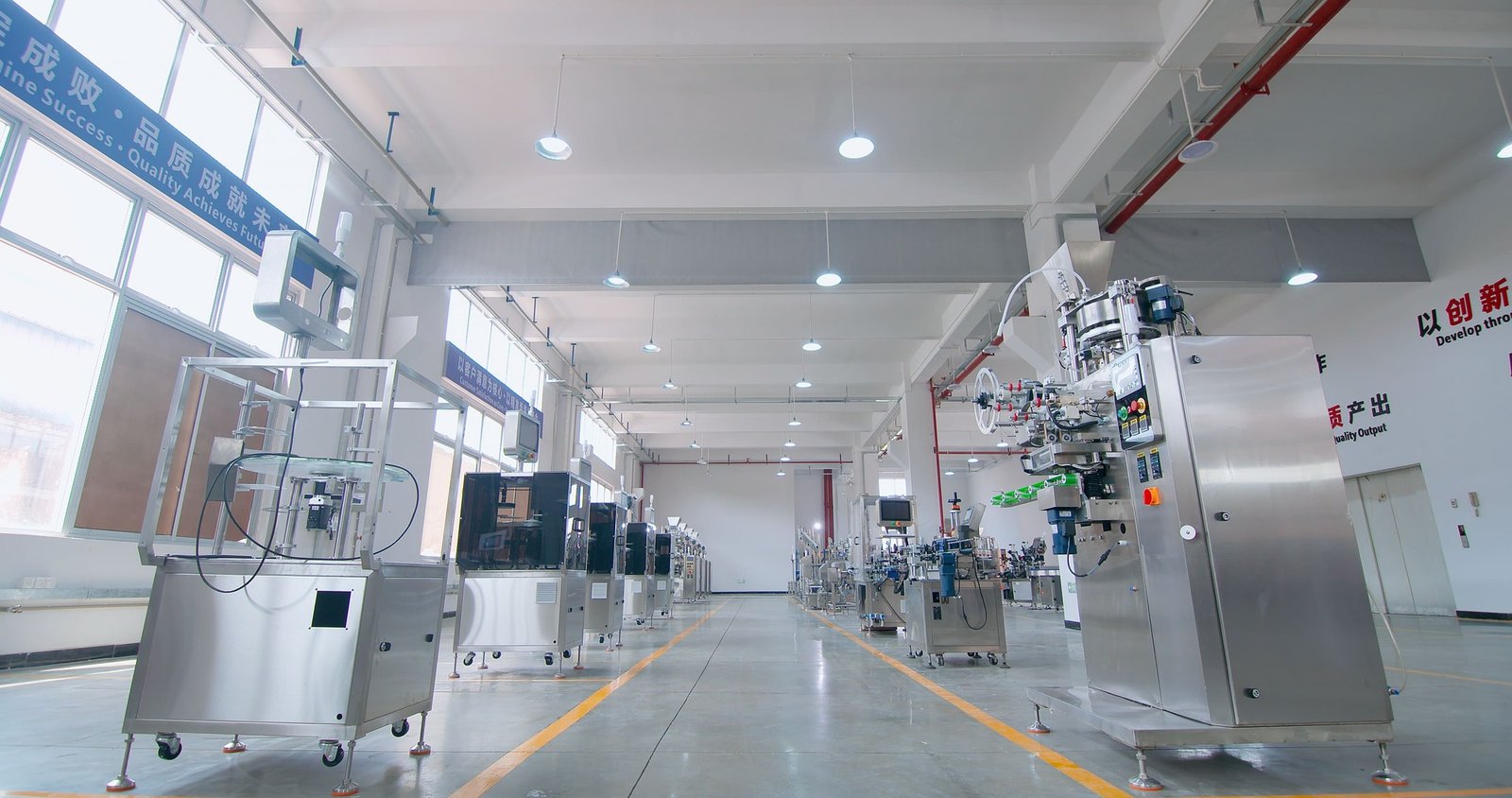
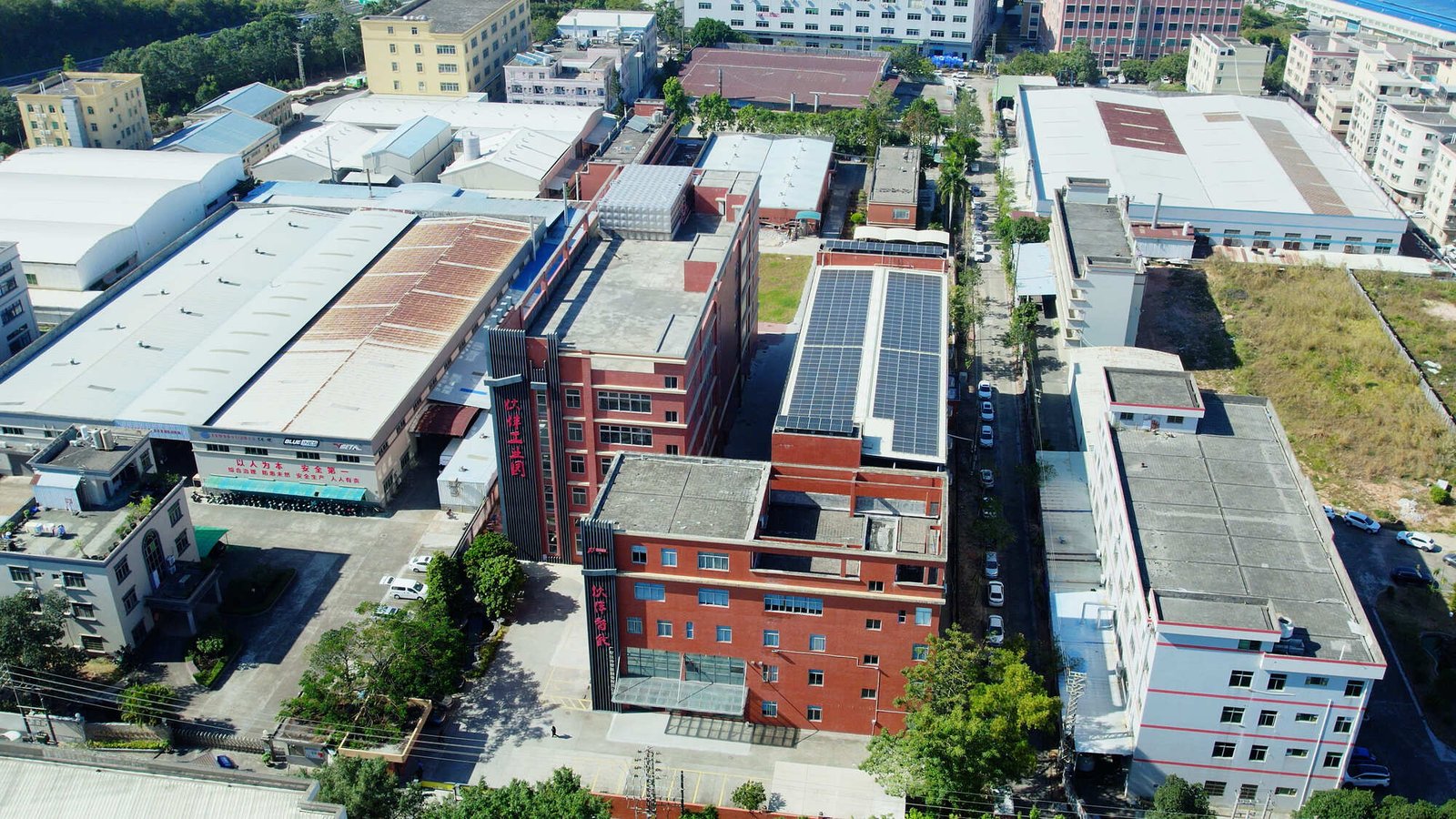
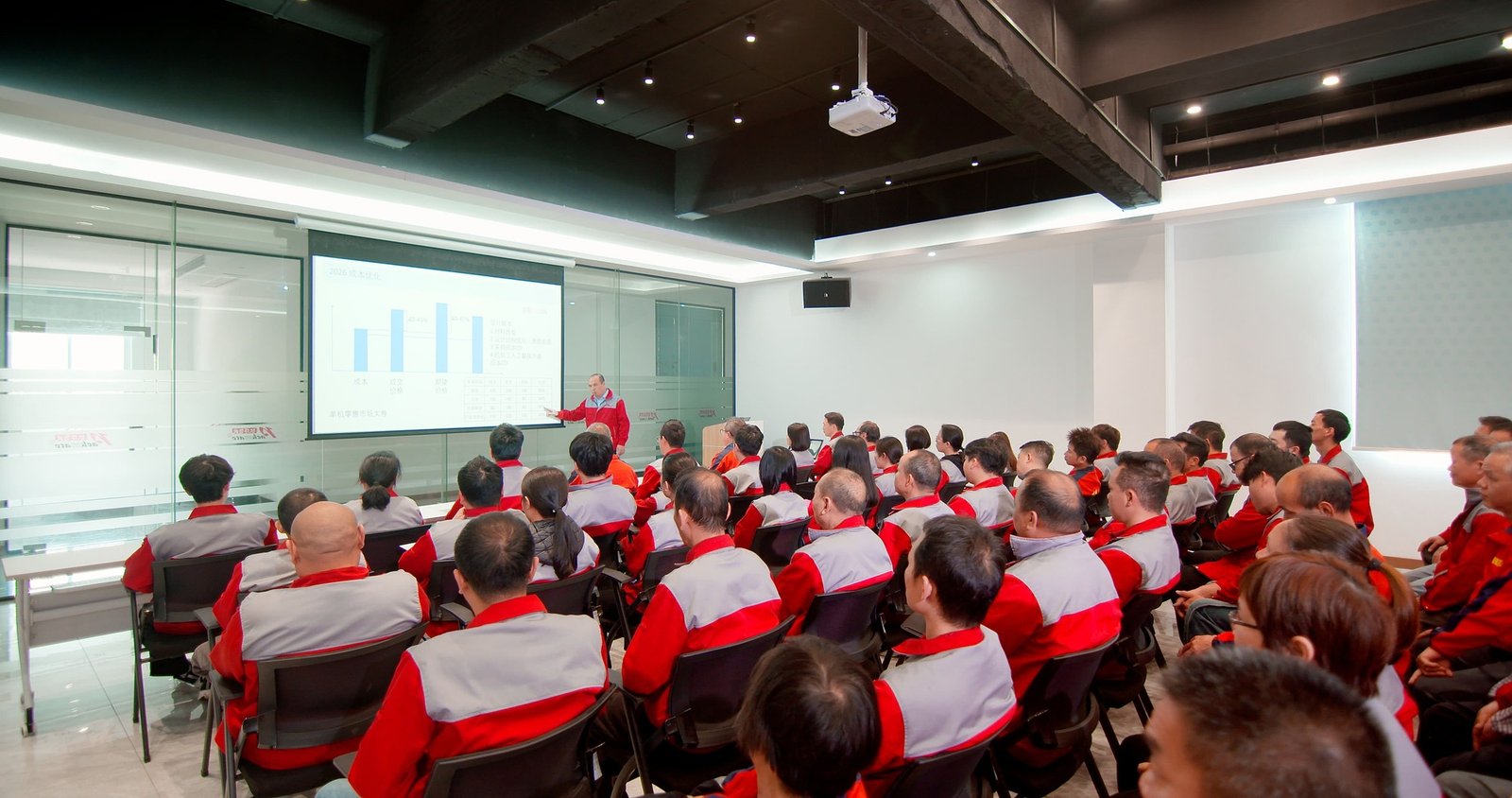
Founded with a focus on cutting-edge packaging automation, Ludyway is one of China’s premier manufacturers of intelligent packaging equipment. Supported by a modern 20,000㎡ manufacturing facility and over 130 packaging experts, we build turnkey production lines for food, pharmaceutical, and chemical industries across 100+ countries.
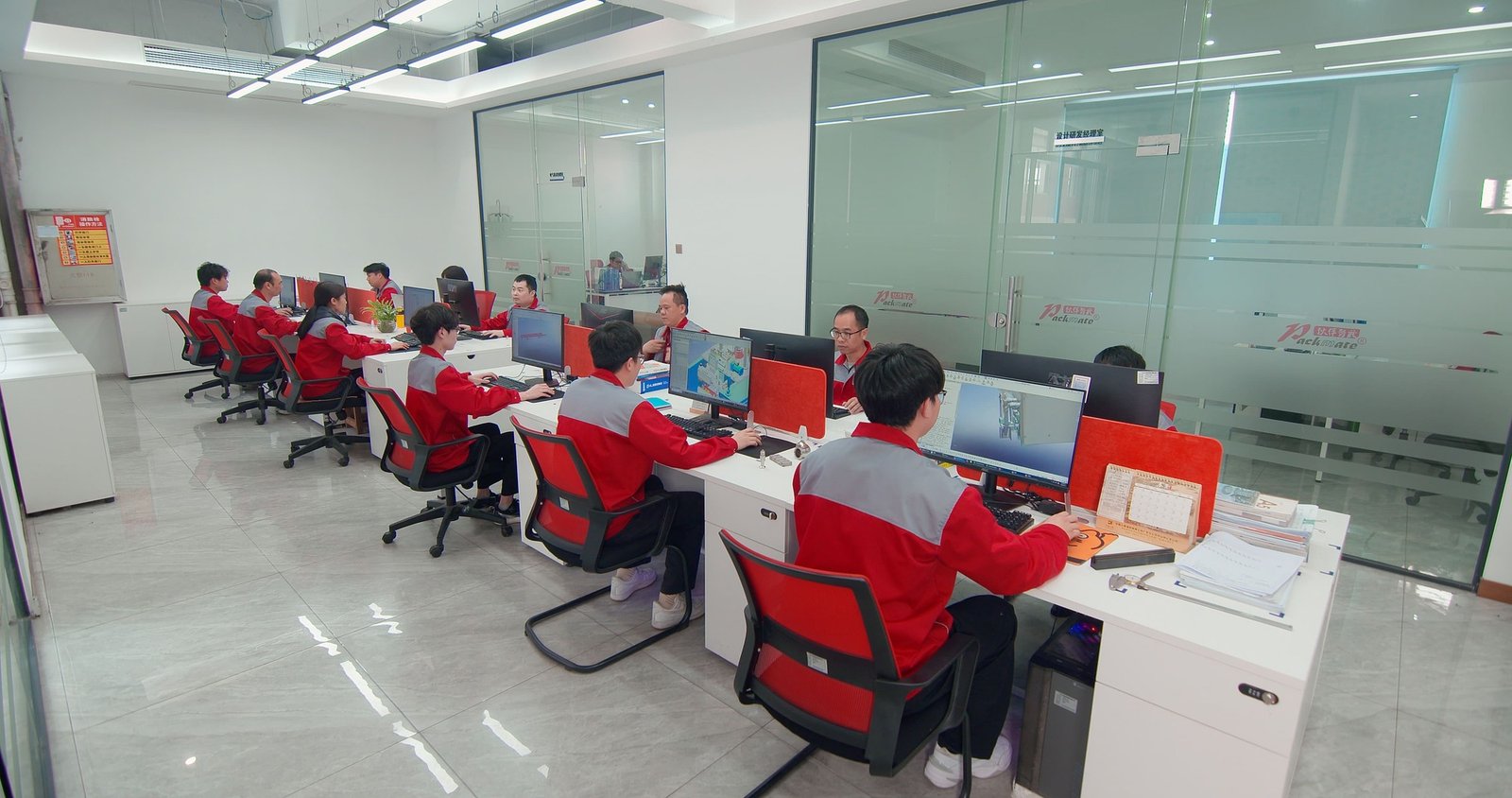
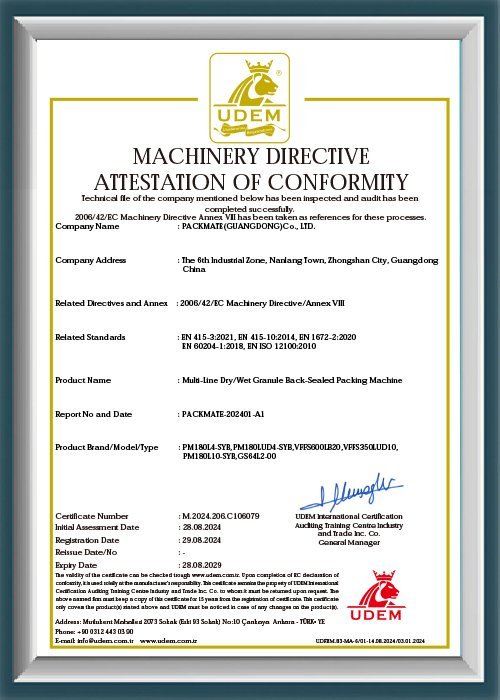
International Certifications & Global Exhibitions
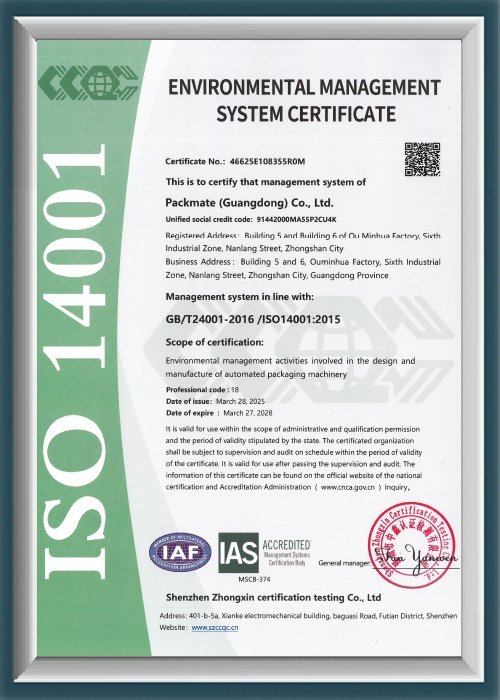
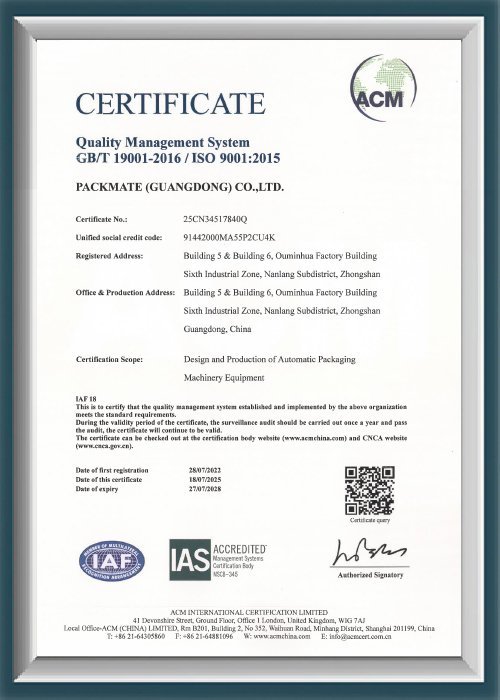
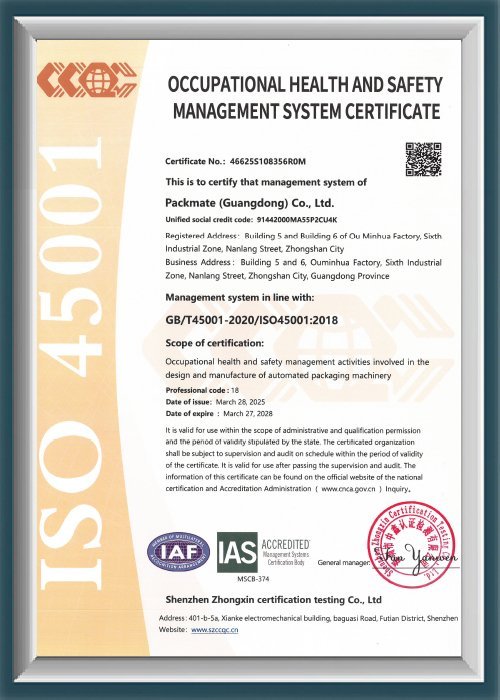
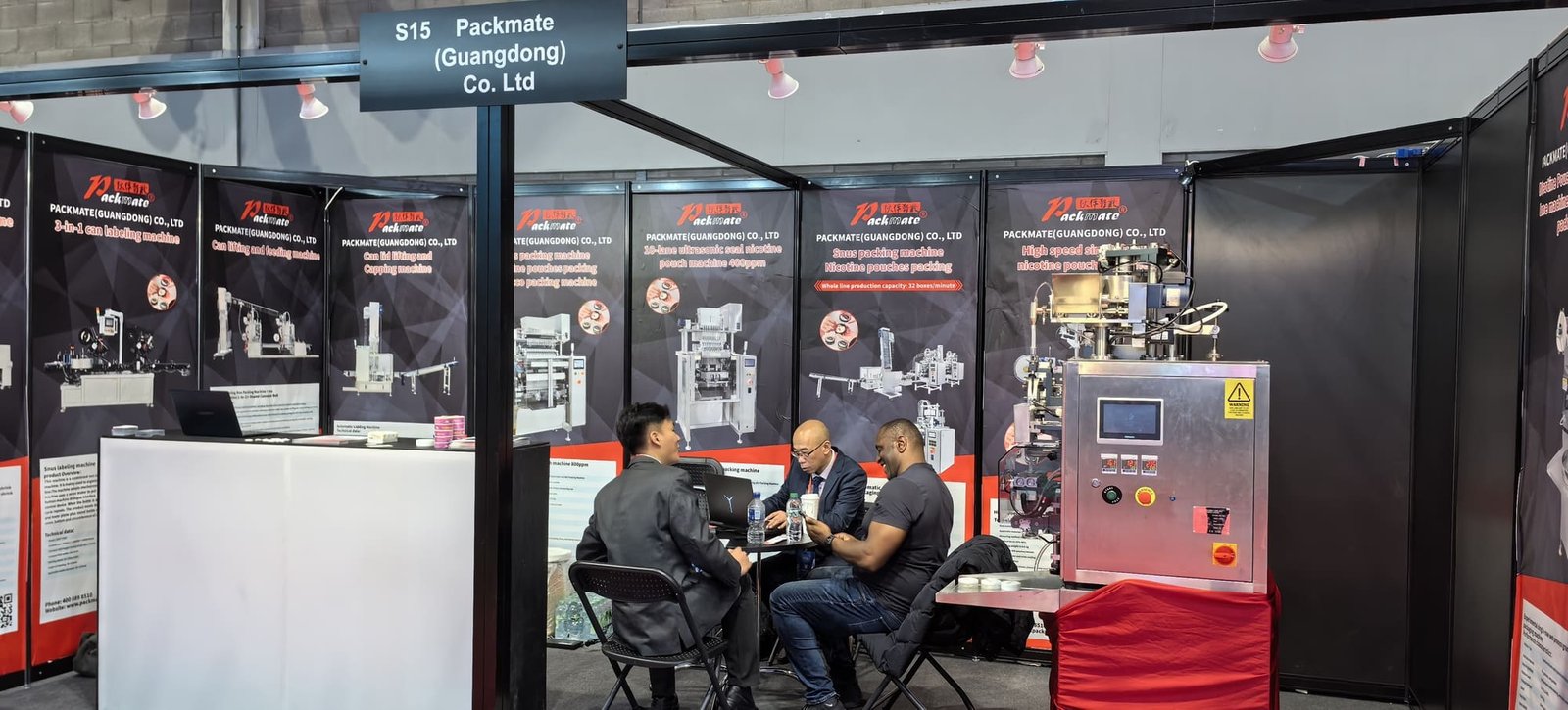
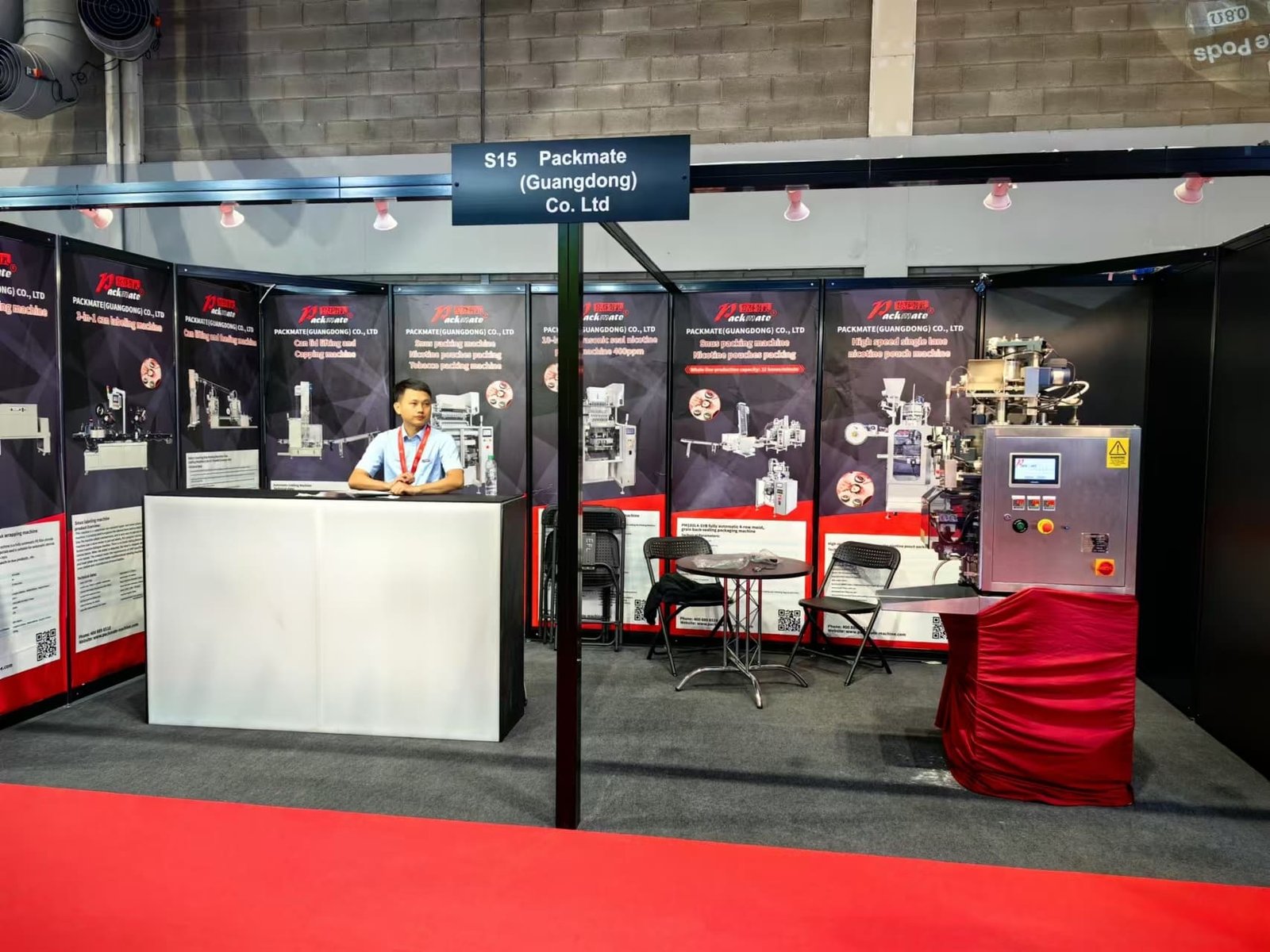
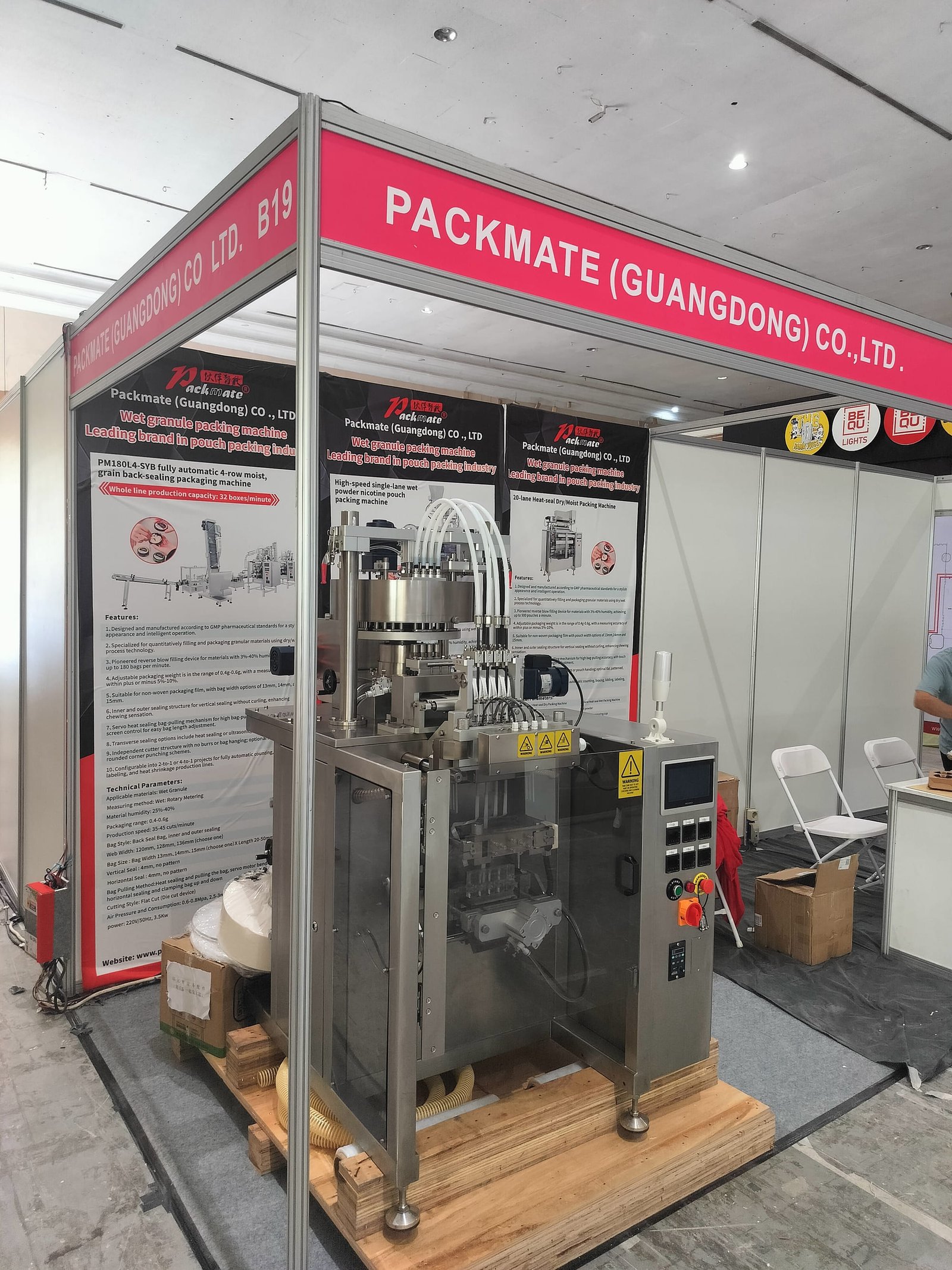
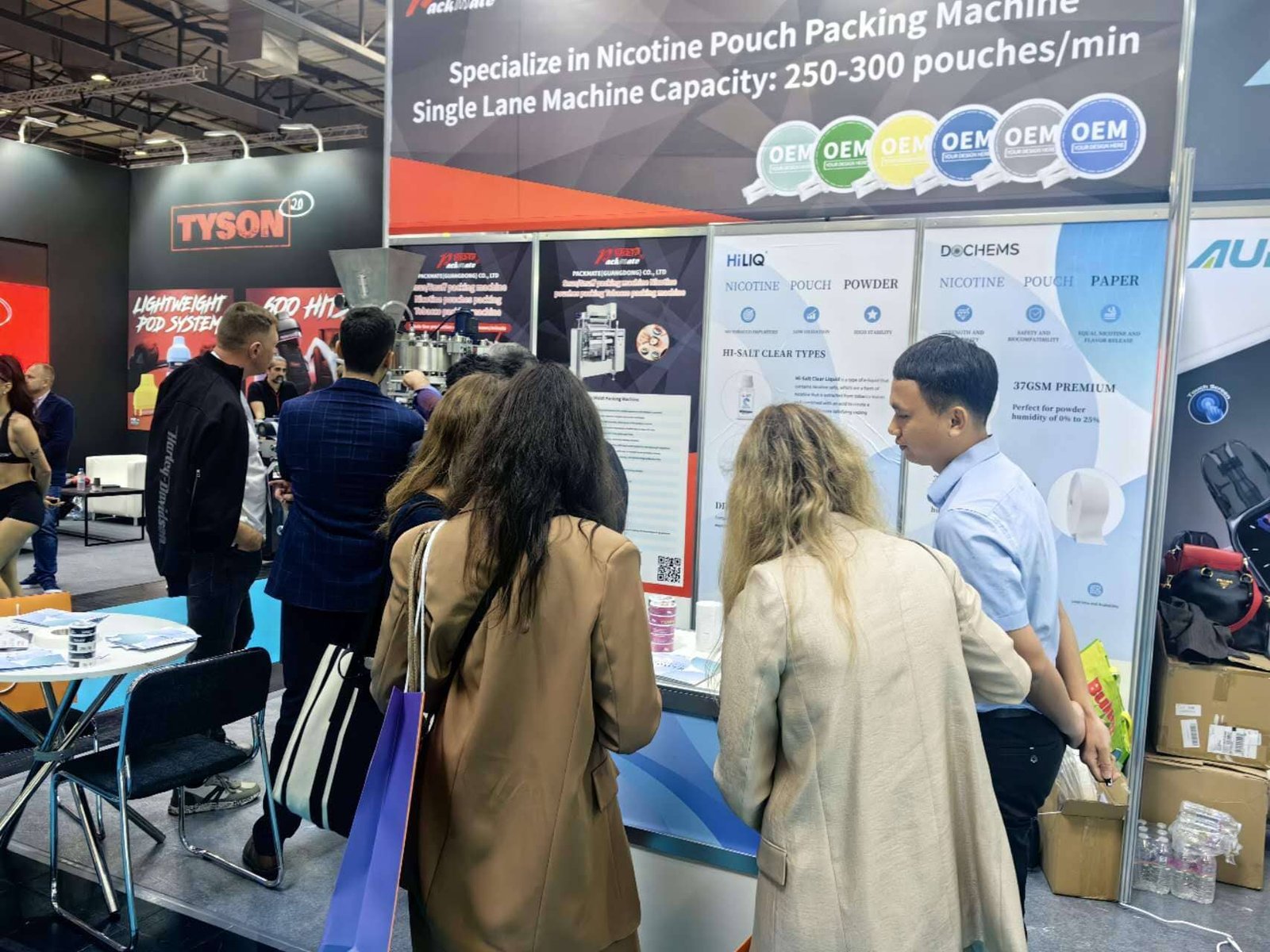
Global Trade Fair Presence
How to Select the Right Packaging Machine for Your Facility
1. Material Rheology & State
Identify whether your bulk product is a free-flowing granule, cohesive ultra-fine powder, high-viscosity paste, or volatile liquid. Material properties directly dictate the dosing mechanism (auger, piston, scale, or peristaltic pump).
2. Packaging Format & Material
Determine required pouch geometry: stick packs, 4-side sachets, pillow pouches, stand-up zipper doypacks, or rigid bottles. Confirm film barrier requirements (aluminum foil, metallized PET, PE, or biodegradable kraft paper).
3. Throughput & Expansion Goals
Calculate current target Output Per Minute (OPM) versus projected 3-year capacity. Multi-lane systems (4 to 12 lanes) allow substantial speed scalability without multiplying facility footprint.
4. Regulatory Cleanliness Standard
Food and pharmaceutical sectors require SUS304 or SUS316L stainless steel contact parts, CIP (Clean-In-Place) washdown capabilities, dust extraction ports, and cGMP compliance documentation.
5. Line Integration & Sensors
Plan upstream and downstream connections: automated vacuum feeding conveyors, nitrogen purging, vision inspection systems, laser date coders, and end-of-line robotic cartoning or case packing.
6. Factory Space & Energy Constraints
Evaluate floor clearance, ceiling heights for vertical elevators, single-phase vs. three-phase industrial power supply, and pneumatic air compressor requirements prior to factory placement.
Frequently Asked Questions About Packaging Machinery
Q. What is the primary difference between VFFS and HFFS machines?
VFFS (Vertical Form-Fill-Seal) feeds film downward and relies on gravity to dispense powders, granules, or liquids into the pouch. HFFS (Horizontal Form-Fill-Seal / Flow Wrapper) conveys solid products horizontally inside a film tube, ideal for distinct solid items like biscuits, snack bars, and surgical masks.
Q. What is a multi-lane stick pack machine?
A multi-lane stick pack machine slits a single wide film roll into multiple narrower lanes (from 2 up to 16 lanes), forming long, slender tubular packets simultaneously. It is the gold standard for single-serve coffee, protein powder, and energy gels requiring ultra-high throughput.
Q. How do automated packaging machines maintain weight accuracy?
Machines utilize dedicated dosing technologies tailored to material behavior: servo-driven precision augers for fine powders, multi-head computer weighers for non-uniform granules, and pneumatic piston pumps for viscous liquids, coupled with feedback checkweighers for automatic self-correction.
Q. Why is nitrogen gas flushing integrated into packaging lines?
Nitrogen flushing displaces atmospheric oxygen inside the package before sealing. By lowering oxygen levels below 1%, it prevents lipid oxidation, inhibits aerobic microbial growth, and extends the shelf life of items like milk powders, coffee, and nuts.
Q. Can one packaging machine handle both powder and liquid?
Yes, modular multi-lane and VFFS machines can be configured with interchangeable filling systems (auger filler heads for powder and piston pump manifolds for liquid). However, transition between drastically different products requires thorough washdown cleaning.
Q. What after-sales and turnkey engineering services does Ludyway offer?
Ludyway delivers end-to-end turnkey engineering: factory layout CAD design, auxiliary equipment integration (elevators, checkweighers, cartoning), customized mold fabrication, on-site commissioning, and lifetime remote technical support.
Accelerate Your Manufacturing Line with Custom Automation
Whether you are packaging single-dose pharmaceuticals, bulk food granules, or liquid personal care products, Ludyway’s engineering team provides tailored turnkey packaging machinery to maximize output and quality control.
