
What Standards Must Food Packaging Machines Meet?
Discover the critical hygiene, safety, electrical, and data integrity standards required for automated food packaging machinery. Learn how international regulations like FDA, CE, EHEDG, and ISO 22000 shape industrial packaging lines today.
In modern food manufacturing, precision, contamination control, and regulatory compliance are integral to the production ecosystem. Automated packaging machinery operates at the final, most vulnerable intersection where processed food products meet their primary packaging barrier. Consequently, food packaging machines are subjected to some of the strictest engineering, sanitary, operational, and digital standards globally.
Whether packaging delicate dry powders, granular snack foods, viscous condiments, or ready-to-eat items, manufacturers must design and deploy equipment that actively eliminates physical, chemical, and biological contamination risks. International regulatory agencies such as the US FDA, European EHEDG, ISO, and national food safety authorities establish stringent technical guidelines to safeguard public health and ensure operational traceability.
Core Regulatory Frameworks for Packaging Equipment
Global food packaging equipment must satisfy multi-jurisdictional mandates to qualify for commercial food processing facilities.
FDA 21 CFR Compliance
Governs food contact surface materials (21 CFR Part 177) requiring non-toxic, non-absorbent polymers, food-grade silicone seals, and lubricants certified under NSF H1 to avoid harmful chemical migration during high-speed packaging runs.
CE Machinery Directive
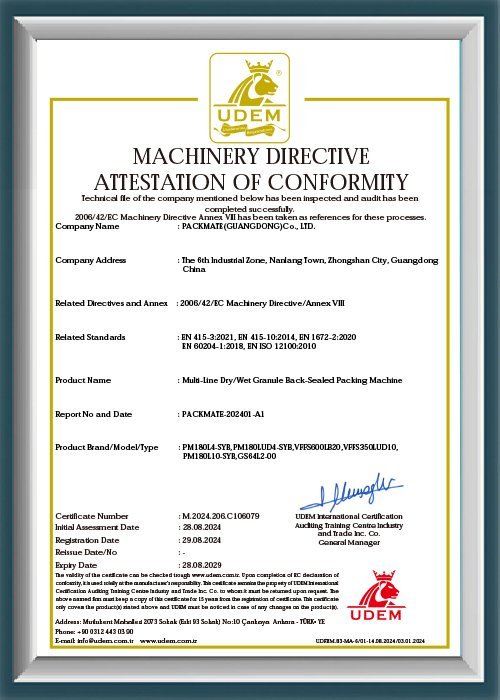
Mandates safety and environmental conformity across Europe (Directive 2006/42/EC). Requires strict risk assessment, ergonomic mechanical layout, noise suppression under 75 dB, and dual-channel fail-safe emergency circuits.
EHEDG & 3-A Standards
European Hygienic Engineering & Design Group guidelines mandate completely self-draining surfaces, crevice-free internal radii (>3mm), and total elimination of dead legs to streamline automated CIP (Clean-In-Place) procedures.
ISO 22000 / FSSC 22000
Integrates HACCP principles into mechanical workflows. Machines must support systematic critical control point management, allergen batch separation, physical metal detection, and optical seal inspection protocols.
IEC / UL Electrical Safety
Compliance with IEC 60204-1 and UL 508A for industrial control panels. Features IP65/IP69K washdown enclosures, separated high-voltage compartments, and surge-protected servo systems preventing short circuits in humid environments.
ATEX / NFPA Explosion Proof
Crucial for combustible dry powder packaging (flour, starch, spices). Directives mandate anti-static contact parts, explosion-relief venting, grounded structural frames, and intrinsically safe sensors preventing airborne dust ignition.
1. Material Selection and Sanitary Metallurgy Standards
The primary safeguard against chemical leaching and microbial harborage is metallurgy. All parts coming into direct contact with food must utilize high-grade, corrosion-resistant stainless steel. AISI 304 stainless steel is widely used for external framing and non-contact components, whereas AISI 316L (low carbon) stainless steel is obligatory for direct food-contact surfaces, dosing nozzles, augers, and liquid manifolds.
In addition to raw material composition, surface roughness (Ra value) determines hygienic cleanability. Modern standards mandate that food contact surfaces maintain an Ra value of ≤ 0.8 µm (often achieved via precision electro-polishing), preventing microscopic bacterial biofilm adhesion from species like Listeria monocytogenes and Salmonella.
| Machine Component Zone | Mandatory Material Grade | Surface Finish Requirement | Primary Regulatory Reference |
|---|---|---|---|
| Direct Contact Hoppers & Nozzles | AISI 316L Stainless Steel | Ra ≤ 0.4 – 0.8 µm (Electropolished) | FDA 21 CFR 177 / EHEDG Doc 8 |
| Machine Frames & Outer Enclosures | AISI 304 Stainless Steel | Ra ≤ 1.2 µm (Brushed / Satin) | EN 1672-2 / ISO 14159 |
| Dynamic Gaskets & O-Rings | PTFE / EPDM / Food Silicone | Seamless Molded, Non-Porous | FDA 21 CFR 177.2600 / EC 1935/2004 |
| Drive Chain & Internal Actuators | Nickel-Plated / Stainless Linkage | Lubricated with NSF H1 Grease | ISO 21469 / USDA Class H1 |
2. Sanitary Structural Geometry & Washdown Capability
Sanitary machine construction demands continuous, defect-free welding without crevices, sharp corners, or overlapping joints. All internal hopper angles must incorporate radiused corners (minimum R > 3mm to 6mm) allowing washing fluids to dislodge residues effortlessly. Fasteners within the product zone should be avoided; when essential, hygienic dome-headed bolts with continuous blue silicone seals are required.
Food processing facilities frequently undergo aggressive chemical sanitization using caustic foams, chlorine solutions, and hot water spray up to 80°C at 100 bar. Packaging equipment in wet zones must carry certified IP67 or IP69K enclosures to protect servomotors, load cells, touchscreens, and cabling from moisture ingress and insulation breakdown.
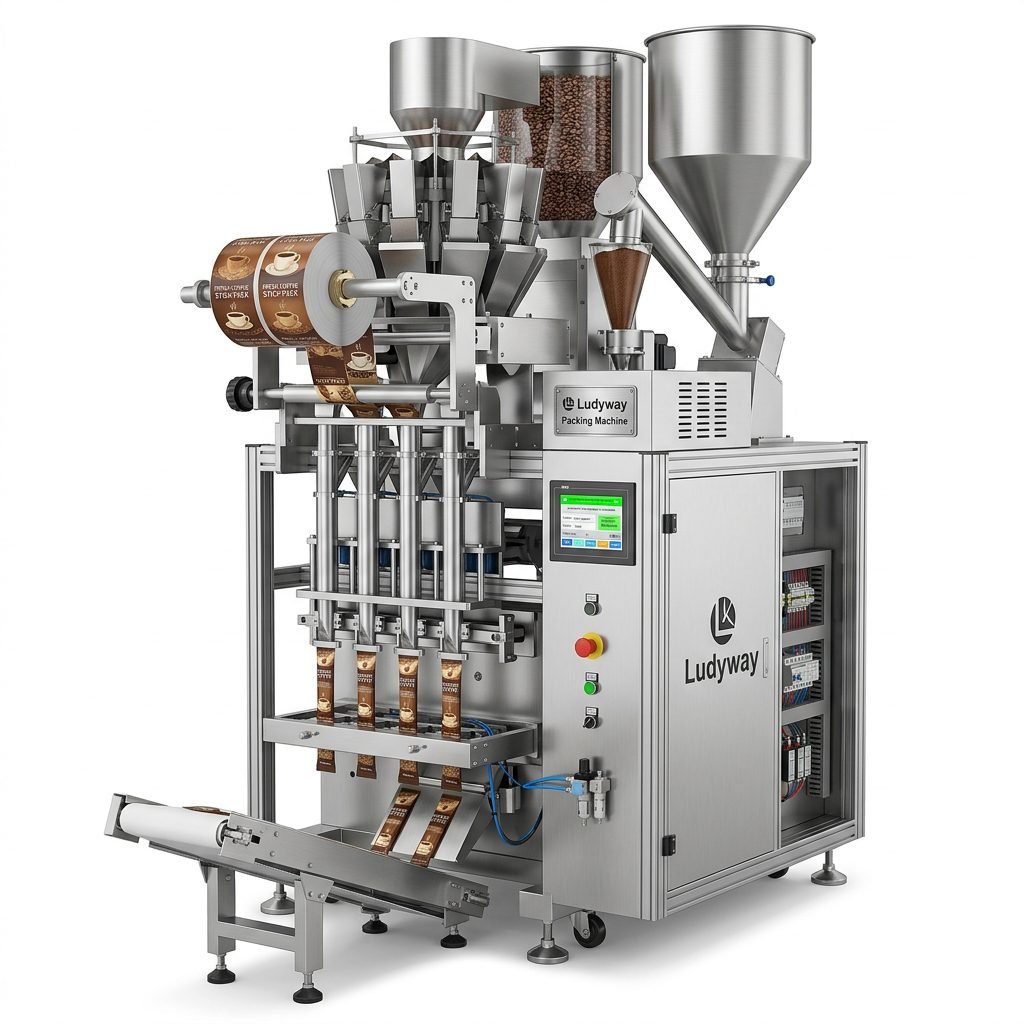
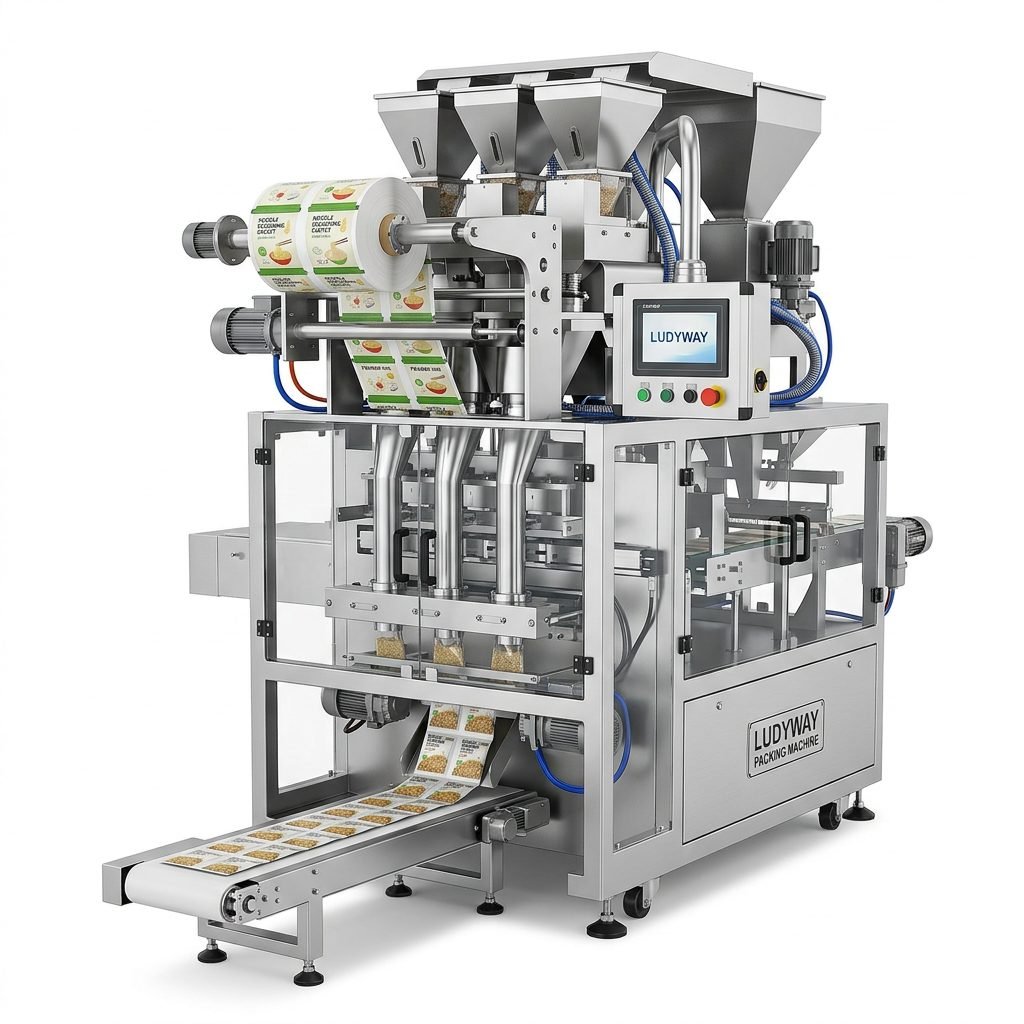
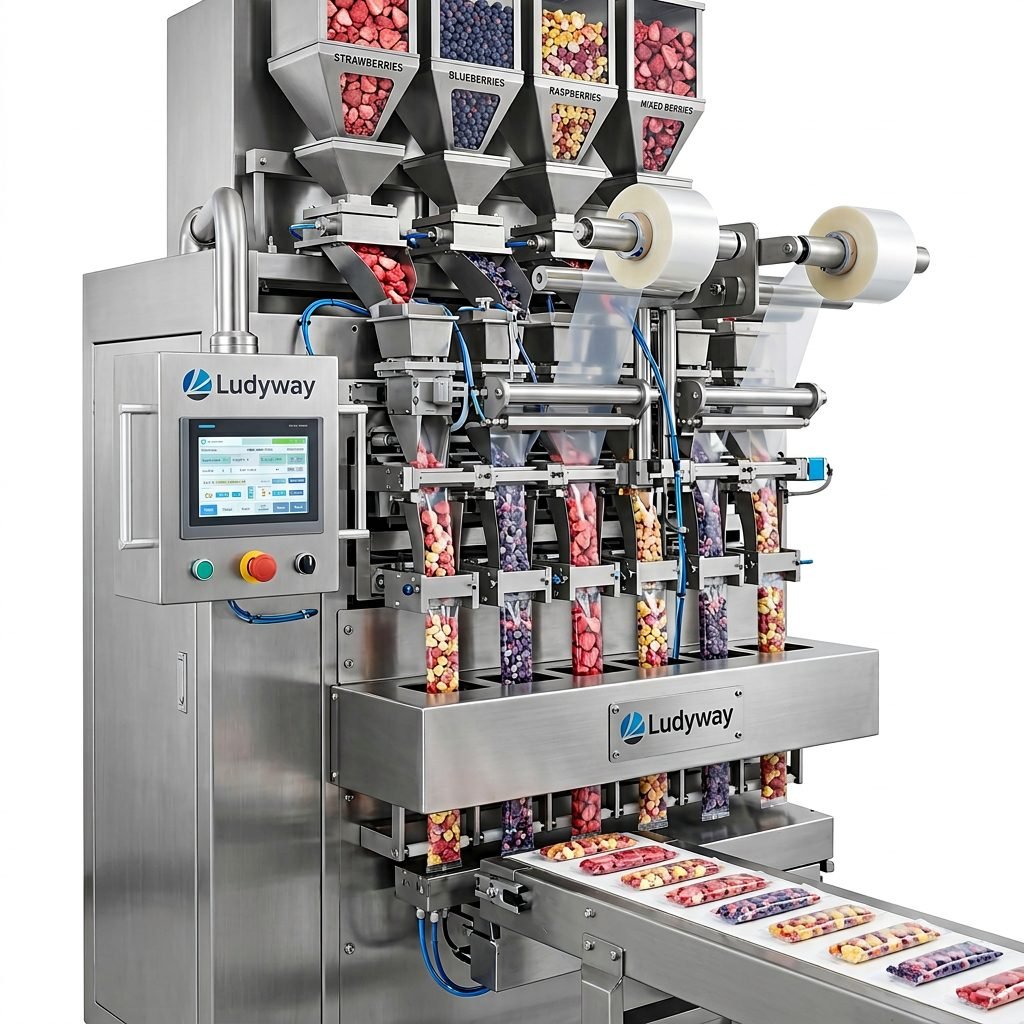
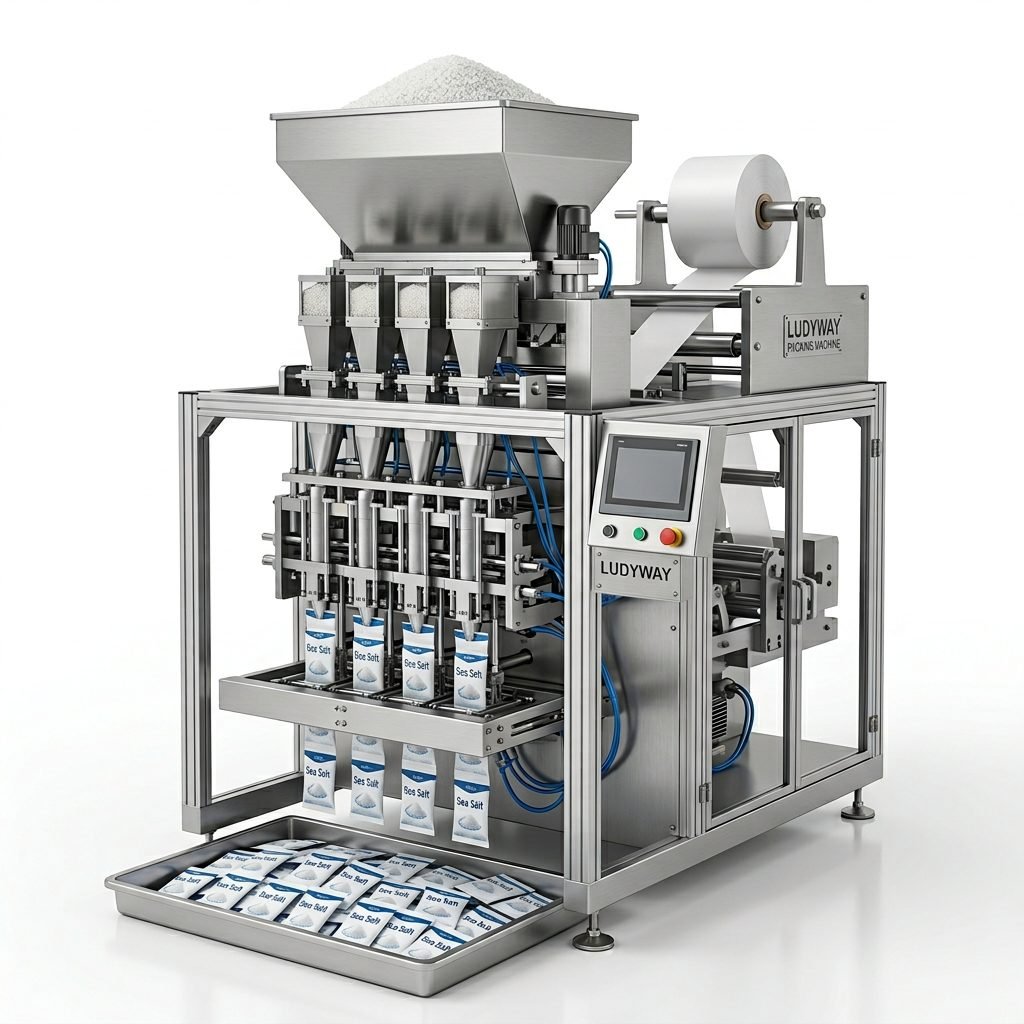
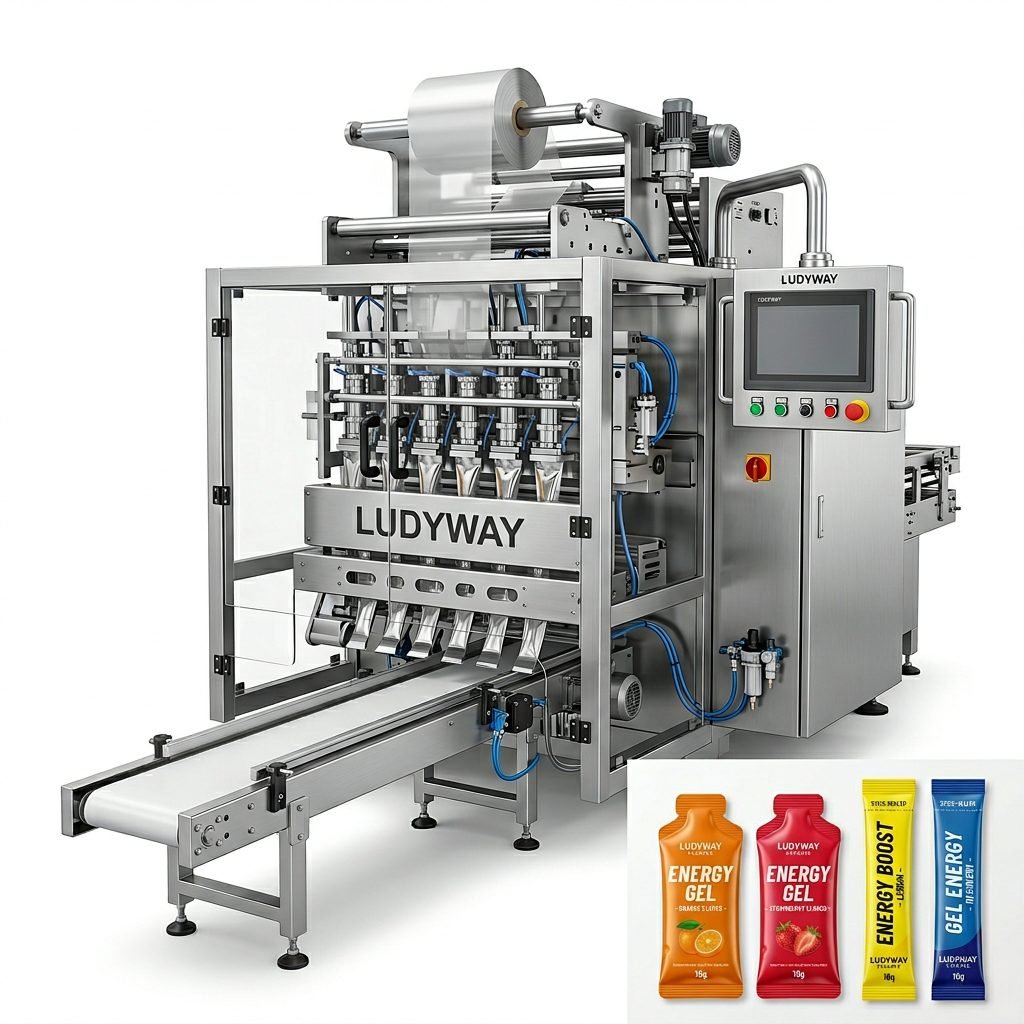
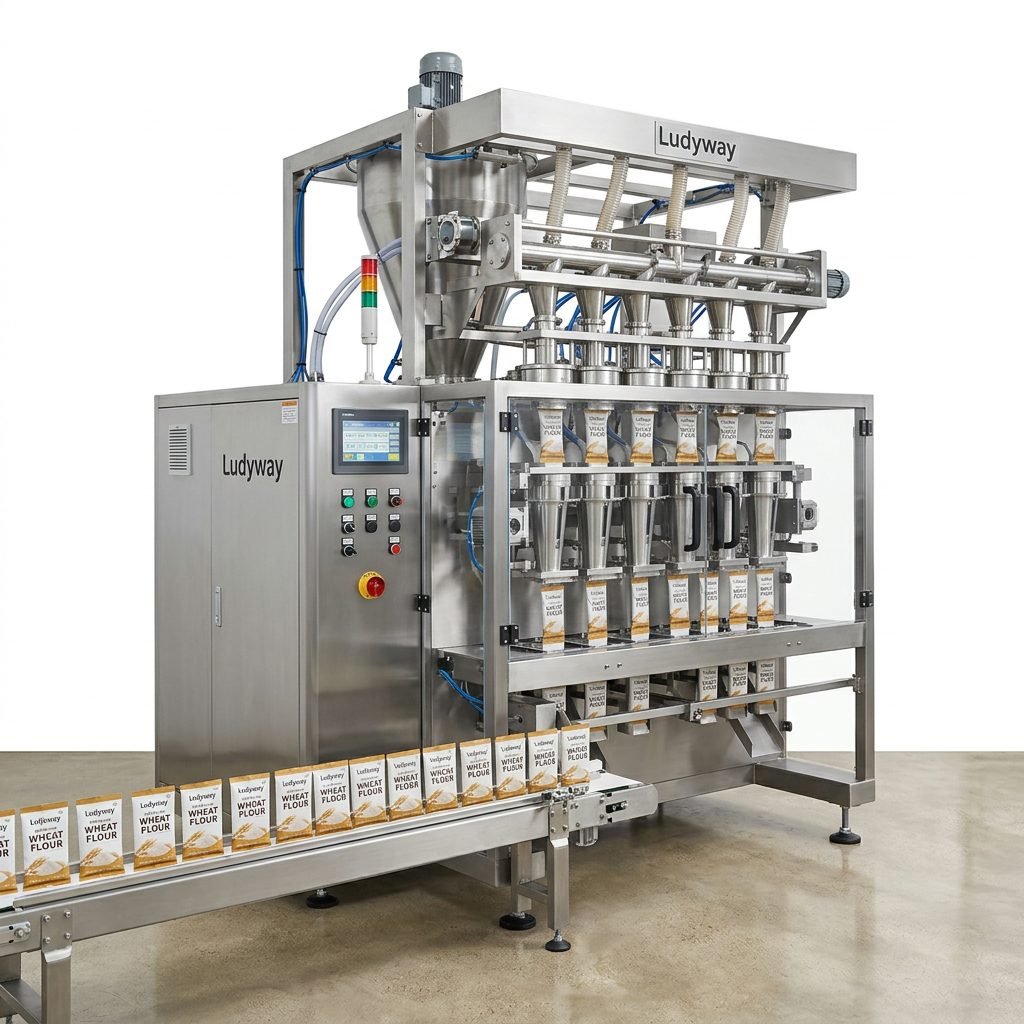
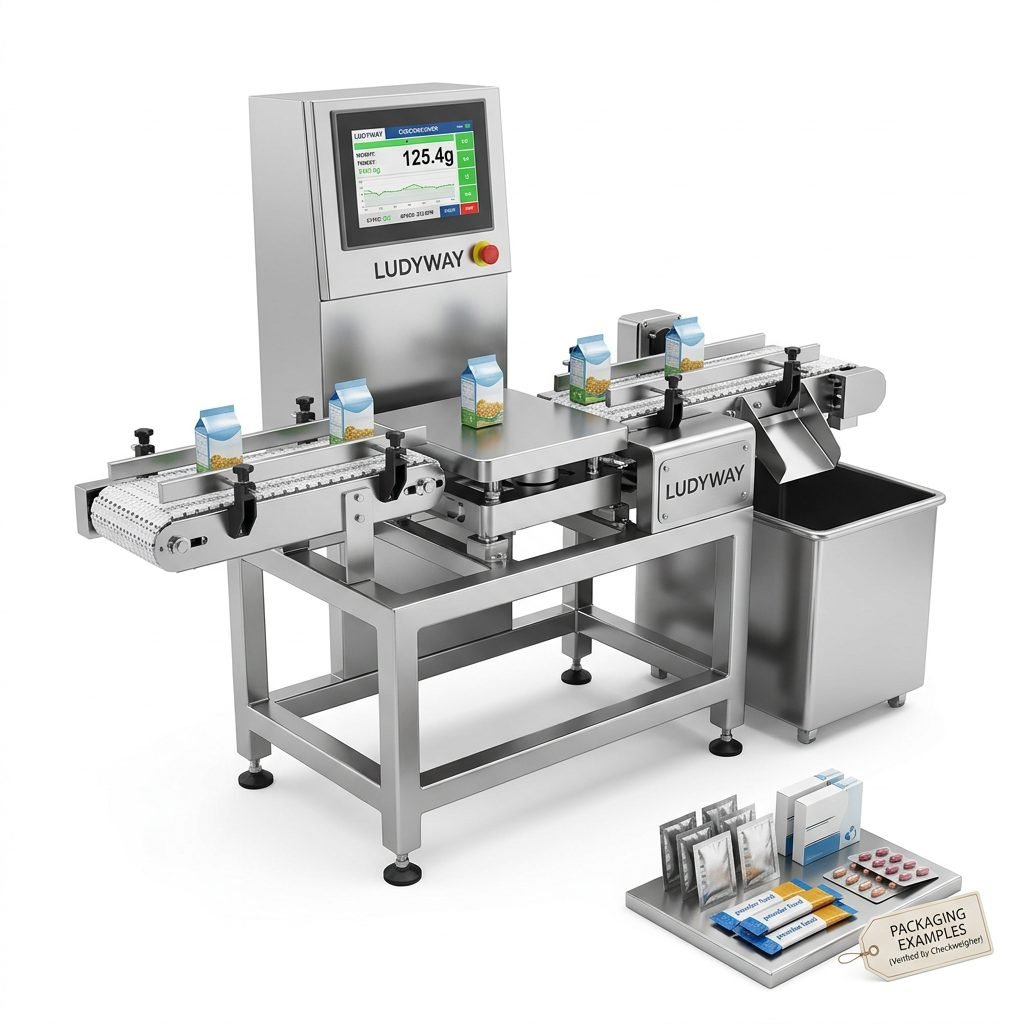
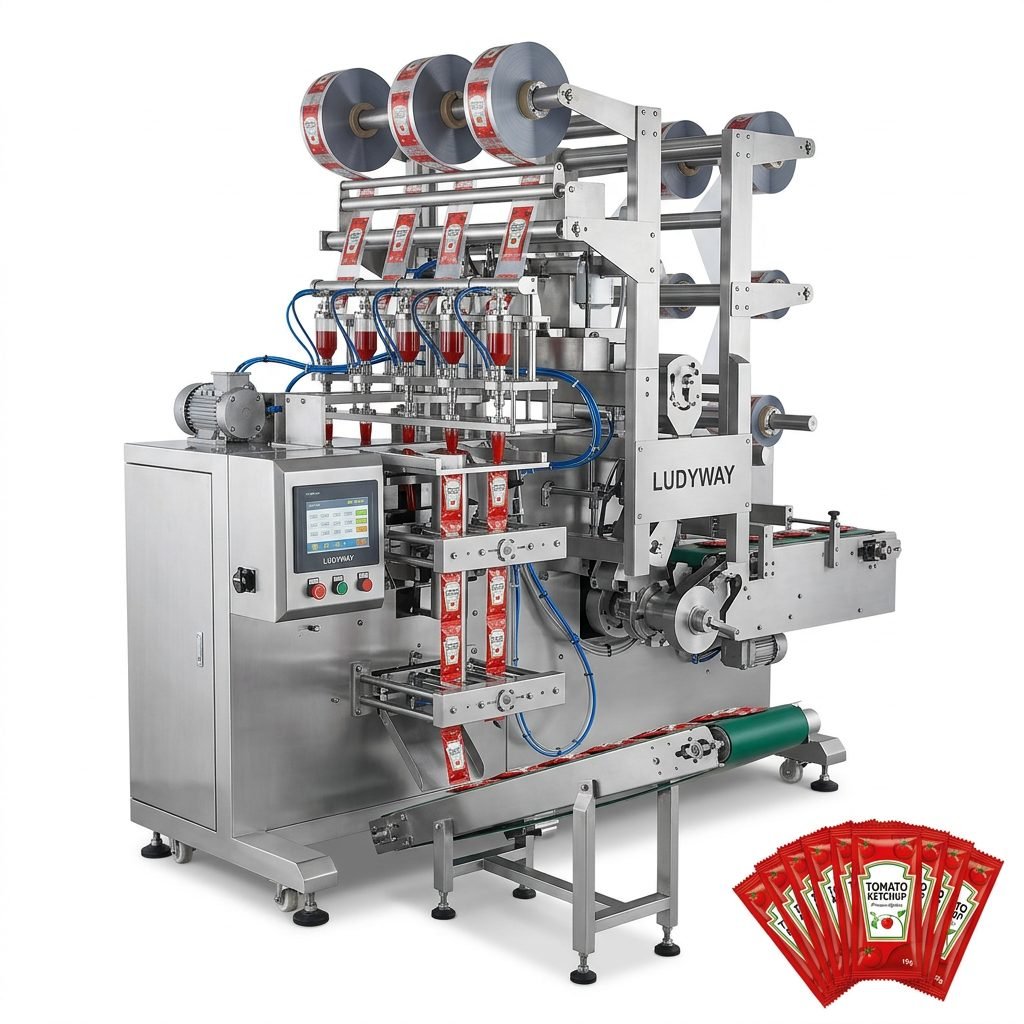
Standard-Compliant Food Packaging Equipment
Engineered with 316L sanitary contact parts, servo-driven precision dosing, and international CE/FDA certification.
Online Quality Inspection & Contamination Prevention Standards
Packaging machine conformity extends far beyond physical housing. Under modern Hazard Analysis Critical Control Point (HACCP) frameworks, automated packaging machinery must incorporate integrated online inspection mechanisms to detect deviations before products leave the factory floor.
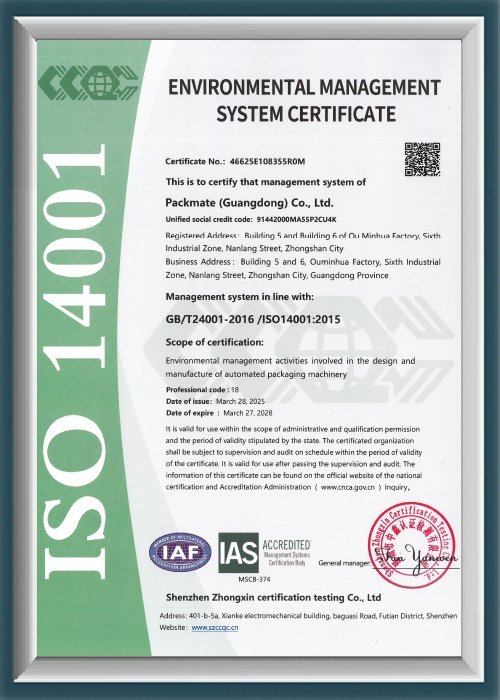
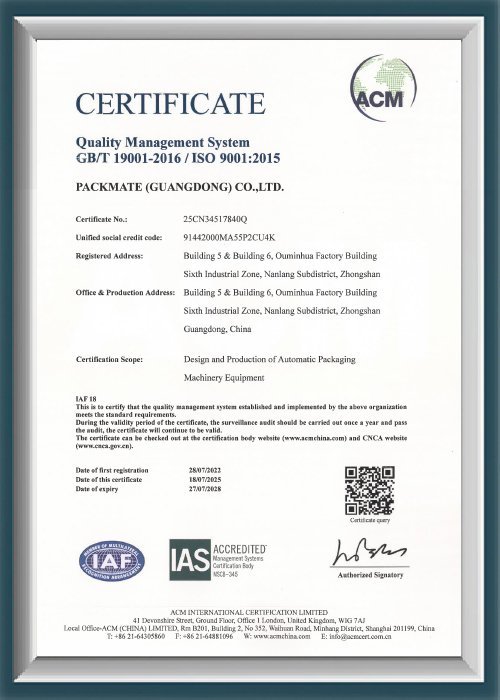
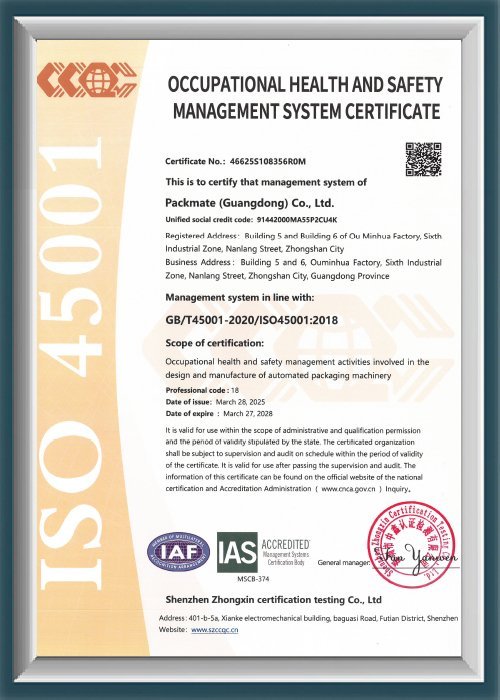
Verified Compliance & Engineering Credentials
Our 20,000㎡ manufacturing hub operates under strict ISO 9001 quality systems and CE conformity assessments.
Worldwide Packaging Industry Presence
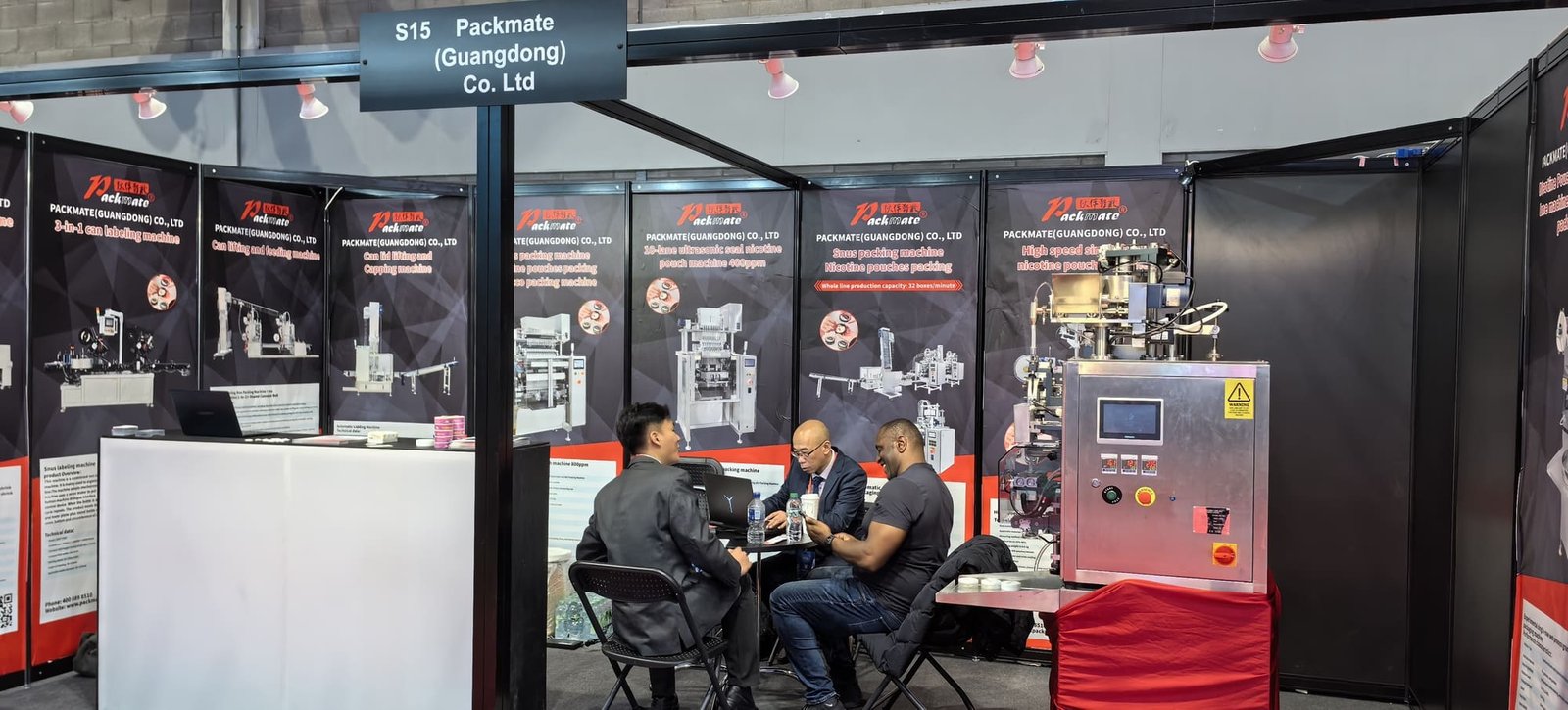
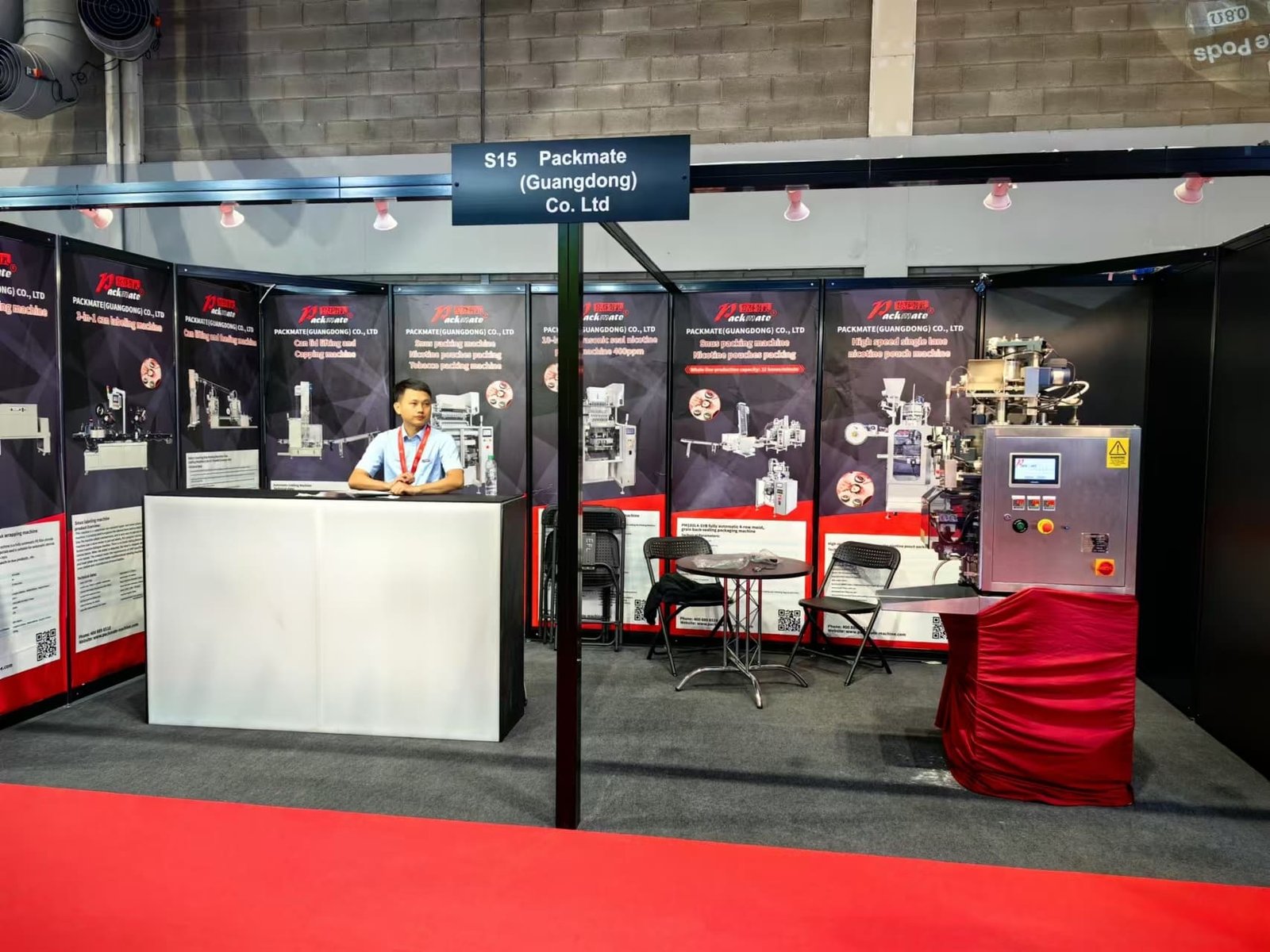
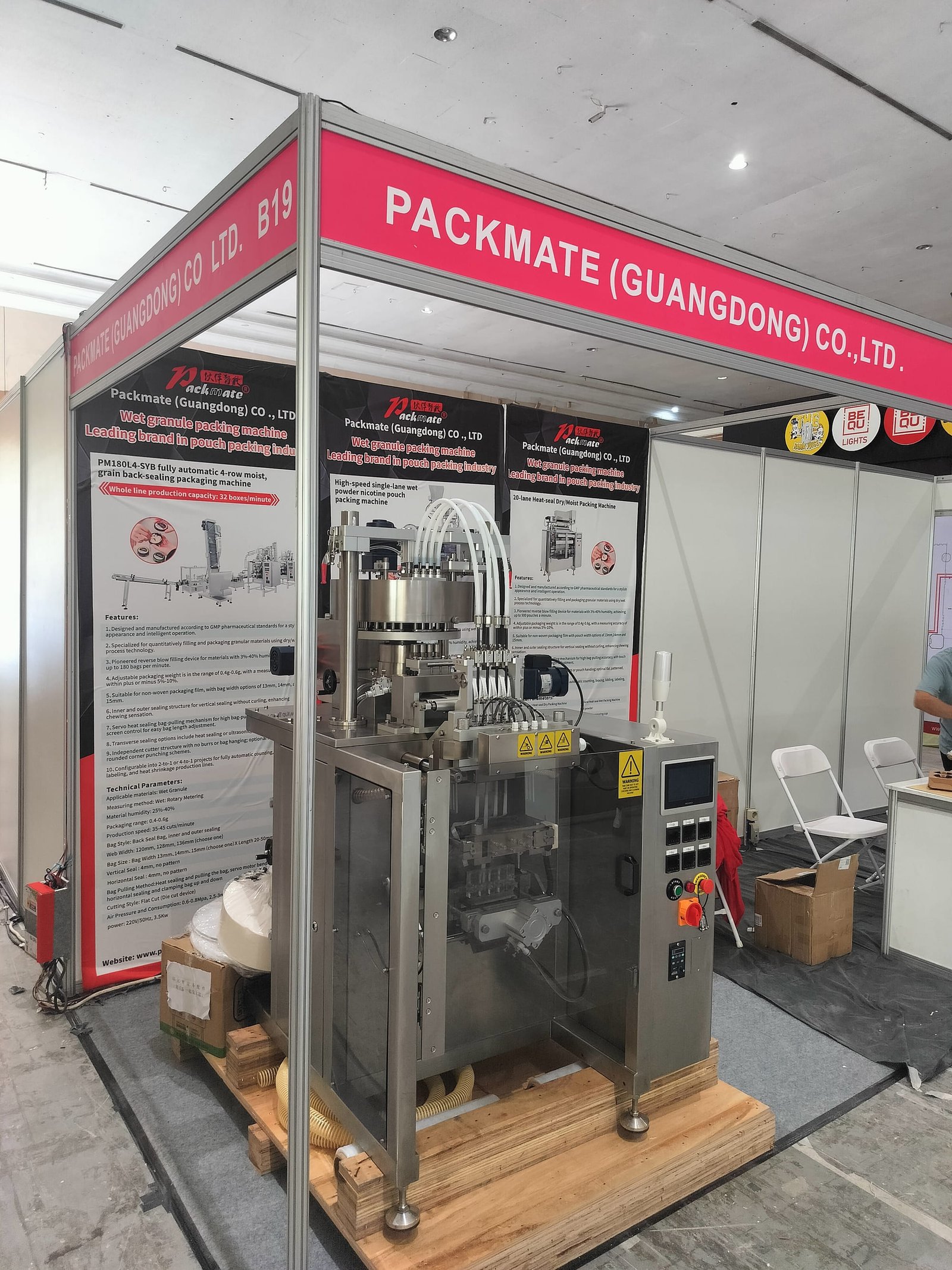
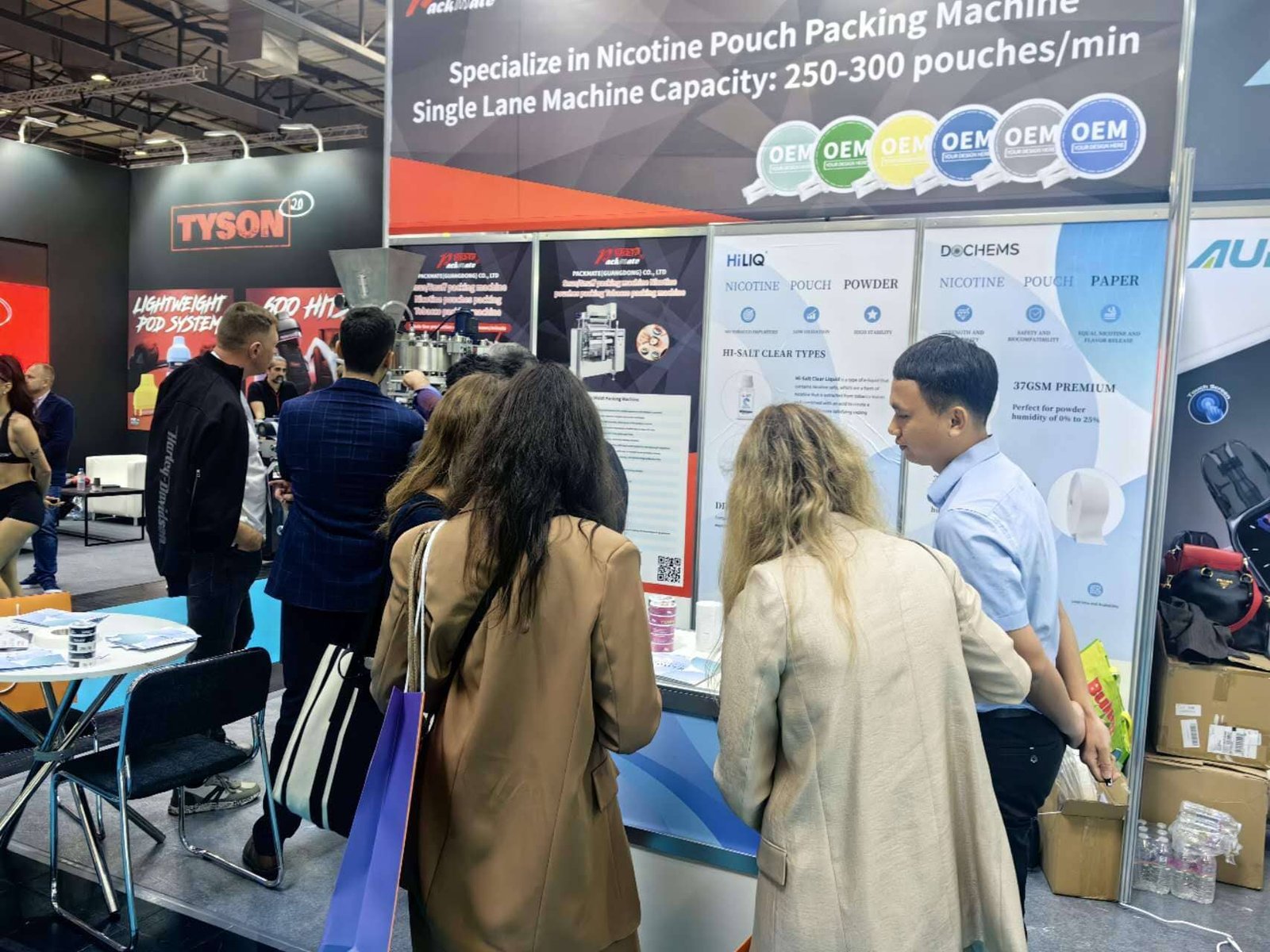
Showcasing state-of-the-art multi-lane stick pack and sachet packaging equipment across international food processing exhibitions.
Frequently Asked Questions
Essential insights regarding compliance testing, international standards, and machinery customization.
AISI 316L contains 2-3% molybdenum and lower carbon content than 304, giving it significantly higher resistance to pitting corrosion from chlorides, acidic foods (such as tomato sauce, citrus juices, and dressings), and aggressive sanitizing chemicals.
Standard commissioning requires a full qualification package comprising Design Qualification (DQ), Installation Qualification (IQ), Operational Qualification (OQ), and Performance Qualification (PQ), alongside material test certificates (MTRs 3.1) for all product contact metals.
CIP-compliant food packaging machines feature hygienic fluid circuits without dead legs, self-draining piping pitched at a minimum 1% incline, and motorized rotary spray balls that ensure turbulent chemical rinse coverage without dismantling machine components.
Equipment exported globally must adhere to IEC 60204-1 for general electrical safety, UL 508A for industrial control panels in North America, and CE low-voltage and EMC directives, ensuring electromagnetic compatibility and personnel grounding safety.
Upgrade Your Food Packaging Line to Global Compliance
Partner with Ludyway Machinery for turn-key multi-lane stick pack, sachet, and pouch packaging solutions designed to surpass worldwide FDA, CE, and EHEDG standards.
