
Why Is Packaging Machine Sealing Not Firm? Causes & Industrial Fixes
Discover why automatic packaging machines produce weak, peeling, or leaky seals. Learn the physics of heat sealing, diagnostic workflows for temperature, pressure, and dwell balance, film seal layer compatibility, and zero-defect calibration strategies for vertical form-fill-seal (VFFS), sachet, and stick pack machinery.
The Core Equation of Packaging Integrity
In flexible packaging, seal integrity relies on polymer chain interdiffusion across film contact interfaces. If an automated packaging machine delivers weak, channel-leaking, or burst seals, the failure stems from a breakdown in the Four Pillars of Heat Sealing.
1. Temperature (T)
Heat must bring the sealant layer (e.g., PE, CPP, Surlyn) to its viscous melting point without degrading the outer barrier carrier layer (PET, BOPP, Foil).
2. Pressure (P)
Mechanical sealing jaw force forces molten polymer flows into microscopic surface gaps, evacuating air pockets and leveling film thickness variations.
3. Dwell Time (t)
Contact duration must allow thermal conduction from the heated metal jaws through the composite film to achieve total polymer entanglement.
4. Cooling / Hot Tack
The freshly bonded seam must possess sufficient hot tack strength to withstand instant product load dropping before complete crystalline cooling.
7 Critical Factors Causing Unfirm Packaging Seals
When packaging machinery operators encounter delamination, pinhole leaks, channel formation, or brittle split seams, diagnosis requires evaluating electro-mechanical settings and material thermodynamics.
Temperature Deviation: PID Thermal Drift & Underheating
Thermal conduction is the catalyst for molecular binding. If the sealing bar temperature is below the sealant polymer’s Seal Initiation Temperature (SIT), the polymer chains cannot cross the film boundary. Conversely, extreme overheating degrades polymer backbone structures, causing severe film thinning and brittle edges.
Insufficient or Uneven Sealing Jaw Pressure Distribution
Without uniform clamping force across the entire transverse or longitudinal sealing line, microscopic air channels remain unsealed. In multi-lane stick pack and sachet systems, uneven pressure causes outer lanes to seal firmly while inner lanes suffer from weak seams and capillary leaks.
Inadequate Dwell Time at High Packaging Speeds
As line speeds increase to meet production targets, the contact time between sealing jaws and moving film shortens. If dwell time drops below thermal equilibrium threshold, heat energy penetrates only the external layer, leaving the internal sealant layer cold and unbonded.
Product Contamination & Dust in the Seal Zone
When packaging fine powders (whey protein, milk powder, chemical fertilizers) or viscous liquids (sauces, oils, serums), product splashing or electrostatic dusting in the sealing area creates a physical barrier. The molten plastic captures powder grains or fluid droplets instead of adhering to itself.
Laminate Substrate Incompatibility & Corona Decay
Not all flexible films seal identically. Using multi-layer structures (e.g., PET/AL/PE vs. BOPP/VMCPP) requires dedicated sealing temperature windows. Furthermore, aged film rolls with decayed corona treatment or excessive slip additive migration (erucamide/oleamide) repel thermal bonding.
Worn, Carbonized, or Misaligned Sealing Serrations
Sealing jaws feature precision knurling patterns (grid, vertical stripes, diamond cross-hatch) designed to crimp the film. Over millions of cycles, melted film residue turns to carbonized crust on the teeth, acting as a thermal insulator and blunting pressure points.
Insufficient Cooling Phase & Hot Tack Rupture
When dense or heavy products immediately drop into a newly formed bottom pouch before the molten seal cools below its recrystallization temperature, hydrostatic pressure peels the hot seam apart.
Symptom-Cause-Correction Matrix
Use this technical quick-reference guide during daily machine calibration to rapidly identify seal faults and apply mechanical corrections on the line.
| Visual Symptom | Probable Failure Point | Diagnostic Method | Corrective Action |
|---|---|---|---|
| Easy Peeling Seams | Low sealing temp; short dwell time; cold heater core. | Measure jaw face with calibrated surface pyrometer. | Solution Increase PID setpoint by 5-10°C; verify thermocouple resistance; slow down line speed. |
| Wrinkled / Melted Edge | Excessive heat; unbalanced film web tension; high drag. | Visual inspection of carrier film shrinkage & burn-through. | Solution Lower temperature; clean teflon coating; align forming collar pull belts. |
| Pinhole Leaks at Gussets | Uneven pressure; improper jaw serration depth. | Carbon paper pressure transfer impression test. | Solution Re-align jaw parallelism with feeler gauges; install custom stepped silicone jaws. |
| Micro-Channel Voids | Dust, powder, or liquid trapped in the sealing area. | Inspect seal under optical magnifier for foreign particles. | Solution Adjust auger timing; add vacuum exhaust hoods; incorporate nitrogen purge nozzles. |
| Hot Tear After Dropping | Weak hot tack strength; lack of seal cooling phase. | Check seal rupture timing immediately after cut-off. | Solution Switch to high-hot-tack mPE film layer; enable cooling air jet / chill bar cycles. |
Standard Sealing Calibration Workflow
Follow this 6-step diagnostic protocol to calibrate heat-sealing parameters on your vertical, horizontal, or multi-lane pouch packaging lines.
Inspect Jaw Planarity
Insert pressure-sensitive film (e.g., Fujifilm Prescale) or carbon paper between cold sealing jaws. Clamp under standard pneumatic pressure to verify uniform color transfer across all lanes without cold spots.
Surface Thermal Mapping
Use an external contact pyrometer to measure temperature at multiple points across the front and rear jaws. Confirm that thermal variance across multi-lane dies remains within ±2.5°C.
Establish SIT Baseline
Run manual sample cycles starting 20°C below expected Seal Initiation Temperature. Increment in 3°C steps until polymer fusion occurs, recording the exact point of destructible bonding.
Synchronize Fill Timing
Calibrate dosing cutoff triggers on your Food Packaging Machines or auger fillers. Ensure products settle completely 150ms before horizontal jaws commence closing stroke.
Tension Web Alignment
Check roll brake tension, edge guide sensors, and former collar angles. Skewed film feeding generates asymmetric lateral stress, creating wrinkling and micro-channels along vertical seams.
Perform Destructive Tests
Conduct ASTM F88 peel tests and ASTM D3078 vacuum bubble emission tests. Finished packages should yield substrate tearing before joint delamination occurs.
High-Precision Intelligent Packaging Systems
Ludyway machinery integrates independent multi-zone PID thermal controls, high-rigidity servo sealing jaws, and synchronized gas flush systems to eliminate seal failure across powder, granule, and liquid lines.
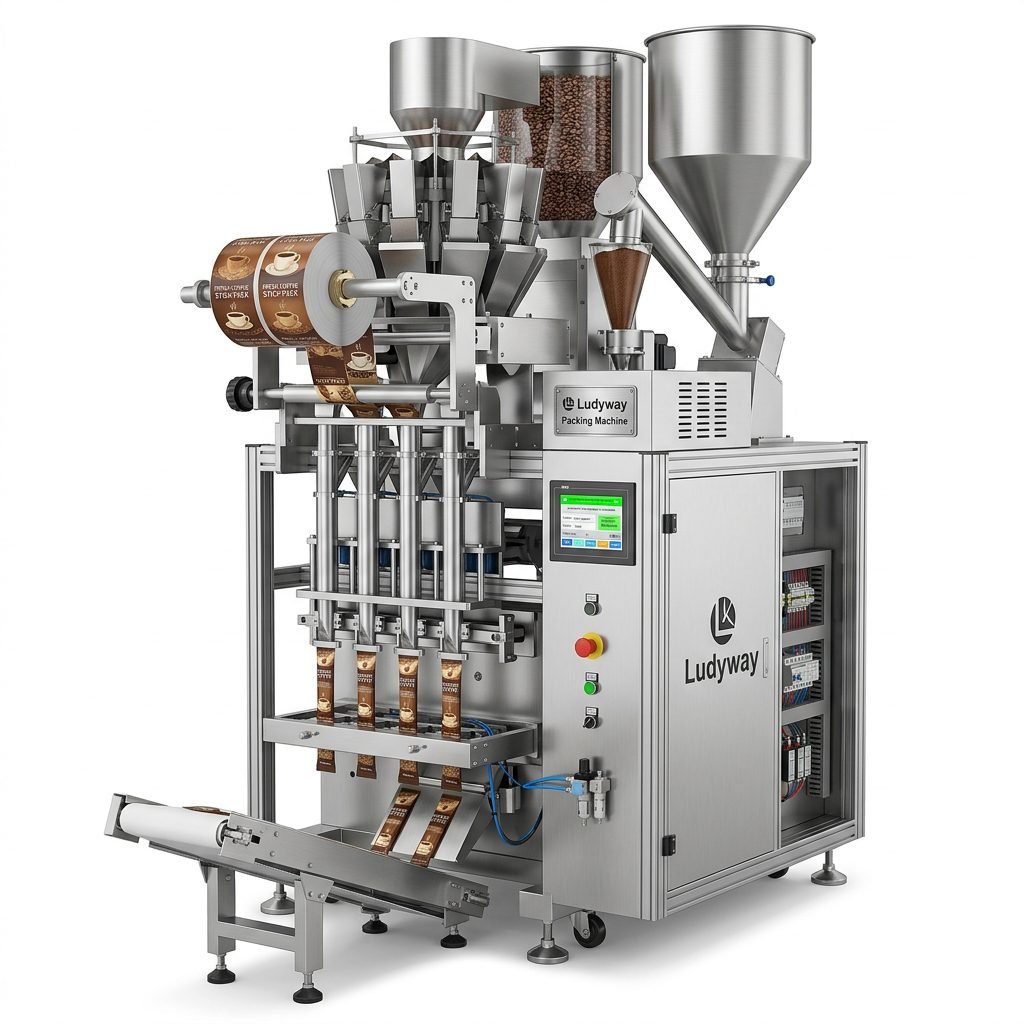
Automatic Multi-Lane Coffee Bean Packaging Machine
View Machine Specs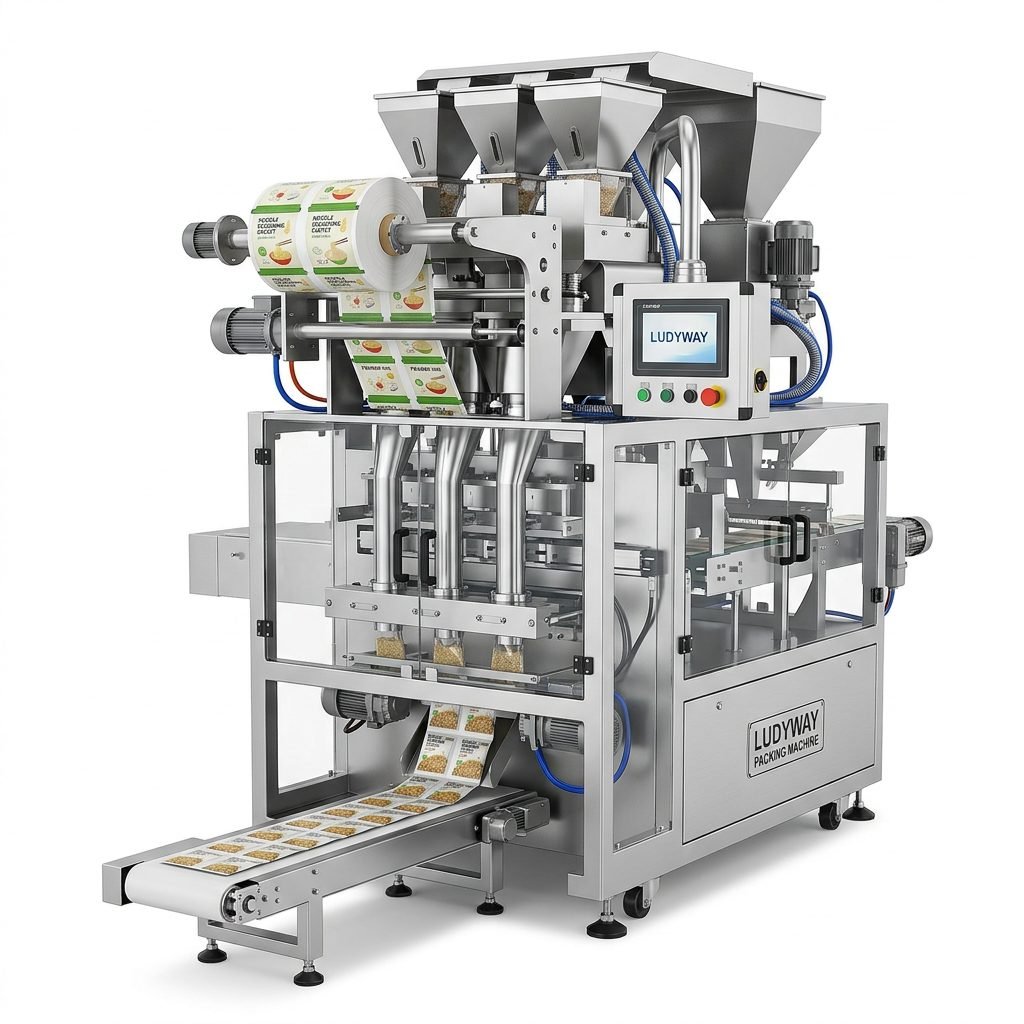
Instant Noodle Seasoning Packaging Machine for Sachets
View Machine Specs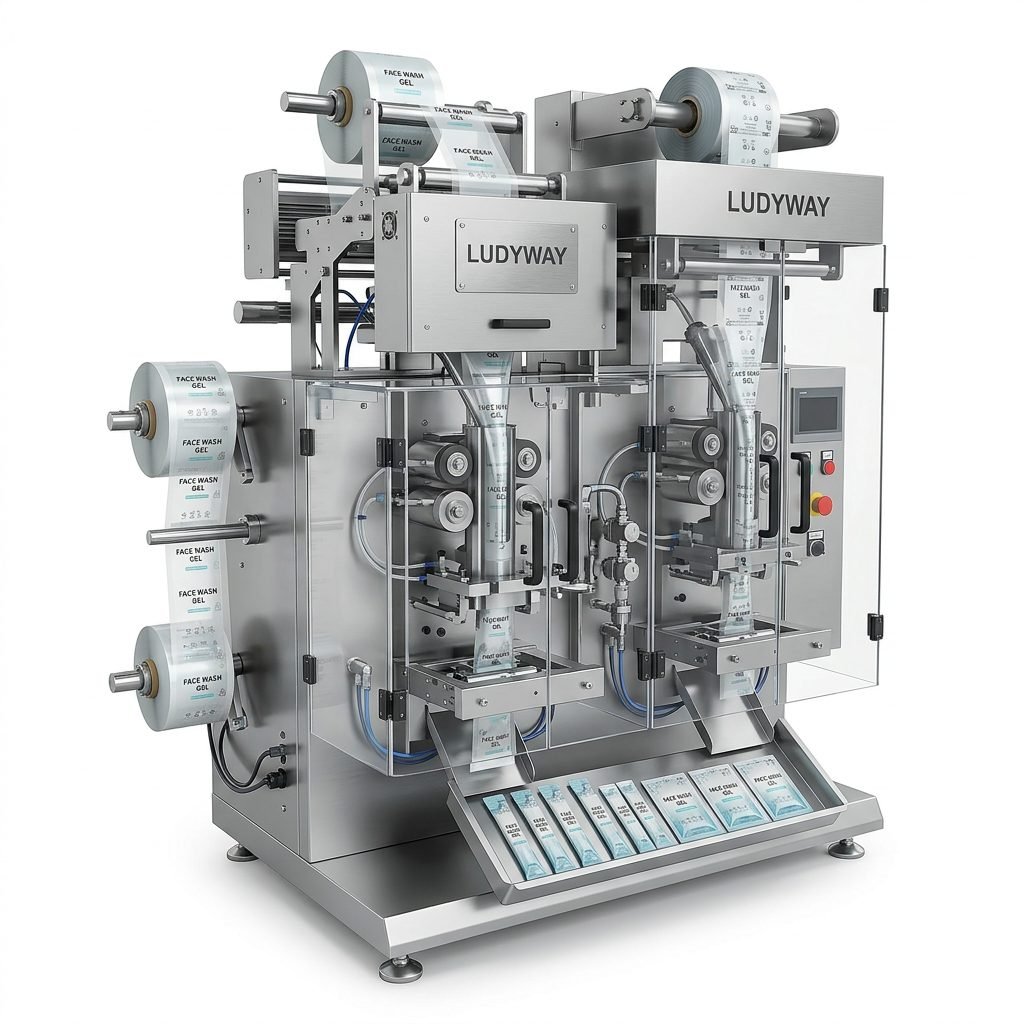
Automatic Face Wash Sachet & Stick Pack Filling Machine
View Machine Specs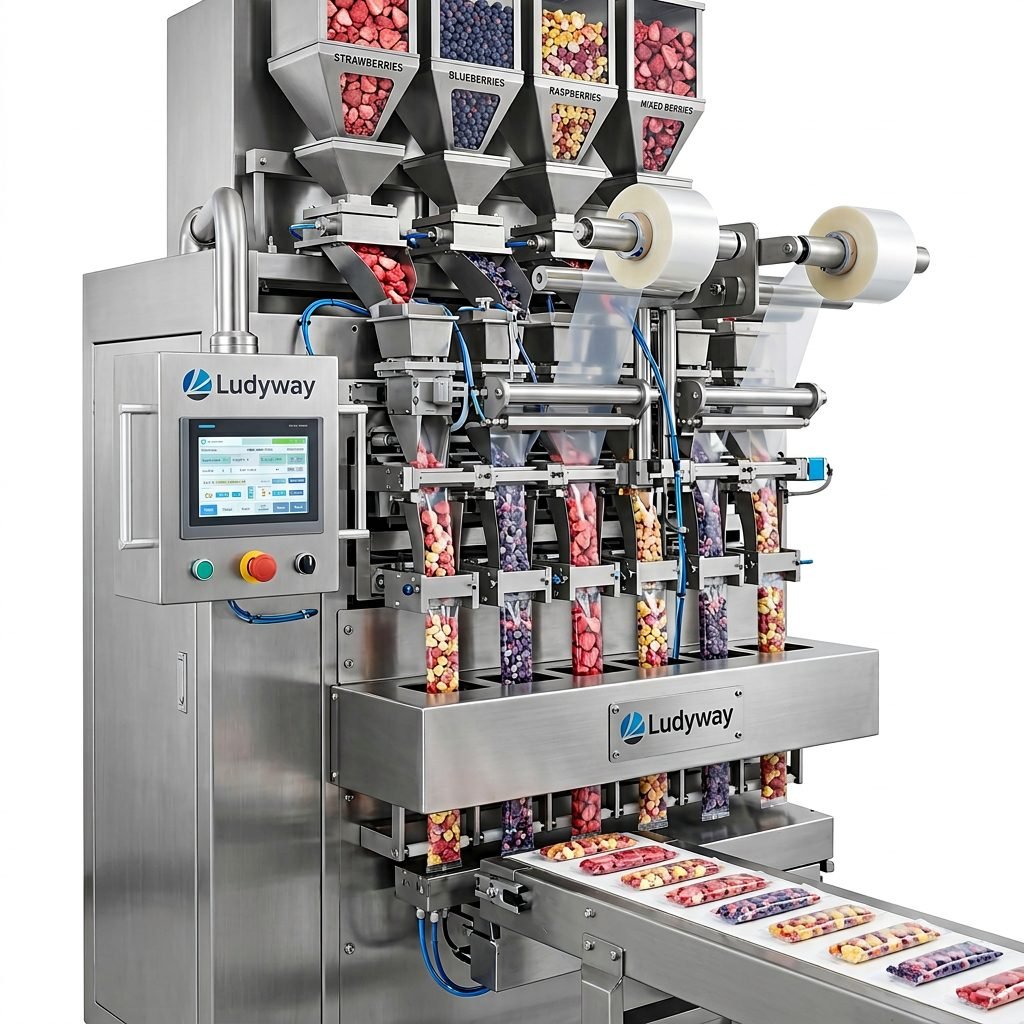
Freeze-Dried Fruit Stick Pack Machine (Multi-Lane)
View Machine Specs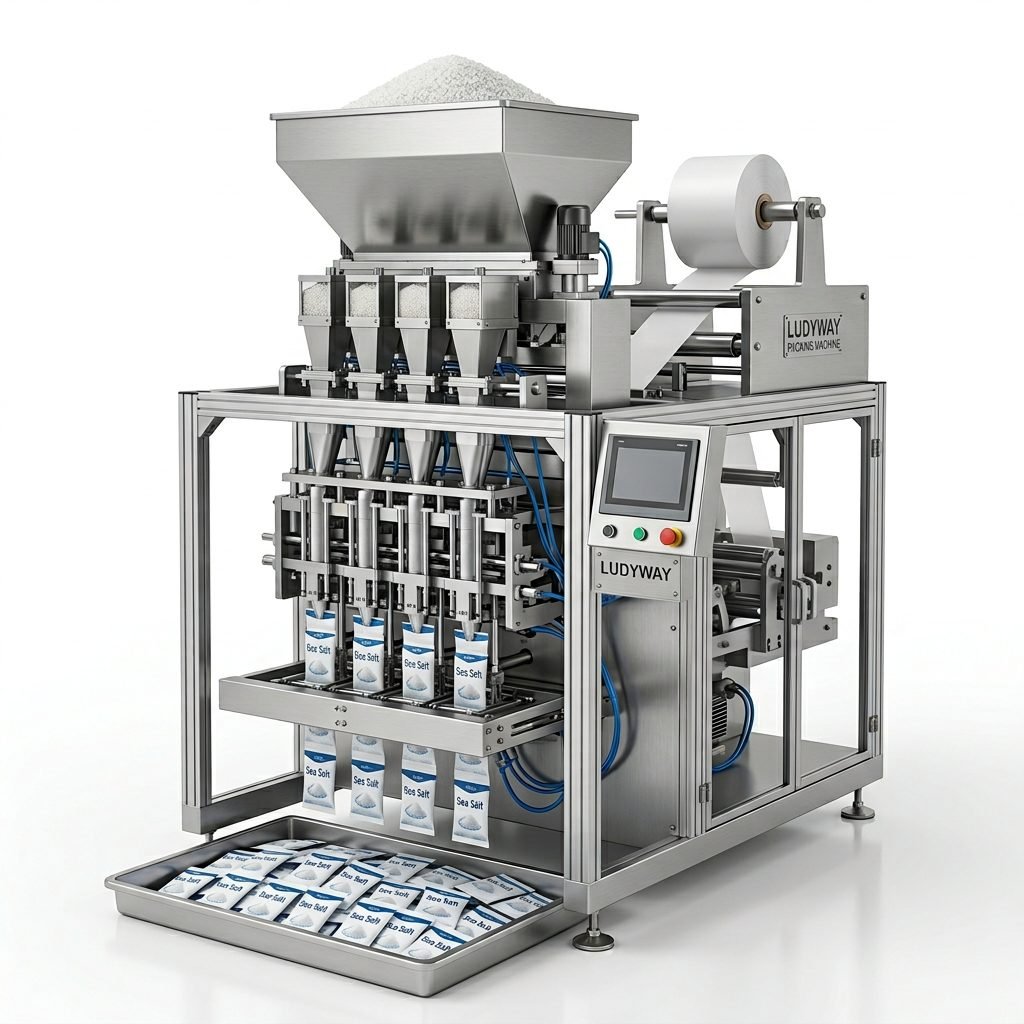
Sea Salt Granule Powder Sachet Packaging Machine
View Machine Specs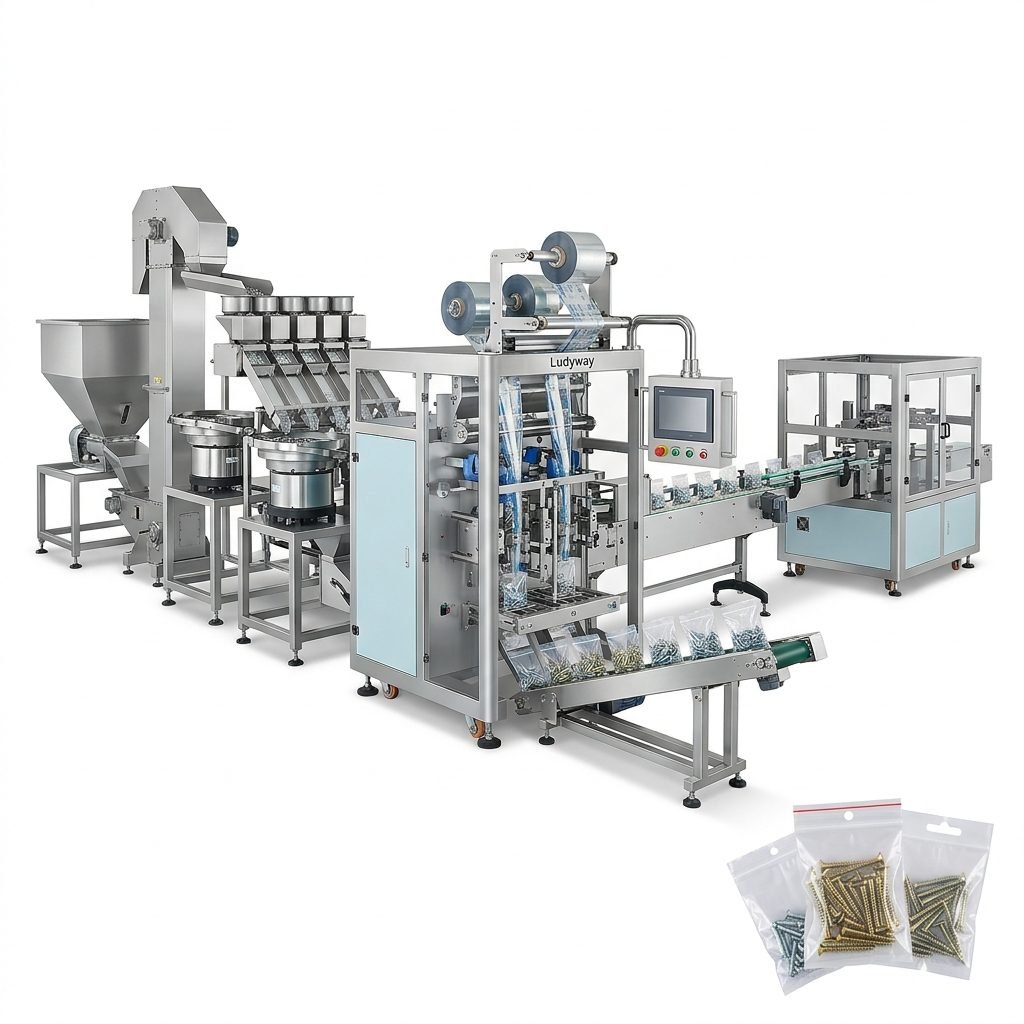
Automated Multi-Lane High-Speed Packaging Lines
View Machine Specs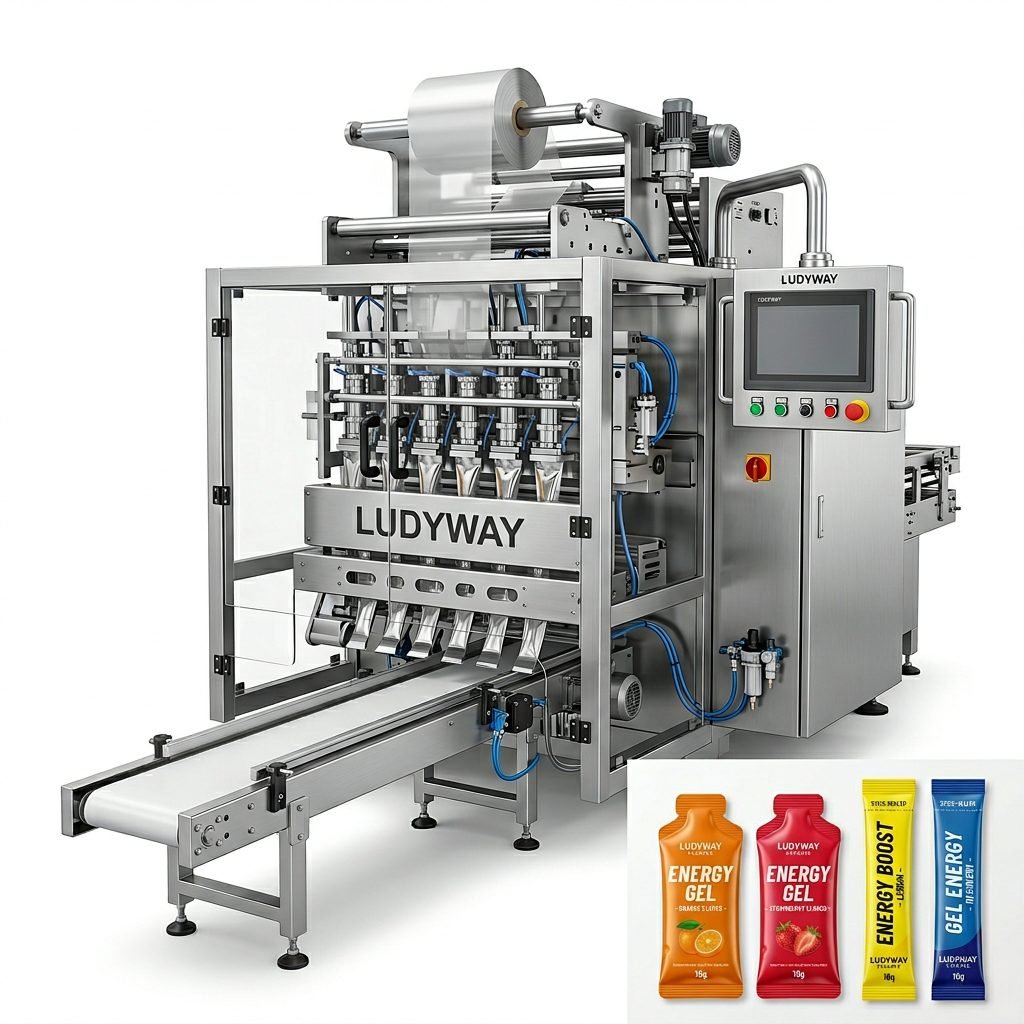
High-Speed Energy Gel Sachet & Stick Pack Machine
View Machine Specs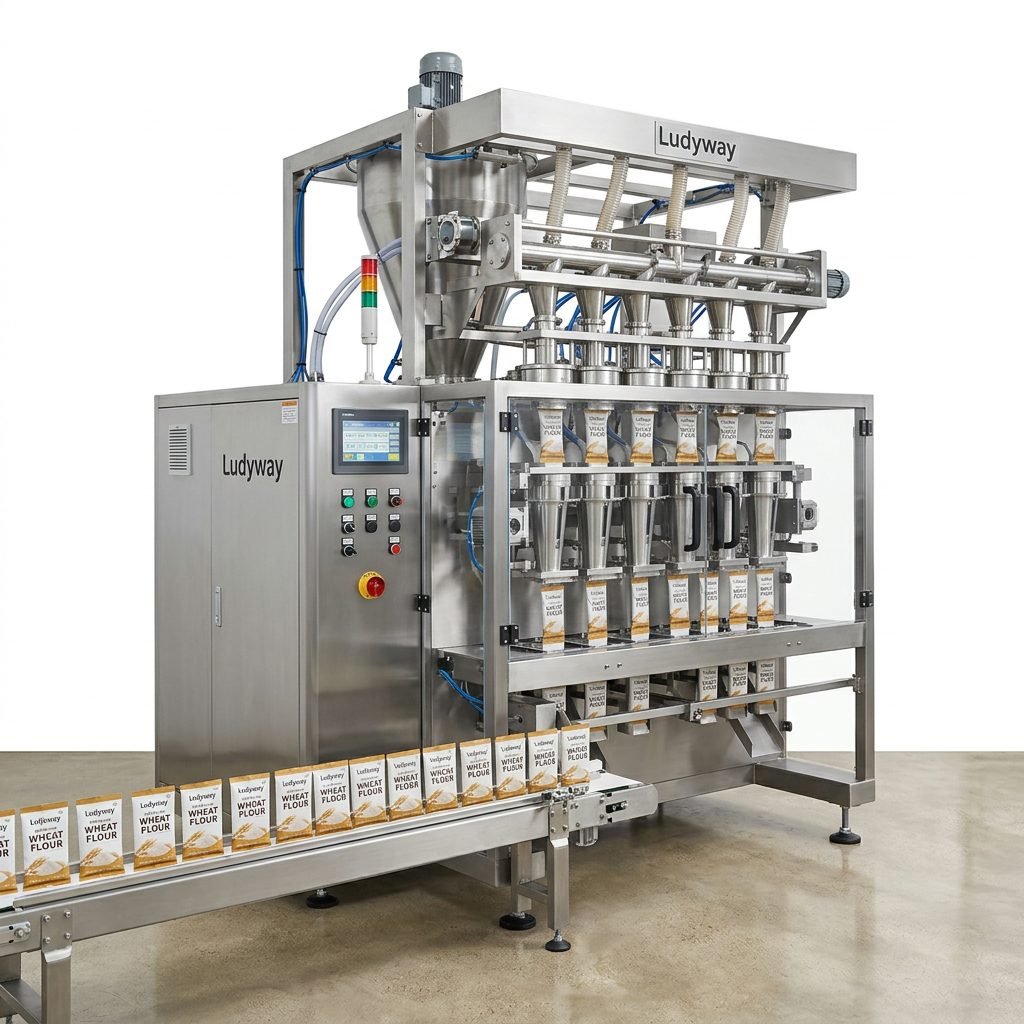
Wheat Flour Sachet Packaging Machine (Multi-Lane)
View Machine SpecsPreventative Sealing Maintenance Schedule
Strict preventative maintenance protocols prevent seal failure, reduce packaging scrap rates, and protect downstream brand reputation in food, pharma, and chemical industries.
- Clean sealing jaw teeth with brass brushes while hot; eliminate polymer residue.
- Inspect Teflon tape coverings on sealing elements for burns or tears.
- Perform dye penetration spot-tests on 5 random packages per lane.
- Check heating element electrical resistance against manufacturer specifications.
- Inspect silicone rubber pressure cushions for compression set and surface gouges.
- Lubricate linear guide shafts and toggle linkages on pneumatic cylinders.
- Full surface pyrometer thermal mapping across all transverse and vertical jaws.
- Calibrate PLC temperature sensor input cards with precision signal calibrators.
- Examine cutter blades and anvil gaps to prevent jagged seal tears.
- Replace entire set of thermocouple probes and high-density heater cartridges.
- Re-machine or replace knurled sealing bar dies to restore crisp serrations.
- Full audit by OEM engineers to optimize parameters for new barrier film structures.
Frequently Asked Questions
Find answers to the most common packaging machine sealing and barrier integrity questions asked by production managers and process technicians.
Why does my machine seal firmly at low speeds but fail at higher speeds?
When operational speed increases, the sealing dwell time (contact duration) drops proportionally. The total thermal energy transferred into the film becomes insufficient to reach the sealant layer’s melting point. To fix this, elevate the temperature incrementally or install longer sealing jaw profiles designed for high-speed continuous operation.
What causes vertical seals to leak while horizontal seals are firm?
Vertical and horizontal seals use independent heating circuits and mechanical mechanisms. Vertical seals rely on continuous lap or fin seal friction pullers or heated belts. Common culprits include worn pull belts, uneven forming tube gap clearance, or misaligned lap-seal heaters along the forming tube.
How does powder entrapment in the seal area degrade seal quality?
Fine powders create an insulative physical separation between opposing polymer webs. The molten resin binds to the powder particles rather than cross-linking across the interface, leaving capillary tunnels. Installing dust extraction nozzles, optimizing auger funnel cutoff valves, and adding ionizer bars completely resolves this issue.
Can environmental room temperature affect packaging machine sealing?
Yes. In cold packaging facilities (such as frozen food or dairy processing plants), cold roll stock absorbs significant heat energy during the first milliseconds of jaw contact. Operators must calibrate higher setpoints to counteract convective heat loss and cold film thermal shock.
Precision Machinery Engineered by Ludyway
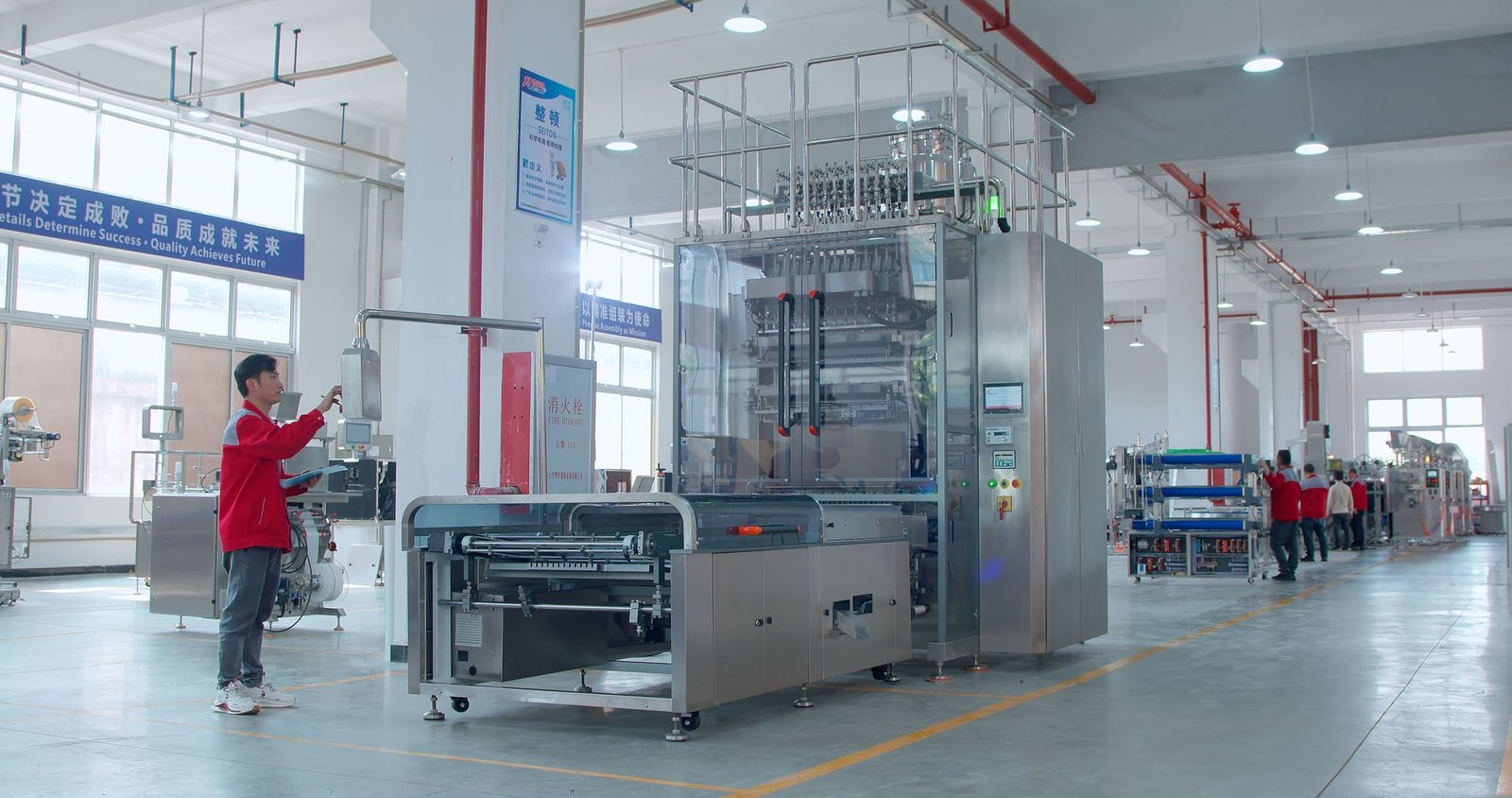
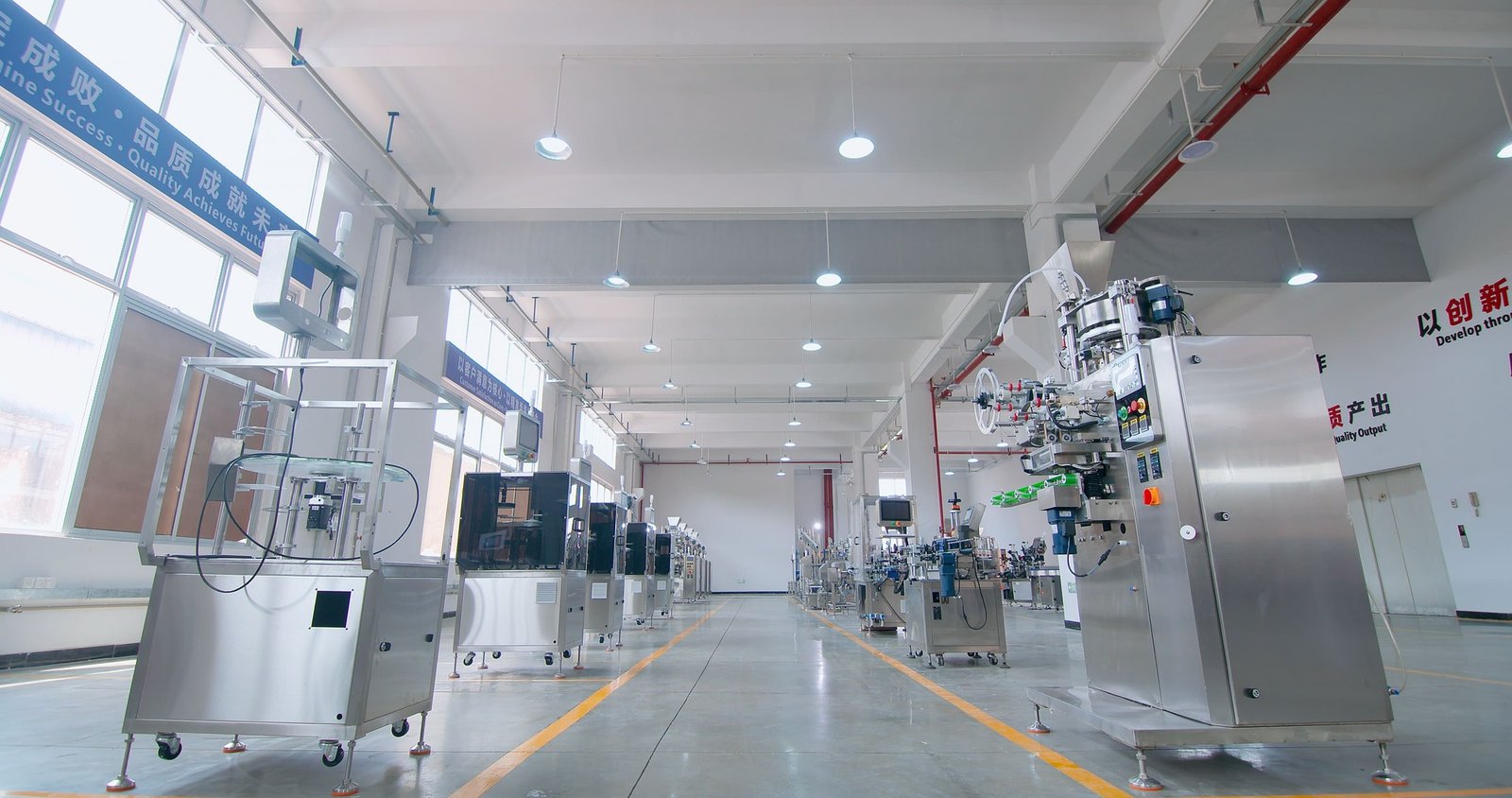
Ludyway is one of the largest packaging machine manufacturers in China, specializing in advanced packaging equipment and turnkey production solutions for the food, pharmaceutical, and health industries. With over 30 years of industry expertise, we deliver high-reliability systems for granule, powder, liquid, and pouch packaging applications.
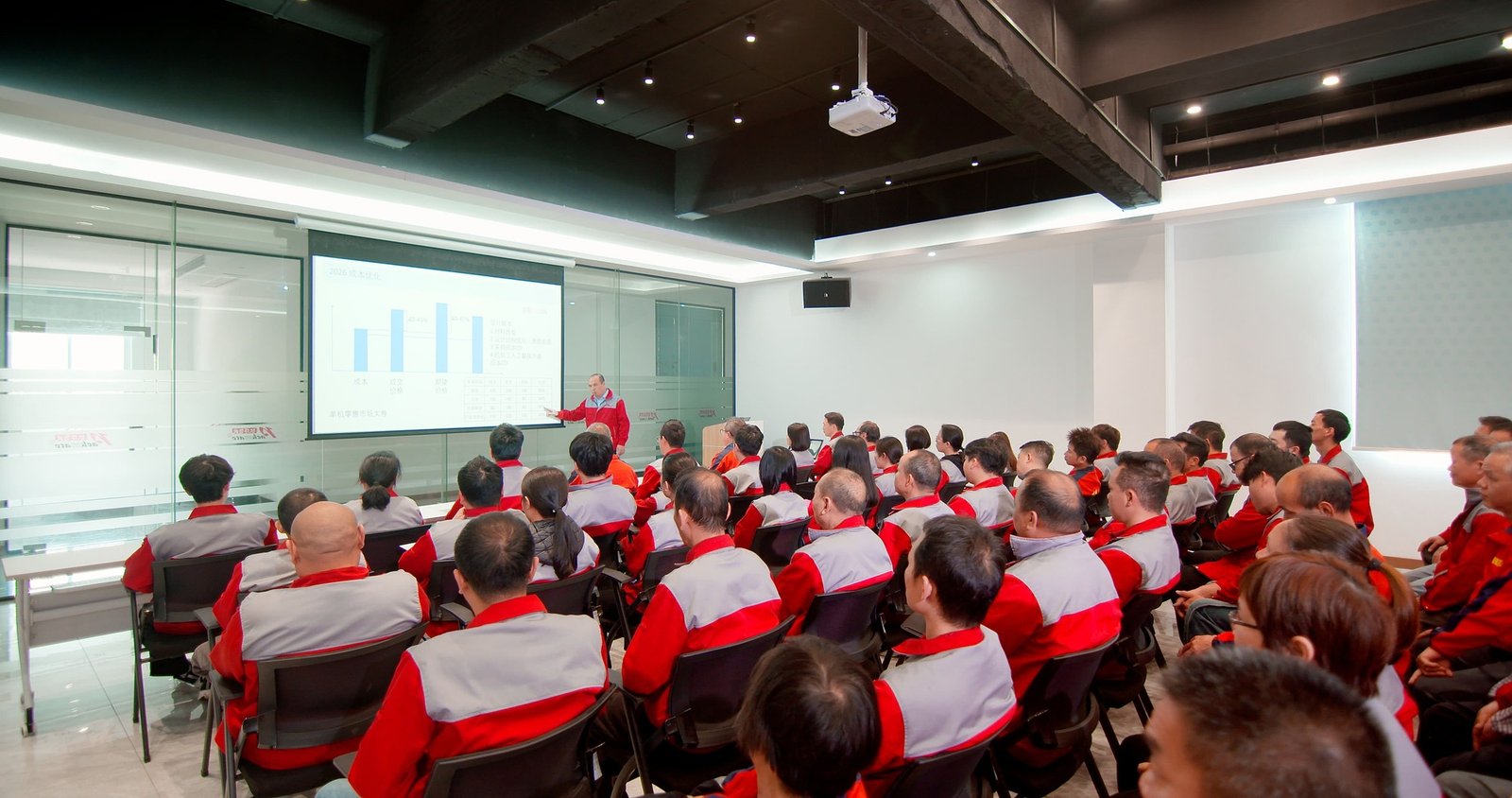
Operating out of a modern 20,000㎡ manufacturing facility with over 130 packaging specialists, Ludyway provides more than 50 intelligent machine models. Serving clients across 100+ countries, our mission is to eliminate packaging downtime and ensure zero-defect hermetic sealing integrity.

International Standards & Verified Excellence
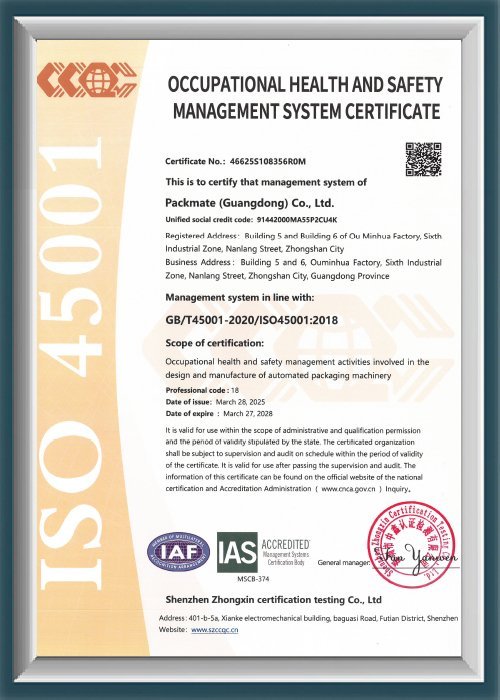
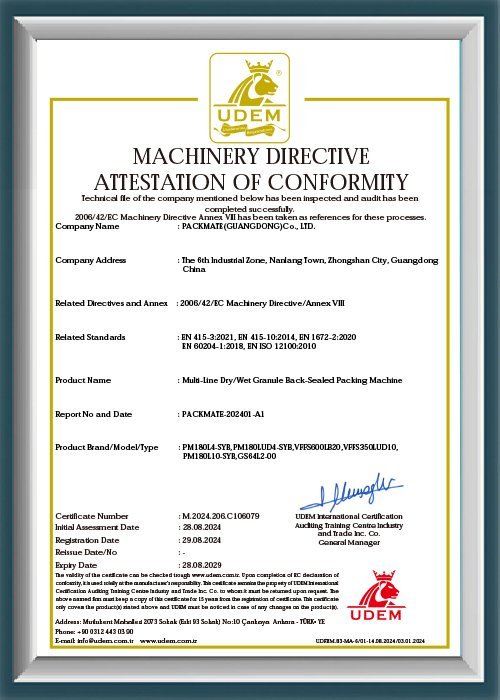
Ludyway packaging machines comply with stringent CE, ISO9001, and cGMP standards for hygienic operation, pharmaceutical cleanroom readiness, and long-term industrial reliability.










Struggling with Inconsistent Packaging Seals?
Send your sample films and products to the Ludyway testing laboratory for complimentary seal integrity analysis, peel-strength profiling, and customized packaging machinery recommendations.
