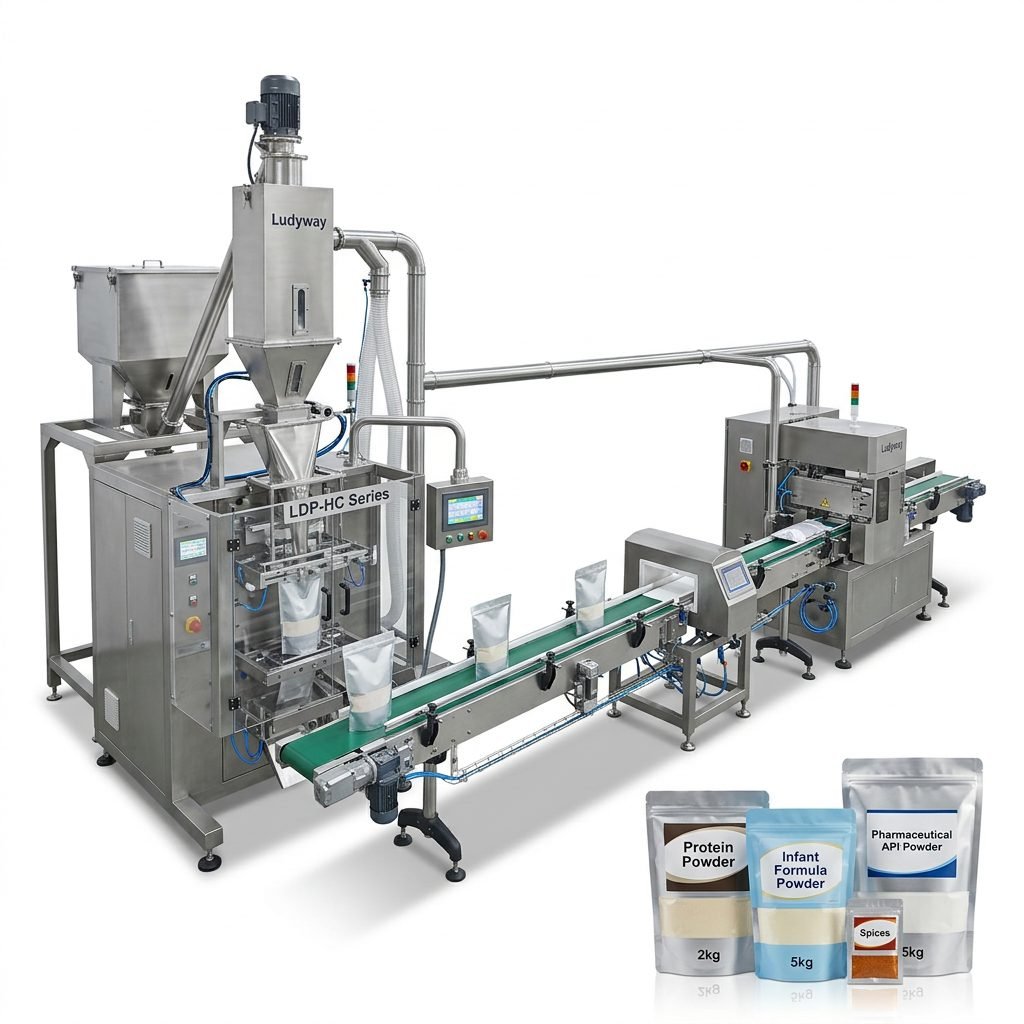
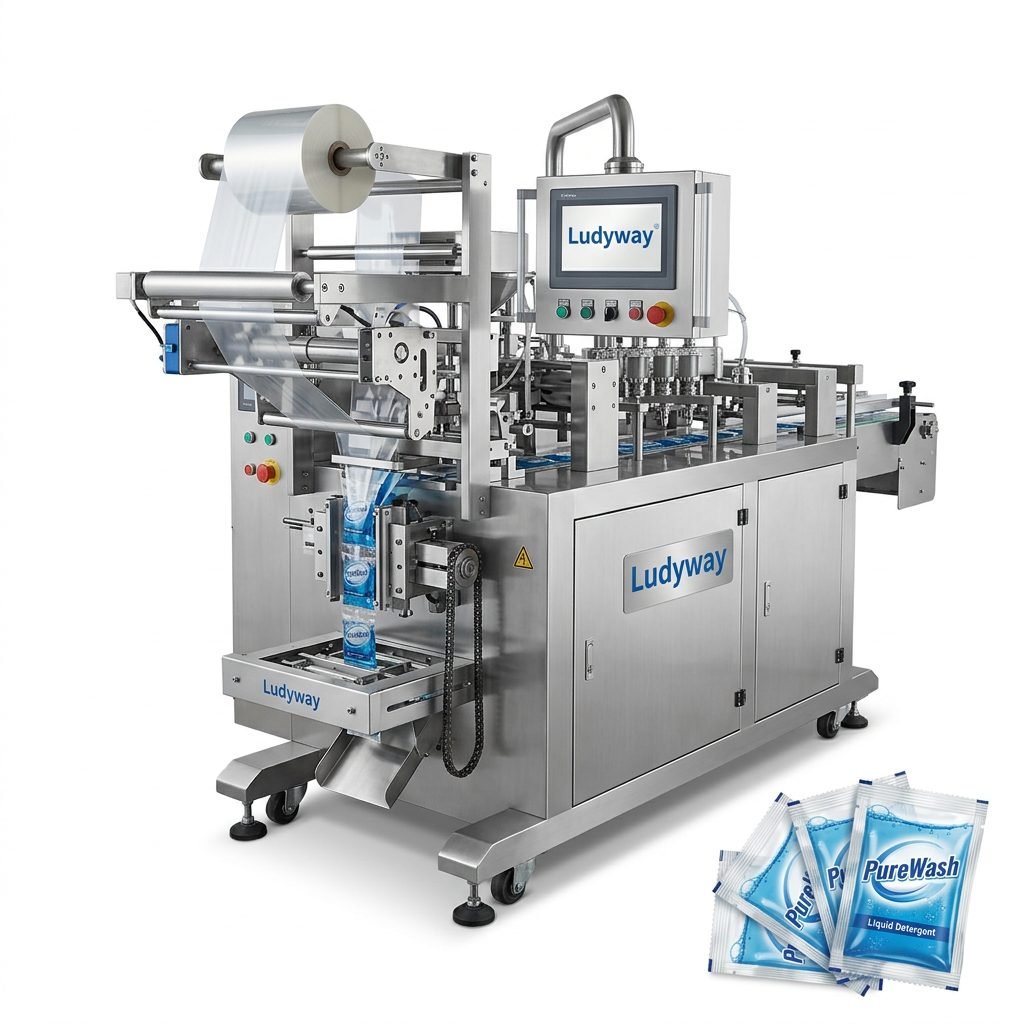
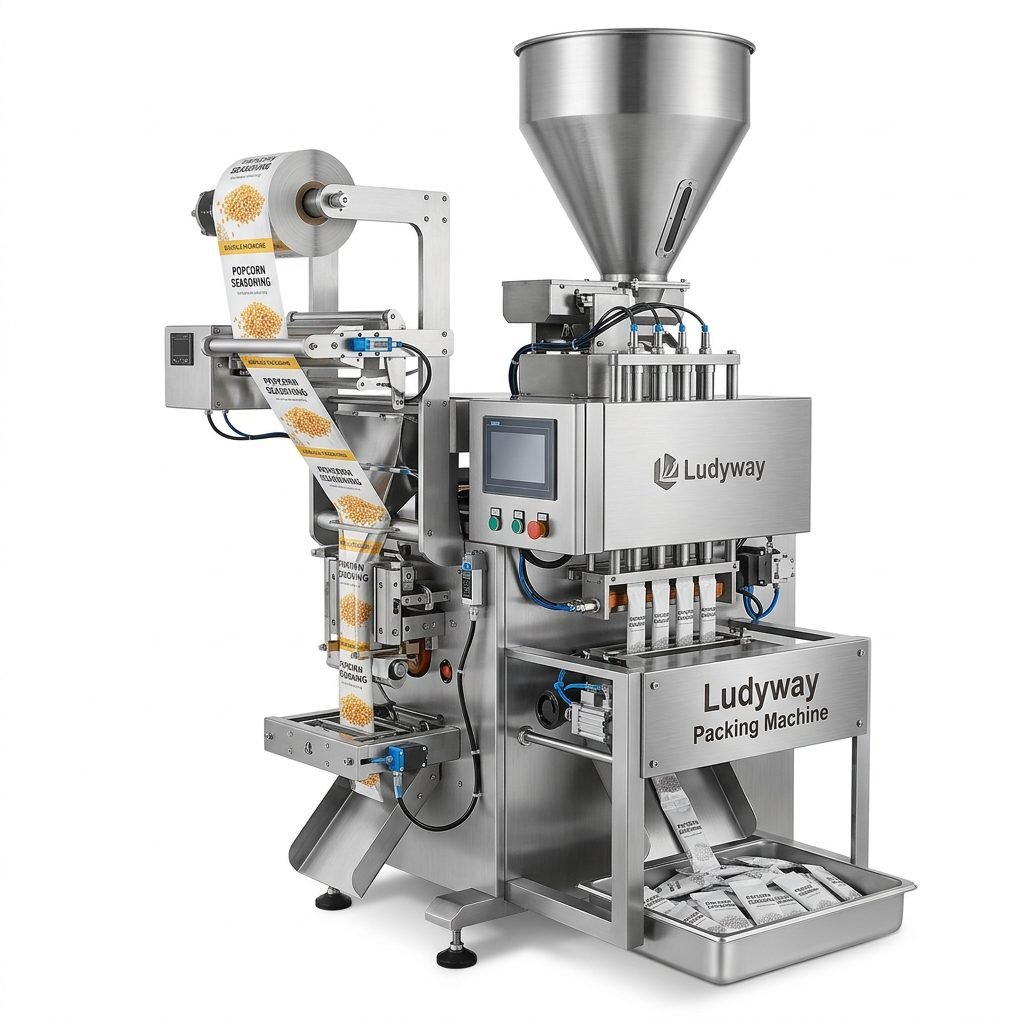
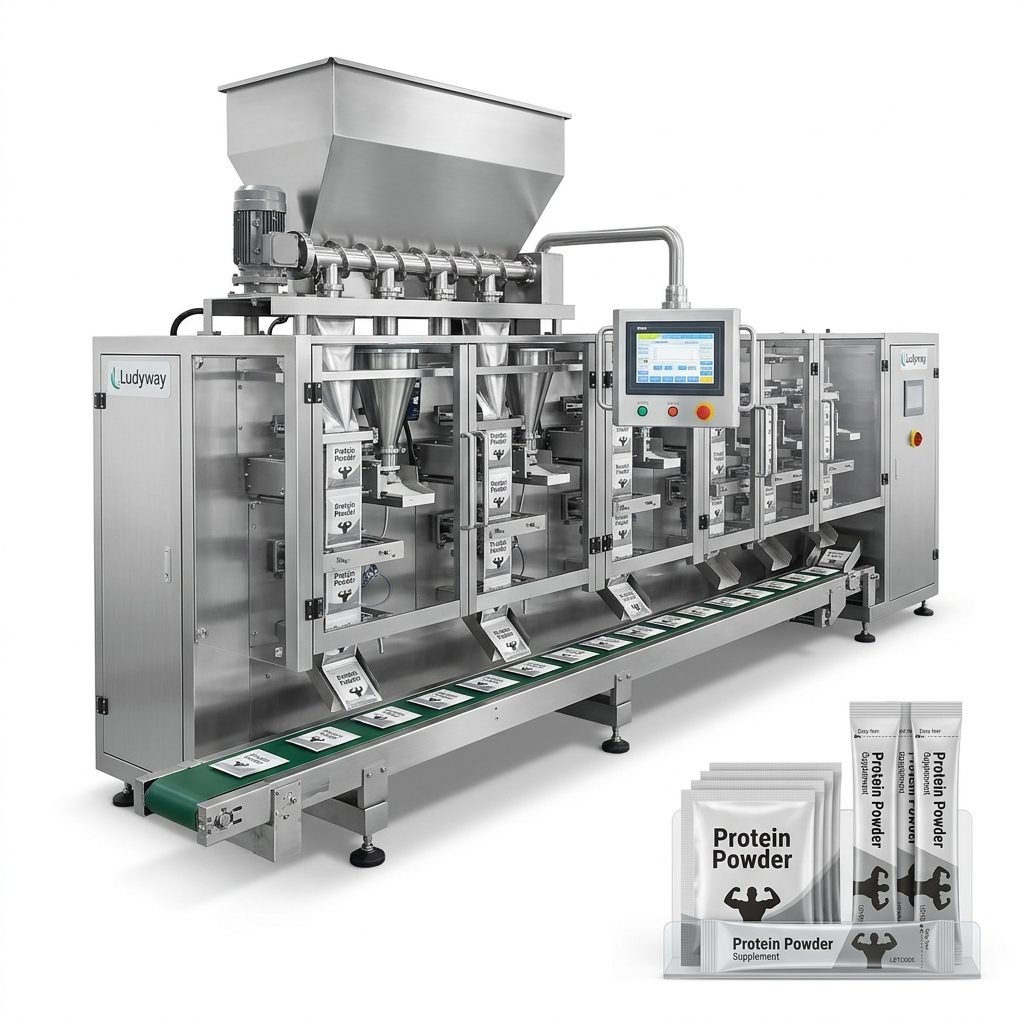
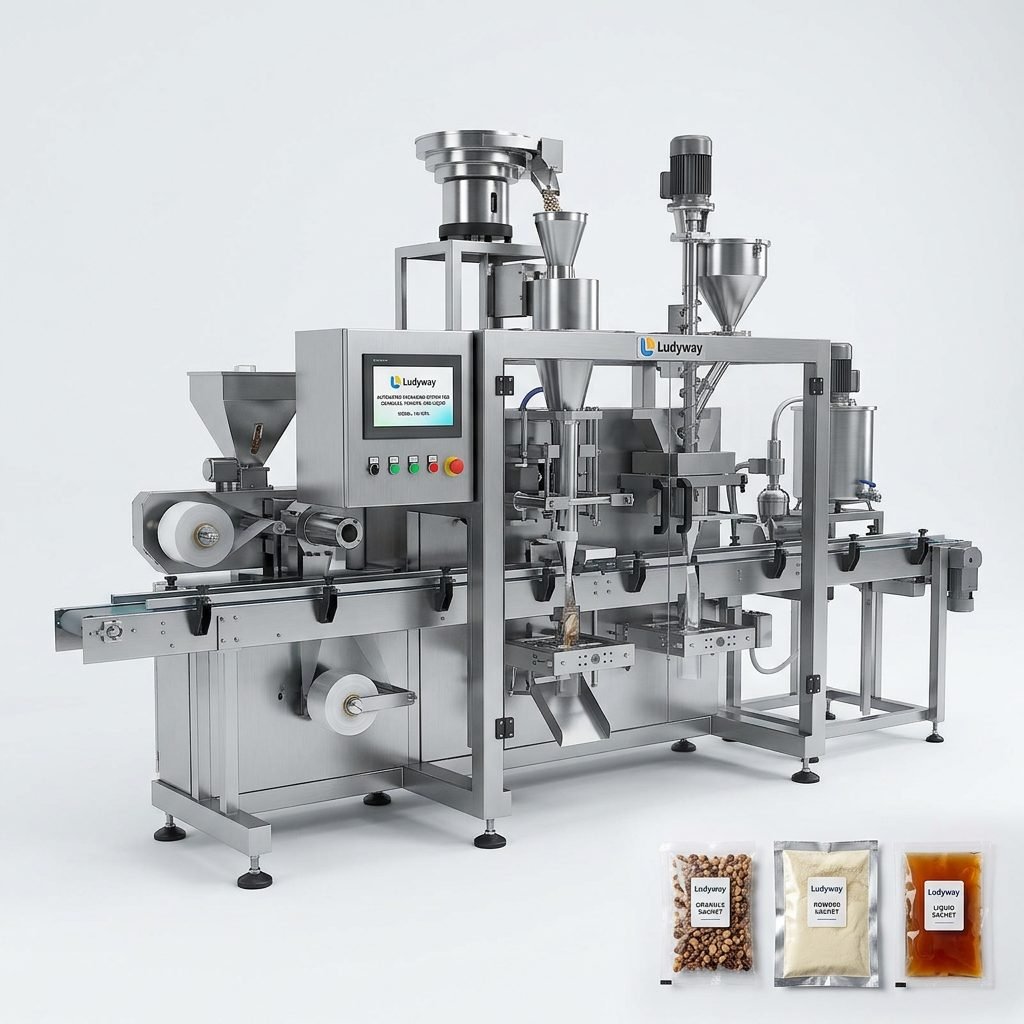
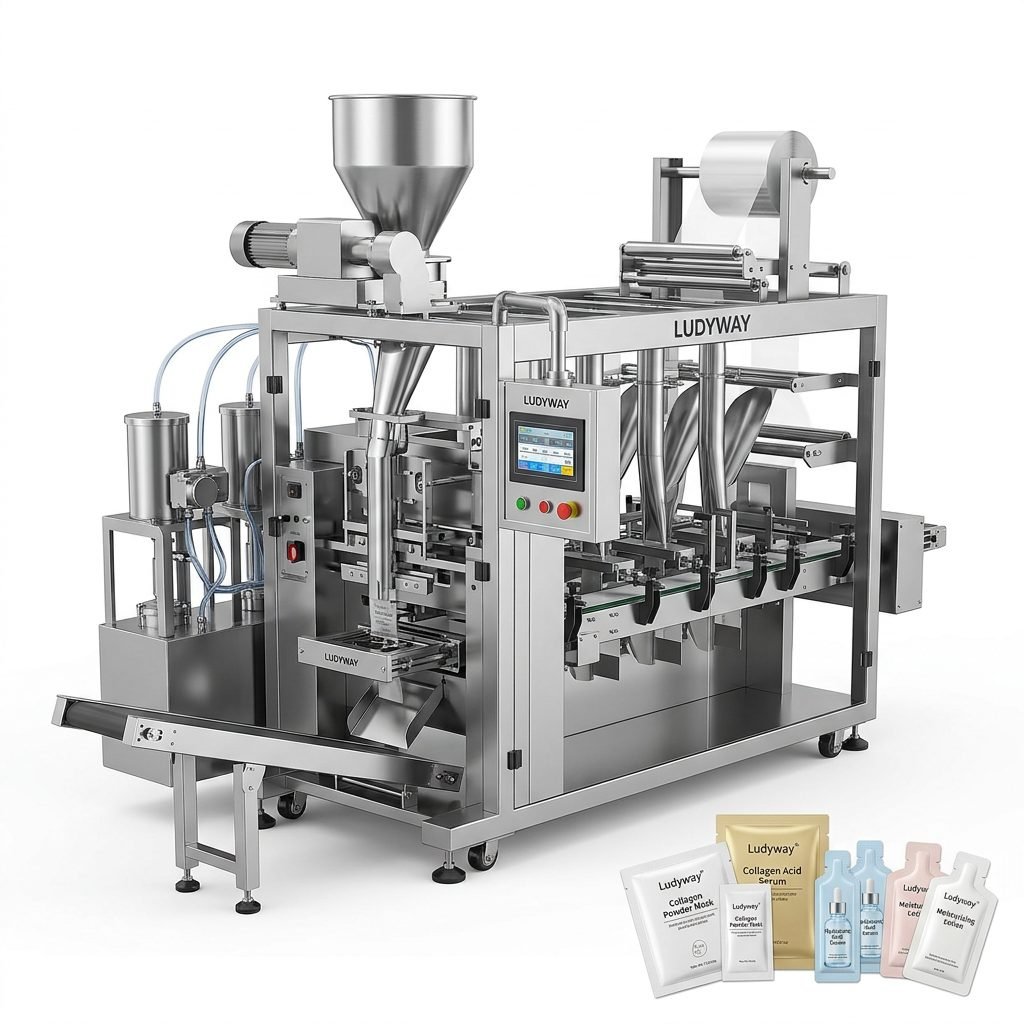
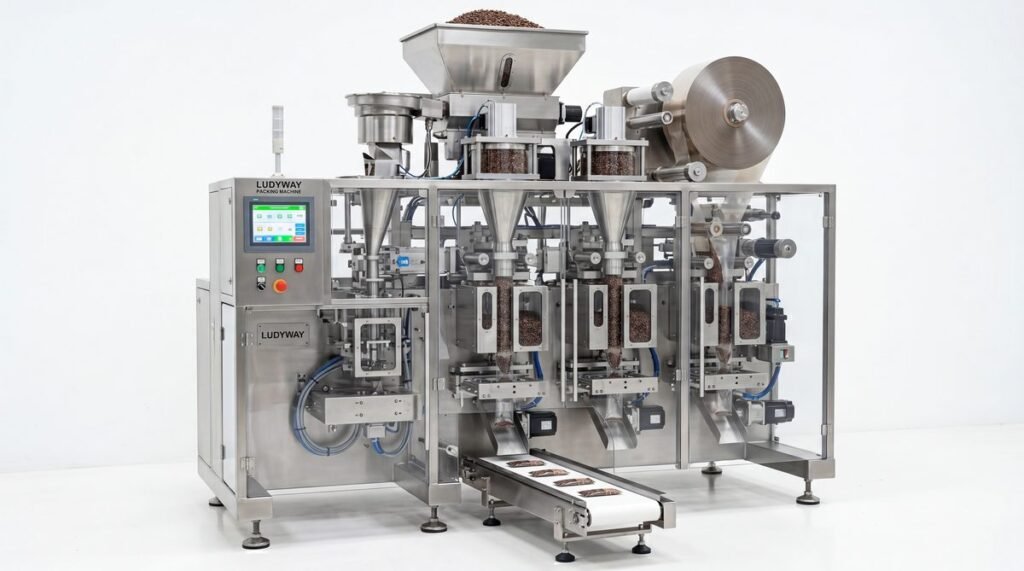
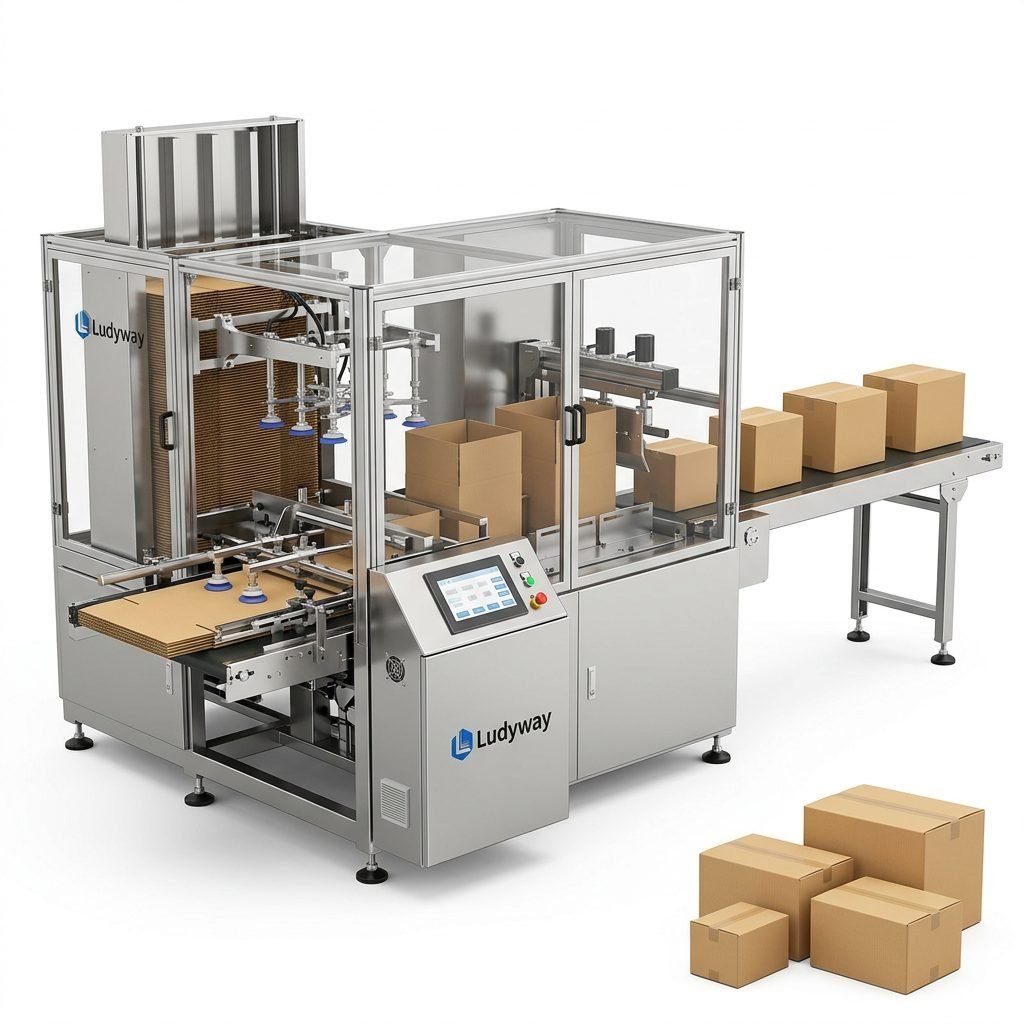
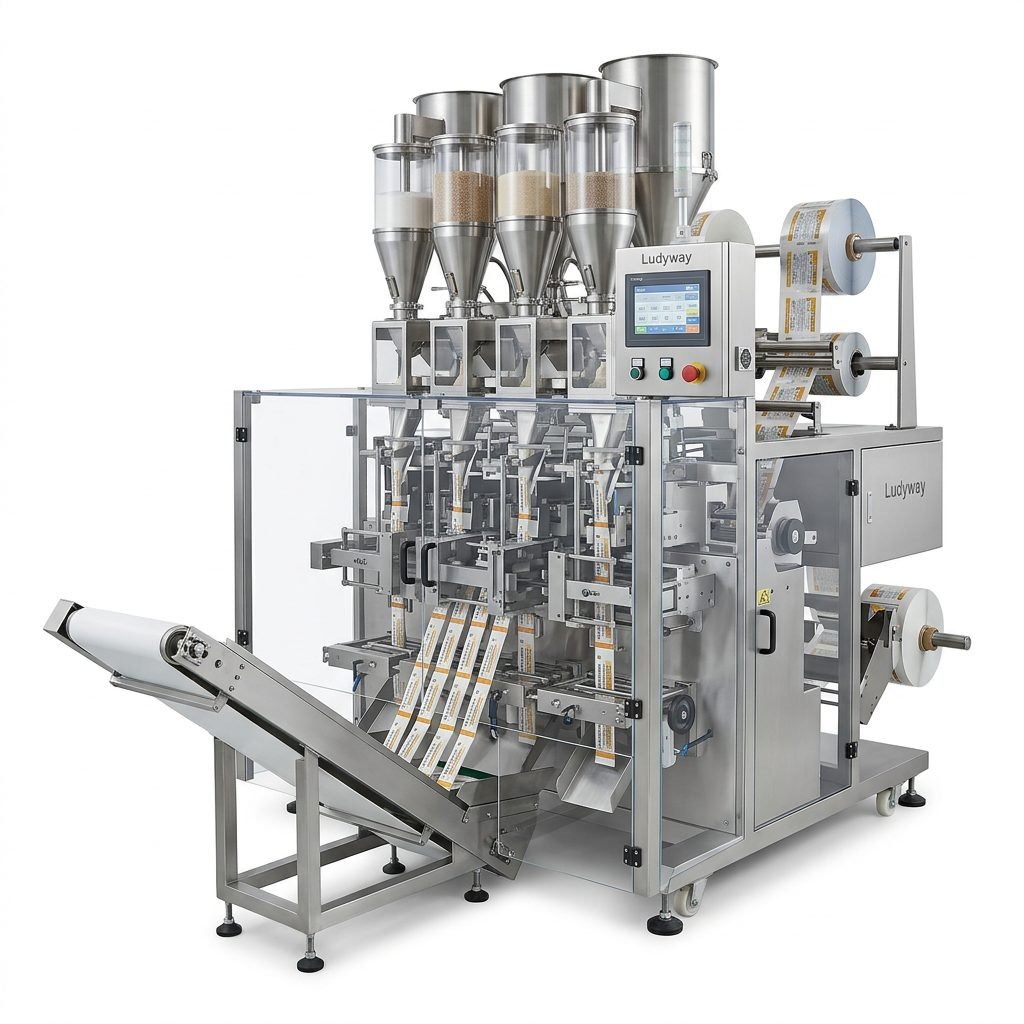
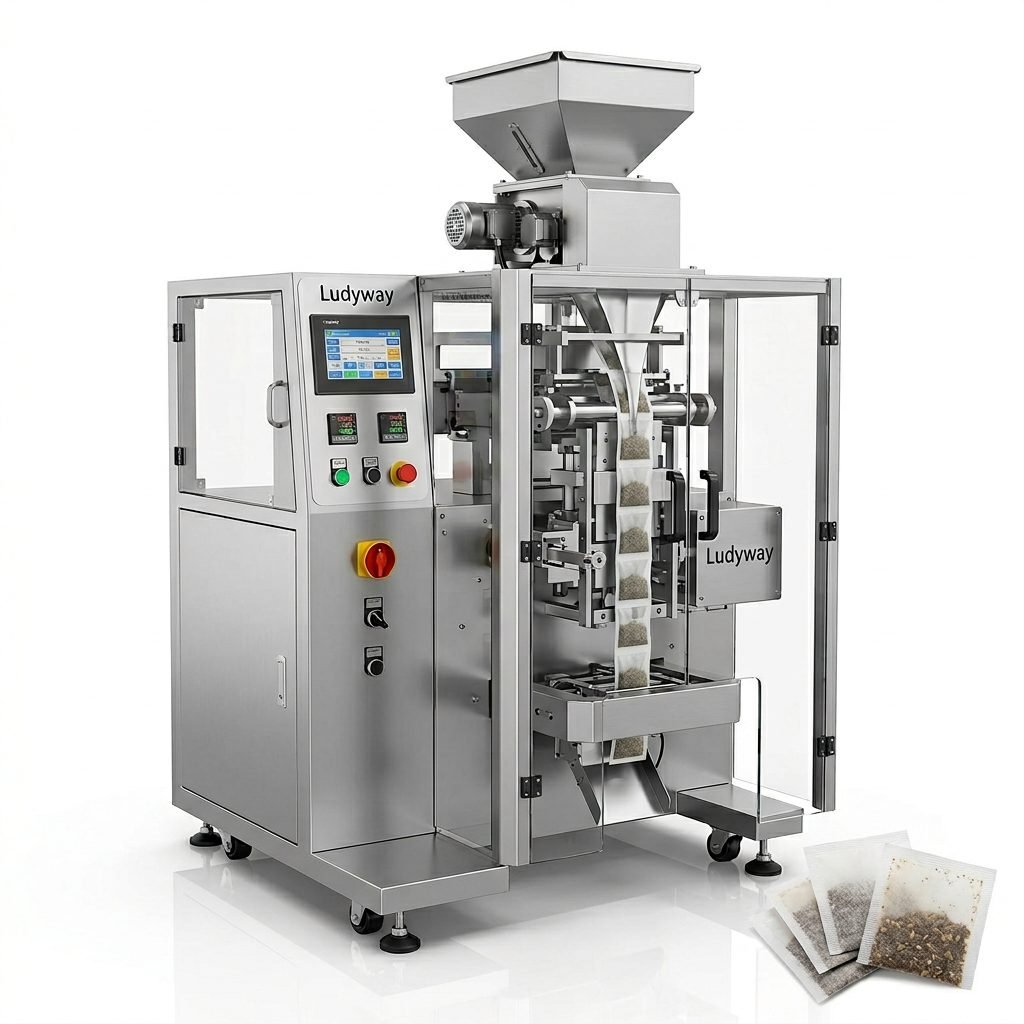
Multi-lane packaging machines are designed to pack several sachets or stick packs at the same time instead of producing only one pack per machine cycle. This parallel operating structure is the main reason they can dramatically increase production output in food, pharmaceutical, personal care, chemical, and health supplement manufacturing.
For manufacturers facing rising labor costs, tighter delivery schedules, and higher demand for small-format packaging, multi-lane systems offer a practical route to higher speed, better consistency, and lower cost per pack.
Why Multi-Lane Machines Produce More in Less Time
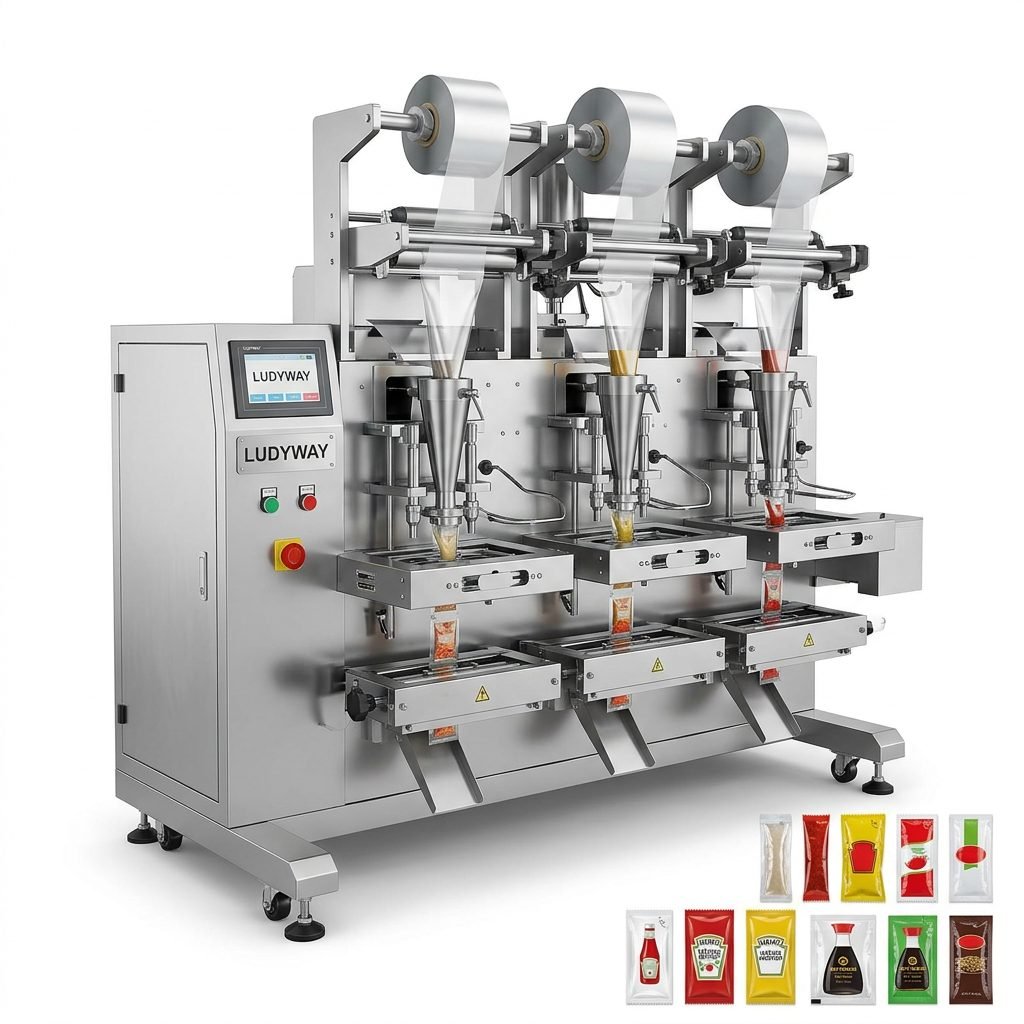
A traditional single-lane machine forms, fills, and seals one package per cycle. A multi-lane packaging machine performs the same actions across multiple lanes simultaneously. If a machine has 4, 6, 8, 10, or more lanes, it can produce multiple finished packs in the same time window.
- Parallel packaging: several packs are produced at once
- Higher cycle efficiency: one machine frame supports multiple outputs
- Reduced bottlenecks: fewer stops between filling and sealing stages
- Better use of factory space: higher output without adding many separate machines
In simple terms, production increases because the machine multiplies the number of packages completed during every operating cycle.
How the Multi-Lane Structure Boosts Output
1. Multiple Packs Are Formed at the Same Time
The film web is divided into several vertical lanes. Each lane forms an individual sachet or stick pack. While the machine is running, all lanes operate together, allowing one roll of packaging film to generate many packs per cycle.
2. Filling Happens Simultaneously Across Lanes
Whether the product is powder, granule, liquid, gel, or paste, the dosing system is configured to feed each lane accurately. This means the machine does not need to wait for one package to finish before starting the next.
3. Sealing and Cutting Are Centralized
Sealing jaws and cutting stations are engineered to process the full lane set together. This synchronized design reduces idle time and makes the machine much more productive than using multiple independent low-speed units.
4. Automation Reduces Manual Intervention
Modern multi-lane machines often include automatic film tracking, registration control, servo-driven dosing, fault alarms, and recipe storage. These features help keep the machine running steadily with fewer interruptions, which directly supports a higher daily output.
Output Comparison: Single-Lane vs. Multi-Lane
| Machine Type | Production Method | Typical Output Advantage | Best For |
|---|---|---|---|
| Single-lane machine | One pack per cycle | Lower throughput | Small batches, pilot production |
| 4-lane machine | Four packs per cycle | Roughly 4x parallel output potential | Growing demand products |
| 8-lane machine | Eight packs per cycle | Much higher speed and labor efficiency | High-volume production |
| 10+ lane machine | Large-scale simultaneous packaging | Maximum compact output capacity | Mass-market sachet and stick pack lines |
Key Production Benefits of Multi-Lane Packaging Machines
Higher Pack Count Per Minute
The most obvious benefit is a higher number of finished units per minute. This is especially important for products sold in small-dose, single-use, or travel-size packaging, where output targets can be very high.
Lower Labor Cost Per Unit
One multi-lane machine can often replace several lower-capacity systems. Fewer operators are needed for feeding, monitoring, and collection, which helps reduce labor cost per pouch or sachet.
Improved Packaging Consistency
When the machine is properly designed, all lanes follow the same forming, filling, and sealing process. This creates more uniform pack dimensions, seal quality, and fill accuracy, which helps reduce waste and rework.
Better Space Utilization
Instead of installing many separate lines, manufacturers can achieve high output with a more compact footprint. This is valuable in factories where space is limited or expensive.
Scalable Production Planning
Businesses can choose lane numbers based on demand. A company may start with fewer lanes and move to larger capacity configurations as product sales increase.
Industries That Benefit Most From Multi-Lane Packaging
Multi-lane equipment is especially effective for products that require small package sizes and fast throughput.
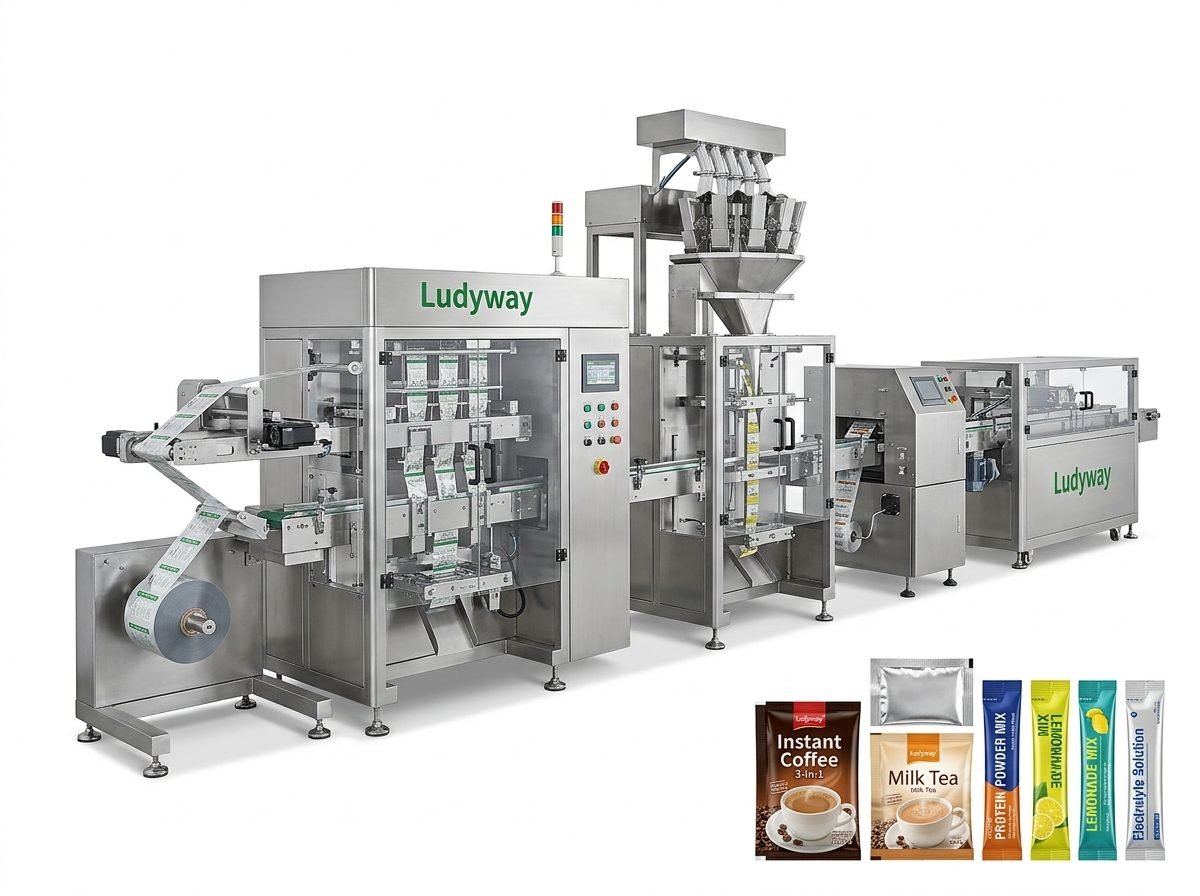
- Food industry – coffee, sugar, seasoning, sauce, milk tea powder, sports drink mixes, oatmeal, supplements
- Pharmaceutical industry – oral powders, granules, medical sachets, rehydration salts, healthcare products
- Cosmetics and personal care – shampoo, lotion, serum, cream, hand sanitizer
- Chemical products – detergent powder, cleaning liquid, additives, industrial sachets
- Pet and feed sectors – nutritional powders, granules, treats, supplement packs
Factors That Influence Real Output Performance
Although multi-lane design raises production potential, actual output depends on several technical and operational factors.
| Factor | Impact on Output |
|---|---|
| Number of lanes | More lanes generally mean higher parallel production |
| Product flow characteristics | Free-flowing materials usually run faster and more stably |
| Dosing accuracy requirements | Tighter accuracy may require slower but more precise operation |
| Package size and shape | Smaller formats often allow higher speed |
| Film quality and sealing performance | Stable film feeding reduces stoppages and rejects |
| Operator skill and maintenance | Good setup and preventive maintenance improve uptime |
How Multi-Lane Machines Help Reduce Downtime
Production output is not only about speed; it is also about uptime. A high-speed machine that frequently stops will not deliver the expected daily volume. Well-engineered multi-lane systems improve uptime through:
- servo synchronization for stable movement
- automatic tension control for film handling
- precise dosing assemblies for repeatable filling
- touchscreen parameter storage for faster product changeovers
- alarm systems that help operators identify faults quickly
These features make production more predictable and help factories meet shipment schedules with less disruption.
When Is a Multi-Lane Machine the Right Choice?
A multi-lane packaging machine is usually the right investment when a manufacturer has:
- high-volume demand for sachets or stick packs
- repetitive production of the same or similar SKUs
- pressure to reduce unit packaging cost
- limited factory floor space
- a need for better automation and lower dependence on manual labor
It is particularly useful for businesses expanding from semi-automatic or single-lane packing into larger-scale commercial production.
Choosing the Right Supplier Matters
To fully realize the output advantage of multi-lane equipment, machine design quality is critical. Buyers should look at lane stability, dosing precision, sealing quality, customization capability, and after-sales support.
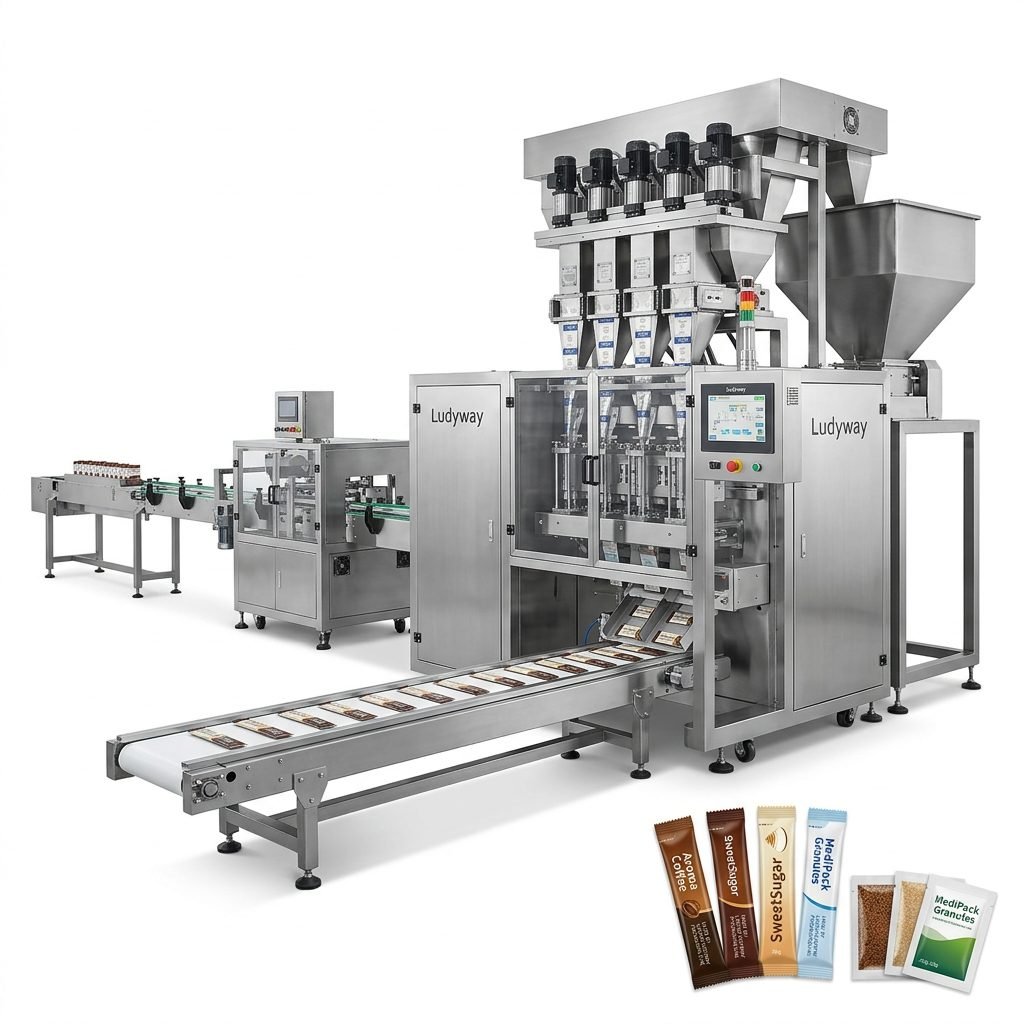
Manufacturers seeking reliable high-speed solutions often explore multi-lane packaging machine solutions from Ludyway, a packaging equipment manufacturer with more than 30 years of industry experience and broad capabilities in food, pharmaceutical, health supplement, and turnkey packaging line applications.
Common Questions About Production Output
Do more lanes always mean better production?
Not always. More lanes increase potential output, but the machine must also match the product characteristics, packaging material, and required accuracy. A properly matched 6-lane machine may outperform an unsuitable 10-lane model.
Can multi-lane machines handle different product types?
Yes. They are widely used for powders, granules, liquids, pastes, gels, and some specialty applications, provided the correct filling technology is selected.
Are they only for large factories?
No. They are most common in medium and large production environments, but growing brands with strong volume forecasts can also benefit from the lower unit cost and better scalability.
Final Insight
Multi-lane packaging machines increase production output by combining simultaneous package formation, synchronized filling, centralized sealing, and advanced automation into one efficient system. The result is faster throughput, improved labor efficiency, more stable packaging quality, and better use of production space.
For companies packaging sachets or stick packs at scale, a well-configured multi-lane machine can be one of the most effective ways to raise output without multiplying operational complexity.