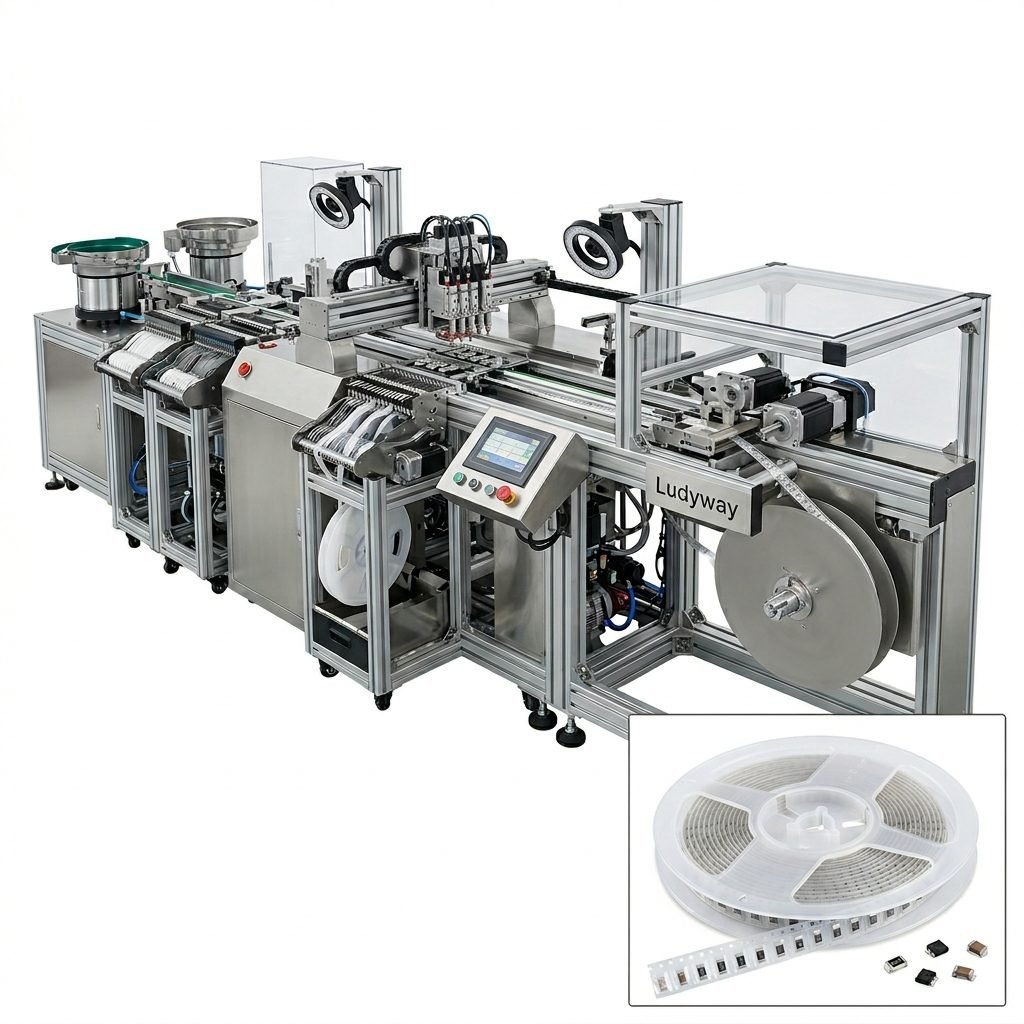
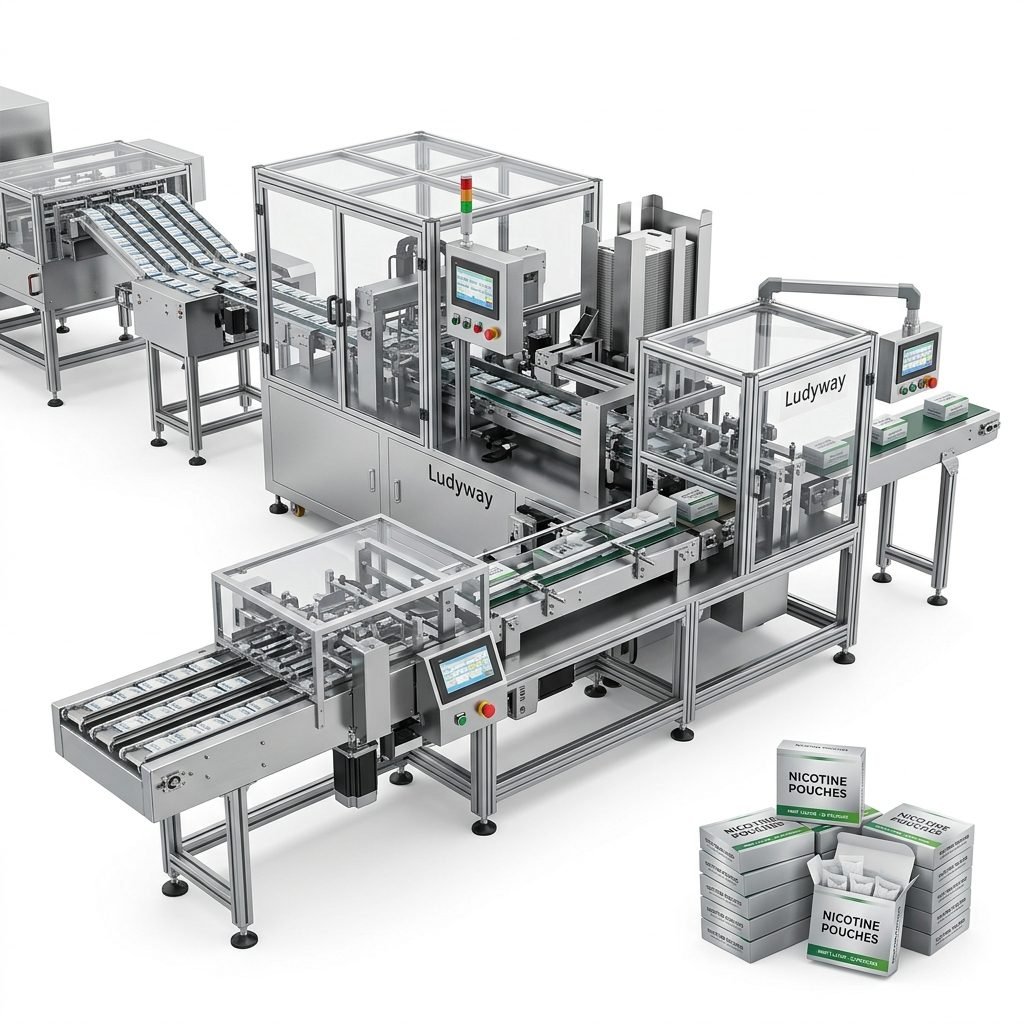
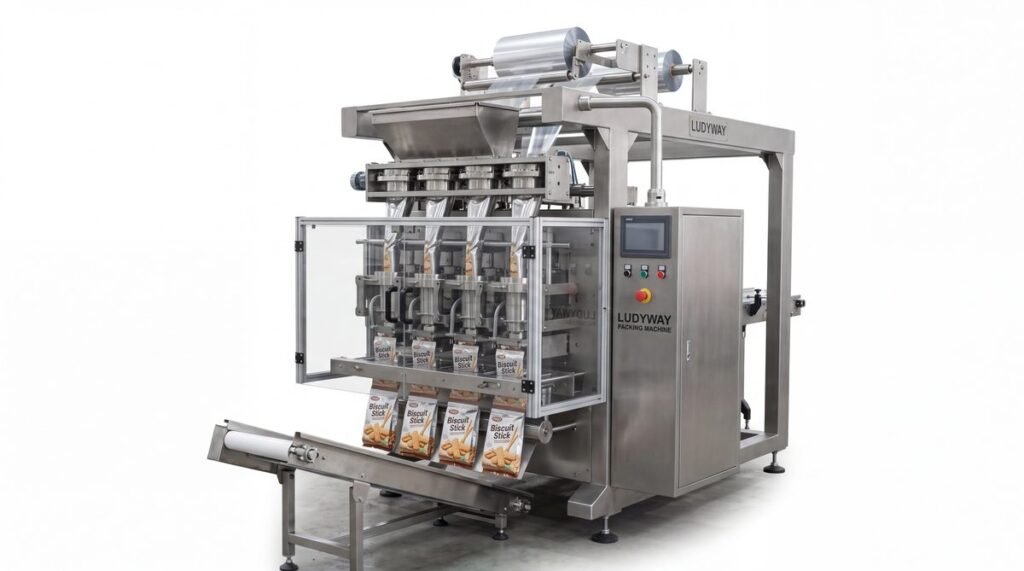
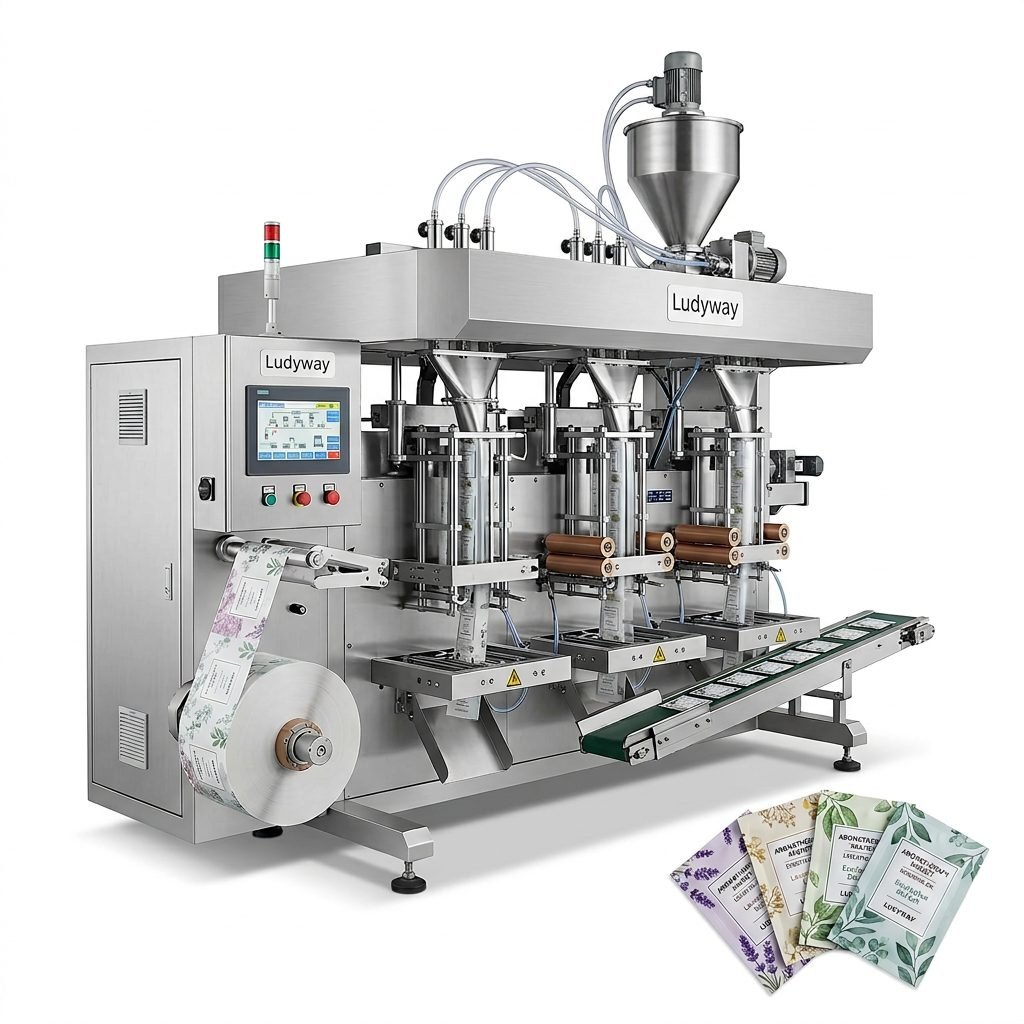
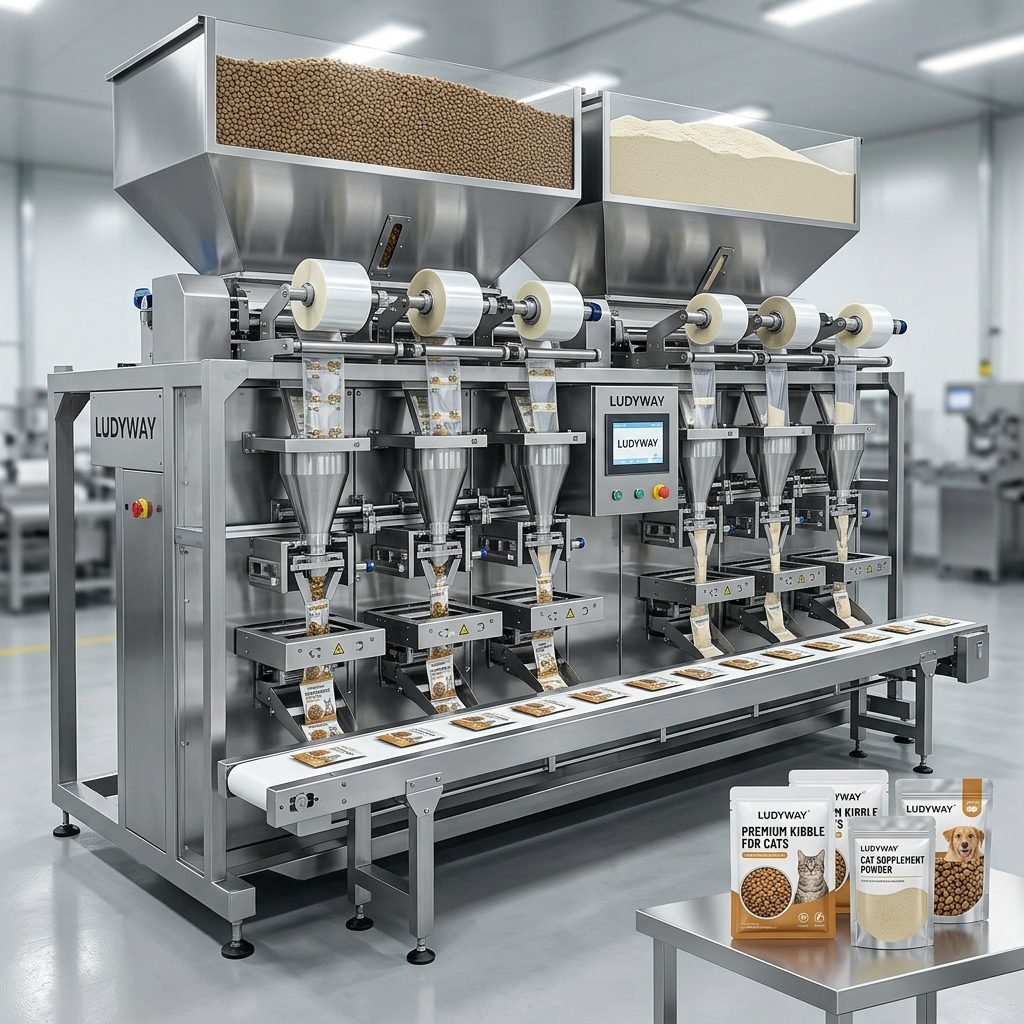
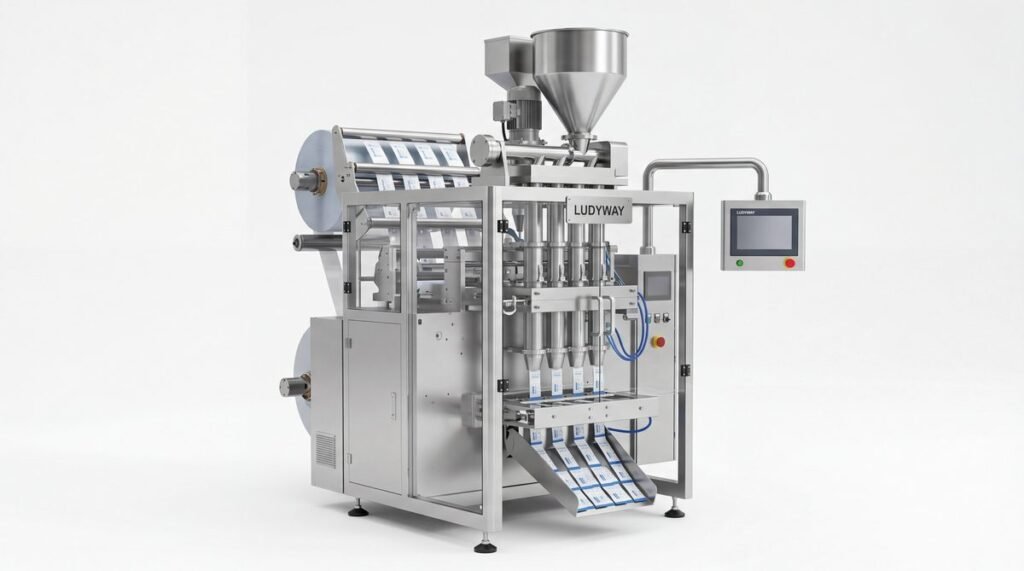
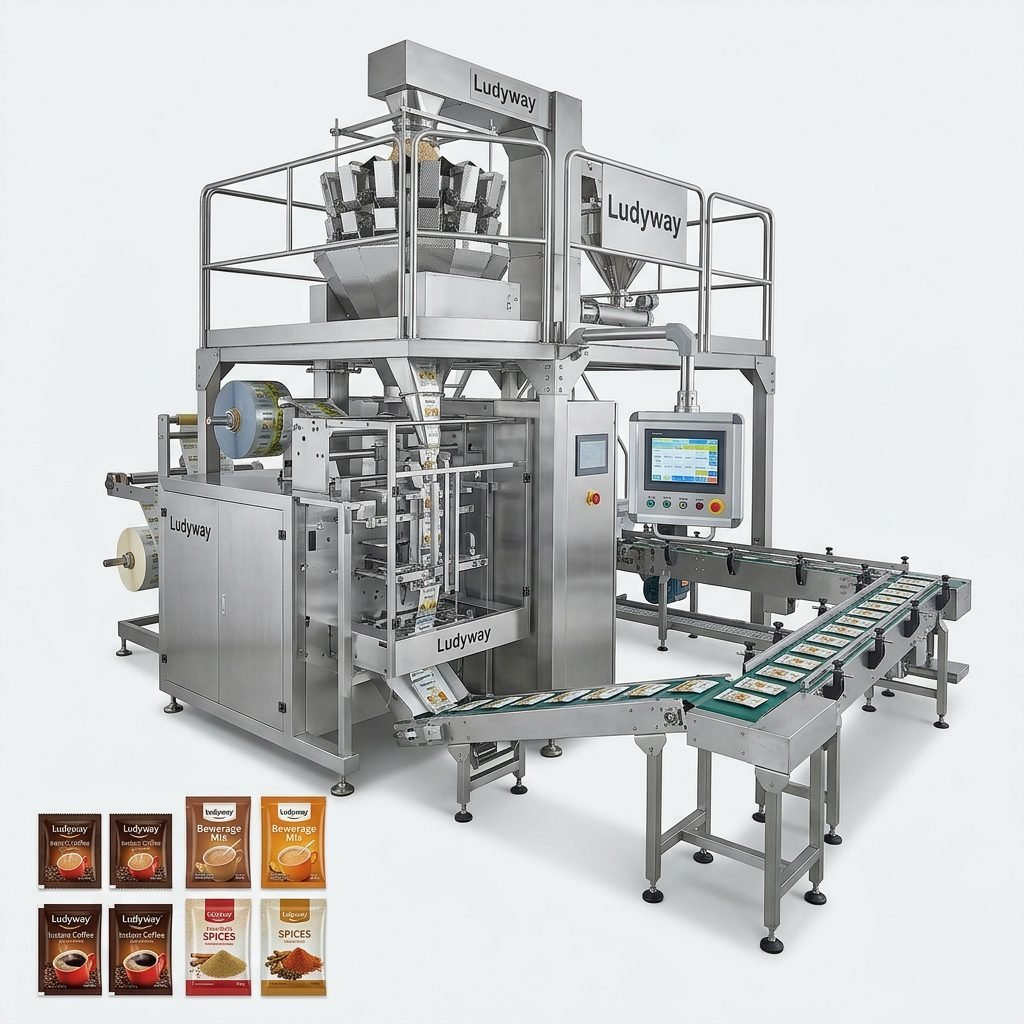
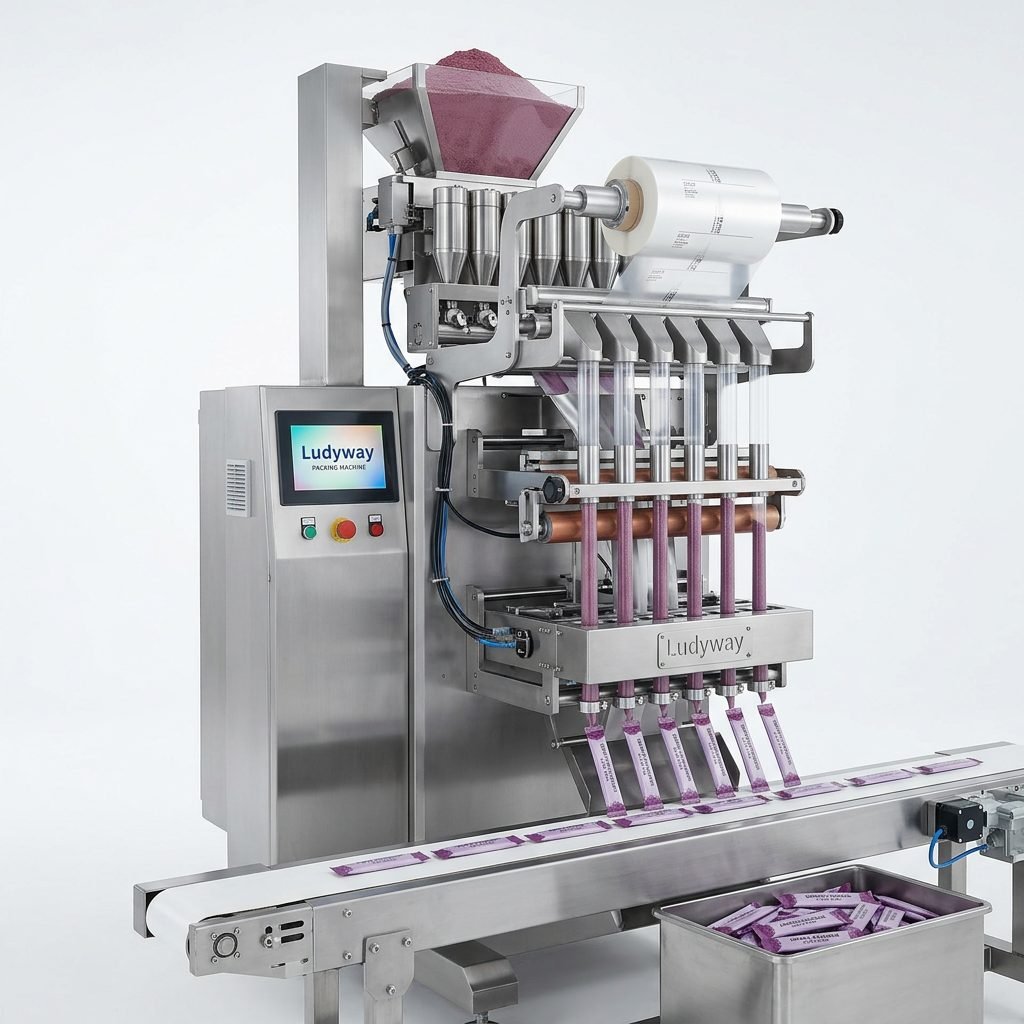
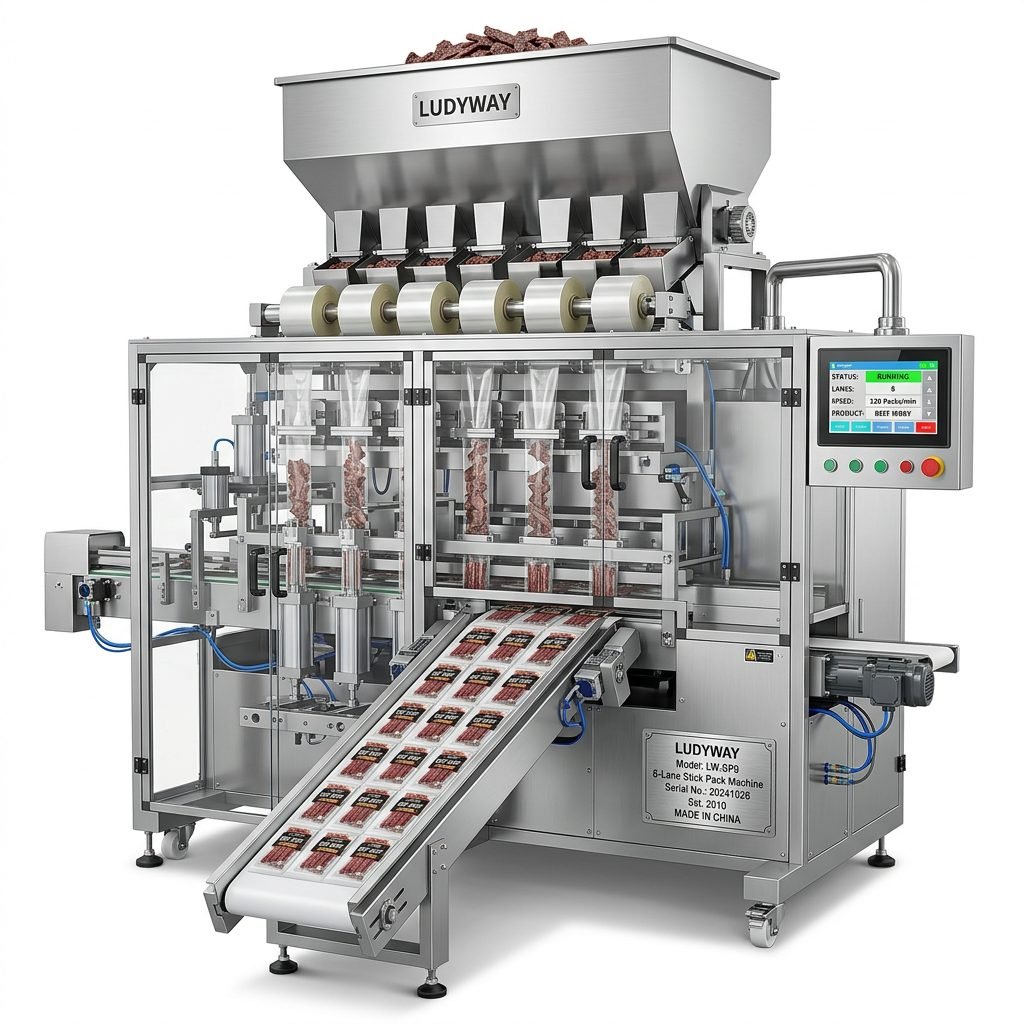
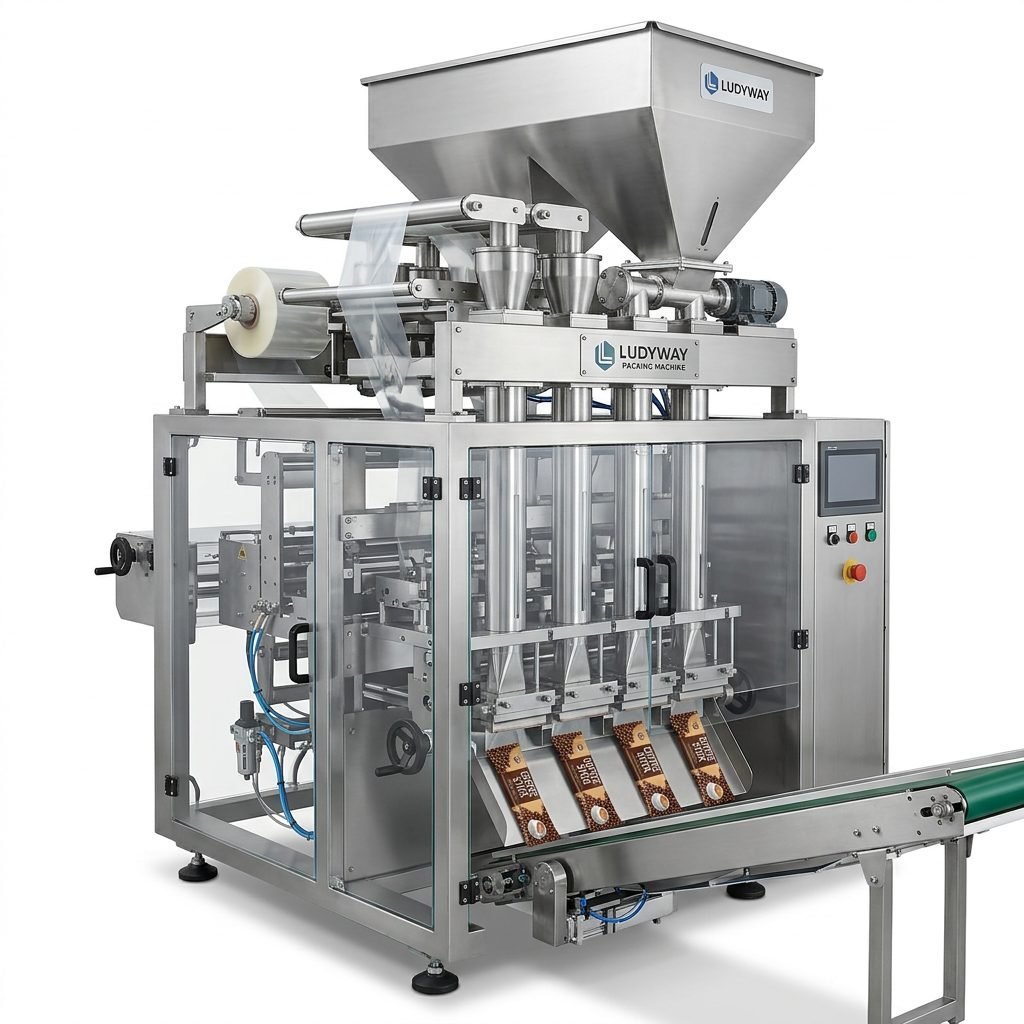
A sachet filling and sealing machine is an automated packaging system designed to measure, fill, form, seal, and cut small flexible packs known as sachets. These machines are widely used by packaging businesses that handle powders, granules, liquids, gels, creams, and pastes in industries such as food, pharmaceuticals, cosmetics, chemicals, and health supplements.
For businesses looking to scale production, improve packaging consistency, and reduce labor costs, sachet equipment can become a key investment. From single-lane systems for moderate output to multi-lane high-speed lines for mass production, the right machine can transform packaging efficiency while helping brands deliver clean, reliable, consumer-friendly packs.
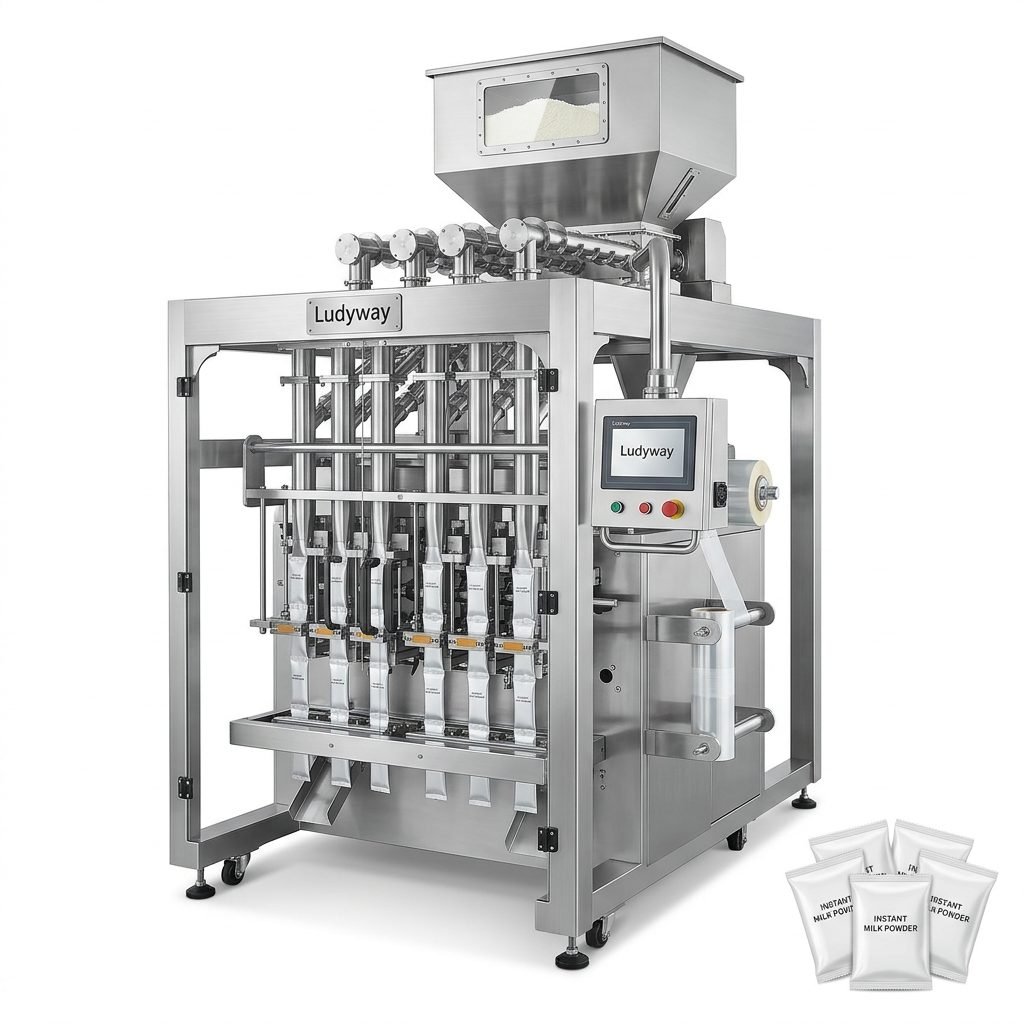
How Does a Sachet Filling and Sealing Machine Work?
Although machine structures vary depending on the product and sachet format, the typical process follows a clear sequence:
- Film feeding: Packaging film is unwound from a roll.
- Sachet forming: The machine shapes the film into a pouch or sachet tube.
- Product dosing: A filling system dispenses the required volume or weight.
- Sealing: Heat sealing closes the sachet securely.
- Cutting: Individual sachets are separated.
- Coding or inspection: Optional systems add date codes, batch numbers, or quality checks.
This continuous packaging cycle helps maintain stable output, precise filling, and a professional finished appearance. In advanced systems, all of these steps are synchronized through PLC controls and touch-screen operation.
What Products Can Be Packed in Sachets?
Sachet machines are highly versatile, making them suitable for many B2B packaging applications. Common products include:
- Instant coffee, sugar, salt, seasoning, soup mix, and drink powder
- Protein powder, collagen, electrolyte powder, and supplement blends
- Pharmaceutical granules and medical powders
- Shampoo, lotion, serum, facial cleanser, and cosmetic cream
- Sauces, honey, ketchup, mayonnaise, and liquid condiments
- Detergents, cleaning chemicals, and industrial liquids
Businesses often choose sachet packaging because it offers portion control, convenience, reduced material use, and strong shelf appeal.
Main Types of Sachet Filling and Sealing Machines
Different products require different filling technologies. Choosing the correct machine type is essential for packaging accuracy and long-term performance.
| Machine Type | Suitable Products | Typical Filling System |
|---|---|---|
| Powder Sachet Machine | Milk powder, protein, spices, pharma powder | Auger filler |
| Granule Sachet Machine | Sugar, salt, seeds, coffee granules | Cup filler or weighing system |
| Liquid Sachet Machine | Juices, oils, sauces, detergents | Piston pump or liquid pump |
| Paste/Gel Sachet Machine | Creams, gels, honey, ketchup | Servo piston filling |
| Multi-Lane Sachet Machine | High-volume powders, liquids, supplements | Multiple synchronized dosing heads |
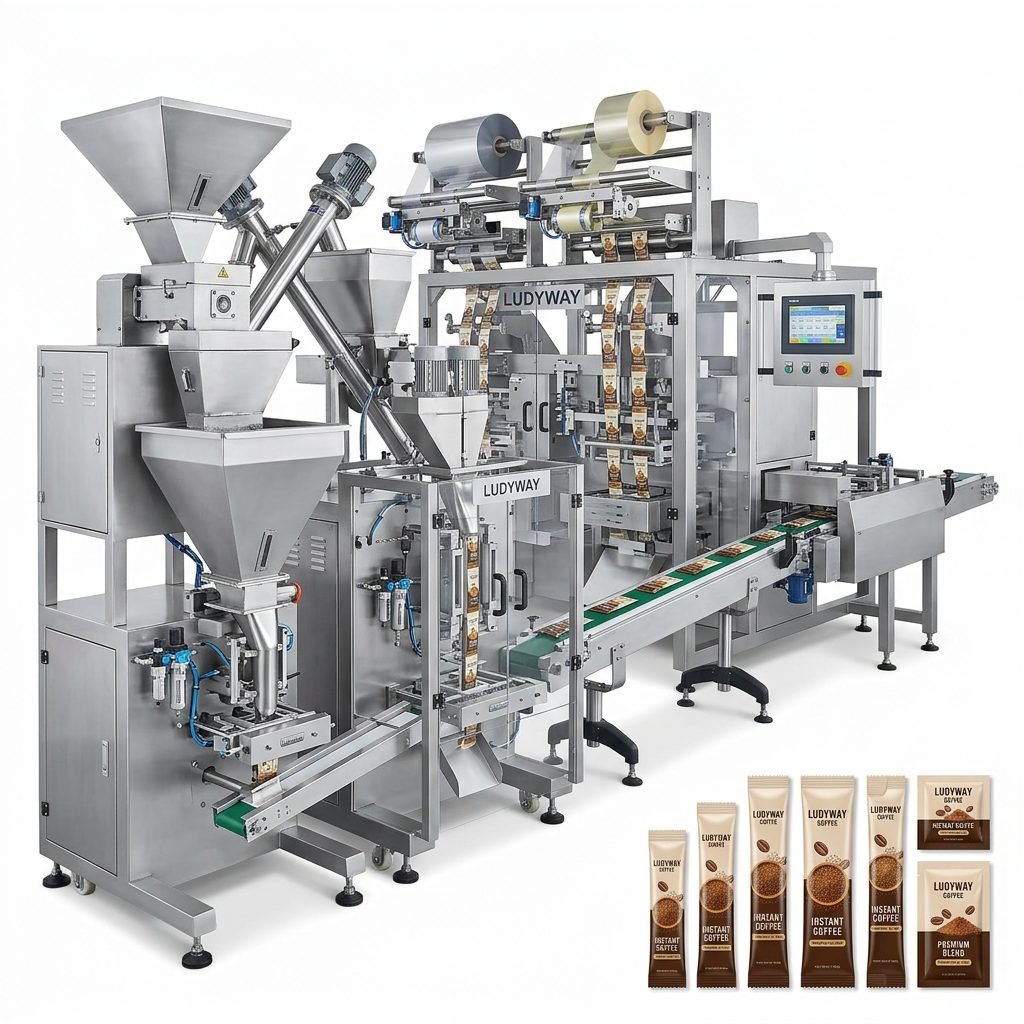
Key Components of a Sachet Packaging Machine
Understanding the main machine components helps buyers compare models more effectively. A typical system may include:
- Film roll holder and pulling mechanism
- Forming collar or pouch-making unit
- Dosing and filling system
- Vertical and horizontal sealing jaws
- Cutting knife or perforation unit
- PLC control panel and HMI touchscreen
- Optional coding, checkweighing, and inspection devices
In higher-end packaging lines, the machine can also connect with conveyors, feeders, cartoners, case packers, and palletizing systems for a fully automated workflow.
Benefits for Packaging Businesses
Investing in a sachet filling and sealing machine can offer substantial operational and commercial advantages:
- Higher production speed compared with manual or semi-automatic filling
- Improved fill accuracy and reduced product waste
- Better sealing quality and package consistency
- Lower labor dependency and more stable output
- Flexible adaptation for different sachet sizes and materials
- Cleaner, more hygienic packaging conditions
- Better brand presentation for retail and export markets
For growing manufacturers, co-packers, and private-label businesses, sachet packaging is especially valuable because it supports small-dose, travel-size, trial-size, and single-use product formats, which remain popular across many markets.
Single-Lane vs. Multi-Lane Sachet Machines
One of the most important buying decisions is whether to choose a single-lane or multi-lane machine.
| Feature | Single-Lane | Multi-Lane |
|---|---|---|
| Output | Moderate | High to very high |
| Machine complexity | Lower | Higher |
| Initial investment | More affordable | Higher upfront cost |
| Best for | SMEs, pilot production, niche products | Large-volume production and export packaging |
| Product changeover | Usually easier | Requires more setup planning |
If your business handles frequent SKU changes and smaller batch sizes, a single-lane machine may be practical. If your goal is maximum efficiency for high-demand products, a multi-lane sachet system is often the better long-term choice.
Industries That Commonly Use Sachet Machines
Food and Beverage
Widely used for coffee, sugar, beverage mix, spice powder, sauces, seasoning, condiments, dairy powder, and instant foods.
Pharmaceutical and Healthcare
Suitable for oral powders, granules, electrolyte supplements, functional nutrition products, and medical-use formulations that require precise dosing and consistent sealing.
Cosmetics and Personal Care
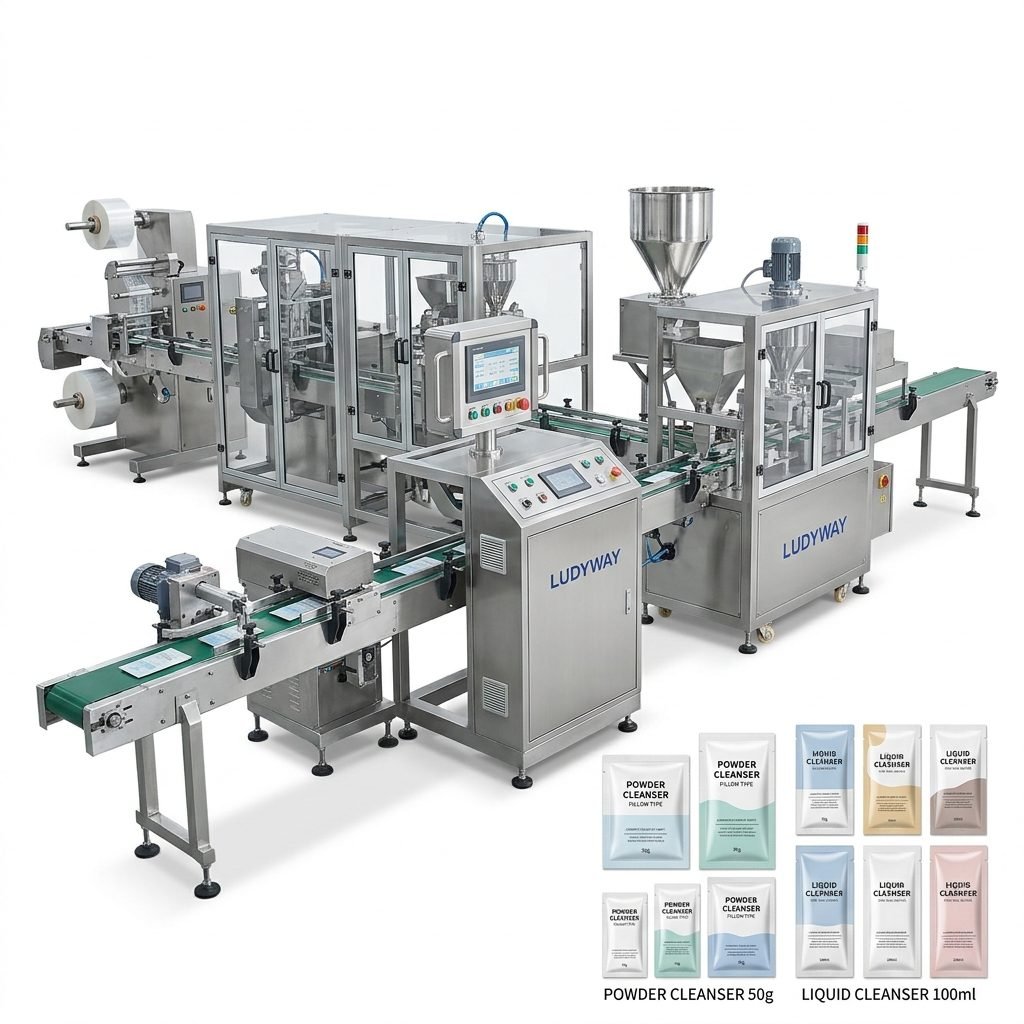
Ideal for shampoo, face cream, serum, lotion, facial cleanser, hand cream, and beauty samples in travel-size or promotional sachets.
Chemical and Household Products
Used for detergents, cleaning liquids, powder cleaners, additives, and other industrial or consumer chemical products.
How to Choose the Right Sachet Filling and Sealing Machine
Before purchasing, packaging businesses should assess several technical and commercial factors:
- Product type: powder, granule, liquid, paste, or gel
- Required output: sachets per minute or per hour
- Sachet size range: width, length, and fill volume
- Packaging film compatibility: laminated film, aluminum foil, PET/PE, etc.
- Accuracy standards: especially important in pharma and nutraceutical sectors
- Automation level: standalone machine or integrated turnkey line
- Maintenance and spare parts: serviceability over time
- Compliance needs: GMP, CE, or other export-market requirements
It is also important to ask whether the supplier can provide machine testing with your actual product and film. This reduces risk and confirms sealing quality, dosing accuracy, and operating stability before shipment.
Common Challenges and How Good Machines Solve Them
| Challenge | Practical Solution |
|---|---|
| Inconsistent fill weight | Use a matched dosing system such as auger, cup, or servo pump |
| Weak or leaking seals | Optimize sealing temperature, pressure, and film structure |
| Low efficiency | Upgrade to multi-lane automation and synchronized feeding |
| Product dust or contamination | Use enclosed filling and dust-control design |
| Frequent downtime | Choose stable components, strong build quality, and reliable support |
What to Look for in a Reliable Supplier
A machine is only as valuable as the supplier behind it. A good sachet packaging equipment partner should offer:
- Application-based machine recommendations
- Customization for product characteristics and sachet formats
- Factory testing before delivery
- Installation guidance and operator training
- After-sales technical support and spare parts availability
- Ability to expand from single machine to full packaging line
For businesses sourcing from China, Ludyway sachet packaging machine solutions are often considered by buyers seeking scalable equipment, broad product compatibility, and turnkey packaging line support backed by more than 30 years of manufacturing experience.
Is a Sachet Filling and Sealing Machine Worth the Investment?
In most cases, yes. If your business packages products in small-dose flexible packs, a sachet machine can deliver a fast return by improving speed, reducing waste, and increasing packaging consistency. It can also help your brand enter new retail, e-commerce, trial-pack, and export markets with more attractive packaging formats.
The key is to choose equipment that matches your product behavior, production target, package style, and long-term growth plans. A well-selected machine is not just a piece of equipment—it is a production asset that supports quality, efficiency, and market competitiveness.
Final Thoughts for Packaging Businesses
A sachet filling and sealing machine is a practical solution for companies that want efficient, hygienic, and professional small-pack packaging. Whether you pack food powders, liquids, pharmaceutical granules, or cosmetic creams, the right machine can streamline operations and strengthen product presentation.
When comparing options, focus on filling accuracy, sealing reliability, machine stability, ease of maintenance, and supplier support. Those factors matter far more than price alone when you are building a packaging operation designed for long-term growth.