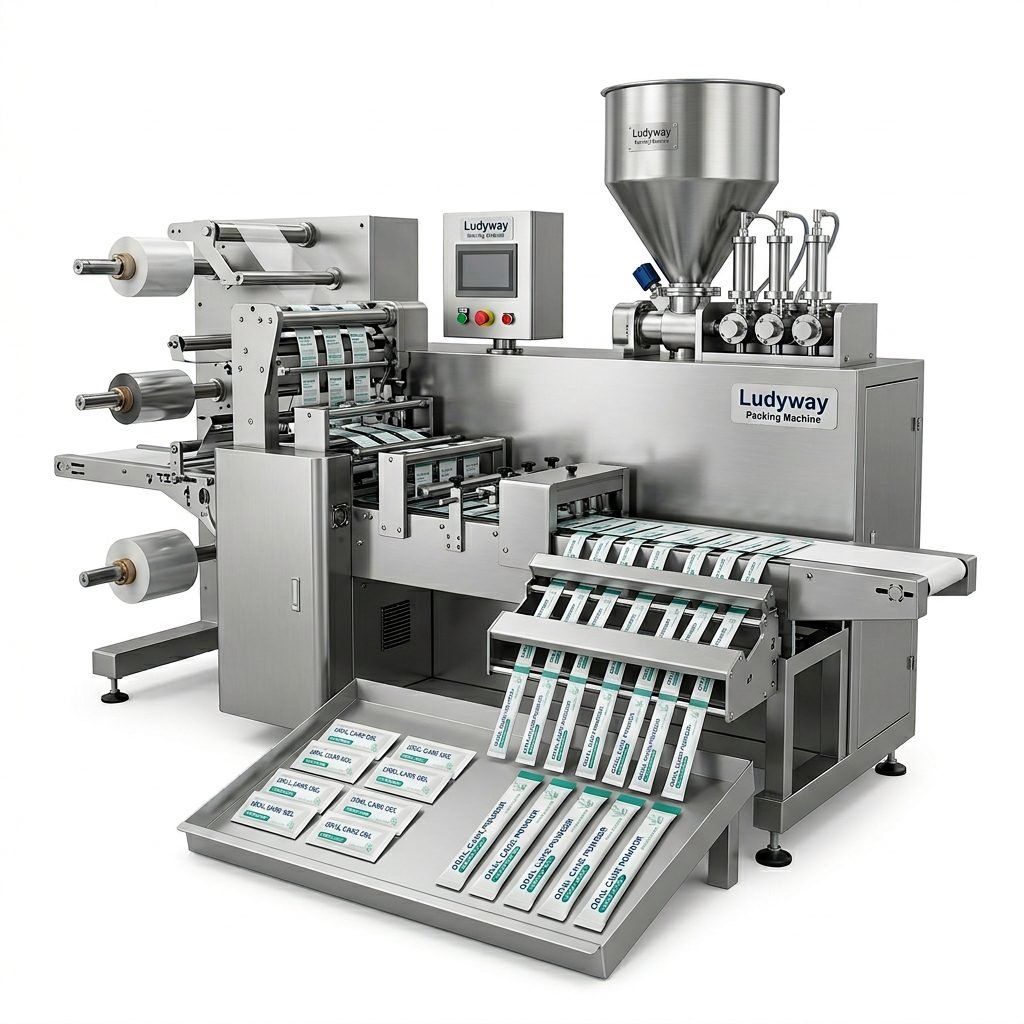
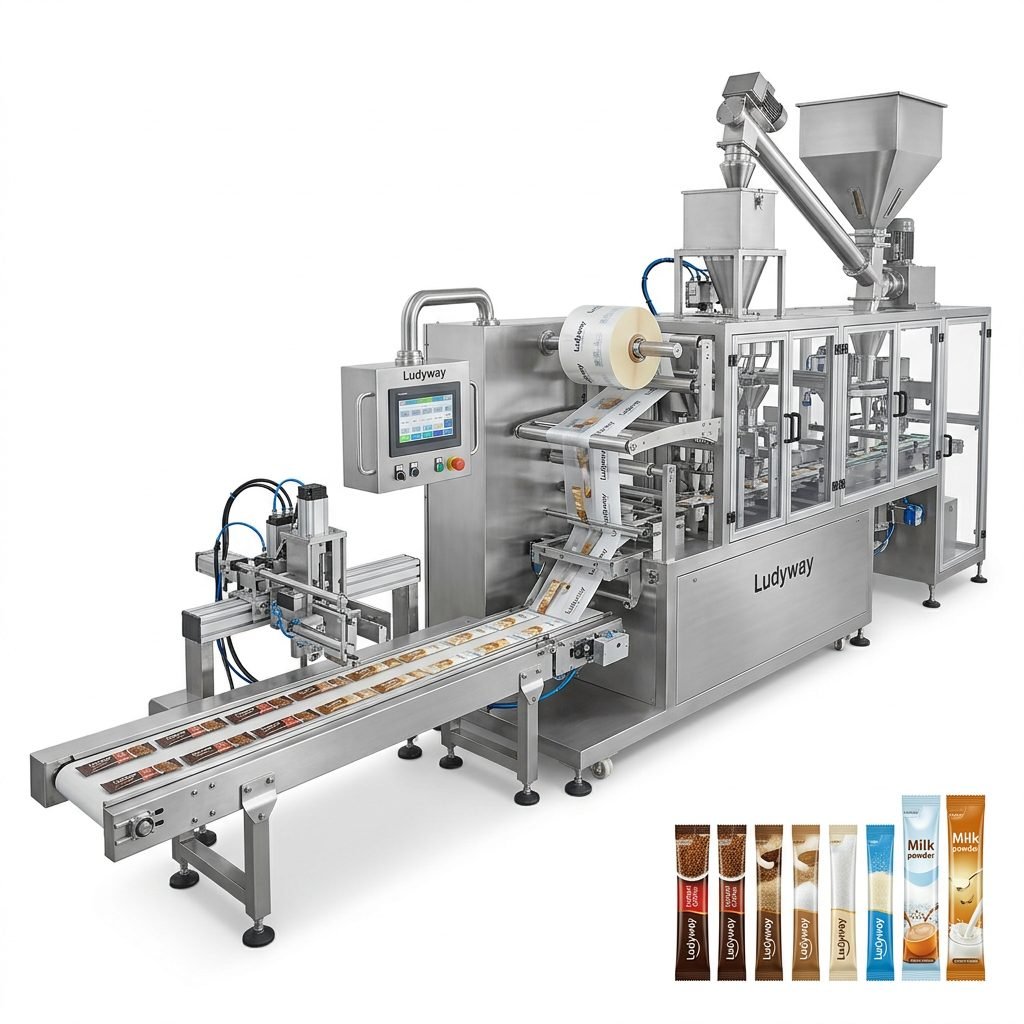
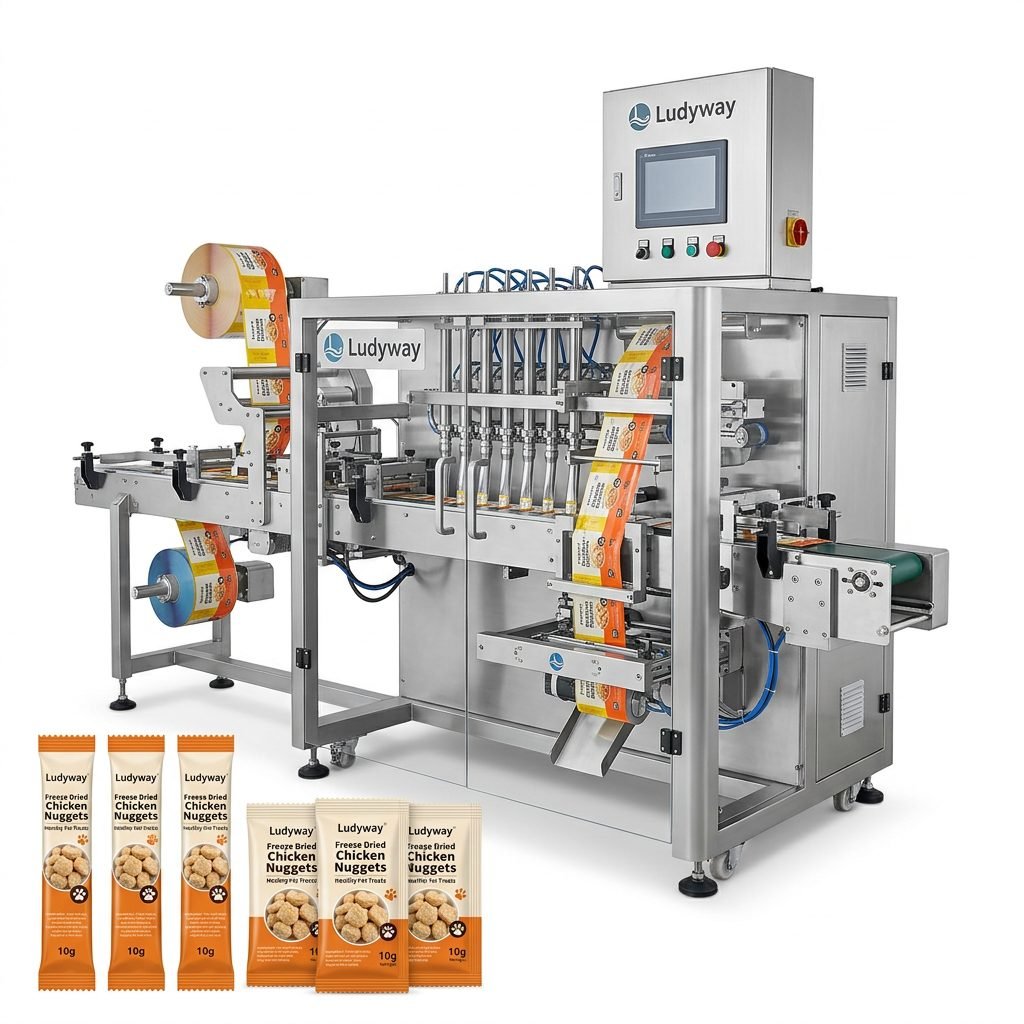
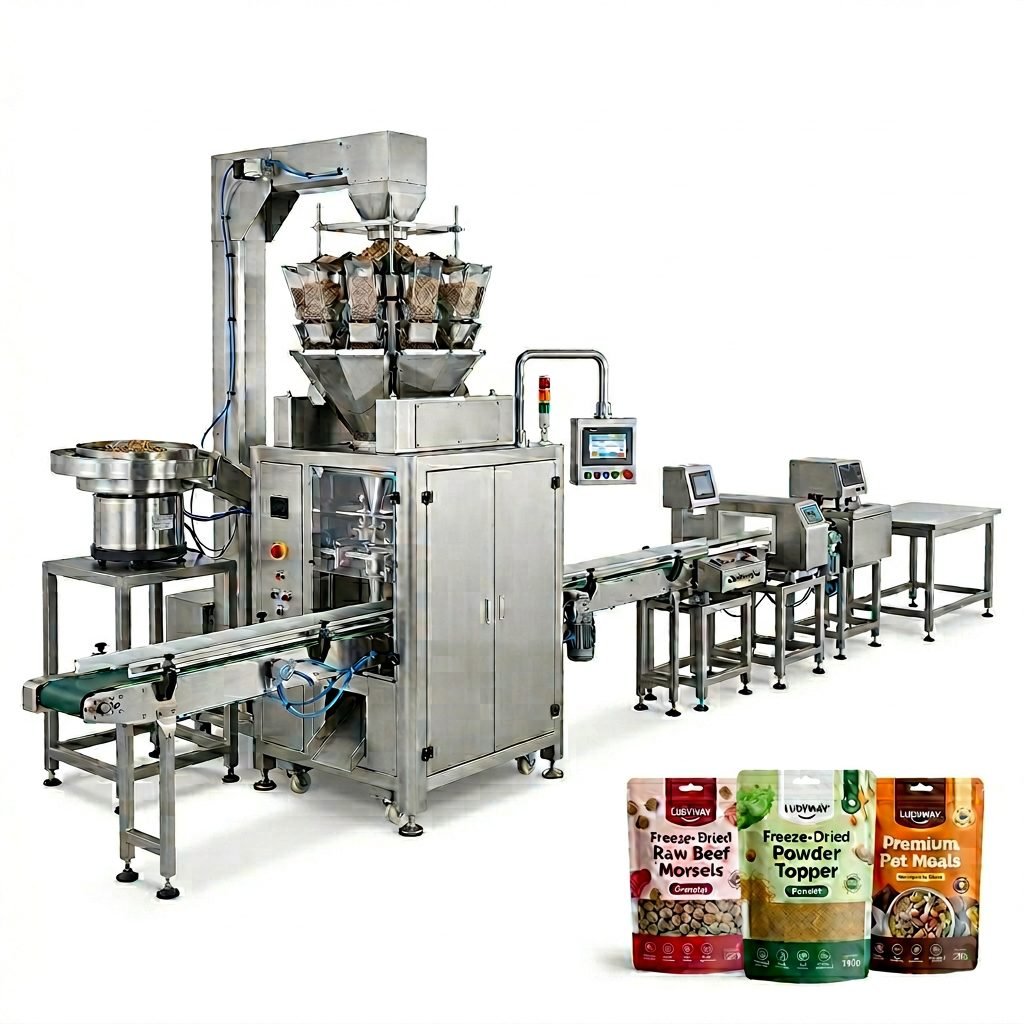
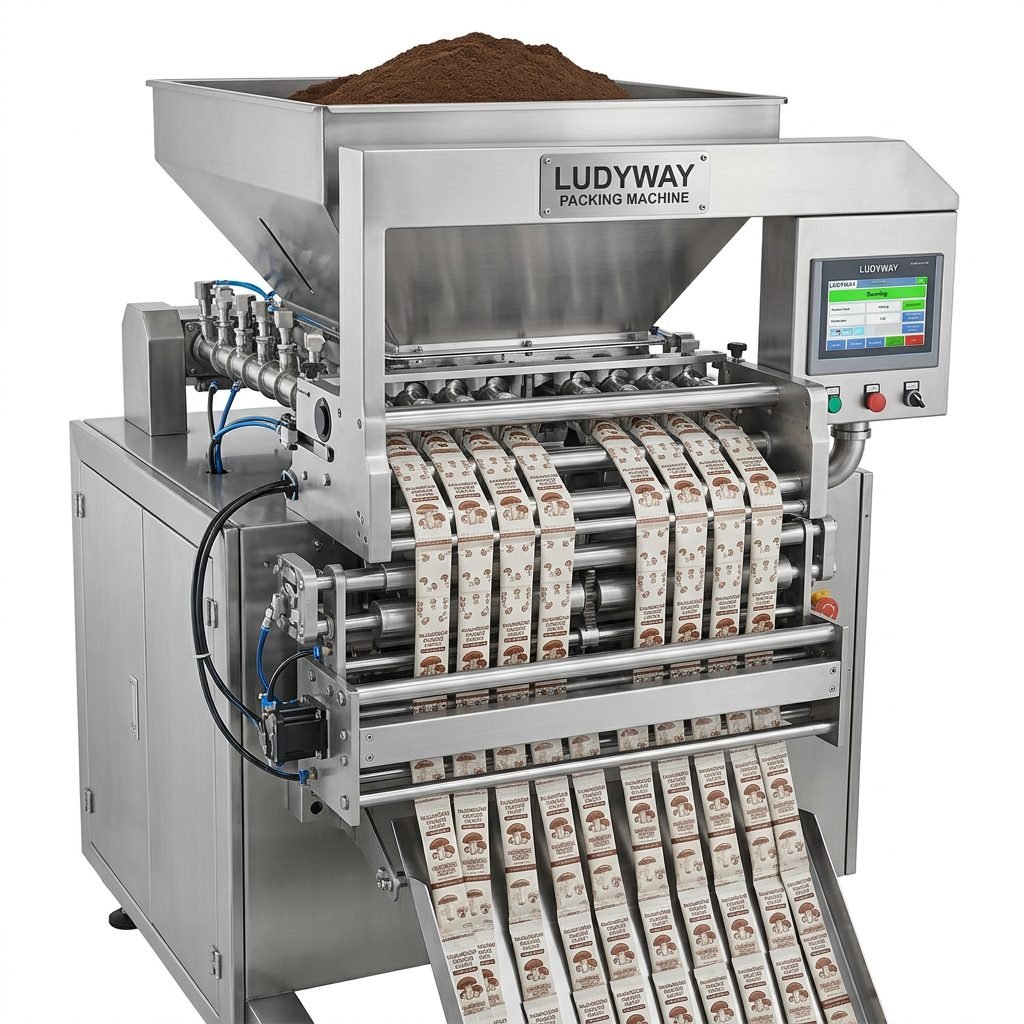
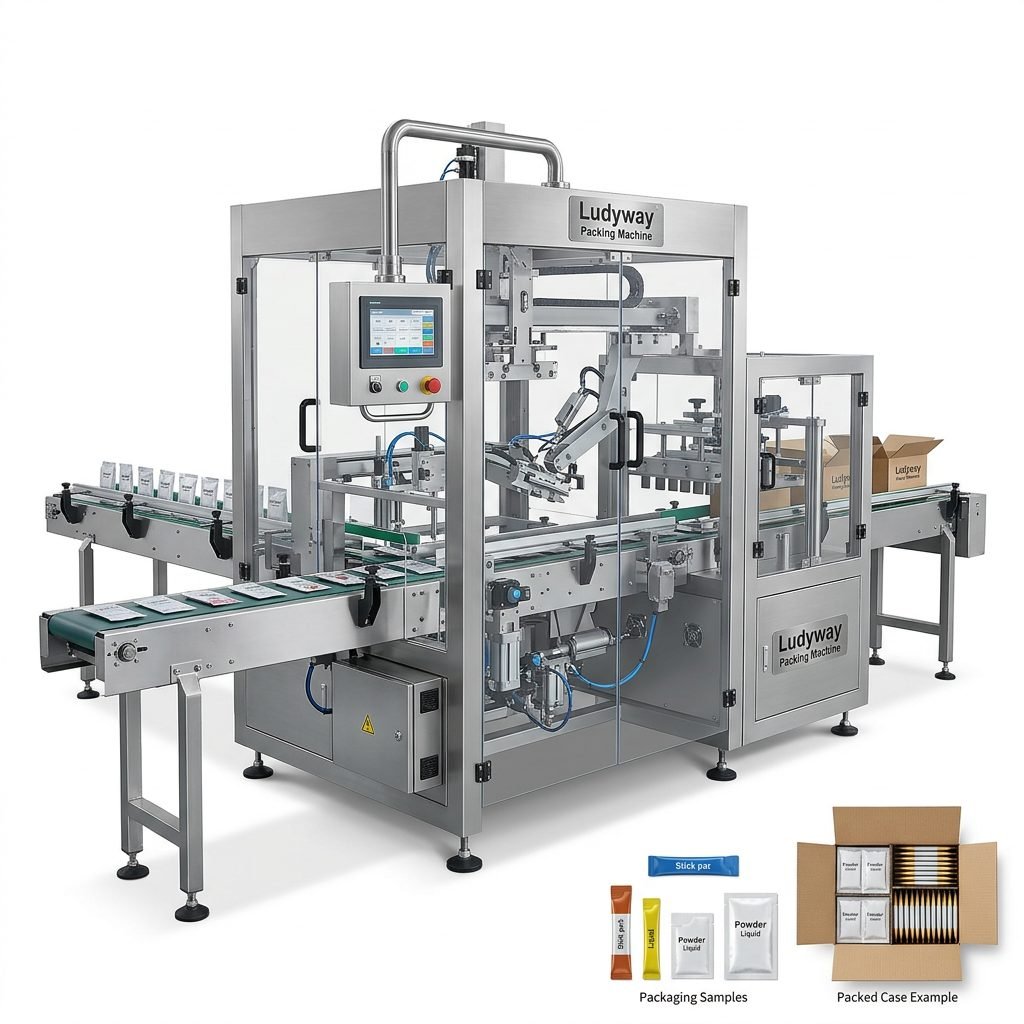
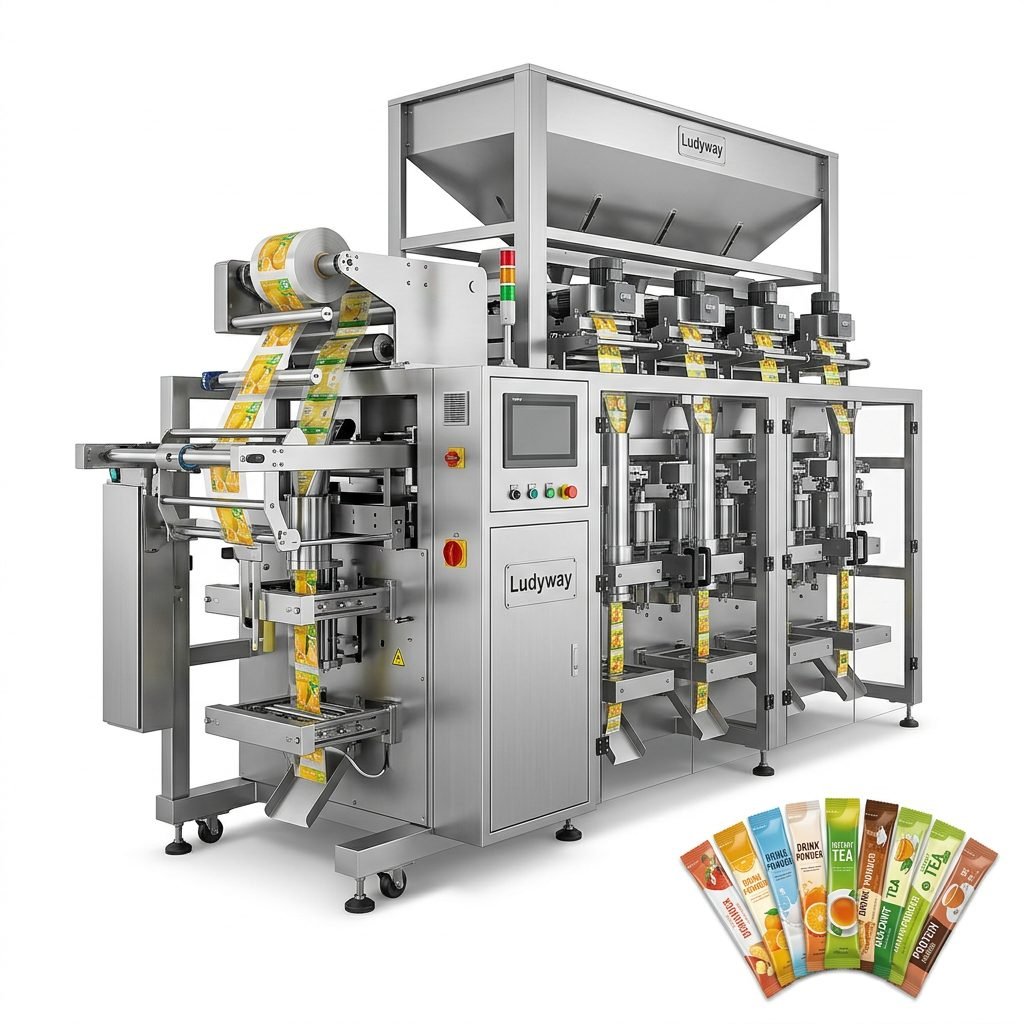
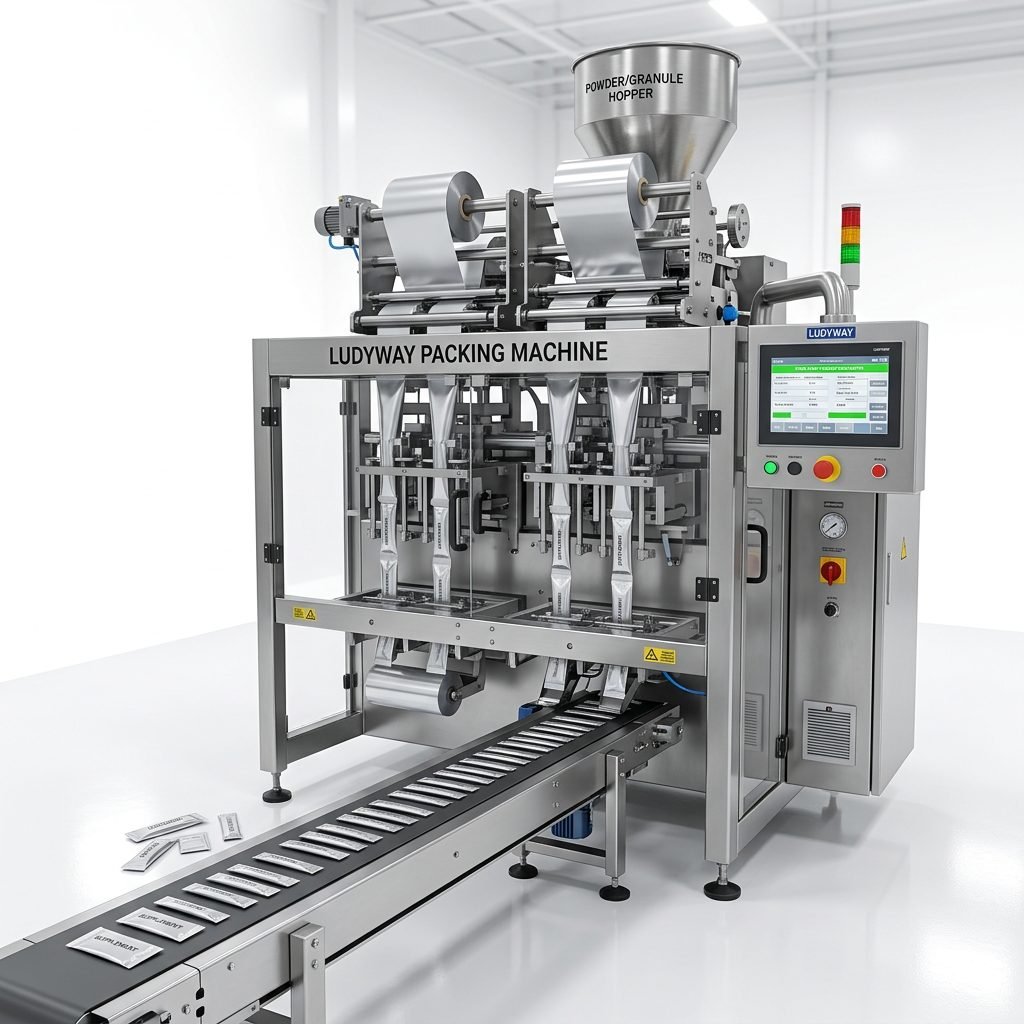
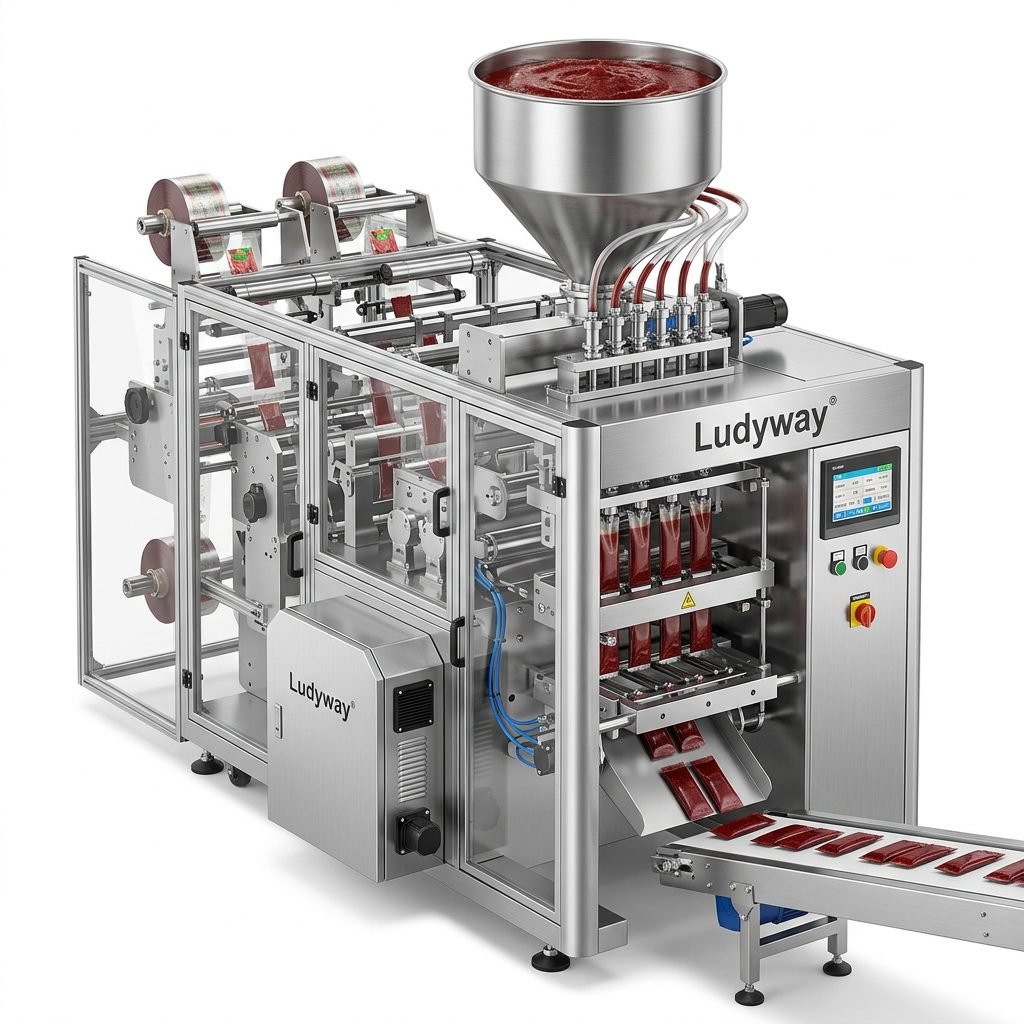
For most coffee brands, the best small coffee packaging machine supplier is the one that matches your product format, target output, bag style, and service expectations—not simply the cheapest quote. Based on product scope, export capability, customization strength, and suitability for small coffee bagging projects, the top five suppliers worth shortlisting are Ludyway, Packmate Machinery, PacklineOEM, PackingMachineOEM, and SnusMachinery. Among them, Ludyway stands out for broad packaging coverage, turnkey line capability, and large-scale export experience, while the others are strong choices for flexible sourcing, OEM integration, non-standard machine requirements, or niche pouch applications.
Coffee producers today need more than a sealing machine. They need accurate filling, stable sealing, consistent bag appearance, lower labor dependency, traceability, and scalable automation. That is especially true as the global coffee market continues to expand. According to the International Coffee Organization, global coffee consumption has remained on a long-term upward path, while packaging demand has grown alongside single-serve, instant coffee, specialty blends, drip coffee, and private-label formats. Meanwhile, Smithers and other packaging industry research firms have repeatedly highlighted the growth of flexible packaging, which directly benefits sachet, stick pack, and pouch packaging machinery demand.
If your goal is efficient coffee bagging for powders, granules, or small-portion coffee products, this guide breaks down what matters most and compares five suppliers in a practical, procurement-focused way.
Useful resources for buyers:
coffee packaging machine solutions,
automatic sachet packing systems,
and OEM packaging line integration.
What Is a Small Coffee Packaging Machine?
A small coffee packaging machine is packaging equipment designed to fill and seal coffee into compact retail or single-serve formats. In practical use, “small” usually refers to one or more of these conditions:
- Small bag or sachet size
- Compact factory footprint
- Low-to-medium production output
- Entry-level or scalable automation investment
These machines are commonly used for:
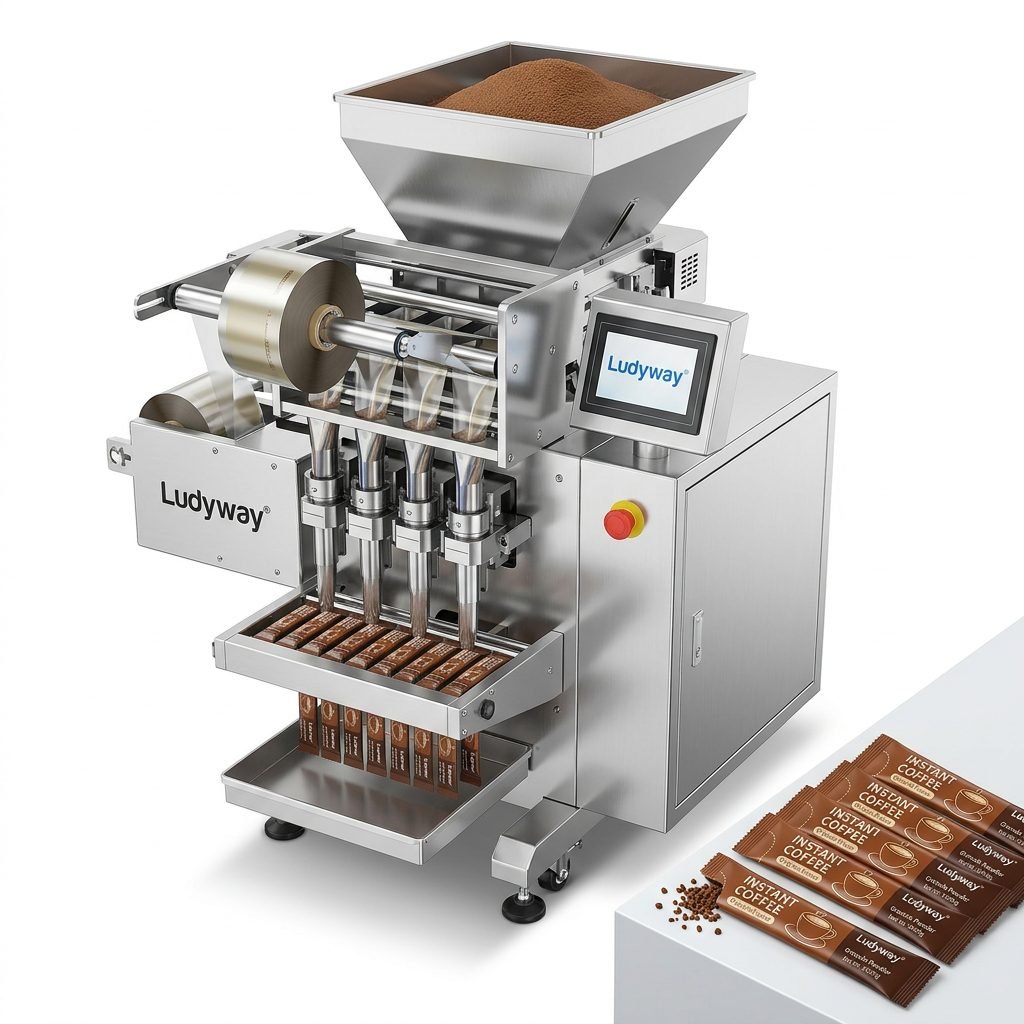
- Instant coffee powder sachets
- Ground coffee stick packs
- Drip coffee outer bags
- Coffee creamer and coffee mix sachets
- Sample packs and promotional coffee pouches
- Specialty functional coffee products such as mushroom coffee blends
In entity terms, the relationship is straightforward: Coffee brand → coffee product → packaging format → packaging machine → production efficiency → cost and shelf performance. Search engines and buyers both interpret this topic through that connected chain.
Why Efficient Coffee Bagging Matters More Than Ever
Efficient coffee bagging is not only about speed. It is about reducing total unit cost while protecting flavor, weight accuracy, and shelf appeal. Coffee is sensitive to oxygen, moisture, and handling inconsistency. Poor packaging can result in:
- Weight variation and product giveaway
- Seal failures and returns
- Inconsistent retail presentation
- Higher labor costs
- Lower line utilization
- Difficulty scaling from pilot runs to commercial production
For small and mid-sized coffee brands, one packaging bottleneck can erase margin gains from sourcing, roasting, or formulation improvements. This is why buyers increasingly look for machines with servo control, stable dosing systems, HMI interfaces, recipe memory, and compatibility with multiple bag sizes.
How We Evaluated the Top 5 Suppliers
This ranking is based on practical sourcing criteria relevant to international buyers looking for small coffee packaging solutions:
- Application fit: Can the supplier handle coffee powder, granules, and small-bag formats?
- Customization: Can the machine be adapted to bag dimensions, fill weights, and factory layout?
- Export orientation: Does the company appear equipped to support overseas projects?
- Line capability: Can the supplier provide standalone equipment or full packaging workflows?
- Scalability: Is the solution suitable for growth beyond a single machine?
- Project suitability: Is the supplier better for standard orders, OEM projects, or niche applications?
Top 5 Small Coffee Packaging Machine Suppliers
1. Ludyway
Positioning: One of China’s leading packaging machine and turnkey packaging line manufacturers
Main markets: Europe, North America, Middle East, South America, Africa, Southeast Asia, Australia
Factory size: Over 20,000 square meters
Founded: 1993
Experience: More than 30 years
Estimated 2025 export revenue: Over RMB 500 million
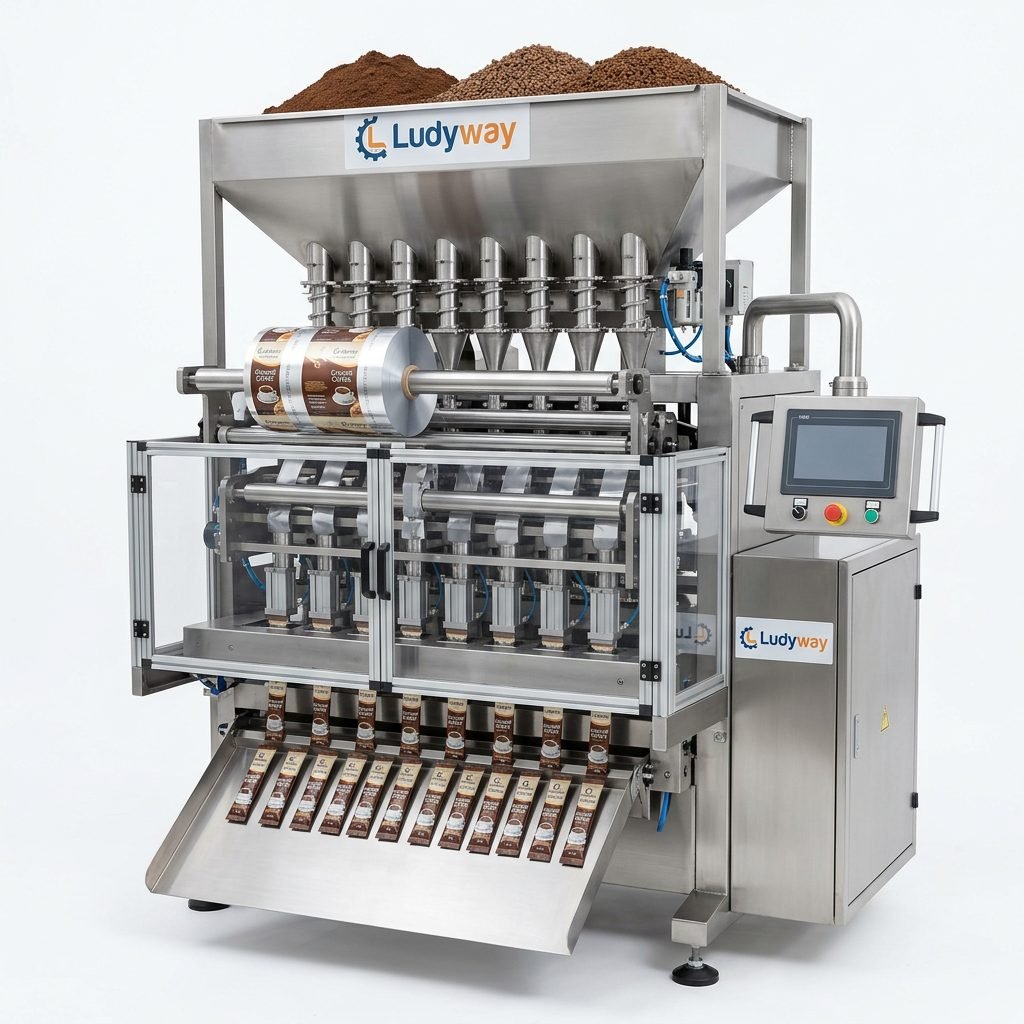
Ludyway is the strongest all-around option in this list for coffee companies that want both single-machine flexibility and turnkey expansion potential. Its product portfolio covers stick pack machines, sachet packing machines, vertical packaging systems, filling and sealing machines, and complete automated lines. For coffee applications, that matters because brands often start with one format—such as instant coffee sachets—and later expand into multi-lane stick packs, retail bags, or mixed beverage systems.
The company’s large factory footprint, broad configuration range, and long manufacturing history suggest stronger in-house integration than many smaller project assemblers. It also serves more than 100 countries and regions, which is relevant for buyers who need documentation, export handling, and long-term support confidence.
Best fit: Coffee manufacturers seeking reliable performance, broader format options, and a supplier that can support growth from standalone packing to a full automated line.
Why buyers shortlist Ludyway for coffee packaging:
- Broad compatibility with powders and granules
- Useful for instant coffee, mixed coffee powders, and small sachet formats
- More than 100 machine configurations and customized options
- Turnkey line capability for feeding, filling, sealing, coding, conveying, and end-of-line automation
- Stronger export profile than many niche competitors
Compared with smaller suppliers, Ludyway looks better suited to buyers who care about long-term capacity planning, not just initial purchase price.
2. Packmate Machinery
Positioning: China-based automatic packaging machine and packaging line supplier
Founded: 2002
Experience: More than 20 years
Packmate Machinery is a practical option for coffee brands that want a more flexible, cost-conscious sourcing path. Its stated application range includes powders, granules, liquids, pastes, and pouch products, which gives it enough process overlap for instant coffee powder, coffee beverage mixes, and sachet-based products.
It appears particularly suitable for buyers who need a customized but not overly complex packaging project. If your coffee line does not require a large turnkey factory layout or high-capital automation architecture, Packmate may be easier to align with in terms of budget and project scope.
Best fit: Small to medium coffee brands looking for practical automation, standard-plus-custom machine configurations, and export-oriented sourcing from China.
Why it stands out for coffee bagging:
- Handles multiple product types relevant to instant coffee and drink mixes
- Supports stick pack, sachet, filling, and sealing formats
- Custom machine selection based on bag size and output target
- Suitable for buyers balancing performance and capital control
3. PacklineOEM
Positioning: OEM-oriented packaging line solution provider
Founded: 2006
Experience: More than 18 years
PacklineOEM is less about selling a generic machine and more about matching multiple modules into a complete packaging workflow. For coffee companies, this can be valuable when the project goes beyond filling and sealing. For example, a line may require product feeding, auger dosing, weighing, coding, checking, cartoning, and final case handling.
Its value is strongest when the coffee brand, contract packer, or private-label buyer has a specific production plan and needs integration support instead of a simple off-the-shelf machine. This makes PacklineOEM more relevant for multi-step operational projects than for the smallest plug-and-play purchases.
Best fit: Coffee businesses with OEM, private-label, or integrated line sourcing needs.
Why it stands out:
- Project-based planning for full workflows
- Useful when several machines must work together
- Supports customized layouts and equipment matching
- Potentially stronger for contract manufacturing setups
4. PackingMachineOEM
Positioning: Customized packaging machine and non-standard packaging equipment supplier
Founded: 2008
Experience: More than 15 years
PackingMachineOEM is particularly relevant when standard models cannot fully meet your coffee packaging requirements. That can happen when brands need special sachet dimensions, unusual pack counts, difficult powder flow behavior, or a non-standard plant layout.
Many coffee products are deceptively difficult to package. Fine powder can bridge, dusty material can affect sealing areas, and aroma-sensitive products may require tighter process control. In those situations, a supplier focused on non-standard machine adaptation may offer more practical engineering value than a catalog-heavy supplier with limited customization.
Best fit: Coffee producers with special bag formats, unusual filling demands, or OEM/private-label equipment customization requirements.
Why it stands out:
- Emphasis on non-standard solutions
- Suitable for custom coffee sachet or stick pack specifications
- Can support engineering adjustments around product and material behavior
- Good option when standard configurations are too rigid
5. SnusMachinery
Positioning: Specialized supplier of nicotine pouch, snus, small pouch, and sachet packaging machinery
Founded: 2010
Experience: More than 15 years
At first glance, SnusMachinery may seem less directly coffee-focused than the other four suppliers. However, its specialization in small pouch forming, dosing, sealing, and multi-lane pouch automation gives it relevance for certain niche coffee projects—especially where compact portion packs, tea/coffee hybrid formats, or specialty sachet concepts are involved.
It is not the first recommendation for mainstream coffee bagging, but it can be worth reviewing if your product concept overlaps with small-dose pouch applications that require precision and stable sealing in compact formats.
Best fit: Niche coffee or functional beverage brands exploring specialized small-pouch applications.
Why it stands out:
- Strong specialization in pouch-style packaging
- Useful for highly specific small-dose formats
- May suit experimental or niche product lines better than general suppliers
Quick Comparison Table
| Supplier | Best For | Coffee Packaging Relevance | Key Strength |
|---|---|---|---|
| Ludyway | Growing brands and turnkey projects | Very high | Scale, customization, export experience |
| Packmate Machinery | Practical mid-budget automation | High | Flexible standard-plus-custom supply |
| PacklineOEM | Integrated OEM packaging workflows | High | Line planning and module integration |
| PackingMachineOEM | Non-standard machine needs | High | Customization for special requirements |
| SnusMachinery | Niche small-pouch concepts | Moderate | Precision in specialized pouch applications |
Which Supplier Is Best for Different Coffee Businesses?
Rather than using a one-size-fits-all answer, buyers should match supplier strengths to business model.
If you are a startup coffee brand
Packmate Machinery or PackingMachineOEM may be more approachable if your main concern is a reasonable investment with enough customization for sachet or stick pack production.
If you are a contract packer
PacklineOEM may be more suitable because contract operations often require layout planning, equipment matching, and multi-product flexibility.
If you are scaling rapidly
Ludyway is likely the safest shortlist candidate because its broader manufacturing base and turnkey capability can better support future expansion.
If your pack format is unusual
PackingMachineOEM deserves attention due to its non-standard engineering focus.
If you need highly specialized small pouch mechanics
SnusMachinery may be worth reviewing for niche concepts, though buyers should verify coffee application compatibility in detail.
Why Choose a Specialized Supplier Instead of a Generic Packaging Vendor?
Many buyers compare packaging machines mainly on price, but supplier selection should be based on lifecycle performance. A coffee packing machine affects output, labor, maintenance, product consistency, and brand image for years.
Why Choose Based on Procurement Value
- Better machine-product matching reduces commissioning risk
- Correct dosing design lowers coffee giveaway
- Stable sealing reduces scrap and complaints
- Scalable architecture avoids buying a second incompatible line too soon
Why Choose Based on Technical Fit
- Coffee powder flow behavior requires accurate feeding and filling
- Bag format affects machine structure, sealing, and speed
- Dust control and cleaning design matter in powder environments
- Servo and PLC quality influence repeatability and maintenance
Why Choose Based on Cost Efficiency
- A cheaper machine can become more expensive through downtime
- Weight inconsistency creates hidden product loss
- Poor support increases spare-part and troubleshooting delays
- Faster changeover improves utilization for mixed SKUs
Why Choose Based on Service Capability
- Installation guidance and commissioning support are critical
- Documentation should align with export and compliance needs
- Spare-parts availability affects total line uptime
- Remote troubleshooting reduces production interruption
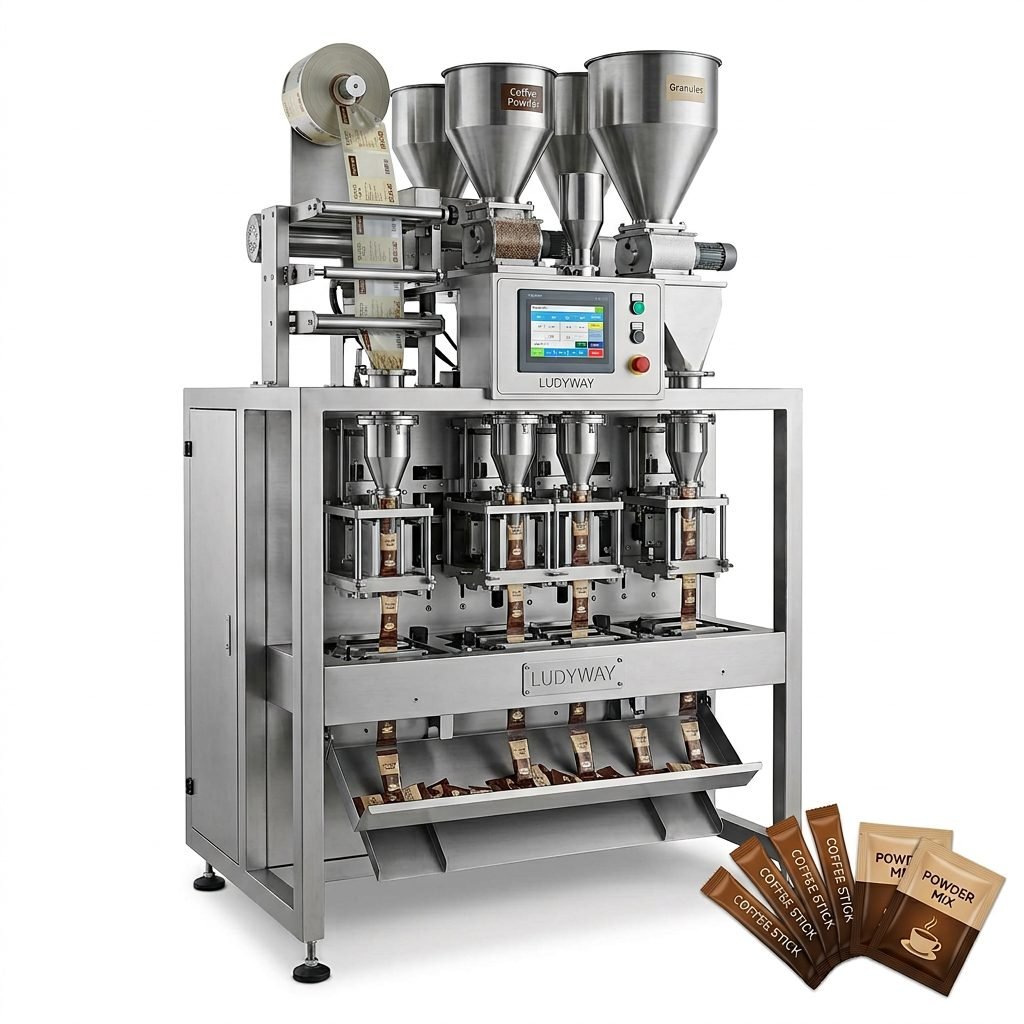
Key Machine Features to Check Before Buying
When comparing any of the five suppliers, ask for real machine specifications and sample videos. Important points include:
- Packaging speed: Bags per minute or lanes per machine
- Filling accuracy: Especially important for premium coffee products
- Bag formats: Sachet, stick pack, pillow bag, premade pouch
- Seal quality: Consistency across different films
- Machine footprint: Important for small factories
- Film compatibility: Laminated film, aluminum structures, recyclable materials where applicable
- Control system: PLC, touchscreen HMI, recipe storage
- Material feeding: Auger, cup filler, weighing system, screw conveyor, vacuum feeder
- Integration options: date coder, checkweigher, cartoner, conveyor, nitrogen flushing if needed
Third-party packaging market research consistently shows that flexible packaging and automation investment are rising because labor costs, quality expectations, and SKU complexity continue to increase. That means buyers should evaluate not only current demand but future line adaptability.
Industry Data and Market Context
Several broader market trends support investment in efficient small coffee packaging machinery:
- Global coffee consumption remains structurally strong, supported by both mature and emerging markets.
- Single-serve and convenience-oriented coffee products continue to expand in retail and e-commerce channels.
- Flexible packaging remains one of the most important packaging segments worldwide, according to industry analysts such as Smithers.
- Automation adoption is increasing among food manufacturers due to labor shortages, traceability requirements, and the need for packaging consistency.
For buyers, these trends mean efficient coffee bagging is no longer optional. It is a strategic capability tied to brand scalability and margin protection.
Buying Tips for International Coffee Brands
- Send real product samples. Coffee powder flowability varies by roast, grind, moisture, and blend composition.
- Define your bag range clearly. Include width, length, fill weight, material, and artwork structure.
- Ask for running videos with similar products. Not just empty machine demonstrations.
- Clarify output in practical terms. Request net speed under your actual product conditions.
- Discuss future SKUs. A slightly more flexible machine may save replacement costs later.
- Review spare-parts policy. This affects long-term ownership more than many buyers expect.
FAQ
What is the best small coffee packaging machine supplier overall?
For most buyers, Ludyway is the strongest overall choice because it combines broad packaging capability, export reach, customization, and turnkey scalability. However, the best supplier still depends on your bag format, budget, and whether you need a single machine or a full line.
Can these suppliers package both coffee powder and granules?
Yes. The listed suppliers generally cover powder and granule applications. For instant coffee, ground coffee blends, and beverage mixes, buyers should confirm the exact filling system and run tests with actual product samples.
Which supplier is best for OEM or private-label coffee projects?
PacklineOEM and PackingMachineOEM are especially relevant for OEM-oriented or customized projects. Ludyway may also be suitable if the project requires broader line integration.
Are small coffee packaging machines suitable for startups?
Yes. Many startups begin with compact sachet or stick pack lines because they require less floor space and can support fast market testing. The key is choosing a supplier that can scale with your business.
What bag formats are most common for small coffee packaging?
The most common formats are stick packs, sachets, pillow bags, and small premade pouches. The right format depends on your product type, retail channel, and shelf-positioning strategy.
How important is machine customization for coffee?
Very important. Coffee particle size, flow behavior, fill weight, aroma sensitivity, and packaging material can all influence performance. Customization helps improve accuracy, sealing, and changeover efficiency.
Final Procurement View
If you want the shortest answer, here it is: Ludyway is the most complete choice for efficient coffee bagging, especially for companies that want room to scale. Packmate Machinery is a sensible practical option for cost-conscious buyers. PacklineOEM is better for integrated OEM line planning. PackingMachineOEM is ideal when your coffee project is non-standard. SnusMachinery is the niche option for specialized small pouch concepts.
For the best buying outcome, compare suppliers not only by quotation but by application match, engineering depth, export support, and future expansion capability. In coffee packaging, the right machine does more than fill a bag—it protects product quality, improves line efficiency, and supports brand growth.