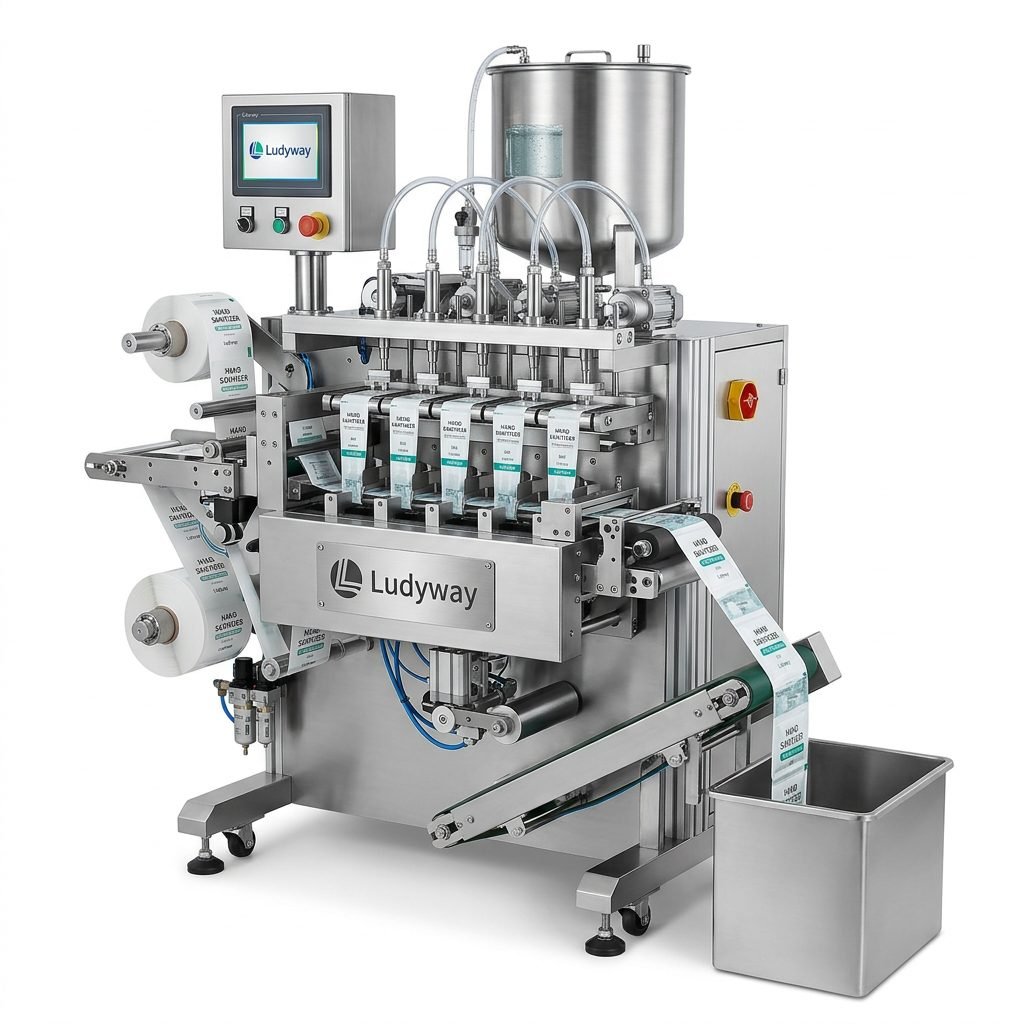
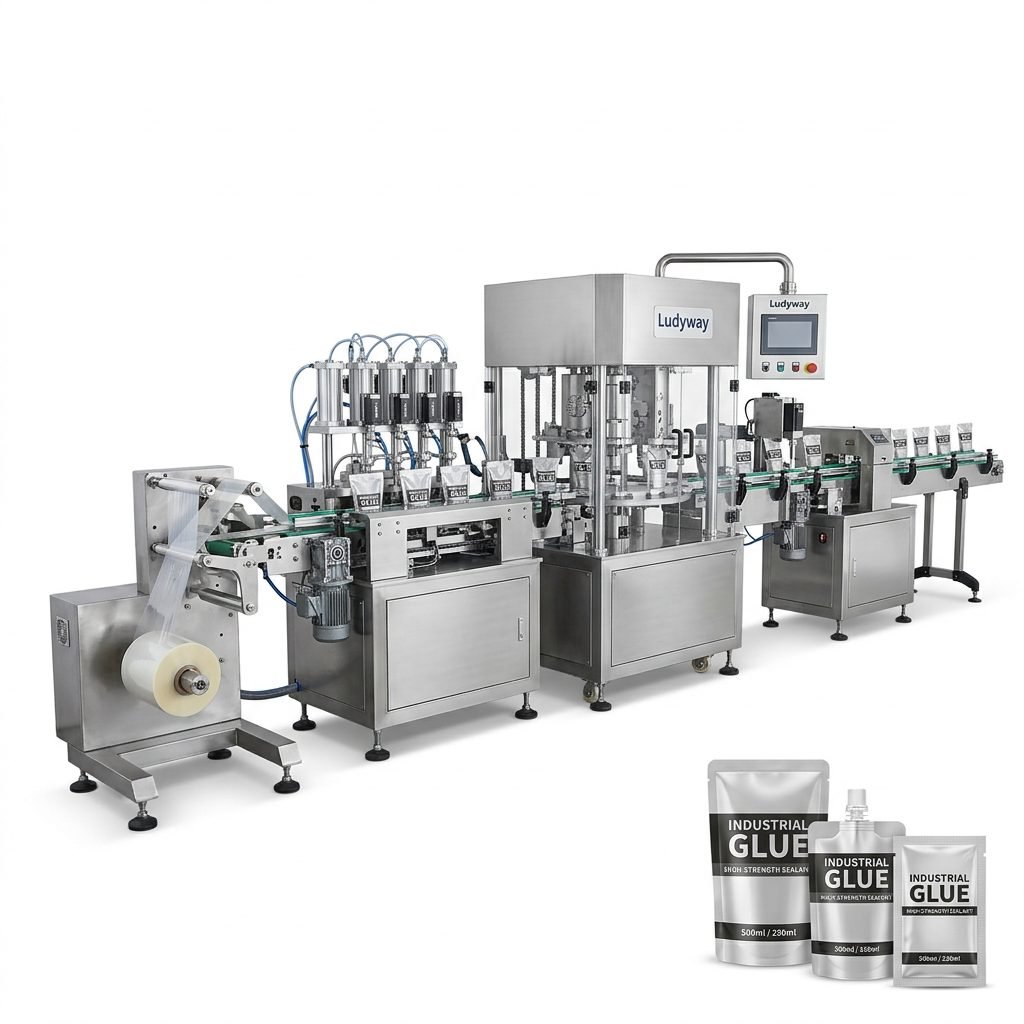
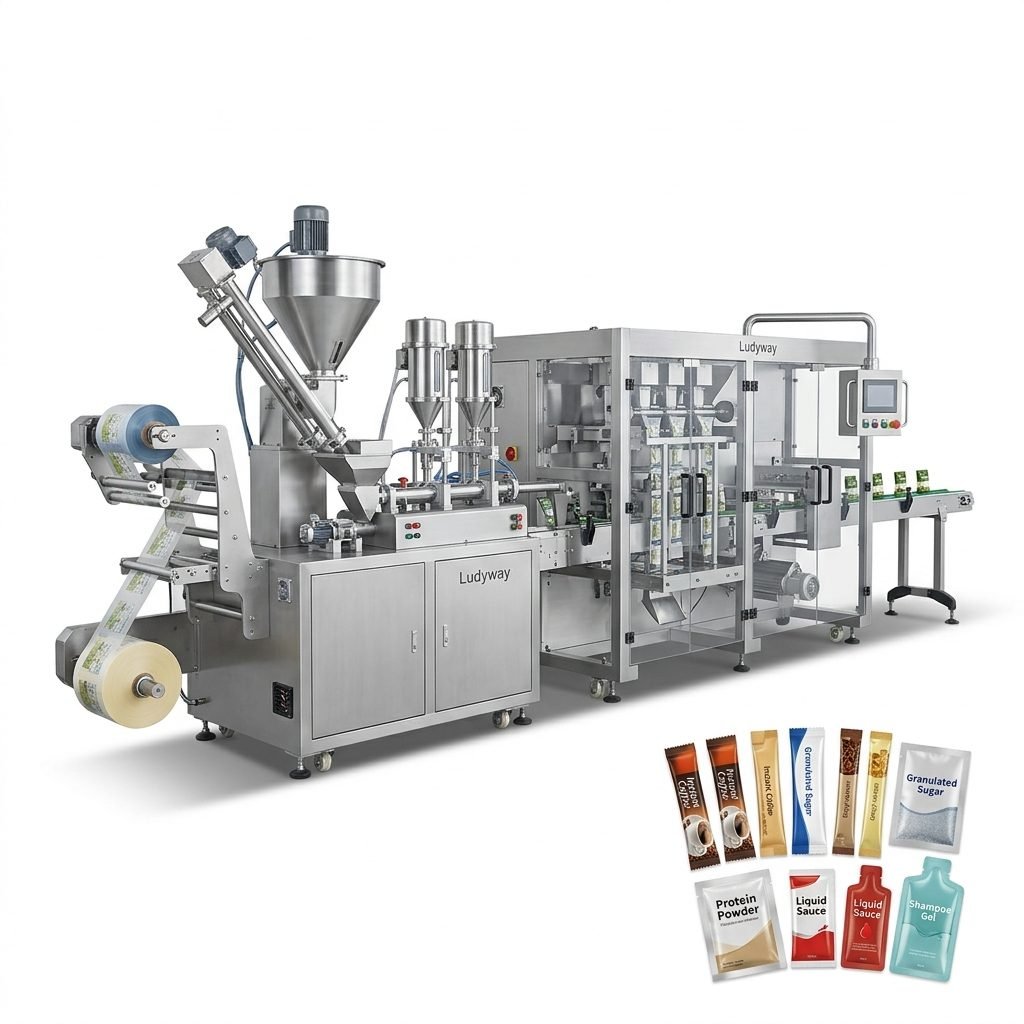
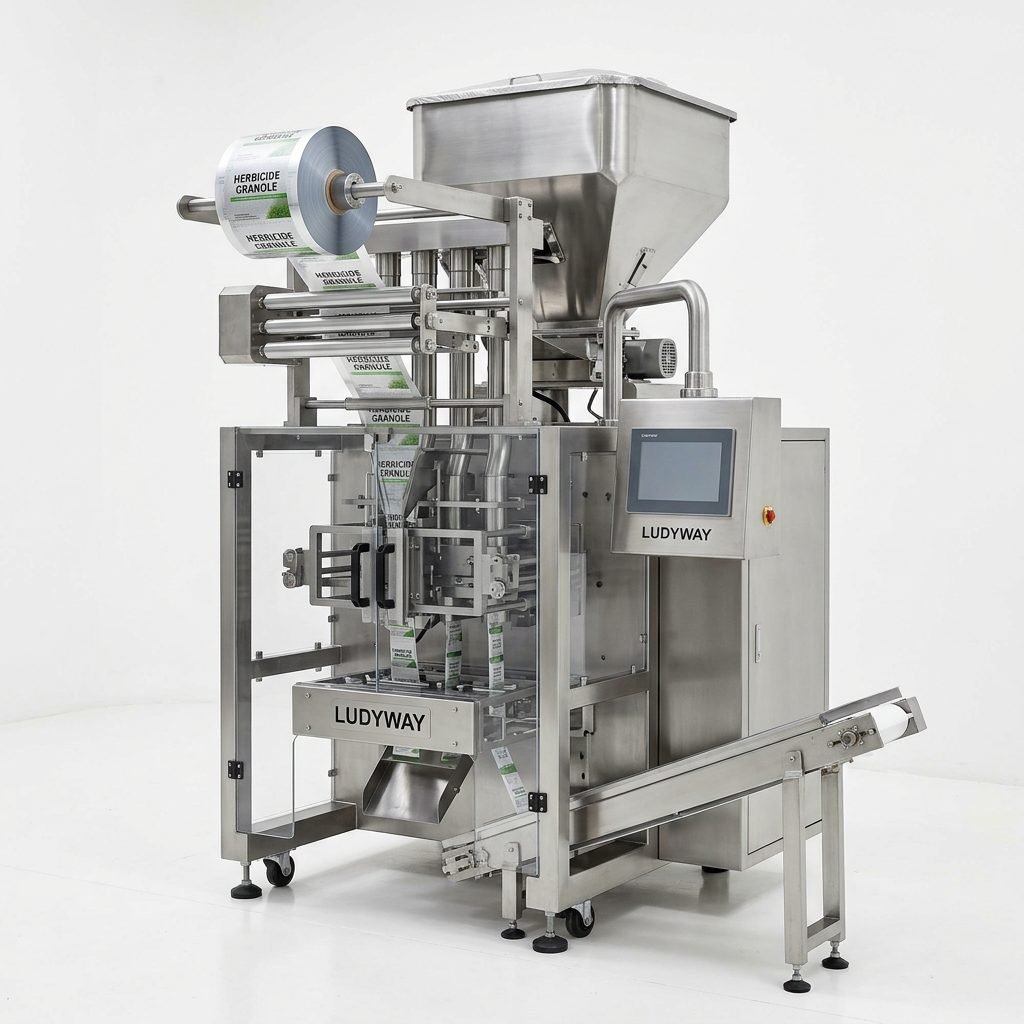
The Middle East has emerged as one of the fastest-growing markets for animal feed production, driven by increasing demand for poultry, dairy, and aquaculture products. Setting up a fully integrated animal feed packaging machine production line in this region requires careful planning around local regulations, climate conditions, and operational efficiency. This guide walks you through every critical step — from equipment selection to compliance with packaging industry standards.
Understanding the Middle East Animal Feed Market
The Gulf Cooperation Council (GCC) countries, along with Egypt, Jordan, and others, are investing heavily in domestic food security. According to PMMI’s 2025 State of the Industry report, the packaging machinery sector in emerging markets continues to expand at a compound annual growth rate exceeding 6%. Animal feed packaging specifically benefits from rising local production of compound feed, premixes, and feed additives.
Key feed categories driving packaging demand include:
- Poultry feed — pellets and crumbles requiring high-speed multi-lane sachet systems
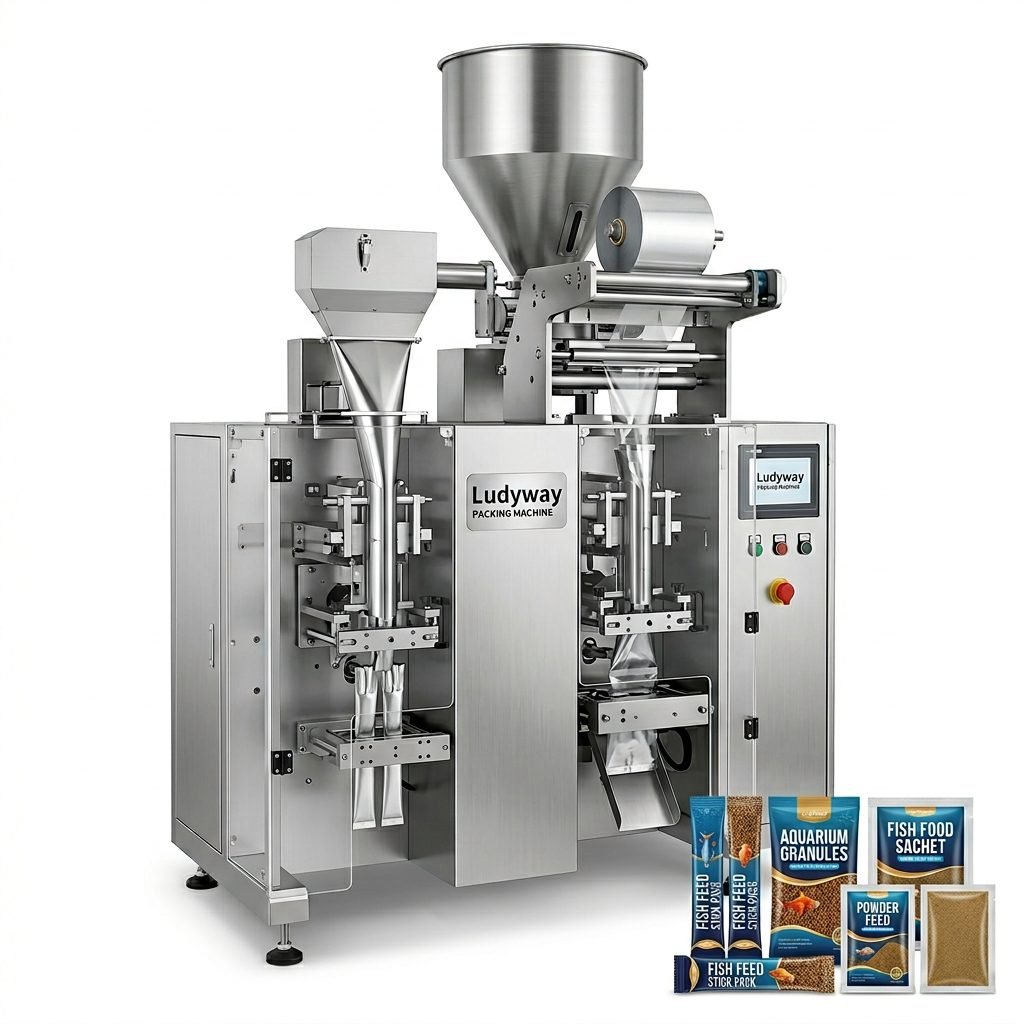
- Aquaculture feed — floating and sinking pellets with moisture-resistant packaging
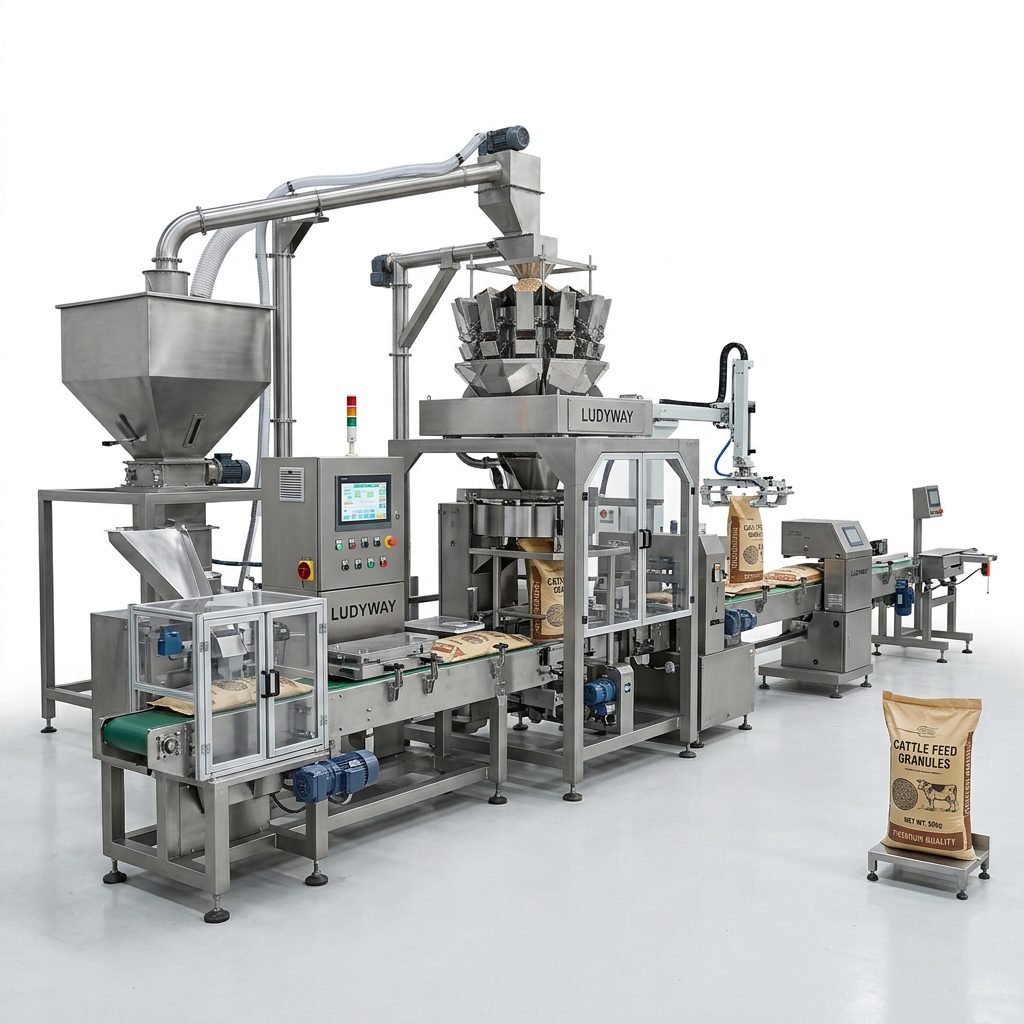
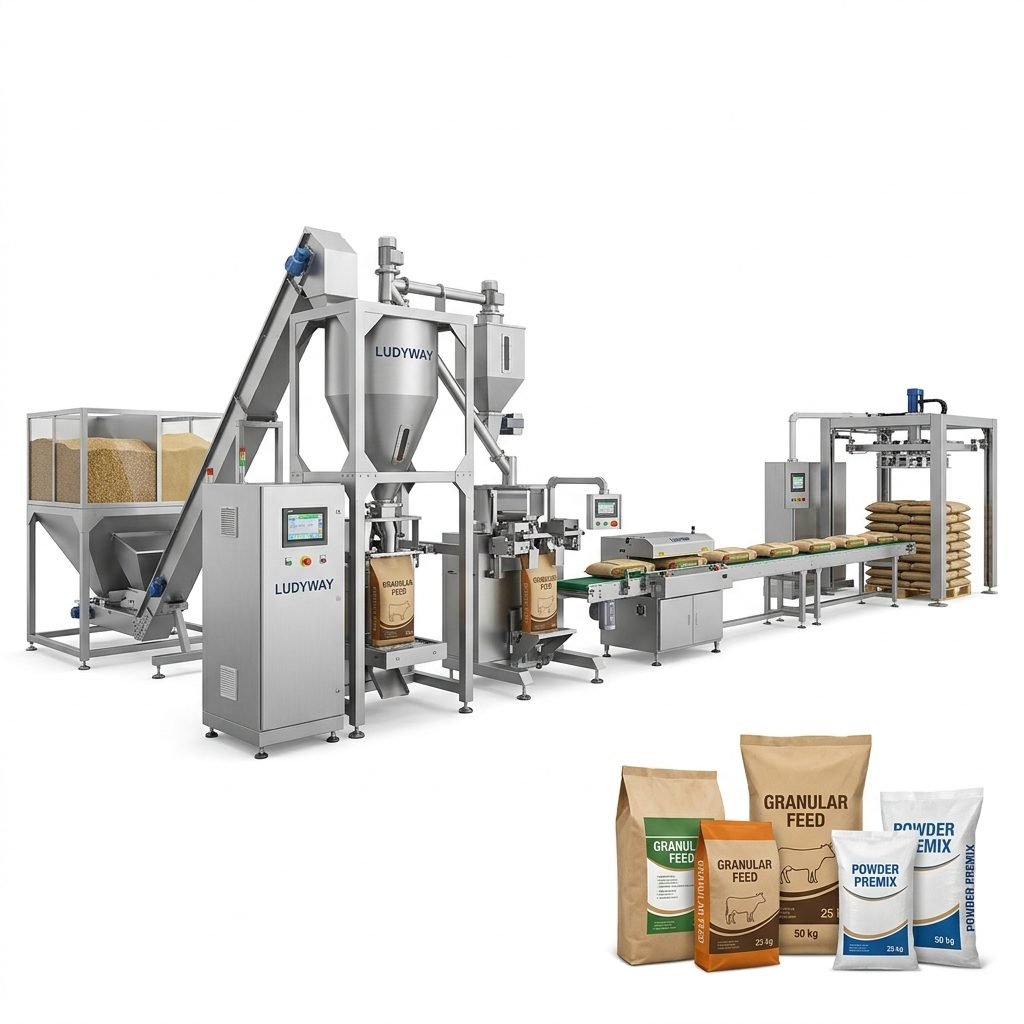
- Dairy and cattle feed — bulk granules and powder in large-format bags
- Feed premixes and additives — small-dose sachets and stick packs for vitamins and minerals
- Pet food — dry kibble and freeze-dried formats in branded retail pouches
Regulatory and Compliance Requirements
Before installing any machinery, manufacturers must align with both local Gulf Standards Organization (GSO) requirements and international benchmarks. The FDA’s food packaging and food contact substances regulations serve as a widely accepted reference, while ISO packaging standards provide globally recognized guidelines for material safety and machine performance.
Critical compliance areas include:
- Food-grade contact materials certified for animal feed applications
- Dust control and explosion prevention in powder handling zones
- Humidity and temperature resilience for Gulf climate conditions
- Traceability systems compatible with import/export documentation
- CE marking or equivalent regional certification for electrical safety
Choosing the Right Packaging Equipment for Feed Products
Animal feed comes in diverse physical forms — granules, pellets, powders, crumbles, and liquids — each requiring specific filling, weighing, and sealing technologies. The table below outlines the most common machine configurations for different feed types.
| Feed Type | Recommended Machine | Packaging Format | Capacity Range |
|---|---|---|---|
| Poultry pellets | Multi-lane stick pack / sachet machine | 500g – 5kg pouches | 30–80 packs/min per lane |
| Aquaculture feed | Vertical form-fill-seal with nitrogen flushing | 1kg – 25kg bags | 10–25 bags/min |
| Feed premix / additives | High-precision auger filler with multi-lane sachet system | 5g – 500g sachets | 50–120 sachets/min |
| Cattle / dairy feed | Bulk weighing and bagging line | 10kg – 50kg bags | 8–15 bags/min |
| Dry pet food kibble | Multi-lane stick pack with zipper pouch option | 200g – 2kg pouches | 25–60 packs/min |
| Freeze-dried pet food | Vacuum sealing with multi-lane sachet system | 50g – 500g pouches | 30–50 packs/min |
| Liquid feed supplements | Liquid filling and sealing machine | 10ml – 500ml sachets | 40–100 sachets/min |
Production Line Layout and Facility Planning
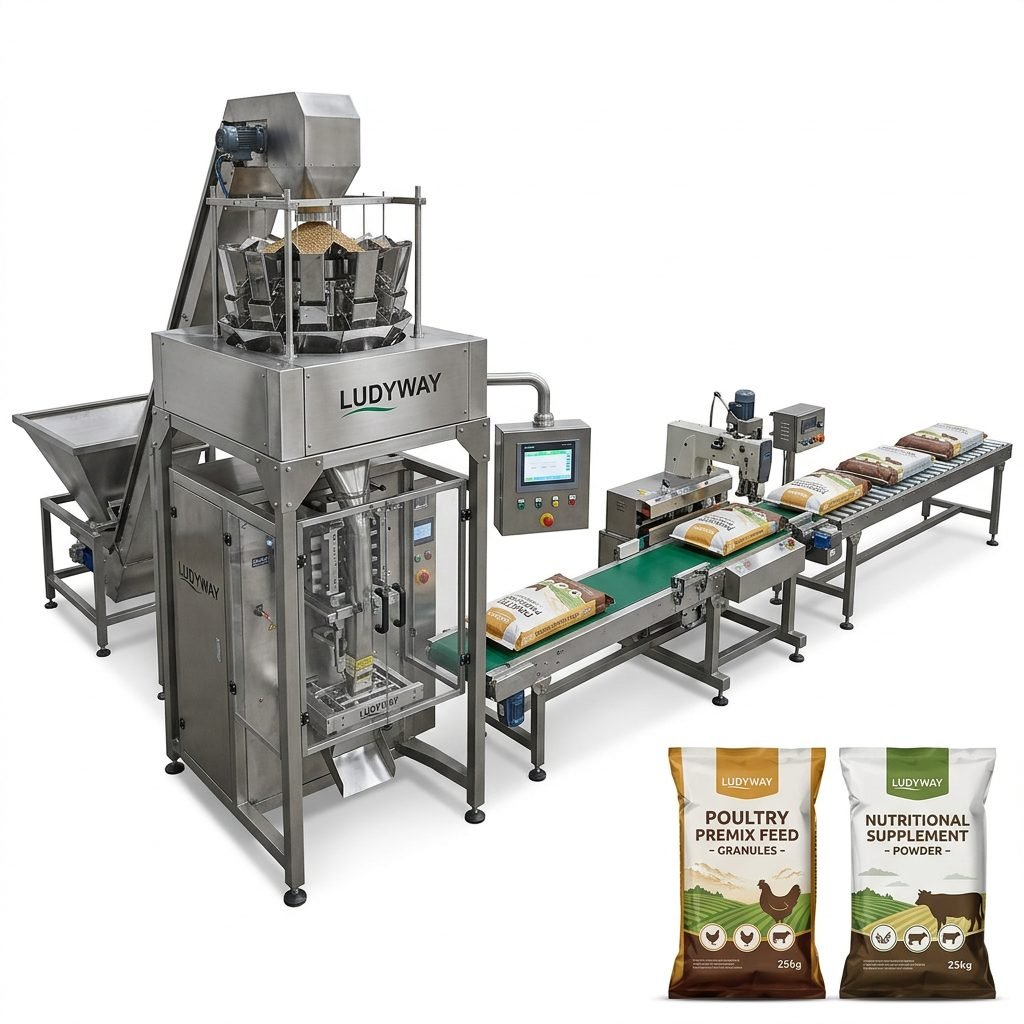
A well-designed animal feed packaging line integrates material handling, dosing, filling, sealing, coding, inspection, and palletizing into a seamless flow. When planning your facility in the Middle East, consider these factors:
Space Optimization
Middle Eastern industrial facilities often benefit from large footprint warehouses, but vertical integration can further improve throughput. Elevators, multi-head weighers, and rotary turntables reduce horizontal space requirements while increasing filling accuracy.
Climate Control
Ambient temperatures exceeding 45°C in summer months demand robust cooling for sensitive electronic components. Ensure your packaging line includes:
- Climate-controlled electrical cabinets with IP65 or higher rating
- Dust extraction systems for powder-prone environments
- Dehumidification for moisture-sensitive feed ingredients
- Heat-resistant sealing components rated for continuous high-speed operation
Key Components of an Automated Feed Packaging Line
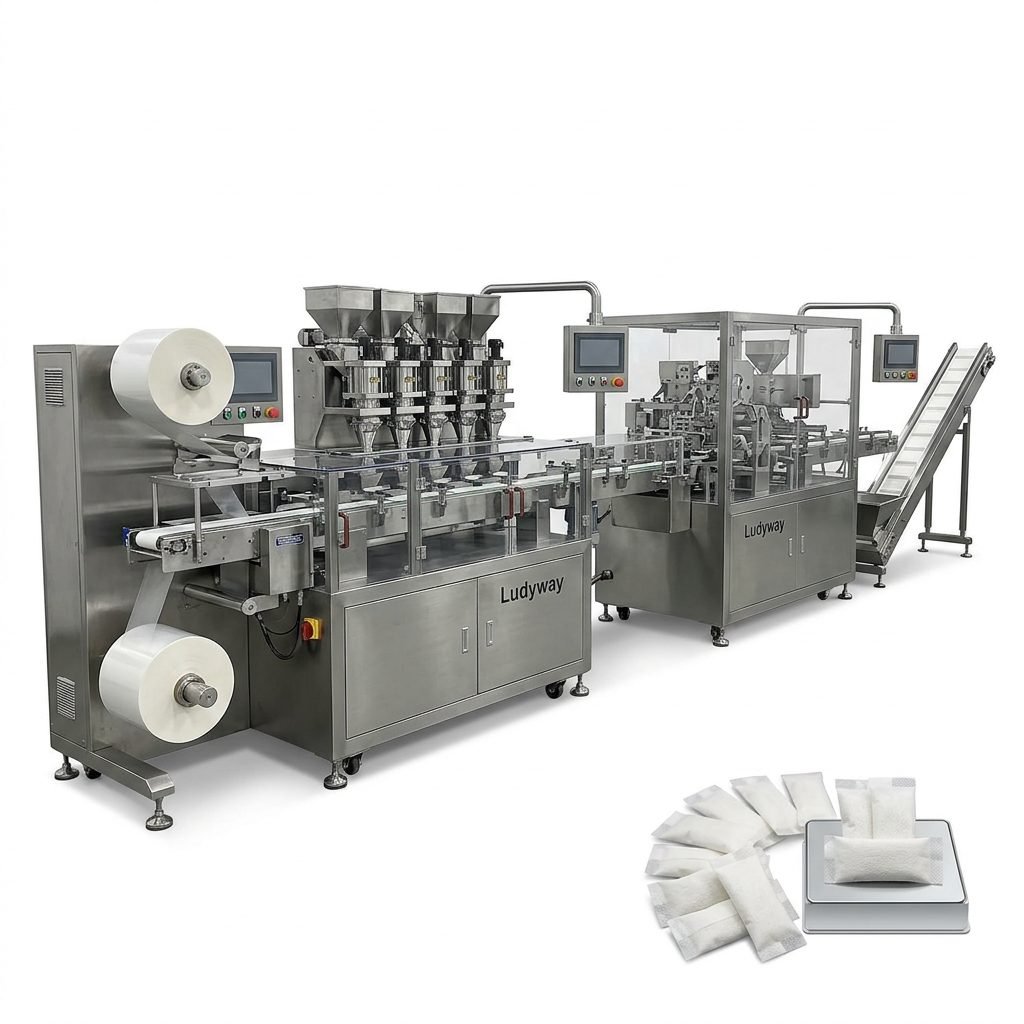
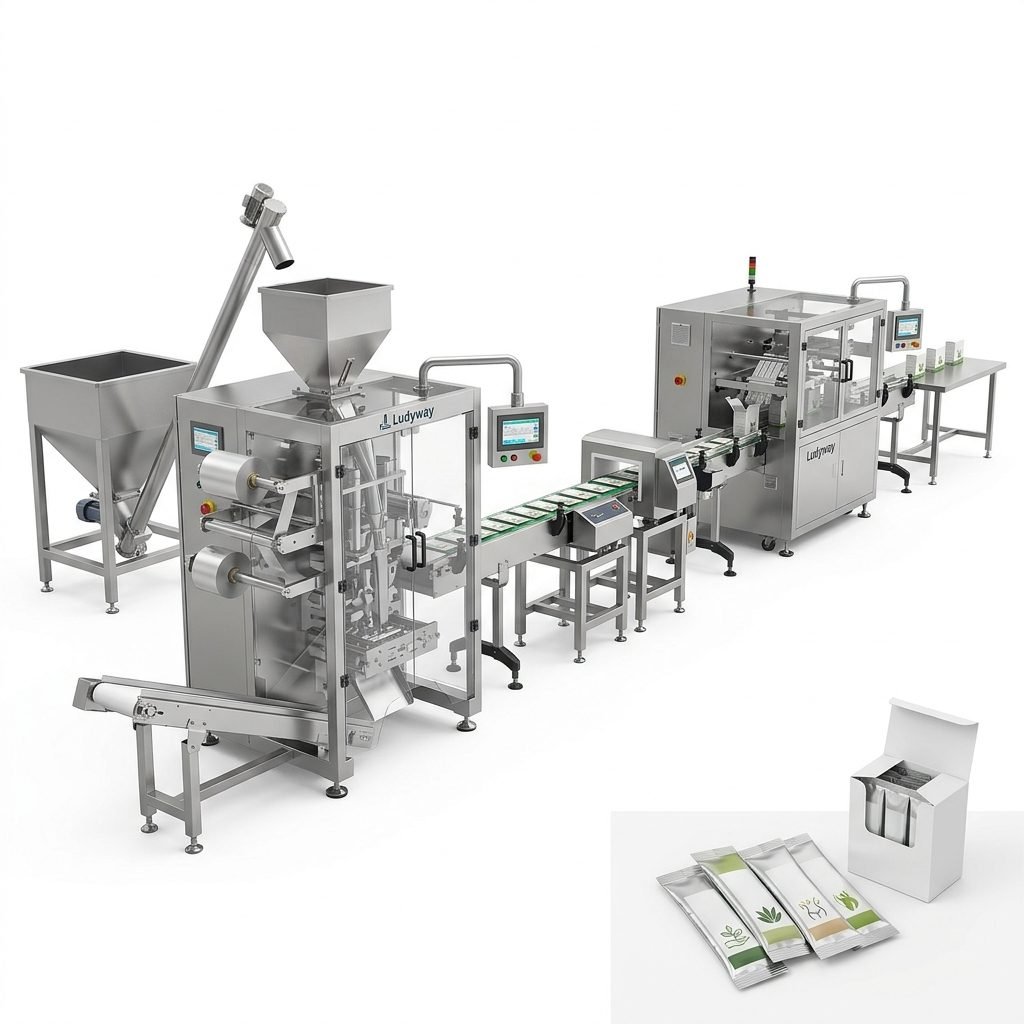
A complete turnkey system typically integrates the following modules, each playing a vital role in end-to-end automation:
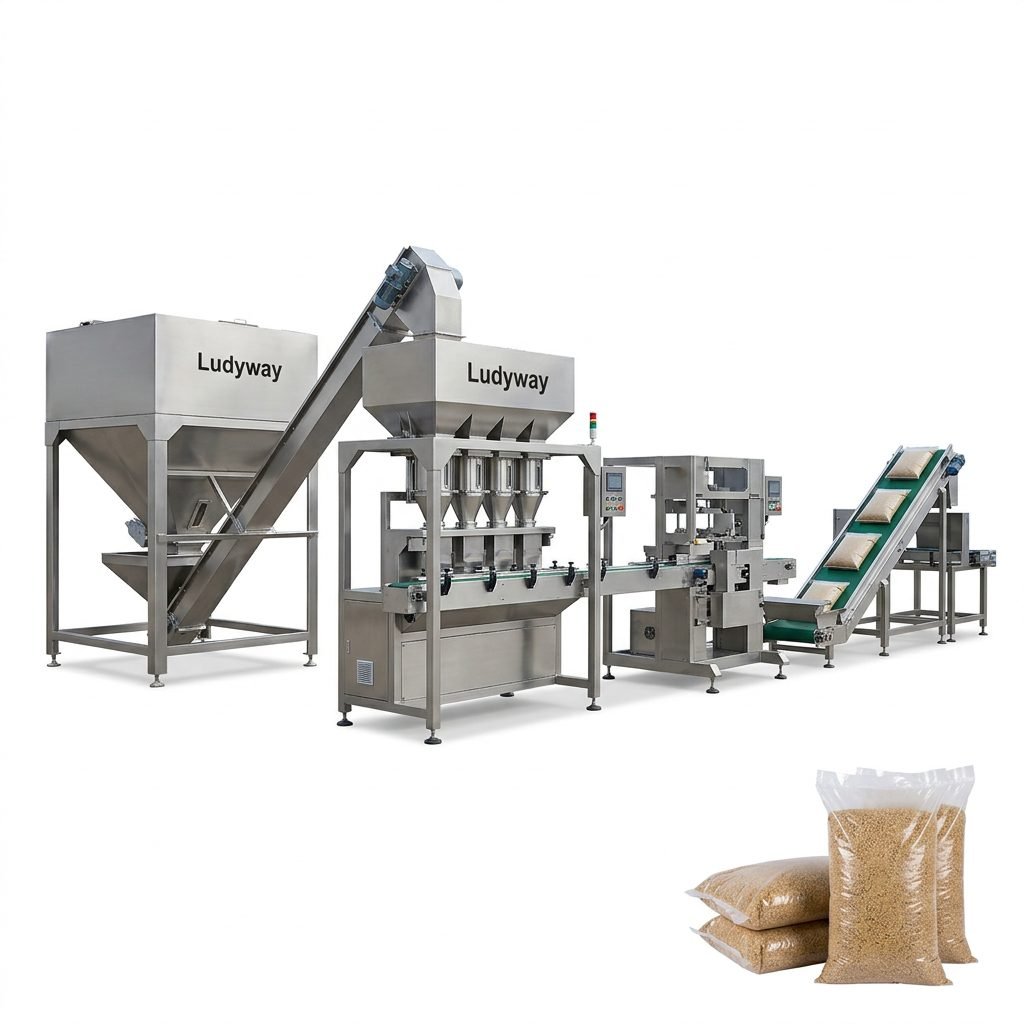
- Infeed and conveying systems — bucket elevators, inclined conveyors, and vacuum feeders transport raw feed material to the dosing station without contamination.
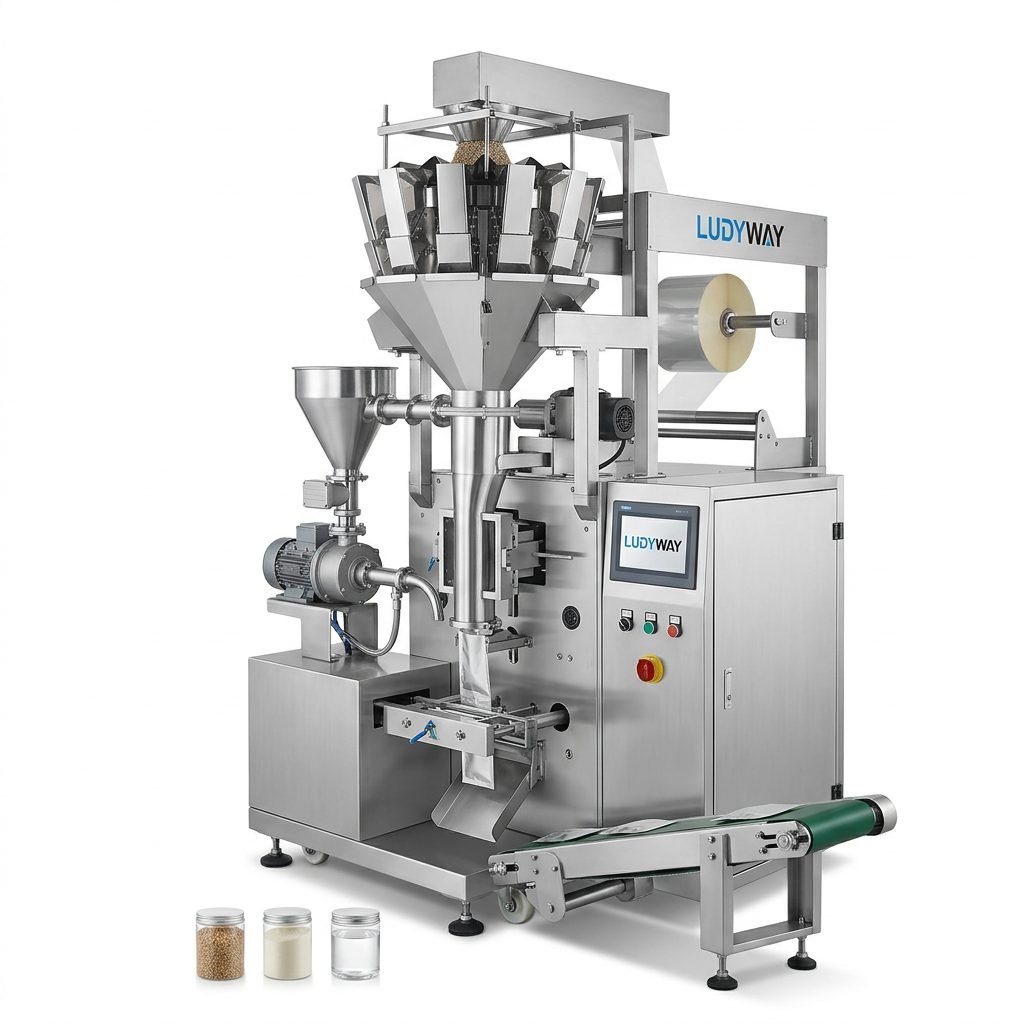
- Multi-head weighers or auger fillers — depending on whether you are packaging free-flowing granules or non-free-flowing powders, precision weighing is critical for regulatory compliance and cost control.
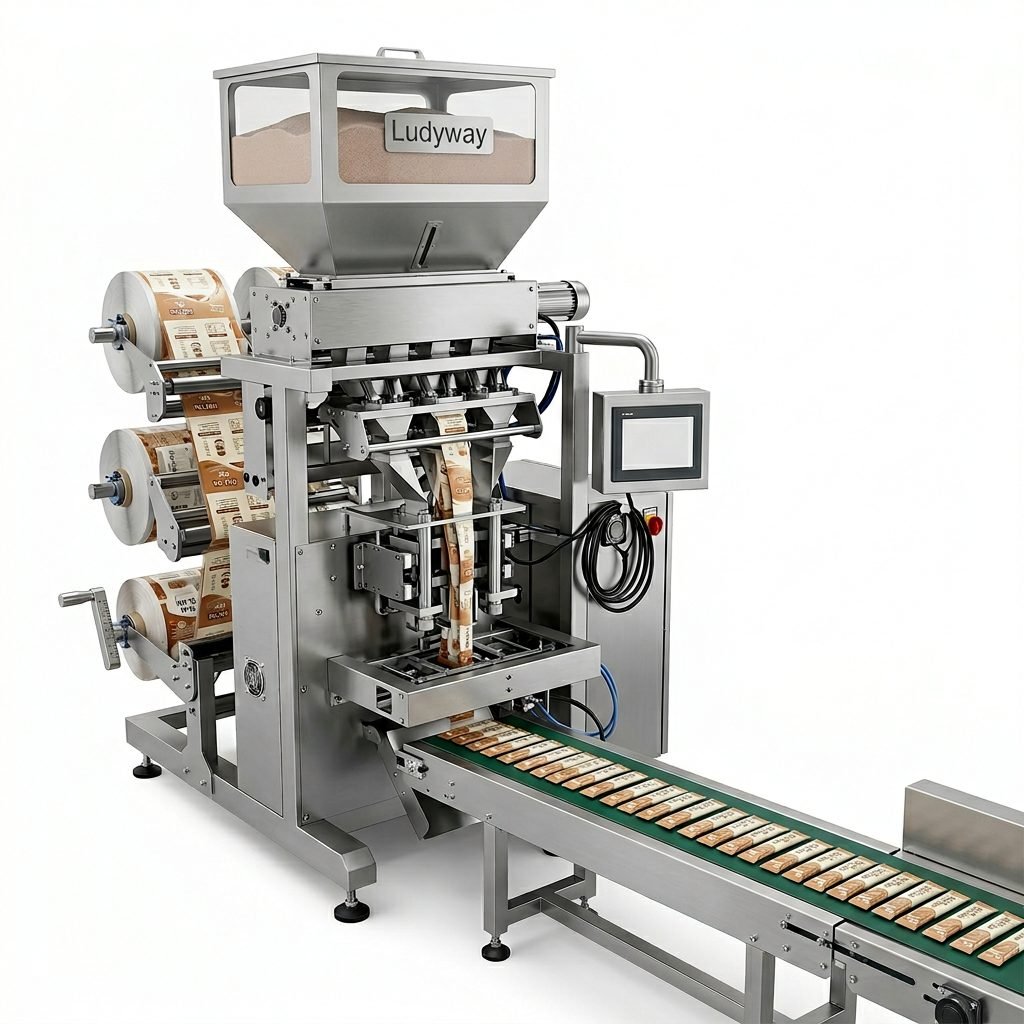
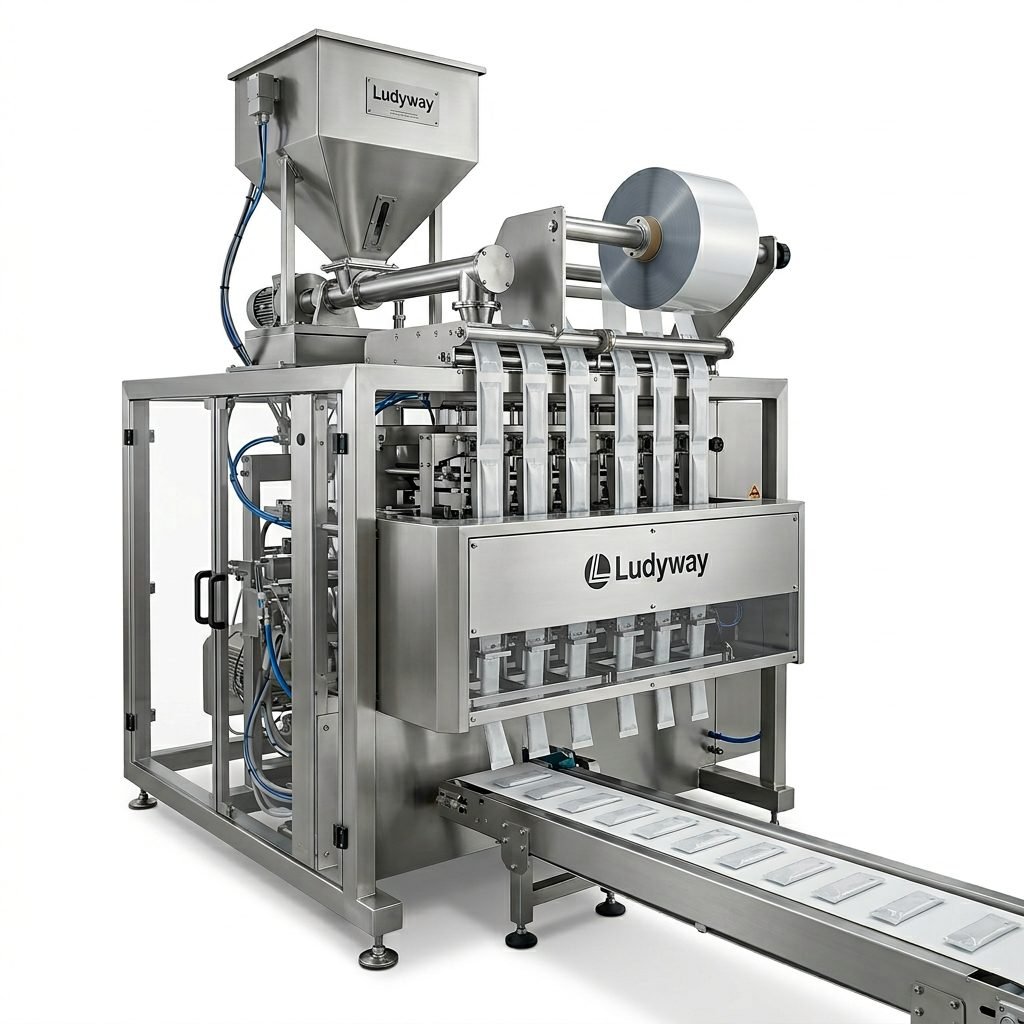
- Vertical form-fill-seal or pre-made pouch machines — the core of the packaging operation, available in single-lane or multi-lane configurations for higher output.
- Date coding and labeling — thermal transfer printers, inkjet coders, and automatic labeling applicators ensure traceability from factory to farm.
- Inspection and quality control — checkweighers, metal detectors, and X-ray inspection systems catch contaminants and weight deviations before products leave the line.
- Secondary packaging — automatic cartoning, case sealing, and palletizing systems prepare finished products for warehouse storage and distribution.
Comparing Multi-Lane vs. Single-Lane Configurations
The choice between multi-lane and single-lane systems depends on your target output, product variety, and budget. Use the comparison below to guide your decision for Middle East operations.
| Feature | Multi-Lane Stick Pack | Single-Lane Sachet |
|---|---|---|
| Output capacity | Up to 1,000+ packs/min (multiple lanes combined) | Typically 30–80 packs/min |
| Product changeover | Requires synchronized adjustment across all lanes | Quick single adjustment |
| Floor space | Compact relative to output | Larger footprint per pack produced |
| Ideal application | High-volume feed premix, single-SKU production | Frequent product changeovers, multiple SKUs |
| Initial investment | Higher upfront cost | Lower entry point |
Installation, Commissioning, and Operator Training
Successful deployment of an animal feed packaging line in the Middle East goes beyond equipment delivery. On-site installation and training are essential for long-term reliability.
Installation Best Practices
- Verify power supply stability — voltage fluctuations common in some industrial zones require surge protection
- Level all weighing modules on vibration-dampening foundations
- Test pneumatic systems for leaks before connecting to filling stations
- Calibrate multi-head weighers with the specific feed product bulk density
Ongoing Maintenance Schedule
In dusty feed environments, daily cleaning of sensors and sealing jaws prevents unplanned downtime. Establish a preventive maintenance protocol covering:
- Weekly lubrication of moving parts
- Monthly inspection of heating elements and thermocouples
- Quarterly calibration of weighing and inspection systems
- Annual replacement of wear parts such as belts, seals, and forming tubes
Selecting a Reliable Packaging Machine Partner
For Middle East operations, working with an experienced equipment manufacturer ensures access to spare parts, remote diagnostics, and localized technical support. When evaluating suppliers, look for proven installations in similar climate conditions and a track record of packaging machinery compliance with international standards.
Ludyway is one of the largest packaging machine manufacturers, specializing in advanced packaging equipment and turnkey production solutions for the food, pharmaceutical, and health industries. With over 30 years of industry experience and a modern 20,000㎡ manufacturing facility, the company offers more than 50 intelligent packaging machine models — including multi-lane stick pack and sachet systems ideal for animal feed applications — serving customers in over 100 countries and regions. Learn more about their feed packaging solutions at www.ludyway.com or contact info@ludyway.com for a customized consultation.

Future-Proofing Your Feed Packaging Line
The Middle East feed industry is moving toward Industry 4.0 integration — smart sensors, IoT-enabled monitoring, and automated data logging for regulatory audits. Investing in modular, upgradeable machinery today positions your operation for future growth. Key trends to watch include:
- Remote machine monitoring via cloud-based dashboards
- Sustainable packaging materials compatible with existing sealing systems
- AI-driven predictive maintenance algorithms
- Integration with ERP and traceability platforms for export compliance
Frequently Asked Questions
What is the typical lead time for a complete feed packaging line?
For a standard multi-lane sachet or bagging line, lead times range from 8 to 14 weeks, depending on customization requirements and current production schedules. Larger turnkey projects with integrated secondary packaging may extend to 16–20 weeks.
Can packaging machines handle both granules and powders?
Yes, many modern systems feature interchangeable dosing modules — auger fillers for powders and multi-head weighers for free-flowing granules — allowing a single line to package multiple feed formats with minimal changeover time.
What after-sales support is available in the Middle East?
Leading manufacturers provide remote video diagnostics, on-site technician dispatch, and regional spare parts warehousing. Ensure your supplier has a proven service network in GCC countries before finalizing your purchase. For more insights on packaging machinery trends and regional growth, refer to the Flexible Packaging Association’s industry data and PMMI economic reports for the latest market intelligence.
Setting up an animal feed packaging machine production line in the Middle East is a strategic investment that, with proper planning, the right equipment partner, and attention to regional requirements, can deliver strong returns in one of the world’s most dynamic agricultural markets. For tailored guidance on machine selection and line configuration, reach out to experienced packaging specialists who understand both the technical and regulatory landscape of the region.