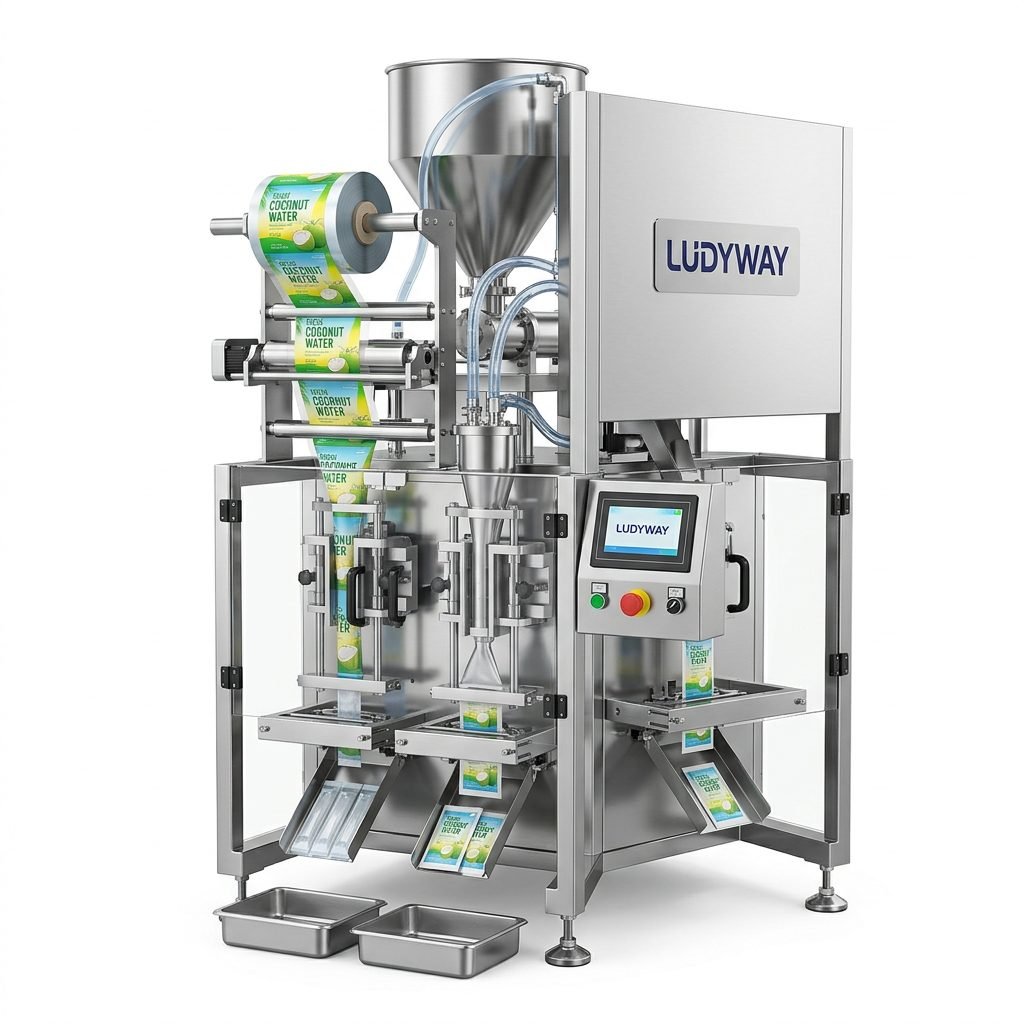
Launching a chocolate packaging machine production line in Germany requires meticulous planning, strict adherence to European regulations, and a deep understanding of automated packaging technologies. Whether you are manufacturing chocolate bars, pralines, or chocolate powder sachets, the efficiency and reliability of your packaging line directly impact product quality, shelf life, and operational profitability.
1. Understanding the German Chocolate Packaging Market
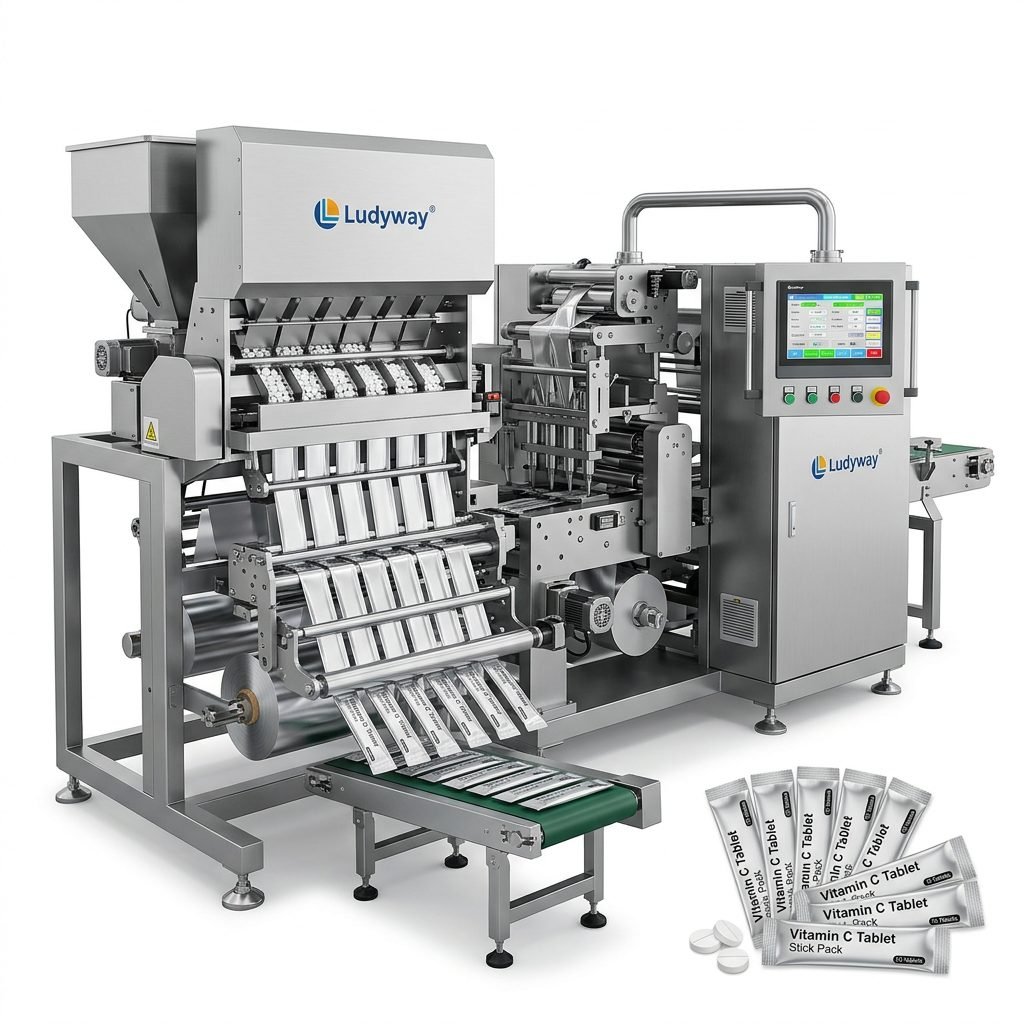
Germany is one of the largest chocolate-producing countries in Europe, with a market that demands high-speed precision, sustainable materials, and hygienic design. The German packaging industry is heavily influenced by directives from the European Commission on Packaging and Packaging Waste, which pushes manufacturers toward eco-friendly and recyclable solutions. Before setting up your line, you must analyze your target product format—solid bars, flow-wrapped pieces, or multi-lane stick packs for hot chocolate powder.
2. Pre-Project Planning and Feasibility
Comprehensive planning is the cornerstone of a successful installation. Define your desired output capacity (units per minute), packaging material specifications, and available floor space. German factories often operate under the VDMA standards, ensuring machine compatibility and safety. Consulting resources like the PMMI Business Intelligence Library can provide benchmarks for production efficiency.
Key Planning Considerations
- Product Characteristics: Solid chocolate, filled bars, or sticky confections require different feeding and wrapping mechanisms.
- Packaging Style: Flow wrap, fold wrap, sachet, or premium gift boxes.
- Site Assessment: Evaluate floor load capacity, electrical supply (400V/50Hz standard in Germany), and compressed air requirements.
3. Regulatory Compliance and Safety Standards
Operating in Germany means full compliance with CE marking and the Machinery Directive 2006/42/EC. Food contact materials must meet EU Regulation 1935/2004 and German LFGB standards. Specifically, for chocolate, the packaging line must prevent cross-contamination and facilitate easy cleaning.
Critical German and EU Standards
| Standard | Application |
|---|---|
| CE / 2006/42/EC | Mandatory safety marking for all machinery in Germany |
| EN 1672-2 | Hygiene requirements for food processing machinery |
| ISO 22000 | Food safety management systems integration |
| DGUV Regulation | German statutory accident insurance safety protocols |
4. Selecting the Right Packaging Equipment
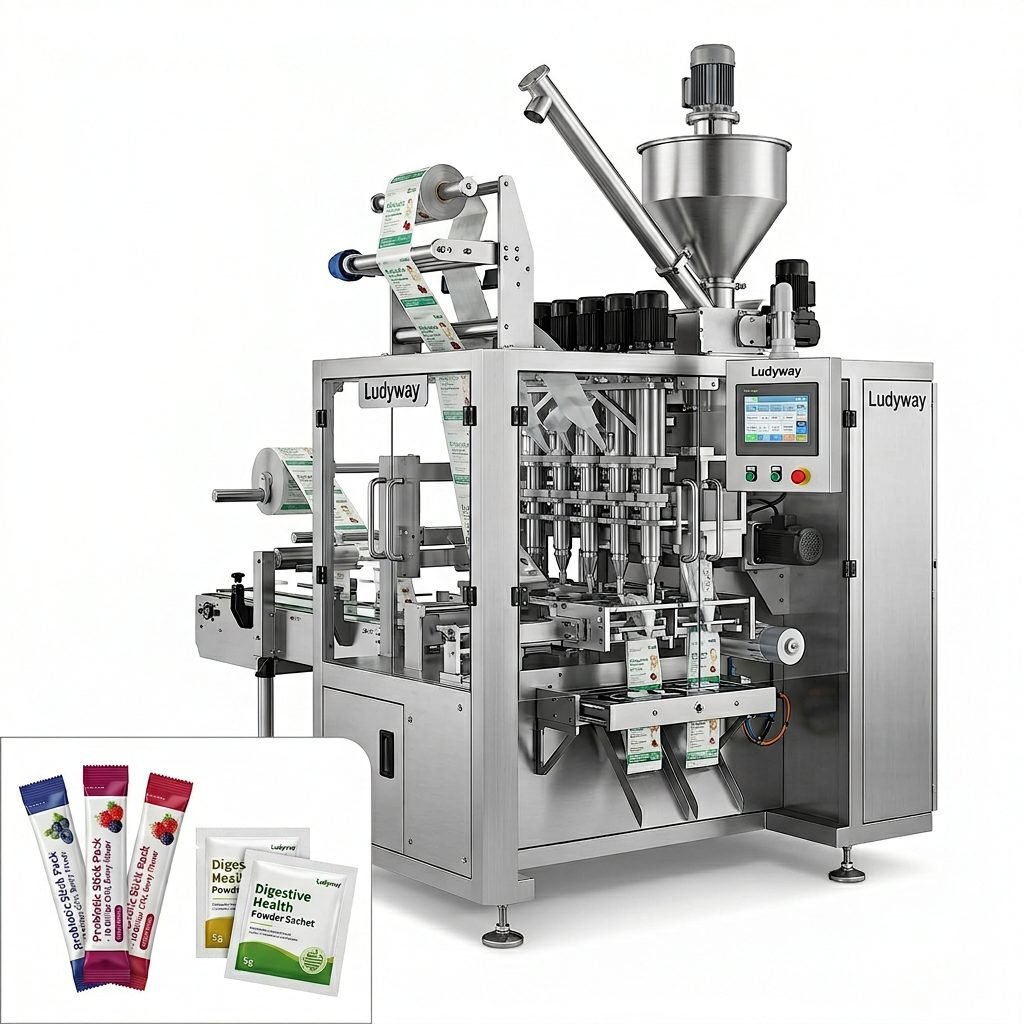
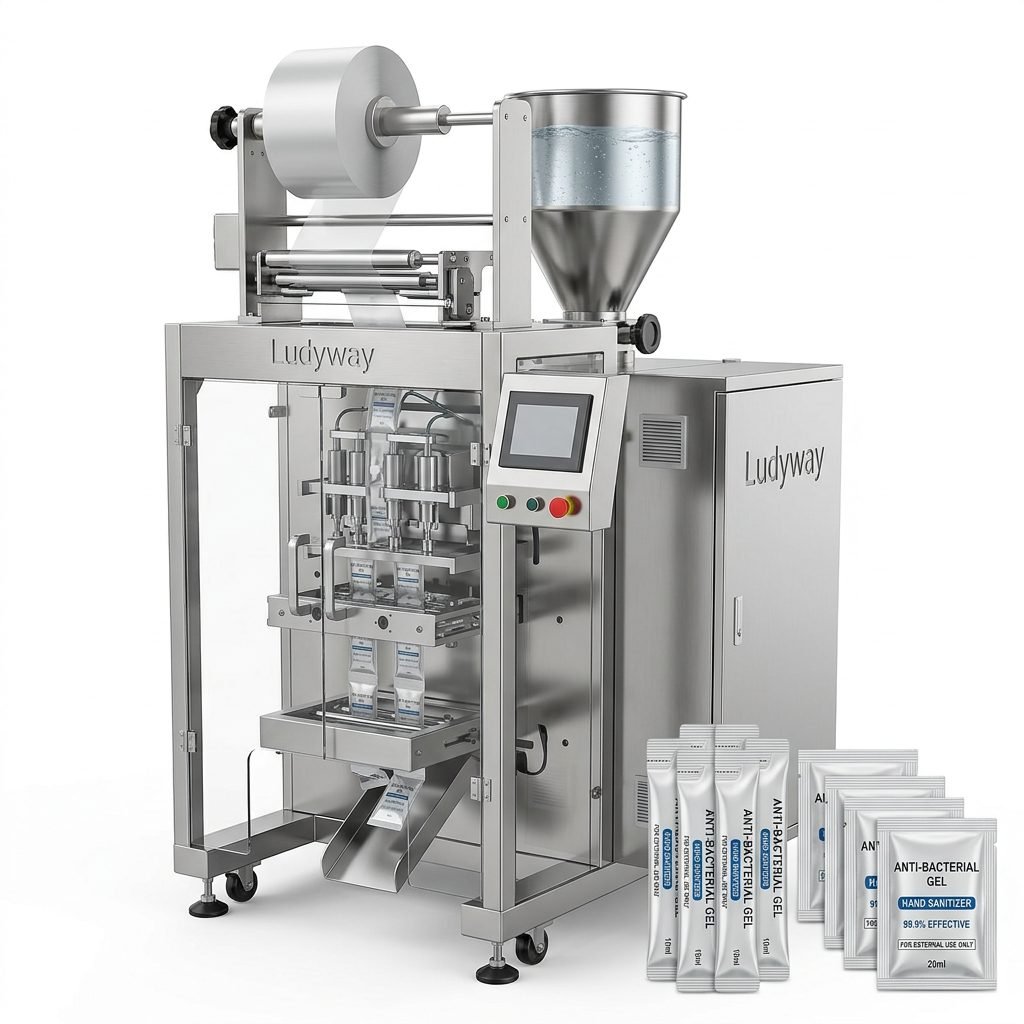
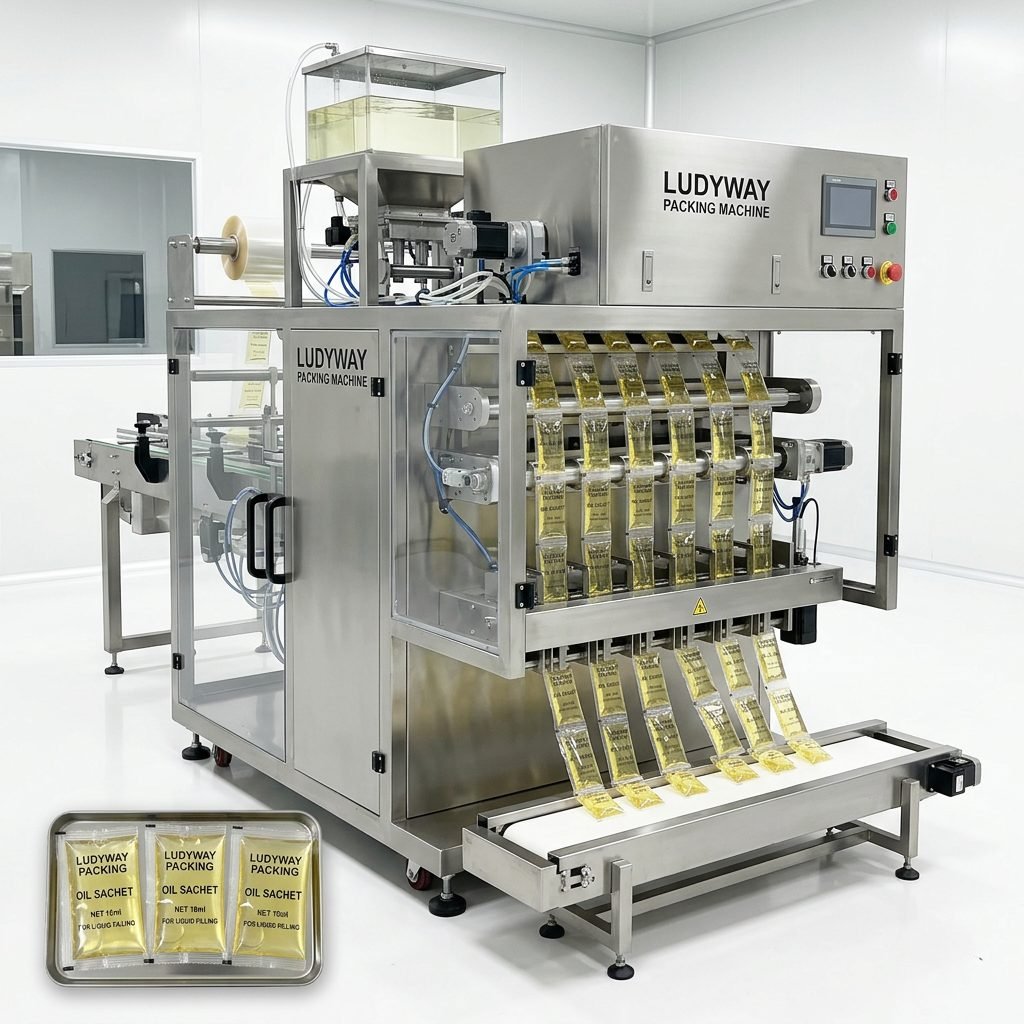
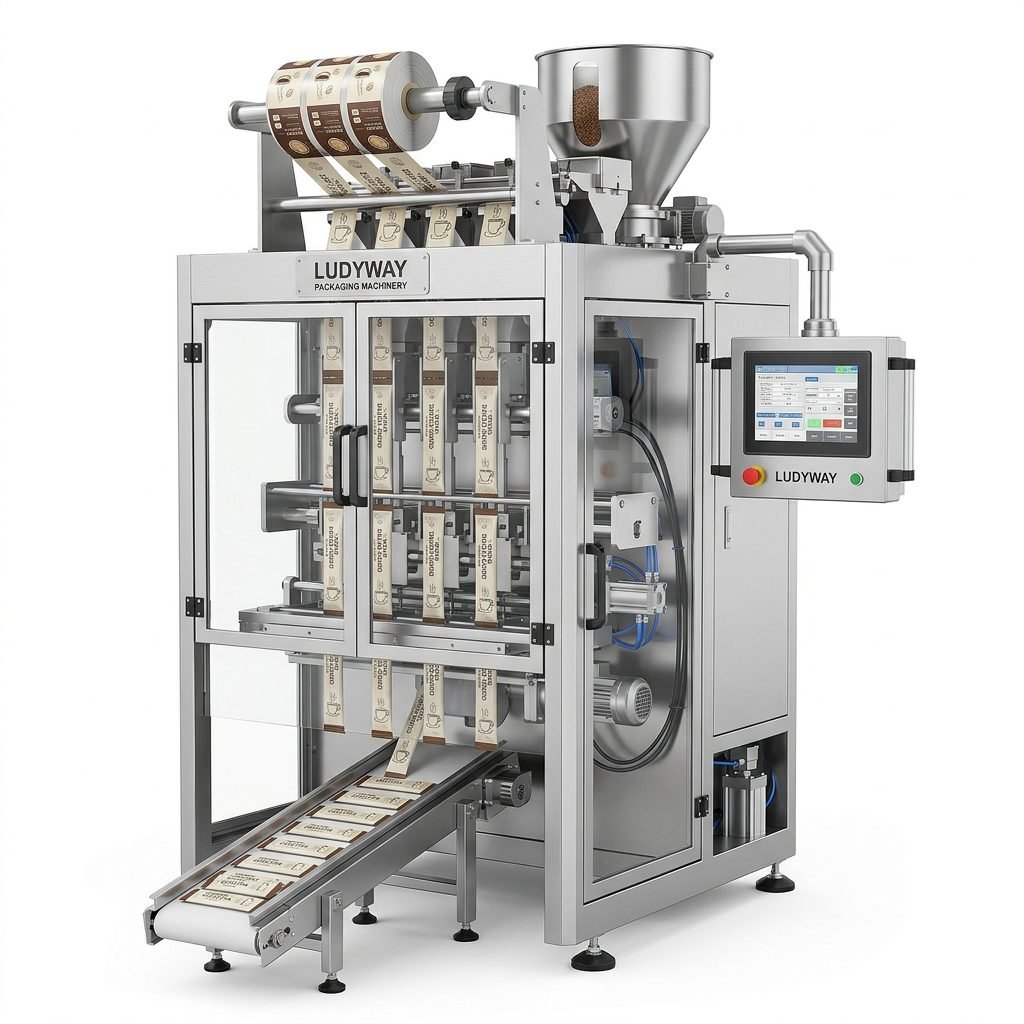
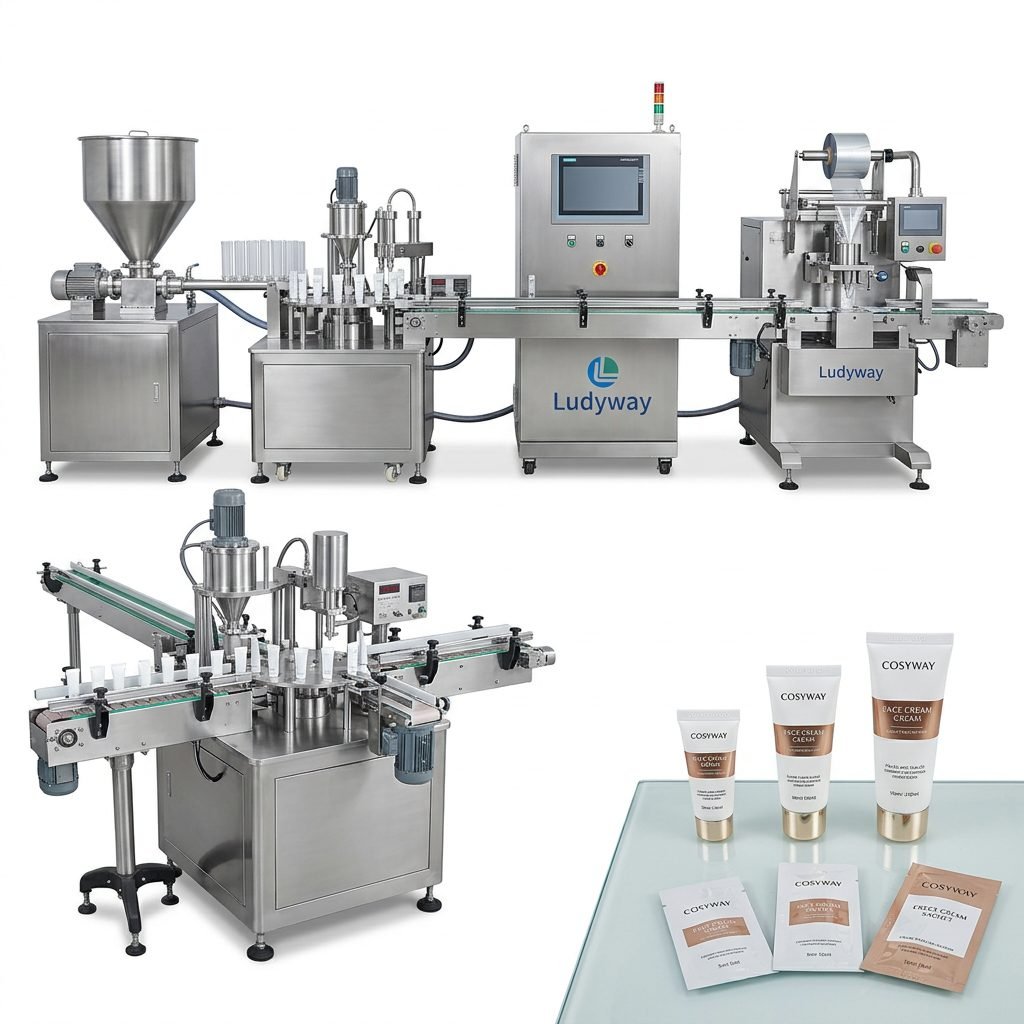
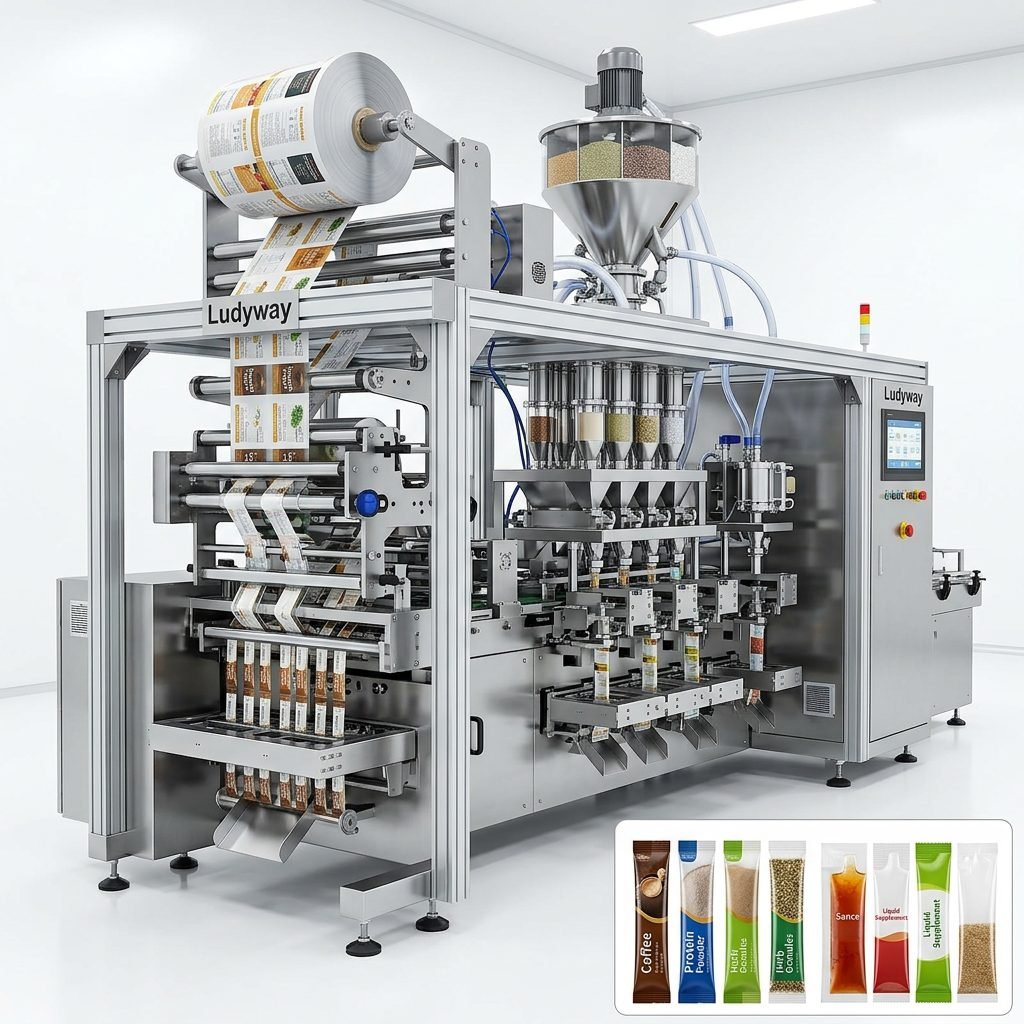
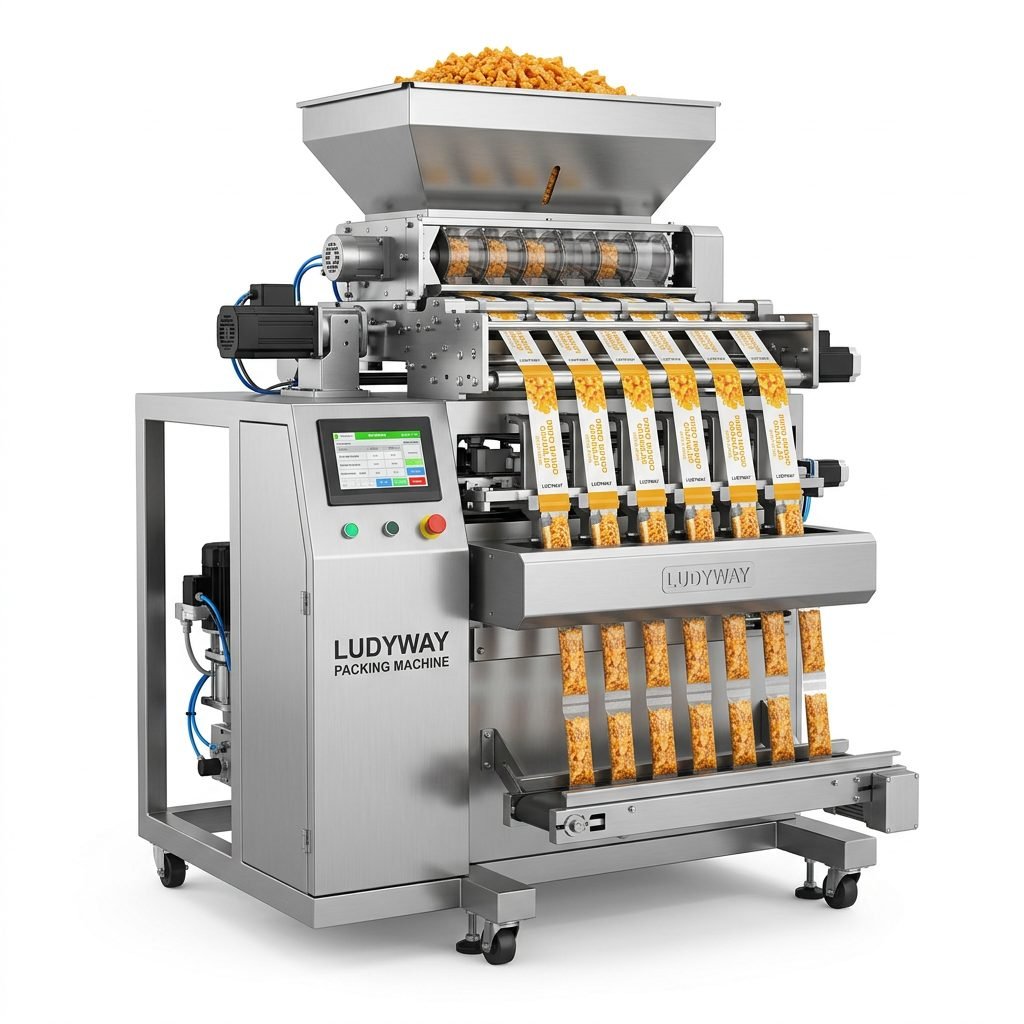
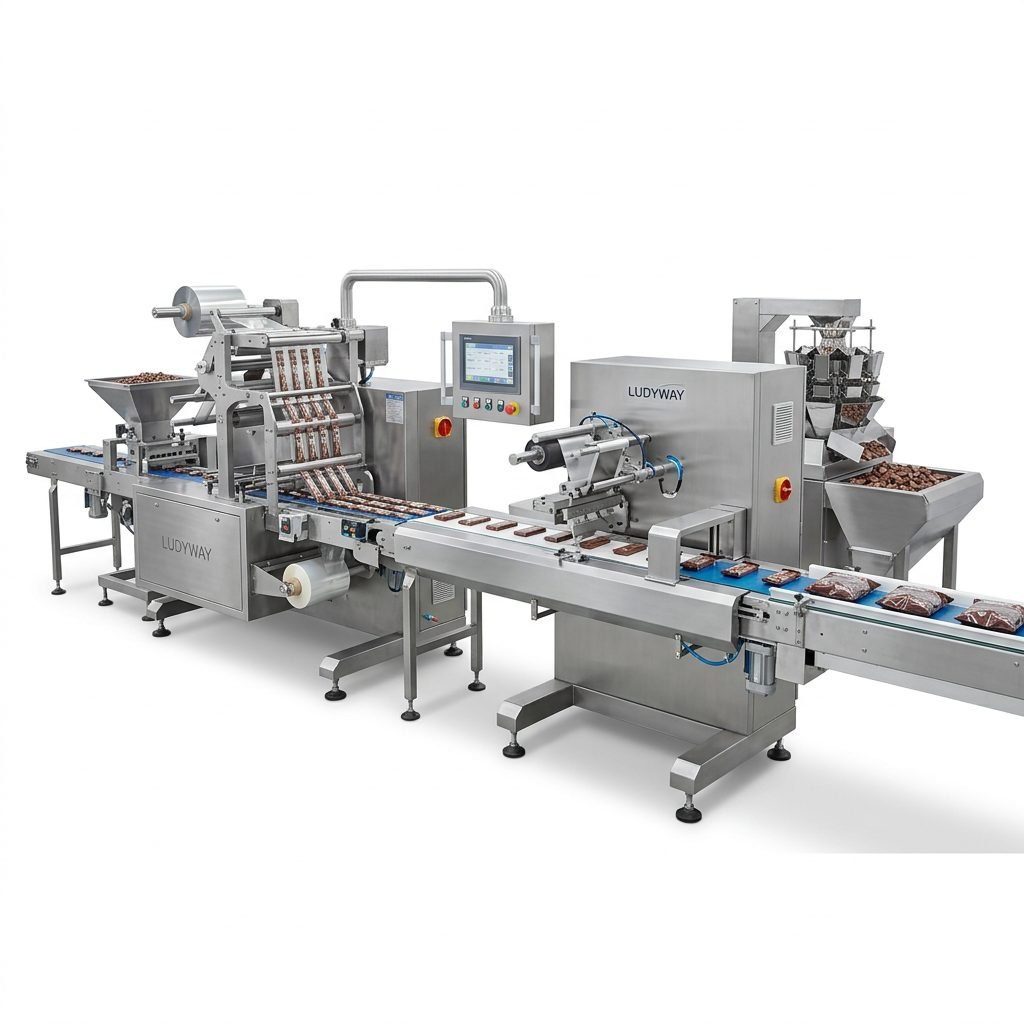
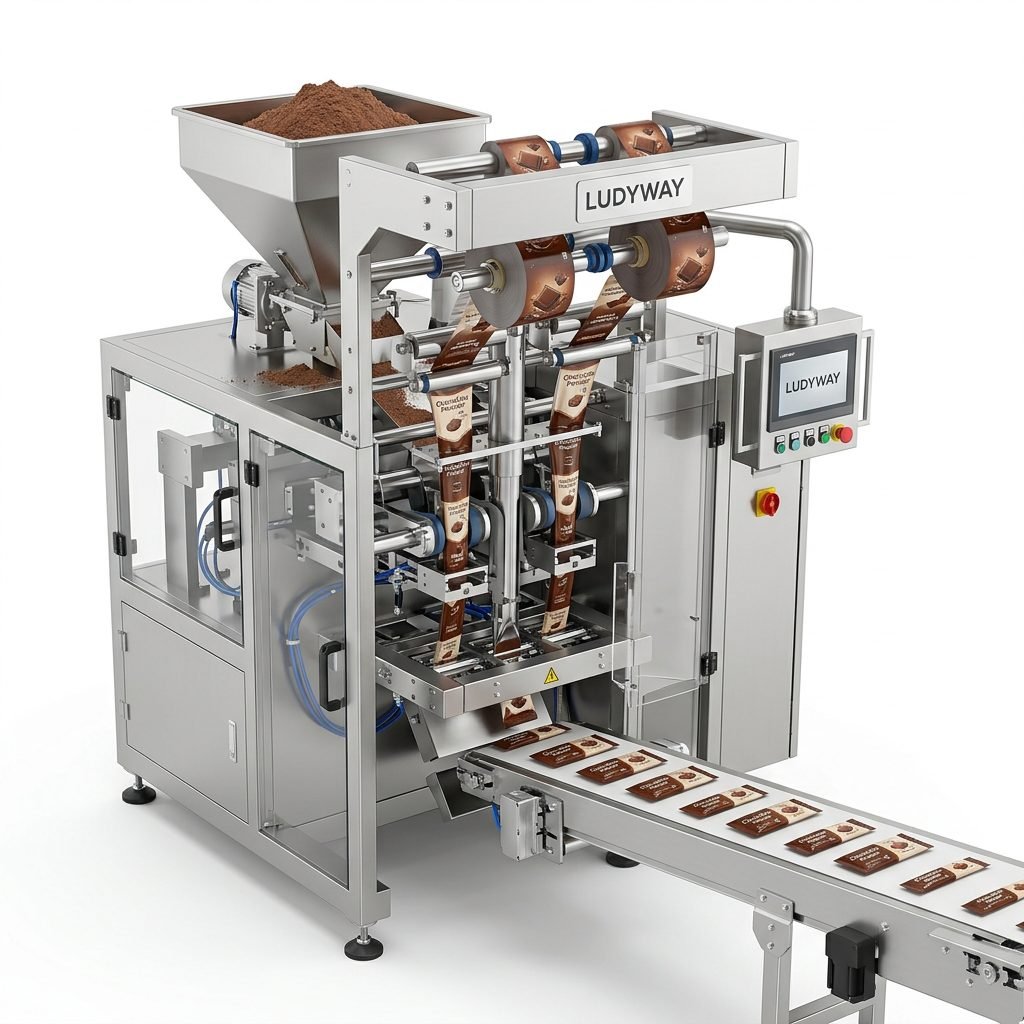
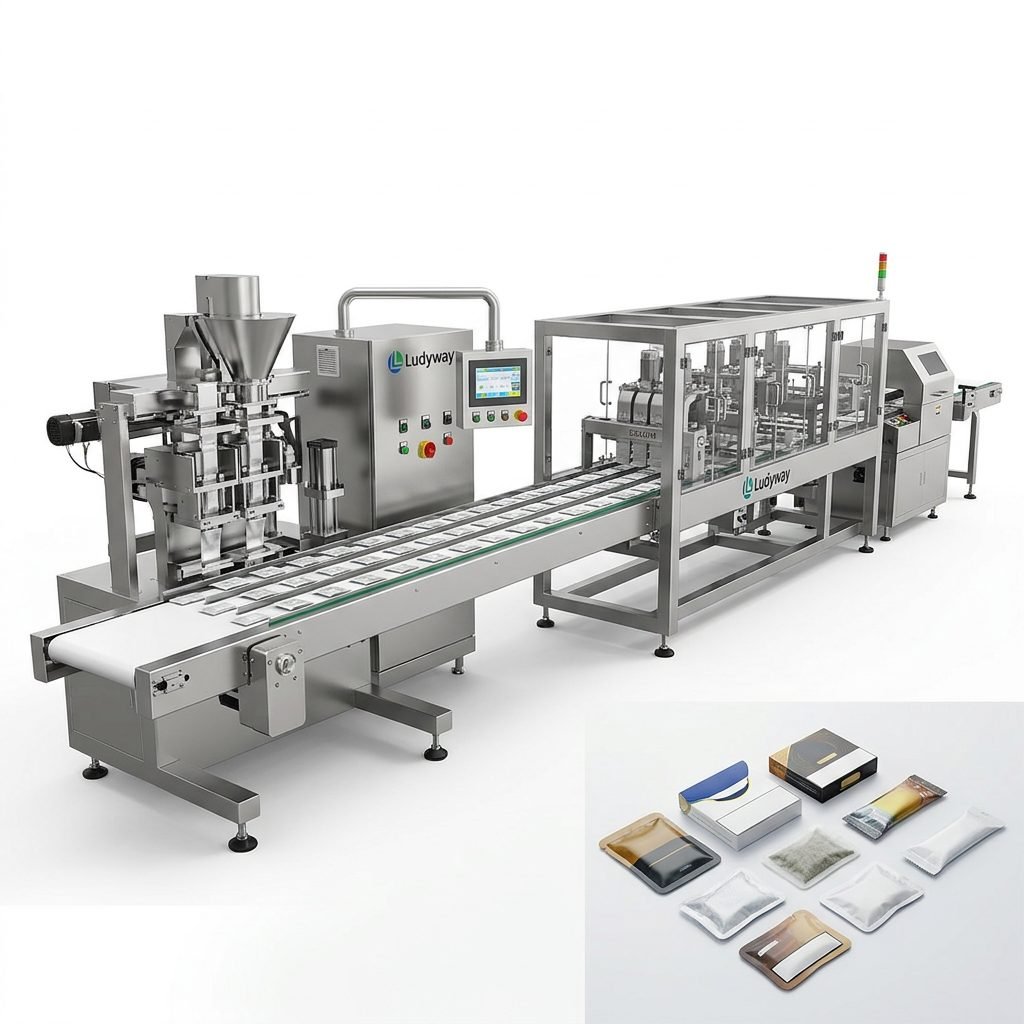
The configuration of your line depends on your product portfolio. A standard chocolate packaging production line typically includes a feeding system, a primary packaging machine, a checkweigher, and end-of-line cartoning or palletizing equipment. Ludyway is one of the largest packaging machine manufacturers in China, offering advanced turnkey solutions that are specifically engineered to match high-speed European production needs, including multi-lane stick pack and flow wrap systems.
Primary Packaging Machines for Chocolate
- Flow Wrapping Machines: Ideal for solid chocolate bars. Look for servo-driven models with automatic film tension control.
- Vertical Form Fill Seal (VFFS) Machines: Best for chocolate powders, cocoa, or hot chocolate mixes in stick packs or sachets.
- Fold/Twist Wrapping Machines: Used for premium pralines and speciality shapes.
5. Layout Design and Material Flow
Efficient layout design is crucial in Germany’s competitive manufacturing landscape, where lean production principles are standard. The layout should facilitate a logical material flow from raw product feeding to finished pallet dispatch. Ensure adequate space for maintenance access, cleaning, and future upgrades.
Recommended Line Configuration
| Stage | Machine | Function |
|---|---|---|
| Feeding | Belt conveyor / Bucket elevator | Transports chocolate products to the packaging unit |
| Primary Packaging | Flow wrapper / VFFS | Wraps bars or fills powder into sachets |
| Quality Control | Checkweigher / Metal Detector | Ensures weight accuracy and contamination detection |
| End-of-Line | Case packer / Palletizer | Packs finished sachets or bars into cartons for shipment |
6. Integration of Auxiliary Systems
A modern chocolate line in Germany cannot operate without integrated digital systems. Implementing SCADA or MES platforms allows for real-time production monitoring and traceability, which aligns with ISO packaging standards and Industry 4.0 principles prevalent in German manufacturing.
7. Installation, Commissioning, and Staff Training
Installation in Germany requires certified technicians familiar with local electrical and safety codes. A vital step is the Factory Acceptance Test (FAT) before shipping and the Site Acceptance Test (SAT) at your German facility. Training German operators requires manual-intensive, dual-language (German/English) documentation to ensure operators can manage the setup and changeovers efficiently.
8. Cost and ROI Optimization
While the initial investment for a fully automated line can be significant, the return on investment (ROI) in Germany is accelerated by high labor costs. Automating the packaging process reduces labor dependency, minimizes material waste through precise forming, and increases throughput. For current economic insights on packaging machinery investments, refer to the 2026 Packaging State of the Industry report.
9. Maintenance and After-Sales Support
Preventive maintenance is a critical requirement in Germany’s industrial culture. You should secure a service level agreement (SLA) that guarantees rapid response times and availability of spare parts within the EU. Integrated remote diagnostics help reduce downtime and keep your chocolate packaging line operating at peak efficiency.
Maintenance Checklist for German Operations
- Daily cleaning of chocolate dust to prevent pneumatic blockages.
- Weekly inspection of sealing jaws and thermocouples.
- Monthly audit of safety guards and emergency stops.
- Annual replacement of critical drive belts and bearings.
10. Future-Proofing with Smart Technology
Look for machines that support smart packaging innovations, such as digital twin simulation for line optimization, and utilize sustainable materials like paper-based flow wraps and mono-material films. Adhering to the Flexible Packaging Association Regulatory Affairs guidelines ensures your packaging meets both current and proposed German environmental regulations.
By balancing precision engineering with strict German compliance and ergonomic efficiency, your chocolate packaging machine line will be a robust asset in the European confectionery market.