
Flour & Powder Packaging
Automatic Flour Packaging Machine for Food Manufacturers:Precision Weighing, High-Speed Bagging & Dust Control
50+ machine models · Exported to 100+ countries · 30+ years of powder packaging engineering
An automatic flour packaging machine for food manufacturers has to do three things at once: dose a low-density, highly aerated powder to within ±0.5% or better, fill and seal bags fast enough to keep pace with a mill or blending line, and keep combustible flour dust out of the room and away from the seal area. This page is written for flour mills, bakery-ingredient producers and contract packers evaluating equipment from 5 g sachets up to 50 kg industrial sacks. It covers weighing technology, bagging formats, dust-control design, compliance requirements and how to obtain a project quotation.
Key takeaways
- Flour bulk density swings between roughly 0.45 and 0.65 g/cm³ as it aerates and settles, so servo auger dosing with load-cell or checkweigher feedback is the baseline for stable fills.
- Typical outputs: up to 600 sachets/min on a 10-lane stick pack machine, 30–60 bags/min for 0.5–5 kg VFFS bags, and 300–600 bags/hour for 25–50 kg open-mouth sacks.
- Flour dust becomes explosive above about 50 g/m³ in air; enclosed hoppers, point-of-fill extraction and ATEX/NFPA-aligned options are not optional on high-volume lines.
- Food-contact parts in SUS304/316L, FDA 21 CFR and EU 1935/2004 compliant seals, and OIML R 87 / NIST Handbook 133 average-weight control are the three compliance pillars buyers audit first.
- Single machines ship in a typical 35–50 working days; integrated lines with conveying, inspection and palletizing run 60–90 days, with MOQ of one unit.
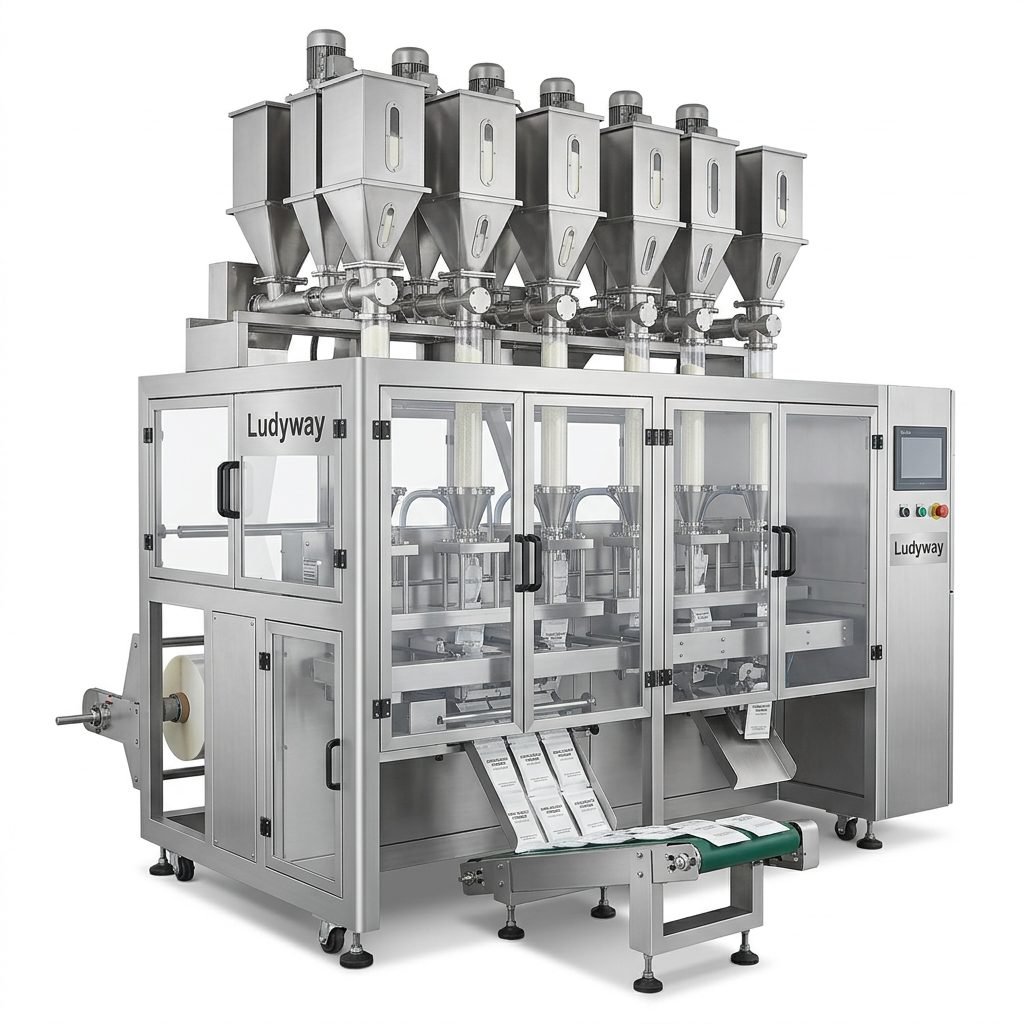
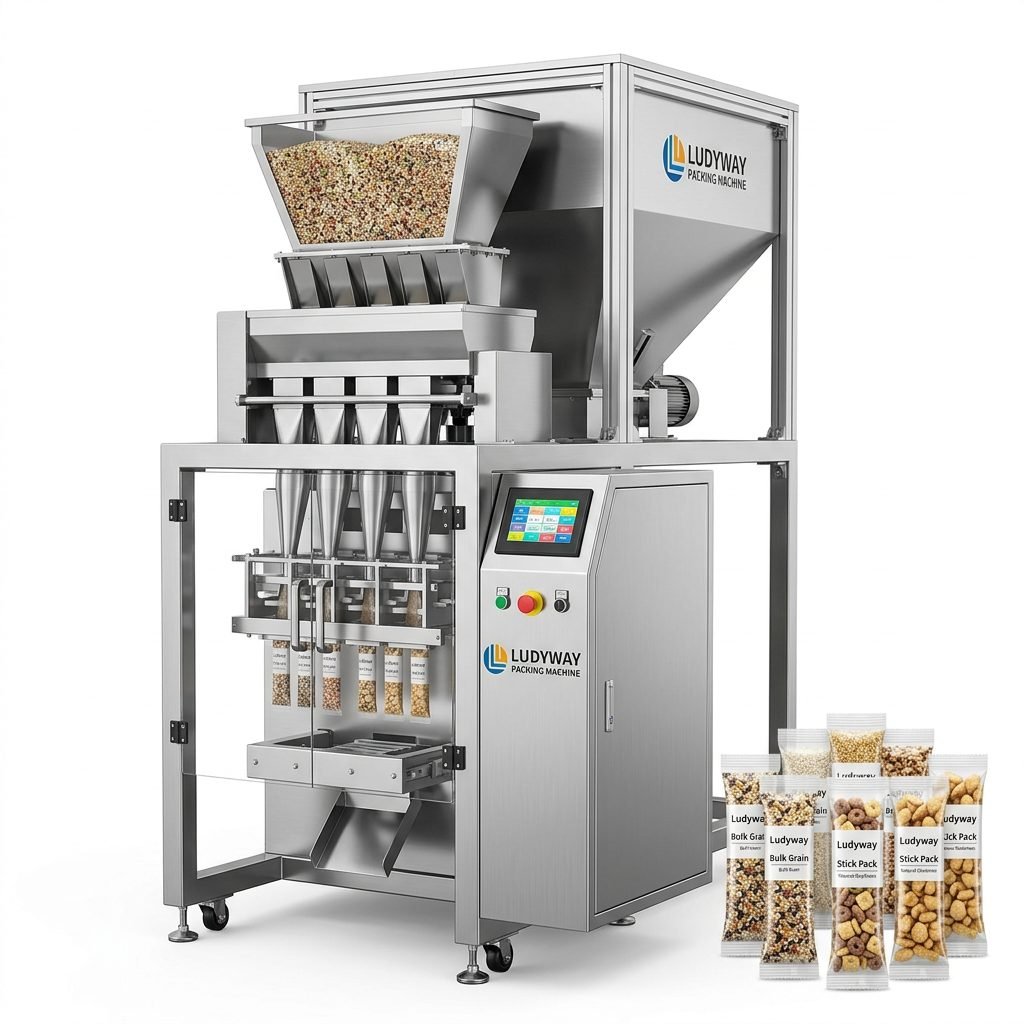
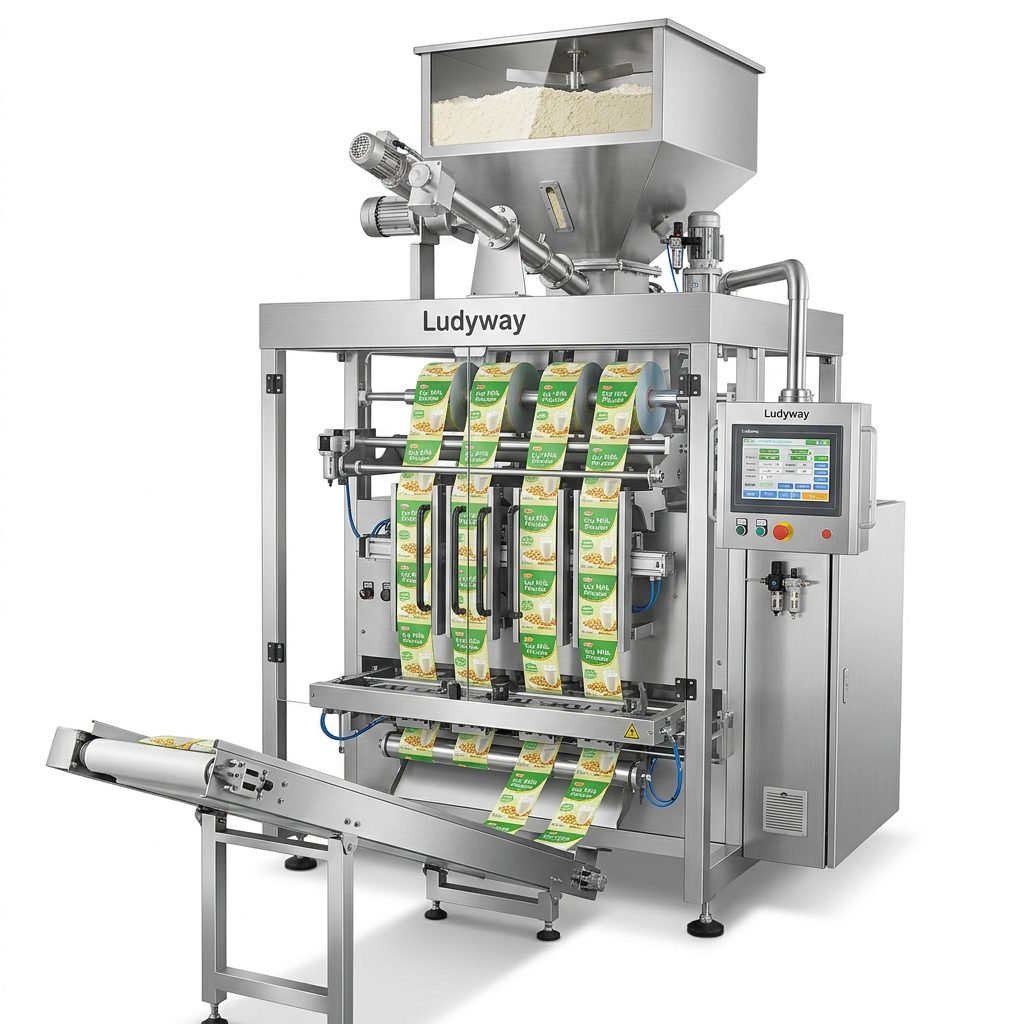
Flour & Starch Packaging Machines for Mills and Bakery Ingredient Producers
View all flour & powder packaging machines →
Why Flour Is One of the Hardest Food Powders to Package
Wheat, rice, corn and specialty flours behave very differently from sugar or salt. Flour is fine (most of a patent wheat flour passes a 150 µm sieve), it aerates and fluffs when it is conveyed pneumatically or dropped into a hopper, and then compacts when it rests. The same 1 kg of product can occupy anywhere from 1.5 to 2.2 litres depending on how it was handled a few seconds earlier, which is why purely volumetric dosing drifts over a shift.
The second challenge is dust. Flour dust is a recognised combustible dust: dispersed in air above roughly 50 g/m³ it can be ignited by a spark with a minimum ignition energy in the tens of millijoules. Dust that escapes the fill tube also lands on seal jaws, producing weak seals, leakers and rejected bags, and it settles on floors and guards where it becomes a hygiene, pest-control and housekeeping cost.
A purpose-built automatic flour packaging machine for food manufacturers therefore combines three design decisions: a dosing system that corrects for density change in real time, a filling path that keeps the product enclosed from hopper to sealed bag, and a construction that tolerates daily dry cleaning and periodic washdown without trapping flour in crevices.
0.45–0.65 g/cm³
Typical bulk density of wheat flour from aerated to settled state
~50 g/m³
Approximate lower explosive concentration of flour dust in air
±0.2–1.0%
Realistic fill-accuracy window by weight depending on format and dosing system
40–45°
Angle of repose – flour bridges and rat-holes without hopper agitation
Precision Weighing: Choosing the Right Dosing System for Flour
Fill accuracy is where most of the money in flour packaging is won or lost. Over-filling a 1 kg bag by 1% on a line producing 40 bags per minute gives away more than 570 kg of flour per 24-hour day; under-filling exposes the brand to weights-and-measures penalties. The table below compares the dosing technologies used on automatic flour packaging machines and where each one fits.
| Dosing system | Best for | Typical accuracy | Typical speed | Notes for flour |
|---|---|---|---|---|
| Servo auger filler | Sachets, stick packs, 250 g–5 kg retail bags | ±0.5–1.0% | Up to 60–120 fills/min per head | Agitator keeps density constant; checkweigher feedback trims drift automatically |
| Auger + net-weigh scale | 1–25 kg bags where legal-for-trade accuracy matters | ±0.1–0.3% | 6–25 bags/min | Bulk and dribble feed; weight confirmed on a load cell before discharge |
| Gross-weigh open-mouth bagger | 10–50 kg sacks at mill output | ±0.2–0.5% | 300–600 bags/h | Bag hangs on load-cell clamps during filling; lowest cost per tonne |
| Multi-head combination weigher | Semolina, couscous, granular baking mixes | ±0.1–0.2% | 60–120 weighings/min | Fine flour clings to hoppers – use only for free-flowing grades |
| Volumetric cup or disc | Low-value, low-speed sachet lines | ±1.5–3% | Varies | Lowest cost; density changes are not corrected |
Auger filler details that separate a flour machine from a generic powder filler
On a flour line the auger assembly is the heart of the machine. Look for a 316L stainless auger and funnel set that can be swapped without tools, with auger diameters from about 10 mm for 5 g sachets up to 100–120 mm for 5 kg bags. A top-mounted agitator with slow counter-rotation prevents bridging, while a capacitive level sensor on the hopper keeps the product head constant so each auger revolution delivers the same mass.
Servo drive resolution matters more than motor size: a servo that positions to a tenth of a turn allows the PLC to trim each fill in fractions of a gram. Pair the filler with a downstream high-precision checkweigher and enable closed-loop feedback, and the machine will chase target weight automatically as moisture or ambient humidity shifts the bulk density through the shift.

Automated bagging line configured for powders: feeding, servo auger dosing, form-fill-seal and discharge conveyor.
High-Speed Bagging Formats for Flour, from Sachet to Sack
Food manufacturers rarely package flour in only one size. A bakery-ingredient supplier may run 25 kg sacks for industrial bakeries, 1 kg and 2 kg retail bags for supermarkets and 30 g single-portion sachets for meal kits on the same site. Bagging format drives machine architecture far more than flour type does, so it is the first specification to fix.
Vertical form-fill-seal (VFFS) with a servo auger is the workhorse for 500 g to 5 kg pillow, gusseted and quad-seal bags, running 30–60 bags/min on paper-poly or laminated PE film. Multi-lane stick pack and sachet machines take over below 100 g, where 4 to 12 lanes filling simultaneously deliver several hundred packs per minute from one footprint. Above 10 kg, open-mouth baggers with sewn or heat-sealed closures and valve-bag packers handle the mill-side volume.
For sites that need a complete 25 kg solution from feeding to palletizing, see the configured 25 kg bag packaging lines for granules and powder, which pair a gross-weigh bagger with bag placing, closing and conveying modules.
Sachet & Stick Pack · 5–100 g
Multi-lane machines with 2–12 lanes, 3-side, 4-side or stick seal. Ideal for portion flour, bread-improver and baking-mix samples. Up to 600 packs/min.
Retail Bag · 500 g–5 kg
VFFS pillow, gusseted, quad-seal or premade pouch. Servo auger plus checkweigher feedback, 30–60 bags/min, optional zipper and dust-free top seal.
Industrial Sack · 10–50 kg
Open-mouth gross-weigh or valve-bag packer for PP woven, multiwall paper and PE bags; sewn, heat-sealed or pinch-top closing at 300–600 bags/h.
Bulk Bag · 500–1,500 kg
FIBC filling frames with load cells, inflatable spout seal and densification table for bulk shipments to industrial bakeries and food processors.
Dust Control, Hygiene and Explosion Safety
Dust control on a flour packaging machine starts with containment rather than extraction. The hopper should be fully enclosed with a dust-tight inlet, the auger funnel should extend into the forming tube or bag mouth, and the bag should be filled bottom-up where the format allows so that displaced air exits through a controlled vent rather than through the bag opening.
What cannot be contained should be extracted at source. Extraction points at the fill tube, the seal jaw area and the bag discharge connect to an industrial dust collection system with cartridge or HEPA filtration, sized so that air velocity captures airborne flour without pulling product out of the fill stream. Recovered flour can be returned to process on many lines, turning a housekeeping problem into recovered yield.
- Product-contact parts in SUS304 or 316L stainless, with crevice-free welds and no horizontal ledges where flour can accumulate.
- IP65-rated electrical enclosures and sensors, positive-pressure cabinet purge as an option in dusty rooms.
- Grounding and bonding of all metal parts, anti-static film path and brushed discharge to prevent electrostatic ignition.
- ATEX Zone 20/21/22 rated motors, solenoids and sensors where a dust hazard analysis under NFPA 660 (which consolidated NFPA 61 and NFPA 652) or EU ATEX Directive 2014/34/EU requires them.
- Tool-free removal of hopper, auger and forming tube for daily dry clean and weekly deep clean within a 20–30 minute window.
A flour line that loses even 0.3% of throughput as airborne dust at 5 tonnes per hour is releasing around 15 kg of flour into the packing room every hour – enough to create a seal-quality problem long before it becomes a safety one.
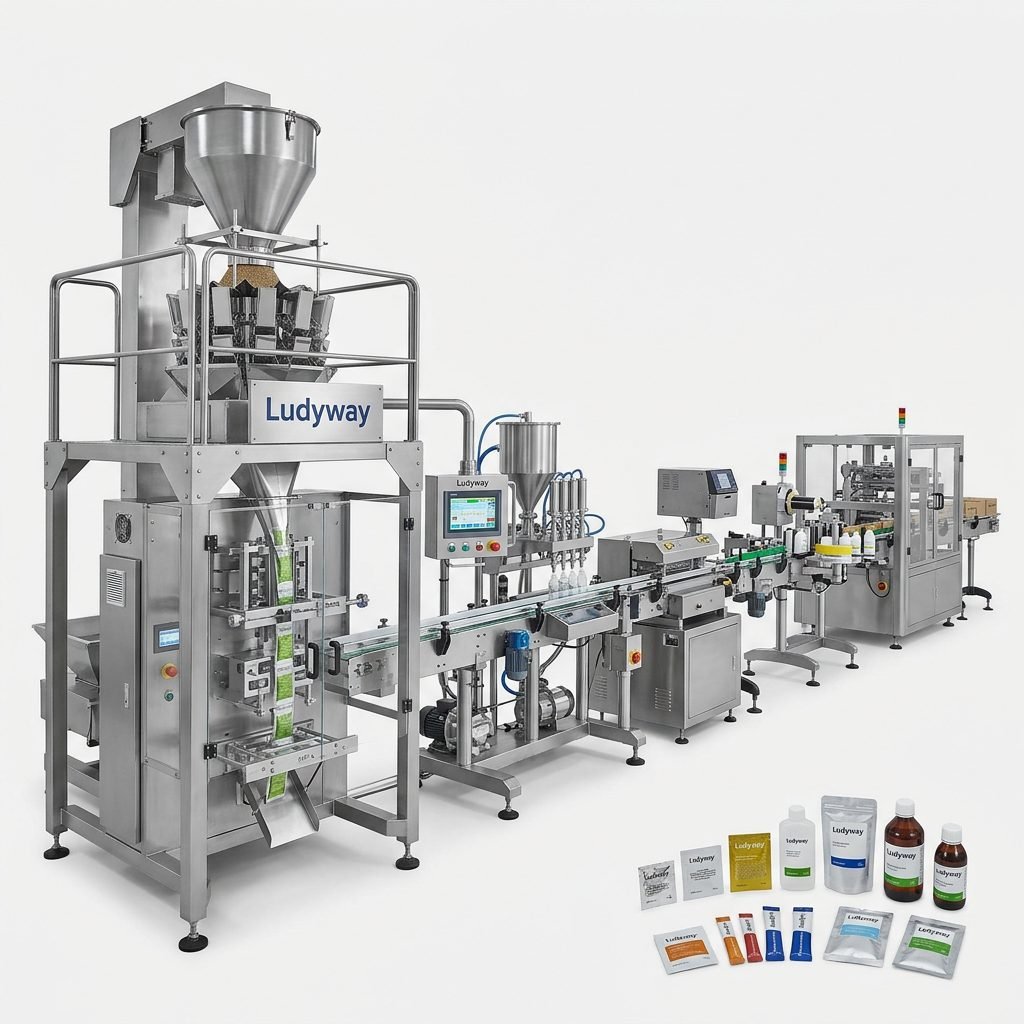
Enclosed stainless-steel feeding and filling path keeps flour contained from hopper to sealed bag.
Technical Specifications at a Glance
The ranges below reflect typical configurations of automatic flour packaging machines supplied to food manufacturers. Final values depend on flour grade, bag material and the options selected; the quotation stage includes a specification sheet tied to your product sample.
| Parameter | Multi-Lane Sachet / Stick Pack | VFFS Retail Bag | Open-Mouth Industrial Bagger |
|---|---|---|---|
| Fill range | 5–100 g per lane | 500 g–5 kg | 10–50 kg |
| Lanes / spouts | 2–12 lanes | 1–2 heads | 1–2 spouts |
| Output | Up to 600 packs/min (10 lanes) | 30–60 bags/min | 300–600 bags/h |
| Accuracy | ±0.1–0.5 g | ±0.5–1.0% | ±0.2–0.5% |
| Packaging material | Laminated roll film: PET/PE, paper/PE, PET/AL/PE | PE, laminated film, paper-poly, premade pouch | PP woven, multiwall paper, PE open-mouth or valve bag |
| Seal / closure | 3-side, 4-side, stick; optional tear notch | Pillow, gusset, quad-seal; optional zipper, gas flush | Sewing, heat seal, pinch-top, valve ultrasonic seal |
| Contact parts | SUS304 / 316L | SUS304 / 316L | SUS304 |
| Control | PLC, 10-inch touch HMI, servo auger, recipe memory | PLC, touch HMI, servo film pull and auger | PLC with weighing controller, load-cell clamps |
| Utilities | 380 V 3-phase 50/60 Hz (other voltages on request); 0.6 MPa dry compressed air | 380 V 3-phase 50/60 Hz; 0.6 MPa air | 380 V 3-phase 50/60 Hz; 0.6 MPa air |
Compliance and Certification Checklist for Food-Grade Flour Packaging
Food manufacturers, their auditors and their retail customers will ask for evidence in two areas: that the machine itself is safe and lawful to operate in the destination market, and that the packed product meets food-contact and net-weight rules. Use the checklist below when comparing suppliers.
Machine safety and construction
- CE marking to the Machinery Directive 2006/42/EC, with documentation prepared for the Machinery Regulation (EU) 2023/1230 that applies from January 2027.
- EN 415 series (packaging machine safety), including EN 415-3 for form-fill-seal machines and interlocked guarding.
- ATEX 2014/34/EU equipment categories for Zone 20/21/22 where a dust hazard analysis requires them; NFPA 660 alignment for North American plants.
- UL/CSA-listed electrical components and panel layout options for US and Canadian installations.
- IP65 enclosures and stainless frames rated for dry clean and low-pressure washdown.
Food contact, weights and measures
- Product-contact materials, gaskets and seals compliant with FDA food packaging and food-contact substance requirements (21 CFR 174–178) and EU Regulation 1935/2004.
- NSF H1 food-grade lubricants on gearboxes and bearings in the product zone.
- Hygienic design principles (EHEDG) – sloped surfaces, open frames, no hollow bodies that can trap flour or harbour pests.
- Average-weight control to OIML R 87 or NIST Handbook 133, with checkweigher data logging for audit trails.
- Supplier manufacturing under ISO 9001 with factory acceptance test (FAT) protocol and traceable material certificates.
For a broader view of how packaging machinery buyers in food and baking are benchmarking automation and compliance, the PMMI 2026 Packaging State of the Industry report summarises machinery investment trends by segment.
From Mill to Pallet: Integrating the Flour Packer into a Complete Line
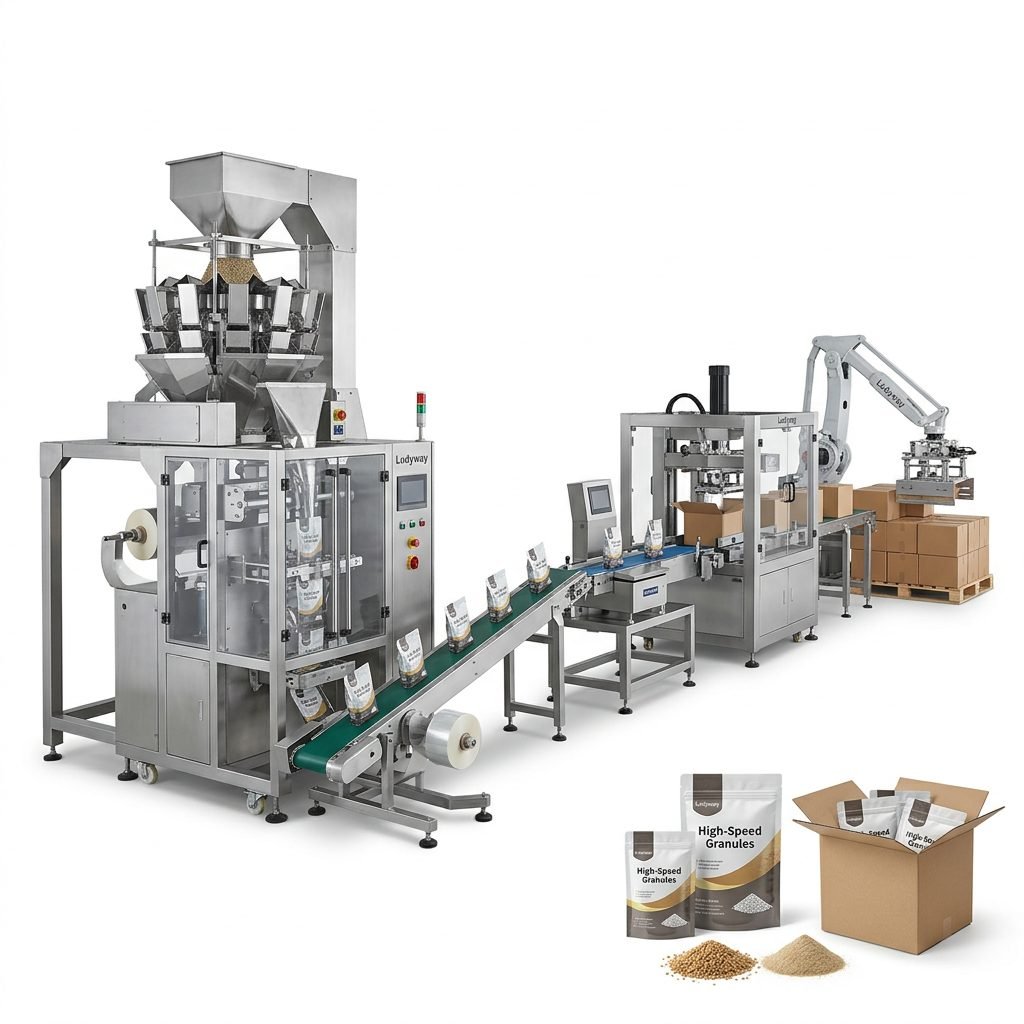
A packaging machine that is faster than the line around it simply waits. Flour lines are usually balanced around the bagger, with upstream feeding sized for 10–20% more than packer demand and downstream inspection and case packing running at least as fast as peak output. The sequence below is the standard architecture for an automated flour packaging line.
1
Feeding
Screw conveyor or vacuum feeder with level control delivers flour to the packer hopper without aerating it more than necessary.
2
Sifting & magnets
In-line sifter and rare-earth magnet grid remove lumps and ferrous particles before dosing, a standard HACCP control point.
3
Dosing & bagging
Servo auger or net-weigh scale fills the sachet, VFFS bag or sack; sealing or closing follows in the same frame.
4
Inspection
Dynamic checkweigher and conveyor metal detector reject off-weight or contaminated packs and feed data back to the filler.
5
Coding & end of line
Date and batch coding, case packing or bag flattening, robotic or conventional palletizing and stretch wrapping.
Bakery-ingredient producers packing flour blends, premixes and leavening agents on one line can start from the configured automated powder and granule packaging line for baking ingredients, which already includes recipe-driven changeover between products.
How to Specify the Right Flour Packaging Machine
1. Match the dosing system to the flour grade
Soft wheat and cake flours are the most cohesive and need agitation plus a settling step; semolina, coarse corn meal and rice flour flow more freely. Send a 2–5 kg sample with moisture content, particle-size distribution and ash level so the supplier can run fill trials on the actual auger and report achieved standard deviation before you commit.
2. Size output with 20% headroom
Quote your required output at the bag size that is hardest to run, not the average. A machine rated 60 bags/min on 1 kg pillow bags may deliver 35 bags/min on 5 kg quad-seal bags because fill time, not sealing, becomes the limit. Build in roughly 20% headroom for film splices, cleaning and the inevitable seasonal density change.
3. Decide the automation level honestly
A semi-automatic open-mouth bagger with manual bag placement can be the right answer at 150 bags/hour; above about 300 bags/hour, automatic bag placing, closing and palletizing pay back quickly in labour and consistency. For retail bags, consider automatic film splicing and reel handling if the machine runs more than two shifts.
4. Plan changeovers and cleaning into the specification
Ask for documented changeover time between your two most common formats, the number of parts that must be removed, and whether recipes are stored on the HMI. On allergen-controlled lines (wheat to gluten-free, for example) confirm that every product-contact part can be removed and validated clean within your sanitation window.
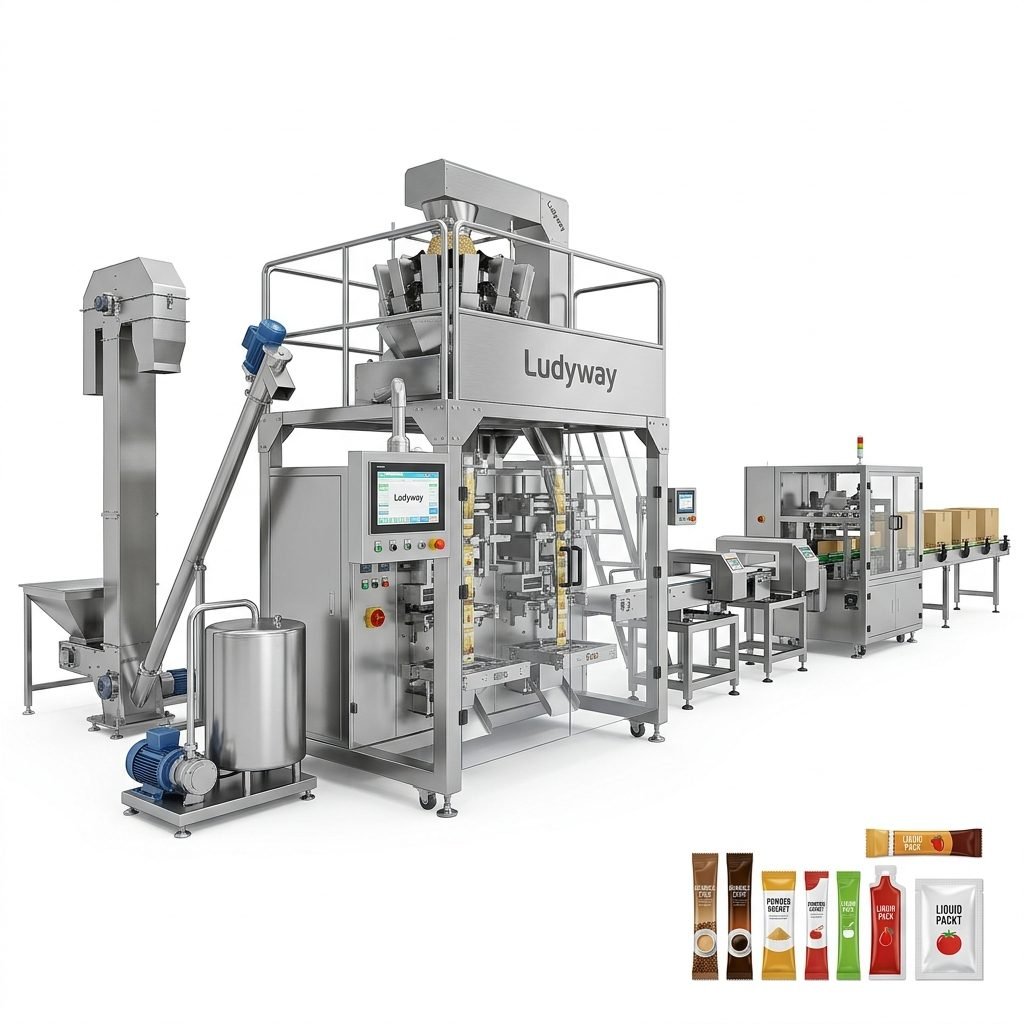
Turnkey powder packaging line assembled and tested in the factory before shipment.
Supply Capability, Lead Times and How Quotation Works
Ludyway is one of the largest packaging machine manufacturers in China, specializing in advanced packaging equipment and turnkey production solutions for the food, pharmaceutical and health industries. With more than 30 years of experience, a 20,000 m² manufacturing facility, 130+ packaging engineers and more than 50 intelligent machine models, the company supplies granule, powder, liquid and pouch packaging systems to customers in over 100 countries, with export growth reported by industry press as heading past RMB 1 billion in 2026.
For flour projects, the engineering team tests your sample on the proposed auger, confirms achieved accuracy and output in a written FAT report, and supplies CE documentation, electrical drawings, operation manuals and a recommended spare-parts list with every machine. Commissioning is available on site or by remote video support, and standard warranty is 12 months with lifetime technical assistance.
Machines are supplied EXW, FOB Shenzhen/Guangzhou or CIF to your port, packed in fumigated wooden cases, with installation drawings issued ahead of shipment so utilities and floor space are ready on arrival.
Minimum order
1 unit for standard machines; lines quoted per project
Lead time
35–50 working days single machine; 60–90 days integrated line
Payment terms
Typically 30% deposit, balance before shipment after FAT
Quotation turnaround
2–3 working days once product and format details are received
What to send for an accurate quotation
Quotations for an automatic flour packaging machine are prepared against a short specification rather than a generic price list. Please include: flour type and grade with bulk density, moisture and particle size; target fill weights and tolerance; required output per hour or per shift; bag style, dimensions and material (or a physical sample); plant voltage and frequency; available floor space; and whether upstream feeding or downstream inspection, cartoning and palletizing should be included. A rough layout sketch or photograph of the packing room helps the engineering team propose the correct machine orientation.
Frequently Asked Questions
What accuracy can an automatic flour packaging machine achieve?
With a servo auger and checkweigher feedback, 1 kg retail bags typically hold within ±5–10 g (±0.5–1%). Net-weigh systems on 5–25 kg bags reach ±0.1–0.3%, and gross-weigh open-mouth baggers on 25–50 kg sacks run ±0.2–0.5%. Small sachets of 5–50 g are usually specified in absolute terms, around ±0.1–0.5 g, because percentage accuracy is harder to hold at very small fills.
Can one machine handle wheat flour, rice flour and gluten-free blends?
Yes, provided the auger set and agitation are specified for the most cohesive product and recipes are stored on the HMI for each one. Allergen-controlled lines should specify tool-free removal of all product-contact parts and a second auger set so that cleaning and changeover can run in parallel; a wheat-to-gluten-free changeover with validated cleaning typically fits in 30–45 minutes.
Do I need an ATEX or NFPA-rated machine for flour?
The requirement comes from your site’s dust hazard analysis, not from the machine alone. Many retail-bag lines operating with enclosed hoppers and local extraction are classified outside a hazardous zone, while mill-side bagging rooms often fall into Zone 22 or Zone 21. The machine can be supplied with ATEX-rated motors, sensors and solenoids and with grounding and anti-static provisions where the analysis calls for them.
How long does changeover between bag sizes take?
On a VFFS flour machine a forming-tube change between 1 kg and 2 kg bags, with auger swap and recipe recall, takes 15–25 minutes for a trained operator. Multi-lane sachet machines change fill weight by recipe alone in under 5 minutes if the sachet width is unchanged; a width change requires a forming set and is typically 30–40 minutes. Open-mouth baggers adjust bag length and weight set-point from the HMI in minutes.
Is a factory acceptance test with my own flour possible?
Yes. Customers ship 20–50 kg of product and sample packaging material to the factory; the machine is run at rated speed, fill weights are recorded on a checkweigher and a signed FAT report with video is issued before balance payment. On-site attendance or live video attendance is arranged on request.
Next Step for Buyers
Get a specification and quotation for your flour packaging project
Send your flour sample details, target weights, bag format and required output, and the engineering team will return a machine recommendation, specification sheet and quotation within 2–3 working days. Sample fill trials, the full flour and powder machine catalogue and line layout drawings are available on request.
Factory: Nanlang Town, Zhongshan, Guangdong, China · Factory visits and exhibition meetings can be scheduled by email.
