The United Kingdom’s animal food manufacturing sector is one of the most advanced in Europe, driven by strong demand for both conventional livestock feed and premium pet food products. Whether you are producing dry kibble, wet pouches, freeze-dried treats, or bulk farm feed, selecting the right packaging machinery is critical to ensuring product freshness, shelf appeal, and compliance with UK regulations. This guide walks you through everything you need to know before investing in an animal food packaging machine in the UK market.
Understanding the UK Animal Food Packaging Market
The UK animal food industry encompasses a broad spectrum of products, from agricultural feed pellets to gourmet pet meals. According to industry data from the Flexible Packaging Association, the demand for convenient, portion-controlled packaging formats has grown significantly across the UK and European markets. Manufacturers are increasingly transitioning from manual or semi-automatic systems to fully automated multi-lane packaging lines that can handle high-volume production while maintaining consistent quality.
Key market drivers include the rise of single-serve wet food pouches, the popularity of grain-free and raw pet food products requiring modified atmosphere packaging (MAP), and stricter traceability requirements enforced by UK food safety authorities. For livestock feed producers, bulk bagging systems that integrate weighing, filling, and palletising are becoming the industry standard.
Types of Animal Food Packaging Machines
Choosing the correct machine type depends on your product characteristics, target packaging format, and production volume. Below is a comparative overview of the most common machine categories used in the UK animal food sector.
| Machine Type | Best Suited For | Packaging Format | Typical Output Range |
|---|---|---|---|
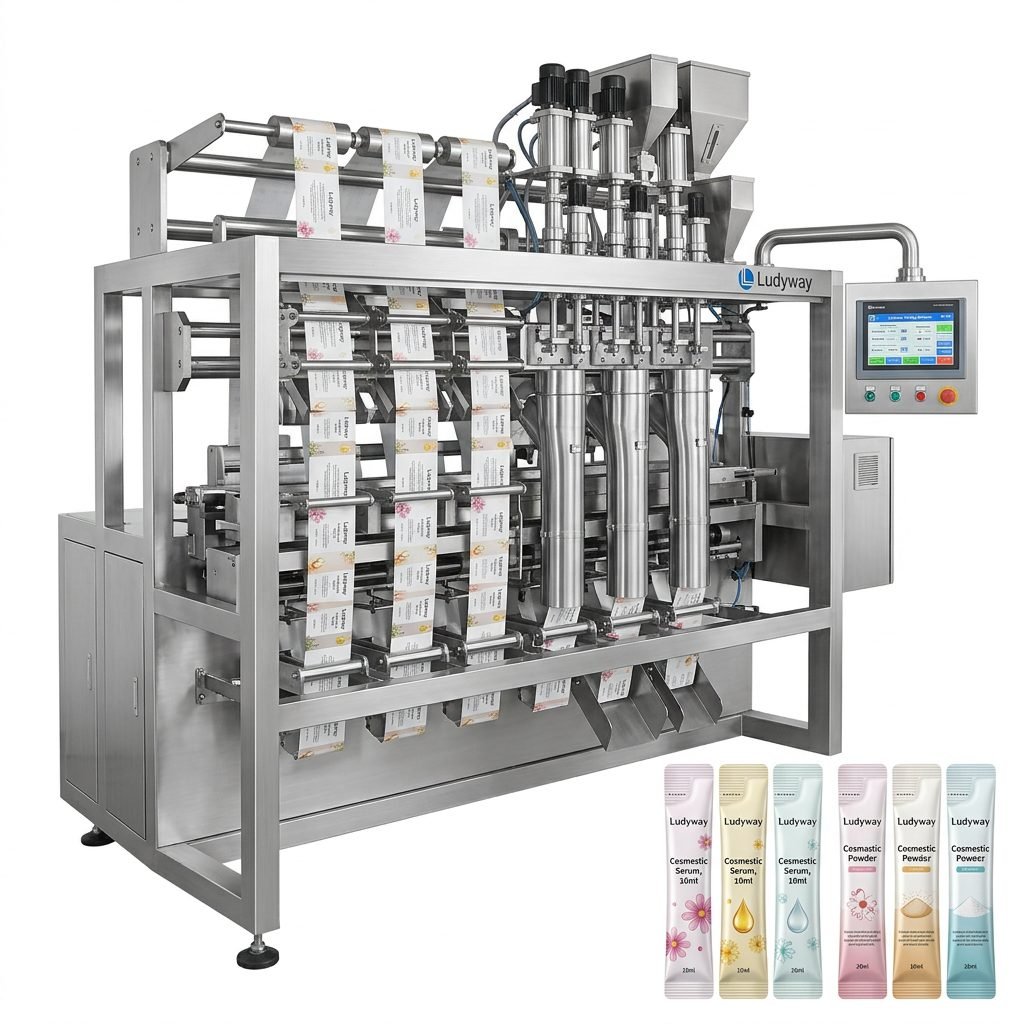
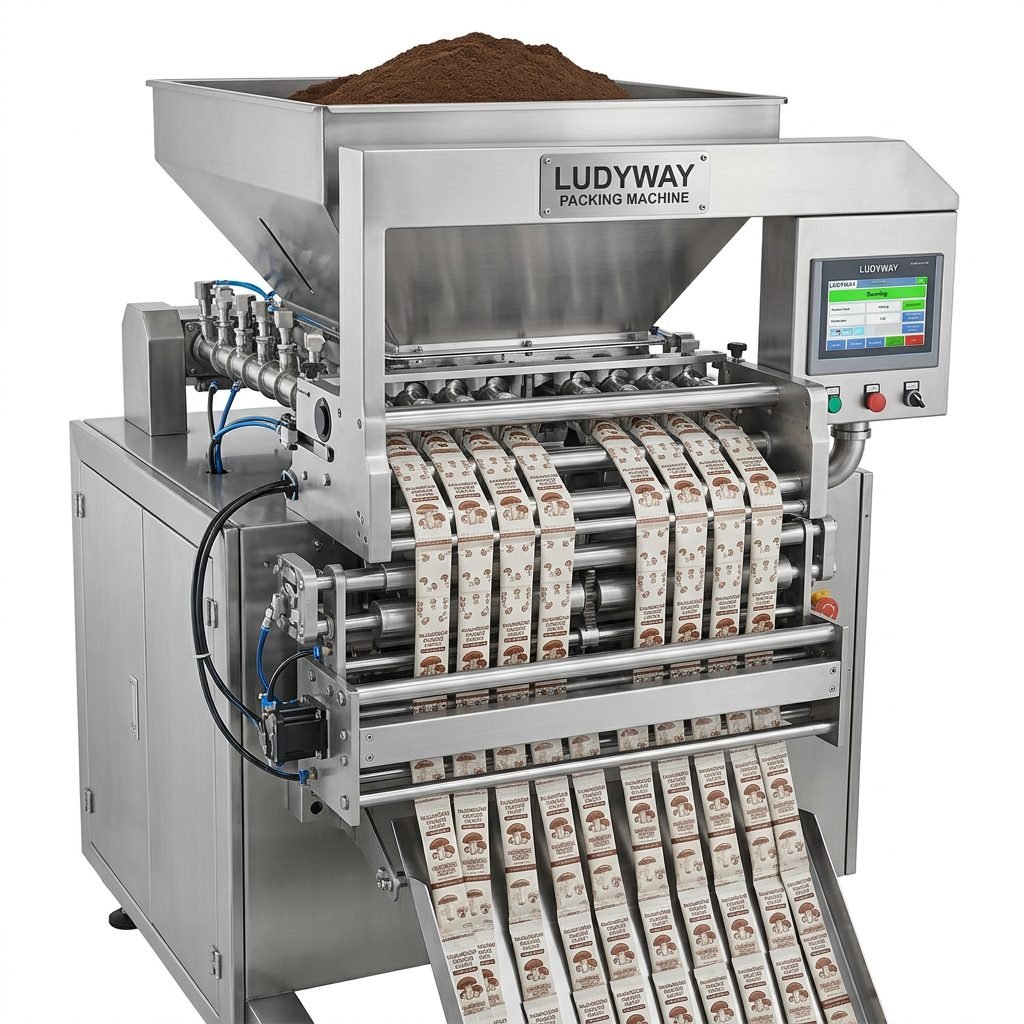
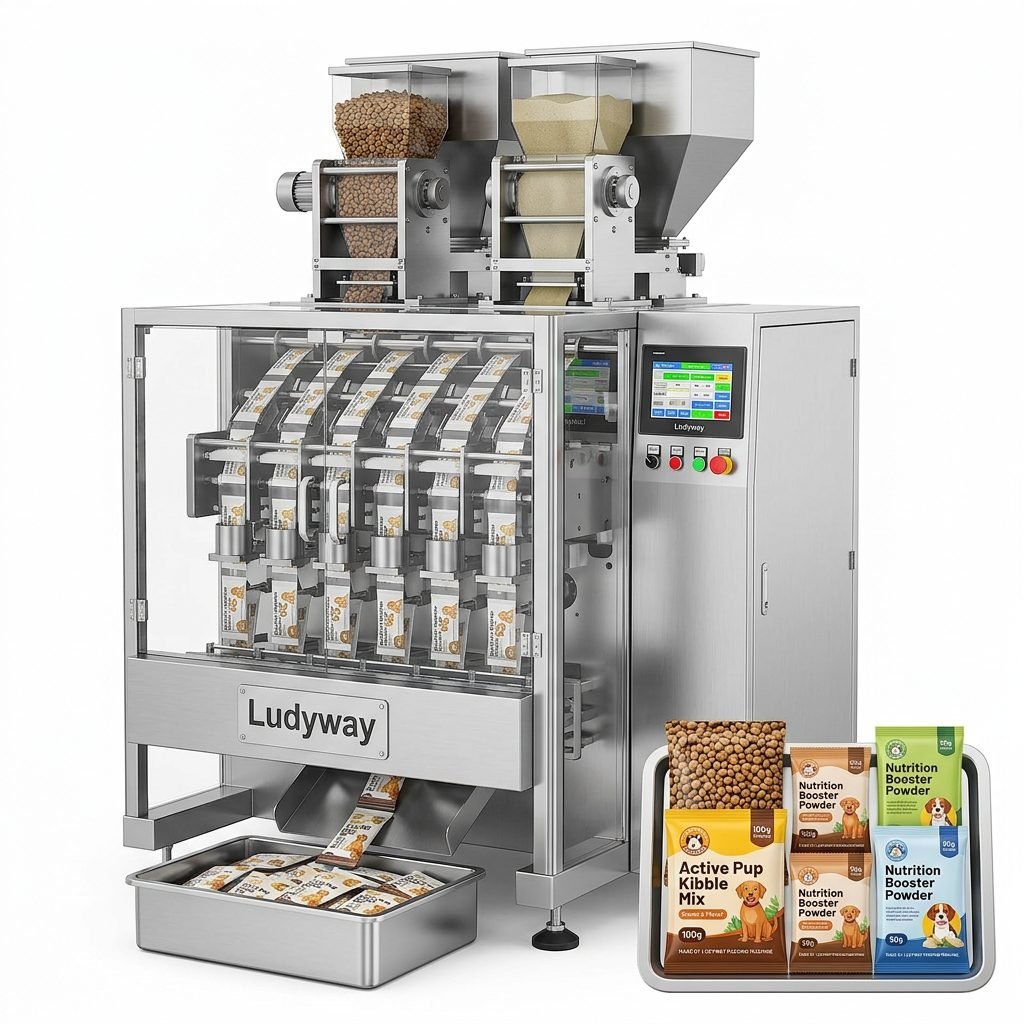
| Multi-Lane Stick Pack Machine | Powdered supplements, pet treats, single-serve dry food | Stick packs, sachets | 200–800 packs/min |
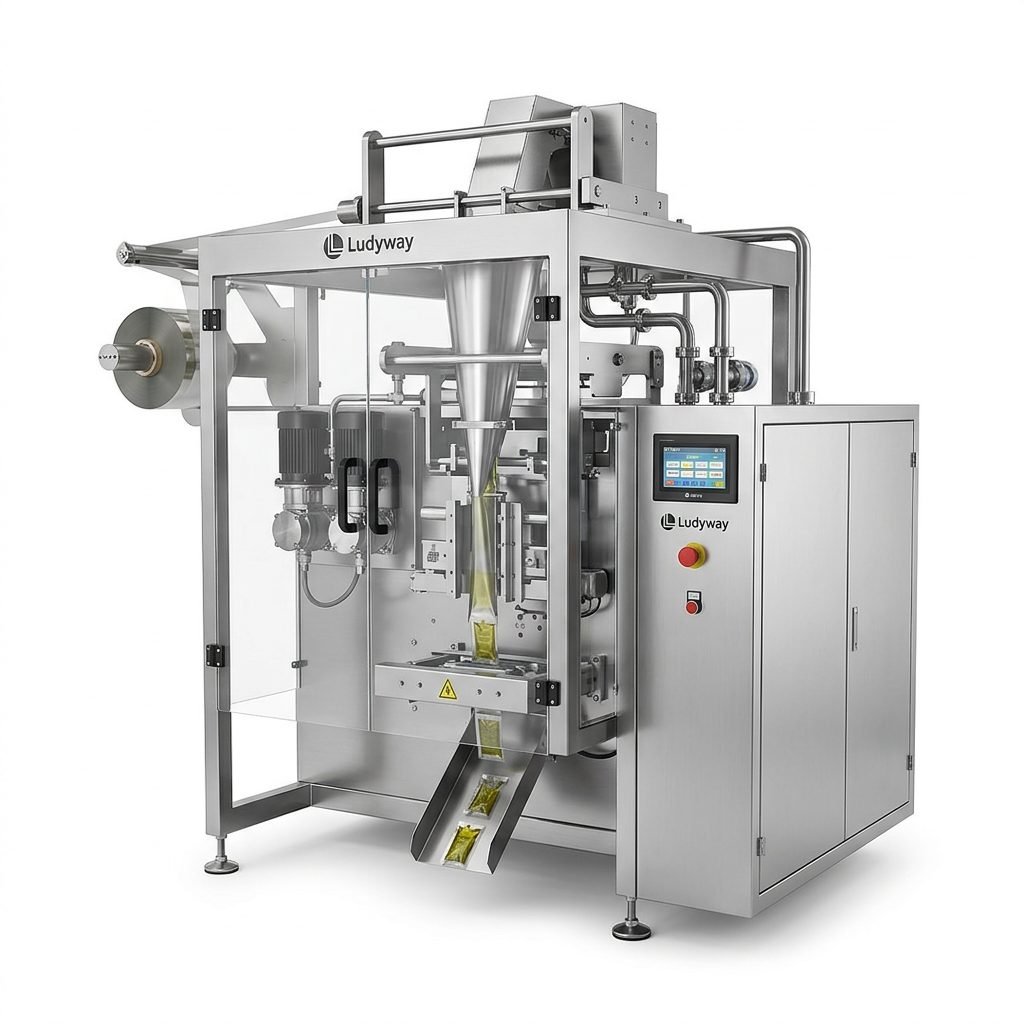
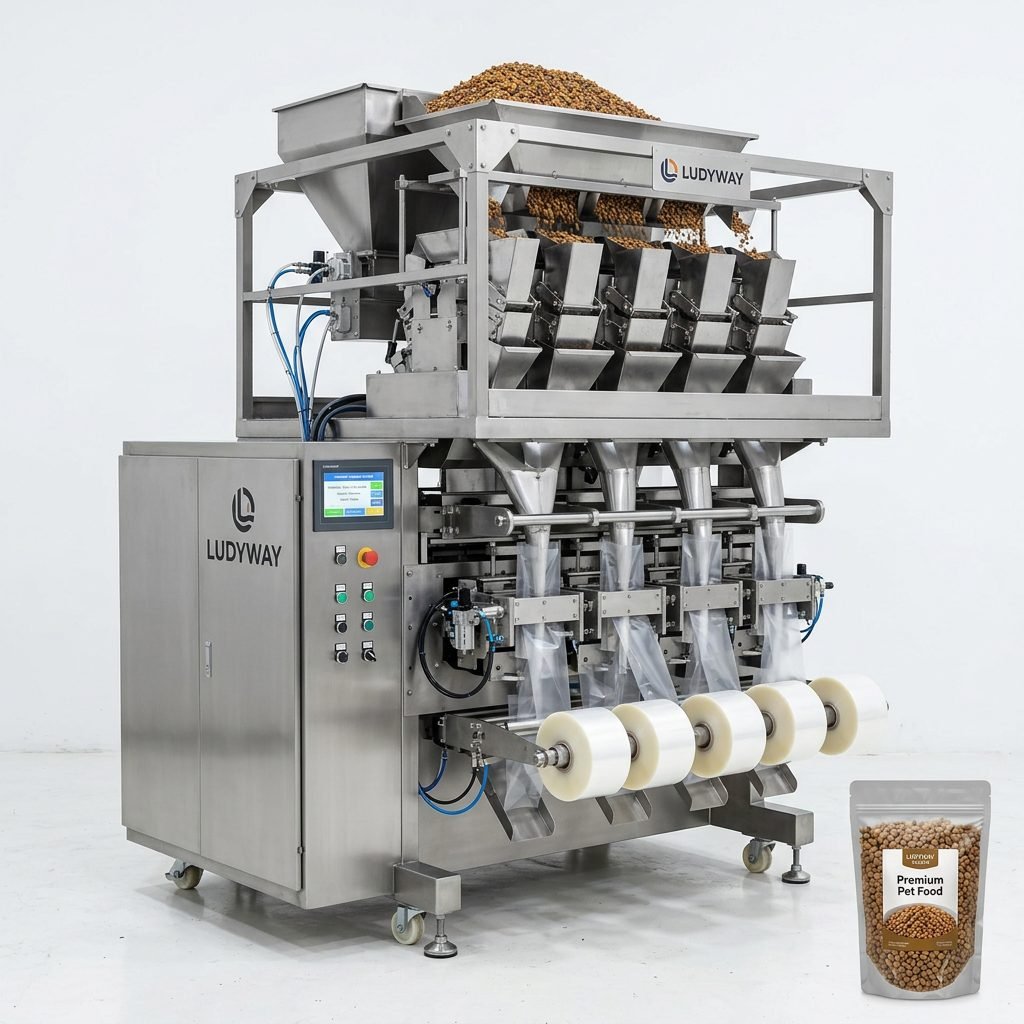
| Vertical Form-Fill-Seal (VFFS) | Dry kibble, granule feed, pellets | Pillow bags, gusseted pouches | 60–200 bags/min |
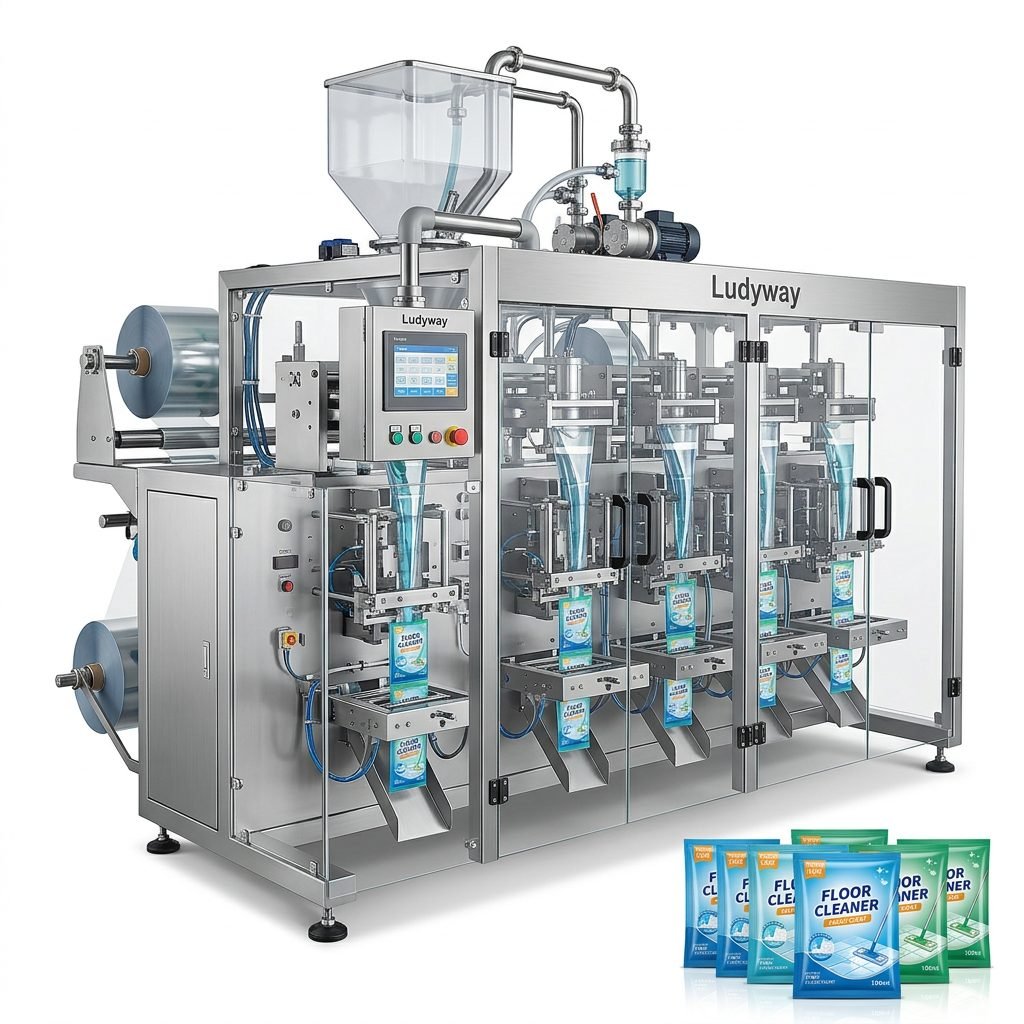
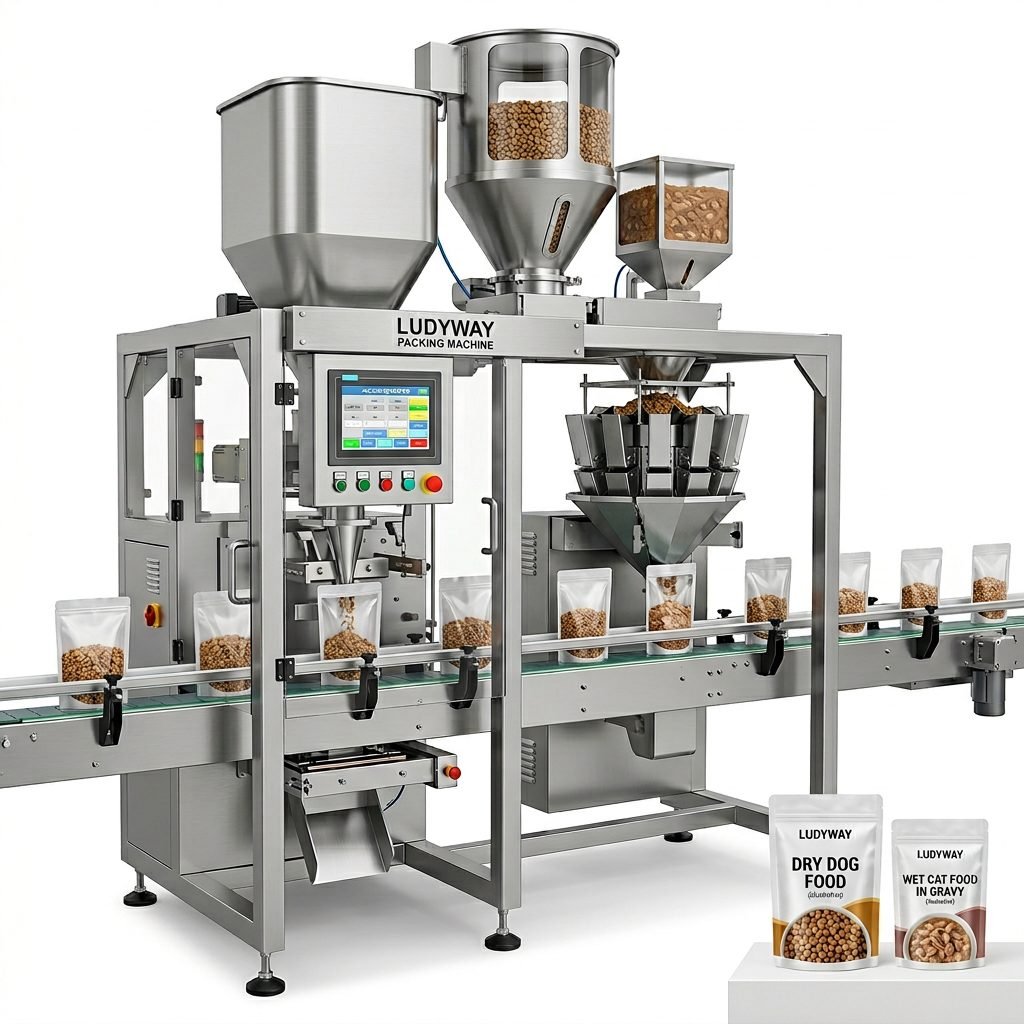
| Pre-Made Pouch Filling & Sealing | Wet pet food, high-value treats, retort pouches | Stand-up pouches, spouted pouches, flat pouches | 30–120 pouches/min |
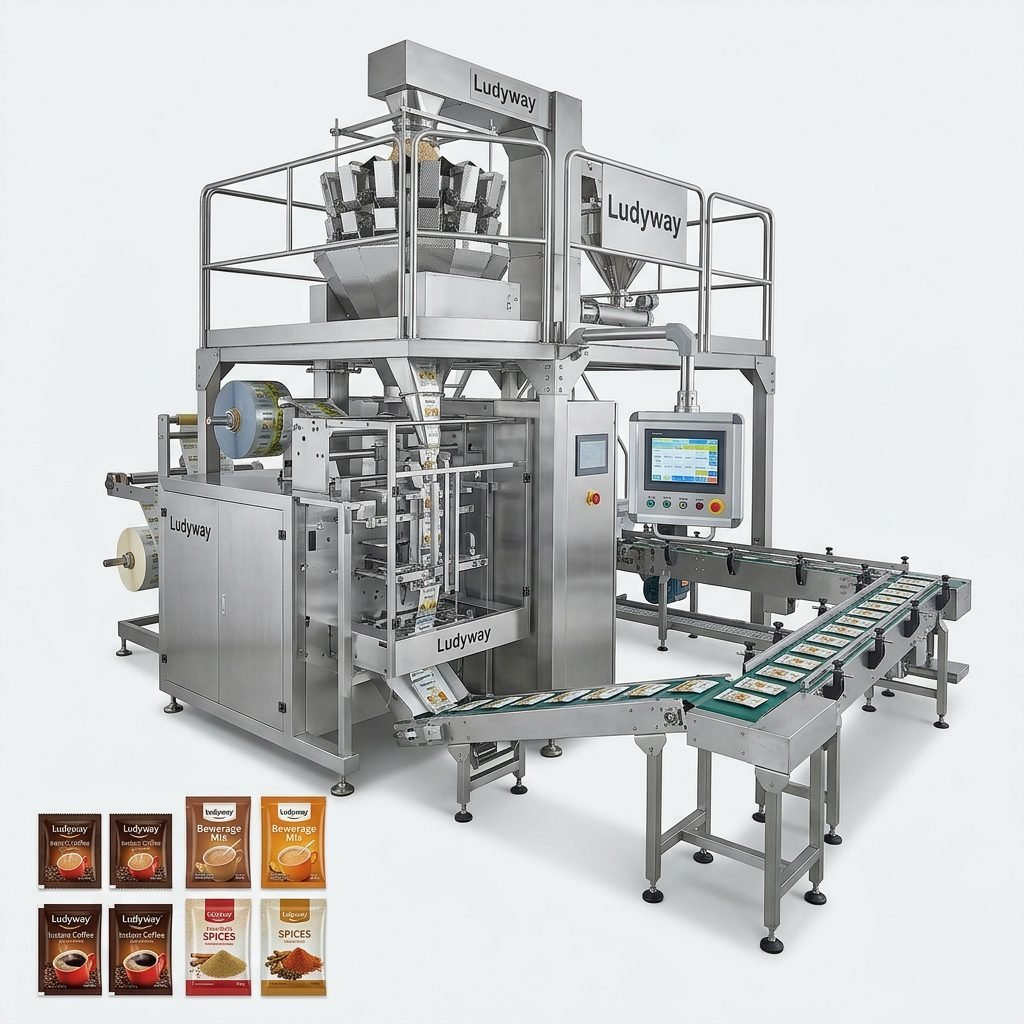
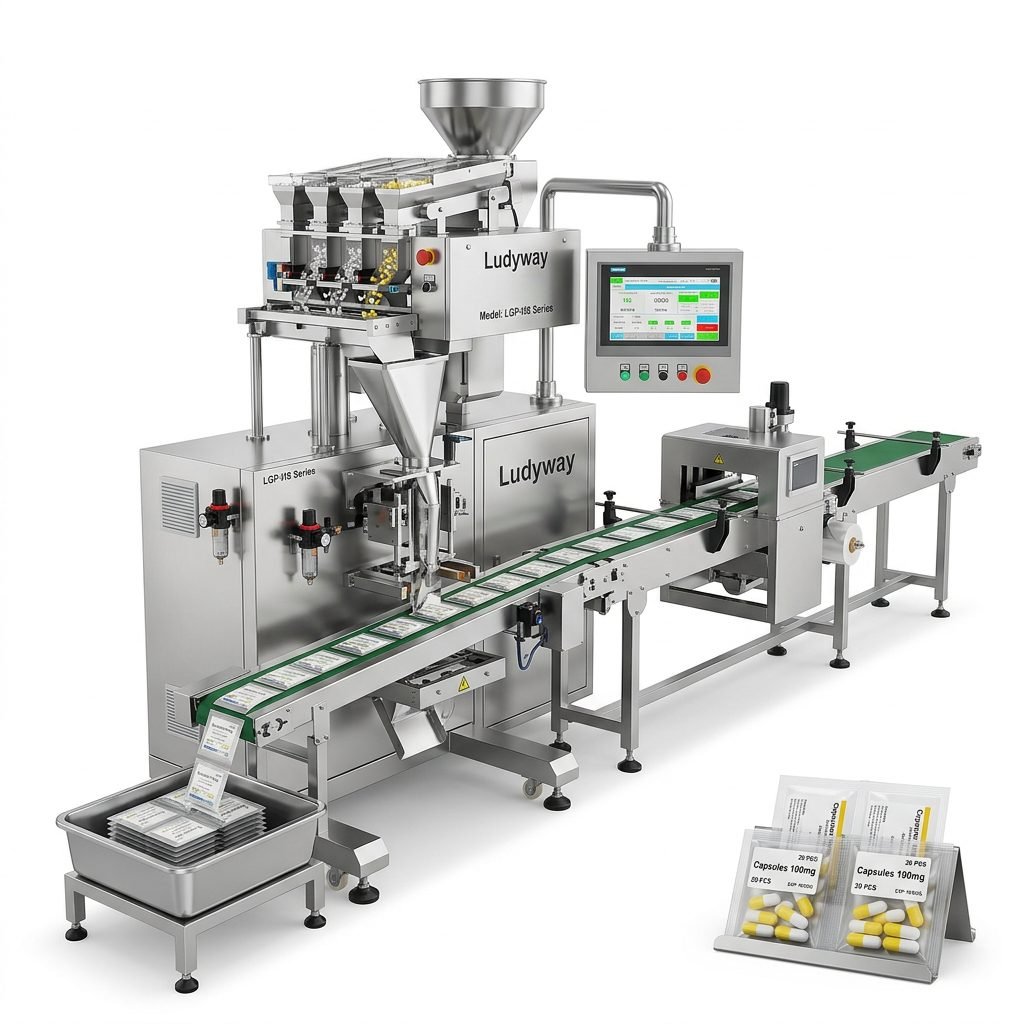
| Bulk Bagging & Weighing Systems | Farm feed, agricultural pellets, bulk granules | 5kg–50kg bags, jumbo bags | 6–20 bags/min |
| Vacuum & MAP Packaging Machines | Freeze-dried raw pet food, fresh meat treats | Vacuum pouches, thermoformed trays | 15–60 packs/min |
Key Features to Evaluate Before Purchase
Investing in an animal food packaging machine requires careful evaluation of technical specifications and operational requirements. The PMMI – Association for Packaging and Processing Technologies recommends that manufacturers assess the following factors before committing to a purchase decision.
Product Compatibility and Changeover Flexibility
Animal food products vary widely in their physical properties. Free-flowing granules behave differently from sticky wet mixtures or dusty powders. Your packaging machine must be compatible with your specific product viscosity, particle size, and moisture content. Additionally, if you produce multiple product lines, look for machines with tool-less changeover features that allow operators to switch between different packaging formats in under 30 minutes.
Sealing Integrity and Shelf-Life Protection
For animal food products—especially those containing meat, oils, or moisture—hermetic sealing is non-negotiable. Compromised seals lead to oxidation, spoilage, and potential contamination. Machines equipped with nitrogen flushing capabilities can significantly extend shelf life by displacing oxygen inside the package. This is particularly important for freeze-dried raw pet food, which has gained substantial market share in the UK.
Automation and Integration Capabilities
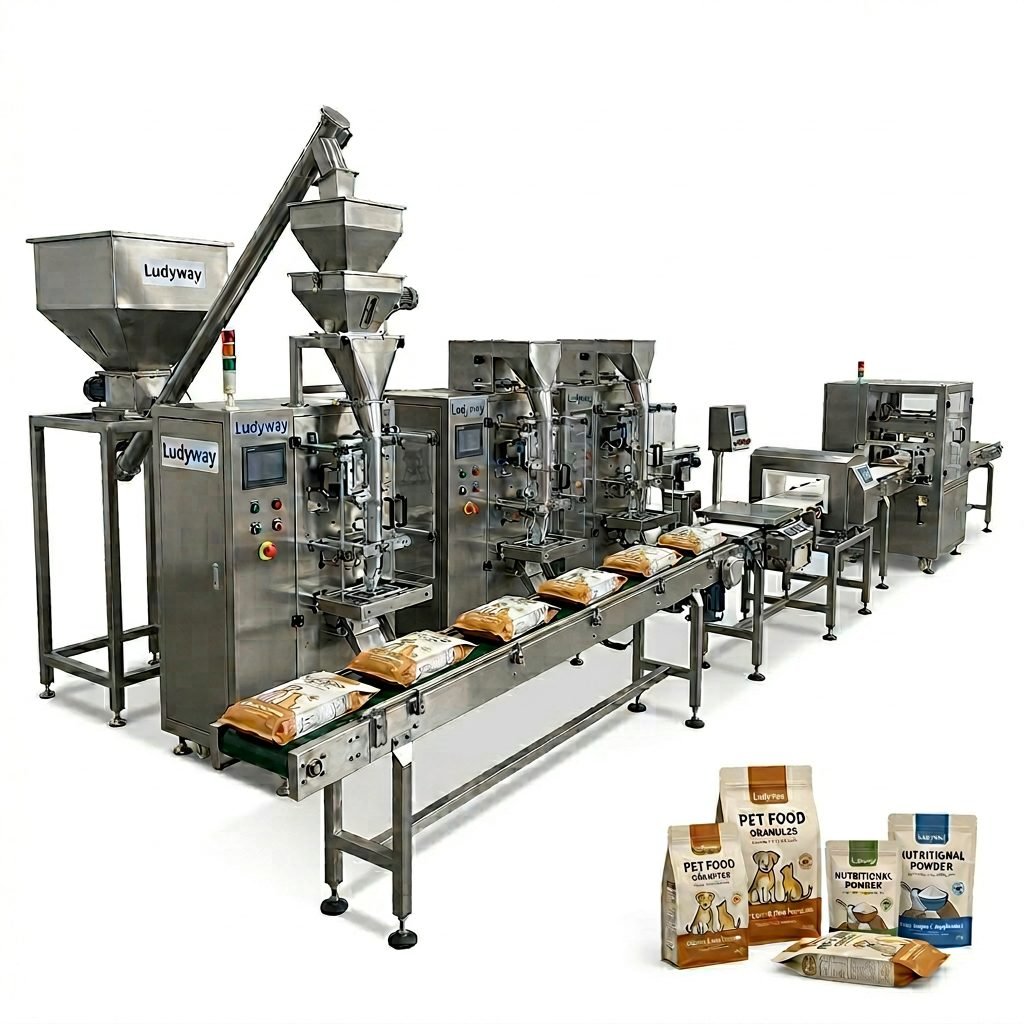
Modern packaging lines rarely operate in isolation. The most efficient UK production facilities integrate their packaging machines with upstream feeding systems, checkweighers, metal detectors, and downstream cartoning equipment. Ensure that the machine you select supports seamless integration with your existing or planned production infrastructure.
Cleaning, Hygiene, and Maintenance
UK animal food manufacturers must comply with stringent hygiene standards. Machines designed with sloped surfaces, quick-release components, and IP65-rated enclosures facilitate thorough cleaning and reduce cross-contamination risks between production batches. Stainless steel construction is strongly recommended for any surfaces that come into contact with food products.
UK Regulatory Compliance for Animal Food Packaging
Navigating the UK’s regulatory landscape is essential for any animal food manufacturer. Post-Brexit, the UK has developed its own regulatory framework that operates alongside retained EU legislation. The FDA food packaging standards provide useful international benchmarks, though UK-specific requirements must take precedence.
Key compliance areas include:
- Food Contact Materials (FCM) Regulations – Packaging films and laminates must be certified as safe for animal food contact under UK FCM legislation.
- Traceability and Batch Coding – Every package must carry legible batch codes, production dates, and expiry information for full supply chain traceability.
- Weights and Measures Compliance – Filled quantities must meet UK trading standards requirements; integrated checkweighing systems are strongly recommended.
- Environmental Packaging Regulations – The UK’s Extended Producer Responsibility (EPR) framework increasingly demands sustainable packaging choices.
Cost and ROI Considerations
The capital investment for an animal food packaging machine in the UK can range from £25,000 for a basic semi-automatic system to over £300,000 for a fully automated multi-lane turnkey line. While the initial outlay may seem substantial, a well-chosen machine typically delivers a return on investment within 12 to 24 months through labour savings, reduced product waste, increased throughput, and fewer quality-related returns.
When calculating total cost of ownership, factor in not only the purchase price but also installation, operator training, ongoing maintenance, spare parts availability, and energy consumption. Machines with servo-driven motors generally offer lower long-term operating costs compared to pneumatic alternatives.
Choosing the Right Supplier for the UK Market
Selecting a reliable equipment supplier is as important as choosing the right machine. Look for manufacturers that offer local UK-based technical support, comprehensive warranties, and readily available spare parts. Evaluate prospective suppliers on their track record in the animal food sector specifically—experience with pet food, livestock feed, and freeze-dried products indicates a deeper understanding of your operational needs.
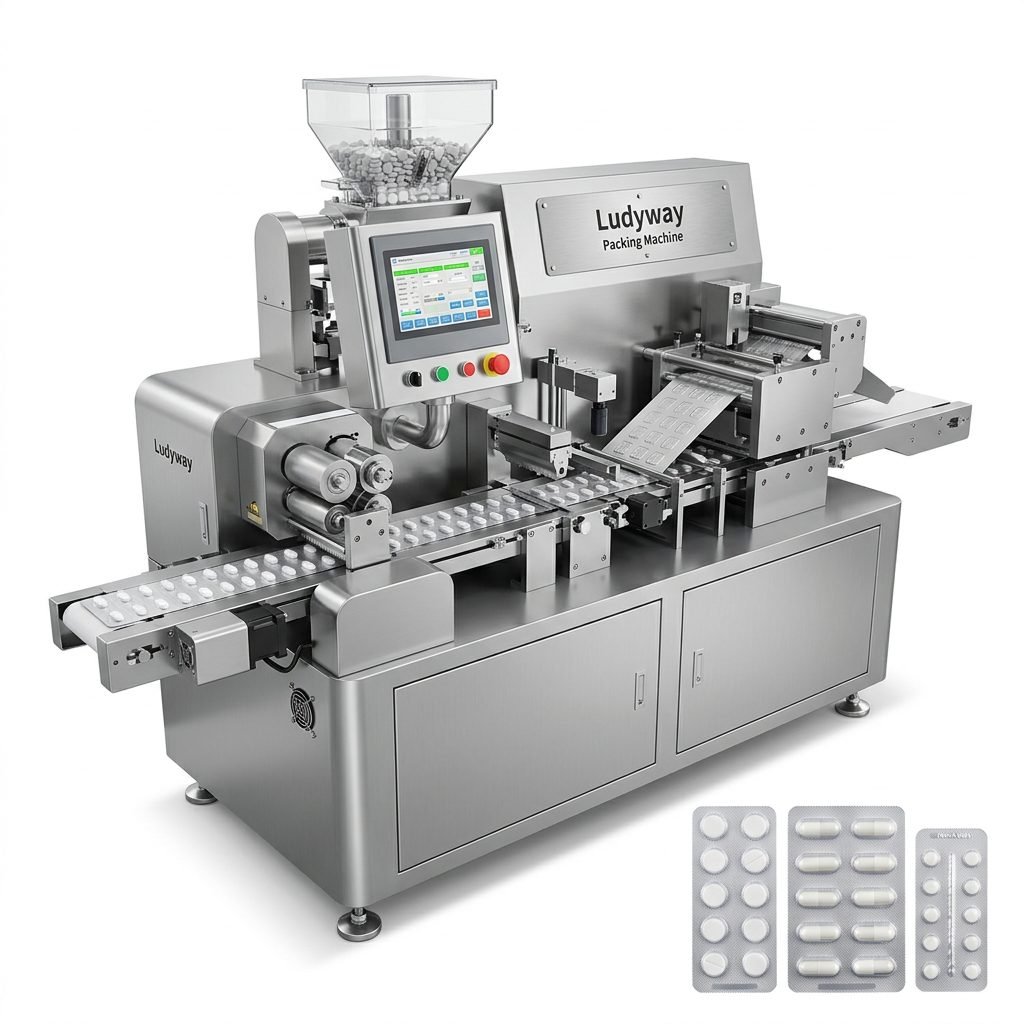
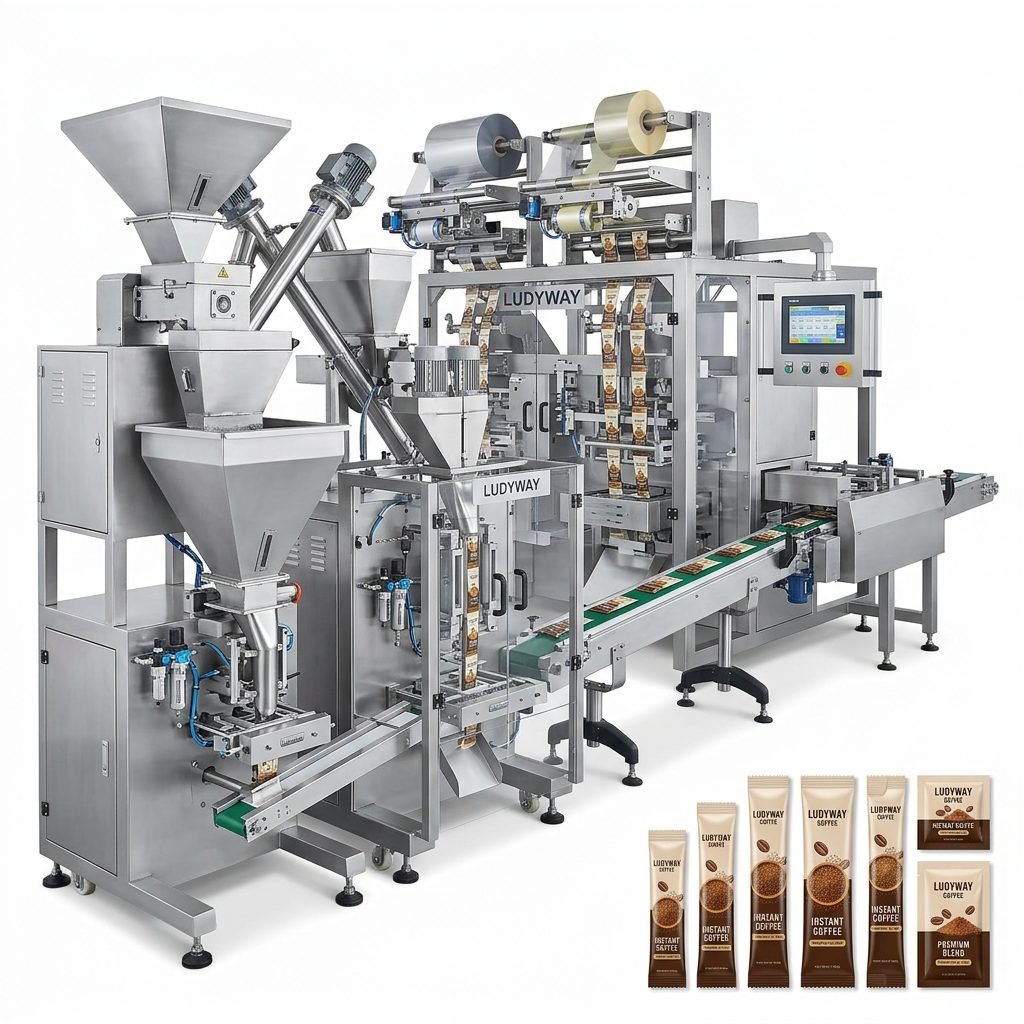
Leading global manufacturers such as Ludyway offer over 50 intelligent packaging machine models, including multi-lane stick pack, sachet, and fully automated systems designed for granule, powder, and liquid animal food applications. With more than 30 years of industry expertise and a modern 20,000㎡ manufacturing facility, the company provides turnkey packaging solutions to customers in over 100 countries, including the United Kingdom.
Frequently Asked Questions
What is the best packaging machine for dry dog food in the UK?
For dry kibble and granule-based dog food, vertical form-fill-seal (VFFS) machines or multi-lane stick pack systems are generally the most efficient choices. The optimal machine depends on your desired packaging format—pillow bags for larger quantities or stick packs for single-serve portions.
Do I need nitrogen flushing for pet food packaging?
Nitrogen flushing is highly recommended for any pet food product with significant fat or oil content, as it displaces oxygen and prevents rancidity. For freeze-dried raw pet food, modified atmosphere packaging (MAP) is essential for maintaining product quality throughout the shelf life.
How do UK packaging regulations differ from EU standards post-Brexit?
While the UK has retained much of the EU’s food contact materials legislation, there are diverging requirements in areas such as recycled content mandates and producer responsibility schemes. UK manufacturers should consult the European Commission Packaging Waste guidelines alongside current UK-specific DEFRA and FSA guidance.
What maintenance schedule should I expect for a packaging machine?
Preventative maintenance is typically recommended every 500 to 1,000 operating hours, depending on the machine’s complexity and usage intensity. Daily cleaning protocols, weekly inspection of sealing jaws and cutting blades, and quarterly servicing of motors and drive systems are standard practices in UK production facilities.
Can one machine handle both dry and wet animal food products?
While some advanced multi-format machines can handle both dry and wet products, this generally requires extensive changeover procedures and may compromise efficiency. For most UK manufacturers, dedicating separate lines to dry and wet products yields better throughput and reduces cross-contamination risks.