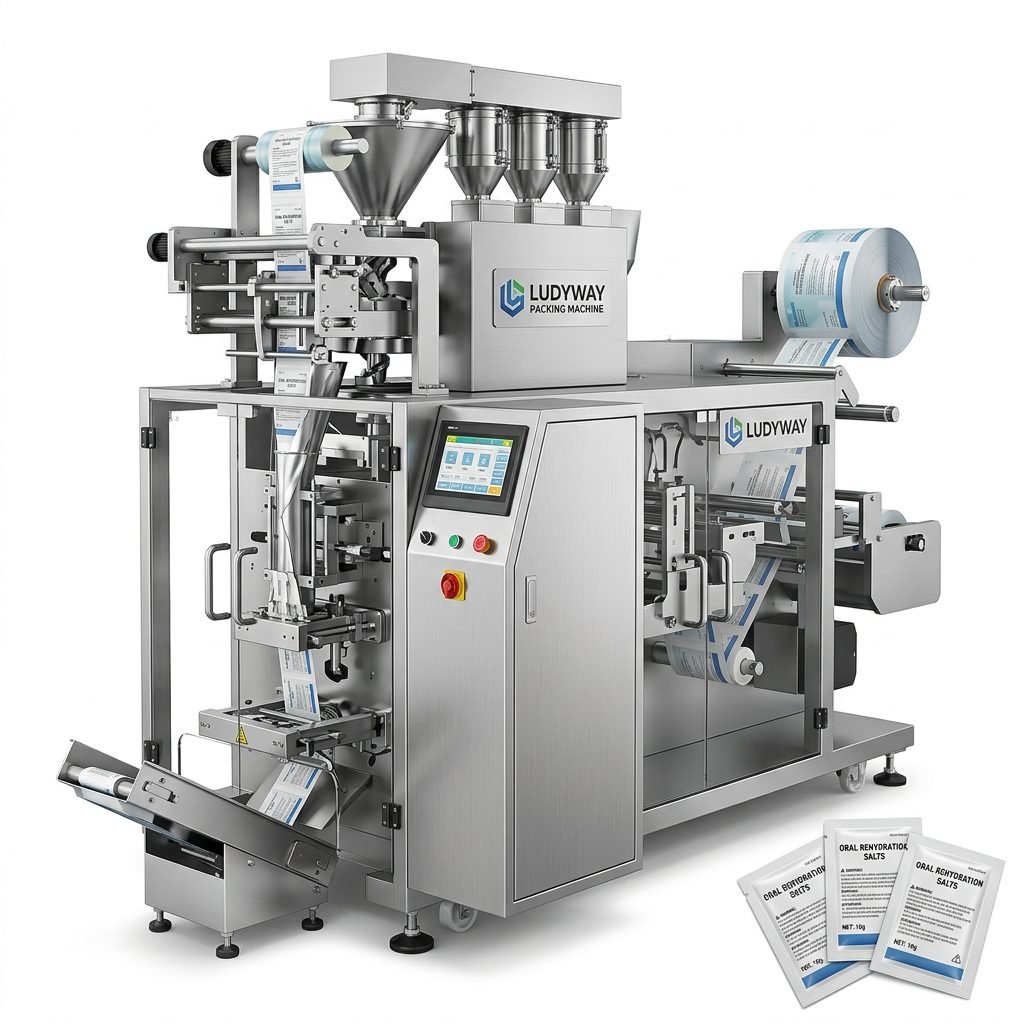
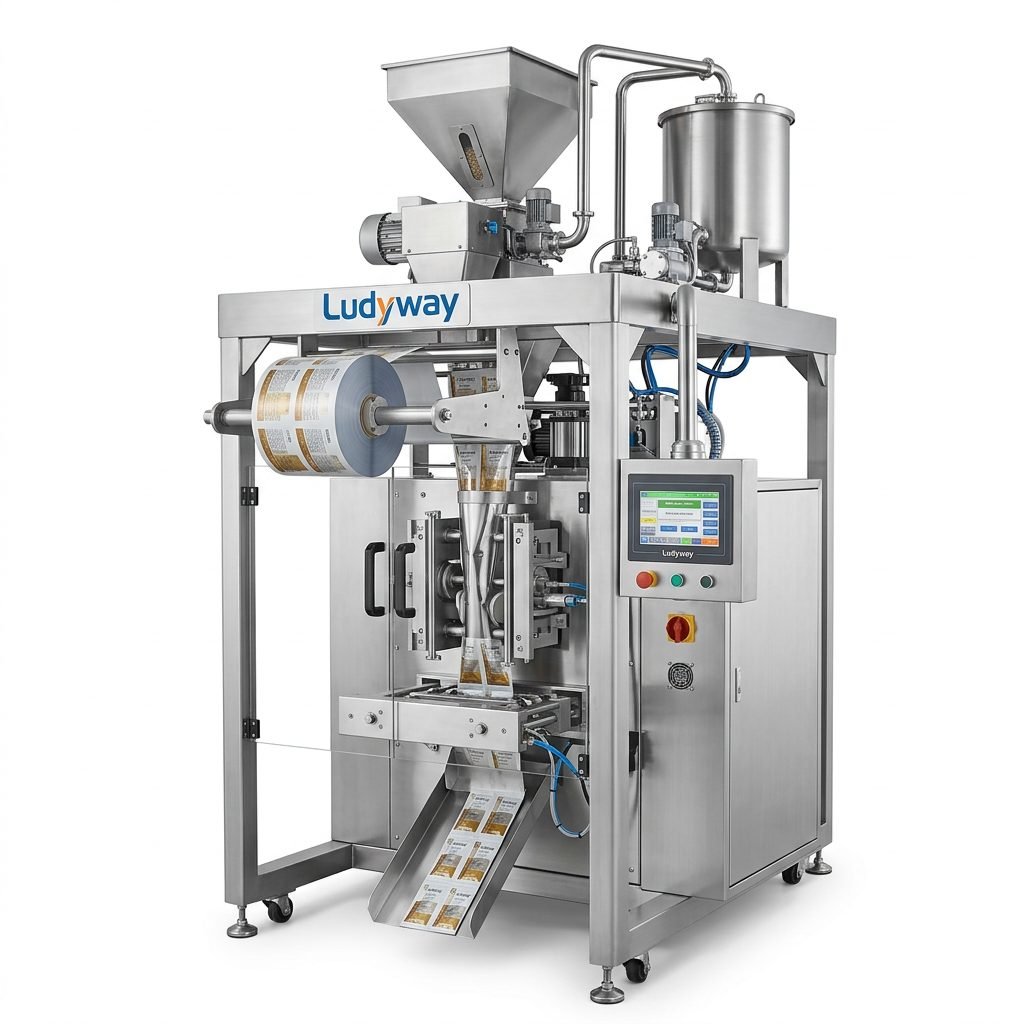
Food manufacturers today face constant pressure to package products faster, safer, and more consistently while controlling labor costs and reducing material waste. Choosing the right automatic food packaging machine is not simply about buying equipment—it is about building a packaging solution that supports output targets, food safety compliance, product quality, and long-term profitability.
Whether you pack powders, granules, liquids, sauces, snacks, or ready-to-eat products, the best solution depends on your product type, packaging format, required speed, and production environment. This guide explains how to evaluate options and select a system that truly improves packaging efficiency.
Why Automatic Food Packaging Machines Matter
Manual and semi-automatic packing methods often create bottlenecks when demand increases. An automatic food packaging system helps manufacturers achieve:
- Higher output with stable production speed
- Better dosing accuracy for powders, granules, and liquids
- Improved seal integrity and package appearance
- Lower labor dependence and reduced operator variability
- Cleaner production conditions for food hygiene requirements
- Traceability integration through coding, inspection, and rejection systems
- Scalable automation for growing product lines
In competitive food markets, packaging is no longer just an end-of-line task. It directly affects shelf appeal, transportation efficiency, product protection, and overall operational cost.
Start with the Product: What Exactly Are You Packaging?
The first step is to clearly define the product characteristics. Different foods behave very differently in a packaging machine, and the filling method must match the material.
| Product Type | Typical Characteristics | Recommended Packaging Approach |
|---|---|---|
| Powders | Fine, dusty, sometimes poor flow | Auger filling, dust control, accurate sealing |
| Granules | Free-flowing, irregular particle size | Multi-head weigher or cup dosing system |
| Liquids | Thin viscosity, splash risk | Pump filling with anti-drip and secure sealing |
| Pastes / Sauces | Viscous, may contain particles | Piston or servo pump filling system |
| Snack pieces / solids | Fragile or non-uniform shapes | Gentle feeding with weighing and pouch filling |
If the product is hygroscopic, oily, sticky, fragile, or sensitive to oxygen, the machine design must also include corresponding protection features such as nitrogen flushing, anti-bridging devices, vacuum options, or product-friendly conveying systems.
Choose the Right Packaging Format
Packaging efficiency is strongly influenced by the format you choose. The best automatic machine should fit your market requirements as well as your production goals.
Common food packaging formats include:
- Sachets
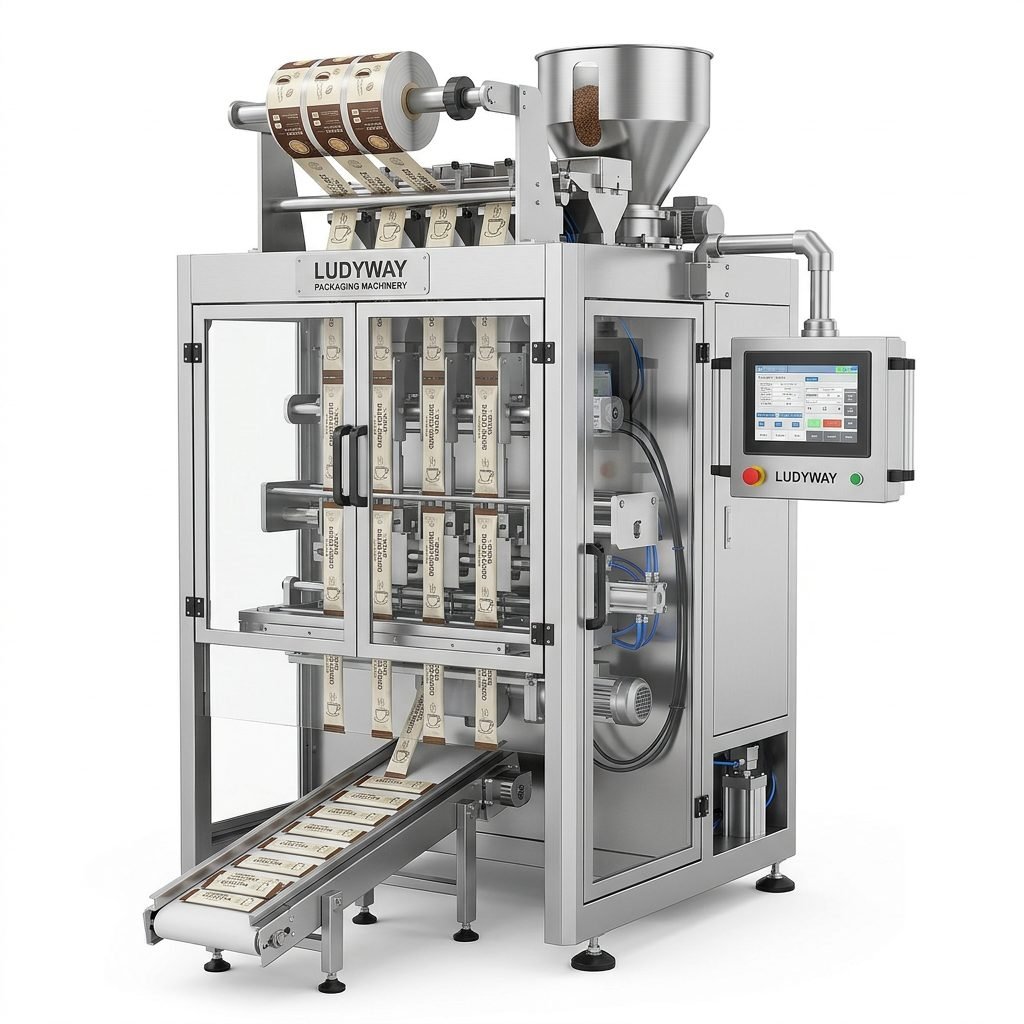
- Stick packs
- Pouches
- Pillow bags
- Vacuum bags
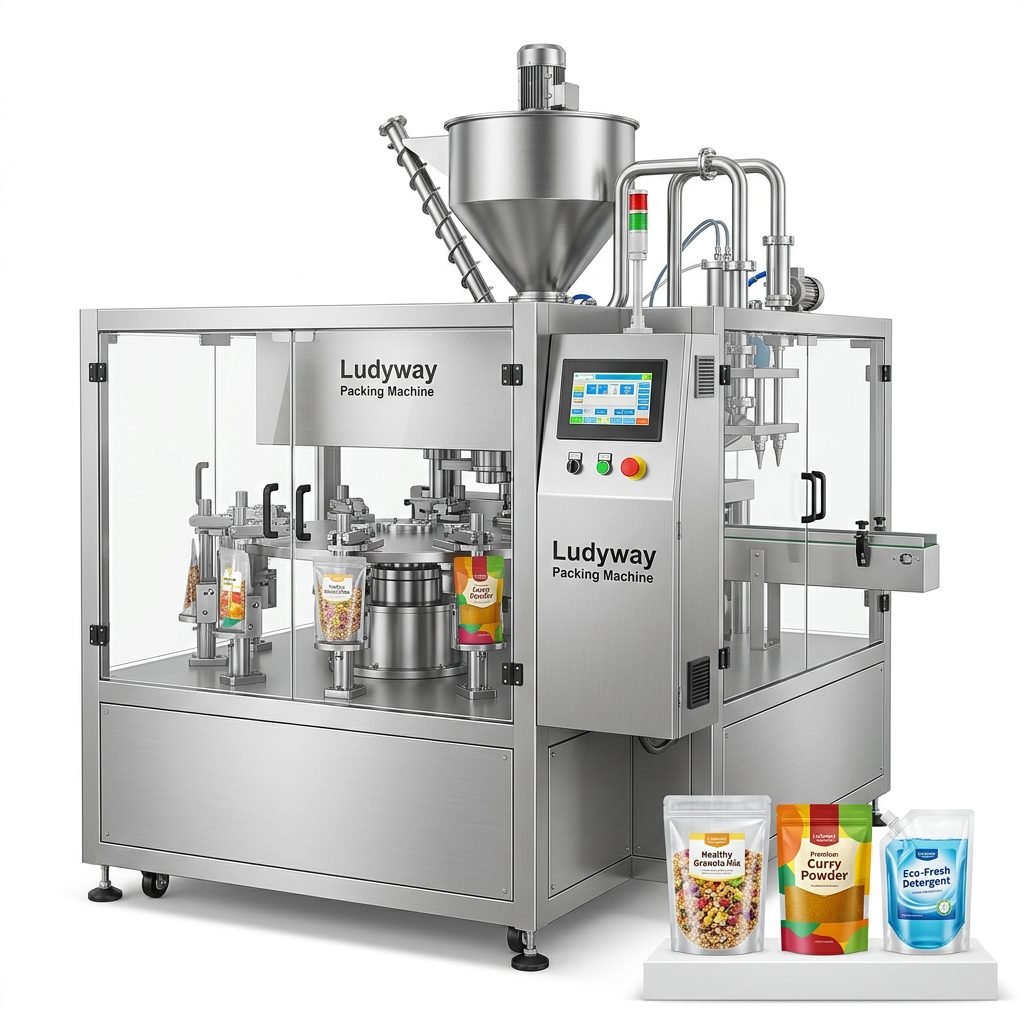
- Premade pouches
- Bottles or containers
- Cartons as secondary packaging
For example, single-serve powders and drink mixes often work well in stick packs or sachets, while snacks and frozen foods may require pouch or pillow bag packaging. Sauces may need sachet, pouch, or bottle filling depending on retail positioning and filling volume.
Match Machine Type to Production Needs
Not every food factory needs the same machine structure. The right solution depends on output per minute, package size range, changeover frequency, and available floor space.
Popular automatic food packaging machine options
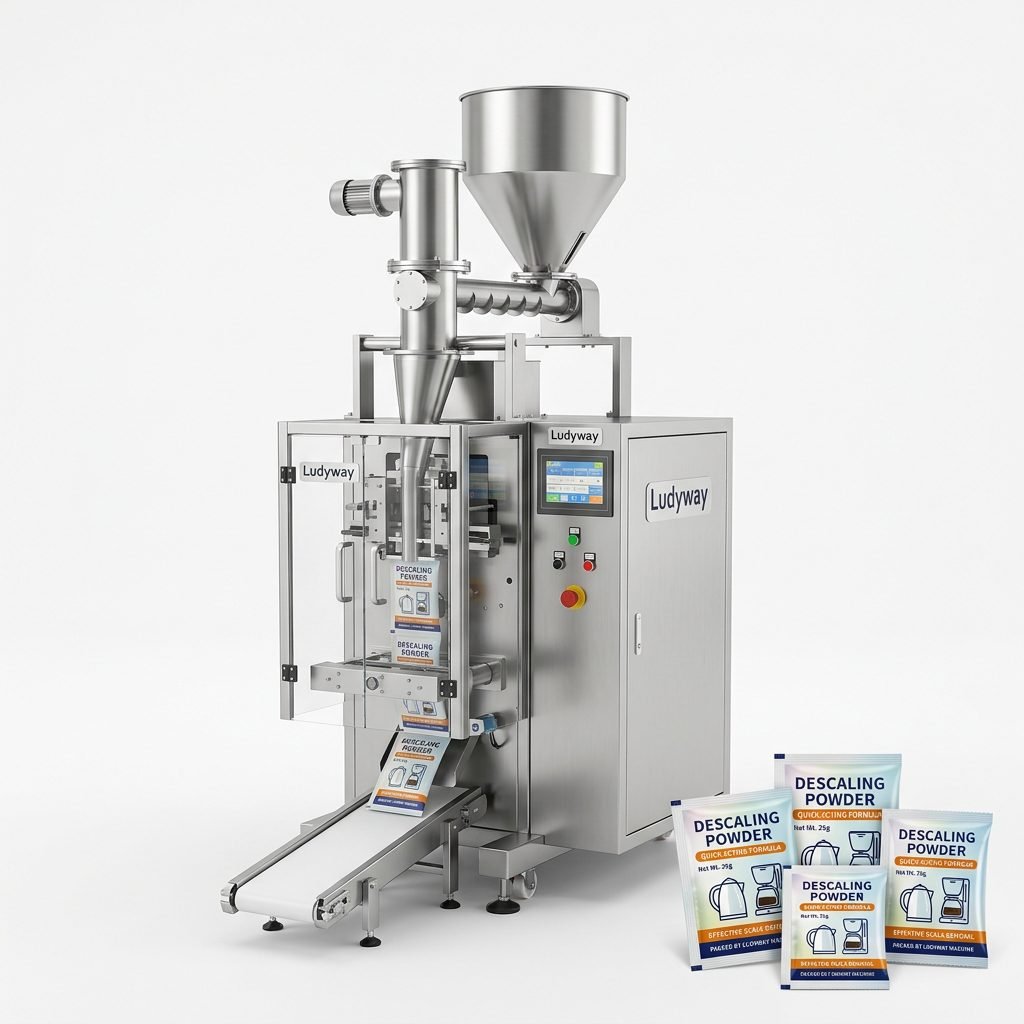
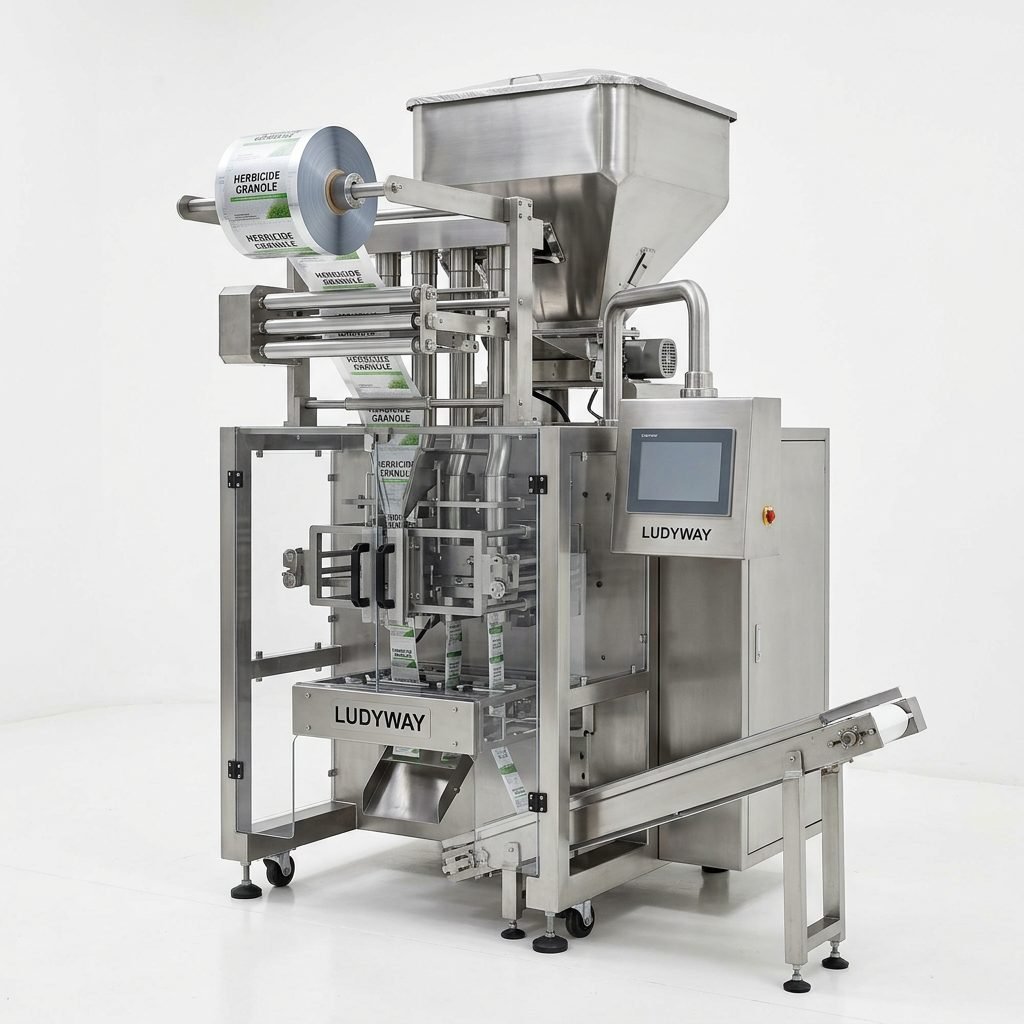
- Vertical Form Fill Seal (VFFS) machines
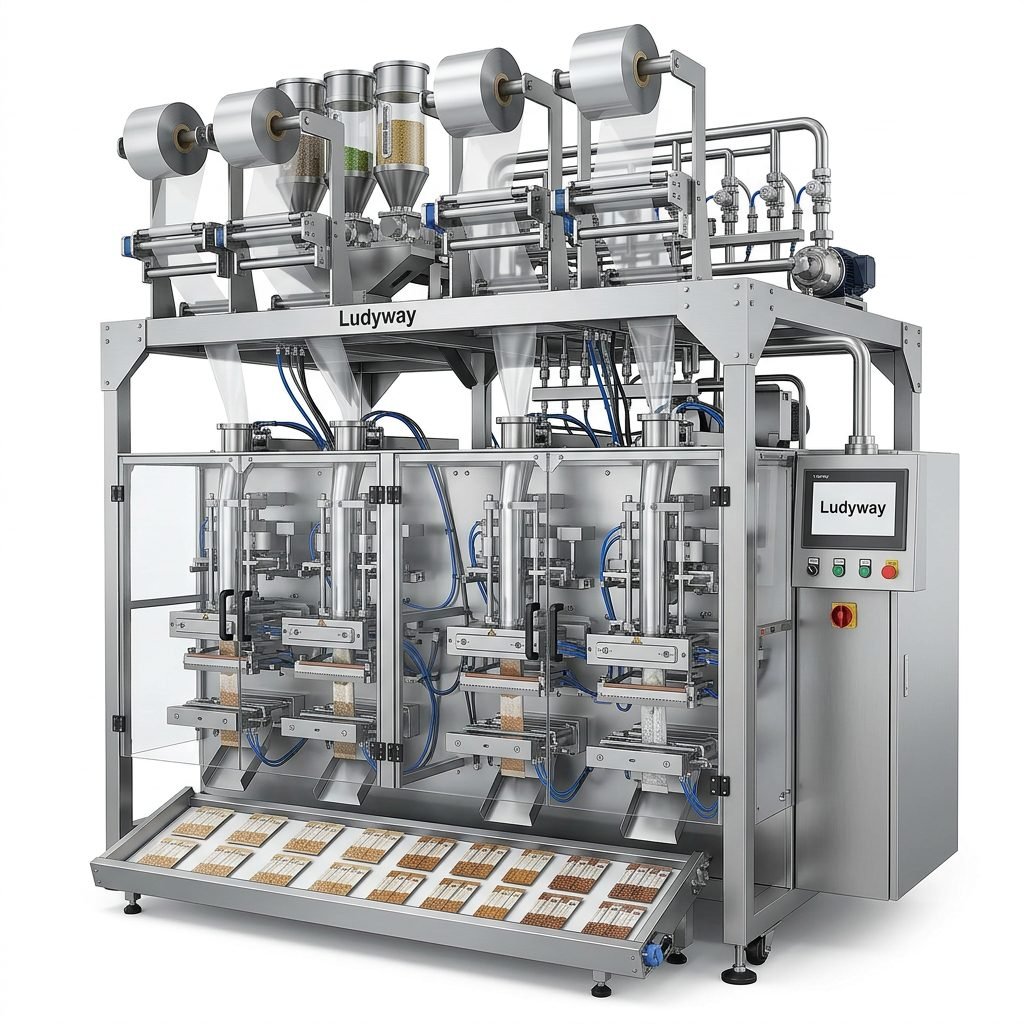
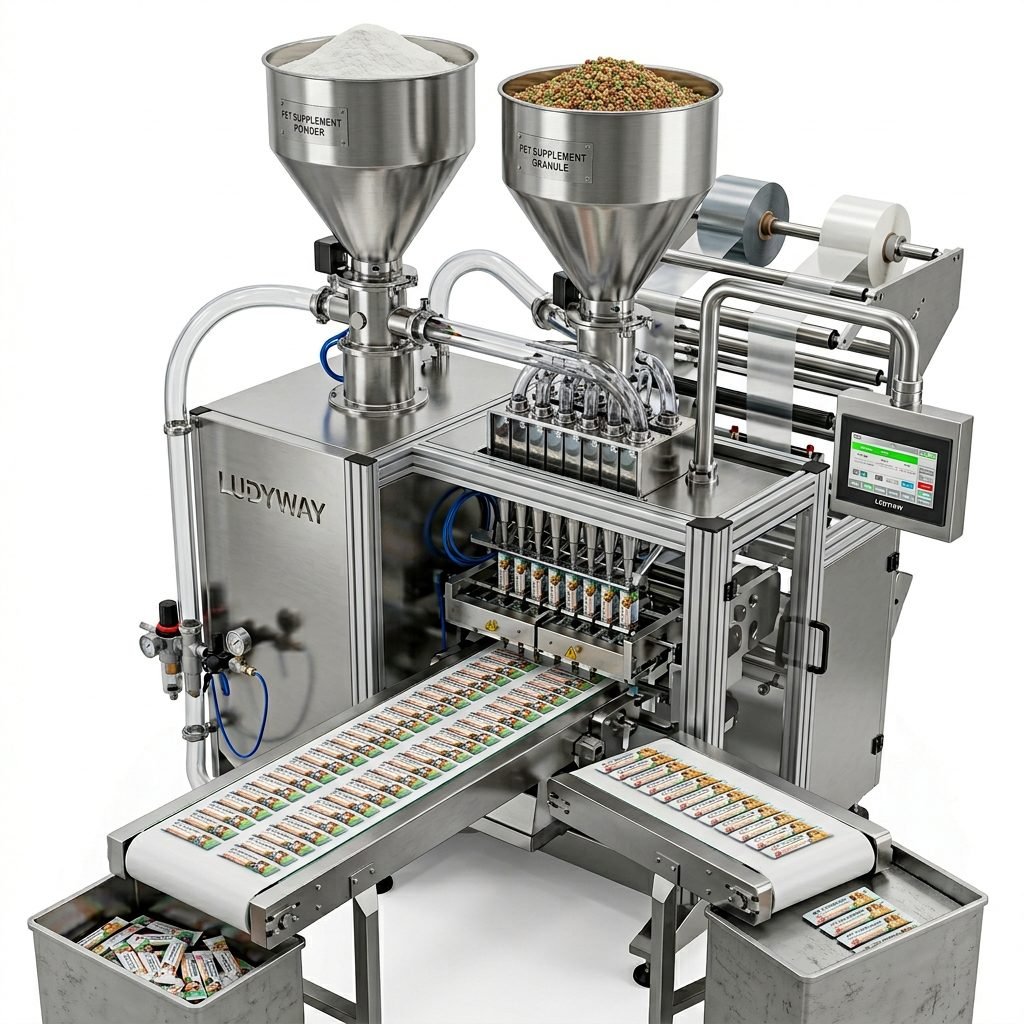
Suitable for granules, powders, and some snack products. Efficient for pillow bags and pouch-style applications. - Multi-lane sachet or stick pack machines
Ideal for high-speed small-dose packaging of powders, granules, liquids, and sauces. - Premade pouch packaging machines
Best for premium pouch presentation and flexible package shapes. - Liquid and paste filling & sealing machines
Common for condiments, oils, syrups, sauces, and ready-to-use food applications. - Vacuum packaging machines
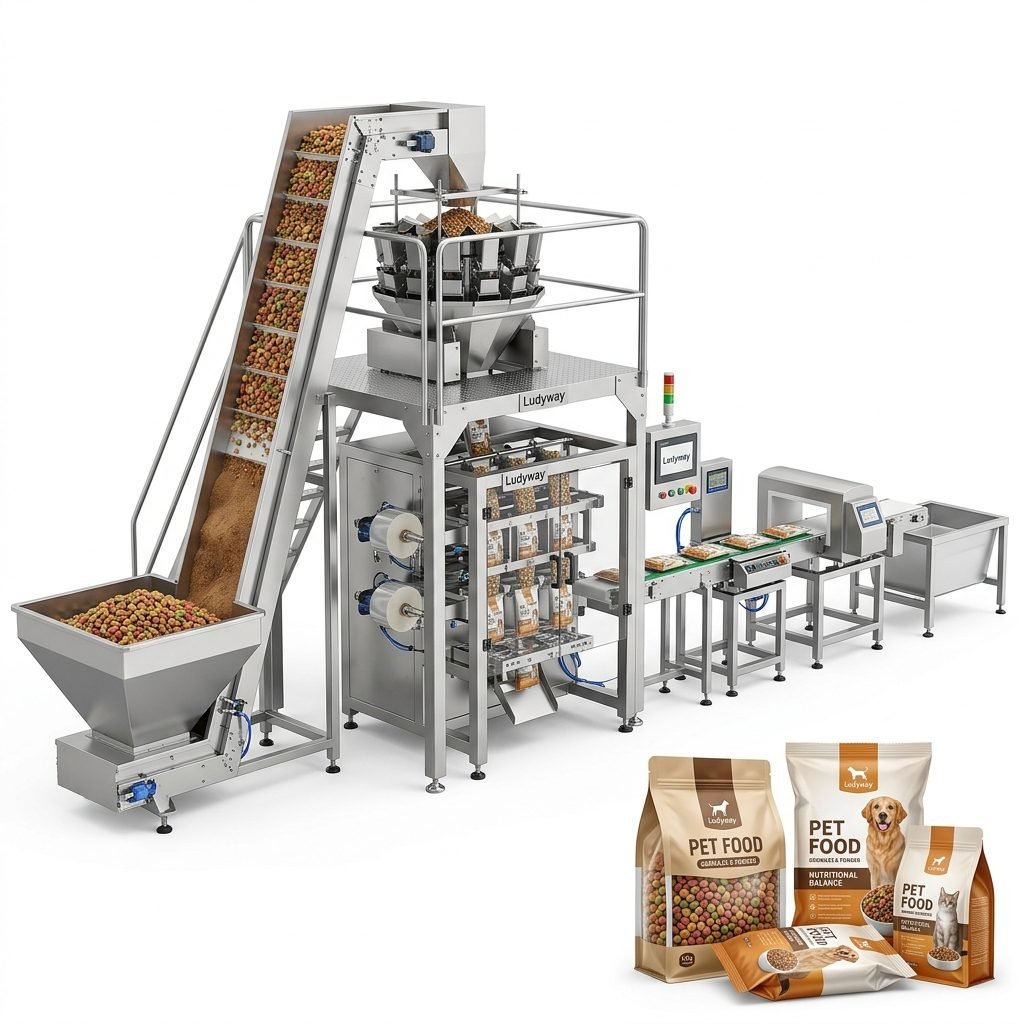
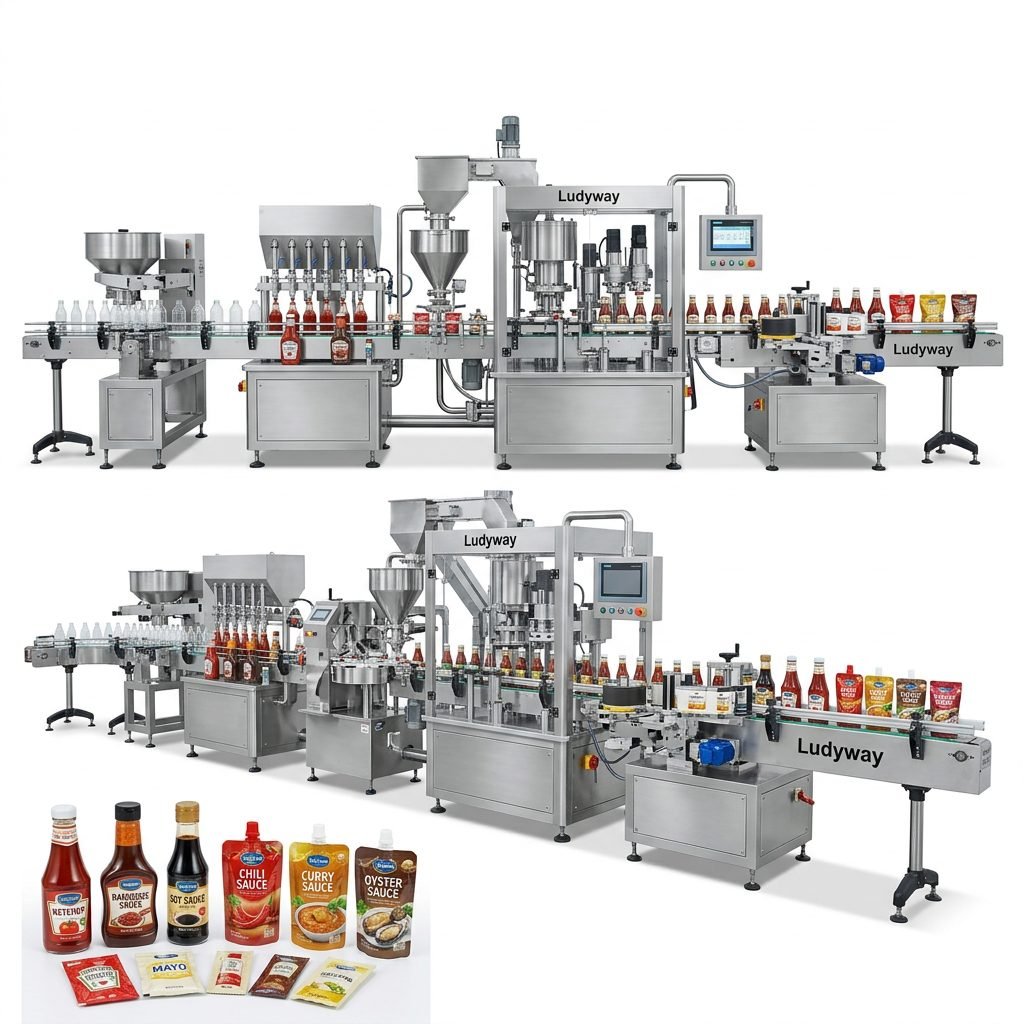
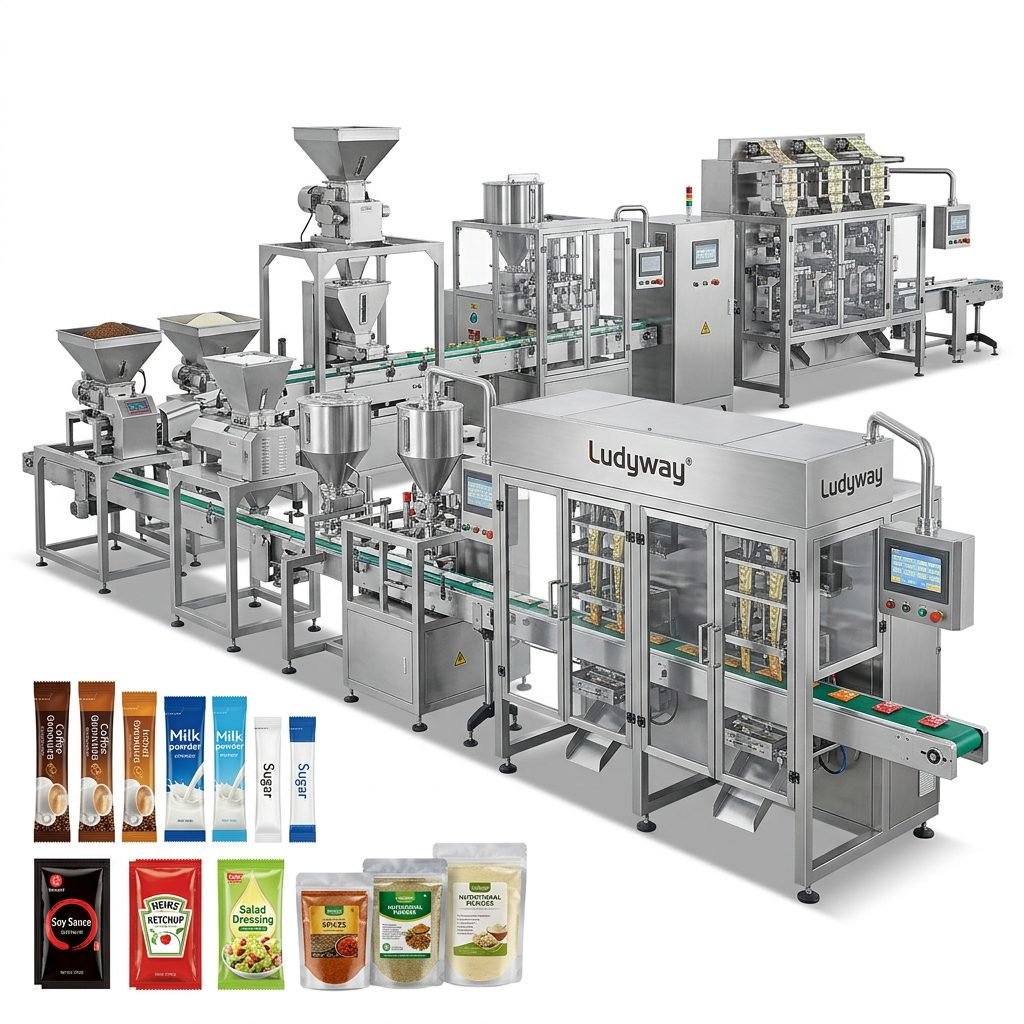
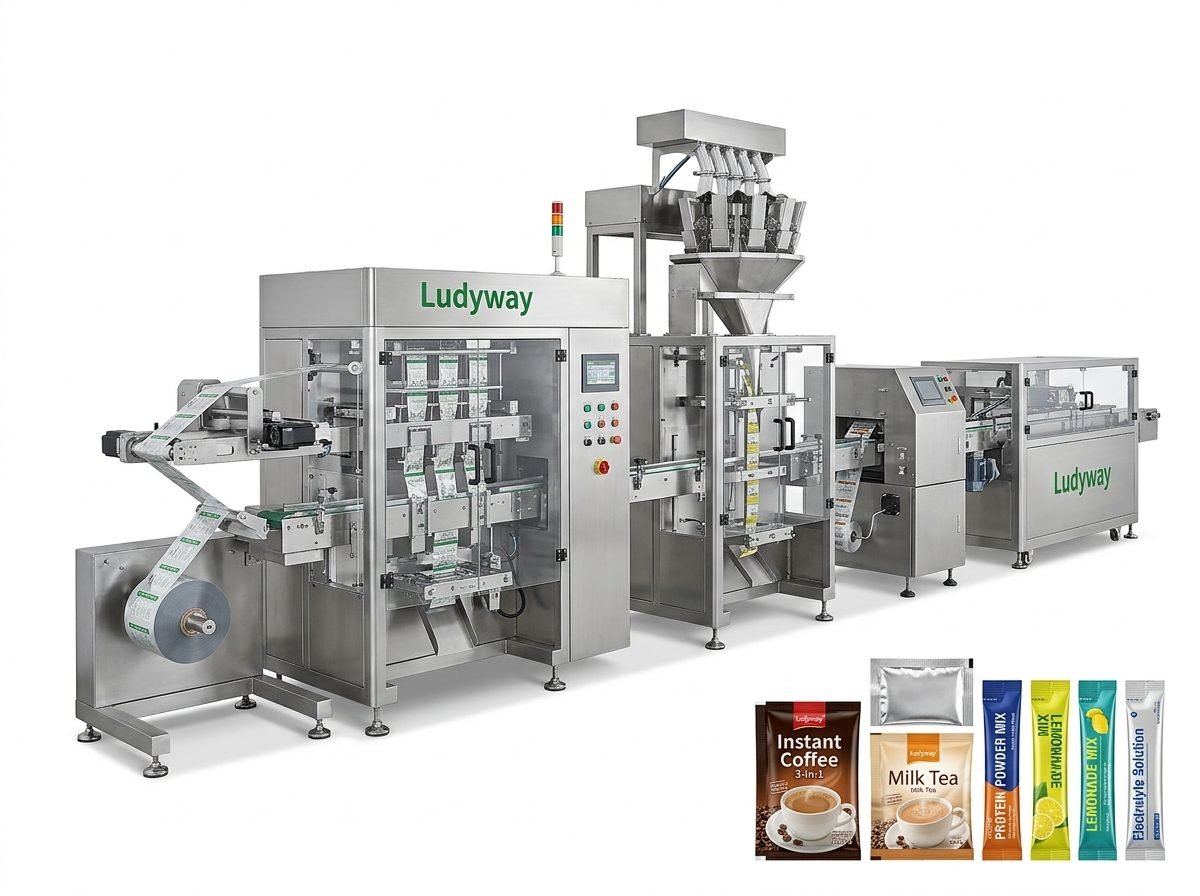
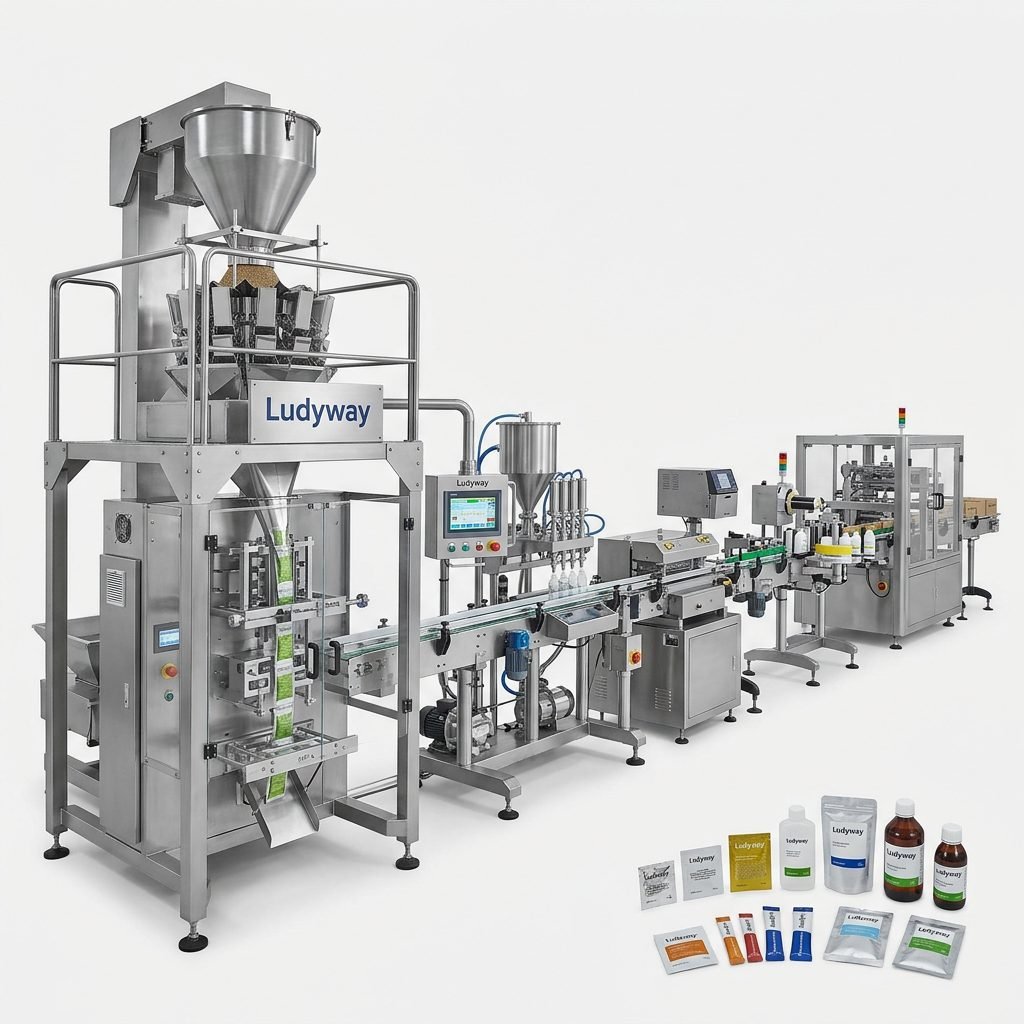
Used when shelf life and product freshness are top priorities. - Turnkey packaging lines
Integrated systems combining feeding, filling, sealing, coding, inspection, cartoning, and conveying.
Key Factors to Evaluate Before Buying
1. Packaging Speed
Define your required output in packs per minute, per shift, and per day. A machine that is too slow limits growth, while an oversized system may waste budget and factory resources. Always ask for performance data based on your actual product and package size, not only on ideal lab conditions.
2. Filling Accuracy
Accuracy directly affects cost control and compliance. Underfilling can create customer complaints; overfilling increases giveaway and lowers profit. Fine powders, expensive ingredients, and nutritional products especially require precise dosing systems.
3. Seal Quality
Strong, consistent seals are essential for freshness, leakage prevention, and transport safety. The machine should handle your film structure and sealing temperature range without frequent defects.
4. Hygiene and Food Safety Design
A food packaging machine should support easy cleaning, sanitary contact parts, and contamination prevention. Stainless steel construction, accessible design, and product-contact materials suitable for food use are important considerations.
5. Flexibility for Different SKUs
If you run multiple products or package sizes, quick changeover becomes valuable. Ask how long it takes to switch film width, filling volume, or product type, and whether recipe storage or servo control can simplify operation.
6. Integration with Upstream and Downstream Equipment
The packaging machine should not be evaluated alone. Consider how it connects with mixers, feeders, conveyors, coding units, checkweighers, metal detectors, cartoners, and palletizing systems.
7. Material Compatibility
Film type matters. If you use laminated film, recyclable film, aluminum foil structures, or special barrier materials, confirm that the machine can run them consistently at the required speed.
8. Maintenance and Technical Support
A highly advanced system only creates value when it can run reliably. Review spare parts availability, remote support options, operator training, documentation quality, and after-sales responsiveness.
How to Compare Packaging Machine Solutions
When evaluating suppliers, compare more than just the machine price. A lower initial cost may lead to higher long-term operating costs if the machine suffers from unstable output, frequent downtime, or poor package consistency.
| Evaluation Point | Why It Matters | Questions to Ask |
|---|---|---|
| Real production speed | Determines output and ROI | What speed can be achieved with my product? |
| Accuracy range | Affects material loss and compliance | What filling tolerance can be guaranteed? |
| Machine stability | Reduces downtime | Can you provide test videos or reference cases? |
| Customization | Ensures fit for unique products | Can the solution be tailored to my package and factory layout? |
| After-sales support | Protects long-term operation | What training, spare parts, and service support are included? |
Signs You Need a Turnkey Food Packaging Line
A standalone machine may be enough for simple projects, but many food processors benefit more from a fully integrated packaging line. You should consider a turnkey solution if you:
- Need synchronized feeding, filling, sealing, inspection, and cartoning
- Operate multiple shifts with high volume targets
- Want to reduce manual handling between stages
- Need complete line control and traceability
- Plan future expansion across multiple SKUs
- Require consistent quality from raw product feeding to final pack-out
A turnkey system can improve total line efficiency because each part of the process is designed to work together, minimizing stoppages and mismatch between upstream and downstream equipment.
Common Mistakes When Choosing a Food Packaging Machine
- Choosing based only on the lowest price
- Ignoring actual product flow characteristics
- Overlooking cleaning and hygiene requirements
- Failing to confirm film compatibility
- Not planning for future capacity growth
- Buying a fast machine without matching feeding or discharge systems
- Skipping factory acceptance testing with real samples
The best buying decisions come from a full process review, not from machine specifications alone.
What to Prepare Before Contacting a Supplier
To get a practical and accurate machine recommendation, prepare the following details:
- Product name and physical characteristics
- Target pack weight or volume
- Package format and dimensions
- Desired speed per minute
- Photos or samples of the current package
- Film type or packaging material specification
- Power supply and factory conditions
- Need for coding, inspection, cartoning, or palletizing
- Available floor space and layout constraints
With clear technical information, suppliers can propose a solution that is more accurate, efficient, and easier to implement.
Choosing a Reliable Packaging Machinery Partner
Beyond the machine itself, the supplier’s manufacturing strength and project experience are important. Buyers often prefer partners with a proven track record in food automation, customization capability, and export support. For businesses seeking scalable machinery and integrated line solutions, Ludyway automatic food packaging machine solutions are widely considered for projects involving powders, granules, liquids, sachets, stick packs, and turnkey packaging lines.
Final Decision Checklist
Before placing an order, confirm that the machine can meet these practical requirements:
| Checklist Item | Verified with real product samples |
| Output capacity | Matches current and future demand |
| Accuracy | Acceptable giveaway and fill tolerance |
| Hygiene design | Easy to clean and suitable for food contact |
| Packaging quality | Strong seals, clean appearance, low reject rate |
| Integration | Compatible with upstream and downstream equipment |
| Support | Installation, training, spare parts, and service confirmed |
The best automatic food packaging machine is the one that aligns with your product, package, production target, and growth strategy. By focusing on performance, hygiene, flexibility, and line integration, you can choose a packaging solution that improves efficiency today and supports expansion tomorrow.