Choosing the right packaging machine line is a critical decision for any manufacturing business. It directly impacts your production efficiency, product quality, and overall operational costs. This comprehensive guide will walk you through the different types of packaging lines, their workflows, associated costs, and key factors to consider when making your selection.
Understanding Packaging Machine Lines
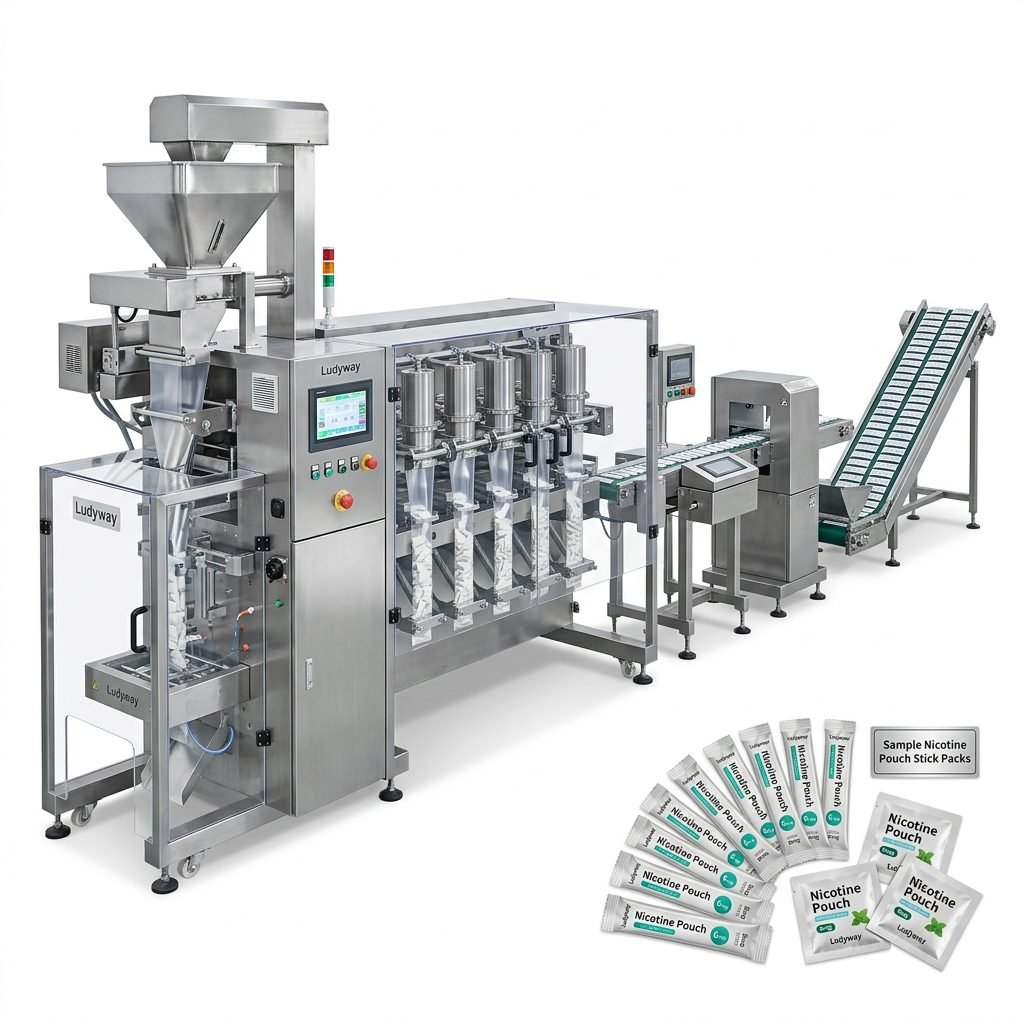
A packaging machine line is an integrated system of automated equipment designed to perform a sequence of packaging operations. From filling and sealing to labeling and cartoning, these lines transform bulk product into retail-ready packages with minimal manual intervention. The primary goal is to achieve high-speed, consistent, and cost-effective packaging.
Core Objective: A packaging line integrates multiple machines into a synchronized workflow, automating tasks from product handling to final case packing to maximize throughput and minimize labor.
Key Components of a Typical Line
While configurations vary, most automated lines include these fundamental stations:
- Product Feeding & Conveying: Systems to transport raw product or pre-made containers to the filling station.
- Filling Machine: Precisely dispenses the product (granules, powder, liquid) into pouches, sticks, bottles, or other containers.
- Sealing Machine: Hermetically seals the package to ensure product freshness and prevent contamination.
- Labeling & Coding: Applies labels, prints batch codes, expiry dates, or other variable information.
- Secondary Packaging: Groups individual packages into cartons, trays, or multi-packs.
- Control System: The PLC (Programmable Logic Controller) that synchronizes all machines for seamless operation.
Types of Packaging Machine Lines
Your product’s form and packaging format are the main determinants of the line type you need.
1. Vertical Form-Fill-Seal (VFFS) Lines
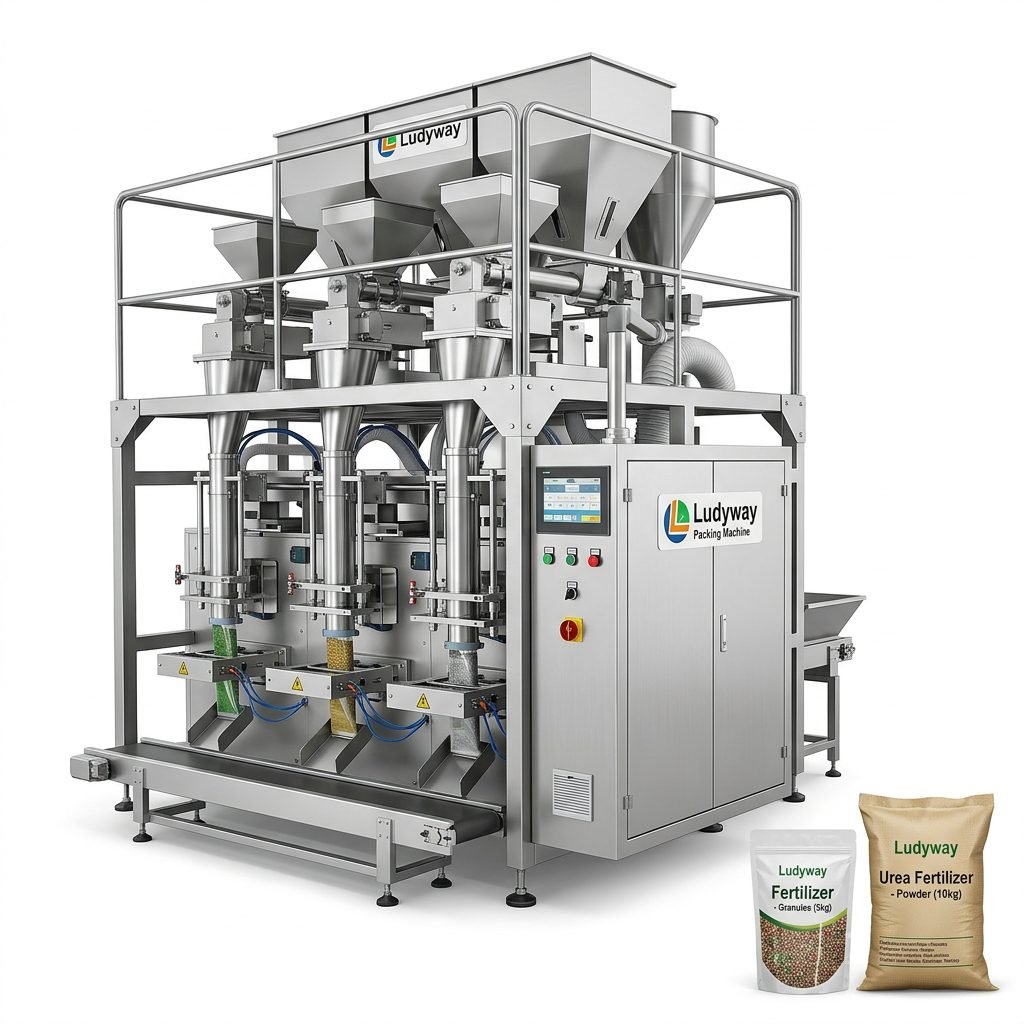
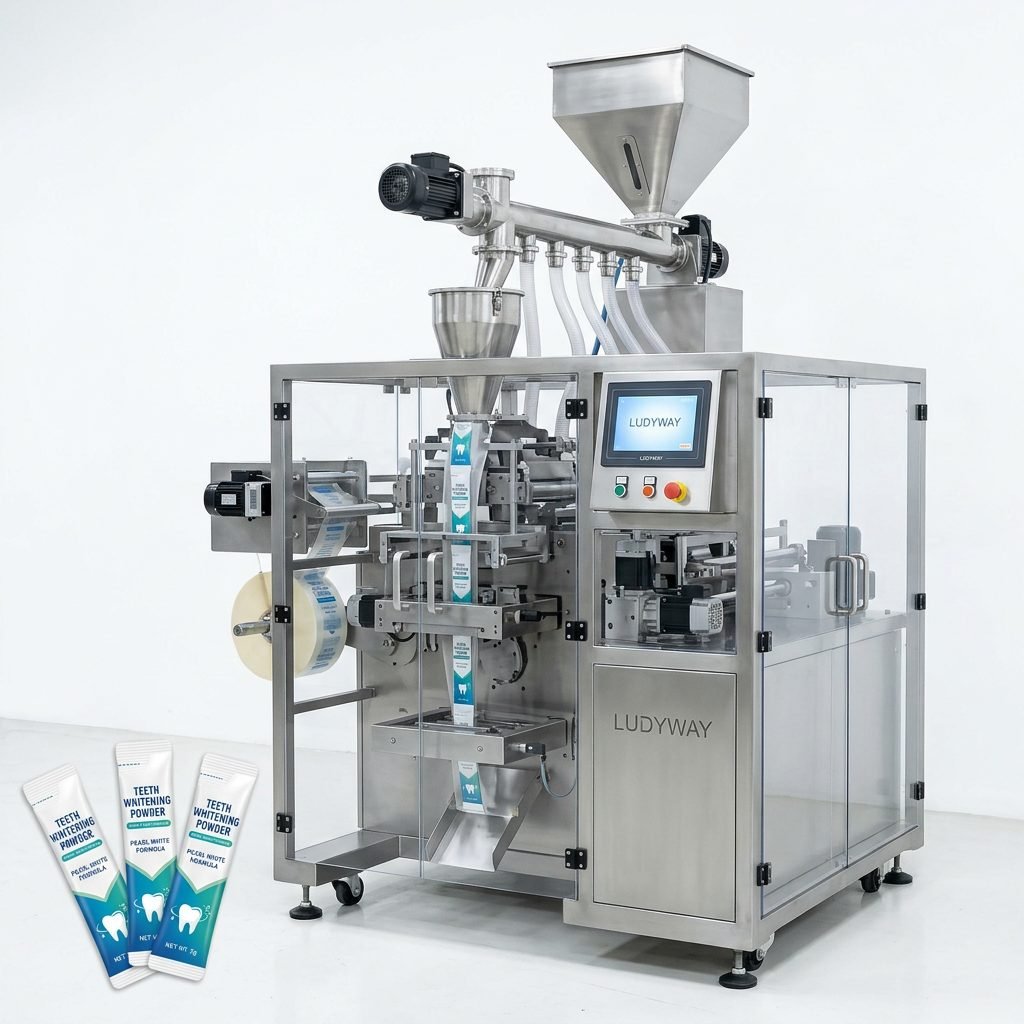
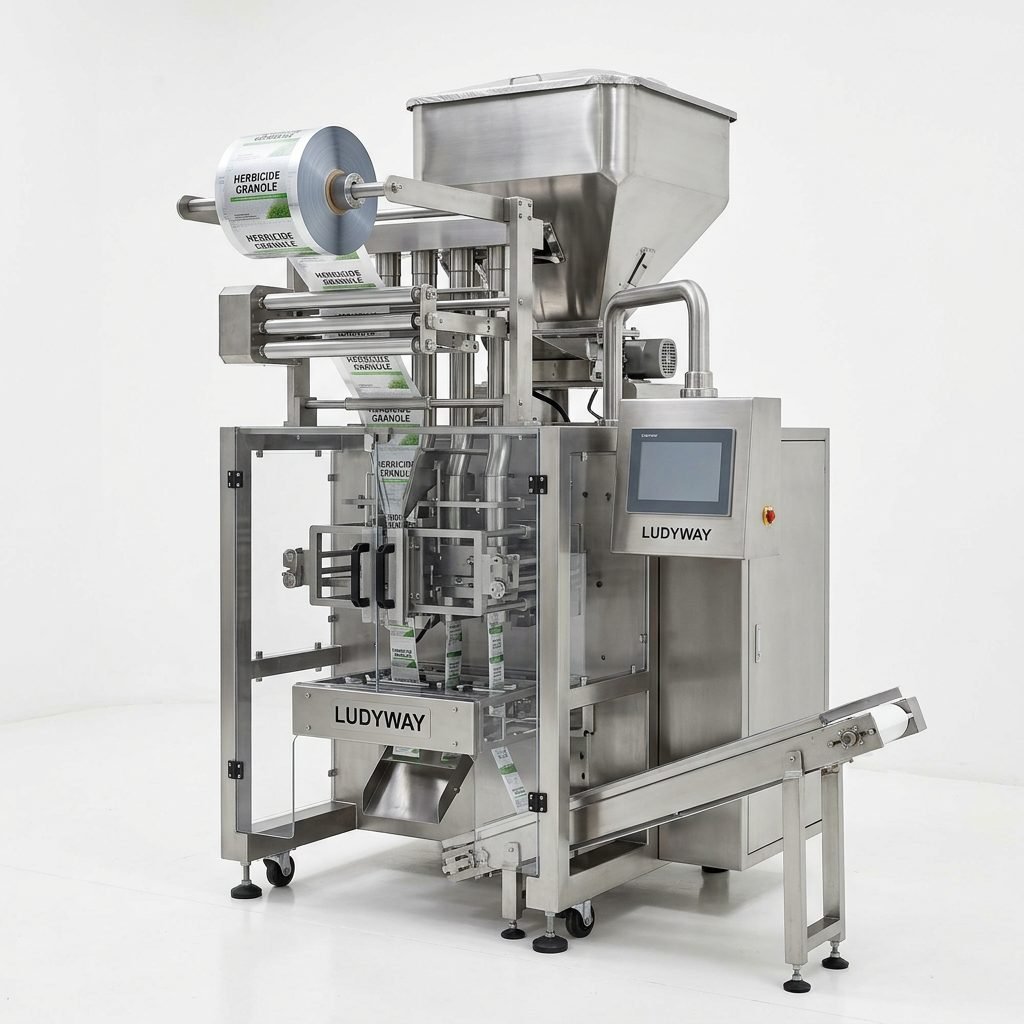
These are the most common for granules, powders, and small solid items. The machine forms a roll of packaging film into a tube, fills it with product, and then seals it to create individual pouches or bags. VFFS lines are highly versatile and efficient for medium to high-volume production.
2. Stick Pack Packaging Lines
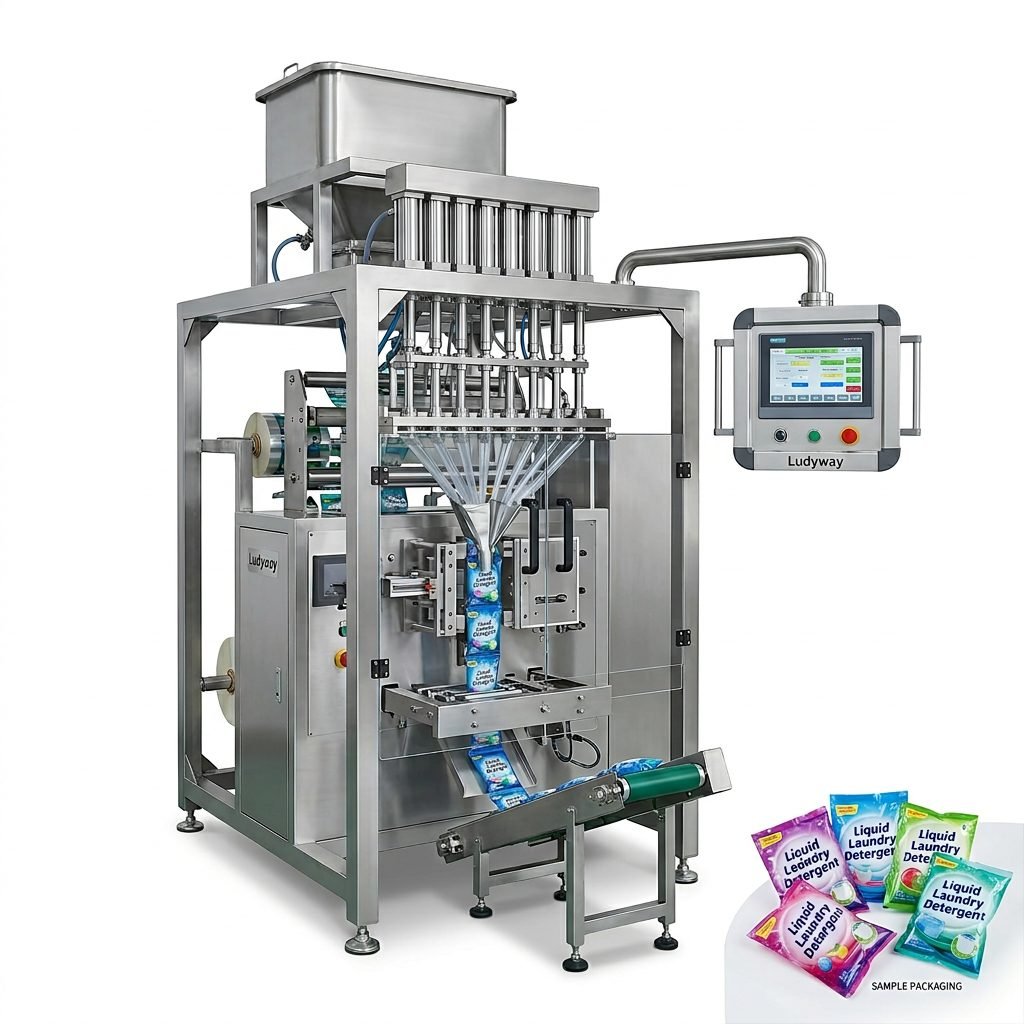
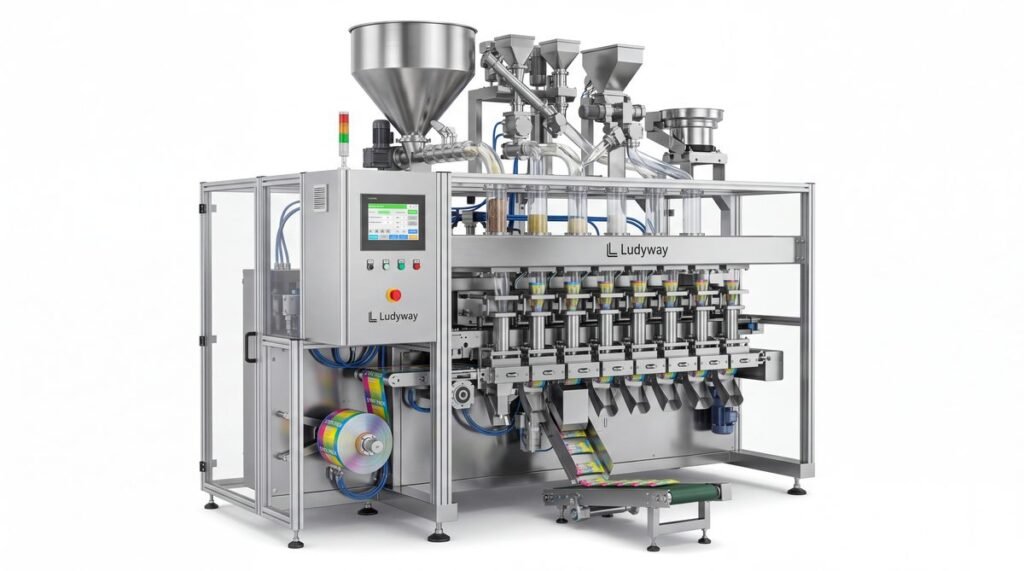
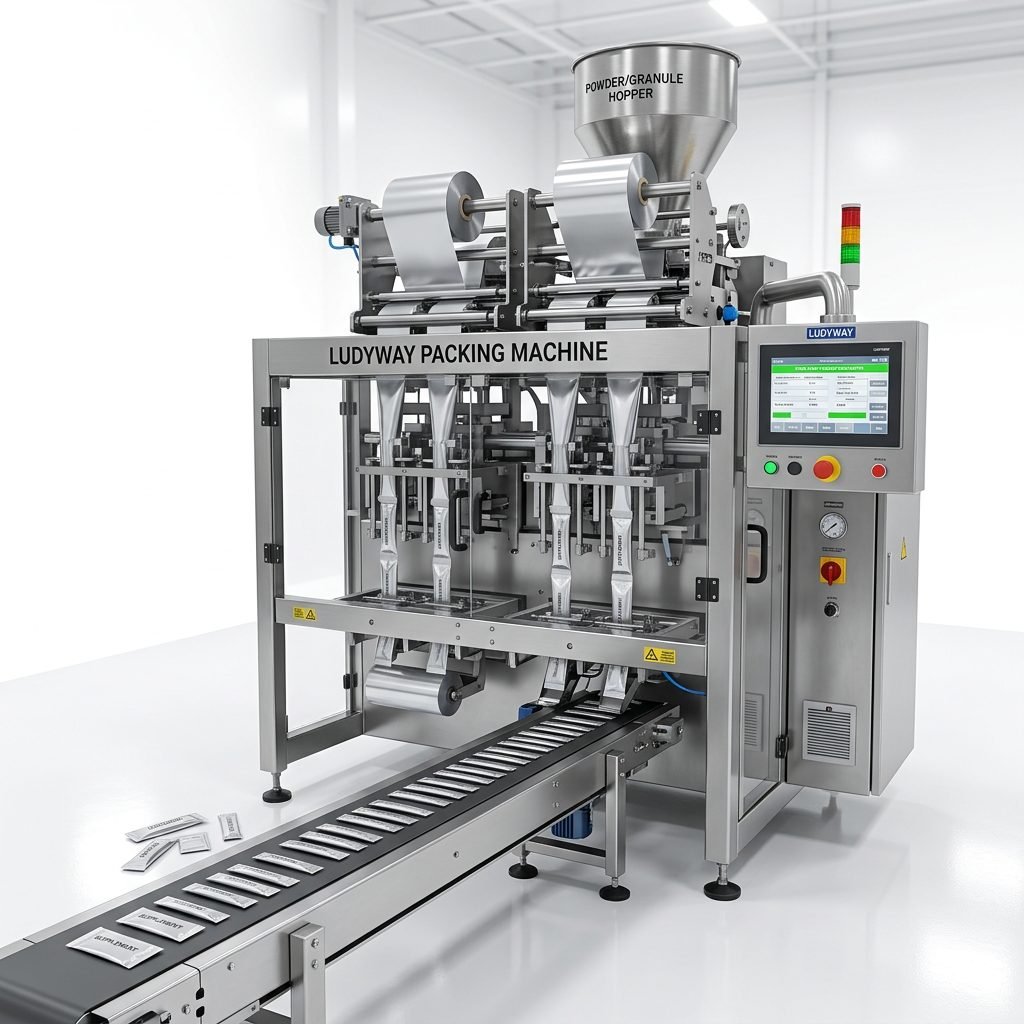
Specialized for producing long, narrow single-serve sticks, ideal for powdered beverages, supplements, and pharmaceuticals. Modern lines often feature multi-lane designs, dramatically increasing output by producing multiple sticks simultaneously. For high-speed applications, a multi-lane stick pack machine is often the optimal choice.
3. Liquid Filling Lines
Designed for water, oils, sauces, juices, and cosmetics. These lines typically involve bottle unscramblers, rinsers, liquid fillers, cappers, and sealers. Accuracy and hygiene are paramount to prevent spillage and contamination.
4. Powder Filling Lines
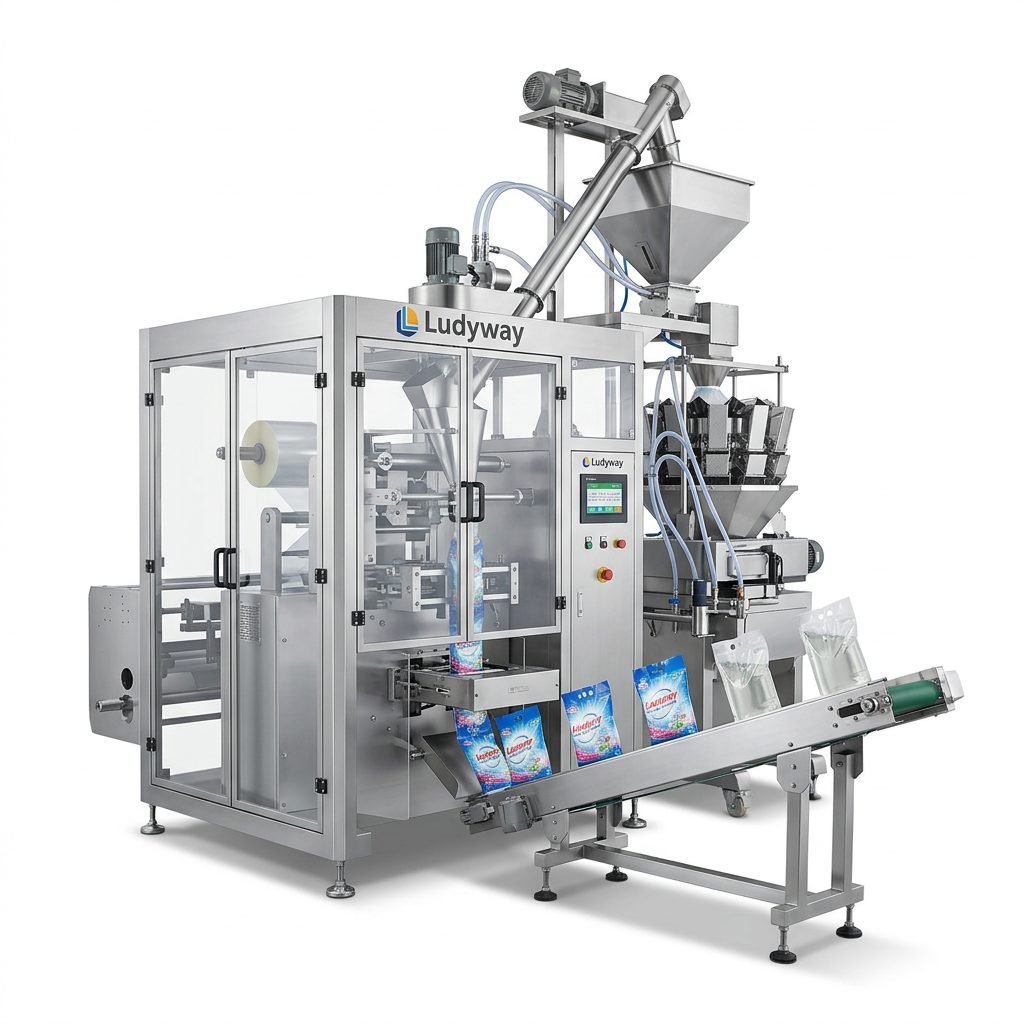
Engineered for handling fine, dusty products like milk powder, spices, and detergents. They require precise auger fillers and often include dust extraction systems. For cohesive powders, a piston cup filler might be integrated for superior accuracy.
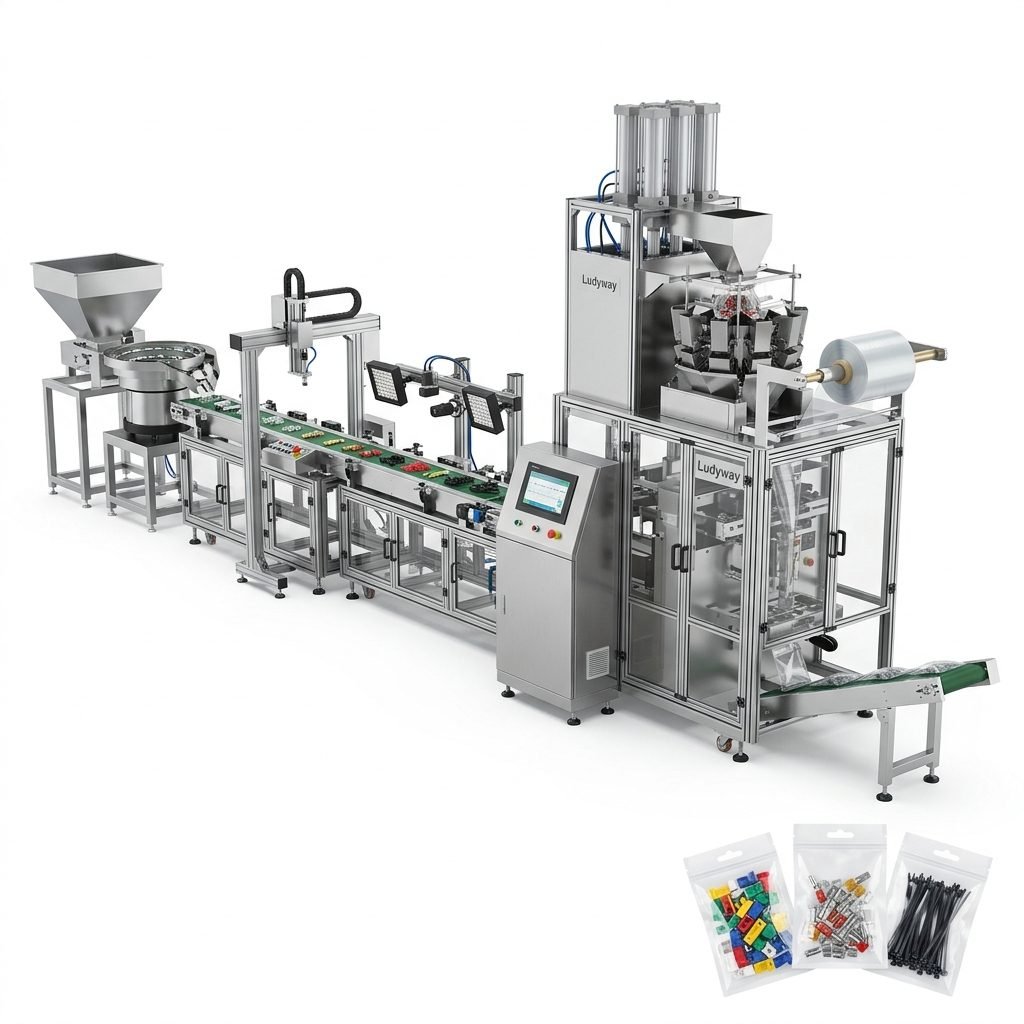
5. Turnkey Production Lines
A complete, ready-to-operate solution provided by a single supplier. This includes all packaging machinery, conveyors, installation, commissioning, and training. It eliminates compatibility issues and ensures a single point of responsibility, which is crucial for complex projects. Partnering with an experienced provider like Ludyway Machinery for a turnkey line can streamline your entire project from design to production.
Choosing the Right Type: Quick Reference
- Pouches/Bags (Coffee, Snacks): Vertical Form-Fill-Seal (VFFS) Line.
- Single-Serve Sticks (Instant Drink Mix): Multi-lane Stick Pack Line.
- Bottles/Jars (Sauces, Lotions): Liquid Filling & Capping Line.
- Fine Powders (Flour, Protein Powder): Powder Filling Line with Dust Control.
- New Product/Full Automation: Custom Turnkey Production Line.
Standard Workflow of an Automated Line
The process flow is logical and sequential, ensuring efficiency and product integrity.
- Material Handling & Feeding: Bulk product is loaded into a hopper, or empty containers are fed onto a conveyor.
- Package Forming/Filling: The primary packaging is created (e.g., film formed into a pouch) and precisely filled with the measured product.
- Primary Sealing: The filled package is hermetically sealed to protect the contents.
- Checkweighing & Inspection: Packages pass through checkweighers and metal detectors to ensure correct fill weight and safety.
- Labeling & Coding: Product labels are applied, and dates/batch codes are printed.
- Secondary Packaging & Cartoning: Individual items are collated and packed into cartons or boxes.
- Case Packing & Palletizing: Cartons are packed into shipping cases, which are then stacked onto pallets for storage or shipment.
Cost Analysis: Investment and ROI
The cost of a packaging line is not a single figure but an investment encompassing several factors.
Primary Cost Factors
- Line Configuration & Automation Level: A basic semi-automatic line costs significantly less than a fully automated, robotic turnkey system.
- Machine Speed & Capacity: Higher output machines (e.g., 400 sticks/min vs. 120 sticks/min) command a higher price but offer greater long-term value.
- Materials of Construction: Food-grade stainless steel (SS304, SS316) lines are more expensive than carbon steel but are essential for hygiene and durability.
- Customization & Special Features: Custom feed systems, specialized seals (e.g., gas flushing for freshness), or advanced vision inspection systems add to the cost.
- Brand & Supplier: Established brands with proven reliability and global service networks may have higher initial costs but lower lifecycle costs.
Understanding Total Cost of Ownership (TCO)
Look beyond the purchase price. The true cost includes:
- Installation & Training: Professional setup and operator training are crucial for success.
- Maintenance & Spare Parts: Regular servicing and the availability of affordable spare parts.
- Energy & Consumable Usage: The line’s power consumption and requirements for compressed air, film, etc.
- Downtime & Support: The cost of production halts. Reliable technical support and service from your supplier are invaluable.
💡 Pro Tip: When evaluating quotes, always compare the Total Cost of Ownership (TCO) over 5-10 years, not just the initial machine price. A slightly higher investment in a robust, efficient line from a reputable supplier like Ludyway often yields a faster and greater Return on Investment (ROI) through higher uptime, lower waste, and reduced operating costs.
How to Choose the Right Packaging Line: A Step-by-Step Guide
Selecting equipment requires careful analysis of your specific needs.
Step 1: Define Your Product & Package
Clearly specify your product’s physical characteristics (size, weight, flowability) and your desired final package (material, size, seal type).
Step 2: Determine Required Output
Calculate your required packages per minute/hour/shift. Always factor in future growth—choose a line that can handle a 20-30% increase in capacity.
Step 3: Assess Available Space & Utilities
Measure your factory floor space and ensure you have the necessary power, compressed air, and possibly water/drainage connections.
Step 4: Set Your Automation Level & Budget
Decide between semi-automatic, fully automatic, or robotic systems based on your labor costs and precision requirements. Establish a realistic budget that includes ancillary costs.
Step 5: Evaluate Potential Suppliers
This is the most critical step. Look for:
- Proven Experience: Suppliers with a track record in your specific industry (food, pharma, etc.).
- Technical Capability: Can they provide a complete, integrated solution and customization?
- Quality of Manufacturing: Inspect the build quality, materials, and components used.
- After-Sales Service: Availability of spare parts, local technicians, and responsive support. A global service network is a major advantage for international businesses.
- Customer References: Speak to existing clients about machine performance and supplier reliability.
Step 6: Request a Factory Acceptance Test (FAT)
Before shipment, insist on testing the line at the supplier’s facility with your own product and packaging materials. This verifies performance and prevents costly surprises.
Frequently Asked Questions (FAQs)
1. What is the lead time for a standard packaging line?
Lead times vary widely based on complexity and customization. A standard machine may take 8-12 weeks, while a fully customized turnkey line can require 4-6 months or more for design, manufacturing, and testing.
2. Can one packaging line handle multiple different products?
Yes, many lines are designed for quick changeover. Look for features like tool-less adjustments, recipe memory in the PLC, and easy-to-swap parts to minimize downtime when switching between products or package sizes.
3. How do I ensure the packaging line meets my local safety and hygiene regulations?
Reputable suppliers design machines to international standards (CE, UL, GMP). Clearly communicate your local regulatory requirements (e.g., FDA, EHEDG) during the quotation phase. The supplier should provide documentation certifying compliance.
4. What kind of training and support is provided after purchase?
A professional supplier should offer comprehensive training for your operators and maintenance staff at installation. This should be followed by detailed manuals, video guides, and access to ongoing technical support via phone, email, or remote access.
5. What are the most common causes of downtime, and how can they be minimized?
Common issues include film jams, sensor misalignment, and minor mechanical wear. Downtime is minimized by choosing robust equipment, implementing a proactive preventive maintenance schedule, ensuring operators are well-trained, and having a reliable supply of quality spare parts on hand.