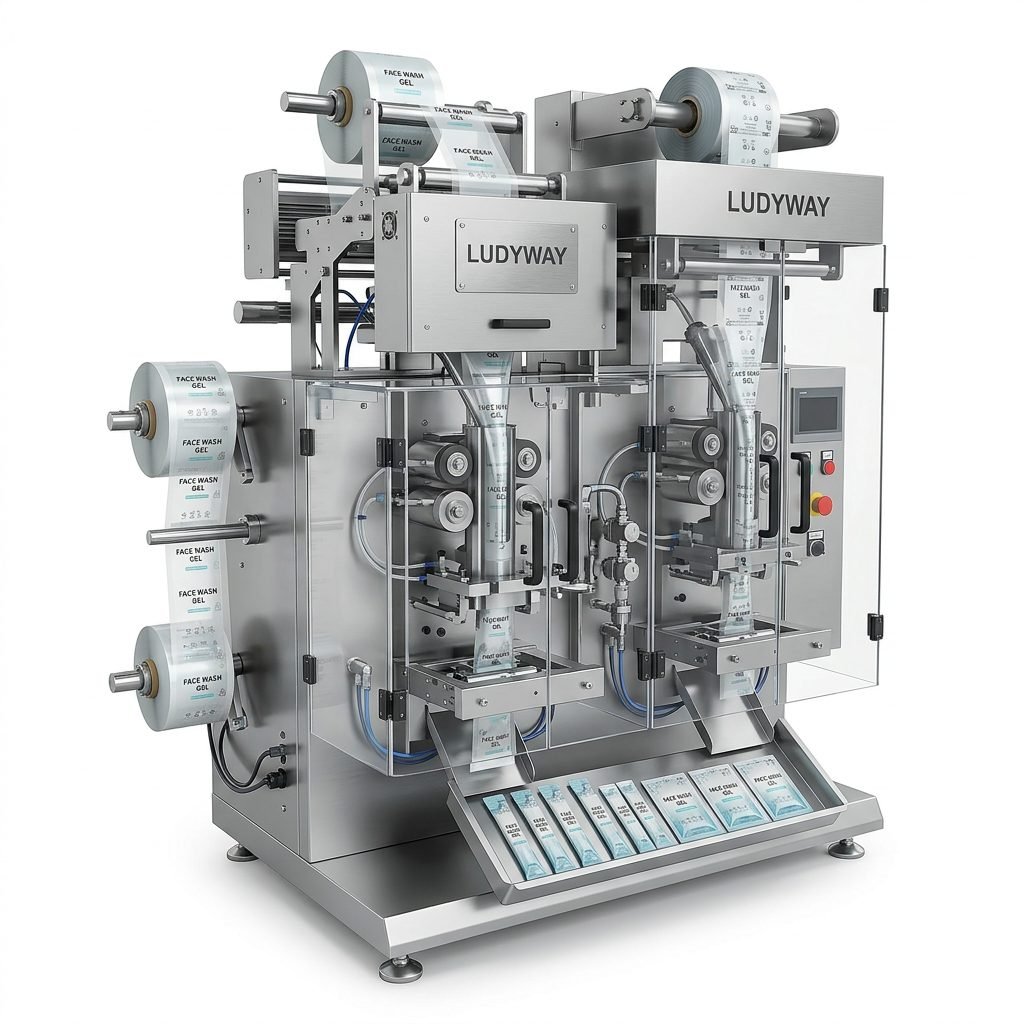
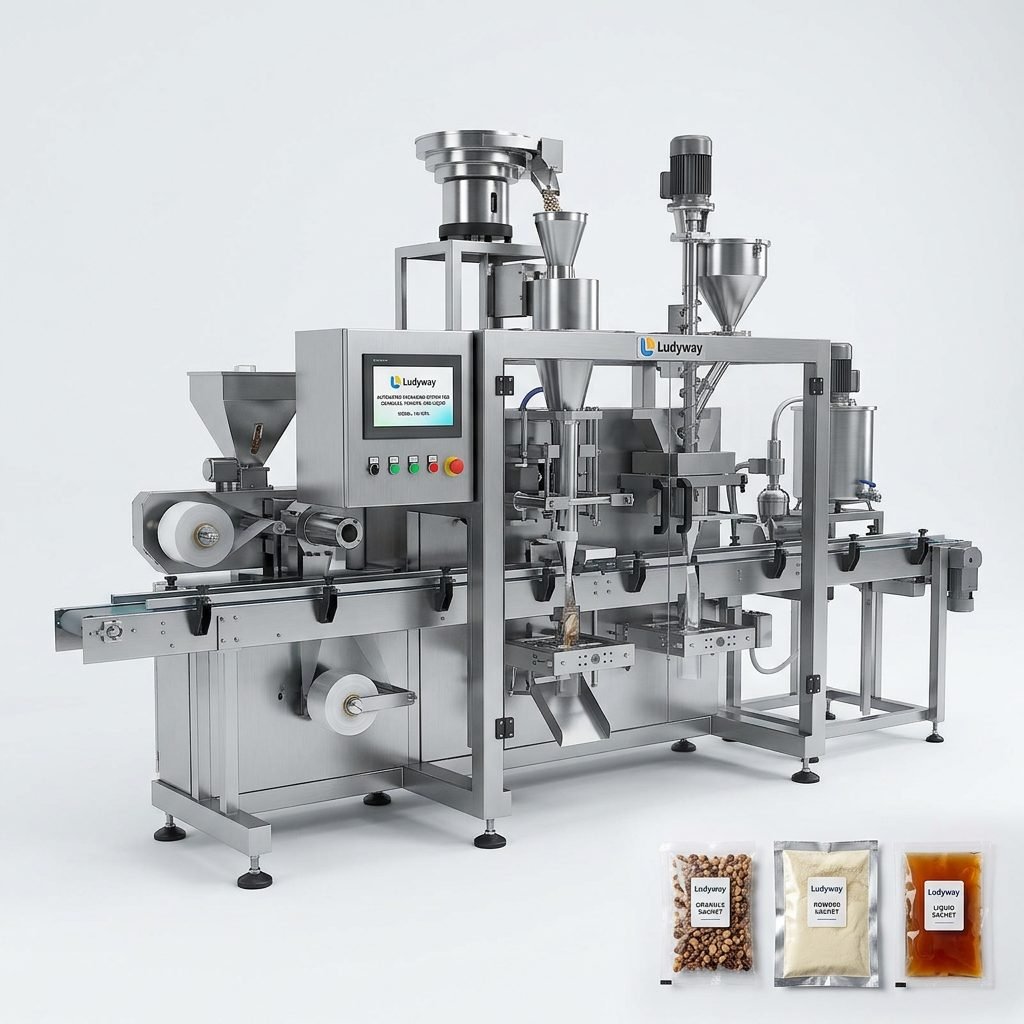
Condiment packaging has moved far beyond simple filling and sealing. For food brands, contract packers, seasoning producers, and sauce manufacturers, the right machine can improve speed, dosing accuracy, hygiene, package consistency, and total production efficiency. Whether you pack salt, pepper, spice blends, ketchup, soy sauce, vinegar, mayonnaise, chili sauce, or seasoning powder, choosing the proper system is essential for stable output and long-term profitability.
Modern condiment packaging equipment is designed to handle a wide variety of product forms, including granules, powders, liquids, and viscous sauces. It also supports multiple retail formats such as sachets, stick packs, pouches, and packets for foodservice, retail shelves, takeaway kits, and industrial applications.
Why Condiment Packaging Machines Matter
Condiments are used in almost every food segment, from restaurant chains and instant meal brands to supermarkets and export-oriented food processing plants. Because these products are often sold in small-dose, high-volume packages, even minor improvements in cycle speed or fill precision can create major savings over time.
- Reduce manual labor and repetitive filling work
- Improve seal integrity and protect product freshness
- Maintain consistent pack weight or volume
- Support hygienic and food-safe production standards
- Increase throughput for growing order volumes
- Enable attractive retail-ready sachet and packet formats
Common Condiment Products That Can Be Packed
A high-quality condiment packaging machine can be configured for different product characteristics. The filling method, sealing structure, and machine layout depend on whether the product flows freely, clumps easily, or has high viscosity.
| Product Type | Examples | Typical Filling Solution |
|---|---|---|
| Powder condiments | Seasoning powder, soup mix, spice blends, MSG | Auger filler or screw dosing system |
| Granule condiments | Salt, sugar, dried herbs, pepper granules | Volumetric cup, weighing, or vibratory feeding |
| Liquid condiments | Soy sauce, vinegar, cooking oil | Piston pump, flow meter, or liquid pump system |
| Paste & sauce products | Ketchup, chili sauce, mayonnaise, curry sauce | Servo piston filling or heated hopper configuration |
Popular Package Formats for Condiments
Different markets and sales channels require different package styles. Single-serve packaging remains highly popular because it is convenient, hygienic, portion-controlled, and easy to transport.
1. Sachets
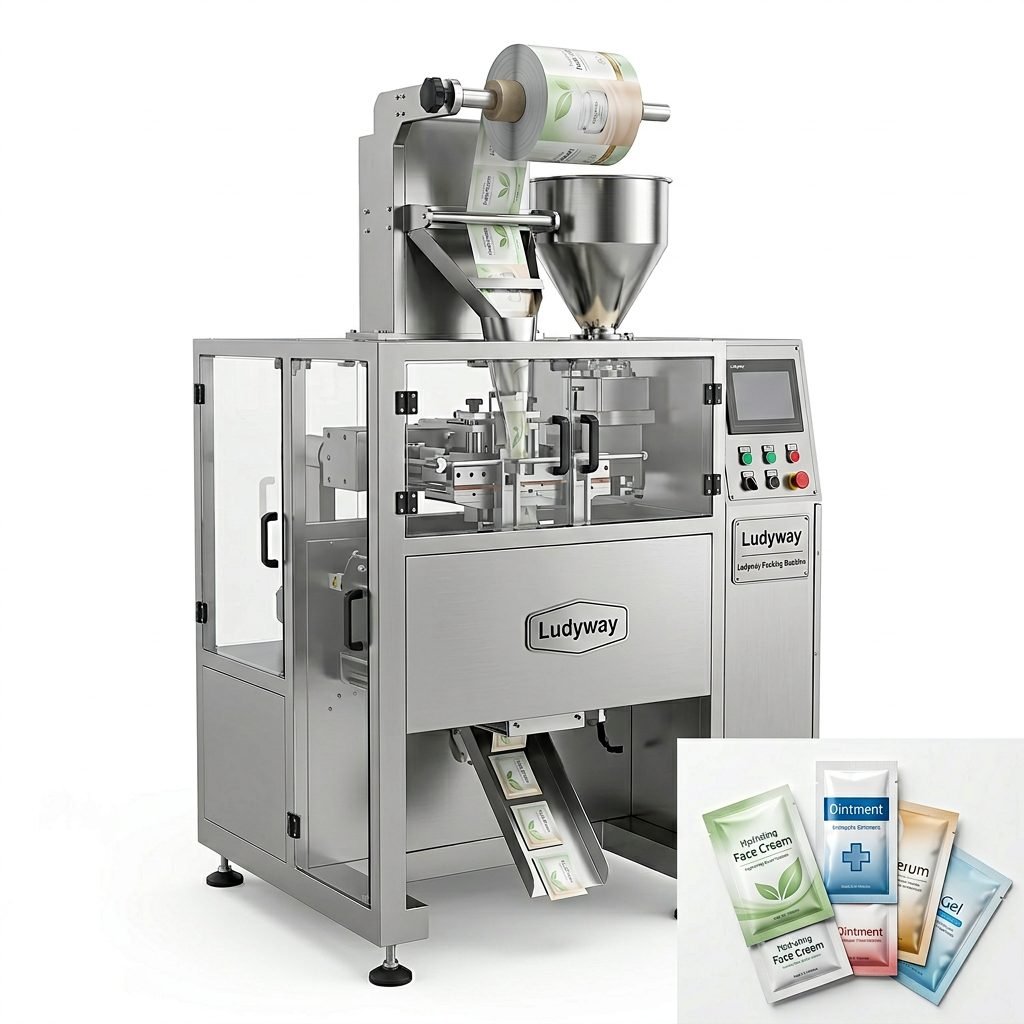
Sachets are widely used for ketchup, soy sauce, vinegar, spice powder, and instant noodle seasonings. They are ideal for takeaway food, travel-sized portions, and cost-sensitive markets.
2. Stick Packs
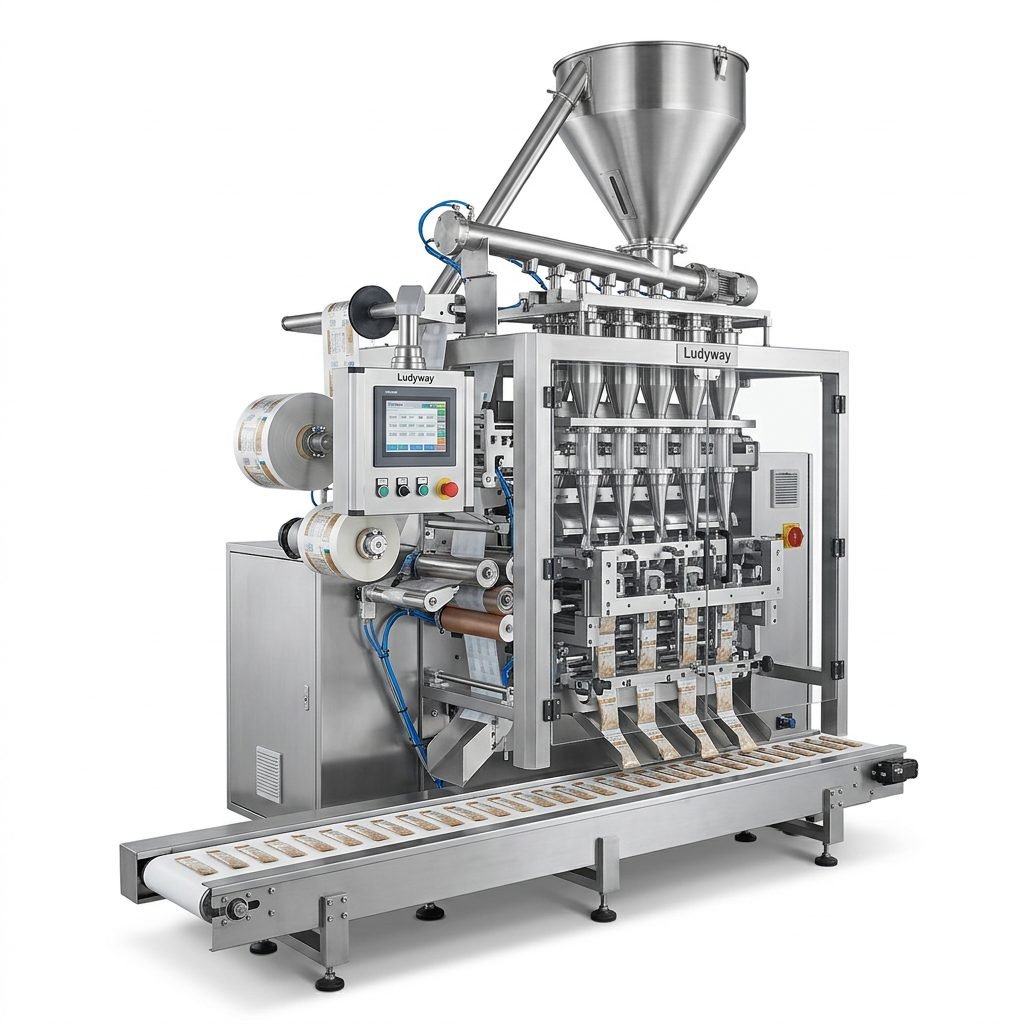
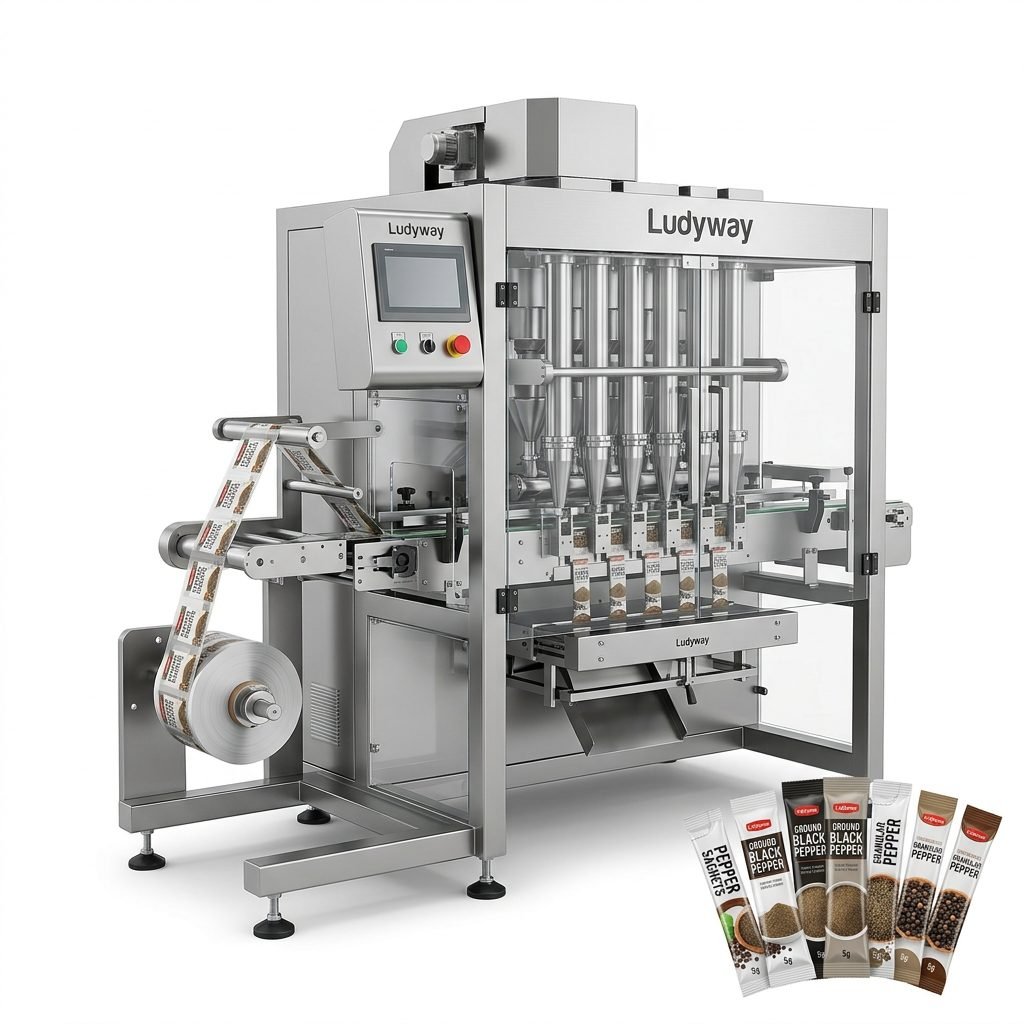
Stick packs are suitable for fine seasoning powders, salt, pepper, and drink-style flavor mixes. They are slim, easy to tear, and attractive for modern retail packaging.
3. Packets
Packets are a broad category often used for restaurants, fast-food chains, airline catering, and meal kits. They can hold powders, liquids, or sauces depending on machine configuration.
4. Small Pouches
Small pouches provide more branding space and can support premium condiment lines, ready-to-cook sauces, or larger consumer portions.
Key Machine Types for Condiment Packaging
There is no single machine suitable for every condiment product. The best solution depends on product texture, packaging style, required speed, and future expansion plans.
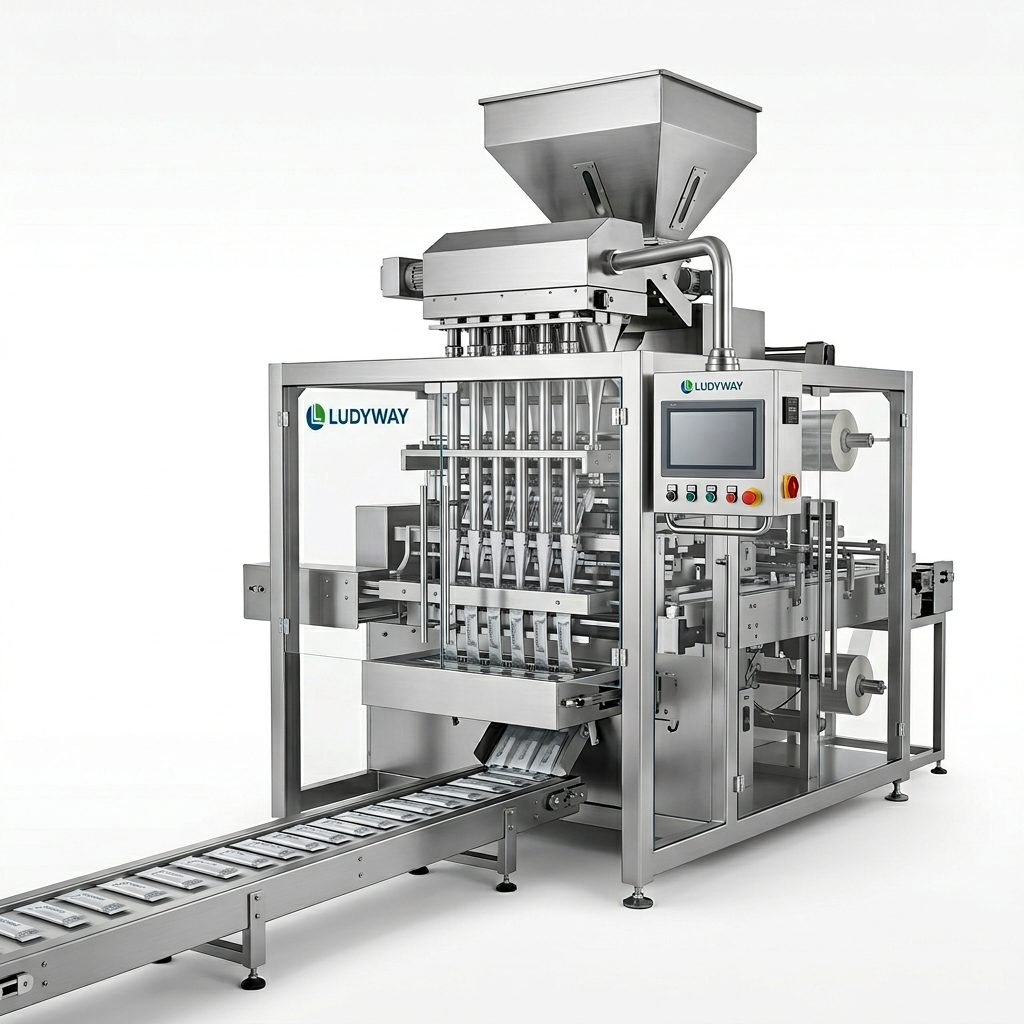
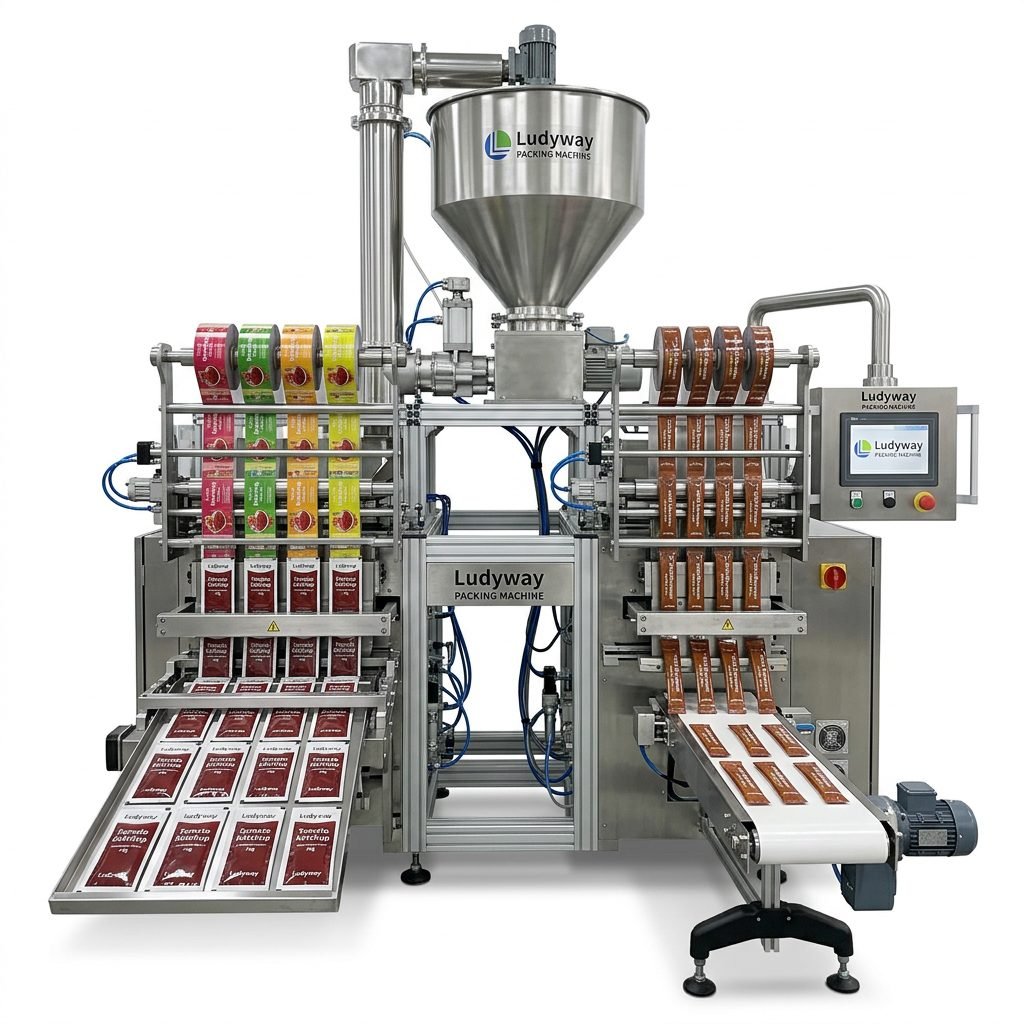
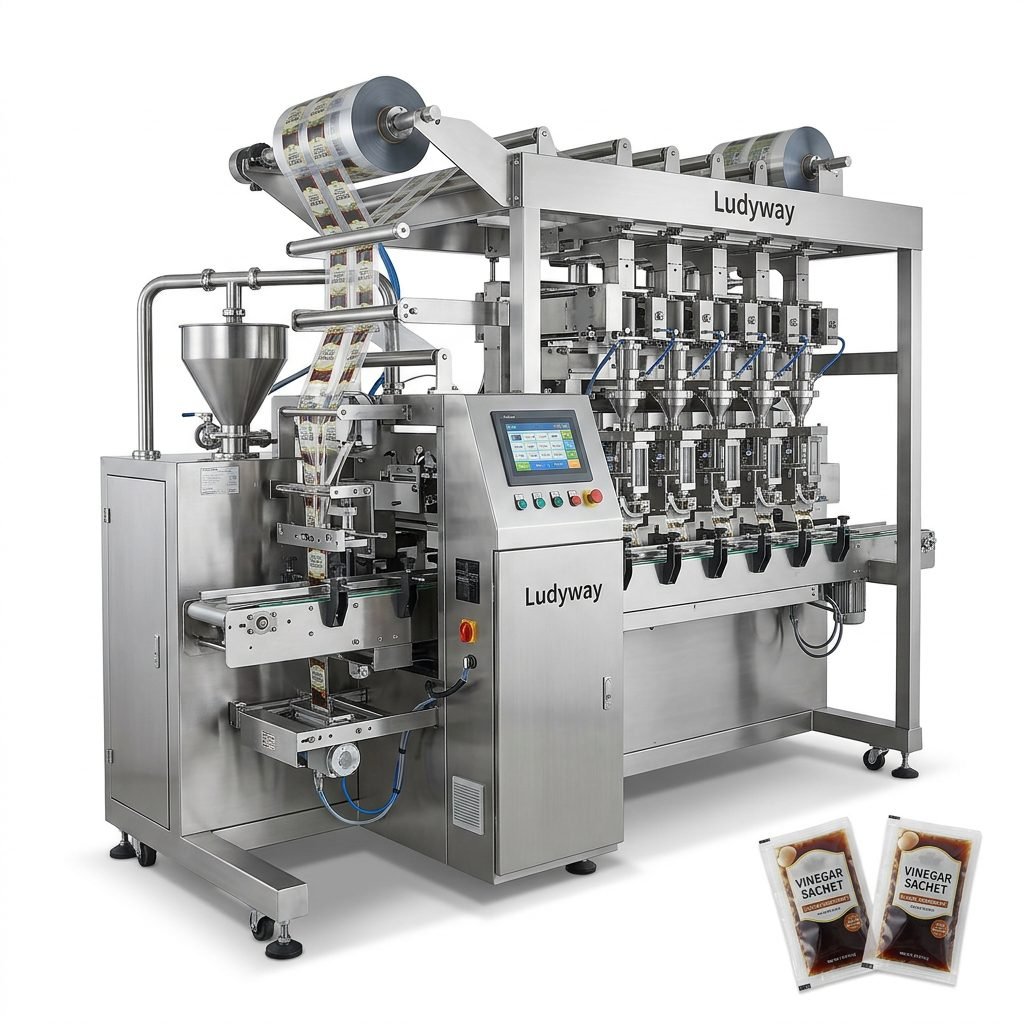
Multi-Lane Sachet Packaging Machines
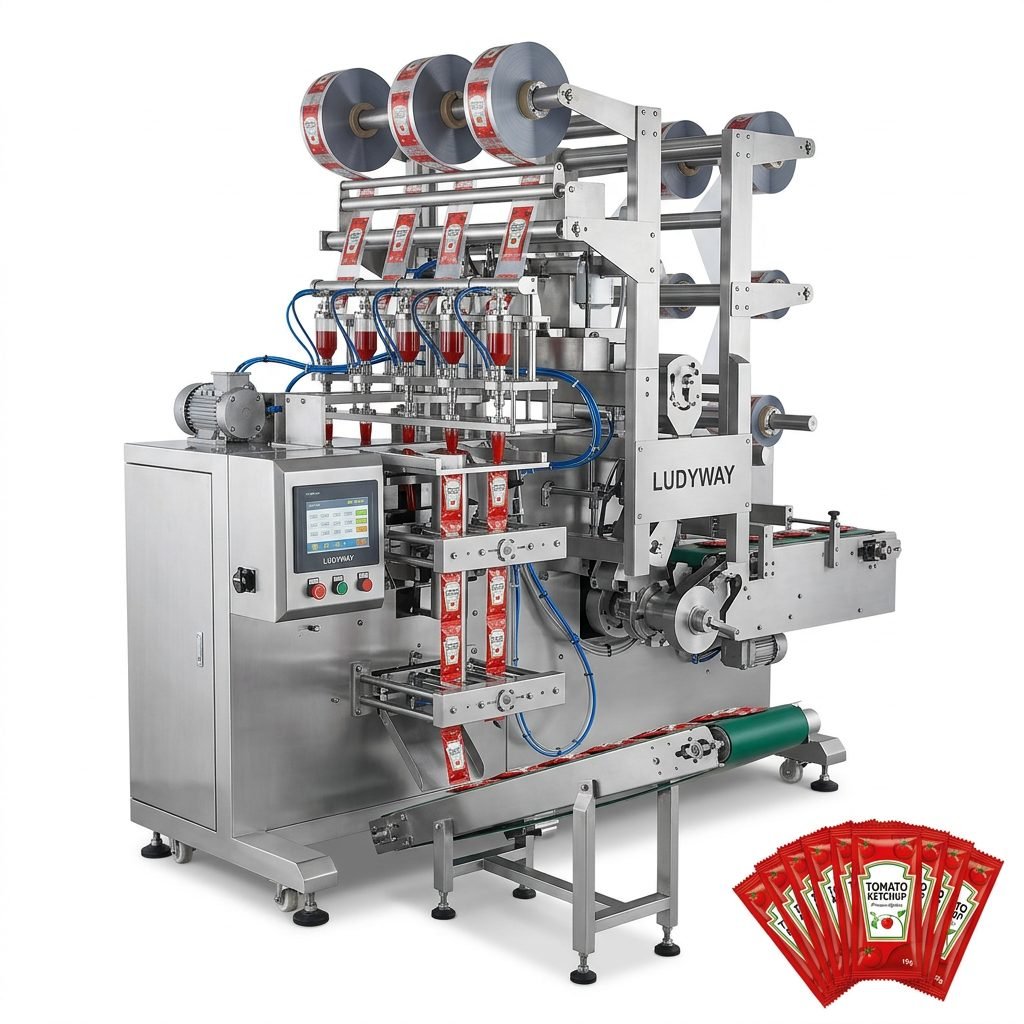
Multi-lane systems are ideal for high-volume condiment production. They run several lanes simultaneously, making them highly efficient for salt sachets, seasoning powder packets, vinegar sachets, and liquid sauce formats. These machines are often selected by manufacturers needing high output with stable package uniformity.
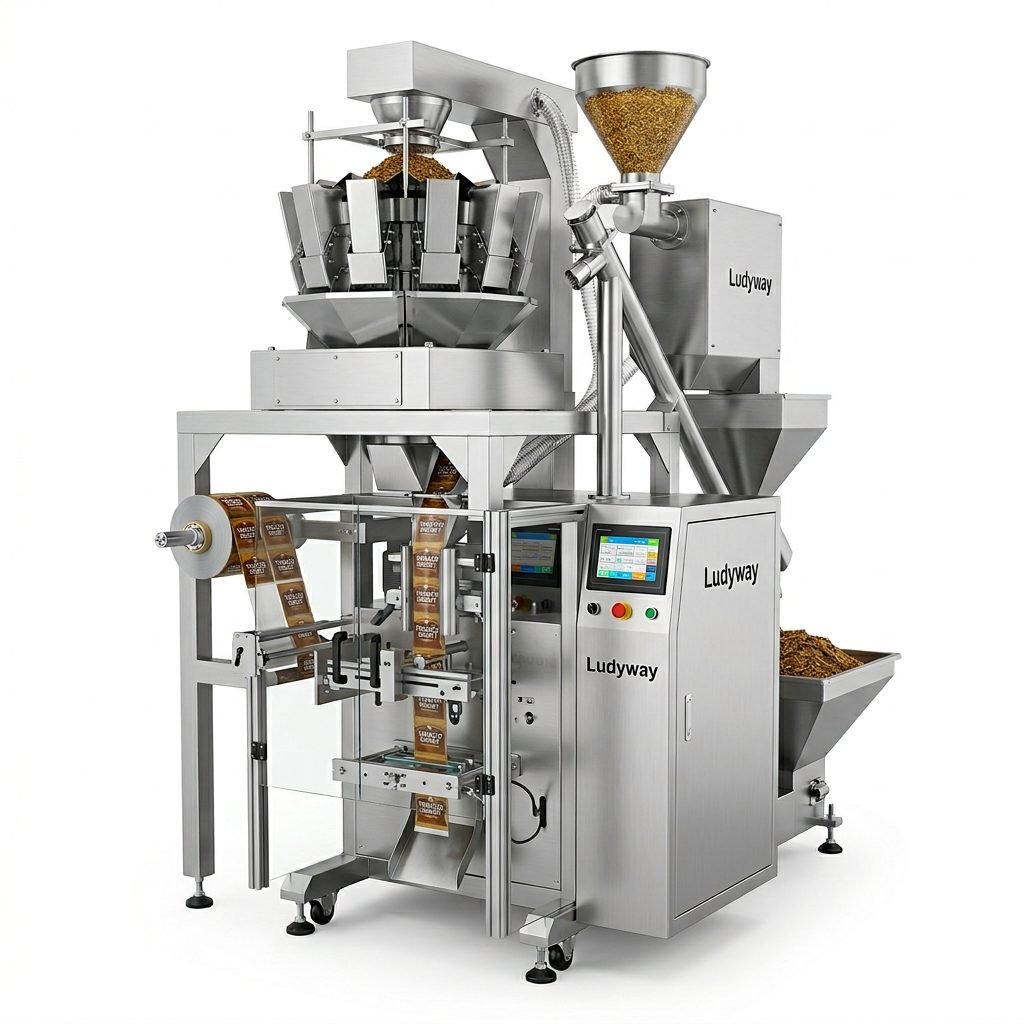
Vertical Form Fill Seal Machines
Vertical machines are commonly used for powder and granule condiments. They form the package from roll film, fill the product, and seal it in one continuous process. This structure is efficient and space-saving.
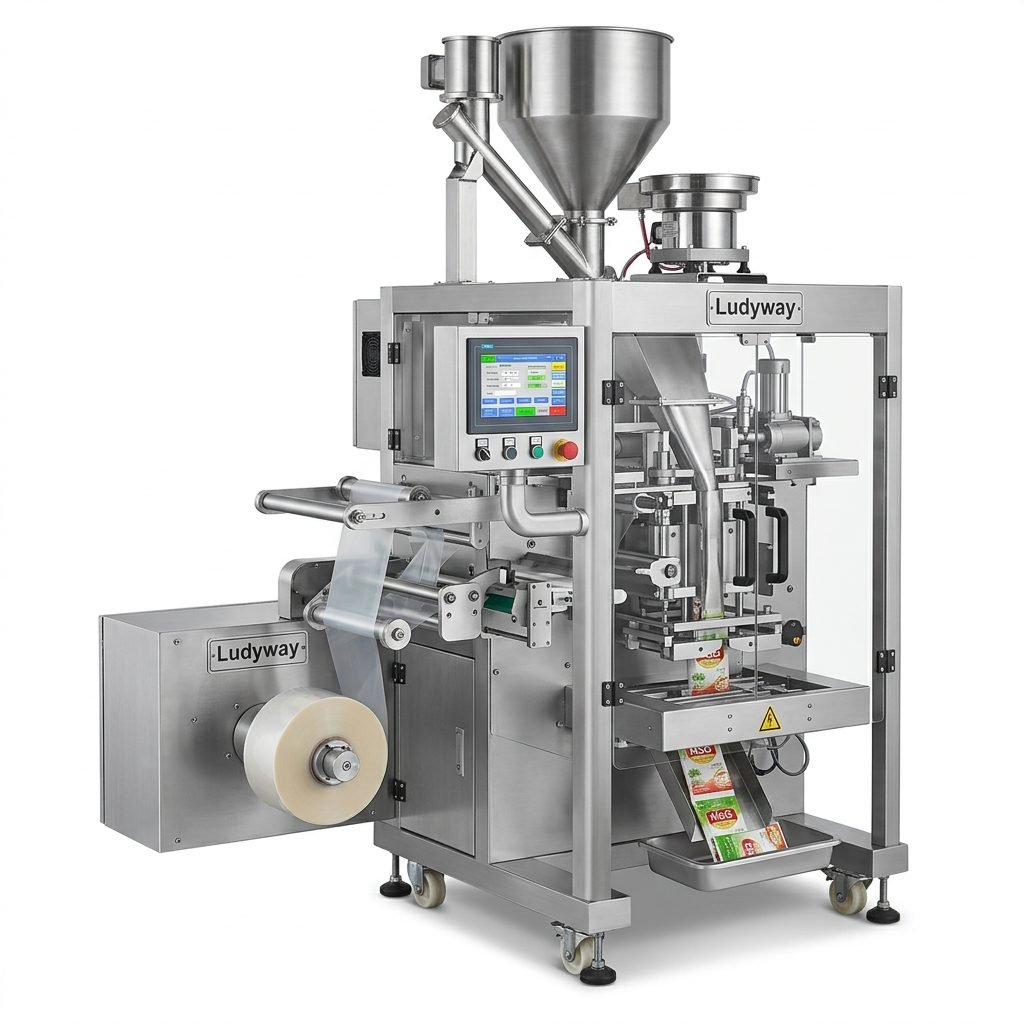
Liquid and Paste Filling-Sealing Machines
For ketchup, soy sauce, mayonnaise, mustard, and other sauces, dedicated liquid or paste filling-sealing equipment offers better control over fill volume and drip prevention. It is especially useful for products that require clean seals and anti-leak performance.
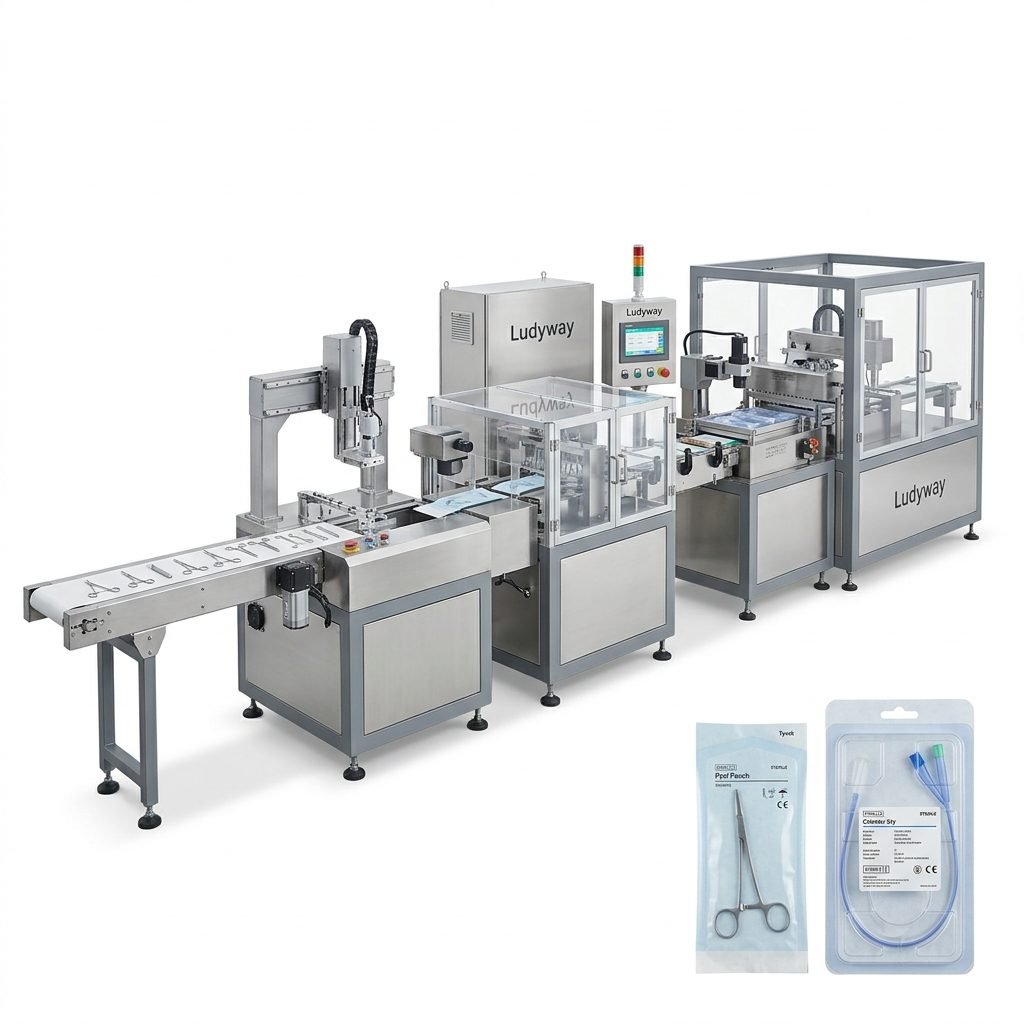
Turnkey Packaging Lines
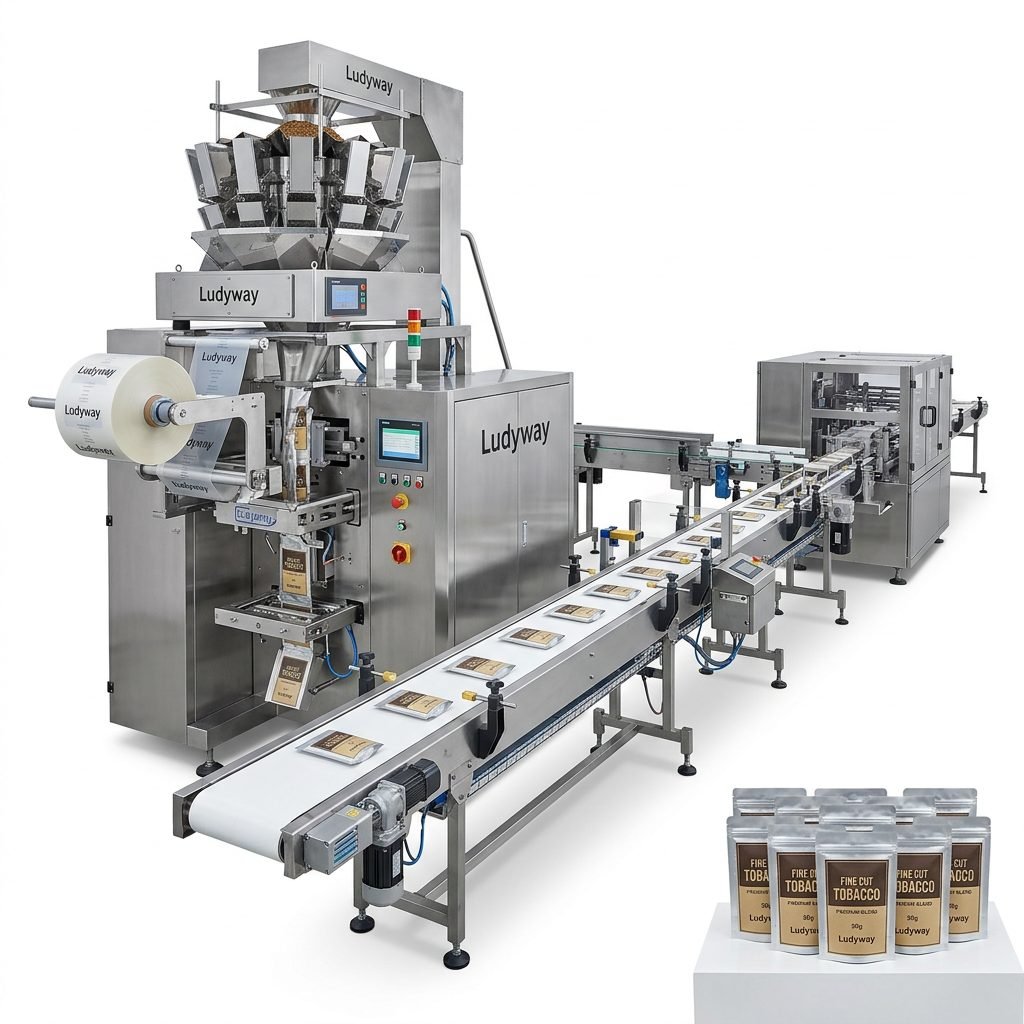
Larger food factories often need more than a standalone machine. A complete line may include feeding, mixing, filling, sealing, coding, inspection, cartoning, and case packing. Businesses seeking scalable automation often evaluate suppliers such as Ludyway condiment packaging machine solutions for sachets, packets, sauces, and integrated production lines.
Core Features to Look For
When comparing condiment packaging machines, buyers should focus on more than just speed. Long-term reliability, maintenance convenience, and adaptability are equally important.
- Accurate dosing: Essential for brand consistency and cost control.
- Stable sealing quality: Helps prevent leakage, contamination, and customer complaints.
- Product compatibility: The machine should handle powders, granules, liquids, or sauces based on your SKU range.
- Easy cleaning: Important for food safety and faster product changeovers.
- Automation options: Date coding, checkweighing, metal detection, cartoning, and conveyors can improve line efficiency.
- Flexible bag sizing: Useful for private label work and changing market demands.
Benefits of Automated Condiment Packaging
| Benefit | How It Helps Your Business |
|---|---|
| Higher productivity | More packs per minute with less labor input |
| Lower waste | Improved filling precision reduces product giveaway |
| Better hygiene | Closed systems help maintain cleaner food production |
| Stronger branding | Clean, attractive packages improve shelf appeal |
| Scalability | Makes it easier to expand product lines and output levels |
How to Choose the Right Condiment Packaging Machine
Before investing, define your production requirements clearly. The best machine is not necessarily the fastest one; it is the one that fits your product behavior, packaging target, and factory workflow.
Consider Product Characteristics
Fine powders may need dust-control design, while sticky sauces may need anti-drip nozzles, heated hoppers, or specialized pumps. The more precisely the machine matches your product, the better the final packaging result.
Estimate Output Needs
If you are packing for local distribution, a moderate-speed machine may be enough. If you supply supermarket chains, export customers, or major foodservice accounts, multi-lane high-speed packaging is often the better long-term choice.
Think About Future SKU Expansion
Many condiment businesses start with one product, such as salt or ketchup, then expand into spice mixes, sauces, and custom seasoning kits. Choosing adaptable equipment can reduce future upgrade costs.
Check Integration Possibilities
A machine that can connect with conveyors, coding units, checkweighers, and cartoning systems provides better automation value over time.
Industries That Commonly Use Condiment Packaging Equipment
- Seasoning and spice manufacturers
- Sauce and dressing producers
- Instant noodle and convenience food brands
- Takeaway and fast-food supply chains
- Private label food packers
- Export-oriented food processing plants
- Meal kit and travel food suppliers
Customization Trends in the Condiment Packaging Market
Today’s buyers are increasingly looking for packaging systems that can be tailored to specific factory needs. Common customization requests include:
- Multi-lane configurations for higher output
- Special seal patterns and tear notches
- Servo-driven filling for better precision
- Stainless steel contact parts for food-grade production
- Dust collection or anti-drip design
- Integration with cartoning and secondary packaging systems
- Support for both sachet and stick pack formats on one platform
Maintenance and Performance Tips
To keep a condiment packaging machine running efficiently, routine maintenance should never be overlooked. Good maintenance improves uptime, protects sealing quality, and extends machine life.
Best Practices
- Clean filling zones and sealing parts regularly
- Inspect pumps, augers, and dosing units for wear
- Verify seal temperature consistency
- Calibrate filling systems to maintain pack accuracy
- Use compatible packaging film for your product and machine type
- Train operators on product changeover and daily checks
Final Buying Insight for Sachets, Packets, and Sauces
A well-selected condiment packaging machine can transform production by delivering faster cycles, cleaner package presentation, and more reliable output. For manufacturers of seasoning powders, salt, sugar, ketchup, soy sauce, vinegar, mustard, chili sauce, and other condiments, automation is no longer just an upgrade—it is a practical step toward stronger competitiveness.
If your goal is to improve packaging efficiency for sachets, packets, and sauce applications, focus on equipment that matches your product type, target speed, hygiene requirements, and line expansion plans. The right solution supports both immediate production gains and long-term business growth.