Investing in a mattress packing machine is a significant decision that directly impacts your production efficiency, labor costs, and product protection during storage and shipping. Whether you are compressing, rolling, or sealing mattresses for retail distribution, selecting the right equipment requires careful evaluation of your product range, throughput goals, and packaging format requirements. This guide walks you through the essential factors to consider before making your purchase.
Understanding Your Mattress Packaging Requirements
Before comparing machine specifications, you need to define what you are packaging. The mattress industry has diversified significantly, and a machine designed for compressed pocket spring mattresses may not be suitable for memory foam or latex models. Consider the following variables:
- Mattress type: Innerspring, hybrid, memory foam, latex, or gel-infused foam
- Size range: Single, double, queen, king, or custom dimensions
- Thickness profile: Ultra-thin toppers versus thick pillow-top designs
- Rolling vs. flat packing: Does your distribution model require bed-in-a-box compression and rolling?
- Packaging materials: PE film, laminated films, non-woven fabric, or carton-based solutions
Clearly mapping these factors will help you narrow down machine categories and avoid costly mismatches. For manufacturers producing multiple mattress types, versatility in compression settings and film compatibility becomes essential.
Key Machine Configurations: Compression, Rolling, and Bagging
Modern mattress packing machines typically integrate multiple functions into a single automated line. Understanding the core modules will help you evaluate different equipment offerings:
Compression Systems
The compression unit is the heart of any mattress packing line. Hydraulic compression systems generally offer higher pressure and are preferred for high-density foam and innerspring mattresses. Pneumatic systems can be suitable for lighter foam products and offer faster cycle times. Look for machines that provide adjustable compression ratios — this allows you to optimize the balance between package size reduction and product recovery after unpacking.
Rolling and Folding Mechanisms
For bed-in-a-box applications, the rolling mechanism must handle the compressed mattress without causing wrinkles, creases, or damage to the foam structure. Servo-driven rolling systems provide precise control over rolling tension and diameter. Some advanced machines also include automated folding stations for mattresses that need to be folded before rolling.
Bagging and Sealing Stations
Once the mattress is compressed and rolled, it enters the bagging section. The bagging station should accommodate the specific film thickness and material you plan to use. Heat sealing, impulse sealing, or ultrasonic sealing technologies each have advantages depending on film type and required seal integrity. Consistent, leak-proof seals are critical for maintaining compression during transit and storage.
Automation Level and Integration Capabilities
The degree of automation you choose will depend on your labor cost structure, production volume, and workforce skill level. Machines range from semi-automatic systems that require manual material handling to fully automatic lines with robotic feeding and finished product conveying.
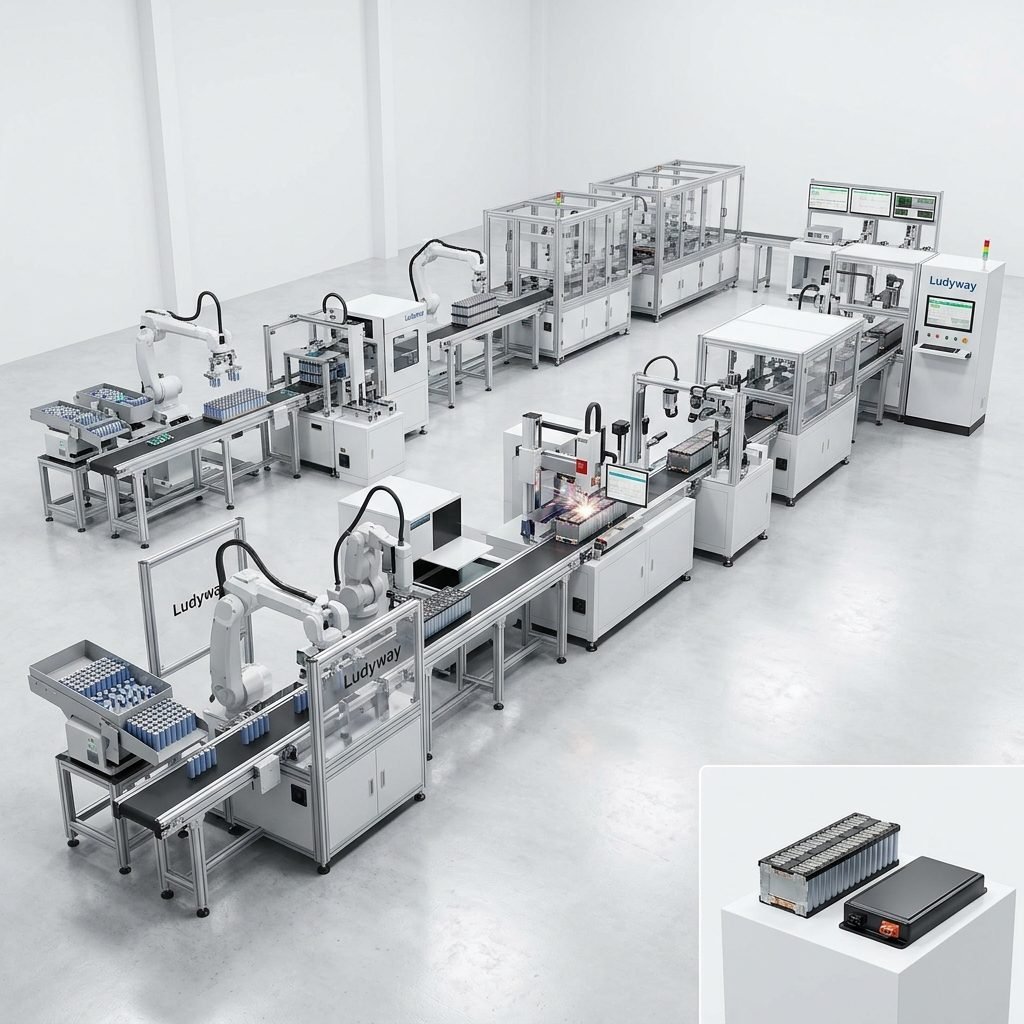
A fully integrated packaging machinery system may include automatic mattress feeding conveyors, compression units, rolling modules, bag inserters, sealing stations, labeling systems, and palletizing equipment. When planning your line, consider whether the machine can be integrated with your existing upstream production and downstream logistics systems.
For manufacturers looking to work with an experienced supplier, companies like Ludyway Machinery provide customized packaging equipment configurations that can be adapted to different mattress sizes, production speeds, and factory layouts.
Speed, Throughput, and Production Capacity
Throughput requirements vary dramatically across the mattress industry. A small-scale manufacturer producing 50-100 mattresses per day has vastly different needs compared to a high-volume producer targeting 500+ units daily. When evaluating speed specifications, pay attention to:
| Production Scale | Typical Throughput | Recommended Automation Level |
|---|---|---|
| Small Workshop | 20-80 units/day | Semi-automatic |
| Mid-Size Factory | 100-300 units/day | Fully automatic single lane |
| Large-Scale Manufacturer | 400-800+ units/day | Multi-lane fully automatic with robotic integration |
Cycle time — the total time from mattress feeding to finished sealed package — is the most practical metric for calculating real-world output. Always confirm whether quoted speeds account for film changeovers, maintenance stops, and operator breaks.
Film Compatibility and Material Costs
The packaging film you select directly affects your material cost per unit, package appearance, and product protection during shipping. Common film options include:
- Polyethylene (PE): Cost-effective, widely available, suitable for standard compression
- Multi-layer laminated films: Enhanced puncture resistance and barrier properties for premium mattresses
- Biodegradable and recycled content films: Increasingly important for brands targeting environmentally conscious consumers
- Branded printed films: Custom-printed packaging that reinforces brand identity upon delivery
Verify that the machine you choose can run the flexible packaging materials you intend to use. Film thickness, slip properties, and heat-seal characteristics all influence machine performance. Some machines are optimized for thin-gauge films to reduce material costs, while others require heavier films for reliable operation.
Seal Integrity and Product Protection
A poorly sealed mattress package can expand during transit, leading to shipping damage, customer returns, and brand reputation harm. The sealing system must deliver consistent, durable seals that withstand the internal pressure of a compressed mattress trying to expand. Evaluate the following sealing-related features:
- Multi-point temperature control: Ensures uniform sealing across the entire seal width
- Adjustable sealing pressure and dwell time: Critical for optimizing seal quality on different film types
- Seal integrity inspection: Some machines include vision systems or pressure-decay testing to verify seal quality
- Puncture-resistant film handling: Mechanisms that minimize film stress during the compression and bagging cycle
For export-oriented manufacturers, package integrity becomes even more important as products may face multiple handling stages, container loading, and extended transit times.
Compliance, Safety, and International Standards
Packaging machinery must comply with applicable safety standards and regulations in your target markets. Depending on your location and export destinations, relevant standards may include CE marking for European markets, UL certification for North America, and various ISO packaging standards for international trade.
Key safety features to look for include emergency stop buttons, safety light curtains, guarded compression zones, and interlocked access doors. Comprehensive operator training and clear safety documentation should be provided by the equipment manufacturer.
Machine Footprint and Factory Layout Planning
A mattress packing line can occupy significant floor space, especially when including infeed conveyors, compression units, rolling stations, bagging modules, and outfeed accumulation areas. Before purchasing, create a detailed factory layout plan that accounts for:
- Machine dimensions during operation and maintenance access requirements
- Material flow — how mattresses enter and packaged units exit the line
- Film roll storage and changeover accessibility
- Operator workstations and safety clearances
- Connection points for compressed air, electrical power, and any required utilities
Some manufacturers offer modular machine designs that can be configured to fit existing factory layouts, which is particularly valuable for companies upgrading from manual or semi-automatic processes.
After-Sales Support, Spare Parts, and Technical Service
A mattress packing machine is a long-term investment, and ongoing support from the manufacturer significantly affects uptime and total cost of ownership. Evaluate potential suppliers on:
- Warranty terms: What is covered, for how long, and under what conditions
- Spare parts availability: Commonly replaced components should be readily available, ideally with regional distribution
- Technical support response time: For international equipment purchases, remote diagnostic capabilities and local service partners are valuable
- Operator training programs: Comprehensive initial training plus ongoing support as new staff join your production team
- Preventive maintenance guidance: Clear schedules and procedures that help your team maintain machine performance
Ask potential suppliers for references from customers producing similar mattress types. Speaking with existing users can provide practical insights into machine reliability, service quality, and real-world performance that specifications alone cannot convey.
Total Cost of Ownership: Beyond the Purchase Price
The initial machine price is only one component of the total investment. A comprehensive cost analysis should include:
| Cost Category | Considerations |
|---|---|
| Packaging materials | Film consumption per mattress, waste rates, bulk purchasing options |
| Energy consumption | Power requirements for compression, heating, and conveying systems |
| Labor costs | Number of operators required, skill level, training investment |
| Maintenance and spare parts | Preventive maintenance, wear parts replacement, unexpected repairs |
| Downtime risk | Production losses during machine stoppages, backup plans during repairs |
A machine with a higher initial price but lower operating costs and better reliability may deliver superior long-term value compared to a budget option with frequent downtime and higher material waste.
Making Your Final Decision
Choosing the right mattress packing machine requires balancing technical specifications, production requirements, budget constraints, and future growth plans. Start by thoroughly documenting your current and anticipated product range, production volumes, and packaging format needs. Request detailed proposals from multiple suppliers and compare not just prices but also machine specifications, warranty coverage, service commitments, and reference customer feedback.
Whenever possible, visit existing installations to see machines operating with products similar to yours. A factory acceptance test or production trial with your own mattress samples can provide valuable confirmation that the equipment meets your expectations before finalizing the purchase.
By taking a systematic approach to evaluation and working with an experienced packaging machinery supplier, you can select a mattress packing solution that supports your production goals, protects your products, and provides reliable performance for years to come.