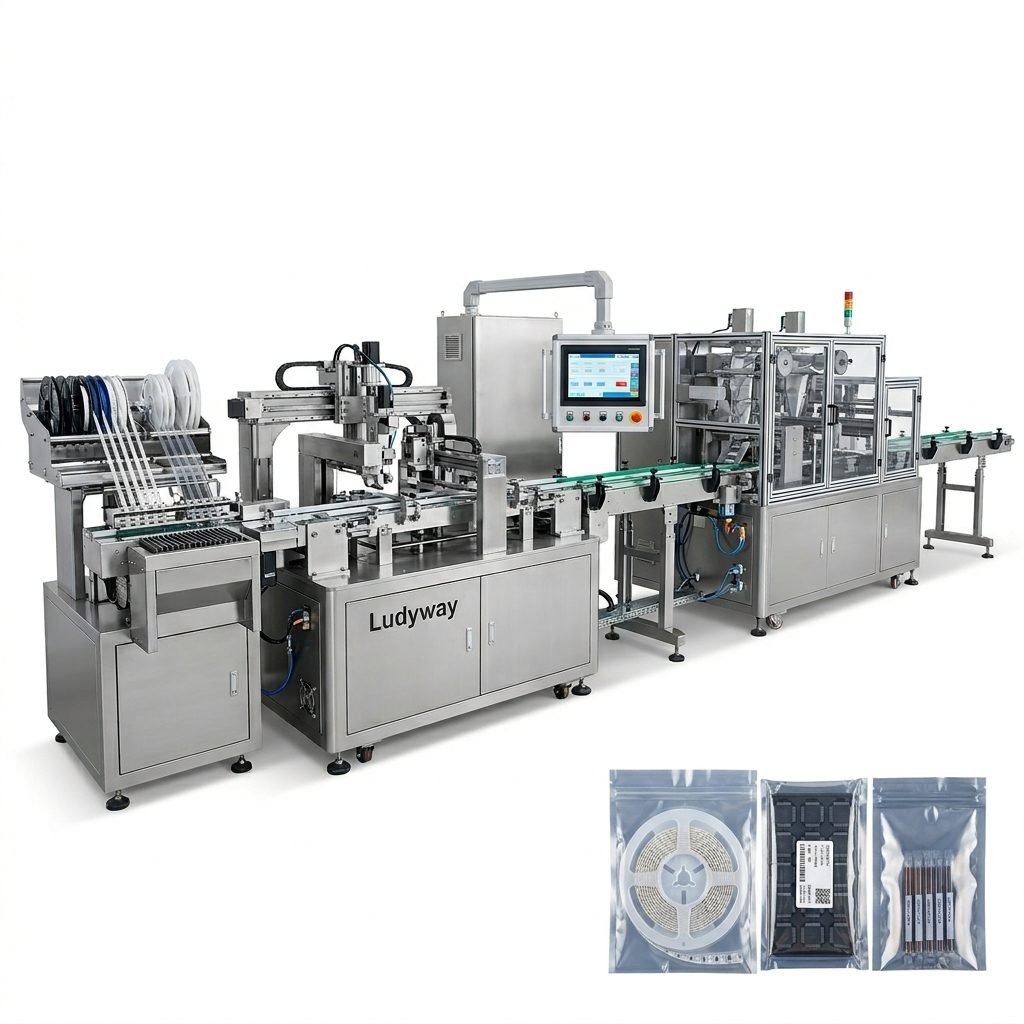
Investing in a soup packaging machine is a critical decision for food manufacturers looking to scale production, maintain product quality, and meet evolving market demands. Whether you are packaging powdered soup mixes, liquid broths, or ready-to-eat dehydrated soup blends, selecting the right equipment directly impacts your operational efficiency, packaging consistency, and long-term profitability. This comprehensive buyer’s guide walks you through every essential factor to consider before making your purchase.
Understanding Soup Packaging Requirements
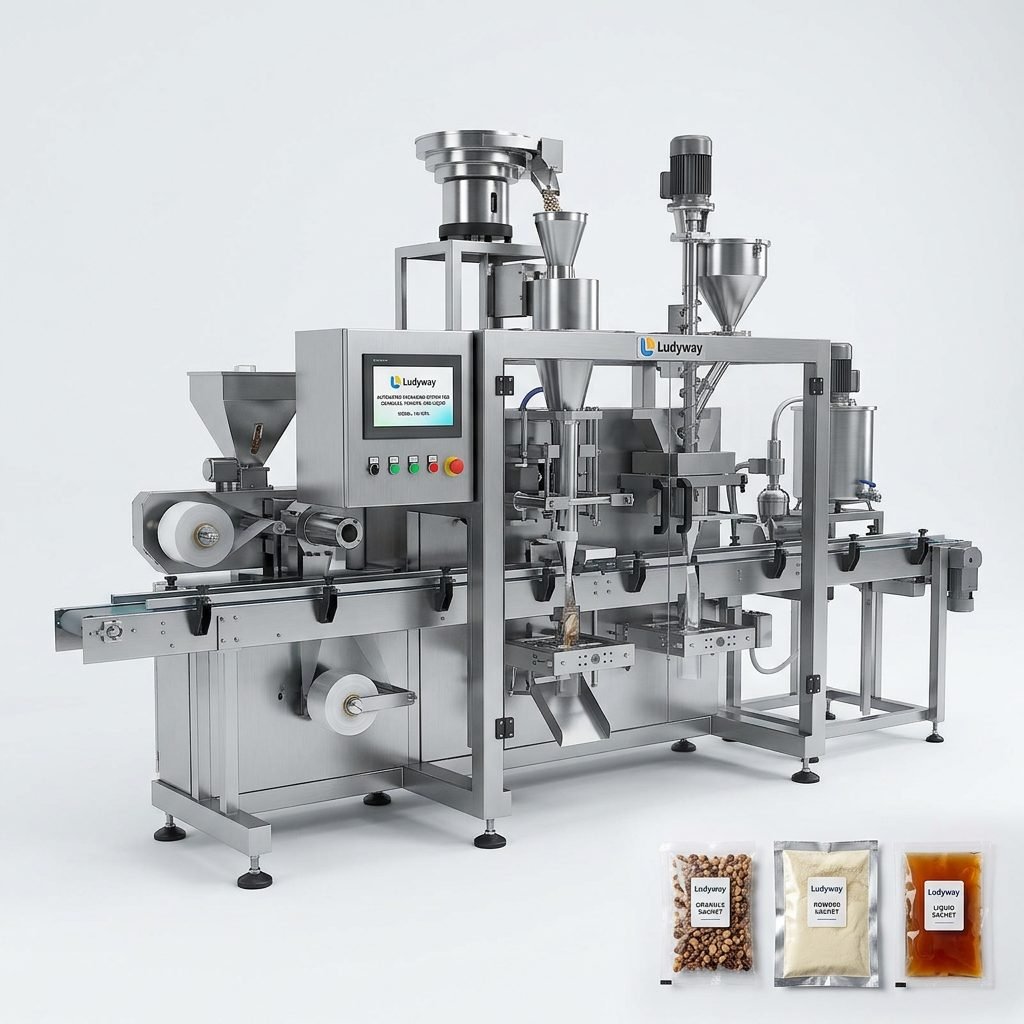
Soup products present unique packaging challenges that differ significantly from dry solids or simple liquid fills. Many soup formulations combine powders, granules, dehydrated vegetable pieces, oils, and seasonings within a single package. This complexity requires machinery capable of handling multi-component filling, precise dosing, and reliable sealing to preserve product freshness and prevent leakage or contamination.
According to the PMMI packaging industry research, flexible packaging formats continue to gain market share in the food sector, driven by consumer demand for convenience, portion control, and extended shelf life. Soup manufacturers increasingly favor stick packs, sachets, and stand-up pouches over traditional rigid containers for their cost efficiency and reduced material usage.
Before evaluating specific machines, clearly define your product characteristics: Is your soup a free-flowing powder, a hygroscopic blend, a paste, or a liquid with suspended particles? Each physical form requires different filling technologies, auger types, piston pumps, or volumetric cup systems. Understanding these fundamentals will narrow your equipment options considerably.
Key Factors to Consider When Choosing a Soup Packaging Machine
Product Characteristics and Compatibility
The physical and chemical properties of your soup product dictate the entire machine configuration. Consider these critical product attributes:
- Flowability: Free-flowing powders require different dosing mechanisms than cohesive or sticky blends
- Particle size distribution: Machines must accommodate varying granule sizes without clogging or inconsistent fills
- Moisture sensitivity: Hygroscopic soup powders may require nitrogen flushing or desiccant integration
- Temperature sensitivity: Heat-sensitive ingredients may limit sealing temperature options
- Abrasiveness: Some soup mixes contain salt crystals or hard particles that accelerate wear on contact parts
Production Speed and Capacity Requirements
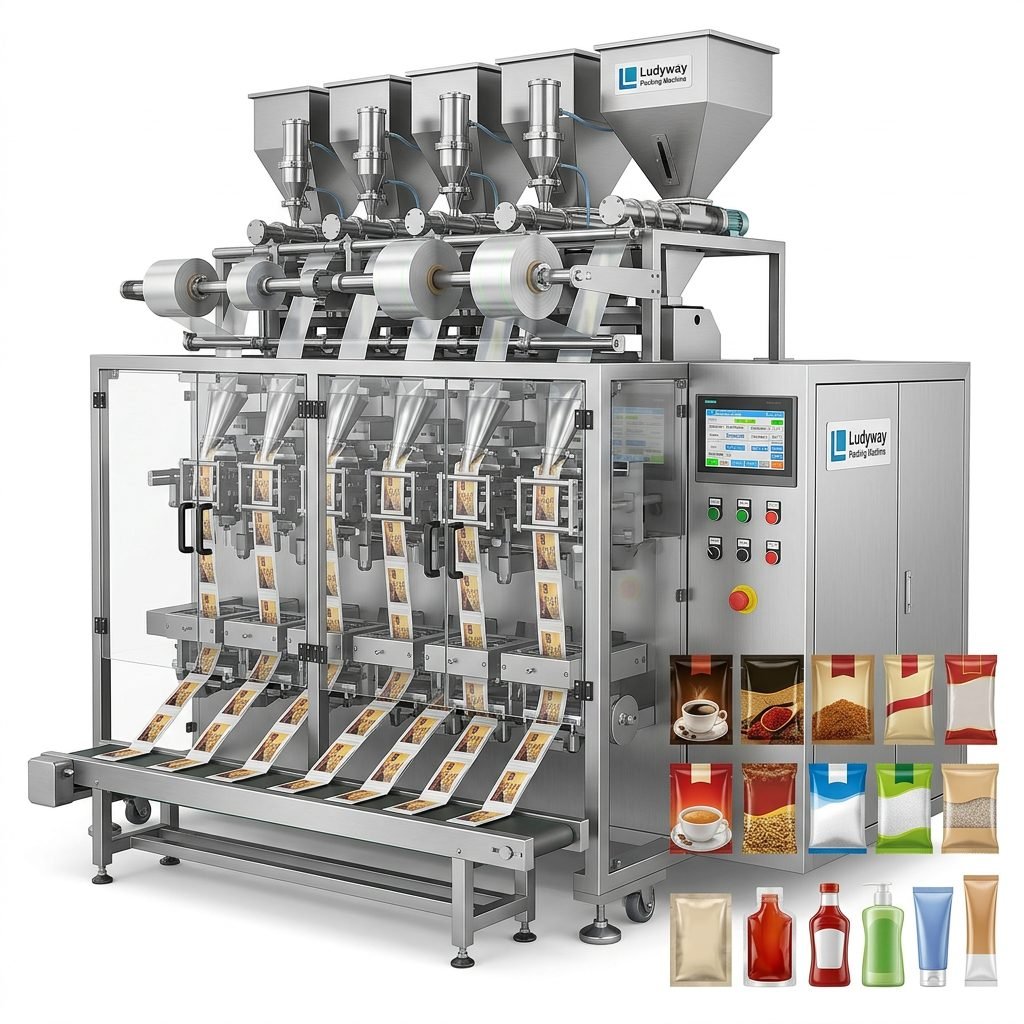
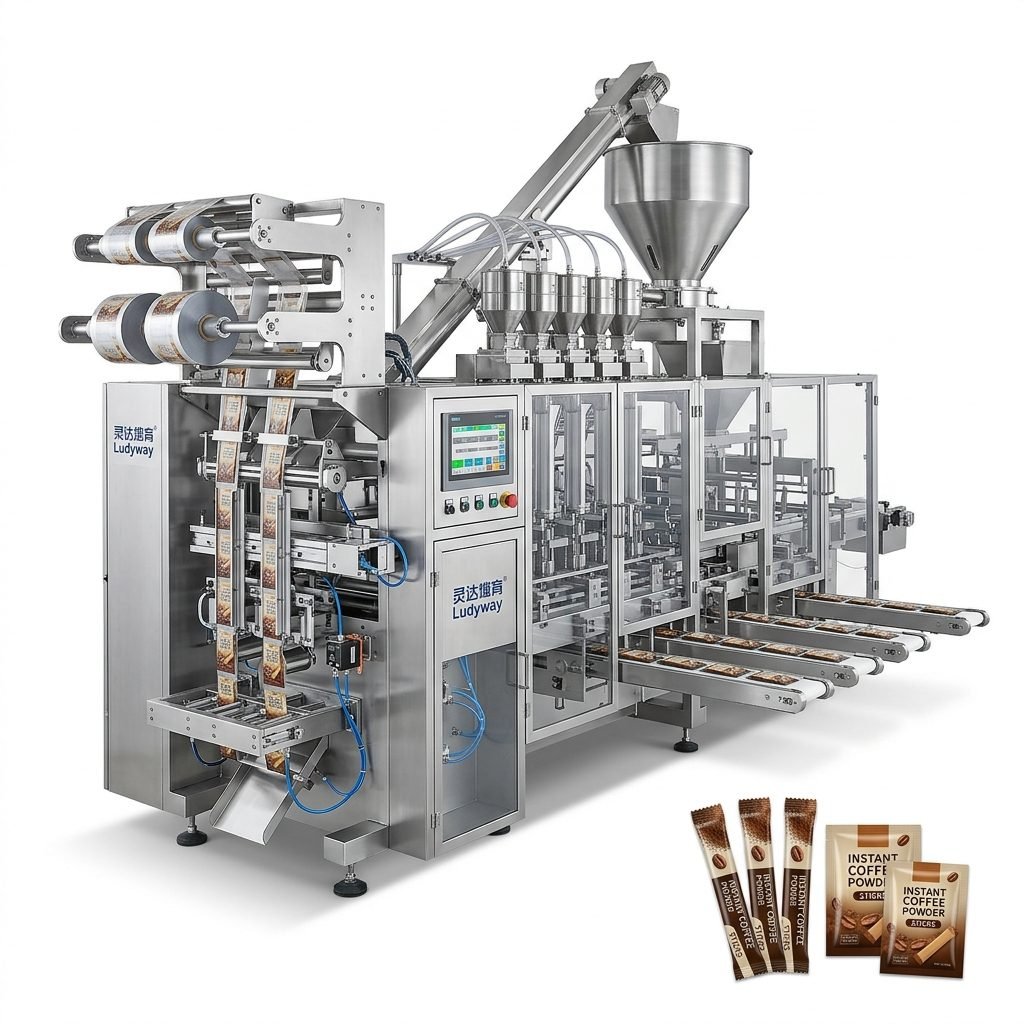
Your current and projected production volumes determine whether a single-lane, multi-lane, or high-speed continuous motion machine is appropriate. Entry-level machines may output 30-60 packs per minute, while advanced multi-lane stick pack systems can produce 400-600 packs per minute or more across 8-12 lanes simultaneously.
Carefully evaluate not just the theoretical maximum speed but the sustained production rate accounting for film changes, cleaning cycles, and routine maintenance. A machine that runs reliably at 80% of its rated speed for two full shifts often outperforms a higher-rated machine with frequent downtime.
Packaging Format and Bag Style
Soup products are packaged in various formats, each with distinct equipment requirements:
- Stick packs: Ideal for single-serve powdered soup mixes, offering excellent portion control and portability
- Flat sachets: Common for instant soup seasoning packets included with noodles
- Stand-up pouches: Growing in popularity for premium soup mixes with resealable zipper closures
- Gusseted bags: Suitable for larger family-size soup powder packs
Your choice of flexible packaging materials also affects machine selection. Common structures include PET/AL/PE, PET/VMPET/PE, and paper/PE/AL/PE laminates, each with different sealing temperature requirements and barrier properties.
Automation Level and Integration
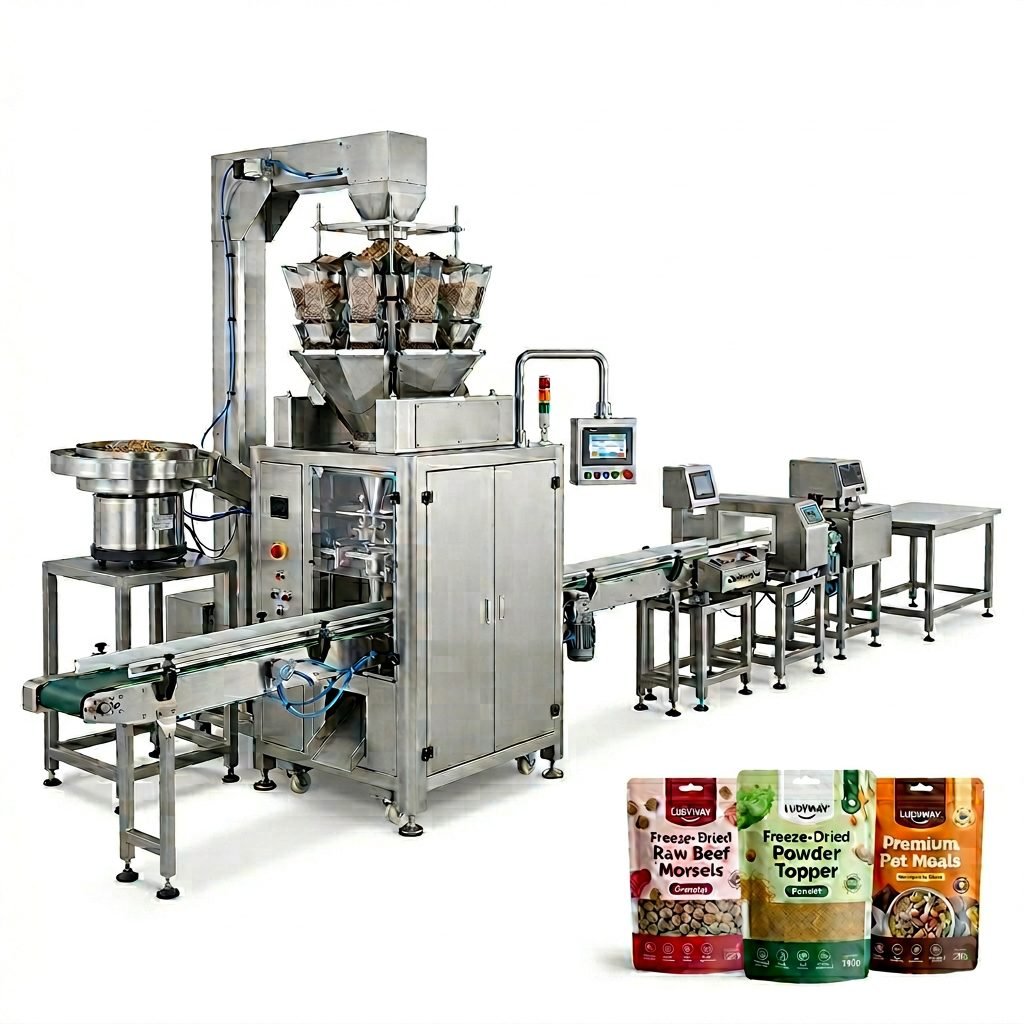
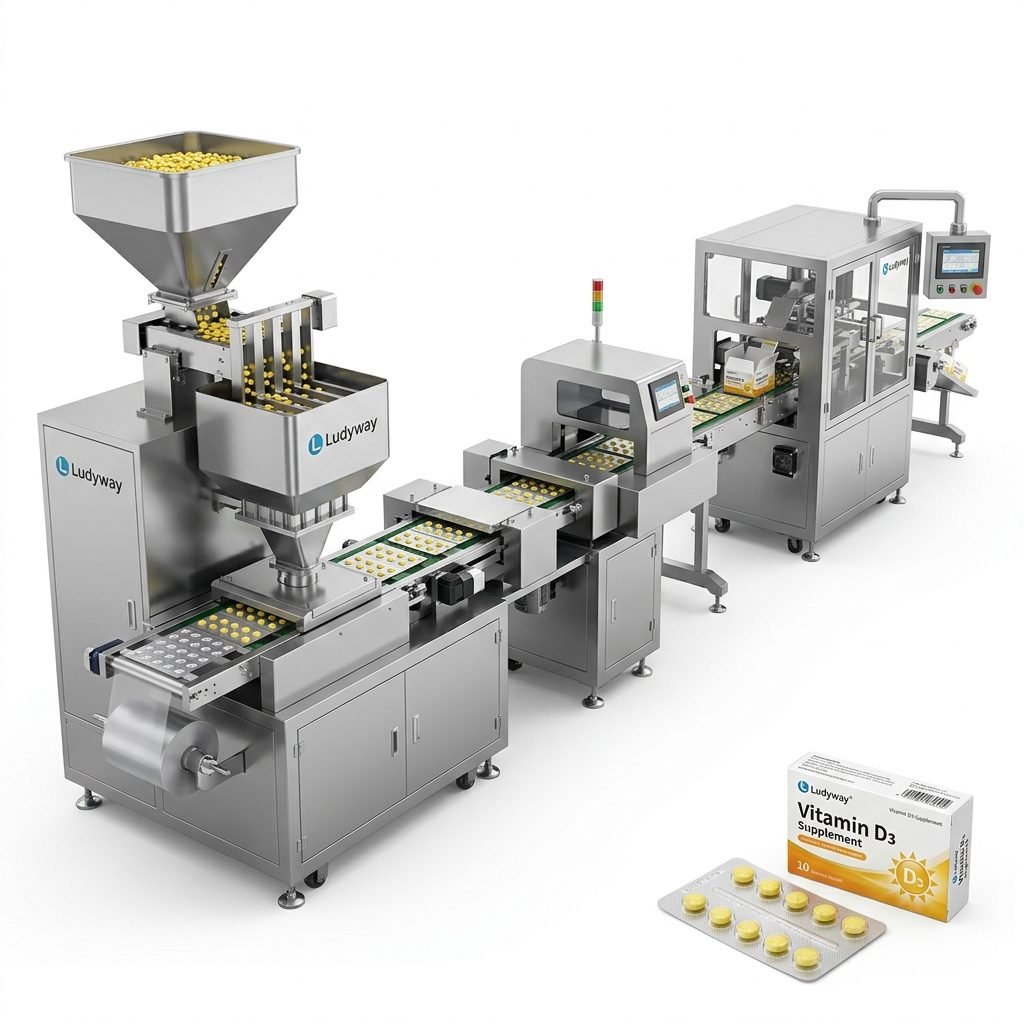
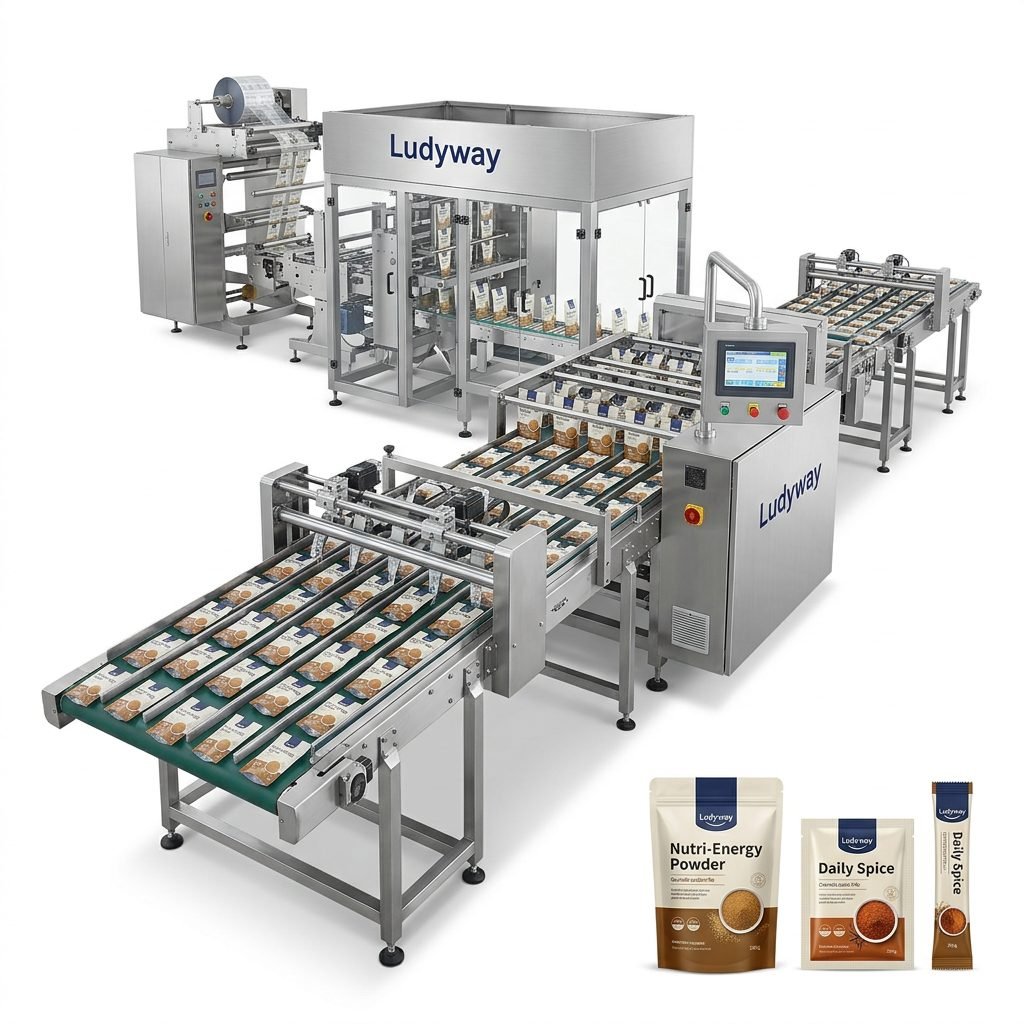
Modern soup packaging operations range from semi-automatic systems requiring manual product loading to fully automated turnkey lines integrating feeding, dosing, filling, sealing, coding, inspection, and cartoning. Consider whether you need a standalone machine or a complete packaging line solution that connects upstream mixing equipment and downstream case packing systems.
Technical Specifications to Evaluate
When comparing soup packaging machines, pay close attention to these critical technical parameters that directly affect performance and product quality:
| Specification | Why It Matters for Soup Packaging | Recommended Range |
|---|---|---|
| Filling Accuracy | Ensures consistent portion weight and regulatory compliance | ±0.5% to ±1.5% |
| Sealing Temperature Range | Must match film laminate requirements without damaging product | 100°C – 250°C |
| Number of Lanes | Determines throughput capacity for stick pack and sachet formats | 4 – 12 lanes |
| Bag Size Flexibility | Allows quick changeover between different package sizes | Adjustable within range |
| Film Registration Accuracy | Critical for printed film alignment and professional package appearance | ±0.5mm or better |
| Construction Material | Food-grade stainless steel ensures hygiene and corrosion resistance | SUS304 or SUS316 |
Types of Soup Packaging Machines
Understanding the different machine configurations available helps match your specific production needs with the right technology. The most common types for soup applications include:
Vertical Form Fill Seal (VFFS) Machines
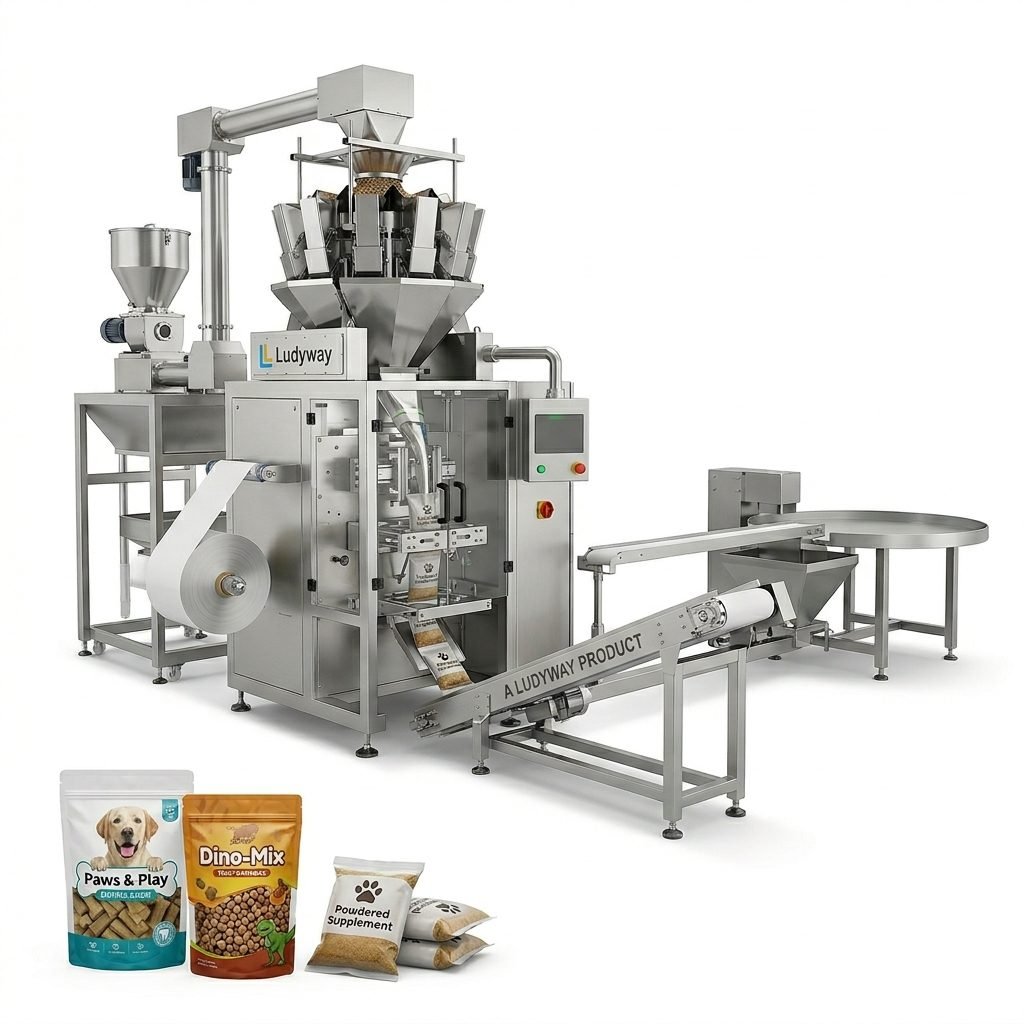
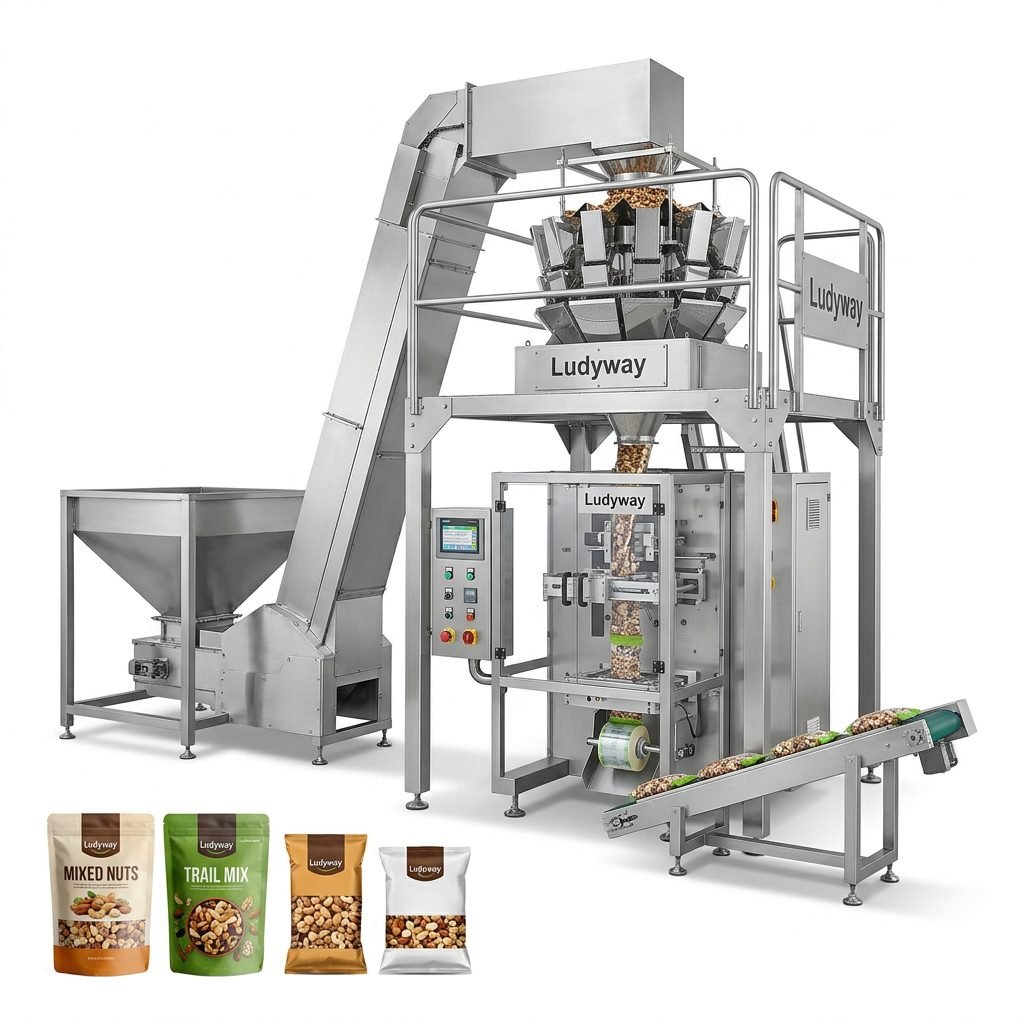
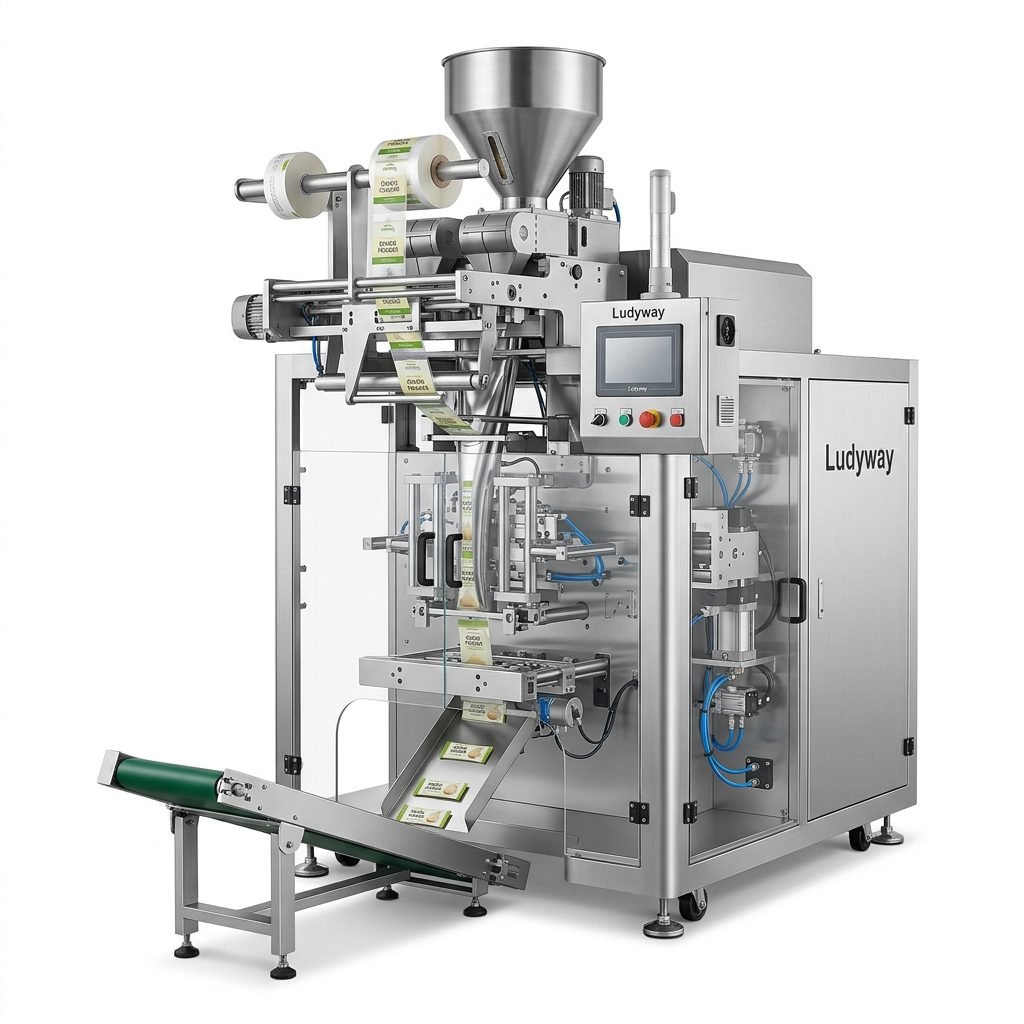
VFFS machines are the workhorse of the soup packaging industry. They form bags from roll stock film, fill the product, and seal the package in a continuous vertical process. For soup powders, these machines can be configured with auger fillers, volumetric cup fillers, or multi-head weighers depending on required accuracy and speed.
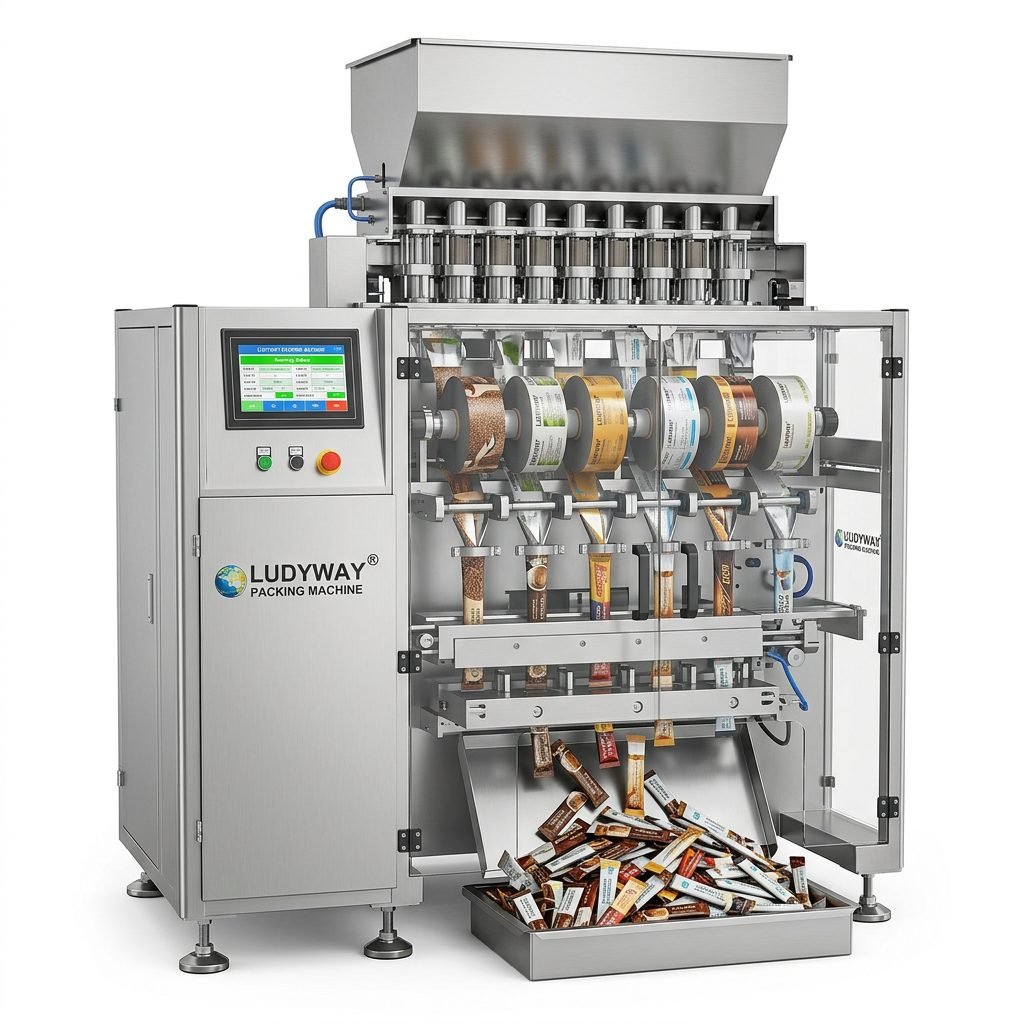
Multi-Lane Stick Pack Machines
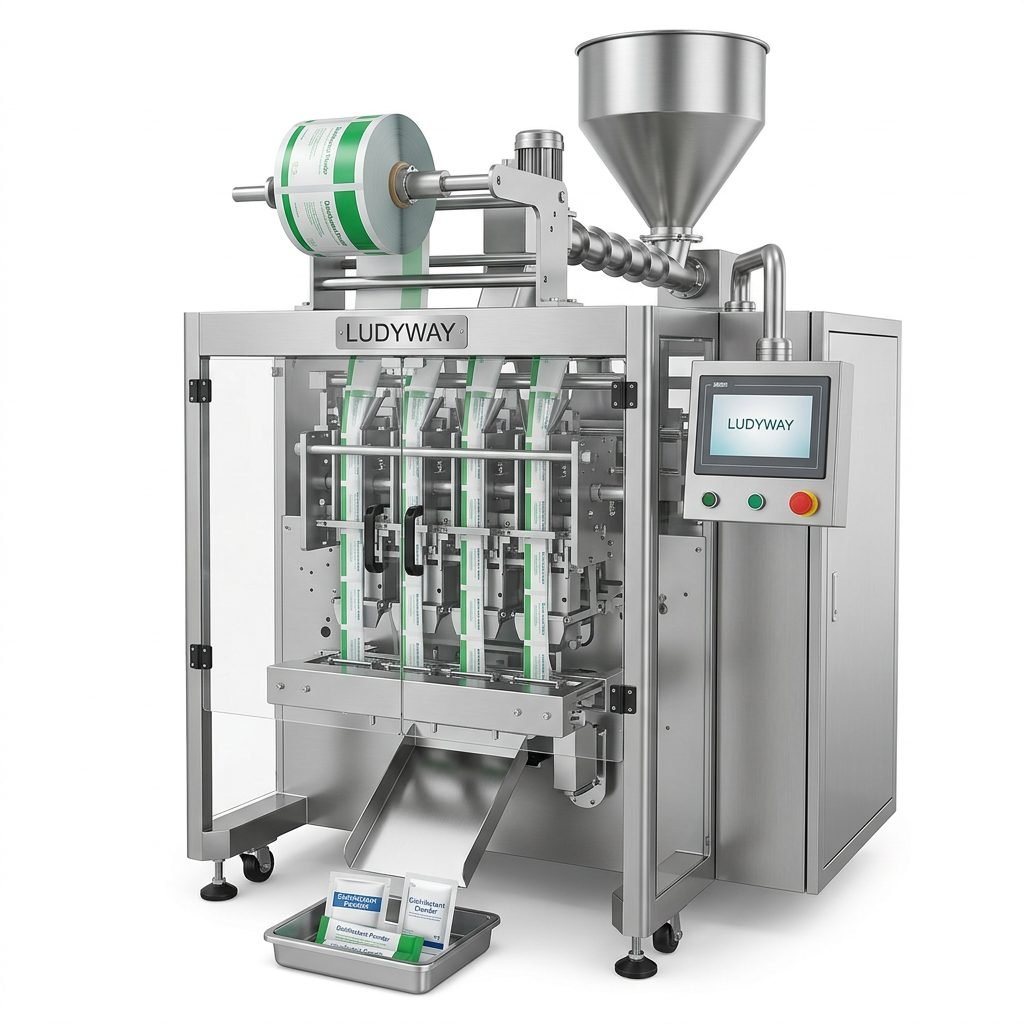
These specialized machines produce narrow, elongated stick-shaped sachets ideal for single-serve soup mixes. Multi-lane configurations running 4 to 12 lanes simultaneously dramatically increase throughput. Stick pack formats are increasingly popular in the soup category for their portability, precise portion control, and efficient use of packaging materials.
Premade Pouch Rotary Fill-Seal Machines
For manufacturers using stand-up pouches or shaped bags, rotary machines pick, open, fill, and seal premade pouches. These systems are well-suited for premium soup products where shelf presence and brand differentiation are priorities. Changeover between pouch sizes is generally faster than with VFFS systems.
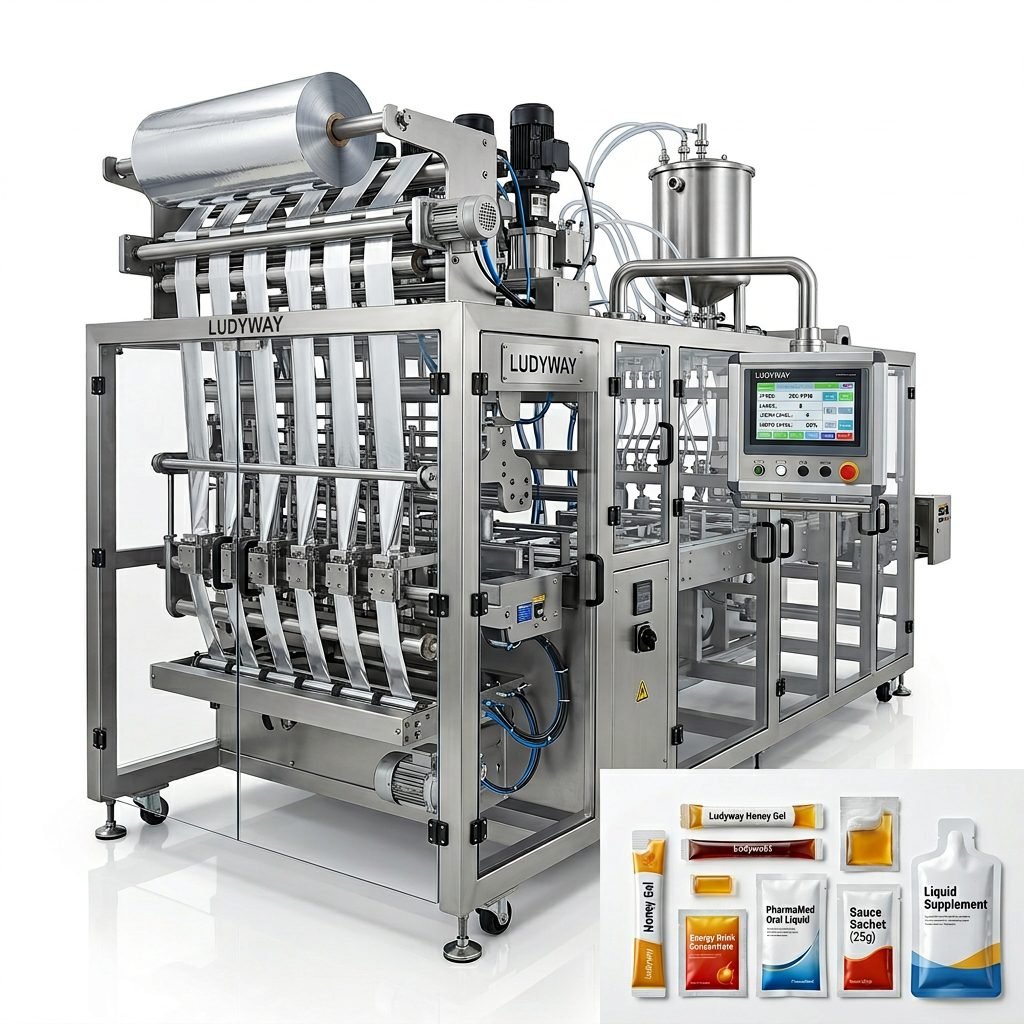
Liquid Soup Filling Lines
For liquid broths and ready-to-heat soups, specialized liquid filling machines use piston pumps, gear pumps, or flow meters for precise volumetric filling. These systems often integrate with food-grade packaging regulations requiring specific materials and clean-in-place (CIP) capabilities.

Budget and ROI Considerations
The initial purchase price of a soup packaging machine is only one component of the total cost of ownership. A comprehensive financial analysis should evaluate:
- Capital expenditure: Machine cost plus installation, training, and facility modifications
- Operating costs: Film consumption, energy usage, labor requirements, and consumable parts
- Maintenance costs: Scheduled service, spare parts inventory, and technician availability
- Downtime risk: Lost production value when the machine is offline for repairs
- Yield improvement: Reduced product giveaway through better filling accuracy
Most soup manufacturers achieve ROI within 12-24 months through labor savings, material efficiency, increased throughput, and reduced product waste. Multi-lane machines typically deliver faster payback for higher-volume operations despite their higher upfront cost.
Compliance and Industry Standards
Soup packaging machinery must comply with applicable ISO packaging standards and food safety regulations in your target markets. Key considerations include CE marking for European markets, FDA compliance for U.S. food contact applications, and GMP compatibility for pharmaceutical-grade soup supplement packaging.
Machines should be constructed with food-grade stainless steel contact parts, feature accessible designs for thorough cleaning, and incorporate validation documentation where required for regulated applications.
Choosing the Right Packaging Machinery Partner
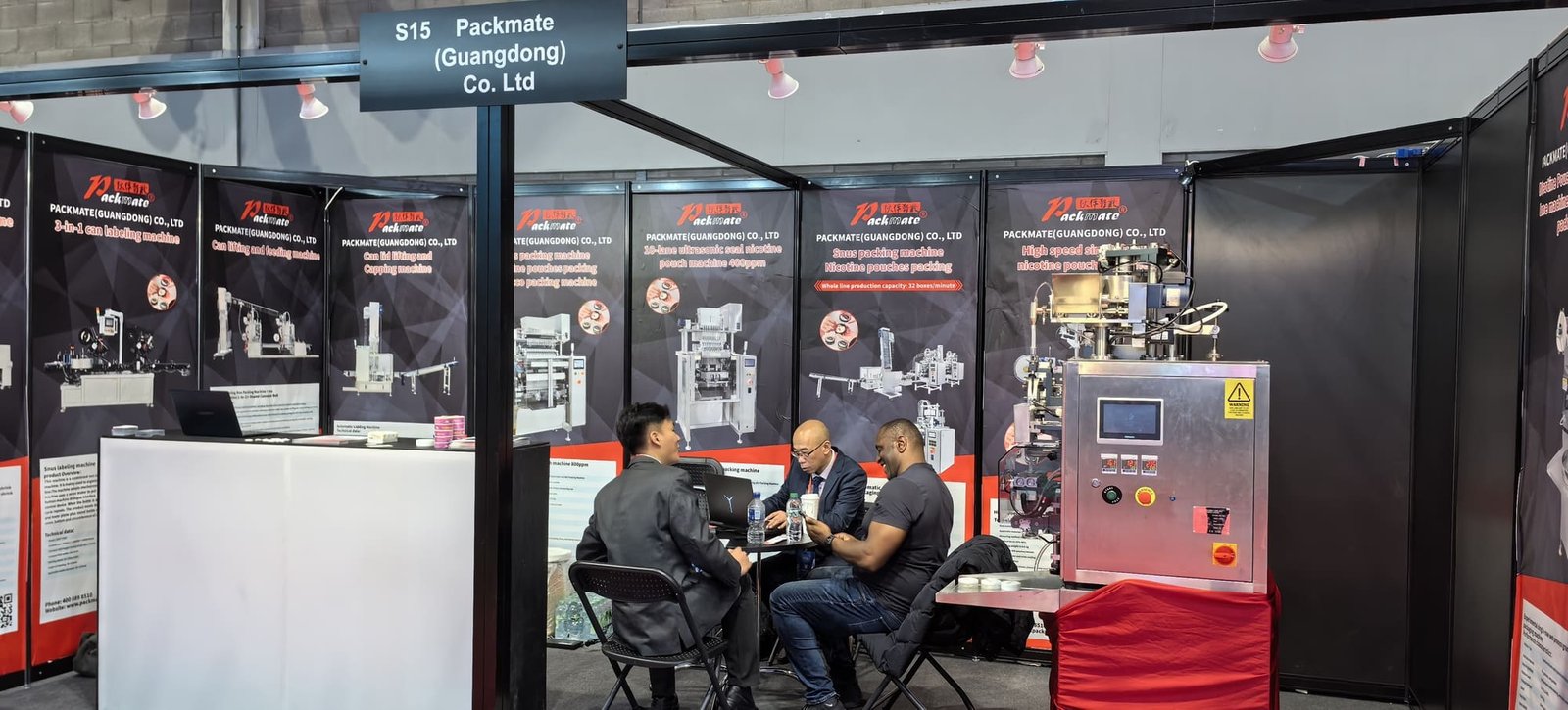
Selecting a reliable equipment manufacturer is equally important as choosing the right machine specifications. Look for a partner with proven experience in food powder and liquid packaging, comprehensive technical support capabilities, and a track record of successful installations in your industry segment.
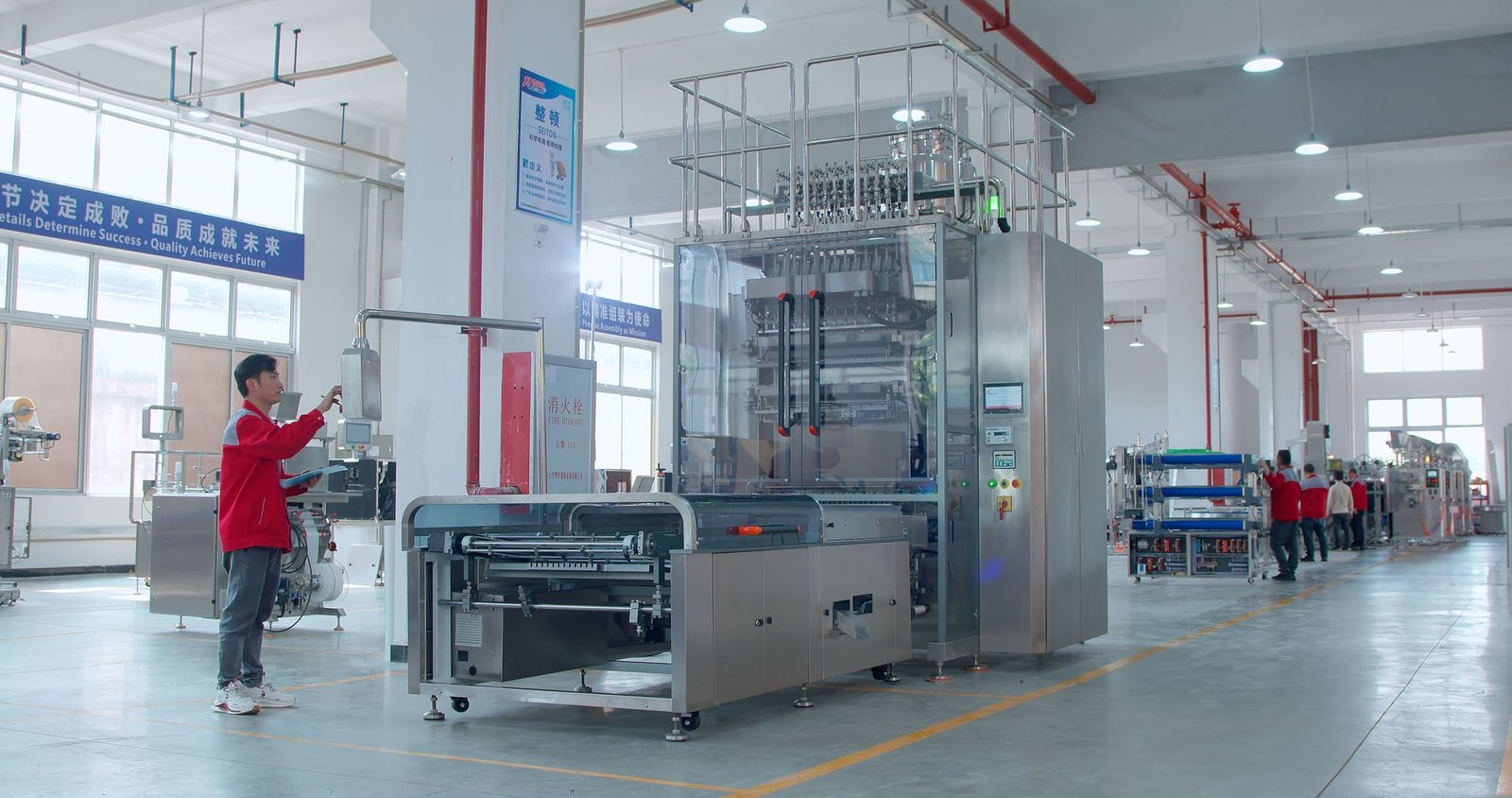
Ludyway Machinery is a China-based packaging machinery manufacturer with more than 30 years of industry experience, offering over 50 packaging machine models across a 20,000-square-meter manufacturing facility. The company provides comprehensive solutions covering powder, granule, liquid, stick pack, sachet, and pouch packaging applications, serving customers in over 100 countries with customized configurations and integrated turnkey packaging lines. From initial consultation and machine selection through installation, commissioning, and ongoing technical support, working with an experienced manufacturer helps ensure your soup packaging investment delivers the expected performance and return.
Installation, Training, and After-Sales Support
Even the best-designed soup packaging machine requires proper installation and operator training to perform at its rated capacity. When evaluating suppliers, confirm the scope of their technical support services:
- Installation supervision by factory-trained engineers
- Operator training programs covering setup, operation, troubleshooting, and cleaning
- Remote technical assistance for rapid issue resolution
- Spare parts availability with reasonable lead times
- Preventive maintenance agreements to maximize uptime
Future-Proofing Your Investment
The soup market continues to evolve with new product formats, sustainable packaging initiatives, and changing consumer preferences. Select a machine that offers modular design and upgrade potential to accommodate future requirements without complete equipment replacement. Machines with quick-change parts, programmable recipe management, and compatibility with multiple film types provide greater operational flexibility as your product portfolio expands.
Conclusion
Choosing the right soup packaging machine requires careful evaluation of your product characteristics, production volumes, packaging format preferences, budget parameters, and long-term business goals. By systematically assessing filling technology, automation level, build quality, supplier capabilities, and total cost of ownership, you can select equipment that delivers consistent performance, regulatory compliance, and profitable operation for years to come.
Take time to test your specific soup product on candidate machines before making a final decision. Real-world trials reveal critical insights about filling accuracy, seal integrity, dust generation, and overall machine behavior that specifications alone cannot convey. This hands-on evaluation is an essential step in protecting your packaging investment and ensuring successful long-term production.