Selecting the right wheat flour packing machine is one of the most critical decisions for any milling operation, food processing facility, or packaging business. Flour is a fine, dusty, and often challenging powder to handle — it requires specialized equipment that can manage product flow characteristics, maintain hygiene standards, and deliver consistent fill accuracy across high-volume production runs. A poorly chosen machine can lead to inaccurate weights, excessive dust, product waste, and costly downtime.
This comprehensive buyer’s guide walks you through every important factor to evaluate before investing in a wheat flour packaging system, from packaging machinery market research insights to practical selection criteria.
Understanding Your Wheat Flour Packaging Requirements
Before comparing machine specifications, you need to define your operational requirements clearly. Wheat flour packaging is not a one-size-fits-all process. Different end markets — retail, food service, wholesale, or industrial — demand different bag formats, fill weights, and production speeds.
Key questions to answer at the outset include:
- What is your target production output per hour or per shift?
- What bag sizes and formats do you need? (small sachets, stick packs, 1-5 kg bags, 10-25 kg bags, or bulk bags)
- What packaging material will you use? (paper, woven polypropylene, laminated film, PE, or multi-layer materials)
- What level of automation is appropriate for your facility? (semi-automatic, fully automatic, or integrated turnkey line)
- Do you require additional features such as gas flushing, dust extraction, or checkweighing?
Taking time to document these requirements will help you communicate effectively with equipment suppliers and ensure the machine you select aligns with your production goals and budget parameters.
Key Factors to Consider When Selecting a Flour Packing Machine
Product Characteristics and Flow Properties
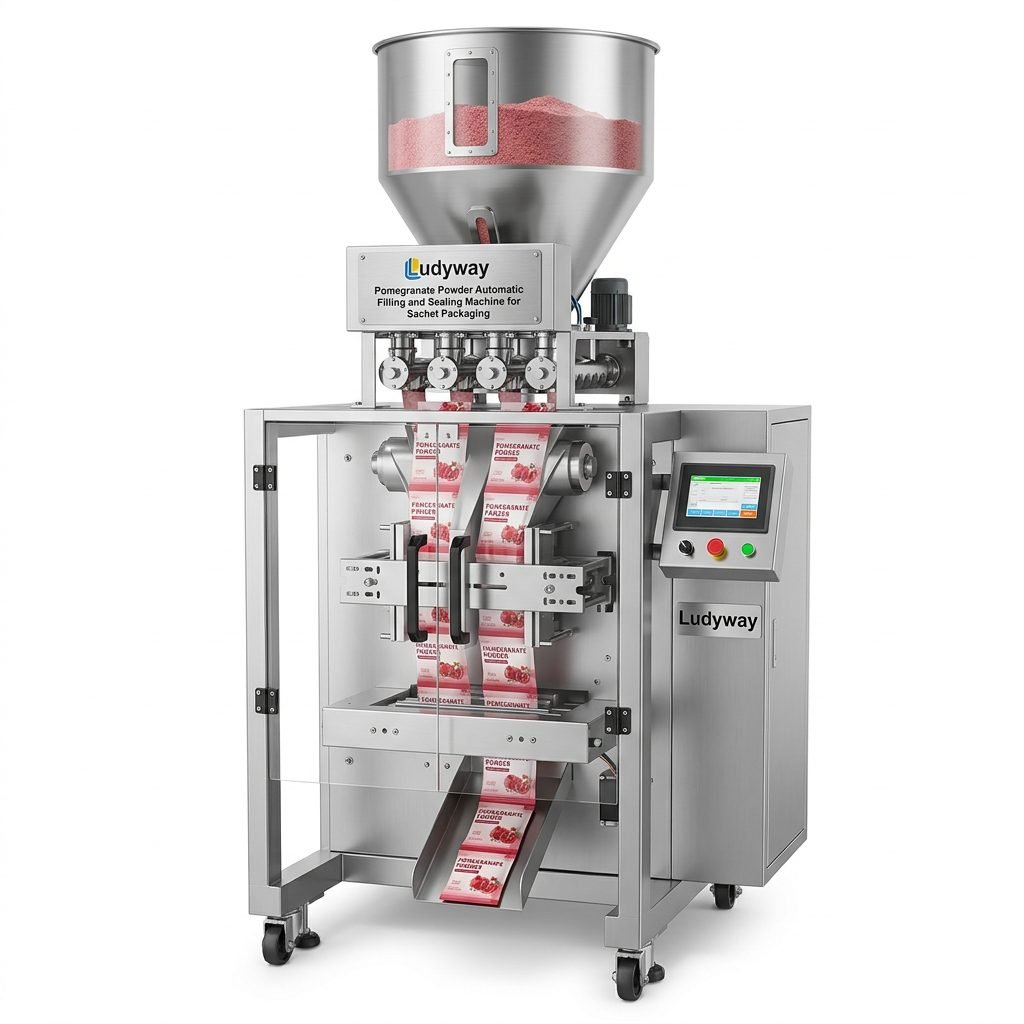
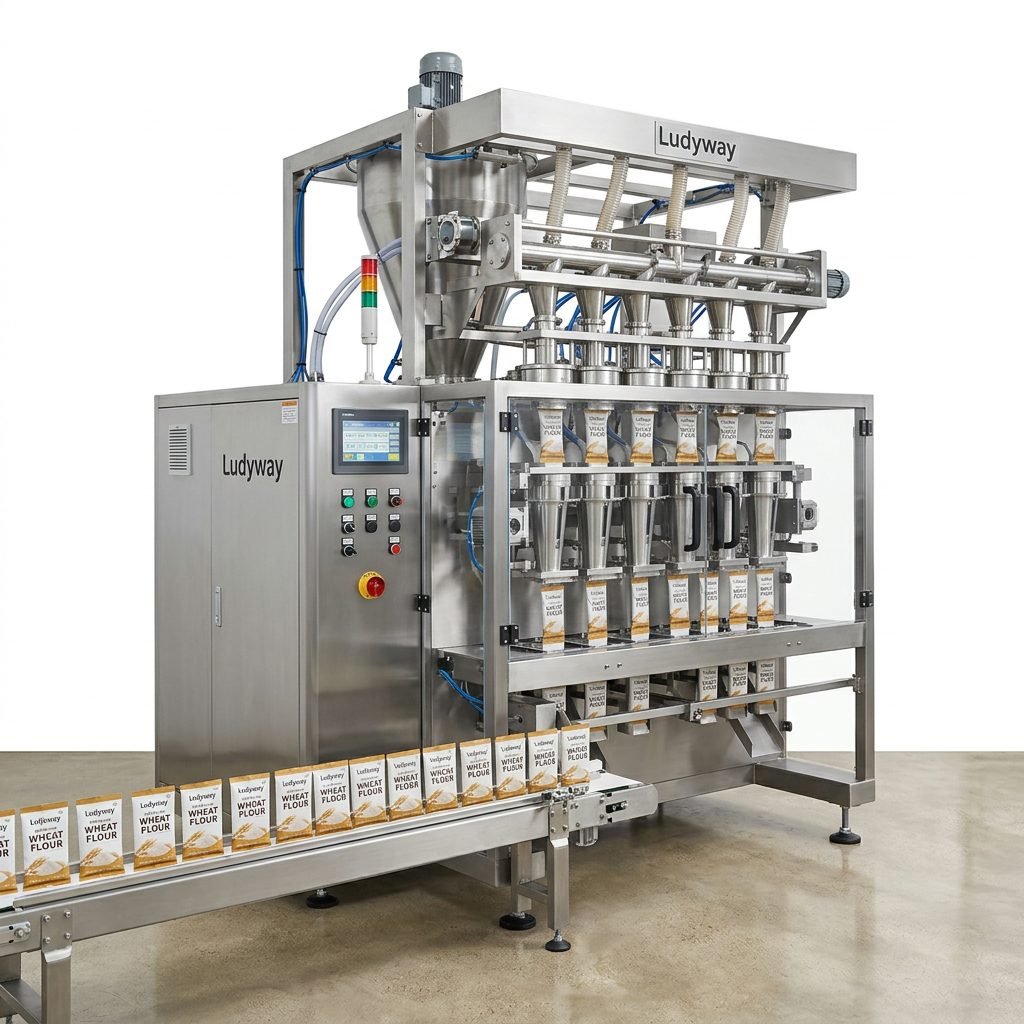
Wheat flour is a fine, cohesive powder with poor flowability. It tends to bridge, clog, and aerate during filling. Your chosen machine must be equipped with appropriate dosing and feeding systems designed specifically for powder products. Auger fillers are widely used for flour because they provide consistent volumetric dosing. For higher precision, multi-head weighers with agitators or vibratory systems can handle difficult powder flow while maintaining accuracy.
Consider these flour-specific factors:
- Bulk density variation — flour compacts easily, affecting fill accuracy
- Dust generation — requires proper sealing and dust extraction systems
- Moisture sensitivity — equipment must protect product integrity
- Particle size distribution — affects flow behavior through filling nozzles
Packaging Format and Bag Type
The type of packaging you need directly influences machine selection. Different formats require different forming, filling, and sealing mechanisms:
| Bag Format | Typical Weight Range | Common End Market | Machine Type |
|---|---|---|---|
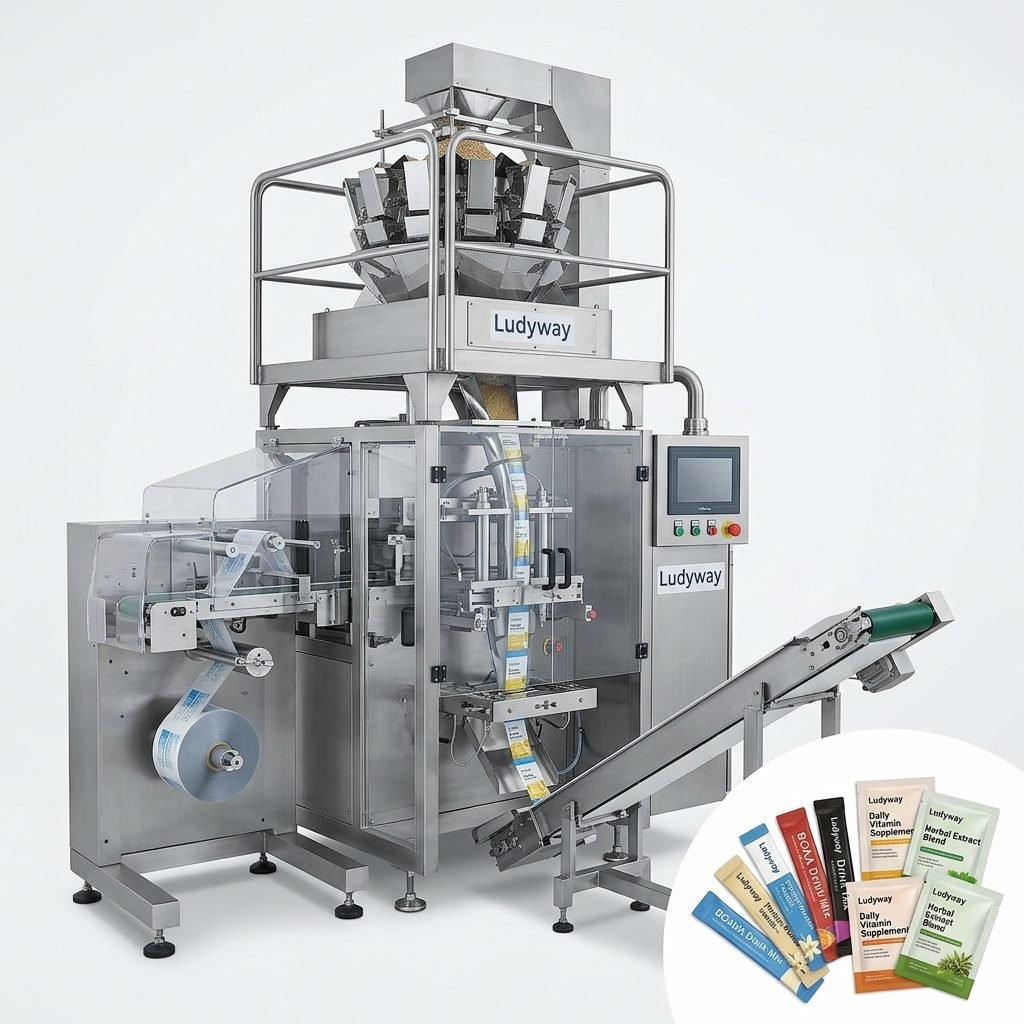
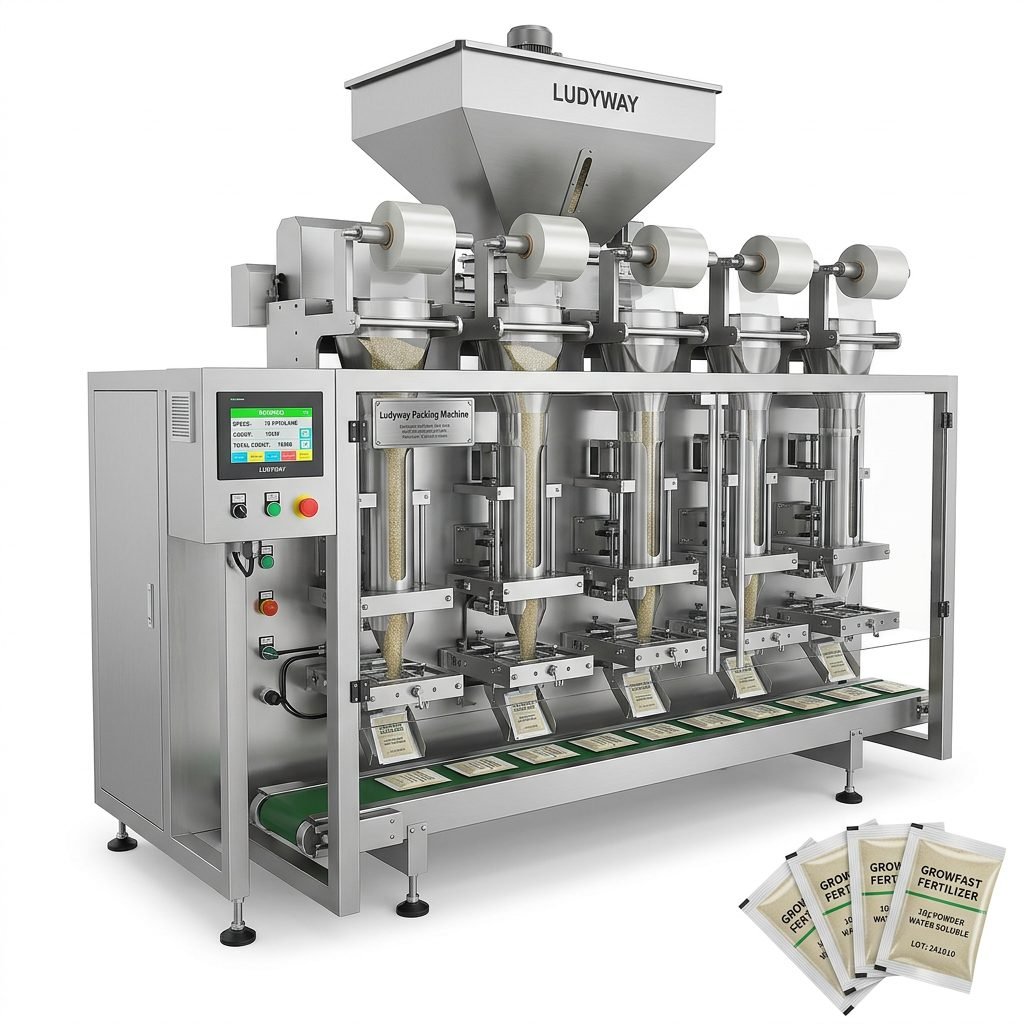
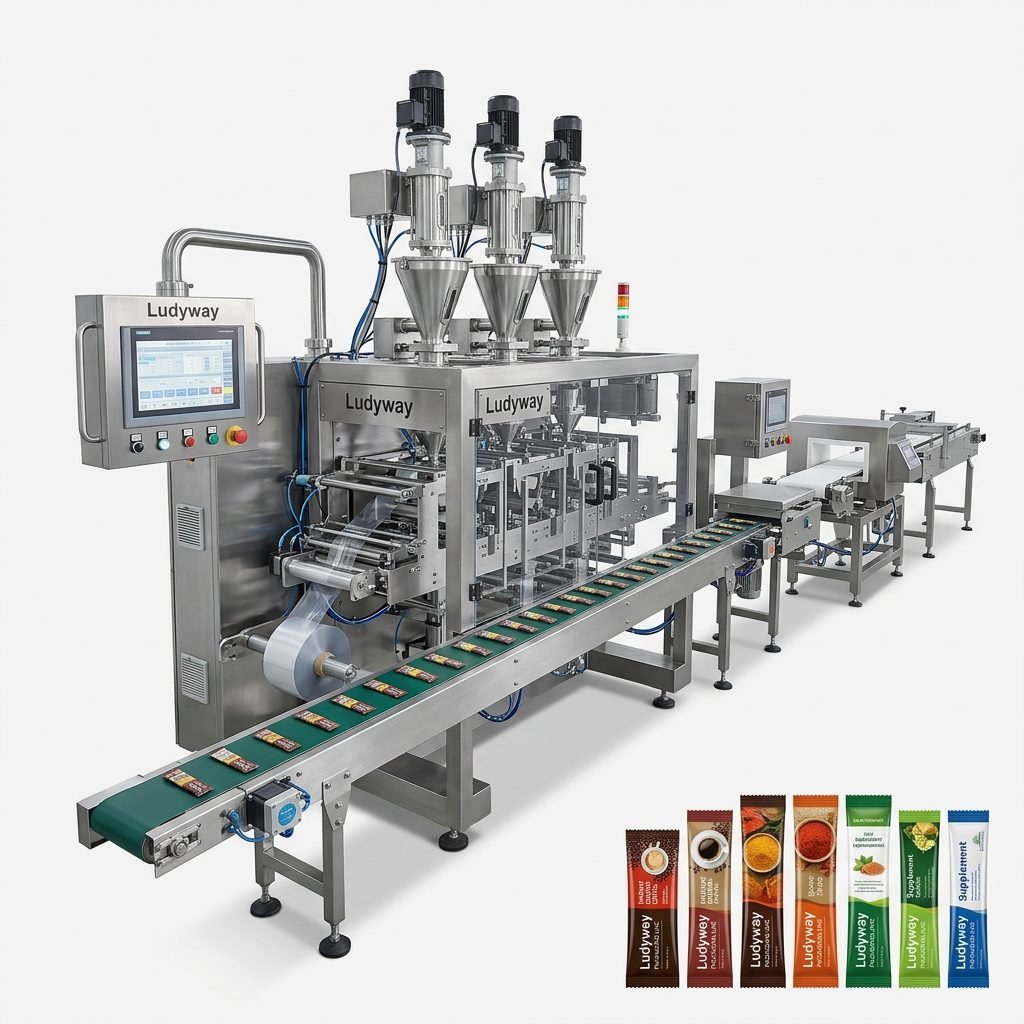
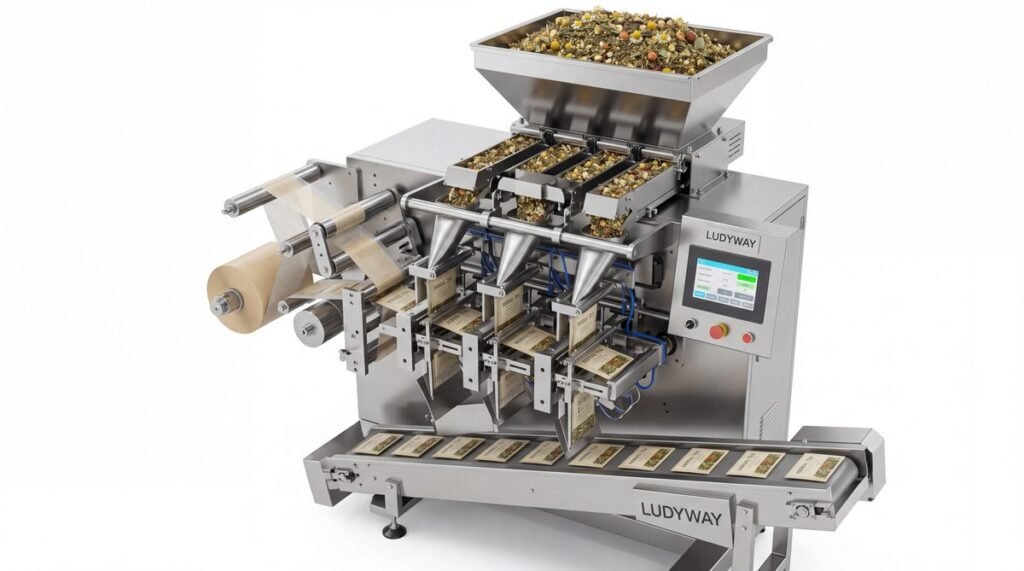
| Stick Packs & Sachets | 5 g – 50 g | Retail, Food Service, Single-Serve | Multi-Lane Stick Pack Machine |
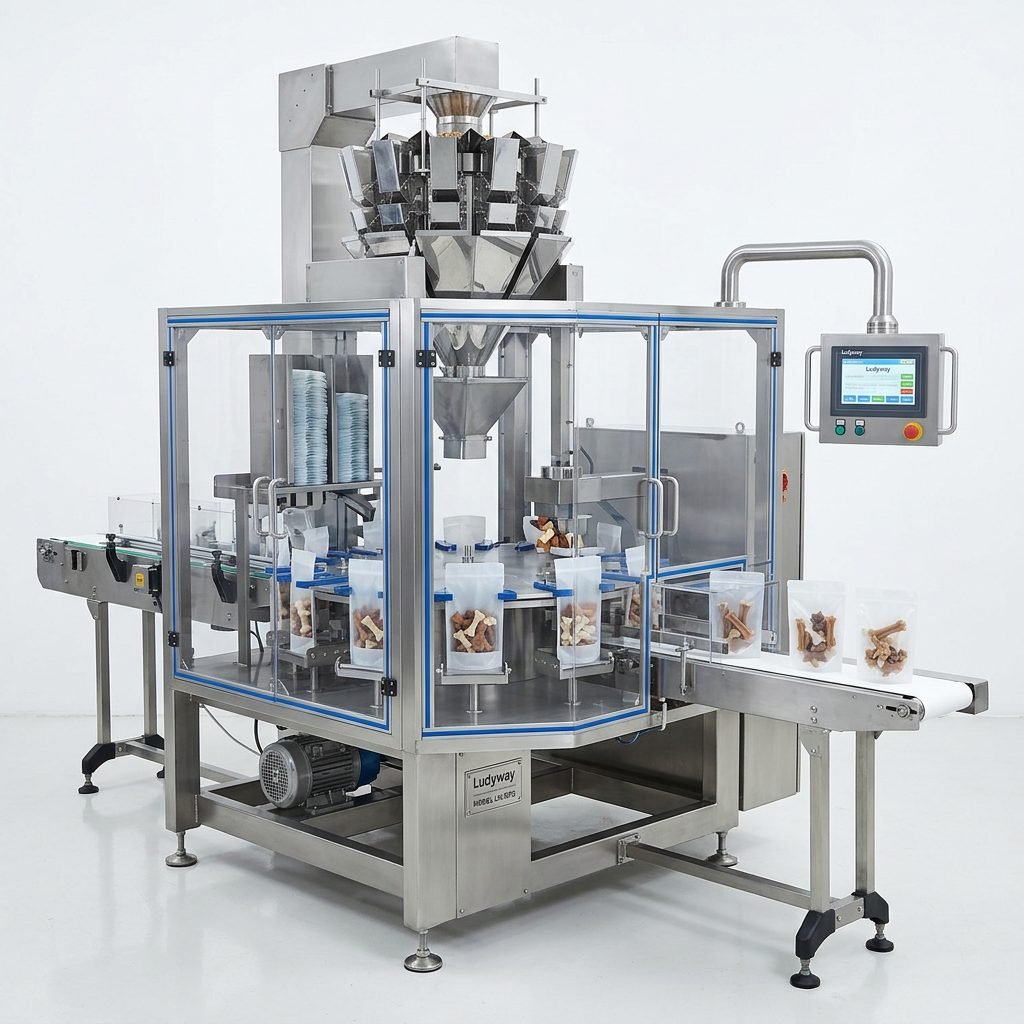
| Small Pouches | 100 g – 2 kg | Retail, E-Commerce | VFFS / Premade Pouch Machine |
| Medium Bags | 5 kg – 25 kg | Wholesale, Food Service, B2B | Open-Mouth Bagging Machine |
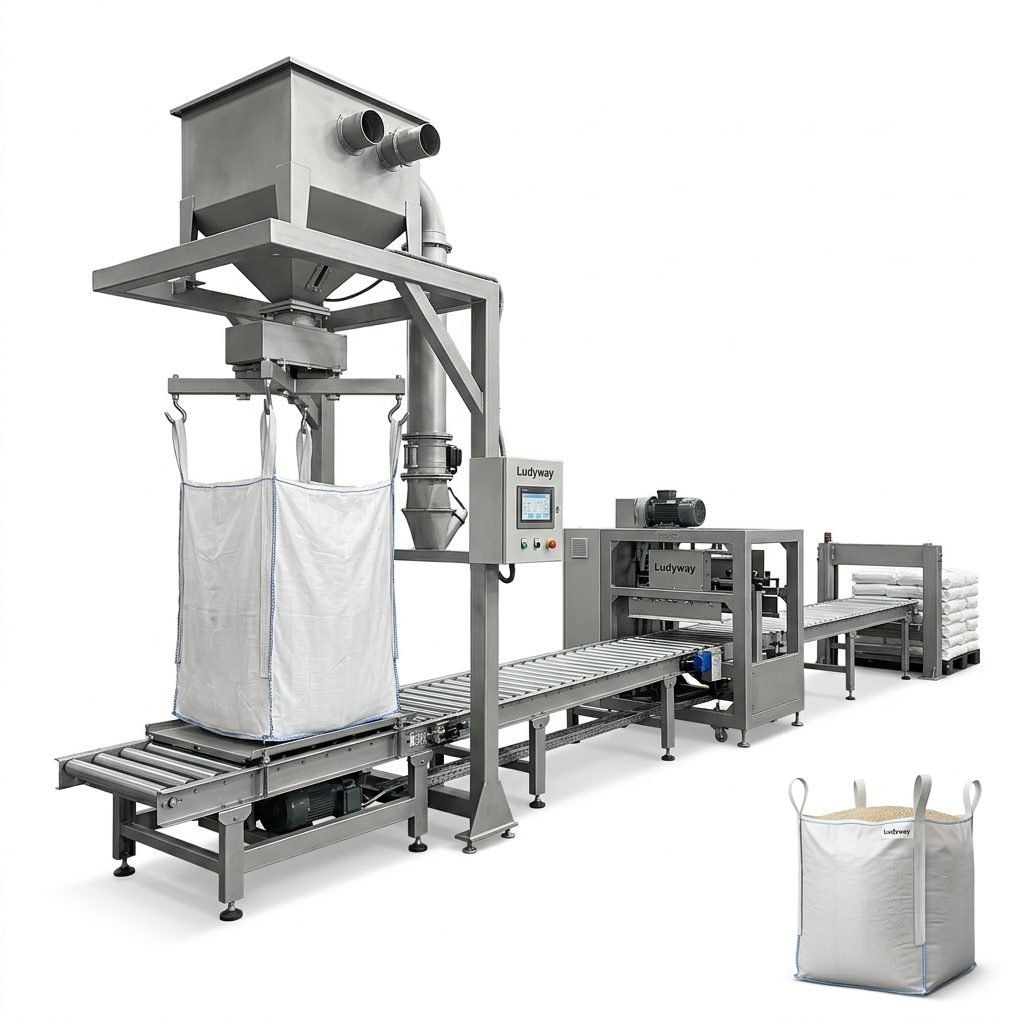
| Bulk Bags / Jumbo Bags | 500 kg – 1,500 kg | Industrial, Export, Ingredients | Bulk Bag Filling Station |
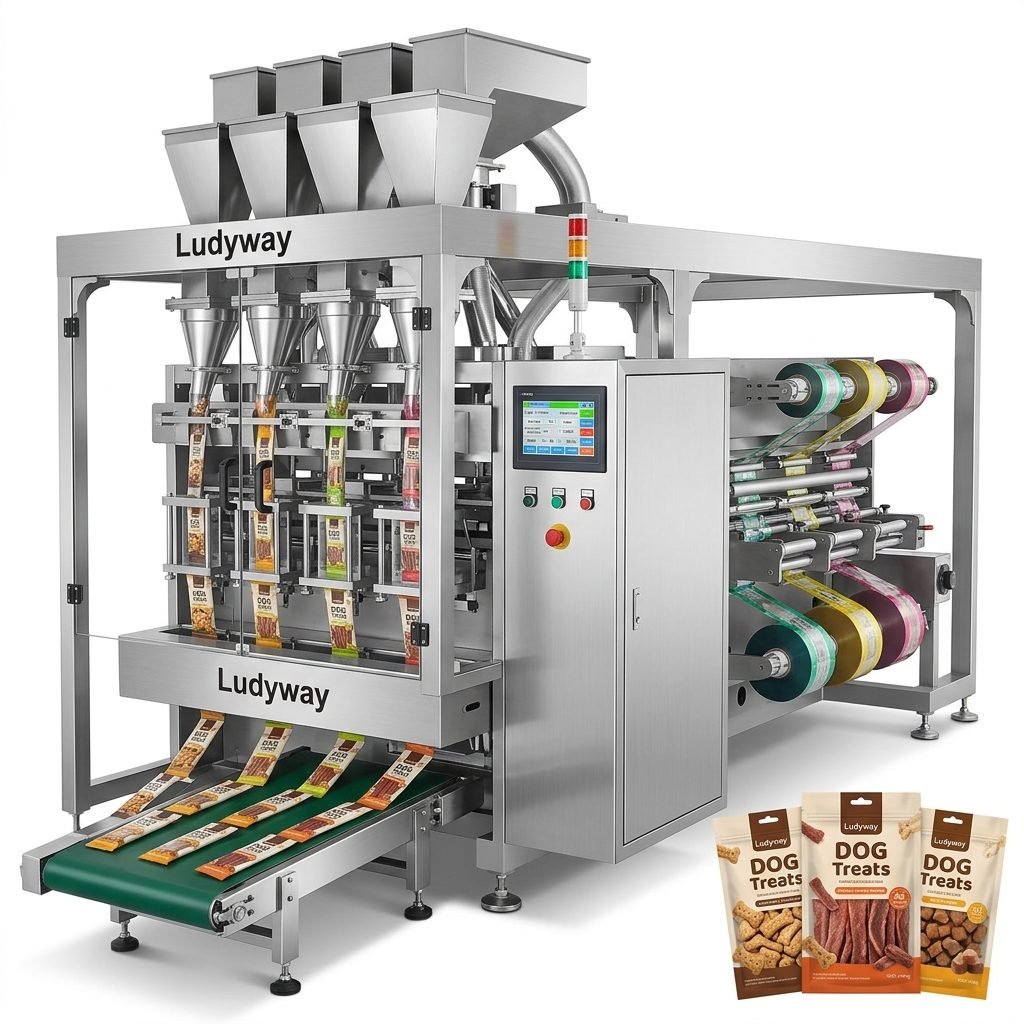
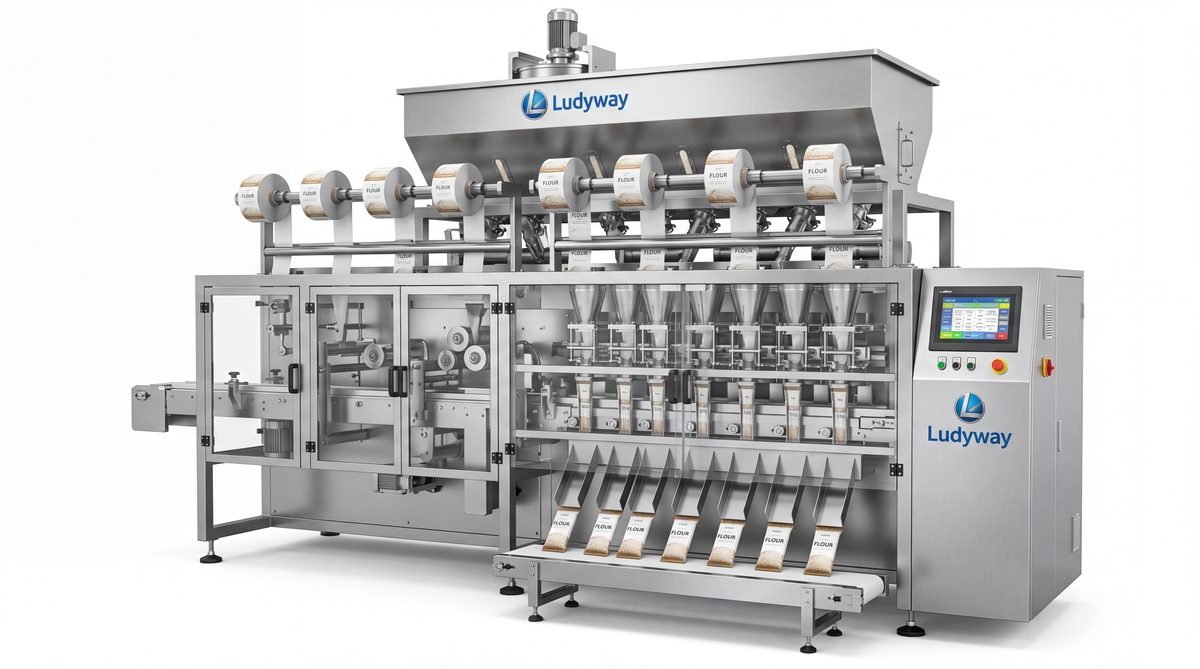
Many manufacturers today are adopting multi-lane stick pack and sachet systems for single-serve flour portions, a format that is growing rapidly in both emerging and developed markets. For larger formats, valve bag fillers and open-mouth baggers remain industry standards for wheat flour.
Production Speed and Capacity
Production speed requirements vary dramatically across operations. A small artisan mill may only need to package 5-10 bags per minute, while a large industrial flour mill may require 30-60 bags per minute or more. For sachet and stick pack applications, high-speed multi-lane machines can produce 400-600 packs per minute across multiple lanes.
When evaluating speed, consider not just the rated maximum speed but also the sustained operating speed under real production conditions. Factor in changeover times, cleaning cycles, and maintenance downtime to calculate realistic daily output.
Accuracy and Filling Precision
Fill accuracy directly impacts profitability and regulatory compliance. Overfilling eats into margins; underfilling violates food packaging regulations and damages brand trust. For wheat flour, typical accuracy requirements range from ±0.5% to ±1.5% of target weight, depending on the bag size and market segment.
Net weighers offer the highest accuracy for flour, while auger-based volumetric fillers provide good consistency at lower cost. For applications requiring both speed and precision, combination weighers with feedback-controlled auger systems are increasingly popular in the flour industry.
Types of Wheat Flour Packing Machines
Understanding the different machine technologies available is essential to making an informed choice. The following table summarizes the primary machine categories used in flour packaging:
| Machine Type | Best For | Key Advantage | Typical Speed Range |
|---|---|---|---|
| Multi-Lane Stick Pack Machine | Single-serve sachets (5-50 g) | Very high output, compact footprint | 200-600 packs/min |
| Vertical Form Fill Seal (VFFS) | Pouches 100 g – 2 kg | Versatile, widely available, reliable | 30-120 packs/min |
| Open-Mouth Bagging Machine | 5-50 kg bags | Handles heavy weights, robust construction | 6-30 bags/min |
| Valve Bag Filler | 10-50 kg valve bags | Dust-free, clean seal, good for fine powder | 4-12 bags/min |
| Bulk Bag / FIBC Filling System | 500-1,500 kg bulk bags | High capacity, suitable for industrial supply | 4-20 tons/hour |
Material Compatibility and Food Safety Standards
Wheat flour is a food-grade product, and your packaging machine must comply with applicable food safety regulations. Look for equipment constructed with food-grade stainless steel (typically SS304 or SS316) on all product contact surfaces. The machine design should facilitate easy cleaning and sanitation, with minimal crevices where flour dust can accumulate and harbor pests or mold.
Relevant standards and certifications to verify include:
- FDA compliance for food contact surfaces (if exporting to the U.S. market)
- EU food safety regulations for European markets
- ISO 22000 or HACCP-compatible machine design
- CE marking for machines sold in the European Economic Area
- GFSI-recognized certification alignment for major retailers
For operations targeting export markets, working with a manufacturer experienced in packaging machinery standards and regulations across multiple regions is a significant advantage. Dust-proof electrical enclosures, sealed bearings, and accessible clean-out points are all important design features for flour applications.
Automation Level and Production Line Integration
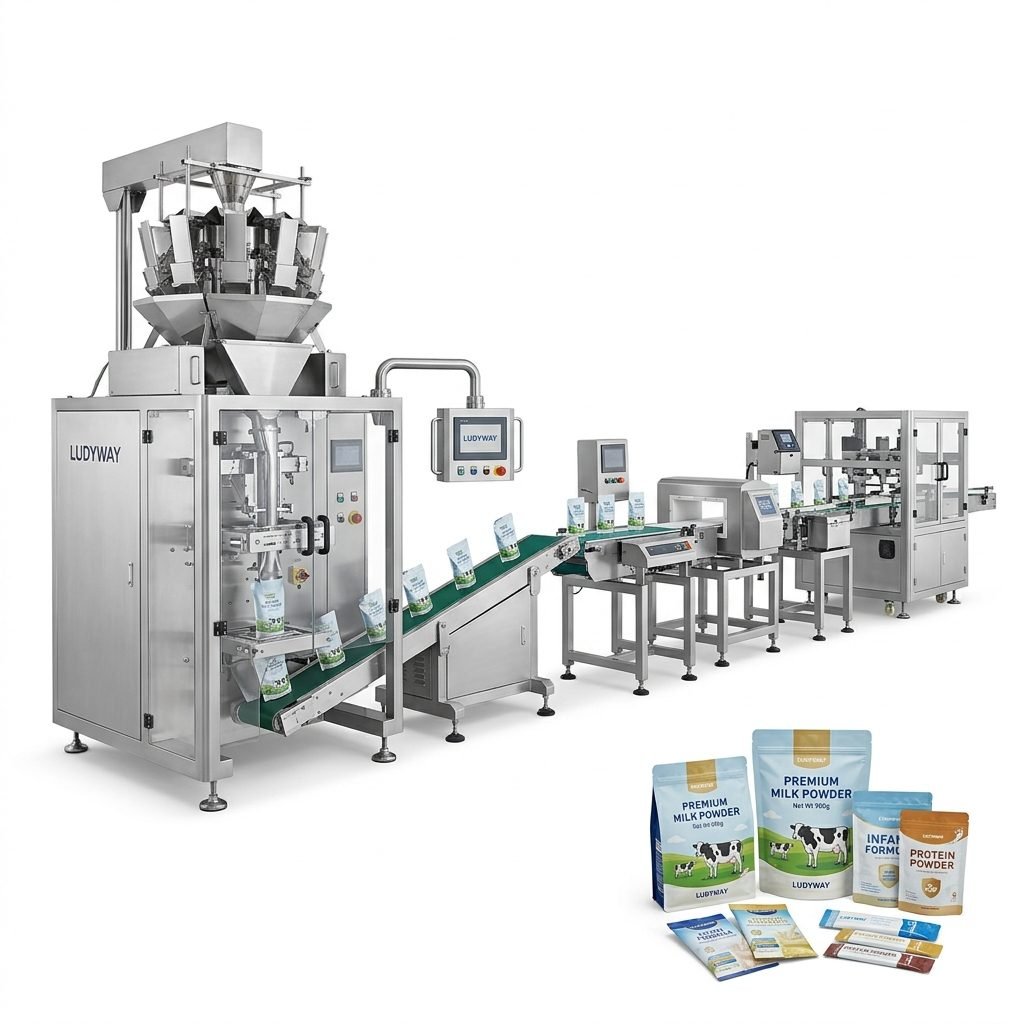
Modern wheat flour packaging lines can range from standalone semi-automatic machines to fully integrated turnkey packaging systems that connect filling, sealing, checkweighing, metal detection, coding, cartoning, and palletizing into a single automated workflow. The flexible packaging industry continues to push toward higher levels of integration and data connectivity.
Consider these automation dimensions:
- Conveyor integration — infeed and outfeed systems that match your factory layout
- Automatic weight adjustment — feedback loops that correct fill weights in real time
- Remote monitoring — Industry 4.0 capabilities for performance tracking and predictive maintenance
- Quick changeover — tool-less adjustments for different bag sizes and formats
- Integrated quality control — checkweighers, metal detectors, and seal inspection systems
Cost Considerations and Return on Investment
The purchase price of a wheat flour packing machine is just one component of the total cost of ownership. A comprehensive cost analysis should include:
- Initial capital expenditure — machine price plus shipping, installation, and commissioning
- Operating costs — labor, energy consumption, packaging film or bag material usage
- Maintenance costs — spare parts, service contracts, and technician training
- Downtime costs — lost production during breakdowns or changeovers
- Product giveaway reduction — savings from improved fill accuracy
- Labor savings — reduced manual handling and fewer operators required
A higher-quality machine with better accuracy and reliability often delivers a faster payback period than a lower-cost alternative that suffers from frequent downtime and inconsistent fills. For a typical mid-sized flour mill, the return on investment for a well-specified automatic packaging line is typically achieved within 12 to 24 months, primarily through labor reduction and product giveaway savings.
Choosing the Right Manufacturer and Support Partner
The equipment manufacturer you select is just as important as the machine itself. Look for a partner with proven experience in powder packaging, not just general packaging machinery. Manufacturers with dedicated expertise in flour and powder handling will understand the specific challenges of bridging, dust control, and fill accuracy that are unique to wheat flour.
Key evaluation criteria for selecting a packaging machinery partner include:
- Industry experience — years of specialization in powder and flour packaging
- Installation base — references and case studies from similar applications
- Customization capability — willingness to configure equipment for your specific needs rather than offering only standard models
- After-sales support — availability of spare parts, remote technical assistance, and on-site service
- Standards compliance — ability to meet relevant international standards and provide compliance documentation
- Training programs — operator and maintenance training to ensure your team can run the equipment effectively
For manufacturers seeking a comprehensive packaging solution, working with an experienced provider like Ludyway Machinery — a China-based packaging machinery manufacturer with more than 30 years of industry experience and over 50 packaging machine models — can provide access to integrated systems that cover everything from individual machines to complete turnkey packaging lines. Manufacturers that combine in-house manufacturing with engineering and automation expertise are often better positioned to deliver customized solutions that match specific product and production requirements.
For additional market context and industry data, resources such as the PMMI State of the Industry Report and ISO packaging standards provide valuable benchmarks and technical guidance for evaluating packaging equipment investments.
Final Checklist: Making Your Decision
Before finalizing your wheat flour packing machine purchase, review this summary checklist:
- Define your production requirements — target output, bag formats, fill weights, and packaging materials
- Assess product flow characteristics — confirm the machine can handle wheat flour’s specific powder properties
- Verify fill accuracy specifications — ensure they meet your commercial and regulatory needs
- Confirm material compatibility — food-grade construction with appropriate certifications
- Evaluate automation features — match the level of integration to your operational goals and budget
- Calculate total cost of ownership — look beyond the purchase price to operating, maintenance, and downtime costs
- Review manufacturer credentials — industry experience, references, support infrastructure, and customization capability
- Plan for installation and training — ensure a smooth commissioning process and operator readiness
Choosing the right wheat flour packing machine is a strategic investment that directly impacts your operational efficiency, product quality, and bottom-line profitability. By systematically evaluating your requirements against the factors outlined in this guide, you can select equipment that delivers reliable performance, consistent fill accuracy, and a strong return on investment for years to come. A well-chosen packaging system not only protects your product but also strengthens your brand presence and competitive position in the marketplace.