In today’s fast-paced manufacturing environment, securing an accurate and cost-effective packaging equipment quote is a critical first step. The online landscape offers a powerful avenue to achieve this, but navigating it effectively requires strategy. This guide provides a detailed roadmap on how to obtain a precise packaging equipment quote online while implementing tactics to significantly reduce your overall project costs.
Step 1: Define Your Project Requirements with Precision
The cornerstone of an accurate quote is crystal-clear project specifications. Vague requests lead to wide price ranges and potential misunderstandings.
Key Information to Prepare:
- Product Details: Type (granule, powder, liquid, paste), characteristics (hygroscopic, abrasive, viscous), and packaging dimensions.
- Output Speed: Required packages per minute (PPM) or units per hour.
- Packaging Materials: Specify the type of film (e.g., laminate structures, PET/PE), spool dimensions, and any special barrier properties required.
- Floor Space & Utilities: Available footprint, and requirements for power (voltage, phase), compressed air, and other utilities.
Step 2: Research and Shortlist Reputable Suppliers
Not all online suppliers are created equal. Focus your search on manufacturers with proven expertise in your specific industry, whether it’s food, pharmaceutical, or health products.
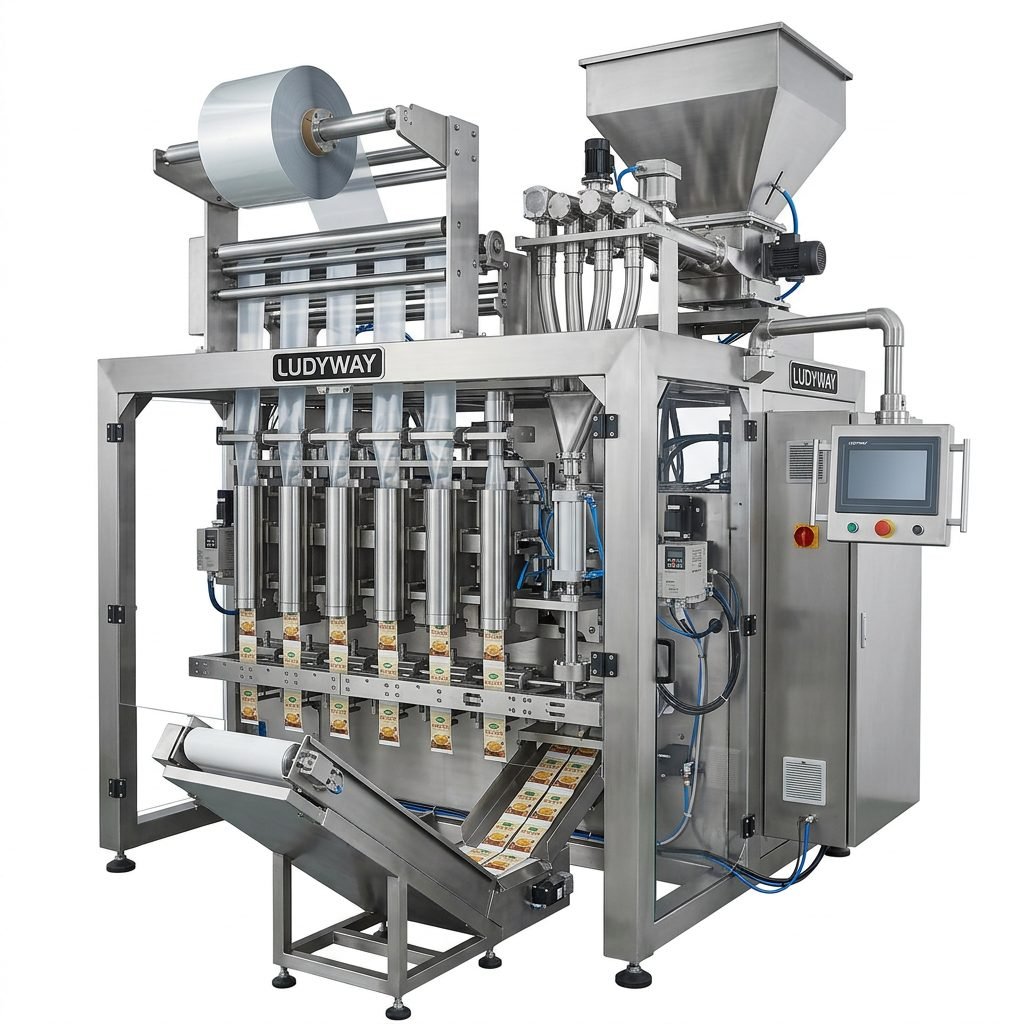
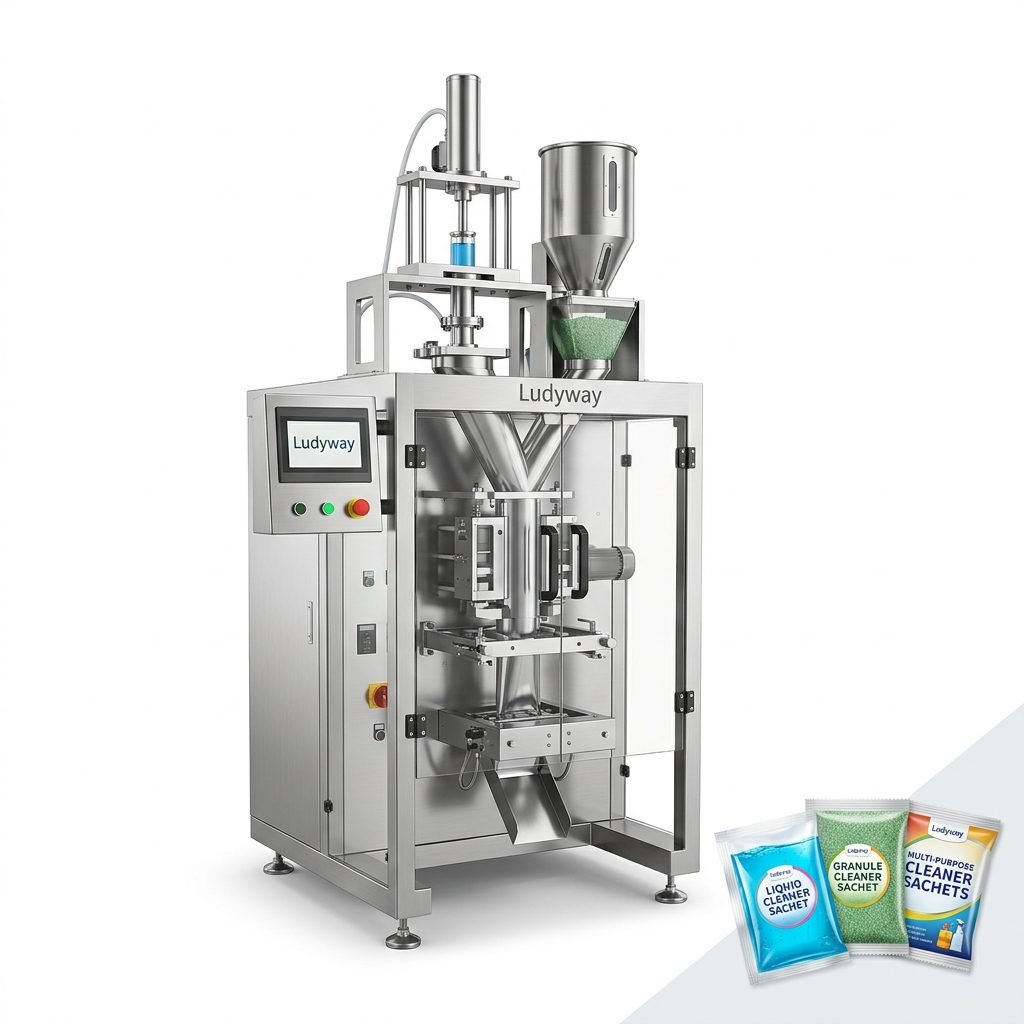
Look for suppliers who provide detailed case studies, technical specifications, and clear evidence of their manufacturing capabilities. A company like Ludyway Packing Machine, with over 30 years of industry experience and a portfolio of 50+ intelligent packaging machine models, exemplifies the depth of specialization you should seek. Their background in providing turnkey solutions for granule, powder, and liquid applications ensures they understand the nuances that affect pricing and performance.
Evaluating Supplier Credentials Online:
- Check for detailed “About Us” and “Company History” pages that substantiate their claims.
- Look for evidence of a modern production facility and engineering strength.
- Review their global service and support network.
Step 3: Utilize Online Quotation Tools and Direct Communication
Many professional packaging machinery websites offer structured contact forms or quotation request pages. Use these tools effectively.
Pro Tip for Online Forms:
Attach supporting documents directly to your inquiry. This can include:
- Product samples or photos
- Current packaging samples
- A simple layout of your production area
- Any existing technical data sheets
Following the form submission, request a live video call or online meeting. This allows for real-time discussion, virtual facility tours, and a more collaborative specification review, which dramatically increases quote accuracy.
Strategic Cost-Reduction Tactics
An accurate quote is the baseline; reducing project costs is the goal. Implement these strategies during the quoting process.
1. Consider Modular or Scalable Solutions
Instead of purchasing a oversized machine for “future growth,” discuss modular options. A supplier with strong engineering capabilities can often propose a base system that can be upgraded later with additional lanes or functions, lowering the initial capital outlay.
2. Optimize Packaging Material Selection
Material cost is a lifelong expense. Engage your potential machinery supplier in a dialogue about material optimization. Their experience with different laminate structures can help you select a film that meets your barrier requirements at the lowest possible cost, without compromising machine runnability.
3. Evaluate Total Cost of Ownership (TCO)
Look beyond the initial machine price. A slightly higher quote from a supplier known for reliability, low maintenance, and excellent technical support often results in a lower TCO. Inquire about standard warranty terms, spare part pricing, and the availability of remote diagnostic support.
📌 Key Question to Ask:
“Can you provide an estimated efficiency rate and mean time between failures (MTBF) for this model in a similar application?”
4. Clarify What’s Included in the Quote
A detailed, line-item quote prevents costly surprises. Ensure it explicitly includes:
- Delivery and standard commissioning
- Initial training for your operators
- A basic set of tooling or change parts
- Documentation (manuals, electrical diagrams)
Step 4: Analyze and Compare Quotes Holistically
When quotes arrive, compare them on a like-for-like basis. Create a comparison matrix that evaluates not just price, but also key performance guarantees, delivery timelines, payment terms, and post-sales support structures.
Common Questions (FAQ)
Q1: How long does it typically take to receive a detailed quote online?
A professional supplier should provide a preliminary budgetary quote within 24-48 hours for standard machines. A detailed, final proposal for a customized solution may take 3-5 business days, as it requires engineering review.
Q2: Can I get a valid quote without an onsite visit?
Yes, with today’s technology, a comprehensive online assessment is highly effective. Through detailed forms, document exchange, and video conferences, experienced suppliers can accurately scope most projects. A pre-purchase audit visit is often recommended for highly complex lines.
Q3: What are the biggest hidden costs in packaging projects?
Common hidden costs include: unforeseen utility upgrades (e.g., larger air compressor), additional safety guarding for local regulations, custom import duties, and costs for peripheral equipment (like checkweighers or cartoners) not included in the initial quote.
Q4: How can I ensure the machine will work with my product?
Request a product test at the supplier’s facility or via a sample machine. Reputable suppliers often offer this service to guarantee performance before purchase, providing a report with achieved speeds and efficiency.
Q5: Does a lower quote always mean lower project cost?
Not necessarily. A low initial quote may exclude critical services, use lower-grade components, or come from a supplier with poor support, leading to higher downtime, maintenance costs, and lost production in the long run. Always analyze the Total Cost of Ownership.